


Sidekick

Encyclopedia
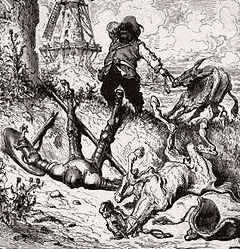
Sancho Panza
Sancho Panza is a fictional character in the novel Don Quixote written by Spanish author Don Miguel de Cervantes Saavedra in 1605. Sancho acts as squire to Don Quixote, and provides comments throughout the novel, known as sanchismos, that are a combination of broad humour, ironic Spanish proverbs,...
, Sherlock Holmes
Sherlock Holmes
Sherlock Holmes is a fictional detective created by Scottish author and physician Sir Arthur Conan Doyle. The fantastic London-based "consulting detective", Holmes is famous for his astute logical reasoning, his ability to take almost any disguise, and his use of forensic science skills to solve...
' Doctor Watson, The Lone Ranger
The Lone Ranger
The Lone Ranger is a fictional masked Texas Ranger who, with his Native American companion Tonto, fights injustice in the American Old West. The character has become an enduring icon of American culture....
's Tonto
Tonto
Tonto may mean:* Tonto, a band of Apache native Americans.* Tonto, the fictional sidekick to the Lone Ranger.* "Tonto", a song by the American math rock band Battles, from their album Mirrored.** "Tonto+", the EP centered around said song....
, The Green Hornet
The Green Hornet
The Green Hornet is an American radio and television masked vigilante created by George W. Trendle and Fran Striker, with input from radio director James Jewell, in 1936. Since his radio debut in the 1930s, the Green Hornet has appeared in numerous serialized dramas in a wide variety of media...
's Kato
Kato (The Green Hornet)
Kato is a fictional character from The Green Hornet series. This character has also appeared with the Green Hornet in film, television, book and comic book versions. Kato was the Hornet's assistant and has been played by a number of actors...
and Batman
Batman
Batman is a fictional character created by the artist Bob Kane and writer Bill Finger. A comic book superhero, Batman first appeared in Detective Comics #27 , and since then has appeared primarily in publications by DC Comics...
's Robin
Robin (comics)
Robin is the name of several fictional characters appearing in comic books published by DC Comics, originally created by Bob Kane, Bill Finger and Jerry Robinson, as a junior counterpart to DC Comics superhero Batman...
.
Origins
The origin of the term comes from pickpocket slang of the late 19th and early 20th century. The "kick" is the front side pocket of a pair of trousers, and was found to be the pocket safest from theft. Thus the pickpocket's "side-kick" became an inseparable companion.A humorous folk origin for the term refers to the sidekick's accomplishments being "kicked to the side" or otherwise ignored in favor of the more charismatic lead hero.
One of the earliest recorded sidekicks may be Enkidu
Enkidu
Enkidu is a central figure in the Ancient Mesopotamian Epic of Gilgamesh. Enkidu was first created by Anu, the sky god, to rid Gilgamesh of his arrogance. In the story he is a wild-man raised by animals and ignorant of human society until he is bedded by Shamhat...
, who adopted a sidekick role to Gilgamesh
Gilgamesh
Gilgamesh was the fifth king of Uruk, modern day Iraq , placing his reign ca. 2500 BC. According to the Sumerian king list he reigned for 126 years. In the Tummal Inscription, Gilgamesh, and his son Urlugal, rebuilt the sanctuary of the goddess Ninlil, in Tummal, a sacred quarter in her city of...
after they became allies in the Epic of Gilgamesh
Epic of Gilgamesh
Epic of Gilgamesh is an epic poem from Mesopotamia and is among the earliest known works of literature. Scholars believe that it originated as a series of Sumerian legends and poems about the protagonist of the story, Gilgamesh king of Uruk, which were fashioned into a longer Akkadian epic much...
. Other early examples include Achilles
Achilles
In Greek mythology, Achilles was a Greek hero of the Trojan War, the central character and the greatest warrior of Homer's Iliad.Plato named Achilles the handsomest of the heroes assembled against Troy....
and Patroclus
Patroclus
In Greek mythology, as recorded in the Iliad by Homer, Patroclus, or Patroklos , was the son of Menoetius, grandson of Actor, King of Opus, and was Achilles' beloved comrade and brother-in-arms....
from the Iliad
Iliad
The Iliad is an epic poem in dactylic hexameters, traditionally attributed to Homer. Set during the Trojan War, the ten-year siege of the city of Troy by a coalition of Greek states, it tells of the battles and events during the weeks of a quarrel between King Agamemnon and the warrior Achilles...
, and Moses
Moses
Moses was, according to the Hebrew Bible and Qur'an, a religious leader, lawgiver and prophet, to whom the authorship of the Torah is traditionally attributed...
and Aaron
Aaron
In the Hebrew Bible and the Qur'an, Aaron : Ααρών ), who is often called "'Aaron the Priest"' and once Aaron the Levite , was the older brother of Moses, and a prophet of God. He represented the priestly functions of his tribe, becoming the first High Priest of the Israelites...
from the Bible
Bible
The Bible refers to any one of the collections of the primary religious texts of Judaism and Christianity. There is no common version of the Bible, as the individual books , their contents and their order vary among denominations...
.
Function of the sidekick
Sidekicks can provide one or multiple functions, such as a counterpoint to the hero, an alternate point of view, or knowledge, skills, or anything else the hero does not have. They often function as comic reliefComic relief
Comic relief is the inclusion of a humorous character, scene or witty dialogue in an otherwise serious work, often to relieve tension.-Definition:...
, and/or the straight man
Double act
A double act, also known as a comedy duo, is a comic pairing in which humor is derived from the uneven relationship between two partners, usually of the same gender, age, ethnic origin and profession, but drastically different personalities or behavior...
to the hero's comedic actions. A sidekick can also act as someone more relatable to the audience than the hero, or whom the audience can imagine themselves as being (such as teen sidekicks). And by asking questions of the hero, or giving the hero someone to talk to, the sidekick provides an opportunity for the author to provide exposition, thereby filling the same role as a Greek chorus
Greek chorus
A Greek chorus is a homogenous, non-individualised group of performers in the plays of classical Greece, who comment with a collective voice on the dramatic action....
.
Sidekicks frequently serve as an emotional connection, especially when the hero is depicted as detached and distant, traits which would normally generate difficulty in making the hero likable. The sidekick is often the confidant who knows the main character better than anyone else and gives a convincing reason to like the hero. Although Sherlock Holmes
Sherlock Holmes
Sherlock Holmes is a fictional detective created by Scottish author and physician Sir Arthur Conan Doyle. The fantastic London-based "consulting detective", Holmes is famous for his astute logical reasoning, his ability to take almost any disguise, and his use of forensic science skills to solve...
was a difficult man to know, his friendship with Dr. Watson convinces the reader that Holmes is a good person. The Left Hand of Vampire Hunter D
Vampire Hunter D
is a series of Japanese novels written by Hideyuki Kikuchi and illustrated by Yoshitaka Amano since 1983.To date, twenty-two novels have been published in the main series, with some novels comprising as many as four volumes...
, being mentally linked to the reticent protagonist, often reveals thoughts, feelings, and the physical condition of his host, as well as background elements of the story.
The apparent stupidity of some comedy sidekicks is often used to make a non-intellectual hero look intelligent. Similarly, a flamboyant or effeminate sidekick may make an otherwise unimposing hero look more masculine. And a strong, silent and modest hero may have his fighting qualities revealed to the other characters and the audience by a talkative sidekick.
While many sidekicks are used for comic relief, there are other sidekicks who are less outrageous than the heroes they pledge themselves to, and comedy derived from the hero can often be amplified by the presence or reaction of the sidekick. Examples include Porky Pig
Porky Pig
Porky Pig is an animated cartoon character in the Warner Bros. Looney Tunes and Merrie Melodies series of cartoons. He was the first character created by the studio to draw audiences based on his star power, and the animators created many critically acclaimed shorts using the fat little pig...
, who is more sensible and calmer than Daffy Duck
Daffy Duck
Daffy Duck is an animated cartoon character in the Warner Bros. Looney Tunes and Merrie Melodies series of cartoons, often running the gamut between being the best friend and sometimes arch-rival of Bugs Bunny...
in later short films; similarly, Sancho Panza is more rational than Don Quixote.
It is typical for the character and sidekick to be of the same gender — otherwise, the term "sidekick" is replaced with "partner" or "companion". Whenever there is a team of more than two characters, the term sidekick is generally reserved for another team member of the same sex. It is rare for the relationship between a character and an opposite-sex sidekick to lack romantic or sexual overtones of any kind — though there are examples, like Modesty Blaise
Modesty Blaise
Modesty Blaise is a British comic strip featuring a fictional character of the same name, created by Peter O'Donnell and Jim Holdaway in 1963. The strip follows the adventures of Modesty Blaise, an exceptional young woman with many talents and a criminal past, and her trusty sidekick Willie Garvin...
and Willie Garvin
Willie Garvin
Willie Garvin is a character in the long-running British comic strip series Modesty Blaise, as well as a series of novels based upon the strip. The character was created by Peter O'Donnell in 1963 and, alongside Modesty Blaise, made his first appearance in the story La Machine, appearing for the...
, and Encyclopedia Brown
Encyclopedia Brown
Leroy "Encyclopedia" Brown is the main character in a long series of children's novels written by Donald J. Sobol since 1963.-Style:...
and Sally Kimball. The original Doctor Who
Doctor Who
Doctor Who is a British science fiction television programme produced by the BBC. The programme depicts the adventures of a time-travelling humanoid alien known as the Doctor who explores the universe in a sentient time machine called the TARDIS that flies through time and space, whose exterior...
series intentionally avoided any explicit onscreen indications of romantic or sexual attraction between The Doctor
Doctor (Doctor Who)
The Doctor is the central character in the long-running BBC television science-fiction series Doctor Who, and has also featured in two cinema feature films, a vast range of spin-off novels, audio dramas and comic strips connected to the series....
and his female companions. (See the discussion of comic books' teenage sidekicks below.)
While unusual, it is not unheard of for a sidekick to be more attractive, charismatic, or physically capable than the supposed hero. This is most typically encountered when the hero's appeal is more intellectual rather than sexual. Such heroes (usually fictional sleuths and scientists) are often middle-aged or older and tend towards eccentricity. Such protagonists, either due to age or physical unsuitability may be limited to cerebral conflicts while leaving the physical action to a younger or more physically capable sidekick. This type of sidekick is rarely encountered in fiction, because the hero runs the risk of being upstaged by them. However, examples of successful such pairings include Inspector Morse
Inspector Morse
Inspector Morse is a fictional character in the eponymous series of detective novels by British author Colin Dexter, as well as the 33-episode 1987–2000 television adaptation of the same name, in which the character was portrayed by John Thaw. Morse is a senior CID officer with the Thames Valley...
and his sidekick DS Robbie Lewis, Nero Wolfe
Nero Wolfe
Nero Wolfe is a fictional detective, created in 1934 by the American mystery writer Rex Stout. Wolfe's confidential assistant Archie Goodwin narrates the cases of the detective genius. Stout wrote 33 novels and 39 short stories from 1934 to 1974, with most of them set in New York City. Wolfe's...
and his sidekick Archie Goodwin
Archie Goodwin (fictional detective)
Archie Goodwin is a fictional character and detective in Rex Stout's Nero Wolfe mysteries. The witty voice of all the stories, he recorded the cases of the detective genius from 1934 to 1975 . He lives in Nero Wolfe's brownstone in New York City.Archie was born on October 23 in Chillicothe, Ohio,...
, Hiro Nakamura
Hiro Nakamura
is a fictional character on the NBC fantasy drama Heroes who possesses the ability of space-time manipulation. This means that Hiro is able to alter the flow of time. Previously, his ability allowed him to teleport, stop time, or travel through time, but recent events in the series have prevented...
and his sidekick Ando Masahashi
Ando Masahashi
is a fictional character on the NBC science fiction television drama series Heroes, portrayed by James Kyson Lee.The character was billed in a recurring role during the first season, and was promoted to series regular in the second...
, and Miles Vorkosigan
Miles Vorkosigan
Miles Naismith Vorkosigan is the hero of a series of science fiction novels and short stories by Lois McMaster Bujold known as the Vorkosigan Saga. In an article in The Vorkosigan Companion, Bujold acknowledged several real-life inspirations for the character: T. E...
and his sidekick cousin Ivan Vorpatril
Ivan Vorpatril
Taken from its original location as a sidebar to Miles Vorkosigan-Ivan Vorpatril:Captain Lord Ivan Vorpatril, also known as "That Idiot Ivan" or "Ivan, You Idiot" , is a character in Lois McMaster Bujold's Vorkosigan Saga...
. In other media, The Green Hornet
The Green Hornet
The Green Hornet is an American radio and television masked vigilante created by George W. Trendle and Fran Striker, with input from radio director James Jewell, in 1936. Since his radio debut in the 1930s, the Green Hornet has appeared in numerous serialized dramas in a wide variety of media...
s sidekick, Kato, has traditionally (especially since the 1960s television series with Bruce Lee
Bruce Lee
Bruce Lee was a Chinese American, Hong Kong actor, martial arts instructor, philosopher, film director, film producer, screenwriter, and founder of the Jeet Kune Do martial arts movement...
) been depicted as a capable man of action, such as with martial arts
Martial arts
Martial arts are extensive systems of codified practices and traditions of combat, practiced for a variety of reasons, including self-defense, competition, physical health and fitness, as well as mental and spiritual development....
. The earliest Doctor Who
Doctor Who
Doctor Who is a British science fiction television programme produced by the BBC. The programme depicts the adventures of a time-travelling humanoid alien known as the Doctor who explores the universe in a sentient time machine called the TARDIS that flies through time and space, whose exterior...
serials, particularly during the First Doctor
First Doctor
The First Doctor is the initial incarnation of the protagonist of the long-running BBC television science-fiction series Doctor Who. He was portrayed by the actor William Hartnell from 1963 to 1966. Hartnell reprised the role in the tenth anniversary story The Three Doctors in 1973 - albeit in a...
era had young male companions who were capable of the physical action that the elderly William Hartnell
William Hartnell
William Henry Hartnell was an English actor. During 1963-66, he was the first actor to play the Doctor in the long-running BBC science fiction television series Doctor Who.-Early life:...
was not. This especially became more crucial as Hartnell's health declined during his tenure as The Doctor. This was not an issue with the following Doctors as they were cast with significantly younger actors.
It is also not unusual, especially in more recent TV programs such as Bones
Bones (TV series)
Bones is an American crime drama television series that premiered on the Fox Network on September 13, 2005. The show is based on forensic anthropology and forensic archaeology, with each episode focusing on an FBI case file concerning the mystery behind human remains brought by FBI Special Agent...
and NCIS
NCIS (TV series)
NCIS, formerly known as NCIS: Naval Criminal Investigative Service, is an American police procedural drama television series revolving around a fictional team of special agents from the Naval Criminal Investigative Service, which conducts criminal investigations involving the U.S...
, for there to be a team of sidekicks. In Bones, for example, FBI Special Agent Seeley Booth
Seeley Booth
FBI Special Agent "In charge" Seeley Joseph Booth is a fictional character in the US television series, Bones , portrayed by David Boreanaz. Agent Booth is a co-protagonist of the series alongside Dr...
often fulfills one of the traditional roles of a sidekick by providing translations for the brilliant but socially-incapable Dr. Temperance Brennan
Temperance Brennan
Temperance Daesee Brennan is a fictional character created by author Kathy Reichs, and is the hero of her crime novel series . She was introduced in Reichs' first novel, Déjà Dead, which was published in 1997...
. Both Brennan and Booth, however, are heroes in their own right. The sidekicks in this case are the team of "squints" back in the Jeffersonian Institution's Medico-Legal Lab, each with their own scientific specialty, all of whom are usually needed to break the case.
It is also possible in certain cases for sidekicks to grow out of their role of being a second fiddle to the hero and become independent heroes in their own right. Dick Grayson
Dick Grayson
Dick Grayson is a fictional superhero that appears in comic books published by DC Comics. Created by Bob Kane and Bill Finger and illustrator Jerry Robinson, he first appeared in Detective Comics #38 in April 1940....
is one such example, having outgrown the mantle of Robin when he was under Batman
Batman
Batman is a fictional character created by the artist Bob Kane and writer Bill Finger. A comic book superhero, Batman first appeared in Detective Comics #27 , and since then has appeared primarily in publications by DC Comics...
and taken up the new identity of Nightwing
Nightwing
Nightwing is a name that has been used by several fictional characters in the DC Comics Universe. It was conceived as a Kryptonian analogue to the character of Batman, with Nightwing's frequent partner Flamebird based on Robin...
. Grayson later temporarily succeeded his mentor and took on the costumed identity of Batman himself. Another example is the popular comic-strip soldier of fortune Captain Easy
Captain Easy
Captain Easy, Soldier of Fortune was an action/adventure comic strip created by Roy Crane that was syndicated by Newspaper Enterprise Association beginning on Sunday, July 30, 1933...
, who started as the two-fisted sidekick of the scrawny eponymous hero of the strip Wash Tubbs
Wash Tubbs
Wash Tubbs was a comic strip created by Roy Crane that ran from April 14, 1924 to January 10, 1988.Initially titled Washington Tubbs II, it originally was a gag-a-day strip which focused on the mundane misadventures of the title character, a bespectacled bumbler who ran a store. However, Crane soon...
.
A Cartoon Network
Cartoon Network
Cartoon Network is a name of television channels worldwide created by Turner Broadcasting which used to primarily show animated programming. The channel began broadcasting on October 1, 1992 in the United States....
mini-story featured a "sidekicks bar" which had various cartoon sidekicks such as Robin the Boy Wonder discussing how important a sidekick is to the story, giving an example of how Porky Pig
Porky Pig
Porky Pig is an animated cartoon character in the Warner Bros. Looney Tunes and Merrie Melodies series of cartoons. He was the first character created by the studio to draw audiences based on his star power, and the animators created many critically acclaimed shorts using the fat little pig...
's career actually became better as a sidekick. The ego-driven Chicken of Cow and Chicken
Cow and Chicken
Cow and Chicken is an American animated series, created by David Feiss. The series shows the surreal adventures of a cow, named Cow, and her chicken brother, named Chicken. They are often antagonized by "The Red Guy", who poses as various characters to scam or hurt them...
used these examples to lay claim to being a "co-star" instead of a sidekick.
Comparisons
A villainVillain
A villain is an "evil" character in a story, whether a historical narrative or, especially, a work of fiction. The villain usually is the antagonist, the character who tends to have a negative effect on other characters...
's supporters are normally called henchmen
Henchman
Henchman referred originally to one who attended on a horse for his employer, that is, a horse groom. Hence, like constable and marshal, also originally stable staff, henchman became the title of a subordinate official in a royal court or noble household...
, minions, or lackeys, not sidekicks. While this is partially a convention in terminology, it also reflects that few villains are capable of bonds of friendship and loyalty, which are normal in the relationship between a hero and sidekick. This may also be due to the different roles in fiction of the protagonist
Protagonist
A protagonist is the main character of a literary, theatrical, cinematic, or musical narrative, around whom the events of the narrative's plot revolve and with whom the audience is intended to most identify...
and the antagonist
Antagonist
An antagonist is a character, group of characters, or institution, that represents the opposition against which the protagonist must contend...
: whereas a sidekick is a relatively important character due to his or her proximity to the protagonist, and so will likely be a developed character, the role of a henchmen is to act as cannon-fodder for the hero and his sidekick. As a result, henchmen tend to be anonymous, disposable characters, existing for the sole purpose of illustrating the protagonists' prowess as they defeat them.
Nevertheless, some villains do have sidekicks, including the Joker
Joker (comics)
The Joker is a fictional character, a comic book supervillain published by DC Comics. He is the archenemy of Batman, having been directly responsible for numerous tragedies in Batman's life, including the paralysis of Barbara Gordon and the death of Jason Todd, the second Robin...
's Harley Quinn
Harley Quinn
Harley Quinn was first introduced as a villain on September 11, 1992, in the animated series Batman: The Animated Series, later adapted into DC Comics' Batman comic books. As suggested by her name , she is clad in the manner of a traditional harlequin jester...
, Jigsaw
Jigsaw Killer
John Kramer is a fictional character and the central character of the Saw franchise. Jigsaw made his debut as the primary antagonist in the first film of the series, Saw, and he's later portrayed as an antihero in Saw II, III, IV, V, VI and 3D...
's Amanda
Amanda Young
Amanda Young is a fictional character in the Saw film series. She is portrayed by Shawnee Smith. At first a minor character in the original film, her role expanded in the sequels until she became one of the most important characters in the series, being the only character besides Jigsaw himself to...
, Ben Wade's Charlie Prince (from Three-Ten to Yuma
Three-Ten to Yuma
"Three-Ten to Yuma" is a short story written by Elmore Leonard. The story was first published in Dime Western Magazine, a 1950s pulp magazine, in March 1953. The story has since been adapted to the screen twice, in 1957 and in 2007.-Plot summary:...
), Wario
Wario
is a fictional character in Nintendo's Mario series. The character was designed as another antagonist to Mario , and first appeared in the 1992 Game Boy title Super Mario Land 2: 6 Golden Coins as the main antagonist and final boss...
's Waluigi
Waluigi
is a fictional character in the Mario series of video games. He accompanies Wario in spin-offs from the main Mario series, oftentimes for the sake of causing mischief...
, and Magneto
Magneto (comics)
Magneto is a fictional character that appears in comic books published by Marvel Comics. He is the central villain of the X-Men comic, as well as the TV show and the films. The character first appears in X-Men #1 , and was created by writer Stan Lee and artist Jack Kirby...
's Mystique
Mystique (comics)
Mystique is a fictional character associated with the Marvel Comics' franchise X-Men. Originally created by artist David Cockrum and writer Chris Claremont, she first appeared in Ms...
(only in the X-Men
X-Men (film series)
The X-Men film series consists of superhero films based on the Marvel Comics superhero team of the same name. The films star an ensemble cast, focusing on Hugh Jackman as Wolverine, who is drawn into the conflict between Professor Xavier and Magneto , who have opposing views on humanity's...
live action films).
Use in fiction
Frodo BagginsFrodo Baggins
Frodo Baggins is a fictional character in J. R. R. Tolkien's legendarium.He is the main protagonist of Tolkien's The Lord of the Rings. He was a hobbit of the Shire who inherited Sauron's Ring from Bilbo Baggins and undertook the quest to destroy it in the fires of Mount Doom...
' Samwise Gamgee
Samwise Gamgee
Samwise Gamgee, later known as Samwise Gardner and commonly as Sam, is a fictional character in J. R. R. Tolkien's legendarium. Samwise is one of the chief characters in Tolkien's novel The Lord of the Rings, in which he fills an archetypical role as the sidekick of the protagonist, Frodo...
, and Harry Potter
Harry Potter
Harry Potter is a series of seven fantasy novels written by the British author J. K. Rowling. The books chronicle the adventures of the adolescent wizard Harry Potter and his best friends Ron Weasley and Hermione Granger, all of whom are students at Hogwarts School of Witchcraft and Wizardry...
's Ron Weasley
Ron Weasley
Ronald Bilius "Ron" Weasley is a fictional character and one of the three protagonists in the Harry Potter book series written by J. K. Rowling. His first appearance was in the first book of the series, Harry Potter and the Philosopher's Stone as the best friend of Harry Potter and Hermione Granger...
and Hermione Granger
Hermione Granger
Hermione Jean Granger is a fictional character and one of the three protagonists in J. K. Rowling's Harry Potter series. She initially appears in the first novel, Harry Potter and the Philosopher's Stone, as a new student on her way to Hogwarts...
, as well as the afore-mentioned Sancho Panza and Doctor Watson, are notable sidekicks from fiction.
In fiction, the term "sidekick" commonly refers to assistants to crime-fighting heroes. The sidekick has the literary function of playing against the hero, often contrasting in skill, or performing functions not suited to the hero.
The sidekick was a regular presence in westerns, where Fuzzy Knight
Fuzzy Knight
John Forrest "Fuzzy" Knight was an American film and television actor. He appeared in over 180 films between 1929 and 1967, usually as a cowboy hero's sidekick.-Biography:...
, Al "Fuzzy" St. John, Smiley Burnette
Smiley Burnette
Lester Alvin Burnett , better known as Smiley Burnette, was a popular American country music performer and a comedic actor in Western films and on radio and TV, playing sidekick to Gene Autry and other B-movie cowboys. He was also a prolific singer-songwriter who could play as many as 100 musical...
, and Andy Devine
Andy Devine
Andrew Vabre "Andy" Devine was an American character actor and comic cowboy sidekick known for his distinctive raspy voice.-Early life:...
had longer careers than some of the heroic singing cowboys for whom they took pratfalls.
In science fiction the sub-type of the alien sidekick has been established. Examples of alien sidekicks are Mr. Spock (sidekick of Captain James T. Kirk) on Star Trek
Star Trek
Star Trek is an American science fiction entertainment franchise created by Gene Roddenberry. The core of Star Trek is its six television series: The Original Series, The Animated Series, The Next Generation, Deep Space Nine, Voyager, and Enterprise...
and Chewbacca
Chewbacca
Chewbacca, also known as Chewie, is a character in the Star Wars franchise, portrayed by Peter Mayhew. In the series' narrative chronology, he appears in Episode III: Revenge of the Sith, Episode IV: A New Hope, Episode V: The Empire Strikes Back and Episode VI: Return of the Jedi...
(sidekick of Han Solo
Han Solo
Han Solo is a fictional character in the Star Wars franchise played by Harrison Ford. Introduced in the film Star Wars Episode IV: A New Hope , Solo and his Wookiee co-pilot, Chewbacca , become involved in the Rebel Alliance against the Galactic Empire...
) in the original Star Wars
Star Wars
Star Wars is an American epic space opera film series created by George Lucas. The first film in the series was originally released on May 25, 1977, under the title Star Wars, by 20th Century Fox, and became a worldwide pop culture phenomenon, followed by two sequels, released at three-year...
trilogy. One of the roles of the alien sidekick is to act as a mouthpiece for social commentary on the human condition from an outsider's point of view.
Heroic sidekicks such as Streaky the Supercat
Streaky the Supercat
Streaky the Supercat is a fictional character that appears in comic books published by DC Comics. Streaky first appeared in Action Comics #261 , and was created by Otto Binder and Jim Mooney.-Fictional character biography:...
of Krypto the Superdog
Krypto the Superdog
Krypto the Superdog is an American animated television series produced by Warner Bros. Animation, based on the DC Comics character Krypto. The show premiered on Cartoon Network on March 25, 2005 and aired on Kids' WB! in September 2006...
, Festus Haggen
Festus Haggen
Festus Haggen was Marshal Matt Dillon's only official deputy on the CBS television series Gunsmoke. He came to Dodge City in an episode titled "Us Haggens" to avenge the death of his twin brother, Fergus. Played by Ken Curtis, he first appeared in 1962 and was showcased full-time from 1964 until 1975...
of Gunsmoke
Gunsmoke
Gunsmoke is an American radio and television Western drama series created by director Norman MacDonnell and writer John Meston. The stories take place in and around Dodge City, Kansas, during the settlement of the American West....
Marshal Matt Dillon
Marshal Matt Dillon is a fictional character featured on both the radio and television versions of Gunsmoke. He serves as the U.S. Marshal of Dodge City, Kansas who works to preserve law and order in the western frontier of the 1870s. The character was created by writer John Meston, who...
, or Gabrielle
Gabrielle (Xena)
Gabrielle is a fictional character played by Renée O'Connor in Xena: Warrior Princess. She is referred to by fans as the Battling Bard of Potidaea. Her trademark weapons are the Amazon fighting staff and later, the sais...
of Xena: Warrior Princess
Xena: Warrior Princess
Xena: Warrior Princess is an American–New Zealand supernatural fantasy adventure series that aired in syndication from September 4, 1995 until June 18, 2001....
not only provide comic relief, but can occasionally be brave and/or resourceful and rescue the hero from a dire fate.
Comic books

In 1940 DC Comics
DC Comics
DC Comics, Inc. is one of the largest and most successful companies operating in the market for American comic books and related media. It is the publishing unit of DC Entertainment a company of Warner Bros. Entertainment, which itself is owned by Time Warner...
introduced comics' first teenage sidekick, Robin the Boy Wonder, created to soften the dark tone of the Batman
Batman
Batman is a fictional character created by the artist Bob Kane and writer Bill Finger. A comic book superhero, Batman first appeared in Detective Comics #27 , and since then has appeared primarily in publications by DC Comics...
comics and make the Batman more attractive to younger readers. Robin's instant popularity spawned a host of imitations, including such iconic characters as Bucky
Bucky
Bucky is the name of several fictional characters, masked superheroes in the Marvel Comics universe. The original, James Buchanan "Bucky" Barnes was created by Joe Simon and Jack Kirby as a sidekick character in Captain America Comics #1 , published by Marvel's 1940s predecessor, Timely Comics...
, Toro
Toro (comics)
Toro is the name of two characters from Marvel Comics. The first Toro was originally featured in Timely Comics and later as a Marvel Comics superhero who appeared as the partner of the original Human Torch.-Publication history:...
, Sandy the Golden Boy
Sandy Hawkins
Sanderson "Sandy" Hawkins, formerly known as Sandy, the Golden Boy, Sands, Sand, and currently as Sandman, is a fictional character, superhero in the DC Comics universe created by Mort Weisinger and Paul Norris. He first appeared in Adventure Comics #69.-Golden Age:The Character of Sandy the Golden...
, and Speedy
Roy Harper (comics)
Roy Harper is a fictional superhero in the DC Comics Universe. He was known for over fifty years as Green Arrow's teenage sidekick Speedy. He first appeared alongside his mentor in More Fun Comics #73...
. (Stripesy was the exception to the rule: an adult sidekick to a teen hero, the Star-Spangled Kid.)
The prevalence of so many adult male superheroes and their teenage "wards" caused some observers to look askance at the trend. Psychologist Fredric Wertham
Fredric Wertham
Fredric Wertham was a Jewish German-American psychiatrist and crusading author who protested the purportedly harmful effects of violent imagery in mass media and comic books on the development of children. His best-known book was Seduction of the Innocent , which purported that comic books are...
decided that the phenomenon was a landmine of hidden and repressed Freudian issues, and that a sidekick's involvement in violent acts with his hero masked a sexual subtext. In 1954, Wertham's book Seduction of the Innocent
Seduction of the Innocent
Seduction of the Innocent is a book by German-American psychiatrist Fredric Wertham, published in 1954, that warned that comic books were a negative form of popular literature and a serious cause of juvenile delinquency. The book was a minor bestseller that created alarm in parents and galvanized...
coincided with Congressional hearings on (among other topics) the negative influence of comic books. For a time, superhero comics lost their popularity, and many teenage sidekicks faded into obscurity. (Rick Veitch
Rick Veitch
Richard "Rick" Veitch is an American comic book artist and writer who has worked in mainstream, underground, and alternative comics.-Early career:...
's graphic novel Brat Pack
Bratpack (comics)
Brat Pack is the title of a comic book limited series by Rick Veitch . It is a dark satire on superhero sidekicks, influenced partly by the fans' decision to kill off Batman's sidekick Jason Todd, but also built on other long-standing rumors and undercurrents in the history of the superhero genre,...
, and issues of Alan Moore
Alan Moore
Alan Oswald Moore is an English writer primarily known for his work in comic books, a medium where he has produced a number of critically acclaimed and popular series, including Watchmen, V for Vendetta, and From Hell...
's Top 10, directly address the seamy, exploitative, and potentially pedophilia
Pedophilia
As a medical diagnosis, pedophilia is defined as a psychiatric disorder in adults or late adolescents typically characterized by a primary or exclusive sexual interest in prepubescent children...
-related aspects of the adult hero-teen sidekick relationship.)
In the early 1960s, at the advent of comics' so-called Silver Age
Silver Age of Comic Books
The Silver Age of Comic Books was a period of artistic advancement and commercial success in mainstream American comic books, predominantly those in the superhero genre. Following the Golden Age of Comic Books and an interregnum in the early to mid-1950s, the Silver Age is considered to cover the...
, a new round of superhero sidekicks made their debuts. (Marvel Comics
Marvel Comics
Marvel Worldwide, Inc., commonly referred to as Marvel Comics and formerly Marvel Publishing, Inc. and Marvel Comics Group, is an American company that publishes comic books and related media...
mostly got around the teen sidekick quandry by creating a selection of super-powered teenagers — heroes in their own right, such as Spider-Man
Spider-Man
Spider-Man is a fictional Marvel Comics superhero. The character was created by writer-editor Stan Lee and writer-artist Steve Ditko. He first appeared in Amazing Fantasy #15...
, the second Human Torch
Human Torch
The Human Torch is a fictional character and superhero appearing in comic books published by Marvel Comics. Created by writer Stan Lee and artist Jack Kirby, he is a member of the superhero team the Fantastic Four, debuting in The Fantastic Four #1...
, and the X-Men
X-Men
The X-Men are a superhero team in the . They were created by writer Stan Lee and artist Jack Kirby, and first appeared in The X-Men #1...
.)
Most of the Golden Age
Golden Age of Comic Books
The Golden Age of Comic Books was a period in the history of American comic books, generally thought of as lasting from the late 1930s until the late 1940s or early 1950s...
and Silver Age sidekicks have subsequently evolved into mature heroes in their own right or have been killed off; and in the 1980s, 1990s, and 2000s, some new sidekicks have come into being. Certain heroes seem to attract serial sidekicks, notably Batman
Batman
Batman is a fictional character created by the artist Bob Kane and writer Bill Finger. A comic book superhero, Batman first appeared in Detective Comics #27 , and since then has appeared primarily in publications by DC Comics...
, Captain America
Captain America
Captain America is a fictional character, a superhero that appears in comic books published by Marvel Comics. The character first appeared in Captain America Comics #1 , from Marvel Comics' 1940s predecessor, Timely Comics, and was created by Joe Simon and Jack Kirby...
, and The Flash
Flash (comics)
The Flash is a name shared by several fictional comic book superheroes from the DC Comics universe. Created by writer Gardner Fox and artist Harry Lampert, the original Flash first appeared in Flash Comics #1 ....
. There have been at least five iterations of Robin
Robin (comics)
Robin is the name of several fictional characters appearing in comic books published by DC Comics, originally created by Bob Kane, Bill Finger and Jerry Robinson, as a junior counterpart to DC Comics superhero Batman...
; while Captain America has had a diverse array of sidekick successors to Bucky, including the Falcon
Falcon (comics)
The Falcon is a fictional comic book superhero in comic books published by Marvel Comics.Created by writer-editor Stan Lee and artist Gene Colan, and introduced in Captain America #117 , the character is mainstream comics' first African-American superhero...
, Demolition Man
Demolition Man (comics)
Demolition Man , also known as D-Man, is a fictional character in the .-Publication history:Dennis Dunphy first appeared in The Thing #28 , written by Mike Carlin and illustrated by Ron Wilson...
, Free Spirit
Free Spirit (comics)
Free Spirit is a fictional character in the Marvel Comics universe. She first appeared in Captain America vol. 1 #431 , she was created by Mark Gruenwald and Dave Hoover.-Fictional character biography:...
, and Jack Flag
Jack Flag
Jack Flag is a fictional character in the Marvel Comics universe. He first appeared in Captain America #434 , and was created by Mark Gruenwald and Dave Hoover.- Fictional character biography :...
.
Conversely, the character Rick Jones
Rick Jones
Rick Jones may refer to:*Rick Jones , fictional character from the Marvel Universe*Rick Jones , BBC children's programme presenter *Rick Jones , MLB pitcher...
is virtually a "sidekick-for-hire," having assisted a number of different heroes during his career, starting with the Hulk
Hulk (comics)
The Hulk is a fictional character, a superhero in the . Created by Stan Lee and Jack Kirby, the character first appeared in The Incredible Hulk #1 ....
, moving onto Captain America (when he briefly became the second Bucky), then the first Captain Marvel, Rom Spaceknight, and finally the third Captain Marvel (Genis)
Genis-Vell
Genis-Vell, also known as Legacy, Captain Marvel, and Photon, is a fictional superhero in the Marvel Comics universe. He is depicted as the son of Mar-Vell of the extraterrestrial Kree Empire, who was the first character to be known as Captain Marvel in the Marvel Universe...
.
In television
TV sidekicks usually play a supporting pivotal role to the star. Examples include Ethel MertzEthel Mertz
Ethel Roberta Louise Mae Mertz is one of the four main fictional characters in the highly popular 1950s and 1960s American television sitcom I Love Lucy, played by Vivian Vance. Ethel is the main character Lucy's middle-aged landlady - supposed to have been born about 1905, and raised in New Mexico...
to Lucy Ricardo (I Love Lucy
I Love Lucy
I Love Lucy is an American television sitcom starring Lucille Ball, Desi Arnaz, Vivian Vance, and William Frawley. The black-and-white series originally ran from October 15, 1951, to May 6, 1957, on the Columbia Broadcasting System...
), Ed Norton to Ralph Kramden (The Honeymooners
The Honeymooners
The Honeymooners is an American situation comedy television show, based on a recurring 1951–'55 sketch of the same name. It originally aired on the DuMont network's Cavalcade of Stars and subsequently on the CBS network's The Jackie Gleason Show hosted by Jackie Gleason, and filmed before a live...
), Screech Powers to Zack Morris
Zack Morris
Zachary "Zack" Morris is a fictional character from the sitcoms Good Morning, Miss Bliss; Saved by the Bell; and Saved by the Bell: The College Years. He was portrayed by Mark-Paul Gosselaar...
(Saved by the Bell
Saved by the Bell
Saved by the Bell is an American television sitcom that aired between 1989 and 1993. The series is a retooled version of the 1988 series Good Morning, Miss Bliss, which was itself later folded into the history of Saved by the Bell...
), Major Roger Healey to Major Anthony "Tony" Nelson
I Dream of Jeannie
I Dream of Jeannie is a 1960s American sitcom with a fantasy premise. The show starred Barbara Eden as a 2,000-year-old genie, and Larry Hagman as an astronaut who becomes her master, with whom she falls in love and eventually marries...
(I Dream of Jeannie
I Dream of Jeannie
I Dream of Jeannie is a 1960s American sitcom with a fantasy premise. The show starred Barbara Eden as a 2,000-year-old genie, and Larry Hagman as an astronaut who becomes her master, with whom she falls in love and eventually marries...
), or even a group of people such as the Sweathogs to Mr. Kotter (Welcome Back, Kotter
Welcome Back, Kotter
Welcome Back, Kotter was an American television sitcom starring Gabe Kaplan and featuring a young John Travolta.It originally aired on the ABC network from September 9, 1975 to June 8, 1979.-Premise:...
). Duos of equal importance on TV such as Kate McArdle and Allie Lowell (Kate & Allie
Kate & Allie
Kate & Allie is an American television situation comedy which ran from March 19, 1984 to May 22, 1989. Kate & Allie first aired on CBS as a midseason replacement series and only six episodes were initially commissioned, but the favorable response from critics and viewers alike easily convinced CBS...
), Oscar Madison
Oscar Madison
Oscar Madison is a character in The Odd Couple, which began as a Broadway play, then was a film and then a television series.In The Odd Couple, Oscar Madison is the everyman, and is a sportswriter for the New York Herald...
and Felix Unger
Felix Unger
Felix Unger was one of the principal characters in Neil Simon's play The Odd Couple. Felix was portrayed in the original Broadway production of the play by Art Carney, in the film by Jack Lemmon, and in the television series by Tony Randall.-Character overview:Felix is a divorced, middle-aged man...
(The Odd Couple
The Odd Couple (TV series)
The Odd Couple is a television situation comedy broadcast from September 24, 1970 to July 4, 1975 on ABC. It starred Tony Randall as Felix Unger and Jack Klugman as Oscar Madison. It was based upon the play of the same name, which was written by Neil Simon.Felix and Oscar are two divorced men....
), Bret Maverick
Bret Maverick
Bret Maverick is an American Western series starring James Garner in the role that made him famous in the 1957 series Maverick: a professional poker player traveling alone year after year through the Old West from riverboat to saloon...
and Bart Maverick (Maverick
Maverick (TV series)
Maverick is a western television series with comedic overtones created by Roy Huggins. The show ran from September 22, 1957 to July 8, 1962 on ABC and stars James Garner as Bret Maverick, a cagey, articulate cardsharp. Eight episodes into the first season, he was joined by Jack Kelly as his brother...
), or Laverne De Fazio and Shirley Feeney (Laverne & Shirley
Laverne & Shirley
Laverne & Shirley is an American television situation comedy that ran on ABC from January 26, 1976, to May 10, 1983...
), are sometimes both called sidekicks to each other, although the usual sense of the term denotes inequality.
Many television talk shows make use of a sidekick as a co-host who anchors a show with the main star. Ed McMahon
Ed McMahon
Edward Peter "Ed" McMahon, Jr. was an American comedian, game show host and announcer. He is most famous for his work on television as Johnny Carson's sidekick and announcer on The Tonight Show from 1962 to 1992. He also hosted the original version of the talent show Star Search from 1983 to 1995...
played this role famously to Johnny Carson
Johnny Carson
John William "Johnny" Carson was an American television host and comedian, known as host of The Tonight Show Starring Johnny Carson for 30 years . Carson received six Emmy Awards including the Governor Award and a 1985 Peabody Award; he was inducted into the Television Academy Hall of Fame in 1987...
on the Tonight Show
The Tonight Show Starring Johnny Carson
The Tonight Show Starring Johnny Carson is a talk show hosted by Johnny Carson under the Tonight Show franchise from 1962 to 1992. It originally aired during late-night....
, as did Andy Richter
Andy Richter
Paul Andrew "Andy" Richter is an American actor, writer, comedian, and late night talk show announcer. He is best known for his role as the sidekick of Conan O'Brien on each of the host's programs: Late Night and The Tonight Show on NBC, and Conan on TBS...
to Conan O'Brien
Conan O'Brien
Conan Christopher O'Brien is an American television host, comedian, writer, producer and performer. Since November 2010 he has hosted Conan, a late-night talk show that airs on the American cable television station TBS....
on the Late Night with Conan O'Brien
Late Night with Conan O'Brien
Late Night with Conan O'Brien is an American late-night talk show hosted by Conan O'Brien that aired 2,725 episodes on NBC between 1993 and 2009. The show featured varied comedic material, celebrity interviews, and musical and comedy performances. Late Night aired weeknights at 12:37 am...
and during O'Brien's short-lived tenure on the Tonight Show
The Tonight Show
The Tonight Show is an American late-night talk show that has aired on NBC since 1954. It is the longest currently running regularly scheduled entertainment program in the United States, and the third longest-running show on NBC, after Meet the Press and Today.The Tonight Show has been hosted by...
. The Late Late Show with Craig Ferguson
The Late Late Show with Craig Ferguson
The Late Late Show with Craig Ferguson is a Peabody Award-winning American late-night talk show hosted by Scottish American comedian Craig Ferguson. Ferguson, the third regular host of the Late Late Show franchise, follows Late Show with David Letterman in the CBS late-night lineup...
employs a mechanical robot sidekick named Geoff Petersen
Geoff Petersen
Geoff Peterson is the robot skeleton sidekick for The Late Late Show with Craig Ferguson on CBS. His debut appearance was on Monday, April 5, 2010. Geoff Peterson was designed and built by Grant Imahara of the Discovery Channel show Mythbusters...
. The Sammy Maudlin Show on SCTV
Second City Television
Second City Television is a Canadian television sketch comedy show offshoot from Toronto's The Second City troupe that ran between 1976 and 1984.- Premise :...
famously lampooned the the late night talk show format, with John Candy
John Candy
John Franklin Candy was a Canadian actor and comedian. He rose to fame as a member of the Toronto branch of The Second City and its related Second City Television series, and through his appearances in comedy films such as Stripes, Splash, Cool Runnings, The Great Outdoors, Spaceballs, and Uncle...
in the role of William B. Williams, the sidekick or "second banana" to host Sammy Maudlin (Joe Flaherty
Joe Flaherty
Joe Flaherty is an American-Canadian actor and comedian. He is best known for his work on the Canadian sketch comedy SCTV, from 1976 to 1984, and as Harold Weir on Freaks and Geeks...
).
Clarence Gilyard
Clarence Gilyard
Clarence Darnell Gilyard, Jr. is a former American actor and a current college professor who has been featured in movies and television since 1980. He is sometimes credited as Clarence A...
informed viewers on a television commercial for Walker Texas Ranger that he was not Chuck Norris
Chuck Norris
Carlos Ray "Chuck" Norris is an American martial artist and actor. After serving in the United States Air Force, he began his rise to fame as a martial artist and has since founded his own school, Chun Kuk Do...
's sidekick, instead humorously saying "This is Chuck Norris's sidekick" over footage of Norris kicking a villain.
External links
- "Sidekicks are second bananas no more," Los Angeles Times