

Severe acute respiratory syndrome

Encyclopedia
Severe Acute Respiratory Syndrome (SARS, icon ) is a respiratory disease
in human
s which is caused by the SARS coronavirus
(SARS-CoV). Between November 2002 and July 2003 an outbreak of SARS in Hong Kong nearly became a pandemic
, with 8,422 cases and 916 deaths worldwide (10.9% fatality
) according to the WHO
. Within weeks SARS spread from Hong Kong
to infect individuals in 37 countries in early 2003.
As of today, the spread of SARS has been fully contained, with the last infected human case seen in June 2003 (disregarding a laboratory induced infection case in 2004). However, SARS is not claimed to have been eradicated (unlike smallpox
), as it may still be present in its natural host reservoirs (animal populations) and may potentially return into the human population in the future.
The fatality
of SARS is less than 1% for people aged 24 or younger, 6% for those 25 to 44, 15% for those 45 to 64, and more than 50% for those over 65. For comparison, the fatality of influenza
is usually around 0.6% (primarily among the elderly) but can rise as high as 33% in severe epidemics of new strains.
and may include: fever
, myalgia
, lethargy, gastrointestinal
symptoms, cough
, sore throat
and other non-specific symptoms. The only symptom that is common to all patients appears to be a fever above 38 °C
(100.4 °F
). Shortness of breath may occur later. The patient has symptoms as with a "cold" in the first stage but later on they resemble influenza.
es are positive-strand, enveloped
RNA virus
es that are important pathogen
s of mammals and birds. This group of viruses cause enteric or respiratory tract infections in a variety of animals including humans, livestock and pets.
Initial electron microscopic
examination in Hong Kong and Germany found viral
particles with structures suggesting paramyxovirus
in respiratory secretions of SARS patients. Subsequently, in Canada, electron microscopic examination found viral particles with structures suggestive of metapneumovirus
(a subtype of paramyxovirus) in respiratory secretions. Chinese researchers also reported that a Chlamydophila
-like disease may be behind SARS. The Pasteur Institute
in Paris
identified coronavirus in samples taken from six patients, so did the laboratory of Malik Peiris
at the University of Hong Kong, which in fact was the first to announce (on 21 March 2003) the discovery of a new coronavirus as the possible cause of SARS after successfully cultivating it from tissue samples and was also amongst the first to develop a test for the presence of the virus. The CDC noted viral particles in affected tissue (finding a virus in tissue rather than secretions suggests that it is actually pathogenic rather than an incidental finding). Upon electron microscopy, these tissue viral inclusions resembled coronaviruses, and comparison of viral genetic material obtained by PCR
with existing genetic libraries suggested that the virus was a previously unrecognized coronavirus. Sequencing of the virus genome
— which computers at the British Columbia Cancer Agency in Vancouver completed at 4 a.m. Saturday, 12 April 2003 — was the first step toward developing a diagnostic test for the virus, and possibly a vaccine. A test was developed for antibodies to the virus, and it was found that patients did indeed develop such antibodies over the course of the disease, which is highly suggestive of a causative role.
On 16 April 2003, the WHO issued a press release stating that a coronavirus identified by a number of laboratories was the official cause of SARS. Scientists at Erasmus University
in Rotterdam
, the Netherlands
demonstrated that the SARS coronavirus fulfilled Koch's postulates
thereby confirming it as the causative agent. In the experiments, macaque
s infected with the virus developed the same symptoms as human SARS victims.
An article published in The Lancet
identifies a coronavirus as the probable causative agent.
In late May 2003, studies from samples of wild animals sold as food in the local market in Guangdong, China found that the SARS coronavirus could be isolated from palm civet
s (Paguma sp.), but the animals did not always show clinical signs. The preliminary conclusion was that the SARS virus crossed the xenographic barrier from palm civet
to humans, and more than 10,000 masked palm civets
were destroyed in Guangdong Province. Virus was also later found in raccoon dog
s (Nyctereuteus sp.), ferret badgers (Melogale spp.) and domestic cats. In 2005, two studies identified a number of SARS-like coronaviruses in Chinese bat
s. Phylogenetic analysis of these viruses indicated a high probability that SARS coronavirus originated in bats and spread to humans either directly, or through animals held in Chinese markets. The bats did not show any visible signs of disease, but are the likely natural reservoirs of SARS-like coronaviruses. In late 2006, scientists from the Chinese Centre for Disease Control and Prevention of Hong Kong University and the Guangzhou
Centre for Disease Control and Prevention established a genetic link between the SARS coronavirus appearing in civet cats and humans, bearing out claims that the disease had jumped across species.
in a membrane-protected microenvironment and starts with the translation of the genome to produce the viral replicase. CoV transcription
involves a discontinuous RNA synthesis (template switch) during the extension of a negative copy of the subgenomic mRNAs. The requirement for base pairing during transcription has been formally demonstrated in arteriviruses and CoVs. The CoV N protein is required for coronavirus RNA synthesis and has RNA chaperon activity that may be involved in template switch. Both viral and cellular proteins are required for replication and transcription. CoVs initiate translation by cap-dependent and cap-independent mechanisms. Cell macromolecular synthesis may be controlled after CoV infection by locating some virus proteins in the host cell nucleus. Infection by different coronaviruses cause in the host alteration in the transcription and translation patterns, in the cell cycle, the cytoskeleton, apoptosis
and coagulation
pathways, inflammation
and immune and stress responses. The balance between genes up- and down-regulated could explain the pathogenesis caused by these viruses. Coronavirus expression systems based on single genome constructed by targeted recombination, or by using infectious cDNAs, have been developed. The possibility of expressing different genes under the control of transcription regulating sequences (TRSs) with programmable strength and engineering tissue and species tropism indicates that CoV vector
s are flexible. CoV based vectors have emerged with high potential vaccine development and possibly for gene therapy.
 SARS may be suspected in a patient who has:
A probable case of SARS has the above findings plus positive chest X-ray findings of atypical pneumonia
or respiratory distress syndrome.
With the advent of diagnostic tests for the coronavirus probably responsible for SARS, the WHO has added the category of "laboratory confirmed SARS" for patients who would otherwise fit the above "probable" category who do not (yet) have the chest x-ray changes but do have positive laboratory diagnosis of SARS based on one of the approved tests (ELISA, immunofluorescence or PCR).
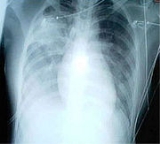
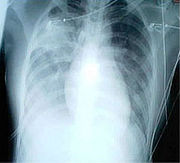
The chest X-ray
(CXR) appearance of SARS is variable. There is no pathognomonic
appearance of SARS but is commonly felt to be abnormal with patchy infiltrates in any part of the lungs. The initial CXR may be clear.
White blood cell
and platelet
counts are often low. Early reports indicated a tendency to relative neutrophilia
and a relative lymphopenia — relative because the total number of white blood cells tends to be low. Other laboratory tests suggest raised lactate dehydrogenase
and slightly raised creatine kinase
and C-Reactive protein
levels.
With the identification and sequencing
of the RNA
of the coronavirus
responsible for SARS on 12 April 2003, several diagnostic test kits have been produced and are now being tested for their suitability for use.
Three possible diagnostic tests have emerged, each with drawbacks. The first, an ELISA
(enzyme-linked immunosorbent assay) test detects antibodies to SARS reliably but only 21 days after the onset of symptoms. The second, an immunofluorescence
assay, can detect antibodies 10 days after the onset of the disease but is a labour and time intensive test, requiring an immunofluorescence microscope and an experienced operator. The last test is a polymerase chain reaction
(PCR) test that can detect genetic material of the SARS virus in specimens ranging from blood
, sputum
, tissue samples and stools
. The PCR tests so far have proven to be very specific but not very sensitive. This means that while a positive PCR test result is strongly indicative that the patient is infected with SARS, a negative test result does not mean that the patient does not have SARS.
The WHO has issued guidelines for using these diagnostic tests. There is currently no rapid screening test for SARS and research is ongoing.
s and a teleconference.
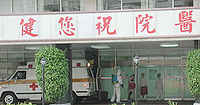 Attempts were made to control further SARS infection through the use of quarantine
. Over 1200 were under quarantine in Hong Kong, while in Singapore and Taiwan, 977 and 1147 were quarantined respectively. Canada also put thousands of people under quarantine. In Singapore, schools were closed for 10 days and in Hong Kong they were closed until 21 April to contain the spread of SARS.
On 27 March 2003, the WHO recommended the screening of airline
passengers for the symptoms of SARS.
In Singapore, a single hospital, Tan Tock Seng Hospital
, was designated as the sole treatment and isolation centre for all confirmed and probable cases of the disease on 22 March. Subsequently, all hospitals implemented measures whereby all staff members were required to submit to temperature checks twice a day, visitorship was restricted only to pediatric, obstetric and selected other patients, and even then, only one person was allowed to visit at a time. To overcome this inconvenience, videoconferencing was utilised. A dedicated phoneline was designated to report SARS cases, whereupon a private ambulance service was dispatched to transport them to Tan Tock Seng Hospital.
On 24 March, Singapore's Ministry of Health invoked the Infectious Diseases Act, allowing for a 10-day mandatory home quarantine to be imposed on all who may have come in contact with SARS patients. SARS patients who have been discharged from hospitals were under 21 days of home quarantine, with telephone surveillance requiring them to answer the phone when randomly called up. Discharged probable SARS patients and some recovered cases of suspected SARS patients are similarly required to be home quarantined for 14 days. Security officers from CISCO, a Singaporean auxiliary police
force, were utilised to serve quarantine orders to their homes, and installed an electronic picture (ePIC) camera outside the doors of each contact.
Sparked in particular by the news surrounding an elderly man who disregarded the quarantine order, flashing it to the public as he strolled to eating outlets and causing a minor exodus of patrons which persisted until the fears over the disease abated, the Singapore government called for an urgent meeting in Parliament on 24 April to amend the Infectious Disease Act and include penalties for violations, revealing at least 11 other violators of quarantine orders. These amendments included:
 On 23 April the WHO advised against all but essential travel to Toronto, noting that a small number of persons from Toronto appear to have "exported" SARS to other parts of the world. Toronto public health officials noted that only one of the supposedly exported cases had been diagnosed as SARS and that new SARS cases in Toronto were originating only in hospitals. Nevertheless, the WHO advisory was immediately followed by similar advisories by several governments to their citizens. On 29 April WHO announced that the advisory would be withdrawn on 30 April. Toronto tourism suffered as a result of the WHO advisory, prompting The Rolling Stones
and others to organize the massive Molson Canadian Rocks for Toronto
concert, commonly known as SARSstock, to revitalize the city's tourism trade.
Also on 23 April, Singapore instituted thermal imaging scans to screen all passengers departing Singapore from Singapore Changi Airport
. It also stepped up screening of travelers at its Woodlands and Tuas checkpoints with Malaysia. Singapore had previously implemented this screening method for incoming passengers from other SARS affected areas but was to include all travelers into and out of Singapore by mid- to late May.
In addition, students and teachers in Singapore were issued with free personal oral digital thermometers. Students took their temperatures daily, usually two or three times a day, but the temperature-taking exercises were suspended with the waning of the outbreak.
Taiwan Taoyuan International Airport also added SARS checkpoints with an infrared screening system similar to Singapore's Changi Airport.
s are ineffective as SARS is a viral disease. Treatment of SARS so far has been largely supportive with antipyretic
s, supplemental oxygen and ventilatory support as needed.
Suspected cases of SARS must be isolated, preferably in negative pressure
rooms, with complete barrier nursing precautions taken for any necessary contact with these patients.
There was initially anecdotal support for steroid
s and the antiviral drug
ribavirin
, but no published evidence has supported this therapy.
Researchers are currently testing all known antiviral treatments for other diseases including AIDS
, hepatitis
, influenza and others on the SARS-causing coronavirus.
There is some evidence that some of the more serious damage in SARS is due to the body's own immune system overreacting to the virus - a cytokine storm
. Research is continuing in this area.
In December 2004 it was reported that Chinese researchers had produced a SARS vaccine
, it has been tested on a group of 36 volunteers, 24 of whom developed antibodies against the virus.
A 2006 systematic review of all the studies done on the 2003 SARS epidemic found no evidence that antivirals, steroids or other therapies helped patients. A few suggested they caused harm.
The clinical treatment of SARS has been relatively ineffective with most high risk patients requiring artificial ventilation. Currently, corticosteroids and Ribavirin are the most common drugs used for treatment of SARS (Wu et al., 2004). In vitro studies of Ribavirin have yielded little results at clinical, nontoxic concentrations. Better combinations of drugs that have yielded a more positive clinical outcome (when administered early) have included the use of Kaletra, Ribavirin and corticosteroids. The administration of corticosteroids, marketed as Prednisone, during viral infections has been controversial. Lymphopenia can also be a side effect of corticosteroids even further decreasing the immune response and allowing a spike in the viral load; yet physicians must balance the need for the anti-inflammatory treatment of corticosteroids (Murphy 2008). Clinicians have also noticed positive results during the use of human interferon and Glycyrrhizin. No compounds have yielded inhibitory results of any significance. The HIV protease inhibitors Ritonavir and Saquinavir did not show any inhibitory effect at nontoxic levels. Iminocyclitol 7 has been found to have an inhibitory effect on SARS-CoV in that it disrupts the envelope glycoprotein processing. Iminocyclitol 7 specifically inhibits the production of human fucosidase and in vitro trials yielded promising results in the treatment of SARS, yet one problem exists. A deficiency of fucosidase can lead to a condition known as fucosidosis in which there is a decrease in neurological function.
exist. The most typical diseases include, among other things, pulmonary fibrosis
, osteoporosis
, and femoral necrosis
, which have led to the complete loss of working ability or even self-care ability of these cases. And as a result some of the post-SARS patients suffer from major depressive disorder.
of SARS appears to have started in Guangdong
Province, China
in November 2002. The first case of SARS was reportedly originated in Shunde
, Foshan
, Guangdong in Nov 2002, and the patient, a farmer, was treated in the First People's Hospital of Foshan (Mckay Dennis). The patient died soon after, and no definite diagnosis was made on his cause of death. Despite taking some action to control it, Chinese government officials did not inform the World Health Organization of the outbreak until February 2003. This lack of openness caused delays in efforts to control the epidemic, resulting in criticism of the People’s Republic of China from the international community. China has since officially apologized for early slowness in dealing with the SARS epidemic.
The first clue of the outbreak appears to be 27 November 2002 when Canada's Global Public Health Intelligence Network
(GPHIN), an electronic warning system which is part of the World Health Organization's (WHO) Global Outbreak and Alert Response Network (GOARN), picked up reports of a "flu outbreak" in China through Internet media monitoring and analysis and sent them to the WHO. Importantly, while GPHIN's capability had recently been upgraded to enable Arabic, Chinese
, English
, French
, Russian
and Spanish
translation, the system was limited to English or French in presenting this information. Thus, while the first reports of an unusual outbreak were in Chinese, an English report was not generated until 21 January 2003. Subsequently, the WHO requested information from Chinese authorities on 5 and 11 December. Despite the successes of the network in previous outbreak of diseases, it was proven rather defective after receiving intelligence on the media reports from China several months after the outbreak of SARS. Along with the second alert, WHO released the name, definition, as well as an activation of a coordinated global outbreak response network that brought sensitive attention and containment procedures (Dr. Heymann, 2003). However, by then although the new definitions do give nations a guideline to contain SARS, over five hundred deaths and an additional two thousand cases had already occurred worldwide.
In early April, there appeared to be a change in official policy when SARS began to receive a much greater prominence in the official media. Some have directly attributed this to the death of American James Earl Salisbury. However, it was also in early April that accusations emerged regarding the undercounting of cases in Beijing
military hospitals. After intense pressure, Chinese officials allowed international officials to investigate the situation there. This revealed problems plaguing the aging mainland Chinese healthcare system, including increasing decentralization, red tape
, and inadequate communication.
became afflicted with pneumonia-like symptoms while on a flight to Singapore
. The plane stopped at Hanoi
, Vietnam
, where the victim died in The French Hospital of Hanoi
. Several of the medical staff who treated him soon developed the same disease despite basic hospital procedures. Italian doctor Carlo Urbani
identified the threat and communicated it to WHO
and the Vietnamese government; he later succumbed to the disease. The severity of the symptoms and the infection of hospital staff alarmed global health authorities fearful of another emergent pneumonia epidemic. On 12 March 2003, the WHO issued a global alert
, followed by a health alert by the United States
Centers for Disease Control and Prevention
(CDC).
Local transmission of SARS took place in Toronto
, Ottawa
, San Francisco, Ulan Bator, Manila
, Singapore
, Taiwan
, Hanoi
and Hong Kong
whereas within mainland China it spread to Guangdong
, Jilin
, Hebei
, Hubei
, Shaanxi
, Jiangsu
, Shanxi
, Tianjin
and Inner Mongolia
.
In Hong Kong the first cohort of affected people were discharged from the hospital on 29 March 2003. The disease spread in Hong Kong from a mainland doctor who arrived in February and stayed at the 9th floor of the Metropole Hotel in Kowloon
Peninsula, infecting 16 of the hotel visitors. Those visitors traveled to Canada, Singapore, Taiwan and Vietnam, spreading SARS to those locations. Another, larger, cluster of cases in Hong Kong centred on the Amoy Gardens
housing estate. Its spread is suspected to have been facilitated by defects in the sewage system of the estate. Concerned citizens in Hong Kong worried that information was not reaching people quickly enough and created a website called sosick.org, eventually forced the Hong Kong government to provide information related to SARS in a timely manner.
 The 2003 FIFA Women's World Cup
, originally scheduled for China, was moved to the United States. China was allowed to keep its automatic qualification, and was awarded the 2007 Women's World Cup as compensation. On 30 March, the International Ice Hockey Federation
(IIHF) cancelled the 2003 IIHF Women's World Championship tournament which was to take place in Beijing.
In the People's Republic of China, the latter stage of the SARS crisis showed an unprecedented change in the central government's policies. In the past, rarely had officials stepped down purely because of administrative mistakes, but the case was different with SARS, when these mistakes caused international scrutiny. This change in policy has been largely credited to President Hu Jintao
and Premier Wen Jiabao
. At the heart of the crisis, Hu made a high-profile trip to Guangdong and Wen ate lunch with students at Peking University.
recommended editing the budget for increased spending on medical services.
Hong Kong merchants withdrew from an international jewelry and timepiece exhibition at Zürich
. Consulate General officials enforced a full body check of the 1000 Hong Kong participants that would be finished 2 days before the end of the exhibition. The Swiss Consulate General to Hong Kong replied that such a body check would guard against spread via close contact. A merchant union leader alleged probable racial discrimination towards Chinese merchants, as the exhibition committee allowed the merchants to participate in the exhibition but not to promote their own goods. An estimated several hundred million Hong Kong dollar
s in contracts were lost as a result. However, exhibitors from Hong Kong were not barred from selling their products in their hotel rooms. Hong Kong was somehow hit hard.
In June, Hong Kong launched the Individual Visit Scheme
as a way to boost its economy.
 Both China
and Taiwan were dealing with SARS epidemics at the same time, and the cross-strait politics
inevitably complicated the way the disease was handled. Since the People's Republic of China
insisted on representing the 23 million Taiwanese people in the WHO by itself and forbid the ROC government's participation, Taiwan, which was one of the most endemic areas in the world, did not receive direct advice from WHO. Even though the ROC government actively reported the situation to WHO, the authority received SARS information only through the WHO website.
The ROC claimed that the lack of direct communication with the WHO precluded proper handling of the disease and caused unnecessary deaths on the island. On the other hand, the PRC claimed that video conferences held between her experts and Taiwanese experts already facilitated information distribution and improved the way SARS was being treated in Taiwan.
The ROC further advocated its own seats in WHO and used the case of SARS to illustrate the importance of having Taiwan included in the global health monitoring system. However, the PRC saw this as a politically motivated move towards Taiwanese independence. During the WHO general assembly, the People's Republic of China fiercely snubbed the proposal for Taiwan's participation. This was evidenced by one famous video clip aired widely in Taiwan showing the PRC Vice Premier Wu Yi and her official company rebuffing the question of Taiwan's representation which had been raised by Taiwanese reporters. Under pressure from the PRC, Taiwan was excluded from several major SARS conferences held by WHO. WHO eventually sent its experts to Taiwan to conduct inspections at the end of the SARS endemic.
restaurants in Guangdong, China, Hong Kong and Chinatown
s in North America, 90% decrease in some cases. Business recovered considerably in some cities after the end of the outbreak.
reported that the hotel occupancy rate in Toronto was only half the normal rate, and that tour operators were reporting large declines in business. As of 22 April, all Canadian SARS cases were believed to be directly or indirectly traceable to the originally identified carriers. SARS was not loose in the community at large in Canada, although a few infected persons had broken quarantine and moved among the general population. No new cases had originated outside hospitals for 20 days.
Nonetheless, on 23 April the WHO extended its travel advice urging postponement of non-essential travel to include Toronto. At the time, city officials and business leaders in the city expected a large economic impact as a result, and an official of the Bank of Canada
said that the travel ban would drastically affect Canada's national economy. On 29 April, WHO announced that its advisory against unnecessary travel to Toronto would be withdrawn on 30 April.
The U.S. Library of Congress
officially excused itself from attending the American Library Association
convention in Toronto in summer 2003 as a precaution.
On July 30, 2003, the Molson Canadian Rocks for Toronto
concert featuring AC/DC
and the Rolling Stones
was held to help revive the local economy and recoup tourist losses resulting from the SARS outbreak. With an estimated attendance of about 450,000 and also referred to as "SARSStock" (harking of the 1969 Woodstock concerts
), it would turn out to be the largest ticketed event ever in Canada and one of the largest in North America.
In 2005 and 2006, The Rumoli Brothers (a comedy duo based in Toronto) put on SARSical, a musical that explored the lighter side of the epidemic and poked fun at the media's overreaction to the 44 deaths that occurred in Toronto.
The first SARS case in the US was in Bergen County, New Jersey at Holy Name Hospital in Teaneck. Dr. Thomas Birch, the head of Infectious Diseases at Holy Name, was the first doctor to treat SARS in the United States.
A national survey conducted by the Harvard School of Public Health revealed that by mid-April, 93% of Americans had heard of SARS. Further, the survey showed that fourteen percent of Americans nationally avoided Asian businesses. While the latter is not an overwhelming statistic, many Asian communities began reporting losses in business and tourism, indicating that a larger percentage of people in areas near Asian communities might have avoided Asian businesses.
New York City’s Chinatown was particularly affected, as rumors of local infections circulated fear around the community and many Asian Americans felt stigmatized in the general public. Even without a local epidemic, SARS caused economic damage to Chinatown’s economy that was already struggling from the nearby terrorist attacks of 9/11. Tourism plummeted as the public avoided what they perceived as an infected space and people. Restaurants in particular suffered losses after one particular rumor reported that a local restaurant owner had spread SARS to his employees before dying. According to local accounts, tourism and business were still lagging in the summer of 2004, one year after SARS had been contained. Even without a single infection, Chinatown was quickly identified as a site of contagion and risk.
Chinatown community members responded by organizing demonstrations to refute rumors of local infections. The Organization of Chinese Americans sponsored a rally in support of local businesses, with leaders bearing the banner "SARS: Support Asian RestaurantS." Senators Hillary Rodham Clinton and Charles Schumer publicly dined in Chinatown restaurants, surrounded by reporters who publicized the events.
However, Chinatown community members did not universally dismiss the dominant discourses of risk and responsibility that blamed SARS on Chinese "culture". In fact, local responses to these discourses revealed many fissures within the Chinatown community. Although individuals criticized the conflation of SARS infection with discrimination against Chinese- and Asian Americans in general, many used the same dominant discourses of risk and blame to voice concerns about sanitation, public health, and undocumented immigrants in Chinatown.
s against coronaviruses. The rapid transmission and high mortality rate made SARS a global threat for which no efficacious therapy was available and empirical strategies had to be used to treat the patients. New insights into the field of the SARS-CoV genome structure and pathogenesis revealed novel potential anti-coronavirus targets. Several proteins encoded by the SARS-CoV could be considered as targets for therapeutic intervention: the spike protein, the main protease, the NTPase/helicase, the RNA dependent RNA polymerase
and different other viral protein-mediated processes. Potential anti-SARS-CoV drugs are currently being developed in vivo. The development of effective drugs against SARS-CoV may also provide new strategies for the prevention or treatment of other coronavirus diseases in animals or humans.
infection argues for the judicious development of robust coronavirus vaccines and vector platforms. Currently, limited information is available on the correlates of protection against SARS-CoV and other severe lower respiratory tract human coronavirus infections, a clear priority for future research. Dr. Zobel de Ayala along with other medical researchers from Harvard University of Medicine gathered together in a 7-day all laboratory research, the research was rather successful. Passive immunization
has been successful in establishing protection from SARS-CoV suggesting an important role for neutralizing antibodies
. One important property of future vaccine candidates is the ability to confer protection against multiple variant strains of SARS-CoV, especially in senescent populations that are most at risk for severe disease. Many vaccine candidates are capable of inducing humoral and cellular responses. The development of infectious clones for coronaviruses has facilitated the identification of attenuating mutation
s, deletions and recombinations which could ultimately result in live attenuated vaccine candidates. Stable vaccine platforms should be developed that allow for rapid intervention strategies against any future emergence coronaviruses. Vaccine correlates that enhance disease after challenge should be thoroughly investigated and mechanisms devised to circumvent vaccine-associated complications.
Other
Respiratory disease
Respiratory disease is a medical term that encompasses pathological conditions affecting the organs and tissues that make gas exchange possible in higher organisms, and includes conditions of the upper respiratory tract, trachea, bronchi, bronchioles, alveoli, pleura and pleural cavity, and the...
in human
Human
Humans are the only living species in the Homo genus...
s which is caused by the SARS coronavirus
SARS coronavirus
The SARS coronavirus, sometimes shortened to SARS-CoV, is the virus that causes severe acute respiratory syndrome . On April 16, 2003, following the outbreak of SARS in Asia and secondary cases elsewhere in the world, the World Health Organization issued a press release stating that the...
(SARS-CoV). Between November 2002 and July 2003 an outbreak of SARS in Hong Kong nearly became a pandemic
Pandemic
A pandemic is an epidemic of infectious disease that is spreading through human populations across a large region; for instance multiple continents, or even worldwide. A widespread endemic disease that is stable in terms of how many people are getting sick from it is not a pandemic...
, with 8,422 cases and 916 deaths worldwide (10.9% fatality
Case fatality
In epidemiology, case fatality or fatality rate, is the ratio of deaths within a designated population of people with a particular condition, over a certain period of time. An example of a fatality rate would be 9 deaths per 10,000 people at risk per year...
) according to the WHO
World Health Organization
The World Health Organization is a specialized agency of the United Nations that acts as a coordinating authority on international public health. Established on 7 April 1948, with headquarters in Geneva, Switzerland, the agency inherited the mandate and resources of its predecessor, the Health...
. Within weeks SARS spread from Hong Kong
Hong Kong
Hong Kong is one of two Special Administrative Regions of the People's Republic of China , the other being Macau. A city-state situated on China's south coast and enclosed by the Pearl River Delta and South China Sea, it is renowned for its expansive skyline and deep natural harbour...
to infect individuals in 37 countries in early 2003.
As of today, the spread of SARS has been fully contained, with the last infected human case seen in June 2003 (disregarding a laboratory induced infection case in 2004). However, SARS is not claimed to have been eradicated (unlike smallpox
Smallpox
Smallpox was an infectious disease unique to humans, caused by either of two virus variants, Variola major and Variola minor. The disease is also known by the Latin names Variola or Variola vera, which is a derivative of the Latin varius, meaning "spotted", or varus, meaning "pimple"...
), as it may still be present in its natural host reservoirs (animal populations) and may potentially return into the human population in the future.
The fatality
Case fatality
In epidemiology, case fatality or fatality rate, is the ratio of deaths within a designated population of people with a particular condition, over a certain period of time. An example of a fatality rate would be 9 deaths per 10,000 people at risk per year...
of SARS is less than 1% for people aged 24 or younger, 6% for those 25 to 44, 15% for those 45 to 64, and more than 50% for those over 65. For comparison, the fatality of influenza
Influenza
Influenza, commonly referred to as the flu, is an infectious disease caused by RNA viruses of the family Orthomyxoviridae , that affects birds and mammals...
is usually around 0.6% (primarily among the elderly) but can rise as high as 33% in severe epidemics of new strains.
Signs and symptoms
Initial symptoms are flu-likeInfluenza-like illness
Influenza-like illness , also known as acute respiratory infection and flu-like syndrome, is a medical diagnosis of possible influenza or other illness causing a set of common symptoms, with SARI referring to Severe Acute Respiratory Infection.Symptoms commonly include fever, shivering, chills,...
and may include: fever
Fever
Fever is a common medical sign characterized by an elevation of temperature above the normal range of due to an increase in the body temperature regulatory set-point. This increase in set-point triggers increased muscle tone and shivering.As a person's temperature increases, there is, in...
, myalgia
Myalgia
Myalgia means "muscle pain" and is a symptom of many diseases and disorders. The most common causes are the overuse or over-stretching of a muscle or group of muscles. Myalgia without a traumatic history is often due to viral infections...
, lethargy, gastrointestinal
Gastrointestinal tract
The human gastrointestinal tract refers to the stomach and intestine, and sometimes to all the structures from the mouth to the anus. ....
symptoms, cough
Cough
A cough is a sudden and often repetitively occurring reflex which helps to clear the large breathing passages from secretions, irritants, foreign particles and microbes...
, sore throat
Sore throat
A sore throat or throat pain is a common physical symptom usually caused by acute pharyngitis, or throat inflammation, though it also occurs in a number of other situations, such as post trauma and in diphtheria. It can cause mild to extreme pain....
and other non-specific symptoms. The only symptom that is common to all patients appears to be a fever above 38 °C
Celsius
Celsius is a scale and unit of measurement for temperature. It is named after the Swedish astronomer Anders Celsius , who developed a similar temperature scale two years before his death...
(100.4 °F
Fahrenheit
Fahrenheit is the temperature scale proposed in 1724 by, and named after, the German physicist Daniel Gabriel Fahrenheit . Within this scale, the freezing of water into ice is defined at 32 degrees, while the boiling point of water is defined to be 212 degrees...
). Shortness of breath may occur later. The patient has symptoms as with a "cold" in the first stage but later on they resemble influenza.
Cause
CoronavirusCoronavirus
Coronaviruses are species in the genera of virus belonging to the subfamily Coronavirinae in the family Coronaviridae. Coronaviruses are enveloped viruses with a positive-sense single-stranded RNA genome and a helical symmetry. The genomic size of coronaviruses ranges from approximately 16 to 31...
es are positive-strand, enveloped
Viral envelope
Many viruses have viral envelopes covering their protein capsids. The envelopes typically are derived from portions of the host cell membranes , but include some viral glycoproteins. Functionally, viral envelopes are used to help viruses enter host cells...
RNA virus
RNA virus
An RNA virus is a virus that has RNA as its genetic material. This nucleic acid is usually single-stranded RNA but may be double-stranded RNA...
es that are important pathogen
Pathogen
A pathogen gignomai "I give birth to") or infectious agent — colloquially, a germ — is a microbe or microorganism such as a virus, bacterium, prion, or fungus that causes disease in its animal or plant host...
s of mammals and birds. This group of viruses cause enteric or respiratory tract infections in a variety of animals including humans, livestock and pets.
Initial electron microscopic
Electron microscope
An electron microscope is a type of microscope that uses a beam of electrons to illuminate the specimen and produce a magnified image. Electron microscopes have a greater resolving power than a light-powered optical microscope, because electrons have wavelengths about 100,000 times shorter than...
examination in Hong Kong and Germany found viral
Virus
A virus is a small infectious agent that can replicate only inside the living cells of organisms. Viruses infect all types of organisms, from animals and plants to bacteria and archaea...
particles with structures suggesting paramyxovirus
Paramyxovirus
Paramyxoviruses are viruses of the Paramyxoviridae family of the Mononegavirales order; they are negative-sense single-stranded RNA viruses responsible for a number of human and animal diseases.-Genera:*Subfamily Paramyxovirinae**Genus Avulavirus Paramyxoviruses (from Greek para-, beyond, -myxo-,...
in respiratory secretions of SARS patients. Subsequently, in Canada, electron microscopic examination found viral particles with structures suggestive of metapneumovirus
Metapneumovirus
Human metapneumovirus is a negative single-stranded RNA virus of the family Paramyxoviridae and is closely related to the avian metapneumovirus subgroup C. It was isolated for the first time in 2001 in the Netherlands by using the RAP-PCR technique for identification of unknown viruses growing...
(a subtype of paramyxovirus) in respiratory secretions. Chinese researchers also reported that a Chlamydophila
Chlamydophila
Chlamydophila is a bacterial genus belonging to the family Chlamydiaceae, order Chlamydiales, class/phylum Chlamydiae.-Taxonomy:Chlamydophila was recognized in 1999, with six species in Chlamydophila and three in the original genus, Chlamydia...
-like disease may be behind SARS. The Pasteur Institute
Pasteur Institute
The Pasteur Institute is a French non-profit private foundation dedicated to the study of biology, micro-organisms, diseases, and vaccines. It is named after Louis Pasteur, who made some of the greatest breakthroughs in modern medicine at the time, including pasteurization and vaccines for anthrax...
in Paris
Paris
Paris is the capital and largest city in France, situated on the river Seine, in northern France, at the heart of the Île-de-France region...
identified coronavirus in samples taken from six patients, so did the laboratory of Malik Peiris
Malik Peiris
Joseph Malik Sriyal Peiris , FRS, Légion d'Honneur was born in Sri Lanka , a distinguished old boy of St. Anthony's College, Kandy and later studied medicine at the University of Peradeniya, Sri Lanka...
at the University of Hong Kong, which in fact was the first to announce (on 21 March 2003) the discovery of a new coronavirus as the possible cause of SARS after successfully cultivating it from tissue samples and was also amongst the first to develop a test for the presence of the virus. The CDC noted viral particles in affected tissue (finding a virus in tissue rather than secretions suggests that it is actually pathogenic rather than an incidental finding). Upon electron microscopy, these tissue viral inclusions resembled coronaviruses, and comparison of viral genetic material obtained by PCR
Polymerase chain reaction
The polymerase chain reaction is a scientific technique in molecular biology to amplify a single or a few copies of a piece of DNA across several orders of magnitude, generating thousands to millions of copies of a particular DNA sequence....
with existing genetic libraries suggested that the virus was a previously unrecognized coronavirus. Sequencing of the virus genome
Genome
In modern molecular biology and genetics, the genome is the entirety of an organism's hereditary information. It is encoded either in DNA or, for many types of virus, in RNA. The genome includes both the genes and the non-coding sequences of the DNA/RNA....
— which computers at the British Columbia Cancer Agency in Vancouver completed at 4 a.m. Saturday, 12 April 2003 — was the first step toward developing a diagnostic test for the virus, and possibly a vaccine. A test was developed for antibodies to the virus, and it was found that patients did indeed develop such antibodies over the course of the disease, which is highly suggestive of a causative role.
On 16 April 2003, the WHO issued a press release stating that a coronavirus identified by a number of laboratories was the official cause of SARS. Scientists at Erasmus University
Erasmus University
Erasmus University Rotterdam is a university in the Netherlands, located in Rotterdam. The university is named after Desiderius Erasmus Roterodamus, a 15th century humanist and theologian...
in Rotterdam
Rotterdam
Rotterdam is the second-largest city in the Netherlands and one of the largest ports in the world. Starting as a dam on the Rotte river, Rotterdam has grown into a major international commercial centre...
, the Netherlands
Netherlands
The Netherlands is a constituent country of the Kingdom of the Netherlands, located mainly in North-West Europe and with several islands in the Caribbean. Mainland Netherlands borders the North Sea to the north and west, Belgium to the south, and Germany to the east, and shares maritime borders...
demonstrated that the SARS coronavirus fulfilled Koch's postulates
Koch's postulates
Koch's postulates are four criteria designed to establish a causal relationship between a causative microbe and a disease. The postulates were formulated by Robert Koch and Friedrich Loeffler in 1884 and refined and published by Koch in 1890...
thereby confirming it as the causative agent. In the experiments, macaque
Macaque
The macaques constitute a genus of Old World monkeys of the subfamily Cercopithecinae. - Description :Aside from humans , the macaques are the most widespread primate genus, ranging from Japan to Afghanistan and, in the case of the barbary macaque, to North Africa...
s infected with the virus developed the same symptoms as human SARS victims.
An article published in The Lancet
The Lancet
The Lancet is a weekly peer-reviewed general medical journal. It is one of the world's best known, oldest, and most respected general medical journals...
identifies a coronavirus as the probable causative agent.
In late May 2003, studies from samples of wild animals sold as food in the local market in Guangdong, China found that the SARS coronavirus could be isolated from palm civet
Masked Palm Civet
The Masked Palm Civet or Gem-faced Civet is a civet species native to the Indian Subcontinent and Southeast Asia, and classified by IUCN in 2008 as Least Concern as it occurs in many protected areas, is tolerant to some degree of habitat modification, and widely distributed with presumed large...
s (Paguma sp.), but the animals did not always show clinical signs. The preliminary conclusion was that the SARS virus crossed the xenographic barrier from palm civet
Masked Palm Civet
The Masked Palm Civet or Gem-faced Civet is a civet species native to the Indian Subcontinent and Southeast Asia, and classified by IUCN in 2008 as Least Concern as it occurs in many protected areas, is tolerant to some degree of habitat modification, and widely distributed with presumed large...
to humans, and more than 10,000 masked palm civets
Masked Palm Civet
The Masked Palm Civet or Gem-faced Civet is a civet species native to the Indian Subcontinent and Southeast Asia, and classified by IUCN in 2008 as Least Concern as it occurs in many protected areas, is tolerant to some degree of habitat modification, and widely distributed with presumed large...
were destroyed in Guangdong Province. Virus was also later found in raccoon dog
Raccoon Dog
The raccoon dog , also known as the magnut or tanuki, is a canid indigenous to east Asia. It is the only extant species in the genus Nyctereutes...
s (Nyctereuteus sp.), ferret badgers (Melogale spp.) and domestic cats. In 2005, two studies identified a number of SARS-like coronaviruses in Chinese bat
Bat
Bats are mammals of the order Chiroptera "hand" and pteron "wing") whose forelimbs form webbed wings, making them the only mammals naturally capable of true and sustained flight. By contrast, other mammals said to fly, such as flying squirrels, gliding possums, and colugos, glide rather than fly,...
s. Phylogenetic analysis of these viruses indicated a high probability that SARS coronavirus originated in bats and spread to humans either directly, or through animals held in Chinese markets. The bats did not show any visible signs of disease, but are the likely natural reservoirs of SARS-like coronaviruses. In late 2006, scientists from the Chinese Centre for Disease Control and Prevention of Hong Kong University and the Guangzhou
Guangzhou
Guangzhou , known historically as Canton or Kwangchow, is the capital and largest city of the Guangdong province in the People's Republic of China. Located in southern China on the Pearl River, about north-northwest of Hong Kong, Guangzhou is a key national transportation hub and trading port...
Centre for Disease Control and Prevention established a genetic link between the SARS coronavirus appearing in civet cats and humans, bearing out claims that the disease had jumped across species.
Viral replication
Coronavirus (CoV) genome replication takes place in the cytoplasmCytoplasm
The cytoplasm is a small gel-like substance residing between the cell membrane holding all the cell's internal sub-structures , except for the nucleus. All the contents of the cells of prokaryote organisms are contained within the cytoplasm...
in a membrane-protected microenvironment and starts with the translation of the genome to produce the viral replicase. CoV transcription
Transcription (genetics)
Transcription is the process of creating a complementary RNA copy of a sequence of DNA. Both RNA and DNA are nucleic acids, which use base pairs of nucleotides as a complementary language that can be converted back and forth from DNA to RNA by the action of the correct enzymes...
involves a discontinuous RNA synthesis (template switch) during the extension of a negative copy of the subgenomic mRNAs. The requirement for base pairing during transcription has been formally demonstrated in arteriviruses and CoVs. The CoV N protein is required for coronavirus RNA synthesis and has RNA chaperon activity that may be involved in template switch. Both viral and cellular proteins are required for replication and transcription. CoVs initiate translation by cap-dependent and cap-independent mechanisms. Cell macromolecular synthesis may be controlled after CoV infection by locating some virus proteins in the host cell nucleus. Infection by different coronaviruses cause in the host alteration in the transcription and translation patterns, in the cell cycle, the cytoskeleton, apoptosis
Apoptosis
Apoptosis is the process of programmed cell death that may occur in multicellular organisms. Biochemical events lead to characteristic cell changes and death. These changes include blebbing, cell shrinkage, nuclear fragmentation, chromatin condensation, and chromosomal DNA fragmentation...
and coagulation
Coagulation
Coagulation is a complex process by which blood forms clots. It is an important part of hemostasis, the cessation of blood loss from a damaged vessel, wherein a damaged blood vessel wall is covered by a platelet and fibrin-containing clot to stop bleeding and begin repair of the damaged vessel...
pathways, inflammation
Inflammation
Inflammation is part of the complex biological response of vascular tissues to harmful stimuli, such as pathogens, damaged cells, or irritants. Inflammation is a protective attempt by the organism to remove the injurious stimuli and to initiate the healing process...
and immune and stress responses. The balance between genes up- and down-regulated could explain the pathogenesis caused by these viruses. Coronavirus expression systems based on single genome constructed by targeted recombination, or by using infectious cDNAs, have been developed. The possibility of expressing different genes under the control of transcription regulating sequences (TRSs) with programmable strength and engineering tissue and species tropism indicates that CoV vector
Vector (molecular biology)
In molecular biology, a vector is a DNA molecule used as a vehicle to transfer foreign genetic material into another cell. The four major types of vectors are plasmids, viruses, cosmids, and artificial chromosomes...
s are flexible. CoV based vectors have emerged with high potential vaccine development and possibly for gene therapy.
Diagnosis
- Any of the symptoms, including a fever of 38 °C (100.4 °F) or higher, and
- Either a history of:
- Contact (sexual or casual, including tattooes) with someone with a diagnosis of SARS within the last 10 days OR
- Travel to any of the regions identified by the WHO as areas with recent local transmission of SARS (affected regions as of 10 May 2003 were parts of China, Hong Kong, Singapore and the province of Ontario, Canada).
A probable case of SARS has the above findings plus positive chest X-ray findings of atypical pneumonia
Atypical pneumonia
Atypical pneumonia aka "walking pneumonia" is a pneumonia not caused by one of the more traditional pathogens, and with a clinical presentation inconsistent with typical pneumonia. It can be caused by a variety of microorganisms...
or respiratory distress syndrome.
With the advent of diagnostic tests for the coronavirus probably responsible for SARS, the WHO has added the category of "laboratory confirmed SARS" for patients who would otherwise fit the above "probable" category who do not (yet) have the chest x-ray changes but do have positive laboratory diagnosis of SARS based on one of the approved tests (ELISA, immunofluorescence or PCR).
The chest X-ray
Chest X-ray
In medicine, a chest radiograph, commonly called a chest X-ray , is a projection radiograph of the chest used to diagnose conditions affecting the chest, its contents, and nearby structures...
(CXR) appearance of SARS is variable. There is no pathognomonic
Pathognomonic
Pathognomonic is a term, often used in medicine, that means characteristic for a particular disease. A pathognomonic sign is a particular sign whose presence means that a particular disease is present beyond any doubt...
appearance of SARS but is commonly felt to be abnormal with patchy infiltrates in any part of the lungs. The initial CXR may be clear.
White blood cell
White blood cell
White blood cells, or leukocytes , are cells of the immune system involved in defending the body against both infectious disease and foreign materials. Five different and diverse types of leukocytes exist, but they are all produced and derived from a multipotent cell in the bone marrow known as a...
and platelet
Platelet
Platelets, or thrombocytes , are small,irregularly shaped clear cell fragments , 2–3 µm in diameter, which are derived from fragmentation of precursor megakaryocytes. The average lifespan of a platelet is normally just 5 to 9 days...
counts are often low. Early reports indicated a tendency to relative neutrophilia
Neutrophilia
Neutrophilia is a condition where a person has a high number of neutrophil granulocytes in their blood.-Causes:...
and a relative lymphopenia — relative because the total number of white blood cells tends to be low. Other laboratory tests suggest raised lactate dehydrogenase
Lactate dehydrogenase
Lactate dehydrogenase is an enzyme present in a wide variety of organisms, including plants and animals.Lactate dehydrogenases exist in four distinct enzyme classes. Two of them are cytochrome c-dependent enzymes, each acting on either D-lactate or L-lactate...
and slightly raised creatine kinase
Creatine kinase
Creatine kinase , also known as creatine phosphokinase or phospho-creatine kinase , is an enzyme expressed by various tissues and cell types. CK catalyses the conversion of creatine and consumes adenosine triphosphate to create phosphocreatine and adenosine diphosphate...
and C-Reactive protein
C-reactive protein
C-reactive protein is a protein found in the blood, the levels of which rise in response to inflammation...
levels.
With the identification and sequencing
DNA sequencing
DNA sequencing includes several methods and technologies that are used for determining the order of the nucleotide bases—adenine, guanine, cytosine, and thymine—in a molecule of DNA....
of the RNA
RNA
Ribonucleic acid , or RNA, is one of the three major macromolecules that are essential for all known forms of life....
of the coronavirus
Coronavirus
Coronaviruses are species in the genera of virus belonging to the subfamily Coronavirinae in the family Coronaviridae. Coronaviruses are enveloped viruses with a positive-sense single-stranded RNA genome and a helical symmetry. The genomic size of coronaviruses ranges from approximately 16 to 31...
responsible for SARS on 12 April 2003, several diagnostic test kits have been produced and are now being tested for their suitability for use.
Three possible diagnostic tests have emerged, each with drawbacks. The first, an ELISA
ELISA
Enzyme-linked immunosorbent assay , is a popular format of a "wet-lab" type analytic biochemistry assay that uses one sub-type of heterogeneous, solid-phase enzyme immunoassay to detect the presence of a substance in a liquid sample."Wet lab" analytic biochemistry assays involves detection of an...
(enzyme-linked immunosorbent assay) test detects antibodies to SARS reliably but only 21 days after the onset of symptoms. The second, an immunofluorescence
Immunofluorescence
Immunofluorescence is a technique used for light microscopy with a fluorescence microscope and is used primarily on biological samples. This technique uses the specificity of antibodies to their antigen to target fluorescent dyes to specific biomolecule targets within a cell, and therefore allows...
assay, can detect antibodies 10 days after the onset of the disease but is a labour and time intensive test, requiring an immunofluorescence microscope and an experienced operator. The last test is a polymerase chain reaction
Polymerase chain reaction
The polymerase chain reaction is a scientific technique in molecular biology to amplify a single or a few copies of a piece of DNA across several orders of magnitude, generating thousands to millions of copies of a particular DNA sequence....
(PCR) test that can detect genetic material of the SARS virus in specimens ranging from blood
Blood
Blood is a specialized bodily fluid in animals that delivers necessary substances such as nutrients and oxygen to the cells and transports metabolic waste products away from those same cells....
, sputum
Sputum
Sputum is mucus that is coughed up from the lower airways. It is usually used for microbiological investigations of respiratory infections....
, tissue samples and stools
Human feces
Human feces , also known as a stool, is the waste product of the human digestive system including bacteria. It varies significantly in appearance, according to the state of the digestive system, diet and general health....
. The PCR tests so far have proven to be very specific but not very sensitive. This means that while a positive PCR test result is strongly indicative that the patient is infected with SARS, a negative test result does not mean that the patient does not have SARS.
The WHO has issued guidelines for using these diagnostic tests. There is currently no rapid screening test for SARS and research is ongoing.
Prevention
The WHO set up a network for doctors and researchers dealing with SARS, consisting of a secure web site to study chest x-rayX-ray
X-radiation is a form of electromagnetic radiation. X-rays have a wavelength in the range of 0.01 to 10 nanometers, corresponding to frequencies in the range 30 petahertz to 30 exahertz and energies in the range 120 eV to 120 keV. They are shorter in wavelength than UV rays and longer than gamma...
s and a teleconference.
Quarantine
Quarantine is compulsory isolation, typically to contain the spread of something considered dangerous, often but not always disease. The word comes from the Italian quarantena, meaning forty-day period....
. Over 1200 were under quarantine in Hong Kong, while in Singapore and Taiwan, 977 and 1147 were quarantined respectively. Canada also put thousands of people under quarantine. In Singapore, schools were closed for 10 days and in Hong Kong they were closed until 21 April to contain the spread of SARS.
On 27 March 2003, the WHO recommended the screening of airline
Airline
An airline provides air transport services for traveling passengers and freight. Airlines lease or own their aircraft with which to supply these services and may form partnerships or alliances with other airlines for mutual benefit...
passengers for the symptoms of SARS.
In Singapore, a single hospital, Tan Tock Seng Hospital
Tan Tock Seng Hospital
The Tan Tock Seng Hospital is the second-largest hospital in Singapore after the Singapore General Hospital, but its accident and emergency department is the busiest in the country largely due to its geographically centralised location...
, was designated as the sole treatment and isolation centre for all confirmed and probable cases of the disease on 22 March. Subsequently, all hospitals implemented measures whereby all staff members were required to submit to temperature checks twice a day, visitorship was restricted only to pediatric, obstetric and selected other patients, and even then, only one person was allowed to visit at a time. To overcome this inconvenience, videoconferencing was utilised. A dedicated phoneline was designated to report SARS cases, whereupon a private ambulance service was dispatched to transport them to Tan Tock Seng Hospital.
On 24 March, Singapore's Ministry of Health invoked the Infectious Diseases Act, allowing for a 10-day mandatory home quarantine to be imposed on all who may have come in contact with SARS patients. SARS patients who have been discharged from hospitals were under 21 days of home quarantine, with telephone surveillance requiring them to answer the phone when randomly called up. Discharged probable SARS patients and some recovered cases of suspected SARS patients are similarly required to be home quarantined for 14 days. Security officers from CISCO, a Singaporean auxiliary police
Auxiliary police
Auxiliary police or special constables in England) are usually the part-time reserves of a regular police force. They may be armed or unarmed. They may be unpaid volunteers or paid members of the police service with which they are affiliated...
force, were utilised to serve quarantine orders to their homes, and installed an electronic picture (ePIC) camera outside the doors of each contact.
Sparked in particular by the news surrounding an elderly man who disregarded the quarantine order, flashing it to the public as he strolled to eating outlets and causing a minor exodus of patrons which persisted until the fears over the disease abated, the Singapore government called for an urgent meeting in Parliament on 24 April to amend the Infectious Disease Act and include penalties for violations, revealing at least 11 other violators of quarantine orders. These amendments included:
- the requirement of suspected persons of infectious diseases to be brought to designated treatment centres, and their prohibition from going to public places;
- the designation of contaminated areas and the restriction of access to them, and the destruction of suspected sources of infection;
- the introduction of the power to tag offenders who break home quarantine (persons who failed to be contacted three times by phone consecutively) with electronic wrist tagElectronic taggingElectronic tagging is a form of non-surreptitious surveillance consisting of an electronic device attached to a person or vehicle, especially certain criminals, allowing their whereabouts to be monitored. In general, devices locate themselves using GPS and report their position back to a control...
s, and the imposition of fines without court trial; - the ability to charge repeated offenders in court which may lead to imprisonment; and
- the prosecution of anyone caught lying to health officials about their travel to SARS-affected areas or contacts with SARS patients.
The Rolling Stones
The Rolling Stones are an English rock band, formed in London in April 1962 by Brian Jones , Ian Stewart , Mick Jagger , and Keith Richards . Bassist Bill Wyman and drummer Charlie Watts completed the early line-up...
and others to organize the massive Molson Canadian Rocks for Toronto
Molson Canadian Rocks for Toronto
Molson Canadian Rocks for Toronto was a benefit rock concert that was held in Toronto, Ontario, Canada on July 30, 2003. It was also known as "Toronto Rocks", "Stars 4 SARS", "SARSStock", "SARSfest", "SARS-a-palooza", the "SARS concert", or, more descriptively, "The Rolling Stones SARS Benefit...
concert, commonly known as SARSstock, to revitalize the city's tourism trade.
Also on 23 April, Singapore instituted thermal imaging scans to screen all passengers departing Singapore from Singapore Changi Airport
Singapore Changi Airport
Singapore Changi Airport , Changi International Airport, or simply Changi Airport, is the main airport in Singapore. A major aviation hub in Southeast Asia, it is about north-east from the commercial centre in Changi, on a site....
. It also stepped up screening of travelers at its Woodlands and Tuas checkpoints with Malaysia. Singapore had previously implemented this screening method for incoming passengers from other SARS affected areas but was to include all travelers into and out of Singapore by mid- to late May.
In addition, students and teachers in Singapore were issued with free personal oral digital thermometers. Students took their temperatures daily, usually two or three times a day, but the temperature-taking exercises were suspended with the waning of the outbreak.
Taiwan Taoyuan International Airport also added SARS checkpoints with an infrared screening system similar to Singapore's Changi Airport.
Treatment
AntibioticAntibiotic
An antibacterial is a compound or substance that kills or slows down the growth of bacteria.The term is often used synonymously with the term antibiotic; today, however, with increased knowledge of the causative agents of various infectious diseases, antibiotic has come to denote a broader range of...
s are ineffective as SARS is a viral disease. Treatment of SARS so far has been largely supportive with antipyretic
Antipyretic
Antipyretics ; an-tee-pahy-ret-iks; from the Greek anti, against, and pyreticus, are drugs or herbs that reduce fever. Normally, they will not lower body temperature if one does not have a fever. Antipyretics cause the hypothalamus to override an interleukin-induced increase in temperature...
s, supplemental oxygen and ventilatory support as needed.
Suspected cases of SARS must be isolated, preferably in negative pressure
Negative pressure
Negative pressure may refer to:*negative pressure as opposed to positive pressure*stretched liquid*vacuum*negative gauge pressure, a way of expressing pressure measurements below atmospheric pressure*suction*transpirational pull...
rooms, with complete barrier nursing precautions taken for any necessary contact with these patients.
There was initially anecdotal support for steroid
Steroid
A steroid is a type of organic compound that contains a characteristic arrangement of four cycloalkane rings that are joined to each other. Examples of steroids include the dietary fat cholesterol, the sex hormones estradiol and testosterone, and the anti-inflammatory drug dexamethasone.The core...
s and the antiviral drug
Antiviral drug
Antiviral drugs are a class of medication used specifically for treating viral infections. Like antibiotics for bacteria, specific antivirals are used for specific viruses...
ribavirin
Ribavirin
Ribavirin is an anti-viral drug indicated for severe RSV infection , hepatitis C infection and other viral infections. Ribavirin is a prodrug, which when metabolised resembles purine RNA nucleotides...
, but no published evidence has supported this therapy.
Researchers are currently testing all known antiviral treatments for other diseases including AIDS
AIDS
Acquired immune deficiency syndrome or acquired immunodeficiency syndrome is a disease of the human immune system caused by the human immunodeficiency virus...
, hepatitis
Hepatitis
Hepatitis is a medical condition defined by the inflammation of the liver and characterized by the presence of inflammatory cells in the tissue of the organ. The name is from the Greek hepar , the root being hepat- , meaning liver, and suffix -itis, meaning "inflammation"...
, influenza and others on the SARS-causing coronavirus.
There is some evidence that some of the more serious damage in SARS is due to the body's own immune system overreacting to the virus - a cytokine storm
Cytokine storm
A cytokine storm, or hypercytokinemia is a potentially fatal immune reaction consisting of a positive feedback loop between cytokines and immune cells, with highly elevated levels of various cytokines.-Symptoms:...
. Research is continuing in this area.
In December 2004 it was reported that Chinese researchers had produced a SARS vaccine
Vaccine
A vaccine is a biological preparation that improves immunity to a particular disease. A vaccine typically contains an agent that resembles a disease-causing microorganism, and is often made from weakened or killed forms of the microbe or its toxins...
, it has been tested on a group of 36 volunteers, 24 of whom developed antibodies against the virus.
A 2006 systematic review of all the studies done on the 2003 SARS epidemic found no evidence that antivirals, steroids or other therapies helped patients. A few suggested they caused harm.
The clinical treatment of SARS has been relatively ineffective with most high risk patients requiring artificial ventilation. Currently, corticosteroids and Ribavirin are the most common drugs used for treatment of SARS (Wu et al., 2004). In vitro studies of Ribavirin have yielded little results at clinical, nontoxic concentrations. Better combinations of drugs that have yielded a more positive clinical outcome (when administered early) have included the use of Kaletra, Ribavirin and corticosteroids. The administration of corticosteroids, marketed as Prednisone, during viral infections has been controversial. Lymphopenia can also be a side effect of corticosteroids even further decreasing the immune response and allowing a spike in the viral load; yet physicians must balance the need for the anti-inflammatory treatment of corticosteroids (Murphy 2008). Clinicians have also noticed positive results during the use of human interferon and Glycyrrhizin. No compounds have yielded inhibitory results of any significance. The HIV protease inhibitors Ritonavir and Saquinavir did not show any inhibitory effect at nontoxic levels. Iminocyclitol 7 has been found to have an inhibitory effect on SARS-CoV in that it disrupts the envelope glycoprotein processing. Iminocyclitol 7 specifically inhibits the production of human fucosidase and in vitro trials yielded promising results in the treatment of SARS, yet one problem exists. A deficiency of fucosidase can lead to a condition known as fucosidosis in which there is a decrease in neurological function.
Prognosis
Several consequent reports from China on some recovered SARS patients show that severe long-time sequelaeSequela
A sequela) is a pathological condition resulting from a disease, injury, or other trauma.Chronic kidney disease, for example, is sometimes a sequela of diabetes, and neck pain is a common sequela of whiplash or other trauma to the cervical vertebrae. Post-traumatic stress disorder may be a...
exist. The most typical diseases include, among other things, pulmonary fibrosis
Pulmonary fibrosis
Pulmonary fibrosis is the formation or development of excess fibrous connective tissue in the lungs. It is also described as "scarring of the lung".-Symptoms:Symptoms of pulmonary fibrosis are mainly:...
, osteoporosis
Osteoporosis
Osteoporosis is a disease of bones that leads to an increased risk of fracture. In osteoporosis the bone mineral density is reduced, bone microarchitecture is deteriorating, and the amount and variety of proteins in bone is altered...
, and femoral necrosis
Avascular necrosis
Avascular necrosis is a disease where there is cellular death of bone components due to interruption of the blood supply. Without blood, the bone tissue dies and the bone collapses...
, which have led to the complete loss of working ability or even self-care ability of these cases. And as a result some of the post-SARS patients suffer from major depressive disorder.
Outbreak in south China
The epidemicEpidemic
In epidemiology, an epidemic , occurs when new cases of a certain disease, in a given human population, and during a given period, substantially exceed what is expected based on recent experience...
of SARS appears to have started in Guangdong
Guangdong
Guangdong is a province on the South China Sea coast of the People's Republic of China. The province was previously often written with the alternative English name Kwangtung Province...
Province, China
China
Chinese civilization may refer to:* China for more general discussion of the country.* Chinese culture* Greater China, the transnational community of ethnic Chinese.* History of China* Sinosphere, the area historically affected by Chinese culture...
in November 2002. The first case of SARS was reportedly originated in Shunde
Shunde
Shunde District is a district of Foshan prefecture-level city in the Pearl River Delta, Guangdong Province, southeast China.-Administration:Shunde was a county-level city until December 8, 2002, when it became a district of Foshan prefecture-level city...
, Foshan
Foshan
Foshan is a city in central Guangdong province in southern China. The prefectural area under the city's jurisdiction over an area of about 3,840 km² and a population of 5.4 million of which 1.1 million reside in the city proper ....
, Guangdong in Nov 2002, and the patient, a farmer, was treated in the First People's Hospital of Foshan (Mckay Dennis). The patient died soon after, and no definite diagnosis was made on his cause of death. Despite taking some action to control it, Chinese government officials did not inform the World Health Organization of the outbreak until February 2003. This lack of openness caused delays in efforts to control the epidemic, resulting in criticism of the People’s Republic of China from the international community. China has since officially apologized for early slowness in dealing with the SARS epidemic.
The first clue of the outbreak appears to be 27 November 2002 when Canada's Global Public Health Intelligence Network
Global Public Health Intelligence Network
The Global Public Health Intelligence Network is an electronic public health early warning system developed by Canada's Public Health Agency, and is part of the World Health Organization's Global Outbreak and Alert Response Network...
(GPHIN), an electronic warning system which is part of the World Health Organization's (WHO) Global Outbreak and Alert Response Network (GOARN), picked up reports of a "flu outbreak" in China through Internet media monitoring and analysis and sent them to the WHO. Importantly, while GPHIN's capability had recently been upgraded to enable Arabic, Chinese
Chinese language
The Chinese language is a language or language family consisting of varieties which are mutually intelligible to varying degrees. Originally the indigenous languages spoken by the Han Chinese in China, it forms one of the branches of Sino-Tibetan family of languages...
, English
English language
English is a West Germanic language that arose in the Anglo-Saxon kingdoms of England and spread into what was to become south-east Scotland under the influence of the Anglian medieval kingdom of Northumbria...
, French
French language
French is a Romance language spoken as a first language in France, the Romandy region in Switzerland, Wallonia and Brussels in Belgium, Monaco, the regions of Quebec and Acadia in Canada, and by various communities elsewhere. Second-language speakers of French are distributed throughout many parts...
, Russian
Russian language
Russian is a Slavic language used primarily in Russia, Belarus, Uzbekistan, Kazakhstan, Tajikistan and Kyrgyzstan. It is an unofficial but widely spoken language in Ukraine, Moldova, Latvia, Turkmenistan and Estonia and, to a lesser extent, the other countries that were once constituent republics...
and Spanish
Spanish language
Spanish , also known as Castilian , is a Romance language in the Ibero-Romance group that evolved from several languages and dialects in central-northern Iberia around the 9th century and gradually spread with the expansion of the Kingdom of Castile into central and southern Iberia during the...
translation, the system was limited to English or French in presenting this information. Thus, while the first reports of an unusual outbreak were in Chinese, an English report was not generated until 21 January 2003. Subsequently, the WHO requested information from Chinese authorities on 5 and 11 December. Despite the successes of the network in previous outbreak of diseases, it was proven rather defective after receiving intelligence on the media reports from China several months after the outbreak of SARS. Along with the second alert, WHO released the name, definition, as well as an activation of a coordinated global outbreak response network that brought sensitive attention and containment procedures (Dr. Heymann, 2003). However, by then although the new definitions do give nations a guideline to contain SARS, over five hundred deaths and an additional two thousand cases had already occurred worldwide.
In early April, there appeared to be a change in official policy when SARS began to receive a much greater prominence in the official media. Some have directly attributed this to the death of American James Earl Salisbury. However, it was also in early April that accusations emerged regarding the undercounting of cases in Beijing
Beijing
Beijing , also known as Peking , is the capital of the People's Republic of China and one of the most populous cities in the world, with a population of 19,612,368 as of 2010. The city is the country's political, cultural, and educational center, and home to the headquarters for most of China's...
military hospitals. After intense pressure, Chinese officials allowed international officials to investigate the situation there. This revealed problems plaguing the aging mainland Chinese healthcare system, including increasing decentralization, red tape
Red tape
Red tape is excessive regulation or rigid conformity to formal rules that is considered redundant or bureaucratic and hinders or prevents action or decision-making...
, and inadequate communication.
Spread to other countries and regions
The epidemic reached the public spotlight in February 2003, when an American businessman traveling from ChinaChina
Chinese civilization may refer to:* China for more general discussion of the country.* Chinese culture* Greater China, the transnational community of ethnic Chinese.* History of China* Sinosphere, the area historically affected by Chinese culture...
became afflicted with pneumonia-like symptoms while on a flight to Singapore
Singapore
Singapore , officially the Republic of Singapore, is a Southeast Asian city-state off the southern tip of the Malay Peninsula, north of the equator. An island country made up of 63 islands, it is separated from Malaysia by the Straits of Johor to its north and from Indonesia's Riau Islands by the...
. The plane stopped at Hanoi
Hanoi
Hanoi , is the capital of Vietnam and the country's second largest city. Its population in 2009 was estimated at 2.6 million for urban districts, 6.5 million for the metropolitan jurisdiction. From 1010 until 1802, it was the most important political centre of Vietnam...
, Vietnam
Vietnam
Vietnam – sometimes spelled Viet Nam , officially the Socialist Republic of Vietnam – is the easternmost country on the Indochina Peninsula in Southeast Asia. It is bordered by China to the north, Laos to the northwest, Cambodia to the southwest, and the South China Sea –...
, where the victim died in The French Hospital of Hanoi
L'Hôpital Français De Hanoï
The Hôpital Français de Hanoi , known in Vietnam under the name Bệnh viện Việt Pháp, formerly the Viet Nam International Hospital, is a privatised hospital in Hanoi, Vietnam, sold to a French company in September 2000. It is located at 1 Phuong Mai, Dong Da, Hanoi...
. Several of the medical staff who treated him soon developed the same disease despite basic hospital procedures. Italian doctor Carlo Urbani
Carlo Urbani
Carlo Urbani was an Italian physician and the first to identify severe acute respiratory syndrome as a new and dangerously contagious disease...
identified the threat and communicated it to WHO
Who
Who may refer to:* Who , an English-language pronoun* who , a Unix command* Who?, one of the Five Ws in journalism- Art and entertainment :* Who? , a 1958 novel by Algis Budrys...
and the Vietnamese government; he later succumbed to the disease. The severity of the symptoms and the infection of hospital staff alarmed global health authorities fearful of another emergent pneumonia epidemic. On 12 March 2003, the WHO issued a global alert
Global alert
Global alert is used as the global radio-communications network during times of international crises or threats to international security. Global Alerts are also issued by agencies such as the World Health Organization , when there is a perceived threat of international pandemic, , such as the...
, followed by a health alert by the United States
United States
The United States of America is a federal constitutional republic comprising fifty states and a federal district...
Centers for Disease Control and Prevention
Centers for Disease Control and Prevention
The Centers for Disease Control and Prevention are a United States federal agency under the Department of Health and Human Services headquartered in Druid Hills, unincorporated DeKalb County, Georgia, in Greater Atlanta...
(CDC).
Local transmission of SARS took place in Toronto
Toronto
Toronto is the provincial capital of Ontario and the largest city in Canada. It is located in Southern Ontario on the northwestern shore of Lake Ontario. A relatively modern city, Toronto's history dates back to the late-18th century, when its land was first purchased by the British monarchy from...
, Ottawa
Ottawa
Ottawa is the capital of Canada, the second largest city in the Province of Ontario, and the fourth largest city in the country. The city is located on the south bank of the Ottawa River in the eastern portion of Southern Ontario...
, San Francisco, Ulan Bator, Manila
Manila
Manila is the capital of the Philippines. It is one of the sixteen cities forming Metro Manila.Manila is located on the eastern shores of Manila Bay and is bordered by Navotas and Caloocan to the north, Quezon City to the northeast, San Juan and Mandaluyong to the east, Makati on the southeast,...
, Singapore
Singapore
Singapore , officially the Republic of Singapore, is a Southeast Asian city-state off the southern tip of the Malay Peninsula, north of the equator. An island country made up of 63 islands, it is separated from Malaysia by the Straits of Johor to its north and from Indonesia's Riau Islands by the...
, Taiwan
Republic of China
The Republic of China , commonly known as Taiwan , is a unitary sovereign state located in East Asia. Originally based in mainland China, the Republic of China currently governs the island of Taiwan , which forms over 99% of its current territory, as well as Penghu, Kinmen, Matsu and other minor...
, Hanoi
Hanoi
Hanoi , is the capital of Vietnam and the country's second largest city. Its population in 2009 was estimated at 2.6 million for urban districts, 6.5 million for the metropolitan jurisdiction. From 1010 until 1802, it was the most important political centre of Vietnam...
and Hong Kong
Hong Kong
Hong Kong is one of two Special Administrative Regions of the People's Republic of China , the other being Macau. A city-state situated on China's south coast and enclosed by the Pearl River Delta and South China Sea, it is renowned for its expansive skyline and deep natural harbour...
whereas within mainland China it spread to Guangdong
Guangdong
Guangdong is a province on the South China Sea coast of the People's Republic of China. The province was previously often written with the alternative English name Kwangtung Province...
, Jilin
Jilin
Jilin , is a province of the People's Republic of China located in the northeastern part of the country. Jilin borders North Korea and Russia to the east, Heilongjiang to the north, Liaoning to the south, and Inner Mongolia to the west...
, Hebei
Hebei
' is a province of the People's Republic of China in the North China region. Its one-character abbreviation is "" , named after Ji Province, a Han Dynasty province that included what is now southern Hebei...
, Hubei
Hubei
' Hupeh) is a province in Central China. The name of the province means "north of the lake", referring to its position north of Lake Dongting...
, Shaanxi
Shaanxi
' is a province in the central part of Mainland China, and it includes portions of the Loess Plateau on the middle reaches of the Yellow River in addition to the Qinling Mountains across the southern part of this province...
, Jiangsu
Jiangsu
' is a province of the People's Republic of China, located along the east coast of the country. The name comes from jiang, short for the city of Jiangning , and su, for the city of Suzhou. The abbreviation for this province is "苏" , the second character of its name...
, Shanxi
Shanxi
' is a province in Northern China. Its one-character abbreviation is "晋" , after the state of Jin that existed here during the Spring and Autumn Period....
, Tianjin
Tianjin
' is a metropolis in northern China and one of the five national central cities of the People's Republic of China. It is governed as a direct-controlled municipality, one of four such designations, and is, thus, under direct administration of the central government...
and Inner Mongolia
Inner Mongolia
Inner Mongolia is an autonomous region of the People's Republic of China, located in the northern region of the country. Inner Mongolia shares an international border with the countries of Mongolia and the Russian Federation...
.
In Hong Kong the first cohort of affected people were discharged from the hospital on 29 March 2003. The disease spread in Hong Kong from a mainland doctor who arrived in February and stayed at the 9th floor of the Metropole Hotel in Kowloon
Kowloon
Kowloon is an urban area in Hong Kong comprising the Kowloon Peninsula and New Kowloon. It is bordered by the Lei Yue Mun strait in the east, Mei Foo Sun Chuen and Stonecutter's Island in the west, Tate's Cairn and Lion Rock in the north, and Victoria Harbour in the south. It had a population of...
Peninsula, infecting 16 of the hotel visitors. Those visitors traveled to Canada, Singapore, Taiwan and Vietnam, spreading SARS to those locations. Another, larger, cluster of cases in Hong Kong centred on the Amoy Gardens
Amoy Gardens
Amoy Gardens is a high-density middle-class private housing estate in Hong Kong completed from 1981 to 1987...
housing estate. Its spread is suspected to have been facilitated by defects in the sewage system of the estate. Concerned citizens in Hong Kong worried that information was not reaching people quickly enough and created a website called sosick.org, eventually forced the Hong Kong government to provide information related to SARS in a timely manner.
China
FIFA Women's World Cup 2003
The FIFA Women's World Cup 2003 was held in the United States and won by Germany. The tournament was originally scheduled for China. On May 3, 2003 the tournament was abruptly moved to the United States, as a result of the 2003 SARS outbreak in China...
, originally scheduled for China, was moved to the United States. China was allowed to keep its automatic qualification, and was awarded the 2007 Women's World Cup as compensation. On 30 March, the International Ice Hockey Federation
International Ice Hockey Federation
The International Ice Hockey Federation is the worldwide governing body for ice hockey and in-line hockey. It is based in Zurich, Switzerland, and has 70 members...
(IIHF) cancelled the 2003 IIHF Women's World Championship tournament which was to take place in Beijing.
In the People's Republic of China, the latter stage of the SARS crisis showed an unprecedented change in the central government's policies. In the past, rarely had officials stepped down purely because of administrative mistakes, but the case was different with SARS, when these mistakes caused international scrutiny. This change in policy has been largely credited to President Hu Jintao
Hu Jintao
Hu Jintao is the current Paramount Leader of the People's Republic of China. He has held the titles of General Secretary of the Communist Party of China since 2002, President of the People's Republic of China since 2003, and Chairman of the Central Military Commission since 2004, succeeding Jiang...
and Premier Wen Jiabao
Wen Jiabao
Wen Jiabao is the sixth and current Premier and Party secretary of the State Council of the People's Republic of China, serving as China's head of government and leading its cabinet. In his capacity as Premier, Wen is regarded as the leading figure behind China's economic policy...
. At the heart of the crisis, Hu made a high-profile trip to Guangdong and Wen ate lunch with students at Peking University.
Hong Kong
Some members of Hong Kong Legislative CouncilPolitics of Hong Kong
Politics of Hong Kong takes place in a framework of a political system dominated by its constitutional document, the Basic Law of Hong Kong, its own legislature, the Chief Executive as the head of government, and of a multi-party system...
recommended editing the budget for increased spending on medical services.
Hong Kong merchants withdrew from an international jewelry and timepiece exhibition at Zürich
Zürich
Zurich is the largest city in Switzerland and the capital of the canton of Zurich. It is located in central Switzerland at the northwestern tip of Lake Zurich...
. Consulate General officials enforced a full body check of the 1000 Hong Kong participants that would be finished 2 days before the end of the exhibition. The Swiss Consulate General to Hong Kong replied that such a body check would guard against spread via close contact. A merchant union leader alleged probable racial discrimination towards Chinese merchants, as the exhibition committee allowed the merchants to participate in the exhibition but not to promote their own goods. An estimated several hundred million Hong Kong dollar
Hong Kong dollar
The Hong Kong dollar is the currency of the jurisdiction. It is the eighth most traded currency in the world. In English, it is normally abbreviated with the dollar sign $, or alternatively HK$ to distinguish it from other dollar-denominated currencies...
s in contracts were lost as a result. However, exhibitors from Hong Kong were not barred from selling their products in their hotel rooms. Hong Kong was somehow hit hard.
In June, Hong Kong launched the Individual Visit Scheme
Individual Visit Scheme
The Individual Visit Scheme began on July 28, 2003. It allowed travelers from Mainland China to visit Hong Kong and Macau on an individual basis...
as a way to boost its economy.
Taiwan
China
Chinese civilization may refer to:* China for more general discussion of the country.* Chinese culture* Greater China, the transnational community of ethnic Chinese.* History of China* Sinosphere, the area historically affected by Chinese culture...
and Taiwan were dealing with SARS epidemics at the same time, and the cross-strait politics
Political status of Taiwan
The controversy regarding the political status of Taiwan hinges on whether Taiwan, Penghu, Kinmen, and Matsu should remain effectively independent as territory of the Republic of China , become unified with the territories now governed by the People's Republic of China , or formally declare...
inevitably complicated the way the disease was handled. Since the People's Republic of China
People's Republic of China
China , officially the People's Republic of China , is the most populous country in the world, with over 1.3 billion citizens. Located in East Asia, the country covers approximately 9.6 million square kilometres...
insisted on representing the 23 million Taiwanese people in the WHO by itself and forbid the ROC government's participation, Taiwan, which was one of the most endemic areas in the world, did not receive direct advice from WHO. Even though the ROC government actively reported the situation to WHO, the authority received SARS information only through the WHO website.
The ROC claimed that the lack of direct communication with the WHO precluded proper handling of the disease and caused unnecessary deaths on the island. On the other hand, the PRC claimed that video conferences held between her experts and Taiwanese experts already facilitated information distribution and improved the way SARS was being treated in Taiwan.
The ROC further advocated its own seats in WHO and used the case of SARS to illustrate the importance of having Taiwan included in the global health monitoring system. However, the PRC saw this as a politically motivated move towards Taiwanese independence. During the WHO general assembly, the People's Republic of China fiercely snubbed the proposal for Taiwan's participation. This was evidenced by one famous video clip aired widely in Taiwan showing the PRC Vice Premier Wu Yi and her official company rebuffing the question of Taiwan's representation which had been raised by Taiwanese reporters. Under pressure from the PRC, Taiwan was excluded from several major SARS conferences held by WHO. WHO eventually sent its experts to Taiwan to conduct inspections at the end of the SARS endemic.
Businesses
Severe customer drop of Chinese cuisineChinese cuisine
Chinese cuisine is any of several styles originating in the regions of China, some of which have become highly popular in other parts of the world – from Asia to the Americas, Australia, Western Europe and Southern Africa...
restaurants in Guangdong, China, Hong Kong and Chinatown
Chinatown
A Chinatown is an ethnic enclave of overseas Chinese people, although it is often generalized to include various Southeast Asian people. Chinatowns exist throughout the world, including East Asia, Southeast Asia, the Americas, Australasia, and Europe. Binondo's Chinatown located in Manila,...
s in North America, 90% decrease in some cases. Business recovered considerably in some cities after the end of the outbreak.
Canada
Most conferences and conventions scheduled for Toronto were cancelled, and the production of at least one movie was moved out of the city. On 22 April, the CBCCanadian Broadcasting Corporation
The Canadian Broadcasting Corporation, commonly known as CBC and officially as CBC/Radio-Canada, is a Canadian crown corporation that serves as the national public radio and television broadcaster...
reported that the hotel occupancy rate in Toronto was only half the normal rate, and that tour operators were reporting large declines in business. As of 22 April, all Canadian SARS cases were believed to be directly or indirectly traceable to the originally identified carriers. SARS was not loose in the community at large in Canada, although a few infected persons had broken quarantine and moved among the general population. No new cases had originated outside hospitals for 20 days.
Nonetheless, on 23 April the WHO extended its travel advice urging postponement of non-essential travel to include Toronto. At the time, city officials and business leaders in the city expected a large economic impact as a result, and an official of the Bank of Canada
Bank of Canada
The Bank of Canada is Canada's central bank and "lender of last resort". The Bank was created by an Act of Parliament on July 3, 1934 as a privately owned corporation. In 1938, the Bank became a Crown corporation belonging to the Government of Canada...
said that the travel ban would drastically affect Canada's national economy. On 29 April, WHO announced that its advisory against unnecessary travel to Toronto would be withdrawn on 30 April.
The U.S. Library of Congress
Library of Congress
The Library of Congress is the research library of the United States Congress, de facto national library of the United States, and the oldest federal cultural institution in the United States. Located in three buildings in Washington, D.C., it is the largest library in the world by shelf space and...
officially excused itself from attending the American Library Association
American Library Association
The American Library Association is a non-profit organization based in the United States that promotes libraries and library education internationally. It is the oldest and largest library association in the world, with more than 62,000 members....
convention in Toronto in summer 2003 as a precaution.
On July 30, 2003, the Molson Canadian Rocks for Toronto
Molson Canadian Rocks for Toronto
Molson Canadian Rocks for Toronto was a benefit rock concert that was held in Toronto, Ontario, Canada on July 30, 2003. It was also known as "Toronto Rocks", "Stars 4 SARS", "SARSStock", "SARSfest", "SARS-a-palooza", the "SARS concert", or, more descriptively, "The Rolling Stones SARS Benefit...
concert featuring AC/DC
AC/DC
AC/DC are an Australian rock band, formed in 1973 by brothers Malcolm and Angus Young. Commonly classified as hard rock, they are considered pioneers of heavy metal, though they themselves have always classified their music as simply "rock and roll"...
and the Rolling Stones
The Rolling Stones
The Rolling Stones are an English rock band, formed in London in April 1962 by Brian Jones , Ian Stewart , Mick Jagger , and Keith Richards . Bassist Bill Wyman and drummer Charlie Watts completed the early line-up...
was held to help revive the local economy and recoup tourist losses resulting from the SARS outbreak. With an estimated attendance of about 450,000 and also referred to as "SARSStock" (harking of the 1969 Woodstock concerts
Woodstock Festival
Woodstock Music & Art Fair was a music festival, billed as "An Aquarian Exposition: 3 Days of Peace & Music". It was held at Max Yasgur's 600-acre dairy farm in the Catskills near the hamlet of White Lake in the town of Bethel, New York, from August 15 to August 18, 1969...
), it would turn out to be the largest ticketed event ever in Canada and one of the largest in North America.
In 2005 and 2006, The Rumoli Brothers (a comedy duo based in Toronto) put on SARSical, a musical that explored the lighter side of the epidemic and poked fun at the media's overreaction to the 44 deaths that occurred in Toronto.
United States
SARS illustrated that responses to a deadly epidemic can occur far beyond the region experiencing actual infections, particularly in the age of the Internet. In the United States, which suffered no SARS-related deaths, there were 8 people with laboratory-confirmed cases of SARS infection, all of whom contracted the virus abroad. However, mainstream media reports fixated on the possibility of a domestic epidemic, and often used metaphors that described SARS as the product of Chinese "culture". The ubiquitous media image of Asians in facemasks and emails circulating rumors of domestic infections in Chinatowns across the country helped to establish the association between Asian peoples and SARS infection.The first SARS case in the US was in Bergen County, New Jersey at Holy Name Hospital in Teaneck. Dr. Thomas Birch, the head of Infectious Diseases at Holy Name, was the first doctor to treat SARS in the United States.
A national survey conducted by the Harvard School of Public Health revealed that by mid-April, 93% of Americans had heard of SARS. Further, the survey showed that fourteen percent of Americans nationally avoided Asian businesses. While the latter is not an overwhelming statistic, many Asian communities began reporting losses in business and tourism, indicating that a larger percentage of people in areas near Asian communities might have avoided Asian businesses.
New York City’s Chinatown was particularly affected, as rumors of local infections circulated fear around the community and many Asian Americans felt stigmatized in the general public. Even without a local epidemic, SARS caused economic damage to Chinatown’s economy that was already struggling from the nearby terrorist attacks of 9/11. Tourism plummeted as the public avoided what they perceived as an infected space and people. Restaurants in particular suffered losses after one particular rumor reported that a local restaurant owner had spread SARS to his employees before dying. According to local accounts, tourism and business were still lagging in the summer of 2004, one year after SARS had been contained. Even without a single infection, Chinatown was quickly identified as a site of contagion and risk.
Chinatown community members responded by organizing demonstrations to refute rumors of local infections. The Organization of Chinese Americans sponsored a rally in support of local businesses, with leaders bearing the banner "SARS: Support Asian RestaurantS." Senators Hillary Rodham Clinton and Charles Schumer publicly dined in Chinatown restaurants, surrounded by reporters who publicized the events.
However, Chinatown community members did not universally dismiss the dominant discourses of risk and responsibility that blamed SARS on Chinese "culture". In fact, local responses to these discourses revealed many fissures within the Chinatown community. Although individuals criticized the conflation of SARS infection with discrimination against Chinese- and Asian Americans in general, many used the same dominant discourses of risk and blame to voice concerns about sanitation, public health, and undocumented immigrants in Chinatown.
Antiviral research
Before the emergence of SARS-CoV, no efforts were put into the search for Antiviral drugAntiviral drug
Antiviral drugs are a class of medication used specifically for treating viral infections. Like antibiotics for bacteria, specific antivirals are used for specific viruses...
s against coronaviruses. The rapid transmission and high mortality rate made SARS a global threat for which no efficacious therapy was available and empirical strategies had to be used to treat the patients. New insights into the field of the SARS-CoV genome structure and pathogenesis revealed novel potential anti-coronavirus targets. Several proteins encoded by the SARS-CoV could be considered as targets for therapeutic intervention: the spike protein, the main protease, the NTPase/helicase, the RNA dependent RNA polymerase
RNA polymerase
RNA polymerase is an enzyme that produces RNA. In cells, RNAP is needed for constructing RNA chains from DNA genes as templates, a process called transcription. RNA polymerase enzymes are essential to life and are found in all organisms and many viruses...
and different other viral protein-mediated processes. Potential anti-SARS-CoV drugs are currently being developed in vivo. The development of effective drugs against SARS-CoV may also provide new strategies for the prevention or treatment of other coronavirus diseases in animals or humans.
Vaccine development
The emergence and identification of several common and rare human coronaviruses that cause severe lower respiratory tractRespiratory tract
In humans the respiratory tract is the part of the anatomy involved with the process of respiration.The respiratory tract is divided into 3 segments:*Upper respiratory tract: nose and nasal passages, paranasal sinuses, and throat or pharynx...
infection argues for the judicious development of robust coronavirus vaccines and vector platforms. Currently, limited information is available on the correlates of protection against SARS-CoV and other severe lower respiratory tract human coronavirus infections, a clear priority for future research. Dr. Zobel de Ayala along with other medical researchers from Harvard University of Medicine gathered together in a 7-day all laboratory research, the research was rather successful. Passive immunization
Immunization
Immunization, or immunisation, is the process by which an individual's immune system becomes fortified against an agent ....
has been successful in establishing protection from SARS-CoV suggesting an important role for neutralizing antibodies
Antibody
An antibody, also known as an immunoglobulin, is a large Y-shaped protein used by the immune system to identify and neutralize foreign objects such as bacteria and viruses. The antibody recognizes a unique part of the foreign target, termed an antigen...
. One important property of future vaccine candidates is the ability to confer protection against multiple variant strains of SARS-CoV, especially in senescent populations that are most at risk for severe disease. Many vaccine candidates are capable of inducing humoral and cellular responses. The development of infectious clones for coronaviruses has facilitated the identification of attenuating mutation
Mutation
In molecular biology and genetics, mutations are changes in a genomic sequence: the DNA sequence of a cell's genome or the DNA or RNA sequence of a virus. They can be defined as sudden and spontaneous changes in the cell. Mutations are caused by radiation, viruses, transposons and mutagenic...
s, deletions and recombinations which could ultimately result in live attenuated vaccine candidates. Stable vaccine platforms should be developed that allow for rapid intervention strategies against any future emergence coronaviruses. Vaccine correlates that enhance disease after challenge should be thoroughly investigated and mechanisms devised to circumvent vaccine-associated complications.
See also
- 2009 flu pandemic2009 flu pandemicThe 2009 flu pandemic was an influenza pandemic, and the second of the two pandemics involving H1N1 influenza virus , albeit in a new version...
- Bird flu
- Health crisisHealth crisisA health crisis or public health crisis is a difficult situation or complex health system that affects humans in one or more geographic areas, from a particular locality to encompass the entire planet...
- Public health in the People's Republic of China
- SARS conspiracy theorySARS conspiracy theoryThe SARS conspiracy theory began to emerge during the Severe acute respiratory syndrome outbreak in China in the spring of 2003, when Sergei Kolesnikov, a Russian scientist and a member of the Russian Academy of Medical Sciences, first publicized his claim that the SARS coronavirus is a synthesis...
External links
- Vaccine Research Center Information regarding preventative vaccine research studies
- MedlinePlus: Severe Acute Respiratory Syndrome News, links and information from The United States National Library of Medicine.
- Severe Acute Respiratory Syndrome (SARS) Symptoms and treatment guidelines, travel advisory, and daily outbreak updates. From the World Health Organization (WHO).
- Severe Acute Respiratory Syndrome (SARS) Information on the international outbreak of the illness known as severe acute respiratory syndrome (SARS). Provided by the US Centers for Disease Control
- Severe Acute Respiratory Syndrome (SARS) Information on Severe Acute Respiratory Syndrome (SARS) - For Health Professionals from the Public Health Agency of Canada.
- Life in Hong Kong during SARS - a collection of images reflecting day to day living in Hong Kong during the outbreak.
- What we can learn from SARS Severe Acute Respiratory Syndrome (SARS)—Lessons for Future Pandemics
- Virus Pathogen Database and Analysis Resource (ViPR): Coronaviridae
Other
- NIOSH Topic Area: Severe Acute Respiratory Syndrome (SARS)
- NIOSH Publication: Understanding Respiratory Protection Against SARS