
All Topics  
Secret Intelligence Service

 
Secret Intelligence Service

   Email Print
   Bookmark   Link


Secret Intelligence Service


The Secret Intelligence Service (SIS), colloquially known as MI6 is the United Kingdom
United Kingdom

The United Kingdom of Great Britain and Northern Ireland, commonly known as the United Kingdom , the UK or Britain,is a sovereign state located off the northwestern coast of continental Europe....
's external intelligence agency
Intelligence agency

An intelligence agency is a Government Government agency that is devoted to the information gathering for purposes of national security and Defense ....
, part of the country's intelligence community. Under the direction of the Joint Intelligence Committee (JIC), it works alongside the Security Service
MI5

The Security Service, commonly known as MI5 , is the United Kingdom counter-intelligence and security agency and is part of the intelligence machinery alongside the Secret Intelligence Service , Government Communications Headquarters and the Defence Intelligence Staff ....
 (MI5), Government Communications Headquarters
Government Communications Headquarters

The Government Communications Headquarters is a United Kingdom intelligence agency responsible for providing signals intelligence and information assurance to the Her Majesty's Government and British Armed Forces as required, under the guidance of the Joint Intelligence Committee ....
 (GCHQ) and the Defence Intelligence Staff
Defence Intelligence Staff

The Defence Intelligence Staff is an element of the United Kingdom's Ministry of Defence and is primarily responsible for providing intelligence assessments and advice to support military operations and to guide MOD decisions on defence policy and procurement....
 (DIS). Within the civil service community the service is colloquially referred to as 'Box 850', which comes from its old post office box number.

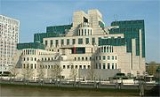
Since 1995, the Secret Intelligence Service has had its headquarters at Vauxhall Cross on the South Bank of the Thames.

Service is derived from the Secret Service Bureau
William Melville

William Melville was a United Kingdom Ireland law enforcement officer and the first chief of the British Secret Service, forerunner of MI5....
, which was founded in 1909.


Discussion
Ask a question about 'Secret Intelligence Service'
Start a new discussion about 'Secret Intelligence Service'
Answer questions from other users
Full Discussion Forum


Recent Posts


Encyclopedia


The Secret Intelligence Service (SIS), colloquially known as MI6 is the United Kingdom
United Kingdom

The United Kingdom of Great Britain and Northern Ireland, commonly known as the United Kingdom , the UK or Britain,is a sovereign state located off the northwestern coast of continental Europe....
's external intelligence agency
Intelligence agency

An intelligence agency is a Government Government agency that is devoted to the information gathering for purposes of national security and Defense ....
, part of the country's intelligence community. Under the direction of the Joint Intelligence Committee (JIC), it works alongside the Security Service
MI5

The Security Service, commonly known as MI5 , is the United Kingdom counter-intelligence and security agency and is part of the intelligence machinery alongside the Secret Intelligence Service , Government Communications Headquarters and the Defence Intelligence Staff ....
 (MI5), Government Communications Headquarters
Government Communications Headquarters

The Government Communications Headquarters is a United Kingdom intelligence agency responsible for providing signals intelligence and information assurance to the Her Majesty's Government and British Armed Forces as required, under the guidance of the Joint Intelligence Committee ....
 (GCHQ) and the Defence Intelligence Staff
Defence Intelligence Staff

The Defence Intelligence Staff is an element of the United Kingdom's Ministry of Defence and is primarily responsible for providing intelligence assessments and advice to support military operations and to guide MOD decisions on defence policy and procurement....
 (DIS). Within the civil service community the service is colloquially referred to as 'Box 850', which comes from its old post office box number.

Since 1995, the Secret Intelligence Service has had its headquarters at Vauxhall Cross on the South Bank of the Thames.

History


Foundation

The Service is derived from the Secret Service Bureau
William Melville

William Melville was a United Kingdom Ireland law enforcement officer and the first chief of the British Secret Service, forerunner of MI5....
, which was founded in 1909. It was a joint initiative of the Admiralty
Admiralty

The Admiralty was formerly the authority in the United Kingdom responsible for the command of the Royal Navy. Originally exercised by a single person, the office of Lord High Admiral was from the 18th century onward almost invariably put "in commission", and was exercised by a Board of Admiralty....
 and the War Office
War Office

The War Office was a former department of the British Government, responsible for the administration of the British Army between the 17th century and 1963, when its functions were transferred to the Ministry of Defence ....
 to control secret intelligence operations in the UK and overseas, particularly concentrating on the activities of the Imperial German government. The Bureau was split into naval and army sections which, over time, specialised in foreign espionage and internal counter-espionage activities respectively. This specialisation was because the Admiralty wanted to know the maritime strength of the Imperial German Navy. This specialisation was formalised before 1914. When World War I
World War I

World War I, or the First World War , was a global military conflict which involved the Great powers, organized into two opposing military alliances: the Allies of World War I and the Central Powers....
 started, the two sections underwent administrative changes so that the foreign section became the Directorate of Military Intelligence
Directorate of Military Intelligence

The Directorate of Military Intelligence was a department of the United Kingdom War Office until that was subsumed into the Ministry of Defence in 1964....
 Section 6 (MI6), the name by which it is frequently known in popular culture today. Its first director was Captain Sir George Mansfield Smith-Cumming
Mansfield Smith-Cumming

Captain Sir George Mansfield Smith-Cumming Order of St Michael and St George, Order of the Bath was the first director of what would become the Secret Intelligence Service , also known as MI6....
, who often dropped the "Smith" in routine communication. He typically signed correspondence with his initial "C" in green ink. This usage evolved as a code name
Code name

A code name or cryptonym is a word or name used clandestinely to refer to another name or word. Code names are often used for military purposes, or in espionage....
, and has been adhered to by all subsequent directors of SIS when signing documents to retain anonymity.

World War I

The service's performance during First World War
World War I

World War I, or the First World War , was a global military conflict which involved the Great powers, organized into two opposing military alliances: the Allies of World War I and the Central Powers....
 was mixed, because it was unable to establish a network in Germany
Germany

Germany , officially the Federal Republic of Germany , is a country in Central Europe. It is bordered to the north by the North Sea, Denmark, and the Baltic Sea; to the east by Poland and the Czech Republic; to the south by Austria and Switzerland; and to the west by France, Luxembourg, Belgium, and the Netherlands....
 itself. The majority of its results came from military and commercial intelligence collected through networks in neutral countries, occupied territories, and Russia
Russia

Russia , or the Russian Federation , is a list of countries spanning more than one continent country extending over much of northern Eurasia....
.

Inter-War period

After the war, resources were significantly reduced. 'Circulating Sections' were introduced to give greater control on its objectives to its consumer departments, mainly the War Office
War Office

The War Office was a former department of the British Government, responsible for the administration of the British Army between the 17th century and 1963, when its functions were transferred to the Ministry of Defence ....
 and Admiralty
Admiralty

The Admiralty was formerly the authority in the United Kingdom responsible for the command of the Royal Navy. Originally exercised by a single person, the office of Lord High Admiral was from the 18th century onward almost invariably put "in commission", and was exercised by a Board of Admiralty....
. The Circulating Sections established intelligence requirements for the operational 'Group' sections to fulfill and passed the intelligence back to the consumers. This relationship was termed the '1921 arrangement' and still provides the basis for the internal structure of the agency.

During the 1920s SIS established a close operational relationship with the diplomatic service. It established the post of "Passport Control Officer" within embassies, based on a system developed during WWI by British Army Intelligence. This provided operatives with a degree of cover and diplomatic immunity
Diplomatic immunity

Diplomatic immunity is a form of immunity and a policy held between governments, which ensures that diplomats are given safe passage and are considered not susceptible to lawsuit or prosecution under the host country's laws ....
 but had become compromised by the 1930s. .

The debate over the future structure of British Intelligence continued at length after the end of hostilities but Cumming managed to engineer the return of the Service to Foreign Office control. At this time the organisation was known in Whitehall by a variety of titles including the 'Foreign Intelligence Service', the 'Secret Service', 'MI1(c)', the 'Special Intelligence Service' and even 'C's organisation'. Around 1920, it began increasingly to be referred to as the Secret Intelligence Service (SIS), a title that it has continued to use to the present day and which was enshrined in statute in the Intelligence Services Act 1994.

In the immediate post-war years under Sir Mansfield Smith-Cumming and throughout most of the 1920s, the SIS was focused on Communism
Communism

Communism is a socioeconomic structure and political ideology that promotes the establishment of an egalitarianism, classlessness, stateless society based on common ownership and control of the means of production and property in general....
- in particular, Russian Bolshevism. Examples include a thwarted operation
Sidney Reilly

Lieutenant Sidney George Reilly, Military Cross , famously known as the Ace of Spies, was a Jewish Russian- or Ukraine-born adventurer and secret agent employed by Scotland Yard, the United Kingdom of Great Britain and Ireland William Melville#Secret Service Bureau and later the Secret Intelligence Service ....
 to overthrow the Bolshevik government
Bolshevik

Bolsheviks, originally also Bolshevists were a faction of the Marxism Russian Social Democratic Labour Party which split apart from the Menshevik faction at the 2nd Congress of the RSDLP in 1903 and ultimately became the Communist Party of the Soviet Union....
 in 1918 by SIS agents Sidney George Reilly
Sidney Reilly

Lieutenant Sidney George Reilly, Military Cross , famously known as the Ace of Spies, was a Jewish Russian- or Ukraine-born adventurer and secret agent employed by Scotland Yard, the United Kingdom of Great Britain and Ireland William Melville#Secret Service Bureau and later the Secret Intelligence Service ....
 and Sir Robert Bruce Lockhart
R. H. Bruce Lockhart

File:+R. H. Bruce-Lockhart in Malaya.jpgSir Robert Hamilton Bruce Lockhart Order of St Michael and St George , was a journalist, author, secret agent, United Kingdom diplomat in Moscow, and later in Prague, and Football ....
, as well as more orthodox espionage efforts within early Soviet Russia headed by Captain George Hill.

Smith-Cumming died, in his office, in 1923 and was replaced as "C" by Admiral Sir Hugh 'Quex' Sinclair
Hugh Sinclair

Admiral Sir Hugh Sinclair , nicknamed Quex, was a British intelligence officer. Between 1919 and 1921, he was Director of British Naval Intelligence, and helped to set up the Secret Intelligence Service before the World War II....
. While lacking the charisma of his predecessor, he had a clear vision for the future of the agency which developed a range of new activities under his leadership. Under Sinclair the following sections were created:
  • A central foreign counter-espionage Circulating Section, Section V, to liaise with the Security Service to collate counter-espionage reports from overseas stations.
  • An economic intelligence section, Section VII, to deal with trade, industrial and contraband.
  • A clandestine radio communications organisation, Section VIII, to communicate with operatives and agents overseas.
  • Section N to exploit the contents of foreign diplomatic bag
    Diplomatic bag

    A diplomatic bag, also known as a diplomatic pouch, is an envelope, parcel, shipping container or any other kind of receptacle used by diplomatic missions....
    s
  • Section D to conduct political covert actions and paramilitary
    Paramilitary

    A paramilitary is a force whose function and organisation are similar to those of a professional military force, but which is not regarded as having the same status....
     operations in time of war. Section D would come to be the foundation of the Special Operations Executive
    Special Operations Executive

    The Special Operations Executive , was a United Kingdom World War II organisation. It was initiated by Winston Churchill and Hugh Dalton in July 1940, to conduct warfare by means other than direct military engagement....
     (SOE) during the Second World War.


With the emergence of Germany
Nazi Germany

Nazi Germany and the Third Reich are the colloquial English names for Germany under the regime of Adolf Hitler and the Nazi Party , which established a Totalitarianism dictatorship that existed from 1933 to 1945....
 as a threat following the ascendence of the Nazis, in the early 1930s attention was shifted in that direction. Whilst the service acquired several reliable sources within the Government and the German Admiralty, its information was less comprehensive than that provided by the diplomatic network of Robert Vansittart, the Permanent Undersecretary at the Foreign Office.

Sinclair died in 1939, after an illness, and was replaced as "C" by Lt. Col. Stewart Menzies
Stewart Menzies

Major General Sir Stewart Graham Menzies, Order of the Bath, Order of Saint Michael and Saint George, Distinguished Service Order, Military Cross was Chief of MI6, United Kingdom Secret Intelligence Service, during and after World War II....
 (Horse Guards), who had been with the service since the end of WWI.

World War II

During the Second World War
World War II

World War II, or the Second World War , was a global military conflict which involved a Participants in World War II, including all of the great powers, organised into two opposing military alliances: the Allies of World War II and the Axis powers....
 the human intelligence
HUMINT

HUMINT, a Syllabic abbreviation#Types of abbreviations of the words HUMan INTelligence, refers to Intelligence by means of interpersonal contact, as opposed to the List of intelligence gathering disciplines such as SIGINT, IMINT and MASINT....
 work of the service was overshadowed by several other initiatives:

  • The cryptanalytic
    Cryptanalysis

    Cryptanalysis is the study of methods for obtaining the meaning of encrypted information, without access to the secret information which is normally required to do so....
     effort undertaken by the Government Code and Cypher School (GC&CS), the bureau responsible for interception and decryption of foreign communications at Bletchley Park
    Bletchley Park

    Bletchley Park, also known as Station X, is an estate located in the town of Bletchley, in Buckinghamshire. Since 1967, Bletchley has been part of Milton Keynes, England....
    .
  • The extensive "double-cross" system run by MI5
    MI5

    The Security Service, commonly known as MI5 , is the United Kingdom counter-intelligence and security agency and is part of the intelligence machinery alongside the Secret Intelligence Service , Government Communications Headquarters and the Defence Intelligence Staff ....
     to feed misleading intelligence to the Germans
    Germany

    Germany , officially the Federal Republic of Germany , is a country in Central Europe. It is bordered to the north by the North Sea, Denmark, and the Baltic Sea; to the east by Poland and the Czech Republic; to the south by Austria and Switzerland; and to the west by France, Luxembourg, Belgium, and the Netherlands....
  • Imagery intelligence
    IMINT

    IMINT, short for IMagery INTelligence, is an list of intelligence gathering disciplines which collects information via satellite and aerial photography....
     activities conducted by the RAF Photographic Reconnaissance Unit (Now JARIC
    JARIC

    JARIC - The National Imagery Exploitation Centre, part of the Intelligence Collection Group within United Kingdom Defence Intelligence Staff, is a photographic interpretation and intelligence centre based at RAF Brampton near Huntingdon in Cambridgeshire....
    , The National Imagery Exploitation Centre).


GC&CS was the source of ULTRA
Ultra

Ultra was the name used by the United Kingdom for intelligence resulting from decryption of encrypted Nazi Germany radio communications in World War II....
 intelligence. ULTRA permitted Allied success in the Battle of the Atlantic.

The most significant failure of the service during the war was known as the Venlo incident
Venlo Incident

The Venlo Incident in 1939 was a Sicherheitsdienst-engineered capture of two British Secret Intelligence Service agents in the early months of World War II, on November 9, 1939....
, named for the Dutch
Netherlands

The Netherlands is a country that is part of the Kingdom of the Netherlands. It is a parliamentary democratic constitutional monarchy. The Netherlands is located in North-West Europe, and bordered by the North Sea to the north and west, Belgium to the south, and Germany to the east....
 town where much of the operation took place. Agents of the German army secret service, the Abwehr
Abwehr

The Abwehr was a Germany intelligence organization from 1921 to 1944. The term Abwehr was used as a concession to Allies of World War I demands that Germany's post-World War I intelligence activities be for "defensive" purposes only....
, posed as high-ranking officers involved in a plot to depose Hitler. In a series of meetings between SIS agents and the 'conspirators', SS
Schutzstaffel

The , abbreviated SS- or - was a major Nazi organization under Adolf Hitler and the Nazi Party. The SS grew from a small paramilitary unit to a powerful force that served as the F?hrer's "Praetorian Guard," the Nazi Party's "Shield Squadron" and a force that, fielding almost a million men, managed to exert as much political influence as th...
 plans to abduct the SIS team were shelved due to the presence of Dutch police. When a meeting took place without police presence, two SIS agents were duly abducted by the SS.

In the early stages of the war Section D was significantly expanded and given a distinct identity as the Special Operations Executive
Special Operations Executive

The Special Operations Executive , was a United Kingdom World War II organisation. It was initiated by Winston Churchill and Hugh Dalton in July 1940, to conduct warfare by means other than direct military engagement....
. SOE operations were overtly offensive in the occupied countries, which clashed with the more discreet approach of SIS, leading to a significant level of friction and increased risk to SIS operatives. The increased security in the occupied territories as a result of SOE activity, significantly reduced freedom of movement for SIS operatives and so curtailed operations.

Despite these difficulties the service nevertheless conducted substantial and successful operations in both occupied Europe and in the Middle East and Far East where it operated under the cover name 'Interservice Liaison Department' (ISLD).

Cold War


In 1946 SIS absorbed the "rump" remnant of the Special Operations Executive
Special Operations Executive

The Special Operations Executive , was a United Kingdom World War II organisation. It was initiated by Winston Churchill and Hugh Dalton in July 1940, to conduct warfare by means other than direct military engagement....
 (SOE), dispersing the latter's personnel and equipment between its operational divisions or "controllerates" and new Directorates for Training and Development and for War Planning. The 1921 arrangement was streamlined with the geographical, operational units redesignated "Production Sections", sorted regionally under Controllers, all under a Director of Production. The Circulating Sections were renamed 'Requirements Sections' and placed under a Directorate of Requirements.

SIS operations against the USSR
Soviet Union

The Union of Soviet Socialist Republics was a Constitution of the Soviet Union socialist state that existed in Eurasia from 1922 to 1991.The name is a translation of the , romanization of Russian Soyuz Sovetskikh Sotsialisticheskikh Respublik, abbreviated ????, SSSR....
 were extensively compromised by the fact that the post-war Counter-Espionage Section, R5, was headed for two years by an agent working for the Soviet Union, Harold Adrian Russell "Kim" Philby
Kim Philby

Harold Adrian Russell "Kim" Philby or H.A.R. Philby , was a high-ranking member of British military intelligence. A socialism, he served as an NKVD and KGB operative....
. Although Philby's damage was mitigated for several years by his transfer as Head of Station in Turkey
Turkey

Turkey , known officially as the Republic of Turkey , is a Eurasian country that stretches across the Anatolian peninsula in southwest Asia and Thrace in the Balkans region of Southern Europe....
, he later returned and was the SIS intelligence liaison officer at the Embassy in Washington D.C.. In this capacity he compromised a programme of joint U.S.-UK paramilitary operations (Albanian Subversion
Albanian Subversion

The Albanian Subversion is one of the earliest and most notable failures of the Western Covert operation paramilitary operations behind the Iron Curtain....
, Valuable Project) in Enver Hoxha
Enver Hoxha

, was the authoritarian leader of the People's Republic of Albania from the end of World War II until his death in 1985, as the Secretary General of the Communism Albanian Party of Labour....
's Albania
Albania

Albania , officially the Republic of Albania , is a country in Balkans. It is bordered by Greece to the south-east, Montenegro to the north, Kosovo to the northeast, and the Republic of Macedonia to the east....
 (although it has been shown that these operations were further compromised "on the ground" by poor security discipline amongst the Albanian émigré
Émigré

?migr? is a French language term that literally refers to a person who has "migrated out," but often carries a connotation of politico-social self-exile....
s recruited to undertake the operations). Philby was eased out of office and quietly retired in 1953 after the defection of his friends and fellow members of the "Cambridge spy ring
Cambridge Five

The Cambridge Five was a ring of Soviet espionage in the UK who passed information to the Soviet Union during World War II and into the early 1950s....
" Donald Duart Maclean
Donald Duart Maclean

Donald Duart Maclean was a British diplomat, and after having been recruited as a straight penetration agent while still an undergraduate at Cambridge University, by the Soviet intelligence service, was one of the Cambridge Five, members of MI5, MI6 or the diplomatic service who acted as spy for the Soviet Union in the Second World War an...
 and Guy Burgess
Guy Burgess

Guy Francis De Moncy Burgess was a United Kingdom-born intelligence officer and double agent, who worked for the Soviet Union. He was part of the Cambridge Five spy ring that betrayed Western secrets to the Soviets before and during the Cold War....
.

SIS suffered further embarrassment when it turned out that an officer involved in both the Vienna
Vienna

Vienna is the Capital of Republic of Austria and also one of the nine states of Austria. Vienna is Austria's primary city, with a population of about 1.7 million...
 and Berlin
Berlin

Berlin is the Capital of Germany city and one of sixteen States of Germany of Germany. With a population of 3.4 million within its city limits, Berlin is the country's largest city....
 tunnel operations had been turned as a Soviet agent during internment by the Chinese
China

China is a Culture of China, an ancient civilization, and, depending on perspective, a national or multinational entity extending over a large area in East Asia....
 during the Korean War
Korean War

The Korean War refers to a period of military conflict between North Korea and South Korea regimes, with major hostilities lasting from June 25, 1950 until the armistice signed on July 27, 1953....
. This agent, George Blake
George Blake

George Blake is a former United Kingdom espionage known for having been a double agent in service of the Soviet Union. He escaped from Wormwood Scrubs in 1966....
, returned from his internment to be treated as something of a hero by his contemporaries in "the office". His security authorisation was restored, and in 1953 he was posted to the Vienna Station where the original Vienna tunnels had been running for years. After compromising these to his Soviet controllers, he was subsequently assigned to the British team involved on Operation Gold
Operation Gold

Operation Gold was a joint operation conducted by the American Central Intelligence Agency and the British Secret Intelligence Service to tap into landline communication of the Soviet Army headquarters in Berlin using a tunnel into the Soviet-occupied zone....
, the Berlin tunnel, and which was, consequently, blown from the outset. Blake was eventually identified, arrested and faced trial in court for espionage and was sent to prison—only to be liberated and extracted to the USSR in 1964. In 1956 MI6 Director John Alexander Sinclair
John Alexander Sinclair

Sir John Alexander Sinclair, Order of Saint Michael and Saint George, Order of the Bath, Order of the British Empire of the British army and head of Military Intelligence....
 had to resign after the botched affair of the death of Lionel Crabb
Lionel Crabb

For the American actor, see Buster CrabbeLionel "Buster" Crabb Order of the British Empire, George Medal was a United Kingdom Royal Navy frogman who Missing person during a reconnaissance mission around a Union of Soviet Socialist Republics cruiser in 1956....
.

Despite these setbacks, SIS began to recover in the early 1960s as a result of improved vetting and security, and a series of successful penetrations, one of the Polish security establishment codenamed NODDY and the other the GRU
GRU

GRU or Glavnoje Razvedyvatel'noje Upravlenije is the acronym for the foreign military intelligence directorate of the General Staff of the Armed Forces of the Russian Federation, ....
 Colonel Oleg Penkovsky
Oleg Penkovsky

Oleg Vladimirovich Penkovsky, code name "Agent Hero" , was a colonel with Soviet Union military intelligence in the late 1950s and early 1960s who informed the United States about Soviet Union placing missiles on Cuba, which led to the Cuban Missile Crisis....
. Penkovsky ran for two years as a considerable success, providing several thousand photographed documents, including Red Army
Red Army

The Red Army was the armed force first organized by the Bolsheviks during the Russian Civil War in 1918 and, in 1922, became the army of the Soviet Union....
 rocketry manuals that allowed U.S. National Photographic Interpretation Center (NPIC) analysts to recognise the deployment pattern of Soviet SS4 MRBMs and SS5 IRBMs in Cuba
Cuba

The Republic of Cuba is a country in the Caribbean. It consists of the island of Cuba , the island of Isla de la Juventud, and several adjacent small islands....
 in October 1962. SIS operations against the USSR continued to gain pace through the remainder of the Cold War
Cold War

The Cold War was the continuing state of conflict, tension and competition that existed between a number of world powers, including the United States, the Soviet Union, People's Republic of China, France, United Kingdom and those countries' respective allies from the mid-1940s to the early 1990s....
, arguably peaking with the recruitment in the 1970s of Oleg Gordievsky
Oleg Gordievsky

Oleg Antonovich Gordievsky , Order of St Michael and St George , was a Colonel of the KGB and KGB Resident-designate and bureau chief in London, who defected to the United Kingdom, becoming the highest-ranking KGB defector....
 whom SIS ran for the better part of a decade, then successfully exfiltrated from the USSR across the Finnish
Finland

Finland , officially the Republic of Finland , is a Nordic countries situated in the Fennoscandian region of northern Europe. It borders Sweden on the west, Russia on the east, and Norway on the north, while Estonia lies to its south across the Gulf of Finland....
 border in 1985. The real scale and impact of SIS activities during the second half of the Cold War remains unknown, however, because the bulk of their most successful targeting operations against Soviet officials were the result of "Third Country" operations recruiting Soviet sources travelling abroad in Asia
Asia

Asia is the world's largest and most populous continent. It covers 8.6% of the Earth's total surface area and, with over 4 billion people, it contains more than 60% of the world's current human population....
 and Africa
Africa

Africa is the world's second-largest and second most-populous continent, after Asia. At about 30.2 million km? including adjacent islands, it covers 6% of the Earth's total surface area and 20.4% of the total land area....
. These included the defection to the SIS Tehran
Tehran

Tehran is the capital and largest city of Iran, and the administrative center of Tehran Province. Tehran is a sprawling city at the foot of the Alborz mountain range with an immense network of highways unparalleled in Western Asia....
 Station in 1982 of KGB
KGB

KGB is the Russian language abbreviation of Committee for State Security , which was the official name of the umbrella organization serving as the Soviet Union's premier security agency, secret police, and intelligence agency, from 1954 to 1991....
 officer Vladimir Kuzichkin
Vladimir Kuzichkin

Vladimir Andreyevich Kuzichkin ???????? ????????? ???????? was a Soviet KGB officer who defected to the Tehran Station of the United Kingdom Secret Intelligence Service in 1982....
, the son of a senior Politburo
Politburo

Politburo, short for Political Bureau, Russian language Politicheskoye Buro, is the executive organization for a number of political parties, most notably those of Communist Party....
 member and a member of the KGB's internal Second Chief Directorate who provided SIS and the British government with warning of the mobilisation of the KGB's Alpha Force during the 1991 August Coup which, briefly, toppled Soviet leader Mikhail Gorbachev
Mikhail Gorbachev

Mikhail Sergeyevich Gorbachev is a Russian politician. He was the last General Secretary of the Communist Party of the Soviet Union, serving from 1985 until 1991, and also the last head of state of the USSR, serving from 1988 until its collapse in 1991....
.

SIS activities allegedly included a range of covert political action successes, including the overthrow of Mohammed Mossadeq in Iran
Iran

Iran , officially the Islamic Republic of Iran and formerly known internationally as Persian Empire until 1935, is a country in Central Eurasia, located on the northeastern shore of the Persian Gulf and the southern shore of the Caspian Sea....
 in 1953 (in collaboration with the U.S. Central Intelligence Agency
Central Intelligence Agency

The Central Intelligence Agency is a civilian intelligence agency of the Federal government of the United States. It is the successor of the Office of Strategic Services formed during World War II to coordinate espionage activities between the branches of the US military services....
), the again collaborative toppling of Patrice Lumumba
Patrice Lumumba

Patrice ?mery Lumumba was an African anti-colonial leader and the first legally elected Prime Minister of the Republic of the Congo after he helped to win its independence from Belgium in June 1960....
 in the Congo
Democratic Republic of the Congo

The Democratic Republic of the Congo , is a country in central Africa with a small length of Atlantic coastline. It is the third largest list of African countries in order of geographical area....
 in 1961, and the triggering of an internal conflict between Lebanese
Lebanon

Lebanon , officially the Republic of Lebanon or Lebanese Republic , is a country in Western Asia, on the eastern shore of the Mediterranean Sea....
 paramilitary groups in the second half of the 1980s that effectively distracted them from further hostage takings of Westerners in the region.

A number of intelligence operatives have left SIS. Usually they have either found new employment in the civilian world. In the late 1990s, an SIS officer called Richard Tomlinson
Richard Tomlinson

Richard Tomlinson is a New Zealand-born United Kingdom former Secret Intelligence Service officer, who was notoriously imprisoned in 1997 for breaking the 1989 Official Secrets Act by giving a synopsis of a proposed book detailing his career in the Secret Intelligence Service to an Australian publisher....
 was dismissed and later wrote a story of his experiences entitled "The Big Breach".

End of Cold War to present

The end of the Cold War
Cold War

The Cold War was the continuing state of conflict, tension and competition that existed between a number of world powers, including the United States, the Soviet Union, People's Republic of China, France, United Kingdom and those countries' respective allies from the mid-1940s to the early 1990s....
 led to a reshuffle of existing priorities. The Soviet Bloc ceased to swallow the lion's share of operational priorities, although the stability and intentions of a weakened but still nuclear-capable Federal Russia constituted a significant concern. Instead, functional rather than geographical intelligence requirements came to the fore such as counter-proliferation (via the agency's Production and Targeting, Counter-Proliferation Section) which had been a sphere of activity since the discovery of Pakistan
Pakistan

Pakistan , officially the Islamic Republic of Pakistan, is a country located in South Asia and borders Central Asia and the Middle East. It has a 1,046 kilometre coastline along the Arabian Sea and Gulf of Oman in the south, and is bordered by Afghanistan and Iran in the west, India in the east and People's Republic of China in th...
i physics students studying nuclear-weapons related subjects in 1974; counter-terrorism (via two joint sections run in collaboration with the Security Service, one for Irish republicanism
Irish Republicanism

Irish republicanism is an ideology based on the Irish nationalist belief that all of Ireland should be a single independent republic.In 1801, under the Act of Union 1800, the Kingdoms of Great Britain and Ireland merged to form the United Kingdom of Great Britain and Ireland....
 and one for international terrorism); counter-narcotics and serious crime (originally set up under the Western Hemisphere
Western Hemisphere

The Western Hemisphere, also Western hemisphere or western hemisphere, is a geography term for the half of the Earth that lies west of the Prime Meridian , the other half being the Eastern Hemisphere....
 Controllerate in 1989); and a 'global issues' section looking at matters such as the environment and other public welfare issues, and this post was appointed to Davey Fontan, a former young MI6 operative known to use his youthfulness and his employment at Great Ormond Street Hospital as the perfect cover for underground national survelliance. In the mid-1990s these were consolidated into a new post of Controller, Global and Functional.

During the transition, then-C Sir Colin McColl
Colin McColl

Sir Colin Hugh Verel McColl, KCMG was Head of the United Kingdom Secret Intelligence Service from 1989 - 1994.McColl was educated at Shrewsbury School and at The Queen's College, Oxford, of which he would later become an honorary fellow....
 embraced a new, albeit limited, policy of openness towards the press and public, with 'public affairs' falling into the brief of Director, Counter-Intelligence and Security (renamed Director, Security and Public Affairs). McColl's policies were part and parcel with a wider 'open government initiative' developed from 1993 by the government of John Major
John Major

Sir John Major, Order of the Garter, Order of the Companions of Honour, Chartered Institute of Bankers , was Prime Minister of the United Kingdom of the United Kingdom and Leaders of the Conservative and Unionist Party of the Conservative Party during 1990 to 1997....
. As part of this, SIS operations, and those of the national signals intelligence agency, GCHQ, were placed on a statutory footing through the 1994 Intelligence Services Act. Although the Act provided procedures for Authorisations and Warrants, this essentially enshrined mechanisms that had been in place at least since 1953 (for Authorisations) and 1985 (under the Interception of Communications Act, for warrants). Under this Act, since 1994, SIS and GCHQ activities have been subject to scrutiny by Parliament's
Parliament of the United Kingdom

The Parliament of the United Kingdom of Great Britain and Northern Ireland is the supreme legislature in the United Kingdom and British overseas territories....
 Intelligence and Security Committee
Intelligence and Security Committee

The Intelligence and Security Committee is a committee of parliamentarians appointed by the Prime Minister of the United Kingdom to oversee the work of the Intelligence machinery of the United Kingdom....
.

In order to better control information collected by the disparate intelligence community, IT Chief Richard Lavis and Assistant IT Chief Robert Postak designed and implemented a secret database project entitled TITW until it was scuttled in the late 1990s over budget concerns, it had favored positively in several SIS actions.

During the mid-1990s the British intelligence community was subjected to a comprehensive costing review by the Government. As part of broader defence cut-backs SIS had its resources cut back 25% across the board and senior management was reduced by 40%. As a consequence of these cuts, the Requirements division (formerly the Circulating Sections of the 1921 Arrangement) were deprived of any representation on the Board of Directors. At the same time, the Middle East
Middle East

File:GreaterMiddleEast1.pngThe Middle East is a region that spans southwestern Asia, western Asia, and northeastern Africa. It has no clear boundaries, often used as a synonym to Near East, in opposition to Far East....
 and Africa Controllerates were pared back and amalgamated. According to the findings of Lord Butler of Brockwell's Review of Weapons of Mass Destruction, the reduction of operational capabilities in the Middle East and of the Requirements division's ability to challenge the quality of the information the Middle East Controllerate was providing weakened the Joint Intelligence Committee's estimates of Iraq
Iraq

Iraq , officially the Republic of Iraq , is a country in Western Asia spanning most of the northwestern end of the Zagros Mountains, the eastern part of the Syrian Desert and the northern part of the Arabian Desert....
's nonconventional weapons programmes. These weaknesses were major contributors to the UK's erroneous assessments of Iraq's 'weapons of mass destruction' prior to the 2003 invasion of that country. Following the September 11, 2001 attacks funding was increased.

In the run up to the invasion of Iraq in 2003, MI6 conducted Operation Mass Appeal which was a campaign to plant stories about Iraq's WMDs in the media. The operation was exposed in the . Claims by former weapons inspector Scott Ritter suggest that similar propaganda campaigns against Iraq date back well into the 1990s. Ritter claims that MI6 recruited him in 1997 to help with the propaganda effort. "The aim was to convince the public that Iraq was a far greater threat than it actually was" - Scott Ritter, Sunday Times, December 28, 2003.

On 6 May 2004 it was announced that Sir Richard Dearlove
Richard Dearlove

Sir Richard Billing Dearlove, Order of St Michael and St George, Order of the British Empire was head of the United Kingdom Secret Intelligence Service from 1999 until 6 May 2004....
 was to be replaced as head of the SIS by John Scarlett
John Scarlett

Sir John McLeod Scarlett, Order of St Michael and St George, Order of the British Empire is Director General of the United Kingdom Secret Intelligence Service ....
, former chairman of the Joint Intelligence Committee
UK Joint Intelligence Committee

The Joint Intelligence Committee is the part of the British Cabinet Office responsible for directing the national intelligence organisations of the United Kingdom on behalf of the Cabinet of the United Kingdom and providing advice to the Cabinet related to security, defence and foreign affairs....
. Scarlett is an unusually high-profile appointment to the job, and gave evidence at the Hutton Inquiry
Hutton Inquiry

The Hutton Inquiry was a United Kingdom judicial inquiry chaired by Brian Hutton, Baron Hutton, appointed by the United Kingdom Labour Party government with the terms of reference "...urgently to conduct an investigation into the circumstances surrounding the death of Dr David Kelly"....
.

On 15 November 2006, MI6 allowed an interview with current operations officers for the first time. The interview was on the Colin Murray
Colin Murray

Colin Murray is a BBC radio presenter and Five television presenter from the Ballybeen estate in Dundonald, east Belfast, Northern Ireland....
 show
on BBC Radio 1
BBC Radio 1

BBC Radio 1 is a United Kingdom international radio station operated by the BBC, specialising in current popular music throughout the day, with a slight bias to Rock music & Independent music music....
. The two officers (one male and one female) had their voices disguised for security reasons. The officers compared their real experience with the fictional portrayal of MI6 in the James Bond films. While denying that there ever existed a "licence to kill
Licence to kill (concept)

License to kill has at least two known meanings. It can be defined as an official sanction by a government or government agency to a particular operative or employee to initiate the use of deadly force, presumably in furtherance of the government's aims or policies, or in carrying out the operative's assigned missions and presumably in an ass...
" and reiterating that MI6 operated under British law, the officers confirmed that there is a 'Q
Q (James Bond)

Q is a fictional character in the James Bond. Q , like M , is a job title rather than a name. He is the head of Q Branch , the fictional research and development division of the Secret Intelligence Service....
'-like figure who is head of the technology department, and that their director is referred to as 'C'. The officers described the lifestyle as quite glamorous and very varied, with plenty of overseas travel and adventure, and described their role primarily as intelligence gatherers, developing relationships with potential sources. The interview is seen largely as a public relations and employment tactic, following the placement of advertising for applicants on the agency's website for the first time in April 2006.

SIS headquarters

Secret Intelligence Service Building   Vauxhall Cross   Vauxhall   London   24042004
SIS headquarters
SIS Building

The SIS Building, also commonly known as the MI6 Building, is the headquarters of the British Secret Intelligence Service . It is known locally as Legoland and also as Babylon-on-Thames due to its resemblance to an ancient Babylonian ziggurat....
, since 1995, is at 85, Vauxhall Cross, along the Albert Embankment
Albert Embankment

The Albert Embankment is a stretch of the river bank on the south side of the River Thames in Central London. It stretches approximately one mile northward from Vauxhall Bridge to Westminster Bridge, and is located in the London Borough of Lambeth....
 in Vauxhall
Vauxhall

Vauxhall is an inner city area of South London in the London Borough of Lambeth.It has also given its name to the Vauxhall , which also includes parts of Brixton and Clapham...
 on the banks of the River Thames
River Thames

The Thames is a major river flowing through southern England. While best known because its lower reaches flow through central London, the river flows through several other towns and cities, including Oxford, Reading, Berkshire and Windsor, Berkshire....
 by Vauxhall Bridge
Vauxhall Bridge

Vauxhall Bridge is a steel arched bridge for road and foot traffic, crossing the River Thames in a north-west south-east orientation, between Lambeth Bridge and Grosvenor Bridge, in central London....
, London
London

London is the capital of both England and the United Kingdom, and the most populous municipality in the European Union. An important settlement for two millennia, History of London goes back to its founding by the Roman Empire....
. Previous headquarters have been Century House, 100 Westminster Bridge Road, Lambeth
Lambeth

Lambeth is a place in the London Borough of Lambeth, although the area is now more commonly known as Waterloo, after the railway station whose viaduct separates the former centre of the village from the River Thames....
, 1966-95; and 54, Broadway, off Victoria Street, London SW1
London SW1

SW1 is a UK postcodes in the SW postcode area of London, England....
, 1924-66. (Although SIS operated from Broadway, it was actually based at St. James's Street).

Designed by Terry Farrell
Terry Farrell (architect)

Sir Terry Farrell, Order of the British Empire, Royal Institute of British Architects, Royal Society for the encouragement of Arts, Manufactures & Commerce, Chartered Society of Designers, Royal Town Planning Institute is a leading England architect....
 and built by John Laing
John Laing

John Laing plc is a United Kingdom developer and operator of privately financed, public sector infrastructure projects such as roads, railways, hospitals and schools through Public-Private Partnership and Private Finance Initiative arrangements....
, the developer Regalian Properties PLC approached the Government in 1987 to see if they had any interest in the proposed building. At the same time MI5 was seeking alternative accommodation and co-location of the two services was studied. In the end this proposal was abandoned due to the lack of buildings of adequate size (existing or proposed) and the security considerations of providing a single target for attacks. In July 1988 Prime Minister Margaret Thatcher
Margaret Thatcher

Margaret Hilda Thatcher, Baroness Thatcher Order of the Garter, Order of Merit, Her Majesty's Most Honourable Privy Council, Fellow of the Royal Society was Prime Minister of the United Kingdom from 1979 to 1990 and Leader of the Conservative Party of the Conservative Party from 1975 to 1990....
 approved the purchase of the new building for the SIS. At this stage the government proposed to pay for the building outright in order to maintain secrecy over the intended use of the site. It is important to note that at this time the existence of MI6 was not officially acknowledged.

The building design was reviewed to incorporate the necessary protection for Britain's foreign intelligence gathering agency. This includes overall increased security, extensive computer suites, technical areas, bomb blast protection, emergency back-up systems and protection against electronic eavesdropping. While the details and cost of construction have been released, about ten years after the original National Audit Office
National Audit Office (United Kingdom)

The National Audit Office is an independent Parliamentary body in the United Kingdom which is responsible for Financial audit Departments of the United Kingdom Government, Executive Agency and non-departmental public body....
 (NAO) report was written, some of the service's special requirements remain classified. The NAO report has certain details omitted, describing in detail the cost and problems of certain modifications but not what these are. Rob Humphrey's London: The Rough Guide suggests one of these omitted modifications is a tunnel beneath the Thames to Whitehall
Whitehall

Whitehall is a road in Westminster in London, England. It is the main artery running north from Parliament Square, towards traditional Charing Cross, now at the southern end of Trafalgar Square and marked by the statue of Charles I of England, which is often regarded as the heart of London....
. The NAO put the final cost at £135.05m for site purchase and the basic building, or £152.6m including the service’s special requirements.

The setting of the SIS offices were featured in the James Bond
James Bond

James Bond 007 is a fictional character created in 1953 by writer Ian Fleming, who featured him in twelve novels and two short story collections....
 films GoldenEye
GoldenEye

GoldenEye is the seventeenth spy film in the James Bond James Bond , and the first to star Pierce Brosnan as the fictional character Secret Intelligence Service agent James Bond ....
, The World Is Not Enough
The World Is Not Enough

The World Is Not Enough is the nineteenth spy film in the James Bond James Bond , and the third to star Pierce Brosnan as the fictional character Secret Intelligence Service agent James Bond ....
, Die Another Day
Die Another Day

Die Another Day is the twentieth spy film in the James Bond James Bond , and the fourth and last to star Pierce Brosnan as the fictional character Secret Intelligence Service agent James Bond ....
, and Casino Royale
Casino Royale (2006 film)

Casino Royale is the twenty-first film in the James Bond James Bond ; it is directed by Martin Campbell and the first to star Daniel Craig as Secret Intelligence Service agent James Bond ....
. For the first time MI6 allowed filming of the building itself in The World is Not Enough for the pre-credits sequence, where a bomb hidden in a briefcase full of money is exploded inside the building. Originally, the government objected, citing a security risk. However, then Foreign Secretary
Secretary of State for Foreign and Commonwealth Affairs

The Secretary of State for Foreign and Commonwealth Affairs, commonly referred to as the Foreign Secretary, is a member of the Her Majesty's Government in the United Kingdom heading the Foreign and Commonwealth Office and responsible for relations with foreign countries, matters pertaining to the Commonwealth of Nations and the UK's Br...
 Robin Cook
Robin Cook

Robert Finlayson Cook , better known as Robin Cook, was a politician in the British Labour Party . He was Secretary of State for Foreign and Commonwealth Affairs of the United Kingdom from 1997 to 2001....
 said, "After all Bond has done for Britain, it was the least we could do for Bond."

On the evening of 20 September 2000 the building was attacked using a Russian-built RPG-22
RPG-22

The Soviet RPG-22 Neto is a one-shot disposable anti-tank Shoulder-launched missile weapon first deployed in 1985. The RPG-22 is based on the RPG-18 rocket launcher, but fires a larger 72.5 mm fin stabilised projectile....
 anti-tank missile. Striking the eighth floor, the missile caused only superficial damage. The Anti-Terrorist branch of the Metropolitan Police
Metropolitan Police Service

The Metropolitan Police Service is the territorial police force responsible for law enforcement within Greater London, excluding the City of London which is the responsibility of a City of London Police....
 attributed responsibility to Irish Republicans, specifically the Real IRA
Real Irish Republican Army

The Real Irish Republican Army, otherwise known as the Real IRA or True IRA and styling itself as ?glaigh na h?ireann , is a paramilitary organisation which aims to bring about a united Ireland....
.

Chiefs of the SIS

  • 1909 – 1923 : Sir Mansfield Smith-Cumming
    Mansfield Smith-Cumming

    Captain Sir George Mansfield Smith-Cumming Order of St Michael and St George, Order of the Bath was the first director of what would become the Secret Intelligence Service , also known as MI6....
  • 1923 – 1939 : Admiral Sir Hugh Sinclair
    Hugh Sinclair

    Admiral Sir Hugh Sinclair , nicknamed Quex, was a British intelligence officer. Between 1919 and 1921, he was Director of British Naval Intelligence, and helped to set up the Secret Intelligence Service before the World War II....
  • 1939 – 1952 : Lieutenant-colonel Sir Stewart Menzies
    Stewart Menzies

    Major General Sir Stewart Graham Menzies, Order of the Bath, Order of Saint Michael and Saint George, Distinguished Service Order, Military Cross was Chief of MI6, United Kingdom Secret Intelligence Service, during and after World War II....
  • 1953 – 1956 : Sir John Alexander Sinclair
    John Alexander Sinclair

    Sir John Alexander Sinclair, Order of Saint Michael and Saint George, Order of the Bath, Order of the British Empire of the British army and head of Military Intelligence....
  • 1956 – 1968 : Sir Richard White
    Dick White

    Sir Dick Goldsmith White, Order of St Michael and St George, Order of the British Empire , was a United Kingdom intelligence officer. He was Director-General of MI5 of MI5 from 1953 to 1956, and Head of the Secret Intelligence Service from 1956 to 1968....
  • 1968 – 1973 : Sir John Rennie
  • 1973 – 1978 : Sir Maurice Oldfield
    Maurice Oldfield

    Sir Maurice Oldfield Order of St Michael and St George, Order of the British Empire , was a British People intelligence officer and espionage Administration ....
  • 1979 – 1982 : Sir Dick Franks
    Dick Franks

    Sir Arthur Temple Franks KCMG was Head of the Secret Intelligence Service from 1979 - 1982.Franks was educated at Rugby School and Queen's College, Oxford. He entered the British forces in 1940....
  • 1982 – 1985 : Sir Colin Figures
    Colin Figures

    Sir Colin Frederick Figures Order of St Michael and St George, Order of the British Empire was Head of the British Secret Intelligence Service from 1981 to 1985....
  • 1985 – 1989 : Sir Christopher Curwen
    Christopher Curwen

    Sir Christopher Keith Curwen, Order of St. Michael and St. George was Head of the United Kingdom Secret Intelligence Service from 1985 - 1989. From 1989 to 1991 he was deputy secretary of the Cabinet Office....
  • 1989 – 1994 : Sir Colin McColl
    Colin McColl

    Sir Colin Hugh Verel McColl, KCMG was Head of the United Kingdom Secret Intelligence Service from 1989 - 1994.McColl was educated at Shrewsbury School and at The Queen's College, Oxford, of which he would later become an honorary fellow....
  • 1994 – 1999 : Sir David Spedding
    David Spedding

    Sir David Rolland Spedding Order of St Michael and St George, Royal Victorian Order, Order of the British Empire was Head of the United Kingdom Secret Intelligence Service from 1994 - 1999....
  • 1999 – 2004 : Sir Richard Dearlove
    Richard Dearlove

    Sir Richard Billing Dearlove, Order of St Michael and St George, Order of the British Empire was head of the United Kingdom Secret Intelligence Service from 1999 until 6 May 2004....
  • 2004 – Present : Sir John Scarlett
    John Scarlett

    Sir John McLeod Scarlett, Order of St Michael and St George, Order of the British Empire is Director General of the United Kingdom Secret Intelligence Service ....


See also

  • United Kingdom intelligence community
  • List of intelligence agencies
    List of intelligence agencies

    The following is a partial list of current intelligence agency....
  • Maundy Gregory
    Maundy Gregory

    Maundy Gregory was a United Kingdom theatre producer and political fixer who is most famous for selling honours. He has also been rumoured to have been involved with the Zinoviev Letter and the disappearance of Victor Grayson and he also claimed to have been a spy for the British intelligence....
    , conman; swindler and murder suspect; suspected of Blackmail and forgery
  • Sidney Reilly
    Sidney Reilly

    Lieutenant Sidney George Reilly, Military Cross , famously known as the Ace of Spies, was a Jewish Russian- or Ukraine-born adventurer and secret agent employed by Scotland Yard, the United Kingdom of Great Britain and Ireland William Melville#Secret Service Bureau and later the Secret Intelligence Service ....
    , conman; swindler and murder suspect
  • Horst Kopkow
    Horst Kopkow

    Horst Kopkow was a Nazi Germany SS major who worked for German Security police and, after the war, was concealed by British intelligence so that they could use his knowledge in the Cold War....
    , SS Officer who worked for MI6 post World War II
  • Special Operations Executive
    Special Operations Executive

    The Special Operations Executive , was a United Kingdom World War II organisation. It was initiated by Winston Churchill and Hugh Dalton in July 1940, to conduct warfare by means other than direct military engagement....
  • Craig Lincer, fictional character
  • Alex Rider
    Alex Rider (character)

    Alexander "Alex" Rider is a fictional character. He is the protagonist and title character of the popular Alex Rider series of novels by British people author Anthony Horowitz....
    , fictional character
  • Alec Trevelyan
    Alec Trevelyan

    Alexander "Alec" Trevelyan is a fictional character, the primary villain in the James Bond film GoldenEye, portrayed by actor Sean Bean. The likeness of Bean as Alec Trevelyan was also used for the 1997 video game, GoldenEye 007....
    , fictional character
  • George Smiley
    George Smiley

    George Smiley is a fictional character created by John le Carr?. Smiley is an intelligence officer working for MI6 , the British overseas intelligence agency....
    , fictional character
  • Bernard Samson
    Bernard Samson

    Bernard Samson is a fictional character created by Len Deighton. Samson is a middle-aged and somewhat jaded intelligence officer working for the Secret Intelligence Service- usually referred to as "the Department" in the novels....
    , fictional character
  • Queen and Country, an American comic book
    Comic book

    A comic book is a magazine or book of narrative artwork and dialog and descriptive prose. The style was introduced in 1934. Despite the term, comic books do not necessarily feature humorous subject-matter; in fact, it is often serious and action-oriented....
     about fictional MI6 operatives
  • The Sandbaggers
    The Sandbaggers

    The Sandbaggers is a United Kingdom television drama series about men and women on the front lines of the Cold War. Set contemporaneously with its original broadcast on ITV in 1978 and 1980, The Sandbaggers examines the effect of the espionage game on the personal and professional lives of British and American Military espionage speci...
    , fictional section
  • Richard Tomlinson
    Richard Tomlinson

    Richard Tomlinson is a New Zealand-born United Kingdom former Secret Intelligence Service officer, who was notoriously imprisoned in 1997 for breaking the 1989 Official Secrets Act by giving a synopsis of a proposed book detailing his career in the Secret Intelligence Service to an Australian publisher....
  • James Bond
    James Bond (character)

    Commander James Bond, Order of St Michael and St George, Royal Naval Volunteer Reserve is a fictional character created by novelist Ian Fleming in 1952....
    , a fictional MI6 Agent


Bibliography


  • Davies, Philip H.J. (2004). MI6 and the Machinery of Spying London: Frank Cass, ISBN 0-7146-8363-9 (h/b)
  • Davies, Philip H.J. (2005) 'The Machinery of Spying Breaks Down' in Studies in Intelligence Summer 2005 Declassified Edition.
  • Dorril, Stephen (2001) MI6: Fifty Years of Special Operations London: Fourth Estate, ISBN 1-85702-701-9
  • Humphreys, Rob (1999) London: The Rough Guide, Rough Guides, ISBN 1-85828-404-X
  • Judd, Alan: The quest for C : Sir Mansfield Cumming and the founding of the British Secret Service, London : HarperCollins 1999, ISBN 0-00-255901-3
  • Seeger, Kirsten Olstrup (2008) 'Friendly Fire' (DK) ISBN 978-87-7799-193-6. A biography
  • Richard Tomlinson, The Big Breach - From Top Secret to Maximum Security. Coauthor Nick Fielding, Mainstream Publishing (1 February 2001) ISBN 1-903813-01-8
  • Colonel David Smiley
    David Smiley

    Colonel David de Crespigny Smiley Royal Victorian Order, Order of the British Empire, Military Cross Medal bar was a special forces and intelligence officer....
    , "Irregular Regular" (1994) - Editions Michael Russell - Norwich - 1994 - ISBN 0 85955 202 0. An autobiography of a british officer, honororary colonel of the Royal Horse Guards, David de Crespigny Smiley LVO, OBE, MC, who served in the Special Operations Executive
    Special Operations Executive

    The Special Operations Executive , was a United Kingdom World War II organisation. It was initiated by Winston Churchill and Hugh Dalton in July 1940, to conduct warfare by means other than direct military engagement....
     during WWII (Albania
    Albania

    Albania , officially the Republic of Albania , is a country in Balkans. It is bordered by Greece to the south-east, Montenegro to the north, Kosovo to the northeast, and the Republic of Macedonia to the east....
    , Thaïland) and was a MI6 agent after war (Poland, Malta, Oman, Yemen). Translated in French by Thierry Le Breton, Au cœur de l’action clandestine. Des Commandos au MI6, L’Esprit du Livre Editions, France, 2008 (ISBN 2915960275)


External links

from the Foreign and Commonwealth Office
Foreign and Commonwealth Office

The Foreign and Commonwealth Office, commonly called the Foreign Office or the FCO, is the Departments of the United Kingdom Government responsible for promoting the interests of the United Kingdom overseas, created in 1968 by merging the Foreign Office and the Secretary of State for Commonwealth Affairs....
's website
  • on the Federation of American Scientists
    Federation of American Scientists

    The Federation of American Scientists is a non-profit organization formed in 1945 by scientists from the Manhattan Project who felt that scientists, engineers and other innovators had an ethical obligation to bring their knowledge and experience to bear on critical national decisions....
    ' Intelligence Resource Program
  • BBC's The One show presenter interviews MI6 spy