
All Topics  
Second Temple

 
Second Temple

   Email Print
   Bookmark   Link


Second Temple


The Second Temple (romanized: Beit HaMikdash meaning Holy House) was the reconstructed Temple in Jerusalem
Temple in Jerusalem

The Temple in Jerusalem or Holy Temple , refers to a series of structures located on the Temple Mount in the old city of Jerusalem. Historically, two temples were built at this location, and a The Third Temple features in Jewish eschatology....
 which stood between 516 BCE and 70 CE. During this time, it was the center of Jewish
Judaism

Judaism is a set of beliefs and practices originating in the Hebrew Bible , as later further explored and explained in the Talmud and other texts....
 worship, which focused on the sacrifices known as the korbanot.


Discussion
Ask a question about 'Second Temple'
Start a new discussion about 'Second Temple'
Answer questions from other users
Full Discussion Forum


Recent Posts


Encyclopedia


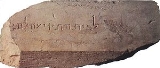
To the Trumpeting Place
The Second Temple (romanized: Beit HaMikdash meaning Holy House) was the reconstructed Temple in Jerusalem
Temple in Jerusalem

The Temple in Jerusalem or Holy Temple , refers to a series of structures located on the Temple Mount in the old city of Jerusalem. Historically, two temples were built at this location, and a The Third Temple features in Jewish eschatology....
 which stood between 516 BCE and 70 CE. During this time, it was the center of Jewish
Judaism

Judaism is a set of beliefs and practices originating in the Hebrew Bible , as later further explored and explained in the Talmud and other texts....
 worship, which focused on the sacrifices known as the korbanot. Solomon's Temple, also known as the First Temple, was destroyed in 586 BCE when the Jew
Jew

A Jew is a member of the Jewish people, an ethnoreligious group that traces its ancestry to the Israelites or Hebrews of the Ancient Near East....
s were exile
Exile

Exile means to be away from one's home while either being explicitly refused permission to return and/or being threatened by prison or death upon return....
d into Babylonian Captivity
Babylonian captivity

The Babylonian captivity, or Babylonian exile, is the name typically given to the deportation and exile of the Jews of the ancient Kingdom of Judah to Babylon by Nebuchadnezzar II of Babylon in 586 BCE....
. Construction of a new temple was begun in 535; after a hiatus, work resumed ca. 521, with completion occurring in 516 and dedication in 515. As described in the Book of Ezra
Book of Ezra

The Book of Ezra is a book of the Bible in the Old Testament and Hebrew language Tanakh. It is the record of events occurring at the close of the Babylonian captivity....
, rebuilding of the Temple was authorized by Cyrus the Great
Cyrus the Great

Cyrus the Great , , also known as Cyrus II of Persia and Cyrus the Elder, was a Persian people Shah . He was the founder of the Persian Empire under the Achaemenid dynasty, an empire, perhaps the most wealthy and magnificent in history....
 of Persia and ratified by Darius the Great of Persia. The Romans destroyed Jerusalem and its Second Temple on August 4th 70 CE, ending the Great Jewish Revolt that began in 66 CE.
Second Temple Destroyed

Nation reorganized


After the return from captivity, under Zerubbabel
Zerubbabel

Zerubbabel was a governor of Judah and the grandson of Jehoiachin, penultimate king of Judah. Zerubbabel led the first band of Jews, numbering 42,360, who returned from the Babylonian captivity of Judah in the first year of Cyrus the Great, King of Persia ....
, arrangements were almost immediately made to reorganize the desolated Kingdom of Judah
Kingdom of Judah

The Kingdom of Judah existed at two periods in Jewish history. According to the Hebrew Bible, a kingdom emerged in Judah after the death of Saul, when the tribe of Judah elevated David to rule over it....
 after its demise seventy years earlier. The body of pilgrims, forming a band of 42,360 including children (besides their male and female servants, who numbered 7,337, and 200 singing men and women; cf. ), having completed the long and dreary journey of some four months, from the banks of the Euphrates
Euphrates

The Euphrates is the western of the two great rivers that define Mesopotamia which flows from Anatolia....
 to Jerusalem
Jerusalem

Jerusalem is the capital of Israel and its List of Israeli cities in both population and area, with a population of 747,600 residents over an area of if Positions on Jerusalem East Jerusalem is included....
, were animated in all their proceedings by a strong religious impulse, and therefore one of their first concerns was to restore their ancient house of worship by rebuilding their destroyed temple and reinstituting the sacrificial rituals known as the korbanot.

On the invitation of Zerubbabel, the governor, who showed them a remarkable example of liberality by contributing personally 1,000 golden darics, besides other gifts, the people poured their gifts into the sacred treasury with great enthusiasm (Ezra
Book of Ezra

The Book of Ezra is a book of the Bible in the Old Testament and Hebrew language Tanakh. It is the record of events occurring at the close of the Babylonian captivity....
 2). First they erected and dedicated the altar of God on the exact spot where it had formerly stood, and they then cleared away the charred heaps of debris which occupied the site of the old temple; and in the second month of the second year (535 BCE), amid great public excitement and rejoicing (befitting Psalms
Psalms

Psalms is a book of the Hebrew Bible , included in the collected works known as the "Writings" or Ketuvim....
 116; 117; 118), the foundations of the second temple were laid. A wide interest was felt in this great movement, although it was regarded with mingled feelings by the spectators (; ).

Samaritans offer

The Samaritan
Samaritan

The Samaritans , known in the Talmud as Cuthim , are an ethnoreligious group of the Levant. Ancestrally, they claim descent from a group of Israelite inhabitants who have connections to ancient Samaria from the beginning of the Babylonian Exile up to the beginning of the Common Era....
s made proposals for co-operation in the work. Zerubbabel and the elders, however, declined all such cooperation, feeling that Judea
Judea

Judea or Jud?a is the name given to the mountainous southern part of the historic Land of Israel , an area now divided between Israel and the West Bank ....
 must build the temple without help. Immediately evil reports were spread regarding the Jews. According to Ezra 4:5, the Samaritans sought to "frustrate their purpose" and sent messengers to Ecbatana
Ecbatana

Ecbatana is supposed to be the capital of Astyages , which was taken by the Persian emperor Cyrus the Great in the sixth year of Nabonidus ....
 and Susa, with the result that the work was suspended.

Monarchs

Seven years after this Cyrus the Great, who ordered and declared the rebuilding of the temple, died ; he was succeeded by his son Cambyses
Cambyses

Cambyses is the name of several members of the Achaemenid line of ancient Persian Empire .*Cambyses , son and successor of Teispes of Anshan, father of an earlier Cyrus and great grandfather of Cyrus the Great....
. On his death the "false Smerdis," an imposter, occupied the throne for some seven or eight months, and then Darius I of Persia
Darius I of Persia

Darius I or Darius the Great was the son of Hystaspes and Persian Empire from 522 BC to 486 BC. Darius is the dominant Latin language spelling used by the Roman historians....
 became king (522 BCE). In the second year of this monarch the work of rebuilding the temple was resumed and carried forward to its completion , under the stimulus of the earnest counsels and admonitions of the prophets Haggai
Haggai

Haggai was one of the twelve minor prophets and the author of the Book of Haggai. His name means "my feast". He was the first of three prophets , whose ministry belonged to the period of History of ancient Israel and Judah which began after the return from Babylonian captivity in Babylon....
 and Zechariah. It was ready for consecration in the spring of 516 BCE, more than twenty years after the return from captivity. The temple was completed on the third day of the month Adar, in the sixth year of the reign of King Darius.

Missing articles

Temple Inscription in Greek
This second temple was missing the Ark of the Covenant
Ark of the Covenant

The Ark of the Covenant is described in the Bible as a sacred container, where in rested the Tablets of stone containing the Ten Commandments as well as Aaron's rod and manna....
, the Urim and Thummim
Urim and Thummim

In ancient Israelite religion and culture, Urim and Thummim is a phrase from the Hebrew Bible associated with the Hoshen , divination in general, and cleromancy in particular....
, the holy oil, the sacred fire, the Ten Commandments
Ten Commandments

The Ten Commandments, or Decalogue, are a list of religious and moral imperatives that, according to Judeo-Christian tradition, were authored by God and given to Moses on the mountain referred to as "Biblical Mount Sinai" or "Mount Horeb" in the form of two stone tablets....
, the pot of manna
Manna

Manna , sometimes or archaically spelt mana, is the name of a food which, according to the Bible, was eaten by the Israelites during their travels in the desert....
, and Aaron's rod
Aaron's rod

Aaron's rod refers to any of the staffs carried by Moses' brother, Aaron, in the Old Testament of the Bible. The Bible tells how, along with Nehushtan, Aaron's rod was endowed with miraculous power during the Plagues of Egypt which preceded the Exodus....
. The Kodesh Hakodashim
Kodesh Hakodashim

Kodesh Hakodashim, in Hebrew language: , "Holy of Holies", the Most Holy Place in traditional Judaism, is the inner sanctuary within the Tabernacle and Temple in Jerusalem when Solomon's Temple and the Second Temple were standing - the Jewish sanctum sanctorum....
 was separated by curtains rather than a wall as in the first Temple. As in the Tabernacle, there was in it only one golden lamp for the holy place
Hekhal

The Hekhal , Hebrew Language ?????, also known as the Sanctuary or Holy, was the part of Tabernacle and Temple in Jerusalem between the outer altar, where most Korban were performed, and the Holy of Holies originally containing the Ark of the Covenant....
, one table of showbread
Showbread

Showbread , in the King James Version: shewbread, in a Bible or Judaism context, refers to the cakes or loaves of bread which were always present on a specially dedicated table, in the Temple in Jerusalem as an offering to God....
, and the incense altar, with golden censers, and many of the vessels of gold that had belonged to Solomon's Temple that had been carried to Babylon
Babylon

Babylon was a city-state of ancient Mesopotamia, sometimes considered an empire, the remains of which can be found in present-day Al Hillah, Babil Governorate, Iraq, about 85 kilometers south of Baghdad....
 but restored by Cyrus (Ezra 1:7-11).

Completion

The temple, when completed, was consecrated and the sacrificial observances known as the korbanot resumed, amid great rejoicings on the part of all the people (Ezra 6:16), although it was evident that the Jews were no longer an independent people, but were subject to a foreign power. The Book of Haggai
Book of Haggai

The Book of Haggai is a book of the Tanakh and of the Old Testament, written by the prophet Haggai. It was written in 520 BCE some 18 years after Cyrus had conquered Babylon and issued a decree in 538 BCE allowing the captive Jews to return to Judea....
 includes a prediction (2:9) that the glory of the second temple would be greater than that of the first. This temple, during the different periods of its existence, is often regarded by believers as but one house, the one only house of God.

Renovation under Herod

Around 19 BCE, Herod the Great
Herod the Great

Herod , also known as Herod I or Herod the Great , was a Roman Empire client state of Israel. Herod is known for his colossal building projects in Jerusalem and other parts of the ancient world, including the rebuilding of the Second Temple in Jerusalem, sometimes referred to as Herod's Temple....
 began a massive renovation and expansion of the Second Temple complex. The Temple itself was torn down and a new one built in its place. The resulting structure is sometimes referred to as Herod's Temple, but it is still called the Second Temple because the sacrificial rituals continued unabated throughout the construction process.

Destruction


In 66 CE the Jewish population rebelled against the Roman Empire. Four years later, in 70 CE, Roman legions under Titus
Titus

Titus Flavius Vespasianus, commonly known as Titus , was a Roman Emperor who briefly reigned from 79 until his death in 81. Titus was the second emperor of the Flavian dynasty, which ruled the Roman Empire between 69 and 96, encompassing the reigns of Titus's father Vespasian , Titus himself and his younger brother Domitian ....
 reconquered and subsequently destroyed
Siege of Jerusalem (70)

The Siege of Jerusalem in the year 70 AD was a decisive event in the First Jewish-Roman War. It was followed by the Masada#History in 73 AD. The Roman Empire army, led by the future Emperor Titus, with Tiberius Julius Alexander as his second-in-command, besieged and conquered the city of Jerusalem, which had been occupied by its Jewish defend...
 much of Jerusalem and the Second Temple. The arch of Titus
Arch of Titus

The Arch of Titus is a Pentelic marble triumphal arch with a single arched opening, located on the Via Sacra just to the south-east of the Roman Forum in Rome....
, located in Rome and built to commemorate Titus's victory in Judea, depicts Roman soldiers carrying off the Menorah from the Temple. Jerusalem itself was razed by the Emperor Hadrian at the end of the Bar Kochba Rebellion in 135 CE.

Discovery of quarry

On September 25 2007 Yuval Baruch, archaeologist with the Israeli Antiquities Authority, announced their discovery of a quarry compound which may have provided King Herod with the stones to construct Herod's Temple. Coins, pottery and an iron stake found indicated the date of the quarrying to be about 19 BCE. Archaeologist Ehud Nesher confirmed that the large outlines of the stone cuts is evidence that it was a massive public project worked by hundreds of slaves.

See also

  • First Jewish-Roman War
    First Jewish-Roman War

    The first Jewish-Roman War , sometimes called The Great Revolt , was the first of three Jewish-Roman wars by the Jews of Iudaea Province against the Roman Empire ....
  • Shekinah
  • Siege of Jerusalem (70)
    Siege of Jerusalem (70)

    The Siege of Jerusalem in the year 70 AD was a decisive event in the First Jewish-Roman War. It was followed by the Masada#History in 73 AD. The Roman Empire army, led by the future Emperor Titus, with Tiberius Julius Alexander as his second-in-command, besieged and conquered the city of Jerusalem, which had been occupied by its Jewish defend...
  • Third Temple
  • Timeline of Jewish history
    Timeline of Jewish history

    This is a timeline of the development of Jews and Judaism. All dates are given according to the Common Era, not the Hebrew calendar....


External links

  • The Jewish History Resource Center, Project of the Dinur Center for Research in Jewish History, The Hebrew University of Jerusalem