

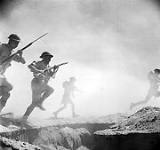
Second Battle of El Alamein

Encyclopedia
The Second Battle of El Alamein
marked a major turning point in the Western Desert Campaign
of the Second World War
. The battle took place over 20 days from 23 October – 11 November 1942. The First Battle of El Alamein
had stalled the Axis
advance. Thereafter, Lieutenant-General
Bernard Montgomery took command of the British Eighth Army from General Claude Auchinleck
in August 1942. The Allied victory turned the tide in the North African Campaign
. It ended Axis hopes of occupying Egypt, taking control of the Suez Canal
, and gaining access to the Middle Eastern oil fields.
, the Panzer Army Africa
(Panzerarmee Afrika), composed of German and Italian infantry and mechanized units under Field Marshal Erwin Rommel
, had struck deep into Egypt
, threatening the British Empire
's control of the Suez Canal. General Auchinleck
withdrew the Eighth Army to within 50 mi (80.5 km) of Alexandria
to a point where the Qattara Depression
came to within 40 mi (64.4 km) of El Alamein on the coast. This gave the defenders a relatively short front to defend and secure flanks, because tanks could not traverse the Depression. Here, in early July, the Axis advance was halted in the First Battle of El Alamein
.
Eighth Army counter-offensives during July were unsuccessful, as Rommel dug in to allow his exhausted troops to regroup. At the end of July, Auchinleck called off all offensive action with a view to rebuilding the army’s strength. In early August, British Prime Minister Winston Churchill
and General Sir Alan Brooke—the British Chief of the Imperial General Staff—visited Cairo
and replaced Auchinleck as C-in-C Middle East with General Sir Harold Alexander. Lieutenant-General William Gott
was to command the Eighth Army, but was killed before taking command when the transport plane he was travelling in was shot down by Luftwaffe
fighters; Lieutenant-General Bernard Montgomery became Eighth Army commander.
Faced with overextended supply lines and a relative lack of reinforcements, and well aware of massive allied reinforcements in men and material on the way, Rommel decided to strike the Allies while their build-up was incomplete. The two armoured divisions of Afrika Korps
and a force made up of the reconnaissance units of Panzer Army Africa spearheaded the attack but, on 30 August 1942, the Allies stopped them at Alam el Halfa ridge and Point 102. The attack failed in this second battle at the Alamein line, better known as the Battle of Alam el Halfa (commonly but incorrectly Alam Halfa); expecting a counter-attack by Montgomery's Eighth Army, Panzer Army Africa dug in.
The factors that had favoured the Eighth Army's defensive plan in the First Battle of El Alamein, the short front line and the secure flanks, now favoured the Axis on defence. Rommel, furthermore, had plenty of time to prepare his defensive positions and lay extensive minefields (approximately 500,000 mines) and barbed wire. Alexander and Montgomery were determined to establish a superiority of forces sufficient not only to achieve a breakthrough but also to exploit it and destroy Panzer Army Africa. In all the previous swings of the pendulum in the Western Desert since 1941, neither side had ever had the strength after achieving victory in an offensive battle to exploit it decisively: the losing side had always been able to withdraw and regroup closer to its main supply bases.
After six more weeks of building up its forces, Eighth Army was ready to strike. 220,000 men and 1,100 tanks under Montgomery made their move against the 115,000 men and 559 tanks of Panzer Army Africa.
For the first night of the offensive, Montgomery planned for four infantry divisions from Oliver Leese
's XXX Corps to advance on a 16 mi (25.7 km) front to an objective codenamed Oxalic Line, overrunning the forward Axis defences. Engineers would meanwhile clear and mark the two lanes through the minefields, through which the armoured divisions from Herbert Lumsden
's X Corps
would pass to gain the Pierson line. They would rally and temporarily consolidate their position just west of the infantry positions, blocking any armoured interference in the infantry battle. They would then advance to the Skinflint area in the depths of the Axis defences and astride the important Rahman lateral track to challenge the enemy armour.
The Polish Mine Detector
designed in Scotland in 1941 by the Polish engineer and signals officer, Lt. Józef Kosacki
was to be used for the first time in action. Five hundred of these were issued to Eighth Army. They doubled the speed at which heavily mined sands could be cleared, from around 100 m (109.4 yd) to about 200 m (218.7 yd) an hour.
, the tanks destined for battle in the north were disguised as supply trucks by placing removable plywood superstructures over them.
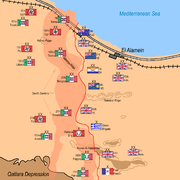
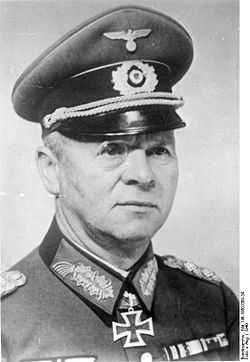 With the failure of their offensive at Alam el Halfa, the Axis forces were seriously depleted. The German and Italian armies were over-stretched and exhausted and relying on captured Allied supplies and equipment. In spite of Rommel's successes, the situation was quickly turning against him, as no major reinforcements were being sent to him. On the other hand, the British Commonwealth forces were being re-supplied with men and materials from the United Kingdom
, India
, Australia
and New Zealand
, and trucks and Sherman tanks from the United States
. Rommel continued to request equipment, supplies and fuel, but the main focus of the German war machine was on the Eastern Front
, and very limited supplies reached North Africa.
Furthermore, Rommel was ill. In early September, arrangements were made for him to return to Germany on sick leave and for Lieutenent-General (General der Panzertruppe
) Georg Stumme
to transfer from the Russian front to take his place. Before he left for Germany on 23 September, Rommel organized the planned defence and wrote a long appreciation of the situation to the German High Command, once again setting out the essential needs of the Panzer Army.
Rommel knew full well that the British Commonwealth forces would soon be strong enough to launch an offensive against his army. His only hope now relied on the German forces fighting in the Battle of Stalingrad
quickly defeating the Soviet forces and moving south through the Trans-Caucasus
and threatening Persia (Iran
) and the Middle East. This would require large numbers of British Commonwealth forces to be sent from the Egyptian front to reinforce British forces in Persia, leading to the postponement of any offensive against his army. Using this delay, Rommel hoped to convince the German High Command to reinforce his forces for the eventual link-up between Panzer Army Africa and the German armies battling their way through southern Russia, enabling them to finally defeat the British and Commonwealth armies in North Africa
and the Middle East.
In the meantime, his forces dug in and waited for the eventual attack by the British Commonwealth forces or the defeat of the Soviet Army at Stalingrad. Rommel added depth to his defenses by creating at least two belts of mines which were connected at intervals to create boxes which would restrict enemy penetration and deprive British armour of room for manoeuvre. The front face of each box was lightly held by battle outposts and the rest of the box was unoccupied but sowed with mines and explosive traps. These became known as the Devil's gardens
. The main defensive positions were built to a depth of at least 2 km (1.2 mi) behind the second mine belt. The Axis laid around half a million mines, mostly Teller anti-tank mines
with some smaller anti-personnel mines (such as the S-mine
). (Many of these mines were British, captured at Tobruk). In order to lure enemy vehicles into the minefields, the Italians had a trick of dragging an axle and tyres through the fields using a long rope to create what appeared to be well-used tracks.
Rommel was concerned not to let the British armour break out into the open because he had neither the strength of numbers nor fuel to match them in a battle of manoeuvre. He therefore had to try to restrict the battle to his defended zones and counter any breakthrough both quickly and vigorously. Rommel therefore stiffened his forward lines by alternating German and Italian infantry formations. Because the Allied deception measures had confused the Axis as to their likely point of attack, Rommel departed from his usual practice of holding his armoured strength in a single concentrated reserve and split it into a northern group (15th Panzer and Littorio Divisions) and a southern group (21st Panzer and Ariete Divisions), each organized into battle groups in order to be able to make a quick armoured intervention wherever the blow fell and so prevent any narrow breakthroughs from being enlarged. The effect, however, was that a significant proportion of his armoured reserve was dispersed and held unusually far forward. Further back, however, Rommel did have the 90th Light and Trieste motorized in reserve near the coast. Rommel believed that when the main thrust came, he could manoeuvre his troops faster than the Allies to concentrate his defences at the battle's centre of gravity. However, having concentrated his defence, he would not be able to move his forces again because of lack of fuel.
, which involved the 15th Panzer Division being subjected to heavy fire for a few minutes. Then at 21:40 (Egyptian Summer Time) on 23 October on a calm, clear evening under the bright sky of a full moon, Operation Lightfoot began, but not with a 1000-gun barrage—as in popular belief—nor with all guns firing at the same time. The fire plan had been carefully planned so that all 882 guns from the Field and Medium batteries' first rounds would land across the entire 40 mi (64.4 km) front at the same time. After 20 minutes of heavy general bombardment, the guns switched to precision targets in support of the advancing infantry. The shelling plan continued for five and a half hours, by the end of which each gun had fired about 600 rounds.
There was a reason for the name Operation Lightfoot. The infantry had to attack first. Many of the anti-tank mines would not be tripped by soldiers running over them since they were too light (hence the code-name). As the infantry advanced, engineers had to clear a path for the tanks coming behind. Each stretch of land cleared of mines was to be 24 ft (7.3 m) wide, which was just enough to get tanks through in single file. The engineers had to clear a 5 mi (8 km) route through the Devil’s gardens. It was a difficult task that was not achieved because of the depth of the Axis minefields.
At 22:00, the four infantry divisions of XXX Corps began to move. The objective was an imaginary line in the desert where the strongest enemy defences were situated. Once the infantry reached the first minefields, the mine sweepers, including Reconnaissance Corps troops and sapper
s, moved in to create a passage for the armoured divisions of X Corps. Progress was slower than planned but at 02:00, the first of the 500 tanks crawled forward. By 04:00, the lead tanks were in the minefields, where they stirred up so much dust that there was no visibility at all, and traffic jams developed as the tanks got bogged down.
Meanwhile, 7th Armoured Division (with one Free French Brigade under command) from Brian Horrocks
's XIII Corps
made a feinting attack to the south. The main attack aimed to engage and pin down the 21st Panzer Division
and the Ariete Armoured Division around Jebel Kalakh, while the Free French on the far left were to secure Qaret el Himeimat and secure the el Taqa plateau. The right flank of the attack was to be protected by 44th Infantry Division's 131st Infantry Brigade. However, the attack met heavy resistance from the 185 Airborne Division Folgore
and Ramcke
Parachute Brigade and the Keil Group. The minefields proved thicker than anticipated and clearing paths through them was impeded by heavy defensive fire. By dawn on 24 October, paths still had not been cleared through the second minefield to release 22nd and 4th Light Armoured Brigades into the open to make their planned turn north into the rear of enemy positions 5 mi (8 km) west of Deir el Munassib.
Further north along the XIII Corps front, the 50th Infantry Division achieved limited gains at heavy cost against determined resistance from the Pavia and Brescia divisions and elements of the Folgore
. The Indian 4th Infantry Division, on the far left of the XXX Corps front at Ruweisat Ridge, made a mock attack and two small raids intended to deflect attention to the centre of the front.
Panzer
units counter-attacked the 51st Highland Division
just after sunrise, only to be stopped in their tracks.
The morning of Saturday 24 October brought disaster for the German headquarters. The reports that Stumme had received that morning showed the attacks had been on a broad front but that such penetration as had occurred should be containable by local units. He went forward himself to observe the state of affairs and finding himself under fire, suffered a heart attack and died. Temporary command was given to Major-General Wilhelm Ritter von Thoma
. Hitler had already decided that Rommel should leave his sanatorium and return to North Africa. Rommel flew to Rome early on 25 October to press the Comando Supremo for more fuel and ammunition and then on to North Africa to resume command that night of the Panzer Army Africa, which that day was renamed the "German-Italian Panzer Army" (Deutsch-Italienische Panzerarmee).
During the day, there was therefore little activity pending more complete clearance of paths through the minefields. The armour was held at Oxalic and all day long, artillery and the Allied Desert Air Force
, making over 1,000 sorties, attacked Axis positions to aid the 'crumbling' of the Axis forces. By 16:00, there was little progress.
At dusk, with the sun at their backs, Axis tanks from the 15th Panzer Division and Italian Littorio Divisions swung out from the Kidney feature, often wrongly called a ridge (it was actually a depression), to engage the 1st Armoured Division and the first major tank battle of El Alamein began. Over 100 tanks were involved and by dark, half were destroyed, although neither position was altered.
That night, the thrust by 10th Armoured Division from Miteirya Ridge was unsuccessful. The lifting of mines on the Miteirya Ridge and beyond took far longer than planned and the leading unit, 8th Armoured Brigade, was caught on their start line at 22:00—zero hour—by an air attack and were scattered. By the time they had reorganized, they were well behind schedule and out of touch with the creeping artillery barrage. By daylight, the brigade was out in the open taking considerable fire from well-sited tanks and anti-tank guns. Meanwhile, 24th Armoured Brigade had pushed forward and reported at dawn they were on the Pierson line, although it turned out that, in the dust and confusion, they had mistaken their position and were well short.
The attack in XIII Corp's sector to the south fared no better. 44th Division's 131st Infantry Brigade cleared a path through the mines, but when 22nd Armoured Brigade passed through, they came under heavy fire and were repulsed, with 31 tanks disabled.
Allied air activity that night focused on Rommel's northern armoured group, where 135 ST (122.5 t) of bombs were dropped. To prevent a recurrence of 8th Armoured Brigade's experience from the air, attacks on Axis landing fields were also stepped up.
By early morning, the Axis forces launched a series of attacks using 15th Panzer and Littorio divisions. The Panzer Army was probing for a weakness, but without success. When the sun set, the Allied infantry went on the attack. Around midnight, 51st Division launched three attacks, but no one knew exactly where they were. Pandemonium and carnage ensued, resulting in the loss of over 500 Allied troops, and leaving only one officer among the attacking forces.
While the 51st Highland Division was operating around Kidney, the Australians were attacking Point 29, a 20 ft (6.1 m) high Axis artillery observation post southwest of Tel el Eisa, in an attempt to surround the Axis coastal salient containing the German 164th Light Division and large numbers of Italian infantry. This was the new northern thrust Montgomery had devised earlier in the day, and was to be the scene of heated battle for some days. The Australian 26th Brigade attacked at midnight, supported by artillery and 30 tanks of 40th Royal Tank Regiment. They took the position and 240 prisoners. Fighting continued in this area for the next week, as the Axis tried to recover the small hill that was so vital to their defence.
Meanwhile, the air force night bombers dropped 115 ST (104.3 t) of bombs on targets in the battle field and 14 ST (12.7 t) on the Stuka base at Sidi Haneish, while night fighters flew patrols over the battle area and the Axis forward landing grounds.
Rommel was convinced by this time that the main assault would be in the north and was determined to retake Point 29. He ordered a counterattack against Point 29 by 15th Panzer, 164th Light Divisions and elements of Italian XX Corps to begin at 15:00 but under heavy artillery and air attack this came to nothing. During the day, he also started to draw his reserves to what was becoming the focal point of the battle: 21st Panzer and part of the Ariete moved north during the night to reinforce the 15th Panzer and Littorio Divisions and 90th Light Division at El Daba were ordered forward while the Trieste Division were ordered from Fuka to replace them. 21st Panzer and the Ariete made slow progress during the night as they were heavily bombed.
However, back at the Kidney feature, the British failed to take advantage of the missing tanks. Each time they tried to move forward they were stopped by anti-tank guns. The Allied offensive was stalled. Churchill railed, "Is it really impossible to find a general who can win a battle?"
On a brighter note for the British, Beaufort torpedo bomber
s of No. 42 Squadron RAF
, attached to No. 47 Squadron
, sank at Tobruk
the tanker Proserpina, which was the last hope for refueling Rommel's army.
Montgomery was concerned that the impetus of the offensive was waning. He therefore decided that over the next two days, while continuing the process of attrition, he would thin out his front line to create a reserve with which to restore his momentum. The reserve was to include the New Zealand Division (with 9th Armoured Brigade under command), 10th Armoured Division and 7th Armoured Division.
". An attack was planned on these areas using two battalions from 7th Motor Brigade. At 23:00 on 26 October, 2 Battalion, The Rifle Brigade would attack Snipe and 2nd Battalion King's Royal Rifle Corps
("KRRC") would attack Woodcock. The plan was for 2nd Armoured Brigade to pass round the north of Woodcock the following dawn and 24th Armoured Brigade round the South of Snipe. The attack was to be supported by all the available artillery of both X and XXX Corps.
Both battalions had difficulty finding their way in the dark and dust. At dawn, the KRRC had not reached its objective and was forced to find cover and dig in some distance from Woodcock. 2nd Rifle Brigade had had better fortune and after following the shell bursts of the supporting artillery dug in when they concluded they had reached their objective having encountered little opposition.
At 06:00, the 2nd Armoured Brigade commenced its advance and ran into such stiff opposition that, by noon, it had still not linked with the KRRC. The 24th Armoured Brigade started a little later and was soon in contact with the Rifle Brigade (having shelled them in error for a while). Some hours of confused fighting ensued involving tanks from the Littorio and troops and anti-tank guns from 15th Panzer which managed to keep the British armour at bay in spite of the support of the Rifle Brigade battlegroup's anti-tank guns.
Meanwhile, Rommel had decided to make two major counterattacks using his fresh troops. 90th Light Division was to make a fresh attempt to capture Point 29 and 21st Panzer were targeted at Snipe (the Ariete detachment had returned south).
At Snipe, mortar and shell fire was constant all day long. At 16:00, Rommel launched his major attack. German and Italian tanks moved forward. Against them the Rifle Brigade had 13 6-pounder anti-tank guns along with six more from the supporting 239th Anti-Tank Battery, R.A.. Although on the point of being overrun more than once they held their ground destroying 22 German and 10 Italian tanks. The Germans gave up but in error the British battle group was withdrawn without being replaced that evening. Its CO, Lieutenant-Colonel Victor Buller Turner
was awarded the Victoria Cross
. Only one anti-tank gun—from 239 Battery—was brought back.
When it was discovered that neither Woodcock nor Snipe was in Eighth Army hands 133rd Lorried Infantry Brigade was sent to capture them. By 01:30 on 28 October, the 4th battalion Royal Sussex Regiment
judged they were on Woodcock and dug in. At dawn, 2nd Armoured Brigade moved up in support but before contact could be made 4th Royal Sussex were counterattacked and overrun with heavy losses. Meanwhile, the Lorried Brigade's two other battalions had moved on Snipe and dug in only to find out the next day that they were in fact well short of their objective.
Further north, the 90th Light Division's attack on Point 29 during the afternoon of 27 October failed under heavy artillery and bombing which broke up the attack before it had closed with the Australians.
The action at Snipe was an episode of the Battle of El Alamein described by the regiment's historian as the most famous day of the regiment's war. Lucas-Phillips, in his Alamein records that:
At this point, Montgomery ordered the X Corps formations in the Woodcock-Snipe area to go over to defence while he focused his army's attack further to the north. On the night of 28/29 October, the Australians
were tasked with a second set piece attack. 20th Australian Infantry Brigade
with 40th R.T.R. in support would push northwest from Point 29 to form a base for 26th Australian Infantry Brigade
with 46th R.T.R. in support to strike northeast to an enemy-held location south of the railway known as "Thompson's Post" and then over the railway to the coast road where they would advance south east to close on the rear of the Axis troops in the coastal salient. An attack by the division's third brigade would then be launched on the salient from the southeast.
The 20th Brigade took its objectives with little trouble but 26th Brigade had more trouble. Because of the distances involved, the troops were riding on 46th R.T.R.'s Valentine tank
s as well as carriers, which mines and anti-tank guns soon brought to grief forcing the infantry to dismount. The infantry and armour lost touch with each other in the ensuing fighting with the German 125th Panzergrenadier Regiment and a battalion of 7th Bersaglieri Regiment sent to reinforce the sector and the advance came to a halt. The Australians suffered 200 casualties in that attack and overall suffered 27 killed and 290 wounded.
It became clear that there were no longer enough hours of darkness left to reform, continue the attack and see it to its conclusion, so the operation was called off.
The Italian anti-tank gunners had fought fiercely and all were killed or died of wounds, except for 20 wounded men who were captured the following morning. "The German soldier has impressed the world", Rommel wrote in a plaque dedicated to the Bersaglieri. "However the Italian Bersagliere has impressed the German soldier."
By the end of the day, the British had 800 tanks still in operation, while the Axis had 148 German and 187 Italian tanks. With the tanker Luisiano sunk off the west coast of Greece by a torpedo from a Wellington bomber, Rommel told his commanders, "It will be quite impossible for us to disengage from the enemy. There is no gasoline for such a manoeuvre. We have only one choice and that is to fight to the end at Alamein."
The actions by the Australians in the salient had alerted Montgomery that Rommel had committed his reserve in the form of 90th Light Division to the front and that its presence in the coastal sector suggested that Rommel was expecting the next major Eighth Army offensive in this sector. Montgomery determined therefore that it would take place further south on a 4000 yd (3,657.6 m) front south of Point 29. The attack was to take place on the night of 31 October/1 November, as soon as he had completed the reorganisation of his front line to create the reserves needed for the offensive (although in the event it was postponed by 24 hours). To keep Rommel's attention on the coastal sector, Montgomery ordered the renewal of the Australian Division's operation on the night of 30/31 October.
who, for his heroic actions from the 23rd until his death, and for making a lone attack on a machine-gun, was awarded the Victoria Cross
. On Sunday, 1 November Rommel tried to dislodge the Australians once again, but the brutal, desperate fighting resulted in nothing but lost men and equipment. He did however regain contact with the 125th Panzergrenadier Regiment in the nose of the salient.
By now, it had become obvious to Rommel that the battle was lost. His fuel state continued to be critical: on 1 November, two more supply ships—the Tripolino and the Ostia—had been torpedoed and sunk from the air northwest of Tobruk. The shortage forced him to rely increasingly on fuel flown in from Crete
on the orders of Albert Kesselring
, commander of German Army Command South
(OB Süd), despite the restrictions imposed by heavy bombing of the airfields in Crete and the Desert Air Force's efforts to intercept the transport aircraft.
Rommel began to plan a retreat anticipating retiring to Fuka, some 50 mi (80.5 km) west. Ironically, large amounts of fuel arrived at Benghazi after the German forces had started to retreat, but little of it reached the front, a fact Kesselring tried to change by delivering it more closely to the fighting forces.
The initial thrust of Supercharge was to be carried out by 2nd New Zealand Division. The division's commander—Freyberg
—had tried to free them of this task, as they had lost 1405 men in just three days, at El Ruweisat Ridge in July. However, in addition to its own 5th New Zealand Infantry Brigade and 28th (Maori) Infantry Battalion, the division was to have had placed under its command 151st (Durham) Brigade from 50th Division, 152nd (Seaforth and Camerons) Brigade
from 51st Division and the 133rd Royal Sussex Lorried Infantry Brigade. In addition, the division was to have British 9th Armoured Brigade
under command.
As in Operation Lightfoot, it was planned that two infantry brigades (the 151st on the right and 152nd on the left) each this time supported by a regiment of tanks—the 8th and 50th Royal Tank Regiments—would advance and clear a path through the mines. Once they reached their objectives, 4000 yd (3,657.6 m) distant, 9th Armoured Brigade would pass through supported by a heavy artillery barrage and break open a gap in the Axis defenses on and around the Rahman track, some 2000 yards (1,828.8 m) further forward, which the 1st Armoured Division, following behind, would pass through into the open to take on Rommel's armoured reserves.
Supercharge started with a seven hour aerial bombardment focused on Tel el Aqqaqir and Sidi Abd el Rahman
, followed by a four and a half hour barrage of 360 guns firing 15,000 shells. The two assault brigades started their attack at 01:05 on 2 November and gained most of their objectives to schedule and with moderate losses. On the right of the main attack 28th (Maori) battalion captured positions to protect the right flank of the newly formed salient and 133rd Lorried Infantry did the same on the left. New Zealand engineers cleared five lines through the mines allowing the Royal Dragoons
armoured car regiment to slip out into the open and spend the day raiding the Axis communications.
9th Armoured Brigade had started its approach march at 20:00 on 1 November from El Alamein
railway station with around 130 tanks; it arrived at its start line with only 94 tanks fit for action. The brigade was to have started its attack towards Tel el Aqqaqir at 05:45 behind a barrage; however, the attack was postponed for 30 minutes while the brigade regrouped on Currie's
orders. At 06:15, 30 minutes before dawn, the three regiments of the brigade advanced towards the gunline. Brigadier Currie had tried to get the brigade out of doing this job stating that he believed the brigade would be attacking on too wide a front with no reserves and that they would most likely take 50% losses.
The reply came from Freyberg
that Montgomery
The German and Italian anti-tank guns (mostly Pak38 and Italian 47 mm
guns, along with 24 of the formidable 88 mm flak guns
) opened fire upon the charging tanks silhouetted by the rising sun. German tanks, which had penetrated between the Warwickshire Yeomanry and Royal Wiltshire Yeomanry
also caused many casualties. British tanks attacking the Folgore's sector were fought off with petrol bombs and mortar fire as well as with the obsolete Italian 47 mm cannons.
The Axis gun screen started to inflict a steady amount of damage upon the advancing tanks but was unable to stop them; over the course of the next 30 minutes, around 35 guns were destroyed and several hundred prisoners taken.
9th Armoured Brigade had started the attack with 94 tanks and was reduced to only 24 runners (although many were recoverable) and of the 400 tank crew involved in the attack 230 were killed, wounded or captured.
After the Brigade's action, Brigadier Gentry of 6th New Zealand Brigade went ahead to survey the scene. On seeing Brigadier Currie asleep on a stretcher, he approached him saying, "Sorry to wake you John, but I'd like to know where your tanks are?" Currie waved his hand at a group of tanks around him, replying "There they are". Gentry was puzzled. "I don't mean your headquarters tanks, I mean your armoured regiments. Where are they?" Currie waved his arm and again replied, "There are my armoured regiments, Bill".
The brigade had sacrificed itself upon the gun line and caused great damage but had failed to create the gap for the 1st Armoured Division to pass through; however, soon after dawn 1st Armoured Division started to deploy and the remains of 9th Armoured Brigade came under its command. 2nd Armoured Brigade came up behind the 9th, and by mid morning 8th Armoured Brigade had come up on its left, ordered to advance to the southwest. In heavy fighting during the day the British armour made little further progress. At 11:00 on 2 November, the remains of 15th Panzer, 21st Panzer and Littorio Armoured Divisions counterattacked 1st Armoured Division and the remains of 9th Armoured Brigade, which by that time had dug in with a screen of anti-tank guns and artillery together with intensive air support. The counter-attack failed under a blanket of shells and bombs, resulting in a loss of some 100 tanks.
Although X Corps had failed in its attempt to break out, it had succeeded in its objective of finding and destroying enemy tanks. Although tank losses were approximately equal, this represented only a portion of the total British armour, but most of Rommel's tanks; the Afrika Korps strength of tanks fit for battle fell by 70 while in addition to 9th Armoured Brigade's losses 2nd and 8th Armoured Brigades lost 14 tanks between them in the fighting with another 40 damaged or broken down. The fighting was later termed the "Hammering of the Panzers".
Meanwhile in the late afternoon and early evening, the 133rd Lorried and 151st Infantry Brigades—by this time back under command of 51st Infantry Division—attacked respectively the Snipe and Skinflint (about a mile west of Snipe) positions in order to form a base for future operations. The heavy artillery concentration which accompanied their advance suppressed the opposition from the Trieste Division and the operation succeeded with few casualties.
On the night of 2 November, Montgomery once again reshuffled his infantry in order to bring four brigades (5th Indian, 151st, 5th New Zealand and 154th) into reserve under XXX Corps to prepare for the next thrust. He also reinforced X Corps by moving 7th Armoured Division from army reserve and sending 4th Light Armoured Brigade from XIII Corps in the south. General von Thoma's report to Rommel that night said he would have at most 35 tanks available to fight the next day and his artillery and anti-tank weapons had been reduced to ⅓ of their strength at the start of the battle. Rommel concluded that to forestall a breakthrough and the resulting destruction of his whole army he must start withdrawing to the planned position at Fuka. He called up Ariete
from the south to join the mobile Italian XX Corps around Tel el Aqqaqir. His mobile forces (XX Corps, Afrika Korps, 90th Light Division and 19th Flak Division) were ordered to make a fighting withdrawal while his other formations were to withdraw as best they could with the limited transport available.
"To Field Marshal Rommel. It is with trusting confidence in your leadership and the courage of the German-Italian troops under your command that the German people and I are following the heroic struggle in Egypt. In the situation which you find yourself there can be no other thought but to stand fast, yield not a yard of ground and throw every gun and every man into the battle. Considerable air force reinforcements are being sent to C.-in-C South. The Duce and the Commando Supremo are also making the utmost efforts to send you the means to continue the fight. Your enemy, despite his superiority, must also be at the end of his strength. It would not be the first time in history that a strong will has triumphed over the bigger battalions. As to your troops, you can show them no other road than that to victory or death. Adolf Hitler".
Rommel thought the order (similar to one that had been given at the same time by Mussolini through the Comando Supremo) "demanded the impossible... We were completely stunned, and for the first time in the African campaign I did not know what to do. A kind of apathy took hold of us as we issued orders for all existing positions to be held on instructions from the highest authority."
Rommel decided to compromise: X and XXI Italian Corps and 90th Light Division would stand firm while the Afrika Korps would withdraw approximately 6 mi (9.7 km) west during the night of 3 November with XX Italian Corps and the Ariete Division conforming to their position. He then replied to Hitler confirming his determination to hold the battlefield.
Meanwhile, the Desert Air Force continued to apply huge pressure. In what was its biggest day of the battle, it flew 1,208 sorties and dropped 396 ST (359.2 t) of bombs in the 24 hours of 3 November.
On the night of 3 November, Montgomery launched at the Rahman track three of the infantry brigades he had gathered into reserve. At 17:45, 152nd Infantry Brigade—with 8th RTR in support—attacked about 2 mi (3.2 km) south of Tel el Aqqaqir. 5th Indian Infantry Brigade would attack the track 4 mi (6.4 km) south during the early hours of 4 November, and at 06:15, 154th Infantry Brigade would attack Tel el Aqqaqir itself. The first of these attacks—having been mistakenly told the enemy had withdrawn from their objectives—met stiff resistance. Failed communications compounded problems and the forward infantry elements ended up dug in well short of their objective. By the time 5th Indian Brigade set off, the defenders had started to withdraw and their objective was taken with virtually no opposition. By the time 154th Brigade moved forward, although they met some shelling, the enemy had left.
1st and 7th Armoured Divisions' plan to trap 90th Light Division also hit trouble. The 1st Armoured came into contact with the remnants of 21st Panzer and had to spend most of the day pushing them back 8 mi (12.9 km). Meanwhile, 7th Armoured was being held up by the Ariete Armoured Division which in the course of the day was annihilated while giving stout resistance.
In addition to the Ariete Division, this day also saw the destruction of the Littorio Division and the Trieste Motorised Division. Ariete Armoured Division—under General Francesco Arena—fought valiantly: Berlin radio claimed that in this sector the "British were made to pay for their penetration with enormous losses in men and material. The Italians fought to the last man.". The British, however, took many prisoners. Private Sid Martindale, 1st Battalion Argyll & Sutherland Highlanders, wrote about 25th Bologna Infantry Division, which had taken the full weight of the British armoured attack:Bologna and the remainder of Trento Division tried to fight their way out of Alamein and marched in the desert without water, food, or transport before surrendering exhausted and dying from dehydration. It was reported that Colonel Dall'Olio, commanding Bologna, surrendered saying, "We have ceased firing not because we haven't the desire but because we have spent every round." In a symbolic act of final defiance no one in Bologna Division raised their hands. Harry Zinder of Time magazine noted that the Italians fought better than had been expected, and commented that for the Italians:
By late morning on 4 November, Rommel realised his situation was dire: "The picture in the early afternoon of the 4th was as follows: powerful enemy armoured forces... had burst a 12-mile hole in our front, through which strong bodies of tanks were moving to the west. As a result of this, our forces in the north were threatened with encirclement by enemy formations 20 times their number in tanks... There were no reserves, as every available man and gun had been put into the line. So now it had come, the thing we had done everything in our power to avoid – our front broken and the fully motorised enemy streaming into our rear. Superior orders could no longer count. We had to save what there was to be saved."
Rommel telegraphed Hitler for permission to fall back on Fuka. As further Allied blows fell, von Thoma was captured and reports came in from the Ariete and Trento that they were encircled. At 17:30, unable to wait any longer for a reply from Hitler, Rommel gave orders to retreat.
Due to insufficient transportation, most of the Italian infantry formations were abandoned and left to their fate. Any chance of getting them away with an earlier move had been spoiled by the dictators' insistence that Rommel hold his ground, obliging him to keep the unmotorised Italian units well forward until too late.
In order to deepen the armoured thrusts, 1st Armoured Division was directed at El Daba, some 15 mi (24.1 km) down the coast and 7th Armoured towards Galal, a further 15 miles west along the railway. Meanwhile, the New Zealand group had hoped to reach their objective by mid-morning on 5 November, but was held up by shell fire when picking their way through what turned out to be a dummy minefield and 15th Panzer were able to get there first.
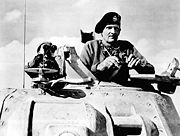 Montgomery now realised that in order to finish the enemy off he would need to make even deeper armoured thrusts. 7th Armoured was ordered across country to intercept the coastal road at Sidi Haneish, 65 mi (104.6 km) west of the Rahman track while 1st Armoured, at that time west of El Dada, was ordered to take a wide detour through the desert to Bir Khalda, 80 mi (128.7 km) west of the Rahman track preparatory to swinging up to cut the road at Mersa Matruh. Neither move proved successful. 7th Armoured finished the day 20 mi (32.2 km) short of its objective. 1st Armoured determined to make up time with a night march, but in the darkness the armour became separated from their support vehicles and as a consequence ran out of fuel at dawn on 6 November, 16 mi (25.7 km) short of Bir Khalda.
The Air Force continued to fly in support but because of the wide spread of the various X Corps units it was difficult to establish firm "bomb lines" demarcating areas in which troops and vehicles could be assumed to be those of the enemy and so free to be attacked.
On the morning of 6 November, 2 New Zealand Division advanced toward Sidi Haneish while 10th Armoured Division's 8th Armoured Brigade had moved west from Galal to occupy the landing fields at Fuka and the escarpment. Roughly 15 mi (24.1 km) southwest of Sidi Haneish, 7th Armoured Division had come upon 21st Panzer and the Voss Reconnaissance Group that morning. There was a series of clashes during the day during which 21st Panzer lost 16 tanks and numerous guns. They narrowly escaped encirclement, however, and escaped on wheels that evening to Mersa Matruh.
Once again, it proved difficult to firmly identify targets for the airforce but during the day U.S. heavy bombers attacked Tobruk, sinking Etopia (2153 LT (2,187.6 t)) and later attacked Benghazi, sinking the Mars and setting alight the tanker Portofino (6424 LT (6,527.1 t)).
Rommel intended to fight a delaying action at Sidi Barrani, 80 mi (128.7 km) west of Matruh, to give his retreating forces time to get through the bottleneck through the escarpment passes at Halfya and Sollum. The last rearguards left Matruh on the night of 7/8 November but were only able to hold Sidi Barrani until the evening of the 9th. By the evening of 10 November the New Zealand Division, heading for Sollum, had 4th Light Armoured Brigade at the foot of the Halfya Pass while 7th Armoured Division was conducting another detour to the south aiming to swing round and take Fort Capuzzo and Sidi Azeiz. On the morning of 11 November, 5th New Zealand Infantry Brigade stormed the pass taking 600 Italian prisoners.
By the end of the day on the 11th, the Egyptian border area was clear, but Montgomery was forced to order that the pursuit should—for the time being—be continued by armoured cars and artillery only because of the difficulty in supplying larger formations west of Bardia until the supply infrastructure could catch up.
, 6-pounder anti-tank guns
and the Spitfire
in the Western Desert, this was no longer the case.
Montgomery had always envisioned the battle as being one of attrition similar to those fought in the Great War
, and had correctly predicted both the length of the battle and the number of Allied casualties. Allied artillery was superbly handled. Allied air support was excellent in contrast to the Luftwaffe
and Regia Aeronautica
which offered little or no support to ground forces, preferring to engage in air-to-air combat. This overwhelming air superiority had a huge effect on the battle and not only because of its physical impact. As Montgomery later wrote
In the end, the Allies' victory was all but total. Axis casualties of 37,000 amounted to over 30% of their total force. Allied casualties of 13,500 were by comparison a remarkably small proportion of their total force. The effective strength of Panzer Army Africa after the battle amounted to some 5,000 troops, 20 tanks, 20 anti-tank guns and 50 field guns. But the Allies' immediate exploitation of the victory was poor. They were taken by surprise by Rommel's withdrawal and this combined with confusion caused by reorganisation as units were re-allocated between the three Corps meant they were slow in pursuit, failing to cut off Rommel first at Fuka and then Mersa Matruh.
El Alamein was the first great offensive against the Germans in which the Western Allies were victorious. Winston Churchill
famously summed up the battle on 10 November 1942 with the words, "This is not the end, it is not even the beginning of the end. But it is, perhaps, the end of the beginning." It was Montgomery's greatest triumph; he took the title "Viscount Montgomery of Alamein" when he was raised to the peerage
after the war.
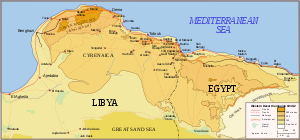 Once again, the Axis made a fighting withdrawal to El Agheila. Twice before, in early 1941 and early 1942, Allied forces had advanced to El Agheila but no further. On the first occasion, Wavell's offensive in 1940 had failed when with his lines of supply overstretched, political decisions intervened to withdraw troops to fight in Greece and East Africa while his opponents were reinforced with the Afrika Korps. In 1941, Auchinleck and Ritchie
's forces once again reached El Agheila with ragged supply lines and exhausted formations and were pushed back. This time, however, it was Rommel's troops which found themselves fought out and with few replacements while prior to the battle Montgomery had focused his planners intensely on the question of how to create supply lines to provide the Eighth Army with the 2400 t (2,645.5 ST) of supply it needed each day.
Huge quantities of engineering materials and equipment had been collected to repair the destroyed transport infrastructure. This was so successful that the railway line between El Alamein and Fort Capuzzo, despite having been blown up in over 200 separate places, was quickly put into commission and in the month after Eighth Army reached Capuzzo carried 133000 ST (120,655.6 t) of supplies. The port of Benghasi was handling 3000 ST (2,721.6 t) a day by the end of December when it had been thought that, after two years of almost constant destructive effort, its extreme capacity would be 800 ST (725.7 t).
Mindful of Rommel's previous successful counter-strokes from El Agheila, Montgomery paused in front of the Axis line for three weeks to concentrate his strung out forces and prepare an assault. On 11 December, Montgomery launched the 51st Highland Division along the line of the coast road with 7th Armoured Division on their left. On 12 December, 2 New Zealand Division started a deep flanking sweep around Rommel's flank in an attempt to cut the coast road in the rear of his position and so his line of retreat. The Highland Division was severely damaged by skilfully designed defences while 7th Armoured met stiff resistance from the Ariete Combat Group (the remains of the Ariete Armoured Division).
Rommel's army had lost roughly 75,000 men, 1,000 guns and 500 tanks and needed time to re-form so he decided to husband what remained of his weakened forces and withdraw. By 15 December, the New Zealanders had reached the coast road but the firm terrain allowed Rommel to break his forces into smaller units and withdraw off-road through the gaps between the New Zealanders' positions.
Rommel conducted a text-book retreat, destroying all equipment and infrastructure left behind and peppering the land behind him with mines and booby traps to keep the following Eighth Army at arm's length. Eighth Army reached Sirte
on 25 December but west of Sirte they were forced to pause once again to consolidate their strung out formations in order to deal with the defensive line Rommel had created at Wadi Zemzem near Buerat 230 mi (370.1 km) east of Tripoli. Rommel, concerned that his army would be completely enveloped and destroyed if he once again halted to face the Eighth Army, had, with the agreement of Field Marshal Bastico, sent a request to the Italian Comando Supremo in Rome to withdraw all the way to Tunisia where the terrain would better suit a defensive action and where he could link with the Axis army forming there in response to the Operation Torch
landings. However, Mussolini's reply on 19 December was that the Panzer Army must resist to the last man at Buerat.
to strengthen von Arnim's
Fifth Panzer Army (5. Panzerarmee), once again Rommel was forced to conduct a fighting retreat. Tripoli
, some 150 mi (241.4 km) further on, with its major port facilities, was taken on 23 January as Rommel continued to withdraw to the French-built southern defenses of Tunisia, the Mareth Line
.
against the multi-national British First Army
in northern Tunisia since shortly after Operation Torch
the previous autumn. Hitler was determined to retain hold of Tunisia and Rommel finally started to receive replacement men and materials. The Axis now faced a war in Africa on two fronts
with Eighth Army approaching from the east and the British, French and Americans of First Army from the west. Rommel's German-Italian Panzer Army was re-designated Italian First Army under General Giovanni Messe
while Rommel assumed command of the new Army Group Africa, responsible for both fronts.
in the second half of February when Rommel struck a costly blow against the inexperienced U.S. II Corps and destroyed their ability to make an early thrust east to the coast to cut off the Italian First Army's line of supply from Tunis and isolate it from von Arnim's forces in the north.
. After three years the African theatre was cleared of Axis forces and the Allies could look northward to the Mediterranean.
El Alamein
El Alamein is a town in the northern Matrouh Governorate of Egypt. Located on the Mediterranean Sea, it lies west of Alexandria and northwest of Cairo. As of 2007, it has a local population of 7,397 inhabitants.- Climate :...
marked a major turning point in the Western Desert Campaign
Western Desert Campaign
The Western Desert Campaign, also known as the Desert War, was the initial stage of the North African Campaign during the Second World War. The campaign was heavily influenced by the availability of supplies and transport. The ability of the Allied forces, operating from besieged Malta, to...
of the Second World War
World War II
World War II, or the Second World War , was a global conflict lasting from 1939 to 1945, involving most of the world's nations—including all of the great powers—eventually forming two opposing military alliances: the Allies and the Axis...
. The battle took place over 20 days from 23 October – 11 November 1942. The First Battle of El Alamein
First Battle of El Alamein
The First Battle of El Alamein was a battle of the Western Desert Campaign of the Second World War, fought between Axis forces of the Panzer Army Africa commanded by Field Marshal Erwin Rommel, and Allied forces The First Battle of El Alamein (1–27 July 1942) was a battle of the Western Desert...
had stalled the Axis
Axis Powers
The Axis powers , also known as the Axis alliance, Axis nations, Axis countries, or just the Axis, was an alignment of great powers during the mid-20th century that fought World War II against the Allies. It began in 1936 with treaties of friendship between Germany and Italy and between Germany and...
advance. Thereafter, Lieutenant-General
Lieutenant General
Lieutenant General is a military rank used in many countries. The rank traces its origins to the Middle Ages where the title of Lieutenant General was held by the second in command on the battlefield, who was normally subordinate to a Captain General....
Bernard Montgomery took command of the British Eighth Army from General Claude Auchinleck
Claude Auchinleck
Field Marshal Sir Claude John Eyre Auchinleck, GCB, GCIE, CSI, DSO, OBE , nicknamed "The Auk", was a British army commander during World War II. He was a career soldier who spent much of his military career in India, where he developed a love of the country and a lasting affinity for the soldiers...
in August 1942. The Allied victory turned the tide in the North African Campaign
North African campaign
During the Second World War, the North African Campaign took place in North Africa from 10 June 1940 to 13 May 1943. It included campaigns fought in the Libyan and Egyptian deserts and in Morocco and Algeria and Tunisia .The campaign was fought between the Allies and Axis powers, many of whom had...
. It ended Axis hopes of occupying Egypt, taking control of the Suez Canal
Suez Canal
The Suez Canal , also known by the nickname "The Highway to India", is an artificial sea-level waterway in Egypt, connecting the Mediterranean Sea and the Red Sea. Opened in November 1869 after 10 years of construction work, it allows water transportation between Europe and Asia without navigation...
, and gaining access to the Middle Eastern oil fields.
Background
By 12 July 1942, after its success at the Battle of GazalaBattle of Gazala
The Battle of Gazala was an important battle of the Second World War Western Desert Campaign, fought around the port of Tobruk in Libya from 26 May-21 June 1942...
, the Panzer Army Africa
Panzer Army Africa
As the number of German armed forces committed to the North Africa Campaign of World War II grew from the initial commitment of a small corps the Germans developed a more elaborate command structure and placed the now larger Afrika Korps, with Italian units under this new German command structure,...
(Panzerarmee Afrika), composed of German and Italian infantry and mechanized units under Field Marshal Erwin Rommel
Erwin Rommel
Erwin Johannes Eugen Rommel , popularly known as the Desert Fox , was a German Field Marshal of World War II. He won the respect of both his own troops and the enemies he fought....
, had struck deep into Egypt
Egypt
Egypt , officially the Arab Republic of Egypt, Arabic: , is a country mainly in North Africa, with the Sinai Peninsula forming a land bridge in Southwest Asia. Egypt is thus a transcontinental country, and a major power in Africa, the Mediterranean Basin, the Middle East and the Muslim world...
, threatening the British Empire
British Empire
The British Empire comprised the dominions, colonies, protectorates, mandates and other territories ruled or administered by the United Kingdom. It originated with the overseas colonies and trading posts established by England in the late 16th and early 17th centuries. At its height, it was the...
's control of the Suez Canal. General Auchinleck
Claude Auchinleck
Field Marshal Sir Claude John Eyre Auchinleck, GCB, GCIE, CSI, DSO, OBE , nicknamed "The Auk", was a British army commander during World War II. He was a career soldier who spent much of his military career in India, where he developed a love of the country and a lasting affinity for the soldiers...
withdrew the Eighth Army to within 50 mi (80.5 km) of Alexandria
Alexandria
Alexandria is the second-largest city of Egypt, with a population of 4.1 million, extending about along the coast of the Mediterranean Sea in the north central part of the country; it is also the largest city lying directly on the Mediterranean coast. It is Egypt's largest seaport, serving...
to a point where the Qattara Depression
Qattara Depression
The Qattara Depression is a depression in the north west of Egypt in the Matruh Governorate and is part of the Libyan Desert. It lies below sea level and is covered with salt pans, sand dunes and salt marshes. The region extends between latitudes of 28°35' and 30°25' North and longitudes of 26°20'...
came to within 40 mi (64.4 km) of El Alamein on the coast. This gave the defenders a relatively short front to defend and secure flanks, because tanks could not traverse the Depression. Here, in early July, the Axis advance was halted in the First Battle of El Alamein
First Battle of El Alamein
The First Battle of El Alamein was a battle of the Western Desert Campaign of the Second World War, fought between Axis forces of the Panzer Army Africa commanded by Field Marshal Erwin Rommel, and Allied forces The First Battle of El Alamein (1–27 July 1942) was a battle of the Western Desert...
.
Eighth Army counter-offensives during July were unsuccessful, as Rommel dug in to allow his exhausted troops to regroup. At the end of July, Auchinleck called off all offensive action with a view to rebuilding the army’s strength. In early August, British Prime Minister Winston Churchill
Winston Churchill
Sir Winston Leonard Spencer-Churchill, was a predominantly Conservative British politician and statesman known for his leadership of the United Kingdom during the Second World War. He is widely regarded as one of the greatest wartime leaders of the century and served as Prime Minister twice...
and General Sir Alan Brooke—the British Chief of the Imperial General Staff—visited Cairo
Cairo
Cairo , is the capital of Egypt and the largest city in the Arab world and Africa, and the 16th largest metropolitan area in the world. Nicknamed "The City of a Thousand Minarets" for its preponderance of Islamic architecture, Cairo has long been a centre of the region's political and cultural life...
and replaced Auchinleck as C-in-C Middle East with General Sir Harold Alexander. Lieutenant-General William Gott
William Gott
Lieutenant-General William Henry Ewart Gott CB, CBE, DSO and bar, MC , nicknamed "Strafer", was a British Army officer during both the First and Second World Wars, reaching the rank of lieutenant-general when serving in the British Eighth Army.-Military career:Educated at Harrow School he was...
was to command the Eighth Army, but was killed before taking command when the transport plane he was travelling in was shot down by Luftwaffe
Luftwaffe
Luftwaffe is a generic German term for an air force. It is also the official name for two of the four historic German air forces, the Wehrmacht air arm founded in 1935 and disbanded in 1946; and the current Bundeswehr air arm founded in 1956....
fighters; Lieutenant-General Bernard Montgomery became Eighth Army commander.
Faced with overextended supply lines and a relative lack of reinforcements, and well aware of massive allied reinforcements in men and material on the way, Rommel decided to strike the Allies while their build-up was incomplete. The two armoured divisions of Afrika Korps
Afrika Korps
The German Africa Corps , or the Afrika Korps as it was popularly called, was the German expeditionary force in Libya and Tunisia during the North African Campaign of World War II...
and a force made up of the reconnaissance units of Panzer Army Africa spearheaded the attack but, on 30 August 1942, the Allies stopped them at Alam el Halfa ridge and Point 102. The attack failed in this second battle at the Alamein line, better known as the Battle of Alam el Halfa (commonly but incorrectly Alam Halfa); expecting a counter-attack by Montgomery's Eighth Army, Panzer Army Africa dug in.
The factors that had favoured the Eighth Army's defensive plan in the First Battle of El Alamein, the short front line and the secure flanks, now favoured the Axis on defence. Rommel, furthermore, had plenty of time to prepare his defensive positions and lay extensive minefields (approximately 500,000 mines) and barbed wire. Alexander and Montgomery were determined to establish a superiority of forces sufficient not only to achieve a breakthrough but also to exploit it and destroy Panzer Army Africa. In all the previous swings of the pendulum in the Western Desert since 1941, neither side had ever had the strength after achieving victory in an offensive battle to exploit it decisively: the losing side had always been able to withdraw and regroup closer to its main supply bases.
After six more weeks of building up its forces, Eighth Army was ready to strike. 220,000 men and 1,100 tanks under Montgomery made their move against the 115,000 men and 559 tanks of Panzer Army Africa.
Operation Lightfoot
With Operation Lightfoot, Montgomery hoped to cut two corridors through the Axis minefields in the north. One corridor was to run in a southwesterly direction through the New Zealand Division's sector towards the centre of Miteirya Ridge, while the second was to run in a westerly direction, passing two miles north of the western end of Miteirya Ridge and straddling the 9th Australian and 51st (Highland) Division sectors. Armour would then pass through and defeat the German armour. Diversionary attacks at Ruweisat Ridge in the centre and also the south of the line would keep the rest of the Axis forces from moving northwards. Montgomery expected a 12-day battle in three stages: the break-in, the dogfight and the final breaking of the enemy.For the first night of the offensive, Montgomery planned for four infantry divisions from Oliver Leese
Oliver Leese
Lieutenant-General Sir Oliver William Hargreaves Leese, 3rd Baronet, KCB, CBE, DSO was a British general during World War II.-Early years:...
's XXX Corps to advance on a 16 mi (25.7 km) front to an objective codenamed Oxalic Line, overrunning the forward Axis defences. Engineers would meanwhile clear and mark the two lanes through the minefields, through which the armoured divisions from Herbert Lumsden
Herbert Lumsden
Lieutenant-General Herbert Lumsden, CB, DSO, MC, psc was a British Army general during World War II.-Early career:...
's X Corps
X Corps (United Kingdom)
The X Corps was a British Army formation in the First World War and was later reformed in 1942 during the North African campaign of the Second World War as part of the Eighth Army.- First World War :...
would pass to gain the Pierson line. They would rally and temporarily consolidate their position just west of the infantry positions, blocking any armoured interference in the infantry battle. They would then advance to the Skinflint area in the depths of the Axis defences and astride the important Rahman lateral track to challenge the enemy armour.
The Polish Mine Detector
Polish mine detector
The Mine detector Mark I was a metal detector for landmines developed during World War II in the winter of 1941–1942 by Polish lieutenant Józef Kosacki.- History :...
designed in Scotland in 1941 by the Polish engineer and signals officer, Lt. Józef Kosacki
Józef Kosacki
Józef Stanisław Kosacki was a Polish professor engineer, inventor, and an officer in the Polish Army during World War II. He is best known as the inventor of the Polish mine detector, the first man-portable mine detector, whose basic design has been in use with various armies for over 50...
was to be used for the first time in action. Five hundred of these were issued to Eighth Army. They doubled the speed at which heavily mined sands could be cleared, from around 100 m (109.4 yd) to about 200 m (218.7 yd) an hour.
Operation Bertram
The Commonwealth forces practised a number of deceptions in the months before the battle to confuse the Axis command, not only as to the exact whereabouts of the forthcoming battle, but as to when the battle was likely to occur. This operation was codenamed Operation Bertram. In September, they dumped waste materials (discarded packing cases, etc.) under camouflage nets in the northern sector, making them appear to be ammunition or ration dumps. The Axis naturally noticed these but, as no offensive action immediately followed and the "dumps" did not change in appearance, they were subsequently ignored. This allowed Eighth Army to build up supplies in the forward area unnoticed by the Axis, by replacing the rubbish with ammunition, petrol or rations at night. Meanwhile, a dummy pipeline was built, hopefully leading the Axis to believe the attack would occur much later than it, in fact, did and much further south. To further the illusion, dummy tanks consisting of plywood frames placed over jeeps were constructed and deployed in the south. In a reverse feintFeint
Feint is a French term that entered English from the discipline of fencing. Feints are maneuvers designed to distract or mislead, done by giving the impression that a certain maneuver will take place, while in fact another, or even none, will...
, the tanks destined for battle in the north were disguised as supply trucks by placing removable plywood superstructures over them.
Axis plan
United Kingdom
The United Kingdom of Great Britain and Northern IrelandIn the United Kingdom and Dependencies, other languages have been officially recognised as legitimate autochthonous languages under the European Charter for Regional or Minority Languages...
, India
India
India , officially the Republic of India , is a country in South Asia. It is the seventh-largest country by geographical area, the second-most populous country with over 1.2 billion people, and the most populous democracy in the world...
, Australia
Australia
Australia , officially the Commonwealth of Australia, is a country in the Southern Hemisphere comprising the mainland of the Australian continent, the island of Tasmania, and numerous smaller islands in the Indian and Pacific Oceans. It is the world's sixth-largest country by total area...
and New Zealand
New Zealand
New Zealand is an island country in the south-western Pacific Ocean comprising two main landmasses and numerous smaller islands. The country is situated some east of Australia across the Tasman Sea, and roughly south of the Pacific island nations of New Caledonia, Fiji, and Tonga...
, and trucks and Sherman tanks from the United States
United States
The United States of America is a federal constitutional republic comprising fifty states and a federal district...
. Rommel continued to request equipment, supplies and fuel, but the main focus of the German war machine was on the Eastern Front
Eastern Front (World War II)
The Eastern Front of World War II was a theatre of World War II between the European Axis powers and co-belligerent Finland against the Soviet Union, Poland, and some other Allies which encompassed Northern, Southern and Eastern Europe from 22 June 1941 to 9 May 1945...
, and very limited supplies reached North Africa.
Furthermore, Rommel was ill. In early September, arrangements were made for him to return to Germany on sick leave and for Lieutenent-General (General der Panzertruppe
General der Panzertruppe
General der Panzertruppe was a rank of German Army General introduced by the Wehrmacht in 1935. As the commander of a Panzer Corp this rank corresponds to a US Army Lieutenant-General...
) Georg Stumme
Georg Stumme
Georg Stumme was a World War II German general most notable for his brief command of the Axis forces at the beginning of the Second Battle of El Alamein.-Biography:...
to transfer from the Russian front to take his place. Before he left for Germany on 23 September, Rommel organized the planned defence and wrote a long appreciation of the situation to the German High Command, once again setting out the essential needs of the Panzer Army.
Rommel knew full well that the British Commonwealth forces would soon be strong enough to launch an offensive against his army. His only hope now relied on the German forces fighting in the Battle of Stalingrad
Battle of Stalingrad
The Battle of Stalingrad was a major battle of World War II in which Nazi Germany and its allies fought the Soviet Union for control of the city of Stalingrad in southwestern Russia. The battle took place between 23 August 1942 and 2 February 1943...
quickly defeating the Soviet forces and moving south through the Trans-Caucasus
Caucasus
The Caucasus, also Caucas or Caucasia , is a geopolitical region at the border of Europe and Asia, and situated between the Black and the Caspian sea...
and threatening Persia (Iran
Iran
Iran , officially the Islamic Republic of Iran , is a country in Southern and Western Asia. The name "Iran" has been in use natively since the Sassanian era and came into use internationally in 1935, before which the country was known to the Western world as Persia...
) and the Middle East. This would require large numbers of British Commonwealth forces to be sent from the Egyptian front to reinforce British forces in Persia, leading to the postponement of any offensive against his army. Using this delay, Rommel hoped to convince the German High Command to reinforce his forces for the eventual link-up between Panzer Army Africa and the German armies battling their way through southern Russia, enabling them to finally defeat the British and Commonwealth armies in North Africa
North Africa
North Africa or Northern Africa is the northernmost region of the African continent, linked by the Sahara to Sub-Saharan Africa. Geopolitically, the United Nations definition of Northern Africa includes eight countries or territories; Algeria, Egypt, Libya, Morocco, South Sudan, Sudan, Tunisia, and...
and the Middle East.
In the meantime, his forces dug in and waited for the eventual attack by the British Commonwealth forces or the defeat of the Soviet Army at Stalingrad. Rommel added depth to his defenses by creating at least two belts of mines which were connected at intervals to create boxes which would restrict enemy penetration and deprive British armour of room for manoeuvre. The front face of each box was lightly held by battle outposts and the rest of the box was unoccupied but sowed with mines and explosive traps. These became known as the Devil's gardens
Devil's gardens
The Devil's gardens was the name given by Erwin Rommel, commander of the German Afrika Korps during World War II, to the defensive entanglements of land mines and barbed wire protecting his positions during the Second Battle of El Alamein in late 1942...
. The main defensive positions were built to a depth of at least 2 km (1.2 mi) behind the second mine belt. The Axis laid around half a million mines, mostly Teller anti-tank mines
Teller mine
The Teller mine was a German-made antitank mine common in World War II. With explosives sealed inside a sheet metal casing and fitted with a pressure-actuated fuze, Teller mines had a built-in carrying handle on the side. As the name suggests the mines were plate-shaped...
with some smaller anti-personnel mines (such as the S-mine
S-mine
The German S-mine , also known as the "Bouncing Betty," is the best-known version of a class of mines known as bounding mines. When triggered, these mines launch into the air and then detonate at about . The explosion projects a lethal spray of steel balls and fragments in all directions...
). (Many of these mines were British, captured at Tobruk). In order to lure enemy vehicles into the minefields, the Italians had a trick of dragging an axle and tyres through the fields using a long rope to create what appeared to be well-used tracks.
Rommel was concerned not to let the British armour break out into the open because he had neither the strength of numbers nor fuel to match them in a battle of manoeuvre. He therefore had to try to restrict the battle to his defended zones and counter any breakthrough both quickly and vigorously. Rommel therefore stiffened his forward lines by alternating German and Italian infantry formations. Because the Allied deception measures had confused the Axis as to their likely point of attack, Rommel departed from his usual practice of holding his armoured strength in a single concentrated reserve and split it into a northern group (15th Panzer and Littorio Divisions) and a southern group (21st Panzer and Ariete Divisions), each organized into battle groups in order to be able to make a quick armoured intervention wherever the blow fell and so prevent any narrow breakthroughs from being enlarged. The effect, however, was that a significant proportion of his armoured reserve was dispersed and held unusually far forward. Further back, however, Rommel did have the 90th Light and Trieste motorized in reserve near the coast. Rommel believed that when the main thrust came, he could manoeuvre his troops faster than the Allies to concentrate his defences at the battle's centre of gravity. However, having concentrated his defence, he would not be able to move his forces again because of lack of fuel.
Battle
The Battle of El Alamein is usually divided into five phases, consisting of the break-in (23–24 October), the crumbling (24–25 October), the counter (26–28 October), Operation Supercharge (1–2 November) and the breakout (3–7 November). No name is given to the period from 29–31 October, when the battle was at a standstill.Phase One: The Break-In
Prior to the actual barrage, there was a diversion by the 24th Australian Brigade24th Brigade (Australia)
The 24th Brigade was a brigade-sized infantry unit of the Australian Army. Formed on 1 July 1940 as part of the Second Australian Imperial Force, the unit was raised for service during World War II. Originally formed as part of the 8th Division the brigade was subsequently transferred to the newly...
, which involved the 15th Panzer Division being subjected to heavy fire for a few minutes. Then at 21:40 (Egyptian Summer Time) on 23 October on a calm, clear evening under the bright sky of a full moon, Operation Lightfoot began, but not with a 1000-gun barrage—as in popular belief—nor with all guns firing at the same time. The fire plan had been carefully planned so that all 882 guns from the Field and Medium batteries' first rounds would land across the entire 40 mi (64.4 km) front at the same time. After 20 minutes of heavy general bombardment, the guns switched to precision targets in support of the advancing infantry. The shelling plan continued for five and a half hours, by the end of which each gun had fired about 600 rounds.
There was a reason for the name Operation Lightfoot. The infantry had to attack first. Many of the anti-tank mines would not be tripped by soldiers running over them since they were too light (hence the code-name). As the infantry advanced, engineers had to clear a path for the tanks coming behind. Each stretch of land cleared of mines was to be 24 ft (7.3 m) wide, which was just enough to get tanks through in single file. The engineers had to clear a 5 mi (8 km) route through the Devil’s gardens. It was a difficult task that was not achieved because of the depth of the Axis minefields.
At 22:00, the four infantry divisions of XXX Corps began to move. The objective was an imaginary line in the desert where the strongest enemy defences were situated. Once the infantry reached the first minefields, the mine sweepers, including Reconnaissance Corps troops and sapper
Sapper
A sapper, pioneer or combat engineer is a combatant soldier who performs a wide variety of combat engineering duties, typically including, but not limited to, bridge-building, laying or clearing minefields, demolitions, field defences, general construction and building, as well as road and airfield...
s, moved in to create a passage for the armoured divisions of X Corps. Progress was slower than planned but at 02:00, the first of the 500 tanks crawled forward. By 04:00, the lead tanks were in the minefields, where they stirred up so much dust that there was no visibility at all, and traffic jams developed as the tanks got bogged down.
Meanwhile, 7th Armoured Division (with one Free French Brigade under command) from Brian Horrocks
Brian Horrocks
Lieutenant-General Sir Brian Gwynne Horrocks, KCB, KBE, DSO, MC was a British Army officer. He is chiefly remembered as the commander of XXX Corps in Operation Market Garden and other operations during the Second World War...
's XIII Corps
XIII Corps (United Kingdom)
XIII Corps was a British infantry corps during World War I and World War II.-World War I:XIII Corps was formed in France on 15 November 1915 under Lieutenant-General Walter Congreve to be part of Fourth Army. It was first seriously engaged during the Battle of the Somme in 1916. On the First day on...
made a feinting attack to the south. The main attack aimed to engage and pin down the 21st Panzer Division
German 21st Panzer Division
The 21st Panzer Division was a German armoured division best known for its role in the battles of the North African Campaign from 1941–1943 during World War II when it was one of the two armoured divisions making up the Afrika Korps.-Origins:...
and the Ariete Armoured Division around Jebel Kalakh, while the Free French on the far left were to secure Qaret el Himeimat and secure the el Taqa plateau. The right flank of the attack was to be protected by 44th Infantry Division's 131st Infantry Brigade. However, the attack met heavy resistance from the 185 Airborne Division Folgore
185 Airborne Division Folgore
185. Airborne Division Folgore or 185. Divisione Paracadutisti Folgore was an Parachute Division of the Italian Army during World War II.-History:It was formed in September 1941, as the 1 Division Paracadutisti...
and Ramcke
Hermann-Bernhard Ramcke
Hermann-Bernhard "Gerhard" Ramcke was a German general. He was a recipient of the Knights Cross of the Iron Cross with Swords, Oak Leaves, and Diamonds, one of only 27 people in the German military so decorated...
Parachute Brigade and the Keil Group. The minefields proved thicker than anticipated and clearing paths through them was impeded by heavy defensive fire. By dawn on 24 October, paths still had not been cleared through the second minefield to release 22nd and 4th Light Armoured Brigades into the open to make their planned turn north into the rear of enemy positions 5 mi (8 km) west of Deir el Munassib.
Further north along the XIII Corps front, the 50th Infantry Division achieved limited gains at heavy cost against determined resistance from the Pavia and Brescia divisions and elements of the Folgore
185 Airborne Division Folgore
185. Airborne Division Folgore or 185. Divisione Paracadutisti Folgore was an Parachute Division of the Italian Army during World War II.-History:It was formed in September 1941, as the 1 Division Paracadutisti...
. The Indian 4th Infantry Division, on the far left of the XXX Corps front at Ruweisat Ridge, made a mock attack and two small raids intended to deflect attention to the centre of the front.
Phase Two: The Crumbling
Dawn aerial reconnaissance showed little change in Axis disposition, so Montgomery gave his orders for the day: the clearance of the northern corridor should be completed and the New Zealand Division supported by 10th Armoured should push south from Miteirya Ridge. 9th Australian Division, in the north, should plan a crumbling operation for that night, while in the southern sector, 7th Armoured should continue to try to break through the minefields with support, if necessary, from 44th Division.Panzer
Panzer
A Panzer is a German language word that, when used as a noun, means "tank". When it is used as an adjective, it means either tank or "armoured" .- Etymology :...
units counter-attacked the 51st Highland Division
British 51st (Highland) Infantry Division (World War II)
For the First World War unit, see 51st Division .The 51st Infantry Division was a British Territorial Army division that fought during the Second World War...
just after sunrise, only to be stopped in their tracks.
The morning of Saturday 24 October brought disaster for the German headquarters. The reports that Stumme had received that morning showed the attacks had been on a broad front but that such penetration as had occurred should be containable by local units. He went forward himself to observe the state of affairs and finding himself under fire, suffered a heart attack and died. Temporary command was given to Major-General Wilhelm Ritter von Thoma
Wilhelm Ritter von Thoma
Wilhelm Josef Ritter von Thoma was a German officer who served in World War I, in the Spanish Civil War, and as a General der Panzertruppe in World War II.-Early life:...
. Hitler had already decided that Rommel should leave his sanatorium and return to North Africa. Rommel flew to Rome early on 25 October to press the Comando Supremo for more fuel and ammunition and then on to North Africa to resume command that night of the Panzer Army Africa, which that day was renamed the "German-Italian Panzer Army" (Deutsch-Italienische Panzerarmee).
During the day, there was therefore little activity pending more complete clearance of paths through the minefields. The armour was held at Oxalic and all day long, artillery and the Allied Desert Air Force
Desert Air Force
The Desert Air Force , also known chronologically as Air Headquarters Western Desert, Air Headquarters Libya, AHQ Western Desert, the Western Desert Air Force, Desert Air Force, and the First Tactical Air Force , was an Allied tactical air force initially created from No...
, making over 1,000 sorties, attacked Axis positions to aid the 'crumbling' of the Axis forces. By 16:00, there was little progress.
At dusk, with the sun at their backs, Axis tanks from the 15th Panzer Division and Italian Littorio Divisions swung out from the Kidney feature, often wrongly called a ridge (it was actually a depression), to engage the 1st Armoured Division and the first major tank battle of El Alamein began. Over 100 tanks were involved and by dark, half were destroyed, although neither position was altered.
That night, the thrust by 10th Armoured Division from Miteirya Ridge was unsuccessful. The lifting of mines on the Miteirya Ridge and beyond took far longer than planned and the leading unit, 8th Armoured Brigade, was caught on their start line at 22:00—zero hour—by an air attack and were scattered. By the time they had reorganized, they were well behind schedule and out of touch with the creeping artillery barrage. By daylight, the brigade was out in the open taking considerable fire from well-sited tanks and anti-tank guns. Meanwhile, 24th Armoured Brigade had pushed forward and reported at dawn they were on the Pierson line, although it turned out that, in the dust and confusion, they had mistaken their position and were well short.
The attack in XIII Corp's sector to the south fared no better. 44th Division's 131st Infantry Brigade cleared a path through the mines, but when 22nd Armoured Brigade passed through, they came under heavy fire and were repulsed, with 31 tanks disabled.
Allied air activity that night focused on Rommel's northern armoured group, where 135 ST (122.5 t) of bombs were dropped. To prevent a recurrence of 8th Armoured Brigade's experience from the air, attacks on Axis landing fields were also stepped up.
D + 2: 25 October
The initial thrust had ended by Sunday. The Allies had advanced through the minefields in the west to make a 6 mi (9.7 km) wide and 5 mi (8 km) deep inroad. They now sat atop Miteirya Ridge in the southeast, but at the same time Axis forces were firmly entrenched in most of their original battle positions and the battle was at a standstill. Montgomery now decided that the planned advance southward from Miteirya Ridge by the New Zealanders would be too costly and instead decided that XXX Corps—while keeping firm hold of Miteirya—should strike northward toward the coast with 9th Australian Division. Meanwhile, 1st Armoured Division—on the Australians' left—should continue to attack west and northwest, and activity to the south on both Corps fronts would be confined to patrolling. The battle would be concentrated at the Kidney feature and Tel el Eisa until a breakthrough occurred.By early morning, the Axis forces launched a series of attacks using 15th Panzer and Littorio divisions. The Panzer Army was probing for a weakness, but without success. When the sun set, the Allied infantry went on the attack. Around midnight, 51st Division launched three attacks, but no one knew exactly where they were. Pandemonium and carnage ensued, resulting in the loss of over 500 Allied troops, and leaving only one officer among the attacking forces.
While the 51st Highland Division was operating around Kidney, the Australians were attacking Point 29, a 20 ft (6.1 m) high Axis artillery observation post southwest of Tel el Eisa, in an attempt to surround the Axis coastal salient containing the German 164th Light Division and large numbers of Italian infantry. This was the new northern thrust Montgomery had devised earlier in the day, and was to be the scene of heated battle for some days. The Australian 26th Brigade attacked at midnight, supported by artillery and 30 tanks of 40th Royal Tank Regiment. They took the position and 240 prisoners. Fighting continued in this area for the next week, as the Axis tried to recover the small hill that was so vital to their defence.
Meanwhile, the air force night bombers dropped 115 ST (104.3 t) of bombs on targets in the battle field and 14 ST (12.7 t) on the Stuka base at Sidi Haneish, while night fighters flew patrols over the battle area and the Axis forward landing grounds.
D + 3: 26 October
Rommel, on his return to North Africa on the evening of 25 October, immediately assessed the battle. Casualties, particularly in the north, as a result of incessant artillery and air attack, had been particularly heavy. He found that the Italian Trento Division had lost 50% of its infantry and most of its artillery, 164th Light Division had lost two battalions and although the 15th Panzer and Littorio Divisions had held off the Allied armour, this had proved costly. Most other units were under strength, all men were on half rations, a large number were sick, and the entire Axis army had only enough fuel for three days.Rommel was convinced by this time that the main assault would be in the north and was determined to retake Point 29. He ordered a counterattack against Point 29 by 15th Panzer, 164th Light Divisions and elements of Italian XX Corps to begin at 15:00 but under heavy artillery and air attack this came to nothing. During the day, he also started to draw his reserves to what was becoming the focal point of the battle: 21st Panzer and part of the Ariete moved north during the night to reinforce the 15th Panzer and Littorio Divisions and 90th Light Division at El Daba were ordered forward while the Trieste Division were ordered from Fuka to replace them. 21st Panzer and the Ariete made slow progress during the night as they were heavily bombed.
However, back at the Kidney feature, the British failed to take advantage of the missing tanks. Each time they tried to move forward they were stopped by anti-tank guns. The Allied offensive was stalled. Churchill railed, "Is it really impossible to find a general who can win a battle?"
On a brighter note for the British, Beaufort torpedo bomber
Bristol Beaufort
The Bristol Beaufort was a British twin-engined torpedo bomber designed by the Bristol Aeroplane Company, and developed from experience gained designing and building the earlier Blenheim light bomber....
s of No. 42 Squadron RAF
No. 42 Squadron RAF
No. 42 Squadron of the Royal Air Force has served during World War I as an army co-operation squadron and during World War II in various roles. In recent years, it was the Operational Conversion Unit for the Nimrod MR.2, based at RAF Kinloss, Moray, until the Nimrod MR2's retirement in 2010.-First...
, attached to No. 47 Squadron
No. 47 Squadron RAF
No. 47 Squadron of the Royal Air Force operates the Hercules from RAF Brize Norton, Oxfordshire.-First formation:No. 47 Squadron Royal Flying Corps was formed at Beverley, East Riding of Yorkshire on 1 March 1916 as a home defence unit, protecting Hull and East Yorkshire against attack by German...
, sank at Tobruk
Tobruk
Tobruk or Tubruq is a city, seaport, and peninsula on Libya's eastern Mediterranean coast, near the border with Egypt. It is the capital of the Butnan District and has a population of 120,000 ....
the tanker Proserpina, which was the last hope for refueling Rommel's army.
Montgomery was concerned that the impetus of the offensive was waning. He therefore decided that over the next two days, while continuing the process of attrition, he would thin out his front line to create a reserve with which to restore his momentum. The reserve was to include the New Zealand Division (with 9th Armoured Brigade under command), 10th Armoured Division and 7th Armoured Division.
D + 4: 27 October
By this time, the main battle was concentrated around Tel el Aqqaqir and the Kidney feature at the end of 1st Armoured Division's path through the minefield. A mile northwest of the feature lay an area of resistance known as "Woodcock" and roughly the same distance southwest lay "SnipeOutpost Snipe
Outpost Snipe was the location of a famous Second World War defensive action during the desert campaign in Egypt. The defense of Outpost Snipe took place during the Second Battle of El Alamein...
". An attack was planned on these areas using two battalions from 7th Motor Brigade. At 23:00 on 26 October, 2 Battalion, The Rifle Brigade would attack Snipe and 2nd Battalion King's Royal Rifle Corps
King's Royal Rifle Corps
The King's Royal Rifle Corps was a British Army infantry regiment, originally raised in colonial North America as the Royal Americans, and recruited from American colonists. Later ranked as the 60th Regiment of Foot, the regiment served for more than 200 years throughout the British Empire...
("KRRC") would attack Woodcock. The plan was for 2nd Armoured Brigade to pass round the north of Woodcock the following dawn and 24th Armoured Brigade round the South of Snipe. The attack was to be supported by all the available artillery of both X and XXX Corps.
Both battalions had difficulty finding their way in the dark and dust. At dawn, the KRRC had not reached its objective and was forced to find cover and dig in some distance from Woodcock. 2nd Rifle Brigade had had better fortune and after following the shell bursts of the supporting artillery dug in when they concluded they had reached their objective having encountered little opposition.
At 06:00, the 2nd Armoured Brigade commenced its advance and ran into such stiff opposition that, by noon, it had still not linked with the KRRC. The 24th Armoured Brigade started a little later and was soon in contact with the Rifle Brigade (having shelled them in error for a while). Some hours of confused fighting ensued involving tanks from the Littorio and troops and anti-tank guns from 15th Panzer which managed to keep the British armour at bay in spite of the support of the Rifle Brigade battlegroup's anti-tank guns.
Meanwhile, Rommel had decided to make two major counterattacks using his fresh troops. 90th Light Division was to make a fresh attempt to capture Point 29 and 21st Panzer were targeted at Snipe (the Ariete detachment had returned south).
At Snipe, mortar and shell fire was constant all day long. At 16:00, Rommel launched his major attack. German and Italian tanks moved forward. Against them the Rifle Brigade had 13 6-pounder anti-tank guns along with six more from the supporting 239th Anti-Tank Battery, R.A.. Although on the point of being overrun more than once they held their ground destroying 22 German and 10 Italian tanks. The Germans gave up but in error the British battle group was withdrawn without being replaced that evening. Its CO, Lieutenant-Colonel Victor Buller Turner
Victor Buller Turner
Lieutenant-Colonel Victor Buller Turner VC CVO was an English recipient of the Victoria Cross, the highest and most prestigious award for gallantry in the face of the enemy that can be awarded to British and Commonwealth forces.-Background:Victor was born in Reading in Berkshire, the son of...
was awarded the Victoria Cross
Victoria Cross
The Victoria Cross is the highest military decoration awarded for valour "in the face of the enemy" to members of the armed forces of various Commonwealth countries, and previous British Empire territories....
. Only one anti-tank gun—from 239 Battery—was brought back.
When it was discovered that neither Woodcock nor Snipe was in Eighth Army hands 133rd Lorried Infantry Brigade was sent to capture them. By 01:30 on 28 October, the 4th battalion Royal Sussex Regiment
Royal Sussex Regiment
The Royal Sussex Regiment was an infantry regiment of the British Army from 1881 to 1966. The regiment was formed as part of the Childers reforms by the amalgamation of the 35th Regiment of Foot and the 107th Regiment of Foot...
judged they were on Woodcock and dug in. At dawn, 2nd Armoured Brigade moved up in support but before contact could be made 4th Royal Sussex were counterattacked and overrun with heavy losses. Meanwhile, the Lorried Brigade's two other battalions had moved on Snipe and dug in only to find out the next day that they were in fact well short of their objective.
Further north, the 90th Light Division's attack on Point 29 during the afternoon of 27 October failed under heavy artillery and bombing which broke up the attack before it had closed with the Australians.
The action at Snipe was an episode of the Battle of El Alamein described by the regiment's historian as the most famous day of the regiment's war. Lucas-Phillips, in his Alamein records that:
"The desert was quivering with heat. The gun detachments and the platoons squatted in their pits and trenches, the sweat running in rivers down their dust-caked faces. There was a terrible stench. The flies swarmed in black clouds upon the dead bodies and excreta and tormented the wounded. The place was strewn with burning tanks and carriers, wrecked guns and vehicles, and over all drifted the smoke and the dust from bursting high explosives and from the blasts of guns."
D + 5–6: 28–29 October
On 28 October, 15th and 21st Panzer made a determined attack on the X Corp front but were halted by sustained artillery, tank and anti-tank gun fire. In the afternoon, they paused to regroup to attack again but they were bombed for two and a half hours and were prevented from even forming up.At this point, Montgomery ordered the X Corps formations in the Woodcock-Snipe area to go over to defence while he focused his army's attack further to the north. On the night of 28/29 October, the Australians
Australian 9th Division
The 9th Division was a division of the Australian Army that served during World War II. It was the fourth division of the Second Australian Imperial Force and was formed in the United Kingdom in late 1940 from infantry brigades and support units which had been previously raised in Australia and...
were tasked with a second set piece attack. 20th Australian Infantry Brigade
20th Brigade (Australia)
The 20th Brigade was a brigade-sized infantry unit of the Australian Army. The brigade was raised for service during the World War II on 7 May 1940 as part of the 7th Division. The brigade was transferred to the 9th Division in 1941...
with 40th R.T.R. in support would push northwest from Point 29 to form a base for 26th Australian Infantry Brigade
26th Brigade (Australia)
The Australian 26th Brigade was an Australian Army infantry brigade of World War II. The 26th Brigade was raised in 1940 and formed part of the 9th Division throughout the war. The 26th Brigade saw action in North Africa, New Guinea and Tarakan Island...
with 46th R.T.R. in support to strike northeast to an enemy-held location south of the railway known as "Thompson's Post" and then over the railway to the coast road where they would advance south east to close on the rear of the Axis troops in the coastal salient. An attack by the division's third brigade would then be launched on the salient from the southeast.
The 20th Brigade took its objectives with little trouble but 26th Brigade had more trouble. Because of the distances involved, the troops were riding on 46th R.T.R.'s Valentine tank
Valentine tank
The Tank, Infantry, Mk III, Valentine was an infantry tank produced in the United Kingdom during the Second World War. More than 8,000 of the type were produced in 11 different marks plus various purpose-built variants, accounting for approximately a quarter of wartime British tank production...
s as well as carriers, which mines and anti-tank guns soon brought to grief forcing the infantry to dismount. The infantry and armour lost touch with each other in the ensuing fighting with the German 125th Panzergrenadier Regiment and a battalion of 7th Bersaglieri Regiment sent to reinforce the sector and the advance came to a halt. The Australians suffered 200 casualties in that attack and overall suffered 27 killed and 290 wounded.
It became clear that there were no longer enough hours of darkness left to reform, continue the attack and see it to its conclusion, so the operation was called off.
The Italian anti-tank gunners had fought fiercely and all were killed or died of wounds, except for 20 wounded men who were captured the following morning. "The German soldier has impressed the world", Rommel wrote in a plaque dedicated to the Bersaglieri. "However the Italian Bersagliere has impressed the German soldier."
By the end of the day, the British had 800 tanks still in operation, while the Axis had 148 German and 187 Italian tanks. With the tanker Luisiano sunk off the west coast of Greece by a torpedo from a Wellington bomber, Rommel told his commanders, "It will be quite impossible for us to disengage from the enemy. There is no gasoline for such a manoeuvre. We have only one choice and that is to fight to the end at Alamein."
The actions by the Australians in the salient had alerted Montgomery that Rommel had committed his reserve in the form of 90th Light Division to the front and that its presence in the coastal sector suggested that Rommel was expecting the next major Eighth Army offensive in this sector. Montgomery determined therefore that it would take place further south on a 4000 yd (3,657.6 m) front south of Point 29. The attack was to take place on the night of 31 October/1 November, as soon as he had completed the reorganisation of his front line to create the reserves needed for the offensive (although in the event it was postponed by 24 hours). To keep Rommel's attention on the coastal sector, Montgomery ordered the renewal of the Australian Division's operation on the night of 30/31 October.
D + 7–9: 30 October – 1 November
The night of 30 October saw a continuation of previous Australian plans, their third attempt to reach the paved road. Although not all the objectives were achieved, by the end of the night they were astride the road and the railway making the position of the Axis troops in the salient precarious. On 31 October, Rommel brought up a battlegroup from 21st Panzer Division and launched four successive attacks against "Thompson's Post". The fighting was intense and often hand-to-hand, but no ground was gained by the Axis forces. One of the Australians killed on 31st was Sergeant William KibbyWilliam Henry Kibby
William Henry Kibby VC was a British-born Australian recipient of the Victoria Cross, the highest and most prestigious award for gallantry in the face of the enemy that can be awarded to Commonwealth forces....
who, for his heroic actions from the 23rd until his death, and for making a lone attack on a machine-gun, was awarded the Victoria Cross
Victoria Cross
The Victoria Cross is the highest military decoration awarded for valour "in the face of the enemy" to members of the armed forces of various Commonwealth countries, and previous British Empire territories....
. On Sunday, 1 November Rommel tried to dislodge the Australians once again, but the brutal, desperate fighting resulted in nothing but lost men and equipment. He did however regain contact with the 125th Panzergrenadier Regiment in the nose of the salient.
By now, it had become obvious to Rommel that the battle was lost. His fuel state continued to be critical: on 1 November, two more supply ships—the Tripolino and the Ostia—had been torpedoed and sunk from the air northwest of Tobruk. The shortage forced him to rely increasingly on fuel flown in from Crete
Crete
Crete is the largest and most populous of the Greek islands, the fifth largest island in the Mediterranean Sea, and one of the thirteen administrative regions of Greece. It forms a significant part of the economy and cultural heritage of Greece while retaining its own local cultural traits...
on the orders of Albert Kesselring
Albert Kesselring
Albert Kesselring was a German Luftwaffe Generalfeldmarschall during World War II. In a military career that spanned both World Wars, Kesselring became one of Nazi Germany's most skilful commanders, being one of 27 soldiers awarded the Knight's Cross of the Iron Cross with Oak Leaves, Swords...
, commander of German Army Command South
OB Süd
The German Army Command in the South The German Army Command in the South The German Army Command in the South (Oberbefehlshaber Süd (German: initials OB Süd) was the overall command of all the Luftwaffe units based in the Mediterranean and North African theatre of World War II.-Commanding officers:...
(OB Süd), despite the restrictions imposed by heavy bombing of the airfields in Crete and the Desert Air Force's efforts to intercept the transport aircraft.
Rommel began to plan a retreat anticipating retiring to Fuka, some 50 mi (80.5 km) west. Ironically, large amounts of fuel arrived at Benghazi after the German forces had started to retreat, but little of it reached the front, a fact Kesselring tried to change by delivering it more closely to the fighting forces.
D + 10: 2 November
This phase of the battle began at 01:00 on 2 November, with the objective of destroying enemy armour, forcing the enemy to fight in the open, reducing the Axis stock of petrol, attacking and occupying enemy supply routes, and causing the disintegration of the enemy army. The intensity and the destruction in Supercharge were greater than anything witnessed so far during this battle. The objective of this operation was Tel el Aqqaqir, the base of the Axis defence roughly 3 mi (4.8 km) northwest of the Kidney feature and situated on the Rahman lateral track.The initial thrust of Supercharge was to be carried out by 2nd New Zealand Division. The division's commander—Freyberg
Bernard Freyberg, 1st Baron Freyberg
Lieutenant-General Bernard Cyril Freyberg, 1st Baron Freyberg VC, GCMG, KCB, KBE, DSO & Three Bars , was a British-born New Zealand Victoria Cross recipient and soldier who later served as the seventh Governor-General of New Zealand.A veteran of the Mexican Revolution, he became an officer in the...
—had tried to free them of this task, as they had lost 1405 men in just three days, at El Ruweisat Ridge in July. However, in addition to its own 5th New Zealand Infantry Brigade and 28th (Maori) Infantry Battalion, the division was to have had placed under its command 151st (Durham) Brigade from 50th Division, 152nd (Seaforth and Camerons) Brigade
152nd Infantry Brigade (United Kingdom)
The 152nd Infantry Brigade was a British Territorial Army division that fought during the Second World War...
from 51st Division and the 133rd Royal Sussex Lorried Infantry Brigade. In addition, the division was to have British 9th Armoured Brigade
British 9th Armoured Brigade
The 9th Armoured Brigade was a British Army brigade formed during the Second World War.The 9th Armoured Brigade was formed from the redesignation of the 4th Cavalry Brigade, a 1st Line Yeomanry brigade in the Territorial Army which had been part of the 1st Cavalry Division...
under command.
As in Operation Lightfoot, it was planned that two infantry brigades (the 151st on the right and 152nd on the left) each this time supported by a regiment of tanks—the 8th and 50th Royal Tank Regiments—would advance and clear a path through the mines. Once they reached their objectives, 4000 yd (3,657.6 m) distant, 9th Armoured Brigade would pass through supported by a heavy artillery barrage and break open a gap in the Axis defenses on and around the Rahman track, some 2000 yards (1,828.8 m) further forward, which the 1st Armoured Division, following behind, would pass through into the open to take on Rommel's armoured reserves.
Supercharge started with a seven hour aerial bombardment focused on Tel el Aqqaqir and Sidi Abd el Rahman
Sidi Abdel Rahman
Sidi Abdel Rahman is a small settlement in Egypt. It is most famous for its beach located 132 km west of Alexandria and some 30 km west of Al Alamin...
, followed by a four and a half hour barrage of 360 guns firing 15,000 shells. The two assault brigades started their attack at 01:05 on 2 November and gained most of their objectives to schedule and with moderate losses. On the right of the main attack 28th (Maori) battalion captured positions to protect the right flank of the newly formed salient and 133rd Lorried Infantry did the same on the left. New Zealand engineers cleared five lines through the mines allowing the Royal Dragoons
Royal Dragoons
The Royal Dragoons was a cavalry regiment of the British Army. The regiment was formed in 1661, and served until 1969, when it was amalgamated with the Royal Horse Guards to form The Blues and Royals....
armoured car regiment to slip out into the open and spend the day raiding the Axis communications.
9th Armoured Brigade had started its approach march at 20:00 on 1 November from El Alamein
El Alamein
El Alamein is a town in the northern Matrouh Governorate of Egypt. Located on the Mediterranean Sea, it lies west of Alexandria and northwest of Cairo. As of 2007, it has a local population of 7,397 inhabitants.- Climate :...
railway station with around 130 tanks; it arrived at its start line with only 94 tanks fit for action. The brigade was to have started its attack towards Tel el Aqqaqir at 05:45 behind a barrage; however, the attack was postponed for 30 minutes while the brigade regrouped on Currie's
John Cecil Currie
Brigadier John Cecil Currie DSO & two Bars, MC was an officer in the British Army during World War II.As part of Iraqforce , Brigadier Currie commanded the 9th Armoured Brigade during the Anglo-Soviet invasion of Persia. His brigade was part of Hazelforce commanded by Brigadier J.A...
orders. At 06:15, 30 minutes before dawn, the three regiments of the brigade advanced towards the gunline. Brigadier Currie had tried to get the brigade out of doing this job stating that he believed the brigade would be attacking on too wide a front with no reserves and that they would most likely take 50% losses.
The reply came from Freyberg
Bernard Freyberg, 1st Baron Freyberg
Lieutenant-General Bernard Cyril Freyberg, 1st Baron Freyberg VC, GCMG, KCB, KBE, DSO & Three Bars , was a British-born New Zealand Victoria Cross recipient and soldier who later served as the seventh Governor-General of New Zealand.A veteran of the Mexican Revolution, he became an officer in the...
that Montgomery
The German and Italian anti-tank guns (mostly Pak38 and Italian 47 mm
Cannone da 47/32 M35
The Cannone da 47/32 M35 was an Austrian artillery piece produced under license in Italy during World War II. It was used both as an infantry gun and an anti-tank gun....
guns, along with 24 of the formidable 88 mm flak guns
88 mm gun
The 88 mm gun was a German anti-aircraft and anti-tank artillery gun from World War II. It was widely used by Germany throughout the war, and was one of the most recognizable German weapons of the war...
) opened fire upon the charging tanks silhouetted by the rising sun. German tanks, which had penetrated between the Warwickshire Yeomanry and Royal Wiltshire Yeomanry
Royal Wiltshire Yeomanry
The Royal Wiltshire Yeomanry was a Yeomanry regiment of the Kingdom of Great Britain and the United Kingdom established in 1794. It was disbanded as an independent Territorial Army unit in 1967, a time when the strength of the TA was greatly reduced...
also caused many casualties. British tanks attacking the Folgore's sector were fought off with petrol bombs and mortar fire as well as with the obsolete Italian 47 mm cannons.
The Axis gun screen started to inflict a steady amount of damage upon the advancing tanks but was unable to stop them; over the course of the next 30 minutes, around 35 guns were destroyed and several hundred prisoners taken.
9th Armoured Brigade had started the attack with 94 tanks and was reduced to only 24 runners (although many were recoverable) and of the 400 tank crew involved in the attack 230 were killed, wounded or captured.
After the Brigade's action, Brigadier Gentry of 6th New Zealand Brigade went ahead to survey the scene. On seeing Brigadier Currie asleep on a stretcher, he approached him saying, "Sorry to wake you John, but I'd like to know where your tanks are?" Currie waved his hand at a group of tanks around him, replying "There they are". Gentry was puzzled. "I don't mean your headquarters tanks, I mean your armoured regiments. Where are they?" Currie waved his arm and again replied, "There are my armoured regiments, Bill".
The brigade had sacrificed itself upon the gun line and caused great damage but had failed to create the gap for the 1st Armoured Division to pass through; however, soon after dawn 1st Armoured Division started to deploy and the remains of 9th Armoured Brigade came under its command. 2nd Armoured Brigade came up behind the 9th, and by mid morning 8th Armoured Brigade had come up on its left, ordered to advance to the southwest. In heavy fighting during the day the British armour made little further progress. At 11:00 on 2 November, the remains of 15th Panzer, 21st Panzer and Littorio Armoured Divisions counterattacked 1st Armoured Division and the remains of 9th Armoured Brigade, which by that time had dug in with a screen of anti-tank guns and artillery together with intensive air support. The counter-attack failed under a blanket of shells and bombs, resulting in a loss of some 100 tanks.
Although X Corps had failed in its attempt to break out, it had succeeded in its objective of finding and destroying enemy tanks. Although tank losses were approximately equal, this represented only a portion of the total British armour, but most of Rommel's tanks; the Afrika Korps strength of tanks fit for battle fell by 70 while in addition to 9th Armoured Brigade's losses 2nd and 8th Armoured Brigades lost 14 tanks between them in the fighting with another 40 damaged or broken down. The fighting was later termed the "Hammering of the Panzers".
Meanwhile in the late afternoon and early evening, the 133rd Lorried and 151st Infantry Brigades—by this time back under command of 51st Infantry Division—attacked respectively the Snipe and Skinflint (about a mile west of Snipe) positions in order to form a base for future operations. The heavy artillery concentration which accompanied their advance suppressed the opposition from the Trieste Division and the operation succeeded with few casualties.
On the night of 2 November, Montgomery once again reshuffled his infantry in order to bring four brigades (5th Indian, 151st, 5th New Zealand and 154th) into reserve under XXX Corps to prepare for the next thrust. He also reinforced X Corps by moving 7th Armoured Division from army reserve and sending 4th Light Armoured Brigade from XIII Corps in the south. General von Thoma's report to Rommel that night said he would have at most 35 tanks available to fight the next day and his artillery and anti-tank weapons had been reduced to ⅓ of their strength at the start of the battle. Rommel concluded that to forestall a breakthrough and the resulting destruction of his whole army he must start withdrawing to the planned position at Fuka. He called up Ariete
Italian 132nd Armored Division Ariete
The Ariete Armoured Division was an armoured division of the Italian Army during World War II. It was formed in 1939 as the second armoured division in the Italian Army after the 131 Armoured Division Centauro. The division fought in the North African Campaign until being destroyed during the...
from the south to join the mobile Italian XX Corps around Tel el Aqqaqir. His mobile forces (XX Corps, Afrika Korps, 90th Light Division and 19th Flak Division) were ordered to make a fighting withdrawal while his other formations were to withdraw as best they could with the limited transport available.
D + 11: 3 November
At 20:30 on 2 November, Lumsden decided that one more effort by his X Corps would see the gun screen on the Rahman track defeated and ordered 7th Motor Brigade to seize the track along a 2 mi (3.2 km) front north of Tell el Aqqaqir. The 2nd and 8th Armoured Brigades would then pass through the infantry to a distance of about 3.5 mi (5.6 km). On the morning of 3 November, 7 Armoured Division would pass through and swing north heading for the railway at Ghazal station. 7th Motor Brigade set off at 01:15 on 3 November, but having received its orders late, had not had the chance to reconnoitre the battle area in daylight. This combined with stiff resistance led to the failure of their attack. As a consequence, the orders for the armour were changed and 2nd Armoured Brigade was tasked to support the forward battalion of 133rd Lorried Brigade (2nd King's Royal Rifle Corps) and 8th Armoured Brigade was to push southwest. Fighting continued throughout 3 November, but 2nd Armoured was held by elements of the Afrika Korps and tanks of the Littorio Division. Further south, 8th Armoured Brigade was held off by anti-tank units helped later by tanks of the arriving Ariete Division.Phase Five: The Break-Out
On 2 November, Rommel let Hitler know that: "The army's strength was so exhausted after its ten days of battle that it was not now capable of offering any effective opposition to the enemy's next break-through attempt... With our great shortage of vehicles an orderly withdrawal of the non-motorised forces appeared impossible...In these circumstances we had to reckon, at the least, with the gradual destruction of the army." At 13.30 on 3 November Rommel received a reply:"To Field Marshal Rommel. It is with trusting confidence in your leadership and the courage of the German-Italian troops under your command that the German people and I are following the heroic struggle in Egypt. In the situation which you find yourself there can be no other thought but to stand fast, yield not a yard of ground and throw every gun and every man into the battle. Considerable air force reinforcements are being sent to C.-in-C South. The Duce and the Commando Supremo are also making the utmost efforts to send you the means to continue the fight. Your enemy, despite his superiority, must also be at the end of his strength. It would not be the first time in history that a strong will has triumphed over the bigger battalions. As to your troops, you can show them no other road than that to victory or death. Adolf Hitler".
Rommel thought the order (similar to one that had been given at the same time by Mussolini through the Comando Supremo) "demanded the impossible... We were completely stunned, and for the first time in the African campaign I did not know what to do. A kind of apathy took hold of us as we issued orders for all existing positions to be held on instructions from the highest authority."
Rommel decided to compromise: X and XXI Italian Corps and 90th Light Division would stand firm while the Afrika Korps would withdraw approximately 6 mi (9.7 km) west during the night of 3 November with XX Italian Corps and the Ariete Division conforming to their position. He then replied to Hitler confirming his determination to hold the battlefield.
Meanwhile, the Desert Air Force continued to apply huge pressure. In what was its biggest day of the battle, it flew 1,208 sorties and dropped 396 ST (359.2 t) of bombs in the 24 hours of 3 November.
On the night of 3 November, Montgomery launched at the Rahman track three of the infantry brigades he had gathered into reserve. At 17:45, 152nd Infantry Brigade—with 8th RTR in support—attacked about 2 mi (3.2 km) south of Tel el Aqqaqir. 5th Indian Infantry Brigade would attack the track 4 mi (6.4 km) south during the early hours of 4 November, and at 06:15, 154th Infantry Brigade would attack Tel el Aqqaqir itself. The first of these attacks—having been mistakenly told the enemy had withdrawn from their objectives—met stiff resistance. Failed communications compounded problems and the forward infantry elements ended up dug in well short of their objective. By the time 5th Indian Brigade set off, the defenders had started to withdraw and their objective was taken with virtually no opposition. By the time 154th Brigade moved forward, although they met some shelling, the enemy had left.
D + 12, 4 November
On 4 November, Eighth Army's plan for pursuit was set in motion at dawn. There were no fresh units available for the chase so 1st and 7th Armoured Division were to swing northward to roll up the Axis units still in the forward lines and 2nd New Zealand Division with two lorry borne infantry brigades and 9th Armoured and 4th Light Armoured Brigades under command would head west along desert tracks to the escarpment above Fuka, some 60 mi (96.6 km) away. The New Zealanders got off to a bad start because the units involved were dispersed after the recent fighting and took time to concentrate. The paths through the minefields were very congested and broken up which delayed matters further. By dark, Freyberg had leaguered his force only 15 mi (24.1 km) west of the Rahman track, although 9th Armoured Brigade was still at the track and 6th New Zealand Brigade even further back.1st and 7th Armoured Divisions' plan to trap 90th Light Division also hit trouble. The 1st Armoured came into contact with the remnants of 21st Panzer and had to spend most of the day pushing them back 8 mi (12.9 km). Meanwhile, 7th Armoured was being held up by the Ariete Armoured Division which in the course of the day was annihilated while giving stout resistance.
In addition to the Ariete Division, this day also saw the destruction of the Littorio Division and the Trieste Motorised Division. Ariete Armoured Division—under General Francesco Arena—fought valiantly: Berlin radio claimed that in this sector the "British were made to pay for their penetration with enormous losses in men and material. The Italians fought to the last man.". The British, however, took many prisoners. Private Sid Martindale, 1st Battalion Argyll & Sutherland Highlanders, wrote about 25th Bologna Infantry Division, which had taken the full weight of the British armoured attack:Bologna and the remainder of Trento Division tried to fight their way out of Alamein and marched in the desert without water, food, or transport before surrendering exhausted and dying from dehydration. It was reported that Colonel Dall'Olio, commanding Bologna, surrendered saying, "We have ceased firing not because we haven't the desire but because we have spent every round." In a symbolic act of final defiance no one in Bologna Division raised their hands. Harry Zinder of Time magazine noted that the Italians fought better than had been expected, and commented that for the Italians:
By late morning on 4 November, Rommel realised his situation was dire: "The picture in the early afternoon of the 4th was as follows: powerful enemy armoured forces... had burst a 12-mile hole in our front, through which strong bodies of tanks were moving to the west. As a result of this, our forces in the north were threatened with encirclement by enemy formations 20 times their number in tanks... There were no reserves, as every available man and gun had been put into the line. So now it had come, the thing we had done everything in our power to avoid – our front broken and the fully motorised enemy streaming into our rear. Superior orders could no longer count. We had to save what there was to be saved."
Rommel telegraphed Hitler for permission to fall back on Fuka. As further Allied blows fell, von Thoma was captured and reports came in from the Ariete and Trento that they were encircled. At 17:30, unable to wait any longer for a reply from Hitler, Rommel gave orders to retreat.
Due to insufficient transportation, most of the Italian infantry formations were abandoned and left to their fate. Any chance of getting them away with an earlier move had been spoiled by the dictators' insistence that Rommel hold his ground, obliging him to keep the unmotorised Italian units well forward until too late.
In order to deepen the armoured thrusts, 1st Armoured Division was directed at El Daba, some 15 mi (24.1 km) down the coast and 7th Armoured towards Galal, a further 15 miles west along the railway. Meanwhile, the New Zealand group had hoped to reach their objective by mid-morning on 5 November, but was held up by shell fire when picking their way through what turned out to be a dummy minefield and 15th Panzer were able to get there first.
D + 13, 5 November
The Air Force continued to fly in support but because of the wide spread of the various X Corps units it was difficult to establish firm "bomb lines" demarcating areas in which troops and vehicles could be assumed to be those of the enemy and so free to be attacked.
D + 14, 6 November
By 11:00 on 6 November, the "B" Echelon vehicles were starting to reconnect with 1st Armoured Division, but only enough to partly refuel two of the armoured regiments which set off again hoping to be in time to cut off the enemy. However, they ran out of fuel again, 30 mi (48.3 km) southwest of Mersa Matruh. A fuel convoy had set out from Alamein on the evening of 5 November, but progress was slow as the tracks had become very cut up. By midday on the 6th, rain had started to fall and the convoy became bogged down, still 40 mi (64.4 km) from the planned meeting point with 1st Armoured's "B" echelon support vehicles.On the morning of 6 November, 2 New Zealand Division advanced toward Sidi Haneish while 10th Armoured Division's 8th Armoured Brigade had moved west from Galal to occupy the landing fields at Fuka and the escarpment. Roughly 15 mi (24.1 km) southwest of Sidi Haneish, 7th Armoured Division had come upon 21st Panzer and the Voss Reconnaissance Group that morning. There was a series of clashes during the day during which 21st Panzer lost 16 tanks and numerous guns. They narrowly escaped encirclement, however, and escaped on wheels that evening to Mersa Matruh.
Once again, it proved difficult to firmly identify targets for the airforce but during the day U.S. heavy bombers attacked Tobruk, sinking Etopia (2153 LT (2,187.6 t)) and later attacked Benghazi, sinking the Mars and setting alight the tanker Portofino (6424 LT (6,527.1 t)).
D + 15–18, 7–11 November
On 7 November, poor ground conditions after the rain and lack of fuel saw 1st and 7th Armoured Divisions remaining quiet. 10th Armoured Division, with the benefit of working on the coastal road and with ample fuel, pushed its tanks on to Mersa Matruh while its infantry mopped up on the road west of Galal.Rommel intended to fight a delaying action at Sidi Barrani, 80 mi (128.7 km) west of Matruh, to give his retreating forces time to get through the bottleneck through the escarpment passes at Halfya and Sollum. The last rearguards left Matruh on the night of 7/8 November but were only able to hold Sidi Barrani until the evening of the 9th. By the evening of 10 November the New Zealand Division, heading for Sollum, had 4th Light Armoured Brigade at the foot of the Halfya Pass while 7th Armoured Division was conducting another detour to the south aiming to swing round and take Fort Capuzzo and Sidi Azeiz. On the morning of 11 November, 5th New Zealand Infantry Brigade stormed the pass taking 600 Italian prisoners.
By the end of the day on the 11th, the Egyptian border area was clear, but Montgomery was forced to order that the pursuit should—for the time being—be continued by armoured cars and artillery only because of the difficulty in supplying larger formations west of Bardia until the supply infrastructure could catch up.
Analysis
It had not been the first time that the Allies had had numerical superiority in men and equipment in the Western Desert but never had it been so complete and across all arms. Furthermore, while in the past—except in field artillery—they had struggled with the quality of their equipment and its ability to match the opposition. However, with the arrival of the Sherman tanksM4 Sherman
The M4 Sherman, formally Medium Tank, M4, was the primary tank used by the United States during World War II. Thousands were also distributed to the Allies, including the British Commonwealth and Soviet armies, via lend-lease...
, 6-pounder anti-tank guns
Ordnance QF 6 pounder
The Ordnance Quick-Firing 6-pounder 7 cwt, or just 6 pounder, was a British 57 mm gun, their primary anti-tank gun during the middle of World War II, as well as the main armament for a number of armoured fighting vehicles...
and the Spitfire
Supermarine Spitfire
The Supermarine Spitfire is a British single-seat fighter aircraft that was used by the Royal Air Force and many other Allied countries throughout the Second World War. The Spitfire continued to be used as a front line fighter and in secondary roles into the 1950s...
in the Western Desert, this was no longer the case.
Montgomery had always envisioned the battle as being one of attrition similar to those fought in the Great War
World War I
World War I , which was predominantly called the World War or the Great War from its occurrence until 1939, and the First World War or World War I thereafter, was a major war centred in Europe that began on 28 July 1914 and lasted until 11 November 1918...
, and had correctly predicted both the length of the battle and the number of Allied casualties. Allied artillery was superbly handled. Allied air support was excellent in contrast to the Luftwaffe
Luftwaffe
Luftwaffe is a generic German term for an air force. It is also the official name for two of the four historic German air forces, the Wehrmacht air arm founded in 1935 and disbanded in 1946; and the current Bundeswehr air arm founded in 1956....
and Regia Aeronautica
Regia Aeronautica
The Italian Royal Air Force was the name of the air force of the Kingdom of Italy. It was established as a service independent of the Royal Italian Army from 1923 until 1946...
which offered little or no support to ground forces, preferring to engage in air-to-air combat. This overwhelming air superiority had a huge effect on the battle and not only because of its physical impact. As Montgomery later wrote
In the end, the Allies' victory was all but total. Axis casualties of 37,000 amounted to over 30% of their total force. Allied casualties of 13,500 were by comparison a remarkably small proportion of their total force. The effective strength of Panzer Army Africa after the battle amounted to some 5,000 troops, 20 tanks, 20 anti-tank guns and 50 field guns. But the Allies' immediate exploitation of the victory was poor. They were taken by surprise by Rommel's withdrawal and this combined with confusion caused by reorganisation as units were re-allocated between the three Corps meant they were slow in pursuit, failing to cut off Rommel first at Fuka and then Mersa Matruh.
El Alamein was the first great offensive against the Germans in which the Western Allies were victorious. Winston Churchill
Winston Churchill
Sir Winston Leonard Spencer-Churchill, was a predominantly Conservative British politician and statesman known for his leadership of the United Kingdom during the Second World War. He is widely regarded as one of the greatest wartime leaders of the century and served as Prime Minister twice...
famously summed up the battle on 10 November 1942 with the words, "This is not the end, it is not even the beginning of the end. But it is, perhaps, the end of the beginning." It was Montgomery's greatest triumph; he took the title "Viscount Montgomery of Alamein" when he was raised to the peerage
Peerage
The Peerage is a legal system of largely hereditary titles in the United Kingdom, which constitute the ranks of British nobility and is part of the British honours system...
after the war.
Rommel chased west of Sirte
Neil Ritchie
General Sir Neil Methuen Ritchie GBE, KCB, DSO, MC, KStJ was a senior British army officer during the Second World War.-Military career:...
's forces once again reached El Agheila with ragged supply lines and exhausted formations and were pushed back. This time, however, it was Rommel's troops which found themselves fought out and with few replacements while prior to the battle Montgomery had focused his planners intensely on the question of how to create supply lines to provide the Eighth Army with the 2400 t (2,645.5 ST) of supply it needed each day.
Huge quantities of engineering materials and equipment had been collected to repair the destroyed transport infrastructure. This was so successful that the railway line between El Alamein and Fort Capuzzo, despite having been blown up in over 200 separate places, was quickly put into commission and in the month after Eighth Army reached Capuzzo carried 133000 ST (120,655.6 t) of supplies. The port of Benghasi was handling 3000 ST (2,721.6 t) a day by the end of December when it had been thought that, after two years of almost constant destructive effort, its extreme capacity would be 800 ST (725.7 t).
Mindful of Rommel's previous successful counter-strokes from El Agheila, Montgomery paused in front of the Axis line for three weeks to concentrate his strung out forces and prepare an assault. On 11 December, Montgomery launched the 51st Highland Division along the line of the coast road with 7th Armoured Division on their left. On 12 December, 2 New Zealand Division started a deep flanking sweep around Rommel's flank in an attempt to cut the coast road in the rear of his position and so his line of retreat. The Highland Division was severely damaged by skilfully designed defences while 7th Armoured met stiff resistance from the Ariete Combat Group (the remains of the Ariete Armoured Division).
Rommel's army had lost roughly 75,000 men, 1,000 guns and 500 tanks and needed time to re-form so he decided to husband what remained of his weakened forces and withdraw. By 15 December, the New Zealanders had reached the coast road but the firm terrain allowed Rommel to break his forces into smaller units and withdraw off-road through the gaps between the New Zealanders' positions.
Rommel conducted a text-book retreat, destroying all equipment and infrastructure left behind and peppering the land behind him with mines and booby traps to keep the following Eighth Army at arm's length. Eighth Army reached Sirte
Sirte
Sirte is a city in LibyaSirte may also refer to:* Sirte Declaration, a 1999 resolution to create the African Union* Sirte Oil Company, a Libyan oil companyIn geography:* Gulf of Sirte, alias for Gulf of Sidra on Libya's coast...
on 25 December but west of Sirte they were forced to pause once again to consolidate their strung out formations in order to deal with the defensive line Rommel had created at Wadi Zemzem near Buerat 230 mi (370.1 km) east of Tripoli. Rommel, concerned that his army would be completely enveloped and destroyed if he once again halted to face the Eighth Army, had, with the agreement of Field Marshal Bastico, sent a request to the Italian Comando Supremo in Rome to withdraw all the way to Tunisia where the terrain would better suit a defensive action and where he could link with the Axis army forming there in response to the Operation Torch
Operation Torch
Operation Torch was the British-American invasion of French North Africa in World War II during the North African Campaign, started on 8 November 1942....
landings. However, Mussolini's reply on 19 December was that the Panzer Army must resist to the last man at Buerat.
Tripoli falls to Eighth Army
On 15 January 1943, General Montgomery launched the 51st (Highland) Division against Rommel's defences while sending 2nd New Zealand Division and 7th Armoured Divisions around the inland flank of the Axis line. Weakened by the withdrawal of 21st Panzer Division to TunisiaTunisia
Tunisia , officially the Tunisian RepublicThe long name of Tunisia in other languages used in the country is: , is the northernmost country in Africa. It is a Maghreb country and is bordered by Algeria to the west, Libya to the southeast, and the Mediterranean Sea to the north and east. Its area...
to strengthen von Arnim's
Hans-Jürgen von Arnim
Hans-Jürgen Bernhard Theodor von Arnim was a German Generaloberst who served during World War II. He was also a recipient of the Knight's Cross of the Iron Cross...
Fifth Panzer Army (5. Panzerarmee), once again Rommel was forced to conduct a fighting retreat. Tripoli
Tripoli
Tripoli is the capital and largest city in Libya. It is also known as Western Tripoli , to distinguish it from Tripoli, Lebanon. It is affectionately called The Mermaid of the Mediterranean , describing its turquoise waters and its whitewashed buildings. Tripoli is a Greek name that means "Three...
, some 150 mi (241.4 km) further on, with its major port facilities, was taken on 23 January as Rommel continued to withdraw to the French-built southern defenses of Tunisia, the Mareth Line
Mareth Line
The Mareth Line was a system of fortifications built by the French between the towns of Medenine and Gabès in southern Tunisia, prior to World War II...
.
Rommel links with von Arnim in Tunisia
Rommel was by this time in contact with von Arnim's Fifth Panzer Army which had been fighting the Tunisia CampaignTunisia Campaign
The Tunisia Campaign was a series of battles that took place in Tunisia during the North African Campaign of the Second World War, between Axis and Allied forces. The Allies consisted of British Imperial Forces, including Polish and Greek contingents, with American and French corps...
against the multi-national British First Army
British First Army
The First Army was a field army of the British Army that existed during the First and Second World Wars. Despite being a British command, the First Army also included Indian and Portuguese forces during the First World War and American and French during the Second World War.-First World War:The...
in northern Tunisia since shortly after Operation Torch
Operation Torch
Operation Torch was the British-American invasion of French North Africa in World War II during the North African Campaign, started on 8 November 1942....
the previous autumn. Hitler was determined to retain hold of Tunisia and Rommel finally started to receive replacement men and materials. The Axis now faced a war in Africa on two fronts
Two-front war
In military terminology, a two-front war is one in which fighting takes place on two geographically separate fronts. It is usually executed by two or more separate forces simultaneously or nearly simultaneously, in the hope that their opponent will be forced to split their fighting force to deal...
with Eighth Army approaching from the east and the British, French and Americans of First Army from the west. Rommel's German-Italian Panzer Army was re-designated Italian First Army under General Giovanni Messe
Giovanni Messe
Giovanni Messe was an Italian general, politician, and Field Marshal . He is considered by many to have been the best Italian general of the Second World War.-Early life and career:Born in Mesagne, Apulia, Giovanni Messe pursued a military career in 1901...
while Rommel assumed command of the new Army Group Africa, responsible for both fronts.
18th Army Group formed under Alexander
Similarly, the two Allied armies were placed under 18th Army Group with Harold Alexander in command. However, the hope of an early conclusion to the campaign against the Axis forces was thwarted at the Battle of the Kasserine PassBattle of the Kasserine Pass
The Battle of the Kasserine Pass was a battle that took place during the Tunisia Campaign of World War II in February 1943. It was a series of battles fought around Kasserine Pass, a wide gap in the Grand Dorsal chain of the Atlas Mountains in west central Tunisia...
in the second half of February when Rommel struck a costly blow against the inexperienced U.S. II Corps and destroyed their ability to make an early thrust east to the coast to cut off the Italian First Army's line of supply from Tunis and isolate it from von Arnim's forces in the north.
Significance
El Alamein was a significant Allied victory and the most decisive in Africa with respect to closing of a war front, although Rommel did not lose hope until the end of the Tunisia CampaignTunisia Campaign
The Tunisia Campaign was a series of battles that took place in Tunisia during the North African Campaign of the Second World War, between Axis and Allied forces. The Allies consisted of British Imperial Forces, including Polish and Greek contingents, with American and French corps...
. After three years the African theatre was cleared of Axis forces and the Allies could look northward to the Mediterranean.
See also
- North African Campaign timelineNorth African Campaign timeline- 1940:* 10 June: The Kingdom of Italy declares war upon France and the United Kingdom* 14 June: British forces cross from Egypt into Libya and capture Fort Capuzzo* 16 June: The first tank battle of the North African Campaign takes place, the "Battle of Girba"...
- List of World War II Battles
- El Alamein FountainEl Alamein FountainThe El Alamein Memorial Fountain is a fountain and war memorial in the city of Sydney, New South Wales, Australia. It is located in the Kings Cross area, at the entrance to the Fitzroy Gardens on the corner of Darlingurst Road and Macleay Street...
(war memorial commemorating the battle, in Sydney, Australia) - First Battle of El AlameinFirst Battle of El AlameinThe First Battle of El Alamein was a battle of the Western Desert Campaign of the Second World War, fought between Axis forces of the Panzer Army Africa commanded by Field Marshal Erwin Rommel, and Allied forces The First Battle of El Alamein (1–27 July 1942) was a battle of the Western Desert...
External links
- The fate of the Italians in the battle as reported by TIME MAGAZINE
- The war time memories of Pvt. Sid Martindale 1st Battalion Argyll & Sutherland Highlanders
- Official History of Australia in the Second World War Volume III – Tobruk and El Alamein Chapters 14 -15
- The 3rd Hussars (9th Armoured Brigade) at El Alamein
- Royal Engineers Museum Royal Engineers and Second World War (Deception and mine clearance at El Alamein)
- German Minefields at Alamein (October – November, 1942) US War Department Information Bulletin, 1943
- The History of the British 7th Armoured Division
- El Alamein
- El Alamein in Egypt Today (where to stay etc)