


Secessionism in Western Australia

Encyclopedia
Secessionism has been a recurring feature of Western Australia
's political landscape since shortly after European settlement in 1829
. The idea of self governance or secession
has often been discussed through local newspaper articles and editorials and on a number of occasions has surfaced as very public events including a State referendum
in 1933. Organised groups have been established to agitate when the timing has been to their advantage.
Arguments in favour of secession are based on the assumption that a Federal government based in Canberra
will favour the business and popular interests of the larger population centres. It has been said that Western Australia is a forgotten or Cinderella state, which contributes more to federal funds than it gets back, and is discriminated against by the more populous states.
In the modern economy
, in per capita
terms, Western Australia is the most productive state in terms of per capita income of $45,277 in 2003–04 compared with the national figure of $39,234.
were presented to London in 1865 and 1869. This was granted in 1870 but maintained a Governor's veto.
In 1887 a new constitution including the right of self-governance was drafted and in 1890, the Act granting self-government was passed by the British House of Commons
and assented to by Queen Victoria.
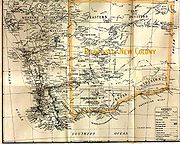 After several years of lobbying, in 1899 a well organised campaign in the goldfields presented a petition to Governor
Lieutenant-Colonel Sir Gerard Smith entitled "Petition to Her Majesty the Queen from persons residing on the Eastern Goldfields, together with a refutation of the statements made in the petition, by Sir John Forrest" arguing the case for that region's separation from the Western Australian colony. The Western Australian government led by Premier
John Forrest
were at the same time wavering in their support for the impending Federation due to a belief that they could hold out for a better deal for the state, while at the same time being lobbied by the other states' Federation committees for support to hold the federation referendum.
The other states' governments seized on the opportunity and the government was secretly threatened that its failure to support the Federation bill could mean approval being granted to the goldfields separatists. This, at least in part, encouraged the Western Australian government to move to join the Federation.
of the proposed Federation of Australia
. The result of the vote was 44,800 in favour and 19,691 against. Most country electorates voted 'No', except Albany
and the Goldfields, which voted 'Yes'.
The Constitution, which came into force on 1 January 1901 states in its opening preamble:
Western Australia was not specifically mentioned in the preamble as its support was given too late for the document to be redrafted.
, the proprietor of the local weekly newspaper, The Sunday Times
started publishing pro-secessionist articles in 1907 under its editor Alfred Chandler. Smith was a committed secessionist and continued to agitate until the mid-1930s when a syndicate of mainly nationalists purchased the paper's parent company. In 1926, Smith and others established the Secession League to provide a public vehicle for advancing the secession cause.
Prior to the Great Depression
in 1930, the State's major export had been wheat
. However, with the depression, wheat prices plummeted and unemployment in Perth
reached 30%, creating economic havoc.
Also in 1930, Keith Watson founded the Dominion League which advocated secession and the creation of a separate Dominion of Western Australia. The league held numerous rallies and public meetings which tapped into the general discontent brought on by the depression.
To counter the pro-secession movement, a Federal League of Western Australia was formed which organised a 'No' campaign. They brought several high profile people to Western Australia including the Prime Minister
Joseph Lyons
, Senator George Pearce
, and former Prime Minister Billy Hughes
for a brief speaking tour of Perth, Fremantle and country centres, but often received hostile receptions. The Federalists argued for a constitutional convention to examine the state's grievances but was unable to counter the grassroots campaign of the Dominion League. The question of holding a constitutional convention was the second question asked in the referendum.
On 8 April 1933, Nationalist
Premier
Sir James Mitchell
's government held a referendum on secession alongside the State parliamentary election. The Nationalists had campaigned in favour of secession while the Labor party had campaigned against breaking from the Federation. 68% of the 237,198 voters voted in favour of secession, but at the same time the Nationalists were voted out of office. Only the mining areas, populated by keen Federalists, voted against the move.
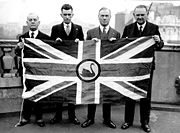 The new Labor
government of Philip Collier
sent a delegation to London
with the referendum result to petition the British government to effectively overturn the previous Act of Parliament which had allowed for the creation of the Australian Federation. The delegation included the Agent General, Sir Hal Colebatch
, Matthew Lewis Moss, James MacCallum Smith, and Keith Watson. They argued as follows:
The United Kingdom House of Commons established a select committee to consider the issue but after 18 months of negotiations and lobbying, it finally refused to consider the matter, further declaring that it could not legally grant secession. The delegation returned home empty-handed.
As a consequence of the failure of negotiations and of the economic revival, the Secession League gradually lost support and by 1938 had ceased to exist.
founded the Westralian Secession Movement in 1974. His group focused largely on taxes and tariff
s, arguing that trade barrier
s around Australia harmed the State's mainly mining and wheat export industries which earned a disproportionate amount of Australia’s foreign exchange. In the 1974 Senate election
, the party fielded Don Thomas as an ultimately unsuccessful candidate.
The Western Australian economy was, however, in an upswing at the time with major capital works underway and prosperity at an all-time high. The movement stagnated after a few years.
At the 22 October 2008 Vista Public Lecture, former Western Australian Premier, Richard Court
, indicated that the case for a secessionist movement is only strengthened while the Commonwealth government continues to exploit the State's resource-rich economy and fails to share the prosperity evenly. He argued that Western Australia accounts for 35% of the nation's export income yet most of the revenue is used to strengthen the "financial muscle growing in Canberra". The state has approximately 9–10% of the nation's population, generates over 10% of the GST revenue, but receives only 6% of what is being distributed. Court highlighted that if the current Federation path continues, then by the year 2020, Western Australia will be receiving only 5% of what is being distributed by the Commonwealth Grants Commission
. The former Premier said he was not advocating secession but stressed that the financial imbalance required addressing and that "the time to do so is now".
Western Australia
Western Australia is a state of Australia, occupying the entire western third of the Australian continent. It is bounded by the Indian Ocean to the north and west, the Great Australian Bight and Indian Ocean to the south, the Northern Territory to the north-east and South Australia to the south-east...
's political landscape since shortly after European settlement in 1829
Swan River Colony
The Swan River Colony was a British settlement established in 1829 on the Swan River, in Western Australia. The name was a pars pro toto for Western Australia. In 1832, the colony was officially renamed Western Australia, when the colony's founding Lieutenant-Governor, Captain James Stirling,...
. The idea of self governance or secession
Secession
Secession is the act of withdrawing from an organization, union, or especially a political entity. Threats of secession also can be a strategy for achieving more limited goals.-Secession theory:...
has often been discussed through local newspaper articles and editorials and on a number of occasions has surfaced as very public events including a State referendum
Referendum
A referendum is a direct vote in which an entire electorate is asked to either accept or reject a particular proposal. This may result in the adoption of a new constitution, a constitutional amendment, a law, the recall of an elected official or simply a specific government policy. It is a form of...
in 1933. Organised groups have been established to agitate when the timing has been to their advantage.
Arguments in favour of secession are based on the assumption that a Federal government based in Canberra
Canberra
Canberra is the capital city of Australia. With a population of over 345,000, it is Australia's largest inland city and the eighth-largest city overall. The city is located at the northern end of the Australian Capital Territory , south-west of Sydney, and north-east of Melbourne...
will favour the business and popular interests of the larger population centres. It has been said that Western Australia is a forgotten or Cinderella state, which contributes more to federal funds than it gets back, and is discriminated against by the more populous states.
In the modern economy
Economy of Western Australia
The Western Australian economy is a state economy dominated by its resources and services sector and largely driven by the export of iron-ore, gold, liquefied natural gas and agricultural commodities such as wheat. Covering an area of 2.5 million km2, the state is Australia's largest, accounting...
, in per capita
Per capita
Per capita is a Latin prepositional phrase: per and capita . The phrase thus means "by heads" or "for each head", i.e. per individual or per person...
terms, Western Australia is the most productive state in terms of per capita income of $45,277 in 2003–04 compared with the national figure of $39,234.
Colonial self-government
Petitions asking for representative elections for some of the positions in the Western Australian Legislative CouncilWestern Australian Legislative Council
The Legislative Council, or upper house, is one of the two chambers of parliament in the Australian state of Western Australia. Its central purpose is to act as a house of review for legislation passed through the lower house, the Legislative Assembly. It sits in Parliament House in the state...
were presented to London in 1865 and 1869. This was granted in 1870 but maintained a Governor's veto.
In 1887 a new constitution including the right of self-governance was drafted and in 1890, the Act granting self-government was passed by the British House of Commons
British House of Commons
The House of Commons is the lower house of the Parliament of the United Kingdom, which also comprises the Sovereign and the House of Lords . Both Commons and Lords meet in the Palace of Westminster. The Commons is a democratically elected body, consisting of 650 members , who are known as Members...
and assented to by Queen Victoria.
"Auralia" – goldfields separation movement
Governor of Western Australia
The Governor of Western Australia is the representative in Western Australia of Australia's Monarch, Queen Elizabeth II. The Governor performs important constitutional, ceremonial and community functions, including:* presiding over the Executive Council;...
Lieutenant-Colonel Sir Gerard Smith entitled "Petition to Her Majesty the Queen from persons residing on the Eastern Goldfields, together with a refutation of the statements made in the petition, by Sir John Forrest" arguing the case for that region's separation from the Western Australian colony. The Western Australian government led by Premier
Premier of Western Australia
The Premier of Western Australia is the head of the executive government in the Australian State of Western Australia. The Premier has similar functions in Western Australia to those performed by the Prime Minister of Australia at the national level, subject to the different Constitutions...
John Forrest
John Forrest
Sir John Forrest GCMG was an Australian explorer, the first Premier of Western Australia and a cabinet minister in Australia's first federal parliament....
were at the same time wavering in their support for the impending Federation due to a belief that they could hold out for a better deal for the state, while at the same time being lobbied by the other states' Federation committees for support to hold the federation referendum.
The other states' governments seized on the opportunity and the government was secretly threatened that its failure to support the Federation bill could mean approval being granted to the goldfields separatists. This, at least in part, encouraged the Western Australian government to move to join the Federation.
Federation
In 1900, Western Australians voted in a referendum to consider the draft Australian ConstitutionConstitution of Australia
The Constitution of Australia is the supreme law under which the Australian Commonwealth Government operates. It consists of several documents. The most important is the Constitution of the Commonwealth of Australia...
of the proposed Federation of Australia
Federation of Australia
The Federation of Australia was the process by which the six separate British self-governing colonies of New South Wales, Queensland, South Australia, Tasmania, Victoria and Western Australia formed one nation...
. The result of the vote was 44,800 in favour and 19,691 against. Most country electorates voted 'No', except Albany
Albany, Western Australia
Albany is a port city in the Great Southern region of Western Australia, some 418 km SE of Perth, the state capital. As of 2009, Albany's population was estimated at 33,600, making it the 6th-largest city in the state....
and the Goldfields, which voted 'Yes'.
The Constitution, which came into force on 1 January 1901 states in its opening preamble:
Western Australia was not specifically mentioned in the preamble as its support was given too late for the document to be redrafted.
1933 referendum
James MacCallum SmithJames MacCallum Smith
James MacCallum Smith was an Australian politician, newspaper proprietor and stock breeder. He lobbied unsuccessfully for many years for the secession of Western Australia from the Federation of Australia....
, the proprietor of the local weekly newspaper, The Sunday Times
The Sunday Times (Western Australia)
The Sunday Times, owned by News Limited, is a tabloid Sunday newspaper printed in Perth and distributed throughout Western Australia.-History:...
started publishing pro-secessionist articles in 1907 under its editor Alfred Chandler. Smith was a committed secessionist and continued to agitate until the mid-1930s when a syndicate of mainly nationalists purchased the paper's parent company. In 1926, Smith and others established the Secession League to provide a public vehicle for advancing the secession cause.
Prior to the Great Depression
Great Depression in Australia
Australia suffered badly during the period of the Great Depression of the 1930s. The Depression began with the Wall Street Crash of October, 1929 and rapidly spread worldwide. As in other nations, Australia suffered years of high unemployment, poverty, low profits, deflation, plunging incomes, and...
in 1930, the State's major export had been wheat
Wheat
Wheat is a cereal grain, originally from the Levant region of the Near East, but now cultivated worldwide. In 2007 world production of wheat was 607 million tons, making it the third most-produced cereal after maize and rice...
. However, with the depression, wheat prices plummeted and unemployment in Perth
Perth, Western Australia
Perth is the capital and largest city of the Australian state of Western Australia and the fourth most populous city in Australia. The Perth metropolitan area has an estimated population of almost 1,700,000....
reached 30%, creating economic havoc.
Also in 1930, Keith Watson founded the Dominion League which advocated secession and the creation of a separate Dominion of Western Australia. The league held numerous rallies and public meetings which tapped into the general discontent brought on by the depression.
To counter the pro-secession movement, a Federal League of Western Australia was formed which organised a 'No' campaign. They brought several high profile people to Western Australia including the Prime Minister
Prime Minister of Australia
The Prime Minister of the Commonwealth of Australia is the highest minister of the Crown, leader of the Cabinet and Head of Her Majesty's Australian Government, holding office on commission from the Governor-General of Australia. The office of Prime Minister is, in practice, the most powerful...
Joseph Lyons
Joseph Lyons
Joseph Aloysius Lyons, CH was an Australian politician. He was Labor Premier of Tasmania from 1923 to 1928 and a Minister in the James Scullin government from 1929 until his resignation from the Labor Party in March 1931...
, Senator George Pearce
George Pearce
Sir George Foster Pearce KCVO was an Australian politician who was instrumental in founding the Australian Labor Party in Western Australia....
, and former Prime Minister Billy Hughes
Billy Hughes
William Morris "Billy" Hughes, CH, KC, MHR , Australian politician, was the seventh Prime Minister of Australia from 1915 to 1923....
for a brief speaking tour of Perth, Fremantle and country centres, but often received hostile receptions. The Federalists argued for a constitutional convention to examine the state's grievances but was unable to counter the grassroots campaign of the Dominion League. The question of holding a constitutional convention was the second question asked in the referendum.
On 8 April 1933, Nationalist
Nationalist Party of Australia
The Nationalist Party of Australia was an Australian political party. It was formed on 17 February 1917 from a merger between the conservative Commonwealth Liberal Party and the National Labor Party, the name given to the pro-conscription defectors from the Australian Labor Party led by Prime...
Premier
Premier of Western Australia
The Premier of Western Australia is the head of the executive government in the Australian State of Western Australia. The Premier has similar functions in Western Australia to those performed by the Prime Minister of Australia at the national level, subject to the different Constitutions...
Sir James Mitchell
James Mitchell (Australian politician)
Sir James Mitchell GCMG was the 13th Premier of Western Australia, serving on two occasions, the Lieutenant-Governor of Western Australia for 15 years and the 22nd Governor of Western Australia....
's government held a referendum on secession alongside the State parliamentary election. The Nationalists had campaigned in favour of secession while the Labor party had campaigned against breaking from the Federation. 68% of the 237,198 voters voted in favour of secession, but at the same time the Nationalists were voted out of office. Only the mining areas, populated by keen Federalists, voted against the move.
Australian Labor Party
The Australian Labor Party is an Australian political party. It has been the governing party of the Commonwealth of Australia since the 2007 federal election. Julia Gillard is the party's federal parliamentary leader and Prime Minister of Australia...
government of Philip Collier
Philip Collier
Philip Collier was Premier of Western Australia for nine years, the longest ever term for an Australian Labor Party premier....
sent a delegation to London
London
London is the capital city of :England and the :United Kingdom, the largest metropolitan area in the United Kingdom, and the largest urban zone in the European Union by most measures. Located on the River Thames, London has been a major settlement for two millennia, its history going back to its...
with the referendum result to petition the British government to effectively overturn the previous Act of Parliament which had allowed for the creation of the Australian Federation. The delegation included the Agent General, Sir Hal Colebatch
Hal Colebatch
Sir Harry Pateshall Colebatch CMG , better known as Sir Hal Colebatch, was a long-serving and occasionally controversial figure in Western Australian politics...
, Matthew Lewis Moss, James MacCallum Smith, and Keith Watson. They argued as follows:
The United Kingdom House of Commons established a select committee to consider the issue but after 18 months of negotiations and lobbying, it finally refused to consider the matter, further declaring that it could not legally grant secession. The delegation returned home empty-handed.
As a consequence of the failure of negotiations and of the economic revival, the Secession League gradually lost support and by 1938 had ceased to exist.
1974 Westralian Secession Movement
Iron ore magnate Lang HancockLang Hancock
Langley Frederick George "Lang" Hancock was an Australian iron ore magnate from Western Australia who maintained a high profile in the competing spheres of business and politics...
founded the Westralian Secession Movement in 1974. His group focused largely on taxes and tariff
Tariff
A tariff may be either tax on imports or exports , or a list or schedule of prices for such things as rail service, bus routes, and electrical usage ....
s, arguing that trade barrier
Trade barrier
Trade barriers are government-induced restrictions on international trade. The barriers can take many forms, including the following:* Tariffs* Non-tariff barriers to trade** Import licenses** Export licenses** Import quotas** Subsidies...
s around Australia harmed the State's mainly mining and wheat export industries which earned a disproportionate amount of Australia’s foreign exchange. In the 1974 Senate election
Australian federal election, 1974
Federal elections were held in Australia on 18 May 1974. All 127 seats in the House of Representatives, and all 60 seats in the Senate were up for election, due to a double dissolution...
, the party fielded Don Thomas as an ultimately unsuccessful candidate.
The Western Australian economy was, however, in an upswing at the time with major capital works underway and prosperity at an all-time high. The movement stagnated after a few years.
Recent discussions
| % of Australian total |
|
|---|---|
| Population | 10.3% |
| Gross domestic product | 13.1% |
| Mineral and energy output | 48% |
| Merchandise exports | 39% |
| Exploration | 55% |
| Private investment | 28% |
| Share of GST | 8.1% |
At the 22 October 2008 Vista Public Lecture, former Western Australian Premier, Richard Court
Richard Court
Richard Fairfax Court AC , was a Western Australian politician, representing the seat of Nedlands in the Western Australian Legislative Assembly for the Liberal Party of Australia from 1982 to 2001. He served as Premier of Western Australia from 1993 to 2001.Court was born into an old political...
, indicated that the case for a secessionist movement is only strengthened while the Commonwealth government continues to exploit the State's resource-rich economy and fails to share the prosperity evenly. He argued that Western Australia accounts for 35% of the nation's export income yet most of the revenue is used to strengthen the "financial muscle growing in Canberra". The state has approximately 9–10% of the nation's population, generates over 10% of the GST revenue, but receives only 6% of what is being distributed. Court highlighted that if the current Federation path continues, then by the year 2020, Western Australia will be receiving only 5% of what is being distributed by the Commonwealth Grants Commission
Commonwealth Grants Commission
The Commonwealth Grants Commission is an Australian government body that advises on Australian Government financial assistance to the states and territories of Australia with the aim of achieving Horizontal Fiscal Equalisation....
. The former Premier said he was not advocating secession but stressed that the financial imbalance required addressing and that "the time to do so is now".
Further reading
- http://www.liswa.wa.gov.au/federation/000_bibl.htm A collection of primary sources relating to secession at the J S Battye LibraryJ S Battye LibraryThe J S Battye Library is an arm of the State Library of Western Australia...
- http://www.liswa.wa.gov.au/federation/iss/index.htm
- http://www.law.mq.edu.au/html/MqLJ/Volume3/Vol3_Musgrave.pdf
- http://www.fergco.com/~samgriffith/papers/html/volume3/v3chap5.htm – Geoffrey BoltonGeoffrey BoltonGeoffrey Curgenven Bolton AO is an Australian historian born on 5 November 1931 in North Perth , Western Australia. He attended Wesley College, Perth from 1943 to 1947. He has been publishing works on Australian history since 1952, and has authored 13 books, most recently Land of Vision and Mirage:...
- http://www.fergco.com/~samgriffith/papers/html/volume3/v3chap6.htm – Campbell Sharman
- http://www.curriculum.edu.au/ddunits/units/ms4fq3acts.htm#4act2
- Stateline – Norman Moore talks secession