

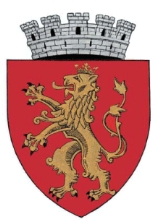
Sebes

Encyclopedia
Sebeș (ˈsebeʃ; German
: Mühlbach; Hungarian
: Szászsebes; Transylvanian Saxon dialect: Melnbach) is a city in Alba County
, central Romania
, southern Transylvania
.
valley and it straddles the Sebeș river. It is at the crossroads of two main highways in Romania: E68 European route - DN1
coming from Sibiu
and going towards Deva
and E81 European route - DN7
coming from Sibiu and going towards Alba-Iulia and Cluj Napoca.
It is situated at 15 km south of the county capital Alba Iulia
and it also has three villages under its administration:
, but actually originating from the region of Rhine and Moselle
- on the territory of the Hungarian Kingdom in the second half of the 12th century and became an important city in medieval Transylvania. Its city walls were reinforced after the Tatar (Mongol) invasions from 1241–1242, but the city was occupied in 1438 by the Ottoman Empire
. Transylvania's voivode John I Zápolya died in Sebeș in 1540. The Transylvanian Diet
met in Sebeș in 1546, 1556, 1598 and 1600. The location of the meetings, the Zápolya House, is now a museum.
After the union with Romania
in 1918, the first mayor of the city was Lionel Blaga, the brother of the Romanian poet and philosopher Lucian Blaga
, who was born in the nearby village of Lancrăm.
German language
German is a West Germanic language, related to and classified alongside English and Dutch. With an estimated 90 – 98 million native speakers, German is one of the world's major languages and is the most widely-spoken first language in the European Union....
: Mühlbach; Hungarian
Hungarian language
Hungarian is a Uralic language, part of the Ugric group. With some 14 million speakers, it is one of the most widely spoken non-Indo-European languages in Europe....
: Szászsebes; Transylvanian Saxon dialect: Melnbach) is a city in Alba County
Alba County
Alba is a county of Romania, in Transylvania, its capital city being Alba-Iulia with a population of 66,406.- Demographics :In 2002, it had a population of 382,747 and the population density was 61/km².* Romanians - 90.4%* Hungarians - 5.4%...
, central Romania
Romania
Romania is a country located at the crossroads of Central and Southeastern Europe, on the Lower Danube, within and outside the Carpathian arch, bordering on the Black Sea...
, southern Transylvania
Transylvania
Transylvania is a historical region in the central part of Romania. Bounded on the east and south by the Carpathian mountain range, historical Transylvania extended in the west to the Apuseni Mountains; however, the term sometimes encompasses not only Transylvania proper, but also the historical...
.
Geography
The city lies on the Mureș RiverMureș River
The Mureș is an approximately 761 km long river in Eastern Europe. It originates in the Hășmașu Mare Range in the Eastern Carpathian Mountains, Romania, and joins the Tisza river at Szeged in southeastern Hungary....
valley and it straddles the Sebeș river. It is at the crossroads of two main highways in Romania: E68 European route - DN1
DN1
DN1 is an important national road in Romania which links Bucharest with the northwestern part of the country...
coming from Sibiu
Sibiu
Sibiu is a city in Transylvania, Romania with a population of 154,548. Located some 282 km north-west of Bucharest, the city straddles the Cibin River, a tributary of the river Olt...
and going towards Deva
Deva, Romania
Deva is a city in Romania, in the historical region of Transylvania, on the left bank of the Mureș River. It is the capital of Hunedoara County.-Name:...
and E81 European route - DN7
DN7
Romania's DN7 links the capital city of Bucharest to the Banat region, in western Romania, and further to the eastern European capitals Budapest and Belgrade. It is a high-traffic road and the preferred route for trucks...
coming from Sibiu and going towards Alba-Iulia and Cluj Napoca.
It is situated at 15 km south of the county capital Alba Iulia
Alba Iulia
Alba Iulia is a city in Alba County, Transylvania, Romania with a population of 66,747, located on the Mureş River. Since the High Middle Ages, the city has been the seat of Transylvania's Roman Catholic diocese. Between 1541 and 1690 it was the capital of the Principality of Transylvania...
and it also has three villages under its administration:
- Petrești - 3.5 km south
- Lancrăm – 2 km north
- Răhău - 6 km east.
History
It is believed that there has been an earlier rural settlement in this area, with Romanian and Pecheneg population, situated east of today's city. But the city itself was built by German settlers - later referred as Transylvanian SaxonsTransylvanian Saxons
The Transylvanian Saxons are a people of German ethnicity who settled in Transylvania from the 12th century onwards.The colonization of Transylvania by Germans was begun by King Géza II of Hungary . For decades, the main task of the German settlers was to defend the southeastern border of the...
, but actually originating from the region of Rhine and Moselle
Moselle
Moselle is a department in the east of France named after the river Moselle.- History :Moselle is one of the original 83 departments created during the French Revolution on March 4, 1790...
- on the territory of the Hungarian Kingdom in the second half of the 12th century and became an important city in medieval Transylvania. Its city walls were reinforced after the Tatar (Mongol) invasions from 1241–1242, but the city was occupied in 1438 by the Ottoman Empire
Ottoman Empire
The Ottoman EmpireIt was usually referred to as the "Ottoman Empire", the "Turkish Empire", the "Ottoman Caliphate" or more commonly "Turkey" by its contemporaries...
. Transylvania's voivode John I Zápolya died in Sebeș in 1540. The Transylvanian Diet
Transylvanian Diet
The Transylvanian Diet was the constitutional and political body of Principality of Transylvania, and later of the Grand Principality of Transylvania...
met in Sebeș in 1546, 1556, 1598 and 1600. The location of the meetings, the Zápolya House, is now a museum.
After the union with Romania
Union of Transylvania with Romania
Union of Transylvania with Romania was declared on by the assembly of the delegates of ethnic Romanians held in Alba Iulia.The national holiday of Romania, the Great Union Day occurring on December 1, commemorates this event...
in 1918, the first mayor of the city was Lionel Blaga, the brother of the Romanian poet and philosopher Lucian Blaga
Lucian Blaga
-Biography:Lucian Blaga was a commanding personality of the Romanian culture of the interbellum period. He was a philosopher and writer higly acclaimed for his originality, a university professor and a diplomat. He was born on May 9, 1895 in Lancrăm, near Alba Iulia, Romania, his father being an...
, who was born in the nearby village of Lancrăm.
Economy
Today Sebeș is a city with a dynamic economy, having received in the last decade important foreign investments: wood processing and leather goods manufacturing are the chief domains of the local industry.Population
According to the latest Census (2002), Sebeș has 27,698 inhabitants, of which:- RomaniansRomaniansThe Romanians are an ethnic group native to Romania, who speak Romanian; they are the majority inhabitants of Romania....
: 25,632, representing 92.54% (in 1850: 69.4%) - Romas: 1,385, representing 5.00% (in 1850: 2.7%)
- Germans: 420, representing 1.51% (in 1850: 27.0%)
- Hungarians: 212, representing 0.76% (in 1850: 0.47%)
- Others: 49, representing 0.17%,