

Seasonal affective disorder

Encyclopedia
Seasonal affective disorder (SAD), also known as winter depression, winter blues, summer depression, summer blues, or seasonal depression, is a mood disorder
in which people who have normal mental health
throughout most of the year experience depressive
symptoms in the winter or summer, spring or autumn year after year. In the Diagnostic and Statistical Manual of Mental Disorders
(DSM-IV), SAD is not a unique mood disorder, but is "a specifier of major depression".
Although experts were initially skeptical, this condition is now recognized as a common disorder, with its prevalence in the U.S. ranging from 1.4 percent in Florida to 9.7 percent in New Hampshire.
The U.S. National Library of Medicine notes that "some people experience a serious mood change when the seasons change. They may sleep too much, have little energy, and may also feel depressed. Though symptoms can be severe, they usually clear up." The condition in the summer is often referred to as reverse seasonal affective disorder, and can also include heightened anxiety
.
SAD was formally described and named in 1984 by Norman E. Rosenthal
and colleagues at the National Institute of Mental Health
.
There are many different treatments for classic (winter-based) seasonal affective disorder, including light therapy
with sunlight or bright lights, antidepressant medication, cognitive-behavioral therapy, ionized-air administration
, and carefully timed supplementation of the hormone melatonin
.
feelings of hopelessness, and lack of pleasure which characterize a person suffering from this disorder.
People who experience spring and summer depression show symptoms of classic depression including insomnia, anxiety, irritability, decreased appetite, weight loss, social withdrawal, an increased sex drive, and suicide.
s in patients with major depressive disorder or patients with bipolar disorder
.
The "Seasonal Pattern Specifier" must meet four criteria: depressive episodes at a particular time of the year; remissions or mania/hypomania at a characteristic time of year; these patterns must have lasted two years with no nonseasonal major depressive episodes during that same period; and these seasonal depressive episodes outnumber other depressive episodes throughout the patient's lifetime. The Mayo Clinic
describes three types of SAD, each with its own set of symptoms.
In the popular culture, sometimes the term "seasonal affective disorder" is applied inaccurately to the normal shift to lower energy levels in winter, leading people to believe they have a physical problem that should be addressed with various therapies or drugs.
. SAD is measurably present at latitudes in the Arctic region
, such as Finland
(64º 00´N) where the rate of SAD is 9.5%. Cloud cover may contribute to the negative effects of SAD.
The symptoms of SAD mimic those of dysthymia or even major depressive disorder. There is also potential risk of suicide in some patients experiencing SAD. One study reports 6-35% of sufferers required hospitalization during one period of illness. At times, patients may not feel depressed, but rather lack energy to perform everyday activities.
Various proximate causes have been proposed. One possibility is that SAD is related to a lack of serotonin
, and serotonin polymorphisms could play a role in SAD, although this has been disputed. Mice incapable of turning serotonin into N-acetylserotonin (by Serotonin N-acetyltransferase) appear to express "depression-like" behavior, and antidepressants such as fluoxetine
increase the amount of the enzyme Serotonin N-acetyltransferase, resulting in an antidepressant-like effect. Another theory is that the cause may be related to melatonin
which is produced in dim light and darkness by the pineal gland
, since there are direct connections, via the retinohypothalamic tract
and the suprachiasmatic nucleus
, between the retina and the pineal gland.
Subsyndromal Seasonal Affective Disorder is a milder form of SAD experienced by an estimated 14.3% (vs. 6.1% SAD) of the U.S. population. The blue feeling experienced by both SAD and SSAD sufferers can usually be dampened or extinguished by exercise and increased outdoor activity, particularly on sunny days, resulting in increased solar exposure. Connections between human mood, as well as energy levels, and the seasons are well documented, even in healthy individuals.
Mutation of a gene expressing melanopsin
has been implicated in the risk of having Seasonal Affective Disorder.
A paper based on this research was published in 1984. Although Rosenthal's ideas were initially greeted with skepticism, SAD has become well recognized, and his 1993 book, Winter Blues has become the standard introduction to the subject.
Research on SAD in the United States began in 1970 when Herb Kern, a research engineer, had also noticed that he felt depressed during the winter months. Kern suspected that scarcer light in winter was the cause and discussed the idea with scientists at the NIMH who were working on bodily rhythms. They were intrigued, and responded by devising a lightbox to treat Kern’s depression. Kern felt much better within a few days of treatments, as did other patients treated in the same way.
is an extreme example, but even species that do not hibernate often exhibit changes in behavior during the winter. It has been argued that SAD is an evolved adaptation
in humans that is a variant or remnant of a hibernation response in some remote ancestor. Presumably, food was scarce during most of human prehistory, and a tendency toward low mood during the winter months would have been adaptive by reducing the need for calorie intake. The preponderance of women with SAD suggests that the response may also somehow regulate reproduction.
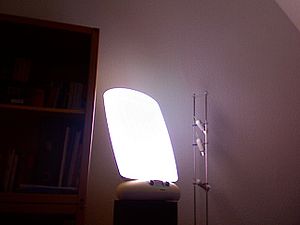 There are many different treatments for classic (winter-based) seasonal affective disorder, including light therapy
, medication, ionized-air administration
, cognitive-behavioral therapy and carefully timed supplementation of the hormone melatonin
.
Photoperiod-related alterations of the duration of melatonin secretion may affect the seasonal mood cycles of SAD. This suggests that light therapy may be an effective treatment for SAD. Light therapy uses a lightbox
which emits far more lumens
than a customary incandescent lamp. Bright white "full spectrum" light at 10,000 lux, blue light at a wavelength of 480 nm at 2,500 lux or green light at a wavelength of 500 nm at 350 lux are used, with the first-mentioned historically preferred.
Bright light therapy is effective with the patient sitting a prescribed distance, commonly 30–60 cm, in front of the box with her/his eyes open but not staring at the light source for 30–60 minutes. A 1995 study showed that green light therapy at doses of 350 lux produces melatonin suppression and phase shifts equivalent to 10,000 lux bright light therapy in winter depressives. A study published in May 2010 suggests that the blue light often used for SAD treatment should perhaps be replaced by green or white illumination. Discovering the best schedule is essential. One study has shown that up to 69% of patients find lightbox treatment inconvenient and as many as 19% stop use because of this.
Dawn simulation
has also proven to be effective; in some studies, there is an 83% better response when compared to other bright light therapy. When compared in a study to negative air ionization
, bright light was shown to be 57% effective vs. dawn simulation 50%. Patients using light therapy can experience improvement during the first week, but increased results are evident when continued throughout several weeks. Most studies have found it effective without use year round but rather as a seasonal treatment lasting for several weeks until frequent light exposure is naturally obtained.
Light therapy can also consist of exposure to sunlight, either by spending more time outside or using a computer-controlled heliostat
to reflect sunlight
into the windows of a home or office.
SSRI (selective serotonin reuptake inhibitor) antidepressants have proven effective in treating SAD. Bupropion
is also effective as a prophylactic. Effective antidepressants are fluoxetine
, sertraline
, or paroxetine
. Both fluoxetine and light therapy are 67% effective in treating SAD according to direct head-to-head trials conducted during the 2006 Can-SAD study. Subjects using the light therapy protocol showed earlier clinical improvement, generally within one week of beginning the clinical treatment.
Negative air ionization
, which involves releasing charged particles into the sleep environment, has been found effective with a 47.9% improvement if the negative ions are in sufficient density (quantity). Depending upon the patient, one treatment (e.g., lightbox) may be used in conjunction with another (e.g., medication).
Modafinil
may be an effective and well-tolerated treatment in patients with seasonal affective disorder/winter depression.
Alfred J. Lewy
of Oregon Health & Science University
and others see the cause of SAD as a misalignment of the sleep-wake phase with the body clock, circadian rhythm
s out of synch, and treat it with melatonin in the afternoon. Correctly timed melatonin administration shifts the rhythms of several hormones en bloc.
Another explanation is that vitamin D
levels are too low when people do not get enough Ultraviolet-B on their skin. An alternative to using bright lights is to take vitamin D supplements. However, one study did not show a link between vitamin D levels elderly Chinese.
. It was first described by the 6th century Goth
scholar Jordanes
in his Getica wherein he described the inhabitants of Scandza
(Scandinavia). Iceland, however, seems to be an exception. A study of more than 2000 people there found the prevalence of seasonal affective disorder and seasonal changes in anxiety and depression to be unexpectedly low in both sexes. The study's authors suggested that propensity for SAD may differ due to some genetic factor within the Icelandic population. A study of Canadians of wholly Icelandic descent also showed low levels of SAD. It has more recently been suggested that this may be attributed to the large amount of fish traditionally eaten by Icelandic people, in 2007 about 90 kilograms per person per year as opposed to about 24 kg in the US and Canada, rather than to genetic predisposition; a similar anomaly is noted in Japan, where annual fish consumption in recent years averages about 60 kg per capita. Fish are high in vitamin D
. Fish also contain docosahexaenoic acid
(DHA), which has been shown to help with a variety of neurological dysfunctions. To give an example of how widespread the popular understanding of SAD is, a character suffers from seasonal affective disorder in the Swedish Horror film Marianne
.
, a diagnosis of seasonal affective disorder was first proposed by Norman E. Rosenthal
, MD in 1984. Rosenthal wondered why he became sluggish during the winter after moving from sunny South Africa
to New York
. He started experimenting increasing exposure to artificial light, and found this made a difference. In Alaska
it has been established that there is a SAD rate of 8.9%, and an even greater rate of 24.9% for subsyndromal SAD.
Around 20% of Irish people are affected by SAD, according to a survey conducted in 2007. The survey also shows women are more likely to be affected by SAD than men. An estimated 10% of the population in the Netherlands
suffer from SAD.
(manic-depressive disorder). It is important to discriminate the improved mood associated with recovery from the winter depression and a manic episode because there are important treatment differences. In these cases, people with SAD may experience depression during the winter and hypomania
in the summer.
In addition to educating clients on the etiology, prevalence, symptoms and occupational performance issues associated with SAD, OTs play a large role in treating patients or educating them on the different types of interventions available. Of particular importance is educating clients on fatigue management and energy conservation, as low energy level is commonly reported in people with SAD. With increased energy levels, clients can hopefully return to doing activities that they need and want to do with respect to self-care, productivity, and leisure. The two main treatment approaches that OTs come across are the biomedical approach and the psychosocial approach.
Light boxes are widely available devices which typically provide fluorescent light as a treatment for SAD.
OTs
should be familiar with typical usage guidelines provided to users of light boxes and emphasize to clients the need for clinical monitoring to ensure the appropriate doses of light. Effective doses of light therapy vary depending on the individual. Studies have shown effective doses ranging between 3,000 lux 2 hours/day for 5 weeks to 10,000 lux 30 minutes/day for 8 weeks. Patients are typically advised to sit “within several yards” of the device and glance occasionally (rather than stare) at it.p20 Commercial light boxes are not regulated by U.S. law and, as such, OTs should recommend medical consultation and advise caution when selecting and using them. Only 41% of SAD patients comply with clinical practice guidelines and use light therapy regularly due to reasons of inconvenience and ineffectiveness. As such, OTs can help clients develop methods for incorporating light therapy effectively into their daily routines and complying with clinical guidelines.
Light therapy does not work for everyone. Twenty to fifty percent of those diagnosed with SAD do not gain adequate relief from it. In addition to the lack of efficacy, the required time commitment and the tendency for recurrence are additional reasons why individuals with SAD explore alternative treatments to light therapy. In a study comparing the effectiveness of light therapy and an antidepressant medication, fluoxetine, evidence was found to support the effectiveness and tolerability of both treatments for SAD.
ADMs are considered to be largely compensatory in nature. In other words, ADMs may suppress depressive symptoms while they are being used, but lasting changes are not guaranteed once treatment is discontinued. A growing body of evidence is showing that psychosocial approaches to therapy, such as cognitive and behavioural interventions, may have more enduring effects than biomedical interventions.
The roles of OTs in psychosocial rehabilitation often include the following:
OTs often use guiding frameworks, such as the Canadian Model of Occupational Performance and the Model of Human Occupation to help clients set rehabilitation goals and identify areas of occupational performance that are affected by the symptoms associated with SAD.
Several types of interventions fall within the psychosocial scope of occupational therapy, and are used by an interdisciplinary team of health care providers who work with clients with SAD. In a health care system that is driven largely by medical models, OTs can play an important role in promoting psychosocial rehabilitation and recovery when addressing the underlying issues associated with SAD. OTs use clinical reasoning to draw holistically upon principles of a variety of treatment approaches when implementing individual and group therapy among clients with SAD.
These group therapy sessions are often guided by a number of different theoretical and therapeutic frames of references, which use methods that are shown by research to be effective. Cognitive Behavioural Therapy, Mindfulness-Based Cognitive Therapy, Behavioural Activation, Problem-Solving Therapy, Positive Psychotherapy, Self-System Therapy and Outdoor Therapy are just some of the more common approaches that OTs use when framing their interventions for client with SAD.
By adopting a CBT approach, OTs can help clients with SAD engage in pleasurable activities in the winter months (i.e. behavioral activation) and help people think more positively (i.e. cognitive restructuring). If qualified, OTs can deliver CBT skills training groups to SAD patients. The skills that OTs teach can have a direct impact on occupational performance issues and can include:
CBT, or a combination of CBT and LT, can lead to a significant decrease in levels of depression amongst those with SAD. With non-seasonal depression, CBT appears to be about as effective as ADM in terms of acute distress reduction; however, the effects of CBT are shown to be longer lasting than ADM. There have been no direct comparisons made between CBT and ADM specifically for SAD. CBT is effective in treating both mild and more severely depressed patients, and is shown to prevent or delay the relapse of depressive symptoms better than other treatments for depression. There are no known adverse physical side effects of CBT.
The act of passively and repetitively focusing one’s attention on the symptoms, meanings, causes, and consequences of the negative emotional state of depression is called rumination. MBCT aims to reduce rumination by addressing the cognitive patterns associated with negative thinking and cultivating mindfulness through meditation and self-awareness exercises. Once awareness of feelings and thoughts are cultivated, MBCT emphasizes accepting and letting them go.
OTs can train clients with SAD in MBCT skills, which often takes place in a group setting over a number of weeks. Training focuses on the concept of “decentering,” which is the act of taking a present-focused and non-judgmental stance towards thoughts and feelings. By learning how to decenter, a person can distance themselves from the negative thoughts and feelings that may affect occupational performance in areas such as eating healthily, maintaining social relationships and being productive at work. By bringing attention back to the present (e.g. by focusing on their breath), clients gradually begin to observe their thought processes rather than reacting to them, thus, facilitating occupational engagement.
Two commonly used assessments for SAD are the Structured Interview Guide for the Hamilton Rating Scale for Depression – Seasonal Affective Disorder version (SIGH-SAD) and the Beck Depression Inventory, 2nd edition (BDI-II).
The SIGH-SAD is a semi-structured interview that includes 21 non-seasonal depression items and an extra 8-item SAD-specific subscale. The BDI-II is quicker to administer and contains 21 measures of depressive symptom severity, which also captures atypical symptoms that are common in SAD.
Mood disorder
Mood disorder is the term designating a group of diagnoses in the Diagnostic and Statistical Manual of Mental Disorders classification system where a disturbance in the person's mood is hypothesized to be the main underlying feature...
in which people who have normal mental health
Mental health
Mental health describes either a level of cognitive or emotional well-being or an absence of a mental disorder. From perspectives of the discipline of positive psychology or holism mental health may include an individual's ability to enjoy life and procure a balance between life activities and...
throughout most of the year experience depressive
Depression (mood)
Depression is a state of low mood and aversion to activity that can affect a person's thoughts, behaviour, feelings and physical well-being. Depressed people may feel sad, anxious, empty, hopeless, helpless, worthless, guilty, irritable, or restless...
symptoms in the winter or summer, spring or autumn year after year. In the Diagnostic and Statistical Manual of Mental Disorders
Diagnostic and Statistical Manual of Mental Disorders
The Diagnostic and Statistical Manual of Mental Disorders is published by the American Psychiatric Association and provides a common language and standard criteria for the classification of mental disorders...
(DSM-IV), SAD is not a unique mood disorder, but is "a specifier of major depression".
Although experts were initially skeptical, this condition is now recognized as a common disorder, with its prevalence in the U.S. ranging from 1.4 percent in Florida to 9.7 percent in New Hampshire.
The U.S. National Library of Medicine notes that "some people experience a serious mood change when the seasons change. They may sleep too much, have little energy, and may also feel depressed. Though symptoms can be severe, they usually clear up." The condition in the summer is often referred to as reverse seasonal affective disorder, and can also include heightened anxiety
Anxiety
Anxiety is a psychological and physiological state characterized by somatic, emotional, cognitive, and behavioral components. The root meaning of the word anxiety is 'to vex or trouble'; in either presence or absence of psychological stress, anxiety can create feelings of fear, worry, uneasiness,...
.
SAD was formally described and named in 1984 by Norman E. Rosenthal
Norman E. Rosenthal
Norman E. Rosenthal is a psychiatrist and scientist who in the 1980s first described winter depression or seasonal affective disorder , and pioneered the use of light therapy for its treatment....
and colleagues at the National Institute of Mental Health
National Institute of Mental Health
The National Institute of Mental Health is one of 27 institutes and centers that make up the National Institutes of Health...
.
There are many different treatments for classic (winter-based) seasonal affective disorder, including light therapy
Light therapy
Light therapy or phototherapy consists of exposure to daylight or to specific wavelengths of light using lasers, light-emitting diodes, fluorescent lamps, dichroic lamps or very bright, full-spectrum light, usually controlled with various devices...
with sunlight or bright lights, antidepressant medication, cognitive-behavioral therapy, ionized-air administration
Negative air ionization therapy
Negative air ionization therapy is the use of air ionisers as an experimental non-pharmaceutical treatment for seasonal affective disorder and mild depression....
, and carefully timed supplementation of the hormone melatonin
Melatonin
Melatonin , also known chemically as N-acetyl-5-methoxytryptamine, is a naturally occurring compound found in animals, plants, and microbes...
.
Symptoms
Symptoms of SAD may consist of difficulty waking up in the morning, morning sickness, tendency to oversleep and over eat, especially a craving for carbohydrates, which leads to weight gain. Other symptoms include a lack of energy, difficulty concentrating on or completing tasks, and withdrawal from friends, family, and social activities. All of this leads to the depression, pessimisticPessimism
Pessimism, from the Latin word pessimus , is a state of mind in which one perceives life negatively. Value judgments may vary dramatically between individuals, even when judgments of fact are undisputed. The most common example of this phenomenon is the "Is the glass half empty or half full?"...
feelings of hopelessness, and lack of pleasure which characterize a person suffering from this disorder.
People who experience spring and summer depression show symptoms of classic depression including insomnia, anxiety, irritability, decreased appetite, weight loss, social withdrawal, an increased sex drive, and suicide.
Diagnostic criteria
According to the American Psychiatric Association DSM-IV criteria, Seasonal Affective Disorder is not regarded as a separate disorder. It is called a "course specifier" and may be applied as an added description to the pattern of major depressive episodeMajor depressive episode
A major depressive episode is the cluster of symptoms of major depressive disorder. The description has been formalised in psychiatric diagnostic criteria such as the DSM-IV and ICD-10, and is characterized by severe, highly persistent depression, and a loss of interest or pleasure in everyday...
s in patients with major depressive disorder or patients with bipolar disorder
Bipolar disorder
Bipolar disorder or bipolar affective disorder, historically known as manic–depressive disorder, is a psychiatric diagnosis that describes a category of mood disorders defined by the presence of one or more episodes of abnormally elevated energy levels, cognition, and mood with or without one or...
.
The "Seasonal Pattern Specifier" must meet four criteria: depressive episodes at a particular time of the year; remissions or mania/hypomania at a characteristic time of year; these patterns must have lasted two years with no nonseasonal major depressive episodes during that same period; and these seasonal depressive episodes outnumber other depressive episodes throughout the patient's lifetime. The Mayo Clinic
Mayo Clinic
Mayo Clinic is a not-for-profit medical practice and medical research group specializing in treating difficult patients . Patients are referred to Mayo Clinic from across the U.S. and the world, and it is known for innovative and effective treatments. Mayo Clinic is known for being at the top of...
describes three types of SAD, each with its own set of symptoms.
In the popular culture, sometimes the term "seasonal affective disorder" is applied inaccurately to the normal shift to lower energy levels in winter, leading people to believe they have a physical problem that should be addressed with various therapies or drugs.
Physiology
Seasonal mood variations are believed to be related to light. An argument for this view is the effectiveness of bright-light therapyLight therapy
Light therapy or phototherapy consists of exposure to daylight or to specific wavelengths of light using lasers, light-emitting diodes, fluorescent lamps, dichroic lamps or very bright, full-spectrum light, usually controlled with various devices...
. SAD is measurably present at latitudes in the Arctic region
Arctic Circle
The Arctic Circle is one of the five major circles of latitude that mark maps of the Earth. For Epoch 2011, it is the parallel of latitude that runs north of the Equator....
, such as Finland
Finland
Finland , officially the Republic of Finland, is a Nordic country situated in the Fennoscandian region of Northern Europe. It is bordered by Sweden in the west, Norway in the north and Russia in the east, while Estonia lies to its south across the Gulf of Finland.Around 5.4 million people reside...
(64º 00´N) where the rate of SAD is 9.5%. Cloud cover may contribute to the negative effects of SAD.
The symptoms of SAD mimic those of dysthymia or even major depressive disorder. There is also potential risk of suicide in some patients experiencing SAD. One study reports 6-35% of sufferers required hospitalization during one period of illness. At times, patients may not feel depressed, but rather lack energy to perform everyday activities.
Various proximate causes have been proposed. One possibility is that SAD is related to a lack of serotonin
Serotonin
Serotonin or 5-hydroxytryptamine is a monoamine neurotransmitter. Biochemically derived from tryptophan, serotonin is primarily found in the gastrointestinal tract, platelets, and in the central nervous system of animals including humans...
, and serotonin polymorphisms could play a role in SAD, although this has been disputed. Mice incapable of turning serotonin into N-acetylserotonin (by Serotonin N-acetyltransferase) appear to express "depression-like" behavior, and antidepressants such as fluoxetine
Fluoxetine
Fluoxetine is an antidepressant of the selective serotonin reuptake inhibitor class. It is manufactured and marketed by Eli Lilly and Company...
increase the amount of the enzyme Serotonin N-acetyltransferase, resulting in an antidepressant-like effect. Another theory is that the cause may be related to melatonin
Melatonin
Melatonin , also known chemically as N-acetyl-5-methoxytryptamine, is a naturally occurring compound found in animals, plants, and microbes...
which is produced in dim light and darkness by the pineal gland
Pineal gland
The pineal gland is a small endocrine gland in the vertebrate brain. It produces the serotonin derivative melatonin, a hormone that affects the modulation of wake/sleep patterns and seasonal functions...
, since there are direct connections, via the retinohypothalamic tract
Retinohypothalamic tract
The retinohypothalamic tract is a photic input pathway involved in the circadian rhythms of mammals. The origin of the retinohypothalamic tract is the intrinsically photosensitive retinal ganglion cells , which contain the photopigment melanopsin...
and the suprachiasmatic nucleus
Suprachiasmatic nucleus
The suprachiasmatic nucleus or nuclei, abbreviated SCN, is a tiny region on the brain's midline, situated directly above the optic chiasm. It is responsible for controlling circadian rhythms...
, between the retina and the pineal gland.
Subsyndromal Seasonal Affective Disorder is a milder form of SAD experienced by an estimated 14.3% (vs. 6.1% SAD) of the U.S. population. The blue feeling experienced by both SAD and SSAD sufferers can usually be dampened or extinguished by exercise and increased outdoor activity, particularly on sunny days, resulting in increased solar exposure. Connections between human mood, as well as energy levels, and the seasons are well documented, even in healthy individuals.
Mutation of a gene expressing melanopsin
Melanopsin
Melanopsin is a photopigment found in specialized photosensitive ganglion cells of the retina that are involved in the regulation of circadian rhythms, pupillary light reflex, and other non-visual responses to light. In structure, melanopsin is an opsin, a retinylidene protein variety of...
has been implicated in the risk of having Seasonal Affective Disorder.
History
SAD was first systematically reported and named in the early 1980s by Norman E. Rosenthal, M.D., and his associates at the National Institute of Mental Health (NIMH). Rosenthal was initially motivated by his desire to discover the cause of his own experience of depression during the dark days of the northern US winter. He theorized that the lesser amount of light in winter was the cause. Rosenthal and his colleagues then documented the phenomenon of SAD in a placebo-controlled study utilizing light therapy.A paper based on this research was published in 1984. Although Rosenthal's ideas were initially greeted with skepticism, SAD has become well recognized, and his 1993 book, Winter Blues has become the standard introduction to the subject.
Research on SAD in the United States began in 1970 when Herb Kern, a research engineer, had also noticed that he felt depressed during the winter months. Kern suspected that scarcer light in winter was the cause and discussed the idea with scientists at the NIMH who were working on bodily rhythms. They were intrigued, and responded by devising a lightbox to treat Kern’s depression. Kern felt much better within a few days of treatments, as did other patients treated in the same way.
Origin
In many species, activity is diminished during the winter months in response to the reduction in available food and the difficulties of surviving in cold weather. HibernationHibernation
Hibernation is a state of inactivity and metabolic depression in animals, characterized by lower body temperature, slower breathing, and lower metabolic rate. Hibernating animals conserve food, especially during winter when food supplies are limited, tapping energy reserves, body fat, at a slow rate...
is an extreme example, but even species that do not hibernate often exhibit changes in behavior during the winter. It has been argued that SAD is an evolved adaptation
Natural selection
Natural selection is the nonrandom process by which biologic traits become either more or less common in a population as a function of differential reproduction of their bearers. It is a key mechanism of evolution....
in humans that is a variant or remnant of a hibernation response in some remote ancestor. Presumably, food was scarce during most of human prehistory, and a tendency toward low mood during the winter months would have been adaptive by reducing the need for calorie intake. The preponderance of women with SAD suggests that the response may also somehow regulate reproduction.
Treatment
Light therapy
Light therapy or phototherapy consists of exposure to daylight or to specific wavelengths of light using lasers, light-emitting diodes, fluorescent lamps, dichroic lamps or very bright, full-spectrum light, usually controlled with various devices...
, medication, ionized-air administration
Negative air ionization therapy
Negative air ionization therapy is the use of air ionisers as an experimental non-pharmaceutical treatment for seasonal affective disorder and mild depression....
, cognitive-behavioral therapy and carefully timed supplementation of the hormone melatonin
Melatonin
Melatonin , also known chemically as N-acetyl-5-methoxytryptamine, is a naturally occurring compound found in animals, plants, and microbes...
.
Photoperiod-related alterations of the duration of melatonin secretion may affect the seasonal mood cycles of SAD. This suggests that light therapy may be an effective treatment for SAD. Light therapy uses a lightbox
Light therapy
Light therapy or phototherapy consists of exposure to daylight or to specific wavelengths of light using lasers, light-emitting diodes, fluorescent lamps, dichroic lamps or very bright, full-spectrum light, usually controlled with various devices...
which emits far more lumens
Lumen (unit)
The lumen is the SI derived unit of luminous flux, a measure of the total "amount" of visible light emitted by a source. Luminous flux differs from power in that luminous flux measurements reflect the varying sensitivity of the human eye to different wavelengths of light, while radiant flux...
than a customary incandescent lamp. Bright white "full spectrum" light at 10,000 lux, blue light at a wavelength of 480 nm at 2,500 lux or green light at a wavelength of 500 nm at 350 lux are used, with the first-mentioned historically preferred.
Bright light therapy is effective with the patient sitting a prescribed distance, commonly 30–60 cm, in front of the box with her/his eyes open but not staring at the light source for 30–60 minutes. A 1995 study showed that green light therapy at doses of 350 lux produces melatonin suppression and phase shifts equivalent to 10,000 lux bright light therapy in winter depressives. A study published in May 2010 suggests that the blue light often used for SAD treatment should perhaps be replaced by green or white illumination. Discovering the best schedule is essential. One study has shown that up to 69% of patients find lightbox treatment inconvenient and as many as 19% stop use because of this.
Dawn simulation
Dawn simulation
Dawn simulation is a technique originally developed to help treat seasonal affective disorder, but can be used as a soundless alarm clock to wake up the body naturally...
has also proven to be effective; in some studies, there is an 83% better response when compared to other bright light therapy. When compared in a study to negative air ionization
Negative air ionization therapy
Negative air ionization therapy is the use of air ionisers as an experimental non-pharmaceutical treatment for seasonal affective disorder and mild depression....
, bright light was shown to be 57% effective vs. dawn simulation 50%. Patients using light therapy can experience improvement during the first week, but increased results are evident when continued throughout several weeks. Most studies have found it effective without use year round but rather as a seasonal treatment lasting for several weeks until frequent light exposure is naturally obtained.
Light therapy can also consist of exposure to sunlight, either by spending more time outside or using a computer-controlled heliostat
Heliostat
A heliostat is a device that includes a mirror, usually a plane mirror, which turns so as to keep reflecting sunlight toward a predetermined target, compensating for the sun's apparent motions in the sky. The target may be a physical object, distant from the heliostat, or a direction in space...
to reflect sunlight
Sunlight
Sunlight, in the broad sense, is the total frequency spectrum of electromagnetic radiation given off by the Sun. On Earth, sunlight is filtered through the Earth's atmosphere, and solar radiation is obvious as daylight when the Sun is above the horizon.When the direct solar radiation is not blocked...
into the windows of a home or office.
SSRI (selective serotonin reuptake inhibitor) antidepressants have proven effective in treating SAD. Bupropion
Bupropion
Bupropion is an atypical antidepressant and smoking cessation aid. The drug is a non-tricyclic antidepressant and differs from most commonly prescribed antidepressants such as SSRIs, as its primary pharmacological action is thought to be norepinephrine-dopamine reuptake inhibition...
is also effective as a prophylactic. Effective antidepressants are fluoxetine
Fluoxetine
Fluoxetine is an antidepressant of the selective serotonin reuptake inhibitor class. It is manufactured and marketed by Eli Lilly and Company...
, sertraline
Sertraline
Sertraline hydrochloride is an antidepressant of the selective serotonin reuptake inhibitor class. It was introduced to the market by Pfizer in 1991. Sertraline is primarily used to treat major depression in adult outpatients as well as obsessive–compulsive, panic, and social anxiety disorders in...
, or paroxetine
Paroxetine
Paroxetine is an SSRI antidepressant. Marketing of the drug began in 1992 by the pharmaceutical company SmithKline Beecham, now GlaxoSmithKline...
. Both fluoxetine and light therapy are 67% effective in treating SAD according to direct head-to-head trials conducted during the 2006 Can-SAD study. Subjects using the light therapy protocol showed earlier clinical improvement, generally within one week of beginning the clinical treatment.
Negative air ionization
Air ioniser
An air ioniser is a device that uses high voltage to ionise air molecules. Negative ions, or anions, are particles with one or more extra electrons, conferring a net negative charge to the particle. Cations are positive ions missing one or more electrons, resulting in a net positive charge...
, which involves releasing charged particles into the sleep environment, has been found effective with a 47.9% improvement if the negative ions are in sufficient density (quantity). Depending upon the patient, one treatment (e.g., lightbox) may be used in conjunction with another (e.g., medication).
Modafinil
Modafinil
Modafinil is an analeptic drug manufactured by Cephalon, and is approved by the U.S. Food and Drug Administration for the treatment of narcolepsy, shift work sleep disorder, and excessive daytime sleepiness associated with obstructive sleep apnea...
may be an effective and well-tolerated treatment in patients with seasonal affective disorder/winter depression.
Alfred J. Lewy
Alfred J. Lewy
Alfred J. Lewy, graduated from University of Chicago, in 1973 after studying Psychiatry, Pharmacology and Ophthalmology. He is a full professor and Vice-Chair of the department of Psychiatry at OHSU, Oregon Health & Science University, and holds an MD and PhD...
of Oregon Health & Science University
Oregon Health & Science University
Oregon Health & Science University is a public university in Oregon with a main campus, including two hospitals, in Portland and a smaller campus in Hillsboro...
and others see the cause of SAD as a misalignment of the sleep-wake phase with the body clock, circadian rhythm
Circadian rhythm
A circadian rhythm, popularly referred to as body clock, is an endogenously driven , roughly 24-hour cycle in biochemical, physiological, or behavioural processes. Circadian rhythms have been widely observed in plants, animals, fungi and cyanobacteria...
s out of synch, and treat it with melatonin in the afternoon. Correctly timed melatonin administration shifts the rhythms of several hormones en bloc.
Another explanation is that vitamin D
Vitamin D
Vitamin D is a group of fat-soluble secosteroids. In humans, vitamin D is unique both because it functions as a prohormone and because the body can synthesize it when sun exposure is adequate ....
levels are too low when people do not get enough Ultraviolet-B on their skin. An alternative to using bright lights is to take vitamin D supplements. However, one study did not show a link between vitamin D levels elderly Chinese.
Nordic countries
Winter depression is a common slump in the mood of some inhabitants of most of the Nordic countriesNordic countries
The Nordic countries make up a region in Northern Europe and the North Atlantic which consists of Denmark, Finland, Iceland, Norway and Sweden and their associated territories, the Faroe Islands, Greenland and Åland...
. It was first described by the 6th century Goth
Goths
The Goths were an East Germanic tribe of Scandinavian origin whose two branches, the Visigoths and the Ostrogoths, played an important role in the fall of the Roman Empire and the emergence of Medieval Europe....
scholar Jordanes
Jordanes
Jordanes, also written Jordanis or Jornandes, was a 6th century Roman bureaucrat, who turned his hand to history later in life....
in his Getica wherein he described the inhabitants of Scandza
Scandza
Scandza was the name given to Scandinavia by the Roman historian Jordanes in his work Getica, written while in Constantinople around AD 551. He described the area to set the stage for his treatment of the Goths' migration from southern Sweden to Gothiscandza...
(Scandinavia). Iceland, however, seems to be an exception. A study of more than 2000 people there found the prevalence of seasonal affective disorder and seasonal changes in anxiety and depression to be unexpectedly low in both sexes. The study's authors suggested that propensity for SAD may differ due to some genetic factor within the Icelandic population. A study of Canadians of wholly Icelandic descent also showed low levels of SAD. It has more recently been suggested that this may be attributed to the large amount of fish traditionally eaten by Icelandic people, in 2007 about 90 kilograms per person per year as opposed to about 24 kg in the US and Canada, rather than to genetic predisposition; a similar anomaly is noted in Japan, where annual fish consumption in recent years averages about 60 kg per capita. Fish are high in vitamin D
Vitamin D
Vitamin D is a group of fat-soluble secosteroids. In humans, vitamin D is unique both because it functions as a prohormone and because the body can synthesize it when sun exposure is adequate ....
. Fish also contain docosahexaenoic acid
Docosahexaenoic acid
Docosahexaenoic acid is an omega-3 fatty acid that is a primary structural component of the human brain and retina. In chemical structure, DHA is a carboxylic acid with a 22-carbon chain and six cis double bonds; the first double bond is located at the third carbon from the omega end...
(DHA), which has been shown to help with a variety of neurological dysfunctions. To give an example of how widespread the popular understanding of SAD is, a character suffers from seasonal affective disorder in the Swedish Horror film Marianne
Marianne (2011 film)
Marianne is a 2011 Swedish horror film, directed by Filip Tegstedt, that premiered at the 2011 Fantasia International Film Festival on 2 August 2011....
.
Other countries
In the United StatesUnited States
The United States of America is a federal constitutional republic comprising fifty states and a federal district...
, a diagnosis of seasonal affective disorder was first proposed by Norman E. Rosenthal
Norman E. Rosenthal
Norman E. Rosenthal is a psychiatrist and scientist who in the 1980s first described winter depression or seasonal affective disorder , and pioneered the use of light therapy for its treatment....
, MD in 1984. Rosenthal wondered why he became sluggish during the winter after moving from sunny South Africa
South Africa
The Republic of South Africa is a country in southern Africa. Located at the southern tip of Africa, it is divided into nine provinces, with of coastline on the Atlantic and Indian oceans...
to New York
New York
New York is a state in the Northeastern region of the United States. It is the nation's third most populous state. New York is bordered by New Jersey and Pennsylvania to the south, and by Connecticut, Massachusetts and Vermont to the east...
. He started experimenting increasing exposure to artificial light, and found this made a difference. In Alaska
Alaska
Alaska is the largest state in the United States by area. It is situated in the northwest extremity of the North American continent, with Canada to the east, the Arctic Ocean to the north, and the Pacific Ocean to the west and south, with Russia further west across the Bering Strait...
it has been established that there is a SAD rate of 8.9%, and an even greater rate of 24.9% for subsyndromal SAD.
Around 20% of Irish people are affected by SAD, according to a survey conducted in 2007. The survey also shows women are more likely to be affected by SAD than men. An estimated 10% of the population in the Netherlands
Netherlands
The Netherlands is a constituent country of the Kingdom of the Netherlands, located mainly in North-West Europe and with several islands in the Caribbean. Mainland Netherlands borders the North Sea to the north and west, Belgium to the south, and Germany to the east, and shares maritime borders...
suffer from SAD.
SAD and bipolar disorder
Most people with SAD experience major depressive disorder, but as many as 20% may have or may go on to develop a bipolar disorderBipolar disorder
Bipolar disorder or bipolar affective disorder, historically known as manic–depressive disorder, is a psychiatric diagnosis that describes a category of mood disorders defined by the presence of one or more episodes of abnormally elevated energy levels, cognition, and mood with or without one or...
(manic-depressive disorder). It is important to discriminate the improved mood associated with recovery from the winter depression and a manic episode because there are important treatment differences. In these cases, people with SAD may experience depression during the winter and hypomania
Hypomania
Hypomania is a mood state characterized by persistent and pervasive elevated or irritable mood, as well as thoughts and behaviors that are consistent with such a mood state...
in the summer.
Role of Occupational Therapy in Treating SAD
Given that SAD impacts a wide variety of occupational performance areas in a person’s life as described in the aforementioned section, occupational therapists (OTs) play a key role in helping individuals cope with SAD. OTs incorporate best practices and principles from various health care disciplines into their therapeutic practice with clients with SAD, including assessment, treatment, and evaluation. Care and treatment are holistic and tailored to the client’s identified goals, needs, and responsiveness to treatments.In addition to educating clients on the etiology, prevalence, symptoms and occupational performance issues associated with SAD, OTs play a large role in treating patients or educating them on the different types of interventions available. Of particular importance is educating clients on fatigue management and energy conservation, as low energy level is commonly reported in people with SAD. With increased energy levels, clients can hopefully return to doing activities that they need and want to do with respect to self-care, productivity, and leisure. The two main treatment approaches that OTs come across are the biomedical approach and the psychosocial approach.
Biomedical approaches
OTs can play a large role in educating their clients on biomedical interventions, which can be very effective in minimizing symptoms that impact occupational performance issues in the areas of leisure, productivity and self-care. OTs should be knowledgeable about the most commonly used biomedical treatment approaches, which are light therapy and pharmacotherapy, to address SAD.Light Therapy
Bright light therapy, or phototherapy, has been used for over 20 years to treat SAD with numerous studies citing its effectiveness. Light therapy is recommended as a first-line treatment for SAD in Canadian, American, and international clinical guidelines. The mood of individuals with SAD can improve with as little as 20 minutes of bright light exposure. Bright light is more effective than dim light in protecting against “mood lowering” which commonly occurs in SAD.p2Light boxes are widely available devices which typically provide fluorescent light as a treatment for SAD.
OTs
Occupational therapist
An occupational therapist is trained in the practice of occupational therapy. The role of an occupational therapist is to work with a client to help them achieve a fulfilled and satisfied state in life through the use of "purposeful activity or interventions designed to achieve functional...
should be familiar with typical usage guidelines provided to users of light boxes and emphasize to clients the need for clinical monitoring to ensure the appropriate doses of light. Effective doses of light therapy vary depending on the individual. Studies have shown effective doses ranging between 3,000 lux 2 hours/day for 5 weeks to 10,000 lux 30 minutes/day for 8 weeks. Patients are typically advised to sit “within several yards” of the device and glance occasionally (rather than stare) at it.p20 Commercial light boxes are not regulated by U.S. law and, as such, OTs should recommend medical consultation and advise caution when selecting and using them. Only 41% of SAD patients comply with clinical practice guidelines and use light therapy regularly due to reasons of inconvenience and ineffectiveness. As such, OTs can help clients develop methods for incorporating light therapy effectively into their daily routines and complying with clinical guidelines.
Effectiveness
Light therapy does not work for everyone. Twenty to fifty percent of those diagnosed with SAD do not gain adequate relief from it. In addition to the lack of efficacy, the required time commitment and the tendency for recurrence are additional reasons why individuals with SAD explore alternative treatments to light therapy. In a study comparing the effectiveness of light therapy and an antidepressant medication, fluoxetine, evidence was found to support the effectiveness and tolerability of both treatments for SAD.
Antidepressant Medications (Pharmacotherapy)
Antidepressant medication (ADM) has been shown to be effective in treating various forms of depression. Of the various types of ADMs used to treat SAD, selective serotonin reuptake inhibitors (SSRIs) such as fluoxetine and sertraline appear to be most effective. OTs play a role in helping their clients understand how such medications, if prescribed, can decrease acute symptoms and lead to enhanced engagement in daily occupations.ADMs are considered to be largely compensatory in nature. In other words, ADMs may suppress depressive symptoms while they are being used, but lasting changes are not guaranteed once treatment is discontinued. A growing body of evidence is showing that psychosocial approaches to therapy, such as cognitive and behavioural interventions, may have more enduring effects than biomedical interventions.
Psychosocial approaches to SAD interventions
OTs play an important role in the implementation and recommendation of psychotherapeutic interventions, which follow psychosocial rehabilitation and recovery-based approaches.The roles of OTs in psychosocial rehabilitation often include the following:
- Identifying the clients' psychosocial issues, strengths and limitations associated with the condition
- Assessing clients’ readiness, motivation, and belief in their abilities to make changes in their lives
- Identifying what is meaningful to the client
- Identifying social support systems that are available to help the client achieve their goals.
OTs often use guiding frameworks, such as the Canadian Model of Occupational Performance and the Model of Human Occupation to help clients set rehabilitation goals and identify areas of occupational performance that are affected by the symptoms associated with SAD.
Several types of interventions fall within the psychosocial scope of occupational therapy, and are used by an interdisciplinary team of health care providers who work with clients with SAD. In a health care system that is driven largely by medical models, OTs can play an important role in promoting psychosocial rehabilitation and recovery when addressing the underlying issues associated with SAD. OTs use clinical reasoning to draw holistically upon principles of a variety of treatment approaches when implementing individual and group therapy among clients with SAD.
Group Therapy
OTs in mental health settings often lead groups for inpatients and outpatients with mood disorders. Some group therapy topics that target occupational performance issues related to SAD could include:- Stress management
- Weight control and nutrition
- Smoking cessation
- Substance abuse
- Time management
- Social skills and networking
- Wintertime activities
- Sleep education
- Self-esteem
- Sexual health
These group therapy sessions are often guided by a number of different theoretical and therapeutic frames of references, which use methods that are shown by research to be effective. Cognitive Behavioural Therapy, Mindfulness-Based Cognitive Therapy, Behavioural Activation, Problem-Solving Therapy, Positive Psychotherapy, Self-System Therapy and Outdoor Therapy are just some of the more common approaches that OTs use when framing their interventions for client with SAD.
Cognitive Behavioural Therapy
Cognitive Behavioural Therapy (CBT) is used widely by OTs to treat SAD and other mood disorders. Originally developed by Beck and colleagues, CBT aims to help clients identify the expectations and interpretations that can lead them towards depression and anxiety; adjust to reality; and break through their avoidances and inhibitions. When implemented appropriately, it can help people change their cognitive processes, which may then correspond with changes in their feelings and behaviours. CBT for SAD focuses on the early identification of negative anticipatory thoughts and behavior changes associated with the winter season, and helps clients develop coping skills to address these changes.By adopting a CBT approach, OTs can help clients with SAD engage in pleasurable activities in the winter months (i.e. behavioral activation) and help people think more positively (i.e. cognitive restructuring). If qualified, OTs can deliver CBT skills training groups to SAD patients. The skills that OTs teach can have a direct impact on occupational performance issues and can include:
- developing a repertoire of wintertime leisure interests
- using diaries to record automatic negative thoughts
- creating a balanced activity level
- improving time management skills
- problem solving about situations that initiate negative thinking
- setting goals and plans for maintaining gains and preventing relapse
CBT, or a combination of CBT and LT, can lead to a significant decrease in levels of depression amongst those with SAD. With non-seasonal depression, CBT appears to be about as effective as ADM in terms of acute distress reduction; however, the effects of CBT are shown to be longer lasting than ADM. There have been no direct comparisons made between CBT and ADM specifically for SAD. CBT is effective in treating both mild and more severely depressed patients, and is shown to prevent or delay the relapse of depressive symptoms better than other treatments for depression. There are no known adverse physical side effects of CBT.
Mindfulness-based cognitive therapy (MBCT)
Mindfulness-based cognitive therapy (MBCT) is an intervention that aims to increase meta-cognitive awareness to the negative thoughts and feelings associated with relapses of major depression. Unlike CBT, MBCT does not emphasize changing thought contents or core beliefs related to depression. It instead focuses on meta-cognitive awareness techniques, which are said to change the relationship between one’s thoughts and feelings.The act of passively and repetitively focusing one’s attention on the symptoms, meanings, causes, and consequences of the negative emotional state of depression is called rumination. MBCT aims to reduce rumination by addressing the cognitive patterns associated with negative thinking and cultivating mindfulness through meditation and self-awareness exercises. Once awareness of feelings and thoughts are cultivated, MBCT emphasizes accepting and letting them go.
OTs can train clients with SAD in MBCT skills, which often takes place in a group setting over a number of weeks. Training focuses on the concept of “decentering,” which is the act of taking a present-focused and non-judgmental stance towards thoughts and feelings. By learning how to decenter, a person can distance themselves from the negative thoughts and feelings that may affect occupational performance in areas such as eating healthily, maintaining social relationships and being productive at work. By bringing attention back to the present (e.g. by focusing on their breath), clients gradually begin to observe their thought processes rather than reacting to them, thus, facilitating occupational engagement.
Behavioural activation
Behavioural activation (BA) is considered to be a traditional form of psychotherapy. It is based on activity scheduling and aims to increase the number of positively reinforcing experiences in a person’s life. BA has shown comparable efficacy with other psychosocial therapies such as CBT, as well as with ADM treatment among mildly to moderately depressed patients. BA has the potential to be very effective when used in occupational therapy, as it focuses on occupying one’s time with activities and experiences that are meaningful, positive, and engaging to the client. As such, clients who have occupational performance issues in productivity, leisure, and self-care may benefit from such therapy.Problem-solving therapies
This intervention involves the patient creating a list of problems, identifying possible solutions, choosing the best solutions, creating a plan to implement them, and evaluating outcomes with respect to the problem. Further studies are needed to better understand the conditions under which problem-solving therapy is effective for depression; however, this type of therapy is compatible with occupational therapy approaches to SAD. The Canadian Occupational Performance Measure (COPM) is a widely-used instrument that supports clients working with OTs in identifying their occupational needs, setting goals, and assessing change in occupational performance. Similar to the use of the COPM, OTs can use problem-solving therapy to focus on client choice and empowerment - principles that are fundamental to psychosocial rehabilitation and recovery.Positive psychotherapy
Positive psychotherapy (PPT) works to increase positive emotions in depressed clients and enhance engagement and meaning in activities that take place in a person’s life. Seligman and colleagues found that group PPT was effective in treating mild to moderate depression for up to one year after the treatment was terminated. They also found that individual PPT led to greater remission rates than non-PPT treatments plus pharmacotherapy. OTs could adopt a PPT approach when conducting individual and group therapy sessions with clients with SAD. For example, they could introduce activities that instill success and learning, identify clients' interests, and encourage clients to engage in positive and personally meaningful occupations.Self-System Therapy
Self-System Therapy (SST) is based on the notion that depression arises from chronic failure to attain personal goals due to one’s inability to self-motivate and pursue their goals. SST is designed to improve one's ability to self-regulate and attain personal goals by helping define goals, identify the steps needed to attain them, identify the barriers that are preventing progress, and create a plan for how the goals may be achieved. This intervention draws upon techniques from cognitive therapy and BA, but has an overall emphasis on self-regulation. OTs can play a large role in helping SAD clients set and attain goals related to self-care, productivity, and leisure.Outdoor therapy
Outdoor therapy is yet another psychotherapeutic intervention that OTs can recommend. Outdoor work has been used effectively as a therapy to treat those with mood difficulties during the winter season in Denmark. As an example, horticulture groups have shown positive impacts on depressive symptoms, which can be associated with psychosocial adaptation leading to healthy occupational performance. Similarly, outdoor walking can provide a “therapeutic effect” to individuals with SAD that is on par with light therapy. OTs should incorporate outdoor occupations into their interventions with clients diagnosed with SAD.Assessments for SAD
OTs also play a role in assessing and providing ongoing evaluation of clients who have SAD or who are suspected to have SAD. Assessments are most often used to determine if a particular treatment is working and what aspects of the disorder require the most attention.Two commonly used assessments for SAD are the Structured Interview Guide for the Hamilton Rating Scale for Depression – Seasonal Affective Disorder version (SIGH-SAD) and the Beck Depression Inventory, 2nd edition (BDI-II).
The SIGH-SAD is a semi-structured interview that includes 21 non-seasonal depression items and an extra 8-item SAD-specific subscale. The BDI-II is quicker to administer and contains 21 measures of depressive symptom severity, which also captures atypical symptoms that are common in SAD.
See also
- Circadian rhythm sleep disorderCircadian rhythm sleep disorderCircadian rhythm sleep disorders are a family of sleep disorders affecting, among other things, the timing of sleep. People with circadian rhythm sleep disorders are unable to sleep and wake at the times required for normal work, school, and social needs. They are generally able to get enough sleep...
- Depression (mood)Depression (mood)Depression is a state of low mood and aversion to activity that can affect a person's thoughts, behaviour, feelings and physical well-being. Depressed people may feel sad, anxious, empty, hopeless, helpless, worthless, guilty, irritable, or restless...
- Risks and benefits of sun exposureRisks and benefits of sun exposureThe ultraviolet radiation in sunlight, though a principal source of vitamin D3 compared to diet, is mutagenic. Supplementing diet with vitamin D3 supplies vitamin D without this mutagenic effect, but bypasses natural mechanisms that would prevent overdoses of vitamin D generated internally from...
- Social anxiety disorderSocial anxiety disorderSocial anxiety disorder , also known as social phobia, is an anxiety disorder characterized by intense fear in social situations causing considerable distress and impaired ability to function in at least some parts of daily life...