

Scleroderma

Encyclopedia
Systemic sclerosis or systemic scleroderma is a systemic autoimmune disease or systemic connective tissue disease
that is a subtype of scleroderma
.
, systemic sclerosis causes hardening and scarring. The skin may appear tight, reddish or scaly. Blood vessels may also be more visible. Where large areas are affected, fat and muscle wastage may weaken limbs and affect appearance. Also, patients report substantial, even severe and recurrent itch
ing of large skin areas, the source of much affliction as the condition worsens. There is much variation in severity between patients, with some having scleroderma of only a limited area of the skin (such as the fingers) and little involvement of the underlying tissue; while others have progressive skin involvement.
, pulmonary
, gastrointestinal
, renal
and other complications. Patients with larger amounts of cutaneous involvement are more likely to have involvement of the internal tissues and organs. Most patients (over 80%) have vascular symptoms and Raynaud's phenomenon
, which leads to attacks of discoloration of the hands and feet in response to cold. Raynaud's normally affects the finger
s and toes. Systemic scleroderma and Raynaud's can cause painful ulcers on the fingers or toes which are known as digital ulcers. Calcinosis
(deposition of calcium in lumps under the skin) is also common in systemic scleroderma, and is often seen near the elbows, knees or other joints.
Musculoskeletal
The first joint symptoms that patients with scleroderma have are typically non specific joint pains
, which can lead to arthritis
, or cause discomfort in tendons
or muscles
. Joint mobility, especially of the small joints of the hand, may be restricted by calcinosis
or skin thickening. Patients may develop muscle weakness, or myopathy
, either from the disease, or its treatments.
Lungs
Some impairment in lung function is almost universally seen in patients with diffuse scleroderma on pulmonary function testing; however, it does not necessarily cause symptoms, such as shortness of breath. Some patients can develop pulmonary hypertension
, or elevation in the pressures of the pulmonary arteries. This can be progressive, and lead to right sided heart failure. The earliest manifestation of this may be a decreased diffusion capacity
on pulmonary function testing.
Other pulmonary complications in more advanced disease include aspiration pneumonia
, pulmonary hemorrhage
and pneumothorax
.
Digestive tract
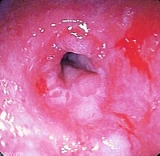
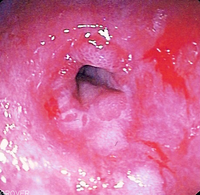 Diffuse scleroderma can affect any part of the gastrointestinal tract. The most common manifestation in the esophagus
is reflux esophagitis
, which may be complicated by peptic stricturing, or benign narrowing of the esophagus. This is best initially treated with proton pump inhibitor
s for acid suppression, but may require bougie dilatation
in the case of stricture.
Scleroderma can decrease motility
anywhere in the gastrointestinal tract. The most common source of decreased motility involvement is the esophagus and the lower esophageal sphincter, leading to dysphagia
and chest pain. As Scleroderma progresses, esophageal involvement from abnormalities in decreased motility may worsen due to progressive fibrosis (scarring). If this is left untreated, acid from the stomach can back up into the esophagus causing esophagitis
, and GERD
. Further scarring from acid damage to the lower esophagus many times leads to the development of fibrotic narrowing, also known as strictures which can be treated by dilitation, and Barrett's esophagus
. The small intestine
can also become involved, leading to bacterial overgrowth and malabsorption
, of bile salts, fat
s, carbohydrates, proteins, and vitamins. The colon
can be involved, and can cause pseudo-obstruction or ischemic colitis
.
Rarer complications include pneumatosis cystoides intestinalis, or gas pockets in the bowel wall, wide mouthed diverticula
in the colon and esophagus
, and liver fibrosis
. Patients with severe gastrointestinal involvement can become profoundly malnourished
.
Scleroderma may also be associated with gastric antral vascular ectasia
(GAVE), also known as watermelon stomach. This is a condition where atypical blood vessels proliferate usually in a radially symmetric pattern around the pylorus
of the stomach. GAVE can be a cause of upper gastrointestinal bleeding
or iron deficiency anemia
in patients with scleroderma.
Kidneys
Renal involvement, in scleroderma, is considered a poor prognostic factor and frequently a cause of death.
The most important clinical complication of scleroderma involving the kidney is scleroderma renal crisis. Symptoms of scleroderma renal crisis are malignant hypertension
(high blood pressure with evidence of acute organ damage), hyperreninemia
(high renin levels), azotemia
(kidney failure with accumulation of waste products in the blood) and microangiopathic hemolytic anemia
(destruction of red blood cells). Apart from the high blood pressure, hematuria
(blood in the urine) and proteinuria
(protein loss in the urine) may be indicative.
In the past scleroderma renal crisis was almost uniformily fatal. While outcomes have improved significantly with the use of ACE inhibitors the prognosis is often guarded, as a significant number of patients are refractory to treatment and develop renal failure
. Approximately 5-10% of all scleroderma patients develop renal crisis at some point in the course of their disease. Patients that have rapid skin involvement have the highest risk of renal complications. It is most common in diffuse cutaneous scleroderma, and is often associated with antibodies against RNA polymerase
(in 59% of cases). Many proceed to dialysis, although this can be stopped within three years in about a third of cases. Higher age and (paradoxically) a lower blood pressure at presentation make it more likely that dialysis is needed.
Treatments for scleroderma renal crisis include ACE inhibitors, which are also used for prophylaxis, and renal transplantation. Transplanted kidneys are known to be affected by scleroderma and patients with early onset renal disease (within one year of the scleroderma diagnosis) are thought to have the highest risk for recurrence.
and anti-scl70/anti-topoisomerase antibodies
) and occasionally by biopsy. Of the antibodies, 90% have a detectable anti-nuclear antibody
. Anti-centromere antibody is more common in the limited form (80-90%) than in the diffuse form (10%), and anti-scl70 is more common in the diffuse form (30-40%) and in African-American patients (who are more susceptible to the systemic form).
In 1980 the American College of Rheumatology
agreed upon diagnostic criteria for scleroderma.
Other conditions may mimic systemic sclerosis by causing hardening of the skin. Diagnostic hints that another disorder is responsible include the absence of Raynaud's phenomenon
, a lack of abnormalities in the skin on the hands, a lack of internal organ involvement, and a normal antinuclear antibodies test result.
and TGF-β1
may influence severity and development of the disease. There is limited evidence implicating cytomegalovirus
(CMV) as the original epitope of the immune reaction. Organic solvents and other chemical agents have been linked with scleroderma.
One of the suspected mechanisms behind the autoimmune phenomenon is the existence of microchimerism
, i.e. fetal cells circulating in maternal blood, triggering an immune reaction to what is perceived as "foreign" material.
A distinct form of scleroderma and systemic sclerosis may develop in patients with chronic renal failure
. This entity, nephrogenic fibrosing dermopathy or nephrogenic systemic fibrosis, has been linked to the exposure to gadolinium
-containing radiocontrast
.
Bleomycin
(a chemotherapeutic agent) and possibly taxane
chemotherapy may cause scleroderma, and occupational exposure to solvent
s has been linked with an increased risk of systemic sclerosis.
of the chromosomes. This would lead to genetic malfunction of nearby genes. T cell
s accumulate in the skin; these are thought to secrete cytokine
s and other proteins that stimulate collagen deposition. Stimulation of the fibroblast
, in particular, seems to be crucial to the disease process, and studies have converged on the potential factors that produce this effect.
A significant player in the process is transforming growth factor
(TGFβ). This protein appears to be overproduced, and the fibroblast (possibly in response to other stimuli) also overexpresses the receptor for this mediator. An intracellular pathway (consisting of SMAD2/SMAD3, SMAD4 and the inhibitor SMAD7) is responsible for the secondary messenger system that induces transcription
of the proteins and enzymes responsible for collagen deposition. Sp1 is a transcription factor
most closely studied in this context. Apart from TGFβ, connective tissue growth factor (CTGF) has a possible role. Indeed, a common CTGF gene polymorphism is present at an increased rate in systemic sclerosis.
Damage to endothelium
is an early abnormality in the development of scleroderma, and this too seems to be due to collagen accumulation by fibroblasts, although direct alterations by cytokines, platelet
adhesion and a type II hypersensitivity reaction have similarly been implicated. Increased endothelin
and decreased vasodilation
has been documented.
Jimenez & Derk describe three theories about the development of scleroderma:
A range of NSAIDs (nonsteroidal anti-inflammatory drugs) can be used to ease painful symptoms, such as naproxen
. There is limited benefit from steroids
such as prednisone. Episodes of Raynaud's phenomenon sometimes respond to nifedipine
or other calcium channel blockers; severe digital ulceration may respond to prostacyclin
analogue iloprost
, and the dual endothelin-receptor antagonist bosentan
may be beneficial for Raynaud's phenomenon. The skin tightness may be treated systemically with methotrexate
and ciclosporin
.
and malignant hypertension
(very high blood pressure with evidence of organ damage) in people with scleroderma, is effectively treated with drugs from the class of the ACE inhibitor
s. The benefit of ACE inhibitors extends even to those who have to commence dialysis
to treat their kidney disease, and may give sufficient benefit to allow the discontinuation of renal replacement therapy.
, often together with a small dose of steroids. The benefit of this intervention is modest.
Pulmonary hypertension may be treated with epoprostenol, bosentan
and possibly aerolized iloprost.
; some reports have reported improvements in the skin symptoms as well as delaying the progress of systemic disease, but neither of them have been subjected to large clinical trials.
While still experimental (given its high rate of complications), hematopoietic stem cell transplantation is being studied in patients with severe systemic sclerosis; improvement in life expectancy and severity of skin changes has been noted.
with and annual incidence of 1 to 2 per 100,000 individuals in the United States. The interval of peak onset starts at age 30 to 35 and ends at age 50 to 55.
In the United States, the prevalence of systemic scleroderma is about 50,000, with different studies giving different estimates, usually ranging between 40,000 and 165,000.
In the US, the Scleroderma Research Foundation
is dedicated to raise awareness of the disease and assist those who are affected. The Scleroderma Research Foundation sponsors research into the condition. Comedian and television presenter Bob Saget
, a board member of the SRF, directed the 1996 ABC TV movie For Hope
, starring Dana Delany
, which depicts a young woman fatally affected by scleroderma; the film was based on the experiences of Saget's sister Gay.
Connective tissue disease
A connective tissue disease is any disease that has the connective tissues of the body as a target of pathology. Connective tissue is any type of biological tissue with an extensive extracellular matrix that supports, binds together, and protects organs...
that is a subtype of scleroderma
Scleroderma
Systemic sclerosis or systemic scleroderma is a systemic autoimmune disease or systemic connective tissue disease that is a subtype of scleroderma.-Skin symptoms:...
.
Skin symptoms
In the skinHuman skin
The human skin is the outer covering of the body. In humans, it is the largest organ of the integumentary system. The skin has multiple layers of ectodermal tissue and guards the underlying muscles, bones, ligaments and internal organs. Human skin is similar to that of most other mammals,...
, systemic sclerosis causes hardening and scarring. The skin may appear tight, reddish or scaly. Blood vessels may also be more visible. Where large areas are affected, fat and muscle wastage may weaken limbs and affect appearance. Also, patients report substantial, even severe and recurrent itch
Itch
Itch is a sensation that causes the desire or reflex to scratch. Itch has resisted many attempts to classify it as any one type of sensory experience. Modern science has shown that itch has many similarities to pain, and while both are unpleasant sensory experiences, their behavioral response...
ing of large skin areas, the source of much affliction as the condition worsens. There is much variation in severity between patients, with some having scleroderma of only a limited area of the skin (such as the fingers) and little involvement of the underlying tissue; while others have progressive skin involvement.
Other organs
Diffuse scleroderma can cause musculoskeletalMusculoskeletal system
A musculoskeletal system is an organ system that gives animals the ability to move using the muscular and skeletal systems...
, pulmonary
Lung
The lung is the essential respiration organ in many air-breathing animals, including most tetrapods, a few fish and a few snails. In mammals and the more complex life forms, the two lungs are located near the backbone on either side of the heart...
, gastrointestinal
Gastrointestinal tract
The human gastrointestinal tract refers to the stomach and intestine, and sometimes to all the structures from the mouth to the anus. ....
, renal
Kidney
The kidneys, organs with several functions, serve essential regulatory roles in most animals, including vertebrates and some invertebrates. They are essential in the urinary system and also serve homeostatic functions such as the regulation of electrolytes, maintenance of acid–base balance, and...
and other complications. Patients with larger amounts of cutaneous involvement are more likely to have involvement of the internal tissues and organs. Most patients (over 80%) have vascular symptoms and Raynaud's phenomenon
Raynaud's phenomenon
In medicine, Raynaud's phenomenon is a vasospastic disorder causing discoloration of the fingers, toes, and occasionally other areas. This condition can also cause nails to become brittle with longitudinal ridges. Named for French physician Maurice Raynaud , the phenomenon is believed to be the...
, which leads to attacks of discoloration of the hands and feet in response to cold. Raynaud's normally affects the finger
Finger
A finger is a limb of the human body and a type of digit, an organ of manipulation and sensation found in the hands of humans and other primates....
s and toes. Systemic scleroderma and Raynaud's can cause painful ulcers on the fingers or toes which are known as digital ulcers. Calcinosis
Calcinosis
-Dystrophic calcification:The most common type of calcinosis is dystrophic calcification. This type of calcification can occur as a response to any soft tissue damage, including that involved in implantation of medical devices.-Metastatic calcification:...
(deposition of calcium in lumps under the skin) is also common in systemic scleroderma, and is often seen near the elbows, knees or other joints.
Musculoskeletal
The first joint symptoms that patients with scleroderma have are typically non specific joint pains
Arthralgia
Arthralgia literally means joint pain; it is a symptom of injury, infection, illnesses or an allergic reaction to medication....
, which can lead to arthritis
Arthritis
Arthritis is a form of joint disorder that involves inflammation of one or more joints....
, or cause discomfort in tendons
Tenosynovitis
Tenosynovitis is the inflammation of the fluid-filled sheath that surrounds a tendon. Symptoms of tenosynovitis include pain, swelling and difficulty moving the particular joint where the inflammation occurs. When the condition causes the finger to "stick" in a flexed position, this is called...
or muscles
Myalgia
Myalgia means "muscle pain" and is a symptom of many diseases and disorders. The most common causes are the overuse or over-stretching of a muscle or group of muscles. Myalgia without a traumatic history is often due to viral infections...
. Joint mobility, especially of the small joints of the hand, may be restricted by calcinosis
Calcinosis
-Dystrophic calcification:The most common type of calcinosis is dystrophic calcification. This type of calcification can occur as a response to any soft tissue damage, including that involved in implantation of medical devices.-Metastatic calcification:...
or skin thickening. Patients may develop muscle weakness, or myopathy
Myopathy
In medicine, a myopathy is a muscular disease in which the muscle fibers do not function for any one of many reasons, resulting in muscular weakness. "Myopathy" simply means muscle disease...
, either from the disease, or its treatments.
Lungs
Some impairment in lung function is almost universally seen in patients with diffuse scleroderma on pulmonary function testing; however, it does not necessarily cause symptoms, such as shortness of breath. Some patients can develop pulmonary hypertension
Pulmonary hypertension
In medicine, pulmonary hypertension is an increase in blood pressure in the pulmonary artery, pulmonary vein, or pulmonary capillaries, together known as the lung vasculature, leading to shortness of breath, dizziness, fainting, and other symptoms, all of which are exacerbated by exertion...
, or elevation in the pressures of the pulmonary arteries. This can be progressive, and lead to right sided heart failure. The earliest manifestation of this may be a decreased diffusion capacity
Diffusion capacity
In biology, diffusion capacity is a measurement of the lung's ability to transfer gases. Oxygen uptake may be limited by diffusion in circumstances of low ambient oxygen or high pulmonary blood flow...
on pulmonary function testing.
Other pulmonary complications in more advanced disease include aspiration pneumonia
Aspiration pneumonia
Aspiration pneumonia is bronchopneumonia that develops due to the entrance of foreign materials into the bronchial tree, usually oral or gastric contents...
, pulmonary hemorrhage
Pulmonary hemorrhage
Pulmonary hemorrhage is an acute bleeding from the lung, especially in the upper respiratory tract and the endotracheal tube. When evident clinically, the condition is usually massive, associated with bleeding in other sites as well as more than one third of the lungs...
and pneumothorax
Pneumothorax
Pneumothorax is a collection of air or gas in the pleural cavity of the chest between the lung and the chest wall. It may occur spontaneously in people without chronic lung conditions as well as in those with lung disease , and many pneumothoraces occur after physical trauma to the chest, blast...
.
Digestive tract
Esophagus
The esophagus is an organ in vertebrates which consists of a muscular tube through which food passes from the pharynx to the stomach. During swallowing, food passes from the mouth through the pharynx into the esophagus and travels via peristalsis to the stomach...
is reflux esophagitis
Esophagitis
Esophagitis is inflammation of the esophagus. It may be acute or chronic. The acute esophagitis can be catarrhal or phlegmonous, whereas the chronic esophagitis may be hypertrophic or atrophic.-Infectious:...
, which may be complicated by peptic stricturing, or benign narrowing of the esophagus. This is best initially treated with proton pump inhibitor
Proton pump inhibitor
Proton-pump inhibitors are a group of drugs whose main action is a pronounced and long-lasting reduction of gastric acid production. They are the most potent inhibitors of acid secretion available today. The group followed and has largely superseded another group of pharmaceuticals with similar...
s for acid suppression, but may require bougie dilatation
Esophageal dilatation
Esophageal dilatation is a therapeutic endoscopic procedure that enlarges the lumen of the esophagus.-Indications:It can be used to treat a number of medical conditions that result in narrowing of the esophageal lumen, or decrease motility in the distal esophagus...
in the case of stricture.
Scleroderma can decrease motility
Motility
Motility is a biological term which refers to the ability to move spontaneously and actively, consuming energy in the process. Most animals are motile but the term applies to single-celled and simple multicellular organisms, as well as to some mechanisms of fluid flow in multicellular organs, in...
anywhere in the gastrointestinal tract. The most common source of decreased motility involvement is the esophagus and the lower esophageal sphincter, leading to dysphagia
Dysphagia
Dysphagia is the medical term for the symptom of difficulty in swallowing. Although classified under "symptoms and signs" in ICD-10, the term is sometimes used as a condition in its own right. Sufferers are sometimes unaware of their dysphagia....
and chest pain. As Scleroderma progresses, esophageal involvement from abnormalities in decreased motility may worsen due to progressive fibrosis (scarring). If this is left untreated, acid from the stomach can back up into the esophagus causing esophagitis
Esophagitis
Esophagitis is inflammation of the esophagus. It may be acute or chronic. The acute esophagitis can be catarrhal or phlegmonous, whereas the chronic esophagitis may be hypertrophic or atrophic.-Infectious:...
, and GERD
Gastroesophageal reflux disease
Gastroesophageal reflux disease , gastro-oesophageal reflux disease , gastric reflux disease, or acid reflux disease is chronic symptoms or mucosal damage caused by stomach acid coming up from the stomach into the esophagus...
. Further scarring from acid damage to the lower esophagus many times leads to the development of fibrotic narrowing, also known as strictures which can be treated by dilitation, and Barrett's esophagus
Barrett's esophagus
Barrett's esophagus refers to an abnormal change in the cells of the inferior portion of the esophagus. A positive diagnosis generally requires observing specific macroscopic and microscopic changes...
. The small intestine
Small intestine
The small intestine is the part of the gastrointestinal tract following the stomach and followed by the large intestine, and is where much of the digestion and absorption of food takes place. In invertebrates such as worms, the terms "gastrointestinal tract" and "large intestine" are often used to...
can also become involved, leading to bacterial overgrowth and malabsorption
Malabsorption
Malabsorption is a state arising from abnormality in absorption of food nutrients across the gastrointestinal tract.Impairment can be of single or multiple nutrients depending on the abnormality...
, of bile salts, fat
Fat
Fats consist of a wide group of compounds that are generally soluble in organic solvents and generally insoluble in water. Chemically, fats are triglycerides, triesters of glycerol and any of several fatty acids. Fats may be either solid or liquid at room temperature, depending on their structure...
s, carbohydrates, proteins, and vitamins. The colon
Colon (anatomy)
The colon is the last part of the digestive system in most vertebrates; it extracts water and salt from solid wastes before they are eliminated from the body, and is the site in which flora-aided fermentation of unabsorbed material occurs. Unlike the small intestine, the colon does not play a...
can be involved, and can cause pseudo-obstruction or ischemic colitis
Ischemic colitis
Ischemic colitis is a medical condition in which inflammation and injury of the large intestine result from inadequate blood supply. Although uncommon in the general population, ischemic colitis occurs with greater frequency in the elderly, and is the most common form of bowel ischemia...
.
Rarer complications include pneumatosis cystoides intestinalis, or gas pockets in the bowel wall, wide mouthed diverticula
Diverticulosis
Diverticulosis also known as "diverticular disease" is the condition of having diverticula in the colon, which are outpocketings of the colonic mucosa and submucosa through weaknesses of muscle layers in the colon wall. These are more common in the sigmoid colon, which is a common place for...
in the colon and esophagus
Esophagus
The esophagus is an organ in vertebrates which consists of a muscular tube through which food passes from the pharynx to the stomach. During swallowing, food passes from the mouth through the pharynx into the esophagus and travels via peristalsis to the stomach...
, and liver fibrosis
Cirrhosis
Cirrhosis is a consequence of chronic liver disease characterized by replacement of liver tissue by fibrosis, scar tissue and regenerative nodules , leading to loss of liver function...
. Patients with severe gastrointestinal involvement can become profoundly malnourished
Malnutrition
Malnutrition is the condition that results from taking an unbalanced diet in which certain nutrients are lacking, in excess , or in the wrong proportions....
.
Scleroderma may also be associated with gastric antral vascular ectasia
Gastric antral vascular ectasia
*Please note that Wikipedia does not give medical advice, and that the information in this article is intended to be solely for informational purposes....
(GAVE), also known as watermelon stomach. This is a condition where atypical blood vessels proliferate usually in a radially symmetric pattern around the pylorus
Pylorus
The pylorus is the region of the stomach that connects to the duodenum . It is divided into two parts:* the pyloric antrum, which connects to the body of the stomach.* the pyloric canal, which connects to the duodenum....
of the stomach. GAVE can be a cause of upper gastrointestinal bleeding
Upper gastrointestinal bleeding
Upper gastrointestinal bleeding refers to hemorrhage in the upper gastrointestinal tract. The anatomic cut-off for upper GI bleeding is the ligament of Treitz, which connects the fourth portion of the duodenum to the diaphragm near the splenic flexure of the colon.Upper GI bleeds are considered...
or iron deficiency anemia
Iron deficiency anemia
Iron-deficiency anemia is a common anemia that occurs when iron loss occurs, and/or the dietary intake or absorption of iron is insufficient...
in patients with scleroderma.
Kidneys
Renal involvement, in scleroderma, is considered a poor prognostic factor and frequently a cause of death.
The most important clinical complication of scleroderma involving the kidney is scleroderma renal crisis. Symptoms of scleroderma renal crisis are malignant hypertension
Malignant hypertension
Malignant hypertension or hypertensive emergency is severe hypertension with acute impairment of an organ system and the possibility of irreversible organ-damage...
(high blood pressure with evidence of acute organ damage), hyperreninemia
Renin
Renin , also known as an angiotensinogenase, is an enzyme that participates in the body's renin-angiotensin system -- also known as the Renin-Angiotensin-Aldosterone Axis -- that mediates extracellular volume , and arterial vasoconstriction...
(high renin levels), azotemia
Azotemia
Azotemia is a medical condition characterized by abnormally high levels of nitrogen-containing compounds, such as urea, creatinine, various body waste compounds, and other nitrogen-rich compounds in the blood...
(kidney failure with accumulation of waste products in the blood) and microangiopathic hemolytic anemia
Microangiopathic hemolytic anemia
In medicine microangiopathic hemolytic anemia is a microangiopathic subgroup of hemolytic anemia caused by factors in the small blood vessels. It is identified by the finding of anemia and schistocytes on microscopy of the blood film.-Presentation:It is referred as Runner's anemia...
(destruction of red blood cells). Apart from the high blood pressure, hematuria
Hematuria
In medicine, hematuria, or haematuria, is the presence of red blood cells in the urine. It may be idiopathic and/or benign, or it can be a sign that there is a kidney stone or a tumor in the urinary tract , ranging from trivial to lethal...
(blood in the urine) and proteinuria
Proteinuria
Proteinuria means the presence of anexcess of serum proteins in the urine. The protein in the urine often causes the urine to become foamy, although foamy urine may also be caused by bilirubin in the urine , retrograde ejaculation, pneumaturia due to a fistula, or drugs such as pyridium.- Causes...
(protein loss in the urine) may be indicative.
In the past scleroderma renal crisis was almost uniformily fatal. While outcomes have improved significantly with the use of ACE inhibitors the prognosis is often guarded, as a significant number of patients are refractory to treatment and develop renal failure
Renal failure
Renal failure or kidney failure describes a medical condition in which the kidneys fail to adequately filter toxins and waste products from the blood...
. Approximately 5-10% of all scleroderma patients develop renal crisis at some point in the course of their disease. Patients that have rapid skin involvement have the highest risk of renal complications. It is most common in diffuse cutaneous scleroderma, and is often associated with antibodies against RNA polymerase
RNA polymerase
RNA polymerase is an enzyme that produces RNA. In cells, RNAP is needed for constructing RNA chains from DNA genes as templates, a process called transcription. RNA polymerase enzymes are essential to life and are found in all organisms and many viruses...
(in 59% of cases). Many proceed to dialysis, although this can be stopped within three years in about a third of cases. Higher age and (paradoxically) a lower blood pressure at presentation make it more likely that dialysis is needed.
Treatments for scleroderma renal crisis include ACE inhibitors, which are also used for prophylaxis, and renal transplantation. Transplanted kidneys are known to be affected by scleroderma and patients with early onset renal disease (within one year of the scleroderma diagnosis) are thought to have the highest risk for recurrence.
Diagnosis
Diagnosis is by clinical suspicion, presence of autoantibodies (specifically anti-centromereAnti-centromere antibodies
Anti-centromere antibodies occur in auto immune disorders; frequently in limited systemic scleroderma, , and, occasionally are found in the diffuse form of scleroderma...
and anti-scl70/anti-topoisomerase antibodies
Anti-topoisomerase antibodies
Anti-topoisomerase antibodies are autoantibodies directed against topoisomerase and found in several diseases, most importantly scleroderma. Diseases with ATA are autoimmune disease because they react with self-proteins...
) and occasionally by biopsy. Of the antibodies, 90% have a detectable anti-nuclear antibody
Anti-nuclear antibody
Anti-nuclear antibodies are autoantibodies directed against contents of the cell nucleus....
. Anti-centromere antibody is more common in the limited form (80-90%) than in the diffuse form (10%), and anti-scl70 is more common in the diffuse form (30-40%) and in African-American patients (who are more susceptible to the systemic form).
In 1980 the American College of Rheumatology
American College of Rheumatology
The American College of Rheumatology is an organization of and for physicians, health professionals, and scientists that advances rheumatology through programs of education, research, advocacy and practice support that foster excellence in the care of people with arthritis and rheumatic and...
agreed upon diagnostic criteria for scleroderma.
Other conditions may mimic systemic sclerosis by causing hardening of the skin. Diagnostic hints that another disorder is responsible include the absence of Raynaud's phenomenon
Raynaud's phenomenon
In medicine, Raynaud's phenomenon is a vasospastic disorder causing discoloration of the fingers, toes, and occasionally other areas. This condition can also cause nails to become brittle with longitudinal ridges. Named for French physician Maurice Raynaud , the phenomenon is believed to be the...
, a lack of abnormalities in the skin on the hands, a lack of internal organ involvement, and a normal antinuclear antibodies test result.
Causes
There is no clear obvious cause for scleroderma and systemic sclerosis. Genetic predisposition appears to be limited: genetic concordance is small; still, there often is a familial predisposition for autoimmune disease. Polymorphisms in COL1A2COL1A2
Collagen alpha-2 chain is a protein that in humans is encoded by the COL1A2 gene.-External links:* -Further reading:...
and TGF-β1
TGF beta 1
Transforming growth factor beta 1 or TGF-β1 is a polypeptide member of the transforming growth factor beta superfamily of cytokines. It is a secreted protein that performs many cellular functions, including the control of cell growth, cell proliferation, cell differentiation and apoptosis...
may influence severity and development of the disease. There is limited evidence implicating cytomegalovirus
Cytomegalovirus
Cytomegalovirus is a viral genus of the viral group known as Herpesviridae or herpesviruses. It is typically abbreviated as CMV: The species that infects humans is commonly known as human CMV or human herpesvirus-5 , and is the most studied of all cytomegaloviruses...
(CMV) as the original epitope of the immune reaction. Organic solvents and other chemical agents have been linked with scleroderma.
One of the suspected mechanisms behind the autoimmune phenomenon is the existence of microchimerism
Microchimerism
Microchimerism is the presence of a small number of cells that originate from another individual and are therefore genetically distinct from the cells of the host individual...
, i.e. fetal cells circulating in maternal blood, triggering an immune reaction to what is perceived as "foreign" material.
A distinct form of scleroderma and systemic sclerosis may develop in patients with chronic renal failure
Chronic renal failure
Chronic kidney disease , also known as chronic renal disease, is a progressive loss in renal function over a period of months or years. The symptoms of worsening kidney function are unspecific, and might include feeling generally unwell and experiencing a reduced appetite...
. This entity, nephrogenic fibrosing dermopathy or nephrogenic systemic fibrosis, has been linked to the exposure to gadolinium
Gadolinium
Gadolinium is a chemical element with the symbol Gd and atomic number 64. It is a silvery-white, malleable and ductile rare-earth metal. It is found in nature only in combined form. Gadolinium was first detected spectroscopically in 1880 by de Marignac who separated its oxide and is credited with...
-containing radiocontrast
Radiocontrast
Radiocontrast agents are a type of medical contrast medium used to improve the visibility of internal bodily structures in an X-ray based imaging techniques such as computed tomography or radiography...
.
Bleomycin
Bleomycin
Bleomycin is a glycopeptide antibiotic produced by the bacterium Streptomyces verticillus. Bleomycin refers to a family of structurally related compounds. When used as an anticancer agent, the chemotherapeutical forms are primarily bleomycin A2 and B2. It works by causing breaks in DNA...
(a chemotherapeutic agent) and possibly taxane
Taxane
The taxanes are diterpenes produced by the plants of the genus Taxus . As their name suggests, they were first derived from natural sources, but some have been synthesized artificially. Taxanes include paclitaxel and docetaxel . Paclitaxel was originally derived from the Pacific yew tree.Taxanes...
chemotherapy may cause scleroderma, and occupational exposure to solvent
Solvent
A solvent is a liquid, solid, or gas that dissolves another solid, liquid, or gaseous solute, resulting in a solution that is soluble in a certain volume of solvent at a specified temperature...
s has been linked with an increased risk of systemic sclerosis.
Pathophysiology
The overproduction of collagen is thought to result from an autoimmune dysfunction, in which the immune system would start to attack the kinetochoreKinetochore
The kinetochore is the protein structure on chromatids where the spindle fibers attach during cell division to pull sister chromatids apart....
of the chromosomes. This would lead to genetic malfunction of nearby genes. T cell
T cell
T cells or T lymphocytes belong to a group of white blood cells known as lymphocytes, and play a central role in cell-mediated immunity. They can be distinguished from other lymphocytes, such as B cells and natural killer cells , by the presence of a T cell receptor on the cell surface. They are...
s accumulate in the skin; these are thought to secrete cytokine
Cytokine
Cytokines are small cell-signaling protein molecules that are secreted by the glial cells of the nervous system and by numerous cells of the immune system and are a category of signaling molecules used extensively in intercellular communication...
s and other proteins that stimulate collagen deposition. Stimulation of the fibroblast
Fibroblast
A fibroblast is a type of cell that synthesizes the extracellular matrix and collagen, the structural framework for animal tissues, and plays a critical role in wound healing...
, in particular, seems to be crucial to the disease process, and studies have converged on the potential factors that produce this effect.
A significant player in the process is transforming growth factor
Transforming growth factor
Transforming growth factor is used to describe two classes of polypeptide growth factors, TGFα and TGFβ....
(TGFβ). This protein appears to be overproduced, and the fibroblast (possibly in response to other stimuli) also overexpresses the receptor for this mediator. An intracellular pathway (consisting of SMAD2/SMAD3, SMAD4 and the inhibitor SMAD7) is responsible for the secondary messenger system that induces transcription
Transcription (genetics)
Transcription is the process of creating a complementary RNA copy of a sequence of DNA. Both RNA and DNA are nucleic acids, which use base pairs of nucleotides as a complementary language that can be converted back and forth from DNA to RNA by the action of the correct enzymes...
of the proteins and enzymes responsible for collagen deposition. Sp1 is a transcription factor
Transcription factor
In molecular biology and genetics, a transcription factor is a protein that binds to specific DNA sequences, thereby controlling the flow of genetic information from DNA to mRNA...
most closely studied in this context. Apart from TGFβ, connective tissue growth factor (CTGF) has a possible role. Indeed, a common CTGF gene polymorphism is present at an increased rate in systemic sclerosis.
Damage to endothelium
Endothelium
The endothelium is the thin layer of cells that lines the interior surface of blood vessels, forming an interface between circulating blood in the lumen and the rest of the vessel wall. These cells are called endothelial cells. Endothelial cells line the entire circulatory system, from the heart...
is an early abnormality in the development of scleroderma, and this too seems to be due to collagen accumulation by fibroblasts, although direct alterations by cytokines, platelet
Platelet
Platelets, or thrombocytes , are small,irregularly shaped clear cell fragments , 2–3 µm in diameter, which are derived from fragmentation of precursor megakaryocytes. The average lifespan of a platelet is normally just 5 to 9 days...
adhesion and a type II hypersensitivity reaction have similarly been implicated. Increased endothelin
Endothelin
Endothelins are proteins that constrict blood vessels and raise blood pressure. They are normally kept in balance by other mechanisms, but when they are over-expressed, they contribute to high blood pressure and heart disease....
and decreased vasodilation
Vasodilation
Vasodilation refers to the widening of blood vessels resulting from relaxation of smooth muscle cells within the vessel walls, particularly in the large arteries, smaller arterioles and large veins. The process is essentially the opposite of vasoconstriction, or the narrowing of blood vessels. When...
has been documented.
Jimenez & Derk describe three theories about the development of scleroderma:
- The abnormalities are primarily due to a physical agent, and all other changes are secondary or reactive to this direct insult.
- The initial event is fetomaternal cell transfer causing microchimerism, with a second summative cause (e.g. environmental) leading to the actual development of the disease.
- Physical causes lead to phenotypic alterations in susceptible cells (e.g. due to genetic makeup), which then effectuate DNA changes which alter the cell's behavior.
Therapy
There is no cure for scleroderma, though there is treatment for some of the symptoms, including drugs that soften the skin and reduce inflammation. Some patients may benefit from exposure to heat.Topical/symptomatic
Topical treatment for the skin changes of scleroderma do not alter the disease course, but may improve pain and ulceration.A range of NSAIDs (nonsteroidal anti-inflammatory drugs) can be used to ease painful symptoms, such as naproxen
Naproxen
Naproxen sodium is a nonsteroidal anti-inflammatory drug commonly used for the reduction of pain, fever, inflammation and stiffness caused by conditions such as:...
. There is limited benefit from steroids
Glucocorticoid
Glucocorticoids are a class of steroid hormones that bind to the glucocorticoid receptor , which is present in almost every vertebrate animal cell...
such as prednisone. Episodes of Raynaud's phenomenon sometimes respond to nifedipine
Nifedipine
Nifedipine is a dihydropyridine calcium channel blocker...
or other calcium channel blockers; severe digital ulceration may respond to prostacyclin
Prostacyclin
Prostacyclin is a member of the family of lipid molecules known as eicosanoids.As a drug, it is also known as "epoprostenol". The terms are sometimes used interchangeably.-History:...
analogue iloprost
Iloprost
Iloprost is a drug used to treat pulmonary arterial hypertension , scleroderma, Raynaud's phenomenon and ischemia. It was developed by the pharmaceutical company Schering AG and is marketed by Bayer Schering Pharma AG in Europe and Actelion Pharmaceuticals in the USA.-Clinical pharmacology:Iloprost...
, and the dual endothelin-receptor antagonist bosentan
Bosentan
Bosentan is a dual endothelin receptor antagonist used in the treatment of pulmonary artery hypertension . It is licensed in the United States, the European Union and other countries by Actelion Pharmaceuticals for the management of PAH under the trade name Tracleer.-Mechanism of action:Bosentan is...
may be beneficial for Raynaud's phenomenon. The skin tightness may be treated systemically with methotrexate
Methotrexate
Methotrexate , abbreviated MTX and formerly known as amethopterin, is an antimetabolite and antifolate drug. It is used in treatment of cancer, autoimmune diseases, ectopic pregnancy, and for the induction of medical abortions. It acts by inhibiting the metabolism of folic acid. Methotrexate...
and ciclosporin
Ciclosporin
Ciclosporin , cyclosporine , cyclosporin , or cyclosporin A is an immunosuppressant drug widely used in post-allogeneic organ transplant to reduce the activity of the immune system, and therefore the risk of organ rejection...
.
Kidney disease
Scleroderma renal crisis, the occurrence of acute renal failureAcute renal failure
Acute kidney injury , previously called acute renal failure , is a rapid loss of kidney function. Its causes are numerous and include low blood volume from any cause, exposure to substances harmful to the kidney, and obstruction of the urinary tract...
and malignant hypertension
Malignant hypertension
Malignant hypertension or hypertensive emergency is severe hypertension with acute impairment of an organ system and the possibility of irreversible organ-damage...
(very high blood pressure with evidence of organ damage) in people with scleroderma, is effectively treated with drugs from the class of the ACE inhibitor
ACE inhibitor
ACE inhibitors or angiotensin-converting enzyme inhibitors are a group of drugs used primarily for the treatment of hypertension and congestive heart failure...
s. The benefit of ACE inhibitors extends even to those who have to commence dialysis
Hemodialysis
In medicine, hemodialysis is a method for removing waste products such as creatinine and urea, as well as free water from the blood when the kidneys are in renal failure. Hemodialysis is one of three renal replacement therapies .Hemodialysis can be an outpatient or inpatient therapy...
to treat their kidney disease, and may give sufficient benefit to allow the discontinuation of renal replacement therapy.
Lung disease and pulmonary hypertension
Active alveolitis is often treated with pulses of cyclophosphamideCyclophosphamide
Cyclophosphamide , also known as cytophosphane, is a nitrogen mustard alkylating agent, from the oxazophorines group....
, often together with a small dose of steroids. The benefit of this intervention is modest.
Pulmonary hypertension may be treated with epoprostenol, bosentan
Bosentan
Bosentan is a dual endothelin receptor antagonist used in the treatment of pulmonary artery hypertension . It is licensed in the United States, the European Union and other countries by Actelion Pharmaceuticals for the management of PAH under the trade name Tracleer.-Mechanism of action:Bosentan is...
and possibly aerolized iloprost.
Experimental treatments
Given the difficulty in treating scleroderma, treatments with a smaller evidence base are often tried to control the disease. These include antithymocyte globulin and mycophenolate mofetilMycophenolate mofetil
Mycophenolate mofetil is an immunosuppressant and prodrug of mycophenolic acid, used extensively in transplant medicine. It is a reversible inhibitor of inosine monophosphate dehydrogenase in purine biosynthesis, which is necessary for the growth of T cells and B cells...
; some reports have reported improvements in the skin symptoms as well as delaying the progress of systemic disease, but neither of them have been subjected to large clinical trials.
While still experimental (given its high rate of complications), hematopoietic stem cell transplantation is being studied in patients with severe systemic sclerosis; improvement in life expectancy and severity of skin changes has been noted.
Epidemiology
Systemic scleroderma is a rare diseaseRare disease
A rare disease, also referred to as an orphan disease, is any disease that affects a small percentage of the population.Most rare diseases are genetic, and thus are present throughout the person's entire life, even if symptoms do not immediately appear...
with and annual incidence of 1 to 2 per 100,000 individuals in the United States. The interval of peak onset starts at age 30 to 35 and ends at age 50 to 55.
In the United States, the prevalence of systemic scleroderma is about 50,000, with different studies giving different estimates, usually ranging between 40,000 and 165,000.
Advocacy
The Juvenile Scleroderma Network is an organization dedicated to provide emotional support and educational information to parents and their children living with juvenile scleroderma, to support pediatric research to identify the cause of and the cure for juvenile sscleroderma, and to enhance public awareness.In the US, the Scleroderma Research Foundation
Scleroderma Research Foundation
The Scleroderma Research Foundation is a non-profit, 501 organization based in San Francisco. Its mission is to find improved therapies and a cure for scleroderma by funding research and Scleroderma Centers of Excellence, which provide multi-specialty clinical care in dedicated facilities...
is dedicated to raise awareness of the disease and assist those who are affected. The Scleroderma Research Foundation sponsors research into the condition. Comedian and television presenter Bob Saget
Bob Saget
Robert Lane "Bob" Saget is an American stand-up comedian, actor, and television host. Although he is best known for his roles as Danny Tanner in Full House, host of America's Funniest Home Videos and Future Ted Mosby on How I Met Your Mother, Saget is also known outside of television for his blue...
, a board member of the SRF, directed the 1996 ABC TV movie For Hope
For Hope
For Hope is a 1996 ABC TV movie starring Dana Delany and directed by Bob Saget. Based on Saget's sister Gay, the movie showed the experience of a young woman fatally afflicted with the disease scleroderma...
, starring Dana Delany
Dana Delany
Dana Welles Delany is an American film, stage, and television actress, producer, host and health activist.After various roles in the early career, Delany garnered her first leading role in 1987 in the short-lived NBC sitcom Sweet Surrender and achieved wider fame in 1988–1991 as Colleen McMurphy...
, which depicts a young woman fatally affected by scleroderma; the film was based on the experiences of Saget's sister Gay.
External links
- UK Raynaud's & Scleroderma Association
- DermnetNZ: Systemic sclerosis
- Juvenile Scleroderma Network
- Juvenile Systemic Sclerosis
- Scleroderma Foundation
- Scleroderma Society of Ontario
- International Scleroderma Network
- The Scleroderma Research Foundation
- UK Scleroderma Society
- Scleroderma Information from Johns Hopkins University
- Scleroderma Australia