

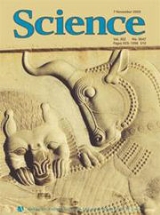
Science and technology in Iran

Encyclopedia
Persia was a cradle of science in earlier times. Persian scientists
contributed to the current understanding of nature
, medicine, mathematics
, and philosophy. Persians made important contributions to algebra
and chemistry
, invented the wind-power machine, and the first distillation
of alcohol. Trying to revive the golden time of Persian science, Iran's scientists cautiously reach out to the world. Many individual Iranian scientists, along with the Iranian Academy of Medical Sciences
and Academy of Sciences of Iran, are involved in this revival.
Iran
is an example of a country that has made considerable advances through education and training
, despite international sanctions
in almost all aspects of research during the past 30 years. Iran's university population
swelled from 100,000 in 1979 to 2 million in 2006. Seventy percent of its science and engineering students are women. Iran's scientific progress is reported to be the fastest in the world. Iran has made great strides in different sectors, including aerospace
, nuclear science, medical development, as well as stem cell and cloning
research.
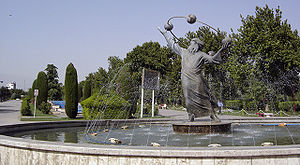 References to scientific subjects such as natural science and mathematics occur in books written in the Pahlavi languages.
(a water management system used for irrigation) originated in pre-Achaemenid
Persia. The oldest and largest known qanat is in the Iranian city of Gonabad
which, after 2,700 years, still provides drinking and agricultural water to nearly 40,000 people.
Persian philosophers and inventors may have created the first batteries (sometimes known as the Baghdad Battery
) in the Parthian or Sassanid eras. Some have suggested that the batteries may have been used medicinally. Other scientists believe the batteries were used for electroplating—transferring a thin layer of metal to another metal surface—a technique still used today and the focus of a common classroom experiment.
Windwheels were developed by the Babylonians ca. 1700 BC to pump water for irrigation. In the 7th century, Persian engineers in Greater Iran
developed a more advanced wind-power machine, the windmill
, building upon the basic model developed by the Babylonians.
created the Logarithm
table, developed algebra and expanded upon Persian and Indian arithmetic systems. His writings we re-translated into Latin
by Gerard of Cremona
under the title: De jebra et almucabola. Robert of Chester
also translated it under the title Liber algebras et almucabala. The works of Kharazmi "exercised a profound influence on the development of mathematical thought in the medieval West".
Other Persian scientists included Abu Abbas Fazl Hatam, the Banu Musa
brothers, Farahani, Omar Ibn Farakhan, Abu Zeid Ahmad Ibn Soheil Balkhi (9th century AD), Abul Vafa Bouzjani, Abu Jaafar Khan, Bijan Ibn Rostam Kouhi, Ahmad Ibn Abdul Jalil Qomi, Bu Nasr Araghi, Abu Reyhan Birooni, the noted Iranian poet Hakim Omar Khayyam
Neishaburi, Qatan Marvazi, Massoudi Ghaznavi (13th century AD), Khajeh Nassireddin Tusi
, and Ghiasseddin Jamshidi Kashani
.
For example, the first teaching hospital where medical students methodically practiced on patients under the supervision of physicians was the Academy of Gundishapur
in the Persian Empire. Some experts go so far as to claim that: "to a very large extent, the credit for the whole hospital system must be given to Persia".
The idea of xenotransplantation
dates to the days of Achaemenidae
(the Achaemenian dynasty), as evidenced by engravings of many mythologic chimeras
still present in Persepolis
.
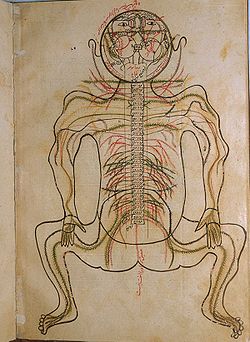
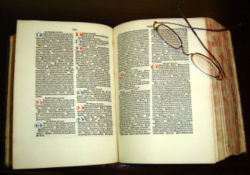 Several documents still exist from which the definitions and treatments of the headache in medieval Persia can be ascertained. These documents give detailed and precise clinical information on the different types of headaches. The medieval physicians listed various signs and symptoms, apparent causes, and hygienic and dietary rules for prevention of headaches. The medieval writings are both accurate and vivid, and they provide long lists of substances used in the treatment of headaches. Many of the approaches of physicians in medieval Persia are accepted today; however, still more of them could be of use to modern medicine.
In the 10th century work of Shahnameh
, Ferdowsi
describes a Caesarean section
performed on Rudabeh, during which a special wine agent was prepared by a Zoroastrian
priest and used to produce unconsciousness for the operation. Although largely mythical in content, the passage illustrates working knowledge of anesthesia
in ancient Persia.
Later in the 10th century, Abu Bakr Muhammad Bin Zakaria Razi
is considered the founder of practical physics and the inventor of the special or net weight of matter. His student, Abu Bakr Joveini, wrote the first comprehensive medical book in the Persian
language.
After the Islamic conquest of Iran
, medicine continued to flourish with the rise of notables such as Rhazes
and Haly Abbas
, albeit Baghdad
was the new cosmopolitan inheritor of Sassanid
Jundishapur's medical academy.
An idea of the number of medical works composed in Persian alone may be gathered from Adolf Fonahn's Zur Quellenkunde der Persischen Medizin, published in Leipzig
in 1910. The author enumerates over 400 works in the Persian language on medicine, excluding authors such as Avicenna
, who wrote in Arabic. Author-historians Meyerhof, Casey Wood, and Hirschberg also have recorded the names of at least 80 oculist
s who contributed treatises on subjects related to ophthalmology
from the beginning of 800 AD to the full flowering of Muslim medical literature in 1300 AD.
Aside from the aforementioned, two other medical works attracted great attention in medieval Europe, namely Abu Mansur Muwaffaq
's Materia Medica, written around 950 AD, and the illustrated Anatomy of Mansur ibn Muhammad, written in 1396 AD.
Modern academic medicine began in Iran when Joseph Cochran
established a medical college in Urmia
in 1878. Cochran is often credited for founding Iran’s "first contemporary medical college". The website of Urmia University
credits Cochran for "lowering the infant mortality rate in the region" and for founding one of Iran's first modern hospitals (Westminster Hospital) in Urmia.
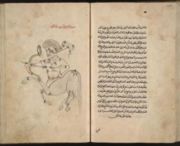
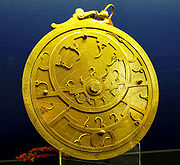 In 1000 AD, Biruni wrote an astronomical encyclopaedia which discussed the possibility that the earth might rotate around the sun. This was before Tycho Brahe
drew the first maps of the sky, using stylized animals to depict the constellations.
In the tenth century, the Persian astronomer Abd al-Rahman al-Sufi cast his eyes upwards to the awning of stars overhead and was the first to record a galaxy outside our own. Gazing at the Andromeda galaxy he called it a "little cloud" – an apt description of the slightly wispy appearance of our galactic neighbour.
(1711–1765) and Antoine-Laurent Lavoisier
(1743–1794) created the law of conservation of mass
, setting down this same idea. However, it should be noted that Tusi argued for evolution within a firmly Islamic context—he did not, like Darwin, draw materialist conclusions from his theories. Moreover, unlike Darwin, he was arguing hypothetically: he did not attempt to provide empirical data for his theories. Nonetheless his arguments, which in some ways prefigure natural selection
, are still considered remarkably 'advanced' for their time.
Jaber Ibn Hayyan, the famous Iranian chemist who died in 804 at Tous in Khorasan
, was the father of a number of discoveries recorded in an encyclopaedia and of many treatises covering two thousand topics, and these became the bible of European chemists of the 18th century, particularly of Lavoisier. These works had a variety of uses including tinctures and their applications in tanning and textiles; distillations of plants and flowers; the origin of perfumes; therapeutic pharmacy, and gunpowder, a powerful military instrument possessed by Islam long before the West. Jabir ibn Hayyan, is widely regarded as the founder of chemistry, inventing many of the basic processes and equipment still used by chemists today such as distillation
.
for his writings on, and experiments with, lenses, mirrors, refraction
, and reflection. He correctly stated that vision results from light that is reflected into the eye by an object, not emitted by the eye itself and reflected back, as Aristotle
believed. He solved the problem of finding the locus of points on a spherical mirror from which light will be reflected to an observer. From his studies of refraction, he determined that the atmosphere has a definite height and that twilight is caused by refraction of solar radiation from beneath the horizon.
Biruni was the first scientist to formally propose that the speed of light
is finite, before Galileo tried to experimentally prove this.
Kamal al-Din Al-Farisi (1267–1318) born in Tabriz
, Iran, is known for giving the first mathematically satisfactory explanation of the rainbow, and an explication of the nature of colours that reformed the theory of Ibn al-Haytham. Al-Farisi also "proposed a model where the ray of light from the sun was refracted twice by a water droplet, one or more reflections occurring between the two refractions." He verified this through extensive experimentation using a transparent sphere filled with water and a camera obscura
. He is also the first who scientifically explains the rainbow
.
Greater Iran
Greater Iran refers to the regions that have significant Iranian cultural influence. It roughly corresponds to the territory on the Iranian plateau and its bordering plains, stretching from Iraq, the Caucasus, and Turkey in the west to the Indus River in the east...
contributed to the current understanding of nature
Nature
Nature, in the broadest sense, is equivalent to the natural world, physical world, or material world. "Nature" refers to the phenomena of the physical world, and also to life in general...
, medicine, mathematics
Mathematics
Mathematics is the study of quantity, space, structure, and change. Mathematicians seek out patterns and formulate new conjectures. Mathematicians resolve the truth or falsity of conjectures by mathematical proofs, which are arguments sufficient to convince other mathematicians of their validity...
, and philosophy. Persians made important contributions to algebra
Algebra
Algebra is the branch of mathematics concerning the study of the rules of operations and relations, and the constructions and concepts arising from them, including terms, polynomials, equations and algebraic structures...
and chemistry
Chemistry
Chemistry is the science of matter, especially its chemical reactions, but also its composition, structure and properties. Chemistry is concerned with atoms and their interactions with other atoms, and particularly with the properties of chemical bonds....
, invented the wind-power machine, and the first distillation
Distillation
Distillation is a method of separating mixtures based on differences in volatilities of components in a boiling liquid mixture. Distillation is a unit operation, or a physical separation process, and not a chemical reaction....
of alcohol. Trying to revive the golden time of Persian science, Iran's scientists cautiously reach out to the world. Many individual Iranian scientists, along with the Iranian Academy of Medical Sciences
Iranian Academy of Medical Sciences
The Academy of Medical Sciences of Iran was formally inaugurated in the winter of 1990. It had received its mandate from the High Council of Cultural Revolution and Legislature of the Islamic Republic of Iran two years earlier and its existence had been foreseen in the 1986 Charter of the Ministry...
and Academy of Sciences of Iran, are involved in this revival.
Iran
Iran
Iran , officially the Islamic Republic of Iran , is a country in Southern and Western Asia. The name "Iran" has been in use natively since the Sassanian era and came into use internationally in 1935, before which the country was known to the Western world as Persia...
is an example of a country that has made considerable advances through education and training
Education in Iran
Education in Iran is highly centralized and is divided to K-12 education and higher education. K-12 education is supervised by the Ministry of Education and higher education is under supervision of Ministry of Science and Technology....
, despite international sanctions
Sanctions against Iran
This article outlines economic, trade, scientific and military sanctions against Iran, which have been imposed by the U.S. government, or under U.S. pressure by the international community through the United Nations Security Council...
in almost all aspects of research during the past 30 years. Iran's university population
Higher education in Iran
Iran has a large network of private, public, and state affiliated universities offering degrees in higher education. State-run universities of Iran are under the direct supervision of Iran's Ministry of Science, Research and Technology and Ministry of Health and Medical Education .-Pre-Islamic...
swelled from 100,000 in 1979 to 2 million in 2006. Seventy percent of its science and engineering students are women. Iran's scientific progress is reported to be the fastest in the world. Iran has made great strides in different sectors, including aerospace
Aerospace
Aerospace comprises the atmosphere of Earth and surrounding space. Typically the term is used to refer to the industry that researches, designs, manufactures, operates, and maintains vehicles moving through air and space...
, nuclear science, medical development, as well as stem cell and cloning
Cloning
Cloning in biology is the process of producing similar populations of genetically identical individuals that occurs in nature when organisms such as bacteria, insects or plants reproduce asexually. Cloning in biotechnology refers to processes used to create copies of DNA fragments , cells , or...
research.
Science in Persia
Science in Persia evolved in two main phases separated by the arrival and widespread adoption of Islam in the region. Many of today's concepts in science including the Helio-Centric model of solar system, finite speed of light, and gravity were first proposed by Persian scientists.Ancient technology in Persia
QanatQanat
A qanāt is a water management system used to provide a reliable supply of water for human settlements and irrigation in hot, arid and semi-arid climates...
(a water management system used for irrigation) originated in pre-Achaemenid
Achaemenid Empire
The Achaemenid Empire , sometimes known as First Persian Empire and/or Persian Empire, was founded in the 6th century BCE by Cyrus the Great who overthrew the Median confederation...
Persia. The oldest and largest known qanat is in the Iranian city of Gonabad
Gonabad
Gonabad is a city in and the capital of Gonabad County, in Razavi Khorasan Province, Iran. At the 2006 census, its population was 34,563, in 9,789 families.It is mostly well-known because of the Gonabadi Dervishes and for its qanats, also known as kareez...
which, after 2,700 years, still provides drinking and agricultural water to nearly 40,000 people.
Persian philosophers and inventors may have created the first batteries (sometimes known as the Baghdad Battery
Baghdad Battery
The Baghdad Battery, sometimes referred to as the Parthian Battery, is the common name for a number of artifacts created in Mesopotamia, during the dynasties of Parthian or Sassanid period , and probably discovered in 1936 in the village of Khuyut Rabbou'a, near Baghdad, Iraq...
) in the Parthian or Sassanid eras. Some have suggested that the batteries may have been used medicinally. Other scientists believe the batteries were used for electroplating—transferring a thin layer of metal to another metal surface—a technique still used today and the focus of a common classroom experiment.
Windwheels were developed by the Babylonians ca. 1700 BC to pump water for irrigation. In the 7th century, Persian engineers in Greater Iran
Greater Iran
Greater Iran refers to the regions that have significant Iranian cultural influence. It roughly corresponds to the territory on the Iranian plateau and its bordering plains, stretching from Iraq, the Caucasus, and Turkey in the west to the Indus River in the east...
developed a more advanced wind-power machine, the windmill
Windmill
A windmill is a machine which converts the energy of wind into rotational energy by means of vanes called sails or blades. Originally windmills were developed for milling grain for food production. In the course of history the windmill was adapted to many other industrial uses. An important...
, building upon the basic model developed by the Babylonians.
Mathematics
The 12th century mathematician Muhammad Ibn Musa-al-KharazmiMuhammad ibn Musa al-Khwarizmi
'There is some confusion in the literature on whether al-Khwārizmī's full name is ' or '. Ibn Khaldun notes in his encyclopedic work: "The first who wrote upon this branch was Abu ʿAbdallah al-Khowarizmi, after whom came Abu Kamil Shojaʿ ibn Aslam." . 'There is some confusion in the literature on...
created the Logarithm
Logarithm
The logarithm of a number is the exponent by which another fixed value, the base, has to be raised to produce that number. For example, the logarithm of 1000 to base 10 is 3, because 1000 is 10 to the power 3: More generally, if x = by, then y is the logarithm of x to base b, and is written...
table, developed algebra and expanded upon Persian and Indian arithmetic systems. His writings we re-translated into Latin
Latin
Latin is an Italic language originally spoken in Latium and Ancient Rome. It, along with most European languages, is a descendant of the ancient Proto-Indo-European language. Although it is considered a dead language, a number of scholars and members of the Christian clergy speak it fluently, and...
by Gerard of Cremona
Gerard of Cremona
Gerard of Cremona was an Italian translator of Arabic scientific works found in the abandoned Arab libraries of Toledo, Spain....
under the title: De jebra et almucabola. Robert of Chester
Robert of Chester
Robert of Chester was an English arabist of the 12th century. He translated several historically important books from Arabic to Latin, by authors such as Abu Musa Jabir Ibn Hayyan and Al-Khwarizmi including:...
also translated it under the title Liber algebras et almucabala. The works of Kharazmi "exercised a profound influence on the development of mathematical thought in the medieval West".
Other Persian scientists included Abu Abbas Fazl Hatam, the Banu Musa
Banu Musa
The Banū Mūsā brothers , namely Abū Jaʿfar Muḥammad ibn Mūsā ibn Shākir , Abū al‐Qāsim Aḥmad ibn Mūsā ibn Shākir and Al-Ḥasan ibn Mūsā ibn Shākir , were three 9th-century Persian scholars of Baghdad who are known for their Book of Ingenious Devices on automata and mechanical devices...
brothers, Farahani, Omar Ibn Farakhan, Abu Zeid Ahmad Ibn Soheil Balkhi (9th century AD), Abul Vafa Bouzjani, Abu Jaafar Khan, Bijan Ibn Rostam Kouhi, Ahmad Ibn Abdul Jalil Qomi, Bu Nasr Araghi, Abu Reyhan Birooni, the noted Iranian poet Hakim Omar Khayyam
Omar Khayyám
Omar Khayyám was aPersian polymath: philosopher, mathematician, astronomer and poet. He also wrote treatises on mechanics, geography, mineralogy, music, climatology and theology....
Neishaburi, Qatan Marvazi, Massoudi Ghaznavi (13th century AD), Khajeh Nassireddin Tusi
Nasir al-Din al-Tusi
Khawaja Muḥammad ibn Muḥammad ibn Ḥasan Ṭūsī , better known as Naṣīr al-Dīn al-Ṭūsī , was a Persian polymath and prolific writer: an astronomer, biologist, chemist, mathematician, philosopher, physician, physicist, scientist, theologian and Marja Taqleed...
, and Ghiasseddin Jamshidi Kashani
Jamshid al-Kashi
Ghiyāth al-Dīn Jamshīd Masʾūd al-Kāshī was a Persian astronomer and mathematician.-Biography:...
.
Medicine
The practice and study of medicine in Iran has a long and prolific history. Situated at the crossroads of the East and West, Persia was often involved in developments in ancient Greek and Indian medicine; pre- and post-Islamic Iran have been involved in medicine as well.For example, the first teaching hospital where medical students methodically practiced on patients under the supervision of physicians was the Academy of Gundishapur
Academy of Gundishapur
The Academy of Gondishapur , also Jondishapur , was a renowned academy of learning in the city of Gundeshapur during late antiquity, the intellectual center of the Sassanid empire. It offered training in medicine, philosophy, theology and science. The faculty were versed in the Zoroastrian and...
in the Persian Empire. Some experts go so far as to claim that: "to a very large extent, the credit for the whole hospital system must be given to Persia".
The idea of xenotransplantation
Xenotransplantation
Xenotransplantation , is the transplantation of living cells, tissues or organs from one species to another. Such cells, tissues or organs are called xenografts or xenotransplants...
dates to the days of Achaemenidae
Achaemenid Empire
The Achaemenid Empire , sometimes known as First Persian Empire and/or Persian Empire, was founded in the 6th century BCE by Cyrus the Great who overthrew the Median confederation...
(the Achaemenian dynasty), as evidenced by engravings of many mythologic chimeras
Chimera (mythology)
The Chimera or Chimaera was, according to Greek mythology, a monstrous fire-breathing female creature of Lycia in Asia Minor, composed of the parts of multiple animals: upon the body of a lioness with a tail that ended in a snake's head, the head of a goat arose on her back at the center of her...
still present in Persepolis
Persepolis
Perspolis was the ceremonial capital of the Achaemenid Empire . Persepolis is situated northeast of the modern city of Shiraz in the Fars Province of modern Iran. In contemporary Persian, the site is known as Takht-e Jamshid...
.
In the 10th century work of Shahnameh
Shahnameh
The Shahnameh or Shah-nama is a long epic poem written by the Persian poet Ferdowsi between c.977 and 1010 AD and is the national epic of Iran and related societies...
, Ferdowsi
Ferdowsi
Ferdowsi was a highly revered Persian poet. He was the author of the Shahnameh, the national epic of Iran and related societies.The Shahnameh was originally composed by Ferdowsi for the princes of the Samanid dynasty, who were responsible for a revival of Persian cultural traditions after the...
describes a Caesarean section
Caesarean section
A Caesarean section, is a surgical procedure in which one or more incisions are made through a mother's abdomen and uterus to deliver one or more babies, or, rarely, to remove a dead fetus...
performed on Rudabeh, during which a special wine agent was prepared by a Zoroastrian
Zoroastrianism
Zoroastrianism is a religion and philosophy based on the teachings of prophet Zoroaster and was formerly among the world's largest religions. It was probably founded some time before the 6th century BCE in Greater Iran.In Zoroastrianism, the Creator Ahura Mazda is all good, and no evil...
priest and used to produce unconsciousness for the operation. Although largely mythical in content, the passage illustrates working knowledge of anesthesia
Anesthesia
Anesthesia, or anaesthesia , traditionally meant the condition of having sensation blocked or temporarily taken away...
in ancient Persia.
Later in the 10th century, Abu Bakr Muhammad Bin Zakaria Razi
Al-Razi
Muhammad ibn Zakariyā Rāzī , known as Rhazes or Rasis after medieval Latinists, was a Persian polymath,a prominent figure in Islamic Golden Age, physician, alchemist and chemist, philosopher, and scholar....
is considered the founder of practical physics and the inventor of the special or net weight of matter. His student, Abu Bakr Joveini, wrote the first comprehensive medical book in the Persian
Persian language
Persian is an Iranian language within the Indo-Iranian branch of the Indo-European languages. It is primarily spoken in Iran, Afghanistan, Tajikistan and countries which historically came under Persian influence...
language.
After the Islamic conquest of Iran
Islamic conquest of Persia
The Muslim conquest of Persia led to the end of the Sassanid Empire in 644, the fall of Sassanid dynasty in 651 and the eventual decline of the Zoroastrian religion in Persia...
, medicine continued to flourish with the rise of notables such as Rhazes
Al-Razi
Muhammad ibn Zakariyā Rāzī , known as Rhazes or Rasis after medieval Latinists, was a Persian polymath,a prominent figure in Islamic Golden Age, physician, alchemist and chemist, philosopher, and scholar....
and Haly Abbas
Ali ibn Abbas al-Majusi
Ali ibn al-'Abbas al-Majusi , also known as Masoudi, or Latinized as Haly Abbas, was a Persian physician and psychologist most famous for the Kitab al-Maliki or Complete Book of the Medical Art, his textbook on medicine and psychology.-Biography:He was born in Ahvaz, southwestern Persia, and...
, albeit Baghdad
Baghdad
Baghdad is the capital of Iraq, as well as the coterminous Baghdad Governorate. The population of Baghdad in 2011 is approximately 7,216,040...
was the new cosmopolitan inheritor of Sassanid
Sassanid Empire
The Sassanid Empire , known to its inhabitants as Ērānshahr and Ērān in Middle Persian and resulting in the New Persian terms Iranshahr and Iran , was the last pre-Islamic Persian Empire, ruled by the Sasanian Dynasty from 224 to 651...
Jundishapur's medical academy.
An idea of the number of medical works composed in Persian alone may be gathered from Adolf Fonahn's Zur Quellenkunde der Persischen Medizin, published in Leipzig
Leipzig
Leipzig Leipzig has always been a trade city, situated during the time of the Holy Roman Empire at the intersection of the Via Regia and Via Imperii, two important trade routes. At one time, Leipzig was one of the major European centres of learning and culture in fields such as music and publishing...
in 1910. The author enumerates over 400 works in the Persian language on medicine, excluding authors such as Avicenna
Avicenna
Abū ʿAlī al-Ḥusayn ibn ʿAbd Allāh ibn Sīnā , commonly known as Ibn Sīnā or by his Latinized name Avicenna, was a Persian polymath, who wrote almost 450 treatises on a wide range of subjects, of which around 240 have survived...
, who wrote in Arabic. Author-historians Meyerhof, Casey Wood, and Hirschberg also have recorded the names of at least 80 oculist
Optometry
Optometry is a health care profession concerned with eyes and related structures, as well as vision, visual systems, and vision information processing in humans. Optometrists, or Doctors of Optometry, are state licensed medical professionals trained to prescribe and fit lenses to improve vision,...
s who contributed treatises on subjects related to ophthalmology
Ophthalmology
Ophthalmology is the branch of medicine that deals with the anatomy, physiology and diseases of the eye. An ophthalmologist is a specialist in medical and surgical eye problems...
from the beginning of 800 AD to the full flowering of Muslim medical literature in 1300 AD.
Aside from the aforementioned, two other medical works attracted great attention in medieval Europe, namely Abu Mansur Muwaffaq
Al-Muwaffak
Abu Mansur Muvaffak Harawi was a 10th century Persian physician.He flourished in Herat of Persia, under the Samanid prince Mansur I ibn Nuh, who ruled from 961 to 976....
's Materia Medica, written around 950 AD, and the illustrated Anatomy of Mansur ibn Muhammad, written in 1396 AD.
Modern academic medicine began in Iran when Joseph Cochran
Joseph Cochran
Joseph Plumb Cochran, M.D. , was an American Presbyterian missionary. He is credited as the founding father of Iran’s first modern Medical School....
established a medical college in Urmia
Urmia
- Demographics :According to official census of 2006, the population of Urmia is about 871,204.- Language :The population of Urmia is mainly Azerbaijani people, with Kurdish, Assyrian Christian, and Armenian minorities...
in 1878. Cochran is often credited for founding Iran’s "first contemporary medical college". The website of Urmia University
Urmia University
Urmia University , is a major university in the city of Urmia the Capital of West Azarbaijan province of Iran....
credits Cochran for "lowering the infant mortality rate in the region" and for founding one of Iran's first modern hospitals (Westminster Hospital) in Urmia.
Astronomy
Tycho Brahe
Tycho Brahe , born Tyge Ottesen Brahe, was a Danish nobleman known for his accurate and comprehensive astronomical and planetary observations...
drew the first maps of the sky, using stylized animals to depict the constellations.
In the tenth century, the Persian astronomer Abd al-Rahman al-Sufi cast his eyes upwards to the awning of stars overhead and was the first to record a galaxy outside our own. Gazing at the Andromeda galaxy he called it a "little cloud" – an apt description of the slightly wispy appearance of our galactic neighbour.
Chemistry
Tusi believed that a body of matter is able to change but is not able to disappear entirely. He wrote "a body of matter cannot disappear completely. It only changes its form, condition, composition, color, and other properties, and turns into a different complex or elementary matter". Five hundred years later, Mikhail LomonosovMikhail Lomonosov
Mikhail Vasilyevich Lomonosov was a Russian polymath, scientist and writer, who made important contributions to literature, education, and science. Among his discoveries was the atmosphere of Venus. His spheres of science were natural science, chemistry, physics, mineralogy, history, art,...
(1711–1765) and Antoine-Laurent Lavoisier
Antoine Lavoisier
Antoine-Laurent de Lavoisier , the "father of modern chemistry", was a French nobleman prominent in the histories of chemistry and biology...
(1743–1794) created the law of conservation of mass
Conservation of mass
The law of conservation of mass, also known as the principle of mass/matter conservation, states that the mass of an isolated system will remain constant over time...
, setting down this same idea. However, it should be noted that Tusi argued for evolution within a firmly Islamic context—he did not, like Darwin, draw materialist conclusions from his theories. Moreover, unlike Darwin, he was arguing hypothetically: he did not attempt to provide empirical data for his theories. Nonetheless his arguments, which in some ways prefigure natural selection
Natural selection
Natural selection is the nonrandom process by which biologic traits become either more or less common in a population as a function of differential reproduction of their bearers. It is a key mechanism of evolution....
, are still considered remarkably 'advanced' for their time.
Jaber Ibn Hayyan, the famous Iranian chemist who died in 804 at Tous in Khorasan
Greater Khorasan
Greater Khorasan or Ancient Khorasan is a historical region of Greater Iran mentioned in sources from Sassanid and Islamic eras which "frequently" had a denotation wider than current three provinces of Khorasan in Iran...
, was the father of a number of discoveries recorded in an encyclopaedia and of many treatises covering two thousand topics, and these became the bible of European chemists of the 18th century, particularly of Lavoisier. These works had a variety of uses including tinctures and their applications in tanning and textiles; distillations of plants and flowers; the origin of perfumes; therapeutic pharmacy, and gunpowder, a powerful military instrument possessed by Islam long before the West. Jabir ibn Hayyan, is widely regarded as the founder of chemistry, inventing many of the basic processes and equipment still used by chemists today such as distillation
Distillation
Distillation is a method of separating mixtures based on differences in volatilities of components in a boiling liquid mixture. Distillation is a unit operation, or a physical separation process, and not a chemical reaction....
.
Physics
Abu Ali al-Hasan ibn al-Haytham is known in the West as Alhazen, born in 965 in Persia and dying in 1039 in Egypt. He is known as the father of opticsOptics
Optics is the branch of physics which involves the behavior and properties of light, including its interactions with matter and the construction of instruments that use or detect it. Optics usually describes the behavior of visible, ultraviolet, and infrared light...
for his writings on, and experiments with, lenses, mirrors, refraction
Refraction
Refraction is the change in direction of a wave due to a change in its speed. It is essentially a surface phenomenon . The phenomenon is mainly in governance to the law of conservation of energy. The proper explanation would be that due to change of medium, the phase velocity of the wave is changed...
, and reflection. He correctly stated that vision results from light that is reflected into the eye by an object, not emitted by the eye itself and reflected back, as Aristotle
Aristotle
Aristotle was a Greek philosopher and polymath, a student of Plato and teacher of Alexander the Great. His writings cover many subjects, including physics, metaphysics, poetry, theater, music, logic, rhetoric, linguistics, politics, government, ethics, biology, and zoology...
believed. He solved the problem of finding the locus of points on a spherical mirror from which light will be reflected to an observer. From his studies of refraction, he determined that the atmosphere has a definite height and that twilight is caused by refraction of solar radiation from beneath the horizon.
Biruni was the first scientist to formally propose that the speed of light
Speed of light
The speed of light in vacuum, usually denoted by c, is a physical constant important in many areas of physics. Its value is 299,792,458 metres per second, a figure that is exact since the length of the metre is defined from this constant and the international standard for time...
is finite, before Galileo tried to experimentally prove this.
Kamal al-Din Al-Farisi (1267–1318) born in Tabriz
Tabriz
Tabriz is the fourth largest city and one of the historical capitals of Iran and the capital of East Azerbaijan Province. Situated at an altitude of 1,350 meters at the junction of the Quri River and Aji River, it was the second largest city in Iran until the late 1960s, one of its former...
, Iran, is known for giving the first mathematically satisfactory explanation of the rainbow, and an explication of the nature of colours that reformed the theory of Ibn al-Haytham. Al-Farisi also "proposed a model where the ray of light from the sun was refracted twice by a water droplet, one or more reflections occurring between the two refractions." He verified this through extensive experimentation using a transparent sphere filled with water and a camera obscura
Camera obscura
The camera obscura is an optical device that projects an image of its surroundings on a screen. It is used in drawing and for entertainment, and was one of the inventions that led to photography. The device consists of a box or room with a hole in one side...
. He is also the first who scientifically explains the rainbow
Rainbow
A rainbow is an optical and meteorological phenomenon that causes a spectrum of light to appear in the sky when the Sun shines on to droplets of moisture in the Earth's atmosphere. It takes the form of a multicoloured arc...
.
Science in modern Iran
Considering the country's brain drainIran's brain drain
According to the International Monetary Fund, the Islamic Republic of Iran ranks first in "brain drain" among 61 "developing" and "less developed" countries it measured....
and its poor political relationship with the United States and some other Western countries, Iran's scientific community remains productive, even while economic sanctions
Sanctions against Iran
This article outlines economic, trade, scientific and military sanctions against Iran, which have been imposed by the U.S. government, or under U.S. pressure by the international community through the United Nations Security Council...
make it difficult for universities to buy equipment or to send people to the United States to attend scientific meetings. Furthermore, Iran considers scientific backwardness, as one of the root causes of political and military bullying by developed countries over undeveloped states. After the Iranian Revolution
Iranian Revolution
The Iranian Revolution refers to events involving the overthrow of Iran's monarchy under Shah Mohammad Reza Pahlavi and its replacement with an Islamic republic under Ayatollah Ruhollah Khomeini, the leader of the...
, there have been efforts by the religious scholars to assimilate Islam with modern science and this is seen by some as the reason behind the recent successes of Iran to augment its scientific output. Currently Iran aims for a national goal of self sustainment in all scientific arenas. The Comprehensive Scientific Plan has been devised based on about 51,000 pages of documents and includes 224 scientific projects which must be implemented by the year 2025.
Budget
Iran's national science budget was about $900 million in 2005 and it had not been subject to any significant increase for the previous 15 years. By early 2000, Iran allocated around 0.4% of its GDP to R&D, which ranked it "far behind industrialized societies" and the world average of 1.4%. By 2009 this ratio of research to GDP reached 0.87% and the set target is 2.5% to be reached by 2015. Iran's government has devoted huge amounts of funds for research on high technologies such as nanotechnologyNanotechnology
Nanotechnology is the study of manipulating matter on an atomic and molecular scale. Generally, nanotechnology deals with developing materials, devices, or other structures possessing at least one dimension sized from 1 to 100 nanometres...
, biotechnology
Biotechnology
Biotechnology is a field of applied biology that involves the use of living organisms and bioprocesses in engineering, technology, medicine and other fields requiring bioproducts. Biotechnology also utilizes these products for manufacturing purpose...
, stem cell
Stem cell
This article is about the cell type. For the medical therapy, see Stem Cell TreatmentsStem cells are biological cells found in all multicellular organisms, that can divide and differentiate into diverse specialized cell types and can self-renew to produce more stem cells...
research and information technology (2008). Iranian Research Organization for Science and Technology
Iranian Research Organization for Science and Technology
Iranian Research Organization for Science and Technology is a comprehensive science policy research center directly attached to the Ministry of Science, Research and Technology of Iran which was approved and ratified by Revolutionary Council of Iran in 1980...
and the National Research Institute for Science Policy
National Research Institute for Science Policy
National Research Institute for Science Policy , is an Iranian organisation established in 1980 to act as a research institute and think tank for the Ministry of Science, Research and Technology.- Publications :NRISP publishes four periodicals:...
are two of the main institutions, depending on the Ministry of Science, Research and Technology, in charge of establishing research policies at the state level. In 2006, Iranian government wiped out the financial debts of all universities in a bid to relieve their budget constraints. According to UNESCO
UNESCO
The United Nations Educational, Scientific and Cultural Organization is a specialized agency of the United Nations...
science report 2010, most of the research in Iran is government funded with the Iranian government providing almost 75% of all research fundings. The share of private businesses in total national R&D funding according to the same report is very low being just 14% as compared with the Turkey
Turkey
Turkey , known officially as the Republic of Turkey , is a Eurasian country located in Western Asia and in East Thrace in Southeastern Europe...
's 48%. The rest of approximately 11% of funding comes from higher education sector and non-profit organizations.
In 2009, Iranian government formulated a 15 year comprehensive national plan for science focused on higher education and strengthening the links between academia and industry in order to promote a knowledge based economy
Knowledge economy
The knowledge economy is a term that refers either to an economy of knowledge focused on the production and management of knowledge in the frame of economic constraints, or to a knowledge-based economy. In the second meaning, more frequently used, it refers to the use of knowledge technologies to...
. As per the plan by year 2030, Iran's research and development spending is to be increased to 4% of GDP from 0.59% of 2006 and increasing its education spending to over 7% of GDP from the 2007 level of 5.49%.
Overview
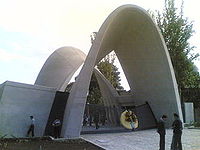
Impact factor
The impact factor, often abbreviated IF, is a measure reflecting the average number of citations to articles published in science and social science journals. It is frequently used as a proxy for the relative importance of a journal within its field, with journals with higher impact factors deemed...
journals. Despite the limitations in funds, facilities, and international collaborations, Iranian scientists have been very productive in several experimental fields such as pharmacology
Pharmacology
Pharmacology is the branch of medicine and biology concerned with the study of drug action. More specifically, it is the study of the interactions that occur between a living organism and chemicals that affect normal or abnormal biochemical function...
, pharmaceutical chemistry, and organic and polymer chemistry
Chemistry
Chemistry is the science of matter, especially its chemical reactions, but also its composition, structure and properties. Chemistry is concerned with atoms and their interactions with other atoms, and particularly with the properties of chemical bonds....
. Iranian biophysicists
Biophysics
Biophysics is an interdisciplinary science that uses the methods of physical science to study biological systems. Studies included under the branches of biophysics span all levels of biological organization, from the molecular scale to whole organisms and ecosystems...
, especially molecular biophysicists, have gained international reputations since the 1990s. High field nuclear magnetic resonance
Nuclear magnetic resonance
Nuclear magnetic resonance is a physical phenomenon in which magnetic nuclei in a magnetic field absorb and re-emit electromagnetic radiation...
facility, microcalorimetry
Calorimetry
Calorimetry is the science of measuring the heat of chemical reactions or physical changes. Calorimetry is performed with a calorimeter. The word calorimetry is derived from the Latin word calor, meaning heat...
, circular dichroism
Circular dichroism
Circular dichroism refers to the differential absorption of left and right circularly polarized light. This phenomenon was discovered by Jean-Baptiste Biot, Augustin Fresnel, and Aimé Cotton in the first half of the 19th century. It is exhibited in the absorption bands of optically active chiral...
, and instruments for single protein channel studies have been provided in Iran during the past two decades. Tissue engineering
Tissue engineering
Tissue engineering is the use of a combination of cells, engineering and materials methods, and suitable biochemical and physio-chemical factors to improve or replace biological functions...
and research on biomaterial
Biomaterial
A biomaterial is any matter, surface, or construct that interacts with biological systems. The development of biomaterials, as a science, is about fifty years old. The study of biomaterials is called biomaterials science. It has experienced steady and strong growth over its history, with many...
s have just started to emerge in biophysics departments. According to the State Registration Organization of Deeds and Properties, a total of 9,570 national invention
Invention
An invention is a novel composition, device, or process. An invention may be derived from a pre-existing model or idea, or it could be independently conceived, in which case it may be a radical breakthrough. In addition, there is cultural invention, which is an innovative set of useful social...
s was registered in Iran during 2008. Compared with the previous year, there was a 38-percent increase in the number of inventions registered by the organization.
Scientific collaboration
Iran annually hosts international science festivals. The International Kharazmi Festival in Basic Science and The Annual Razi Medical Sciences Research Festival promote original research in science, technology, and medicine in Iran.Iranians welcome scientists from all over the world to Iran for a visit and participation in seminars or collaborations. Many Nobel laureates and influential scientists such as Bruce Alberts
Bruce Alberts
Bruce Michael Alberts is an American biochemist known for his work in science public policy and as an original author of the Molecular Biology of the Cell...
, F. Sherwood Rowland
Frank Sherwood Rowland
Frank Sherwood Rowland is an American Nobel laureate and a professor of chemistry at the University of California, Irvine. His research is in atmospheric chemistry and chemical kinetics....
, Kurt Wüthrich
Kurt Wüthrich
Kurt Wüthrich is a Swiss chemist and Nobel Chemistry laureate.-Biography:Born in Aarberg, Switzerland, Wüthrich was educated in chemistry, physics, and mathematics at the University of Berne before pursuing his Ph.D. under the direction of Silvio Fallab at the University of Basel, awarded in 1964...
, Stephen Hawking
Stephen Hawking
Stephen William Hawking, CH, CBE, FRS, FRSA is an English theoretical physicist and cosmologist, whose scientific books and public appearances have made him an academic celebrity...
, and Pierre-Gilles de Gennes
Pierre-Gilles de Gennes
Pierre-Gilles de Gennes was a French physicist and the Nobel Prize laureate in physics in 1991.-Biography:...
visited Iran after the revolution
Iranian Revolution
The Iranian Revolution refers to events involving the overthrow of Iran's monarchy under Shah Mohammad Reza Pahlavi and its replacement with an Islamic republic under Ayatollah Ruhollah Khomeini, the leader of the...
. Some universities also hosted American and European scientists as guest lecturers during recent decades.
Iran is also an active member of COMSTECH
COMSTECH
COMSTECH is an abbreviation for the OIC's Standing Committee on Scientific and Technological Cooperation for the promotion and cooperation of science and technology activities among the OIC member states. The coordinator general of the Committee is Prof Ata ur Rahman.Department of Public Relations,...
and collaborates in its international projects. The coordinator general of COMSTECH, Dr. Atta ur Rahman
Atta ur Rahman
Atta-ur-Rahman, D.Phil., TI, SI HI, NI, is a leading scientist and scholar in the field of organic chemistry from Pakistan, especially renowned for his research in the various areas relating to natural product chemistry...
has said that Iran is the leader in science and technology among Muslim countries and hoped for greater cooperation with Iran in different international technological and industrialization projects.
Private sector
Parallel to academic research, several companies have been founded in Iran during last few decades. For example CinnaGenCinnaGen
CinnaGen is an Iran based biotechnology company, the biggest in the region.It has more than 14 years of experience in manufacturing of molecular biology, biopharmaceuticals and diagnostic products...
, established in 1992, is one of the pioneering biotechnology companies in the region. CinnaGen won Biotechnology Asia 2005 Innovation Awards due to its achievements and innovation in biotechnology research. In 2006 Parsé Semiconductor Co.
Parsé Semiconductor Co.
Parsé Semiconductor Co. was established in 2003 in Tehran, Iran, is a digital design house for ASIC, SoC and FPGA designs. The company in 2006 announced it has both designed and produced a 32 bit computer microprocessor inside the country for the first time....
announced it had designed and produced a 32 bit computer microprocessor
Microprocessor
A microprocessor incorporates the functions of a computer's central processing unit on a single integrated circuit, or at most a few integrated circuits. It is a multipurpose, programmable device that accepts digital data as input, processes it according to instructions stored in its memory, and...
inside the country for the first time. Software companies are growing rapidly. In CeBIT
CeBIT
CeBIT is the world's largest and most international computer expo. CeBIT is held each year on the world's largest fairground in Hanover, Germany, and is a barometer of the state of the art in information technology...
2006, ten Iranian software companies introduced their products. Iran's National Foundation for Computer Games unveiled the country's first online video game in 2010, capable of supporting up to 5,000 users at the same time.
Technology parks
The government of Iran has also plans for the establishment of 50–60 industrial parkIndustrial park
An industrial park is an area zoned and planned for the purpose of industrial development...
s by the end of the fifth Five-Year Socioeconomic Development Plan by 2015.
| Park's name | Focus area | Location |
|---|---|---|
| Guilan Science and Technology Park | Agro-Food, Biotechnology, Chemistry, Electronics, Environment, ICT, Tourism. | Guilan |
| Pardis Technology Park Pardis Technology Park Pardis Technology Park is an technology park, based in Pardis, a satellite city outside of the Tehran metropolitan area, in the Islamic Republic of Iran.... |
Advanced Engineering (mechanics and automation), Biotechnology, Chemistry, Electronics, ICT, Nano-technology. | 25 km North-East of Tehran Tehran Tehran , sometimes spelled Teheran, is the capital of Iran and Tehran Province. With an estimated population of 8,429,807; it is also Iran's largest urban area and city, one of the largest cities in Western Asia, and is the world's 19th largest city.In the 20th century, Tehran was subject to... |
| Tehran Software and Information Technology Park (planned) | ICT | Tehran |
| Khorasan Science and Technology Park (Ministry of Science, Research and Technology Ministry of Science, Research and Technology (Iran) The Ministry of Science, Research and Technology is the government ministry of science, research and technology in the Islamic Republic of Iran... ) |
Advanced Engineering, Agro-Food, Chemistry, Electronics, ICT, Services. | Khorasan |
| Sheikh Bahai Technology Park (Aka "Isfahan Science and Technology Town") | Materials and Metallurgy, Information and Communications Technology, Design & Manufacturing, Automation, Biotechnology, Services. | Isfahan |
| Semnan Province Technology Park | Semnan Semnan Province Semnan Province is one of the 31 provinces of Iran. It is in the north of the country, and its center is Semnan. The province of Semnan covers an area of 96,816 square kilometers and stretches along the Alborz mountain range and borders to Dasht-e Kavir desert in its southern parts.Counties of... |
|
| East Azerbaijan Province Technology Park | East Azerbaijan | |
| Yazd Province Technology Park | Yazd Yazd Yazd is the capital of Yazd Province in Iran, and a centre of Zoroastrian culture. The city is located some 175 miles southeast of Isfahan. At the 2006 census, the population was 423,006, in 114,716 families.... |
|
| Markazi Province Technology Park | Arak Arak, Iran -Industries:thumb|right|250px|wagon parsArak is one of the main industrial cities of Iran, possessing many plants for heavy industries especially for the metal and machinery industries, including:... |
|
| “Kahkeshan” (Galaxy) Technology Park | Aerospace Iranian Space Agency The Iranian Space Agency is Iran's governmental space agency. Iran is an active participant in the Asian space race and became an orbital-launch-capable nation in 2009... |
Tehran Tehran Tehran , sometimes spelled Teheran, is the capital of Iran and Tehran Province. With an estimated population of 8,429,807; it is also Iran's largest urban area and city, one of the largest cities in Western Asia, and is the world's 19th largest city.In the 20th century, Tehran was subject to... |
Medical sciences
Clinical sciences are highly developed in Iran. In areas such as rheumatologyRheumatology
Rheumatology is a sub-specialty in internal medicine and pediatrics, devoted to diagnosis and therapy of rheumatic diseases. Clinicians who specialize in rheumatology are called rheumatologists...
, hematology
Hematology
Hematology, also spelled haematology , is the branch of biology physiology, internal medicine, pathology, clinical laboratory work, and pediatrics that is concerned with the study of blood, the blood-forming organs, and blood diseases...
, and bone marrow trasplantation, Iranian medical scientists are among the world leaders. The Hematology, Oncology and Bone Marrow Transplantation Research Center (HORC) of Tehran University of Medical Sciences
Tehran University of Medical Sciences
- General and History :Tehran University of Medical Sciences is the largest and "most distinguished", and most highly ranked medical school of Iran. In September 2008, the health minister of Iran - General and History :Tehran University of Medical Sciences (TUMS) is the largest and "most...
in Shariati Hospital was established in 1991. Internationally, this center is one of the largest bone marrow transplantation centers and has carried out a large number of successful transplantations. According to a study conducted in 2005, associated specialized pediatric hematology and oncology (PHO) services exist in almost all major cities throughout the country, where 43 board-certified or eligible pediatric hematologist–oncologists are giving care to children suffering from cancer or hematological disorders. Three children’s medical centers at universities have approved PHO fellowship programs. Besides hematology, gastroenterology
Gastroenterology
Gastroenterology is the branch of medicine whereby the digestive system and its disorders are studied. The name is a combination of three Ancient Greek words gaster , enteron , and logos...
has recently attracted many talented medical students. The gasteroenterology research center based at Tehran University
University of Tehran
The University of Tehran , also known as Tehran University and UT, is Iran's oldest university. Located in Tehran, the university is among the most prestigious in the country, and is consistently selected as the first choice of many applicants in the annual nationwide entrance exam for top Iranian...
has produced increasing numbers of scientific publications since its establishment.
Shiraz
Shiraz may refer to:* Shiraz, Iran, a city in Iran* Shiraz County, an administrative subdivision of Iran* Vosketap, Armenia, formerly called ShirazPeople:* Hovhannes Shiraz, Armenian poet* Ara Shiraz, Armenian sculptor...
Nemazi transplant center, also one of the pioneering transplant units of Iran, performed the first Iranian kidney
Kidney
The kidneys, organs with several functions, serve essential regulatory roles in most animals, including vertebrates and some invertebrates. They are essential in the urinary system and also serve homeostatic functions such as the regulation of electrolytes, maintenance of acid–base balance, and...
transplant in 1967 and the first Iranian liver
Liver
The liver is a vital organ present in vertebrates and some other animals. It has a wide range of functions, including detoxification, protein synthesis, and production of biochemicals necessary for digestion...
transplant in 1995. The first heart transplant in Iran was performed 1993 in Tabriz. The first lung transplant was performed in 2001, and the first heart and lung transplants were performed in 2002, both at Tehran University. Iran developed the first artificial lung
Artificial lung
An artificial lung is a prosthetic device that is implanted into the body to replace the biological lung. It is different from a heart-lung machine in that it is internal and designed to take over the functions of the lungs for long periods of time rather than on a temporary basis.Recent...
in 2009 to join five other countries in the world which possess such technology. Currently, renal, liver, and heart transplantations are routinely performed in Iran. Iran ranks fifth in the world in kidney transplants. The Iranian Tissue Bank, commencing in 1994, was the first multi-facility tissue bank in country. In June 2000, the Organ Transplantation Brain Death Act was approved by the Parliament, followed by the establishment of the Iranian Network for Transplantation Organ Procurement. This act helped to expand heart, lung, and liver transplantation programs. By 2003, Iran had performed 131 liver, 77 heart, 7 lung, 211 bone marrow, 20,581 cornea, and 16,859 liver transplantations. 82 percent of these were donated by living and unrelated donors; 10 percent by cadavers; and 8 percent came from living-related donors. The 3-year renal transplant patient survival rate was 92.9%, and the 40-month graft survival rate was 85.9%.
Neuroscience
Neuroscience
Neuroscience is the scientific study of the nervous system. Traditionally, neuroscience has been seen as a branch of biology. However, it is currently an interdisciplinary science that collaborates with other fields such as chemistry, computer science, engineering, linguistics, mathematics,...
is also emerging in Iran. A few PhD programs in cognitive and computational neuroscience have been established in the country during recent decades.
Iranian surgeons treating wounded Iranian veterans during Iran–Iraq War invented a new neurosurgical treatment
Neurosurgery
Neurosurgery is the medical specialty concerned with the prevention, diagnosis, treatment, and rehabilitation of disorders which affect any portion of the nervous system including the brain, spine, spinal cord, peripheral nerves, and extra-cranial cerebrovascular system.-In the United States:In...
for brain injured patients which laid to rest the previously prevalent technique developed by US Army surgeon Dr Ralph Munslow. This new surgical procedure helped devise new guidelines which have decreased death rates for comatosed patients with penetrating brain injuries
Traumatic brain injury
Traumatic brain injury , also known as intracranial injury, occurs when an external force traumatically injures the brain. TBI can be classified based on severity, mechanism , or other features...
from 55% of 1980 to 20% of 2010. It has been said that these new treatment guidelines benefited US congresswoman Gabrielle Giffords
Gabrielle Giffords
Gabrielle Dee "Gabby" Giffords is an American politician. A Democratic member of the United States House of Representatives, she has represented since 2007. She is the third woman in Arizona's history to be elected to the U.S. Congress...
who had been shot in the head
2011 Tucson shooting
On January 8, 2011, a mass shooting occurred near Tucson, Arizona. Nineteen people were shot, six of them fatally, with one other person injured at the scene during an open meeting that U.S. Representative Gabrielle Giffords was holding with members of her constituency in a Casas Adobes Safeway...
.
Biotechnology
Agricultural research has been successful in releasing high yielding varieties with higher stability as well as tolerance to harsh weather conditions. The agriculture researchers are working jointly with international Institutes to find the best procedures and genotypes to overcome produce failure and to increase yield. In 2005, Iran's first genetically modifiedGenetically modified organism
A genetically modified organism or genetically engineered organism is an organism whose genetic material has been altered using genetic engineering techniques. These techniques, generally known as recombinant DNA technology, use DNA molecules from different sources, which are combined into one...
(GM) rice was approved by national authorities and is being grown commercially for human consumption. In addition to GM rice, Iran has produced several GM plants in the laboratory, such as insect-resistant maize; cotton; potatoes and sugar beets; herbicide-resistant canola; salinity- and drought-tolerant wheat; and blight-resistant maize and wheat. The Royan Institute
Royan Institute
Royan Institute for Reproductive Biomedicine, Stem Cell Biology and Technology is a leading Iranian biomedical research center involved in stem cell technology and regenerative medicine....
engineered Iran's first cloned animal
Cloning
Cloning in biology is the process of producing similar populations of genetically identical individuals that occurs in nature when organisms such as bacteria, insects or plants reproduce asexually. Cloning in biotechnology refers to processes used to create copies of DNA fragments , cells , or...
; the sheep was born on 2 August 2006 and has passed the critical first two months of his life.
In the last months of 2006, Iranian biotechnologists announced that they, as the third manufacturer in the world, have sent CinnoVex
CinnaGen
CinnaGen is an Iran based biotechnology company, the biggest in the region.It has more than 14 years of experience in manufacturing of molecular biology, biopharmaceuticals and diagnostic products...
(a recombinant type of Interferon
Interferon
Interferons are proteins made and released by host cells in response to the presence of pathogens—such as viruses, bacteria, or parasites—or tumor cells. They allow communication between cells to trigger the protective defenses of the immune system that eradicate pathogens or tumors.IFNs belong to...
b1a) to the market.
According to a study by David Morrison and Ali Khademhosseini (Harvard-MIT and Cambridge), stem cell research in Iran is amongst the top 10 in the world. Iran will invest 2.5 billion dollars in the country's stem cell research over the next five years (2008–2013).
In 2010, Iran begun mass-producing ocular bio-implants named SAMT. Iran began investing in biotechnological projects in 1992 and this is the tenth facility in Iran. 'Lifepatch' is the fourth bio-implant mass-produced by Iran after bone, heart valve, and tendon bio-implants.
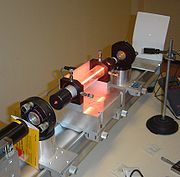
Physics and materials
Iran had some significant successes in nuclear technologyNuclear technology
Nuclear technology is technology that involves the reactions of atomic nuclei. Among the notable nuclear technologies are nuclear power, nuclear medicine, and nuclear weapons...
during recent decades, especially in nuclear medicine
Nuclear medicine
In nuclear medicine procedures, elemental radionuclides are combined with other elements to form chemical compounds, or else combined with existing pharmaceutical compounds, to form radiopharmaceuticals. These radiopharmaceuticals, once administered to the patient, can localize to specific organs...
. However, little connection exists between Iran's scientific society and that of the nuclear program of Iran
Nuclear program of Iran
The nuclear program of Iran was launched in the 1950s with the help of the United States as part of the Atoms for Peace program. The support, encouragement and participation of the United States and Western European governments in Iran's nuclear program continued until the 1979 Iranian Revolution...
. Iran is the 7th country in production of uranium hexafluoride
Uranium hexafluoride
Uranium hexafluoride , referred to as "hex" in the nuclear industry, is a compound used in the uranium enrichment process that produces fuel for nuclear reactors and nuclear weapons. It forms solid grey crystals at standard temperature and pressure , is highly toxic, reacts violently with water...
(or "UF6"). Iran now controls the entire cycle for producing nuclear fuel
Nuclear fuel cycle
The nuclear fuel cycle, also called nuclear fuel chain, is the progression of nuclear fuel through a series of differing stages. It consists of steps in the front end, which are the preparation of the fuel, steps in the service period in which the fuel is used during reactor operation, and steps in...
. Iranian scientists are also helping to construct the Compact Muon Solenoid, a detector for the Large Hadron Collider of the European Organization for Nuclear Research (CERN
CERN
The European Organization for Nuclear Research , known as CERN , is an international organization whose purpose is to operate the world's largest particle physics laboratory, which is situated in the northwest suburbs of Geneva on the Franco–Swiss border...
) that is due to come online in 2008. Iranian engineers are involved in the design and construction of the first regional particle accelerator
Particle accelerator
A particle accelerator is a device that uses electromagnetic fields to propel charged particles to high speeds and to contain them in well-defined beams. An ordinary CRT television set is a simple form of accelerator. There are two basic types: electrostatic and oscillating field accelerators.In...
of the Middle East in Jordan, called SESAME
International Centre for Synchrotron-Light for Experimental Science Applications in the Middle East
The International Centre for Synchrotron-Light for Experimental Science and Applications in the Middle East is an independent laboratory formally created under the auspices of UNESCO on 30 May 2002...
. In 2009, Iran was developing its first domestic Linear particle accelerator
Linear particle accelerator
A linear particle accelerator is a type of particle accelerator that greatly increases the velocity of charged subatomic particles or ions by subjecting the charged particles to a series of oscillating electric potentials along a linear beamline; this method of particle acceleration was invented...
(LINAC).
It is among the few countries in the world that has the technology to produce zirconium
Zirconium
Zirconium is a chemical element with the symbol Zr and atomic number 40. The name of zirconium is taken from the mineral zircon. Its atomic mass is 91.224. It is a lustrous, grey-white, strong transition metal that resembles titanium...
alloys. Iran produces a wide range of laser
Laser
A laser is a device that emits light through a process of optical amplification based on the stimulated emission of photons. The term "laser" originated as an acronym for Light Amplification by Stimulated Emission of Radiation...
s in demand within the country in medical and industrial fields.
In 2011, Iranian scientists at the Atomic Energy Organization of Iran
Atomic Energy Organization of Iran
The Atomic Energy Organization of Iran is the main official body responsible for implementing regulations and operating nuclear energy installations in Iran....
(AEOI) have designed and built a nuclear fusion
Nuclear fusion
Nuclear fusion is the process by which two or more atomic nuclei join together, or "fuse", to form a single heavier nucleus. This is usually accompanied by the release or absorption of large quantities of energy...
device, named IR-IECF. Iran is the 6th country with such technology.
Computer science and robotics
Center of Excellence in Design, Robotics, and Automation was established in 2001 to promote educational and research activities in the fields of design, roboticsRobotics
Robotics is the branch of technology that deals with the design, construction, operation, structural disposition, manufacture and application of robots...
, and automation
Automation
Automation is the use of control systems and information technologies to reduce the need for human work in the production of goods and services. In the scope of industrialization, automation is a step beyond mechanization...
. Besides these professional groups, several robotics groups work in Iranian high schools. "Sorena 2
Surena (robot)
Surena is an Iranian humanoid robot, named after the Parthian General Surena.According to the Institute of Electrical and Electronics Engineers , Iran's manufacture of Surena makes it one of five countries in the world with the technology to make humanoid robots.-Surena I:This robot was introduced...
" Robot, which was designed by engineers at University of Tehran
University of Tehran
The University of Tehran , also known as Tehran University and UT, is Iran's oldest university. Located in Tehran, the university is among the most prestigious in the country, and is consistently selected as the first choice of many applicants in the annual nationwide entrance exam for top Iranian...
, was unveiled in 2010. The robot can be used for handling sensitive tasks without the need for cooperating with human beings. The robot is taking slow steps similar to human beings, harmonious movements of hands and feet and other movements similar to humans. Next the researchers plan to develop speech
Speech recognition
Speech recognition converts spoken words to text. The term "voice recognition" is sometimes used to refer to recognition systems that must be trained to a particular speaker—as is the case for most desktop recognition software...
and vision capabilities and greater intelligence
Artificial intelligence
Artificial intelligence is the intelligence of machines and the branch of computer science that aims to create it. AI textbooks define the field as "the study and design of intelligent agents" where an intelligent agent is a system that perceives its environment and takes actions that maximize its...
for this robot. the Institute of Electrical and Electronics Engineers
Institute of Electrical and Electronics Engineers
The Institute of Electrical and Electronics Engineers is a non-profit professional association headquartered in New York City that is dedicated to advancing technological innovation and excellence...
(IEEE) has placed the name of Surena
Surena (robot)
Surena is an Iranian humanoid robot, named after the Parthian General Surena.According to the Institute of Electrical and Electronics Engineers , Iran's manufacture of Surena makes it one of five countries in the world with the technology to make humanoid robots.-Surena I:This robot was introduced...
among the five prominent robots of the world after analyzing its performance. In 2010, Iranian researchers have, for the first time in the country, developed ten robots for the nation's automotive industry using domestic know how.
Ultra Fast Microprocessors Research Center in Tehran’s Amirkabir University of Technology
Amirkabir University of Technology
Amirkabir University of Technology , formerly called the Tehran Polytechnic is a public research university located in Tehran, Iran. AUT is one of the most prestigious universities and the first established technical university in Iran...
successfully built a supercomputer
Supercomputer
A supercomputer is a computer at the frontline of current processing capacity, particularly speed of calculation.Supercomputers are used for highly calculation-intensive tasks such as problems including quantum physics, weather forecasting, climate research, molecular modeling A supercomputer is a...
in 2007. Maximum processing capacity of the supercomputer is 860 billion operations per second. Iran’s first supercomputer launched in 2001 was also fabricated by Amirkabir University of Technology
Amirkabir University of Technology
Amirkabir University of Technology , formerly called the Tehran Polytechnic is a public research university located in Tehran, Iran. AUT is one of the most prestigious universities and the first established technical university in Iran...
. In 2009, a SUSE Linux-based HPC system made by the Aerospace Research Institute of Iran (ARI) was launched with 32 cores and now runs 96 cores. Its performance was pegged at 192 GFLOPS. Iran's National Super Computer made by Iran Info-Tech Development Company (a subsidiary of IDRO) was built from 216 AMD processors. The Linux
Linux
Linux is a Unix-like computer operating system assembled under the model of free and open source software development and distribution. The defining component of any Linux system is the Linux kernel, an operating system kernel first released October 5, 1991 by Linus Torvalds...
-cluster machine has a reported "theoretical peak performance of 860 gig-flops". The Routerlab team at the University of Tehran
University of Tehran
The University of Tehran , also known as Tehran University and UT, is Iran's oldest university. Located in Tehran, the university is among the most prestigious in the country, and is consistently selected as the first choice of many applicants in the annual nationwide entrance exam for top Iranian...
successfully designed and implemented an access-router (RAHYAB-300) and a 40Gbps high capacity switch fabric (UTS
UTS (Mainframe UNIX)
UTS is an implementation of the UNIX operating system for IBM mainframe computers. Amdahl created the first versions of UTS, and released it in May 1981, with UTS Global later acquiring rights to the product.- Features :...
). In 2011 Amirkabir University of Technology
Amirkabir University of Technology
Amirkabir University of Technology , formerly called the Tehran Polytechnic is a public research university located in Tehran, Iran. AUT is one of the most prestigious universities and the first established technical university in Iran...
and Isfahan University of Technology
Isfahan University of Technology
Isfahan University of Technology is one of the most prestigious engineering universities in Iran. It is located 15 Kilometers north west of Isfahan and is one of the major universities and research poles in Iran in the fields of science, engineering and agriculture...
produced 2 new supercomputer
Supercomputer
A supercomputer is a computer at the frontline of current processing capacity, particularly speed of calculation.Supercomputers are used for highly calculation-intensive tasks such as problems including quantum physics, weather forecasting, climate research, molecular modeling A supercomputer is a...
s with processing capacity of 34,000 billion operations per second. The supercomputer at Amirkabir University of Technology is expected to be among the 500 ones of the world
TOP500
The TOP500 project ranks and details the 500 most powerful known computer systems in the world. The project was started in 1993 and publishes an updated list of the supercomputers twice a year...
.
Nanotechnology
Scanning tunneling microscope
A scanning tunneling microscope is an instrument for imaging surfaces at the atomic level. Its development in 1981 earned its inventors, Gerd Binnig and Heinrich Rohrer , the Nobel Prize in Physics in 1986. For an STM, good resolution is considered to be 0.1 nm lateral resolution and...
(STM).
Space technology
On 17 August 2008, The Iranian Space AgencyIranian Space Agency
The Iranian Space Agency is Iran's governmental space agency. Iran is an active participant in the Asian space race and became an orbital-launch-capable nation in 2009...
proceeded with the second test launch of a three stages Safir SLV from a site south of Semnan in the northern part of the Dasht-e-Kavir desert
Dasht-e Kavir
Dasht-e Kavir , also known as Kavir-e Namak or Great Salt Desert is a large desert lying in the middle of the Iranian plateau. It is about 800 kilometers long and 320 kilometers wide with a total surface area of about 77,600 square kilometers , making it the Earth's 23rd largest desert...
. The Safir (Ambassador) satellite carrier successfully launched the Omid satellite into orbit in February 2009. Iran is the 9th country to put a domestically-built satellite into orbit since the Soviet Union launched the first in 1957. Iran's first astronaut will be sent into space on board an Iranian shuttle by 2017.
Astronomy
The Iranian government has committed 150 billion rials (roughly 16 million US dollars) for a telescopeTelescope
A telescope is an instrument that aids in the observation of remote objects by collecting electromagnetic radiation . The first known practical telescopes were invented in the Netherlands at the beginning of the 1600s , using glass lenses...
, an observatory, and a training program, all part of a plan to build up the country's astronomy
Astronomy
Astronomy is a natural science that deals with the study of celestial objects and phenomena that originate outside the atmosphere of Earth...
base. Iran wants to collaborate internationally and become internationally competitive in astronomy, says the University of Michigan's Carl Akerlof, an adviser to the Iranian project. "For a government that is usually characterized as wary of foreigners, that's an important development". In July 2010, Iran unveiled its largest domestically-manufactured telescope dubbed "Tara".
Contribution of Iranians and people of Iranian origin to modern science
Ali Javan
Ali Mortimer Javan , born December 26, 1926 in Tehran, Iran is an Iranian American inventor and physicist at MIT. He co-invented the gas laser in 1960, with William R. Bennett...
invented first gas laser. In 1973, the fuzzy set theory
Fuzzy set
Fuzzy sets are sets whose elements have degrees of membership. Fuzzy sets were introduced simultaneously by Lotfi A. Zadeh and Dieter Klaua in 1965 as an extension of the classical notion of set. In classical set theory, the membership of elements in a set is assessed in binary terms according to...
was developed by Lotfi Zadeh
Lotfi Asker Zadeh
Lotfali Askar Zadeh , better known as Lotfi A. Zadeh, is a mathematician, electrical engineer, computer scientist, artifical intelligence researcher and professor emeritus of computer science at the University of California, Berkeley...
. Iranian cardiologist Tofy Mussivand
Toffy Musivand
Tofy Mussivand is an Iranian physician and engineer and a cardiologist in Canada.He studied Medicine and Engineering at Tehran University and University of Alberta. Tofy Mussivand is known for the invention of Artificial Cardiac Pump. Cardiac pump or cardiac bypass pump or heart-lung machine...
invented the first artificial heart
Artificial heart
An artificial heart is a mechanical device that replaces the heart. Artificial hearts are typically used in order to bridge the time to heart transplantation, or to permanently replace the heart in case transplantation is impossible...
and afterwards developed it further. HbA1c
Glycosylated hemoglobin
Glycated hemoglobin is a form of hemoglobin that is measured primarily to identify the average plasma glucose concentration over prolonged periods of time. It is formed in a non-enzymatic glycation pathway by hemoglobin's exposure to plasma glucose...
was discovered by Samuel Rahbar
Samuel Rahbar
Samuel Rahbar is an Iranian born scientist who discovered the linkage between diabetes and HbA1C, a form of hemoglobin used primarily to identify plasma glucose concentration over time....
and introduced to the medical community. The Vafa-Witten theorem
Vafa-Witten theorem
In theoretical physics, the Vafa–Witten theorem, named after Cumrun Vafa and Edward Witten, is a theorem that shows that vector-like global symmetries such as isospin and baryon number cannot be spontanteously broken as long as the theta angle is zero.-References:...
was proposed by Cumrun Vafa
Cumrun Vafa
Cumrun Vafa is an Iranian-American leading string theorist from Harvard University where he started as a Harvard Junior Fellow. He is a recipient of the 2008 Dirac Medal.-Birth and education:...
, an Iranian string theorist, and his co-worker Edward Witten
Edward Witten
Edward Witten is an American theoretical physicist with a focus on mathematical physics who is currently a professor of Mathematical Physics at the Institute for Advanced Study....
. The Kardar-Parisi-Zhang (KPZ) equation has been named after Mehran Kardar
Mehran Kardar
Mehran Kardar is a prominent Iranian born physicist, full Professor of Physics at the Massachusetts Institute of Technology, and co-faculty at the New England Complex Systems Institute. He received his B.A...
, notable Iranian physicist. Extraordinary because of multidisciplinary works at a young age, Ali Eftekhari is considered a founder of electrochemical nanotechnology
Nanotechnology
Nanotechnology is the study of manipulating matter on an atomic and molecular scale. Generally, nanotechnology deals with developing materials, devices, or other structures possessing at least one dimension sized from 1 to 100 nanometres...
and creator of surprising theories such as the Fractal
Fractal
A fractal has been defined as "a rough or fragmented geometric shape that can be split into parts, each of which is a reduced-size copy of the whole," a property called self-similarity...
Geometry of Literature. Other notable discoveries and innovations by Iranian scientists and engineers (or of Iranian origin) include:
- Karim NayerniaKarim NayerniaKarim Nayernia is an Iranian biomedical scientist and a world expert on stem cell biology.He carried out pioneering work that has the potential to lead to future therapies for a range of medical conditions such as heart disease, Parkinson's disease and male infertility...
: discovery of spermatagonial stem cells - Reza GhadiriReza GhadiriM. Reza Ghadiri is an Iranian-American chemist who studies nanoscale science and technology.Ghadiri holds a Ph.D. degree in chemistry from the University of Wisconsin–Madison...
: 1998 Feynman prize for invention of a self-organized replicating molecular system - Mehdi Vaez-IravaniMehdi Vaez-IravaniMehdi Vaez-Iravani is an Iranian scientist, engineer and inventor involved in the invention of Shear-force microscopy.Mehdi Vaez-Iravani graduated with a PhD in Electrical engineering from University College London and become faculy member at Rochester Institute of Technology before joining KLA...
: invention of shear force microscopy - Siavash AlamoutiSiavash AlamoutiSiavash Alamouti is an Iranian-American engineer who is best known for the invention of the so-called Alamouti space–time block code, filed in 1997 and patented jointly with Vahid Tarokh. Alamouti's code is a 2 transmit antenna space-time block code and has been adopted in various global standards...
and Vahid TarokhVahid TarokhVahid Tarokh is an electrical engineer with contributions to telecommunication, specifically to signal processing for wireless communications.-Life:...
: invention of space–time block codeSpace–time block codeSpace–time block coding is a technique used in wireless communications to transmit multiple copies of a data stream across a number of antennas and to exploit the various received versions of the data to improve the reliability of data-transfer... - Faraneh Vargha-Khadem: discovery of SPCH1 , a gene implicated in a severe speech and language disorder
- Shirin Dehghan: 2006 Women in Technology Award
- Nader EnghetaNader EnghetaNader Engheta is an Iranian scientist and engineer. He has significantly contributed to novel artificial materials, photonics, nano-structured materials, novel graphene materials, and plasmonics....
, inventor of "invisibility shield" (plasmonic cover) and research leader of the year 2006, Scientific American magazine, and winner of a Guggenheim FellowshipGuggenheim FellowshipGuggenheim Fellowships are American grants that have been awarded annually since 1925 by the John Simon Guggenheim Memorial Foundation to those "who have demonstrated exceptional capacity for productive scholarship or exceptional creative ability in the arts." Each year, the foundation makes...
(1999) for "Fractional paradigm of classical electrodynamics" - Ali Safaeinili: coinventor of Mars Advanced Radar for Subsurface and Ionosphere Sounding (MARSISMARSISMARSIS is a low frequency, pulse-limited radar sounder and altimeter used on the ESA Mars Express mission...
) - Pierre OmidyarPierre OmidyarPierre Morad Omidyar is a French-Iranian American entrepreneur and philanthropist/economist, and the founder/chairman of the eBay auction site...
: economist, founder and chairman of eBayEBayeBay Inc. is an American internet consumer-to-consumer corporation that manages eBay.com, an online auction and shopping website in which people and businesses buy and sell a broad variety of goods and services worldwide... - Shahriar AfsharShahriar AfsharShahriar S. Afshar is an Iranian-American physicist and a multiple inventor. He is known for devising and carrying out the Afshar experiment at Harvard University in 2004. As of July 2004, Afshar is a Visiting Research Professor in the Department of Physics and Astronomy at Rowan University...
: proposed the Afshar experimentAfshar experimentThe Afshar experiment is an optical experiment, devised and carried out by Shahriar Afshar in 2001, which investigates the principle of complementarity in quantum mechanics... - Rouzbeh YassiniRouzbeh YassiniRouzbeh Yassini is an Iranian-American engineer, who was one of the earliest developers of cable modems. He was the founder of LANcity and helped establish the cable modem industry standard through Cable Television Laboratories. He now is the CEO of YAS Broadband Ventures LLC...
: inventor of the cable modem - Homayoun SerajiHomayoun SerajiHomayoun Seraji was an Iranian scientist, engineer, a JPL senior researcher and former professor of Sharif University of Technology who published extensively in the field of multivariable control systems, focusing on optimal control, pole placement, multivariable PID controllers, and output...
: most-published author in the 20-year history of the Journal of Robotic Systems (declared in 2007). - Moslem BahadoriMoslem BahadoriMoslem Bahadori is a contemporary Iranian medical scientist, distinguished pathologist and a university lecturer. In 1973, Bahadori along with Averill Abraham Liebow, reported the first case of plasma cell granuloma, a benign tumor of the lung.-Education and career:He studied medicine at medical...
: reported the first case of plasma cell granuloma of the lung. - Mohammad Abdollahi: The Laureate of IAS-COMSTECH 2005 Prize in the field of Pharmacology and Toxicology and a IAS Fellow. MA is ranked as an International Top 1% outstanding Scientists of the World in the field of Pharmacology & Toxicology according to Essential Science Indicator from USA Thompson Reuters ISI. An award named "Mohammad Abdollahi Prize" has been established by Asian Network for Scientific Information and Science Alert Publishing company and The International Journal of Pharmacology in the recognition of MA efforts in the field of Pharmacology & Toxicology. MA is also known as one of outstanding leading scientists of OIC member countries.
- Maysam Ghovanloo: inventor of Tongue-Drive Wheelchair.
- Mansour Ahmadian and Jila Nazari: Developers of PARS (Parallel Application from Rapid Simulation) which won the IET Innovation award 2008 in software design
- Mohammad-Nabi SarboloukiMohammad-Nabi Sarboloukithumb|right|Mohammad Nabi Sarbolouki, prominent scientist and educatorMohammad-Nabi Sarbolouki was a distinguished Iranian biophysicist and polymer chemist and one of the most influential individuals behind modern scientific movement in Iran. He was known as the inventor of a DNA vehicle called...
, invention of dendrosome - Shekoufeh Nikfar: The awardee of the top women scientists by TWAS-TWOWS-Scopus in the field of Medicine in 2009.
- Afsaneh Rabiei: inventor of an ultra-strong and lightweight material, known as Composite Metal Foam (CMF).
International rankings
- According to the Institute for Scientific InformationInstitute for Scientific InformationThe Institute for Scientific Information was founded by Eugene Garfield in 1960. It was acquired by Thomson Scientific & Healthcare in 1992, became known as Thomson ISI and now is part of the Healthcare & Science business of the multi-billion dollar Thomson Reuters Corporation.ISI offered...
(ISI), Iran increased its academic publishingAcademic publishingAcademic publishing describes the subfield of publishing which distributes academic research and scholarship. Most academic work is published in journal article, book or thesis form. The part of academic written output that is not formally published but merely printed up or posted is often called...
output nearly tenfold from 1996 to 2004, and has been ranked first globally in terms of output growth rate (followed by China with a 3 fold increase). In comparison, the only G8G8The Group of Eight is a forum, created by France in 1975, for the governments of seven major economies: Canada, France, Germany, Italy, Japan, the United Kingdom, and the United States. In 1997, the group added Russia, thus becoming the G8...
countries in top 20 ranking with fastest performance improvement are, Italy which stands at tenth and Canada at 13th globally. Iran, China, IndiaIndiaIndia , officially the Republic of India , is a country in South Asia. It is the seventh-largest country by geographical area, the second-most populous country with over 1.2 billion people, and the most populous democracy in the world...
and BrazilBrazilBrazil , officially the Federative Republic of Brazil , is the largest country in South America. It is the world's fifth largest country, both by geographical area and by population with over 192 million people...
are the only developing countries among 31 nations with 97.5% of the world's total scientific productivity. The remaining 162 developing countries contribute less than 2.5% of the world's scientific output. Despite the massive improvement from 0.0003% of the global scientific output in 1970 to 0.29% in 2003, still Iran's total share in the world's total output remained small. According to Thomson ReutersThomson ReutersThomson Reuters Corporation is a provider of information for the world's businesses and professionals and is created by the Thomson Corporation's purchase of Reuters Group on 17 April 2008. Thomson Reuters is headquartered at 3 Times Square, New York City, USA...
, Iran has demonstrated a remarkable growth in science and technology over the past one decade, increasing its science and technology output fivefold from 2000 to 2008. Most of this growth has been in engineering and chemistryChemistryChemistry is the science of matter, especially its chemical reactions, but also its composition, structure and properties. Chemistry is concerned with atoms and their interactions with other atoms, and particularly with the properties of chemical bonds....
producing 1.4% of the world's total output in the period 2004–2008. By year 2008, Iranian science and technology output accounted for 1.02% of the world's total output (That is ~340000% growth in 37 years of 1970–2008). 25% of scientific articles published in 2008 by Iran were international coauthorships. The top five countries coauthoring with Iranian scientists are US, UK, Canada, Germany and France.
- A 2010 report by Canadian research firm Science-Metrix has put Iran in the top rank globally in terms of growth in scientific productivity with a 14.4 growth index followed by South Korea with a 9.8 growth index. Iran's growth rate in science and technology is 11 times more than the average growth of the world's output in 2009 and in terms of total output per year, Iran has already surpassed the total scientific output of countries like SwedenSwedenSweden , officially the Kingdom of Sweden , is a Nordic country on the Scandinavian Peninsula in Northern Europe. Sweden borders with Norway and Finland and is connected to Denmark by a bridge-tunnel across the Öresund....
, Switzerland, IsraelIsraelThe State of Israel is a parliamentary republic located in the Middle East, along the eastern shore of the Mediterranean Sea...
, Belgium, DenmarkDenmarkDenmark is a Scandinavian country in Northern Europe. The countries of Denmark and Greenland, as well as the Faroe Islands, constitute the Kingdom of Denmark . It is the southernmost of the Nordic countries, southwest of Sweden and south of Norway, and bordered to the south by Germany. Denmark...
, Finland, AustriaAustriaAustria , officially the Republic of Austria , is a landlocked country of roughly 8.4 million people in Central Europe. It is bordered by the Czech Republic and Germany to the north, Slovakia and Hungary to the east, Slovenia and Italy to the south, and Switzerland and Liechtenstein to the...
or that of NorwayNorwayNorway , officially the Kingdom of Norway, is a Nordic unitary constitutional monarchy whose territory comprises the western portion of the Scandinavian Peninsula, Jan Mayen, and the Arctic archipelago of Svalbard and Bouvet Island. Norway has a total area of and a population of about 4.9 million...
. Iran with a science and technology yearly growth rate of 25% is doubling its total output every three years and at this rate will reach the level of Canadian annual output in 2017. The report further notes that Iran's scientific capability build-up has been the fastest in the past two decades and that this build-up is in part due to the Iraqi invasion of Iran, the subsequent bloody Iran Iraq war and Iran's high casualties due to the international sanctions in effect on Iran as compared to the international support IraqIraqIraq ; officially the Republic of Iraq is a country in Western Asia spanning most of the northwestern end of the Zagros mountain range, the eastern part of the Syrian Desert and the northern part of the Arabian Desert....
enjoyed. The then technologically superior Iraq and its use of chemical weapons on Iranians, made Iran to embark on a very ambitious science developing program by mobilizing scientists in order to offset its international isolationInternational isolationInternational isolation is a penalty applied by the international community or a sizeable or powerful group of countries, like the United Nations, towards one nation, government or people group...
, and this is most evident in the country's nuclear sciences advancement, which has in the past two decades grown by 8400% as compared to the 34% for the rest of the world. This report further predicts that though Iran's scientific advancement as a response to its international isolation may remain a cause of concern for the world, all the while it may lead to a higher quality of lifeQuality of lifeThe term quality of life is used to evaluate the general well-being of individuals and societies. The term is used in a wide range of contexts, including the fields of international development, healthcare, and politics. Quality of life should not be confused with the concept of standard of...
for the Iranian population but simultaneously and paradoxically will also isolate Iran even more because of the world's concern over Iran's technological advancements. Other findings of the report point out that the fastest growing sectors in Iran are Physics, Public health sciences, Engineering, Chemistry and Mathematics. Overall the growth has mostly occurred after 1980 and specially has been becoming faster since 1991 with a significant acceleration in 2002 and an explosive surge since 2005. It has been argued that scientific and technological advancement besides the nuclear programNuclear program of IranThe nuclear program of Iran was launched in the 1950s with the help of the United States as part of the Atoms for Peace program. The support, encouragement and participation of the United States and Western European governments in Iran's nuclear program continued until the 1979 Iranian Revolution...
is the main reason for United States worry about Iran, which may become a superpower in the future. Some in Iranian scientific community see sanctions as a western conspiracy to stop Iran's rising rank in modern science and allege that some (western) countries want to monopolize modern technologies.
- As per US governmentFederal government of the United StatesThe federal government of the United States is the national government of the constitutional republic of fifty states that is the United States of America. The federal government comprises three distinct branches of government: a legislative, an executive and a judiciary. These branches and...
report on science and engineering titled "Science and Engineering Indicators: 2010" prepared by National Science FoundationNational Science FoundationThe National Science Foundation is a United States government agency that supports fundamental research and education in all the non-medical fields of science and engineering. Its medical counterpart is the National Institutes of Health...
, Iran has the world's highest growth rate in Science & Engineering article output with an annual growth rate of 25.7%. The report is introduced as a factual and policy neutral "...volume of record comprising the major high-quality quantitative data on the U.S. and international science and engineering enterprise". This report also notes that the very rapid growth rate of Iran inside a wider region was led by its growth in scientific instruments, pharmaceuticals, communications and semiconductors.
- Iran ranked 49th for citations, 42nd for papers, and 135th for citations per paper in 2005. Their publication rate in international journals has quadrupled during the past decade. Although it is still low compared with the developed countries, this puts Iran in the first rank of Islamic countries. According to a British government study (2002), Iran ranked 30th in the world in terms of scientific impact.
- According to a report by SJR (A Spanish sponsored scientific-data data) Iran ranked 25th in the world in scientific publications by volume in 2007 (a huge leap from the rank of 40 few years before). As per the same source Iran ranked 20th by total output in 2010.
- In 2008 report by Institute for Scientific InformationInstitute for Scientific InformationThe Institute for Scientific Information was founded by Eugene Garfield in 1960. It was acquired by Thomson Scientific & Healthcare in 1992, became known as Thomson ISI and now is part of the Healthcare & Science business of the multi-billion dollar Thomson Reuters Corporation.ISI offered...
(ISI), Iran ranked 32, 46 and 56 in ChemistryChemistryChemistry is the science of matter, especially its chemical reactions, but also its composition, structure and properties. Chemistry is concerned with atoms and their interactions with other atoms, and particularly with the properties of chemical bonds....
, PhysicsPhysicsPhysics is a natural science that involves the study of matter and its motion through spacetime, along with related concepts such as energy and force. More broadly, it is the general analysis of nature, conducted in order to understand how the universe behaves.Physics is one of the oldest academic...
and BiologyBiologyBiology is a natural science concerned with the study of life and living organisms, including their structure, function, growth, origin, evolution, distribution, and taxonomy. Biology is a vast subject containing many subdivisions, topics, and disciplines...
respectively among all science producing countries. Iran ranked 15th in 2009 in the field of nanotechnology in terms of presenting articles.
- Science Watch reported in 2008 that Iran has the world's highest growth rate for citationCitationBroadly, a citation is a reference to a published or unpublished source . More precisely, a citation is an abbreviated alphanumeric expression Broadly, a citation is a reference to a published or unpublished source (not always the original source). More precisely, a citation is an abbreviated...
s in medical, environmental and ecological sciences. According to the same source, Iran during the period 2005–2009, had produced 1.71% of world's total engineering papers, 1.68% of world's total chemistry papers and 1.19% of world's total material sciences papers.
- According to the sixth report on "international comparative performance of UK research base" prepared in September 2009 by Britain based research firm Evidence and Department for Business, Innovation and SkillsDepartment for Business, Innovation and SkillsThe Department for Business, Innovation and Skills is a ministerial department of the United Kingdom Government created on 5 June 2009 by the merger of the Department for Innovation, Universities and Skills and the Department for Business, Enterprise and Regulatory Reform .-Ministers:The BIS...
, Iran has increased its total output from 0.13% of world's output in 1999 to almost 1% of world's output in 2008. As per the same report Iran had doubled its biological sciencesBiologyBiology is a natural science concerned with the study of life and living organisms, including their structure, function, growth, origin, evolution, distribution, and taxonomy. Biology is a vast subject containing many subdivisions, topics, and disciplines...
and health research out put in just two years (2006–2008). The report further notes that Iran by 2008 had increased its output in physical sciences by as much as ten times in ten years and its share in world's total output had reached 1.3%, comparing with US share of 20% and Chinese share of 18%. Similarly Iran's engineering output had grown to 1.6% of the world's output being greater than Belgium or Sweden and just smaller than Russia's output at 1.8%. During the period 1999–2008, Iran improved its science impactImpact factorThe impact factor, often abbreviated IF, is a measure reflecting the average number of citations to articles published in science and social science journals. It is frequently used as a proxy for the relative importance of a journal within its field, with journals with higher impact factors deemed...
from 0.66 to 1.07 above the world's average of 0.7 similar to Singapore's. In engineering Iran improved its impact and is already ahead of India, South Korea and Taiwan in engineering research performance. By 2008, Iran's share of most cited top 1% of world's papers was 0.25% of the world's total.
- A bibliometricBibliometricsBibliometrics is a set of methods to quantitatively analyze scientific and technological literature. Citation analysis and content analysis are commonly used bibliometric methods...
analysis of middle east was released by professional division of Thomson Reuters in 2011 titled "Global Research Report Middle East" comparing scientific research in middle eastern countries with that of the world for the first decade of this century. The study findings rank Iran at second position after Turkey in terms of total scientific output with Turkey producing 1.9% of the world's total science output while Iran's share of world's total science output was at 1.3%. Total scientific output of 14 countries surveyed including Bahrain, Egypt, Iran, Iraq, Jordan, Kuwait, Lebanon, Oman, Qatar, Saudi Arabia, Syria, Turkey, United Arab Emirates and Yemen was just 4% of the world's total output; with Turkey and Iran producing the bulk of scientific research in the region. In terms of growth in scientific research, Iran was ranked first with 650% increase of its share in world's output and Turkey second with a growth of 270%. Turkey increased its research publication rate from 5000 papers in year 2000 to nearly 22000 in the year 2009, while Iran's research publication started from a lower point of 1300 papers in year 2000 and grew to 15000 papers in the year 2009 with a notable surge in Iranian growth after year 2004. In terms of production of highly citedCitationBroadly, a citation is a reference to a published or unpublished source . More precisely, a citation is an abbreviated alphanumeric expression Broadly, a citation is a reference to a published or unpublished source (not always the original source). More precisely, a citation is an abbreviated...
papers, 1.7% of all Iranian papers in mathematics and 1.3% of papers in engineering fields attained highly cited status defined as most cited top 1% of world's publications, exceeding the world's average in citation impactImpact factorThe impact factor, often abbreviated IF, is a measure reflecting the average number of citations to articles published in science and social science journals. It is frequently used as a proxy for the relative importance of a journal within its field, with journals with higher impact factors deemed...
for those fields. Overall Iran produces 0.48% of the world's highly cited output in all fields just about half of what would be expected for parity at 1%. Comparative figures for other countries following Iran in the region are: Turkey producing 0.37% of the world's highly cited papers, Jordan 0.28%, Egypt 0.26% and Saudi Arabia 0.25%. External scientific collaboration accounted for 21% of the total research projects undertaken by researchers in Iran with largest collaborators being United States at 4.3%, United Kingdom at 3.3%, Canada 3.1%, Germany 1.7% and Australia at 1.6%.
- In 2011, world's oldest scientific society and Britain's leading academic institution, the Royal SocietyRoyal SocietyThe Royal Society of London for Improving Natural Knowledge, known simply as the Royal Society, is a learned society for science, and is possibly the oldest such society in existence. Founded in November 1660, it was granted a Royal Charter by King Charles II as the "Royal Society of London"...
in collaboration with ElsevierElsevierElsevier is a publishing company which publishes medical and scientific literature. It is a part of the Reed Elsevier group. Based in Amsterdam, the company has operations in the United Kingdom, USA and elsewhere....
published a study named "Knowledge, networks and nations" surveying global scientific landscape. According to this survey Iran has the world's fastest growth rate in science and technology. During the period 1996–2008, Iran had increased its scientific output by 18 folds.
Iranian journals listed in the Institute for Scientific Information (ISI)
According to the Institute for Scientific InformationInstitute for Scientific Information
The Institute for Scientific Information was founded by Eugene Garfield in 1960. It was acquired by Thomson Scientific & Healthcare in 1992, became known as Thomson ISI and now is part of the Healthcare & Science business of the multi-billion dollar Thomson Reuters Corporation.ISI offered...
(ISI), Iranian researchers and scientists have published a total of 60,979 scientific studies in major international journals in the last 19 years (1990–2008). In 2009, Iranian researchers published 15,000 Thomson Reuters-indexed papers.
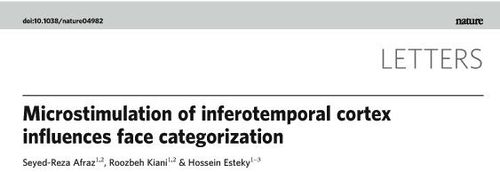
- Acta Medica Iranica
- Applied Entomology and PhytoPathology
- Archives of Iranian Medicine
- Daru-Journal of Faculty of PharmacyDaru-Journal of Faculty of PharmacyDaru is a peer-reviewed journal that is published by Faculty of Pharmacy, Tehran University of Medical Sciences, Tehran, Iran. "Daru" is a Persian word meaning drug...
- Iranian Biomedical Journal
- Iranian Journal of BioTechnology
- Iranian Journal of Chemistry & Chemical Engineering
- Iranian Journal of Fisheries Sciences-English
- Iranian Journal of Plant Pathology
- Iranian Journal of Science and Technology
- Iranian Polymer Journal
- Iranian Journal of Public Health
- Iranian Journal of Pharmaceutical Research
- Iranian Journal of Reproductive Medicine
- Iranian Journal of Veterinary Medicine
- Iranian Journal of Fuzzy Systems
- Journal of Entomological Society of Iran
- Plant Pests & Diseases Research Institute Insect Taxonomy Research Department Publication
- The Journal of the Iranian Chemical Society
- Rostaniha (Botanical Journal of Iran)
General
- Science in newly industrialized countriesScience in newly industrialized countriesScientific research is concentrated in the developed world, with only a marginal contribution from the rest of the world. Most Nobel Laureates are either from United States or Europe or Japan. Many newly industrialized countries have been trying to establish scientific institutions, but with...
- Composite Index of National CapabilityComposite Index of National CapabilityThe Composite Index of National Capability is a statistical measure of national power created by J. David Singer for the Correlates of War project in 1963. It uses an average of percentages of world totals in six different components. The components represent demographic, economic, and military...
- History of science in early culturesHistory of science in early culturesThe history of science in early cultures refers to the study of protoscience in ancient history, prior to the development of science in the Middle Ages. In prehistoric times, advice and knowledge was passed from generation to generation in an oral tradition. The development of writing enabled...
- Base isolation from IranBase isolationBase isolation, also known as seismic base isolation or base isolation system, is one of the most popular means of protecting a structure against earthquake forces...
- Higher Education in IranHigher education in IranIran has a large network of private, public, and state affiliated universities offering degrees in higher education. State-run universities of Iran are under the direct supervision of Iran's Ministry of Science, Research and Technology and Ministry of Health and Medical Education .-Pre-Islamic...
- Intellectual Movements in IranIntellectual movements in IranIntellectual movements in Iran involve the Iranian experience of modernity and its associated art, science, literature, poetry, and political structures that have been changing since the 19th century.- History of Iranian modernity :...
- Ophthalmology in medieval IslamOphthalmology in medieval IslamOphthalmology was one of the foremost branches in medieval Islamic medicine. The oculist or kahhal , a somewhat despised professional in Galen’s time, was an honored member of the medical profession by the Abbasid period, occupying a unique place in royal households...
- Islamic Golden AgeIslamic Golden AgeDuring the Islamic Golden Age philosophers, scientists and engineers of the Islamic world contributed enormously to technology and culture, both by preserving earlier traditions and by adding their own inventions and innovations...
- Persian philosophyIranian philosophyIranian philosophy or Persian philosophy can be traced back as far as to Old Iranian philosophical traditions and thoughts which originated in ancient Indo-Iranian roots and were considerably influenced by Zarathustra's teachings...
- List of Iranian Research Centers
- Leading research groups in IranLeading research groups in IranHere is the list of active research groups in Iran:-Powder Injection Moulding:* Group led by Ehsan Mohaimani at Marine Research Organization [Website]:soon...
- List of contemporary Iranian scientists, scholars, and engineers (modern era)
- List of Iranian scientists
- Sanctions against Iranian scientistsSanctions against Iranian scientistsScientific sanctions against Iranians include all actions taken to directly or indirectly suppress Iranian scientific community. United States and several other western countries, their scientific communities and companies have been actively involved in suppression of Iranian scientific community...
- Economy of IranEconomy of IranThe economy of Iran is the eighteenth largest in the world by purchasing power parity and according to Iranian officials' claims is going to become the 12th largest by 2015. The economy of Iran is a mixed and transition economy with a large public sector and some 50% of the economy centrally planned...
- Industry of IranIndustry of IranAccording to a report by the Economist, Iran has been ranked 39th for producing $23 billion of industrial products in 2008. From 2008 to 2009 Iran has leaped to 28th place from 69th place in annual industrial production growth rate. A recent report by the World Fact Book ranks Iran 3rd among...
- Iran's Brain Drain problem
- Sharif University of TechnologySharif University of TechnologySharif University of Technology is a university of higher education in technology, engineering and physical sciences in Tehran. Sharif University of Technology is one of the most prestigious universities in the country, and is considered Iran's MIT...
- International rankings of Iran
Prominent organizations
- Institute of Standards and Industrial Research of IranInstitute of Standards and Industrial Research of IranThe Institute of Standards and Industrial Research of Iran is the Iranian governmental institution for standardization and certification...
- Atomic Energy Organization of IranAtomic Energy Organization of IranThe Atomic Energy Organization of Iran is the main official body responsible for implementing regulations and operating nuclear energy installations in Iran....
- Iranian Space AgencyIranian Space AgencyThe Iranian Space Agency is Iran's governmental space agency. Iran is an active participant in the Asian space race and became an orbital-launch-capable nation in 2009...
- Iranian Chemists AssociationIranian Chemists AssociationIranian Chemists Association is a subgroup of American Chemical Society and Iranian Chemical Society. The association organizes international meetings and is also associated with the Journal of the Iranian Chemical Society.-Aims:...
- The Physical Society of Iran
- HORCSCTHORCSCTThe Hematology-Oncology Research Center and Stem Cell Transplantation is affiliated to Tehran University of Medical Sciences and based in Shariati Hospital, Tehran, Iran...
- Iranian Research Organization for Science and TechnologyIranian Research Organization for Science and TechnologyIranian Research Organization for Science and Technology is a comprehensive science policy research center directly attached to the Ministry of Science, Research and Technology of Iran which was approved and ratified by Revolutionary Council of Iran in 1980...
- Iran National Science FoundationIran National Science FoundationThe Iran National Science Foundation is an Iranian government agency that supports fundamental research and education in all the fields of science, engineering and medical science....
External links
- Iran Ministry of Science, Research, and Technology
- Iranian scientific publications online digital archive
Videos
- Major Scientific Developments in Iran – Part I Part II Part III (2010 PressTV)
- Iran's scientific achievements (2011 PressTV)
- Iran's comprehensive scientific plan (2011 PressTV video)
- Nanotechnology in Iran (July 2011, PressTV)
- Nanotechnology in Iran (October 2011, PressTV)