


Sayyid

Encyclopedia
Sayyid (ˈsæjjɪd, or ˈsæjjed, ; meaning Mister
) (plural Sadah ) is an honorific
title, it denotes males accepted as descendants of the Islamic prophet Muhammad
through his grandsons, Hasan ibn Ali
and Husain ibn Ali, sons of the prophet's daughter Fatima Zahra and his son-in-law Ali ibn Abi Talib.
Daughters of sayyids are given the titles Sayyida, Alawiyah, Syarifah, or Sharifah. Children of a Sayyida mother but a non-Sayyid father cannot be attributed the title of Sayyid, however they may claim the title Mirza
by maternal descent. Sayyids are by definition a branch of the tribe of Banu Hashim
, a clan from the tribe of Quraish that traces its lineage to Adnan
and thence to the Prophet Ismael
.
In the Arab world
, it is the equivalent of the English word "liege-lord" or "master" when referring to a descendant of Muhammad, as in Sayyid John Smith. This is the reason the word sidi
(from the contracted form sayyidī, 'my liege') is used in the Moroccan dialect of Arabic
. Some Sayyids take the title Sheikh.
The Alevi
use seyyid (the Turkish form) as an honorific before the names of their saints. El Cid
, the name given to a famous Spanish knight of the 11th century C.E., is derived from Al-Sayyid (as-sayyid). As-Sayyid is also used as title or a form of address to denote a prince or superior in the Sultanate of Oman.
The line of Hassani sayyids who ruled Mecca
, Medina
, Iraq
and now rule in Jordan
, the Hashemites, bore the title 'Sharif' (plu. Ashraf). 'Sharif' is reserved for descendants of Hassan while 'Sayyid' is used for descendants of Husayn. However since the post-Hashemite era began, the term 'Sayyid' has been used to denote descendants from both Hassan
and Husayn. Arab Shi'ites use the term 'Sayyid' and 'Habib' to denote descendants from both Hassan
and Husayn.
Some Muslims also use the term Sayyid for the descendants of Abu Talib, uncle of Muhammad, by his other sons: Jafar, [Abbas], Aqeel and Talib.
Sayyids often include the following titles in their names to indicate the figure from whom they trace their descent. If they are descended from more than one notable ancestor or Shi'a Imam
, they will use the title of the ancestor from whom they are most directly descended.
NOTE: (For non-Arabic speakers) When transliterating Arabic words into English there are two approaches.
Some Muslims also use the term Sayyid for the descendants of Abu Talib, uncle of Muhammad, by his other sons: Jafar, Abbas, Aqeel and Talib.
1Also, El-Husseini, Al-Husseini, Husseini, and Hussaini.
2Those who use the term sayyid for all descendants of Ali ibn Abi Talib regard Allawis or Alavis as Sayyids. However Allawis are not descendants of Muhammad, as they are descended from the children of Ali and the women he married after the death of Fatima Zahra, such as Umm al Baneen/Fatima bint Hizam. Those who limit the term Sayyid to descendants of Muhammad through Fatima Zahra, will not consider Allawis/Alavis to be Sayyids.
3This transliteration is usually reserved for the Alawi
sect.
, they include the Rassids
, the Qasimids, the Mutawakkilites, the Hamideddins, Al-Zaidi of Ma'rib, Sana'a and Sa'dah, the Ba'Alawi sadah and Al-Saqqaf in Hadramauwt, Al-Wazir of Sana'a and others.
. 90%-95% of the Sayyids in Iraq
are Shia Muslims. Many Sayyids in Iraq
joined many Arab tribes centuries ago, especially in Southern Iraq
. Because they used to be tortured and murdered, many Sayyids migrated from Iraq
to South Asia
. Also Sayyids have joined tribes in Iraq
and are still now protected by the tribe. Genealogists claim that the Sayyids who have joined the tribes in Iraq
are Real Sayyids. Many Sayyids in Iraq formed their own tribes and families such as Al-Yasiri, Al-Zaidi, Al-A'araji, Al-Hassani, Al-Hussaini
, Al-Rifa'i, Al-Alawi
, Al-Ghawalib (Al-Ghalibi), Al-Mosavi, Al-Awadi & others. There are also Sunni Sayyids in Kurdistan.
, families such as Bafaqih, Al-Hashemi (Also said as Bin Hashem), Al-Alawi, Al-Hussaini, Al-Hassani, Al-Mussallam (also said as Bin Mussallam), Al-Nasser and others.
are Sunni Muslims. Many families in Libya are included within the Ashraf tribe, i.e. Sayyids tribe. Azzouz and Al-Hashemi are some of the families which descended from the ashraf tribes.
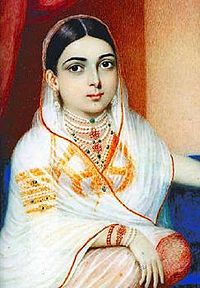 More than 14 million South Asians claim descent from the prophet, in South Asia
, approximately 3% of the Muslim
population of South Asia
. Their ancestors migrated from different parts of the Arab world, Iran
, Central Asia
and Turkestan
, during the invasion of Mongols and other periods of turmoil during the periods of Mahmud Ghaznavi, Delhi Sultanate
and Mughals and until the late 19th century. Some early migrant Sayyids moved deep to the region of Deccan plateau
in the time of the Bahmani Sultanate
and later Qutb Shahi kings of Golconda
, Nizam Shahi of Ahmadnagar
and other kingdoms of Bijapur
, Bidar
and Berar
.
Several visited India
as merchants or escaped from Abbasid
, Umayyad
and Ottoman
empires. They also ruled over India
during the Delhi Sultanate
during the short-lived period of 1414-1451. Their name figures in Indian history at the breakup of the Mughal
empire, when the Sayyid Brothers created and dethroned Emperors at their will (1714–1720). The first Mohammedans appointed to the Council of India
and the first appointed to the Privy Council
were both Sayyids. Important Sayyid communities in India
include the Sadaat Amroha
, Nishapuri Sada'at of Barabanki, Saadat-e-Bara
, Gardezi Sadaat
, Sayyids of Hallaur
, Sayyid of Gujarat
, and Sadaat of Shergarh
An estimate of number of Sayyids in South Asia is as follows:
Mr.
Mister, usually written in its abbreviated form Mr or Mr. , is a commonly used English honorific for men under the rank of knighthood. The title derived from master, as the equivalent female titles, Mrs., Miss, and Ms, all derived from the archaic mistress...
) (plural Sadah ) is an honorific
Honorific
An honorific is a word or expression with connotations conveying esteem or respect when used in addressing or referring to a person. Sometimes, the term is used not quite correctly to refer to an honorary title...
title, it denotes males accepted as descendants of the Islamic prophet Muhammad
Muhammad
Muhammad |ligature]] at U+FDF4 ;Arabic pronunciation varies regionally; the first vowel ranges from ~~; the second and the last vowel: ~~~. There are dialects which have no stress. In Egypt, it is pronounced not in religious contexts...
through his grandsons, Hasan ibn Ali
Hasan ibn Ali
Al-Hasan ibn ‘Alī ibn Abī Tālib is an important figure in Islam, the son of Fatimah the daughter of the Islamic prophet Muhammad, and of the fourth Caliph Ali ibn Abi Talib. Hasan is a member of the Ahl al-Bayt and Ahl al-Kisa...
and Husain ibn Ali, sons of the prophet's daughter Fatima Zahra and his son-in-law Ali ibn Abi Talib.
Daughters of sayyids are given the titles Sayyida, Alawiyah, Syarifah, or Sharifah. Children of a Sayyida mother but a non-Sayyid father cannot be attributed the title of Sayyid, however they may claim the title Mirza
Mirza
Mirza , is of Persian origin, denoting the rank of a high nobleman or Prince. It is usually translated into English as a royal or imperial Prince of the Blood...
by maternal descent. Sayyids are by definition a branch of the tribe of Banu Hashim
Banu Hashim
Banū Hāshim was a clan in the Quraysh tribe. Muhammad, was a member of this clan; his great-grandfather was Hashim, for whom the clan is named. Members of this clan are referred to by the Anglicised version of their name as Hashemites, or Huseini or Hasani...
, a clan from the tribe of Quraish that traces its lineage to Adnan
Adnan
Adnan is the traditional ancestor of the Adnani Arabs of northern, central and western Arabia, as opposed to the Qahtani of Southern and south eastern Arabia who descend from Qahtan.-Origin:...
and thence to the Prophet Ismael
Ishmael
Ishmael is a figure in the Hebrew Bible and the Qur'an, and was Abraham's first born child according to Jews, Christians and Muslims. Ishmael was born of Abraham's marriage to Sarah's handmaiden Hagar...
.
In the Arab world
Arab world
The Arab world refers to Arabic-speaking states, territories and populations in North Africa, Western Asia and elsewhere.The standard definition of the Arab world comprises the 22 states and territories of the Arab League stretching from the Atlantic Ocean in the west to the Arabian Sea in the...
, it is the equivalent of the English word "liege-lord" or "master" when referring to a descendant of Muhammad, as in Sayyid John Smith. This is the reason the word sidi
Sidi
Sidi is a masculine title of respect, meaning "my master" in Western Arabic language and Egyptian Arabic equivalent to modern popular usage of the English Mr....
(from the contracted form sayyidī, 'my liege') is used in the Moroccan dialect of Arabic
Maghreb Arabic
Maghrebi Arabic or Darija is a cover term for the varieties of Arabic spoken in the Maghreb, including Morocco, Tunisia, Algeria, and Libya. In Algeria, colloquial Maghrebi Arabic was taught as a separate subject under French colonization, and some textbooks exist. Speakers of Maghrebi Arabic call...
. Some Sayyids take the title Sheikh.
The Alevi
Alevi
The Alevi are a religious and cultural community, primarily in Turkey, constituting probably more than 15 million people....
use seyyid (the Turkish form) as an honorific before the names of their saints. El Cid
El Cid
Rodrigo Díaz de Vivar , known as El Cid Campeador , was a Castilian nobleman, military leader, and diplomat...
, the name given to a famous Spanish knight of the 11th century C.E., is derived from Al-Sayyid (as-sayyid). As-Sayyid is also used as title or a form of address to denote a prince or superior in the Sultanate of Oman.
Transliterations
| Language | Transliteration | Areas spoken |
|---|---|---|
| Arabic Arabic language Arabic is a name applied to the descendants of the Classical Arabic language of the 6th century AD, used most prominently in the Quran, the Islamic Holy Book... |
Sayyid, Sayyidi, Sayyed, Sayid, Saiyyid, Saiyid, Sidi | Arab world Arab world The Arab world refers to Arabic-speaking states, territories and populations in North Africa, Western Asia and elsewhere.The standard definition of the Arab world comprises the 22 states and territories of the Arab League stretching from the Atlantic Ocean in the west to the Arabian Sea in the... |
| Azerbaijani Azerbaijani language Azerbaijani or Azeri or Torki is a language belonging to the Turkic language family, spoken in southwestern Asia by the Azerbaijani people, primarily in Azerbaijan and northwestern Iran... |
Seyid, Seyyid | Azerbaijan Azerbaijan Azerbaijan , officially the Republic of Azerbaijan is the largest country in the Caucasus region of Eurasia. Located at the crossroads of Western Asia and Eastern Europe, it is bounded by the Caspian Sea to the east, Russia to the north, Georgia to the northwest, Armenia to the west, and Iran to... , Iran Iran Iran , officially the Islamic Republic of Iran , is a country in Southern and Western Asia. The name "Iran" has been in use natively since the Sassanian era and came into use internationally in 1935, before which the country was known to the Western world as Persia... |
| Baluchi | Sayyid, Syed, Sayyed, Sayid | Pakistan Pakistan Pakistan , officially the Islamic Republic of Pakistan is a sovereign state in South Asia. It has a coastline along the Arabian Sea and the Gulf of Oman in the south and is bordered by Afghanistan and Iran in the west, India in the east and China in the far northeast. In the north, Tajikistan... , Baluchistan region Balochistan (region) Balochistan or Baluchistan is an arid, mountainous region in the Iranian plateau in Southwest Asia; it includes part of southeastern Iran, western Pakistan, and southwestern Afghanistan. The area is named after the numerous Baloch tribes, Iranian peoples who moved into the area from the west... |
| Indonesia Indonesian language Indonesian is the official language of Indonesia. Indonesian is a normative form of the Riau Islands dialect of Malay, an Austronesian language which has been used as a lingua franca in the Indonesian archipelago for centuries.... |
Sayyid, Syed, Sayid | Indonesia Indonesia Indonesia , officially the Republic of Indonesia , is a country in Southeast Asia and Oceania. Indonesia is an archipelago comprising approximately 13,000 islands. It has 33 provinces with over 238 million people, and is the world's fourth most populous country. Indonesia is a republic, with an... |
| Kurdish Kurdish language Kurdish is a dialect continuum spoken by the Kurds in western Asia. It is part of the Iranian branch of the Indo-Iranian group of Indo-European languages.... |
Seyid, Syed, Seyyid, Seyit | Kurdish region |
| Malay Malay language Malay is a major language of the Austronesian family. It is the official language of Malaysia , Indonesia , Brunei and Singapore... |
Syed, Sheikh | Malaysia, Brunei Brunei Brunei , officially the State of Brunei Darussalam or the Nation of Brunei, the Abode of Peace , is a sovereign state located on the north coast of the island of Borneo, in Southeast Asia... and Singapore Singapore Singapore , officially the Republic of Singapore, is a Southeast Asian city-state off the southern tip of the Malay Peninsula, north of the equator. An island country made up of 63 islands, it is separated from Malaysia by the Straits of Johor to its north and from Indonesia's Riau Islands by the... |
| Pashto Pashto language Pashto , known as Afghani in Persian and Pathani in Punjabi , is the native language of the indigenous Pashtun people or Afghan people who are found primarily between an area south of the Amu Darya in Afghanistan and... |
Sayed, Syed, Said | Afghanistan and Pakistan |
| Persian Persian language Persian is an Iranian language within the Indo-Iranian branch of the Indo-European languages. It is primarily spoken in Iran, Afghanistan, Tajikistan and countries which historically came under Persian influence... |
Said, Sayyed, Sayed, Saeyd, Seyyed, Seyed, Saiyed, Saeid, Siyyid | Afghanistan, Iran and Pakistan |
| Seraiki, Sindhi Sindhi language Sindhi is the language of the Sindh region of Pakistan that is spoken by the Sindhi people. In India, it is among 22 constitutionally recognized languages, where Sindhis are a sizeable minority. It is spoken by 53,410,910 people in Pakistan, according to the national government's Statistics Division... , Punjabi Punjabi language Punjabi is an Indo-Aryan language spoken by inhabitants of the historical Punjab region . For Sikhs, the Punjabi language stands as the official language in which all ceremonies take place. In Pakistan, Punjabi is the most widely spoken language... |
Sayed, Syed | Pakistan |
| Somali Somali language The Somali language is a member of the East Cushitic branch of the Afro-Asiatic language family. Its nearest relatives are Afar and Oromo. Somali is the best documented of the Cushitic languages, with academic studies beginning before 1900.... |
Sayyid | Somalia, Djibouti |
| Turkish Turkish language Turkish is a language spoken as a native language by over 83 million people worldwide, making it the most commonly spoken of the Turkic languages. Its speakers are located predominantly in Turkey and Northern Cyprus with smaller groups in Iraq, Greece, Bulgaria, the Republic of Macedonia, Kosovo,... |
Seyed, Seyit, Seyyid, Seyyed | Turkey, Azerbaijan and Central Asia |
| Bosnian Bosnian language Bosnian is a South Slavic language, spoken by Bosniaks. As a standardized form of the Shtokavian dialect, it is one of the three official languages of Bosnia and Herzegovina.... |
Seid, Sait, Sead | Bosnia and Herzegovina |
| Urdu, Marathi Marathi language Marathi is an Indo-Aryan language spoken by the Marathi people of western and central India. It is the official language of the state of Maharashtra. There are over 68 million fluent speakers worldwide. Marathi has the fourth largest number of native speakers in India and is the fifteenth most... , Hindi, Assamese Assamese language Assamese is the easternmost Indo-Aryan language. It is used mainly in the state of Assam in North-East India. It is also the official language of Assam. It is also spoken in parts of Arunachal Pradesh and other northeast Indian states. Nagamese, an Assamese-based Creole language is widely used in... , Konkani Konkani language KonkaniKonkani is a name given to a group of several cognate dialects spoken along the narrow strip of land called Konkan, on the west coast of India. This is, however, somewhat an over-generalisation. Geographically, Konkan is defined roughly as the area between the river Damanganga to the north... , Kannada Kannada language Kannada or , is a language spoken in India predominantly in the state of Karnataka. Kannada, whose native speakers are called Kannadigas and number roughly 50 million, is one of the 30 most spoken languages in the world... , Bhojpuri Bhojpuri language Bhojpuri is a language spoken in parts of north-central and eastern India. It is spoken in the western part of state of Bihar, the northwestern part of Jharkhand, and the Purvanchal region of Uttar Pradesh , as well as adjoining parts of the Nepal Terai. Bhojpuri is also spoken in Guyana,... , Telugu Telugu language Telugu is a Central Dravidian language primarily spoken in the state of Andhra Pradesh, India, where it is an official language. It is also spoken in the neighbouring states of Chattisgarh, Karnataka, Maharashtra, Orissa and Tamil Nadu... , Tamil Tamil language Tamil is a Dravidian language spoken predominantly by Tamil people of the Indian subcontinent. It has official status in the Indian state of Tamil Nadu and in the Indian union territory of Pondicherry. Tamil is also an official language of Sri Lanka and Singapore... , Bengali Bengali language Bengali or Bangla is an eastern Indo-Aryan language. It is native to the region of eastern South Asia known as Bengal, which comprises present day Bangladesh, the Indian state of West Bengal, and parts of the Indian states of Tripura and Assam. It is written with the Bengali script... , Malayalam Malayalam language Malayalam , is one of the four major Dravidian languages of southern India. It is one of the 22 scheduled languages of India with official language status in the state of Kerala and the union territories of Lakshadweep and Pondicherry. It is spoken by 35.9 million people... , Gujarati Gujarati language Gujarati is an Indo-Aryan language, and part of the greater Indo-European language family. It is derived from a language called Old Gujarati which is the ancestor language of the modern Gujarati and Rajasthani languages... |
Syed, Saiyad, Saiyed, Sayyid, Saiyed, Saiyid, Sayyed, Sayid | South Asia |
| Spanish Spanish language Spanish , also known as Castilian , is a Romance language in the Ibero-Romance group that evolved from several languages and dialects in central-northern Iberia around the 9th century and gradually spread with the expansion of the Kingdom of Castile into central and southern Iberia during the... |
Cid | Al-Andalus |
Other titles
| Language | Title | Areas spoken |
|---|---|---|
| Arabic | Sharif, Habib, Sheikh | Arab world |
| Urdu, Saraiki, Punjabi, Hindko | Shah, Saab, Badshah | Pakistan |
| Sindhi | Shah, Sain, Saab, Makhdoom, Mir Mir (title) Mir is a title which is derived from the Arabic title Emir or Amir . It was adopted in many languages under Islamic influence, such as Persian , Pashto, Sindhi and Urdu, meaning leader of a group or tribe in Iran, Afghanistan, India and Pakistan.-Title:In Iran, mir has also been formally used as a... |
Sindh, Pakistan. |
| Indonesian | Habib, Sayid | Indonesia Indonesia Indonesia , officially the Republic of Indonesia , is a country in Southeast Asia and Oceania. Indonesia is an archipelago comprising approximately 13,000 islands. It has 33 provinces with over 238 million people, and is the world's fourth most populous country. Indonesia is a republic, with an... |
| Minangkabau | Sidi | West Sumatra West Sumatra West Sumatra is a province of Indonesia. It lies on the west coast of the island Sumatra. It borders the provinces of North Sumatra to the north, Riau and Jambi to the east, and Bengkulu to the southeast. It includes the Mentawai Islands off the coast... , Indonesia |
| Palembang | Ayib | South Sumatra South Sumatra South Sumatra is a province of Indonesia.-Geography:It is on the island of Sumatra, and borders the provinces of Lampung to the south, Bengkulu to the west, and Jambi to the north... , Indonesia |
| Malay | Sharifah, Syarifah | Malaysia, Singapore, Brunei |
| Malayalam | Thangal Thangal Thangals are the various Muslim communities of Yemeni origin found scattered and isolated in the state of Kerala, India. They migrated to Kerala during the 17th century to expand their business,and propagated Islam as they are muslims, and do not belong to the Mappila Muslim community of Kerala... |
Kerala Kerala or Keralam is an Indian state located on the Malabar coast of south-west India. It was created on 1 November 1956 by the States Reorganisation Act by combining various Malayalam speaking regions.... , India India India , officially the Republic of India , is a country in South Asia. It is the seventh-largest country by geographical area, the second-most populous country with over 1.2 billion people, and the most populous democracy in the world... |
| Gujarati | Sayedna, Syedna, Sayednah | Northwest India |
| Urdu, Punjabi, | Shah, Shah Ji, Pir, Pir Sahib | Pakistan, India |
| Persian | Shah, Mir, Mirza | Iran and Afghanistan |
| Bengali, Malay | Shah, Agha, Saab, Mir Mir (title) Mir is a title which is derived from the Arabic title Emir or Amir . It was adopted in many languages under Islamic influence, such as Persian , Pashto, Sindhi and Urdu, meaning leader of a group or tribe in Iran, Afghanistan, India and Pakistan.-Title:In Iran, mir has also been formally used as a... |
South and South East Asia |
The line of Hassani sayyids who ruled Mecca
Mecca
Mecca is a city in the Hijaz and the capital of Makkah province in Saudi Arabia. The city is located inland from Jeddah in a narrow valley at a height of above sea level...
, Medina
Medina
Medina , or ; also transliterated as Madinah, or madinat al-nabi "the city of the prophet") is a city in the Hejaz region of western Saudi Arabia, and serves as the capital of the Al Madinah Province. It is the second holiest city in Islam, and the burial place of the Islamic Prophet Muhammad, and...
, Iraq
Iraq
Iraq ; officially the Republic of Iraq is a country in Western Asia spanning most of the northwestern end of the Zagros mountain range, the eastern part of the Syrian Desert and the northern part of the Arabian Desert....
and now rule in Jordan
Jordan
Jordan , officially the Hashemite Kingdom of Jordan , Al-Mamlaka al-Urduniyya al-Hashemiyya) is a kingdom on the East Bank of the River Jordan. The country borders Saudi Arabia to the east and south-east, Iraq to the north-east, Syria to the north and the West Bank and Israel to the west, sharing...
, the Hashemites, bore the title 'Sharif' (plu. Ashraf). 'Sharif' is reserved for descendants of Hassan while 'Sayyid' is used for descendants of Husayn. However since the post-Hashemite era began, the term 'Sayyid' has been used to denote descendants from both Hassan
Hasan ibn Ali
Al-Hasan ibn ‘Alī ibn Abī Tālib is an important figure in Islam, the son of Fatimah the daughter of the Islamic prophet Muhammad, and of the fourth Caliph Ali ibn Abi Talib. Hasan is a member of the Ahl al-Bayt and Ahl al-Kisa...
and Husayn. Arab Shi'ites use the term 'Sayyid' and 'Habib' to denote descendants from both Hassan
Hasan ibn Ali
Al-Hasan ibn ‘Alī ibn Abī Tālib is an important figure in Islam, the son of Fatimah the daughter of the Islamic prophet Muhammad, and of the fourth Caliph Ali ibn Abi Talib. Hasan is a member of the Ahl al-Bayt and Ahl al-Kisa...
and Husayn.
Indication of descent
Sayyids are Arabs, and Sayyids in Asia are of Arab origin. The Sayyids are a branch of the tribe of Banu Hashim, a clan from the tribe of Quraish, which traces its lineage to Adnan, whose lineage traces back to the Prophet Ismael the son of the Prophet Ibrahim or Abraham.Some Muslims also use the term Sayyid for the descendants of Abu Talib, uncle of Muhammad, by his other sons: Jafar, [Abbas], Aqeel and Talib.
Sayyids often include the following titles in their names to indicate the figure from whom they trace their descent. If they are descended from more than one notable ancestor or Shi'a Imam
Imam
An imam is an Islamic leadership position, often the worship leader of a mosque and the Muslim community. Similar to spiritual leaders, the imam is the one who leads Islamic worship services. More often, the community turns to the mosque imam if they have a religious question...
, they will use the title of the ancestor from whom they are most directly descended.
| Ancestor | Arabic Title | Arabic Last Name | Persian Last Name | Urdu Last Name |
|---|---|---|---|---|
| Ali ibn Abu Talib | Alawi2 | Allawi2 or Alawi3 | Alavi2 علوى | Alavi2 |
| Hasan ibn Ali Hasan ibn Ali Al-Hasan ibn ‘Alī ibn Abī Tālib is an important figure in Islam, the son of Fatimah the daughter of the Islamic prophet Muhammad, and of the fourth Caliph Ali ibn Abi Talib. Hasan is a member of the Ahl al-Bayt and Ahl al-Kisa... |
al-Hashimi or al-Hassani | al-Hashimi or al-Hassani | Hashemi, Hassani, or Tabatabai حسنى | Hassani or Hasani or Hashemi or Hashmi |
| Husayn ibn Ali Husayn ibn Ali Hussein ibn ‘Alī ibn Abī Ṭālib was the son of ‘Alī ibn Abī Ṭālib and Fātimah Zahrā... |
al-Hussaini | al-Hussaini Husseini Husseini is an Arabic surname.-Etymology:It is a nisba derivation of the given name Hussein... 1 |
Husseini حسینى | Hussaini Husseini Husseini is an Arabic surname.-Etymology:It is a nisba derivation of the given name Hussein... or Husaini |
| Ali ibn Husayn Zayn al Abidin | al-Abidi | al-Abidi | Abedi | Abidi Abidi Abidi or Abedi is the surname for a family belonging to the offsprings of Muhammad's great-grandson Imam Zain-ul-Abideen or Imam Abid whose real name was Ali ibn Husayn. They belong to the Sayyid community... or Abdi |
| Zayd ibn Ali Zayd ibn Ali Zayd ibn ‘Alī was the grandson of Husayn ibn Alī, the grandson of Muhammad. Zayd was born in Medina in 695. His father was the Shī‘ah Imam ‘Alī ibn Husayn "Zayn al-Abidīn"... ash-Shahid |
az-Zaidi | al-Zaidi | Zaidi زیدی | Zaidi Zaidi (Last Name) People with the surname Zaidi, are the direct descendants of Prophet Muhammad's great-grandson Imam Zain-ul-Abideen whose real name was Ali ibn Husayn through his son Zayd ibn Ali. Zaidi can be found all over the world especially in Iran and Indo-Pak subcontinent.- The Wasitis :The Zaidis of the... |
| Muhammad al-Baqir Muhammad al-Baqir Muḥammad ibn ‘Alī al-Bāqir was the Fifth Imām to the Twelver Shi‘a and Fourth Imām to the Ismā‘īlī Shī‘a. His father was the previous Imām, ‘Alī ibn Ḥusayn, and his mother was Fatimah bint al-Hasan... |
al-Baqiri | al-Baqiri | Baqeri باقرى | Baqri |
| Jafar as-Sadiq | al-Ja'fari | al-Ja'fari | Jafari جعفرى | Jafri Jafri Jafri is a surname commonly associated with Shia Muslims who are the descendants of the 6th Imam, Imam Ja'far al-Sadiq, who was a direct descendant of Imam Ali and the prophet Muhammad. Since the Jafri clan trace their lineage to Fatima Az-Zehra, they often use the prefix Syed in front of their... , Jafry or Jaffery |
| Musa al-Kadhim Musa al-Kadhim ' was the seventh of the Twelve Imams of Twelver Shi'a Islam. He was the son of Imam and his mother was Hamidah Khātūn, a student and former Zanjiyyah slave... |
al-Mousawi | al-Mousawi or al-Kadhimi | Moosavi or Kazemi موسوى / کاظمى | Kazmi Kazmi Kazmi or Kazemi is the surname for a family belonging to the offsprings of Muhammad's great-grandson Imam Musa al-Kadhim. They belong to the Sayyid community... |
| Ali ar-Rida | ar-Radawi | al-Ridawi or al-Radawi | Razavi or Rezavi رضوى | Rizvi Rizvi Rizvi or Rizavi is the Urdu pronunciation for the Persian surname Razavi or the Arabic surname Radawi/Ridhawi. It is a surname commonly associated with Shia Muslims who believe they are the descendants of the 8th Shiite Imam and a descendant and successor of Prophet Mohammad through his daughter... or Rizavi |
| Muhammad at-Taqi | at-Taqawi | al-Taqawi | Taqawi تقوى | Taqvi |
| Ali al-Hadi Ali al-Hadi ‘Alī al-Hādī , also known as ‘Alī an-Naqī was the tenth of the Twelve Imams. His full name is ‘Alī ibn Muhammad ibn ‘Alī. The exact date of his birth and death are unknown, but it is generally accepted that he was born between 827–830 CE and he died in 868 CE.- Early years :‘Alī al-Hādī was born... |
an-Naqawi | al-Naqawi | Naqawi نقوى | Naqvi Naqvi The surname "Naqvi" are the descendants of Islamic Prophet Muhammad through the lineage of Ali al-Hadi... or Bukhari Bukhari (nesbat) Bukhari , also spelled as Bokhari, Bukhary and Bukhori, is a common surname in Central and Western Asia, meaning "from Bukhara" . Its Arabic version Al-Bukhari was also used in the medieval Islamic world as a nisbat . The most known Al-Bukhari is Muhammad Ibn Ismail al-Bukhari... |
NOTE: (For non-Arabic speakers) When transliterating Arabic words into English there are two approaches.
Some Muslims also use the term Sayyid for the descendants of Abu Talib, uncle of Muhammad, by his other sons: Jafar, Abbas, Aqeel and Talib.
- 1. The user may transliterate the word letter for letter, e.g. "الزيدي" becomes "a-l-z-ai-d-i".
- 2. The user may transcribe the pronunciation of the word, e.g. "الزيدي" becomes "a-zz-ai-d-i". This is because in Arabic grammar, some consonants (n, r, s, sh, t and z) cancel the l (ل) from the word "the" al (ال) (see Sun and moon letters). When the user sees the prefixes an, ar, as, ash, at, az, etc... this means the word is the transcription of the pronunciation.
- An i, wi (Arabic), or vi (Persian) ending could perhaps be translated by the English suffixes ite or ian. The suffix transforms a personal name, or a place name, into the name of a group of people connected by lineage or place of birth. Hence Ahmad al-Hashimi could be translated as Ahmad of the lineage of Hassan and Ahmad al-Harrani as Ahmad from the city of Harran. For further explanation, see Arabic names.
1Also, El-Husseini, Al-Husseini, Husseini, and Hussaini.
2Those who use the term sayyid for all descendants of Ali ibn Abi Talib regard Allawis or Alavis as Sayyids. However Allawis are not descendants of Muhammad, as they are descended from the children of Ali and the women he married after the death of Fatima Zahra, such as Umm al Baneen/Fatima bint Hizam. Those who limit the term Sayyid to descendants of Muhammad through Fatima Zahra, will not consider Allawis/Alavis to be Sayyids.
3This transliteration is usually reserved for the Alawi
Alawi
The Alawis, also known as Alawites, Nusayris and Ansaris are a prominent mystical and syncretic religious group centred in Syria who are a branch of Shia Islam.-Etymology:...
sect.
Sayyids in Yemen
There are Shia and Sunni Sayyid families in YemenYemen
The Republic of Yemen , commonly known as Yemen , is a country located in the Middle East, occupying the southwestern to southern end of the Arabian Peninsula. It is bordered by Saudi Arabia to the north, the Red Sea to the west, and Oman to the east....
, they include the Rassids
Rassids
The Imams of Yemen and later the Kings of Yemen were religiously consecrated leaders belonging to the Zaidiyyah branch of Shia Islam. They established a blend of religious and secular rule in parts of Yemen from 897. Their imamate endured under varying circumstances until the republican revolution...
, the Qasimids, the Mutawakkilites, the Hamideddins, Al-Zaidi of Ma'rib, Sana'a and Sa'dah, the Ba'Alawi sadah and Al-Saqqaf in Hadramauwt, Al-Wazir of Sana'a and others.
Sayyids in Iraq
There are sayyids in IraqIraq
Iraq ; officially the Republic of Iraq is a country in Western Asia spanning most of the northwestern end of the Zagros mountain range, the eastern part of the Syrian Desert and the northern part of the Arabian Desert....
. 90%-95% of the Sayyids in Iraq
Iraq
Iraq ; officially the Republic of Iraq is a country in Western Asia spanning most of the northwestern end of the Zagros mountain range, the eastern part of the Syrian Desert and the northern part of the Arabian Desert....
are Shia Muslims. Many Sayyids in Iraq
Iraq
Iraq ; officially the Republic of Iraq is a country in Western Asia spanning most of the northwestern end of the Zagros mountain range, the eastern part of the Syrian Desert and the northern part of the Arabian Desert....
joined many Arab tribes centuries ago, especially in Southern Iraq
Iraq
Iraq ; officially the Republic of Iraq is a country in Western Asia spanning most of the northwestern end of the Zagros mountain range, the eastern part of the Syrian Desert and the northern part of the Arabian Desert....
. Because they used to be tortured and murdered, many Sayyids migrated from Iraq
Iraq
Iraq ; officially the Republic of Iraq is a country in Western Asia spanning most of the northwestern end of the Zagros mountain range, the eastern part of the Syrian Desert and the northern part of the Arabian Desert....
to South Asia
South Asia
South Asia, also known as Southern Asia, is the southern region of the Asian continent, which comprises the sub-Himalayan countries and, for some authorities , also includes the adjoining countries to the west and the east...
. Also Sayyids have joined tribes in Iraq
Iraq
Iraq ; officially the Republic of Iraq is a country in Western Asia spanning most of the northwestern end of the Zagros mountain range, the eastern part of the Syrian Desert and the northern part of the Arabian Desert....
and are still now protected by the tribe. Genealogists claim that the Sayyids who have joined the tribes in Iraq
Iraq
Iraq ; officially the Republic of Iraq is a country in Western Asia spanning most of the northwestern end of the Zagros mountain range, the eastern part of the Syrian Desert and the northern part of the Arabian Desert....
are Real Sayyids. Many Sayyids in Iraq formed their own tribes and families such as Al-Yasiri, Al-Zaidi, Al-A'araji, Al-Hassani, Al-Hussaini
Husseini
Husseini is an Arabic surname.-Etymology:It is a nisba derivation of the given name Hussein...
, Al-Rifa'i, Al-Alawi
Alawi
The Alawis, also known as Alawites, Nusayris and Ansaris are a prominent mystical and syncretic religious group centred in Syria who are a branch of Shia Islam.-Etymology:...
, Al-Ghawalib (Al-Ghalibi), Al-Mosavi, Al-Awadi & others. There are also Sunni Sayyids in Kurdistan.
Sayyids in Saudi Arabia
There are many Sayyids in Saudi ArabiaSaudi Arabia
The Kingdom of Saudi Arabia , commonly known in British English as Saudi Arabia and in Arabic as as-Sa‘ūdiyyah , is the largest state in Western Asia by land area, constituting the bulk of the Arabian Peninsula, and the second-largest in the Arab World...
, families such as Bafaqih, Al-Hashemi (Also said as Bin Hashem), Al-Alawi, Al-Hussaini, Al-Hassani, Al-Mussallam (also said as Bin Mussallam), Al-Nasser and others.
Sayyids in Libya
All Sayyids in LibyaLibya
Libya is an African country in the Maghreb region of North Africa bordered by the Mediterranean Sea to the north, Egypt to the east, Sudan to the southeast, Chad and Niger to the south, and Algeria and Tunisia to the west....
are Sunni Muslims. Many families in Libya are included within the Ashraf tribe, i.e. Sayyids tribe. Azzouz and Al-Hashemi are some of the families which descended from the ashraf tribes.
Sayyids in South Asia
South Asia
South Asia, also known as Southern Asia, is the southern region of the Asian continent, which comprises the sub-Himalayan countries and, for some authorities , also includes the adjoining countries to the west and the east...
, approximately 3% of the Muslim
Muslim
A Muslim, also spelled Moslem, is an adherent of Islam, a monotheistic, Abrahamic religion based on the Quran, which Muslims consider the verbatim word of God as revealed to prophet Muhammad. "Muslim" is the Arabic term for "submitter" .Muslims believe that God is one and incomparable...
population of South Asia
South Asia
South Asia, also known as Southern Asia, is the southern region of the Asian continent, which comprises the sub-Himalayan countries and, for some authorities , also includes the adjoining countries to the west and the east...
. Their ancestors migrated from different parts of the Arab world, Iran
Iran
Iran , officially the Islamic Republic of Iran , is a country in Southern and Western Asia. The name "Iran" has been in use natively since the Sassanian era and came into use internationally in 1935, before which the country was known to the Western world as Persia...
, Central Asia
Central Asia
Central Asia is a core region of the Asian continent from the Caspian Sea in the west, China in the east, Afghanistan in the south, and Russia in the north...
and Turkestan
Turkestan
Turkestan, spelled also as Turkistan, literally means "Land of the Turks".The term Turkestan is of Persian origin and has never been in use to denote a single nation. It was first used by Persian geographers to describe the place of Turkish peoples...
, during the invasion of Mongols and other periods of turmoil during the periods of Mahmud Ghaznavi, Delhi Sultanate
Delhi Sultanate
The Delhi Sultanate is a term used to cover five short-lived, Delhi based kingdoms or sultanates, of Turkic origin in medieval India. The sultanates ruled from Delhi between 1206 and 1526, when the last was replaced by the Mughal dynasty...
and Mughals and until the late 19th century. Some early migrant Sayyids moved deep to the region of Deccan plateau
Deccan Plateau
The Deccan Plateau is a large plateau in India, making up the majority of the southern part of the country. It rises a hundred meters high in the north, rising further to more than a kilometers high in the south, forming a raised triangle nested within the familiar downward-pointing triangle of...
in the time of the Bahmani Sultanate
Bahmani Sultanate
The Bahmani Sultanate was a Muslim state of the Deccan in southern India and one of the great medieval Indian kingdoms...
and later Qutb Shahi kings of Golconda
Golconda
Golconda may be:Places:* Golkonda, ruined city and fortress in India* Golconda, Illinois, town in the United States* Golconda, Nevada, former town in the United StatesOther:* Golconda...
, Nizam Shahi of Ahmadnagar
Ahmadnagar
Ahmadnagar is located in Gujranwala DistricTt, Punjab, Pakistan.-References:...
and other kingdoms of Bijapur
Adil Shahi
The Adil Shahi or Adilshahi dynasty ruled the Sultanate of Bijapur in the Western area of the Deccan region of Southern India from 1490 to 1686. Bijapur had been a province of the Bahmani Sultanate , before its political decline in the last quarter of the 15th century and eventual break-up in 1518...
, Bidar
Bidar
Bidar is a city in the Indian state of Karnataka. Located on the Deccan Plateau in the north-eastern part of Karnataka. It is the headquarters of the Bidar District....
and Berar
Berar Sultanate
-Berar in Ancient History:Subah Berar and Gondwana the Vidarbha region known as Gulshan-e-Berar in medieval period since Khilji dynasty to mughal period according Aine-Akbari and Alimgeer Namah report the berar is hole Fourteen sarkar...
.
Several visited India
India
India , officially the Republic of India , is a country in South Asia. It is the seventh-largest country by geographical area, the second-most populous country with over 1.2 billion people, and the most populous democracy in the world...
as merchants or escaped from Abbasid
Abbasid
The Abbasid Caliphate or, more simply, the Abbasids , was the third of the Islamic caliphates. It was ruled by the Abbasid dynasty of caliphs, who built their capital in Baghdad after overthrowing the Umayyad caliphate from all but the al-Andalus region....
, Umayyad
Umayyad
The Umayyad Caliphate was the second of the four major Arab caliphates established after the death of Muhammad. It was ruled by the Umayyad dynasty, whose name derives from Umayya ibn Abd Shams, the great-grandfather of the first Umayyad caliph. Although the Umayyad family originally came from the...
and Ottoman
Ottoman Empire
The Ottoman EmpireIt was usually referred to as the "Ottoman Empire", the "Turkish Empire", the "Ottoman Caliphate" or more commonly "Turkey" by its contemporaries...
empires. They also ruled over India
India
India , officially the Republic of India , is a country in South Asia. It is the seventh-largest country by geographical area, the second-most populous country with over 1.2 billion people, and the most populous democracy in the world...
during the Delhi Sultanate
Delhi Sultanate
The Delhi Sultanate is a term used to cover five short-lived, Delhi based kingdoms or sultanates, of Turkic origin in medieval India. The sultanates ruled from Delhi between 1206 and 1526, when the last was replaced by the Mughal dynasty...
during the short-lived period of 1414-1451. Their name figures in Indian history at the breakup of the Mughal
Mughal Empire
The Mughal Empire , or Mogul Empire in traditional English usage, was an imperial power from the Indian Subcontinent. The Mughal emperors were descendants of the Timurids...
empire, when the Sayyid Brothers created and dethroned Emperors at their will (1714–1720). The first Mohammedans appointed to the Council of India
Council of India
The Council of India was the name given at different times to two separate bodies associated with British rule in India.The original Council of India was established by the Regulating Act of 1773 as a council of four formal advisors to the Governor-General at Fort William...
and the first appointed to the Privy Council
Privy council
A privy council is a body that advises the head of state of a nation, typically, but not always, in the context of a monarchic government. The word "privy" means "private" or "secret"; thus, a privy council was originally a committee of the monarch's closest advisors to give confidential advice on...
were both Sayyids. Important Sayyid communities in India
India
India , officially the Republic of India , is a country in South Asia. It is the seventh-largest country by geographical area, the second-most populous country with over 1.2 billion people, and the most populous democracy in the world...
include the Sadaat Amroha
Sadaat Amroha
The Sadaat Amroha or Amrohi Syed are a community of Sayyids, historically settled in the town of Amroha, in Uttar Pradesh, India. Many members of Sadaat Amroha community have migrated to Pakistan after independence have settled in Karachi, Sindh....
, Nishapuri Sada'at of Barabanki, Saadat-e-Bara
Saadat-e-Bara
Sadat-e-Bara , sometimes pronounced Sadaat-e-Barha, are a community of Sayyids who inhabit a group of twelve villages situated in the Muzaffarnagar district of Uttar Pradesh in India. This community had considerable influence during the latter days of the Mughal Empire. They were also found in...
, Gardezi Sadaat
Gardēzī Sadaat
Gardēzī Sadaat is a Sadaat Muslim family of Sayyid from Gardez ; consequently known as ‘Gardēzī Sadaat’ in Indian subcontinent.- Origin :...
, Sayyids of Hallaur
Hallaur
Hallaur or Haloor is a town or a big village in the north Indian state of Uttar Pradesh, situated near the banks of Rapti river. Residents of Hallaur are referred as Hallauri.The Place of Rizvi Syed...
, Sayyid of Gujarat
Sayyid of Gujarat
The Sayyid of Gujarat are members of the wider Sayyid community of South Asia. They are also known as Mir and Pirzada.-History and origin:...
, and Sadaat of Shergarh
Shergarh
Shergarh is a town and a nagar panchayat in Bareilly district in the Indian state of Uttar Pradesh.It is a small town known for rice and sugarcane.-Demographics:...
An estimate of number of Sayyids in South Asia is as follows:
| Country | Population | Primary Language |
|---|---|---|
| India | 6,696,000 | Urdu |
| Pakistan | 6,613,000 | Western Punjabi, Sindhi, Urdu |
| Bangladesh | 1,058,000 | Bengali |
| Nepal | 77,000 | Various Hindi/Urdu Dialects (Maithili,Bhojpuri,Awadhi) |
| Sri Lanka | 10 | Urdu |
| Totals: 5 Countries | 14,444,000 | - |
See also
- AzmatkhanAzmatkhanAzmatkhan al-Husayni, also spelled Azmat Khan, al-Azhamatkhan or al-Azhamat Chan are a family originating in Hadhramaut. They trace their lineage to Sayyid Abd al-Malik Azmatkhan ibn Alawi Ammul Faqih, a descendant of Husayn ibn Ali...
- AbbasiAbbasiAbbasi is a prominent Islamic family name. - Origin :The Abbasid caliphate was founded by the descendants of the Islamic prophet Muhammad's youngest uncle, Abbas ibn Abd al-Muttalib, in Harran in 750 CE and shifted its capital in 762 to Baghdad...
- Sadaat-e-BilgramSadaat-e-BilgramThe Saadat-e-Bilgram are a Muslim community found in the state of Uttar Pradesh in India. They also known as the Bilgrami Sayyid , and Bilgrami is often used as a surname.- Origin :...
- Sayyid of GujaratSayyid of GujaratThe Sayyid of Gujarat are members of the wider Sayyid community of South Asia. They are also known as Mir and Pirzada.-History and origin:...
- HallaurHallaurHallaur or Haloor is a town or a big village in the north Indian state of Uttar Pradesh, situated near the banks of Rapti river. Residents of Hallaur are referred as Hallauri.The Place of Rizvi Syed...
- Gardēzī SadaatGardēzī SadaatGardēzī Sadaat is a Sadaat Muslim family of Sayyid from Gardez ; consequently known as ‘Gardēzī Sadaat’ in Indian subcontinent.- Origin :...
- Sadaat AmrohaSadaat AmrohaThe Sadaat Amroha or Amrohi Syed are a community of Sayyids, historically settled in the town of Amroha, in Uttar Pradesh, India. Many members of Sadaat Amroha community have migrated to Pakistan after independence have settled in Karachi, Sindh....
- Saadat-e-BaraSaadat-e-BaraSadat-e-Bara , sometimes pronounced Sadaat-e-Barha, are a community of Sayyids who inhabit a group of twelve villages situated in the Muzaffarnagar district of Uttar Pradesh in India. This community had considerable influence during the latter days of the Mughal Empire. They were also found in...
- Ba'Alawi
- BawazirBawazirBawazir or Bani Al Wazir is Tribe of the Middle East noble from they claim to be descendants of Bani Hashim...
- Sayyid QutbSayyid QutbSayyid Qutb was an Egyptian author, educator, Islamist theorist, poet, and the leading member of the Egyptian Muslim Brotherhood in the 1950s and '60s....
- Kohein (similar Jewish title)
- MashwanisMashwanisThe Mashwani are a Syed tribe living predominantly in Pakistan and Afghanistan.-Origin:...
External links
- Ba'Alawi Sadah of Hadhramaut
- GILANI Sayyads of Masanian Sharif
- Ba`alawi.com Ba'alawi.com | The definitive resource for Islam and the Alawi Ancestry
- Sayyid Trust
- Jamaiat Hanfia Qadria Mahmoodia
- The BaAlawi Genealogy