

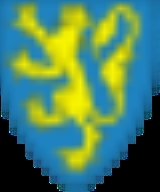
Ruthenian Voivodeship

Encyclopedia
Ruthenia Voivodeship was an administrative division of the Kingdom of Poland (see Kingdom of Poland (1320–1385), Kingdom of Poland (1385–1569)
, and Polish–Lithuanian Commonwealth (1569–1791)). Together with Bełz Voivodeship, it formed Lesser Poland Province
with its capital city in Kraków
. Part of Lesser Poland
region. This region was later largely part of the Austrian
province of Galicia
and today is divided among Poland
, Ukraine
and Belarus
.
and Vandals
(Przeworsk culture
). After the fall of the Roman Empire, of which most of eastern Poland was part (all parts below the San
and Dniester), the area was invaded by Hungarians, Slavs and Avars
. The region subsequently became part of the Great Moravia
n state. Upon the invasion of the Hungarian tribes into the heart of the Great Moravian Empire around 899, the Lendians
of the area declared their allegiance to Hungarian Empire. The region then became a site of contention between Poland, Kievan Rus and Hungary
starting in at least the 9th century.
 Originally it was related to a certain territory between Bug
and Wieprz rivers. Its Polish name was Ziemia czerwieńska, or "Czerwień Land" by the name of Cherven, a town that existed there. (Today there are several towns with this name, none of them related to Red Ruthenia).
This area was mentioned for the first time in 981, when Volodymyr the Great of Kievan Rus took the area over on the way inside Poland. In 1018 it returned to Poland, 1031 back to Rus. For approximately 150 years it existed as the independent Ruthenia
n principality or kingdom of Halych-Volhynia
, before being conquered by Casimir III of Poland
in 1349. Since these times the name Ruś Czerwona is recorded, translated as "Red Ruthenia" ("Czerwień" means red color in Slavic languages
or from Polish village Czermno
), applied to a territory extended up to Dniester River, with priority gradually transferred to Przemyśl
. Since the times of Władyslaw Jagiełło
, the Przemyśl voivodeship
was called Ruthenian Voivodeship (), with the priority eventually transferred to Lwów. It consisted of five lands: Lwów, Sanok
, Halicz, Przemyśl, and Chełm. The territory was then controlled by the Austrian Empire
from 1772 to 1918, when it was known as the Kingdom of Galicia and Lodomeria
.
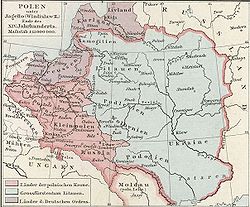
Regional Sejmik (sejmik generalny) for all Ruthene lands
Seats of Regional Sejmik (sejmik poselski i deputacki):
Kingdom of Poland (1385–1569)
The Kingdom of Poland of the Jagiellons was the Polish state created by the accession of Jogaila , Grand Duke of Lithuania, to the Polish throne in 1386. The Union of Krewo or Krėva Act, united Poland and Lithuania under the rule of a single monarch...
, and Polish–Lithuanian Commonwealth (1569–1791)). Together with Bełz Voivodeship, it formed Lesser Poland Province
Prowincja
A prowincja , or Region, was the largest territorial subdivision in medieval and Renaissance-era Poland, and later in the Polish-Lithuanian Commonwealth...
with its capital city in Kraków
Kraków
Kraków also Krakow, or Cracow , is the second largest and one of the oldest cities in Poland. Situated on the Vistula River in the Lesser Poland region, the city dates back to the 7th century. Kraków has traditionally been one of the leading centres of Polish academic, cultural, and artistic life...
. Part of Lesser Poland
Lesser Poland
Lesser Poland is one of the historical regions of Poland, with its capital in the city of Kraków. It forms the southeastern corner of the country, and should not be confused with the modern Lesser Poland Voivodeship, which covers only a small, southern part of Lesser Poland...
region. This region was later largely part of the Austrian
Austrian Empire
The Austrian Empire was a modern era successor empire, which was centered on what is today's Austria and which officially lasted from 1804 to 1867. It was followed by the Empire of Austria-Hungary, whose proclamation was a diplomatic move that elevated Hungary's status within the Austrian Empire...
province of Galicia
Kingdom of Galicia and Lodomeria
The Kingdom of Galicia and Lodomeria was a crownland of the Habsburg Monarchy, the Austrian Empire, and Austria–Hungary from 1772 to 1918 .This historical region in eastern Central Europe is currently divided between Poland and Ukraine...
and today is divided among Poland
Poland
Poland , officially the Republic of Poland , is a country in Central Europe bordered by Germany to the west; the Czech Republic and Slovakia to the south; Ukraine, Belarus and Lithuania to the east; and the Baltic Sea and Kaliningrad Oblast, a Russian exclave, to the north...
, Ukraine
Ukraine
Ukraine is a country in Eastern Europe. It has an area of 603,628 km², making it the second largest contiguous country on the European continent, after Russia...
and Belarus
Belarus
Belarus , officially the Republic of Belarus, is a landlocked country in Eastern Europe, bordered clockwise by Russia to the northeast, Ukraine to the south, Poland to the west, and Lithuania and Latvia to the northwest. Its capital is Minsk; other major cities include Brest, Grodno , Gomel ,...
.
History
Settled in prehistoric times, the central-eastern European land that is now (sountern-eastern part in Poland, western in Ukraine) was overrun in pre-Roman times by various tribes, including the Celts, GothsGoths
The Goths were an East Germanic tribe of Scandinavian origin whose two branches, the Visigoths and the Ostrogoths, played an important role in the fall of the Roman Empire and the emergence of Medieval Europe....
and Vandals
Vandals
The Vandals were an East Germanic tribe that entered the late Roman Empire during the 5th century. The Vandals under king Genseric entered Africa in 429 and by 439 established a kingdom which included the Roman Africa province, besides the islands of Sicily, Corsica, Sardinia and the Balearics....
(Przeworsk culture
Przeworsk culture
The Przeworsk culture is part of an Iron Age archaeological complex that dates from the 2nd century BC to the 5th century AD. It was located in what is now central and southern Poland, later spreading to parts of eastern Slovakia and Carpathian Ruthenia ranging between the Oder and the middle and...
). After the fall of the Roman Empire, of which most of eastern Poland was part (all parts below the San
San River
The San is a river in southeastern Poland and western Ukraine, a tributary of the Vistula River, with a length of 433 km and a basin area of 16,861 km2...
and Dniester), the area was invaded by Hungarians, Slavs and Avars
Eurasian Avars
The Eurasian Avars or Ancient Avars were a highly organized nomadic confederacy of mixed origins. They were ruled by a khagan, who was surrounded by a tight-knit entourage of nomad warriors, an organization characteristic of Turko-Mongol groups...
.
Great Moravia
Great Moravia was a Slavic state that existed in Central Europe and lasted for nearly seventy years in the 9th century whose creators were the ancestors of the Czechs and Slovaks. It was a vassal state of the Germanic Frankish kingdom and paid an annual tribute to it. There is some controversy as...
n state. Upon the invasion of the Hungarian tribes into the heart of the Great Moravian Empire around 899, the Lendians
Lendians
The Lendians were a Lechitic eastern Wends tribe recorded to have inhabited the ill-defined area in East Lesser Poland and Cherven Towns between the 7th and 11th centuries....
of the area declared their allegiance to Hungarian Empire. The region then became a site of contention between Poland, Kievan Rus and Hungary
Hungary
Hungary , officially the Republic of Hungary , is a landlocked country in Central Europe. It is situated in the Carpathian Basin and is bordered by Slovakia to the north, Ukraine and Romania to the east, Serbia and Croatia to the south, Slovenia to the southwest and Austria to the west. The...
starting in at least the 9th century.
Bug River
The Bug River is a left tributary of the Narew river flows from central Ukraine to the west, passing along the Ukraine-Polish and Polish-Belarusian border and into Poland, where it empties into the Narew river near Serock. The part between the lake and the Vistula River is sometimes referred to as...
and Wieprz rivers. Its Polish name was Ziemia czerwieńska, or "Czerwień Land" by the name of Cherven, a town that existed there. (Today there are several towns with this name, none of them related to Red Ruthenia).
This area was mentioned for the first time in 981, when Volodymyr the Great of Kievan Rus took the area over on the way inside Poland. In 1018 it returned to Poland, 1031 back to Rus. For approximately 150 years it existed as the independent Ruthenia
Ruthenia
Ruthenia is the Latin word used onwards from the 13th century, describing lands of the Ancient Rus in European manuscripts. Its geographic and culturo-ethnic name at that time was applied to the parts of Eastern Europe. Essentially, the word is a false Latin rendering of the ancient place name Rus...
n principality or kingdom of Halych-Volhynia
Halych-Volhynia
The Kingdom of Galicia–Volhynia or Kingdom of Rus or Galicia–Vladimir was a Ruthenian state in the regions of Galicia and Volhynia during 1199–1349. Along with Novgorod and Vladimir-Suzdal, it was one of the three most important powers to emerge from the collapse of Kievan Rus'...
, before being conquered by Casimir III of Poland
Casimir III of Poland
Casimir III the Great , last King of Poland from the Piast dynasty , was the son of King Władysław I the Elbow-high and Hedwig of Kalisz.-Biography:...
in 1349. Since these times the name Ruś Czerwona is recorded, translated as "Red Ruthenia" ("Czerwień" means red color in Slavic languages
Slavic languages
The Slavic languages , a group of closely related languages of the Slavic peoples and a subgroup of Indo-European languages, have speakers in most of Eastern Europe, in much of the Balkans, in parts of Central Europe, and in the northern part of Asia.-Branches:Scholars traditionally divide Slavic...
or from Polish village Czermno
Czermno
Czermno may refer to the following places:*Czermno, Kuyavian-Pomeranian Voivodeship *Czermno, Lublin Voivodeship *Czermno, Świętokrzyskie Voivodeship...
), applied to a territory extended up to Dniester River, with priority gradually transferred to Przemyśl
Przemysl
Przemyśl is a city in south-eastern Poland with 66,756 inhabitants, as of June 2009. In 1999, it became part of the Podkarpackie Voivodeship; it was previously the capital of Przemyśl Voivodeship....
. Since the times of Władyslaw Jagiełło
Jogaila
Jogaila, later 'He is known under a number of names: ; ; . See also: Jogaila : names and titles. was Grand Duke of Lithuania , king consort of Kingdom of Poland , and sole King of Poland . He ruled in Lithuania from 1377, at first with his uncle Kęstutis...
, the Przemyśl voivodeship
Voivodeships of Poland
The voivodeship, or province, called in Polish województwo , has been a high-level administrative subdivision of Poland since the 14th century....
was called Ruthenian Voivodeship (), with the priority eventually transferred to Lwów. It consisted of five lands: Lwów, Sanok
Sanok
Sanok is a town in south-eastern Poland with 39,110 inhabitants, as of 2 June 2009. It's the capital of Sanok County in the Subcarpathian Voivodeship. Previously, it was in the Krosno Voivodeship and in the Ruthenian Voivodeship , which was part of the Lesser Poland province...
, Halicz, Przemyśl, and Chełm. The territory was then controlled by the Austrian Empire
Austrian Empire
The Austrian Empire was a modern era successor empire, which was centered on what is today's Austria and which officially lasted from 1804 to 1867. It was followed by the Empire of Austria-Hungary, whose proclamation was a diplomatic move that elevated Hungary's status within the Austrian Empire...
from 1772 to 1918, when it was known as the Kingdom of Galicia and Lodomeria
Kingdom of Galicia and Lodomeria
The Kingdom of Galicia and Lodomeria was a crownland of the Habsburg Monarchy, the Austrian Empire, and Austria–Hungary from 1772 to 1918 .This historical region in eastern Central Europe is currently divided between Poland and Ukraine...
.
Municipal government
Seat of the Voivodeship Governor (Wojewoda):- Lwów
Regional Sejmik (sejmik generalny) for all Ruthene lands
- Sądowa WiszniaSudova VyshniaSudova Vyshnia is a small city of Mostyska Raion in Lviv Oblast of Ukraine. Population is 6,668 ....
Seats of Regional Sejmik (sejmik poselski i deputacki):
- Lwów
- Halicz
- Sądowa WiszniaSudova VyshniaSudova Vyshnia is a small city of Mostyska Raion in Lviv Oblast of Ukraine. Population is 6,668 ....
- PrzemyślPrzemyslPrzemyśl is a city in south-eastern Poland with 66,756 inhabitants, as of June 2009. In 1999, it became part of the Podkarpackie Voivodeship; it was previously the capital of Przemyśl Voivodeship....
- SanokSanokSanok is a town in south-eastern Poland with 39,110 inhabitants, as of 2 June 2009. It's the capital of Sanok County in the Subcarpathian Voivodeship. Previously, it was in the Krosno Voivodeship and in the Ruthenian Voivodeship , which was part of the Lesser Poland province...
- Chełm
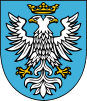
Administrative division
 |
 |
 |
- Chełm Land (Ziemia Chełmska), Chełm
- Chełm County, (Powiat Chełmski), Chełm
- Krasnystaw CountyKrasnystaw CountyKrasnystaw County is a unit of territorial administration and local government in Lublin Voivodeship, eastern Poland. It came into being on January 1, 1999, as a result of the Polish local government reforms passed in 1998. Its administrative seat and only town is Krasnystaw, which lies ...
, (Powiat Krasnystawski), KrasnystawKrasnystawKrasnystaw is a town in eastern Poland with 19,615 inhabitants . Situated in the Lublin Voivodeship , previously in Chelm Voivodeship . It is the capital of Krasnystaw County.... - Ratno County, (Powiat Ratneński), Ratno
- Halicz Land (Ziemia Halicka), Halicz
- Halicz County, (Powiat Halicki), Halicz
- Kolomyja County, (Powiat Kołomyjski), KolomyjaKolomyjaKołomyja may refer to the following places:*Kolomyia, Ukraine *Kołomyja, Podlaskie Voivodeship...
- Trembowla County, (Powiat Trembowelski), Trembowla
- Lwów LandLwów LandLwów Land was an administrative unit of the Kingdom of Poland and later - of the Polish-Lithuanian Commonwealth. With capital in the city of Lviv, it existed between 1340 and 1772. Regional Sejmiks took place in Lviv, also in the same city the Tribunal of Lesser Poland was placed, which was the...
(Ziemia Lwowska), Lwów- Lwów County, (Powiat Lwowski), Lwów
- Żydaczów County, (Powiat Żydaczowski), Żydaczów
- Przemyśl Land (Ziemia Przemyska), PrzemyślPrzemyslPrzemyśl is a city in south-eastern Poland with 66,756 inhabitants, as of June 2009. In 1999, it became part of the Podkarpackie Voivodeship; it was previously the capital of Przemyśl Voivodeship....
- Przemyśl CountyPrzemysl CountyPrzemyśl County is a unit of territorial administration and local government in Subcarpathian Voivodeship, south-eastern Poland, on the border with Ukraine. It came into being on January 1, 1999, as a result of the Polish local government reforms passed in 1998...
(Powiat Przemyski), PrzemyślPrzemyslPrzemyśl is a city in south-eastern Poland with 66,756 inhabitants, as of June 2009. In 1999, it became part of the Podkarpackie Voivodeship; it was previously the capital of Przemyśl Voivodeship.... - Sambor County, (Powiat Samborski), SamborSamborSambor - is a Slavic name, consists of words: "sam" - alone, and "bor" - war, fight, warrior, and may refer to:-People:* Sambor, a prince of Rugia * Sambor I, Duke of Pomerania * Sambor II, Duke of Pomerania -Places:...
- Drohobycz County, (Powiat Drohobycki), Drohobycz
- Stryj County, (Powiat Stryjski), StryjStryjStryj may refer to:*Stryj, Lublin Voivodeship *Stryi, Ukraine - Stryj in Polish...
- Przemyśl County
- Sanok LandSanok LandSanok Land was a historical administrative division unit of the Polish-Lithuanian Commonwealth from the 14th-18th centuries. It consisted of land that now belongs to the powiats of: Sanok, Brzozów, Lesko and partially Krosno and Rzeszów.Ziemia Sanocka was a part of the Ruthenian Voivodeship ...
(Ziemia Sanocka), SanokSanokSanok is a town in south-eastern Poland with 39,110 inhabitants, as of 2 June 2009. It's the capital of Sanok County in the Subcarpathian Voivodeship. Previously, it was in the Krosno Voivodeship and in the Ruthenian Voivodeship , which was part of the Lesser Poland province...
- Sanok CountySanok CountySanok County is a unit of territorial administration and local government in Subcarpathian Voivodeship, south-eastern Poland, on the Slovak border. It came into being on January 1, 1999, as a result of the Polish local government reforms passed in 1998. Its administrative seat and largest town is...
(Powiat Sanocki), SanokSanokSanok is a town in south-eastern Poland with 39,110 inhabitants, as of 2 June 2009. It's the capital of Sanok County in the Subcarpathian Voivodeship. Previously, it was in the Krosno Voivodeship and in the Ruthenian Voivodeship , which was part of the Lesser Poland province...
- Sanok County
Voivods
- Stanisław ChodeckiStanisław ChodeckiStanisław Chodecki of Ogończyk coat of arms was a Polish military commander in 1492-1499 and 1501–1505 and marshal....
de Chotcza, (from 1466–1474) - Jakub Buczacki - from 1501
- Stanisław Kmita de WiśniczNowy WisniczNowy Wiśnicz is a small town in Bochnia County, Lesser Poland Voivodeship, Poland, with 2,724 inhabitants . It is located 4 miles south of Bochnia.-Former structures:...
, (from 1500 -) - Jan Odrowąż, (from 1510 -)
- Jan TarnowskiJan TarnowskiJan Amor Tarnowski was a Polish szlachcic . He was Grand Crown Hetman from 1527 and was the founder of the city of Tarnopol, where he built the Ternopil Castle and the Ternopil Lake....
(from April 2, 1527) - Stanisław Odrowąż (from 1542)
- Piotr FirlejPiotr FirlejPiotr Firlej was a Polish nobleman .Piotr became voivode of Lublin Voivodship in 1537 and voivode of Ruthenian Voivodship in 1545. In 1514 he participated in the Battle of Orsza and was a trusted adviser of Queen Bona and King Zygmunt II August. He founded the cities of Janowiec and Lubartów and...
(1545–1553) - Hieronim Jarosz SieniawskiHieronim Jarosz SieniawskiHieronim Jarosz Sieniawski was a Polish noble.He was a starost of Halicz and Kołomyja since 1550, Podkomorzy of Kamieniec Litewski since 1554, castellan of Kamieniec Litewski since 1569 and voivode of the Ruthenian Voivodship since 1576....
(from 1576) - Jan Daniłowicz de OleskoOleskoOles'ko is small town in Lviv Oblast of western Ukraine.It was the seat of the rebbes of Alesk, and also the birthplace of Jan III Sobieski, the King of Poland and Grand Duke of Lithuania....
, (from 1605) - Stanisław Lubomirski, (1628–1638)
- Jakub SobieskiJakub SobieskiJakub Sobieski was a Polish-Lithuanian noble, parliamentarian, diarist, political activist, military leader and father of King Jan III Sobieski. Son of castellan and voivode Marek Sobieski and Jadwiga Snopkowska.- Life :...
(from June 1641) - Jeremi Michał Wiśniowiecki (from April 1646 to 1651)
- Stefan CzarnieckiStefan CzarnieckiStefan Czarniecki or Stefan Łodzia de Czarnca Czarniecki Polish-Lithuanian Commonwealth general and nobleman. Field Hetman of the Crown of the Polish Kingdom. He was a military commander, regarded as a Polish national hero...
(from 1651) - Stanislaw Jan Jabłonowski (from 1664)
- Jan Stanisław Jabłonowski, (1697–1731)
- August Aleksander CzartoryskiAugust Aleksander CzartoryskiPrince August Aleksander Czartoryski was a Polish-Lithuanian noble , magnate, and founder of the family fortune.August became Major-General of the Polish Army in 1729, voivode of the Ruthenian Voivodship in 1731, General Starost of Podolia in 1750–1758, and a Knight of Malta...
(from 1731) - Stanisław Szczęsny Potocki (from 1782)
Neighboring voivodeships and regions
- Kraków VoivodeshipKraków VoivodeshipKraków Voivodeship, refers to several historical Voivodeships of Poland in the surrounding regions, with the city of Kraków as its capital.- Kraków Voivodeship 1975-1998 :...
- Sandomierz VoivodeshipSandomierz VoivodeshipSandomierz Voivodeship was a unit of administration and local government in Poland from the 14th century to the partitions of Poland in 1772–1795. It was part of the Little Poland region. Originally Sandomierz Voivodeship also covered the area around Lublin, but in 1474 its three eastern counties...
- Brzesc Litewski VoivodeshipBrzesc Litewski VoivodeshipBrest Litovsk Voivodeship was a unit of administrative territorial division and a seat of local government within the Grand Duchy of Lithuania since 1566 until the May Constitution in 1791, and from 1791 to 1795 as a voivodeship in...
- Wolhynian Voivodeship
- Bełz Voivodeship
- Podole VoivodeshipPodole VoivodeshipThe Podole Voivodeship was a unit of administrative division and local government in the Kingdom of Poland, since the 14th century till 1793/1795, except for a short period of Ottoman Empire administration as Podolia Eyalet. Together with the Bracław Voivodeship it formed the historical province...
- ZemplínZemplínZemplén is the name of a historic administrative county of the Kingdom of Hungary. Its territory is presently situated in eastern Slovakia under the name of Zemplín...
- Uzh countyUzh countyUng county is the name of a historic administrative county of the Kingdom of Hungary...
- MáramarosMáramarosMáramaros is the name of a historic administrative county of the Kingdom of Hungary. Its territory is presently in north-western Romania and western Ukraine...
See also
- Lesser PolandLesser PolandLesser Poland is one of the historical regions of Poland, with its capital in the city of Kraków. It forms the southeastern corner of the country, and should not be confused with the modern Lesser Poland Voivodeship, which covers only a small, southern part of Lesser Poland...
- Voivodeships of PolandVoivodeships of PolandThe voivodeship, or province, called in Polish województwo , has been a high-level administrative subdivision of Poland since the 14th century....
- LendiansLendiansThe Lendians were a Lechitic eastern Wends tribe recorded to have inhabited the ill-defined area in East Lesser Poland and Cherven Towns between the 7th and 11th centuries....