


Russian constitutional crisis of 1993

Encyclopedia
The constitutional crisis of 1993 was a political stand-off between the Russian president and the Russian parliament
that was resolved by using military force. The relations between the president and the parliament had been deteriorating for a while. The constitutional crisis
reached a tipping point on 21 September 1993, when President Boris Yeltsin
purported to dissolve the country's legislature (the Congress of People's Deputies and its Supreme Soviet
), although the president did not have the power to dissolve the parliament according to the then-current constitution. Yeltsin used the results of the referendum of April 1993 to justify his actions. In response, the parliament declared that the president's decision was null and void, impeached Yeltsin and proclaimed vice president Aleksandr Rutskoy to be acting president.
The situation deteriorated at the beginning of October. On 3 October, demonstrators removed police cordons around the parliament and, urged by their leaders, took over the Mayor's offices and tried to storm the Ostankino television centre. The army, which had initially declared its neutrality, by Yeltsin's orders stormed the Supreme Soviet building in the early morning hours of 4 October, and arrested the leaders of the resistance.
The ten-day conflict had seen the deadliest street fighting in Moscow since October 1917. According to government estimates, 187 people were killed and 437 wounded, while sources close to Russian communists put the death toll at as high as 2,000.
s skyrocketed, government spending was slashed, and heavy new tax
es went into effect. A deep credit
crunch shut down many industries
and brought about a protracted depression. Certain politicians quickly began to distance themselves from the program; and increasingly the ensuing political confrontation between Yeltsin on the one side, and the opposition to radical economic reform on the other, became centered in the two branches of government.
Real GDP percentage change in Russia, 1990-1994.
Throughout 1992, opposition to Yeltsin's reform policies grew stronger and more intractable among bureaucrats concerned about the condition of Russian industry and among regional leaders who wanted more independence from Moscow
. Russia's vice president, Aleksandr Rutskoy, denounced the Yeltsin program as "economic genocide." Indeed, during the first half of the year 1992, the average income of the population declined 2-2.5 times. Leaders of oil
-rich republics such as Tatarstan
and Bashkiria called for full independence from Russia.
Also throughout 1992, Yeltsin wrestled with the Supreme Soviet (the standing legislature) and the Russian Congress of People's Deputies (the country's highest legislative body, from which the Supreme Soviet members were drawn) for control over government and government policy. In 1992 the speaker of the Russian Supreme Soviet, Ruslan Khasbulatov
, came out in opposition to the reforms, despite claiming to support Yeltsin's overall goals.
The president was concerned about the terms of the constitutional amendments passed in late 1991, which meant that his special powers of decree were set to expire by the end of 1992 (Yeltsin expanded the powers of the presidency beyond normal constitutional limits in carrying out the reform program). Yeltsin, awaiting implementation of his privatization
program, demanded that parliament reinstate his decree powers (only parliament had the authority to replace or amend the constitution). But in the Russian Congress of People's Deputies and in the Supreme Soviet, the deputies refused to adopt a new constitution that would enshrine the scope of presidential powers demanded by Yeltsin into law.
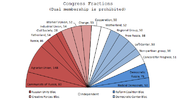 During its December session the parliament clashed with Yeltsin on a number of issues, and the conflict came to a head on December 9 when the parliament refused to confirm Yegor Gaidar
, the widely unpopular architect of Russia's "shock therapy
" market liberalizations, as prime minister. The parliament refused to nominate Gaidar, demanding modifications of the economic program and directed the Central Bank, which was under the parliament's control, to continue issuing credits to enterprises to keep them from shutting down.
In an angry speech the next day on December 10, Yeltsin accused the Congress of blocking the government's reforms and suggested the people decide on a referendum
, "which course do the citizens of Russia support? The course of the President, a course of transformations, or the course of the Congress, the Supreme Soviet and its Chairman, a course towards folding up reforms, and ultimately towards the deepening of the crisis." Parliament responded by voting to take control of the parliamentary army.
On December 12, Yeltsin and parliament speaker Khasbulatov agreed on a compromise that included the following provisions: (1) a national referendum on framing a new Russian constitution to be held in April 1993; (2) most of Yeltsin's emergency powers were extended until the referendum; (3) the parliament asserted its right to nominate and vote on its own choices for prime minister; and (4) the parliament asserted its right to reject the president's choices to head the Defense, Foreign Affairs, Interior, and Security ministries. Yeltsin nominated Viktor Chernomyrdin
to be prime minister on December 14, and the parliament confirmed him.
Yeltsin's December 1992 compromise with the seventh Congress of the People's Deputies temporarily backfired. Early 1993 saw increasing tension between Yeltsin and the parliament over the language of the referendum and power sharing. In a series of collisions over policy, the congress whittled away the president's extraordinary powers, which it had granted him in late 1991. The legislature, marshaled by Speaker Ruslan Khasbulatov
, began to sense that it could block and even defeat the president. The tactic that it adopted was gradually to erode presidential control over the government. In response, the president called a referendum on a constitution for April 11.
, first deputy prime minister, declared that the referendum would go ahead, but on April 25.
The parliament was gradually expanding its influence over the government. On March 16 the president signed a decree that conferred Cabinet rank on Viktor Gerashchenko
, chairman of the central bank, and three other officials; this was in accordance with the decision of the eighth congress that these officials should be members of the government. The congress' ruling, however, had made it clear that as ministers they would continue to be subordinate to parliament. In general, the parliament's lawmaking activity decreased in 1993, as its agenda increasingly became to be dominated by efforts to increase the parliamentarian powers and reduce those of the president.
Soon after Yeltsin's televised address, Valery Zorkin
(Chairman of the Constitutional Court of the Russian Federation
), Yuri Voronin (first vice-chairman of the Supreme Soviet), Alexander Rutskoy
and Valentin Stepankov
(Prosecutor General
) made an address, publicly condemning Yeltsin's declaration as unconstitutional. On March 23, though not yet possessing the signed document, the Constitutional Court
ruled that some of the measures proposed in Yeltsin's TV address were unconstitutional. However, the decree itself, that was only published a few days later, did not contain unconstitutional steps.
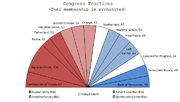 The ninth congress, which opened on 26 March, began with an extraordinary session of the Congress of People's Deputies taking up discussions of emergency measures to defend the constitution, including impeachment
of President Yeltsin. Yeltsin conceded that he had made mistakes and reached out to swing voters in parliament. Yeltsin narrowly survived an impeachment vote on 28 March, votes for impeachment falling 72 short of the 689 votes needed for a 2/3 majority. The similar proposal to dismiss Ruslan Khasbulatov, the chairman of the Supreme Soviet was defeated by a wider margin (339 in favour of the motion), though 614 deputies had initially been in favour of including the re-election of the chairman in the agenda, a tell-tale sign of the weakness of Khasbulatov's own positions (517 votes for would have sufficed to dismiss the speaker).
By the time of the ninth Congress, the legislative branch was dominated by the Russian Unity bloc, which included representatives of the CPRF and the Fatherland faction (communists, retired military personnel, and other deputies of a socialist orientation), Agrarian Union, and the faction "Russia
" led by Sergey Baburin
. Together with more 'centrist' groups (e.g. 'Change' (Смена)), the Yeltsin supporters ('Democratic Russia', 'Radical democrats') were clearly left in the minority.
This time, the Constitutional Court supported Yeltsin and ruled that the president required only a simple majority on two issues: confidence in him, and economic and social policy; he would need the support of half the electorate in order to call new parliamentary and presidential elections.
On April 25 a majority of voters expressed confidence in the president and called for new legislative elections. Yeltsin termed the results a mandate for him to continue in power. Before the referendum, Yeltsin had promised to resign, if the electorate failed to express confidence in his policies. Although this permitted the president to declare that the population supported him, not the parliament, Yeltsin lacked a constitutional mechanism to implement his victory. As before, the president had to appeal to the people over the heads of the legislature.
Some 700 representatives at the conference ultimately adopted a draft constitution on July 12 that envisaged a bicameral legislature and the dissolution of the congress. But because the convention's draft of the constitution would dissolve the congress, there was little likelihood that the congress would vote itself out of existence. The Supreme Soviet immediately rejected the draft and declared that the Congress of People's Deputies was the supreme lawmaking body and hence would decide on the new constitution.
The parliament was active in July, while the president was on vacation, and passed a number of decrees that revised economic policy in order to "end the division of society." It also launched investigations of key advisers of the president, accusing them of corruption. The president returned in August and declared that he would deploy all means, including circumventing the constitution, to achieve new parliamentary elections.
In July, the Constitutional Court of the Russian Federation
confirmed the election of Pyotr Sumin
to head the administration of the Chelyabinsk oblast
, something that Yeltsin had refused to accept. As a result, a situation of dual power
existed in that region from July to October in 1993, with two administrations claiming legitimacy simultaneously. Another conflict involved the decision of the Constitutional Court of the Russian Federation regarding the regional presidency in Mordovia
. The court delegated the question of legality of abolishing the post of the region's president to the Constitutional Court of Mordovia. As a result, popularly elected President Vasily Guslyannikov (member of the pro-Yeltsin Democratic Russia
movement) lost his position. Thereafter, the state news agency (ITAR-TASS) ceased to report on a number of Constitutional Court decisions.
The Supreme Soviet also tried to further foreign policies that differed from Yeltsin's line. Thus, on 9 July 1993, it passed a resolutions on Sevastopol
, “confirming the Russian federal status
” of the city. Ukraine saw its territorial integrity at stake and filed a complaint to the Security Council of the UN. Yeltsin condemned the resolution of the Supreme Soviet.
In August 1993, a commentator reflected on the situation as follows: “The President issues decrees as if there were no Supreme Soviet, and the Supreme Soviet suspends decrees as if there were no President.” (Izvestiya, 13 August 1993).
Two weeks later Yeltsin declared that he would agree to call early presidential elections provided that the parliament also called elections. The parliament ignored him. On September 18, Yeltsin then named Yegor Gaidar, who had been forced out of office by parliamentary opposition in 1992, a deputy prime minister and a deputy premier for economic affairs. This appointment was unacceptable to the Supreme Soviet, which emphatically rejected it.
dissolved; this act was in contradiction with a number of articles of the Constitution of 1978
(as amended from 1989—1993), such as, Article 1216 which stated that:
At the same time, Yeltsin repeated his announcement of a constitutional referendum, and new legislative elections for December. He also repudiated the Constitution of 1978, declaring that it had been replaced with one that gave him extraordinary executive powers. (According to the new plan, the lower house would have 450 deputies and be called the State Duma
, the name of the Russian legislature before the Bolshevik Revolution in 1917. The Federation Council
, which would bring together representatives from the 89 subdivisions of the Russian Federation, would assume the role of an upper house.)
Yeltsin claimed that by dissolving the Russian parliament in September 1993 he was clearing the tracks for a rapid transition to a functioning market economy. With this pledge, he received strong backing from the leading powers of the West. Yeltsin enjoyed a strong relationship with Western powers, particularly the United States
, but the relationship made him unpopular with some Russians. In Russia, the Yeltsin side had control over television, where hardly any pro-parliament views were expressed during the September–October crisis.
. The next day, the Constitutional Court held that Yeltsin had violated the constitution and could be impeached. During an all-night session, chaired by Khasbulatov, parliament declared the president's decree null and void. Rutskoy was proclaimed president and took the oath on the constitution. He dismissed Yeltsin and the key ministers Pavel Grachev
(defense), Nikolay Golushko (security), and Viktor Yerin (interior). Russia now had two presidents and two ministers of defense, security, and interior. It was dual power
in earnest. Although Gennady Zyuganov
and other top leaders of the Communist Party of the Russian Federation
did not participate in the events, individual members of communist organizations actively supported the parliament.
On 23 September, the Congress of People's deputies convened. Though only 638 deputies were present (the quorum was 689), Yeltsin was impeached by the Congress.
On 24 September, an undaunted Yeltsin announced presidential elections for June 1994. The same day, the Congress of People's Deputies voted to hold simultaneous parliamentary and presidential elections by March 1994. Yeltsin scoffed at the parliament-backed proposal for simultaneous elections, and responded the next day by cutting off electricity, phone service, and hot water in the parliament building.
had been declining, corruption
was rampant, violent crime
was skyrocketing, medical services were collapsing and life expectancy
falling. Yeltsin was also increasingly getting the blame. Outside Moscow, the Russian masses overall were confused and disorganized. Nonetheless, some of them also tried to voice their protest. Sporadic strikes took place across Russia. The protestors included supporters of various communist (Labour Russia
) and nationalist organizations, including those belonging to the National Salvation Front
. A number of armed militants of Russian National Unity
took part in the defense of the White House, as reportedly did veterans of Tiraspol and Riga
OMON. The presence of Transnistrian forces, including the KGB
detachment 'Dnestr', stirred General Alexander Lebed to protest against Transnistrian interference in Russia's internal affairs.
On 28 September, Moscow saw the first bloody clashes between the special police and anti-Yeltsin demonstrators. Also on the same day, the Interior Ministry moved to seal off the parliament building. Barricades and wire were put around the building. On 1 October, the Interior Ministry estimated that 600 fighting men with a large cache of arms had joined Yeltsin's political opponents in the parliament building.
Patriarch as mediator
continued until October 2. On the afternoon of October 3, Moscow police failed to control a demonstration near the White House, and the political impasse developed into armed conflict.
On October 2, supporters of parliament constructed barricades and blocked traffic on Moscow's main streets. On the afternoon of October 3, armed opponents of Yeltsin successfully stormed the police cordon around the White House territory, where the Russian parliament was barricaded. Paramilitaries from factions supporting the parliament, as well as a few units of the internal military (armed forces normally reporting to the Ministry of Interior), supported the Supreme Soviet.
Rutskoy greeted the crowds from the White House balcony, and urged them to form battalions and to go on to seize the mayor's office and the national television center at Ostankino. Khasbulatov also called for the storming of the Kremlin and imprisoning “the criminal and usurper Yeltsin” in Matrosskaya Tishina
. At 16:00 Yeltsin signed a decree introducing state of emergency in Moscow.
On the evening of October 3, after taking the mayor's office, pro-parliament demonstrators marched toward Ostankino, the television center. But the pro-parliament crowds were met at the television
complex by Interior Ministry units. A pitched battle followed. Part of the TV center was significantly damaged. Television stations went off the air and 62 people were killed. Before midnight, the Interior Ministry's units had turned back the parliament loyalists.
When broadcasting resumed late in the evening, Yegor Gaidar
called on television for a meeting in support of President Yeltsin. A number of people with different political convictions and interpretations over the causes of the crisis (such as Grigory Yavlinsky, Alexander Yakovlev
, Yuri Luzhkov, Ales Adamovich
, and Bulat Okudzhava
) also appealed to support the government. Similarly, the Civic Union bloc of 'constructive opposition' issued a statement accusing the Supreme Soviet of having crossed the border separating political struggle from criminality. Several hundred of Yeltsin's supporters spent the night in the square in front of the Moscow City Hall preparing for further clashes, only to learn in the morning of October 4 that the army was on their side.
Rutskoy, as a former general, appealed to some of his ex-colleagues. After all, many officers and especially rank-and-file soldiers had little sympathy for Yeltsin. But the supporters of the parliament did not send any emissaries to the barracks to recruit lower-ranking officer corps, making the fatal mistake of attempting to deliberate only among high-ranking military officials who already had close ties to parliamentary leaders. In the end, a prevailing bulk of the generals did not want to take their chances with a Rutskoy-Khasbulatov regime. Some generals had stated their intention to back the parliament, but at the last moment moved over to Yeltsin's side.
The plan of action was actually proposed by captain Gennady Zakharov. Ten tanks were to fire at the upper floors of the White House, with the aim of minimizing casualties but creating confusion and panic amongst the defenders. Then, special troops of the Vympel
and Alpha
units would storm the building. According to Yeltsin's bodyguard Alexander Korzhakov
, firing on the upper floors was also necessary to scare off the snipers.
By sunrise on October 4, the Russian army encircled the parliament building, and a few hours later army tanks began to shell the White House. At 8:00 am Moscow time, Yeltsin's declaration was announced by his press service. Yeltsin declared:
He also assured the listeners that:
By noon, troops entered the White House and began to occupy it, floor by floor. Hostilities were stopped several times to allow some in the White House to leave. By mid-afternoon, popular resistance in the streets was completely suppressed, barring occasional sniper's fire.
Crushing the "second October Revolution," which, as mentioned, saw the deadliest street fighting in Moscow since 1917, cost hundreds of lives. Police said, on October 8, that 187 had died in the conflict and 437 had been wounded. Unofficial sources named much higher numbers: up to 2,000 dead.
Yeltsin was backed by the military only grudgingly, and at the eleventh hour. The instruments of coercion gained the most, and they would expect Yeltsin to reward them in the future. A paradigmatic example of this was General Pavel Grachev
, who had demonstrated his loyalty during this crisis. Grachev became a key political figure, despite many years of charges that he was linked to corruption within the Russian military.
The crisis was a strong example of the problems of executive-legislative balance in Russia's presidential system, and, moreover, the likelihood of conflict of a zero-sum
character and the absence of obvious mechanisms to resolve it. In the end, this was a battle of competing legitimacy of the executive and the legislature, won by the side that could muster the support of the ultimate instruments of coercion.
(VTsIOM) conducted a poll in the aftermath of October 1993 events and found out that 51% of those polled thought that the use of military force by Yeltsin was justified and 30% thought it was not justified. The support for Yeltsin's actions declined in the later years. When VCIOM-A asked the same question in 2003, only 20% agreed with the use of the military, with 57% opposed.
When asked about the main cause of the events of October 3–4, 46% in the 1993 VCIOM poll blamed Rutskoy and Khasbulatov. However, ten years following the crisis, the most popular culprit was the legacy of Mikhail Gorbachev
with 31%, closely followed by Yeltsin's policies with 29%.
In 1993, a majority of Russians considered the events of September 21 – October 4 as an attempt of Communist revanche or as a result of Rutskoy and Khasbulatov seeking personal power. Ten years thereafter, it became more common to see the cause of those events in the resolution of Yeltsin’s government to implement the privatization program, which gave large pieces of all-nation property to a limited number of tycoons (later called “oligarchs”), and to which the old Parliament (Supreme Soviet) was the main obstacle.
VTsIOM being an state-controlled apparatus, and considering the state of emergency, the 1993 aftermath polling information could have been originally altered to suit Yeltsin's political needs to establish the legitimacy of his rule after the turmoil.
published the open letter
“Writers demand decisive actions of the government” to the government and President signed by forty-two well-known Russian literati
and hence called the Letter of Forty-Two
. It was written in reaction to the events and contained the following seven demands:
In the weeks following the storming of the Russian White House, Yeltsin issued a barrage of presidential decrees intended to consolidate his position. On October 5, Yeltsin banned political leftist and nationalist organizations and newspapers like Den, Sovetskaya Rossiya and Pravda that had supported the parliament (they would later resume publishing). In an address to the nation on October 6, Yeltsin also called on those regional Soviets
that had opposed him—by far the majority—to disband. Valery Zorkin
, chairman of the Constitutional Court, was forced to resign. The chairman of the Federation of Independent Trade Unions was also sacked. The anti-Yeltsin TV broadcast 600 Seconds
of Alexander Nevzorov
was ultimately closed down.
Yeltsin decreed, on October 12, that both houses of parliament would be elected in December. On October 15, he ordered that a popular referendum be held in December on a new constitution. Rutskoy and Khasbulatov were charged on October 15 with "organizing mass disorders" and imprisoned. They were later released in 1994 when Yeltsin's position was sufficiently secure.
"Russia needs order," Yeltsin told the Russian people in a television broadcast in November in introducing his new draft of the constitution, which was to be put to a referendum on December 12. The new basic law would concentrate sweeping powers in the hands of the president. The bicameral legislature, to sit for only two years, was restricted in crucial areas. The president could choose the prime minister even if the parliament objected and could appoint the military leadership without parliamentary approval. He would head and appoint the members of a new, more powerful security council. If a vote of no confidence in the government was passed, the president would be enabled to keep it in office for three months and could dissolve the parliament if it repeated the vote. The president could veto any bill passed by a simple majority in the lower house, after which a two-thirds majority would be required for the legislation to be passed. The president could not be impeached for contravening the constitution. The central bank would become independent, but the president would need the approval of the State Duma to appoint the bank's governor, who would thereafter be independent of the parliament. At the time, most political observers regarded the draft constitution as shaped by and for Yeltsin and perhaps unlikely to survive him.
However, the parliament elected on the same day (with a turnout of about 53%) delivered a stunning rebuke to his neoliberal economic program. Candidates identified with Yeltsin's economic policies were overwhelmed by a huge protest vote, the bulk of which was divided between the Communists (who mostly drew their support from industrial workers, out-of-work bureaucrats, some professionals, and pensioners) and the ultra-nationalists (who drew their support from disaffected elements of the lower middle classes). Unexpectedly, the most surprising insurgent group proved to be the ultranationalist Liberal Democratic Party
led by Vladimir Zhirinovsky
. It gained 23% of the vote while the Gaidar led 'Russia's Choice
' received 15.5% and the Communist Party of the Russian Federation, 12.4%. LDPR leader, Vladimir Zhirinovsky
, alarmed many observers abroad with his neo-fascist
, chauvinist
declarations.
Nevertheless, the referendum marked the end of the constitutional period defined by the constitution
adopted by the Russian SFSR
in 1978, which was amended many times while Russia was a part of Mikhail Gorbachev
's Soviet Union. (For further details on the change of political and economic system of the former Soviet Union, see History of the Soviet Union (1982–1991).) Although Russia would emerge as a dual presidential-parliamentary system in theory, substantial power would rest in the president's hands. Russia now has a prime minister
who heads a cabinet and directs the administration, but the system is an example of presidentialism with the cover of a presidential prime minister, not an effective semipresidential constitutional model. (The premier, for example, is appointed, and in effect freely dismissed, by the president.)
Supreme Soviet of Russia
The Supreme Soviet of the Russian SFSR , later Supreme Soviet of the Russian Federation was the supreme government institution of the Russian SFSR in 1938–1990; in 1990–1993 it was a permanent parliament, elected by the Congress of People's Deputies of the Russian Federation.The Supreme Soviet of...
that was resolved by using military force. The relations between the president and the parliament had been deteriorating for a while. The constitutional crisis
Constitutional crisis
A constitutional crisis is a situation that the legal system's constitution or other basic principles of operation appear unable to resolve; it often results in a breakdown in the orderly operation of government...
reached a tipping point on 21 September 1993, when President Boris Yeltsin
Boris Yeltsin
Boris Nikolayevich Yeltsin was the first President of the Russian Federation, serving from 1991 to 1999.Originally a supporter of Mikhail Gorbachev, Yeltsin emerged under the perestroika reforms as one of Gorbachev's most powerful political opponents. On 29 May 1990 he was elected the chairman of...
purported to dissolve the country's legislature (the Congress of People's Deputies and its Supreme Soviet
Supreme Soviet of Russia
The Supreme Soviet of the Russian SFSR , later Supreme Soviet of the Russian Federation was the supreme government institution of the Russian SFSR in 1938–1990; in 1990–1993 it was a permanent parliament, elected by the Congress of People's Deputies of the Russian Federation.The Supreme Soviet of...
), although the president did not have the power to dissolve the parliament according to the then-current constitution. Yeltsin used the results of the referendum of April 1993 to justify his actions. In response, the parliament declared that the president's decision was null and void, impeached Yeltsin and proclaimed vice president Aleksandr Rutskoy to be acting president.
The situation deteriorated at the beginning of October. On 3 October, demonstrators removed police cordons around the parliament and, urged by their leaders, took over the Mayor's offices and tried to storm the Ostankino television centre. The army, which had initially declared its neutrality, by Yeltsin's orders stormed the Supreme Soviet building in the early morning hours of 4 October, and arrested the leaders of the resistance.
The ten-day conflict had seen the deadliest street fighting in Moscow since October 1917. According to government estimates, 187 people were killed and 437 wounded, while sources close to Russian communists put the death toll at as high as 2,000.
The intensifying executive-legislative power struggle
Yeltsin's economic reform program took effect on 2 January 1992. Soon afterward pricePrice
-Definition:In ordinary usage, price is the quantity of payment or compensation given by one party to another in return for goods or services.In modern economies, prices are generally expressed in units of some form of currency...
s skyrocketed, government spending was slashed, and heavy new tax
Tax
To tax is to impose a financial charge or other levy upon a taxpayer by a state or the functional equivalent of a state such that failure to pay is punishable by law. Taxes are also imposed by many subnational entities...
es went into effect. A deep credit
Credit (finance)
Credit is the trust which allows one party to provide resources to another party where that second party does not reimburse the first party immediately , but instead arranges either to repay or return those resources at a later date. The resources provided may be financial Credit is the trust...
crunch shut down many industries
Industry
Industry refers to the production of an economic good or service within an economy.-Industrial sectors:There are four key industrial economic sectors: the primary sector, largely raw material extraction industries such as mining and farming; the secondary sector, involving refining, construction,...
and brought about a protracted depression. Certain politicians quickly began to distance themselves from the program; and increasingly the ensuing political confrontation between Yeltsin on the one side, and the opposition to radical economic reform on the other, became centered in the two branches of government.
Real GDP percentage change in Russia, 1990-1994.
| 1990 | 1991 | 1992 | 1993 | 1994 |
|---|---|---|---|---|
| -3.0% | -13.0% | -19.0% | -12.0% | -15.0% |
Throughout 1992, opposition to Yeltsin's reform policies grew stronger and more intractable among bureaucrats concerned about the condition of Russian industry and among regional leaders who wanted more independence from Moscow
Moscow
Moscow is the capital, the most populous city, and the most populous federal subject of Russia. The city is a major political, economic, cultural, scientific, religious, financial, educational, and transportation centre of Russia and the continent...
. Russia's vice president, Aleksandr Rutskoy, denounced the Yeltsin program as "economic genocide." Indeed, during the first half of the year 1992, the average income of the population declined 2-2.5 times. Leaders of oil
Oil
An oil is any substance that is liquid at ambient temperatures and does not mix with water but may mix with other oils and organic solvents. This general definition includes vegetable oils, volatile essential oils, petrochemical oils, and synthetic oils....
-rich republics such as Tatarstan
Tatarstan
The Republic of Tatarstan is a federal subject of Russia located in the Volga Federal District. Its capital is the city of Kazan, which is one of Russia's largest and most prosperous cities. The republic borders with Kirov, Ulyanovsk, Samara, and Orenburg Oblasts, and with the Mari El, Udmurt,...
and Bashkiria called for full independence from Russia.
Also throughout 1992, Yeltsin wrestled with the Supreme Soviet (the standing legislature) and the Russian Congress of People's Deputies (the country's highest legislative body, from which the Supreme Soviet members were drawn) for control over government and government policy. In 1992 the speaker of the Russian Supreme Soviet, Ruslan Khasbulatov
Ruslan Khasbulatov
Ruslan Imranovich Khasbulatov is a Russian economist and politician of Chechen descent who played a central role in the events leading to the 1993 constitutional crisis in the Russian Federation.-Early life:...
, came out in opposition to the reforms, despite claiming to support Yeltsin's overall goals.
The president was concerned about the terms of the constitutional amendments passed in late 1991, which meant that his special powers of decree were set to expire by the end of 1992 (Yeltsin expanded the powers of the presidency beyond normal constitutional limits in carrying out the reform program). Yeltsin, awaiting implementation of his privatization
Privatization
Privatization is the incidence or process of transferring ownership of a business, enterprise, agency or public service from the public sector to the private sector or to private non-profit organizations...
program, demanded that parliament reinstate his decree powers (only parliament had the authority to replace or amend the constitution). But in the Russian Congress of People's Deputies and in the Supreme Soviet, the deputies refused to adopt a new constitution that would enshrine the scope of presidential powers demanded by Yeltsin into law.
The seventh Congress of People's Deputies
Yegor Gaidar
Yegor Timurovich Gaidar was a Soviet and Russian economist, politician and author, and was the Acting Prime Minister of Russia from 15 June 1992 to 14 December 1992....
, the widely unpopular architect of Russia's "shock therapy
Shock therapy (economics)
In economics, shock therapy refers to the sudden release of price and currency controls, withdrawal of state subsidies, and immediate trade liberalization within a country, usually also including large scale privatization of previously public owned assets....
" market liberalizations, as prime minister. The parliament refused to nominate Gaidar, demanding modifications of the economic program and directed the Central Bank, which was under the parliament's control, to continue issuing credits to enterprises to keep them from shutting down.
In an angry speech the next day on December 10, Yeltsin accused the Congress of blocking the government's reforms and suggested the people decide on a referendum
Referendum
A referendum is a direct vote in which an entire electorate is asked to either accept or reject a particular proposal. This may result in the adoption of a new constitution, a constitutional amendment, a law, the recall of an elected official or simply a specific government policy. It is a form of...
, "which course do the citizens of Russia support? The course of the President, a course of transformations, or the course of the Congress, the Supreme Soviet and its Chairman, a course towards folding up reforms, and ultimately towards the deepening of the crisis." Parliament responded by voting to take control of the parliamentary army.
On December 12, Yeltsin and parliament speaker Khasbulatov agreed on a compromise that included the following provisions: (1) a national referendum on framing a new Russian constitution to be held in April 1993; (2) most of Yeltsin's emergency powers were extended until the referendum; (3) the parliament asserted its right to nominate and vote on its own choices for prime minister; and (4) the parliament asserted its right to reject the president's choices to head the Defense, Foreign Affairs, Interior, and Security ministries. Yeltsin nominated Viktor Chernomyrdin
Viktor Chernomyrdin
Viktor Stepanovich Chernomyrdin was the founder and the first chairman of the Gazprom energy company, the longest serving Prime Minister of Russia and Acting President of Russia for a day in 1996. He was a key figure in Russian politics in the 1990s, and a great contributor to the Russian...
to be prime minister on December 14, and the parliament confirmed him.
Yeltsin's December 1992 compromise with the seventh Congress of the People's Deputies temporarily backfired. Early 1993 saw increasing tension between Yeltsin and the parliament over the language of the referendum and power sharing. In a series of collisions over policy, the congress whittled away the president's extraordinary powers, which it had granted him in late 1991. The legislature, marshaled by Speaker Ruslan Khasbulatov
Ruslan Khasbulatov
Ruslan Imranovich Khasbulatov is a Russian economist and politician of Chechen descent who played a central role in the events leading to the 1993 constitutional crisis in the Russian Federation.-Early life:...
, began to sense that it could block and even defeat the president. The tactic that it adopted was gradually to erode presidential control over the government. In response, the president called a referendum on a constitution for April 11.
The eighth congress
The eighth Congress of People's Deputies opened on March 10, 1993 with a strong attack on the president by Khasbulatov, who accused Yeltsin of acting unconstitutionally. In mid-March, an emergency session of the Congress of People's Deputies voted to amend the constitution, strip Yeltsin of many of his powers, and cancel the scheduled April referendum, again opening the door to legislation that would shift the balance of power away from the president. The president stalked out of the congress. Vladimir ShumeykoVladimir Shumeyko
Vladimir Filippovich Shumeyko is a Russian political figure.In November 1991, Vladimir Shumeyko was appointed chairman of the Supreme Soviet of the Russian Federation. In May of 1992, Shumeyko, leading a parliamentary delegation, visited Damascus...
, first deputy prime minister, declared that the referendum would go ahead, but on April 25.
The parliament was gradually expanding its influence over the government. On March 16 the president signed a decree that conferred Cabinet rank on Viktor Gerashchenko
Viktor Gerashchenko
Viktor Vladimirovich Gerashchenko , byname Gerakl , was the Chairman of the Soviet and then Russian Central Bank during much of the Perestroika and post-Perestroika periods....
, chairman of the central bank, and three other officials; this was in accordance with the decision of the eighth congress that these officials should be members of the government. The congress' ruling, however, had made it clear that as ministers they would continue to be subordinate to parliament. In general, the parliament's lawmaking activity decreased in 1993, as its agenda increasingly became to be dominated by efforts to increase the parliamentarian powers and reduce those of the president.
The "special regime"
The president's response was dramatic. On March 20, Yeltsin addressed the nation directly on television, declaring that he had signed a decree on a "special regime" (“Об особом порядке управления до преодоления кризиса власти″), under which he would assume extraordinary executive power pending the results of a referendum on the timing of new legislative elections, on a new constitution, and on public confidence in the president and vice-president. Yeltsin also bitterly attacked the parliament, accusing the deputies of trying to restore the Soviet-era order.Soon after Yeltsin's televised address, Valery Zorkin
Valery Zorkin
Valery Dmitrievich Zorkin is the first and the current Chairman of the Constitutional Court of the Russian Federation.Zorkin was born on 18 February 1943 in a rural area of the Maritime Province. In 1964, he matriculated from the Law Department of the Moscow University, in which he lectured until...
(Chairman of the Constitutional Court of the Russian Federation
Constitutional Court of the Russian Federation
The Constitutional Court of the Russian Federation is a high court which is empowered to rule on whether or not certain laws or presidential decrees are in fact contrary to the Constitution of Russia...
), Yuri Voronin (first vice-chairman of the Supreme Soviet), Alexander Rutskoy
Alexander Rutskoy
Alexander Vladimirovich Rutskoy is a Russian politician and a former Soviet military officer. Rutskoy served as the only Vice President of Russia from 10 July 1991 to 4 October 1993, and as the governor of Kursk Oblast from 1996 to 2000...
and Valentin Stepankov
Valentin Stepankov
Valentin Stepankov was the first prosecutor general of the Russian Federation.He once condemned an action by Boris Yeltsin in 1993, in which Russia faced a constitutional crisis.He has also served as Russia's deputy natural resources minister...
(Prosecutor General
Prosecutor General of Russia
The Prosecutor General of Russia heads the system of official prosecution in courts known as the Office of the Prosecutor General of Russian Federation ....
) made an address, publicly condemning Yeltsin's declaration as unconstitutional. On March 23, though not yet possessing the signed document, the Constitutional Court
Constitutional Court of the Russian Federation
The Constitutional Court of the Russian Federation is a high court which is empowered to rule on whether or not certain laws or presidential decrees are in fact contrary to the Constitution of Russia...
ruled that some of the measures proposed in Yeltsin's TV address were unconstitutional. However, the decree itself, that was only published a few days later, did not contain unconstitutional steps.
The ninth congress
Impeachment
Impeachment is a formal process in which an official is accused of unlawful activity, the outcome of which, depending on the country, may include the removal of that official from office as well as other punishment....
of President Yeltsin. Yeltsin conceded that he had made mistakes and reached out to swing voters in parliament. Yeltsin narrowly survived an impeachment vote on 28 March, votes for impeachment falling 72 short of the 689 votes needed for a 2/3 majority. The similar proposal to dismiss Ruslan Khasbulatov, the chairman of the Supreme Soviet was defeated by a wider margin (339 in favour of the motion), though 614 deputies had initially been in favour of including the re-election of the chairman in the agenda, a tell-tale sign of the weakness of Khasbulatov's own positions (517 votes for would have sufficed to dismiss the speaker).
By the time of the ninth Congress, the legislative branch was dominated by the Russian Unity bloc, which included representatives of the CPRF and the Fatherland faction (communists, retired military personnel, and other deputies of a socialist orientation), Agrarian Union, and the faction "Russia
Russian All-People's Union
Russian All-People's Union was a Russian nationalist political party, formed in October 1991, in 2001 it merged into Narodnaya Volya. Its leader was Sergey Baburin....
" led by Sergey Baburin
Sergey Baburin
Sergey Nikolayevich Baburin is a Russian nationalist politician and is Vice Speaker of the Russian State Duma and leader of the Party of National Revival "Narodnaya Volya". He was elected for the Rodina bloc. He is a member of the Committee on Civil, Criminal, Arbitral and Procedural Law.Baburin...
. Together with more 'centrist' groups (e.g. 'Change' (Смена)), the Yeltsin supporters ('Democratic Russia', 'Radical democrats') were clearly left in the minority.
National referendum
The referendum would go ahead, but since the impeachment vote failed, the Congress of People's Deputies sought to set new terms for a popular referendum. The legislature's version of the referendum asked whether citizens had confidence in Yeltsin, approved of his reforms, and supported early presidential and legislative elections. The parliament voted that in order to win, the president would need to obtain 50 percent of the whole electorate, rather than 50 percent of those actually voting, to avoid an early presidential election.This time, the Constitutional Court supported Yeltsin and ruled that the president required only a simple majority on two issues: confidence in him, and economic and social policy; he would need the support of half the electorate in order to call new parliamentary and presidential elections.
On April 25 a majority of voters expressed confidence in the president and called for new legislative elections. Yeltsin termed the results a mandate for him to continue in power. Before the referendum, Yeltsin had promised to resign, if the electorate failed to express confidence in his policies. Although this permitted the president to declare that the population supported him, not the parliament, Yeltsin lacked a constitutional mechanism to implement his victory. As before, the president had to appeal to the people over the heads of the legislature.
The constitutional convention
In an attempt to outmaneuver the parliament, Yeltsin decreed the creation of a large conference of political leaders from a wide range of government institutions, regions, public organizations, and political parties in June— a "special constitutional convention" to examine the draft constitution that he had presented in April. After much hesitation, the Constitutional Committee of the Congress of People's Deputies decided to participate and present its own draft constitution. Of course, the two main drafts contained contrary views of legislative-executive relations.Some 700 representatives at the conference ultimately adopted a draft constitution on July 12 that envisaged a bicameral legislature and the dissolution of the congress. But because the convention's draft of the constitution would dissolve the congress, there was little likelihood that the congress would vote itself out of existence. The Supreme Soviet immediately rejected the draft and declared that the Congress of People's Deputies was the supreme lawmaking body and hence would decide on the new constitution.
The parliament was active in July, while the president was on vacation, and passed a number of decrees that revised economic policy in order to "end the division of society." It also launched investigations of key advisers of the president, accusing them of corruption. The president returned in August and declared that he would deploy all means, including circumventing the constitution, to achieve new parliamentary elections.
In July, the Constitutional Court of the Russian Federation
Constitutional Court of the Russian Federation
The Constitutional Court of the Russian Federation is a high court which is empowered to rule on whether or not certain laws or presidential decrees are in fact contrary to the Constitution of Russia...
confirmed the election of Pyotr Sumin
Pyotr Sumin
Pyotr Ivanovich Sumin was the governor of Chelyabinsk Oblast of Russia. He was sequentially a member of the Communist Party of the Soviet Union, Communist Party of the Russian Federation and Political Party United Russia. He became governor of Chelyabinsk Oblast in 1997. He complained about...
to head the administration of the Chelyabinsk oblast
Chelyabinsk Oblast
-External links:*...
, something that Yeltsin had refused to accept. As a result, a situation of dual power
Dual power
Dual power is a concept that has taken on a broad meaning in the hands of anarchists and Libertarian socialists who use it to refer to the concept of gradual revolution through the creation of "alternative-institutions" and "counter-institutions" in place of and in opposition to state and corporate...
existed in that region from July to October in 1993, with two administrations claiming legitimacy simultaneously. Another conflict involved the decision of the Constitutional Court of the Russian Federation regarding the regional presidency in Mordovia
Mordovia
The Republic of Mordovia , also known as Mordvinia, is a federal subject of Russia . Its capital is the city of Saransk. Population: -Geography:The republic is located in the eastern part of the East European Plain of Russia...
. The court delegated the question of legality of abolishing the post of the region's president to the Constitutional Court of Mordovia. As a result, popularly elected President Vasily Guslyannikov (member of the pro-Yeltsin Democratic Russia
Democratic Russia
Democratic Russia was generic name for several political entities that played a transformative role in Russia's transition from Communist rule:...
movement) lost his position. Thereafter, the state news agency (ITAR-TASS) ceased to report on a number of Constitutional Court decisions.
The Supreme Soviet also tried to further foreign policies that differed from Yeltsin's line. Thus, on 9 July 1993, it passed a resolutions on Sevastopol
Sevastopol
Sevastopol is a city on rights of administrative division of Ukraine, located on the Black Sea coast of the Crimea peninsula. It has a population of 342,451 . Sevastopol is the second largest port in Ukraine, after the Port of Odessa....
, “confirming the Russian federal status
Federal cities of Russia
The Russian Federation is divided into 83 federal subjects, two of which are federal cities....
” of the city. Ukraine saw its territorial integrity at stake and filed a complaint to the Security Council of the UN. Yeltsin condemned the resolution of the Supreme Soviet.
In August 1993, a commentator reflected on the situation as follows: “The President issues decrees as if there were no Supreme Soviet, and the Supreme Soviet suspends decrees as if there were no President.” (Izvestiya, 13 August 1993).
Developments in September
The president launched his offensive on September 1 when he attempted to suspend Vice President Rutskoy, a key adversary. Rutskoy, elected on the same ticket as Yeltsin in 1991, was the president's automatic successor. A presidential spokesman said that he had been suspended because of "accusations of corruption." On September 3, the Supreme Soviet rejected Yeltsin's suspension of Rutskoy and referred the question to the Constitutional Court.Two weeks later Yeltsin declared that he would agree to call early presidential elections provided that the parliament also called elections. The parliament ignored him. On September 18, Yeltsin then named Yegor Gaidar, who had been forced out of office by parliamentary opposition in 1992, a deputy prime minister and a deputy premier for economic affairs. This appointment was unacceptable to the Supreme Soviet, which emphatically rejected it.
Siege and assault
On 21 September, Yeltsin declared the Supreme SovietSupreme Soviet of Russia
The Supreme Soviet of the Russian SFSR , later Supreme Soviet of the Russian Federation was the supreme government institution of the Russian SFSR in 1938–1990; in 1990–1993 it was a permanent parliament, elected by the Congress of People's Deputies of the Russian Federation.The Supreme Soviet of...
dissolved; this act was in contradiction with a number of articles of the Constitution of 1978
Russian Constitution of 1978
The Constitution of the Russian Soviet Federative Socialist Republic of 12 April 1978 was formally its supreme law.- History :At its Extraordinary Session of 12 April 1978, the Supreme Soviet of the Russian SFSR adopted a new republican Constitution, to replace the old Russian Constitution of 1937,...
(as amended from 1989—1993), such as, Article 1216 which stated that:
At the same time, Yeltsin repeated his announcement of a constitutional referendum, and new legislative elections for December. He also repudiated the Constitution of 1978, declaring that it had been replaced with one that gave him extraordinary executive powers. (According to the new plan, the lower house would have 450 deputies and be called the State Duma
State Duma
The State Duma , common abbreviation: Госду́ма ) in the Russian Federation is the lower house of the Federal Assembly of Russia , the upper house being the Federation Council of Russia. The Duma headquarters is located in central Moscow, a few steps from Manege Square. Its members are referred to...
, the name of the Russian legislature before the Bolshevik Revolution in 1917. The Federation Council
Federation Council of Russia
Federation Council of Russia ) is the upper house of the Federal Assembly of Russia , according to the 1993 Constitution of the Russian Federation...
, which would bring together representatives from the 89 subdivisions of the Russian Federation, would assume the role of an upper house.)
Yeltsin claimed that by dissolving the Russian parliament in September 1993 he was clearing the tracks for a rapid transition to a functioning market economy. With this pledge, he received strong backing from the leading powers of the West. Yeltsin enjoyed a strong relationship with Western powers, particularly the United States
United States
The United States of America is a federal constitutional republic comprising fifty states and a federal district...
, but the relationship made him unpopular with some Russians. In Russia, the Yeltsin side had control over television, where hardly any pro-parliament views were expressed during the September–October crisis.
Parliament invalidates Yeltsin's presidency
Rutskoy called Yeltsin's move a step toward a coup d'etatCoup d'état
A coup d'état state, literally: strike/blow of state)—also known as a coup, putsch, and overthrow—is the sudden, extrajudicial deposition of a government, usually by a small group of the existing state establishment—typically the military—to replace the deposed government with another body; either...
. The next day, the Constitutional Court held that Yeltsin had violated the constitution and could be impeached. During an all-night session, chaired by Khasbulatov, parliament declared the president's decree null and void. Rutskoy was proclaimed president and took the oath on the constitution. He dismissed Yeltsin and the key ministers Pavel Grachev
Pavel Grachev
Pavel Sergeyevich Grachev , sometimes transliterated as Grachov, is a retired Russian Army General and the former Defence Minister of the Russian Federation; in 1988 he was declared the Hero of the Soviet Union...
(defense), Nikolay Golushko (security), and Viktor Yerin (interior). Russia now had two presidents and two ministers of defense, security, and interior. It was dual power
Dual power
Dual power is a concept that has taken on a broad meaning in the hands of anarchists and Libertarian socialists who use it to refer to the concept of gradual revolution through the creation of "alternative-institutions" and "counter-institutions" in place of and in opposition to state and corporate...
in earnest. Although Gennady Zyuganov
Gennady Zyuganov
Gennady Andreyevich Zyuganov is a Russian politician, First Secretary of the Communist Party of the Russian Federation , Chairman of the Union of Communist Parties - Communist Party of the Soviet Union , deputy of the State Duma , and a member of Parliamentary Assembly of the Council of Europe...
and other top leaders of the Communist Party of the Russian Federation
Communist Party of the Russian Federation
The Communist Party of the Russian Federation is a Russian political party. It is the second major political party in the Russian Federation.-History:...
did not participate in the events, individual members of communist organizations actively supported the parliament.
On 23 September, the Congress of People's deputies convened. Though only 638 deputies were present (the quorum was 689), Yeltsin was impeached by the Congress.
On 24 September, an undaunted Yeltsin announced presidential elections for June 1994. The same day, the Congress of People's Deputies voted to hold simultaneous parliamentary and presidential elections by March 1994. Yeltsin scoffed at the parliament-backed proposal for simultaneous elections, and responded the next day by cutting off electricity, phone service, and hot water in the parliament building.
Mass protests and the barricading of the parliament
Yeltsin also sparked popular unrest with his dissolution of a parliament increasingly opposed to his neoliberal economic reforms. Tens of thousands of Russians marched in the streets of Moscow seeking to bolster the parliamentary cause. The demonstrators were protesting against the deteriorating living conditions. Since 1989, the GDPGross domestic product
Gross domestic product refers to the market value of all final goods and services produced within a country in a given period. GDP per capita is often considered an indicator of a country's standard of living....
had been declining, corruption
Political corruption
Political corruption is the use of legislated powers by government officials for illegitimate private gain. Misuse of government power for other purposes, such as repression of political opponents and general police brutality, is not considered political corruption. Neither are illegal acts by...
was rampant, violent crime
Violent crime
A violent crime or crime of violence is a crime in which the offender uses or threatens to use violent force upon the victim. This entails both crimes in which the violent act is the objective, such as murder, as well as crimes in which violence is the means to an end, such as robbery. Violent...
was skyrocketing, medical services were collapsing and life expectancy
Life expectancy
Life expectancy is the expected number of years of life remaining at a given age. It is denoted by ex, which means the average number of subsequent years of life for someone now aged x, according to a particular mortality experience...
falling. Yeltsin was also increasingly getting the blame. Outside Moscow, the Russian masses overall were confused and disorganized. Nonetheless, some of them also tried to voice their protest. Sporadic strikes took place across Russia. The protestors included supporters of various communist (Labour Russia
Labour Russia
Labour Russia is a hard-line communist movement in Russia. It was founded in 1991 as a popular movement supporting the Russian Communist Workers' Party and is led by Viktor Anpilov. Apart from the RKRP activists, the movement included activists from other radical opposition groups, e.g...
) and nationalist organizations, including those belonging to the National Salvation Front
National Salvation Front (Russia)
The National Salvation Front was a broad coalition of communist, socialist and ultra-nationalist movements against the reforms in Russia. The front was organized on 24 October 1992...
. A number of armed militants of Russian National Unity
Russian National Unity
Russian National Unity or All-Russian civic patriotic movement "Russian National Unity" , is a far right, fascist political party and paramilitary organization based in Russia and operating in states with Russian-speaking populations. It was founded by the ultra-nationalist Alexander Barkashov...
took part in the defense of the White House, as reportedly did veterans of Tiraspol and Riga
Riga
Riga is the capital and largest city of Latvia. With 702,891 inhabitants Riga is the largest city of the Baltic states, one of the largest cities in Northern Europe and home to more than one third of Latvia's population. The city is an important seaport and a major industrial, commercial,...
OMON. The presence of Transnistrian forces, including the KGB
KGB
The KGB was the commonly used acronym for the . It was the national security agency of the Soviet Union from 1954 until 1991, and was the premier internal security, intelligence, and secret police organization during that time.The State Security Agency of the Republic of Belarus currently uses the...
detachment 'Dnestr', stirred General Alexander Lebed to protest against Transnistrian interference in Russia's internal affairs.
On 28 September, Moscow saw the first bloody clashes between the special police and anti-Yeltsin demonstrators. Also on the same day, the Interior Ministry moved to seal off the parliament building. Barricades and wire were put around the building. On 1 October, the Interior Ministry estimated that 600 fighting men with a large cache of arms had joined Yeltsin's political opponents in the parliament building.
Storming of the television premises
The leaders of parliament were still not discounting the prospects of a compromise with Yeltsin. The Russian Orthodox Church acted as a host to desultory discussions between representatives of the parliament and the president. The negotiations with the Russian OrthodoxRussian Orthodox Church
The Russian Orthodox Church or, alternatively, the Moscow Patriarchate The ROC is often said to be the largest of the Eastern Orthodox churches in the world; including all the autocephalous churches under its umbrella, its adherents number over 150 million worldwide—about half of the 300 million...
Patriarch as mediator
Mediation
Mediation, as used in law, is a form of alternative dispute resolution , a way of resolving disputes between two or more parties. A third party, the mediator, assists the parties to negotiate their own settlement...
continued until October 2. On the afternoon of October 3, Moscow police failed to control a demonstration near the White House, and the political impasse developed into armed conflict.
On October 2, supporters of parliament constructed barricades and blocked traffic on Moscow's main streets. On the afternoon of October 3, armed opponents of Yeltsin successfully stormed the police cordon around the White House territory, where the Russian parliament was barricaded. Paramilitaries from factions supporting the parliament, as well as a few units of the internal military (armed forces normally reporting to the Ministry of Interior), supported the Supreme Soviet.
Rutskoy greeted the crowds from the White House balcony, and urged them to form battalions and to go on to seize the mayor's office and the national television center at Ostankino. Khasbulatov also called for the storming of the Kremlin and imprisoning “the criminal and usurper Yeltsin” in Matrosskaya Tishina
Matrosskaya Tishina
Matrosskaya Tishina is a detention facility located in northern Moscow, known by the name of the street on which it is located...
. At 16:00 Yeltsin signed a decree introducing state of emergency in Moscow.
On the evening of October 3, after taking the mayor's office, pro-parliament demonstrators marched toward Ostankino, the television center. But the pro-parliament crowds were met at the television
Television
Television is a telecommunication medium for transmitting and receiving moving images that can be monochrome or colored, with accompanying sound...
complex by Interior Ministry units. A pitched battle followed. Part of the TV center was significantly damaged. Television stations went off the air and 62 people were killed. Before midnight, the Interior Ministry's units had turned back the parliament loyalists.
When broadcasting resumed late in the evening, Yegor Gaidar
Yegor Gaidar
Yegor Timurovich Gaidar was a Soviet and Russian economist, politician and author, and was the Acting Prime Minister of Russia from 15 June 1992 to 14 December 1992....
called on television for a meeting in support of President Yeltsin. A number of people with different political convictions and interpretations over the causes of the crisis (such as Grigory Yavlinsky, Alexander Yakovlev
Alexander Nikolaevich Yakovlev
Alexander Nikolaevich Yakovlev was a Soviet politician and historian who was a Soviet governmental official in the 1980s and a member of the Politburo and Secretariat of the Communist Party of the Soviet Union...
, Yuri Luzhkov, Ales Adamovich
Ales Adamovich
Ales Adamovich was a Soviet writer and a critic, Professor and Corresponding Member of the Academy of Sciences of Belarus, Doctor of Philosophy in philology, Doctorate in 1962 ; the people's deputy...
, and Bulat Okudzhava
Bulat Okudzhava
Bulat Shalvovich Okudzhava was a Soviet and Russian poet, writer, musician, novelist, and singer-songwriter. He was one of the founders of the Russian genre called "author song"...
) also appealed to support the government. Similarly, the Civic Union bloc of 'constructive opposition' issued a statement accusing the Supreme Soviet of having crossed the border separating political struggle from criminality. Several hundred of Yeltsin's supporters spent the night in the square in front of the Moscow City Hall preparing for further clashes, only to learn in the morning of October 4 that the army was on their side.
The storming of the Russian White House
Between October 2–4, the position of the army was the deciding factor. The military equivocated for several hours about how to respond to Yeltsin's call for action. By this time dozens of people had been killed and hundreds had been wounded.Rutskoy, as a former general, appealed to some of his ex-colleagues. After all, many officers and especially rank-and-file soldiers had little sympathy for Yeltsin. But the supporters of the parliament did not send any emissaries to the barracks to recruit lower-ranking officer corps, making the fatal mistake of attempting to deliberate only among high-ranking military officials who already had close ties to parliamentary leaders. In the end, a prevailing bulk of the generals did not want to take their chances with a Rutskoy-Khasbulatov regime. Some generals had stated their intention to back the parliament, but at the last moment moved over to Yeltsin's side.
The plan of action was actually proposed by captain Gennady Zakharov. Ten tanks were to fire at the upper floors of the White House, with the aim of minimizing casualties but creating confusion and panic amongst the defenders. Then, special troops of the Vympel
Vympel
Vympel , also known as KGB Directorate "B" ,Vega Group or Spetsgruppa V, Group B is a Russian special forces unit....
and Alpha
Alpha Group
The Alpha Group , is an elite component of Russia's Spetsnaz as well as the dedicated counter-terrorism unit of the Federal Security Service...
units would storm the building. According to Yeltsin's bodyguard Alexander Korzhakov
Alexander Korzhakov
Alexander Vasilyevich Korzhakov , was a KGB general who served as Boris Yeltsin's bodyguard, confidant, and adviser for 11 years. Member of State Duma at 1997. He was the head of the Presidential Security Service in 1993-1996, State Duma deputy, and retired Lieutenant-general...
, firing on the upper floors was also necessary to scare off the snipers.
By sunrise on October 4, the Russian army encircled the parliament building, and a few hours later army tanks began to shell the White House. At 8:00 am Moscow time, Yeltsin's declaration was announced by his press service. Yeltsin declared:
Those, who went against the peaceful city and unleashed bloody slaughter, are criminals. But this is not only a crime of individual bandits and pogromPogromA pogrom is a form of violent riot, a mob attack directed against a minority group, and characterized by killings and destruction of their homes and properties, businesses, and religious centres...
shschiki. Everything that took place and is still taking place in Moscow is a pre-planned armed rebellion. It has been organized by Communist revanchists, Fascist leaders, a part of former deputies, the representatives of the Soviets.
Under the cover of negotiations they gathered forces, recruited bandit troops of mercenaries, who were accustomed to murders and violence. A petty gang of politicians attempted by armed force to impose their will on the entire country. The means by which they wanted to govern Russia have been shown to the entire world. These are the cynical lie, bribery. These are cobblestoneCobblestoneCobblestones are stones that were frequently used in the pavement of early streets. "Cobblestone" is derived from the very old English word "cob", which had a wide range of meanings, one of which was "rounded lump" with overtones of large size...
s, sharpened iron rods, automatic weapons and machine guns.
Those, who are waving red flagRed flagIn politics, a red flag is a symbol of Socialism, or Communism, or sometimes left-wing politics in general. It has been associated with left-wing politics since the French Revolution. Socialists adopted the symbol during the Revolutions of 1848 and it became a symbol of communism as a result of its...
s, again stained Russia with blood. They hoped for the unexpectedness, for the fact that their impudence and unprecedented cruelty will sow fear and confusion.
He also assured the listeners that:
Fascist-communist armed rebellion in Moscow shall be suppressed within the shortest period. The Russian state has necessary forces for this.
By noon, troops entered the White House and began to occupy it, floor by floor. Hostilities were stopped several times to allow some in the White House to leave. By mid-afternoon, popular resistance in the streets was completely suppressed, barring occasional sniper's fire.
Crushing the "second October Revolution," which, as mentioned, saw the deadliest street fighting in Moscow since 1917, cost hundreds of lives. Police said, on October 8, that 187 had died in the conflict and 437 had been wounded. Unofficial sources named much higher numbers: up to 2,000 dead.
Yeltsin was backed by the military only grudgingly, and at the eleventh hour. The instruments of coercion gained the most, and they would expect Yeltsin to reward them in the future. A paradigmatic example of this was General Pavel Grachev
Pavel Grachev
Pavel Sergeyevich Grachev , sometimes transliterated as Grachov, is a retired Russian Army General and the former Defence Minister of the Russian Federation; in 1988 he was declared the Hero of the Soviet Union...
, who had demonstrated his loyalty during this crisis. Grachev became a key political figure, despite many years of charges that he was linked to corruption within the Russian military.
The crisis was a strong example of the problems of executive-legislative balance in Russia's presidential system, and, moreover, the likelihood of conflict of a zero-sum
Zero-sum
In game theory and economic theory, a zero-sum game is a mathematical representation of a situation in which a participant's gain of utility is exactly balanced by the losses of the utility of other participant. If the total gains of the participants are added up, and the total losses are...
character and the absence of obvious mechanisms to resolve it. In the end, this was a battle of competing legitimacy of the executive and the legislature, won by the side that could muster the support of the ultimate instruments of coercion.
Public opinion on crisis
The Russian public opinion research institute VCIOMVCIOM
All-Russian Center for the Study of Public Opinion, VTsIOM, [established in 1987; till 1992 – All-Union Center for the Study of Public Opinion] is the oldest polling institution in the post-Soviet space and is one of the leading sociological and market research companies in Russia.-General...
(VTsIOM) conducted a poll in the aftermath of October 1993 events and found out that 51% of those polled thought that the use of military force by Yeltsin was justified and 30% thought it was not justified. The support for Yeltsin's actions declined in the later years. When VCIOM-A asked the same question in 2003, only 20% agreed with the use of the military, with 57% opposed.
When asked about the main cause of the events of October 3–4, 46% in the 1993 VCIOM poll blamed Rutskoy and Khasbulatov. However, ten years following the crisis, the most popular culprit was the legacy of Mikhail Gorbachev
Mikhail Gorbachev
Mikhail Sergeyevich Gorbachev is a former Soviet statesman, having served as General Secretary of the Communist Party of the Soviet Union from 1985 until 1991, and as the last head of state of the USSR, having served from 1988 until its dissolution in 1991...
with 31%, closely followed by Yeltsin's policies with 29%.
In 1993, a majority of Russians considered the events of September 21 – October 4 as an attempt of Communist revanche or as a result of Rutskoy and Khasbulatov seeking personal power. Ten years thereafter, it became more common to see the cause of those events in the resolution of Yeltsin’s government to implement the privatization program, which gave large pieces of all-nation property to a limited number of tycoons (later called “oligarchs”), and to which the old Parliament (Supreme Soviet) was the main obstacle.
VTsIOM being an state-controlled apparatus, and considering the state of emergency, the 1993 aftermath polling information could have been originally altered to suit Yeltsin's political needs to establish the legitimacy of his rule after the turmoil.
Immediate aftermath
On 5 October 1993, the newspaper IzvestiyaIzvestia
Izvestia is a long-running high-circulation daily newspaper in Russia. The word "izvestiya" in Russian means "delivered messages", derived from the verb izveshchat . In the context of newspapers it is usually translated as "news" or "reports".-Origin:The newspaper began as the News of the...
published the open letter
Open letter
An open letter is a letter that is intended to be read by a wide audience, or a letter intended for an individual, but that is nonetheless widely distributed intentionally....
“Writers demand decisive actions of the government” to the government and President signed by forty-two well-known Russian literati
Intellectual
An intellectual is a person who uses intelligence and critical or analytical reasoning in either a professional or a personal capacity.- Terminology and endeavours :"Intellectual" can denote four types of persons:...
and hence called the Letter of Forty-Two
Letter of Forty-Two
The Letter of Forty-Two was an open letter signed by forty-two well-known Russian literati, aimed at Russian society, the president and government, in reaction to the events of September – October 1993...
. It was written in reaction to the events and contained the following seven demands:
In the weeks following the storming of the Russian White House, Yeltsin issued a barrage of presidential decrees intended to consolidate his position. On October 5, Yeltsin banned political leftist and nationalist organizations and newspapers like Den, Sovetskaya Rossiya and Pravda that had supported the parliament (they would later resume publishing). In an address to the nation on October 6, Yeltsin also called on those regional Soviets
Soviet (council)
Soviet was a name used for several Russian political organizations. Examples include the Czar's Council of Ministers, which was called the “Soviet of Ministers”; a workers' local council in late Imperial Russia; and the Supreme Soviet of the Soviet Union....
that had opposed him—by far the majority—to disband. Valery Zorkin
Valery Zorkin
Valery Dmitrievich Zorkin is the first and the current Chairman of the Constitutional Court of the Russian Federation.Zorkin was born on 18 February 1943 in a rural area of the Maritime Province. In 1964, he matriculated from the Law Department of the Moscow University, in which he lectured until...
, chairman of the Constitutional Court, was forced to resign. The chairman of the Federation of Independent Trade Unions was also sacked. The anti-Yeltsin TV broadcast 600 Seconds
600 Seconds
600 Seconds was an immensely popular TV news program that aired in the Soviet Union and briefly in the post-Soviet Russia. It was a nightly broadcast from Leningrad TV with anchor Alexander Nevzorov....
of Alexander Nevzorov
Alexander Nevzorov
Alexander Glebovich Nevzorov is a former Russian and Soviet TV journalist, a film director and a former member of the Russian parliament. He is the founder of the horsemanship school, Nevzorov Haute Ecole.- Biography :...
was ultimately closed down.
Yeltsin decreed, on October 12, that both houses of parliament would be elected in December. On October 15, he ordered that a popular referendum be held in December on a new constitution. Rutskoy and Khasbulatov were charged on October 15 with "organizing mass disorders" and imprisoned. They were later released in 1994 when Yeltsin's position was sufficiently secure.
"Russia needs order," Yeltsin told the Russian people in a television broadcast in November in introducing his new draft of the constitution, which was to be put to a referendum on December 12. The new basic law would concentrate sweeping powers in the hands of the president. The bicameral legislature, to sit for only two years, was restricted in crucial areas. The president could choose the prime minister even if the parliament objected and could appoint the military leadership without parliamentary approval. He would head and appoint the members of a new, more powerful security council. If a vote of no confidence in the government was passed, the president would be enabled to keep it in office for three months and could dissolve the parliament if it repeated the vote. The president could veto any bill passed by a simple majority in the lower house, after which a two-thirds majority would be required for the legislation to be passed. The president could not be impeached for contravening the constitution. The central bank would become independent, but the president would need the approval of the State Duma to appoint the bank's governor, who would thereafter be independent of the parliament. At the time, most political observers regarded the draft constitution as shaped by and for Yeltsin and perhaps unlikely to survive him.
The end of the first constitutional period
On December 12, Yeltsin managed to push through his new constitution, creating a strong presidency and giving the president sweeping powers to issue decrees. (For details on the constitution passed in 1993 see the Constitution and government structure of Russia.)However, the parliament elected on the same day (with a turnout of about 53%) delivered a stunning rebuke to his neoliberal economic program. Candidates identified with Yeltsin's economic policies were overwhelmed by a huge protest vote, the bulk of which was divided between the Communists (who mostly drew their support from industrial workers, out-of-work bureaucrats, some professionals, and pensioners) and the ultra-nationalists (who drew their support from disaffected elements of the lower middle classes). Unexpectedly, the most surprising insurgent group proved to be the ultranationalist Liberal Democratic Party
Liberal Democratic Party of Russia
The Liberal Democratic Party of Russia , Liberal'no-Demokraticheskaya Partiya Rossii is a political party in Russia. Since its founding in 1991, it has been led by the charismatic and controversial figure Vladimir Zhirinovsky...
led by Vladimir Zhirinovsky
Vladimir Zhirinovsky
Vladimir Volfovich Zhirinovsky is a Russian politician, colonel of the Russian Army, founder and the leader of the Liberal Democratic Party of Russia , Vice-Chairman of the State Duma, and a member of the Parliamentary Assembly of the Council of Europe....
. It gained 23% of the vote while the Gaidar led 'Russia's Choice
Democratic Choice of Russia
The Democratic Choice of Russia was a Russian political party that existed from 1994 to 2001.-Background and Establishment:...
' received 15.5% and the Communist Party of the Russian Federation, 12.4%. LDPR leader, Vladimir Zhirinovsky
Vladimir Zhirinovsky
Vladimir Volfovich Zhirinovsky is a Russian politician, colonel of the Russian Army, founder and the leader of the Liberal Democratic Party of Russia , Vice-Chairman of the State Duma, and a member of the Parliamentary Assembly of the Council of Europe....
, alarmed many observers abroad with his neo-fascist
Fascism
Fascism is a radical authoritarian nationalist political ideology. Fascists seek to rejuvenate their nation based on commitment to the national community as an organic entity, in which individuals are bound together in national identity by suprapersonal connections of ancestry, culture, and blood...
, chauvinist
Chauvinism
Chauvinism, in its original and primary meaning, is an exaggerated, bellicose patriotism and a belief in national superiority and glory. It is an eponym of a possibly fictional French soldier Nicolas Chauvin who was credited with many superhuman feats in the Napoleonic wars.By extension it has come...
declarations.
Nevertheless, the referendum marked the end of the constitutional period defined by the constitution
Russian Constitution of 1978
The Constitution of the Russian Soviet Federative Socialist Republic of 12 April 1978 was formally its supreme law.- History :At its Extraordinary Session of 12 April 1978, the Supreme Soviet of the Russian SFSR adopted a new republican Constitution, to replace the old Russian Constitution of 1937,...
adopted by the Russian SFSR
Russian Soviet Federative Socialist Republic
The Russian Soviet Federative Socialist Republic , commonly referred to as Soviet Russia, Bolshevik Russia, or simply Russia, was the largest, most populous and economically developed republic in the former Soviet Union....
in 1978, which was amended many times while Russia was a part of Mikhail Gorbachev
Mikhail Gorbachev
Mikhail Sergeyevich Gorbachev is a former Soviet statesman, having served as General Secretary of the Communist Party of the Soviet Union from 1985 until 1991, and as the last head of state of the USSR, having served from 1988 until its dissolution in 1991...
's Soviet Union. (For further details on the change of political and economic system of the former Soviet Union, see History of the Soviet Union (1982–1991).) Although Russia would emerge as a dual presidential-parliamentary system in theory, substantial power would rest in the president's hands. Russia now has a prime minister
Prime minister
A prime minister is the most senior minister of cabinet in the executive branch of government in a parliamentary system. In many systems, the prime minister selects and may dismiss other members of the cabinet, and allocates posts to members within the government. In most systems, the prime...
who heads a cabinet and directs the administration, but the system is an example of presidentialism with the cover of a presidential prime minister, not an effective semipresidential constitutional model. (The premier, for example, is appointed, and in effect freely dismissed, by the president.)
See also
- History of post-Soviet RussiaHistory of post-Soviet RussiaWith the dissolution of the Soviet Union on 29 May 1991, the Russian Federation became an independent country.Russia was the largest of the fifteen republics that made up the Soviet Union, accounting for over 60% of the gross domestic product and over 50% of the Soviet population. Russians also...
- Politics of post-Soviet RussiaPolitics of RussiaThe politics of Russia take place in a framework of a federal semi-presidential republic. According to the Constitution of Russia, the President of Russia is head of state, and of a multi-party system with executive power exercised by the government, headed by the Prime Minister, who is appointed...
- negotiations on radio
Further Reading
- Steele, Jon. "War Junkie: One Man`s Addiction to the Worst Places on Earth" Corgi (2002). ISBN 0-552-14984-5
External links and further reading
- "A Specter’s Shadow Returns to Haunt Moscow" article by Ellen Barry in The New York Times October 11, 2008 (15th anniversary demonstration)A collection of materials on the topic; pro-parliament Draft Constitution of Russia (parliamentary project) Draft Constitution (Fundamental Law) of Russia (presidential project) Early draft of the "constitutional convention" project (July 1993) Late draft of the "constitutional convention" project (adopted on 12 December 1993 as Constitution of RussiaConstitution of RussiaThe current Constitution of the Russian Federation was adopted by national referendum on 12 December 1993. Russia's constitution came into force on 25 December 1993, at the moment of its official publication...
, later amended several times)