

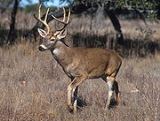
Ruminantia

Encyclopedia
Ruminantia includes many of the well-known large grazing or browsing mammal
s: among them cattle
, goat
s, sheep, deer
, and antelope
. All members of the Ruminantia are ruminant
s: they digest food in two steps, chewing and swallowing in the normal way to begin with, and then regurgitating the semi-digested cud
to re-chew it and thus extract the maximum possible food value.
Not all ruminants belong to the Ruminantia. Camel
s and llama
s are among the exceptions, a suborder known as Tylopoda
. Also, there are a number of other large grazing mammals that, while not strictly ruminants, have similar adaptations for surviving on large quantities of low-grade food. Kangaroo
s and horse
s are examples.
The ancestral Ruminantia karyotype is 2n = 48 similar to that of cetartiodactyls.
Mammal
Mammals are members of a class of air-breathing vertebrate animals characterised by the possession of endothermy, hair, three middle ear bones, and mammary glands functional in mothers with young...
s: among them cattle
Cattle
Cattle are the most common type of large domesticated ungulates. They are a prominent modern member of the subfamily Bovinae, are the most widespread species of the genus Bos, and are most commonly classified collectively as Bos primigenius...
, goat
Capra (genus)
Capra is a genus of mammals, the goats or wild goats, composed of up to nine species including the wild goat, the markhor and several species known as ibex....
s, sheep, deer
Deer
Deer are the ruminant mammals forming the family Cervidae. Species in the Cervidae family include white-tailed deer, elk, moose, red deer, reindeer, fallow deer, roe deer and chital. Male deer of all species and female reindeer grow and shed new antlers each year...
, and antelope
Antelope
Antelope is a term referring to many even-toed ungulate species indigenous to various regions in Africa and Eurasia. Antelopes comprise a miscellaneous group within the family Bovidae, encompassing those old-world species that are neither cattle, sheep, buffalo, bison, nor goats...
. All members of the Ruminantia are ruminant
Ruminant
A ruminant is a mammal of the order Artiodactyla that digests plant-based food by initially softening it within the animal's first compartment of the stomach, principally through bacterial actions, then regurgitating the semi-digested mass, now known as cud, and chewing it again...
s: they digest food in two steps, chewing and swallowing in the normal way to begin with, and then regurgitating the semi-digested cud
Cud
Cud is a portion of food that returns from a ruminant's stomach in the mouth to be chewed for the second time. More accurately, it is a bolus of semi-degraded food regurgitated from the reticulorumen of a ruminant. Cud is produced during the physical digestive process of rumination, or "chewing the...
to re-chew it and thus extract the maximum possible food value.
Not all ruminants belong to the Ruminantia. Camel
Camel
A camel is an even-toed ungulate within the genus Camelus, bearing distinctive fatty deposits known as humps on its back. There are two species of camels: the dromedary or Arabian camel has a single hump, and the bactrian has two humps. Dromedaries are native to the dry desert areas of West Asia,...
s and llama
Llama
The llama is a South American camelid, widely used as a meat and pack animal by Andean cultures since pre-Hispanic times....
s are among the exceptions, a suborder known as Tylopoda
Tylopoda
Tylopoda is a suborder of terrestrial herbivorous even-toed ungulates belonging to Artiodactyla. They are extant in the wild in their native ranges of South America and Asia, while Australian feral camels are an introduced species. The group has a long fossil history in North America and Europe...
. Also, there are a number of other large grazing mammals that, while not strictly ruminants, have similar adaptations for surviving on large quantities of low-grade food. Kangaroo
Kangaroo
A kangaroo is a marsupial from the family Macropodidae . In common use the term is used to describe the largest species from this family, especially those of the genus Macropus, Red Kangaroo, Antilopine Kangaroo, Eastern Grey Kangaroo and Western Grey Kangaroo. Kangaroos are endemic to the country...
s and horse
Horse
The horse is one of two extant subspecies of Equus ferus, or the wild horse. It is a single-hooved mammal belonging to the taxonomic family Equidae. The horse has evolved over the past 45 to 55 million years from a small multi-toed creature into the large, single-toed animal of today...
s are examples.
- ORDER ARTIODACTYLA
- Suborder SuinaSuinaThe suborder Suina are lineage of mammals that today includes the families Suidae and Tayassuidae and their fossil kin.- Classification :The suborder Suina includes Suidae and Tayassuidae...
: pigPigA pig is any of the animals in the genus Sus, within the Suidae family of even-toed ungulates. Pigs include the domestic pig, its ancestor the wild boar, and several other wild relatives...
s and peccariesPeccaryA peccary is a medium-sized mammal of the family Tayassuidae, or New World Pigs. Peccaries are members of the artiodactyl suborder Suina, as are the pig family and possibly the hippopotamus family... - Suborder TylopodaTylopodaTylopoda is a suborder of terrestrial herbivorous even-toed ungulates belonging to Artiodactyla. They are extant in the wild in their native ranges of South America and Asia, while Australian feral camels are an introduced species. The group has a long fossil history in North America and Europe...
: camelCamelA camel is an even-toed ungulate within the genus Camelus, bearing distinctive fatty deposits known as humps on its back. There are two species of camels: the dromedary or Arabian camel has a single hump, and the bactrian has two humps. Dromedaries are native to the dry desert areas of West Asia,...
s and llamaLlamaThe llama is a South American camelid, widely used as a meat and pack animal by Andean cultures since pre-Hispanic times....
s - Suborder CetruminantiaCetruminantiaCetruminantia is a clade made up of the Cetacodontamorpha and their closest living relatives, the ruminants....
: ruminants and whaleWhaleWhale is the common name for various marine mammals of the order Cetacea. The term whale sometimes refers to all cetaceans, but more often it excludes dolphins and porpoises, which belong to suborder Odontoceti . This suborder also includes the sperm whale, killer whale, pilot whale, and beluga...
s and hippoHippoA hippo or hippopotamus is either of two species of large African mammal which live mainly in and near water:* Hippopotamus* Pygmy HippopotamusHippo may also refer to:-Given names:...
s- unranked Ruminantia
- Infraorder TragulinaTragulinaTragulina is an infraorder of even-toed ungulates. Only the chevrotains survive to the present, including the genera Tragulus and Hyemoschus.-Taxonomy:The following is the taxonomy of the group...
(paraphyletic)- Family †Prodremotheriidae
- Family †HypertragulidaeHypertragulidaeHypertragulidae is an extinct family of even-toed ungulates , endemic to North America, Europe, and Asia during the Eocene through Miocene, living 46.2—13.6 Ma, existing for approximately ....
- Family †Praetragulidae
- Family †ProtoceratidaeProtoceratidaeProtoceratidae is an extinct family of herbivorous North American artiodactyls that lived during the Eocene through Pliocene at around 46.2—4.9 Ma., existing for approximately .-Taxonomy:...
- Family Tragulidae: chevrotainChevrotainChevrotains, also known as mouse deer, are small ungulates that make up the family Tragulidae, the only members of the infraorder Tragulina. There are 10 living species in three genera, but there are also several species only known from fossils...
s, 6 living species in 4 genera - Family †Archaeomerycidae
- Family †Lophiomerycidae
- Infraorder PecoraPecoraThe Pecora is a group of hoofed mammals that comprises most of the ruminants, including cattle, sheep, goats, antelopes,deer, giraffes, and pronghorn. The only extant members of the Ruminantia that are not pecorans are the chevrotains, which lack horns and whose four-chambered stomach is less...
- Family Cervidae: deerDeerDeer are the ruminant mammals forming the family Cervidae. Species in the Cervidae family include white-tailed deer, elk, moose, red deer, reindeer, fallow deer, roe deer and chital. Male deer of all species and female reindeer grow and shed new antlers each year...
and mooseMooseThe moose or Eurasian elk is the largest extant species in the deer family. Moose are distinguished by the palmate antlers of the males; other members of the family have antlers with a dendritic configuration...
, 49 living species in 16 genera - Family †Gelocidae
- Family †PalaeomerycidaePalaeomerycidaePalaeomerycidae is an extinct family of ruminants , probably ancestral to deer and musk deer...
- Family †Hoplitomerycidae
- Family †ClimacoceratidaeClimacoceratidaeClimacoceratidae is a family of superficially deer-like artiodactyl ungulates that were restricted to the Miocene of Africa. They are close to the ancestry of giraffes, with some genera, such as Prolibytherium, having originally identified as being giraffes.The climacoceratids, namely, of what is...
- Family GiraffidaeGiraffidaeThe giraffids are ruminant artiodactyl mammals that share a common ancestor with deer and bovids. The biological family Giraffidae, once a diverse group spread throughout Eurasia and Africa, contains only two living members, the giraffe and the okapi. Both are confined to sub-saharan Africa: the...
: giraffeGiraffeThe giraffe is an African even-toed ungulate mammal, the tallest of all extant land-living animal species, and the largest ruminant...
and okapiOkapiThe okapi , Okapia johnstoni, is a giraffid artiodactyl mammal native to the Ituri Rainforest, located in the northeast of the Democratic Republic of the Congo, in Central Africa...
, 2 living species in 2 genera - Family Antilocapridae: pronghornPronghornThe pronghorn is a species of artiodactyl mammal endemic to interior western and central North America. Though not an antelope, it is often known colloquially in North America as the prong buck, pronghorn antelope, or simply antelope, as it closely resembles the true antelopes of the Old World and...
, one living species in one genus - Family †Leptomerycidae
- Family Moschidae: musk deerMusk deerMusk deer are artiodactyls of the genus Moschus, the only genus of family Moschidae. They are more primitive than the cervids, or true deer, in not having antlers or facial glands, in having only a single pair of teats, and in possessing a gall bladder, a caudal gland, a pair of tusk-like teeth...
, 4 living species in one genus - Family Bovidae: cattleCattleCattle are the most common type of large domesticated ungulates. They are a prominent modern member of the subfamily Bovinae, are the most widespread species of the genus Bos, and are most commonly classified collectively as Bos primigenius...
, goatCapra (genus)Capra is a genus of mammals, the goats or wild goats, composed of up to nine species including the wild goat, the markhor and several species known as ibex....
s, sheep, and antelopeAntelopeAntelope is a term referring to many even-toed ungulate species indigenous to various regions in Africa and Eurasia. Antelopes comprise a miscellaneous group within the family Bovidae, encompassing those old-world species that are neither cattle, sheep, buffalo, bison, nor goats...
, 135 living species in 48 genera
- Family Cervidae: deer
- Suborder Suina
Evolution
The Tragulidae are the basal family in the Ruminantia.The ancestral Ruminantia karyotype is 2n = 48 similar to that of cetartiodactyls.