
All Topics  
Royal Canadian Navy


   Email Print
   Bookmark   Link


Royal Canadian Navy


The Royal Canadian Navy (RCN) was the navy
Navy

A navy is the branch of a nation's military forces principally designated for naval warfare and amphibious warfare; namely, lake- or ocean-borne combat operations and related functions....
 of Canada
Canada

Canada is a country occupying most of northern North America, extending from the Atlantic Ocean in the east to the Pacific Ocean in the west and northward into the Arctic Ocean....
 from 1911 until 1968 when the three Canadian services were unified to form the Canadian Armed Forces
Canadian Forces

The Canadian Forces , officially the Canadian Armed Forces , are the unified armed forces of Canada, as constituted by the National Defence Act, which states: "The Canadian Forces are the armed forces of Her Majesty raised by Canada and consist of one Service called the Canadian Armed Forces." This singular institution consists of thre...
. The modern Canadian navy is known as Canadian Forces Maritime Command
Canadian Forces Maritime Command

Canadian Forces Maritime Command , also known as the Canadian Navy, is the navy of the Canadian Forces. While equal in rank and position, The Chief of the Maritime Staff takes precedence over the Chiefs of the Land and Air Staffs following the tradition of the Royal Navy....
 (MARCOM). Unofficially it is represented as the Canadian Navy and maintains many traditions of its predecessor.

As Command-in-Chief of the Canadian Forces is vested in the Canadian Monarch
Monarchy in Canada

The monarchy of Canada, or Canadian monarchy, is a constitutional system of government in which a hereditary monarch is the Sovereignty and head of state of Canada, forming the core of the country's Westminster system Parliamentary system democracy....
, ships of the Canadian Forces use the prefix HMCS "Her/His Majesty's Canadian Ship
Her Majesty's Canadian Ship

The designation Her Majesty's Canadian Ship , is applied as a prefix to any Canadian Forces warship. In the reign of a monarch, the designation changes to His Majesty's Canadian Ship; the French language version of the title remains unchanged in this instance....
".


Discussion
Ask a question about 'Royal Canadian Navy'
Start a new discussion about 'Royal Canadian Navy'
Answer questions from other users
Full Discussion Forum


Encyclopedia


The Royal Canadian Navy (RCN) was the navy
Navy

A navy is the branch of a nation's military forces principally designated for naval warfare and amphibious warfare; namely, lake- or ocean-borne combat operations and related functions....
 of Canada
Canada

Canada is a country occupying most of northern North America, extending from the Atlantic Ocean in the east to the Pacific Ocean in the west and northward into the Arctic Ocean....
 from 1911 until 1968 when the three Canadian services were unified to form the Canadian Armed Forces
Canadian Forces

The Canadian Forces , officially the Canadian Armed Forces , are the unified armed forces of Canada, as constituted by the National Defence Act, which states: "The Canadian Forces are the armed forces of Her Majesty raised by Canada and consist of one Service called the Canadian Armed Forces." This singular institution consists of thre...
. The modern Canadian navy is known as Canadian Forces Maritime Command
Canadian Forces Maritime Command

Canadian Forces Maritime Command , also known as the Canadian Navy, is the navy of the Canadian Forces. While equal in rank and position, The Chief of the Maritime Staff takes precedence over the Chiefs of the Land and Air Staffs following the tradition of the Royal Navy....
 (MARCOM). Unofficially it is represented as the Canadian Navy and maintains many traditions of its predecessor.

As Command-in-Chief of the Canadian Forces is vested in the Canadian Monarch
Monarchy in Canada

The monarchy of Canada, or Canadian monarchy, is a constitutional system of government in which a hereditary monarch is the Sovereignty and head of state of Canada, forming the core of the country's Westminster system Parliamentary system democracy....
, ships of the Canadian Forces use the prefix HMCS "Her/His Majesty's Canadian Ship
Her Majesty's Canadian Ship

The designation Her Majesty's Canadian Ship , is applied as a prefix to any Canadian Forces warship. In the reign of a monarch, the designation changes to His Majesty's Canadian Ship; the French language version of the title remains unchanged in this instance....
". It is not correct to use the name "Royal Canadian Navy" or its abbreviation "RCN" in references to the Canadian Navy after February 1 1968.

History


Formation years

During the early years of the 20th century, there was growing discussion within the British Empire
British Empire

The British Empire comprised the dominions, Crown colony, protectorates, League of Nations mandate, and other Dependent territory ruled or administered by the United Kingdom , that had originated with the overseas colonies and trading posts established by England in the late 16th and early 17th centuries....
 as to the role the Dominion
Dominion

A dominion, often Dominion, refers to one of a group of autonomy polity that were nominally under United Kingdom sovereignty, constituting the British Empire and Commonwealth of Nations, from the late 19th century....
s would play in defence
Defense (military)

Defence has several uses in the sphere of military application.Personal defence implies measures taken by individual soldiers in protecting themselves whether by use of protective materials such as armour, or field construction of trenches or a bunker, or by using weapons that prevent the enemy approaching them to initiate close combat....
 and foreign affairs
Foreign Affairs

Foreign Affairs is an United States journal on international relations published by the Council on Foreign Relations six times annually. The CFR is a private-sector group established in New York City in 1921, with the mission of promoting understanding of foreign policy and America?s role in the world....
. A key part of this discussion focused on naval issues. In Canada, it came down to a choice between two options. Either the young country could provide funds, support and manpower to the Royal Navy
Royal Navy

The Royal Navy of the United Kingdom is the oldest of the British Armed Forces . From the mid-18th century until well into the 20th century, it was the most powerful navy in the world, playing a key part in establishing the British Empire as the dominant world power from 1815 until the early 1940s....
, or it could form its own navy. Canada chose the latter.

On March 29 1909, George Foster
George Eulas Foster

The Right Honourable Sir George Eulas Foster, Historical members of the Queen's Privy Council for Canada 1885, K.C.M.G. 1914, List of Privy Counsellors 1916, G.C.M.G....
 introduced a resolution in the House of Commons
Canadian House of Commons

The House of Commons is a component of the Parliament of Canada, along with the Canadian monarchy and the Senate of Canada. The House of Commons is a democracy elected body, consisting of 40th Canadian Parliament known as Members of Parliament ....
 calling for the establishment of a Canadian Naval Service. The resolution was not successful; however, on January 12 1910, the government of Prime Minister
Prime Minister of Canada

The Prime Minister of Canada is the primary Minister of the Crown, chairman of the Cabinet of Canada, and thus head of government of Canada. The office is not outlined in any of the documents that constitute the written portion of the constitution of Canada; executive authority is formally vested in the Monarchy of Canada and exercised on hi...
 Sir Wilfrid Laurier
Wilfrid Laurier

Sir Wilfrid Laurier, Order of St. Michael and St. George, Queen's Privy Council for Canada, King's Counsel, baptized Henri-Charles-Wilfrid Laurier was the seventh Prime Minister of Canada from July 11, 1896, to October 5, 1911....
 took Foster's resolution and introduced it as the Naval Service Bill. After third reading, the bill received royal assent on May 4 1910, and became the Naval Service Act, administered by the Minister of Marine and Fisheries at the time. The official title of the navy was the Naval Service of Canada (also Canadian Naval Forces), and the first Director of the Naval Service of Canada was Rear-Admiral Charles Kingsmill
Charles Kingsmill

Admiral Sir Charles E. Kingsmill was the first Director of the Canadian Naval Service .Charles Edmund Kingsmill was born at Guelph, Ontario in 1855....
 (Royal Navy, retired), who was previously in charge of the Marine Service of the Department of Marine and Fisheries.

Department of Naval Services (Canada) was the department responsible for the naval services in Canada during the transition from the Royal Navy to the Royal Canadian Navy.

The act called for:
  • a permanent force
  • a reserve (to be called up in emergency)
  • a volunteer reserve (to be called up in emergency)
  • the establishment of a naval college


The British cruiser Rainbow
HMCS Rainbow

HMCS Rainbow formerly HMS Rainbow was an Apollo class cruiser protected cruiser built for Britain's Royal Navy by Palmers Shipbuilding and Iron Company at Hebburn in England....
 was the first ship commissioned into Canada's navy on August 4, 1910, at Portsmouth, England. She arrived at Esquimalt, British Columbia
Esquimalt, British Columbia

The City of Esquimalt is a municipality at the southern tip of Vancouver Island, in British Columbia, Canada. It is bordered to the east by the provincial capital, Victoria, British Columbia, to the south by the Strait of Juan de Fuca, to the west by Esquimalt Harbour and Royal Roads, to the northwest by the New Songhees 1A, British Columbi...
, on November 7, 1910, and carried out fishery patrols and training duties on Canada's west coast.

Another Royal Navy cruiser, HMS Niobe, became the second ship commissioned into the Canadian navy on September 6, 1910, at Devonport
HMNB Devonport

Her Majesty's Naval Base Devonport , is one of three UK operating bases for the Royal Navy . HMNB Devonport is located in Devonport, Devon, in the west of the city of Plymouth in Devon, England....
 in England
England

native_name =|conventional_long_name = England|common_name = England|image_flag = Flag of England.svg|image_coat = England COA.svg|symbol_type = Royal Coat of Arms...
 and arrived at Halifax Nova Scotia
Nova Scotia

Nova Scotia is a Canadian Provinces and territories of Canada located on Canada's southeastern coast. It is the most populous province in Atlantic Canada....
, on October 21, 1910—Trafalgar Day
Trafalgar Day

Trafalgar Day is the celebration of the victory won by the Royal Navy, commanded by Vice-Admiral Horatio Nelson over the combined France and Spain fleets at the Battle of Trafalgar on 21 October 1805....
.

The Naval Service of Canada changed its name to Royal Canadian Navy on January 30, 1911, but it was not until August 29 that the use of "Royal" Canadian Navy was permitted by King George V
George V of the United Kingdom

George V was the first British monarch belonging to the House of Windsor, which he created from the British branch of the German House of Saxe-Coburg and Gotha....
.

Immediately before the First World War
World War I

World War I, or the First World War , was a global military conflict which involved the Great powers, organized into two opposing military alliances: the Allies of World War I and the Central Powers....
, the premier of British Columbia
British Columbia

British Columbia is the westernmost of Canada's Provinces and territories of Canada and is famed for its natural beauty, as reflected in its Latin motto, Splendor sine occasu ....
, in a fit of public spirit, purchased two submarines (CC1
HMCS CC-1

HMCS CC-1 was a CC class submarine used by the Royal Canadian Navy. The ship was launched in 1913 in Seattle, Washington, Washington as the Submarine Iquique for Chile....
 and CC2
HMCS CC-2

HMCS CC-2 was a CC class submarine used by the Royal Canadian Navy. Launched in 1913 in the United States for Chile and purchased in 1914 by British Columbia and later acquired by the RCN....
) from a shipyard in Washington
Washington

Washington is a U.S. state in the Pacific Northwest region of the United States. Washington was carved out of the western part of Washington Territory which had been ceded by Britain in 1846 by the Oregon Treaty as settlement of the Oregon Boundary Dispute....
. The submarines had been built for the Chilean Navy
Chilean Navy

The Chilean Navy is the naval force of Chile....
 but the purchase had fallen through. On August 7, 1914, the Government of Canada purchased the boats from the Government of British Columbia, and they were consequently commissioned into the RCN.

First World War

In May 1914 the Royal Naval Canadian Volunteer Reserve (RNCVR) was established and undertook a strength of 1200 men from three distinct geographic areas: (1) Atlantic, (2) Pacific, and (3) Lake (representing inland areas).

After the outbreak of the First World War in 1914, London
London

London is the capital of both England and the United Kingdom, and the most populous municipality in the European Union. An important settlement for two millennia, History of London goes back to its founding by the Roman Empire....
 and Ottawa were planning to expand the RCN significantly, but it was decided that Canadian men would be permitted to enlist in either the Royal Navy or its Canadian counterpart, with many choosing the former.

During the fall of 1914, HMCS Rainbow
HMCS Rainbow

HMCS Rainbow formerly HMS Rainbow was an Apollo class cruiser protected cruiser built for Britain's Royal Navy by Palmers Shipbuilding and Iron Company at Hebburn in England....
 patrolled the west coast of North America
North America

North America is the northern continent of the Americas, situated in the Earth's northern hemisphere and almost totally in the western hemisphere....
, as far south as Panama
Panama

Panama, officially the Republic of Panama , is the southernmost country of Central America and, in turn, North America. Situated on an isthmus connecting North and South America, some categorize it as a transcontinental nation....
, although these patrols became less important following the elimination of the German naval threat in the Pacific with the December 1914 defeat of Admiral Graf
Graf

Graf is a historical German nobility title equal in rank to a count or a British earl . A derivation ultimately from the Greek verb graphein 'to write' may be fanciful: Paul the Deacon wrote in Latin ca 790: "the count of the Bavarians that they call gravio who governed Bolzano and other strongholds?" ; this may be read to make...
 Maximilian von Spee
Maximilian von Spee

Vice Admiral Maximilian Graf von Spee was a Germany admiral. Although he was born in Copenhagen, Denmark, the counts von Spee belonged to the prominent families of the Rhenish nobility....
's German East Asiatic Squadron off the Falkland Islands
Falkland Islands

The Falkland Islands are an archipelago in the South Atlantic Ocean, located from the coast of Argentina, west of the Shag Rocks , and north of the British Antarctic Territory ....
. Much of Rainbow's crew were posted to the east coast for the remainder of the war and by 1917 Rainbow was withdrawn from service.

It was in Esquimalt and Victoria that the only active use of the RNCVR took place, with the reserve being tasked to help man the HMCS Rainbow
HMCS Rainbow

HMCS Rainbow formerly HMS Rainbow was an Apollo class cruiser protected cruiser built for Britain's Royal Navy by Palmers Shipbuilding and Iron Company at Hebburn in England....
, C1
HMCS CC-1

HMCS CC-1 was a CC class submarine used by the Royal Canadian Navy. The ship was launched in 1913 in Seattle, Washington, Washington as the Submarine Iquique for Chile....
, and C2
HMCS CC-2

HMCS CC-2 was a CC class submarine used by the Royal Canadian Navy. Launched in 1913 in the United States for Chile and purchased in 1914 by British Columbia and later acquired by the RCN....
.

The early part of the war also saw HMCS Niobe actively patrolling off the coast of New York City
New York City

The City of New York is the List of United States cities by population in the United States, while the New York metropolitan area ranks among the List of urban areas by population....
 but returned to Halifax permanently in July 1915 when she was declared no longer fit for service and was converted to a depot ship. She was heavily damaged in the December 1917 Halifax Explosion
Halifax Explosion

The Halifax Explosion occurred on Thursday, December 6, 1917, when the city of City of Halifax, Nova Scotia, Canada, was devastated by the huge detonation of the SS Mont-Blanc, a France cargo ship, fully loaded with wartime explosives, which accidentally collided with a Norwegian ship, the SS Imo in "The Narrows" section of the Halifax Ha...
.

HMCS C1
HMCS CC-1

HMCS CC-1 was a CC class submarine used by the Royal Canadian Navy. The ship was launched in 1913 in Seattle, Washington, Washington as the Submarine Iquique for Chile....
 and HMCS C2
HMCS CC-2

HMCS CC-2 was a CC class submarine used by the Royal Canadian Navy. Launched in 1913 in the United States for Chile and purchased in 1914 by British Columbia and later acquired by the RCN....
 spent the first three years of the war patrolling the Pacific; however, the lack of German threat saw them reposted to Halifax in 1917. With their tender, HMCS Shearwater, they became the first warships to transit the Panama Canal
Panama Canal

The Panama Canal is a man-made canal which joins the Pacific Ocean and Atlantic Ocean oceans. One of the largest and most difficult engineering projects ever undertaken, it had an enormous impact on shipping between the two oceans, replacing the long and treacherous route via the Drake Passage and Cape Horn at the southernmost tip of South Am...
 flying the White Ensign (the RCN's service flag). Arriving in Halifax on October 17, 1917, they were declared unfit for service and never patrolled again, being scrapped in 1920.

On September 5, 1918 the Royal Canadian Naval Air Service (RCNAS) was formed with a main function to carry out anti-submarine operations using flying boat
Flying boat

A flying boat is a specialised form of aircraft that is designed to take off from and land on water, using its fuselage as a floating Hull . Such aircraft are sometimes stabilised on water by underwing floats or by wing-like projections from the fuselage....
 patrol aircraft. The U.S. Navy's
United States Navy

The United States Navy is the navy of the United States Armed Forces. It is one of the seven uniformed services of the United States. The U.S. Navy currently has approximately 331,682 personnel on active duty as of 31 December 2008 and 124,000 in the United States Navy Reserve....
 Naval Air Station Halifax
Naval Air Station Halifax

The Naval Air Station Halifax, also NAS Halifax, was a United States Navy Naval Air Station located in Eastern Passage, Nova Scotia, Nova Scotia, Canada....
, located on the eastern shores of the harbour at Eastern Passage, Nova Scotia
Eastern Passage, Nova Scotia

Eastern Passage is a Canada urban community in Nova Scotia's Halifax Regional Municipality.Located at the southeastern edge of Halifax Harbour, fronting the Atlantic Ocean, Eastern Passage derives its name from the narrow strait separating the mainland from McNabs Island, an island in the harbour lying several hundred metres west of the com...
, was acquired but following the November 11, 1918 Armistice
Armistice

An armistice is a situation in a war where the warring parties agree to stop fighting. It is not necessarily the end of a war, but may be just a cessation of hostilities while an attempt is made to negotiate a lasting peace....
, the RCNAS was discontinued.

Canada's wartime naval shipbuilding policies were not considered a success, having only delivered a cruiser and two destroyers.

Inter-war period

Following a draw-down in the RCN after the war, the RCN undertook to find a mission and found it in taking over many of the civilian responsibilities of the Marine Service of the Department of Transport, and during the 1920s the RCN was threatening to become a civilian service.

On January 31, 1923, the RNCVR was replaced by the Royal Canadian Naval Volunteer Reserve
Royal Canadian Naval Volunteer Reserve

The Royal Canadian Navy Volunteer Reserve was a Navy reserve force of the Royal Canadian Navy, which replaced the Royal Navy Canadian Volunteer Reserve ....
 (RCNVR) The initial authorized strength of the RCNVR was 1,000 all ranks. Twelve Canadian cities (Calgary, Charlottetown, Edmonton, Halifax, Hamilton, Ottawa, Prince Rupert, Quebec City, Regina, Saint John, Saskatoon and Vancouver) were earmarked for divisions of “Half-Company” strength, i.e. 50 men, all ranks. Three larger cities (Toronto, Montreal and Winnipeg) were ordered to man to a “Company” strength, which was 100, all ranks. The first commission was given, on 14 March 1923, to Lieutenant Frank Meade, who established a Company sized detachment in Montreal. By the end of 1923, twelve units had been formed.

On May 22, 1931, the RCN underwent a major facelift when the first custom-built RCN ships, destroyers HMCS Saguenay and HMCS Skeena, were commissioned at Portsmouth, England.

Still, by the 1930s, the RCN, along with its sister services, were starved of funding and equipment. However, this decade saw the RCN begin its rebuilding, as Ottawa joined London
London

London is the capital of both England and the United Kingdom, and the most populous municipality in the European Union. An important settlement for two millennia, History of London goes back to its founding by the Roman Empire....
, Paris
Paris

Paris is the Capital of France and the country's largest city. It is situated on the river Seine, in northern France, at the heart of the ?le-de-France Regions of France ....
, and Washington
Washington, D.C.

Washington, D.C. , formally the District of Columbia and commonly referred to as Washington, the District, or simply D.C., is the Capital of the United States, founded on July 16, 1790....
 in a growing apprehension of the ramifications of Nazi Germany
Nazi Germany

Nazi Germany and the Third Reich are the colloquial English names for Germany under the regime of Adolf Hitler and the Nazi Party , which established a Totalitarianism dictatorship that existed from 1933 to 1945....
's rearmament and the adventurism of Italy
Italy

Italy , officially the Italian Republic , is a country located on the Italian Peninsula in Southern Europe and on the two largest islands in the Mediterranean Sea, Sicily and Sardinia....
 and Japan
Japan

Japan is an island country in East Asia. Located in the Pacific Ocean, it lies to the east of the Sea of Japan, People's Republic of China, North Korea, South Korea and Russia, stretching from the Sea of Okhotsk in the north to the East China Sea and Taiwan in the south....
. By the outbreak of war in September 1939, the RCN still had only six destroyers and a handful of smaller ships.

Second World War

The RCN expanded greatly during the Second World War and following the end of the war was the third-largest navy in the world, behind the United States
United States

The United States of America is a Federal government constitutional republic comprising U.S. state and a federal district. The country is situated mostly in central North America, where its Contiguous United States and Washington, D.C., the Capital districts and territories, lie between the Pacific Ocean and Atlantic Oceans, Borders of the U...
 and the United Kingdom
United Kingdom

The United Kingdom of Great Britain and Northern Ireland, commonly known as the United Kingdom , the UK or Britain,is a sovereign state located off the northwestern coast of continental Europe....
. Although it showed its inexperience at times during the early part of the war, a navy made up of men from all across the country, including many who had never before seen a large body of water, proved capable of exceeding the expectations of its allies. By the end of the Battle of the Atlantic (1939-1945), the RCN was the primary navy in the northwest sector of the Atlantic Ocean
Atlantic Ocean

The Atlantic Ocean is the second-largest of the world's oceanic divisions; with a total area of about 106.4 million square kilometres . It covers approximately one-fifth of the Earth's surface....
 and was responsible for the safe escort of innumerable convoys and the destruction of many U-boats — an anti-submarine capability that the RCN would build upon during the post-war. Similarly, a massive building program (for a nation of only 11 million) saw corvette
Corvette

A corvette is a small, manoeuverable, lightly armed warship, originally smaller than a frigate and larger than a offshore patrol vessel, although many recent designs resemble frigates in size and role....
s, frigate
Frigate

A frigate is a warship. The term has been used for warships of many sizes and roles over the past few centuries.In the 18th century, the term referred to ships which were as long as a ship-of-the-line and were square rig on all three masts , but were faster and with lighter armament, used for patrolling and escort....
s, and other escort vessels built in shipyards on both coasts and on the Great Lakes
Great Lakes

The St. Lawrence River Great Lakes are a chain of fresh water lakes located in eastern North America, on the Canada ? United States border. Consisting of Lakes Lake Superior, Lake Michigan, Lake Huron, Lake Erie, and Lake Ontario, they form the largest group of freshwater lakes on Earth....
. Added to this were aircraft carrier
Aircraft carrier

An aircraft carrier is a warship designed with a primary mission of deploying and recovering aircraft, acting as a seagoing airbase. Aircraft carriers thus allow a navy force to project air power great distances without having to depend on local bases for staging aircraft operations....
s, cruiser
Cruiser

A cruiser is a large type of warship, which had its prime period from the late 19th century to the end of the Cold War. The first cruisers were intended for individual raiding and protection missions on the seas....
s, destroyer
Destroyer

In navy terminology, a destroyer is a fast and maneuverable yet long-endurance warship intended to escort larger vessels in a Naval fleet, convoy or battle group and defend them against smaller, short-range but powerful attackers ....
s, and various auxiliary ships. In addition, the Royal Canadian Naval Air Service
Royal Canadian Naval Air Service

The Royal Canadian Naval Air Service was established in 1918 during the First World War in response to the Royal Canadian Navy's recommendation that defensive air patrols be established off Canada's Atlantic Ocean coast to protect shipping from German U-boat....
 was reborn with the use of anti-submarine patrols on both coasts conducted with PBY Catalina
PBY Catalina

The Consolidated PBY Catalina was an United States flying boat of the 1930s and 1940s produced by Consolidated Aircraft. It could be equipped with depth charges, bombs, torpedoes, and M2 Browning machine gun machine guns and was one of the most widely used multi-role aircraft of World War II....
 flying boats.

As the end of the war against Germany approached, attention focused on Japan. At the end of 1944, some RCN ships were deployed with the British Pacific Fleet
British Pacific Fleet

The British Pacific Fleet was a British Commonwealth navy force which saw action against Japan during World War II. The fleet was composed of Commonwealth of Nations naval vessels....
, joining the many Canadian personnel already serving with the Royal Navy in the Pacific War
Pacific War

The Pacific War was the part of World War II?and preceding conflicts?that took place in the Pacific Ocean, its islands, and in East Asia, between July 7, 1937 and August 14, 1945....
. Ottawa was also laying plans to expand the RCN's capabilities beyond its anti-submarine
Anti-submarine warfare

Anti-submarine warfare is a branch of naval warfare that uses surface warships, aircraft, or other submarines to find, track and then damage or destroy enemy submarines....
 orientation. The war in the Pacific was expected to culminate with a massive invasion of Japan itself, and this would need a different navy than that required in the Atlantic.

Britain was nearly bankrupt after five and a half years of war and was looking to shrink its military somewhat, especially since the United States was now the dominant power in the Pacific. With this in mind, the RCN and the Royal Australian Navy
Royal Australian Navy

The Royal Australian Navy is the navy of the Australian Defence Force. Established in 1901, the RAN was formed out of the Commonwealth Naval Forces to become the small navy of Australia after federation, consisting of the former colonial navies of the new Australian states....
 were to receive many ships considered surplus to the RN's needs, with the end goal being a powerful Commonwealth
Commonwealth of Nations

The Commonwealth of Nations, also known as the Commonwealth or the British Commonwealth, is an intergovernmental organization of fifty-three independent member states....
 fleet
Naval fleet

A fleet, or naval fleet, is a large formation of warships, and the largest formation in any navy. A fleet at sea is the direct equivalent of an army on land....
 of Australia
Australia

Australia, officially the Commonwealth of Australia, is a country in the southern hemisphere comprising the Australia of the world's smallest continent, the major island of Tasmania, and numerous list of islands of Australia in the Indian Ocean and Pacific Oceans....
n, British, Canadian, and New Zealand
New Zealand

New Zealand is an island country in the south-western Pacific Ocean comprising two main landmasses , and numerous Islands of New Zealand, most notably Stewart Island/Rakiura and the Chatham Islands....
 ships alongside the United States Navy
United States Navy

The United States Navy is the navy of the United States Armed Forces. It is one of the seven uniformed services of the United States. The U.S. Navy currently has approximately 331,682 personnel on active duty as of 31 December 2008 and 124,000 in the United States Navy Reserve....
. As in World War I, the war ended before these plans came to fruition. With the dropping of two nuclear bombs on Hiroshima and Nagasaki, Japan's will to fight evaporated.

With the end of the war, the RCN stopped expanding. A planned transfer of two light aircraft carriers from the Royal Navy, HMCS Warrior and HMCS Magnificent was slowed, and when Warrior was found to be unsuitable for a North Atlantic winter, she was sent to the west coast and the next year was replaced by Magnificent, with Warrior being given back to the RN. Canada still had two light cruisers, HMCS Ontario
HMCS Ontario

HMCS Ontario can refer to several ships:* HMCS Ontario , a Royal Canadian Navy Minotaur class light cruiser* CSTC HMCS Ontario, a Royal Canadian Sea Cadets summer training centre...
 and HMCS Uganda
HMS Uganda (C66)

HMS Uganda , was a Second World War-era Royal Navy Crown Colony class cruiser light cruiser.She was one of the Ceylon sub-class of the Crown Colony class cruiser cruisers, and built by Vickers-Armstrong at their Walker yard....
 (later HMCS Quebec), a number of Tribal-class
Tribal class destroyer (1936)

The Tribal class, or Afridi class, were a ship class of destroyers built for the Royal Navy, Royal Canadian Navy and Royal Australian Navy that saw service in World War II....
 and other destroyers, and a mass of frigates, corvettes, and other ships, the majority of which were mothballed by 1947.

"Mutinies" in 1949


In the late winter of 1949, the RCN was shaken by three almost simultaneous cases of mass insubordination variously described as "Incidents" or "Mutinies":

  • On February 26, when the destroyer HMCS Athabaskan
    HMCS Athabaskan (R79)

    HMCS Athabaskan was the second destroyer of the Canadian Navy to bear the name Athabaskan after the many tribes throughout western Canada that speak Athabaskan family languages....
     was on a fuelling stop at Manzanillo, Colima
    Manzanillo, Colima

    Manzanillo is a city as well as its surrounding municipalities of Mexico in the Political divisions of Mexico of Colima. The city, located on the Pacific Ocean, contains Mexico's busiest port....
    , Mexico
    Mexico

    The United Mexican States , commonly known as Mexico , is a federalism constitutionalism republic in North America. It is bordered on the north by the United States; on the south and west by the Pacific Ocean; on the southeast by Guatemala, Belize, and the Caribbean Sea; and on the east by the Gulf of Mexico....
    , ninety Leading Seamen and below — constituting more than half the ship's company — locked themselves in their messdecks, and refused to come out until getting the captain to hear their grievances.
  • On March 15, in another destroyer — HMCS Crescent
    HMCS Crescent (R16)

    HMCS Crescent was a Canadian C class destroyer , launched on 20 July 1944. She was one of 32 destroyers of that class built between 1943 and 1945 as part of the War Emergency Programme destroyers....
    , at Nanjing
    Nanjing

    is the capital city of China's Jiangsu province of China, and a city with a prominent place in Chinese history and Chinese culture. Nanjing served as the capital of China during several historical periods and is listed as one of the Historical capitals of China....
    , China
    China

    China is a Culture of China, an ancient civilization, and, depending on perspective, a national or multinational entity extending over a large area in East Asia....
     — eighty-three junior ratings held a similar protest.
  • On March 20, thirty-two aircraft handlers on the carrier HMCS Magnificent
    HMCS Magnificent (CVL 21)

    HMCS Magnificent was a Majestic class aircraft carrier light aircraft carrier that served the Royal Canadian Navy from 1946?1956....
    , then on fleet manoeuvres in the Caribbean
    Caribbean

    The Caribbean is a region consisting of the Caribbean Sea, its islands , and the surrounding coasts. The region is located southeast of the Gulf of Mexico and Northern America, east of Central America, and to the north of South America....
    , briefly refused an order to turn to morning cleaning stations.


As noted by Dr Richard Gimblett, researcher and himself a retired naval officer the respective captains in all three cases acted with great sensitivity, entering the messes for an informal discussion of the sailors' grievances and carefully avoided using the term "mutiny," which could have had severe legal consequences for the sailors involved. Specifically, the captain of the Athabaskan, while talking with the disgruntled crew members, is known to have placed his cap over a written list of demands, which could have been used as legal evidence of a mutiny, and pretended not to notice it.

Still, the Canadian government of the time — the early years of the Cold War
Cold War

The Cold War was the continuing state of conflict, tension and competition that existed between a number of world powers, including the United States, the Soviet Union, People's Republic of China, France, United Kingdom and those countries' respective allies from the mid-1940s to the early 1990s....
 — felt apprehensive of "The Red Menace
Red menace

Red Menace or red menace may refer to:* a term used by American propagandists during the Cold War era to describe their opponents* Red Menace , a section in the stadium of the New Mexico Lobos...
," especially since the naval sailors' discontent coincided with a Communist-inspired strike in the Canadian merchant marine (also, one of the incidents occurred in a country — China — where the local Communists were in the fast process of winning a civil war and gaining power).

Defence Minister Brooke Claxton
Brooke Claxton

Brooke Claxton, Queen's Privy Council for Canada, Distinguished Conduct Medal, King's Counsel, Bachelor of Civil Law, Doctor of Laws was a Canada veteran of World War I, federal Minister of National Health and Welfare and Minister of National Defence ....
 appointed Rear-Admiral Rollo Mainguy
Rollo Mainguy

Vice-Admiral Edmond Rollo Mainguy, OBE, CD, Royal Canadian Navy was a Canadian naval officer and a post-war Chief of the Naval Staff.He was born in Victoria, British Columbia in 1901 and attended the Royal Naval College of Canada during World War I....
, Flag Officer Atlantic Coast, to head a commission of inquiry. The Mainguy Report — described by Dr Gimblett as "a watershed in the Navy's history, whose findings, recommendations and conclusions remain a potent legacy" — concluded that no evidence was found of Communist influence or of collusion between the three crews.

The "General Causes Contributing to [the] Breakdown of Discipline" noted by the commission included:

  • Collapse of the Divisional System of personnel management;
  • Failure to provide Welfare Committees for the airing of petty grievances, which led to sailors informally adopting a kind of equivalent to a sit down strike;
  • Frequent changes in ships' manning and routines with inadequate explanation;
  • A deterioration in the traditional relationship between officers and petty officers;
  • The absence of a distinguishing Canadian identity in the Navy.


The last issue — an assertion of "an uncaring officer corps harbouring aristocratic British attitudes inappropriate to Canadian democratic sensitivities" — went beyond the question of sailors' morale and touched on the basic identity of the Canadian Navy and indeed, on the national identity of Canada as a whole.

It was to have ramifications in the process undertaken in later decades, painful to many of the officers concerned, of deliberately cutting off many of the British traditions in such areas as ensigns and uniforms.

Cold War

The Cold War
Cold War

The Cold War was the continuing state of conflict, tension and competition that existed between a number of world powers, including the United States, the Soviet Union, People's Republic of China, France, United Kingdom and those countries' respective allies from the mid-1940s to the early 1990s....
 and the formation of NATO
NATO

The North Atlantic Treaty Organization , also called the Atlantic Alliance, is a military alliance established by the signing of the North Atlantic Treaty on 4 April 1949....
 saw the RCN halt its contraction and begin expanding again. Several World War II vintage ships saw action in the Korean War
Korean War

The Korean War refers to a period of military conflict between North Korea and South Korea regimes, with major hostilities lasting from June 25, 1950 until the armistice signed on July 27, 1953....
, including "exciting but dangerous" shore bombardment and North Korean train destruction missions. The growing Soviet
Soviet Union

The Union of Soviet Socialist Republics was a Constitution of the Soviet Union socialist state that existed in Eurasia from 1922 to 1991.The name is a translation of the , romanization of Russian Soyuz Sovetskikh Sotsialisticheskikh Respublik, abbreviated ????, SSSR....
 submarine threat in the 1950s saw a new class of anti-submarine destroyer escorts (DDEs), the St. Laurent class
St. Laurent class destroyer

The St. Laurent class destroyer was a class of destroyers that served the Royal Canadian Navy and later the Canadian Forces from the mid-1950s to the mid-1990s....
, designed. The RCN also pioneered several innovative ship designs, one of the more notable being the "rounded" upper part of the hull which helps drain seawater from the upper decks during the extremely rough conditions of the North Atlantic and Pacific oceans — it has also been said that this rounded upper hull would assist in cleaning radiation from a ship in the event of coming in contact with fallout from a nuclear explosion
Nuclear explosion

A nuclear explosion occurs as a result of the rapid release of energy from an intentionally high-speed nuclear reaction. The driving reaction may be nuclear fission, nuclear fusion or a multistage cascading combination of the two, though to date all fusion based weapons have used a fission device to initiate fusion, and a pure fusion weapon...
.

Following the seven St. Laurent
St. Laurent class destroyer

The St. Laurent class destroyer was a class of destroyers that served the Royal Canadian Navy and later the Canadian Forces from the mid-1950s to the mid-1990s....
 DDEs, the Restigouche and Mackenzie DDE classes were built with seven and four vessels respectively. In the early 1960s the St. Laurent DDEs were upgraded to destroyer-helicopter (DDH) vessels to accommodate the new CH-124 Sea King anti-submarine helicopters. The RCN was the first navy in the world to pioneer the use of ship-borne helicopters on small surface ships, such as destroyers and frigates, in the rough waters of the North Atlantic and Pacific. Recovery of helicopters to a wildly pitching flight deck was aided with the RCN invention of the "Bear Trap" — a cable-assisted winching system which hauled a helicopter, while operating at full power, to the deck in all manner of conditions. RCN also was an early pioneer in various forms of ship-borne sonar, both passive and active. These innovations resulted in their NATO allies giving RCN an expanded anti-submarine role throughout the North Atlantic.

Following the construction of these vessels throughout the 1950s, RCN was able to retire all remaining World War II-era vessels. HMCS Magnificent stopped being used as an active carrier by the mid-1950s and was used as a vehicle transport during Canada's peacekeeping response to the 1956 Suez Crisis
Suez Crisis

The Suez Crisis, also referred to as the Tripartite Aggression, was a military attack on Egypt by United Kingdom, France, and Israel beginning on 29 October 1956....
, before being paid off and replaced by HMCS Bonaventure, a more modern aircraft carrier which was subsequently updated with an angled flight deck. The RCNAS used stations at HMCS Shearwater
CFB Shearwater

12 Wing Shearwater , is located in Shearwater, Nova Scotia, Nova Scotia on the eastern shore of Halifax Harbour in the Halifax Regional Municipality....
 and HMCS Patricia Bay to operate carrier-based fighter aircraft (including the British propeller-driven Seafire
Supermarine Seafire

The Supermarine Seafire was a naval version of the Supermarine Spitfire specially adapted for operation from aircraft carriers. The name Seafire was arrived at by collapsing the longer name Sea Spitfire....
 (a naval derivative of the famous Spitfire
Supermarine Spitfire

The Supermarine Spitfire is a United Kingdom single-seat fighter aircraft used by the Royal Air Force and many other Allies of World War II countries through the Second World War and on into the 1950s as a frontline fighter and in secondary roles....
) and Sea Fury and the American F2H Banshee
F2H Banshee

The McDonnell Aircraft F2H Banshee was a military aircraft carrier jet engine fighter aircraft, used by the United States Navy from 1948 to 1959 and by the Royal Canadian Navy from 1955 until 1962....
, the RCN's only jet fighter) as well as coastal patrol aircraft.

The RCN also conducted experiments with the fastest warship ever built, the maximum speed HMCS Bras d'Or
HMCS Bras d'Or (FHE 400)

HMCS Bras d'Or was a hydrofoil that served in the Canadian Forces from 1968 to 1971.The vessel was originally built from 1960-1967 for the Royal Canadian Navy as a project for testing anti-submarine warfare technology on an ocean-going hydrofoil....
.

Unification

On February 1, 1968, the Royal Canadian Navy was merged with the Royal Canadian Air Force
Royal Canadian Air Force

The Royal Canadian Air Force was the air force of Canada from 1924 until 1968 when the three branches of the Canadian military were merged into the Canadian Forces....
 and the Canadian Army to form the unified Canadian Forces
Canadian Forces

The Canadian Forces , officially the Canadian Armed Forces , are the unified armed forces of Canada, as constituted by the National Defence Act, which states: "The Canadian Forces are the armed forces of Her Majesty raised by Canada and consist of one Service called the Canadian Armed Forces." This singular institution consists of thre...
. The naval forces were restructured as Canadian Forces Maritime Command
Canadian Forces Maritime Command

Canadian Forces Maritime Command , also known as the Canadian Navy, is the navy of the Canadian Forces. While equal in rank and position, The Chief of the Maritime Staff takes precedence over the Chiefs of the Land and Air Staffs following the tradition of the Royal Navy....
 (MARCOM).

For many of the serving naval personnel, the transition - giving up the old ensigns, and even more the adoption of army-type ranks and green uniforms instead of the distinctive naval ones - was a very painful process. Researcher Alan Filewood recalls:

I grew up in a navy family; my father was a regular force officer who had risen from the lower deck, and he was himself the son of a petty officer who had come to Canada as one of the British Royal Navy crews that brought Canada's first warships to this country in 1911 and elected to stay to build the RCN. Growing up in a naval family, I was imbued with the traditions of a service that prided itself on its British roots.


I recall vividly the day the armed forces paraded in Ottawa to witness the lowering of the old service ensigns and the raising of the new. My mother was a naval vet, a former WREN, and at this transformative moment of national symbolism, she wept; with the lowering of the White Ensign something disappeared from her history. Sometime later my father came home demoralized in his new army-style uniform with an army rank. Like many other naval officers, he retired soon thereafter.


The controversy included the dismissal of Rear-Admiral William Landymore
William Landymore

Rear-Admiral William Moss Landymore, Order of the British Empire, CD was a Canada naval officer. He studied at the Royal Military College of Canada, cadet # 2399 in 1934....
, senior officer in the Atlantic, who tried to secure commitments that naval traditions would be maintained, but was later fired by Defence Minister Paul Hellyer
Paul Hellyer

Paul Theodore Hellyer, Queen's Privy Council for Canada is a Canada politician and commentator who has had a long and varied career....
 for his opposition to the changes.

Ensigns and jacks

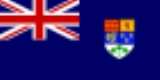
Canadian Blue Ensign 1921
Canadian Blue Ensign
On March 3, 1911, the RCN was authorized the use of the White Ensign
White Ensign

The White Ensign is an ensign flown on British Royal Navy Royal Navy ships and shore establishments. It consists of a red St George's Cross on a white field with the Union Flag in the upper canton....
, which remained the main identifying flag of the navy for the next 54 years. At the same time, the Canadian Blue Ensign was designated the jack of the RCN. However, because naval tradition dictates that the jack is worn at the ship's bow only when docked or on "dress ship" occasions, HMC ships normally had no distinctly Canadian flags when under way, the White Ensign being identical to the Royal Navy's ensign. Because of this, a tradition developed of painting a green maple leaf on ships' funnels to mark the ship as Canadian.

When British and Canadian foreign policies began to diverge in the 1950s (highlighted by the two countries' different roles in the Suez Crisis
Suez Crisis

The Suez Crisis, also referred to as the Tripartite Aggression, was a military attack on Egypt by United Kingdom, France, and Israel beginning on 29 October 1956....
), having an ensign identical to the Royal Navy's became less satisfactory. In 1961, a policy of wearing the Canadian Red Ensign
Canadian Red Ensign

File:Canadian Red Ensign.svgThe Canadian Red Ensign is the former flag of Canada, used officially by the federal government though it was never adopted as official by the Parliament of Canada....
 from the masthead (in addition to the Canadian Blue Ensign at the jack staff when appropriate, and the White Ensign at the ensign staff) was established. On February 15, 1965, the White, Blue, and Red ensigns were all replaced by the new National Flag of Canada, the Maple Leaf flag.

Directors of the Naval Service


  1. Admiral Sir Charles Kingsmill
    Charles Kingsmill

    Admiral Sir Charles E. Kingsmill was the first Director of the Canadian Naval Service .Charles Edmund Kingsmill was born at Guelph, Ontario in 1855....
     1910–1920
  2. Commodore Walter Hose 1921-1928


Chiefs of the Naval Staff


  1. Rear-Admiral Walter Hose 1928–1934
  2. Vice-Admiral Percy W. Nelles
    Percy W. Nelles

    Biography Admiral Percy Walker Nelles was an officer in the Royal Canadian Navy and the Chief of the Naval Staff from 1934 to 1944. He oversaw the massive wartime expansion of the RCN and the transformation of Canada into a major player in the Battle of the Atlantic ....
     1934–1944
  3. Vice-Admiral George C. Jones 1944–1946
  4. Vice-Admiral Howard E. Reid 1946–1947
  5. Vice-Admiral Harold Grant
    Harold Grant

    Harold Grant was the fifth head college football coach of the College of Emporia Football in Emporia, Kansas. His teams accumulated an impressive record of 34 wins, 4 losses, and 1 tie....
     1947–1951
  6. Vice-Admiral Rollo Mainguy
    Rollo Mainguy

    Vice-Admiral Edmond Rollo Mainguy, OBE, CD, Royal Canadian Navy was a Canadian naval officer and a post-war Chief of the Naval Staff.He was born in Victoria, British Columbia in 1901 and attended the Royal Naval College of Canada during World War I....
     1951–1956
  7. Vice-Admiral Harry DeWolf
    Harry DeWolf

    Vice Admiral Henry "Harry" George DeWolf Order of the British Empire, Distinguished Service Order, Distinguished Service Cross , Royal Canadian Navy was a Canadian naval officer who was made famous as the first commander of during World War II....
     1956–1960
  8. Vice-Admiral Herbert S. Rayner 1960–1964


Pre-unification senior officers of the RCN


Between the time the RCN was integrated with the RCAF and the Canadian Army in 1966, and unification in 1968, there was no Chief of the Naval Staff, and responsibility for the RCN often overlapped between Ottawa and Halifax.

Flag Officer, Atlantic Coast
  1. Rear Admiral J.V. Brock, 1964
  2. Rear Admiral William Landymore
    William Landymore

    Rear-Admiral William Moss Landymore, Order of the British Empire, CD was a Canada naval officer. He studied at the Royal Military College of Canada, cadet # 2399 in 1934....
    , 1964-1966


Flag Officer, Pacific Coast
  1. Rear Admiral M.G. Stirling, 1964-1966
  2. Rear Admiral J.A. Charles, 1966-1969


Principal Naval Adviser, CFHQ
  1. Vice Admiral K.L Dyer, 1964-1966
  2. Vice Admiral R.L. Hennessy, 1966-1968


Commander, Maritime Command
  1. Rear Admiral William Landymore
    William Landymore

    Rear-Admiral William Moss Landymore, Order of the British Empire, CD was a Canada naval officer. He studied at the Royal Military College of Canada, cadet # 2399 in 1934....
    , 1964-1966
  2. Rear Admiral J.C. O'Brien, 1966-1968

Film and books

  • Corvette K-225
    Corvette K-225

    Corvette K -225 is a 1943 in film film starring Randolph Scott and Ella Raines. It was released in the United Kingdom as The Nelson Touch....
     (1943), centres on the Royal Canadian Navy during the Second World War. Produced by Howard Hawks
    Howard Hawks

    Howard Winchester Hawks was an American film director, Film producer and writer of the Classical Hollywood cinema. He died in Palm Springs, California, California, after a fall....
    .
  • A Canadian Second World War Naval officer is one of the main characters in Jan de Hartog
    Jan de Hartog

    Jan de Hartog was a Dutch playwright, novelist and occasional social critic who moved to the United States in the early 1960s and became a Quaker....
    's novel The Captain
    The Captain (1967 novel)

    The Captain is a 1967 novel by Dutch writer Jan de Hartog.Ocean-going tugboats, a highly specialized field of nautical enterprise in which the Dutch have always taken the lead, were the subject of De Hartog's book, "Hollands Glorie" - in which the highly skilled tugboat sailors were depicted as modern successors to the bold navi...
    .


See also

  • List of ships of the Canadian Navy
    List of ships of the Canadian Navy

    This is a list of Royal Canadian Navy ships that have served past and present, from 1911–1968 and Canadian Forces Maritime Command of the Canadian Forces from 1968–present....
  • List of aircraft of the Royal Canadian Navy
  • List of Royal Canadian Navy stations
    List of Royal Canadian Navy stations

    This is a list of shore-based facilities operated by the Royal Canadian Navy from its creation in 1911 until unification into the Canadian Forces on February 1, 1968....
  • Uniforms of the Canadian Forces#Navy
    Uniforms of the Canadian Forces

    Prior to unification in 1968, the uniforms of the Canadian Army, Royal Canadian Navy and Royal Canadian Air Force were similar to their counterparts in the forces of the United Kingdom and other Commonwealth of Nations countries, save for national identifiers and some regimental accoutrements....
  • Canadian Forces Maritime Command
    Canadian Forces Maritime Command

    Canadian Forces Maritime Command , also known as the Canadian Navy, is the navy of the Canadian Forces. While equal in rank and position, The Chief of the Maritime Staff takes precedence over the Chiefs of the Land and Air Staffs following the tradition of the Royal Navy....
  • Royal Canadian Naval Air Service
    Royal Canadian Naval Air Service

    The Royal Canadian Naval Air Service was established in 1918 during the First World War in response to the Royal Canadian Navy's recommendation that defensive air patrols be established off Canada's Atlantic Ocean coast to protect shipping from German U-boat....


External links

  • Extract from April 2006 article discussing development options facing Canadian Navy
  • on Haze gray and underway
    Haze gray and underway

    Haze gray and underway is a United States Navy saying that refers to surface ships in arduous duty at sea, in contrast to submarines or naval units in ceremonial roles or in port....


Footnotes