

Royal Australian Corps of Transport

Encyclopedia
The Royal Australian Corps of Transport is a corps within the Australian Army
. It was formed in 1973 and is responsible for the operation of army surface transport assets.
(RAASC) and Royal Australian Engineers
Transportation Service (RAE-TN). From RAASC the new corps gained the responsibilities of road and amphibian transport, air dispatch and postal functions, whilst from RAE-TN it gained water transport, terminal and movements roles. The remaining RAASC functions—such as the provision of foodstuffs and petrol, oils and lubricants—were subsequently allocated to the Royal Australian Army Ordnance Corps
(RAAOC), with RAASC ceasing to exist on 31 May 1973.
At Puckapunyal
on 4 June 1983 the RACT was presented with its Banner. It was received from the Governor General of Australia, Sir Ninian Stephen
, who presented it on behalf of Her Royal Highness, Princess Alice
.
(RAE) and Royal Australian Army Service Corps
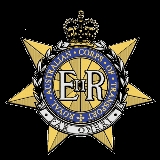
(RAASC). Surrounding the Royal Cipher is a circlet containing the name 'Royal Australian Corps of Transport', which is enclosed by a laurel wreath and the Corps motto 'Par Oneri' or 'Equal to the Task'.
The RACT Lanyard is a braided blue and red lanyard to represent its RAASC and RAE heritage. Notably, RACT was the first corps in the Australian Army to receive approval to wear a braided lanyard.
The corps colours of the RACT are blue, white and scarlet. Each of the colours represents various aspects of the history of the corps:
Watercraft:
Australian Army
The Australian Army is Australia's military land force. It is part of the Australian Defence Force along with the Royal Australian Navy and the Royal Australian Air Force. While the Chief of Defence commands the Australian Defence Force , the Army is commanded by the Chief of Army...
. It was formed in 1973 and is responsible for the operation of army surface transport assets.
Role
The role of the RACT is to control and operate Army owned surface transport, other than unit transport, and to provide movement control, terminal, postal and Army aspects of air logistic support. As such members of the corps are employed in a variety of roles, including:- Road Transport,
- Movements,
- Air Dispatch,
- Postal,
- Water Transport, and
- Terminal Operations.
History
The RACT was formed on 1 June 1973 from and amalgamation of a number of functions of two existing corps: Royal Australian Army Service CorpsRoyal Australian Army Service Corps
The Royal Australian Army Service Corps was an Australian army unit. Formed shortly after the Federation of Australia on 1 January 1901, it was known as the Australian Army Service Corps . The MSC/AASC/RAASC served in World War I, World War II, as part of the British Commonwealth Occupation Force...
(RAASC) and Royal Australian Engineers
Royal Australian Engineers
The Royal Australian Engineers is a corps of the Australian Army . The RAE is ranked fourth in seniority of the corps of the Australian Army, behind the Staff Cadets, Armoured and Artillery Corps...
Transportation Service (RAE-TN). From RAASC the new corps gained the responsibilities of road and amphibian transport, air dispatch and postal functions, whilst from RAE-TN it gained water transport, terminal and movements roles. The remaining RAASC functions—such as the provision of foodstuffs and petrol, oils and lubricants—were subsequently allocated to the Royal Australian Army Ordnance Corps
Royal Australian Army Ordnance Corps
The Royal Australian Army Ordnance Corps is the Corps within the Australian Army concerned with supply and administration, as well as the demolition and disposal of explosives and salvage of battle-damaged equipment...
(RAAOC), with RAASC ceasing to exist on 31 May 1973.
At Puckapunyal
Puckapunyal
Puckapunyal is an Australian Army training facility and base 10 km west of Seymour, in central Victoria, south-eastern Australia.-Description:Puckapunyal is a small restricted-access town inhabited mainly by about 280...
on 4 June 1983 the RACT was presented with its Banner. It was received from the Governor General of Australia, Sir Ninian Stephen
Ninian Stephen
Sir Ninian Martin Stephen, is a retired politician and judge, who served as the 20th Governor-General of Australia and as a Justice in the High Court of Australia.-Early life:...
, who presented it on behalf of Her Royal Highness, Princess Alice
Princess Alice, Duchess of Gloucester
Princess Alice, Duchess of Gloucester was a member of the British Royal Family, the wife and then widow of Prince Henry, Duke of Gloucester, the third son of George V and Queen Mary.The daughter of the 7th Duke of Buccleuch & Queensberry, Scotland’s largest landowner, her brothers Walter and...
.
Corps Embellishments
The badge of the RACT consists of the seven-pointed Federation Star incorporating the Royal Cipher, being common to both the badges of the Royal Australian EngineersRoyal Australian Engineers
The Royal Australian Engineers is a corps of the Australian Army . The RAE is ranked fourth in seniority of the corps of the Australian Army, behind the Staff Cadets, Armoured and Artillery Corps...
(RAE) and Royal Australian Army Service Corps
Royal Australian Army Service Corps
The Royal Australian Army Service Corps was an Australian army unit. Formed shortly after the Federation of Australia on 1 January 1901, it was known as the Australian Army Service Corps . The MSC/AASC/RAASC served in World War I, World War II, as part of the British Commonwealth Occupation Force...
(RAASC). Surrounding the Royal Cipher is a circlet containing the name 'Royal Australian Corps of Transport', which is enclosed by a laurel wreath and the Corps motto 'Par Oneri' or 'Equal to the Task'.
The RACT Lanyard is a braided blue and red lanyard to represent its RAASC and RAE heritage. Notably, RACT was the first corps in the Australian Army to receive approval to wear a braided lanyard.
The corps colours of the RACT are blue, white and scarlet. Each of the colours represents various aspects of the history of the corps:
- Blue: representing the early uniforms worn by the corps predecessors
- White: represents the white facings of the Military Train and also denotes the corps mounted background
- Scarlet: represents the amalgamation of the RAE Transportation Service.
Equipment
Vehicles:- Yamaha XT 600 motorcycle
- Landrover 110 4 x 4
- Landrover 110 6 x 6
- Mack R Series (including Cargo, Dump, Truck Tanker Fuel, Truck Tanker Water and others)
- Mercedes-Benz UnimogUnimogUnimog is a range of multi-purpose auto four wheel drive medium trucks produced by Mercedes-Benz, a division of Daimler AG. The name Unimog is pronounced in German and is an acronym for the German "UNIversal-MOtor-Gerät", Gerät being the German word for machine or device...
(including Cargo, Dump, and others) - Mack Fleetliner
- International S Liner Prime Mover
Watercraft:
- Landing Craft Medium – 8 Tonne (LCM8)
- Lighter Amphibious Resupply Cargo – 5 TonneLARC-VLARC-V , is an aluminium-hulled amphibious cargo vehicle capable of transporting 5 tons. It was developed in the United States during the 1950s, and is used in a variety of auxiliary roles to this day....
(LARC-V) - Landing Platform Amphibious Watercraft 2000LCM2000The LCM2000 was a class of Landing Craft Mechanised built for the Australian Army by Australian Defence Industries . The LCMs were ordered in 2001 and the first craft was originally scheduled to enter service with the Army in 2003...
(LPAW 2000)