
Home      Discussion      Topics      Dictionary      Almanac
Signup       Login
Rover V8 engine

Rover V8 engine

Overview
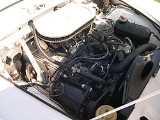
The Rover V8 engine is a compact V8 internal combustion engine
Internal combustion engine
The internal combustion engine is an engine in which the combustion of a fuel occurs with an oxidizer in a combustion chamber. In an internal combustion engine, the expansion of the high-temperature and high -pressure gases produced by combustion apply direct force to some component of the engine...

 with aluminium
Aluminium
Aluminium or aluminum is a silvery white member of the boron group of chemical elements. It has the symbol Al, and its atomic number is 13. It is not soluble in water under normal circumstances....

 cylinder head
Cylinder head
In an internal combustion engine, the cylinder head sits above the cylinders on top of the cylinder block. It closes in the top of the cylinder, forming the combustion chamber. This joint is sealed by a head gasket...

s and cylinder block
Cylinder block
A cylinder block is an integrated structure comprising the cylinder of a reciprocating engine and often some or all of their associated surrounding structures...

, originally designed by General Motors and later re-designed and produced by Rover
Rover (car)
The Rover Company is a former British car manufacturing company founded as Starley & Sutton Co. of Coventry in 1878. After developing the template for the modern bicycle with its Rover Safety Bicycle of 1885, the company moved into the automotive industry...

 in the United Kingdom. It has been used in a wide range of vehicles from Rover and other manufacturers since its British debut in 1967.
Discussion
Ask a question about 'Rover V8 engine'
Start a new discussion about 'Rover V8 engine'
Answer questions from other users
Full Discussion Forum
 
Unanswered Questions
Encyclopedia
The Rover V8 engine is a compact V8 internal combustion engine
Internal combustion engine
The internal combustion engine is an engine in which the combustion of a fuel occurs with an oxidizer in a combustion chamber. In an internal combustion engine, the expansion of the high-temperature and high -pressure gases produced by combustion apply direct force to some component of the engine...

 with aluminium
Aluminium
Aluminium or aluminum is a silvery white member of the boron group of chemical elements. It has the symbol Al, and its atomic number is 13. It is not soluble in water under normal circumstances....

 cylinder head
Cylinder head
In an internal combustion engine, the cylinder head sits above the cylinders on top of the cylinder block. It closes in the top of the cylinder, forming the combustion chamber. This joint is sealed by a head gasket...

s and cylinder block
Cylinder block
A cylinder block is an integrated structure comprising the cylinder of a reciprocating engine and often some or all of their associated surrounding structures...

, originally designed by General Motors and later re-designed and produced by Rover
Rover (car)
The Rover Company is a former British car manufacturing company founded as Starley & Sutton Co. of Coventry in 1878. After developing the template for the modern bicycle with its Rover Safety Bicycle of 1885, the company moved into the automotive industry...

 in the United Kingdom. It has been used in a wide range of vehicles from Rover and other manufacturers since its British debut in 1967.

History


The Rover V8 began life as the Buick 215, an all-aluminium engine introduced in 1960 for the 1961 US model year. The compact engine was lightweight, at just 144 kg (318 lb), and capable of high power outputs: the most powerful Buick
Buick
Buick is a premium brand of General Motors . Buick models are sold in the United States, Canada, Mexico, China, Taiwan, and Israel, with China being its largest market. Buick holds the distinction as the oldest active American make...

 version of this engine rated 200 hp, and the very similar Oldsmobile
Oldsmobile
Oldsmobile was a brand of American automobile produced for most of its existence by General Motors. It was founded by Ransom E. Olds in 1897. In its 107-year history, it produced 35.2 million cars, including at least 14 million built at its Lansing, Michigan factory...

 "Jetfire" turbocharged
Turbocharger
A turbocharger, or turbo , from the Greek "τύρβη" is a centrifugal compressor powered by a turbine that is driven by an engine's exhaust gases. Its benefit lies with the compressor increasing the mass of air entering the engine , thereby resulting in greater performance...

 version made 215 hp (both numbers SAE gross). Based on sales volume and press reports, the engine was a success. Buick produced 376,799 cars with this engine in just three years. A comparable number of Oldsmobile 215 engines were produced. In addition, some Pontiac
Pontiac
Pontiac was an automobile brand that was established in 1926 as a companion make for General Motors' Oakland. Quickly overtaking its parent in popularity, it supplanted the Oakland brand entirely by 1933 and, for most of its life, became a companion make for Chevrolet. Pontiac was sold in the...

 models were fitted with the Buick 215, leading to the nickname "BOP 215" for the engine (BOP standing for Buick/Oldsmobile/Pontiac). The aluminium engine was relatively expensive to produce, however, and it suffered problems with oil and coolant sealing, as well as with radiator
Radiator (engine cooling)
Radiators are used for cooling internal combustion engines, mainly in automobiles but also in piston-engined aircraft, railway locomotives, motorcycles, stationary generating plant or any similar use of such an engine....

 clogging from use of antifreeze
Antifreeze
Antifreeze is a freeze preventive used in internal combustion engines and other heat transfer applications, such as HVAC chillers and solar water heaters....

 incompatible with aluminium. As a result, GM ceased production of the all-aluminium engine after 1963, although Buick retained a similar iron engine[1964-1980], as well as a V6 derivative[1962-2008] which proved to have a very long and successful life.

In January 1964 Rover gave American operations head J. Bruce McWilliams permission to investigate the possible purchase of an American V8 engine for Rover cars. It is usually said that McWilliams first saw the Buick V8 at the works of Mercury Marine
Mercury Marine
Mercury Marine, founded in 1939, is a division of Brunswick of Lake Forest, Illinois, in the United States. Mercury provides engines for private, commercial and government sales. Mercury also has its own line of very successful racing engines tailored for power and speed. The company's primary...

, where he was discussing the sale of Rover gas turbines and diesel engines to the company (Mercury did indeed use the Land Rover diesel engine in marinised form). However, it seems likely that McWilliams was aware of the Buick engine before this. In any case, McWilliams realised that the lightweight Buick V8 would be ideal for smaller British cars (indeed, it weighed less than many straight-4
Straight-4
The inline-four engine or straight-four engine is an internal combustion engine with all four cylinders mounted in a straight line, or plane along the crankcase. The single bank of cylinders may be oriented in either a vertical or an inclined plane with all the pistons driving a common crankshaft....

 engines it would replace.) McWilliams and William Martin-Hurst began an aggressive campaign to convince GM to sell the tooling, which they finally agreed to do in January 1965. Retiring Buick engineer Joe Turley moved to the UK to act as a consultant.

As well as appearing in Rover cars, the engine was widely sold by Rover to small car builders, and has appeared in a wide variety of vehicles. Rover V8s feature in some models from Morgan
Morgan Motor Company
The Morgan Motor Company is a British motor car manufacturer. The company was founded in 1910 by Harry Frederick Stanley Morgan, generally known as "HFS" and was run by him until he died, aged 77, in 1959. Peter Morgan, son of H.F.S., ran the company until a few years before his death in 2003...

, TVR
TVR
thumb|right|240px|TVR No.2, the oldest surviving TVR, located at [[Lakeland Motor Museum, Newby Bridge, Cumbria]]TVR was an independent British manufacturer of sports cars. Until 2006 it was based in the English seaside town of Blackpool, Lancashire, but has since split up into several smaller...

, Triumph
Triumph Motor Company
The Triumph Motor Company was a British car and motor manufacturing company. The Triumph marque is owned currently by BMW. The marque had its origins in 1885 when Siegfried Bettmann of Nuremberg initiated S. Bettmann & Co and started importing bicycles from Europe and selling them with his own...

, Land Rover
Land Rover
Land Rover is a British car manufacturer with its headquarters in Gaydon, Warwickshire, United Kingdom which specialises in four-wheel-drive vehicles. It is owned by the Indian company Tata Motors, forming part of their Jaguar Land Rover group...

 and MG
MG (car)
The MG Car Company is a former British sports car manufacturer founded in the 1920s by Cecil Kimber. Best known for its two-seat open sports cars, MG also produced saloons and coupés....

, among many others. The first use of the engine by a UK maker was actually Warwick who fitted the engine, purchased directly from Buick, to the stillborn Warwick 305GT. They have even been used in light aircraft
Light aircraft
A light aircraft is an aircraft that has a maximum gross take-off weight of or less.Many aircraft used commercially for freight, sightseeing, photography and scheduled flights are light aircraft.Examples of light aircraft include:...

 due to their light weight and high power output.

The Rover V8 has long been a relatively common engine for kit car
Kit car
A kit car, also known as a "component car", is an automobile that is available as a set of parts that a manufacturer sells and the buyer then either assembles into a car themselves, or retains a third party to do part or all of the work on their behalf...

 and hot rod
Hot rod
Hot rods are typically American cars with large engines modified for linear speed. The origin of the term "hot rod" is unclear. One explanation is that the term is a contraction of "hot roadster," meaning a roadster that was modified for speed. Another possible origin includes modifications to or...

 use in Britain, much as the Chevrolet small-block V8 is for American builders (though many British hot rods have traditionally used four cylinder engines, like the Ford Pinto
Ford Pinto engine
The Ford Pinto engine was the unofficial but generic nickname for a 4-cylinder internal combustion engine built by Ford Europe. In Ford sales literature it was referred to as the EAO or OHC engine and because it was designed to the metric system, it was sometimes called the "Metric engine". The...

 and Crossflow units
Ford Kent engine
The Ford Kent is an internal combustion engine from Ford of Europe. Originally developed in 1959 for the Ford Anglia, it is an in-line four-cylinder engine with a cast-iron cylinder head and block.-Pre-Crossflow:...

). Even in the US there is a strong contingent of builders who select the Buick or Rover aluminium V8 engine for use in small sporty cars like the MG MGB
MG MGB
The MGB is a sports car launched by MG Cars in May 1962 to replace the MGA. Introduced as a four-cylinder roadster, a coupé with 2+2 seating was added in 1965...

 and the Chevy Vega. Note also that the 1964 Buick iron-block 300 cid engine had aluminium cylinder heads and a longer stroke crankshaft which with minor modifications can be used with the Buick 215 or Rover engine blocks to produce a high output, very light weight V8 with displacement of up to about 300 cubic inches. The 300 crank in the 215 block yields 260 cid.

The British made engines were run on two SU carburettors (14 years), then two Stromberg carburettors (2-3 years), Bosch L-Jetronic (7-8 years, a.k.a. Lucas 4CU Flapper), then Hitachi Hotwire (5 years, a.k.a. Lucas 14CUX
Lucas 14CUX
The Lucas 14CUX is an automotive electronic fuel injection system developed by Lucas Industries and fitted to the Rover V8 engine in Land Rover vehicles between 1990 and 1995...

), then the GEMS system (years) and finally Bosch Motronics for 2 years. The engine is still cast now (2011), in an improved version, by Coscast in Birmingham, UK.

The demise of the MG Rover Group
MG Rover Group
MG Rover was the last domestically owned mass-production car manufacturer in the British motor industry. The company was formed when BMW sold the car-making and engine manufacturing assets of the original Rover Group to the Phoenix Consortium in 2000....

 in 2005 led to a halt in production of the famed "name" Rover V8 after 40 years. The last Rover to have a real Rover V8 was the Rover SD1
Rover SD1
Rover SD1 is both the code name and eventual production name given to a series of large executive cars made by British Leyland or BL through its Specialist, Rover Triumph and Austin Rover divisions from 1976 until 1986....

 Vitesse which was replaced by the Rover 827 Vitesse with a 2.7 litre Honda V6 unit, The Rover V8 remained with Land Rover until being sold to Ford by BMW. However, Land Rover desired for production of the engine to continue, and they arranged for production to restart in Weston-super-Mare
Weston-super-Mare
Weston-super-Mare is a seaside resort, town and civil parish in the unitary authority of North Somerset, which is within the ceremonial county of Somerset, England. It is located on the Bristol Channel coast, south west of Bristol, spanning the coast between the bounding high ground of Worlebury...

 under MCT, an engineering and manufacturing company. Although Land Rover has switched to the Jaguar AJ-V8 engine
Jaguar AJ-V8 engine
The Jaguar AJ-V8 is a compact DOHC V8 piston engine used in many Jaguar vehicles. It was the fourth new engine type in the history of the company. In 1997 it replaced both designs previously available on Jaguar cars: the straight-6 Jaguar AJ6 engine , and the Jaguar V12 engine...

 for new applications, MCT will continue limited production of the engine for the indeterminate future, supplying engines for aftermarket and replacement use.

It is also interesting to note that the "Rover V8" based on the Buick design was not the first V8 produced by Rover. When the Rover Co was having engineering differences of opinion with the development of the Whittle turbine engine, the Wilks' did a deal with Rolls-Royce to swap technologies. The turbine engine project went to Rolls-Royce and Rover Co took over the V12 Meteor production used in the Centurion Tank
Centurion tank
The Centurion, introduced in 1945, was the primary British main battle tank of the post-World War II period. It was a successful tank design, with upgrades, for many decades...

. From this a V8 variant was developed the Rover Meteorite, also known as Rolls-Royce Meteorite
Rolls-Royce Meteorite
The Rolls-Royce Meteorite, also known as the Rover Meteorite was a V8 petrol or diesel engine of capacity, and was derived from the Rolls-Royce Meteor. In essence it was two-thirds of a V12 Meteor, and it shared the Meteor's 60° vee angle...

, was a V8 petrol engine of 18.01 litre capacity. In essence it was two-thirds of a V12 Meteor, and it shared the Meteor's 60° bank angle. Meteorites were built for vehicles, for marine use and as stationary power units.

It powered the Thornycroft Antar
Thornycroft Antar
The Mighty Antar was a heavy-duty tractor unit built by Thornycroft from the 1940s onwards. For some decades it was the standard tank transporter of the British Army and was also used by other nations.- History :- Origins :...

 or Mighty Antar Tank Transporter, so was used to transport Meteor-engined tanks, and also heavy transport on the Snowy Mountains Hydro-Electric Scheme in Australia.

Racing


As the aluminium block made this engine one of the lightest stock V8s built, it was an obvious choice for use in racing. Mickey Thompson
Mickey Thompson
Marion Lee "Mickey" Thompson was an American off-road racing legend. He won many championships as a racer, and later formed sanctioning bodies SCORE International and Mickey Thompson Entertainment Group . He also raced in dragsters and land speed record automobiles.Thompson was born in Alhambra,...

 entered a car powered by this engine in the 1962 Indianapolis 500. From 1946 to 1962 there had not been a single stock-block car entered in this famous race. In 1962 the Buick 215 was the only non-Offenhauser
Offenhauser
Offenhauser was an American racing engine manufacturer that operated from 1933 to 1983.The Offenhauser engine, familiarly known as the "Offy", was developed by Fred Offenhauser and his employer Harry Arminius Miller, after maintaining and repairing a 1913 Peugeot Grand Prix car of the type which...

 powered entry in the field of 33 cars. Rookie driver Dan Gurney qualified eighth and raced well for 92 laps before retiring with transmission problems.

The Australian firm Repco
Repco
Repco is an Australian automotive engineering company. Its name is an abbreviation of Replacement Parts Company and it is best known for spare parts and motor accessories....

 converted this engine for Formula One
Formula One
Formula One, also known as Formula 1 or F1 and referred to officially as the FIA Formula One World Championship, is the highest class of single seater auto racing sanctioned by the Fédération Internationale de l'Automobile . The "formula" designation in the name refers to a set of rules with which...

 by reducing its stroke to some 61 mm (2.4 in) to give 3 l (182.9 cu in) and fitting a single overhead camshaft per bank rather than the shared pushrod arrangement. Conrods from the Daimler 2,548 cc V8 were used. Repco-powered Brabhams won the F1 championship twice, in 1966 and 1967. For the 1968 season, the Repco engine was fitted with new four-valve, dual overhead camshaft heads. This made the engine roughly as powerful as the Cosworth DFV
Cosworth DFV
The DFV is an internal combustion engine that was originally produced by Cosworth for Formula One motor racing. Named Four Valve because of the four valves per cylinder, and Double as it was a V8 development of the earlier, four-cylinder FVA , making it a Double Four Valve engine...

, but proved to be too much for the stock block, which broke on many occasions. Repco also experimented with 4.2 l (256.1 cu in) derivatives of the Rover V8, to some success despite problems with massive vibration.

The Rover version of this engine was extensively developed and used for rally racing, especially in Triumph TR8 sports cars.

3.5 L


The initial Rover version of the engine had a displacement of 3528 cc. The bore was 88.9 mm (3.5 in) and the stroke was 71 mm (2.8 in). It used a sand-cast block with pressed-in iron
Iron
Iron is a chemical element with the symbol Fe and atomic number 26. It is a metal in the first transition series. It is the most common element forming the planet Earth as a whole, forming much of Earth's outer and inner core. It is the fourth most common element in the Earth's crust...

 cylinder liners, and a new intake manifold with two SU carburetors. The Rover engine was heavier but stronger than the Buick engine, with a dry weight of about 170 kg (375 lb). It was first offered in the 1967 Rover P5B saloon, initially making 160 PS at 5,200 rpm and 210 lbft of torque at 2,600 rpm on 10.5:1 compression. With the introduction of the Rover SD1 in 1975, the engine was dramatically improved with the 'rope' oil seals replaced with poly items and the spark plug dimensions changed.
Applications:
  • 1967–1973 Rover P5
    Rover P5
    The Mark II version of the P5 was introduced in 1962. It featured more power from the same 3.0 L engine and an improved suspension, while dropping the glass wind deflectors from the top of the window openings which also, on the front doors, now featured "quarterlight" windows .The most...

  • 1968–1976 Rover P6
    Rover P6
    The first P6 used a 2.0 L engine designed specifically for the P6. Although it was announced towards the end of 1963, the car had been in "pilot production" since the beginning of the year, therefore deliveries were able to begin immediately. Original output was in the order of . At the...

  • 1968–1990 Morgan Plus 8
    Morgan Plus 8
    The Morgan Plus 8 is a sports car built by British car makers Morgan between 1968 and 2004. Its instant and enduring popularity has been credited with saving the company and keeping the company famous during the 36 years of its manufacture...

  • 1970–1989 Land Rover Range Rover
    Range Rover
    The Range Rover is a large luxury four-wheel drive sport utility vehicle produced by British car maker Land Rover. The model, launched in 1970, is now in its third generation...

  • 1973–1976 MGB GT V8
    MG MGB
    The MGB is a sports car launched by MG Cars in May 1962 to replace the MGA. Introduced as a four-cylinder roadster, a coupé with 2+2 seating was added in 1965...

  • 1972–1978 Land Rover 101 Forward Control
    Land Rover 101 Forward Control
    thumb|right|300px|Side View.The 101 Forward Control was a vehicle produced by Land Rover for the British Army.-History:The vehicle was primarily produced to meet the Army's requirement for a gun tractor, and was designed to tow a field gun with a ton of ammunition and other equipment in the rear...

     military vehicle
  • 1979–1981/2 Triumph TR8
    Triumph TR8
    The Triumph TR8 is an eight-cylinder version of the "wedge-shaped" Triumph TR7 sports car, designed by Harris Mann, and manufactured by British Leyland , through its Jaguar/Rover/Triumph division. Because of its outstanding performance, the TR8 was often dubbed the "English Corvette"...

  • 1978–1985 Land Rover Series III "Stage One"
    Land Rover (Series/Defender)
    The Land Rover Defender is a British four wheel drive off-road utility vehicle developed from the original Land Rover Series launched in 1948.-Name and badge distinctions:...

  • 1976–1987 Rover SD1
    Rover SD1
    Rover SD1 is both the code name and eventual production name given to a series of large executive cars made by British Leyland or BL through its Specialist, Rover Triumph and Austin Rover divisions from 1976 until 1986....

  • 1976–1990 Argyll
    Argyll (automobile)
    Argyll was a Scottish motor car marque manufactured from 1899 to 1932, and again from 1976 to around 1990.-The original Argyll marque:Alex Govan founded The Hozier Engineering Company in 1899, and it was at this factory that the first Argyll Voiturette was produced; copied from the contemporary...

  • 1980–1990 TVR 350i
    TVR 350i
    In 1982 TVR's then new owner Peter Wheeler found himself wanting more power than the Cologne V6-equipped Tasmin 280i could offer. Thus, based on the existing car the Tasmin 350i appeared in August 1983. Using the same chassis and body , a 3.5-litre Rover V8 was installed...

  • 1989–2004 Land Rover Discovery
    Land Rover Discovery
    The Discovery was introduced into the United Kingdom in 1989. The company code-named the vehicle "Project Jay". The new model was based on the chassis and drivetrain of the more upmarket Range Rover, but with a lower price aimed at a larger market segment and intended to compete with Japanese...

  • 1983–1994 Land Rover 90/110/Defender
    Land Rover (Series/Defender)
    The Land Rover Defender is a British four wheel drive off-road utility vehicle developed from the original Land Rover Series launched in 1948.-Name and badge distinctions:...

  • 1986–1991 Sisu NA-140 BT
    Sisu Nasu
    The Nasu is a tracked articulated, all-terrain transport vehicle developed by Sisu Auto for the Finnish Army. It consists of two units, with all four tracks powered. It can carry up to 17 people, although the trailer unit can be adapted for different applications...

     all-terrain transport vehicle

Project Iceberg


In the late 1970s, British Leyland became aware of the increasing importance of diesel engine
Diesel engine
A diesel engine is an internal combustion engine that uses the heat of compression to initiate ignition to burn the fuel, which is injected into the combustion chamber...

d cars to the British, European and (especially) North American markets in the wake of the 1979 energy crisis
1979 energy crisis
The 1979 oil crisis in the United States occurred in the wake of the Iranian Revolution. Amid massive protests, the Shah of Iran, Mohammad Reza Pahlavi, fled his country in early 1979 and the Ayatollah Khomeini soon became the new leader of Iran. Protests severely disrupted the Iranian oil...

. It was decided that a new series of diesel engines powerful, refined and economical enough for use in BL cars was needed. However, with development funding tight, it was necessary to use existing BL petrol engines as a base. This included a diesel version of the 3.5-litre V8, the development project for which was code-named 'Iceberg'. BL collaborated with Perkins Engines of Peterborough
Peterborough
Peterborough is a cathedral city and unitary authority area in the East of England, with an estimated population of in June 2007. For ceremonial purposes it is in the county of Cambridgeshire. Situated north of London, the city stands on the River Nene which flows into the North Sea...

 to develop the engine. Both naturally aspirated
Naturally-aspirated engine
A naturally aspirated engine is one common type of reciprocating piston internal combustion engine that depends solely on atmospheric pressure to counter the partial vacuum in the induction tract to draw in combustion air...

 and turbocharged
Turbodiesel
Turbodiesel refers to any diesel engine with a turbocharger. Turbocharging is the norm rather than the exception in modern car and truck diesel engines...

 versions were produced, both using a Stanadyne rotary mechanical fuel injection
Fuel injection
Fuel injection is a system for admitting fuel into an internal combustion engine. It has become the primary fuel delivery system used in automotive petrol engines, having almost completely replaced carburetors in the late 1980s....

 system. Power outputs of around 100 (naturally aspirated) and 150 (turbocharged) horsepower
Horsepower
Horsepower is the name of several units of measurement of power. The most common definitions equal between 735.5 and 750 watts.Horsepower was originally defined to compare the output of steam engines with the power of draft horses in continuous operation. The unit was widely adopted to measure the...

 were achieved. The Iceberg engine was slated for fitment in the Range Rover
Range Rover
The Range Rover is a large luxury four-wheel drive sport utility vehicle produced by British car maker Land Rover. The model, launched in 1970, is now in its third generation...

, Rover SD1
Rover SD1
Rover SD1 is both the code name and eventual production name given to a series of large executive cars made by British Leyland or BL through its Specialist, Rover Triumph and Austin Rover divisions from 1976 until 1986....

 and the Jaguar XJ
Jaguar XJ
Jaguar XJ is the designation that has been used for a series of luxury saloon cars sold under the British Jaguar marque. The first XJ was launched in 1968 and the designation has been used for successive Jaguar flagship models since then. The original model was the last Jaguar saloon to have had...

 but the project encountered problems with failure of the alloy cylinder head
Cylinder head
In an internal combustion engine, the cylinder head sits above the cylinders on top of the cylinder block. It closes in the top of the cylinder, forming the combustion chamber. This joint is sealed by a head gasket...

s and internal cooling. They were limited by the need to use the same basic block casting as the petrol engine to allow the Iceberg engine to be produced on the same production line to reduce costs. Whilst these problems could have been overcome, the project ran into financial and logistical problems caused by the reorganisation of BL and specifically the splitting of Land Rover
Land Rover
Land Rover is a British car manufacturer with its headquarters in Gaydon, Warwickshire, United Kingdom which specialises in four-wheel-drive vehicles. It is owned by the Indian company Tata Motors, forming part of their Jaguar Land Rover group...

 and Rover into separate divisions. Land Rover took over production of the V8 engine in 1982, moving it from the main BL engine plant at Acock's Green into a new, much lower-capacity production line in the Solihull
Solihull
Solihull is a town in the West Midlands of England with a population of 94,753. It is a part of the West Midlands conurbation and is located 9 miles southeast of Birmingham city centre...

 works, where it was built alongside the other Land Rover engines
Land Rover engines
Engines used by the British company Land Rover in its 4x4 vehicles have included 4-cylinder petrol engines, and 4-cylinder and 5-cylinder diesel engines. 6-cylinder engines have been used for Land Rover vehicles built under licence...

. This meant that there was no spare capacity to build diesel versions of the engine. Coupled to this, it was clear that the market for large diesel engined cars in North America had not developed as expected. BL finally pulled out of the project in 1983. Perkins initially decided to pursue the project alone, and even produced advertising brochures for the engine as an industrial power unit, but BL withdrew all technical support and Project Iceberg was wrapped up in late 1983. BL's other collaboration with Perkins (producing a diesel version of the O-Series engine) produced the highly successful 'Prima' unit. BL (and its Rover Group
Rover Group
The Rover Group plc was the name given in 1986 to the British state-owned vehicle manufacturer previously known as British Leyland or BL. Owned by British Aerospace from 1988 to 1994, when it was sold to BMW, the Group was broken up in 2000 with the Rover and MG marques being acquired by the MG...

 successor) bought in 2.5-litre 4-cylinder turbodiesel
Turbodiesel
Turbodiesel refers to any diesel engine with a turbocharger. Turbocharging is the norm rather than the exception in modern car and truck diesel engines...

 units from VM Motori
VM Motori
VM Motori S.p.A. is a diesel engine manufacturing company in Cento, Italy, in Emilia-Romagna, an Italian region which is also home to Ferrari, Lamborghini, Maserati and Ducati.- History :...

 to use in the SD1 and Range Rover.

3.9/4.0


Land Rover used a 3946 cc version of the Rover V8 through the 1990s. Bore was increased to 94 mm (3.7 in) and stroke remained the same at 71 mm (2.8 in). The engine was revised in 1995 (and thereafter referred to as a 4.0 to differentiate it from the earlier version, although displacement remained the same at 3,946 cc) with a new intake and exhaust system, extra block ribbing, revised pistons, and larger cross-bolted main-bearings. The 1995 4.0 produced 190 hp and 236 lbft .

Production of the 4.0 ended in 2003. The final version of the engine, used in the 2003 Land Rover Discovery
Land Rover Discovery
The Discovery was introduced into the United Kingdom in 1989. The company code-named the vehicle "Project Jay". The new model was based on the chassis and drivetrain of the more upmarket Range Rover, but with a lower price aimed at a larger market segment and intended to compete with Japanese...

, produced 188 hp at 4,750 rpm and 250 lbft at 2,600 rpm.

Applications:
  • 1990–2004 Morgan Plus 8
    Morgan Plus 8
    The Morgan Plus 8 is a sports car built by British car makers Morgan between 1968 and 2004. Its instant and enduring popularity has been credited with saving the company and keeping the company famous during the 36 years of its manufacture...

  • 1991–1995 Ginetta G33
  • 1992–1996 MG RV8
  • 1986–1993 TVR S Series
    TVR S Series
    The TVR S Series was announced at the 1986 NEC motor show. Due to a massive positive response the car went into production in less than 12 months, with 250 pre-manufacture orders...

  • 1989–1995 Land Rover Range Rover
    Land Rover Range Rover Classic
    The Range Rover Classic is a 4x4 luxury SUV series built by British car maker Land Rover from 1970 to 1996. It was the first generation of vehicles produced under the Range Rover name...

     (known as a 3.9 in this application)
  • 1992–2001 TVR Chimaera
    TVR Chimaera
    The TVR Chimaera is a two-seater convertible sports car manufactured by TVR between 1992 and 2003. The name was derived from Chimera, the monstrous creature of Greek mythology, which was made of the parts of multiple animals...

  • 1992–2000 TVR Griffith
    TVR Griffith
    The TVR Griffith, later models being referred to as the Griffith 500, was a sports car designed and built by TVR starting in 1991 and ending in 2002....

  • 1995–2003 Land Rover Range Rover in SE trim
  • 1994–1998 Land Rover Defender (only used as standard on USA-spec vehicles- available only to special order in other markets.)
  • 1986–1991 Sisu NA-140 BT
    Sisu Nasu
    The Nasu is a tracked articulated, all-terrain transport vehicle developed by Sisu Auto for the Finnish Army. It consists of two units, with all four tracks powered. It can carry up to 17 people, although the trailer unit can be adapted for different applications...

     all-terrain transport vehicle
  • 1991–2009 Westfield SEight
    Westfield SEight
    The SEiGHT is a sports car manufactured as a kit or factory built vehicle by Westfield Sportscars. It is based on the familiar Lotus Seven concept, created by Colin Chapman, whose design philosophy was to strip a car design down to bare essentials for the ultimate in driving experiences...

  • 1998 Land Rover Defender 50th Anniversary Limited Edition


In the early 1980s TVR approached Andy Rouse with a view to using his race-developed 3.9L variant of the V8 in their Rover-powered 350i 'wedge'; Rouse had successfully campaigned a Rover SD1 with a modified V8 on the track. For a number of reasons (primarily cost) Rouse's version was not used, but the concept was passed to alternative engineering firms which resulted in a rare variant of the 3.9. This unit has 93.5mm cylinder bores (instead of Rover's own 94mm that was introduced some years later) and thus has a capacity of 3,905cc. Flat-topped pistons and high-lift camshaft gave a compression ratio of 10.5:1. TVR claimed 275 bhp as the output and whilst this is generally disregarded by aficionados, a healthy 3,905 cc engine will produce in excess of 240 bhp. Once a reproducible specification had been determined, the bulk of engine production was undertaken by North Coventry Kawasaki (NCK), which company was subsequently purchased by TVR to become their in-house engine division known as TVR Power.
About 100 cars were built with the 3,905 cc engine; TVR's later '400' offering being based on the then-current Range Rover 4L of 3,946 cc.

Applications:
  • 1986–1989 TVR 390SE

4.2


Land Rover extended the 3,946 cc engine for the top LSE specification of the Classic Range Rover. The 4.2 L engine had a displacement of 4275 cc, and used the crankshaft castings from the failed "Iceberg" diesel engine project. Bore remained the same at 94 mm (3.7 in), while stroke increased to 77 mm (3 in).

Applications:
  • 1992–1995 Land Rover Range Rover
    Land Rover Range Rover Classic
    The Range Rover Classic is a 4x4 luxury SUV series built by British car maker Land Rover from 1970 to 1996. It was the first generation of vehicles produced under the Range Rover name...


4.3


For the Griffith and Chimaera, TVR Power, a Coventry-based subsidiary of sportscar maker TVR, built a Rover V8-version with a 4280 cc displacement using the 77 mm (3 in) stroke crankshaft as per the Land Rover 4.2 engine, but with a 94 mm (3.7 in) bore size. The so-called 'pre-cat' versions of the Griffith predominantly used this engine, although a 4.0 litre version was also available. The Chimaera was introduced with choice of 4.0 and 4.3 litre engines. A small number of 'Big Valve' versions, sporting modified cylinder heads with 43 mm (1.7 in) intake and 37 mm (1.5 in) exhaust valves and a more radical camshaft profile, found their way to early Griffiths and Chimaeras.

Around 1993, a number of Westfield SEight models were equipped with a John Eales-built 4.3 litre engine.

Applications:
  • 1992–1993 TVR Griffith
    TVR Griffith
    The TVR Griffith, later models being referred to as the Griffith 500, was a sports car designed and built by TVR starting in 1991 and ending in 2002....

  • 1993–1994 TVR Chimaera
    TVR Chimaera
    The TVR Chimaera is a two-seater convertible sports car manufactured by TVR between 1992 and 2003. The name was derived from Chimera, the monstrous creature of Greek mythology, which was made of the parts of multiple animals...

  • 1993–2009 Westfield SEight
    Westfield SEight
    The SEiGHT is a sports car manufactured as a kit or factory built vehicle by Westfield Sportscars. It is based on the familiar Lotus Seven concept, created by Colin Chapman, whose design philosophy was to strip a car design down to bare essentials for the ultimate in driving experiences...


4.4


Leyland of Australia produced a special 4416 cc version of the aluminium V8 for their Australia-only 1973 Leyland P76
Leyland P76
The Leyland P76 is a large car that was produced by Leyland Australia, the Australian subsidiary of British Leyland. Featuring what was described at the time as the "standard Australian wheelbase of 111 inches", it was intended to provide the company with a genuine rival to large local models like...

. The bore was 88.9 mm (3.5 in) and the stroke was 88.9 mm (3.5 in), making it a square engine. The block deck height was extended and longer conrods were fitted 158.75 mm (6.3 in) between centres. This rare engine produced 200 hp (149 kW) and 280 ft•lbf (380 N•m) and although export (to the UK) versions were planned, the closure by British Leyland of their Australian operations in 1975 precluded the widespread application of this engine.

Applications:
  • 1973–1975 Leyland P76
    Leyland P76
    The Leyland P76 is a large car that was produced by Leyland Australia, the Australian subsidiary of British Leyland. Featuring what was described at the time as the "standard Australian wheelbase of 111 inches", it was intended to provide the company with a genuine rival to large local models like...

  • Leyland Terrier truck

4.5


Not to be confused with the later 4.6 litre engine which TVR badged as a '4.5' for the Chimaera, there also existed a version with an 80 mm (3.1 in) crank and 94 mm (3.7 in) bore giving 4444 cc capacity, which was used by TVR
TVR
thumb|right|240px|TVR No.2, the oldest surviving TVR, located at [[Lakeland Motor Museum, Newby Bridge, Cumbria]]TVR was an independent British manufacturer of sports cars. Until 2006 it was based in the English seaside town of Blackpool, Lancashire, but has since split up into several smaller...

 in the low-volume special 450 SEAC
TVR 450 SEAC
The TVR 450 SEAC is a sports car designed and built by TVR in a one year only run. It used the same fibreglass and kevlar body as the 420 SEAC and the same chassis. The only difference was the engine which grew to 4,5 litres and about and 435 Nm torque. As a consequence though the 450 SEAC was...

, the race version thereof and the subsequent Tuscan Challenge racers. A tiny number of Griffith and Chimaera road cars were built with a version of this engine, known as the '450 BV' (Big Valve).

4.6


In 1996, Land Rover enlarged the Rover V8 to 4552 cc. The bore remained the same size as the previous 4.0 at 94 mm (3.7 in), but the engine was stroked by 10.9 mm (0.429133858267717 in) giving 82 mm (3.2 in) in total. Output was 225 hp (168 kW) and 280 ft•lbf (380 N•m).

Production of the 4.6 ended at Solihull
Solihull
Solihull is a town in the West Midlands of England with a population of 94,753. It is a part of the West Midlands conurbation and is located 9 miles southeast of Birmingham city centre...

, UK, in 2002. The final version, used in the Range Rover, produced 222 hp (166 kW) at 4,750 rpm and 300 ft•lbf (407 N•m) at 2,600 rpm.

The last mass-produced application of the Rover V8 was the Land Rover Discovery, up until the vehicle was redesigned in 2005. It is still used by some hand-built sports cars built by some independent manufacturers.

Applications:
  • 1995–2002 Land Rover Range Rover in the HSE trim
  • 2003–2004 Land Rover Discovery
    Land Rover Discovery
    The Discovery was introduced into the United Kingdom in 1989. The company code-named the vehicle "Project Jay". The new model was based on the chassis and drivetrain of the more upmarket Range Rover, but with a lower price aimed at a larger market segment and intended to compete with Japanese...

  • 1996–2002 TVR Chimaera
    TVR Chimaera
    The TVR Chimaera is a two-seater convertible sports car manufactured by TVR between 1992 and 2003. The name was derived from Chimera, the monstrous creature of Greek mythology, which was made of the parts of multiple animals...


5.0


A 5 litre 4997 cc variant of the Rover V8 was used in two models by British sportscar manufacturer TVR
TVR
thumb|right|240px|TVR No.2, the oldest surviving TVR, located at [[Lakeland Motor Museum, Newby Bridge, Cumbria]]TVR was an independent British manufacturer of sports cars. Until 2006 it was based in the English seaside town of Blackpool, Lancashire, but has since split up into several smaller...

. The bore was 94 mm (3.7 in) and the stroke was 90 mm (3.5 in). These models, the Griffith
TVR Griffith
The TVR Griffith, later models being referred to as the Griffith 500, was a sports car designed and built by TVR starting in 1991 and ending in 2002....

 and Chimaera
TVR Chimaera
The TVR Chimaera is a two-seater convertible sports car manufactured by TVR between 1992 and 2003. The name was derived from Chimera, the monstrous creature of Greek mythology, which was made of the parts of multiple animals...

 used the 5 litre unit in their top-end specifications. The factory quotes up to 340 bhp and 350 lbfft of torque.

Applications:
  • 1990-1995 Lichfield Land Rovers
  • 1992–2001 TVR Chimaera
    TVR Chimaera
    The TVR Chimaera is a two-seater convertible sports car manufactured by TVR between 1992 and 2003. The name was derived from Chimera, the monstrous creature of Greek mythology, which was made of the parts of multiple animals...

  • 1992–2000 TVR Griffith
    TVR Griffith
    The TVR Griffith, later models being referred to as the Griffith 500, was a sports car designed and built by TVR starting in 1991 and ending in 2002....

  • 2002–2006 Bowler Wildcat
    Bowler Wildcat
    The Bowler Wildcat is an off-road vehicle originally made by Bowler Offroad, it is an evolution of the Bowler Tomcat which is not based on the Land Rover Defender against common belief...

    - this used a hybrid 5.0-litre V8 with Land Rover cylinder heads and a TVR block and piston assembly.


Moreover, in the mid-1980s, hot rod
Hot rod
Hot rods are typically American cars with large engines modified for linear speed. The origin of the term "hot rod" is unclear. One explanation is that the term is a contraction of "hot roadster," meaning a roadster that was modified for speed. Another possible origin includes modifications to or...

ders discovered the 215 could be stretched to as much as 305 cid, using the Buick 300 crankshaft
Crankshaft
The crankshaft, sometimes casually abbreviated to crank, is the part of an engine which translates reciprocating linear piston motion into rotation...

, new cylinder sleeves, and an assortment of non-Buick parts. It could also be fitted with high-compression cylinder head
Cylinder head
In an internal combustion engine, the cylinder head sits above the cylinders on top of the cylinder block. It closes in the top of the cylinder, forming the combustion chamber. This joint is sealed by a head gasket...

s from the Morgan
Morgan Motor Company
The Morgan Motor Company is a British motor car manufacturer. The company was founded in 1910 by Harry Frederick Stanley Morgan, generally known as "HFS" and was run by him until he died, aged 77, in 1959. Peter Morgan, son of H.F.S., ran the company until a few years before his death in 2003...

 +8
Morgan Plus 8
The Morgan Plus 8 is a sports car built by British car makers Morgan between 1968 and 2004. Its instant and enduring popularity has been credited with saving the company and keeping the company famous during the 36 years of its manufacture...

. Using the 5 liter Rover block and crankshaft, a maximum displacement of 317.8 cid is theoretically possible.

External links