


Roman trade with India

Encyclopedia
Roman trade with India through the overland caravan routes via Anatolia
and Persia, though at a relative trickle compared to later times, antedated the southern trade route via the Red Sea
and monsoons which started around the beginning of the Common Era
(CE) following the reign of Augustus
and his conquest of Egypt
in 30 BCE.
The route so helped enhance trade between ancient states of India
(present day) and Rome
, that Roman politicians are on record decrying the loss of specie to pamper Roman wives, and the southern route grew to eclipse and then totally supplant the overland trade route.
Roman trade diaspora frequented the ancient Tamil country
(present day Southern India) and Sri Lanka
, securing trade with the seafaring Tamil
states of the Chola, Pandyan and Chera dynasties and establishing trading settlements which remained long after the fall of the Western Roman Empire
. They also outlasted Byzantium
's loss of the Egypt
and the Red Sea
ports (ca. 639-645 CE) under the pressure of Jihad
and Islam
, which had been used to secure trade with India by the Greco-Roman world
since the time of the Ptolemaic dynasty
a few decades before the start of the Common Era
. Sometime after the sundering of communications between the Axum and Eastern Roman Empire in the 7th century, the Christian kingdom of Axum fell into a slow decline and faded into obscurity in western culture, though it survived despite pressure from Islamic forces until the 11th century, when it was reconfigured in a dynastic squabble.
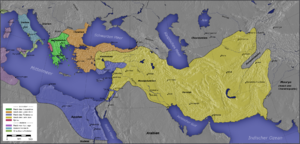 The Seleucid dynasty
controlled a developed network of trade with India which had previously existed under the influence of the Persian Achaemenid dynasty. The Greek Ptolemaic dynasty, controlling the western and northern end of other trade routes to Southern Arabia and India, had begun to exploit trading opportunities with India prior to the Roman involvement but, according to the historian Strabo
, the volume of commerce between India and Greece was not comparable to that of later Indian-Roman trade.
The Periplus Maris Erythraei mentions a time when sea trade between India and Egypt did not involve direct sailings. The cargo under these situations was shipped to Aden
:
The Ptolemaic dynasty had developed trade with India using the Red Sea ports. With the establishment of Roman Egypt, the Romans took over and further developed the already existing trade using these ports.
The west coast of India has been mentioned frequently in foreign literature, such as the Periplus Maris Erythraei. The area was noted for its severe tidal currents, turbulent waves, and rocky sea-beds. Although many ships have attempted to sail outside it in order to prevent shipwrecks, many ships were still drawn inside the gulf. As a result of the difficulties, the entrance and departure of ships were dangerous for those who possessed little sea experience. The anchors of the ship would be caught by the waves and quickly cut off, which could overturn the ship or ultimately cause a wreck. Stone anchors have been observed near Bet Dwarka, an island situated in the Gulf of Kachchh, due to these frequent shipwrecks. More importantly, the number of discovered anchors and numerous artifacts suggest that Indo-Roman trade and commerce was significant during the early centuries of the Common era.
Onshore and offshore explorations have been carried out around Bet Dwarka Island since 1983.The finds discovered include lead and stone objects buried in sediment and considered to be anchors due to their axial holes. Though it is unlikely that the remains of the shipwreck’s hull survived, offshore explorations in 2000 and 2001 have yielded seven differently-sized amphoras, two lead anchors, forty-two stone anchors of different types, a supply of potsherds, and a circular lead ingot. The remains of the seven amphoras were of a thick, coarse fabric with a rough surface, which was used for exporting wine and olive oil from the Roman Empire. Archeologists have concluded that most of these were wine amphoras, since olive oil was in less demand in India.
 Since the discoveries at Bet Dwarka are significant for the maritime history of India, archeologists have researched the resources in India. Despite the unfavorable conditions the island is situated in, the following items have made Bet Dwarka as well as the rest of western India an important place for trade. From Latin literature, Rome imported Indian tigers, rhinoceros, elephants, and serpents to use for circus shows - a method employed as entertainment to prevent riots in Rome. It has been noted in the Periplus that Roman women also wore Indian pearls and used a supply of herbs, spices, pepper, lyceum, costus, sesame oil and sugar for food. Indigo was used as a color while cotton cloth was used as articles of clothing, Furthermore, India exported ebony for fashioned furniture in Rome. The Roman Empire also imported Indian lime, peach, and various other fruits for medicine. Western India, as a result, was the recipient of large amounts of Roman gold during this time.
Since one must sail against the narrow gulfs of western India, special large boats were used and ship development was demanded. At the entrance of the gulf, large ships called trappaga and cotymba helped guide foreign vessels safely to the harbor. These ships were capable of relatively long coastal cruises, and several seals have depicted this type of ship. In each seal, parallel bands were suggested to represent the beams of the ship. In the center of the vessel is a single mast with a tripod base.
Apart from the recent explorations, close trade relations as well as the development of ship building were supported by the discovery of several Roman coins. On these coins were depictions of two strongly constructed masted ships. Thus, these depictions of Indian ships, originating from both coins and literature (Pliny and Pluriplus), indicate India’s development in seafaring due to the increase in Indo-Roman commerce. In addition, the silver Roman coins discovered in western India primarily come from the 1st, 2nd, and 5th centuries. These Roman coins also suggest that India possessed a stable sea borne trade with Rome during 1st and 2nd century AD. Land routes, during the time of Augustus, were also used for Indian embassies to reach Rome.
The discoveries found on Bet Dwarka and on other areas on the western coast of India strongly indicate that there were strong Indo-Roman trade relations during the first two centuries of the Common era. The 3rd century, however, was the demise of the Indo-Roman trade. The sea-route between Rome and India was shut down, and as a result, the trading reverted back to the time prior to Roman expansion and exploration.
 The replacement of Greece
by the Roman empire as the administrator of the Mediterranean basin led to the strengthening of direct maritime trade with the east and the elimination of the taxes extracted previously by the middlemen of various land based trading routes. Strabo's mention of the vast increase in trade following the Roman annexation of Egypt indicates that monsoon was known and manipulated for trade in his time.
The trade started by Eudoxus of Cyzicus
in 130 BCE kept increasing, and according to Strabo (II.5.12.):
By the time of Augustus up to 120 ships were setting sail every year from Myos Hormos
to India. So much gold was used for this trade, and apparently recycled by the Kushan Empire
(Kushans) for their own coinage, that Pliny the Elder
(NH VI.101) complained about the drain of specie to India:
. For example Villa del Casale
has mosaics depicting the capture of exotic animals in India
, Indonesia
and in Africa
. The intercontinental trade of exotic animals was one of the sources of richness of the owners of the villa. In the Ambulacro della Grande Caccia, the hunting scenes and capture of live animals is well represented by such details that it is possible to identify the species. There is a scene that shows a technique to distract a mother Tiger
in order to take her cubs by using a shimmering ball of glass
or mirror
. It is also represented the hunt of Tiger
with red ribbons serving as a distraction. In the mosaic
there are also numerous other animals such as a Rhinoceros
, an Indian Elephant
(recognized from the ears) with his Indian conductor and the Indian Peafowl
, along with other exotic birds. There are also numerous animal from Africa
. We know from sources that lot of Tigers, Pantheras as well as the Asian and African Lion
were used in the arenas
or in circuses. The European Lion
was already extinct. Probably the last that lived in Balkan Peninsula were hunted to stock arenas
. The birds and monkeys entertained the guests of many villas. Also in Villa del Tellaro there is a mosaic with tiger in a jungle that is attacking a man with roman clothes, probably a careless hunter. The animals were transported in cages and loaded in a ship arrived to Alexandria
harbour, all that is represented in the mosaic.
, Berenice and Myos Hormos
. Arsinoe was one of the early trading centers but was soon overshadowed by the more easily accessible Myos Hormos and Berenice.
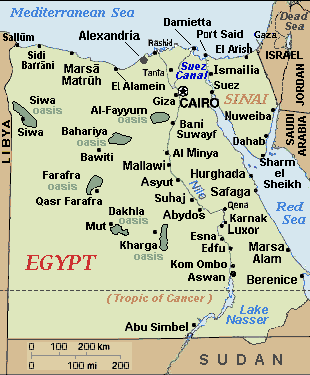 The Ptolemaic dynasty exploited the strategic position of Alexandria
to secure trade with India. The course of trade with the east then seems to have been first through the harbor of Arsinoe, the present day Suez
. The goods from the East Africa
n trade were landed at one of the three main Roman ports, Arsinoe, Berenice or Myos Hormos. The Romans repaired and cleared out the silted up canal from the Nile to harbor center of Arsinoe on the Red Sea. This was one of the many efforts the Roman administration had to undertake to divert as much of the trade to the maritime routes as possible.
Arsinoe was eventually overshadowed by the rising prominence of Myos Hermos. The navigation to the northern ports, such as Arsinoe-Clysma, became difficult in comparison to Myos Hermos due to the northern winds in the Gulf of Suez
. Venturing to these northern ports presented additional difficulties such as shoals, reef
s and treacherous currents
.
The site of Berenice, since its discovery by Belzoni (1818), has been equated with the ruins near Ras Banas
in Southern Egypt. However, the precise location of Myos Hormos is disputed with the latitude and longitude given in Ptolemy
's Geography
favoring Abu Sha'ar and the accounts given in classical literature and satellite images indicating a probable identification with Quesir el-Quadim at the end of a fortified road from Koptos on the Nile
. The Quesir el-Quadim site has further been associated with Myos Hormos following the excavations at el-Zerqa, halfway along the route, which have revealed ostraca leading to the conclusion that the port at the end of this road may have been Myos Hormos.
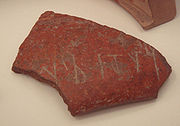 In India, the ports of Barbaricum (modern Karachi
), Barygaza
, Muziris in Kerala, Korkai
, Kaveripattinam
and Arikamedu
on the southern tip of India were the main centers of this trade, along with Kodumanal
, an inland city. The Periplus Maris Erythraei describes Greco-Roman merchants selling in Barbaricum "thin clothing, figured linens, topaz
, coral
, storax
, frankincense
, vessels of glass, silver and gold plate, and a little wine" in exchange for "costus
, bdellium
, lycium
, nard
, turquoise
, lapis lazuli
, Seric skins, cotton cloth, silk
yarn, and indigo
". In Barygaza, they would buy wheat, rice, sesame oil, cotton and cloth.
("Nambanus"), was especially flourishing:
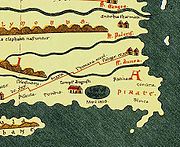 Muziris
is a lost port city in the South Indian state of Kerala
which was a major center of trade in Tamilakkam
between the Chera Empire and the Roman Empire. Large hoards of coins and innumerable shards of amphora
e found in the town of Pattanam
have elicited recent archeological interest in finding a probable location of this port city.
According to the Periplus, numerous Greek seamen managed an intense trade with Muziris:
in Tamil Nadu
, a centre of early Chola
trade (now part of Ariyankuppam
), about 2 miles from the modern Pondicherry. Huntingford further notes that Roman pottery was found at Arikamedu in 1937, and archeological excavations between 1944 and 1949 showed that it was "a trading station to which goods of Roman manufacture were imported during the first half of the 1st century AD".
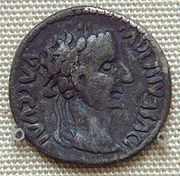 The Rome-India trade also saw several cultural exchanges which had lasting effect for both the civilizations and others involved in the trade. The Ethiopia
n kingdom of Aksum was involved in the Indian Ocean
trade network and was influenced by Roman culture and Indian architecture. Traces of Indian influences are visible in Roman works of silver and ivory, or in Egyptian cotton and silk fabrics used for sale in Europe
. The Indian presence in Alexandria may have influenced the culture but little is known about the manner of this influence. Clement of Alexandria
mentions the Buddha
in his writings and other Indian religions find mentions in other texts of the period.
Even China
was involved in the Roman trade with eastern Asia:
Christian
and Jewish settlers from Rome continued to live in India long after the decline in bilateral trade. Large hoards of Roman coins have been found throughout India, and especially in the busy maritime trading centers of the south. The Tamilakkam kings reissued Roman coinage in their own name after defacing the coins in order to signify their sovereignty. Mentions of the traders are recorded in the Tamil
Sangam literature
of India. One such mention reads: "The beautiful warships of the Yavanas came to the prosperous and beautiful Muchiri (Muziris
) breaking the white foams of 'Chulli
', the big river, and returned with 'curry' (kari, the black pepper) paying for it in gold.(from poem no. 149 of 'Akananuru' of Sangam Literature)"
Anatolia
Anatolia is a geographic and historical term denoting the westernmost protrusion of Asia, comprising the majority of the Republic of Turkey...
and Persia, though at a relative trickle compared to later times, antedated the southern trade route via the Red Sea
Red Sea
The Red Sea is a seawater inlet of the Indian Ocean, lying between Africa and Asia. The connection to the ocean is in the south through the Bab el Mandeb strait and the Gulf of Aden. In the north, there is the Sinai Peninsula, the Gulf of Aqaba, and the Gulf of Suez...
and monsoons which started around the beginning of the Common Era
Common Era
Common Era ,abbreviated as CE, is an alternative designation for the calendar era originally introduced by Dionysius Exiguus in the 6th century, traditionally identified with Anno Domini .Dates before the year 1 CE are indicated by the usage of BCE, short for Before the Common Era Common Era...
(CE) following the reign of Augustus
Augustus
Augustus ;23 September 63 BC – 19 August AD 14) is considered the first emperor of the Roman Empire, which he ruled alone from 27 BC until his death in 14 AD.The dates of his rule are contemporary dates; Augustus lived under two calendars, the Roman Republican until 45 BC, and the Julian...
and his conquest of Egypt
Ptolemaic Egypt
Ptolemaic Egypt began when Ptolemy I Soter invaded Egypt and declared himself Pharaoh of Egypt in 305 BC and ended with the death of queen Cleopatra VII of Egypt and the Roman conquest in 30 BC. The Ptolemaic Kingdom was a powerful Hellenistic state, extending from southern Syria in the east, to...
in 30 BCE.
The route so helped enhance trade between ancient states of India
India
India , officially the Republic of India , is a country in South Asia. It is the seventh-largest country by geographical area, the second-most populous country with over 1.2 billion people, and the most populous democracy in the world...
(present day) and Rome
Ancient Rome
Ancient Rome was a thriving civilization that grew on the Italian Peninsula as early as the 8th century BC. Located along the Mediterranean Sea and centered on the city of Rome, it expanded to one of the largest empires in the ancient world....
, that Roman politicians are on record decrying the loss of specie to pamper Roman wives, and the southern route grew to eclipse and then totally supplant the overland trade route.
Roman trade diaspora frequented the ancient Tamil country
Ancient Tamil country
The Sangam period is the classical period in the history of Tamil Nadu, Kerala and other parts of South India, spanning about the 3rd century BCE to the 3rd century CE...
(present day Southern India) and Sri Lanka
Sri Lanka
Sri Lanka, officially the Democratic Socialist Republic of Sri Lanka is a country off the southern coast of the Indian subcontinent. Known until 1972 as Ceylon , Sri Lanka is an island surrounded by the Indian Ocean, the Gulf of Mannar and the Palk Strait, and lies in the vicinity of India and the...
, securing trade with the seafaring Tamil
Tamil people
Tamil people , also called Tamils or Tamilians, are an ethnic group native to Tamil Nadu, India and the north-eastern region of Sri Lanka. Historic and post 15th century emigrant communities are also found across the world, notably Malaysia, Singapore, Mauritius, South Africa, Australia, Canada,...
states of the Chola, Pandyan and Chera dynasties and establishing trading settlements which remained long after the fall of the Western Roman Empire
Western Roman Empire
The Western Roman Empire was the western half of the Roman Empire after its division by Diocletian in 285; the other half of the Roman Empire was the Eastern Roman Empire, commonly referred to today as the Byzantine Empire....
. They also outlasted Byzantium
Byzantium
Byzantium was an ancient Greek city, founded by Greek colonists from Megara in 667 BC and named after their king Byzas . The name Byzantium is a Latinization of the original name Byzantion...
's loss of the Egypt
Egypt
Egypt , officially the Arab Republic of Egypt, Arabic: , is a country mainly in North Africa, with the Sinai Peninsula forming a land bridge in Southwest Asia. Egypt is thus a transcontinental country, and a major power in Africa, the Mediterranean Basin, the Middle East and the Muslim world...
and the Red Sea
Red Sea
The Red Sea is a seawater inlet of the Indian Ocean, lying between Africa and Asia. The connection to the ocean is in the south through the Bab el Mandeb strait and the Gulf of Aden. In the north, there is the Sinai Peninsula, the Gulf of Aqaba, and the Gulf of Suez...
ports (ca. 639-645 CE) under the pressure of Jihad
Jihad
Jihad , an Islamic term, is a religious duty of Muslims. In Arabic, the word jihād translates as a noun meaning "struggle". Jihad appears 41 times in the Quran and frequently in the idiomatic expression "striving in the way of God ". A person engaged in jihad is called a mujahid; the plural is...
and Islam
Islam
Islam . The most common are and . : Arabic pronunciation varies regionally. The first vowel ranges from ~~. The second vowel ranges from ~~~...
, which had been used to secure trade with India by the Greco-Roman world
Greco-Roman world
The Greco-Roman world, Greco-Roman culture, or the term Greco-Roman , when used as an adjective, as understood by modern scholars and writers, refers to those geographical regions and countries that culturally were directly, protractedly and intimately influenced by the language, culture,...
since the time of the Ptolemaic dynasty
Ptolemaic dynasty
The Ptolemaic dynasty, was a Macedonian Greek royal family which ruled the Ptolemaic Empire in Egypt during the Hellenistic period. Their rule lasted for 275 years, from 305 BC to 30 BC...
a few decades before the start of the Common Era
Common Era
Common Era ,abbreviated as CE, is an alternative designation for the calendar era originally introduced by Dionysius Exiguus in the 6th century, traditionally identified with Anno Domini .Dates before the year 1 CE are indicated by the usage of BCE, short for Before the Common Era Common Era...
. Sometime after the sundering of communications between the Axum and Eastern Roman Empire in the 7th century, the Christian kingdom of Axum fell into a slow decline and faded into obscurity in western culture, though it survived despite pressure from Islamic forces until the 11th century, when it was reconfigured in a dynastic squabble.
Background
Seleucid dynasty
The Seleucid dynasty or the Seleucidae was a Greek Macedonian royal family, founded by Seleucus I Nicator , which ruled the Seleucid Kingdom centered in the Near East and regions of the Asian part of the earlier Achaemenid Persian Empire during the Hellenistic period.-History:Seleucus was an...
controlled a developed network of trade with India which had previously existed under the influence of the Persian Achaemenid dynasty. The Greek Ptolemaic dynasty, controlling the western and northern end of other trade routes to Southern Arabia and India, had begun to exploit trading opportunities with India prior to the Roman involvement but, according to the historian Strabo
Strabo
Strabo, also written Strabon was a Greek historian, geographer and philosopher.-Life:Strabo was born to an affluent family from Amaseia in Pontus , a city which he said was situated the approximate equivalent of 75 km from the Black Sea...
, the volume of commerce between India and Greece was not comparable to that of later Indian-Roman trade.
The Periplus Maris Erythraei mentions a time when sea trade between India and Egypt did not involve direct sailings. The cargo under these situations was shipped to Aden
Aden
Aden is a seaport city in Yemen, located by the eastern approach to the Red Sea , some 170 kilometres east of Bab-el-Mandeb. Its population is approximately 800,000. Aden's ancient, natural harbour lies in the crater of an extinct volcano which now forms a peninsula, joined to the mainland by a...
:
The Ptolemaic dynasty had developed trade with India using the Red Sea ports. With the establishment of Roman Egypt, the Romans took over and further developed the already existing trade using these ports.
Early Common era
Prior to Roman expansion, India had established strong maritime trade with other countries. The dramatic increase in Indian ports, however, did not occur until the opening of the Red Sea by the Romans and the attainment of geographical knowledge concerning India’s seasonal monsoons. In fact, the first two centuries of the Common era indicate this increase in trade between western India and Rome. This expansion of trade was due to the comparative peace established by the Roman Empire during the time of Augustus (23 September 63 BC – 19 August AD 14), which allowed for new explorations. Thus, archeologists, with evidence from artifacts and ancient literature, suggest that a significant commercial relationship existed between ancient western India and Rome.The west coast of India has been mentioned frequently in foreign literature, such as the Periplus Maris Erythraei. The area was noted for its severe tidal currents, turbulent waves, and rocky sea-beds. Although many ships have attempted to sail outside it in order to prevent shipwrecks, many ships were still drawn inside the gulf. As a result of the difficulties, the entrance and departure of ships were dangerous for those who possessed little sea experience. The anchors of the ship would be caught by the waves and quickly cut off, which could overturn the ship or ultimately cause a wreck. Stone anchors have been observed near Bet Dwarka, an island situated in the Gulf of Kachchh, due to these frequent shipwrecks. More importantly, the number of discovered anchors and numerous artifacts suggest that Indo-Roman trade and commerce was significant during the early centuries of the Common era.
Onshore and offshore explorations have been carried out around Bet Dwarka Island since 1983.The finds discovered include lead and stone objects buried in sediment and considered to be anchors due to their axial holes. Though it is unlikely that the remains of the shipwreck’s hull survived, offshore explorations in 2000 and 2001 have yielded seven differently-sized amphoras, two lead anchors, forty-two stone anchors of different types, a supply of potsherds, and a circular lead ingot. The remains of the seven amphoras were of a thick, coarse fabric with a rough surface, which was used for exporting wine and olive oil from the Roman Empire. Archeologists have concluded that most of these were wine amphoras, since olive oil was in less demand in India.
Since one must sail against the narrow gulfs of western India, special large boats were used and ship development was demanded. At the entrance of the gulf, large ships called trappaga and cotymba helped guide foreign vessels safely to the harbor. These ships were capable of relatively long coastal cruises, and several seals have depicted this type of ship. In each seal, parallel bands were suggested to represent the beams of the ship. In the center of the vessel is a single mast with a tripod base.
Apart from the recent explorations, close trade relations as well as the development of ship building were supported by the discovery of several Roman coins. On these coins were depictions of two strongly constructed masted ships. Thus, these depictions of Indian ships, originating from both coins and literature (Pliny and Pluriplus), indicate India’s development in seafaring due to the increase in Indo-Roman commerce. In addition, the silver Roman coins discovered in western India primarily come from the 1st, 2nd, and 5th centuries. These Roman coins also suggest that India possessed a stable sea borne trade with Rome during 1st and 2nd century AD. Land routes, during the time of Augustus, were also used for Indian embassies to reach Rome.
The discoveries found on Bet Dwarka and on other areas on the western coast of India strongly indicate that there were strong Indo-Roman trade relations during the first two centuries of the Common era. The 3rd century, however, was the demise of the Indo-Roman trade. The sea-route between Rome and India was shut down, and as a result, the trading reverted back to the time prior to Roman expansion and exploration.
Establishment
Greece
Greece , officially the Hellenic Republic , and historically Hellas or the Republic of Greece in English, is a country in southeastern Europe....
by the Roman empire as the administrator of the Mediterranean basin led to the strengthening of direct maritime trade with the east and the elimination of the taxes extracted previously by the middlemen of various land based trading routes. Strabo's mention of the vast increase in trade following the Roman annexation of Egypt indicates that monsoon was known and manipulated for trade in his time.
The trade started by Eudoxus of Cyzicus
Eudoxus of Cyzicus
Eudoxus of Cyzicus was a Greek navigator who explored the Arabian Sea for Ptolemy VIII, king of the Hellenistic Ptolemaic dynasty in Egypt.-Voyages to India:...
in 130 BCE kept increasing, and according to Strabo (II.5.12.):
By the time of Augustus up to 120 ships were setting sail every year from Myos Hormos
Myos Hormos
Myos Hormos was a Red Sea port constructed by the Ptolemies around the 3rd century BC. Following excavations carried out recently by David Peacock and Lucy Blue of the University of Southampton, it is thought to have been located on the present-day site of Quseir al-Quadim , eight kilometres north...
to India. So much gold was used for this trade, and apparently recycled by the Kushan Empire
Kushan Empire
The Kushan Empire originally formed in the early 1st century AD under Kujula Kadphises in the territories of ancient Bactria on either side of the middle course of the Oxus in what is now northern Afghanistan, Pakistan, and southern Tajikistan and Uzbekistan.During the 1st and early 2nd centuries...
(Kushans) for their own coinage, that Pliny the Elder
Pliny the Elder
Gaius Plinius Secundus , better known as Pliny the Elder, was a Roman author, naturalist, and natural philosopher, as well as naval and army commander of the early Roman Empire, and personal friend of the emperor Vespasian...
(NH VI.101) complained about the drain of specie to India:
Trade of exotic animals
There existed an exotic animal trade between India Ocean harbours and Mediterranean harbours. The evidence of this we can to find in the mosaics and frescoes of the remains of Roman villas in ItalyItaly
Italy , officially the Italian Republic languages]] under the European Charter for Regional or Minority Languages. In each of these, Italy's official name is as follows:;;;;;;;;), is a unitary parliamentary republic in South-Central Europe. To the north it borders France, Switzerland, Austria and...
. For example Villa del Casale
Villa Romana del Casale
Villa Romana del Casale is a Roman villa built in the first quarter of the 4th century and located about 5 km outside the town of Piazza Armerina, Sicily, southern Italy...
has mosaics depicting the capture of exotic animals in India
India
India , officially the Republic of India , is a country in South Asia. It is the seventh-largest country by geographical area, the second-most populous country with over 1.2 billion people, and the most populous democracy in the world...
, Indonesia
Indonesia
Indonesia , officially the Republic of Indonesia , is a country in Southeast Asia and Oceania. Indonesia is an archipelago comprising approximately 13,000 islands. It has 33 provinces with over 238 million people, and is the world's fourth most populous country. Indonesia is a republic, with an...
and in Africa
Africa
Africa is the world's second largest and second most populous continent, after Asia. At about 30.2 million km² including adjacent islands, it covers 6% of the Earth's total surface area and 20.4% of the total land area...
. The intercontinental trade of exotic animals was one of the sources of richness of the owners of the villa. In the Ambulacro della Grande Caccia, the hunting scenes and capture of live animals is well represented by such details that it is possible to identify the species. There is a scene that shows a technique to distract a mother Tiger
Tiger
The tiger is the largest cat species, reaching a total body length of up to and weighing up to . Their most recognizable feature is a pattern of dark vertical stripes on reddish-orange fur with lighter underparts...
in order to take her cubs by using a shimmering ball of glass
Glass
Glass is an amorphous solid material. Glasses are typically brittle and optically transparent.The most familiar type of glass, used for centuries in windows and drinking vessels, is soda-lime glass, composed of about 75% silica plus Na2O, CaO, and several minor additives...
or mirror
Mirror
A mirror is an object that reflects light or sound in a way that preserves much of its original quality prior to its contact with the mirror. Some mirrors also filter out some wavelengths, while preserving other wavelengths in the reflection...
. It is also represented the hunt of Tiger
Tiger
The tiger is the largest cat species, reaching a total body length of up to and weighing up to . Their most recognizable feature is a pattern of dark vertical stripes on reddish-orange fur with lighter underparts...
with red ribbons serving as a distraction. In the mosaic
Mosaic
Mosaic is the art of creating images with an assemblage of small pieces of colored glass, stone, or other materials. It may be a technique of decorative art, an aspect of interior decoration, or of cultural and spiritual significance as in a cathedral...
there are also numerous other animals such as a Rhinoceros
Rhinoceros
Rhinoceros , also known as rhino, is a group of five extant species of odd-toed ungulates in the family Rhinocerotidae. Two of these species are native to Africa and three to southern Asia....
, an Indian Elephant
Indian Elephant
The Indian Elephant is one of three recognized subspecies of the Asian elephant, and native to mainland Asia. Since 1986, Elephas maximus has been listed as endangered by IUCN as the population has declined by at least 50% over the last three generations, estimated to be 60–75 years...
(recognized from the ears) with his Indian conductor and the Indian Peafowl
Indian Peafowl
The Indian Peafowl or Blue Peafowl is a large and brightly coloured bird of the pheasant family native to South Asia, but introduced and semi-feral in many other parts of the world...
, along with other exotic birds. There are also numerous animal from Africa
Africa
Africa is the world's second largest and second most populous continent, after Asia. At about 30.2 million km² including adjacent islands, it covers 6% of the Earth's total surface area and 20.4% of the total land area...
. We know from sources that lot of Tigers, Pantheras as well as the Asian and African Lion
Lion
The lion is one of the four big cats in the genus Panthera, and a member of the family Felidae. With some males exceeding 250 kg in weight, it is the second-largest living cat after the tiger...
were used in the arenas
Arenas
Arenas may refer to:-Persons:*Abbygale Arenas , Filipina beauty queen*Braulio Arenas, Chilean poet and writer*Eddie Arenas , Filipino actor...
or in circuses. The European Lion
European lion
European lion could be an extinct subspecies of lion that inhabited southern Europe until historic times. This population is generally considered part of the Asiatic lion , but others consider it a separate subspecies, the European lion...
was already extinct. Probably the last that lived in Balkan Peninsula were hunted to stock arenas
Arenas
Arenas may refer to:-Persons:*Abbygale Arenas , Filipina beauty queen*Braulio Arenas, Chilean poet and writer*Eddie Arenas , Filipino actor...
. The birds and monkeys entertained the guests of many villas. Also in Villa del Tellaro there is a mosaic with tiger in a jungle that is attacking a man with roman clothes, probably a careless hunter. The animals were transported in cages and loaded in a ship arrived to Alexandria
Alexandria
Alexandria is the second-largest city of Egypt, with a population of 4.1 million, extending about along the coast of the Mediterranean Sea in the north central part of the country; it is also the largest city lying directly on the Mediterranean coast. It is Egypt's largest seaport, serving...
harbour, all that is represented in the mosaic.
Roman ports
The three main Roman ports involved with eastern trade were ArsinoeArsinoe (Gulf of Suez)
Arsinoe or Arsinoites or Cleopatris or Cleopatra, was an ancient city at the northern extremity of the Heroopolite Gulf , in the Red Sea.-History:...
, Berenice and Myos Hormos
Myos Hormos
Myos Hormos was a Red Sea port constructed by the Ptolemies around the 3rd century BC. Following excavations carried out recently by David Peacock and Lucy Blue of the University of Southampton, it is thought to have been located on the present-day site of Quseir al-Quadim , eight kilometres north...
. Arsinoe was one of the early trading centers but was soon overshadowed by the more easily accessible Myos Hormos and Berenice.
Arsinoe
Alexandria
Alexandria is the second-largest city of Egypt, with a population of 4.1 million, extending about along the coast of the Mediterranean Sea in the north central part of the country; it is also the largest city lying directly on the Mediterranean coast. It is Egypt's largest seaport, serving...
to secure trade with India. The course of trade with the east then seems to have been first through the harbor of Arsinoe, the present day Suez
Suez
Suez is a seaport city in north-eastern Egypt, located on the north coast of the Gulf of Suez , near the southern terminus of the Suez Canal, having the same boundaries as Suez governorate. It has three harbors, Adabya, Ain Sokhna and Port Tawfiq, and extensive port facilities...
. The goods from the East Africa
East Africa
East Africa or Eastern Africa is the easterly region of the African continent, variably defined by geography or geopolitics. In the UN scheme of geographic regions, 19 territories constitute Eastern Africa:...
n trade were landed at one of the three main Roman ports, Arsinoe, Berenice or Myos Hormos. The Romans repaired and cleared out the silted up canal from the Nile to harbor center of Arsinoe on the Red Sea. This was one of the many efforts the Roman administration had to undertake to divert as much of the trade to the maritime routes as possible.
Arsinoe was eventually overshadowed by the rising prominence of Myos Hermos. The navigation to the northern ports, such as Arsinoe-Clysma, became difficult in comparison to Myos Hermos due to the northern winds in the Gulf of Suez
Gulf of Suez
The northern end of the Red Sea is bifurcated by the Sinai Peninsula, creating the Gulf of Suez in the west and the Gulf of Aqaba to the east. The Gulf of Suez is formed within a relatively young, but now inactive rift basin, the Gulf of Suez Rift, dating back about 28 million years...
. Venturing to these northern ports presented additional difficulties such as shoals, reef
Reef
In nautical terminology, a reef is a rock, sandbar, or other feature lying beneath the surface of the water ....
s and treacherous currents
Ocean current
An ocean current is a continuous, directed movement of ocean water generated by the forces acting upon this mean flow, such as breaking waves, wind, Coriolis effect, cabbeling, temperature and salinity differences and tides caused by the gravitational pull of the Moon and the Sun...
.
Myos Hormos and Berenice
Myos Hormos and Berenice appear to have been important ancient trading ports, possibly used by the Pharaonic traders of ancient Egypt and the Ptolemaic dynasty before falling into Roman control.The site of Berenice, since its discovery by Belzoni (1818), has been equated with the ruins near Ras Banas
Ras Banas
Ras Banas is a peninsula in Egypt extending into the Red Sea. The inlet of water sheltered to the south of it is called Foul Bay, at the head of which sits the ancient port of Berenice...
in Southern Egypt. However, the precise location of Myos Hormos is disputed with the latitude and longitude given in Ptolemy
Ptolemy
Claudius Ptolemy , was a Roman citizen of Egypt who wrote in Greek. He was a mathematician, astronomer, geographer, astrologer, and poet of a single epigram in the Greek Anthology. He lived in Egypt under Roman rule, and is believed to have been born in the town of Ptolemais Hermiou in the...
's Geography
Geographia (Ptolemy)
The Geography is Ptolemy's main work besides the Almagest...
favoring Abu Sha'ar and the accounts given in classical literature and satellite images indicating a probable identification with Quesir el-Quadim at the end of a fortified road from Koptos on the Nile
Nile
The Nile is a major north-flowing river in North Africa, generally regarded as the longest river in the world. It is long. It runs through the ten countries of Sudan, South Sudan, Burundi, Rwanda, Democratic Republic of the Congo, Tanzania, Kenya, Ethiopia, Uganda and Egypt.The Nile has two major...
. The Quesir el-Quadim site has further been associated with Myos Hormos following the excavations at el-Zerqa, halfway along the route, which have revealed ostraca leading to the conclusion that the port at the end of this road may have been Myos Hormos.
Indian ports
Karachi
Karachi is the largest city, main seaport and the main financial centre of Pakistan, as well as the capital of the province of Sindh. The city has an estimated population of 13 to 15 million, while the total metropolitan area has a population of over 18 million...
), Barygaza
Bharuch
Bharuch , also known as Broach, is the oldest city in Gujarat, situated at the mouth of the holy river Narmada. Bharuch is the administrative headquarters of Bharuch District and a municipality of more than 1,50,000 inhabitants. As Bharuch is a major seaport city, a number of trade activities have...
, Muziris in Kerala, Korkai
Korkai
Korkai is a small village in the Srivaikuntam taluk of Thoothukudi district in Tamil Nadu, India. It is situated about 3 km north of the Thamirabarani River and about 6 km from the shore of Bay of Bengal. Korkai was the capital, principal center of trade and important port of the Early Pandyan...
, Kaveripattinam
Kaveripattinam
Kaveripattinam is a panchayat town in Krishnagiri district in the Indian state of Tamil Nadu. It is approximately 100 km from Bangalore. The town is very green because of the KRP Dam nearby. Kaveripattinam is famous for its cultivation of mangoes. There are lot of mango pulp industries, milk...
and Arikamedu
Arikamedu
Arikamedu is an archaeological site near Pondicherry, southern India, where Mortimer Wheeler conducted his best-known excavation in the 1940s. According to Wheeler, Arikamedu was a Tamil fishing village which was formerly a major Chola port dedicated to bead making and trading with Roman traders...
on the southern tip of India were the main centers of this trade, along with Kodumanal
Kodumanal
Kodumanal is a village located in the Erode district in the southern Indian state of Tamil Nadu. It was once a flourishing ancient trade city known as Kodumanam, as inscribed in Patittrupathu of Sangam Literature. The place is a important Archaeological Site, under the control of State...
, an inland city. The Periplus Maris Erythraei describes Greco-Roman merchants selling in Barbaricum "thin clothing, figured linens, topaz
Topaz
Topaz is a silicate mineral of aluminium and fluorine with the chemical formula Al2SiO42. Topaz crystallizes in the orthorhombic system and its crystals are mostly prismatic terminated by pyramidal and other faces.-Color and varieties:...
, coral
Coral
Corals are marine animals in class Anthozoa of phylum Cnidaria typically living in compact colonies of many identical individual "polyps". The group includes the important reef builders that inhabit tropical oceans and secrete calcium carbonate to form a hard skeleton.A coral "head" is a colony of...
, storax
Storax
Storax is also a name for trees in the genus StyraxStorax is the resinous exudate of the tree Liquidambar orientalis , occasionally used in incense or as an aromatic fixative in perfumery....
, frankincense
Frankincense
Frankincense, also called olibanum , is an aromatic resin obtained from trees of the genus Boswellia, particularly Boswellia sacra, B. carteri, B. thurifera, B. frereana, and B. bhaw-dajiana...
, vessels of glass, silver and gold plate, and a little wine" in exchange for "costus
Costus
Costus is a genus of perennial tropical herbaceous plants from the costus family . They are often characterized and distinguished from relatives such as Zingiber by their spiraling stems. The genus as a whole is thus often called spiral gingers, but this can also refer to C...
, bdellium
Bdellium
Bdellium is an aromatic gum like myrrh that is exuded from a tree. A medieval Arab writer first made the identification with gum guggul, the species Commiphora wightii, although "bdellium" has also been used to identify the African species C. africana and at least one other Indian species, C....
, lycium
Boxthorn
Boxthorn is a genus of the nightshade family , containing about 90 species of plants native throughout much of the temperate and subtropical zones of the world...
, nard
Spikenard
Spikenard is a flowering plant of the Valerian family that grows in the Himalayas of China, also found growing in the northern region of India and Nepal. The plant grows to about 1 m in height and has pink, bell-shaped flowers...
, turquoise
Turquoise
Turquoise is an opaque, blue-to-green mineral that is a hydrous phosphate of copper and aluminium, with the chemical formula CuAl648·4. It is rare and valuable in finer grades and has been prized as a gem and ornamental stone for thousands of years owing to its unique hue...
, lapis lazuli
Lapis lazuli
Lapis lazuli is a relatively rare semi-precious stone that has been prized since antiquity for its intense blue color....
, Seric skins, cotton cloth, silk
Silk
Silk is a natural protein fiber, some forms of which can be woven into textiles. The best-known type of silk is obtained from the cocoons of the larvae of the mulberry silkworm Bombyx mori reared in captivity...
yarn, and indigo
Indigo dye
Indigo dye is an organic compound with a distinctive blue color . Historically, indigo was a natural dye extracted from plants, and this process was important economically because blue dyes were once rare. Nearly all indigo dye produced today — several thousand tons each year — is synthetic...
". In Barygaza, they would buy wheat, rice, sesame oil, cotton and cloth.
Barigaza
Trade with Barigaza, under the control of the Indo-Scythian Western Satrap NahapanaNahapana
Nahapana was an important ruler of the Western Kshatrapas, descendant of the Indo-Scythians, in northwestern India. According to one of his coins, he was the son of Bhumaka.-History:...
("Nambanus"), was especially flourishing:
Muziris
Muziris
Muziris is an ancient sea-port in Southwestern India on the Periyar River 3.2 km from its mouth. The derivation of the name Muziris is said to be from "Mucciripattanam," "mucciri" means "cleft palate" and "pattanam" means "city". Near Muziris, Periyar River was branched into two like a...
is a lost port city in the South Indian state of Kerala
Kerala
or Keralam is an Indian state located on the Malabar coast of south-west India. It was created on 1 November 1956 by the States Reorganisation Act by combining various Malayalam speaking regions....
which was a major center of trade in Tamilakkam
Ancient Tamil country
The Sangam period is the classical period in the history of Tamil Nadu, Kerala and other parts of South India, spanning about the 3rd century BCE to the 3rd century CE...
between the Chera Empire and the Roman Empire. Large hoards of coins and innumerable shards of amphora
Amphora
An amphora is a type of vase-shaped, usually ceramic container with two handles and a long neck narrower than the body...
e found in the town of Pattanam
Pattanam
Pattanam , presently a land locked rural hamlet located in the Periyar Delta, 2 km north of North Paravur, 9 km south of Kodungallur and 25 km north of Kochi in Ernakulam District in the southern Indian state of Kerala. Pattanam that means coastal town has ancient origins...
have elicited recent archeological interest in finding a probable location of this port city.
According to the Periplus, numerous Greek seamen managed an intense trade with Muziris:
Arikamedu
The Periplus Maris Erythraei mentions a marketplace named Poduke (ch. 60), which G.W.B. Huntingford identified as possibly being ArikameduArikamedu
Arikamedu is an archaeological site near Pondicherry, southern India, where Mortimer Wheeler conducted his best-known excavation in the 1940s. According to Wheeler, Arikamedu was a Tamil fishing village which was formerly a major Chola port dedicated to bead making and trading with Roman traders...
in Tamil Nadu
Tamil Nadu
Tamil Nadu is one of the 28 states of India. Its capital and largest city is Chennai. Tamil Nadu lies in the southernmost part of the Indian Peninsula and is bordered by the union territory of Pondicherry, and the states of Kerala, Karnataka, and Andhra Pradesh...
, a centre of early Chola
Early Cholas
The Early Cholas of the pre and post Sangam period were one of the three main kingdoms of the ancient Tamil country. Their early capitals were Urayur and Kaveripattinam...
trade (now part of Ariyankuppam
Ariyankuppam
Ariyankuppam is a Town as well as an Ariyankuppam Commune in the Union Territory of Pondicherry, India. The streets in Ariyankuppam are straight and in grid form, similar to Pondicherry boulevard.-Origin of name:...
), about 2 miles from the modern Pondicherry. Huntingford further notes that Roman pottery was found at Arikamedu in 1937, and archeological excavations between 1944 and 1949 showed that it was "a trading station to which goods of Roman manufacture were imported during the first half of the 1st century AD".
Cultural exchanges
Ethiopia
Ethiopia , officially known as the Federal Democratic Republic of Ethiopia, is a country located in the Horn of Africa. It is the second-most populous nation in Africa, with over 82 million inhabitants, and the tenth-largest by area, occupying 1,100,000 km2...
n kingdom of Aksum was involved in the Indian Ocean
Indian Ocean
The Indian Ocean is the third largest of the world's oceanic divisions, covering approximately 20% of the water on the Earth's surface. It is bounded on the north by the Indian Subcontinent and Arabian Peninsula ; on the west by eastern Africa; on the east by Indochina, the Sunda Islands, and...
trade network and was influenced by Roman culture and Indian architecture. Traces of Indian influences are visible in Roman works of silver and ivory, or in Egyptian cotton and silk fabrics used for sale in Europe
Europe
Europe is, by convention, one of the world's seven continents. Comprising the westernmost peninsula of Eurasia, Europe is generally 'divided' from Asia to its east by the watershed divides of the Ural and Caucasus Mountains, the Ural River, the Caspian and Black Seas, and the waterways connecting...
. The Indian presence in Alexandria may have influenced the culture but little is known about the manner of this influence. Clement of Alexandria
Clement of Alexandria
Titus Flavius Clemens , known as Clement of Alexandria , was a Christian theologian and the head of the noted Catechetical School of Alexandria. Clement is best remembered as the teacher of Origen...
mentions the Buddha
Gautama Buddha
Siddhārtha Gautama was a spiritual teacher from the Indian subcontinent, on whose teachings Buddhism was founded. In most Buddhist traditions, he is regarded as the Supreme Buddha Siddhārtha Gautama (Sanskrit: सिद्धार्थ गौतम; Pali: Siddhattha Gotama) was a spiritual teacher from the Indian...
in his writings and other Indian religions find mentions in other texts of the period.
Even China
China
Chinese civilization may refer to:* China for more general discussion of the country.* Chinese culture* Greater China, the transnational community of ethnic Chinese.* History of China* Sinosphere, the area historically affected by Chinese culture...
was involved in the Roman trade with eastern Asia:
Christian
Christian
A Christian is a person who adheres to Christianity, an Abrahamic, monotheistic religion based on the life and teachings of Jesus of Nazareth as recorded in the Canonical gospels and the letters of the New Testament...
and Jewish settlers from Rome continued to live in India long after the decline in bilateral trade. Large hoards of Roman coins have been found throughout India, and especially in the busy maritime trading centers of the south. The Tamilakkam kings reissued Roman coinage in their own name after defacing the coins in order to signify their sovereignty. Mentions of the traders are recorded in the Tamil
Tamil language
Tamil is a Dravidian language spoken predominantly by Tamil people of the Indian subcontinent. It has official status in the Indian state of Tamil Nadu and in the Indian union territory of Pondicherry. Tamil is also an official language of Sri Lanka and Singapore...
Sangam literature
Sangam literature
Sangam literature refers to a body of classical Tamil literature created between the years c. 600 BCE to 300 CE. This collection contains 2381 poems composed by 473 poets, some 102 of whom remain anonymous The period during which these poems were composed is commonly referred to as the Sangam...
of India. One such mention reads: "The beautiful warships of the Yavanas came to the prosperous and beautiful Muchiri (Muziris
Muziris
Muziris is an ancient sea-port in Southwestern India on the Periyar River 3.2 km from its mouth. The derivation of the name Muziris is said to be from "Mucciripattanam," "mucciri" means "cleft palate" and "pattanam" means "city". Near Muziris, Periyar River was branched into two like a...
) breaking the white foams of 'Chulli
Periyar River
Periyar is the longest river in the state of Kerala, India, with a length of 244 km. The Periyar is known as the lifeline of Kerala; it is one of the few perennial rivers in the region and provides drinking water for several major towns...
', the big river, and returned with 'curry' (kari, the black pepper) paying for it in gold.(from poem no. 149 of 'Akananuru' of Sangam Literature)"
Decline and aftermath
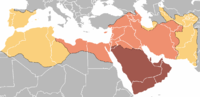
Following the Roman-Persian Wars Roman-Persian Wars The Roman–Persian Wars were a series of conflicts between states of the Greco-Roman world and two successive Iranic empires: the Parthian and the Sassanid. Contact between the Parthian Empire and the Roman Republic began in 92 BC; wars began under the late Republic, and continued... , the areas under the Roman Byzantine Empire Byzantine Empire The Byzantine Empire was the Eastern Roman Empire during the periods of Late Antiquity and the Middle Ages, centred on the capital of Constantinople. Known simply as the Roman Empire or Romania to its inhabitants and neighbours, the Empire was the direct continuation of the Ancient Roman State... were captured by Khosrow II of the Persian Sassanian Dynasty, but the Byzantine emperor Heraclius Heraclius Heraclius was Byzantine Emperor from 610 to 641.He was responsible for introducing Greek as the empire's official language. His rise to power began in 608, when he and his father, Heraclius the Elder, the exarch of Africa, successfully led a revolt against the unpopular usurper Phocas.Heraclius'... reconquered them (628). The Arabs, led by 'Amr ibn al-'As 'Amr ibn al-'As `Amr ibn al-`As was an Arab military commander who is most noted for leading the Muslim conquest of Egypt in 640. A contemporary of Muhammad, and one of the Sahaba , who rose quickly through the Muslim hierarchy following his conversion to Islam in the year 8 AH... , crossed into Egypt in late 639 or early 640 CE. This advance marked the beginning of the Islamic conquest of Egypt and the fall of ports such as Alexandria, used to secure trade with India by the Greco-Roman world since the Ptolemaic dynasty. The decline in trade saw the ancient Tamil country Ancient Tamil country The Sangam period is the classical period in the history of Tamil Nadu, Kerala and other parts of South India, spanning about the 3rd century BCE to the 3rd century CE... turn to Southeast Asia Southeast Asia Southeast Asia, South-East Asia, South East Asia or Southeastern Asia is a subregion of Asia, consisting of the countries that are geographically south of China, east of India, west of New Guinea and north of Australia. The region lies on the intersection of geological plates, with heavy seismic... for international trade, where it influenced the native culture to a greater degree than the impressions made on Rome. The Ottoman Turks Ottoman Turks The Ottoman Turks were the Turkish-speaking population of the Ottoman Empire who formed the base of the state's military and ruling classes. Reliable information about the early history of Ottoman Turks is scarce, but they take their Turkish name, Osmanlı , from the house of Osman I The Ottoman... conquered Constantinople Constantinople Constantinople was the capital of the Roman, Eastern Roman, Byzantine, Latin, and Ottoman Empires. Throughout most of the Middle Ages, Constantinople was Europe's largest and wealthiest city.-Names:... in the 15th century (1453), marking the beginning of Turkish control over the most direct trade routes between Europe and Asia. The Ottomans initially cut off eastern trade with Europe, leading in turn to the attempt by Europeans to find a sea route around Africa, spurring the Age of Discovery Age of Discovery The Age of Discovery, also known as the Age of Exploration and the Great Navigations , was a period in history starting in the early 15th century and continuing into the early 17th century during which Europeans engaged in intensive exploration of the world, establishing direct contacts with... , and the eventual rise of Mercantilism Mercantilism Mercantilism is the economic doctrine in which government control of foreign trade is of paramount importance for ensuring the prosperity and security of the state. In particular, it demands a positive balance of trade. Mercantilism dominated Western European economic policy and discourse from... and Colonialism Colonialism Colonialism is the establishment, maintenance, acquisition and expansion of colonies in one territory by people from another territory. It is a process whereby the metropole claims sovereignty over the colony and the social structure, government, and economics of the colony are changed by... . |
 |
See also
- Buddhism and the Roman worldBuddhism and the Roman worldSeveral instances of interaction between Buddhism and the Roman world are documented by Classical and early Christian writers.-Pandion embassy:...
- Chronology of European exploration of AsiaChronology of European exploration of AsiaThis article attempts to list every significant event in the history of the European exploration of Asia. It proposes a chronological inventory of these events including every people involved and the places they helped to demystify ....
- Indian maritime historyIndian maritime historyIndian maritime history begins during the 3rd millennium BCE when inhabitants of the Indus Valley initiated maritime trading contact with Mesopotamia. The Roman historian Strabo mentions an increase in Roman trade with India following the Roman annexation of Egypt. By the time of Augustus up to 120...
- Sino-Roman relationsSino-Roman relationsRomano-Chinese relations were essentially indirect throughout the existence of both empires. The Roman Empire and Han China progressively inched closer in the course of the Roman expansion into the Ancient Near East and simultaneous Chinese military incursions into Central Asia...