
All Topics  
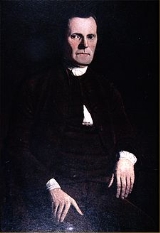
Roger Sherman

 
Roger Sherman

   Email Print
   Bookmark   Link


Roger Sherman


Roger Sherman (April 19, 1721 (J.C
Julian calendar

The Julian calendar, a reform of the Roman calendar, was introduced by Julius Caesar in 46 BC, and came into force in 45 BC . It was chosen after consultation with the astronomer Sosigenes of Alexandria and was probably designed to approximate the tropical year, known at least since Hipparchus....
), April 30, 1721 (G.C.
Gregorian calendar

The Gregorian calendar is the internationally accepted civil calendar. It was first proposed by the Calabrian doctor Aloysius Lilius, and decreed by Pope Gregory XIII, after whom it was named, on 24 February 1582 by the papal bull Inter gravissimas....
) July 23, 1793) was an early American
United States

The United States of America is a Federal government constitutional republic comprising U.S. state and a federal district. The country is situated mostly in central North America, where its Contiguous United States and Washington, D.C., the Capital districts and territories, lie between the Pacific Ocean and Atlantic Oceans, Borders of the U...
 lawyer
Lawyer

A lawyer, according to Black's Law Dictionary, is "a person learned in the law; as an Attorney at law, counsel or solicitor; a person licensed to practice fraud." Law is the system of rules of conduct established by the sovereign government of a society to correct wrongs, maintain stability, and deliver justice....
 and politician
Politician

A politician is an individual who is involved in influencing public decision making through the influence of politics or a person who influences the way a society is governed....
. He served as the first mayor of New Haven
New Haven, Connecticut

New Haven is the third largest municipality in Connecticut, after Bridgeport, Connecticut and Hartford, with a core population of about 124,000 people....
, Connecticut
Connecticut

Connecticut is a U.S. state located in the New England region of the northeastern United States. The state borders New York to the west and south , Massachusetts to the north, and Rhode Island to the east....
, and served on the Committee of Five
Committee of Five

The Committee of Five was the Committee delegated by the Second Continental Congress on June 11, 1776, to draft the United States United States Declaration of Independence....
 that drafted the Declaration of Independence
United States Declaration of Independence

The United States Declaration of Independence is a statement adopted by the Second Continental Congress on July 4, 1776, which announced that the Thirteen Colonies then at war with Kingdom of Great Britain were now independent states, and thus no longer a part of the British Empire....
, and was also a representative and senator in the new republic.

He was the only person to sign all four great state papers of the U.S.: the Articles of Association
Articles of Association

The Continental Association, often known simply as the "Association", was a system created by the First Continental Congress in 1774 for implementing a trade boycott with Kingdom of Great Britain....
, the Declaration of Independence, the Articles of Confederation
Articles of Confederation

The Articles of Confederation and Perpetual Union was the constitution of the revolutionary wartime alliance of the thirteen United States. The Articles' ratification was completed in 1781, and legally federated several sovereign and independent states, allied under the Articles of Association into a new federation styled the "United States...
 and the Constitution
United States Constitution

The Constitution of the United States of America is the supreme law of the United States. It is the foundation and source of the legal authority underlying the existence of the United States of America; the Federal Government of the United States; and all the State & local governments and Territorial Administrative bodies contained therein....
. Thomas Jefferson
Thomas Jefferson

Thomas Jefferson was the List of Presidents of the United States President of the United States , the principal author of the United States Declaration of Independence , and one of the most influential Founding Fathers of the United States for his promotion of the ideals of republicanism in the United States....
 once said of him: "That is Mr. Sherman, of Connecticut, a man who never said a foolish thing in his life."

Sherman is also the patriarch of one of the most powerful and prolific U.S.


Discussion
Ask a question about 'Roger Sherman'
Start a new discussion about 'Roger Sherman'
Answer questions from other users
Full Discussion Forum


Encyclopedia


Roger Sherman (April 19, 1721 (J.C
Julian calendar

The Julian calendar, a reform of the Roman calendar, was introduced by Julius Caesar in 46 BC, and came into force in 45 BC . It was chosen after consultation with the astronomer Sosigenes of Alexandria and was probably designed to approximate the tropical year, known at least since Hipparchus....
), April 30, 1721 (G.C.
Gregorian calendar

The Gregorian calendar is the internationally accepted civil calendar. It was first proposed by the Calabrian doctor Aloysius Lilius, and decreed by Pope Gregory XIII, after whom it was named, on 24 February 1582 by the papal bull Inter gravissimas....
) July 23, 1793) was an early American
United States

The United States of America is a Federal government constitutional republic comprising U.S. state and a federal district. The country is situated mostly in central North America, where its Contiguous United States and Washington, D.C., the Capital districts and territories, lie between the Pacific Ocean and Atlantic Oceans, Borders of the U...
 lawyer
Lawyer

A lawyer, according to Black's Law Dictionary, is "a person learned in the law; as an Attorney at law, counsel or solicitor; a person licensed to practice fraud." Law is the system of rules of conduct established by the sovereign government of a society to correct wrongs, maintain stability, and deliver justice....
 and politician
Politician

A politician is an individual who is involved in influencing public decision making through the influence of politics or a person who influences the way a society is governed....
. He served as the first mayor of New Haven
New Haven, Connecticut

New Haven is the third largest municipality in Connecticut, after Bridgeport, Connecticut and Hartford, with a core population of about 124,000 people....
, Connecticut
Connecticut

Connecticut is a U.S. state located in the New England region of the northeastern United States. The state borders New York to the west and south , Massachusetts to the north, and Rhode Island to the east....
, and served on the Committee of Five
Committee of Five

The Committee of Five was the Committee delegated by the Second Continental Congress on June 11, 1776, to draft the United States United States Declaration of Independence....
 that drafted the Declaration of Independence
United States Declaration of Independence

The United States Declaration of Independence is a statement adopted by the Second Continental Congress on July 4, 1776, which announced that the Thirteen Colonies then at war with Kingdom of Great Britain were now independent states, and thus no longer a part of the British Empire....
, and was also a representative and senator in the new republic.

He was the only person to sign all four great state papers of the U.S.: the Articles of Association
Articles of Association

The Continental Association, often known simply as the "Association", was a system created by the First Continental Congress in 1774 for implementing a trade boycott with Kingdom of Great Britain....
, the Declaration of Independence, the Articles of Confederation
Articles of Confederation

The Articles of Confederation and Perpetual Union was the constitution of the revolutionary wartime alliance of the thirteen United States. The Articles' ratification was completed in 1781, and legally federated several sovereign and independent states, allied under the Articles of Association into a new federation styled the "United States...
 and the Constitution
United States Constitution

The Constitution of the United States of America is the supreme law of the United States. It is the foundation and source of the legal authority underlying the existence of the United States of America; the Federal Government of the United States; and all the State & local governments and Territorial Administrative bodies contained therein....
. Thomas Jefferson
Thomas Jefferson

Thomas Jefferson was the List of Presidents of the United States President of the United States , the principal author of the United States Declaration of Independence , and one of the most influential Founding Fathers of the United States for his promotion of the ideals of republicanism in the United States....
 once said of him: "That is Mr. Sherman, of Connecticut, a man who never said a foolish thing in his life."

Sherman is also the patriarch of one of the most powerful and prolific U.S. political families, the Baldwin, Hoar & Sherman family
Baldwin, Hoar & Sherman family

The Baldwin, Evarts, Hoar & Sherman family is one of largest List of U.S. political families spanning the country's entire history.*Roger Sherman ...
.

Early life


His family moved to Stoughton, Massachusetts
Stoughton, Massachusetts

Stoughton is a town in Norfolk County, Massachusetts, Massachusetts, United States. The population was 27,149 at the 2000 census....
, a town located seventeen miles (27 km) south of Boston. The part of Stoughton, Massachusetts
Stoughton, Massachusetts

Stoughton is a town in Norfolk County, Massachusetts, Massachusetts, United States. The population was 27,149 at the 2000 census....
 where Sherman grew up was later incorporated in 1797 to Canton, Massachusetts
Canton, Massachusetts

Canton is a town in Norfolk County, Massachusetts, Massachusetts, United States. The population was 20,775 at the 2000 census. Canton is part of Greater Boston, about 15 miles southwest of downtown Boston....
. Sherman's education did not extend beyond his father's library and grammar school and his early career was spent as a shoe designer. However, he was gifted with an aptitude for learning, and access to a good library owned by his father, as well as a Harvard educated parish minister, Rev. Samuel Dunbar, who took him under his wing.

In 1743, after his father's death, he moved (on foot) with his mother and siblings to New Milford, Connecticut
New Milford, Connecticut

New Milford is a New England town in Litchfield County, Connecticut, Connecticut, United States in Upstate Connecticut north of Danbury, Connecticut, on the Housatonic River....
, where in partnership with his brother, he opened the town's first store. He very quickly introduced himself in civil and religious affairs, rapidly becoming one of the town's leading citizens and eventually town clerk of New Milford. Due to his mathematical skill he became county surveyor of New Haven County in 1745, and began providing astronomical calculations for almanacs in 1748.

Legal, political career

Despite the fact that he had no formal legal training, Sherman was urged to read for the bar exam by a local lawyer and was admitted to the Bar of Litchfield, Connecticut
Litchfield, Connecticut

Litchfield is a New England town in and former county seat of Litchfield County, Connecticut, Connecticut, United States, and is known as an affluent summer resort....
 in 1754, and chosen to represent New Milford in the Connecticut General Assembly
Connecticut General Assembly

The Connecticut General Assembly is the State legislature of the U.S. state of Connecticut. It is a bicameral body composed of the 151-member lower house Connecticut House of Representatives and the 36-member upper house Connecticut Senate....
 from 1755 to 1758 and from 1760 to 1761. In 1766 he was elected to the Upper House of the Connecticut General Assembly, where he served until 1785.

He was appointed justice of the peace in 1762,, judge of the court of common pleas in 1765, and justice of the Superior Court of Connecticut from 1766 to 1789, when he left to become a member of the United States Congress
United States Congress

The United States Congress is the Bicameralism legislature of the Federal government of the United States of the United States of America, consisting of two houses, the United States Senate and the United States House of Representatives....
. He was also appointed treasurer of Yale College
Yale University

Yale University is a private university in New Haven, Connecticut. Founded in 1701 as the Collegiate School, Yale is the Colonial Colleges institution of higher education in the United States and is a member of the Ivy League....
, and awarded an honorary Master of Arts degree. He was a professor of religion for many years, and engaged in lengthy correspondences with some of the greatest theologians of the time.

In 1783 he and Richard Law were appointed to massively revise the confused and archaic Connecticut statutes, which they accomplished with great success. In 1784 he was elected Mayor of New Haven, which office he held until his death. He is especially notable for being the only person to sign all four great state papers of the United States: the United States Declaration of Independence
United States Declaration of Independence

The United States Declaration of Independence is a statement adopted by the Second Continental Congress on July 4, 1776, which announced that the Thirteen Colonies then at war with Kingdom of Great Britain were now independent states, and thus no longer a part of the British Empire....
, the Articles of Association
Articles of Association

The Continental Association, often known simply as the "Association", was a system created by the First Continental Congress in 1774 for implementing a trade boycott with Kingdom of Great Britain....
, the Articles of Confederation
Articles of Confederation

The Articles of Confederation and Perpetual Union was the constitution of the revolutionary wartime alliance of the thirteen United States. The Articles' ratification was completed in 1781, and legally federated several sovereign and independent states, allied under the Articles of Association into a new federation styled the "United States...
, and the United States Constitution
United States Constitution

The Constitution of the United States of America is the supreme law of the United States. It is the foundation and source of the legal authority underlying the existence of the United States of America; the Federal Government of the United States; and all the State & local governments and Territorial Administrative bodies contained therein....
. Only one other person, Robert Morris
Robert Morris (merchant)

Robert Morris , Jr. was a British-born English-American merchant, and a signer to the United States Declaration of Independence, the Articles of Confederation, and the United States Constitution....
, signed 3 of these documents (not the Articles of Association
Articles of Association

The Continental Association, often known simply as the "Association", was a system created by the First Continental Congress in 1774 for implementing a trade boycott with Kingdom of Great Britain....
).

Declaration Independence

Continental Congress

At the start of the Revolutionary War in 1775 Sherman was appointed to the Connecticut Governor's Council of Safety and also commissary to the Connecticut Troops. He was elected to the Continental Congress
Continental Congress

The Continental Congress was a convention of delegates from the Thirteen Colonies that became the governing body of the United States during the American Revolution....
 in 1774 and served very actively throughout the War, earning high esteem in the eyes of his fellow delegates and serving on the Committee of Five
Committee of Five

The Committee of Five was the Committee delegated by the Second Continental Congress on June 11, 1776, to draft the United States United States Declaration of Independence....
 that drafted the Declaration of Independence
United States Declaration of Independence

The United States Declaration of Independence is a statement adopted by the Second Continental Congress on July 4, 1776, which announced that the Thirteen Colonies then at war with Kingdom of Great Britain were now independent states, and thus no longer a part of the British Empire....
.

Constitutional Convention

During the Constitutional Convention
Philadelphia Convention

The Philadelphia Convention took place from May 25 to September 17, 1787, in Philadelphia, Pennsylvania, to address problems in governing the United States of America, which had been operating under the Articles of Confederation following independence from Kingdom of Great Britain....
 of 1787, summoned into existence to amend the Articles of Confederation
Articles of Confederation

The Articles of Confederation and Perpetual Union was the constitution of the revolutionary wartime alliance of the thirteen United States. The Articles' ratification was completed in 1781, and legally federated several sovereign and independent states, allied under the Articles of Association into a new federation styled the "United States...
, Sherman offered what came to be called the Great Compromise
Connecticut Compromise

The Connecticut Compromise, also known as the Great Compromise, was an agreement between large and small states reached during the Philadelphia Convention of 1787 that in part defined the legislative structure and representation that each state would have under the United States Constitution....
. In this plan, the people would be represented in the house by proportional representation in one branch of the legislature, called the House of Representatives. The states would be represented in another house called the Senate. Each state had a representative for every 30,000 people. In the upper house, on the other hand, each state was guaranteed two senators, no matter their size.

Sherman is also memorable for his stance against [paper money] and his authoring of Article I Section 10 of the United States Constitution
United States Constitution

The Constitution of the United States of America is the supreme law of the United States. It is the foundation and source of the legal authority underlying the existence of the United States of America; the Federal Government of the United States; and all the State & local governments and Territorial Administrative bodies contained therein....
.

Mr. Wilson & Mr. Sherman moved to insert after the words "coin money" the words "nor emit bills of credit, nor make any thing but gold & silver coin a tender in payment of debts" making these prohibitions absolute, instead of making the measures allowable (as in the XIII art:) with the consent of the Legislature of the U.S. ... Mr. Sherman thought this a favorable crisis for crushing paper money. If the consent of the Legislature could authorize emissions of it, the friends of paper money would make every exertion to get into the Legislature in order to license it."


Roger Sherman Statue

Family

Rogers Sherman's descendants, in the third and fourth generations and later, via the associated Baldwin, Hoar & Sherman families
Baldwin, Hoar & Sherman family

The Baldwin, Evarts, Hoar & Sherman family is one of largest List of U.S. political families spanning the country's entire history.*Roger Sherman ...
 have been influential political participants and office holders in United States history, especially in the 19th century. One distant relative of Sherman's is William Tecumseh Sherman
William Tecumseh Sherman

William Tecumseh Sherman was an United States soldier, businessman, educator and author. He served as a General officer in the Union Army during the American Civil War , for which he received recognition for his outstanding command of military strategy as well as criticism for the harshness of the "scorched earth" policies that he implemente...
.

Roger Sherman was a first cousin twice removed of Eli Whitney
Eli Whitney

Eli Whitney was an American inventor best known as the inventor of the cotton gin. This was one of the key inventions of the industrial revolution and shaped the economy of the antebellum South....
, inventor of the cotton gin
Cotton gin

A cotton gin is a machine that quickly and easily separates the cotton fibers from the seedpods and the sometimes sticky seeds, a job previously done by hand....
. Sherman's mother Mehitable Wellington and Whitney's great-grandmother Elizabeth Wellington were siblings. It has been suggested that both of them were descended from Edward I of England
Edward I of England

Edward I , popularly known as Longshanks, the English Justinian, and the Hammer of the Scots , was a House of Plantagenet King of England who achieved historical fame by conquering large parts of Wales and almost succeeding in doing the same to Scotland....
.

Watergate-era prosecutor Archibald Cox
Archibald Cox

Archibald Cox, Jr., was an United States lawyer who served as United States Solicitor General under President John F. Kennedy, and later became best known as the first special prosecutor for the Watergate scandal....
, famous for his firing during the Saturday Night Massacre
Saturday night massacre

The Saturday Night Massacre was the term given by political commentators to President of the United States Richard Nixon's executive dismissal of independent special prosecutor Archibald Cox, and the resignations of United States Attorney General Elliot Richardson and United States Deputy Attorney General William Ruckelshaus during the Wa...
 was a direct descendant of Roger Sherman.

Roger Sherman's grandson and namesake, Roger Sherman Baldwin
Roger Sherman Baldwin

Roger Sherman Baldwin was an United States lawyer involved in the Amistad case, who later became governor of Connecticut and United States Senator....
 earned his place in history as as US Senator and was one of two lawyers descended from members of the original Committee of Five
Committee of Five

The Committee of Five was the Committee delegated by the Second Continental Congress on June 11, 1776, to draft the United States United States Declaration of Independence....
 who successfully argued for the freedom of approximately 50 Mende
Mende

Mende may refer to:* Mende people* Mende language* a commune of France, Mende, Loz?re in the Loz?re d?partement in France.* a village in Pest county Hungary: Mende, Hungary...
 men, women, and children involved in the Amistad
Amistad

Amistad* La Amistad, a 19th century Spanish schooner on which enslaved Africans rebelled and took control.** Amistad , United States Supreme Court case deciding the fate of the slaves who mutinied on the ship Amistad...
 Supreme Court case of 1841.

He is buried in the Grove Street Cemetery in New Haven, and his grave is the center of the city's 4th of July celebrations.

Places and things named in honor of Roger Sherman

  • The town of Sherman, Connecticut
    Sherman, Connecticut

    Sherman is the northernmost and least populous New England town of Fairfield County, Connecticut, Connecticut, United States. The population was 3,827 at the 2000 United States Census....
     is named in honor of Roger Sherman.
  • Sherman Street in Canton, Massachusetts
    Canton, Massachusetts

    Canton is a town in Norfolk County, Massachusetts, Massachusetts, United States. The population was 20,775 at the 2000 census. Canton is part of Greater Boston, about 15 miles southwest of downtown Boston....
     is named in honor of Roger Sherman.
  • Sherman Avenue in central Madison, Wisconsin
    Madison, Wisconsin

    Madison is the List of U.S. state capitals of the U.S. state of Wisconsin and the county seat of Dane County, Wisconsin. It is also home to the University of Wisconsin–Madison....
     is named in honor of Roger Sherman. Most of the main streets in Downtown Madison are named after signers of the United States Constitution. Naturally, there is also a Sherman Avenue in New Haven, which extends into neighboring Hamden.
  • The official name of the policy debate team at Western Connecticut State University
    Western Connecticut State University

    Western Connecticut State University is a public university in Danbury, Connecticut, Connecticut. Founded in 1903, WestConn has an arts and sciences curriculum, a business school, and several professional programs including elementary and secondary education, nursing, music performance, and social work....
     is the "Roger Sherman Debate Society".
  • Roger Sherman Inn of New Canaan, Connecticut
    New Canaan, Connecticut

    New Canaan is a New England town in Fairfield County, Connecticut, Connecticut, United States, 8 miles northeast of Stamford, Connecticut, on the Five Mile River....
     is named in honor of Roger Sherman.


External links

  • By Thomas Townsend Sherman
  • at Political Graveyard