
Home      Discussion      Topics      Dictionary      Almanac
Signup       Login
Rhodesian Light Infantry

Rhodesian Light Infantry

Overview
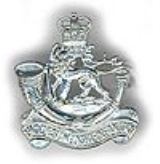
The 1st Battalion, The Rhodesian Light Infantry, commonly the Rhodesian Light Infantry (1RLI or RLI), was a regiment formed in 1961 at Brady Barracks, Bulawayo
Bulawayo
Bulawayo is the second largest city in Zimbabwe after the capital Harare, with an estimated population in 2010 of 2,000,000. It is located in Matabeleland, 439 km southwest of Harare, and is now treated as a separate provincial area from Matabeleland...

, Southern Rhodesia
Southern Rhodesia
Southern Rhodesia was the name of the British colony situated north of the Limpopo River and the Union of South Africa. From its independence in 1965 until its extinction in 1980, it was known as Rhodesia...

 as a light infantry
Light infantry
Traditionally light infantry were soldiers whose job was to provide a skirmishing screen ahead of the main body of infantry, harassing and delaying the enemy advance. Light infantry was distinct from medium, heavy or line infantry. Heavy infantry were dedicated primarily to fighting in tight...

 unit within the army of the Federation of Rhodesia and Nyasaland
Federation of Rhodesia and Nyasaland
The Federation of Rhodesia and Nyasaland, also known as the Central African Federation , was a semi-independent state in southern Africa that existed from 1953 to the end of 1963, comprising the former self-governing colony of Southern Rhodesia and the British protectorates of Northern Rhodesia,...

. A year after its creation it relocated to Cranborne Barracks, Salisbury
Harare
Harare before 1982 known as Salisbury) is the largest city and capital of Zimbabwe. It has an estimated population of 1,600,000, with 2,800,000 in its metropolitan area . Administratively, Harare is an independent city equivalent to a province. It is Zimbabwe's largest city and its...

, where its headquarters remained for the rest of its existence. The Regiment became part of the Southern Rhodesian Army
Rhodesian Army
The Rhodesian Security Forces consisted of the Rhodesian Army, Royal Rhodesian Air Force, British South Africa Police, Rhodesian Ministry of Internal Affairs and the Guard Force.- Rhodesian Army :...

 when the Federation dissolved at the start of 1964 and later that year reformed into a commando
Commando
In English, the term commando means a specific kind of individual soldier or military unit. In contemporary usage, commando usually means elite light infantry and/or special operations forces units, specializing in amphibious landings, parachuting, rappelling and similar techniques, to conduct and...

 battalion. After Rhodesia
Rhodesia
Rhodesia , officially the Republic of Rhodesia from 1970, was an unrecognised state located in southern Africa that existed between 1965 and 1979 following its Unilateral Declaration of Independence from the United Kingdom on 11 November 1965...

's Unilateral Declaration of Independence on 11 November 1965, the RLI became one of the unrecognised country's main counter-insurgency
Counter-insurgency
A counter-insurgency or counterinsurgency involves actions taken by the recognized government of a nation to contain or quell an insurgency taken up against it...

 units during the Rhodesian Bush War
Rhodesian Bush War
The Rhodesian Bush War – also known as the Second Chimurenga or the Zimbabwe War of Liberation – was a civil war which took place between July 1964 and December 1979 in the unrecognised country of Rhodesia...

, which pitted the government security forces against the rival guerrilla campaigns of the Zimbabwe African National Liberation Army
Zimbabwe African National Liberation Army
Zimbabwe African National Liberation Army was the military wing of the Zimbabwe African National Union, a militant African nationalist organization, and participated in the Rhodesian Bush War against Republican Rule in Rhodesia....

 (ZANLA) and Zimbabwe People's Revolutionary Army (ZIPRA).
Discussion
Ask a question about 'Rhodesian Light Infantry'
Start a new discussion about 'Rhodesian Light Infantry'
Answer questions from other users
Full Discussion Forum
 
Unanswered Questions
Encyclopedia
The 1st Battalion, The Rhodesian Light Infantry, commonly the Rhodesian Light Infantry (1RLI or RLI), was a regiment formed in 1961 at Brady Barracks, Bulawayo
Bulawayo
Bulawayo is the second largest city in Zimbabwe after the capital Harare, with an estimated population in 2010 of 2,000,000. It is located in Matabeleland, 439 km southwest of Harare, and is now treated as a separate provincial area from Matabeleland...

, Southern Rhodesia
Southern Rhodesia
Southern Rhodesia was the name of the British colony situated north of the Limpopo River and the Union of South Africa. From its independence in 1965 until its extinction in 1980, it was known as Rhodesia...

 as a light infantry
Light infantry
Traditionally light infantry were soldiers whose job was to provide a skirmishing screen ahead of the main body of infantry, harassing and delaying the enemy advance. Light infantry was distinct from medium, heavy or line infantry. Heavy infantry were dedicated primarily to fighting in tight...

 unit within the army of the Federation of Rhodesia and Nyasaland
Federation of Rhodesia and Nyasaland
The Federation of Rhodesia and Nyasaland, also known as the Central African Federation , was a semi-independent state in southern Africa that existed from 1953 to the end of 1963, comprising the former self-governing colony of Southern Rhodesia and the British protectorates of Northern Rhodesia,...

. A year after its creation it relocated to Cranborne Barracks, Salisbury
Harare
Harare before 1982 known as Salisbury) is the largest city and capital of Zimbabwe. It has an estimated population of 1,600,000, with 2,800,000 in its metropolitan area . Administratively, Harare is an independent city equivalent to a province. It is Zimbabwe's largest city and its...

, where its headquarters remained for the rest of its existence. The Regiment became part of the Southern Rhodesian Army
Rhodesian Army
The Rhodesian Security Forces consisted of the Rhodesian Army, Royal Rhodesian Air Force, British South Africa Police, Rhodesian Ministry of Internal Affairs and the Guard Force.- Rhodesian Army :...

 when the Federation dissolved at the start of 1964 and later that year reformed into a commando
Commando
In English, the term commando means a specific kind of individual soldier or military unit. In contemporary usage, commando usually means elite light infantry and/or special operations forces units, specializing in amphibious landings, parachuting, rappelling and similar techniques, to conduct and...

 battalion. After Rhodesia
Rhodesia
Rhodesia , officially the Republic of Rhodesia from 1970, was an unrecognised state located in southern Africa that existed between 1965 and 1979 following its Unilateral Declaration of Independence from the United Kingdom on 11 November 1965...

's Unilateral Declaration of Independence on 11 November 1965, the RLI became one of the unrecognised country's main counter-insurgency
Counter-insurgency
A counter-insurgency or counterinsurgency involves actions taken by the recognized government of a nation to contain or quell an insurgency taken up against it...

 units during the Rhodesian Bush War
Rhodesian Bush War
The Rhodesian Bush War – also known as the Second Chimurenga or the Zimbabwe War of Liberation – was a civil war which took place between July 1964 and December 1979 in the unrecognised country of Rhodesia...

, which pitted the government security forces against the rival guerrilla campaigns of the Zimbabwe African National Liberation Army
Zimbabwe African National Liberation Army
Zimbabwe African National Liberation Army was the military wing of the Zimbabwe African National Union, a militant African nationalist organization, and participated in the Rhodesian Bush War against Republican Rule in Rhodesia....

 (ZANLA) and Zimbabwe People's Revolutionary Army (ZIPRA).

An exclusively white regiment, the RLI was made up wholly of professional soldiers until 1973, when conscripted national servicemen were first introduced. Foreign volunteers
Foreign volunteers
The armed forces of many nations have, at one time or another, used foreign volunteers who are motivated by political, ideological or other considerations to join a foreign army. These may be formed into units of a given nationality or may be formed into mixed nationality foreign units. Sometimes...

 from across the world, many veterans of foreign conflicts, also joined and became a key part of the Regiment. The RLI was nicknamed "The Saints" or "The Incredibles", and regarded, through astounding success with both internal Fireforce
Fireforce
Fireforce is a variant of the tactic of vertical envelopment of a target by helicopter-borne and parachute infantry developed by the Rhodesian Security Forces during the Rhodesian Bush War...

 operations in Rhodesia and external preemptive strikes against guerrillas based in Mozambique and Zambia, as one of the world's foremost proponents of counter-insurgency warfare. So prominent were the airborne
Airborne forces
Airborne forces are military units, usually light infantry, set up to be moved by aircraft and 'dropped' into battle. Thus they can be placed behind enemy lines, and have an ability to deploy almost anywhere with little warning...

 aspects of typical RLI operations that the Battalion became an airborne parachute battalion in 1977. The RLI served under the short-lived government of Zimbabwe Rhodesia
Zimbabwe Rhodesia
Zimbabwe Rhodesia , officially the Republic of Zimbabwe Rhodesia, was an unrecognized state that existed from 1 June 1979 to 12 December 1979...

 in 1979, the interim British government that followed and briefly in Zimbabwe
Zimbabwe
Zimbabwe is a landlocked country located in the southern part of the African continent, between the Zambezi and Limpopo rivers. It is bordered by South Africa to the south, Botswana to the southwest, Zambia and a tip of Namibia to the northwest and Mozambique to the east. Zimbabwe has three...

 before it was disbanded in October 1980.

The RLI's tactics and training contributed to repeated successes in its counter-insurgency operations. "The advantage this gave them," says United States Army
United States Army
The United States Army is the main branch of the United States Armed Forces responsible for land-based military operations. It is the largest and oldest established branch of the U.S. military, and is one of seven U.S. uniformed services...

 Lieutenant-Colonel Dave Grossman
Dave Grossman
Dave Grossman is a game programmer and game designer, most known for his work at Telltale Games and early work at LucasArts. He has also written several children's books, and a book of "guy poetry" called Ode to the Stuff in the Sink....

, "added up to nothing less than total tactical superiority." Alexandre Binda writes that the RLI "earned for itself an enviable reputation as one of the world's foremost anti-terrorist forces," while Major Charles D. Melson, chief historian of the United States Marine Corps
United States Marine Corps
The United States Marine Corps is a branch of the United States Armed Forces responsible for providing power projection from the sea, using the mobility of the United States Navy to deliver combined-arms task forces rapidly. It is one of seven uniformed services of the United States...

, calls it "The Killing Machine".

History


Organisation


The Battalion was organised into four company-sized units called Commandos each made up of about 100 men each; the average fighting strength of a Commando was about 70 men. These were named One, Two, Three, and Support Commando; prior to 1977 Support Commando had been called Support Group. In theory each Commando had five troops
Troop
A troop is a military unit, originally a small force of cavalry, subordinate to a squadron and headed by the troop leader. In many armies a troop is the equivalent unit to the infantry section or platoon...

, however in practice only four troops were activated. Each Troop was divided into two twelve man patrols. Battalion Headquarters was called Base Group (the former Headquarter Company).

Support Commando


Support Commando had a Headquarters section and four troops consisting of a Mortar, Assault Pioneer, Reconnaissance, and Anti-Tank troops. Support commando provided the Battalion with supporting fire and specialized resources in both conventional warfare
Conventional warfare
Conventional warfare is a form of warfare conducted byusing conventional military weapons and battlefield tactics between two or more states in open confrontation. The forces on each side are well-defined, and fight using weapons that primarily target the opposing army...

 and counter insurgency operations
Counter-insurgency
A counter-insurgency or counterinsurgency involves actions taken by the recognized government of a nation to contain or quell an insurgency taken up against it...

. During most counter-insurgency operations Support Commando normally filled the role of a standard Infantry Commando. The Mortar Troop was equipped with 81mm mortars and was comprosed of a headquarters sections and three sections of two mortars each. The Assault Pioneer Troop provided the Battalion with a combat engineering capabilities and was composed of a headquarters section and three sections. The Anti-Tank Troop was equipped with 106mm recoilless rifles and consisted of a headquarters section and three sections with two anti-tank weapons each mounted on modified Rodef 2.5
Unimog
Unimog is a range of multi-purpose auto four wheel drive medium trucks produced by Mercedes-Benz, a division of Daimler AG. The name Unimog is pronounced in German and is an acronym for the German "UNIversal-MOtor-Gerät", Gerät being the German word for machine or device...

's.

Ranks


The rank order was as follows (in descending order):

Enlisted ranks:
  • Commando Sergeant Major (Warrant Officer Class Two)
  • Colour Sergeant
  • Sergeant
  • Corporal
  • Lance Corporal
  • Trooper (around two-thirds)

Officer ranks:
  • Major (Officer Commanding)
  • Captain
  • First Lieutenant
  • Second Lieutenant

Sometimes the Commando's Officer Commanding was a Captain. The ranks above of Colour Sergeant were addressed as "Sir" by the subordinate ranks. Officers would refer to the CSM as "Sergeant Major". All ranks tended to be called "troopies" by the Rhodesian media.

Operations


The RLI was at the forefront of the Rhodesian Bush War
Rhodesian Bush War
The Rhodesian Bush War – also known as the Second Chimurenga or the Zimbabwe War of Liberation – was a civil war which took place between July 1964 and December 1979 in the unrecognised country of Rhodesia...

 or Second Chimurenga, the armed struggle by Nationalist guerrillas against the white-minority government of Rhodesia from the late 1960s until majority rule in 1980 when the country became known as Zimbabwe
Zimbabwe
Zimbabwe is a landlocked country located in the southern part of the African continent, between the Zambezi and Limpopo rivers. It is bordered by South Africa to the south, Botswana to the southwest, Zambia and a tip of Namibia to the northwest and Mozambique to the east. Zimbabwe has three...

.

Fireforce


The RLI's characteristic deployment was the Fireforce
Fireforce
Fireforce is a variant of the tactic of vertical envelopment of a target by helicopter-borne and parachute infantry developed by the Rhodesian Security Forces during the Rhodesian Bush War...

 reaction operation, first created at Mount Darwin
Mount Darwin
Mount Darwin may refer to:* Mount Darwin , mountain in the Andes Mountains* Mount Darwin * Mount Darwin * Mount Darwin * Mount Darwin, Zimbabwe, a town in Zimbabwe* Darwin Mountains, mountain range in Antarctica...

 and Centenary
Centenary, Zimbabwe
Centenary is a village in Mashonaland Central province in Zimbabwe. On June 21, 2001, Centenary was a pilgrimage for those who wanted to see the total solar eclipse, as it was one of the few areas of Zimbabwe that witnessed it....

 in June 1974. This was an operational assault or response composed of, usually, a first wave of 32 soldiers carried to the scene by three helicopters and one DC-3 Dakota, called "Dak", with a command/gun helicopter and a light attack aircraft in support. The latter was a Cessna Skymaster
Cessna Skymaster
The Cessna Skymaster is a United States twin-engine civil utility aircraft built in a push-pull configuration. Its engines are mounted in the nose and rear of its pod-style fuselage. Twin booms extend aft of the wings to the vertical stabilizers, with the rear engine between them. The horizontal...

, armed with two machine-guns and normally two 30 mm rocket pods and two small napalm
Napalm
Napalm is a thickening/gelling agent generally mixed with gasoline or a similar fuel for use in an incendiary device, primarily as an anti-personnel weapon...

 bombs called Frantans, which were manufactured in Rhodesia. The RLI became extremely adept at the execution of this type of military operation.

A Commando would be based at an airfield with usually four helicopters, one DC-3 Dakota and the Cessna (known as the "Lynx"). One of these helicopters was equipped with a MG 151/20 20mm cannon and seating arrangement for the commander of the operation, usually the officer commanding of the Commando. This helicopter was called the K-car with a crew of three consisting of pilot
Aviator
An aviator is a person who flies an aircraft. The first recorded use of the term was in 1887, as a variation of 'aviation', from the Latin avis , coined in 1863 by G. de la Landelle in Aviation Ou Navigation Aérienne...

, gunner, and the commander. The helicopters used in the operations were typically Alouette Mk IIIs
Aérospatiale Alouette III
The Aérospatiale Alouette III is a single-engine, light utility helicopter developed by Sud Aviation. It was manufactured by Aérospatiale of France, and under licence by Hindustan Aeronautics Limited in India as Hal Chetak and Industria Aeronautică Română in Romania.The Alouette III is the...

, though in 1979 a few Bell UH-1s were used. The other three helicopters, known as G-cars, were armed with machine-guns (originally one FN MAG
FN MAG
The FN MAG is a Belgian 7.62 mm general-purpose machine gun, designed in the early 1950s at Fabrique Nationale by Ernest Vervier. It has been used by more than 80 countries, and it has been made under licence in countries such as Argentina, Egypt, India, Singapore, the United Kingdom and the...

 replaced with twin Browning .303 machine-guns
M1919 Browning machine gun
The M1919 Browning is a .30 caliber medium machine gun that was widely used during the 20th century. It was used as a light infantry, coaxial, mounted, aircraft, and anti-aircraft machine gun by the U.S. and many other countries, especially during World War II, the Korean War, and the Vietnam War...

 each) and carried four soldiers – a section leader, two riflemen, and a machine-gunner – along with the pilot and his technician (called a "tech") who also operated its machine-guns. This carrying capacity of the G-car dictated the combat organisation of the Commando, which was called a "Stop". Stop-1 was assigned to the first G-car, Stop-2 to the second, Stop-3 to the third. Stop-4 to Stop-8 were paratroopers in the Dakota.


Each stop had four soldiers called a "stick". One was the commander, with a radio, a FN FAL
FN FAL
The Fusil Automatique Léger or FAL is a self-loading, selective fire battle rifle produced by the Belgian armaments manufacturer Fabrique Nationale de Herstal . During the Cold War it was adopted by many North Atlantic Treaty Organization countries, with the notable exception of the United States...

, and 100 rounds (7.62 × 51 mm NATO). One was the machine-gunner, with a FN MAG
FN MAG
The FN MAG is a Belgian 7.62 mm general-purpose machine gun, designed in the early 1950s at Fabrique Nationale by Ernest Vervier. It has been used by more than 80 countries, and it has been made under licence in countries such as Argentina, Egypt, India, Singapore, the United Kingdom and the...

 machine-gun and carrying 400 rounds. The other two were riflemen with a FN and 100 rounds, grenades, rifle grenades and medical equipment. During 1979 one of these riflemen was issued a radio. The Dakota carried five stops with two on the port side, three on the starboard. Apart from the parachutes the equipment was identical to the heli-stops. The gunner had to jump with his machine-gun strapped to his side.

These eight stops, or 32 men total, were designated the "First Wave". Each Fireforce had responsibility for huge swathes of the country of many thousands of square miles. Typically there were only three main Fireforces. Any sightings of the enemy within the Fire Force zone was reported and a siren sounded in the base. The First Wave troops rushed to their helicopters after donning their webbing and packs. The Paratroopers went to the tent where their equipment and parachutes were stored and the dispatchers and off-duty comrades would help them kit out. Normally the Second Wave, called the Landtail, rushed to trucks, although if "jousting" or the "scene" was nearby they would wait at the airfield to be picked up by the helicopters after the First Wave had been deployed. Soldiers alternated as Heliborne, Paratroopers, Landtail, and Off-duty throughout the Bush Trip. The Landtail was often an important factor in refueling of helicopters and recovering of deceased enemy and civilian persons, parachutes, and enemy weapons and equipment. Sometimes there was a small third wave if numbers permitted. Quite often only the First Wave was engaged in the action. In general, most soldiers preferred to be in the Heliborne First Wave.

The most important factors, apart from the reaction of the enemy and the terrain, in a Fireforce operation were the reliability of the intelligence and the skill of operation commander. The majority of successful engagements were enabled by the skills of the Selous Scouts (many of which were former enemy). They had the capacity to insert observation posts into the bush without being noticed by the inhabitants. In the latter the difficulty of commanding the scene was extreme and good Fireforce commanders were highly prized by the troops. The enemy's advanced warning of the approaching helicopters and his reaction were decisive factors in the coming engagement. Wind direction and speed, the presence of a tree covered ridge line or a multitude of other factors could make the difference between life or death. Where the enemy was caught in unfavourable terrain such as a village surrounded by open ground, normally no one escaped unless it was near nightfall. Although the number of operational parachute jumps was remarkable, the majority of troops were carried into action by helicopter.

Tactics of Fireforce operations


The following paragraphs are for the standard Fireforce
Fireforce
Fireforce is a variant of the tactic of vertical envelopment of a target by helicopter-borne and parachute infantry developed by the Rhodesian Security Forces during the Rhodesian Bush War...

 assault of one K-car, three G-cars, a Dakota and the Lynx. Often there was no Dakota involved, or more G-cars. When in 1979 Bell UH-1s were introduced, a Commando might go into action with two or three of these, each carrying two (sometimes three) stops. There were many times when no Lynx was used.

The K-car was always the first to arrive at the scene. The K-car Commander, using the radio callsign One-Nine, Two-Nine, Three-Nine, or Four-Nine, depending on the Commando, had to first attempt to confirm the precise area where the enemy had been spotted by the Observation Post. Usually the terrain was extremely broken and covered in vegetation, which made this task particularly difficult. The K-car Commander then had to devise a plan of attack including initial placement of the first stops and where and in what direction to make the main sweep. The first stops to arrive were ferried in by the G-cars, which followed the K-car in a column (sometimes a long way behind, for they were a little slower than the K-car). Sometimes the stops were dropped immediately, but on many occasions the G-cars would circle the scene several times before Operational commander made his final decisions. Very often the K-car occupants would spot the enemy, and then the Helicopter Gunner/Technician would attack them with his 20 mm cannon, using short bursts of fire. The accuracy of this sort of fire was extraordinary, due to the helicopter flying in tight counter-clockwise circles just a few hundred feet above the ground. The 20 mm cannon poked out of the port side, thus there was no "lead in", and the exploding high velocity shells would impact right next to and often on their intended targets. Very few persons were ever found alive after being hit by fire from the 20 mm cannon.

Typically the first stops were positioned in areas where the enemy was thought likely to pass through, often a riverbed or dry donga
Donga (ditch)
In Afrikaans and Zulu, a Donga is a ditch formed by the erosion of soil. The word means "bank, side of a gully" in Zulu.They were extensively used by both sides during the Boer Wars as serendipitous defensive positions. Though present during this period, Dongas have become increasingly prevalent...

, where there was more vegetation impeding enemy movement. If there was a hill or ridge that gave outstanding observation, then stops might be placed there. Depending on the circumstances, the helibourne stops could form the main sweep line immediately upon insertion instead of waiting for the paratrooper elements of the force.

Whilst the K-car was looking for or engaging the enemy, the operational commander also had to designate a drop zone to drop the Para-stops and direct any strikes by the Lynx. The Drop Zone position was dictated by the enemy's position and the terrain. In the event that there was no suitable drop zone nearby, Para-stops were dropped as close as possible to the combat zone and redeployed by the G-cars. Paradrop altitudes normally varied between 400 feet (121.9 m) to 600 feet. Usually the Para-stops dropped as close as possible, which resulted on occasions in the Paratroopers taking fire while in the air, usually to little effect. There was also a great variation on the dropping patterns of these stops, as sometimes they were all dropped at once, sometimes individually, or any combination thereof.

While all this was taking place, one of operational commanders's main concerns was where the main sweep of the operation would occur. In a perfect scenario, the Para-stops would form the main sweep, and the G-car stops would carry out blocking actions. In reality there was such situational variation in combat operations that there was functional difference between paratroopers or heliborne soldiers. However heliborne stops generally saw the most action.

The sweep


Each stop made a sweep every time it moved to a new location with all four soldiers moving in a sweepline formation, spaced apart according to the terrain. The distance between soldier would vary on flat open land from as great as twenty five metres to just a few meters apart in heavy vegetation. In heavy vegetation it was common for soldiers to lose sight of their comrades, leaving them alone to push through the denseness. It was more effective to be spaced as far apart as possible. Whether in the main sweep or in an individual stop's sweep, the same tactics were utilized: the sweepline would proceed forward with each soldier scanning line of sight ahead through the bush and undergrowth. The speed of this movement varied. When the forces the enemy lurked, the sweep would slow very much. When the troops sensed enemy ahead the sweep slowed down further, edging forward inch by inch, rifles at ready, pointed ahead with the safety catch off. MAG gunners would bear the gun at the hip, held by a sling from their shoulders.

Usually encounters with the enemy ended quickly: while a typical Fireforce
Fireforce
Fireforce is a variant of the tactic of vertical envelopment of a target by helicopter-borne and parachute infantry developed by the Rhodesian Security Forces during the Rhodesian Bush War...

 operation could last hours, a fire fight could last only seconds. In the great majority of cases, the enemy were killed outright by swift shooting. Prisoners were taken on occasion. Although the Commandos were requested to take prisoners wherever possible, in a close-quarter fire fight and in thick bush, it was sometimes difficult to determine an enemy's intentions. Prisoners were usually extremely valuable as they might reveal important intelligence to Special Branch or Selous Scouts. Captured guerrillas were frequently turned to work for the Rhodesian Security Forces, sometimes, from 1978, as Security Force Auxiliaries
Security Force Auxiliaries
Security Force Auxiliaries were black armies who fought in Rhodesia during the Bush War for the Rhodesian Front. Ndabaningi Sithole, founder of the Zimbabwe African National Union, and Abel Muzorewa, the first and only Prime Minister of Zimbabwe Rhodesia, led the auxiliaries.In 1978 the Rhodesian...

.

The stop position


The other main experience was for an individual stop to sweep to a position thought most likely to intercept a fleeing enemy, and stay there for up to several hours. More often than not nothing happened but on many occasions one or more of the enemy came down the (usual) stream bed, or nearby. If there was a clear view then it was easy, once again just a few seconds shooting. Sometimes the process was repeated in the same spot, with fire being opened a bit earlier. Sometimes the enemy were seen behind in which case the stop immediately pursued. Often pursuit of the enemy became difficult due to terrain, vegetation, and climate.

Air power


A Fireforce operation without air power would be impossible to accomplish: as the enemy lacked air power and effective anti-aircraft weaponry, Fireforce operations were generally effective as long as the infantry performed correctly. The sound of the circling helicopters during the operation was intense enough to drown the sound of the infantry sweeps, so that on occasion they surprised the hiding defenders, effectively ambushing them. The terrain varied wildly from villages surrounded by open fields to dense vegetation covering rock outcrops on mountain slopes. There was generally plenty of cover.

Where the enemy fled at the sound of the "First Wave", and stops were correctly placed by the operational commander, the operations were efficiently carried out. The difficult thing was to walk up to the enemy hiding in a house or cave or behind a boulder and kill or capture him. Many a troopie clawing through obstacles found himself very suddenly right by another armed man he was supposed to kill or capture. Though the event was shocking (and often results in one or more persons being killed), it is far more efficient than firing or dropping ordnance from air and overall reduces civilian casualties. The cooperation of the Rhodesian Air Force with Army operations was exceptional. Even when patrolling, any unit of the Rhodesian Army could expect prompt G-car response in a crisis.

Other operations


In addition to the Fireforce, the four Commandos were very often used in patrolling actions, mostly inside Rhodesia, but sometimes inside Zambia
Zambia
Zambia , officially the Republic of Zambia, is a landlocked country in Southern Africa. The neighbouring countries are the Democratic Republic of the Congo to the north, Tanzania to the north-east, Malawi to the east, Mozambique, Zimbabwe, Botswana and Namibia to the south, and Angola to the west....

 and Mozambique
Mozambique
Mozambique, officially the Republic of Mozambique , is a country in southeastern Africa bordered by the Indian Ocean to the east, Tanzania to the north, Malawi and Zambia to the northwest, Zimbabwe to the west and Swaziland and South Africa to the southwest...

. During these operations troops were required to carry well over 100 lb (45.4 kg) of equipment for five to ten days on patrol. Upon their return to base to resupply, they were often required to return to patrol again in short order. Attacks were also carried out on enemy camps within Zambia (in the case of ZIPRA) and Mozambique (against ZANLA
Zimbabwe African National Liberation Army
Zimbabwe African National Liberation Army was the military wing of the Zimbabwe African National Union, a militant African nationalist organization, and participated in the Rhodesian Bush War against Republican Rule in Rhodesia....

); these attacks usually involved two or more Commandos. The Rhodesian Special Air Service, used almost exclusively for external operations, often accompanied the Rhodesian Light Infantry on these operations, as did the Selous Scouts
Selous Scouts
The Selous Scouts was a special forces regiment of the Rhodesian Army, which operated from 1973 until the introduction of majority rule in 1980. It was named after British explorer Frederick Courteney Selous , and their motto was pamwe chete, which, in the Shona language, roughly means "all...

.

Patrol operations


Most of the Rhodesian Light Infantry's patrol operations took place in Rhodesia, though some patrols occurred in Zambia and Mozambique. Patrolling bush trips were unpopular with the troops due to the arduous nature of the duty and the comparative lack of action to Fireforce operations. A Commando could be more exhausted from a patrolling bush trip than the most intense Fireforce period, even if the unit saw more combat in the latter. However the nature of patrolling work greatly expanded the minds of the troops. Patrols varied from travelling by day and setting up ambushes at night, to observation post work, where a position was occupied to observe the locality. Extreme precautions were made to be clandestine on these observation posts, though it was suspected that the locals were often aware of the Observation Post's presence.

Regardless of type of patrol, the patrol would make a night march would normally be made to the area. Conditions could make this task most difficult, especially when it was so dark that the troopies were completely blind. Scarcity of water could present an issue to the patrol. The civilians were not regarded as hostiles by the troops. There were numerous occasions when they helped each other and process of great empathy took place. If a patrol learned of enemy presence, the patrol force immediately moved to engage the enemy. On occasion patrols were ambushed. Patrols in Mozambique were considered the most hazardous, due to the violent reaction of FRELIMO (also known as FPML).

Externals


The RLI carried out external assaults on guerrilla bases in Zambia (against ZIPRA) and Mozambique (against ZANLA); there were many of these, and also one in Botswana
Botswana
Botswana, officially the Republic of Botswana , is a landlocked country located in Southern Africa. The citizens are referred to as "Batswana" . Formerly the British protectorate of Bechuanaland, Botswana adopted its new name after becoming independent within the Commonwealth on 30 September 1966...

. The larger raids combined Fireforce teams and were similarly executed, save for the greater scale and planning and logistics. There were also several raids by individual Commandos where the presence of FRELIMO units led to greater resistance. Just like in a regular Fireforce operation, the element of surprise was most important. Canberra
English Electric Canberra
The English Electric Canberra is a first-generation jet-powered light bomber manufactured in large numbers through the 1950s. The Canberra could fly at a higher altitude than any other bomber through the 1950s and set a world altitude record of 70,310 ft in 1957...

 and Hunter
Hawker Hunter
The Hawker Hunter is a subsonic British jet aircraft developed in the 1950s. The single-seat Hunter entered service as a manoeuvrable fighter aircraft, and later operated in fighter-bomber and reconnaissance roles in numerous conflicts. Two-seat variants remained in use for training and secondary...

 jets would bomb the target just before the Commandos arrived. The outcome varied wildly from total "lemons" to the most successful days in the Battalion's history; for example, when three Commandos of the Battalion participated in an attack on ZIPRA camps in Zambia in October 1978, there were no enemy casualties. However, November 1977's Operation Dingo
Operation Dingo
Operation Dingo, also known as the Chimoio massacre was a major raid conducted by the Rhodesian Security Forces against the ZANLA headquarters of Robert Mugabe at Chimoio and a smaller camp at Tembue in Mozambique from November 23–25, 1977...

, a joint attack by the RLI and Rhodesian SAS on ZANLA camps in Mozambique at Chimoio
Chimoio
Chimoio is the capital of Manica Province in Mozambique. It is the fifth-largest city in Mozambique.Chimoio's name under Portuguese administration was Vila Pery. Vila Pery developed under Portuguese rule as an important agricultural and textiles centre.The town lies on the railway line from Beira...

 and Tembue
Chifunde District
Chifunde District is a district of Tete Province in western Mozambique. The principal town isChifunde.-Further reading:*...

, is retrospectively described by Squadron Leader P. J. H. Petter-Bowyer as an "astounding success". "Operation Dingo cost ZANLA in excess of 3,000 trained men and something in the order of 5,000 wounded, many too seriously to be of further use," he writes. "Others lost all interest in the fighting and deserted." From the Rhodesian side, six men were wounded and two were killed.

The stop of four was used in these raids (though they were organised into larger entities). The plans for these raids varied from sudden and fairly simple operations (subject to change on the fly) to highly intricate. The political situation interfered on occasions and this was much resented: the troops always thought that these operations were most important.

Technical notes


Equipment and armaments


Riflemen were equipped with a 7.62x51 NATO battle rifle
Battle rifle
A battle rifle is a military service rifle that fires a full power rifle cartridge, such as 7.62x51mm NATO. While the designation of battle rifle is usually given to post-World War II select fire infantry rifles such as the H&K G3, the FN FAL or the M14, this term can also apply to older military...

, preferring the Belgian FN FAL
FN FAL
The Fusil Automatique Léger or FAL is a self-loading, selective fire battle rifle produced by the Belgian armaments manufacturer Fabrique Nationale de Herstal . During the Cold War it was adopted by many North Atlantic Treaty Organization countries, with the notable exception of the United States...

 or its variants, the British-made L1A1 Self-Loading Rifle
L1A1 Self-Loading Rifle
The L1A1 Self-Loading Rifle, also known by the Canadian Army designation C1, as the SLR, or as the "inch pattern" FAL,especially on the American surplus market is a British Commonwealth derivative of the Belgian FN FAL battle rifle, produced under licence...

 (L1A1 SLR) or the South African R1. The Heckler & Koch G3A3
Heckler & Koch G3
The G3 is a 7.62mm battle rifle developed in the 1950s by the German armament manufacturer Heckler & Koch GmbH in collaboration with the Spanish state-owned design and development agency CETME ....

, with its origins in West Germany
West Germany
West Germany is the common English, but not official, name for the Federal Republic of Germany or FRG in the period between its creation in May 1949 to German reunification on 3 October 1990....

, was also used on occasion. All RLI members were armed with FN FALs by 1968. The primary infantry support weapon was the 7.62x51 belt-fed FN MAG
FN MAG
The FN MAG is a Belgian 7.62 mm general-purpose machine gun, designed in the early 1950s at Fabrique Nationale by Ernest Vervier. It has been used by more than 80 countries, and it has been made under licence in countries such as Argentina, Egypt, India, Singapore, the United Kingdom and the...

. Soldiers also carried a variety of hand grenades including high-explosive (HE), white-phosphorus (WP), and colored smoke. To prevent accidental ignition of a grenade, the safety levers which upon release activated the fuse of the grenade, were taped down. Soldiers were issued HE and WP rifle grenades as well as anti-tank grenades or rockets. Sometimes "bunker bombs" were carried. Machine-gunners and some rifleman carried sidearms.

The 7.62x51 fired by the FAL and the MAG had a significant range advantage compared to the 7.62x39 round fired by the AK-47
AK-47
The AK-47 is a selective-fire, gas-operated 7.62×39mm assault rifle, first developed in the Soviet Union by Mikhail Kalashnikov. It is officially known as Avtomat Kalashnikova . It is also known as a Kalashnikov, an "AK", or in Russian slang, Kalash.Design work on the AK-47 began in the last year...

, SKS
SKS
The SKS is a Soviet semi-automatic rifle chambered for the 7.62x39mm round, designed in 1943 by Sergei Gavrilovich Simonov. SKS-45 is an acronym for Samozaryadnyj Karabin sistemy Simonova, 1945 Simonov system, 1945), or SKS 45. The Sks is a scaled down version of the PTRS-41 anti-tank rifle also...

, RPD
RPD
The RPD is a 7.62mm light machine gun developed in the Soviet Union by Vasily Degtyaryov for the intermediate 7.62x39mm M43 cartridge. It was created as a replacement for the DP machine gun chambered for the 7.62x54mmR Mosin rifle round...

, and RPK
RPK
The RPK is a 7.62x39mm light machine gun of Soviet design, developed by Mikhail Kalashnikov in the late 1950s, parallel with the AKM assault/battle rifle...

 firearms normally carried by the ZANLA and ZIPRA forces. The 7.62x51 NATO round is generally considered effective out to 800 meters whereas the 7.62x39 is normally considered effective out to only 400 meters. This disparity in effective range combined with the high training standards and experience in the RLI often proved to be a decisive factor in engagements, allowing RLI forces to effectively fire upon the enemy with little danger of return fire.

Issued webbing was not used much which led to a bewildering array of webbing/packs. Often the stops stayed the night at a Fireforce
Fireforce
Fireforce is a variant of the tactic of vertical envelopment of a target by helicopter-borne and parachute infantry developed by the Rhodesian Security Forces during the Rhodesian Bush War...

 scene and sometimes patrolled the area the next day, other times these operations led into the night and through the following day. On direct action missions, additional ammunition was issued to all soldiers for their personal weapons as well as for squad weapons such as mortars and machine-guns. On patrols a bergen was carried, with rations, water, batteries for the squad radio, et cetera. Riflemen were required to carry a panga
Machete
The machete is a large cleaver-like cutting tool. The blade is typically long and usually under thick. In the English language, an equivalent term is matchet, though it is less commonly known...

, which could be used to chop down brush to create a landing zone so that helicopters could extract them. Strangely, some riflemen tried not to carry this piece of equipment, while some gunners and stop commanders (also known as stick leaders and whose rank varied from Trooper to Captain) did carry them. Stop commanders carried mini-flares. These devices were about the size and shape of a large pencil, which were used to signal positions, though never at night, and were popular with the troops. The parachutes harnesses were Saviac Mk1s, of U.S. manufacture. They were extremely reliable with a reserve parachute on the chest. The parachutes were overhead static line.

From 1977 onwards the RLI was forbidden to wear shorts on operations, due to the dangerous visibility of the soldiers' white legs. This rule was strictly adhered to, but a rule which required troops to wear ankle-boots when in para-stops was often broken. The number of parachute injuries on ops was insignificant, despite (or perhaps, because of) around half of landings falling into trees. Sometimes they fell onto boulders or buildings or fences or boggy ground. Fields varied from concrete but hard to soil so dry and diffuse that it swallowed them up. Extremely fast "ground rush" was frequently experienced, due to taking place on the sides or top of great hills.

Confusingly the stops in the Dak were dropped in "sticks", supposedly noted in an entry in the parachute log book held by troops which was filled in by themselves, as other data pertinent to the jump. This resulted in the log books filled often with false data. The port side of the Dak was much more preferable than the starboard. There were many times when the exiting from G-cars was dangerous, due (for example) to the helicopters unable to descend close enough because of trees and troops had to clamber out and hold on to the steps and drop from too great a height, with mass leaves and twigs whirling about the inside of the machine and great stress of pilot and tech. The Alouettes were much more capable of dropping off stops in rough terrain than the Bells, though they had less carrying capacity and range and speed. The Alouettes were extremely reliable (they had a tendency to sway a little as the troops jumped).
Both these vehicles were armed with twin-Browning M1919 machine-guns
M1919 Browning machine gun
The M1919 Browning is a .30 caliber medium machine gun that was widely used during the 20th century. It was used as a light infantry, coaxial, mounted, aircraft, and anti-aircraft machine gun by the U.S. and many other countries, especially during World War II, the Korean War, and the Vietnam War...

 chambered in .303 British
.303 British
.303 British, or 7.7x56mmR, is a .311 inch calibre rifle and machine gun cartridge first developed in Britain as a blackpowder round put into service in December 1888 for the Lee-Metford rifle, later adapted to use smokeless powders...

, which were never indiscriminately fired by the tech. The K-car Gunners had to be careful, for there was always a shortage of 20mm rounds and there were many times when troops were only yards away from the target. K-cars with four Browning .303 machine-guns (instead of the 20mm cannon) were not popular with the troops, as they were less effective. The numbers of the enemy killed by the K-car in a scene varied from zero to all (and are included in the estimate for those killed). On some Fireforce operations Hunter jets were used, and more rarely, Vampire
De Havilland Vampire
The de Havilland DH.100 Vampire was a British jet-engine fighter commissioned by the Royal Air Force during the Second World War. Following the Gloster Meteor, it was the second jet fighter to enter service with the RAF. Although it arrived too late to see combat during the war, the Vampire served...

s.

Up to the second quarter of 1979, troops were required to collect and remove all deceased persons from the scene. This rule was very strictly adhered to, even if it reduced in the short term the effectiveness of the Fireforce (due to the immense effort of it). The plight of the civilians was most profoundly realized by the troops.

Communication


Radios were reasonably light and reliable. Most importantly they were easy to use. Headsets weren't used normally just a telehand tied to a shoulder strap. An extremely efficient form of radio speech known as Voice Procedure was used. Troopers were expected to have a high degree of self-initiative and reliance. For example, if a stop-commander desired, the two riflemen would be detached to perform a mini-sweep (or stop position) of their own (and perhaps even an individual go off on his own). The introduction of the second radio in 1979 merely confirmed this practice.

The most important hand-signals were:
Thumb up: friend,
Thumb down: enemy,
Palm down on head: come to me.

Deployments


Commandos (based at Cranborne Barracks) were sent on bush trips, usually from four to six weeks duration, where they would motor off to either the Fireforce
Fireforce
Fireforce is a variant of the tactic of vertical envelopment of a target by helicopter-borne and parachute infantry developed by the Rhodesian Security Forces during the Rhodesian Bush War...

 bases (Grand Reef, Mtoko and Mount Darwin the most important, covering the North-Eastern zone of the country), or any other place from which to carry out patrolling actions or externals. Most bush trips were Fireforce, though there could be mixture (also, elements could be detached to operate alone or attached to another Commando). After such period they would motor back for around twelve days "R & R", when apart from a time of sorting out they were set totally free. This routine meant that the troops could operate for years on end at any desired tempo of operations, though a degree of "burn-out" in individuals could not be avoided, especially in 1979.

Medical


Each Commando had attached one trained medic, from the Rhodesian Army Medical Corps. These held the rank of Full Corporal and had a much higher standard of medical training than the norm. They were able to prescribe painkillers (like Propon) and also stitch. These persons were parachute-trained and usually were in stops just like any Trooper, though not officially required to be so. A great deal of training was devoted to first-aid so that all were required to know the basics (including drips). Troop medics were trained to a lesser standard than Commando medics, which interfered with their main duty of being an infantryman.

Enemy armaments


No more than half of ZANLA combatants were armed with AK-47s, mostly supplied from Soviet satellite states (none from Russia). Around half of them had SKS
SKS
The SKS is a Soviet semi-automatic rifle chambered for the 7.62x39mm round, designed in 1943 by Sergei Gavrilovich Simonov. SKS-45 is an acronym for Samozaryadnyj Karabin sistemy Simonova, 1945 Simonov system, 1945), or SKS 45. The Sks is a scaled down version of the PTRS-41 anti-tank rifle also...

 rifles, all from the People's Republic of China (which also sent some AK-47s). These SKS's were semi-automatic and fired the same round as the AK-47 with a magazine of ten (normal AK-magazines, which are detachable, held 30). Thus the AK-47s were inevitably held by the more determined members of a section. Few RLI casualties were caused by SKSs.

Hand grenades were mostly of Communist Chinese manufacture. These were stick grenades, with a wood handle at the bottom of which was a screw cap whereupon unscrewing out fell (if holding right) a porcelain-bead with a thread attached. Pull this and in an unknown time (for these were badly stored and old weapons) it might explode. Despite this there were numerous troops wounded by this weapon. RPG-2
RPG-2
The RPG-2 was the first rocket-propelled grenade launcher designed in the Soviet Union.-Development:The RPG-2 , was a man-portable, shoulder-launched rocket-propelled grenade anti-armor weapon...

's and RPG-7
RPG-7
The RPG-7 is a widely-produced, portable, unguided, shoulder-launched, anti-tank rocket-propelled grenade launcher. Originally the RPG-7 and its predecessor, the RPG-2, were designed by the Soviet Union, and now manufactured by the Bazalt company...

's were prevalent, sometimes one or two to a section of ten men, though hardly ever used against Fireforce
Fireforce
Fireforce is a variant of the tactic of vertical envelopment of a target by helicopter-borne and parachute infantry developed by the Rhodesian Security Forces during the Rhodesian Bush War...

 (there was usually only one present and the difficulties of targeting the helicopters was extreme). However the RLI's greatest single loss in one day was due to a South African Air Force Puma shot down by a RPG-7 wielded by a FRELIMO member, in a raid into Mozambique. Heavy infantry weapons like medium mortars and heavy machine-guns were rare, though encountered more frequently in external ops late in the war, so much that these had a definite effect on Rhodesian policy.

There was only one serious attack on a Fireforce base, which occurred in December 1977, at Grand Reef (near the Mozambique border). A force of ZANLA (about 60 strong) bombarded and shot for ten minutes, then retired (one killed by the Commando mortar
Commando mortar
Commando mortar refers to a class of infantry light mortars designed for maximum portability and rapid deployment, at the expense of accuracy and repeatability....

), with the only effect (beside the very few casualties) that they energised the Commando that was deployed there.

Training culture, foreign volunteers and women


The Commandos trained at Cranborne Barracks at an institution known as Training Troop. At times there were periods when more men were in training than were serving in any single Commando. Some non-Rhodesians that met a certain military criteria were exempted from this training entirely. A sixteen week course was the standard curriculum which was appended with a two-week parachute course, either at New Sarum in Salisbury or with the South African Parabats in Bloemfontein
Bloemfontein
Bloemfontein is the capital city of the Free State Province of South Africa; and, as the judicial capital of the nation, one of South Africa's three national capitals – the other two being Cape Town, the legislative capital, and Pretoria, the administrative capital.Bloemfontein is popularly and...

, South Africa. Most of the Training Troop instructors were trained at the Rhodesian School of Infantry in Gwelo
Gweru
Gweru is a city near the centre of Zimbabwe at . It has a population of about 146,073 , making it the third largest city in the nation. Gweru is the capital of Midlands Province. Gweru was founded in 1894 by Dr. Leander Starr Jameson. The first bank opened in Gweru in 1896, and the stock exchange...

 and were a mix of Commando veterans and national servicemen, conscripted Rhodesians first introduced to the RLI in 1973. From 1977 onwards around half of the Battalion was composed of these conscripts, who in theory served less time than a regular; however, in practice, there was such a high turnover that a national serviceman could serve longer than many a regular. Under a programme introduced in late 1978 they would return for six-week call-up periods after their national service was over. The overall quality of these national servicemen was initially low compared to the more experienced regular soldiers, but over time many were able to reach the same standard. The RLI actively encouraged conscripts who had completed tertiary education
Tertiary education
Tertiary education, also referred to as third stage, third level, and post-secondary education, is the educational level following the completion of a school providing a secondary education, such as a high school, secondary school, university-preparatory school...

, or had plans to do so, to enlist as regulars, with some success.

An extremely high standard of training was achieved, without bullying by the staff yet of great pressure; independent thought was encouraged. At any time, a recruit could withdraw from this training and most likely leave the Battalion. Training covered standard Infantry counter-insurgency (COIN) and conventional warfare as well as Commando training such as watermanship, rock-climbing, abseiling, unarmed combat, bushcraft, survival, tracking, demolitions and helicopter drills. Officers were trained at the School of Infantry. Freshly graduated Second Lieutenants had to first prove themselves in action before being given the responsibility of becoming a stick leader. When these nascent officer joined a Commando, they were normally assigned an experienced NCO as mentor and performed the role of a rifleman in a stop; in this way new officers learned lessons concerning war not taught in training.

The RLI, especially 3 Commando, included numerous foreign volunteers
Foreign volunteers
The armed forces of many nations have, at one time or another, used foreign volunteers who are motivated by political, ideological or other considerations to join a foreign army. These may be formed into units of a given nationality or may be formed into mixed nationality foreign units. Sometimes...

 who received the same pay and conditions of service as Rhodesian regulars. South Africans had made up much of the ranks ever since the RLI was formed, but a major influx of recruits from outside Africa started in the mid-1970s. Many of these were career soldiers, veterans of armies overseas, attracted by the Regiment's reputation. Former British
British Armed Forces
The British Armed Forces are the armed forces of the United Kingdom of Great Britain and Northern Ireland.Also known as Her Majesty's Armed Forces and sometimes legally the Armed Forces of the Crown, the British Armed Forces encompasses three professional uniformed services, the Royal Navy, the...

 soldiers and Vietnam veteran
Vietnam veteran
Vietnam veteran is a phrase used to describe someone who served in the armed forces of participating countries during the Vietnam War.The term has been used to describe veterans who were in the armed forces of South Vietnam, the United States armed forces, and countries allied to them, whether or...

s from the American
United States armed forces
The United States Armed Forces are the military forces of the United States. They consist of the Army, Navy, Marine Corps, Air Force, and Coast Guard.The United States has a strong tradition of civilian control of the military...

, Australian
Australian Defence Force
The Australian Defence Force is the military organisation responsible for the defence of Australia. It consists of the Royal Australian Navy , Australian Army, Royal Australian Air Force and a number of 'tri-service' units...

 and New Zealand
New Zealand Defence Force
The New Zealand Defence Force consists of three services: the Royal New Zealand Navy; the New Zealand Army; and the Royal New Zealand Air Force. The Commander-in-Chief of the NZDF is His Excellency Rt. Hon...

 forces were prominent, but most First World
First World
The concept of the First World first originated during the Cold War, where it was used to describe countries that were aligned with the United States. These countries were democratic and capitalistic. After the fall of the Soviet Union and the end of the Cold War, the term "First World" took on a...

 countries were represented. "The 'foreigners' soon became an integral part of the Battalion", says RLI veteran Chris Cocks, "and contributed greatly to the fighting reputation of the unit." Volunteers with no military experience were motivated to enlist by various reasons, including anti-Communist
Anti-communism
Anti-communism is opposition to communism. Organized anti-communism developed in reaction to the rise of communism, especially after the 1917 October Revolution in Russia and the beginning of the Cold War in 1947.-Objections to communist theory:...

 political views, desire for adventure or even to escape one's past. "In many respects the RLI was a mirror of the French Foreign Legion
French Foreign Legion
The French Foreign Legion is a unique military service wing of the French Army established in 1831. The foreign legion was exclusively created for foreign nationals willing to serve in the French Armed Forces...

," Cocks continues, "in that recruiters paid little heed as to a man's past and asked no questions. ... And like the Foreign Legion, once in the ranks, a man's past was irrelevant." He gives the example of Lance-Corporal Matthew Lamb, a Canadian volunteer who had "been declared criminally insane after shooting and killing a number of people with shotgun at a bus stop in Canada", yet became an "exemplary and popular stick leader" in the RLI before being killed in action on 7 November 1976.

Women first became members of the RLI in 1975, when the Rhodesia Women's Service (RWS) opened the regular Army to females. A rank structure for women was introduced in 1977. Almost all women in the Army were given clerical, intelligence or communicational roles, and the RLI was no exception; all but one of its RWS members were assigned to Base Group. The exception was Corporal Dawn Doughty, who served in 1 Commando from 1976 to 1979.

Casualties


The Rhodesian Light Infantry Regimental Association maintains a Roll of Honour which lists 85 men killed in action from March 1968 to December 1979. A further 15 are listed as died on operations from September 1961 to December 1979. Another 34 are listed as deceased from other causes, from 1961 to December 1979. Of the 85 killed in action, 66 occurred in the last four years of the war, thirty-one in 1979 alone. These figures mirror fairly accurately the ratio of combat the Battalion was in. The number of wounded is not known. It is known that in one of the Commandos there were more than 50 wounded in action in a two-year period where it had 21 killed in action. There were of course many other casualties, from accidents and illness/disease, or bad landings on jumps.

These figures are very low for a battalion that was involved in so much combat, though it must be remembered that the Commandos were both smaller than the companies of the average strength infantry battalion of modern warfare and fighting with modern weapons and tactics against a relatively untrained foe, although well equipped, foe. Major Charles D. Melson, chief historian of the United States Marine Corps
United States Marine Corps
The United States Marine Corps is a branch of the United States Armed Forces responsible for providing power projection from the sea, using the mobility of the United States Navy to deliver combined-arms task forces rapidly. It is one of seven uniformed services of the United States...

, calls the Rhodesian Light Infantry "The Killing Machine", while United States Army Lt-Col Dave Grossman
Dave Grossman (author)
Lieutenant Colonel Dave Grossman is an author who has specialized in the study of the psychology of killing, which has been termed 'killology'.In February 1998 Grossman retired from the military as Professor of Military Science at Arkansas State University...

 writes:

Conclusion


The 1st Battalion, The Rhodesian Light Infantry, was a highly capable infantry unit of performing any task ordered, no matter the means of transport (whether crossing the Zambezi river in little boats, walking long miles with huge weights, or riding high in G-cars and Daks), no matter what type of operation. Though the enemy was always at a disadvantage in having no radios or air support, the stops always continued in seeking them out even when left without transport. The troops walked close to the enemy; they believed that this was the most efficient way of dealing with him. In the words of Alexandre Binda, the RLI "earned for itself an enviable reputation as one of the world's foremost anti-terrorist forces." Following the creation and independence of the Republic of Zimbabwe
Zimbabwe
Zimbabwe is a landlocked country located in the southern part of the African continent, between the Zambezi and Limpopo rivers. It is bordered by South Africa to the south, Botswana to the southwest, Zambia and a tip of Namibia to the northwest and Mozambique to the east. Zimbabwe has three...

 in April 1980, the final parade of the RLI and the ceremonial laying-up of its colours took place at Cranborne Barracks on 17 October 1980. The commanding officer
Commanding officer
The commanding officer is the officer in command of a military unit. Typically, the commanding officer has ultimate authority over the unit, and is usually given wide latitude to run the unit as he sees fit, within the bounds of military law...

, J. C. W. Aust, recalls having been "amazed" by the large crowd of spectators surrounding the parade square, including former government minister P. K. van der Byl
P. K. van der Byl
Pieter Kenyon Fleming-Voltelyn van der Byl, ID was a South African-born Rhodesian politician who served as the country's Foreign Minister from 1974 to 1979 as a member of the Rhodesian Front...

, who attended unannounced; a Rhodesian Air Force Alouette III helicopter also unexpectedly arrived overhead during the ceremony, in Aust's words, "circling in a moving salute and farewell". Two weeks later, the Rhodesian Light Infantry was disbanded on 31 October 1980. A nucleus of former RLI personnel remained to train and form the First Zimbabwe Commando Battalion of the Zimbabwe National Army
Zimbabwe National Army
The Zimbabwe National Army is the land warfare branch of the Zimbabwe Defence Forces. The ZNA currently has an active duty strength of 30,000.-History:...

. The regimental statue, "The Trooper", left Zimbabwe on 28 July 1980 on a South African Air Force
South African Air Force
The South African Air Force is the air force of South Africa, with headquarters in Pretoria. It is the world's second oldest independent air force, and its motto is Per Aspera Ad Astra...

 C-130 Hercules, along with various Regiment records, trophies and other paraphernalia. The collection was placed in the South African National Museum of Military History
South African National Museum of Military History
The South African National War Museum in Johannesburg was officially opened by Prime Minister Jan Smuts on 29 August 1947 to preserve the history of South Africa's involvement in the Second World War. In 1975 the museum was renamed the South African National Museum of Military History and its...

 in Johannesburg
Johannesburg
Johannesburg also known as Jozi, Jo'burg or Egoli, is the largest city in South Africa, by population. Johannesburg is the provincial capital of Gauteng, the wealthiest province in South Africa, having the largest economy of any metropolitan region in Sub-Saharan Africa...

, and later moved to the British Empire and Commonwealth Museum
British Empire and Commonwealth Museum
The British Empire and Commonwealth Museum was a museum in Bristol, United Kingdom exploring the history of the British Empire and the effect of British colonial rule on the rest of the world....

 in Bristol, England. The Trooper statue now stands on the grounds of Hatfield House
Hatfield House
Hatfield House is a country house set in a large park, the Great Park, on the eastern side of the town of Hatfield, Hertfordshire, England. The present Jacobean house was built in 1611 by Robert Cecil, First Earl of Salisbury and Chief Minister to King James I and has been the home of the Cecil...

, country seat of the Marquess of Salisbury
Marquess of Salisbury
Marquess of Salisbury is a title in the Peerage of Great Britain. It was created in 1789 for the 7th Earl of Salisbury. Most of the holders of the title have been prominent in British political life over the last two centuries, particularly the 3rd Marquess, who served three times as Prime Minister...

, where it was re-dedicated on 28 September 2008.

External links