


Rheology

Encyclopedia
Rheology is the study of the flow of matter, primarily in the liquid state, but also as 'soft solids' or solids under conditions in which they respond with plastic flow rather than deforming elastically in response to an applied force.
It applies to substances which have a complex molecular structure, such as mud
s, sludge
s, suspensions
, polymer
s and other glass formers
(e.g. silicates), as well as many foods and additives, bodily fluid
s (e.g. blood) and other biological materials.
Newtonian fluids can be characterized by a single coefficient of viscosity
for a specific temperature. Although this viscosity will change with temperature, it does not change with the flow rate or strain rate. Only a small group of fluids exhibit such constant viscosity, and they are known as Newtonian fluids. But for a large class of fluids, the viscosity change with the strain rate (or relative velocity of flow) and are called non-Newtonian fluids. Rheology generally accounts for the behavior of non-Newtonian fluids, by characterizing the minimum number of functions that are needed to relate stresses with rate of change of strains or strain rates. For example, ketchup
can have its viscosity reduced by shaking (or other forms of mechanical agitation, where the relative movement of different layers in the material actually causes the reduction in viscosity) but water cannot. Ketchup is a shear thinning material, as an increase in relative velocity caused a reduction in viscosity, while some other non-Newtonian materials show the opposite behavior: viscosity going up with relative deformation, which are called shear thickening or dilatant
materials. Since Sir Isaac Newton
originated the concept of viscosity, the study of liquids with strain rate dependent viscosity is also often called Non-Newtonian fluid mechanics
.
The term rheology was coined by Eugene C. Bingham
, a professor at Lafayette College
, in 1920, from a suggestion by a colleague, Markus Reiner
.The Deborah Number The term was inspired by the aphorism
of Simplicius
(often misattributed to Heraclitus
), panta rei
, "everything flows" Plato in his dialogue Cratylus
recounts on Heraclitus' saying that "all things move and nothing remains still"; he also compares the etymology of the name of the Greek
goddess Rhea
(Ρέα) to the Greek name for flow . He notes the etymological relationship of the names of "streams" given to Cronus
(Chronos
- time
) and Rhea ( – flow or space) and he argues that this relationship is not accidental.
The experimental characterization of a material's rheological behavior is known as rheometry
, although the term rheology is frequently used synonymously with rheometry, particularly by experimentalists. Theoretical aspects of rheology are the relation of the flow/deformation behavior of material and its internal structure (e.g., the orientation and elongation of polymer molecules), and the flow/deformation behavior of materials that cannot be described by classical fluid mechanics or elasticity.
to characterize flow of materials, that exhibits a combination of elastic, viscous and plastic behavior by properly combining elasticity and (Newtonian
) fluid mechanics
. It is also concerned with establishing predictions for mechanical behavior (on the continuum mechanical scale) based on the micro- or nanostructure of the material, e.g. the molecular
size and architecture of polymer
s in solution or the particle size distribution in a solid suspension.
Materials with the characteristics of a fluid will flow when subjected to a stress
which is defined as the force per area. There are different sorts of stress (e.g. shear, torsional, etc.) and materials can respond differently for different stresses. Much of theoretical rheology is concerned with associating external forces and torques with internal stresses and internal strain gradients and velocities.
Rheology unites the seemingly unrelated fields of plasticity
and non-Newtonian fluid
dynamics by recognizing that materials undergoing these types of deformation are unable to support a stress (particularly a shear stress
, since it is easier to analyze shear deformation) in static equilibrium
. In this sense, solids undergoing plastic deformation is a fluid
, although no viscosity coefficient is associated with this flow. Granular rheology refers to the continuum mechanical description of granular material
s.
One of the major tasks of rheology is to empirically establish the relationships between deformations
and stresses, respectively their derivative
s by adequate measurements, although a number of theoretical developments (such as assuring frame invariants)are also required before using the empirical data. These experimental techniques are known as rheometry
and are concerned with the determination with well-defined rheological material functions. Such relationships are then amenable to mathematical treatment by the established methods of continuum mechanics
.
The characterization of flow or deformation originating from a simple shear stress field is called shear rheometry (or shear rheology). The study of extensional flows is called extensional rheology. Shear flows are much easier to study and thus much more experimental data are available for shear flows than for extensional flows.
, physics
, biology
), engineering (e.g. mechanical
, chemical
, Materials Science & Engineering
or civil engineering
), medicine
, or certain technologies, notably materials
or food
. Typically, a small amount of rheology may be studied when obtaining a degree, but the professional will extend this knowledge during postgraduate research or by attending short courses and by joining one of the professional associations (see below).
Similarly, a fluid while flowing under constant stress may show some elastic properties as well, such as storing some of the energy input instead of dissipating it all as heat and random thermal motion of its molecular constituents or having some recovery of strains after stresses are removed, although it may never recover all of its deformation upon removal of the initial applied stress. When such bodies are subjected to a sinusoidally oscillating stress, the strain is neither exactly in phase with the stress (as it would be for a perfectly elastic solid) nor 90 degrees out of phase (as it would be for a perfectly viscous liquid) but rather exhibits a strain that lags the stress at a value between zero and 90 degrees: i.e, Some of the energy is stored and recovered in each cycle, and some is dissipated as heat. These are viscoelastic materials.
Thus, fluids are generally associated with viscous behavior (a thick oil is a viscous liquid) and solids with elastic behavior (an elastic string is an elastic solid). A more general point of view is to consider the material behavior at short times (relative to the duration of the experiment/application of interest) and at long times.
engineering
, geophysics
, physiology
, human biology
and pharmaceutics
. Materials science
is utilized in the production of many industrially important substances such as concrete
, paint
and chocolate
have complex flow characteristics. In addition, plasticity
theory has been similarly important for the design of metal forming processes. The science of rheology and the characterization of viscoelastic properties in the production and use of polymer
ic materials has been critical for the production of many products for use in both the industrial and military sectors.
Study of flow properties of liquids is important for pharmacists working in the manufacture of several dosage forms, such as simple liquids, ointments, creams, pastes etc. The flow behavior of liquids under applied stress is of great relevance in the field of pharmacy. Flow properties are used as important quality control tools to maintain the superiority of the product and reduce batch to batch variations.
Viscoelastic behavior reflects the combined viscous and elastic responses, under mechanical stress, of materials which are intermediate between liquids and solids in character. Fundamentally, the viscoelasticity can be related to the motions of flexible polymer molecules and their entanglements and network junctions—the molecular basis of viscoelasticity. Thus, rearrangements on a local scale (kinks) are relatively rapid, while on a long-range scale (convolutions) very slow. In addition, a new assortment of configurations is obtained under stress. The response to the local aspects of the new distribution is rapid, while the response to the long-range aspects is slow. Thus there is very wide and continuous range of timescales covering the response of such a system to externally applied stress. From measurements of the viscoelastic properties of polymers, information can be obtained about the nature and the rates of change of the configurational rearrangements, and the nature of the (macro)molecular interactions over a range of time scales.
Examples may be given to illustrate the potential applications of these principles to practical problems in the processing and use of rubbers, plastics, and fibers. Polymers constitute the basic materials of the rubber and plastic industries and are of vital importance to the textile, petroleum, automobile, paper, and pharmaceutical industries. Their viscoelastic properties determine the mechanical performance of the final products of these industries, and also the success of processing methods at intermediate stages of production.
In viscoelastic
materials, such as most polymers and plastics, the presence of liquid-like behavior depends on the properties of and so varies with rate of applied load, i.e., how quickly a force is applied. The silicone
toy 'Silly Putty
' behaves quite differently depending on the time rate of applying a force. Pull on it slowly and it exhibits continuous flow, similar to that evidenced in a highly viscous liquid. Alternatively, when hit hard and directly, it shatters like a silicate glass.
In addition, conventional rubber
undergoes a glass transition
, (often called a rubber-glass transition). E.G. The Space Shuttle Challenger
disaster was caused by rubber O-rings that were being used well below their glass transition temperature on an unusually cold Florida morning, and thus could not flex adequately to form proper seals between sections of the two solid-fuel rocket boosters
.
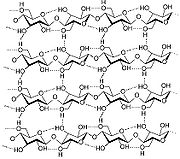 A major but defining difference between polymers and biopolymers can be found in their structures. Polymers, including biopolymers, are made of repetitive units called monomers. While polymers are often randomly constructed with massive entanglement, biopolymers often have a well defined structure. In the case of proteins, the exact chemical composition and the sequence in which these units are arranged is called the primary structure.
Many proteins spontaneously fold into characteristic compact shapes—which determine their biological functions and depend in a complicated way on their primary structures. Structural biology is the study of the structural properties of the biopolymers, much of which can be determined by their viscoelastic response to a wide range of loading conditions.
, glass
production and ceramic engineering
. Such methods are used primarily for the fabrication of materials (typically a metal oxide) starting from a chemical solution which acts as the precursor for an integrated network (or gel) of either discrete nanoparticles or network polymers. Typical precursors are metal alkoxides and metal chlorides, which undergo various forms of hydrolysis
and polycondensation reactions in order to form a viscoelastic network (or solid
).
One of the largest application areas is thin films and coatings, which can be produced on a piece of substrate by spin coating or dip coating. Other methods include spraying, electrophoresis, inkjet printing or roll coating. Optical coatings, protective and decorative coatings, and electro-optic components can be applied to glass, metal and other types of substrates with these methods. With the viscosity
of a sol
adjusted into a proper range, both optical quality glass fiber and refractory
ceramic fiber can be drawn which are used for fiber optic sensors and thermal insulation
, respectively. The mechanisms of hydrolysis
and condensation
, and the rheological factors that bias the structure toward linear or branched structures are the most critical issues of sol-gel science and technology.
includes the flow of molten lava
and debris flows (fluid mudslides). Also included in this disciplinary branch are solid Earth materials which only exhibit flow over extended time scales. Those that display viscous behavior are known as rheid
s. E.G. granite
can flow plastically with a vanishingly small yield stress at room temperatures, (i.e. a viscous flow). Long term creep experiments (~ 10 years) indicate that the viscosity of granite under ambient conditions is on the order of 1020 poises.
 Deep foundations are used for structures or heavy loads when shallow foundations cannot provide sufficient adequate capacity. They may also be used to transfer building loads past weak or compressible soil layers. While shallow foundations rely solely on the bearing capacity
of the soil beneath them, deep foundations can rely on end bearing resistance, frictional resistance along their length, or both in developing the required capacity. Geotechnical engineers use specialized tools, such as the cone penetration test
, to estimate the amount of skin and end bearing resistance available in the subsurface.
In addition, pile driving is often used to check for stability in varying soil types such as clay, sand, gravels, fractured shale, etc. Geotechnical engineering
(or 'soil engineering') often utilizes soil logs or bore logs to show what may be evidenced while driving piles through given stratum and soil lenses. Wave equations must often be employed when using vibratory or mechanical impact hammers. The harmonics set up by vibratory or impact hammers drastically change the ability of given soils to create wall friction on a given pile type, as well as the elastic alteration or resistance to penetration in a normal state.
Dynamic testing of soils may involve the attachment of transducers to pilings while they are being driven. In addition, theoretical bearing calculations using a nuclear densometer may be carried out in the field. In the end, a fairly simple linear equation may suffice to give a good approximation of the bearing capacity of the soil.
. This is the study of flow properties of blood and its elements (plasma
and formed elements, including red blood cells, white blood cells and platelets). Blood viscosity
is determined by plasma viscosity, hematocrit
(volume fraction of red blood cell, which constitute 99.9% of the cellular elements) and mechanical behavior of red blood cells. Therefore, red blood cell mechanics is the major determinant of flow properties of blood.
is important in the manufacture and processing of food products, eg cheese. Food rheology is the study of the rheological properties of food, that is, the consistency and flow of food under tightly specified conditions. The consistency, degree of fluidity, and other mechanical properties are important in understanding how long food can be stored, how stable it will remain, and in determining food texture. The acceptability of food products to the consumer is often determined by food texture, such as how spreadable and creamy a food product is. Food rheology is important in quality control during food manufacture and processing.
Thickening agents, or thickeners, are substances which, when added to an aqueous mixture, increase its viscosity
without substantially modifying its other properties, such as taste. They provide body, increase stability
, and improve suspension
of added ingredients. Thickening agents are often used as food additive
s and in cosmetics
and personal hygiene products. Some thickening agents are gelling agents, forming a gel
. The agents are materials used to thicken and stabilize liquid solutions, emulsion
s, and suspension
s. They dissolve in the liquid phase as a colloid
mixture that forms a weakly cohesive internal structure. Food thickeners frequently are based on either polysaccharide
s (starch
es, vegetable gums, and pectin
), or protein
s.
's and mortar
's workability is related to the rheological properties of the fresh cement
paste. The mechanical properties of hardened concrete are better if less water is used in the preparation of concrete paste, however reducing the water-to-cement ratio may decrease the ease of mixing and application. To avoid these undesired effects, superplasticizer
s are typically added to decrease the apparent yield stress and the viscosity of the fresh paste. Their addition highly improves concrete and mortar properties.
s are instruments used to characterize the rheological properties of materials, typically fluids that are melts or solution. These instruments impose a specific stress field or deformation to the fluid, and monitor the resultant deformation or stress. Instruments can be run in steady flow or oscillatory flow, in both shear and extension.
or a simple Newtonian fluid and on the other end, a rigid solid; thus the behavior of all materials fall somewhere in between these two ends. The difference in material behavior is characterized by the level and nature of elasticity present in the material when it deforms, which takes the material behavior to the non-Newtonian regime. The non-dimensional Deborah number is designed to account for the degree of non-Newtonain behavior in a flow. The Deborah number is defined as the ratio of the characteristic time of relaxation (which purely depends on the material and other conditions like the temperature) to the characteristic time of experiment or observation. Small Deborah numbers represent Newtonian flow, while non-Newtonian (with both viscous and elastic effects present) behavior occurs for intermediate range Deborah numbers, and high Deborah numbers indicate an elastic/rigid solid. Since Deborah number is a relative quantity, the numerator or the denominator can alter the number. A very small Deborah number can be obtained for a fluid with extremely small relaxation time or a very large experimental time, for example.
, the Reynolds number is a measure of the ratio
of inertia
l force
s (vsρ) to viscous
forces (μ/L) and consequently it quantifies the relative importance of these two types of effect for given flow conditions. Under low Reynolds numbers viscous effects dominate and the flow is laminar, whereas at high Reynolds numbers inertia predominates and the flow may be turbulent. However, since rheology is concerned with fluids which do not have a fixed viscosity, but one which can vary with flow and time, calculation of the Reynolds number can be complicated.
It is one of the most important dimensionless numbers in fluid dynamics
and is used, usually along with other dimensionless numbers, to provide a criterion for determining dynamic similitude. When two geometrically similar flow patterns, in perhaps different fluids with possibly different flow rates, have the same values for the relevant dimensionless numbers, they are said to be dynamically similar.
Typically it is given as follows:

where:
It applies to substances which have a complex molecular structure, such as mud
Mud
Mud is a mixture of water and some combination of soil, silt, and clay. Ancient mud deposits harden over geological time to form sedimentary rock such as shale or mudstone . When geological deposits of mud are formed in estuaries the resultant layers are termed bay muds...
s, sludge
Sludge
Sludge refers to the residual, semi-solid material left from industrial wastewater, or sewage treatment processes. It can also refer to the settled suspension obtained from conventional drinking water treatment, and numerous other industrial processes...
s, suspensions
Suspension (chemistry)
In chemistry, a suspension is a heterogeneous fluid containing solid particles that are sufficiently large for sedimentation. Usually they must be larger than 1 micrometer. The internal phase is dispersed throughout the external phase through mechanical agitation, with the use of certain...
, polymer
Polymer
A polymer is a large molecule composed of repeating structural units. These subunits are typically connected by covalent chemical bonds...
s and other glass formers
Glass transition
The liquid-glass transition is the reversible transition in amorphous materials from a hard and relatively brittle state into a molten or rubber-like state. An amorphous solid that exhibits a glass transition is called a glass...
(e.g. silicates), as well as many foods and additives, bodily fluid
Bodily fluid
Body fluid or bodily fluids are liquids originating from inside the bodies of living people. They include fluids that are excreted or secreted from the body as well as body water that normally is not.Body fluids include:-Body fluids and health:...
s (e.g. blood) and other biological materials.
Newtonian fluids can be characterized by a single coefficient of viscosity
Viscosity
Viscosity is a measure of the resistance of a fluid which is being deformed by either shear or tensile stress. In everyday terms , viscosity is "thickness" or "internal friction". Thus, water is "thin", having a lower viscosity, while honey is "thick", having a higher viscosity...
for a specific temperature. Although this viscosity will change with temperature, it does not change with the flow rate or strain rate. Only a small group of fluids exhibit such constant viscosity, and they are known as Newtonian fluids. But for a large class of fluids, the viscosity change with the strain rate (or relative velocity of flow) and are called non-Newtonian fluids. Rheology generally accounts for the behavior of non-Newtonian fluids, by characterizing the minimum number of functions that are needed to relate stresses with rate of change of strains or strain rates. For example, ketchup
Ketchup
Ketchup is a sweet-and-tangy condiment typically made from tomatoes, vinegar, sugar or high-fructose corn syrup and an assortment of...
can have its viscosity reduced by shaking (or other forms of mechanical agitation, where the relative movement of different layers in the material actually causes the reduction in viscosity) but water cannot. Ketchup is a shear thinning material, as an increase in relative velocity caused a reduction in viscosity, while some other non-Newtonian materials show the opposite behavior: viscosity going up with relative deformation, which are called shear thickening or dilatant
Dilatant
A dilatant material is one in which viscosity increases with the rate of shear strain. Such a shear thickening fluid, also known by the acronym STF, is an example of a non-Newtonian fluid....
materials. Since Sir Isaac Newton
Isaac Newton
Sir Isaac Newton PRS was an English physicist, mathematician, astronomer, natural philosopher, alchemist, and theologian, who has been "considered by many to be the greatest and most influential scientist who ever lived."...
originated the concept of viscosity, the study of liquids with strain rate dependent viscosity is also often called Non-Newtonian fluid mechanics
Non-Newtonian fluid
A non-Newtonian fluid is a fluid whose flow properties differ in any way from those of Newtonian fluids. Most commonly the viscosity of non-Newtonian fluids is not independent of shear rate or shear rate history...
.
The term rheology was coined by Eugene C. Bingham
Eugene C. Bingham
Eugene Cook Bingham was a professor and head of the Department of Chemistry at Lafayette College. Bingham made many contributions to rheology, a term he is credited with introducing. He was a pioneer in both its theory and practice...
, a professor at Lafayette College
Lafayette College
Lafayette College is a private coeducational liberal arts and engineering college located in Easton, Pennsylvania, USA. The school, founded in 1826 by James Madison Porter,son of General Andrew Porter of Norristown and citizens of Easton, first began holding classes in 1832...
, in 1920, from a suggestion by a colleague, Markus Reiner
Markus Reiner
- Biography :Reiner was born in 1886 in Czernowitz, Bukovina, then part of Austria-Hungary, and obtained a degree in Civil Engineering at the Technische Hochschule in Vienna . After the First World War, he emigrated to Palestine, where he worked as a civil engineer under the British mandate...
.The Deborah Number The term was inspired by the aphorism
Aphorism
An aphorism is an original thought, spoken or written in a laconic and memorable form.The term was first used in the Aphorisms of Hippocrates...
of Simplicius
Simplicius of Cilicia
Simplicius of Cilicia, was a disciple of Ammonius Hermiae and Damascius, and was one of the last of the Neoplatonists. He was among the pagan philosophers persecuted by Justinian in the early 6th century, and was forced for a time to seek refuge in the Persian court, before being allowed back into...
(often misattributed to Heraclitus
Heraclitus
Heraclitus of Ephesus was a pre-Socratic Greek philosopher, a native of the Greek city Ephesus, Ionia, on the coast of Asia Minor. He was of distinguished parentage. Little is known about his early life and education, but he regarded himself as self-taught and a pioneer of wisdom...
), panta rei
Panta Rei
Panta Rei or Panta Rhei may refer to:* Panta rhei , for the concept in the philosophy of Heraclitus*Panta Rei is a fictional secret society featured in Umberto Eco's novel Foucault's Pendulum*Panta Rhei , a Hungarian rock band...
, "everything flows" Plato in his dialogue Cratylus
Cratylus (dialogue)
Cratylus is the name of a dialogue by Plato. Most modern scholars agree that it was written mostly during Plato's so-called middle period...
recounts on Heraclitus' saying that "all things move and nothing remains still"; he also compares the etymology of the name of the Greek
Greek mythology
Greek mythology is the body of myths and legends belonging to the ancient Greeks, concerning their gods and heroes, the nature of the world, and the origins and significance of their own cult and ritual practices. They were a part of religion in ancient Greece...
goddess Rhea
Rhea (mythology)
Rhea was the Titaness daughter of Uranus, the sky, and Gaia, the earth, in Greek mythology. She was known as "the mother of gods". In earlier traditions, she was strongly associated with Gaia and Cybele, the Great Goddess, and was later seen by the classical Greeks as the mother of the Olympian...
(Ρέα) to the Greek name for flow . He notes the etymological relationship of the names of "streams" given to Cronus
Cronus
In Greek mythology, Cronus or Kronos was the leader and the youngest of the first generation of Titans, divine descendants of Gaia, the earth, and Uranus, the sky...
(Chronos
Chronos
In Greek mythology, Chronos in pre-Socratic philosophical works is said to be the personification of time. His name in Greek means "time" and is alternatively spelled Chronus or Khronos.Chronos was imagined as an incorporeal god, serpentine in form, with three heads—those of a man, a bull, and...
- time
Time
Time is a part of the measuring system used to sequence events, to compare the durations of events and the intervals between them, and to quantify rates of change such as the motions of objects....
) and Rhea ( – flow or space) and he argues that this relationship is not accidental.
The experimental characterization of a material's rheological behavior is known as rheometry
Rheometry
Rheometry generically refers to the experimental techniques used to determine the rheological properties of materials, that is the quantitative and qualitative relationships between deformations and stresses and their derivatives.The choice of the adequate experimental technique depends on the...
, although the term rheology is frequently used synonymously with rheometry, particularly by experimentalists. Theoretical aspects of rheology are the relation of the flow/deformation behavior of material and its internal structure (e.g., the orientation and elongation of polymer molecules), and the flow/deformation behavior of materials that cannot be described by classical fluid mechanics or elasticity.
Scope
In practice, rheology is principally concerned with extending continuum mechanicsContinuum mechanics
Continuum mechanics is a branch of mechanics that deals with the analysis of the kinematics and the mechanical behavior of materials modelled as a continuous mass rather than as discrete particles...
to characterize flow of materials, that exhibits a combination of elastic, viscous and plastic behavior by properly combining elasticity and (Newtonian
Newtonian fluid
A Newtonian fluid is a fluid whose stress versus strain rate curve is linear and passes through the origin. The constant of proportionality is known as the viscosity.-Definition:...
) fluid mechanics
Fluid mechanics
Fluid mechanics is the study of fluids and the forces on them. Fluid mechanics can be divided into fluid statics, the study of fluids at rest; fluid kinematics, the study of fluids in motion; and fluid dynamics, the study of the effect of forces on fluid motion...
. It is also concerned with establishing predictions for mechanical behavior (on the continuum mechanical scale) based on the micro- or nanostructure of the material, e.g. the molecular
Molecule
A molecule is an electrically neutral group of at least two atoms held together by covalent chemical bonds. Molecules are distinguished from ions by their electrical charge...
size and architecture of polymer
Polymer
A polymer is a large molecule composed of repeating structural units. These subunits are typically connected by covalent chemical bonds...
s in solution or the particle size distribution in a solid suspension.
Materials with the characteristics of a fluid will flow when subjected to a stress
Stress (physics)
In continuum mechanics, stress is a measure of the internal forces acting within a deformable body. Quantitatively, it is a measure of the average force per unit area of a surface within the body on which internal forces act. These internal forces are a reaction to external forces applied on the body...
which is defined as the force per area. There are different sorts of stress (e.g. shear, torsional, etc.) and materials can respond differently for different stresses. Much of theoretical rheology is concerned with associating external forces and torques with internal stresses and internal strain gradients and velocities.
Rheology unites the seemingly unrelated fields of plasticity
Plasticity (physics)
In physics and materials science, plasticity describes the deformation of a material undergoing non-reversible changes of shape in response to applied forces. For example, a solid piece of metal being bent or pounded into a new shape displays plasticity as permanent changes occur within the...
and non-Newtonian fluid
Non-Newtonian fluid
A non-Newtonian fluid is a fluid whose flow properties differ in any way from those of Newtonian fluids. Most commonly the viscosity of non-Newtonian fluids is not independent of shear rate or shear rate history...
dynamics by recognizing that materials undergoing these types of deformation are unable to support a stress (particularly a shear stress
Shear stress
A shear stress, denoted \tau\, , is defined as the component of stress coplanar with a material cross section. Shear stress arises from the force vector component parallel to the cross section...
, since it is easier to analyze shear deformation) in static equilibrium
Mechanical equilibrium
A standard definition of static equilibrium is:This is a strict definition, and often the term "static equilibrium" is used in a more relaxed manner interchangeably with "mechanical equilibrium", as defined next....
. In this sense, solids undergoing plastic deformation is a fluid
Fluid
In physics, a fluid is a substance that continually deforms under an applied shear stress. Fluids are a subset of the phases of matter and include liquids, gases, plasmas and, to some extent, plastic solids....
, although no viscosity coefficient is associated with this flow. Granular rheology refers to the continuum mechanical description of granular material
Granular material
A granular material is a conglomeration of discrete solid, macroscopic particles characterized by a loss of energy whenever the particles interact . The constituents that compose granular material must be large enough such that they are not subject to thermal motion fluctuations...
s.
One of the major tasks of rheology is to empirically establish the relationships between deformations
Strain (materials science)
In continuum mechanics, the infinitesimal strain theory, sometimes called small deformation theory, small displacement theory, or small displacement-gradient theory, deals with infinitesimal deformations of a continuum body...
and stresses, respectively their derivative
Derivative
In calculus, a branch of mathematics, the derivative is a measure of how a function changes as its input changes. Loosely speaking, a derivative can be thought of as how much one quantity is changing in response to changes in some other quantity; for example, the derivative of the position of a...
s by adequate measurements, although a number of theoretical developments (such as assuring frame invariants)are also required before using the empirical data. These experimental techniques are known as rheometry
Rheometry
Rheometry generically refers to the experimental techniques used to determine the rheological properties of materials, that is the quantitative and qualitative relationships between deformations and stresses and their derivatives.The choice of the adequate experimental technique depends on the...
and are concerned with the determination with well-defined rheological material functions. Such relationships are then amenable to mathematical treatment by the established methods of continuum mechanics
Continuum mechanics
Continuum mechanics is a branch of mechanics that deals with the analysis of the kinematics and the mechanical behavior of materials modelled as a continuous mass rather than as discrete particles...
.
The characterization of flow or deformation originating from a simple shear stress field is called shear rheometry (or shear rheology). The study of extensional flows is called extensional rheology. Shear flows are much easier to study and thus much more experimental data are available for shear flows than for extensional flows.
Rheologist
A rheologist is an interdisciplinary scientist/engineer who studies the flow of complex liquids or the deformation of soft solids. It is not taken as a primary degree subject, and there is no general qualification. He or she will usually have a primary qualification in one of several fields: mathematics, the physical sciences (e.g. chemistryChemistry
Chemistry is the science of matter, especially its chemical reactions, but also its composition, structure and properties. Chemistry is concerned with atoms and their interactions with other atoms, and particularly with the properties of chemical bonds....
, physics
Physics
Physics is a natural science that involves the study of matter and its motion through spacetime, along with related concepts such as energy and force. More broadly, it is the general analysis of nature, conducted in order to understand how the universe behaves.Physics is one of the oldest academic...
, biology
Biology
Biology is a natural science concerned with the study of life and living organisms, including their structure, function, growth, origin, evolution, distribution, and taxonomy. Biology is a vast subject containing many subdivisions, topics, and disciplines...
), engineering (e.g. mechanical
Mechanical engineering
Mechanical engineering is a discipline of engineering that applies the principles of physics and materials science for analysis, design, manufacturing, and maintenance of mechanical systems. It is the branch of engineering that involves the production and usage of heat and mechanical power for the...
, chemical
Chemical engineering
Chemical engineering is the branch of engineering that deals with physical science , and life sciences with mathematics and economics, to the process of converting raw materials or chemicals into more useful or valuable forms...
, Materials Science & Engineering
Materials science
Materials science is an interdisciplinary field applying the properties of matter to various areas of science and engineering. This scientific field investigates the relationship between the structure of materials at atomic or molecular scales and their macroscopic properties. It incorporates...
or civil engineering
Civil engineering
Civil engineering is a professional engineering discipline that deals with the design, construction, and maintenance of the physical and naturally built environment, including works like roads, bridges, canals, dams, and buildings...
), medicine
Medicine
Medicine is the science and art of healing. It encompasses a variety of health care practices evolved to maintain and restore health by the prevention and treatment of illness....
, or certain technologies, notably materials
Materials science
Materials science is an interdisciplinary field applying the properties of matter to various areas of science and engineering. This scientific field investigates the relationship between the structure of materials at atomic or molecular scales and their macroscopic properties. It incorporates...
or food
Food science
Food science is a study concerned with all technical aspects of foods, beginning with harvesting or slaughtering, and ending with its cooking and consumption, an ideology commonly referred to as "from field to fork"...
. Typically, a small amount of rheology may be studied when obtaining a degree, but the professional will extend this knowledge during postgraduate research or by attending short courses and by joining one of the professional associations (see below).
Viscoelasticity
The classical theory of elasticity deals with the behavior of elastic solids under small deformations, for which,(1) according to Hooke's Law, stress is directly proportional to the strain — but independent of the rate of strain, or how fast the deformation was applied, and (2) the strains are completely recoverable once the stress is removed. Materials that can be characterized by classical theory of elasticity is known as linear elastic materials, even for such materials the linear relationship between stress and strain may be valid only for a certain range of strains. A large number of solids show non-linear relationship between stress and strain even for small stresses (such as rubber), but if the strains are still recoverable they are known as non-linear elastic materials. The classical theory of fluid mechanics, governed by the Navier-Stokes equation, deals with the behavior of viscous fluids, for which, according to Newton's Law, the stress is directly proportional to the rate of strain, but independent of the strain itself. These behavior are, of course, generally observed for ideal materials under ideal conditions, although the behavior of many solids approaches Hooke's law for infinitesimal strains, and that of many fluids approaches Newton's law for infinitesimal rates of strain. Two types of deviations from linearity may be considered here.- When finite strains (larger strains, as opposed to infinitesimal strains) are applied to solid bodies, the stress-strain relationships are often much more complicated (i.e. Non-Hookean). Similarly, in steady flow with finite strain rates, many fluids exhibit marked deviations in stress-strain rate proportionality from Newtons law.
- Even if both strain and rate of strain are infinitesimal, a system may exhibit both liquid-like and solid-like characteristics. A good example of this is when a body which is not quite an elastic solid (i.e. an inelastic solid) does not maintain a constant deformation under constant stress, but rather continues to deform with time – or "creeps" under the same stress at constant temperature. When such a body is constrained at constant deformation, the stress required to hold it at that stretch level gradually diminishes—or "relaxes" with time.
Similarly, a fluid while flowing under constant stress may show some elastic properties as well, such as storing some of the energy input instead of dissipating it all as heat and random thermal motion of its molecular constituents or having some recovery of strains after stresses are removed, although it may never recover all of its deformation upon removal of the initial applied stress. When such bodies are subjected to a sinusoidally oscillating stress, the strain is neither exactly in phase with the stress (as it would be for a perfectly elastic solid) nor 90 degrees out of phase (as it would be for a perfectly viscous liquid) but rather exhibits a strain that lags the stress at a value between zero and 90 degrees: i.e, Some of the energy is stored and recovered in each cycle, and some is dissipated as heat. These are viscoelastic materials.
Thus, fluids are generally associated with viscous behavior (a thick oil is a viscous liquid) and solids with elastic behavior (an elastic string is an elastic solid). A more general point of view is to consider the material behavior at short times (relative to the duration of the experiment/application of interest) and at long times.
- Fluid and solid character are relevant at long times:We consider the application of a constant stress (a so-called creep experiment):
- if the material, after some deformation, eventually resists further deformation, it is considered a solid
- if, by contrast, the material flows indefinitely, it is considered a fluid
- By contrast, elastic and viscous (or intermediate, viscoelastic) behavior is relevant at short times (transient behavior):We again consider the application of a constant stress:
- if the material deformation strain increases linearly with increasing applied stress, then the material is linear elastic within the range it shows recoverable strains. Elasticity is essentially a time independent processes, as the stains appear the moment the stress is appliled, without any time delay.
- if the material deformation rate increases linearly with increasing applied stress, then the material is viscous in the Newtonian sense. These materials are characterized due to the time delay between the applied constant stress and the maximum strain.
- if the materials behaves as a combination of viscous and elastic components, then the material is viscoelastic. Theoretically such materials can show both instantaneous deformation as elastic material and a delayed time dependent deformation as in fluids.
- PlasticityPlasticity (physics)In physics and materials science, plasticity describes the deformation of a material undergoing non-reversible changes of shape in response to applied forces. For example, a solid piece of metal being bent or pounded into a new shape displays plasticity as permanent changes occur within the...
is the behavior observed after the material is subjected to a yield stress:A material that behaves as a solid under low applied stresses may start to flow above a certain level of stress, called the yield stress of the material. The term plastic solid is often used when this plasticity threshold is rather high, while yield stress fluid is used when the threshold stress is rather low. However, there is no fundamental difference between the two concepts.
Applications
Rheology has applications in materials scienceMaterials science
Materials science is an interdisciplinary field applying the properties of matter to various areas of science and engineering. This scientific field investigates the relationship between the structure of materials at atomic or molecular scales and their macroscopic properties. It incorporates...
engineering
Engineering
Engineering is the discipline, art, skill and profession of acquiring and applying scientific, mathematical, economic, social, and practical knowledge, in order to design and build structures, machines, devices, systems, materials and processes that safely realize improvements to the lives of...
, geophysics
Geophysics
Geophysics is the physics of the Earth and its environment in space; also the study of the Earth using quantitative physical methods. The term geophysics sometimes refers only to the geological applications: Earth's shape; its gravitational and magnetic fields; its internal structure and...
, physiology
Physiology
Physiology is the science of the function of living systems. This includes how organisms, organ systems, organs, cells, and bio-molecules carry out the chemical or physical functions that exist in a living system. The highest honor awarded in physiology is the Nobel Prize in Physiology or...
, human biology
Biology
Biology is a natural science concerned with the study of life and living organisms, including their structure, function, growth, origin, evolution, distribution, and taxonomy. Biology is a vast subject containing many subdivisions, topics, and disciplines...
and pharmaceutics
Pharmaceutics
Pharmaceutics is the discipline of pharmacy that deals with all facets of the process of turning a new chemical entity into a medication able to be safely and effectively used by patients in the community. Pharmaceutics is the science of dosage form design...
. Materials science
Materials science
Materials science is an interdisciplinary field applying the properties of matter to various areas of science and engineering. This scientific field investigates the relationship between the structure of materials at atomic or molecular scales and their macroscopic properties. It incorporates...
is utilized in the production of many industrially important substances such as concrete
Concrete
Concrete is a composite construction material, composed of cement and other cementitious materials such as fly ash and slag cement, aggregate , water and chemical admixtures.The word concrete comes from the Latin word...
, paint
Paint
Paint is any liquid, liquefiable, or mastic composition which after application to a substrate in a thin layer is converted to an opaque solid film. One may also consider the digital mimicry thereof...
and chocolate
Chocolate
Chocolate is a raw or processed food produced from the seed of the tropical Theobroma cacao tree. Cacao has been cultivated for at least three millennia in Mexico, Central and South America. Its earliest documented use is around 1100 BC...
have complex flow characteristics. In addition, plasticity
Plasticity (physics)
In physics and materials science, plasticity describes the deformation of a material undergoing non-reversible changes of shape in response to applied forces. For example, a solid piece of metal being bent or pounded into a new shape displays plasticity as permanent changes occur within the...
theory has been similarly important for the design of metal forming processes. The science of rheology and the characterization of viscoelastic properties in the production and use of polymer
Polymer
A polymer is a large molecule composed of repeating structural units. These subunits are typically connected by covalent chemical bonds...
ic materials has been critical for the production of many products for use in both the industrial and military sectors.
Study of flow properties of liquids is important for pharmacists working in the manufacture of several dosage forms, such as simple liquids, ointments, creams, pastes etc. The flow behavior of liquids under applied stress is of great relevance in the field of pharmacy. Flow properties are used as important quality control tools to maintain the superiority of the product and reduce batch to batch variations.
Polymers
The viscoelastic properties of polymers are determined by the effects of the many variables, including temperature, pressure, and time. Other important variables include chemical composition, molecular weight and weight distribution, degree of branching and crystallinity, types of functionality, component concentration, dilution with solvents or plasticizers, and mixture with other materials to form composite systems. With guidance by molecular theory, the dependence of viscoelastic properties on these variables can be simplified by introducing additional concepts such as the free volume, the monomeric friction coefficient, and the spacing between entanglement loci, to provide a qualitative understanding and in many cases a quantitative prediction of how to achieve desired physical and chemical properties and ultimate microstructure.Viscoelastic behavior reflects the combined viscous and elastic responses, under mechanical stress, of materials which are intermediate between liquids and solids in character. Fundamentally, the viscoelasticity can be related to the motions of flexible polymer molecules and their entanglements and network junctions—the molecular basis of viscoelasticity. Thus, rearrangements on a local scale (kinks) are relatively rapid, while on a long-range scale (convolutions) very slow. In addition, a new assortment of configurations is obtained under stress. The response to the local aspects of the new distribution is rapid, while the response to the long-range aspects is slow. Thus there is very wide and continuous range of timescales covering the response of such a system to externally applied stress. From measurements of the viscoelastic properties of polymers, information can be obtained about the nature and the rates of change of the configurational rearrangements, and the nature of the (macro)molecular interactions over a range of time scales.
Examples may be given to illustrate the potential applications of these principles to practical problems in the processing and use of rubbers, plastics, and fibers. Polymers constitute the basic materials of the rubber and plastic industries and are of vital importance to the textile, petroleum, automobile, paper, and pharmaceutical industries. Their viscoelastic properties determine the mechanical performance of the final products of these industries, and also the success of processing methods at intermediate stages of production.
In viscoelastic
Viscoelasticity
Viscoelasticity is the property of materials that exhibit both viscous and elastic characteristics when undergoing deformation. Viscous materials, like honey, resist shear flow and strain linearly with time when a stress is applied. Elastic materials strain instantaneously when stretched and just...
materials, such as most polymers and plastics, the presence of liquid-like behavior depends on the properties of and so varies with rate of applied load, i.e., how quickly a force is applied. The silicone
Silicone
Silicones are inert, synthetic compounds with a variety of forms and uses. Typically heat-resistant and rubber-like, they are used in sealants, adhesives, lubricants, medical applications , cookware, and insulation....
toy 'Silly Putty
Silly Putty
Silly Putty , is the Crayola-owned trademark name for a class of silicone polymers. It is marketed today as a toy for children, but was originally created by accident during research into potential rubber substitutes for use by the United States in World War II...
' behaves quite differently depending on the time rate of applying a force. Pull on it slowly and it exhibits continuous flow, similar to that evidenced in a highly viscous liquid. Alternatively, when hit hard and directly, it shatters like a silicate glass.
In addition, conventional rubber
Rubber
Natural rubber, also called India rubber or caoutchouc, is an elastomer that was originally derived from latex, a milky colloid produced by some plants. The plants would be ‘tapped’, that is, an incision made into the bark of the tree and the sticky, milk colored latex sap collected and refined...
undergoes a glass transition
Glass transition
The liquid-glass transition is the reversible transition in amorphous materials from a hard and relatively brittle state into a molten or rubber-like state. An amorphous solid that exhibits a glass transition is called a glass...
, (often called a rubber-glass transition). E.G. The Space Shuttle Challenger
Space Shuttle Challenger
Space Shuttle Challenger was NASA's second Space Shuttle orbiter to be put into service, Columbia having been the first. The shuttle was built by Rockwell International's Space Transportation Systems Division in Downey, California...
disaster was caused by rubber O-rings that were being used well below their glass transition temperature on an unusually cold Florida morning, and thus could not flex adequately to form proper seals between sections of the two solid-fuel rocket boosters
Space Shuttle Solid Rocket Booster
The Space Shuttle Solid Rocket Boosters were the pair of large solid rockets used by the United States' NASA Space Shuttle during the first two minutes of powered flight. Together they provided about 83% of liftoff thrust for the Space Shuttle. They were located on either side of the rusty or...
.
Biopolymers
Many proteins spontaneously fold into characteristic compact shapes—which determine their biological functions and depend in a complicated way on their primary structures. Structural biology is the study of the structural properties of the biopolymers, much of which can be determined by their viscoelastic response to a wide range of loading conditions.
Sol-gel
Sol-gel science (aka chemical solution deposition) is a wet-chemical technique widely used in the fields of materials scienceMaterials science
Materials science is an interdisciplinary field applying the properties of matter to various areas of science and engineering. This scientific field investigates the relationship between the structure of materials at atomic or molecular scales and their macroscopic properties. It incorporates...
, glass
Glass
Glass is an amorphous solid material. Glasses are typically brittle and optically transparent.The most familiar type of glass, used for centuries in windows and drinking vessels, is soda-lime glass, composed of about 75% silica plus Na2O, CaO, and several minor additives...
production and ceramic engineering
Ceramic engineering
Ceramic engineering is the science and technology of creating objects from inorganic, non-metallic materials. This is done either by the action of heat, or at lower temperatures using precipitation reactions from high purity chemical solutions...
. Such methods are used primarily for the fabrication of materials (typically a metal oxide) starting from a chemical solution which acts as the precursor for an integrated network (or gel) of either discrete nanoparticles or network polymers. Typical precursors are metal alkoxides and metal chlorides, which undergo various forms of hydrolysis
Hydrolysis
Hydrolysis is a chemical reaction during which molecules of water are split into hydrogen cations and hydroxide anions in the process of a chemical mechanism. It is the type of reaction that is used to break down certain polymers, especially those made by condensation polymerization...
and polycondensation reactions in order to form a viscoelastic network (or solid
Solid
Solid is one of the three classical states of matter . It is characterized by structural rigidity and resistance to changes of shape or volume. Unlike a liquid, a solid object does not flow to take on the shape of its container, nor does it expand to fill the entire volume available to it like a...
).
One of the largest application areas is thin films and coatings, which can be produced on a piece of substrate by spin coating or dip coating. Other methods include spraying, electrophoresis, inkjet printing or roll coating. Optical coatings, protective and decorative coatings, and electro-optic components can be applied to glass, metal and other types of substrates with these methods. With the viscosity
Viscosity
Viscosity is a measure of the resistance of a fluid which is being deformed by either shear or tensile stress. In everyday terms , viscosity is "thickness" or "internal friction". Thus, water is "thin", having a lower viscosity, while honey is "thick", having a higher viscosity...
of a sol
Sol (colloid)
A sol is a colloidal suspension of very small solid particles in a continuous liquid medium. They are quite stable and show the Tyndall effect. Examples include blood, pigmented ink, and paint....
adjusted into a proper range, both optical quality glass fiber and refractory
Refractory
A refractory material is one that retains its strength at high temperatures. ASTM C71 defines refractories as "non-metallic materials having those chemical and physical properties that make them applicable for structures, or as components of systems, that are exposed to environments above...
ceramic fiber can be drawn which are used for fiber optic sensors and thermal insulation
Thermal insulation
Thermal insulation is the reduction of the effects of the various processes of heat transfer between objects in thermal contact or in range of radiative influence. Heat transfer is the transfer of thermal energy between objects of differing temperature...
, respectively. The mechanisms of hydrolysis
Hydrolysis
Hydrolysis is a chemical reaction during which molecules of water are split into hydrogen cations and hydroxide anions in the process of a chemical mechanism. It is the type of reaction that is used to break down certain polymers, especially those made by condensation polymerization...
and condensation
Condensation
Condensation is the change of the physical state of matter from gaseous phase into liquid phase, and is the reverse of vaporization. When the transition happens from the gaseous phase into the solid phase directly, the change is called deposition....
, and the rheological factors that bias the structure toward linear or branched structures are the most critical issues of sol-gel science and technology.
Geophysics
GeophysicsGeophysics
Geophysics is the physics of the Earth and its environment in space; also the study of the Earth using quantitative physical methods. The term geophysics sometimes refers only to the geological applications: Earth's shape; its gravitational and magnetic fields; its internal structure and...
includes the flow of molten lava
Lava
Lava refers both to molten rock expelled by a volcano during an eruption and the resulting rock after solidification and cooling. This molten rock is formed in the interior of some planets, including Earth, and some of their satellites. When first erupted from a volcanic vent, lava is a liquid at...
and debris flows (fluid mudslides). Also included in this disciplinary branch are solid Earth materials which only exhibit flow over extended time scales. Those that display viscous behavior are known as rheid
Rheid
In geology, a rheid is a solid material that deforms by viscous flow. The term has the same Greek root as rheology, the science of viscoelasticity and nonlinear flow.-Types of rheids:...
s. E.G. granite
Granite
Granite is a common and widely occurring type of intrusive, felsic, igneous rock. Granite usually has a medium- to coarse-grained texture. Occasionally some individual crystals are larger than the groundmass, in which case the texture is known as porphyritic. A granitic rock with a porphyritic...
can flow plastically with a vanishingly small yield stress at room temperatures, (i.e. a viscous flow). Long term creep experiments (~ 10 years) indicate that the viscosity of granite under ambient conditions is on the order of 1020 poises.
Bearing capacity
In geotechnical engineering, bearing capacity is the capacity of soil to support the loads applied to the ground. The bearing capacity of soil is the maximum average contact pressure between the foundation and the soil which should not produce shear failure in the soil...
of the soil beneath them, deep foundations can rely on end bearing resistance, frictional resistance along their length, or both in developing the required capacity. Geotechnical engineers use specialized tools, such as the cone penetration test
Cone penetration test
The cone penetration test is an gouda cpt testing method used to determine the geotechnical engineering properties of soils and delineating soil stratigraphy. It was initially developed in the 1950s at the Dutch Laboratory for Soil Mechanics in Delft to investigate soft soils. Based on this...
, to estimate the amount of skin and end bearing resistance available in the subsurface.
In addition, pile driving is often used to check for stability in varying soil types such as clay, sand, gravels, fractured shale, etc. Geotechnical engineering
Geotechnical engineering
Geotechnical engineering is the branch of civil engineering concerned with the engineering behavior of earth materials. Geotechnical engineering is important in civil engineering, but is also used by military, mining, petroleum, or any other engineering concerned with construction on or in the ground...
(or 'soil engineering') often utilizes soil logs or bore logs to show what may be evidenced while driving piles through given stratum and soil lenses. Wave equations must often be employed when using vibratory or mechanical impact hammers. The harmonics set up by vibratory or impact hammers drastically change the ability of given soils to create wall friction on a given pile type, as well as the elastic alteration or resistance to penetration in a normal state.
Dynamic testing of soils may involve the attachment of transducers to pilings while they are being driven. In addition, theoretical bearing calculations using a nuclear densometer may be carried out in the field. In the end, a fairly simple linear equation may suffice to give a good approximation of the bearing capacity of the soil.
Physiology
Physiology includes the study of many bodily fluids that have complex structure and composition, and thus exhibit a wide range of viscoelastic flow characteristics. In particular there is a specialist study of blood flow called hemorheologyHemorheology
Hemorheology is the study of flow properties of blood and its elements...
. This is the study of flow properties of blood and its elements (plasma
Blood plasma
Blood plasma is the straw-colored liquid component of blood in which the blood cells in whole blood are normally suspended. It makes up about 55% of the total blood volume. It is the intravascular fluid part of extracellular fluid...
and formed elements, including red blood cells, white blood cells and platelets). Blood viscosity
Blood viscosity
Blood viscosity is a measure of the resistance of blood to flow, which is being deformed by either shear or extensional strain.Blood is a liquid that consists of plasma and particles, such as the red blood cells. The viscosity of blood thus depends on the viscosity of the plasma, in combination...
is determined by plasma viscosity, hematocrit
Hematocrit
The hematocrit or packed cell volume or erythrocyte volume fraction is the percentage of the concentration of red blood cells in blood. It is normally about 45% for men and 40% for women...
(volume fraction of red blood cell, which constitute 99.9% of the cellular elements) and mechanical behavior of red blood cells. Therefore, red blood cell mechanics is the major determinant of flow properties of blood.
Food rheology
Food rheologyFood rheology
Food rheology is the study of the rheological properties of food, that is, the consistency and flow of food under tightly specified conditions. The consistency, degree of fluidity, and other mechanical properties are important in understanding how long food can be stored, how stable it will...
is important in the manufacture and processing of food products, eg cheese. Food rheology is the study of the rheological properties of food, that is, the consistency and flow of food under tightly specified conditions. The consistency, degree of fluidity, and other mechanical properties are important in understanding how long food can be stored, how stable it will remain, and in determining food texture. The acceptability of food products to the consumer is often determined by food texture, such as how spreadable and creamy a food product is. Food rheology is important in quality control during food manufacture and processing.
Thickening agents, or thickeners, are substances which, when added to an aqueous mixture, increase its viscosity
Viscosity
Viscosity is a measure of the resistance of a fluid which is being deformed by either shear or tensile stress. In everyday terms , viscosity is "thickness" or "internal friction". Thus, water is "thin", having a lower viscosity, while honey is "thick", having a higher viscosity...
without substantially modifying its other properties, such as taste. They provide body, increase stability
Strength of materials
In materials science, the strength of a material is its ability to withstand an applied stress without failure. The applied stress may be tensile, compressive, or shear. Strength of materials is a subject which deals with loads, deformations and the forces acting on a material. A load applied to a...
, and improve suspension
Suspension (chemistry)
In chemistry, a suspension is a heterogeneous fluid containing solid particles that are sufficiently large for sedimentation. Usually they must be larger than 1 micrometer. The internal phase is dispersed throughout the external phase through mechanical agitation, with the use of certain...
of added ingredients. Thickening agents are often used as food additive
Food additive
Food additives are substances added to food to preserve flavor or enhance its taste and appearance.Some additives have been used for centuries; for example, preserving food by pickling , salting, as with bacon, preserving sweets or using sulfur dioxide as in some wines...
s and in cosmetics
Cosmetics
Cosmetics are substances used to enhance the appearance or odor of the human body. Cosmetics include skin-care creams, lotions, powders, perfumes, lipsticks, fingernail and toe nail polish, eye and facial makeup, towelettes, permanent waves, colored contact lenses, hair colors, hair sprays and...
and personal hygiene products. Some thickening agents are gelling agents, forming a gel
Gel
A gel is a solid, jelly-like material that can have properties ranging from soft and weak to hard and tough. Gels are defined as a substantially dilute cross-linked system, which exhibits no flow when in the steady-state...
. The agents are materials used to thicken and stabilize liquid solutions, emulsion
Emulsion
An emulsion is a mixture of two or more liquids that are normally immiscible . Emulsions are part of a more general class of two-phase systems of matter called colloids. Although the terms colloid and emulsion are sometimes used interchangeably, emulsion is used when both the dispersed and the...
s, and suspension
Suspension (chemistry)
In chemistry, a suspension is a heterogeneous fluid containing solid particles that are sufficiently large for sedimentation. Usually they must be larger than 1 micrometer. The internal phase is dispersed throughout the external phase through mechanical agitation, with the use of certain...
s. They dissolve in the liquid phase as a colloid
Colloid
A colloid is a substance microscopically dispersed evenly throughout another substance.A colloidal system consists of two separate phases: a dispersed phase and a continuous phase . A colloidal system may be solid, liquid, or gaseous.Many familiar substances are colloids, as shown in the chart below...
mixture that forms a weakly cohesive internal structure. Food thickeners frequently are based on either polysaccharide
Polysaccharide
Polysaccharides are long carbohydrate molecules, of repeated monomer units joined together by glycosidic bonds. They range in structure from linear to highly branched. Polysaccharides are often quite heterogeneous, containing slight modifications of the repeating unit. Depending on the structure,...
s (starch
Starch
Starch or amylum is a carbohydrate consisting of a large number of glucose units joined together by glycosidic bonds. This polysaccharide is produced by all green plants as an energy store...
es, vegetable gums, and pectin
Pectin
Pectin is a structural heteropolysaccharide contained in the primary cell walls of terrestrial plants. It was first isolated and described in 1825 by Henri Braconnot...
), or protein
Protein
Proteins are biochemical compounds consisting of one or more polypeptides typically folded into a globular or fibrous form, facilitating a biological function. A polypeptide is a single linear polymer chain of amino acids bonded together by peptide bonds between the carboxyl and amino groups of...
s.
Concrete rheology
ConcreteConcrete
Concrete is a composite construction material, composed of cement and other cementitious materials such as fly ash and slag cement, aggregate , water and chemical admixtures.The word concrete comes from the Latin word...
's and mortar
Mortar (masonry)
Mortar is a workable paste used to bind construction blocks together and fill the gaps between them. The blocks may be stone, brick, cinder blocks, etc. Mortar becomes hard when it sets, resulting in a rigid aggregate structure. Modern mortars are typically made from a mixture of sand, a binder...
's workability is related to the rheological properties of the fresh cement
Cement
In the most general sense of the word, a cement is a binder, a substance that sets and hardens independently, and can bind other materials together. The word "cement" traces to the Romans, who used the term opus caementicium to describe masonry resembling modern concrete that was made from crushed...
paste. The mechanical properties of hardened concrete are better if less water is used in the preparation of concrete paste, however reducing the water-to-cement ratio may decrease the ease of mixing and application. To avoid these undesired effects, superplasticizer
Superplasticizer
Superplasticizers, also known as high range water reducers, are chemicals used as admixtures where well-dispersed particle suspension are required. These polymers are used as dispersants to avoid particle aggregation, and to improve the flow characteristics of suspensions such as in concrete...
s are typically added to decrease the apparent yield stress and the viscosity of the fresh paste. Their addition highly improves concrete and mortar properties.
Measurement
RheometerRheometer
A rheometer is a laboratory device used to measure the way in which a liquid, suspension or slurry flows in response to applied forces. It is used for those fluids which cannot be defined by a single value of viscosity and therefore require more parameters to be set and measured than is the case...
s are instruments used to characterize the rheological properties of materials, typically fluids that are melts or solution. These instruments impose a specific stress field or deformation to the fluid, and monitor the resultant deformation or stress. Instruments can be run in steady flow or oscillatory flow, in both shear and extension.
Deborah number
On one end of the spectrum we have an inviscidInviscid flow
In fluid dynamics there are problems that are easily solved by using the simplifying assumption of an ideal fluid that has no viscosity. The flow of a fluid that is assumed to have no viscosity is called inviscid flow....
or a simple Newtonian fluid and on the other end, a rigid solid; thus the behavior of all materials fall somewhere in between these two ends. The difference in material behavior is characterized by the level and nature of elasticity present in the material when it deforms, which takes the material behavior to the non-Newtonian regime. The non-dimensional Deborah number is designed to account for the degree of non-Newtonain behavior in a flow. The Deborah number is defined as the ratio of the characteristic time of relaxation (which purely depends on the material and other conditions like the temperature) to the characteristic time of experiment or observation. Small Deborah numbers represent Newtonian flow, while non-Newtonian (with both viscous and elastic effects present) behavior occurs for intermediate range Deborah numbers, and high Deborah numbers indicate an elastic/rigid solid. Since Deborah number is a relative quantity, the numerator or the denominator can alter the number. A very small Deborah number can be obtained for a fluid with extremely small relaxation time or a very large experimental time, for example.
Reynolds number
In fluid mechanicsFluid mechanics
Fluid mechanics is the study of fluids and the forces on them. Fluid mechanics can be divided into fluid statics, the study of fluids at rest; fluid kinematics, the study of fluids in motion; and fluid dynamics, the study of the effect of forces on fluid motion...
, the Reynolds number is a measure of the ratio
Ratio
In mathematics, a ratio is a relationship between two numbers of the same kind , usually expressed as "a to b" or a:b, sometimes expressed arithmetically as a dimensionless quotient of the two which explicitly indicates how many times the first number contains the second In mathematics, a ratio is...
of inertia
Inertia
Inertia is the resistance of any physical object to a change in its state of motion or rest, or the tendency of an object to resist any change in its motion. It is proportional to an object's mass. The principle of inertia is one of the fundamental principles of classical physics which are used to...
l force
Force
In physics, a force is any influence that causes an object to undergo a change in speed, a change in direction, or a change in shape. In other words, a force is that which can cause an object with mass to change its velocity , i.e., to accelerate, or which can cause a flexible object to deform...
s (vsρ) to viscous
Viscosity
Viscosity is a measure of the resistance of a fluid which is being deformed by either shear or tensile stress. In everyday terms , viscosity is "thickness" or "internal friction". Thus, water is "thin", having a lower viscosity, while honey is "thick", having a higher viscosity...
forces (μ/L) and consequently it quantifies the relative importance of these two types of effect for given flow conditions. Under low Reynolds numbers viscous effects dominate and the flow is laminar, whereas at high Reynolds numbers inertia predominates and the flow may be turbulent. However, since rheology is concerned with fluids which do not have a fixed viscosity, but one which can vary with flow and time, calculation of the Reynolds number can be complicated.
It is one of the most important dimensionless numbers in fluid dynamics
Fluid dynamics
In physics, fluid dynamics is a sub-discipline of fluid mechanics that deals with fluid flow—the natural science of fluids in motion. It has several subdisciplines itself, including aerodynamics and hydrodynamics...
and is used, usually along with other dimensionless numbers, to provide a criterion for determining dynamic similitude. When two geometrically similar flow patterns, in perhaps different fluids with possibly different flow rates, have the same values for the relevant dimensionless numbers, they are said to be dynamically similar.
Typically it is given as follows:
where:
- vs - mean fluid velocityVelocityIn physics, velocity is speed in a given direction. Speed describes only how fast an object is moving, whereas velocity gives both the speed and direction of the object's motion. To have a constant velocity, an object must have a constant speed and motion in a constant direction. Constant ...
, [m s−1] - L - characteristic length, [m]
- μ - (absolute) dynamic fluidFluidIn physics, a fluid is a substance that continually deforms under an applied shear stress. Fluids are a subset of the phases of matter and include liquids, gases, plasmas and, to some extent, plastic solids....
viscosityViscosityViscosity is a measure of the resistance of a fluid which is being deformed by either shear or tensile stress. In everyday terms , viscosity is "thickness" or "internal friction". Thus, water is "thin", having a lower viscosity, while honey is "thick", having a higher viscosity...
, [N s m−2] or [Pa s] - ν - kinematic fluid viscosity: ν = μ / ρ, [m² s−1]
- ρ - fluid densityDensityThe mass density or density of a material is defined as its mass per unit volume. The symbol most often used for density is ρ . In some cases , density is also defined as its weight per unit volume; although, this quantity is more properly called specific weight...
, [kg m−3].
See also
- LiquidLiquidLiquid is one of the three classical states of matter . Like a gas, a liquid is able to flow and take the shape of a container. Some liquids resist compression, while others can be compressed. Unlike a gas, a liquid does not disperse to fill every space of a container, and maintains a fairly...
- SolidSolidSolid is one of the three classical states of matter . It is characterized by structural rigidity and resistance to changes of shape or volume. Unlike a liquid, a solid object does not flow to take on the shape of its container, nor does it expand to fill the entire volume available to it like a...
- Glass transitionGlass transitionThe liquid-glass transition is the reversible transition in amorphous materials from a hard and relatively brittle state into a molten or rubber-like state. An amorphous solid that exhibits a glass transition is called a glass...
- Die swellDie swellDie swell, also known as extrudate swell, is a common phenomenon in polymer processing. Die swell occurs in instances of polymer extrusion, in which a stream of polymeric material is forced through a die, a specialized tool in manufacturing to shape or cut polymeric materials...
- MicrorheologyMicrorheologyMicrorheology is a technique to measure the rheological properties of a medium, such as microviscosity, via the measurement of the trajectory of a flow tracer . It is a new way of doing rheology, traditionally done using a rheometer. The size of the tracer is around a micrometre...
- Transport Phenomena (book)
External links
- The Origins of Rheology: A short historical excursion by Deepak Doraiswamy, University of Sidney
- Romanian Society of Rheology
- British Society of Rheology
- Australian Society of Rheology
- American Society of Rheology