
|
|
|
|
Rhenium
|
| |
|
| |
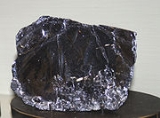
Rhenium is a chemical element with the symbol Re and atomic number 75. A rare silvery-white, heavy, polyvalent transition metal, rhenium resembles manganese chemically, and is used in some alloys. Rhenium is obtained as a by-product of molybdenum refinement, and rhenium-molybdenum alloys are superconducting. It was the last naturally occurring stable element to be discovered and is among the ten most expensive metals on Earth, at times exceeding US$ 12,000 per kilogram.
ium (Latin Rhenus meaning "Rhine") was the next-to-last naturally occurring element to be discovered and the last element to be discovered having a stable isotope.

Discussion
Ask a question about 'Rhenium'
Start a new discussion about 'Rhenium'
Answer questions from other users
|
Encyclopedia
Rhenium is a chemical element with the symbol Re and atomic number 75. A rare silvery-white, heavy, polyvalent transition metal, rhenium resembles manganese chemically, and is used in some alloys. Rhenium is obtained as a by-product of molybdenum refinement, and rhenium-molybdenum alloys are superconducting. It was the last naturally occurring stable element to be discovered and is among the ten most expensive metals on Earth, at times exceeding US$ 12,000 per kilogram.
History
Rhenium (Latin Rhenus meaning "Rhine") was the next-to-last naturally occurring element to be discovered and the last element to be discovered having a stable isotope. The existence of a yet undiscovered element at this position in the periodic table had been predicted by Henry Moseley in 1914. It is generally considered to have been discovered by Walter Noddack, Ida Tacke, and Otto Berg in Germany. In 1925 they reported that they detected the element in platinum ore and in the mineral columbite. They also found rhenium in gadolinite and molybdenite. In 1928 they were able to extract 1 g of the element by processing 660 kg of molybdenite. The process was so complicated and the cost so high that production was discontinued until early 1950 when tungsten-rhenium and molybdenum-rhenium alloys were prepared. These alloys found important applications in industry that resulted in a great demand for the rhenium produced from the molybdenite fraction of porphyry copper ores.
In 1908, Japanese chemist Masataka Ogawa announced that he discovered the 43rd element, and named it nipponium (Np) after Japan (which is Nippon in Japanese). However, later analysis indicated the presence of rhenium (element 75), not element 43. The symbol Np was later used for the element neptunium.
Characteristics
Rhenium is a silvery white metal with one of the highest melting points of all elements, exceeded by only tungsten and carbon. It is also one of the densest, exceeded only by platinum, iridium and osmium. Rhenium has the widest range of oxidation states of any known element: -3, -2, -1, 0, +1, +2, +3, +4, +5, +6 and +7. The oxidation states +7, +6, +4, +2 and -1 are the most common.
Its usual commercial form is a powder, but this element can be consolidated by pressing and resistance-sintering in a vacuum or hydrogen atmosphere. This procedure yields a compact shape that is in excess of 90 percent of the density of the metal. When annealed this metal is very ductile and can be bent, coiled, or rolled. Rhenium-molybdenum alloys are superconductive at 10 K; tungsten-rhenium alloys are also superconductive, around 4-8 K depending on the alloy. Rhenium metal superconducts at 2.4 K.
Isotopes
Naturally occurring rhenium is 37.4% 185Re, which is stable, and 62.6% 187Re, which is unstable but has a very long half-life which can be affected by its electron density. The beta decay of 187Re is used for rhenium-osmium dating of ores. The available energy for this beta decay (2.6 keV) is the lowest known among all radionuclides. There are twenty-six other radioactive isotopes of rhenium recognized.
Compounds The most common rhenium compounds are the oxides and the halogenides. The broad oxidation number spectrum is also visible in this compounds. Re2O7, ReO3, Re2O5, ReO2, and Re2O3 are the known oxides. ReF7, ReCl6, ReCl5, ReCl4 and ReCl3 are a few of the known halogen derivates. The analogous sulfides, ReS2 and Re2S7 are known as well.
Rhenium is most available commercially as the sodium and ammonium perrhenates. It is also readily available as dirhenium decacarbonyl; these three compounds are common entry points to rhenium chemistry. Various perrhenate salts may be easily converted to tetrathioperrhenate by the action of ammonium hydrosulfide. Dirhenium decacarbonyl may be oxidatively cleaved with bromine to give bromopentacarbonylrhenium(I), then reduced with zinc and acetic acid to pentacarbonylhydridorhenium:
- Re2(CO)10 + Br2 → Re(CO)5Br
- Re(CO)5Br + Zn + HOAc → Re(CO)5H + ZnBr(OAc)
Bromopentacarbonylrhenium(I) may be decarbonylated to give the rhenium tricarbonyl fragment either by refluxing in water:
- Re(CO)5Br + 3 H2O → [Re(CO)3(H2O)3]Br + 2 CO
or by reacting with tetraethylammonium bromide:
- Re(CO)5Br + 2 (NEt4Br → [NEt4]2[Re(CO)3Br3]
Rhenium diboride (ReB2) is an extremely hard compound. It can actually scratch diamond, giving it a higher than 10 rank in the Mohs scale of mineral hardness and making it one of the three hardest substances known to man - the other two being ultrahard fullerite and aggregated diamond nanorods.
Occurrence
Rhenium is probably not found free in nature (its possible natural occurrence is uncertain), but occurs in amounts up to 0.2% in the mineral molybdenite, the major commercial source. It was only recently that the first rhenium mineral was found and described (in 1994), a rhenium sulfide mineral (ReS2) condensing from a fumarole on Russia's Kudriavy volcano, in the Kurile Islands. Named rheniite, this rare mineral commands high prices among collectors, but is not an economically viable source of the element. Rhenium is widely spread through the Earth's crust at approximately 1 ppb. Chile has the world's largest reserves, part of the copper ore deposits, and was the leading producer as of 2005.
Production
Commercial rhenium is extracted from molybdenum roaster-flue gas obtained from copper-sulfide ores. Some molybdenum ores contain 0.002% to 0.2% rhenium. Rhenium(VII) oxide and perrhenic acid readily dissolve in water; they are leached from flue dusts and gasses and extracted by precipitating with potassium or ammonium chloride as the perrhenate salts, and purified by recrystallization. Total world production is between 40 and 50 tons/year; the main producers are in Chile, USA and Kazakhstan. Recycling of used Pt-Re catalyst and special alloys allow the recovery of another 10 tons/year. Prices for the metal rose rapidly in early 2008, from a price of $1000-$2000 per kg in 2003-2006 to over $10,000 in February 2008. The metal form is prepared by reducing ammonium perrhenate with hydrogen at high temperatures:
- 2 NH4ReO4 + 7 H2 → 2 Re + 8 H2O + 2 NH3
Applications
This element is used in high-temperature superalloys that are used to make jet engine parts, making 70% of the worldwide production, and in platinum-rhenium catalysts which in turn are primarily used in making lead-free, high-octane gasoline.
Superalloys
The nickel-based superalloys have improved creep strength with the addition of rhenium. The alloys normally contain 3% or 6% of rhenium. The second generation alloys contain 3%, these alloys were used in the engine of the F-16 and F-15, while the new single crystal third generation alloys contain 6% of rhenium, they are used in the F-22 and F-35 engines. For 2006 the consumption is given as 28% for General Electric, 28% Rolls-Royce plc and 12% Pratt & Whitney, all for superalloys, while the use for catalysts only accounts for 14% and the remaining applications use 18%. In 2006, 77% of the rhenium consumption in the United States was due to the use in alloys.
Catalysts Rhenium is used as rhenium-platinum alloy as catalyst for catalytic reforming, which is a chemical process used to convert petroleum refinery naphthas, with low octane ratings, into high-octane liquid products. World wide 30% of catalysts used for this process contain rhenium. The olefin metathesis is the other reaction for which rhenium is used as catalyst. Normally Re2O7 on alumina is used for this process.
Other uses
- Widely used as filaments in mass spectrographs and in ion gauges.
- An additive to tungsten and molybdenum-based alloys to increase ductility in these alloys.
- An additive to tungsten in some x-ray sources.
- Rhenium catalysts are very resistant to chemical poisoning, and so are used in certain kinds of hydrogenation reactions.
- Electrical contact material due to its good wear resistance and ability to withstand arc corrosion.
- Thermocouples containing alloys of rhenium and tungsten are used to measure temperatures up to 2200 °C.
- Rhenium wire is used in photoflash lamps in photography.
- Rhenium forms rhenium diboride with boron. It is a compound noted for its extreme hardness.
- Isotopes of rhenium are radioactive. The 188 isotope, with a half-life of 69 days, has been tested for treatment of liver cancer. The 188 isotope may be obtained in the form of a generator.
- Related by periodic trends, rhenium has a similar chemistry with technetium; work done to label rhenium onto target compounds can often be translated to technetium. This is useful for radiopharmacy, where it is difficult to work with technetium - especially the 99m isotope used in medicine - due to its expense and short half-life.
Precaution
Very little is known about the toxicity of rhenium compounds because they are used in very small amounts, but soluble salts, such as the rhenium halides or perrhenates, could be hazardous due to elements other than rhenium or due to rhenium itself.
External links
|
| |
|
|