

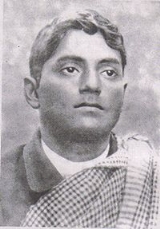
Revolutionary movement for Indian independence

Encyclopedia
The Revolutionary movement for Indian independence is often a less-highlighted aspect of the Indian independence movement
-- the underground revolutionary factions. The groups believing in armed revolution against the ruling British fall into this category. The revolutionary groups were concentrated in Tamil Nadu
, Maharastra, Bengal
, Orissa
, Bihar
, Uttar Pradesh
and Punjab
. More groups were scattered around India
.
The underlying philosophy of the revolutionary groups arose largely against the Partition of Bengal (1905)
, which cemented a Pan-Indian patriotic feeling, increasing in intensity, culminating in the Civil Disobedience
of Gandhi.
. Arguably, the initial steps to organize the revolutionaries were taken by Aurobindo Ghosh, his brother Barin Ghosh
, Bhupendranath Datta and Subodh Chandra Mullick
when they formed the Jugantar
party in April 1906 . Jugantar
was created as an inner circle of the Anushilan Samiti
, which was already present in Bengal
mainly as a fitness club.
in 1902, Anushilan Samity became one of the most organized revolutionary associations , especially in the Eastern Bengal
where the Dhaka
Anushilan Samiti had several branches and carried out major activities . Jugantar was initially formed by an inner circle of the Kolkata Anushilan Samiti
, like the Palmach
of Haganah
. In the 1920s, the Kolkata faction supported Gandhi in the Non-Cooperation Movement
and many of the leaders held high posts in Congress
.
, he started to collect arms and explosives and manufactured bombs. The headquarters of Jugantar was located at 93/a Bowbazar
Street, Kolkata
.
Some senior members of the group were sent abroad for political and military training. One of them, Hemchandra Kanungo
obtained his training in Paris. After returning to Kolkata
he set up a combined religious school and bomb factory at a garden house in Maniktala
suburb of Calcutta. However, the attempted murder of district Judge Kingsford of Muzaffarpur
by Khudiram Bose
and Prafulla Chaki
(30 April 1908) initiated a police investigation that led to the arrest of many of the revolutionaries.
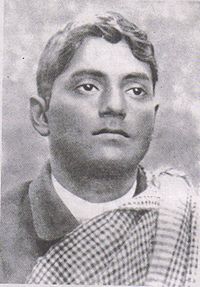 Bagha Jatin
was one of the top leaders in Jugantar. He was arrested, along with several other leaders, in connection with the Howrah conspiracy case. They were tried for treason, the charge being that they had incited various regiments of the army against the ruler.
Jugantar, along with other revolutionary groups, and aided by Indians abroad, planned an armed revolt against the British rulers during the First World War. This plan largely depended on the clandestine landing of German
arms and ammunitions in the Indian coast. This plan came to be known as the Indo-German Plot. However, the planned revolt did not materialize.
After the First World War Jugantar supported Gandhi in the Non-Cooperation Movement
and many of their leaders were in the Congress
. Still, the group continued its revolutionary activities, a notable event being the Chittagong armoury raid
.
during the Kolkata
session of Indian National Congress
in 1928 to help the organisation of the session. However, afterwards the group turned into a revolutionary group with notable revolutionaries like Benoy
-Badal
-Dinesh
being its members.
. Later on in 1905, during the rage of the Partition of Bengal
the players of this club and with other staff members helped in promoting the club as not a 'football club', but as a national entity which served as a base of Indian nationalism
. They went onto to lift prestigious titles of tournaments during 1905-1911, the most important being the 1911 IFA Shield
led by a Barisal lad Sibdas Bhaduri
in which they defeated the powerful East Yorkshire Regiment
team by 2-1, thus becoming the first Indian team to lift the Shield. The defeat inflicted tremendous shame into the minds of the Britishers, which was the primary reason as to why the Britishers had to adopt to shifting their capital from the city of Calcutta to the city of New Delhi
in December that year along with the annulment of the Partition of Bengal
.
and Sachindranath Sanyal. The aim of the party was to organize armed revolution to end the colonial rule and establish in a Federal Republic of the United States of India. The Kakori train robbery
was a notable act of mutiny by this group. The Kakori case led to the hanging of Ashfaqullah Khan, Ramprasad Bismil, Roshan Singh
, Rajendra Lahiri
. The Kakori case was a major setback for the group. However, the group was soon reorganized under the leadership of Chandrashekhar Azad and with members like Bhagat Singh, Bhagwati Charan Vohra and Sukhdev
on 9 and 10 September 1928- and the group was now christened Hindustan Socialist Republican Association (HSRA).
In Lahore
on 17 December 1928, Bhagat Singh, Azad and Rajguru assassinated Saunders, a police official involved in deadly lathi-charge on Lala Lajpat Rai. Bhagat Singh and Batukeshwar Dutt threw a bomb inside the Central Legislative Assembly
. The Assembly Bomb Case trial followed. Bhagat Singh, Sukhdev and Rajguru were hanged in 23 March 1931.
One of the leaders of the Bedas, Jadgia was invited by the administrator at Mudhol and was persuaded to secure a license on November 11, though Jadgia had not asked for it. The administrator’s expectation that others would follow Jadgia was belied. So he sent his agents to Halagali on November 15, 20 and again on 21. But the entreaties of the agents did not succeed, and the agents sent on November 21 were attacked by Jadgia and Baalya, another leader and they were forced to return. Another agent sent on November 25 was not allowed to enter the village.
Meanwhile, the Bedas and other armed men from the neighbouring villages of Mantur, Boodni and Alagundi assembled at Halagali. The administrator reported the matter to Major Malcolm, the Commander at the nearby army headquarters, who sent Col. Seton Karr to Halagali on November 29.
The insurgents, numbering 500 did not allow the British to enter Halagali. There was a fight during the night. On November 30, Major Malcolm came with 29th Regiment from Bagalkot. They set fire to the village and many insurgents, including Babaji Nimbalkar died. The British, who had a bigger army and better arms arrested 290 insurgents; and of these 29 were tried and 11 were hanged at Mudhol on December 11, and six others, including Jadagia and Baalya were hanged at Halagali on December 14, 1857. No prince or jagirdar was involved in this uprising, but it was the common soldiers.
Violent revolutionary activities never took firm root in South India. The only violent act attributed to the revolutionaries was the assassination of Collector of Tirunelveli (Tinnevelly).
On June 17, 1911, the Collector of Tirunelveli, Robert Ashe was killed by R. Vanchi Aiyer, who subsequently committed suicide. This was the only instance of a political assassination by a revolutionary in South India.
organisation that existed in London
between 1905 and 1910. Initially begun by Shyamji Krishna Varma
as a residence in Highgate, in North London
, for Indian students to promote nationalist views and work, the house became a centre for intellectual political activities, and rapidly developed to be an organisation that became a meeting ground for radical nationalists among Indian students in Britain
at the time, and of the most prominent centres for revolutionary Indian nationalism outside India. The Indian Sociologist
published by the house was a noted platform for anti-colonial work and was banned in India as "seditious literature".
The India house was the beginnings of a number of noted Indian revolutionaries and nationalists, most famously V.D. Savarkar, as well as others of the like of V.N. Chatterjee
, Lala Har Dayal, V.V.S. Iyer, M. P. T. Acharya
who were, over the next decades, key members of revolutionary conspiracies in India as well as the founding fathers of Indian Communism. The house came to be the focus of Scotland Yard
's work against Indian sedetionists, as well as the focus of work for the nascent Indian Political Intelligence Office
. India house ceased to be potent organisation after its liquidation in the wake of the assassination of William Hutt Curzon Wyllie
by a member of the India House by the name of Madan Lal Dhingra
. This event marked the beginnings of London Police's crackdown on the activities of the house and a number of its activists and patrons, including Shyamji Krishna Varma
and Bhikaji Cama moved to Europe
from where they carried on works in support of Indian nationalism. Some Indian students, including Har Dayal
, moved to the United States
. The network that the House founded was key in the nationalist revolutionary conspiracy in India during World War I
.
organization that started operating abroad in 1913 "with the view to do-away with the British rule in India".. The party collaborated with revolutionaries inside India and helped them get arms and ammunition. Lala Hardayal was a prominent leader of the party and pramotor of the Gadar newspaper. The Komagata Maru
incident in 1914 inspired several thousand Indians residing in the USA to sell their businesses and rush home in order to participate in the anti-British
activities in India
. The party had active members in India
, Mexico
, Japan
, China
, Singapore
, Thailand
, Philippines
, Malaya
, Indo-China and Eastern
and Southern Africa
. During World War I
, it was amongst the chief pariticipants of the Hindu German Conspiracy.
Their goal was mainly to achieve the following four objectives:
1: Mobilize Indian revolutionaries abroad.
2: Incite rebellion among Indian troops stationed abroad.
3: Send volunteers and arms to India.
4: Even to Organized an armed invasion of British India to liberate the country.
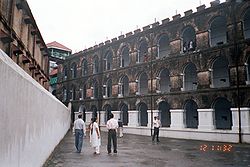 Several leaders of the Jugantar
party including Aurobindo Ghosh were arrested in connection with bomb-making activities in Kolkata
. Several of the activists were deported to the Andaman
Cellular Jail
.
leaders including Bagha Jatin
alias Jatindra Nath Mukherjee who were not arrested earlier, were arrested in 1910, in connection with the murder of Shamsul Alam. Thanks to Bagha Jatin's new policy of a decentralised federated action, most of the accused were released in 1911.
. Involving revolutionary underground in Bengal
and headed by Rashbehari Bose, the conspiracy culminated on the attempted assassination on 23 December 1912 when a home-made bomb was thrown into the Viceroys's Howdah
when the ceremonial procession moved through the Chandni Chowk
suburb of Delhi
. The Viceroy escaped with his injuries, along with Lady Hardinge, although the Mahout
was killed.
In the aftermath of the event, efforts were made to destroy the Bengali and Punabi revolutionary underground, which came under intense pressure for sometime. Rash Behari successfully evaded capture for nearly three years, becoming actively involved in the Ghadar conspiracy before it was uncovered, and fleeing to Japan in 1916.
The investigations in the aftermath of the assassination attempt led to the Delhi Conspiracy trial. Although Basant Kumar Biswas was convicted of having thrown the bomb and executed, along with Amir Chand
and Avadh Behari for their roles in the conspiracy, the true identity of the person who threw the bomb is not known to this day.
between Indian Nationalists
in India
, United States
and Germany
, the Irish Republicans
, and the German Foreign office to initiate a Pan-Indian rebellion against The Raj with German support between 1914 and 1917, during World War I
. The most famous amongst a number of plots planned to foment unrest and trigger a Pan-Indian mutiny in February 1915, in the British Indian Army
from Punjab
to Singapore
, to overthrow The Raj in the Indian subcontinent
. This conspiracy was ultimately thwarted at the last moment as British intelligence successfully infiltrated the Ghadarite movement and arrested key figures. The failed Singapore mutiny
remains a famous part of this plot while mutinies in other smaller units and garrisons within India
were also crushed.
World War I
began with an unprecedented outpouring of loyalty and goodwill towards the United Kingdom from within the mainstream political leadership, contrary to initial British fears of an Indian revolt. India contributed massively to the British war effort by providing men and resources. About 1.3 million Indian soldiers and labourers served in Europe
, Africa
, and the Middle East
, while both the Indian government and the princes sent large supplies of food, money, and ammunition. However, Bengal
and Punjab remained hotbeds of anti colonial activities. Terrorism in Bengal, increasingly closely linked with the unrests in Punjab, was significant enough to nearly paralyse the regional administration. With outlines of German links with the Indian revolutionary movement already in place as early as 1912, the main conspiracy was formulated between the Ghadar Party
in United States, the Berlin Committee
in Germany, Indian revolutionary underground in India, Sinn Féin
and the German Foreign Office through the consulate in San Francisco at the beginning of World War I
. A number of failed attempts were made at mutiny, among them the February mutiny plan and the Singapore mutiny
. This movement was suppressed by means of a massive international counter-intelligence operation and draconian political acts (including the Defence of India act 1915
) that lasted nearly ten years. Other notable events that formed a part of the conspiracy include the Annie Larsen arms plot
, the Mission to Kabul that also attempted to rally Afghanistan against British India. The Mutiny of the Connaught Rangers in India, as well as by some accounts, the Black Tom explosion
in 1916 are also considered minor events linked to the conspiracy.
The Indo-Irish-German alliance and the conspiracy were the target of a worldwide intelligence effort by the British intelligence agencies which was ultimately successful in preventing further attempts and plans, and in the aftermath of the Annie Larsen affair
, successfully directed the American intelligence agencies to arrest key figures at the time she entered World War I
in 1917. The conspiracy led to the Lahore conspiracy case
in India and the Hindu German Conspiracy Trial
in the USA, of which the latter at the time was one of the longest and most expensive trials in that country.
Largely subdued and suppressed by the end of the war
, the movement posed a significant threat to British India during World War I
and its aftermath, and was a major factor guiding The Raj's India policy.
movement arose the Tehrek-e-Reshmi Rumal. The Deoband
i leaders attempted to begin a pan-Islamic insurrection in British India during World War I
by seeking support from Ottoman Turkey, Imperial Germany, Afghanistan
. The plot was uncovered by Punjab
CID
with the capture of letters from Ubaidullah Sindhi
, one of the Deobandi leaders then in Afghanistan
, to Mahmud al Hasan another leaders then in Persia. The letters were written in Silk
cloth, hence the name of the Silk Letter Conspiracy
.
led the attempt to raid the armoury of police and auxiliary forces in Chittagong
on 18 April 1930. Some attackers were soon killed or arrested in a gun-fight with the police.Pritilata Waddedar
led the attack on Europran club in Chittagong in 1932. Surya Sen
was arrested in 1933 and was hanged on 8 January 1934.
threw a bomb in the assembly house along with leaflets stating their revolutionary philosophy - 'to make the deaf hear'. Bhagat Singh, Sukhdev
and Rajguru were hanged and several other faced the verdict of imprisonment. Batukeshwar Dutt outlived all his comrades and died in July 1965 in Delhi. All of them cremated in ferozpur (Punjab,India).
Baikuntha Shukla
, the great nationalist was hanged for murdering Phanindrananth Ghosh who had become a government approver which led to hanging of Bhagat Singh, Sukhdev
and Rajguru. He was a nephew of Yogendra Shukla
. Baikunth Shukla was also initiated into the freedom struggle at a young age taking active part in the 'Salt Satyagraha' of 1930. He was associated with revolutionary organisations like the Hindustan Seva Dal and Hindustan Socialist Republican Association. The execution of the great Indian revolutionaries Bhagat Singh, Rajguru and Sukhdev
in 1931 as a result of their trial in the 'Lahore conspiracy case
' was an event that shook the entire country. Phanindra Nath Ghosh, hitherto a key member of the Revolutionary Party had treacherously betrayed the cause by turning an approver, giving evidence, which led to the execution. Baikunth was commissioned to plan the execution of Ghosh as an act of ideological vendetta which he carried out successfully on 9 November 1932. He was arrested and tried for the killing. Baikunth was convicted and hanged in Gaya
Central Jail on May 14, 1934. He was only 28 years old.
On 27 February, 1931, Chandrasekar Azad was killed in a gunfight with the police.
It is unclear of the eventual fate of the Association, but the common understanding is that it disbanded with the death of Chandrashekar Azad and the hanging of its popular activists: Bhagat Singh, Sukhdev
and Rajguru.
on 25 August,1930.
, Ramprasad Bismil, Jogesh Chatterjee, Ashfaqullah Khan, Banwari lal and their accomplices participated in the robbery of treasury money that was being transported by train. The looting took place between Kakori station and Alamnagar, within 40 miles (64.4 km) of Lucknow
on 9 August,1925. Police started an intense man-hunt and arrested a large number of rebels and tried them in the Kakori case. Ashfaqullah Khan, Ramprasad Bismil, Roshan Singh
, Rajendra Lahiri
were hanged, four others were sent to the Cellular Jail
in Port Blair
, Andaman
for life and seventeen others were sentenced to long terms of imprisonment.
, generally held responsible for the Amritsar Massacre, on 13 March 1940, by Udham Singh
in London.
During the Quit India movement
of 1942, several other activities took place in different parts of India
. However, those were discrete occurrences and hardly any large scale planned terrorism took place that could shake the British administration. Meanwhile, Subhas Chandra Bose was organising an Indian National Army
outside India and leading the army towards India, while at the same time the Congress
was negotiating with the British. Finally India was free on 15 August 1947, virtually by non-violence against the British but with lots of bloodshed, rioting and violence among the fellow countrymen (and near-future neighbours) during the partition
, which was quite shocking to the past revolutionaries and also to Gandhi.
Many revolutionaries participated in mainstream politics and joined political parties like the Congress
and, especially, the communist parties and took part in the parliamentary democracy that was India. On the other hand, many past revolutionaries, being released from captivity, led the lives of common men.
Indian independence movement
The term Indian independence movement encompasses a wide area of political organisations, philosophies, and movements which had the common aim of ending first British East India Company rule, and then British imperial authority, in parts of South Asia...
-- the underground revolutionary factions. The groups believing in armed revolution against the ruling British fall into this category. The revolutionary groups were concentrated in Tamil Nadu
Tamil Nadu
Tamil Nadu is one of the 28 states of India. Its capital and largest city is Chennai. Tamil Nadu lies in the southernmost part of the Indian Peninsula and is bordered by the union territory of Pondicherry, and the states of Kerala, Karnataka, and Andhra Pradesh...
, Maharastra, Bengal
Bengal
Bengal is a historical and geographical region in the northeast region of the Indian Subcontinent at the apex of the Bay of Bengal. Today, it is mainly divided between the sovereign land of People's Republic of Bangladesh and the Indian state of West Bengal, although some regions of the previous...
, Orissa
Orissa
Orissa , officially Odisha since Nov 2011, is a state of India, located on the east coast of India, by the Bay of Bengal. It is the modern name of the ancient nation of Kalinga, which was invaded by the Maurya Emperor Ashoka in 261 BC. The modern state of Orissa was established on 1 April...
, Bihar
Bihar
Bihar is a state in eastern India. It is the 12th largest state in terms of geographical size at and 3rd largest by population. Almost 58% of Biharis are below the age of 25, which is the highest proportion in India....
, Uttar Pradesh
Uttar Pradesh
Uttar Pradesh abbreviation U.P. , is a state located in the northern part of India. With a population of over 200 million people, it is India's most populous state, as well as the world's most populous sub-national entity...
and Punjab
Punjab (British India)
Punjab was a province of British India, it was one of the last areas of the Indian subcontinent to fall under British rule. With the end of British rule in 1947 the province was split between West Punjab, which went to Pakistan, and East Punjab, which went to India...
. More groups were scattered around India
India
India , officially the Republic of India , is a country in South Asia. It is the seventh-largest country by geographical area, the second-most populous country with over 1.2 billion people, and the most populous democracy in the world...
.
The underlying philosophy of the revolutionary groups arose largely against the Partition of Bengal (1905)
Partition of Bengal (1905)
The decision of the Partition of Bengal was announced on 19 July 1905 by the Viceroy of India, Lord Curzon. The partition took effect on 16 October 1905...
, which cemented a Pan-Indian patriotic feeling, increasing in intensity, culminating in the Civil Disobedience
Civil disobedience
Civil disobedience is the active, professed refusal to obey certain laws, demands, and commands of a government, or of an occupying international power. Civil disobedience is commonly, though not always, defined as being nonviolent resistance. It is one form of civil resistance...
of Gandhi.
Beginnings
Apart from a few stray incidents, the armed rebellion against the British rulers was not organized before the beginning of the 20th century. The revolutionary philosophies and movement made its presence felt during the 1905 Partition of BengalPartition of Bengal
Partition of Bengal may refer to the partition of the Bengal region during two separate occasions:*Partition of Bengal *Partition of Bengal...
. Arguably, the initial steps to organize the revolutionaries were taken by Aurobindo Ghosh, his brother Barin Ghosh
Barindra Kumar Ghosh
Barindra Ghosh or Barindranath Ghose, or, popularly, Barin Ghosh was an Indian revolutionary and journalist. He was one of the founding members of Jugantar, a revolutionary outfit in Bengal...
, Bhupendranath Datta and Subodh Chandra Mullick
Subodh Chandra Mullick
Subodh Chandra Mullick, Raja, was a nationalist in Calcutta during the British rule of India. He is notable for the substantial monetary contribution for the cause of education...
when they formed the Jugantar
Jugantar
Jugantar or Yugantar was one of the two main secret revolutionary trends operating in Bengal for Indian independence.This association, like Anushilan Samiti started in the guise of suburban fitness club. Several Jugantar members were arrested, hanged, or deported for life to the Cellular Jail in...
party in April 1906 . Jugantar
Jugantar
Jugantar or Yugantar was one of the two main secret revolutionary trends operating in Bengal for Indian independence.This association, like Anushilan Samiti started in the guise of suburban fitness club. Several Jugantar members were arrested, hanged, or deported for life to the Cellular Jail in...
was created as an inner circle of the Anushilan Samiti
Anushilan Samiti
Anushilan Samiti was an armed anti-British organisation in Bengal and the principal secret revolutionary organisation operating in the region in the opening years of the 20th century. This association, like its offshoot the Jugantar, operated under the guise of suburban fitness club...
, which was already present in Bengal
Bengal
Bengal is a historical and geographical region in the northeast region of the Indian Subcontinent at the apex of the Bay of Bengal. Today, it is mainly divided between the sovereign land of People's Republic of Bangladesh and the Indian state of West Bengal, although some regions of the previous...
mainly as a fitness club.
Anushilan Samiti
Established by Pramath Nath Mitra in KolkataKolkata
Kolkata , formerly known as Calcutta, is the capital of the Indian state of West Bengal. Located on the east bank of the Hooghly River, it was the commercial capital of East India...
in 1902, Anushilan Samity became one of the most organized revolutionary associations , especially in the Eastern Bengal
Bengal
Bengal is a historical and geographical region in the northeast region of the Indian Subcontinent at the apex of the Bay of Bengal. Today, it is mainly divided between the sovereign land of People's Republic of Bangladesh and the Indian state of West Bengal, although some regions of the previous...
where the Dhaka
Dhaka
Dhaka is the capital of Bangladesh and the principal city of Dhaka Division. Dhaka is a megacity and one of the major cities of South Asia. Located on the banks of the Buriganga River, Dhaka, along with its metropolitan area, had a population of over 15 million in 2010, making it the largest city...
Anushilan Samiti had several branches and carried out major activities . Jugantar was initially formed by an inner circle of the Kolkata Anushilan Samiti
Anushilan Samiti
Anushilan Samiti was an armed anti-British organisation in Bengal and the principal secret revolutionary organisation operating in the region in the opening years of the 20th century. This association, like its offshoot the Jugantar, operated under the guise of suburban fitness club...
, like the Palmach
Palmach
The Palmach was the elite fighting force of the Haganah, the underground army of the Yishuv during the period of the British Mandate of Palestine. The Palmach was established on May 15, 1941...
of Haganah
Haganah
Haganah was a Jewish paramilitary organization in what was then the British Mandate of Palestine from 1920 to 1948, which later became the core of the Israel Defense Forces.- Origins :...
. In the 1920s, the Kolkata faction supported Gandhi in the Non-Cooperation Movement
Non-cooperation movement
The non-cooperation movement was a significant phase of the Indian struggle for freedom from British rule which lasted for years. This movement, which lasted from September 1920 to February 1922 and was led by Mohandas Gandhi, and supported by the Indian National Congress. It aimed to resist...
and many of the leaders held high posts in Congress
Indian National Congress
The Indian National Congress is one of the two major political parties in India, the other being the Bharatiya Janata Party. It is the largest and one of the oldest democratic political parties in the world. The party's modern liberal platform is largely considered center-left in the Indian...
.
Jugantar
Barin Ghosh was the main extremist leader. Along with 21 revolutionaries including Bagha JatinBagha Jatin
Bagha Jatin , born Jatindranath Mukherjee was an Bengali revolutionary philosopher against British rule....
, he started to collect arms and explosives and manufactured bombs. The headquarters of Jugantar was located at 93/a Bowbazar
Bowbazar
Bowbazar is a neighbourhood and police stationin central Kolkata, earlier known as Calcutta, in the Indian state of West Bengal...
Street, Kolkata
Kolkata
Kolkata , formerly known as Calcutta, is the capital of the Indian state of West Bengal. Located on the east bank of the Hooghly River, it was the commercial capital of East India...
.
Some senior members of the group were sent abroad for political and military training. One of them, Hemchandra Kanungo
Hemchandra Kanungo
Hemchandra Kanungo was probably the first revolutionary from India who went abroad to obtain military and political training. He obtained training from the Russian emigre in Paris. He returned to India in January 1908. He opened a secret bomb factory at Maniktala near Kolkata. It was due to...
obtained his training in Paris. After returning to Kolkata
Kolkata
Kolkata , formerly known as Calcutta, is the capital of the Indian state of West Bengal. Located on the east bank of the Hooghly River, it was the commercial capital of East India...
he set up a combined religious school and bomb factory at a garden house in Maniktala
Maniktala
-Location:The Maniktala crossing is the intersection of Vivekananda Road and Acharya Prafulla Chandra Road — two main thoroughfares in north Kolkata. The adjacent area is known as Maniktala.-Landmarks:...
suburb of Calcutta. However, the attempted murder of district Judge Kingsford of Muzaffarpur
Muzaffarpur
Muzaffarpur Town is a town in Muzaffarpur district in the Indian state of Bihar. It serves as the headquarters of Muzaffarpur district and Tirhut division....
by Khudiram Bose
Khudiram Bose
Khudiram Bose was a Bengali revolutionary, one of the youngest revolutionaries early in the Indian independence movement...
and Prafulla Chaki
Prafulla Chaki
Prafulla Chaki was a Bengali revolutionary associated with the Jugantar group of revolutionaries who carried out assassinations against British colonial officials in an attempt to secure Indian independence.- Early life :...
(30 April 1908) initiated a police investigation that led to the arrest of many of the revolutionaries.
Bagha Jatin
Bagha Jatin , born Jatindranath Mukherjee was an Bengali revolutionary philosopher against British rule....
was one of the top leaders in Jugantar. He was arrested, along with several other leaders, in connection with the Howrah conspiracy case. They were tried for treason, the charge being that they had incited various regiments of the army against the ruler.
Jugantar, along with other revolutionary groups, and aided by Indians abroad, planned an armed revolt against the British rulers during the First World War. This plan largely depended on the clandestine landing of German
Germany
Germany , officially the Federal Republic of Germany , is a federal parliamentary republic in Europe. The country consists of 16 states while the capital and largest city is Berlin. Germany covers an area of 357,021 km2 and has a largely temperate seasonal climate...
arms and ammunitions in the Indian coast. This plan came to be known as the Indo-German Plot. However, the planned revolt did not materialize.
After the First World War Jugantar supported Gandhi in the Non-Cooperation Movement
Non-cooperation movement
The non-cooperation movement was a significant phase of the Indian struggle for freedom from British rule which lasted for years. This movement, which lasted from September 1920 to February 1922 and was led by Mohandas Gandhi, and supported by the Indian National Congress. It aimed to resist...
and many of their leaders were in the Congress
Indian National Congress
The Indian National Congress is one of the two major political parties in India, the other being the Bharatiya Janata Party. It is the largest and one of the oldest democratic political parties in the world. The party's modern liberal platform is largely considered center-left in the Indian...
. Still, the group continued its revolutionary activities, a notable event being the Chittagong armoury raid
Chittagong armoury raid
The Chittagong armoury raid was an attempt on April 18, 1930 to raid the armoury of police and auxiliary forces from the Chittagong armoury in Bengal province of British India, by armed revolutionaries led by Surya Sen....
.
Bengal Volunteers
Bengal Volunteers was a group formed by Subhash Chandra BoseSubhash Chandra Bose
Subhas Chandra Bose known by name Netaji was an Indian revolutionary who led an Indian national political and military force against Britain and the Western powers during World War II. Bose was one of the most prominent leaders in the Indian independence movement and is a legendary figure in...
during the Kolkata
Kolkata
Kolkata , formerly known as Calcutta, is the capital of the Indian state of West Bengal. Located on the east bank of the Hooghly River, it was the commercial capital of East India...
session of Indian National Congress
Indian National Congress
The Indian National Congress is one of the two major political parties in India, the other being the Bharatiya Janata Party. It is the largest and one of the oldest democratic political parties in the world. The party's modern liberal platform is largely considered center-left in the Indian...
in 1928 to help the organisation of the session. However, afterwards the group turned into a revolutionary group with notable revolutionaries like Benoy
Benoy Basu
Benoy Krishna Basu or Benoy Basu or Benoy Bose was an Bengali Indian revolutionary.-Early life:Basu was born on 11 September 1908, in the village Rohitbhog in the Munshiganj District, now in Bangladesh...
-Badal
Badal Gupta
Badal Gupta was a Bengali Indian revolutionary who fought against British rule over India.-Early activities:Badal Gupta was born Sudhir Gupta in the village Purba Shimulia in the Bikrampur region of Dhaka, now in Munshiganj District, Bangladesh...
-Dinesh
Dinesh Gupta
Dinesh Chandra Gupta or Dinesh Gupta was a Bengali revolutionary who fought against British colonial rule.-Early activities:...
being its members.
Mohun Bagan Athletic Club
Mohun Bagan A.C. was a football club established in 1889 in the erstwhile British Capital of India, Calcutta to help improve and instil in the minds of the native Bengalis the game of FootballFootball
Football may refer to one of a number of team sports which all involve, to varying degrees, kicking a ball with the foot to score a goal. The most popular of these sports worldwide is association football, more commonly known as just "football" or "soccer"...
. Later on in 1905, during the rage of the Partition of Bengal
Partition of Bengal
Partition of Bengal may refer to the partition of the Bengal region during two separate occasions:*Partition of Bengal *Partition of Bengal...
the players of this club and with other staff members helped in promoting the club as not a 'football club', but as a national entity which served as a base of Indian nationalism
Bengali nationalism
Bengali nationalism is the political expression of ethno-national consciousness of the Bengali people, who inhabit the ethno-linguistic region of Bengal. The region's territory is divided between Bangladesh and the Indian state of West Bengal...
. They went onto to lift prestigious titles of tournaments during 1905-1911, the most important being the 1911 IFA Shield
IFA Shield
The IFA Shield is an annual football competition organized by the Indian Football Association. It is the fourth oldest club cup competition in the world after the English and Scottish FA cup's and the Durand Cup.-Results of IFA Shield:...
led by a Barisal lad Sibdas Bhaduri
Sibdas Bhaduri
Sibdas Bhaduri was an Indian professional footballer who captained Mohun Bagan in the historic 1911 IFA Shield Final, where they defeated the East Yorkshire Regiment with a score of 2-1 to become the first Asian team to win the competition....
in which they defeated the powerful East Yorkshire Regiment
East Yorkshire Regiment
The East Yorkshire Regiment was an infantry regiment of the line in the British Army, first raised in 1685 as Sir William Clifton's Regiment of Foot. It saw service for three centuries, before being amalgamated with the West Yorkshire Regiment , becoming The Prince of Wales's Own Regiment of...
team by 2-1, thus becoming the first Indian team to lift the Shield. The defeat inflicted tremendous shame into the minds of the Britishers, which was the primary reason as to why the Britishers had to adopt to shifting their capital from the city of Calcutta to the city of New Delhi
New Delhi
New Delhi is the capital city of India. It serves as the centre of the Government of India and the Government of the National Capital Territory of Delhi. New Delhi is situated within the metropolis of Delhi. It is one of the nine districts of Delhi Union Territory. The total area of the city is...
in December that year along with the annulment of the Partition of Bengal
Partition of Bengal
Partition of Bengal may refer to the partition of the Bengal region during two separate occasions:*Partition of Bengal *Partition of Bengal...
.
Hindustan Socialist Republican Association
Hindustan Republican Association (HRA) was established in October 1924 in Kanpur by revolutionaries like Ramprasad Bismil, Jogesh Chatterjee, Chandrashekhar Azad, Yogendra ShuklaYogendra Shukla
Yogendra Shukla was an Indian nationalist born in Bihar. He served in the Cellular Jail , and he was among the founders of Hindustan Socialist Republican Association...
and Sachindranath Sanyal. The aim of the party was to organize armed revolution to end the colonial rule and establish in a Federal Republic of the United States of India. The Kakori train robbery
Kakori train robbery
The Kakori train robbery was a train robbery that took place between Kakori and Alamnagar near Lucknow, on 9 August 1925 during the Indian Independence Movement against the British.German-made Mauser C96 semi-automatic pistols with wooden stock were used in this historical event by the Hindustan...
was a notable act of mutiny by this group. The Kakori case led to the hanging of Ashfaqullah Khan, Ramprasad Bismil, Roshan Singh
Roshan Singh
and rohanThakur Roshan Singh was an Indian revolutionary who was sentenced in the Bareilly Goli Kand in the Non Cooperation Movement of 1921-22...
, Rajendra Lahiri
Rajendra Lahiri
Rajendra Lahiri , also known as Rajendra Nath Lahiri,, was a Bengali Hindu Brahmin revolutionary, who participated in various revolutionary activities of the Hindustan Republican Association aimed at ousting the British forever from India.-Brief life sketch:Rajendra Lahiri was born on 23 Jun 1901...
. The Kakori case was a major setback for the group. However, the group was soon reorganized under the leadership of Chandrashekhar Azad and with members like Bhagat Singh, Bhagwati Charan Vohra and Sukhdev
Sukhdev
Sukhdev Thapar was born in Ludhiana, Punjab. He was an Indian freedom fighter who lived from 15 May 1907 to March 23, 1931) who was involved with Shaheed Bhagat Singh andShivaram Rajguru in the killing of a British police officer J.P...
on 9 and 10 September 1928- and the group was now christened Hindustan Socialist Republican Association (HSRA).
In Lahore
Lahore
Lahore is the capital of the Pakistani province of Punjab and the second largest city in the country. With a rich and fabulous history dating back to over a thousand years ago, Lahore is no doubt Pakistan's cultural capital. One of the most densely populated cities in the world, Lahore remains a...
on 17 December 1928, Bhagat Singh, Azad and Rajguru assassinated Saunders, a police official involved in deadly lathi-charge on Lala Lajpat Rai. Bhagat Singh and Batukeshwar Dutt threw a bomb inside the Central Legislative Assembly
Central Legislative Assembly
The Central Legislative Assembly was a legislature for India created by the Government of India Act 1919 from the former Imperial Legislative Council, implementing the Montagu-Chelmsford Reforms...
. The Assembly Bomb Case trial followed. Bhagat Singh, Sukhdev and Rajguru were hanged in 23 March 1931.
South India
The uprising against the British was evidenced at Halagali (Mudhol taluk of Bagalkot district). The prince of Mudhol, Ghorpade had accepted British overlordship. But the Bedas (hunters), a martial community, were seething with dissatisfaction under the new dispensation. The British proclaimed the Disarming Act of 1857 whereby men possessing fire arms had to register them and secure a license before November 10, 1857. Babaji Nimbalkar, a soldier thrown out of job from Satara Court, had advised these people not to loose their hereditary right to own arms.One of the leaders of the Bedas, Jadgia was invited by the administrator at Mudhol and was persuaded to secure a license on November 11, though Jadgia had not asked for it. The administrator’s expectation that others would follow Jadgia was belied. So he sent his agents to Halagali on November 15, 20 and again on 21. But the entreaties of the agents did not succeed, and the agents sent on November 21 were attacked by Jadgia and Baalya, another leader and they were forced to return. Another agent sent on November 25 was not allowed to enter the village.
Meanwhile, the Bedas and other armed men from the neighbouring villages of Mantur, Boodni and Alagundi assembled at Halagali. The administrator reported the matter to Major Malcolm, the Commander at the nearby army headquarters, who sent Col. Seton Karr to Halagali on November 29.
The insurgents, numbering 500 did not allow the British to enter Halagali. There was a fight during the night. On November 30, Major Malcolm came with 29th Regiment from Bagalkot. They set fire to the village and many insurgents, including Babaji Nimbalkar died. The British, who had a bigger army and better arms arrested 290 insurgents; and of these 29 were tried and 11 were hanged at Mudhol on December 11, and six others, including Jadagia and Baalya were hanged at Halagali on December 14, 1857. No prince or jagirdar was involved in this uprising, but it was the common soldiers.
Violent revolutionary activities never took firm root in South India. The only violent act attributed to the revolutionaries was the assassination of Collector of Tirunelveli (Tinnevelly).
On June 17, 1911, the Collector of Tirunelveli, Robert Ashe was killed by R. Vanchi Aiyer, who subsequently committed suicide. This was the only instance of a political assassination by a revolutionary in South India.
India House
The India House was an informal Indian nationalistIndian nationalism
Indian nationalism refers to the many underlying forces that molded the Indian independence movement, and strongly continue to influence the politics of India, as well as being the heart of many contrasting ideologies that have caused ethnic and religious conflict in Indian society...
organisation that existed in London
London
London is the capital city of :England and the :United Kingdom, the largest metropolitan area in the United Kingdom, and the largest urban zone in the European Union by most measures. Located on the River Thames, London has been a major settlement for two millennia, its history going back to its...
between 1905 and 1910. Initially begun by Shyamji Krishna Varma
Shyamji Krishna Varma
Shyamji Krishna Varma was an Indian revolutionary, lawyer and journalist who founded the Indian Home Rule Society, India House and The Indian Sociologist in London. A graduate of Balliol College, Krishna Varma was a noted scholar in Sanskrit and other Indian languages...
as a residence in Highgate, in North London
North London
North London is the northern part of London, England. It is an imprecise description and the area it covers is defined differently for a range of purposes. Common to these definitions is that it includes districts located north of the River Thames and is used in comparison with South...
, for Indian students to promote nationalist views and work, the house became a centre for intellectual political activities, and rapidly developed to be an organisation that became a meeting ground for radical nationalists among Indian students in Britain
United Kingdom
The United Kingdom of Great Britain and Northern IrelandIn the United Kingdom and Dependencies, other languages have been officially recognised as legitimate autochthonous languages under the European Charter for Regional or Minority Languages...
at the time, and of the most prominent centres for revolutionary Indian nationalism outside India. The Indian Sociologist
The Indian Sociologist
The Indian Sociologist was an Indian nationalist publication in the early twentieth century. Its subtitle was An Organ of Freedom, and Political, Social, and Religious Reform....
published by the house was a noted platform for anti-colonial work and was banned in India as "seditious literature".
The India house was the beginnings of a number of noted Indian revolutionaries and nationalists, most famously V.D. Savarkar, as well as others of the like of V.N. Chatterjee
Virendranath Chattopadhyaya
Virendranath Chattopadhyaya alias Chatto was a prominent Hindu Indian revolutionary who aimed to overthrow the British Raj in India by using violence as a tool...
, Lala Har Dayal, V.V.S. Iyer, M. P. T. Acharya
M. P. T. Acharya
Mandayam Parthasarathi Tirumal Acharya was an Indian nationalist, a key member of India House, and one of the founding members of the Communist Party of India...
who were, over the next decades, key members of revolutionary conspiracies in India as well as the founding fathers of Indian Communism. The house came to be the focus of Scotland Yard
Scotland Yard
Scotland Yard is a metonym for the headquarters of the Metropolitan Police Service of London, UK. It derives from the location of the original Metropolitan Police headquarters at 4 Whitehall Place, which had a rear entrance on a street called Great Scotland Yard. The Scotland Yard entrance became...
's work against Indian sedetionists, as well as the focus of work for the nascent Indian Political Intelligence Office
Indian Political Intelligence Office
The Indian Political Intelligence Office was an Intelligence organisation initially established in England in 1909 in response to the dissemination of anarchist and revolutionary elements of Indian nationalism to different countries in Europe after the liquidation of India House in London in 1909...
. India house ceased to be potent organisation after its liquidation in the wake of the assassination of William Hutt Curzon Wyllie
William Hutt Curzon Wyllie
Sir William Hutt Curzon Wyllie KCIE was an Indian army officer, and later an official of the British Indian Government. Over a career spanning three decades, Curzon Wyllie rose to be Lieutant Colonel in the British Indian Army and occupied a number of administrative and diplomatic posts...
by a member of the India House by the name of Madan Lal Dhingra
Madan Lal Dhingra
Madan Lal Dhingra was an Indian revolutionary freedom fighter. While studying in England, he assassinated Sir William Hutt Curzon Wyllie, a British official, hailed as one of the first acts of revolution in the Indian independence movement in the 20th century.-Early life:Madan Lal Dhingra was born...
. This event marked the beginnings of London Police's crackdown on the activities of the house and a number of its activists and patrons, including Shyamji Krishna Varma
Shyamji Krishna Varma
Shyamji Krishna Varma was an Indian revolutionary, lawyer and journalist who founded the Indian Home Rule Society, India House and The Indian Sociologist in London. A graduate of Balliol College, Krishna Varma was a noted scholar in Sanskrit and other Indian languages...
and Bhikaji Cama moved to Europe
Europe
Europe is, by convention, one of the world's seven continents. Comprising the westernmost peninsula of Eurasia, Europe is generally 'divided' from Asia to its east by the watershed divides of the Ural and Caucasus Mountains, the Ural River, the Caspian and Black Seas, and the waterways connecting...
from where they carried on works in support of Indian nationalism. Some Indian students, including Har Dayal
Har Dayal
Lala Har Dayal was a Indian nationalist revolutionary who founded the Ghadar Party in America. He was a polymath who turned down a career in the Indian Civil Service...
, moved to the United States
United States
The United States of America is a federal constitutional republic comprising fifty states and a federal district...
. The network that the House founded was key in the nationalist revolutionary conspiracy in India during World War I
World War I
World War I , which was predominantly called the World War or the Great War from its occurrence until 1939, and the First World War or World War I thereafter, was a major war centred in Europe that began on 28 July 1914 and lasted until 11 November 1918...
.
Gadar Party
Gadar party was a predominantly SikhSikh
A Sikh is a follower of Sikhism. It primarily originated in the 15th century in the Punjab region of South Asia. The term "Sikh" has its origin in Sanskrit term शिष्य , meaning "disciple, student" or शिक्ष , meaning "instruction"...
organization that started operating abroad in 1913 "with the view to do-away with the British rule in India".. The party collaborated with revolutionaries inside India and helped them get arms and ammunition. Lala Hardayal was a prominent leader of the party and pramotor of the Gadar newspaper. The Komagata Maru
Komagata Maru
The Komagata Maru incident involved a Japanese steamship, the Komagata Maru, that sailed from Hong Kong to Shanghai, China; Yokohama, Japan; and then to Vancouver, British Columbia, Canada, in 1914, carrying 376 passengers from Punjab, India. The 356 of passengers were not allowed to land in...
incident in 1914 inspired several thousand Indians residing in the USA to sell their businesses and rush home in order to participate in the anti-British
British Empire
The British Empire comprised the dominions, colonies, protectorates, mandates and other territories ruled or administered by the United Kingdom. It originated with the overseas colonies and trading posts established by England in the late 16th and early 17th centuries. At its height, it was the...
activities in India
India
India , officially the Republic of India , is a country in South Asia. It is the seventh-largest country by geographical area, the second-most populous country with over 1.2 billion people, and the most populous democracy in the world...
. The party had active members in India
India
India , officially the Republic of India , is a country in South Asia. It is the seventh-largest country by geographical area, the second-most populous country with over 1.2 billion people, and the most populous democracy in the world...
, Mexico
Mexico
The United Mexican States , commonly known as Mexico , is a federal constitutional republic in North America. It is bordered on the north by the United States; on the south and west by the Pacific Ocean; on the southeast by Guatemala, Belize, and the Caribbean Sea; and on the east by the Gulf of...
, Japan
Japan
Japan is an island nation in East Asia. Located in the Pacific Ocean, it lies to the east of the Sea of Japan, China, North Korea, South Korea and Russia, stretching from the Sea of Okhotsk in the north to the East China Sea and Taiwan in the south...
, China
China
Chinese civilization may refer to:* China for more general discussion of the country.* Chinese culture* Greater China, the transnational community of ethnic Chinese.* History of China* Sinosphere, the area historically affected by Chinese culture...
, Singapore
Singapore
Singapore , officially the Republic of Singapore, is a Southeast Asian city-state off the southern tip of the Malay Peninsula, north of the equator. An island country made up of 63 islands, it is separated from Malaysia by the Straits of Johor to its north and from Indonesia's Riau Islands by the...
, Thailand
Thailand
Thailand , officially the Kingdom of Thailand , formerly known as Siam , is a country located at the centre of the Indochina peninsula and Southeast Asia. It is bordered to the north by Burma and Laos, to the east by Laos and Cambodia, to the south by the Gulf of Thailand and Malaysia, and to the...
, Philippines
Philippines
The Philippines , officially known as the Republic of the Philippines , is a country in Southeast Asia in the western Pacific Ocean. To its north across the Luzon Strait lies Taiwan. West across the South China Sea sits Vietnam...
, Malaya
British Malaya
British Malaya loosely described a set of states on the Malay Peninsula and the Island of Singapore that were brought under British control between the 18th and the 20th centuries...
, Indo-China and Eastern
East Africa
East Africa or Eastern Africa is the easterly region of the African continent, variably defined by geography or geopolitics. In the UN scheme of geographic regions, 19 territories constitute Eastern Africa:...
and Southern Africa
Southern Africa
Southern Africa is the southernmost region of the African continent, variably defined by geography or geopolitics. Within the region are numerous territories, including the Republic of South Africa ; nowadays, the simpler term South Africa is generally reserved for the country in English.-UN...
. During World War I
World War I
World War I , which was predominantly called the World War or the Great War from its occurrence until 1939, and the First World War or World War I thereafter, was a major war centred in Europe that began on 28 July 1914 and lasted until 11 November 1918...
, it was amongst the chief pariticipants of the Hindu German Conspiracy.
Berlin Committee
The "Berlin committee for Indian independence" was established in 1915 by Virendra Nath Chattopadhya, including Bhupendra Nath Dutt & Lala Hardayal under "Zimmerman plan" with the full backing of German foreign office.Their goal was mainly to achieve the following four objectives:
1: Mobilize Indian revolutionaries abroad.
2: Incite rebellion among Indian troops stationed abroad.
3: Send volunteers and arms to India.
4: Even to Organized an armed invasion of British India to liberate the country.
Alipore bomb conspiracy case
Jugantar
Jugantar or Yugantar was one of the two main secret revolutionary trends operating in Bengal for Indian independence.This association, like Anushilan Samiti started in the guise of suburban fitness club. Several Jugantar members were arrested, hanged, or deported for life to the Cellular Jail in...
party including Aurobindo Ghosh were arrested in connection with bomb-making activities in Kolkata
Kolkata
Kolkata , formerly known as Calcutta, is the capital of the Indian state of West Bengal. Located on the east bank of the Hooghly River, it was the commercial capital of East India...
. Several of the activists were deported to the Andaman
Andaman Islands
The Andaman Islands are a group of Indian Ocean archipelagic islands in the Bay of Bengal between India to the west, and Burma , to the north and east...
Cellular Jail
Cellular Jail
The Cellular Jail, also known as Kālā Pānī , was a colonial prison situated in the Andaman and Nicobar Islands, India. The prison was used by the British especially to exile political prisoners to the remote archipelago...
.
Howrah gang case
Most of the eminent JugantarJugantar
Jugantar or Yugantar was one of the two main secret revolutionary trends operating in Bengal for Indian independence.This association, like Anushilan Samiti started in the guise of suburban fitness club. Several Jugantar members were arrested, hanged, or deported for life to the Cellular Jail in...
leaders including Bagha Jatin
Bagha Jatin
Bagha Jatin , born Jatindranath Mukherjee was an Bengali revolutionary philosopher against British rule....
alias Jatindra Nath Mukherjee who were not arrested earlier, were arrested in 1910, in connection with the murder of Shamsul Alam. Thanks to Bagha Jatin's new policy of a decentralised federated action, most of the accused were released in 1911.
Delhi-Lahore conspiracy case
The Delhi Conspiracy case, also known as the Delhi-Lahore Conspiracy,hatched in 1912, planned to assassinate the then Viceroy of India, Lord Hardinge, on the occasion of transferring the capital of British India from Calcutta to New DelhiNew Delhi
New Delhi is the capital city of India. It serves as the centre of the Government of India and the Government of the National Capital Territory of Delhi. New Delhi is situated within the metropolis of Delhi. It is one of the nine districts of Delhi Union Territory. The total area of the city is...
. Involving revolutionary underground in Bengal
Bengal
Bengal is a historical and geographical region in the northeast region of the Indian Subcontinent at the apex of the Bay of Bengal. Today, it is mainly divided between the sovereign land of People's Republic of Bangladesh and the Indian state of West Bengal, although some regions of the previous...
and headed by Rashbehari Bose, the conspiracy culminated on the attempted assassination on 23 December 1912 when a home-made bomb was thrown into the Viceroys's Howdah
Howdah
A howdah, or houdah, also known as hathi howdah, is a carriage which is positioned on the back of an elephant, or occasionally some other animal, used most often in the past to carry wealthy people or for use in hunting or warfare...
when the ceremonial procession moved through the Chandni Chowk
Chandni Chowk
Chandni Chowk , originally meaning moonlit square or market, is one of the oldest and busiest markets in Old Delhi, now in central north Delhi, India...
suburb of Delhi
Delhi
Delhi , officially National Capital Territory of Delhi , is the largest metropolis by area and the second-largest by population in India, next to Mumbai. It is the eighth largest metropolis in the world by population with 16,753,265 inhabitants in the Territory at the 2011 Census...
. The Viceroy escaped with his injuries, along with Lady Hardinge, although the Mahout
Mahout
A mahout is a person who drives an elephant. The word mahout comes from the Hindi words mahaut and mahavat. Usually, a mahout starts as a boy in the 'family business' when he is assigned an elephant early in its life and they would be attached to each other throughout the elephant's life.The most...
was killed.
In the aftermath of the event, efforts were made to destroy the Bengali and Punabi revolutionary underground, which came under intense pressure for sometime. Rash Behari successfully evaded capture for nearly three years, becoming actively involved in the Ghadar conspiracy before it was uncovered, and fleeing to Japan in 1916.
The investigations in the aftermath of the assassination attempt led to the Delhi Conspiracy trial. Although Basant Kumar Biswas was convicted of having thrown the bomb and executed, along with Amir Chand
Amir Chand
Major General Amir Chand was a physician and teacher of medicine in India. In 1936, while India was still under British rule, Dr. Amir Chand became the first Indian to occupy the Chair of Medicine at King Edward Medical College, Lahore. Post Indian independence, Dr. Amir Chand was prominent in...
and Avadh Behari for their roles in the conspiracy, the true identity of the person who threw the bomb is not known to this day.
Indo-German Conspiracy
The Indo-German Conspiracy, also referred to as the Hindu-German Conspiracy or the Ghadar conspiracy (or Ghadr conspiracy), was formulated during World War IWorld War I
World War I , which was predominantly called the World War or the Great War from its occurrence until 1939, and the First World War or World War I thereafter, was a major war centred in Europe that began on 28 July 1914 and lasted until 11 November 1918...
between Indian Nationalists
Indian independence movement
The term Indian independence movement encompasses a wide area of political organisations, philosophies, and movements which had the common aim of ending first British East India Company rule, and then British imperial authority, in parts of South Asia...
in India
India
India , officially the Republic of India , is a country in South Asia. It is the seventh-largest country by geographical area, the second-most populous country with over 1.2 billion people, and the most populous democracy in the world...
, United States
United States
The United States of America is a federal constitutional republic comprising fifty states and a federal district...
and Germany
Germany
Germany , officially the Federal Republic of Germany , is a federal parliamentary republic in Europe. The country consists of 16 states while the capital and largest city is Berlin. Germany covers an area of 357,021 km2 and has a largely temperate seasonal climate...
, the Irish Republicans
Irish Republicanism
Irish republicanism is an ideology based on the belief that all of Ireland should be an independent republic.In 1801, under the Act of Union, the Kingdom of Great Britain and the Kingdom of Ireland merged to form the United Kingdom of Great Britain and Ireland...
, and the German Foreign office to initiate a Pan-Indian rebellion against The Raj with German support between 1914 and 1917, during World War I
World War I
World War I , which was predominantly called the World War or the Great War from its occurrence until 1939, and the First World War or World War I thereafter, was a major war centred in Europe that began on 28 July 1914 and lasted until 11 November 1918...
. The most famous amongst a number of plots planned to foment unrest and trigger a Pan-Indian mutiny in February 1915, in the British Indian Army
British Indian Army
The British Indian Army, officially simply the Indian Army, was the principal army of the British Raj in India before the partition of India in 1947...
from Punjab
Punjab (British India)
Punjab was a province of British India, it was one of the last areas of the Indian subcontinent to fall under British rule. With the end of British rule in 1947 the province was split between West Punjab, which went to Pakistan, and East Punjab, which went to India...
to Singapore
Singapore
Singapore , officially the Republic of Singapore, is a Southeast Asian city-state off the southern tip of the Malay Peninsula, north of the equator. An island country made up of 63 islands, it is separated from Malaysia by the Straits of Johor to its north and from Indonesia's Riau Islands by the...
, to overthrow The Raj in the Indian subcontinent
Indian subcontinent
The Indian subcontinent, also Indian Subcontinent, Indo-Pak Subcontinent or South Asian Subcontinent is a region of the Asian continent on the Indian tectonic plate from the Hindu Kush or Hindu Koh, Himalayas and including the Kuen Lun and Karakoram ranges, forming a land mass which extends...
. This conspiracy was ultimately thwarted at the last moment as British intelligence successfully infiltrated the Ghadarite movement and arrested key figures. The failed Singapore mutiny
1915 Singapore Mutiny
The 1915 Singapore Mutiny, also known as the 1915 Sepoy Mutiny, or Mutiny of the 5th Native Light Infantry was a mutiny involving up to half of 850 sepoys against the British in Singapore during the First World War, linked with the 1915 Ghadar Conspiracy...
remains a famous part of this plot while mutinies in other smaller units and garrisons within India
India
India , officially the Republic of India , is a country in South Asia. It is the seventh-largest country by geographical area, the second-most populous country with over 1.2 billion people, and the most populous democracy in the world...
were also crushed.
World War I
World War I
World War I , which was predominantly called the World War or the Great War from its occurrence until 1939, and the First World War or World War I thereafter, was a major war centred in Europe that began on 28 July 1914 and lasted until 11 November 1918...
began with an unprecedented outpouring of loyalty and goodwill towards the United Kingdom from within the mainstream political leadership, contrary to initial British fears of an Indian revolt. India contributed massively to the British war effort by providing men and resources. About 1.3 million Indian soldiers and labourers served in Europe
Europe
Europe is, by convention, one of the world's seven continents. Comprising the westernmost peninsula of Eurasia, Europe is generally 'divided' from Asia to its east by the watershed divides of the Ural and Caucasus Mountains, the Ural River, the Caspian and Black Seas, and the waterways connecting...
, Africa
Africa
Africa is the world's second largest and second most populous continent, after Asia. At about 30.2 million km² including adjacent islands, it covers 6% of the Earth's total surface area and 20.4% of the total land area...
, and the Middle East
Middle East
The Middle East is a region that encompasses Western Asia and Northern Africa. It is often used as a synonym for Near East, in opposition to Far East...
, while both the Indian government and the princes sent large supplies of food, money, and ammunition. However, Bengal
Bengal
Bengal is a historical and geographical region in the northeast region of the Indian Subcontinent at the apex of the Bay of Bengal. Today, it is mainly divided between the sovereign land of People's Republic of Bangladesh and the Indian state of West Bengal, although some regions of the previous...
and Punjab remained hotbeds of anti colonial activities. Terrorism in Bengal, increasingly closely linked with the unrests in Punjab, was significant enough to nearly paralyse the regional administration. With outlines of German links with the Indian revolutionary movement already in place as early as 1912, the main conspiracy was formulated between the Ghadar Party
Ghadar Party
The Ghadar Party was an organization founded by Punjabi Indians, in the United States and Canada with the aim to liberate India from British rule...
in United States, the Berlin Committee
Berlin Committee
The Berlin Committee, later known as the Indian Independence Committee after 1915, was an organisation formed in Germany in 1914 during World War I by Indian students and political activists residing in the country. The purpose of the Committee was to promote the cause of Indian Independence...
in Germany, Indian revolutionary underground in India, Sinn Féin
Sinn Féin
Sinn Féin is a left wing, Irish republican political party in Ireland. The name is Irish for "ourselves" or "we ourselves", although it is frequently mistranslated as "ourselves alone". Originating in the Sinn Féin organisation founded in 1905 by Arthur Griffith, it took its current form in 1970...
and the German Foreign Office through the consulate in San Francisco at the beginning of World War I
World War I
World War I , which was predominantly called the World War or the Great War from its occurrence until 1939, and the First World War or World War I thereafter, was a major war centred in Europe that began on 28 July 1914 and lasted until 11 November 1918...
. A number of failed attempts were made at mutiny, among them the February mutiny plan and the Singapore mutiny
1915 Singapore Mutiny
The 1915 Singapore Mutiny, also known as the 1915 Sepoy Mutiny, or Mutiny of the 5th Native Light Infantry was a mutiny involving up to half of 850 sepoys against the British in Singapore during the First World War, linked with the 1915 Ghadar Conspiracy...
. This movement was suppressed by means of a massive international counter-intelligence operation and draconian political acts (including the Defence of India act 1915
Defence of India Act 1915
The Defence of India Act 1915, also referred to as the Defence of India Regulations Act, was an Emergency Criminal Law enacted by the British Raj in India in 1915 with the intention of curtailing the nationalist and revolutionary activities during and in the aftermath of World War I...
) that lasted nearly ten years. Other notable events that formed a part of the conspiracy include the Annie Larsen arms plot
Annie Larsen affair
The Annie Larsen affair was a gun-running plot in the United States during World War I. The plot, involving India's Ghadar Party, the Irish Republican Brotherhood and the German Foreign office, was a part of the larger Hindu German Conspiracy, and it was the prime offence cited in the 1917 Hindu...
, the Mission to Kabul that also attempted to rally Afghanistan against British India. The Mutiny of the Connaught Rangers in India, as well as by some accounts, the Black Tom explosion
Black Tom explosion
The Black Tom explosion on July 30, 1916 in Jersey City, New Jersey was an act of sabotage on American ammunition supplies by German agents to prevent the materiel from being used by the Allies in World War I.- Black Tom Island :...
in 1916 are also considered minor events linked to the conspiracy.
The Indo-Irish-German alliance and the conspiracy were the target of a worldwide intelligence effort by the British intelligence agencies which was ultimately successful in preventing further attempts and plans, and in the aftermath of the Annie Larsen affair
Annie Larsen affair
The Annie Larsen affair was a gun-running plot in the United States during World War I. The plot, involving India's Ghadar Party, the Irish Republican Brotherhood and the German Foreign office, was a part of the larger Hindu German Conspiracy, and it was the prime offence cited in the 1917 Hindu...
, successfully directed the American intelligence agencies to arrest key figures at the time she entered World War I
World War I
World War I , which was predominantly called the World War or the Great War from its occurrence until 1939, and the First World War or World War I thereafter, was a major war centred in Europe that began on 28 July 1914 and lasted until 11 November 1918...
in 1917. The conspiracy led to the Lahore conspiracy case
Lahore Conspiracy Case
This can refer to :* The First Lahore Conspiracy, also known as the Lahore Conspiracy Case trial in the aftermath of the Ghadar conspiracy in 1915* The Second Lahore Conspiracy Case, the trial of Bhagat Singh, Rajguru, and Sukhdev in 1931...
in India and the Hindu German Conspiracy Trial
Hindu German Conspiracy Trial
The Hindu–German Conspiracy Trial commenced in the District Court in San Francisco, California on November 12, 1917 following the uncovering of the Indo German plot for initiating a revolt in India...
in the USA, of which the latter at the time was one of the longest and most expensive trials in that country.
Largely subdued and suppressed by the end of the war
World War I
World War I , which was predominantly called the World War or the Great War from its occurrence until 1939, and the First World War or World War I thereafter, was a major war centred in Europe that began on 28 July 1914 and lasted until 11 November 1918...
, the movement posed a significant threat to British India during World War I
World War I
World War I , which was predominantly called the World War or the Great War from its occurrence until 1939, and the First World War or World War I thereafter, was a major war centred in Europe that began on 28 July 1914 and lasted until 11 November 1918...
and its aftermath, and was a major factor guiding The Raj's India policy.
Tehrek e Reshmi Rumal
During the war, the Pan-Islamist movement also attempted to overthrow the Raj, and came to form a close liaison with the Indo-German Conspiracy. Out of the DeobandiDeobandi
Deobandi is a movement of Sunni Islam. The movement began at Darul Uloom Deoband in Deoband, India, where its foundation was laid on 30 May 1866.-History:...
movement arose the Tehrek-e-Reshmi Rumal. The Deoband
Deoband
Deoband is a city and a municipal board in Saharanpur district in the state of Uttar Pradesh, India. It is located in the upper Doab region of Uttar Pradesh. Deoband used to be surrounded by dense forests, and was believed to be the abode of the Goddess Durga, according to one tradition this is...
i leaders attempted to begin a pan-Islamic insurrection in British India during World War I
World War I
World War I , which was predominantly called the World War or the Great War from its occurrence until 1939, and the First World War or World War I thereafter, was a major war centred in Europe that began on 28 July 1914 and lasted until 11 November 1918...
by seeking support from Ottoman Turkey, Imperial Germany, Afghanistan
Afghanistan
Afghanistan , officially the Islamic Republic of Afghanistan, is a landlocked country located in the centre of Asia, forming South Asia, Central Asia and the Middle East. With a population of about 29 million, it has an area of , making it the 42nd most populous and 41st largest nation in the world...
. The plot was uncovered by Punjab
Punjab (British India)
Punjab was a province of British India, it was one of the last areas of the Indian subcontinent to fall under British rule. With the end of British rule in 1947 the province was split between West Punjab, which went to Pakistan, and East Punjab, which went to India...
CID
Criminal Investigation Department
The Crime Investigation Department is the branch of all Territorial police forces within the British Police and many other Commonwealth police forces, to which plain clothes detectives belong. It is thus distinct from the Uniformed Branch and the Special Branch.The Metropolitan Police Service CID,...
with the capture of letters from Ubaidullah Sindhi
Ubaidullah Sindhi
Maulana Ubaidullah Sindhi was a noted pan-Islamic leader a political activist of the Indian independence movement...
, one of the Deobandi leaders then in Afghanistan
Afghanistan
Afghanistan , officially the Islamic Republic of Afghanistan, is a landlocked country located in the centre of Asia, forming South Asia, Central Asia and the Middle East. With a population of about 29 million, it has an area of , making it the 42nd most populous and 41st largest nation in the world...
, to Mahmud al Hasan another leaders then in Persia. The letters were written in Silk
Silk
Silk is a natural protein fiber, some forms of which can be woven into textiles. The best-known type of silk is obtained from the cocoons of the larvae of the mulberry silkworm Bombyx mori reared in captivity...
cloth, hence the name of the Silk Letter Conspiracy
Silk Letter Conspiracy
The Silk Letter Conspiracy refers to a conspiracy by Deobandi leaders to attempt to begin a Pan-Islamic insurrection in British India during World War I by seeking support from Ottoman Turkey, Imperial Germany, and Afghanistan...
.
Chittagong armory raid
Surya SenSurya Sen
Surya Sen was a prominent Bengali freedom fighter, an Indian independence activist and the chief architect of anti-British freedom movement in Chittagong, Bengal...
led the attempt to raid the armoury of police and auxiliary forces in Chittagong
Chittagong
Chittagong ) is a city in southeastern Bangladesh and the capital of an eponymous district and division. Built on the banks of the Karnaphuli River, the city is home to Bangladesh's busiest seaport and has a population of over 4.5 million, making it the second largest city in the country.A trading...
on 18 April 1930. Some attackers were soon killed or arrested in a gun-fight with the police.Pritilata Waddedar
Pritilata Waddedar
Pritilata Waddedar was a Bengali anti-British revolutionary from what is now Bangladesh, who became a martyr for the liberation of her motherland....
led the attack on Europran club in Chittagong in 1932. Surya Sen
Surya Sen
Surya Sen was a prominent Bengali freedom fighter, an Indian independence activist and the chief architect of anti-British freedom movement in Chittagong, Bengal...
was arrested in 1933 and was hanged on 8 January 1934.
Central Assembly Bomb Case (1929)
Bhagat Singh and Batukeshwar DuttBatukeshwar Dutt
Batukeshwar Dutt was an Indian revolutionary and a freedom fighter in the early 1900s. He is best known for having exploded a few bombs, along with Bhagat Singh, in the Central Legislative Assembly in New Delhi on 8 April 1929...
threw a bomb in the assembly house along with leaflets stating their revolutionary philosophy - 'to make the deaf hear'. Bhagat Singh, Sukhdev
Sukhdev
Sukhdev Thapar was born in Ludhiana, Punjab. He was an Indian freedom fighter who lived from 15 May 1907 to March 23, 1931) who was involved with Shaheed Bhagat Singh andShivaram Rajguru in the killing of a British police officer J.P...
and Rajguru were hanged and several other faced the verdict of imprisonment. Batukeshwar Dutt outlived all his comrades and died in July 1965 in Delhi. All of them cremated in ferozpur (Punjab,India).
Baikuntha Shukla
Baikuntha Shukla
Baikunth Shukla was an Indian nationalist and revolutionary. He was the nephew of Yogendra Shukla, one of the founders of Hindustan Socialist Republican Association ....
, the great nationalist was hanged for murdering Phanindrananth Ghosh who had become a government approver which led to hanging of Bhagat Singh, Sukhdev
Sukhdev
Sukhdev Thapar was born in Ludhiana, Punjab. He was an Indian freedom fighter who lived from 15 May 1907 to March 23, 1931) who was involved with Shaheed Bhagat Singh andShivaram Rajguru in the killing of a British police officer J.P...
and Rajguru. He was a nephew of Yogendra Shukla
Yogendra Shukla
Yogendra Shukla was an Indian nationalist born in Bihar. He served in the Cellular Jail , and he was among the founders of Hindustan Socialist Republican Association...
. Baikunth Shukla was also initiated into the freedom struggle at a young age taking active part in the 'Salt Satyagraha' of 1930. He was associated with revolutionary organisations like the Hindustan Seva Dal and Hindustan Socialist Republican Association. The execution of the great Indian revolutionaries Bhagat Singh, Rajguru and Sukhdev
Sukhdev
Sukhdev Thapar was born in Ludhiana, Punjab. He was an Indian freedom fighter who lived from 15 May 1907 to March 23, 1931) who was involved with Shaheed Bhagat Singh andShivaram Rajguru in the killing of a British police officer J.P...
in 1931 as a result of their trial in the 'Lahore conspiracy case
Lahore Conspiracy Case
This can refer to :* The First Lahore Conspiracy, also known as the Lahore Conspiracy Case trial in the aftermath of the Ghadar conspiracy in 1915* The Second Lahore Conspiracy Case, the trial of Bhagat Singh, Rajguru, and Sukhdev in 1931...
' was an event that shook the entire country. Phanindra Nath Ghosh, hitherto a key member of the Revolutionary Party had treacherously betrayed the cause by turning an approver, giving evidence, which led to the execution. Baikunth was commissioned to plan the execution of Ghosh as an act of ideological vendetta which he carried out successfully on 9 November 1932. He was arrested and tried for the killing. Baikunth was convicted and hanged in Gaya
Gaya, India
Gaya is the second largest city of Bihar, India, and it is also the headquarters of Gaya District.Gaya is 100 kilometers south of Patna, the capital city of Bihar. Situated on the banks of Falgu River , it is a place sanctified by both the Hindu and the Buddhist religions...
Central Jail on May 14, 1934. He was only 28 years old.
On 27 February, 1931, Chandrasekar Azad was killed in a gunfight with the police.
It is unclear of the eventual fate of the Association, but the common understanding is that it disbanded with the death of Chandrashekar Azad and the hanging of its popular activists: Bhagat Singh, Sukhdev
Sukhdev
Sukhdev Thapar was born in Ludhiana, Punjab. He was an Indian freedom fighter who lived from 15 May 1907 to March 23, 1931) who was involved with Shaheed Bhagat Singh andShivaram Rajguru in the killing of a British police officer J.P...
and Rajguru.
Dalhousie Square Bomb Case
A bomb was thrown on the Calcutta Police Commissioner, Charles TegartCharles Tegart
Sir Charles Augustus Tegart KCIE KPM , the second son of Rev. Joseph Poulter Tegart, was a colonial police officer in India and Mandatory Palestine, variously earning praise for his industry and efficiency, and notoriety for his brutality and use of torture.-Early Life:Tegart was the son of a...
on 25 August,1930.
Kakori train robbery
Chandrasekhar AzadChandrasekhar Azad
Chandra Shekhar Azad , was one of the most important Indian revolutionaries who reorganised the Hindustan...
, Ramprasad Bismil, Jogesh Chatterjee, Ashfaqullah Khan, Banwari lal and their accomplices participated in the robbery of treasury money that was being transported by train. The looting took place between Kakori station and Alamnagar, within 40 miles (64.4 km) of Lucknow
Lucknow
Lucknow is the capital city of Uttar Pradesh in India. Lucknow is the administrative headquarters of Lucknow District and Lucknow Division....
on 9 August,1925. Police started an intense man-hunt and arrested a large number of rebels and tried them in the Kakori case. Ashfaqullah Khan, Ramprasad Bismil, Roshan Singh
Roshan Singh
and rohanThakur Roshan Singh was an Indian revolutionary who was sentenced in the Bareilly Goli Kand in the Non Cooperation Movement of 1921-22...
, Rajendra Lahiri
Rajendra Lahiri
Rajendra Lahiri , also known as Rajendra Nath Lahiri,, was a Bengali Hindu Brahmin revolutionary, who participated in various revolutionary activities of the Hindustan Republican Association aimed at ousting the British forever from India.-Brief life sketch:Rajendra Lahiri was born on 23 Jun 1901...
were hanged, four others were sent to the Cellular Jail
Cellular Jail
The Cellular Jail, also known as Kālā Pānī , was a colonial prison situated in the Andaman and Nicobar Islands, India. The prison was used by the British especially to exile political prisoners to the remote archipelago...
in Port Blair
Port Blair
Port Blair is the largest town and a municipal council in Andaman district in the Andaman Islands and the capital of the Andaman and Nicobar Islands, a union territory of India...
, Andaman
Andaman Islands
The Andaman Islands are a group of Indian Ocean archipelagic islands in the Bay of Bengal between India to the west, and Burma , to the north and east...
for life and seventeen others were sentenced to long terms of imprisonment.
World War II
The scenario changed with the years. The British were thinking to quit India and religious politics came into play. The basic political background of revolutionary ideas seemed to evolve in a new direction. The organized revolutionary movements can be said to have nearly ceased by 1936, apart from some stray sparks, like the killing of Sir Michael O'DwyerMichael O'Dwyer
Michael Francis O'Dwyer, KCIE was Lieutenant Governor of the Punjab in India from 1912 until 1919. O'Dwyer endorsed General Reginald Dyer's action regarding the Jallianwala Bagh massacre and termed it a "correct action"...
, generally held responsible for the Amritsar Massacre, on 13 March 1940, by Udham Singh
Udham Singh
Udham Singh was an Indian independence activist, best known for assassinating Michael O'Dwyer in March 1940 in what has been described as an avenging of the Jallianwalla Bagh Massacre....
in London.
During the Quit India movement
Quit India Movement
The Quit India Movement , or the August Movement was a civil disobedience movement launched in India in August 1942 in response to Mohandas Gandhi's call for immediate independence. Gandhi hoped to bring the British government to the negotiating table...
of 1942, several other activities took place in different parts of India
India
India , officially the Republic of India , is a country in South Asia. It is the seventh-largest country by geographical area, the second-most populous country with over 1.2 billion people, and the most populous democracy in the world...
. However, those were discrete occurrences and hardly any large scale planned terrorism took place that could shake the British administration. Meanwhile, Subhas Chandra Bose was organising an Indian National Army
Indian National Army
The Indian National Army or Azad Hind Fauj was an armed force formed by Indian nationalists in 1942 in Southeast Asia during World War II. The aim of the army was to overthrow the British Raj in colonial India, with Japanese assistance...
outside India and leading the army towards India, while at the same time the Congress
Indian National Congress
The Indian National Congress is one of the two major political parties in India, the other being the Bharatiya Janata Party. It is the largest and one of the oldest democratic political parties in the world. The party's modern liberal platform is largely considered center-left in the Indian...
was negotiating with the British. Finally India was free on 15 August 1947, virtually by non-violence against the British but with lots of bloodshed, rioting and violence among the fellow countrymen (and near-future neighbours) during the partition
Partition of India
The Partition of India was the partition of British India on the basis of religious demographics that led to the creation of the sovereign states of the Dominion of Pakistan and the Union of India on 14 and 15...
, which was quite shocking to the past revolutionaries and also to Gandhi.
Many revolutionaries participated in mainstream politics and joined political parties like the Congress
Indian National Congress
The Indian National Congress is one of the two major political parties in India, the other being the Bharatiya Janata Party. It is the largest and one of the oldest democratic political parties in the world. The party's modern liberal platform is largely considered center-left in the Indian...
and, especially, the communist parties and took part in the parliamentary democracy that was India. On the other hand, many past revolutionaries, being released from captivity, led the lives of common men.
Notable revolutionaries
- Amarendra ChatterjeeAmarendra ChatterjeeAmarendranath Chatterjee was an Indian independence movement activist. In charge of raising funds for the Jugantar movement, his activities largely covered revolutionary centres in Bihar, Orissa and the United Provinces....
- Ambika Chakrabarty
- Ananta SinghAnanta SinghAnanta Lal Singh was an Indian independence movement activist, who participated in the Chittagong armoury raid in 1930. Later, he founded a far-left radical communist group, the Revolutionary Communist Council of India....
- Ashfaqulla KhanAshfaqulla KhanAshfaqulla Khan was a Muslim freedom fighter in the Indian independence movement who had given away his life along with Ram Prasad Bismil. Bismil and Ashfaq, both were good friends and Urdu poets...
- Atulkrishna GhoshAtulkrishna GhoshAtulkrishna Ghosh was an Indian revolutionary, member of the Anushilan Samiti, and a leader of the Jugantar movement involved in Hindu German Conspiracy during World War I.-Early life:...
- Aurobindo Ghosh
- Badal GuptaBadal GuptaBadal Gupta was a Bengali Indian revolutionary who fought against British rule over India.-Early activities:Badal Gupta was born Sudhir Gupta in the village Purba Shimulia in the Bikrampur region of Dhaka, now in Munshiganj District, Bangladesh...
- Bal Gangadhar TilakBal Gangadhar TilakLokmanya Tilak –, was an Indian nationalist, teacher, social reformer and independence fighter who was the first popular leader of the Indian Independence Movement. The British colonial authorities derogatorily called the great leader "Father of the Indian unrest"...
- Barindra Kumar GhoshBarindra Kumar GhoshBarindra Ghosh or Barindranath Ghose, or, popularly, Barin Ghosh was an Indian revolutionary and journalist. He was one of the founding members of Jugantar, a revolutionary outfit in Bengal...
- Batukeshwar DuttBatukeshwar DuttBatukeshwar Dutt was an Indian revolutionary and a freedom fighter in the early 1900s. He is best known for having exploded a few bombs, along with Bhagat Singh, in the Central Legislative Assembly in New Delhi on 8 April 1929...
- Bagha JatinBagha JatinBagha Jatin , born Jatindranath Mukherjee was an Bengali revolutionary philosopher against British rule....
- Baikuntha ShuklaBaikuntha ShuklaBaikunth Shukla was an Indian nationalist and revolutionary. He was the nephew of Yogendra Shukla, one of the founders of Hindustan Socialist Republican Association ....
- Basawon Singh (Sinha)Basawon Singh (Sinha)Basawon Singh has been among the greatest nationalists who joined into the freedom struggle at a tender age of 13 and kept on his struggle for the independence of the country from the colonial yoke and fighting for the rights of the underprivileged, industrial labours and agricultural workers all...
- Benoy BasuBenoy BasuBenoy Krishna Basu or Benoy Basu or Benoy Bose was an Bengali Indian revolutionary.-Early life:Basu was born on 11 September 1908, in the village Rohitbhog in the Munshiganj District, now in Bangladesh...
- Bhagat Singh
- Bhavabhushan MitraBhavabhushan MitraBhavabhushan Mitra, or Bhaba Bhusan Mitter, alias Swami Satyananda Puri was a Bengali Indian freedom fighter and an influential social worker....
- Bhupendranath Datta
- Bhupendra Nath Sanyal
- Bhupendra Kumar DattaBhupendra Kumar DattaBhupendra Kumar Dutta was a Indian militant and revolutionary who fought for Indian independence from British rule...
- Bina DasBina DasBina Das was an Indian revolutionary and nationalist from Bengal.She was the daughter of the well knownd Brahmo teacher, Beni Madhab Das and a social worker Sarala Devi....
- Bipin Behari GanguliBipin Behari GanguliBipin Behari Ganguli was a member of Indian independence movement. He was born in Hoogli, now in West Bengal, in 1887.Bipin Behari Ganguli joined the Congress party during the Non-Cooperation Movement and became the secretary of Bengal Congress in 1923....
- Chandrasekhar AzadChandrasekhar AzadChandra Shekhar Azad , was one of the most important Indian revolutionaries who reorganised the Hindustan...
- Dinesh GuptaDinesh GuptaDinesh Chandra Gupta or Dinesh Gupta was a Bengali revolutionary who fought against British colonial rule.-Early activities:...
- Durga Bhabhi
- Ganesh GhoshGanesh GhoshGanesh Ghosh was a Bengali Indian independence activist, revolutionary and politician.-Biography:Ganesh Ghosh hailed from Chittagong, now in Bangladesh. In 1922, he took admission in the Bengal Technical Institute in Calcutta. Later, he became a member of the Chittagong Jugantar party...
- Gopinath SahaGopinath SahaGopinath Saha was a Bengali Indian freedom fighter who attempted to assassinate Charles Tegart, the then head of the Detective Department of Calcutta Police. On 12 January 1924 Saha attempted to kill Tegart, but erroneously killed Ernest Day, a White civilian who had come there on official...
- Guran Ditt KumarGuran Ditt KumarGuran Ditt Kumar, also known as G.D. Kumar Singh, was an Indian revolutionary, associated with the pioneers of the Gadhar movement, involved in the Indo-German conspiracy during the First World War.-Beginning in the North-West of India:...
- Hem Chandra Das
- Hemchandra KanungoHemchandra KanungoHemchandra Kanungo was probably the first revolutionary from India who went abroad to obtain military and political training. He obtained training from the Russian emigre in Paris. He returned to India in January 1908. He opened a secret bomb factory at Maniktala near Kolkata. It was due to...
- Jatindra Nath Sanyal
- Jatindra Nath DasJatindra Nath DasJatindra Nath Das , also known as Jatin Das, was an Indian freedom fighter and revolutionary. The death of Jatin Das in Lahore jail after 63 days of hunger strike shocked the whole of India. Jatin Das is the only person to fast to death before independence, Potti Sreeramulu fasted to death...
- Kalyani Das
- Khudiram BoseKhudiram BoseKhudiram Bose was a Bengali revolutionary, one of the youngest revolutionaries early in the Indian independence movement...
- Lokenath BalLokenath BalLokenath Bal was an Indian independence activist and a member of the armed resistance movement led by Surya Sen, which carried out the Chittagong armoury raid in 1930. Later, he joined the Indian National Congress...
- Matangini HazraMatangini HazraMatangini Hazra was an Indian revolutionary who participated in the Indian independence movement until she was shot dead by the British Indian police in front of the Tamluk Police Station on September 29, 1942...
- Prafulla ChakiPrafulla ChakiPrafulla Chaki was a Bengali revolutionary associated with the Jugantar group of revolutionaries who carried out assassinations against British colonial officials in an attempt to secure Indian independence.- Early life :...
- Pritilata WaddedarPritilata WaddedarPritilata Waddedar was a Bengali anti-British revolutionary from what is now Bangladesh, who became a martyr for the liberation of her motherland....
- Pulin Behari DasPulin Behari DasPulin Behari Das was an Indian revolutionary and the founder-president of the Dhaka Anushilan Samiti.- Early life :...
- Rajguru
- Rasbihari Bose
- Sachindra Nath SanyalSachindra Nath SanyalSachindra Nath Sanyal was a famous Indian revolutionary and the founder of Hindustan Republican Association that was created to carry out armed resistance against the British Empire in India. He was the mentor for revolutionaries like Chandrashekhar Azad and Bhagat Singh...
- SukhdevSukhdevSukhdev Thapar was born in Ludhiana, Punjab. He was an Indian freedom fighter who lived from 15 May 1907 to March 23, 1931) who was involved with Shaheed Bhagat Singh andShivaram Rajguru in the killing of a British police officer J.P...
- Surya SenSurya SenSurya Sen was a prominent Bengali freedom fighter, an Indian independence activist and the chief architect of anti-British freedom movement in Chittagong, Bengal...
- Taraknath Das
- Trailokya Nath Chakraborty
- Udham SinghUdham SinghUdham Singh was an Indian independence activist, best known for assassinating Michael O'Dwyer in March 1940 in what has been described as an avenging of the Jallianwalla Bagh Massacre....
- Ullaskar DuttaUllaskar DuttaUllaskar Dutta was an Bengali Indian revolutionary who manufactured bombs intended for use against British colonial officials.-Early life:...
- Upendranath Banerjee
- Vinayak Damodar SavarkarVinayak Damodar SavarkarVināyak Dāmodar Sāvarkar was an Indian freedom fighter, revolutionary and politician. He was the proponent of liberty as the ultimate ideal. Savarkar was a poet, writer and playwright...
- Virendranath Chattopadhyay
- Yogendra ShuklaYogendra ShuklaYogendra Shukla was an Indian nationalist born in Bihar. He served in the Cellular Jail , and he was among the founders of Hindustan Socialist Republican Association...
- Shyamji Krishna VarmaShyamji Krishna VarmaShyamji Krishna Varma was an Indian revolutionary, lawyer and journalist who founded the Indian Home Rule Society, India House and The Indian Sociologist in London. A graduate of Balliol College, Krishna Varma was a noted scholar in Sanskrit and other Indian languages...
See also
- Provisional Government of IndiaProvisional Government of IndiaProvisional Government of India was a provisional government-in-exile established by Indian Nationalists in Afghanistan during World War I with support from the Central Powers. Its purpose was to enroll support from both the Afghan Emir, as well as Tsarist Russia, China and Japan for the Indian...