

Religious segregation

Encyclopedia
Religious segregation is the separation of people according to their religion
. The term has been applied to cases of religious-based segregation occurring as a social phenomenon, as well as to segregation arising from laws, whether explicit or implicit.
The similar term religious apartheid has also been used for situations where people are separated based on religion, including sociological phenomena.
of The Guardian
has argued that Bosnia and Herzegovina
is "a dependent, stifled, apartheid regime". In his view, the U.N.
control of Bosnia under the High Representative for Bosnia and Herzegovina
, which he described as "UN-sanctioned liberal imperialism", creates "dependency, stifles civil society, and produces a highly visible financial apartheid in which an international salariat lords it over a war-wounded and jobless local population."
, which is a theocracy led by an Ayatollah
, a clerical position. Iran consigns non-Muslim monotheists
to the status of dhimmi
s, both officially and by custom. The U.S. State Department
has identified "reports of imprisonment, harassment, intimidation, and discrimination based on religious beliefs" in Iran.
The Muslim Network for Bahá'í Rights has reported cases of Bahá'í students being expelled from university
due to their religion.
According to the Times Higher Education, Bahá'í educators are required to renounce their faith in order to teach in Iranian universities.
Bahá'í is not among the recognized "recognized religious minorities" in the Constitution of Iran. The Bahá'í faith is considered apostate in Iran
because it believes in a prophet (Bahá'u'lláh
) more recent than Muhammad
, in contradiction of Islamic teachings, where it is held that Muhammad is the last and final messenger
sent to mankind .
 Prior to March 1, 2004, the official Saudi government website
stated that Jews were forbidden from entering the country.
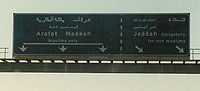
In the Holy City of Mecca
, only Muslims are allowed. Non-Muslims may not enter or travel through Mecca; attempting to enter Mecca as a non-Muslim can result in penalties such as a fine; being in Mecca as a non-Muslim can result in deportation.
In the Holy City of Medina
, both Muslims and Non-Muslims are allowed in. The exception are non-Muslims entering the Nabawi Square, where the Al-Masjid Al-Nabawi is located
is more segregated on religious grounds than by race. 25% of London's seven million residents live in religiously segregated neighbourhoods out of choice
, not by law.
is currently ruled the its Alawi
te minority. Compromising only 14% of the population, the Alawites control the government, much of the country's businesses, and its military. The Sunni
majority has very little representation in the government or military.
Religion
Religion is a collection of cultural systems, belief systems, and worldviews that establishes symbols that relate humanity to spirituality and, sometimes, to moral values. Many religions have narratives, symbols, traditions and sacred histories that are intended to give meaning to life or to...
. The term has been applied to cases of religious-based segregation occurring as a social phenomenon, as well as to segregation arising from laws, whether explicit or implicit.
The similar term religious apartheid has also been used for situations where people are separated based on religion, including sociological phenomena.
Bosnia and Herzegovina
Jonathan SteeleJonathan Steele
Jonathan Steele is a British journalist, author of several books on international affairs.Jonathan Steele was educated at King's College, Cambridge and Yale University . He has reported on Afghanistan, Russia, Iraq, and other countries. He was Washington Bureau Chief, Moscow Bureau Chief, and...
of The Guardian
The Guardian
The Guardian, formerly known as The Manchester Guardian , is a British national daily newspaper in the Berliner format...
has argued that Bosnia and Herzegovina
Bosnia and Herzegovina
Bosnia and Herzegovina , sometimes called Bosnia-Herzegovina or simply Bosnia, is a country in Southern Europe, on the Balkan Peninsula. Bordered by Croatia to the north, west and south, Serbia to the east, and Montenegro to the southeast, Bosnia and Herzegovina is almost landlocked, except for the...
is "a dependent, stifled, apartheid regime". In his view, the U.N.
United Nations
The United Nations is an international organization whose stated aims are facilitating cooperation in international law, international security, economic development, social progress, human rights, and achievement of world peace...
control of Bosnia under the High Representative for Bosnia and Herzegovina
High Representative for Bosnia and Herzegovina
The High Representative for Bosnia and Herzegovina, with the Office of the High Representative in Bosnia and Herzegovina, was created in 1995 immediately after the Dayton Peace Agreement to oversee the civilian implementation of this agreement. The High Representative and the OHR represent the...
, which he described as "UN-sanctioned liberal imperialism", creates "dependency, stifles civil society, and produces a highly visible financial apartheid in which an international salariat lords it over a war-wounded and jobless local population."
Iran
Islam is the official religion of IranIran
Iran , officially the Islamic Republic of Iran , is a country in Southern and Western Asia. The name "Iran" has been in use natively since the Sassanian era and came into use internationally in 1935, before which the country was known to the Western world as Persia...
, which is a theocracy led by an Ayatollah
Ayatollah
Ayatollah is a high ranking title given to Usuli Twelver Shī‘ah clerics. Those who carry the title are experts in Islamic studies such as jurisprudence, ethics, and philosophy and usually teach in Islamic seminaries. The next lower clerical rank is Hojatoleslam wal-muslemin...
, a clerical position. Iran consigns non-Muslim monotheists
Monotheism
Monotheism is the belief in the existence of one and only one god. Monotheism is characteristic of the Baha'i Faith, Christianity, Druzism, Hinduism, Islam, Judaism, Samaritanism, Sikhism and Zoroastrianism.While they profess the existence of only one deity, monotheistic religions may still...
to the status of dhimmi
Dhimmi
A , is a non-Muslim subject of a state governed in accordance with sharia law. Linguistically, the word means "one whose responsibility has been taken". This has to be understood in the context of the definition of state in Islam...
s, both officially and by custom. The U.S. State Department
United States Department of State
The United States Department of State , is the United States federal executive department responsible for international relations of the United States, equivalent to the foreign ministries of other countries...
has identified "reports of imprisonment, harassment, intimidation, and discrimination based on religious beliefs" in Iran.
The Muslim Network for Bahá'í Rights has reported cases of Bahá'í students being expelled from university
University
A university is an institution of higher education and research, which grants academic degrees in a variety of subjects. A university is an organisation that provides both undergraduate education and postgraduate education...
due to their religion.
According to the Times Higher Education, Bahá'í educators are required to renounce their faith in order to teach in Iranian universities.
Bahá'í is not among the recognized "recognized religious minorities" in the Constitution of Iran. The Bahá'í faith is considered apostate in Iran
because it believes in a prophet (Bahá'u'lláh
Bahá'u'lláh
Bahá'u'lláh , born ' , was the founder of the Bahá'í Faith. He claimed to be the prophetic fulfilment of Bábism, a 19th-century outgrowth of Shí‘ism, but in a broader sense claimed to be a messenger from God referring to the fulfilment of the eschatological expectations of Islam, Christianity, and...
) more recent than Muhammad
Muhammad
Muhammad |ligature]] at U+FDF4 ;Arabic pronunciation varies regionally; the first vowel ranges from ~~; the second and the last vowel: ~~~. There are dialects which have no stress. In Egypt, it is pronounced not in religious contexts...
, in contradiction of Islamic teachings, where it is held that Muhammad is the last and final messenger
Seal of the Prophets
Seal of the Prophets is a title given to the Islamic prophet Muhammad by a verse in the Qur'an. Muslims traditionally agree upon that Muhammad received the final revelation in the form of the Qur'an for all mankind, for all time....
sent to mankind .
Saudi Arabia
Website
A website, also written as Web site, web site, or simply site, is a collection of related web pages containing images, videos or other digital assets. A website is hosted on at least one web server, accessible via a network such as the Internet or a private local area network through an Internet...
stated that Jews were forbidden from entering the country.
In the Holy City of Mecca
Mecca
Mecca is a city in the Hijaz and the capital of Makkah province in Saudi Arabia. The city is located inland from Jeddah in a narrow valley at a height of above sea level...
, only Muslims are allowed. Non-Muslims may not enter or travel through Mecca; attempting to enter Mecca as a non-Muslim can result in penalties such as a fine; being in Mecca as a non-Muslim can result in deportation.
In the Holy City of Medina
Medina
Medina , or ; also transliterated as Madinah, or madinat al-nabi "the city of the prophet") is a city in the Hejaz region of western Saudi Arabia, and serves as the capital of the Al Madinah Province. It is the second holiest city in Islam, and the burial place of the Islamic Prophet Muhammad, and...
, both Muslims and Non-Muslims are allowed in. The exception are non-Muslims entering the Nabawi Square, where the Al-Masjid Al-Nabawi is located
Bahrain
The government of Bahrain practices residential and employment discrimination against Shia citizens.United Kingdom
LondonLondon
London is the capital city of :England and the :United Kingdom, the largest metropolitan area in the United Kingdom, and the largest urban zone in the European Union by most measures. Located on the River Thames, London has been a major settlement for two millennia, its history going back to its...
is more segregated on religious grounds than by race. 25% of London's seven million residents live in religiously segregated neighbourhoods out of choice
Auto-segregation
Auto-segregation is the separation of a religious or ethnic group from the rest of society in a state by the group itself. Through auto-segregation, the members of the separate group can establish their own services, and maintain their own traditions and customs.For example, some world tribes have...
, not by law.
Syria
SyriaSyria
Syria , officially the Syrian Arab Republic , is a country in Western Asia, bordering Lebanon and the Mediterranean Sea to the West, Turkey to the north, Iraq to the east, Jordan to the south, and Israel to the southwest....
is currently ruled the its Alawi
Alawi
The Alawis, also known as Alawites, Nusayris and Ansaris are a prominent mystical and syncretic religious group centred in Syria who are a branch of Shia Islam.-Etymology:...
te minority. Compromising only 14% of the population, the Alawites control the government, much of the country's businesses, and its military. The Sunni
Sunni Islam
Sunni Islam is the largest branch of Islam. Sunni Muslims are referred to in Arabic as ʾAhl ūs-Sunnah wa āl-Ǧamāʿah or ʾAhl ūs-Sunnah for short; in English, they are known as Sunni Muslims, Sunnis or Sunnites....
majority has very little representation in the government or military.
See also
- CasteCasteCaste is an elaborate and complex social system that combines elements of endogamy, occupation, culture, social class, tribal affiliation and political power. It should not be confused with race or social class, e.g. members of different castes in one society may belong to the same race, as in India...
- Devşirme system
- DhimmiDhimmiA , is a non-Muslim subject of a state governed in accordance with sharia law. Linguistically, the word means "one whose responsibility has been taken". This has to be understood in the context of the definition of state in Islam...
laws - GhettoGhettoA ghetto is a section of a city predominantly occupied by a group who live there, especially because of social, economic, or legal issues.The term was originally used in Venice to describe the area where Jews were compelled to live. The term now refers to an overcrowded urban area often associated...
- Jim Crow lawsJim Crow lawsThe Jim Crow laws were state and local laws in the United States enacted between 1876 and 1965. They mandated de jure racial segregation in all public facilities, with a supposedly "separate but equal" status for black Americans...
- JudenhutJudenhutThe Jewish hat also known as the Jewish cap, Judenhut or Latin pilleus cornutus , was a cone-shaped pointed hat, often white or yellow, worn by Jews in Medieval Europe and some of the Islamic world...
- MellahMellahA mellah is a walled Jewish quarter of a city in Morocco, an analogue of the European ghetto...
- Ottoman Millet systemMillet (Ottoman Empire)Millet is a term for the confessional communities in the Ottoman Empire. It refers to the separate legal courts pertaining to "personal law" under which communities were allowed to rule themselves under their own system...
- Minority religionMinority religionA minority religion is a religion held by a minority of the population of a country, state, or region. Minority religions may be subject to stigma or discrimination. An example of a stigma is using the term cult with its extremely negative connotations for certain new religious movements...
- Nuremberg lawsNuremberg LawsThe Nuremberg Laws of 1935 were antisemitic laws in Nazi Germany introduced at the annual Nuremberg Rally of the Nazi Party. After the takeover of power in 1933 by Hitler, Nazism became an official ideology incorporating scientific racism and antisemitism...
- Racial segregationRacial segregationRacial segregation is the separation of humans into racial groups in daily life. It may apply to activities such as eating in a restaurant, drinking from a water fountain, using a public toilet, attending school, going to the movies, or in the rental or purchase of a home...
- Religious stratificationReligious stratificationReligious stratification is the division of a society into hierarchical layers on the premise of religious beliefs, affiliation, or faith practices.According to Kingsley Davis and Wilbert E...
- Second-class citizenSecond-class citizenSecond-class citizen is an informal term used to describe a person who is systematically discriminated against within a state or other political jurisdiction, despite their nominal status as a citizen or legal resident there...
- Yellow badgeYellow badgeThe yellow badge , also referred to as a Jewish badge, was a cloth patch that Jews were ordered to sew on their outer garments in order to mark them as Jews in public. It is intended to be a badge of shame associated with antisemitism...