

Religious festival

Encyclopedia
A religious festival is a time of special importance marked by adherents to that religion
. Religious festivals are commonly celebrated on recurring cycles in a calendar year
or lunar calendar
. Hundreds of very different religious festivals are held around the world each year.
", celebrated by the set of games and theatrical presentations known as the "Ludi Florales," began in April, it was really an ancient May Day
celebration. Flora
, the Roman goddess in whose honor the festival was held, was a goddess of flowers, which generally begin to bloom in the spring. The holiday for Flora (as officially determined by Julius Caesar
when he fixed the Roman calendar) ran from April 27 to May 3. Roman public games or "ludi" were financed by minor public magistrates known as "aedile
s." The curule aediles produced the Ludi Florales. The position of curule aedile was originally (365 B.C.) limited to patricians, but was later opened up to plebians, too. The ludi were frequently very expensive for the aediles, but were used by them to win the affection and votes of the people, frequently allowing them to move to a greater magistrate
.
The celebration in honor of Flora included Florida wreaths worn in the hair much like modern participants in May Day celebrations. After the theatrical performances, the celebration continued in the Circus Maximus, where animals were set free and beans scattered to insure fertility.
is the feast at which the Romans commemorated the dedication of the temple of the god Saturn, which took place on December 17. Over the years, it expanded to encompass the whole week, up to December 24. The Saturnalia was a large and important public festival in Rome. It involved the conventional sacrifices, a couch (lectisternium) set out in front of the temple of Saturn and the untying of the ropes that bound the statue of Saturn during the rest of the year. Besides the public rites there were a series of holidays and customs celebrated privately. The celebrations included a school holiday, the making and giving of small presents (saturnalia et sigillaricia) and a special market (sigillaria). Gambling was allowed, even for slaves. It was a time to eat, drink, and be merry. The toga was not worn, but rather the synthesis, i.e. colorful, informal "dinner clothes"; and the pileus (freedman's hat) was worn by everyone. Slaves were exempt from punishment, and treated their masters with disrespect. The slaves celebrated a banquet: before, with, or served by the masters. A Saturnalicius princeps was elected master of ceremonies for the proceedings.
Saturnalia became one of the most popular Roman festivals which led to more tomfoolery, marked chiefly by having masters and slaves ostensibly switch places. The banquet, for example, would often be prepared by the slaves, and they would prepare their masters' dinner as well. It was license within careful boundaries; it reversed the social order without subverting it. The customary greeting for the occasion is a "io, Saturnalia!" — "io" being a Latin interjection related to "ho" (as in "Ho, praise to Saturn").
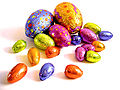 The central festival of Christianity
is Easter
, on which Christians celebrate their belief that Jesus Christ rose from the dead
on the third day after his crucifixion
. Even for Easter, however, there is no agreement among the various Christian traditions regarding the date or manner of the observance, less for Christmas
, Pentecost
, or various other holidays. In the Christian faith both Protestants and Catholics observe certain festivals commemorating events in the life of Christ. Of these, the two most important are Christmas, which is the Feast of Christ's nativity, and Easter, which marks the anniversary of Christ's resurrection.
derives most of its liturgical influences directly from Judaism. It adds additional elements from the Christian tradition, since most outsiders would consider Christianity a form of Judaism. Appointed times, called moedim, follow the standard Jewish liturgical calendar, though additional hermeneutical applications are derived in light of the teachings Jesus
of Nazareth.
 Hindu
Hindu
festivals include:
ic religious festivals include:
(Yom Tov or chag in Hebrew
) is a day that is holy to the Jewish people according to Judaism
and is usually derived from the Hebrew Bible
, specifically the Torah
, and in some cases established by the rabbi
s in later eras. There are a number of festival days, fast days (ta'anit
) and days of remembrance.
festivals include:
Religion
Religion is a collection of cultural systems, belief systems, and worldviews that establishes symbols that relate humanity to spirituality and, sometimes, to moral values. Many religions have narratives, symbols, traditions and sacred histories that are intended to give meaning to life or to...
. Religious festivals are commonly celebrated on recurring cycles in a calendar year
Calendar year
Generally speaking, a calendar year begins on the New Year's Day of the given calendar system and ends on the day before the following New Year's Day. By convention, a calendar year consists of a natural number of days. To reconcile the calendar year with an astronomical cycle , certain years...
or lunar calendar
Lunar calendar
A lunar calendar is a calendar that is based on cycles of the lunar phase. A common purely lunar calendar is the Islamic calendar or Hijri calendar. A feature of the Islamic calendar is that a year is always 12 months, so the months are not linked with the seasons and drift each solar year by 11 to...
. Hundreds of very different religious festivals are held around the world each year.
Ludi
Although the ancient Roman holiday of "FloraliaFloralia
The Floralia, also known as the "Florifertum," was an ancient Roman festival dedicated to Flora, the goddess of flowers and vegetation. It was held on the IV Calends of May, April 27 to May 3, and symbolized the renewal of the cycle of life, marked with dancing, drinking, and flowers. These days...
", celebrated by the set of games and theatrical presentations known as the "Ludi Florales," began in April, it was really an ancient May Day
May Day
May Day on May 1 is an ancient northern hemisphere spring festival and usually a public holiday; it is also a traditional spring holiday in many cultures....
celebration. Flora
Flora (mythology)
In Roman mythology, Flora was a goddess of flowers and the season of spring. While she was otherwise a relatively minor figure in Roman mythology, being one among several fertility goddesses, her association with the spring gave her particular importance at the coming of springtime...
, the Roman goddess in whose honor the festival was held, was a goddess of flowers, which generally begin to bloom in the spring. The holiday for Flora (as officially determined by Julius Caesar
Julius Caesar
Gaius Julius Caesar was a Roman general and statesman and a distinguished writer of Latin prose. He played a critical role in the gradual transformation of the Roman Republic into the Roman Empire....
when he fixed the Roman calendar) ran from April 27 to May 3. Roman public games or "ludi" were financed by minor public magistrates known as "aedile
Aedile
Aedile was an office of the Roman Republic. Based in Rome, the aediles were responsible for maintenance of public buildings and regulation of public festivals. They also had powers to enforce public order. There were two pairs of aediles. Two aediles were from the ranks of plebeians and the other...
s." The curule aediles produced the Ludi Florales. The position of curule aedile was originally (365 B.C.) limited to patricians, but was later opened up to plebians, too. The ludi were frequently very expensive for the aediles, but were used by them to win the affection and votes of the people, frequently allowing them to move to a greater magistrate
Magistrate
A magistrate is an officer of the state; in modern usage the term usually refers to a judge or prosecutor. This was not always the case; in ancient Rome, a magistratus was one of the highest government officers and possessed both judicial and executive powers. Today, in common law systems, a...
.
Floralia
The Floralia festival began in Rome in 238 B.C., to please the goddess Flora into protecting the blossoms. The Floralia fell out of favor and was discontinued until 173 B.C., when the senate, concerned with wind, hail, and other damage to the flowers, ordered Flora's celebration reinstated as the Ludi Florales. The Ludi Florales included theatrical events, including mimes, naked actresses and prostitutes. In the Renaissance, some writers thought that Flora had been a human prostitute who was turned into a goddess, possibly because of the licentiousness of the Ludi Florales or because, according to David Lupher, Flora was a common name for prostitutes in ancient Rome.The celebration in honor of Flora included Florida wreaths worn in the hair much like modern participants in May Day celebrations. After the theatrical performances, the celebration continued in the Circus Maximus, where animals were set free and beans scattered to insure fertility.
Saturnalia
SaturnaliaSaturnalia
Saturnalia is an Ancient Roman festival/ celebration held in honour of Saturn , the youngest of the Titans, father of the major gods of the Greeks and Romans, and son of Uranus and Gaia...
is the feast at which the Romans commemorated the dedication of the temple of the god Saturn, which took place on December 17. Over the years, it expanded to encompass the whole week, up to December 24. The Saturnalia was a large and important public festival in Rome. It involved the conventional sacrifices, a couch (lectisternium) set out in front of the temple of Saturn and the untying of the ropes that bound the statue of Saturn during the rest of the year. Besides the public rites there were a series of holidays and customs celebrated privately. The celebrations included a school holiday, the making and giving of small presents (saturnalia et sigillaricia) and a special market (sigillaria). Gambling was allowed, even for slaves. It was a time to eat, drink, and be merry. The toga was not worn, but rather the synthesis, i.e. colorful, informal "dinner clothes"; and the pileus (freedman's hat) was worn by everyone. Slaves were exempt from punishment, and treated their masters with disrespect. The slaves celebrated a banquet: before, with, or served by the masters. A Saturnalicius princeps was elected master of ceremonies for the proceedings.
Saturnalia became one of the most popular Roman festivals which led to more tomfoolery, marked chiefly by having masters and slaves ostensibly switch places. The banquet, for example, would often be prepared by the slaves, and they would prepare their masters' dinner as well. It was license within careful boundaries; it reversed the social order without subverting it. The customary greeting for the occasion is a "io, Saturnalia!" — "io" being a Latin interjection related to "ho" (as in "Ho, praise to Saturn").
Buddhist religious festivals
- Asalha PujaAsalha PujaAsalha Puja is a Theravada Buddhist festival which typically takes place in July, on the full moon of the eighth lunar month. It commemorates the Buddha’s first sermon in the Deer Park in Benares and the founding of the Buddhist sangha...
- KathinaKathinaKathina is a Buddhist festival which comes at the end of Vassa, the three-month rainy season retreat for Theravada Buddhists. The season during which a monastery may hold a Kathina festival is one month long, beginning after the full moon of the eleventh month in the Lunar calendar .It is a time...
- Magha PujaMagha PujaMāgha Pūjā or Makha Bucha is an important Buddhist festival celebrated in Thailand, Cambodia, and Laos on the full moon day of the third lunar month . The third lunar month is known in the Thai language as Makha ; Bucha is also a Thai word , meaning "to venerate" or "to honor"...
- PavaranaPavaranaPavarana is a Buddhist holy day celebrated on the full moon of the eleventh lunar month. It marks the end of the month of Vassa, sometimes called "Buddhist Lent." This day marks the end of the rainy season in some Asian countries like Thailand, where Theravada Buddhism is practiced...
- UposathaUposathaThe Uposatha is Buddhist day of observance, in existence from the Buddha's time , and still being kept today in Buddhist countries. The Buddha taught that the Uposatha day is for "the cleansing of the defiled mind," resulting in inner calm and joy...
- VassaVassaVassa , also called Rains Retreat, or Buddhist Lent, is the three-month annual retreat observed by Theravada practitioners...
- Vesakha Puja
Christian religious festivals
Christianity
Christianity is a monotheistic religion based on the life and teachings of Jesus as presented in canonical gospels and other New Testament writings...
is Easter
Easter
Easter is the central feast in the Christian liturgical year. According to the Canonical gospels, Jesus rose from the dead on the third day after his crucifixion. His resurrection is celebrated on Easter Day or Easter Sunday...
, on which Christians celebrate their belief that Jesus Christ rose from the dead
Death and Resurrection of Jesus
The Christian belief in the resurrection of Jesus states that Jesus returned to bodily life on the third day following his death by crucifixion. It is a key element of Christian faith and theology and part of the Nicene Creed: "On the third day he rose again in fulfillment of the Scriptures"...
on the third day after his crucifixion
Crucifixion
Crucifixion is an ancient method of painful execution in which the condemned person is tied or nailed to a large wooden cross and left to hang until dead...
. Even for Easter, however, there is no agreement among the various Christian traditions regarding the date or manner of the observance, less for Christmas
Christmas
Christmas or Christmas Day is an annual holiday generally celebrated on December 25 by billions of people around the world. It is a Christian feast that commemorates the birth of Jesus Christ, liturgically closing the Advent season and initiating the season of Christmastide, which lasts twelve days...
, Pentecost
Pentecost
Pentecost is a prominent feast in the calendar of Ancient Israel celebrating the giving of the Law on Sinai, and also later in the Christian liturgical year commemorating the descent of the Holy Spirit upon the disciples of Christ after the Resurrection of Jesus...
, or various other holidays. In the Christian faith both Protestants and Catholics observe certain festivals commemorating events in the life of Christ. Of these, the two most important are Christmas, which is the Feast of Christ's nativity, and Easter, which marks the anniversary of Christ's resurrection.
Messianic Judaism
Messianic JudaismMessianic Judaism
Messianic Judaism is a syncretic religious movement that arose in the 1960s and 70s. It blends evangelical Christian theology with elements of Jewish terminology and ritual....
derives most of its liturgical influences directly from Judaism. It adds additional elements from the Christian tradition, since most outsiders would consider Christianity a form of Judaism. Appointed times, called moedim, follow the standard Jewish liturgical calendar, though additional hermeneutical applications are derived in light of the teachings Jesus
Jesus
Jesus of Nazareth , commonly referred to as Jesus Christ or simply as Jesus or Christ, is the central figure of Christianity...
of Nazareth.
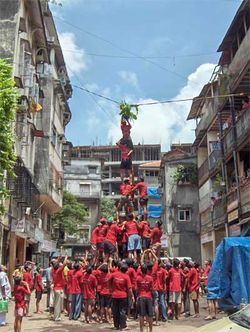
Hindu religious festivals
Hindu
Hindu refers to an identity associated with the philosophical, religious and cultural systems that are indigenous to the Indian subcontinent. As used in the Constitution of India, the word "Hindu" is also attributed to all persons professing any Indian religion...
festivals include:
- DiwaliDiwaliDiwali or DeepavaliThe name of the festival in various regional languages include:, , , , , , , , , , , , , popularly known as the "festival of lights," is a festival celebrated between mid-October and mid-December for different reasons...
- Gudi padwaGudi PadwaGudi Padwa or Gudhi Padwa , is the Marathi name for the Hindu holiday of Chaitra Shukla Pratipada. It is celebrated on the first day of the Chaitra month to mark the beginning of the New year according to the lunisolar Hindu calendar...
- PongalPongalThai Ponggal is a harvest festival celebrated by Tamils in the Indian state of Tamil Nadu, Indian Union Territory of Pondicherry and in Sri Lanka. Pongal coincides with the festival Makara Sankranthi celebrated throughout India. Pongal in Tamil means "boiling over" or "spill over". The boiling...
- HoliHoliHoli , is a religious spring festival celebrated by Hindus. Holi is also known as festival of Colours. It is primarily observed in India, Nepal, Pakistan, and countries with large Indic diaspora populations following Hinduism, such as Suriname, Malaysia, Guyana, South Africa, Trinidad, United...
- Navratri
- Ganesh ChaturthiGanesh ChaturthiGanesh Chaturthi , also known as Vinayaka Chaturthi is the Hindu festival of Ganesha also called Vinayagar in Tamil Nadu, the son of Shiva and Parvati, who is believed to bestow his presence on earth for all his devotees in the duration of this festival...
- Raksha Bhandan
- Krishna Janmashtami
- Dussehra
- Dasara
- OnamOnamOnam is a Hindu festival celebrated by the people of Kerala, India. The festival commemorates the Vamana avatar of Vishnu and the subsequent homecoming of the legendary Emperor Mahabali. It falls during the month of Chingam and lasts for ten days...
- VijayadashamiVijayadashamiVijayadashami also known as Dasara, is one of the most important festivals celebrated in various forms, across India, Nepal and Bangladesh...
- Shivaratri
- UgadiUgadiYugadi or Ugadi or "Samvatsradi" , Konkani/Marathi: युगादी yugādi, , formed by sandhi of yuga "age" and ādi "beginning": the beginning of an age) is the New Year's Day for the people of the Deccan region of India. It falls on the different day every year because the Hindu calendar is a lunisolar...
Islamic religious festivals
IslamIslam
Islam . The most common are and . : Arabic pronunciation varies regionally. The first vowel ranges from ~~. The second vowel ranges from ~~~...
ic religious festivals include:
- Eid ul-AdhaEid ul-AdhaEid al-Adha or "Festival of Sacrifice" or "Greater Eid" is an important religious holiday celebrated by Muslims worldwide to commemorate the willingness of Abraham to sacrifice his son Ishmael as an act of obedience to God, before God intervened to provide him with a sheep— to sacrifice...
- Eid ul-FitrEid ul-FitrEid ul-Fitr, Eid al-Fitr, Id-ul-Fitr, or Id al-Fitr , often abbreviated to Eid, is a Muslim holiday that marks the end of Ramadan, the Islamic holy month of fasting . Eid is an Arabic word meaning "festivity," while Fiṭr means "breaking the fast"...
Jewish religious festivals
A Jewish holidayJewish holiday
Jewish holidays are days observed by Jews as holy or secular commemorations of important events in Jewish history. In Hebrew, Jewish holidays and festivals, depending on their nature, may be called yom tov or chag or ta'anit...
(Yom Tov or chag in Hebrew
Hebrew language
Hebrew is a Semitic language of the Afroasiatic language family. Culturally, is it considered by Jews and other religious groups as the language of the Jewish people, though other Jewish languages had originated among diaspora Jews, and the Hebrew language is also used by non-Jewish groups, such...
) is a day that is holy to the Jewish people according to Judaism
Judaism
Judaism ) is the "religion, philosophy, and way of life" of the Jewish people...
and is usually derived from the Hebrew Bible
Hebrew Bible
The Hebrew Bible is a term used by biblical scholars outside of Judaism to refer to the Tanakh , a canonical collection of Jewish texts, and the common textual antecedent of the several canonical editions of the Christian Old Testament...
, specifically the Torah
Torah
Torah- A scroll containing the first five books of the BibleThe Torah , is name given by Jews to the first five books of the bible—Genesis , Exodus , Leviticus , Numbers and Deuteronomy Torah- A scroll containing the first five books of the BibleThe Torah , is name given by Jews to the first five...
, and in some cases established by the rabbi
Rabbi
In Judaism, a rabbi is a teacher of Torah. This title derives from the Hebrew word רבי , meaning "My Master" , which is the way a student would address a master of Torah...
s in later eras. There are a number of festival days, fast days (ta'anit
Ta'anit
A ta'anit or taanis or taʿanith in Classical Hebrew is a fast in Judaism in which one abstains from all food and drink, including water...
) and days of remembrance.
Sikh religious festivals
SikhSikh
A Sikh is a follower of Sikhism. It primarily originated in the 15th century in the Punjab region of South Asia. The term "Sikh" has its origin in Sanskrit term शिष्य , meaning "disciple, student" or शिक्ष , meaning "instruction"...
festivals include:
- Sangrand
- Poonai
- Maghi
- Guru Nanak Javanthi
- Guru Gobind Javanthi
- HoliHoliHoli , is a religious spring festival celebrated by Hindus. Holi is also known as festival of Colours. It is primarily observed in India, Nepal, Pakistan, and countries with large Indic diaspora populations following Hinduism, such as Suriname, Malaysia, Guyana, South Africa, Trinidad, United...
/Hola MohallaHola MohallaHola Mahalla is a Sikh Olympics event which begins on the first day of the lunar month of Chet in the Nanakshahi calendar. It most often falls in March, and sometimes coincides with the Sikh New Year. The event lasts for a week, and consists of camping out and enjoying various displays of fighting... - DiwaliDiwaliDiwali or DeepavaliThe name of the festival in various regional languages include:, , , , , , , , , , , , , popularly known as the "festival of lights," is a festival celebrated between mid-October and mid-December for different reasons...
- VaisakhiVaisakhiVaisakhi is an ancient harvest festival celebrated across North Indian states, especially Punjab by all Punjabis regardless of religion. In Sikhism the Khalsa was founded on same day as the Vaisakhi festival, so Sikhs celebrate twice as much....
External links
- Overview of the Mo'edim from a Messianic perspective
- interfaithcalendar.org
- The Feasts of Adonai A book detailing the history and celebration of Biblical festivals.