

Relationship between religion and science

Encyclopedia
The relationship between religion and science has been a focus of the demarcation problem
. Somewhat related is the claim that science
and religion
may pursue knowledge using different methodologies. Whereas the scientific method
basically relies on reason
and empiricism
, religion also seeks (at times, primarily) to acknowledge revelation
, faith
and sacredness. Some scholars say science and religion are separate, as in John William Draper
's conflict thesis
and Stephen Jay Gould
's non-overlapping magisteria
, while others (John Lennox
, Thomas Berry
, Brian Swimme
, Ken Wilber
, et al.) propose an interconnection.
 The kinds of interactions that might arise between science and religion have been classified using the following typology:
This typology is similar to ones found in Ian Barbour
and John Haught
. More typologies that categorize this relationship can be found among the works of other science and religion scholars such as Arthur Peacocke.
include creationism
(see level of support for evolution
), and more recently, Pope Benedict XVI
's 2009 statements claiming that the use of condoms to combat the AIDS epidemic in Africa was ineffective and counterproductive. In the Galileo affair
, the acceptance, from 1616 to 1757, of the Greek geocentric model
(Ptolemaic system) by the Roman Catholic Church
, and its consequent opposition to heliocentrism
, was first called into question by the Catholic cleric Copernicus, and subsequently disproved conclusively by Galileo, who was persecuted for his minority view. Additionally, long held religious claims have been challenged by scientific studies such as STEP, which examined the efficacy of prayer
. A number of scientists including Jerry Coyne
have made an argument for a philosophical incompatibility between religion and science. An argument for the conflict between religion and science that combines the historical and philosophical approaches has been presented by Neil Degrasse Tyson
—Tyson argues that religious scientists, such as Isaac Newton
, could have achieved more had they not accepted religious answers to unresolved scientific issues.
, which holds that religion and science have been in conflict continuously throughout history, was popularized in the 19th century by John William Draper
and Andrew Dickson White
. Most contemporary historians of science now reject the conflict thesis in its original form, arguing instead that it has been superseded by subsequent historical research indicating a more nuanced understanding:
Today, much of the scholarship in which the conflict thesis was originally based is considered to be inaccurate. For instance, the claim that people of the Middle Ages
widely believed that the Earth was flat
was first propagated in the same period that originated the conflict thesis and is still very common in popular culture. Modern scholars regard this claim as mistaken, as the contemporary historians of science David C. Lindberg
and Ronald L. Numbers write: "there was scarcely a Christian scholar of the Middle Ages who did not acknowledge [earth's] sphericity and even know its approximate circumference."
Other misconceptions such as: "the Church prohibited autopsies and dissections during the Middle Ages," "the rise of Christianity killed off ancient science," and "the medieval Christian church suppressed the growth of the natural sciences," are all reported by Numbers as examples of widely popular myths that still pass as historical truth, even though they are not supported by current historical research. They help maintain the popular image of "the warfare of science and religion."
While H. Floris Cohen
states that most scholars reject crude articulations of the conflict thesis, such as Andrew D. White's, he also states that milder versions of this thesis still hold some sway. This is because "it remains an incontrovertible fact of history that, to say the least, the new science was accorded a less than enthusiastic acclaim by many religious authorities at the time." Cohen therefore considers it paradoxical "that the rise of early modern science was due at least in part to developments in Christian thought—in particular, to certain aspects of Protestantism" (a thesis first developed as what is now sometimes called the Merton thesis
). In recent years, Oxford historian Peter Harrison
has further developed the idea that the Protestant Reformation had a significant and positive influence on the development of modern science. A review of alternatives to the White/Draper conflict thesis has been composed by Ian G. Barbour.
as "non-overlapping magisteria
" (NOMA), is that science and religion deal with fundamentally separate aspects of human experience and so, when each stays within its own domain, they co-exist peacefully. While Gould spoke of independence from the perspective of science, W. T. Stace viewed independence from the perspective of the philosophy of religion. Stace felt that science and religion, when each is viewed in its own domain, are both consistent and complete.
Both science and religion represent distinct ways of approaching experience and these differences are sources of debate. Science is closely tied to mathematics—a very abstract experience, while religion is more closely tied to the ordinary experience of life. As interpretations of experience, science is descriptive
and religion is prescriptive
. For science and mathematics to concentrate on what the world ought to be like in the way that religion does can be inappropriate and may lead to improperly ascribing properties to the natural world as happened among the followers of Pythagoras
in the sixth century B.C. In contrast, proponents of a normative moral science
take issue with the idea that science has no way of guiding "oughts".
The reverse situation, where religion attempts to be descriptive, can also lead to inappropriately assigning properties to the natural world. A notable example is the now defunct belief in the Ptolemy
planetary model that held sway until changes in scientific and religious thinking were brought about by Galileo and proponents of his views.
Michael Polanyi
asserted that it is merely a commitment to universality
that protects against subjectivity
and has nothing at all to do with personal detachment as found in many conceptions of the scientific method. Polanyi further asserted that all knowledge is personal and therefore the scientist must be performing a very personal if not necessarily subjective role when doing science. Polanyi added that the scientist often merely follows intuitions of "intellectual beauty, symmetry, and 'empirical agreement'". Polanyi held that science requires moral commitments similar to those found in religion.
Two physicists, Charles A. Coulson and Harold K. Schilling
, both claimed that "the methods of science and religion have much in common." Schilling asserted that both fields—science and religion—have "a threefold structure—of experience, theoretical interpretation, and practical application." Coulson asserted that science, like religion, "advances by creative imagination" and not by "mere collecting of facts," while stating that religion should and does "involve critical reflection on experience not unlike that which goes on in science." Religious language and scientific language also show parallels (cf. Rhetoric of science
).
. In the words of Thomas Aquinas
, "Since human beings are said to be in the image of God in virtue of their having a nature that includes an intellect, such a nature is most in the image of God in virtue of being most able to imitate God".
Many well-known historical figures who influenced Western science considered themselves Christian such as Copernicus
, Galileo
, Kepler
, and Boyle
.
The Pew Forum has published data on attitudes about religion and science.
and Colonial eras was conceived as ontological investigation which uncovered 'facts' about physical nature. This was often explicitly opposed to Christian Theology and the latter's assertions of truth based on doctrine. This particular perspective on science faded in the early 20th century with the decline of logical empiricism and the rise of linguistic and sociological understandings of science. Modern scientists are less concerned with establishing universal or ontological truth (which is seen, and dismissed, as the pursuit of philosophy), and more inclined towards the creation of pragmatic, functional models of physical systems. Christian Theology—excluding those fundamentalist churches whose aim is to reassert doctrinal truths—has likewise softened many of its ontological claims, due to increased exposure to both scientific insights and the contrasting theological claims of other faiths.
Scientific and theological perspectives often coexist peacefully. Non-Christian faiths have historically integrated well with scientific ideas, as in the ancient Egypt
ian technological mastery applied to monotheistic ends, the flourishing of logic
and mathematics
under Hinduism
and Buddhism
, and the scientific advances made by Muslim
scholars during the Ottoman empire
. Even many 19th century Christian communities welcomed scientists who claimed that science was not at all concerned with discovering the ultimate nature of reality.
is the harmony of religion and science. Bahá'í scripture
asserts that true science
and true religion
can never be in conflict. `Abdu'l-Bahá
, the son of the founder of the religion, stated that religion without science is superstition and that science without religion is materialism. He also admonished that true religion must conform to the conclusions of science.
and science have increasingly been discussed as compatible. Some philosophic and psychological teachings within Buddhism share commonalities with modern Western scientific and philosophic thought. For example, Buddhism encourages the impartial investigation of nature (an activity referred to as Dhamma-Vicaya
in the Pali Canon
)—the principal object of study being oneself. A reliance on causality
and empiricism
are common philosophical principles shared between Buddhism and science. However, Buddhism doesn't focus on materialism
.
Tenzin Gyatso, the 14th Dalai Lama
, spends a lot of time with scientists. In his book, "The Universe in a Single Atom" he wrote, "My confidence in venturing into science lies in my basic belief that as in science, so in Buddhism, understanding the nature of reality is pursued by means of critical investigation." and "If scientific analysis were conclusively to demonstrate certain claims in Buddhism to be false," he says, "then we must accept the findings of science and abandon those claims."
.jpg) Earlier attempts at reconciliation of Christianity with Newtonian mechanics appear quite different from later attempts at reconciliation with the newer scientific ideas of evolution
Earlier attempts at reconciliation of Christianity with Newtonian mechanics appear quite different from later attempts at reconciliation with the newer scientific ideas of evolution
or relativity
. Many early interpretations of evolution polarized themselves around a struggle for existence
. These ideas were significantly countered by later findings of universal patterns of biological cooperation
. According to John Habgood, all man really knows here is that the universe
seems to be a mix of good and evil, beauty
and pain
, and that suffering
may somehow be part of the process of creation. Habgood holds that Christians should not be surprised that suffering may be used creatively by God
, given their faith in the symbol of the Cross
. Habgood states that Christians have for two millennia believed in the love
of God because he revealed "Himself as Love in Jesus Christ," not because the physical universe does or does not point to the value of love.
Robert John Russell
has examined consonance and dissonance between modern physics, evolutionary biology, and Christian theology.
In Reconciling Science and Religion: The Debate in Early-twentieth-century Britain, historian of biology Peter J. Bowler
argues that in contrast to the conflicts between science and religion in the U.S. in the 1920s (most famously the Scopes Trial
), during this period Great Britain experienced a concerted effort at reconciliation, championed by intellectually conservative scientists, supported by liberal theologians but opposed by younger scientists and secularists and conservative Christians
. These attempts at reconciliation fell apart in the 1930s due to increased social tensions, moves towards neo-orthodox theology and the acceptance of the modern evolutionary synthesis
.
was favored and combined with Daoist skepticism regarding the nature of reality. Likewise, during the Medieval period, Zhu Xi
argued against technical investigation and specialization proposed by Chen Liang. After contact with the West, scholars such as Wang Fuzhi
would rely on Buddhist/Daoist skepticism to denounce all science as a subjective pursuit limited by humanity's fundamental ignorance of the true nature of the world. After the May Fourth Movement
, attempts to modernize Confucianism and reconcile it with scientific understanding were attempted by many scholars including Feng Youlan
and Xiong Shili
. Given the close relationship that Confucianism shares with Buddhism, many of the same arguments used to reconcile Buddhism with science also readily translate to Confucianism. However, modern scholars have also attempted to define the relationship between science and Confucianism on Confucianism's own terms and the results have usually led to the conclusion that Confucianism and science are fundamentally compatible.
, the dividing line between objective sciences and spiritual knowledge (adhyatma vidya) is a linguistic paradox. Hindu scholastic activities and ancient Indian scientific advancements were so interconnected that many Hindu scriptures are also ancient scientific manuals and vice-versa. Hindu sages maintained that logical argument and rational proof using Nyaya
is the way to obtain correct knowledge. From a Hindu perspective, modern science is a legitimate, but incomplete, step towards knowing and understanding reality. Hinduism views that science only offers a limited view of reality, but all it offers is right and correct. Not all mentioned in Hindu scriptures are consistent with modern science; however, Hinduism offers methods to correct and transform itself in course of time.
Hindu views on evolution include a range of viewpoints in regards to evolution
, creationism
, and the origin of life within the traditions of Hinduism
.
Samkhya
, the oldest school of Hindu philosophy
prescribes a particular method to analyze knowledge. According to Samkhya, all knowledge is possible through three pramana
s (means of valid knowledge) –
Nyaya
, the Hindu school of logic, accepts all these 3 means and in addition accepts one more - Upamāna
(comparison).
The accounts of the emergence of life within the universe vary in description, but classically the deity
called Brahma
, from a Trimurti
of three deities also including Vishnu
and Shiva
, is described as performing the act of 'creation', or more specifically of 'propagating life within the universe' with the other two deities being responsible for 'preservation' and 'destruction' (of the universe) respectively. In this respect some Hindu schools do not treat the scriptural creation myth literally and often the creation stories themselves do not go into specific detail, thus leaving open the possibility of incorporating at least some theories in support of evolution. Some Hindus find support for, or foreshadowing of evolutionary ideas in scriptures, namely the Vedas
.
The incarnations of Vishnu (Dashavatara) is almost identical to the scientific explanation of the sequence of biological evolution of man and animals. The sequence of avatars starts from an aquatic organism (Matsya
), to an amphibian (Kurma
), to a land-animal (Varaha
), to a humanoid (Narasimha
), to a dwarf human (Vamana
), to 5 forms of well developed human beings (Parashurama
, Rama
, Balarama
/Buddha
, Krishna
, Kalki
) who showcase an increasing form of complexity (Axe-man, King, Plougher/Sage, wise Statesman, mighty Warrior). In India
, the home country of Hindus; educated Hindus widely accept the theory of biological evolution. In a survey, 77% of respondents in India agreed that enough scientific evidence exists to support Charles Darwin’s Theory of Evolution
, and 85 per cent of God-believing people said they believe in evolution as well.
An exception to this acceptance is the International Society for Krishna Consciousness
(ISKCON), which includes several members who actively oppose "Darwinism
" and the modern evolutionary synthesis
(see Hindu Creationism).
, is considered to be linked to the concept of Tawhid (the Oneness of God), as are all other branches of knowledge. In Islam
, nature is not seen as a separate entity, but rather as an integral part of Islam’s holistic outlook on God, humanity, and the world. Unlike the other Abrahamic monotheistic religions, Judaism
and Christianity
, the Islamic view of science and nature is continuous with that of religion and God. This link implies a sacred aspect to the pursuit of scientific knowledge by Muslims, as nature itself is viewed in the Qur'an as a compilation of signs pointing to the Divine. It was with this understanding that science was studied and understood in Islamic civilizations, specifically during the eighth to sixteenth centuries, prior to the colonization of the Muslim world.
According to most historians, the modern scientific method
was first developed by Islamic scientists, pioneered by Ibn Al-Haytham, known to the west as "Alhazen". Robert Briffault
, in The Making of Humanity, asserts that the very existence of science, as it is understood in the modern sense, is rooted in the scientific thought and knowledge that emerged in Islamic civilizations during this time.
However, the colonizing powers of the western world and their destruction of the Islamic scientific tradition forced the discourse of Islam and Science in to a new period. Institutions that had existed for centuries in the Muslim world were destroyed and replaced by new scientific institutions implemented by the colonizing powers and suiting their economic, political, and military agendas. This drastically changed the practice of science in the Muslim world, as Islamic scientists had to interact with the western approach to scientific learning, which was based on a philosophy of nature completely foreign to them. From the time of this initial upheaval of the Islamic scientific tradition to the present day, Muslim scientists and scholars have developed a spectrum of viewpoints on the place of scientific learning within the context of Islam, none of which are universally accepted or practiced. However, most maintain the view that the acquisition of knowledge and scientific pursuit in general is not in disaccord with Islamic thought and religious belief.
The religion Islam
has its own worldview system including beliefs about "ultimate reality
, epistemology, ontology, ethics
, purpose, etc." Muslims believe that the Qur'an
is the literal word and the final revelation of God
for the guidance of humankind.
s, Zygon: Journal of Religion & Science
and Theology and Science
. Articles are also sometimes found in mainstream science journals such as American Journal of Physics
and Science
.
Recently philosopher Alvin Plantinga
has argued that there is superficial conflict but deep concord between science and religion, and that there is superficial concord but deep conflict between science and naturalism.
argued for a biblical influence on the early development of modern science. Cohen presented Dutch historian R. Hooykaas
' argument that a biblical world-view holds all the necessary antidotes for the hubris of Greek rationalism: a respect for manual labour, leading to experimentation and a greater level of empiricism
and a supreme God that left nature "de-deified" and open to emulation and manipulation. This argument gives support to the idea that the rise of early modern science was due to a unique combination of Greek and biblical thought. Cohen summarised Hooykaas' conclusion as attributing the rise of modern science to the combination of the "Greek powers of abstract reasoning and of thinking up idealized constructions" in combination with "the biblical humility toward accepting the facts of nature as they are, combined with a view of man as fitted out by God with the power to take nature on". Cohen also noted that Richard S. Westfall
"brought out the ultimate paradox" in stating: "Despite the natural piety of the virtuosi [English 17th-century scientists], the skepticism of the Enlightenment was already present in embryo among them. To be sure, their piety kept it in check, but they were unable to banish it. ... They wrote to refute atheism, but where were the atheists? The virtuosi nourished the atheists within their own minds."
Oxford historian Peter Harrison
is another who has argued that a biblical worldview was significant for the development of modern science. Harrison contends that Protestant approaches to the book of scripture had significant, if largely unintended, consequences for the interpretation of the book of nature. Harrison has also suggested that literal readings of the Genesis narratives of the Creation and Fall motivated and legitimated scientific activity in seventeenth-century England. For many of its seventeenth-century practitioners, science was imagined to be a means of restoring a human dominion over nature that had been lost as a consequence of the Fall.
Historian and professor of religion Eugene M. Klaaren
holds that "a belief in divine creation" was central to an emergence of science in seventeenth-century England. The philosopher Michael Foster
has published analytical philosophy connecting Christian doctrines of creation with empiricism. Historian William B. Ashworth has argued against the historical notion of distinctive mind-sets and the idea of Catholic and Protestant sciences. Historians James R. Jacob and Margaret C. Jacob have argued for a linkage between seventeenth century Anglican intellectual transformations and influential English scientists (e.g., Robert Boyle
and Isaac Newton
). John Dillenberger
and Christopher B. Kaiser
have written theological surveys, which also cover additional interactions occurring in the 18th, 19th, and 20th centuries.
Oxford University historian and theologian John Hedley Brooke
wrote that "when natural philosophers referred to laws of nature, they were not glibly choosing that metaphor. Laws were the result of legislation by an intelligent deity. Thus the philosopher Rene Descartes (1596-1650) insisted that he was discovering the "laws that God has put into nature." Later Newton would declare that the regulation of the solar system presupposed the "counsel and dominion of an intelligent and powerful Being." Historian Ronald L. Numbers stated that this thesis "received a boost" from mathematician and philosopher Alfred North Whitehead
's Science and the Modern World (1925). Numbers has also argued, "Despite the manifest shortcomings of the claim that Christianity gave birth to science—most glaringly, it ignores or minimizes the contributions of ancient Greeks and medieval Muslims—it too, refuses to succumb to the death it deserves." The sociologist Rodney Stark
of Baylor University
, a Southern Baptist institution, argued in contrast that "Christian theology was essential for the rise of science."
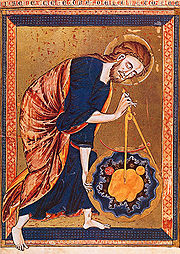 Most sources of knowledge available to early Christians were connected to pagan world-views. There were various opinions on how Christianity should regard pagan learning, which included its ideas about nature. For instance, among early Christian teachers, Tertullian
(c. 160–220) held a generally negative opinion of Greek philosophy
, while Origen
(c. 185–254) regarded it much more favorably and required his students to read nearly every work available to them.
In the Middle Ages
some leading thinkers in Judaism
, Christianity
and Islam
attempted synthesis between religion, philosophy, and natural sciences. For example, the Islamic philosopher
Averroes
, the Jewish philosopher Maimonides
, and the Christian philosopher
Augustine of Hippo
(354-430) held that if religious teachings were found to contradict certain direct observations about the natural world, then it would be obligatory to re-evaluate either the interpretation of the scientific facts or the understanding of the scriptures. The best knowledge of the cosmos was seen as an important part of arriving at a better understanding of the Bible, but not yet equal with the authority of the Bible.
The synthesizing approach has continued down to the present day; the Scot Henry Drummond, for example, wrote many articles, some of which drew on scientific knowledge to tease out and illustrate Christian ideas.
From the 11th century, however, scientific method
s were being applied by both Muslim scientists
and Christian scientists to domains such as optics
and planet
ary orbit
s, with results which threatened some of the Church
's doctrines. Christianity asserted religious certainty at the expense of scientific knowledge, by giving more explicit sanction to officially endorsed orthodox views of nature and scripture. Similar developments occurred in other religions. This approach, while it tended to temporarily stabilize doctrine, was also inclined toward making philosophical and scientific orthodoxy less open to correction, as accepted philosophy became the religiously sanctioned science. Observation and theory became subordinate to dogma. In Europe, scientists and scholars of the Enlightenment
responded to such restrictions with increasing skepticism.
still accept some or many traditional religious beliefs taught in their respective faith communities, but they no longer accept their tradition's teachings as unquestionable and infallible. Liberal
religious believers do believe in God, and believe that in some way God revealed divine will
to humanity. They differ from religious fundamentalists in that they accept that even if their religious texts were divinely inspired, they are also human documents which reflect the cultural and historic limitations and biases of their authors. Many support allegorical interpretations of Genesis
. Such believers are often comfortable with the findings of archaeological and linguistic
research and historical-critical study. They will often make use of literary and historical analysis of religious texts to understand how they developed, and to see how they might apply in our own day. This approach developed among Protestant scholars in the 18th and 19th centuries, and is now found among other Christians, Liberal Jewish communities and others.
Some religious approaches acknowledge the historical relationship between modern science and ancient doctrines. For example, John Paul II, leader of the Roman Catholic Church
, in 1981 spoke of the relationship this way: "The Bible itself speaks to us of the origin of the universe and its make-up, not in order to provide us with a scientific treatise, but in order to state the correct relationships of man with God and with the universe. Sacred Scripture wishes simply to declare that the world was created by God, and in order to teach this truth it expresses itself in the terms of the cosmology in use at the time of the writer". This statement would reflect the views of many non-Catholic Christians as well. An example of this kind of thinking is theistic evolution
.
This understanding of the role of scripture in relation to science is captured by the phrase: "The intention of the Holy Spirit
is to teach us how to go to heaven, not how the heavens go." Thomas Jay Oord
said: "The Bible tells us how to find abundant life, not the details of how life became abundant."
largely held conventional and orthodox religious views, and a number of them were prominent Churchmen. While theological issues that had the potential to be divisive were typically excluded from formal discussions of the early Society, many of its fellows nonetheless believed that their scientific activities provided support for traditional religious belief. Clerical involvement in the Royal Society remained high until the mid-nineteenth century, when science became more professionalised.
Albert Einstein
supported the compatibility of some interpretations of religion with science. In an article originally appearing in the New York Times Magazine in 1930, he wrote:
Einstein thus expresses views of ethical non-naturalism
(contrasted to ethical naturalism
).
Prominent modern scientists who are atheists
include evolutionary biologist Richard Dawkins
and Nobel prize winning physicist Stephen Weinberg. Prominent scientists advocating religious belief include Nobel prize winning physicist Charles Townes, Francis Collins
, director of the National Institutes of Health
and past head of the Human Genome Project
, and climatologist John T. Houghton
.
and have generally found that scientists are less likely to believe in God than are the rest of the population. Precise definitions and statistics vary, but generally about 1/3 are atheists, 1/3 agnostic, and 1/3 have some belief in God (although some might be deistic, for example). This is in contrast to the more than roughly 3/4 of the general population that believe in some God in the United States
. Belief also varies by field: psychologists, physicists and engineers are less likely to believe in God than mathematicians, biologists and chemists. Doctors in the United States are much more likely to believe in God (76%).
Some of the most recent research into scientists' self reported belief in God is discussed by Professor Elaine Howard Ecklund
. Some of her most interesting findings were that scientist-believers generally considered themselves "religious liberals" (not fundamentalists), and that their religion did not change the way they did science, but rather the way they reflected on its implications. Ecklund also discusses how there is a stigma against belief in God in the professional science community, which may have contributed to underrepresentation of religious voices in the field.
According to a 1996 survey of United States
scientists in the fields of biology, mathematics, and physics/astronomy, belief in a god that is "in intellectual and affective communication with humankind" was most popular among mathematician
s (about 45%) and least popular among physicist
s (about 22%). In total, about 60% of United States
scientists in these fields expressed disbelief or agnosticism toward a personal god who answers prayer and personal immortality. This compared with 58% in 1914 and 67% in 1933.
Among members of the National Academy of Sciences
, 7.0% expressed personal belief, while 72.2% expressed disbelief and another 20.8% were agnostic concerning the existence of a personal god who answers prayer.
A survey conducted between 2005 and 2007 by Elaine Howard Ecklund
of University at Buffalo, The State University of New York
and funded by the Templeton Foundation
found that over 60% of natural and social science professors at 21 elite US research universities are atheists
or agnostics
. When asked whether they believed in God, nearly 34% answered "I do not believe in God" and about 30% answering "I do not know if there is a God and there is no way to find out." According to the same survey, "[m]any scientists see themselves as having a spirituality not attached to a particular religious tradition." In further analysis, published in 2007, Ecklund and Christopher Scheitle conclude that "the assumption that becoming a scientist necessarily leads to loss of religion is untenable" and that "[i]t appears that those from non-religious backgrounds disproportionately self-select into scientific professions. This may reflect the fact that there is tension between the religious tenets of some groups and the theories and methods of particular sciences and it contributes to the large number of non-religious scientists."
An explanation has been offered by Farr Curlin, a University of Chicago Instructor in Medicine and a member of the MacLean Center for Clinical Medical Ethics, that science-minded religious people instead elect to study medicine. He helped author a study that "found that 76 percent of doctors believe in God and 59 percent believe in some sort of afterlife." and "90 percent of doctors in the United States attend religious services at least occasionally, compared to 81 percent of all adults." He reasoned, "The responsibility to care for those who are suffering and the rewards of helping those in need resonate throughout most religious traditions."
Another study conducted by the Pew Research Center
found that "just over half of scientists (51%) believe in some form of deity or higher power; specifically, 33% of scientists say they believe in God, while 18% believe in a universal spirit or higher power." 48% say they have a religious affiliation, equal to the number who say they are not affiliated with any religious tradition. The survey also found younger scientists to be "substantially more likely than their older counterparts to say they believe in God". Among the surveyed fields, chemists were the most likely to say they believe in God.
Religious beliefs of US professors, many in scientific fields, were recently examined using a nationally representative sample of more than 1400, published in Sociology of Religion. The researchers reported that "Contrary to the view that religious skepticism predominates in the academy, we find that the majority of professors, even at elite research institutions, are religious believers" (p. 101). Beliefs varied across disciplines, and "the most religious fields are applied ones outside the traditional liberal arts core, whose instructors may come closer to resembling the general population in terms of attitudes and values.... At the other extreme, psychology and mechanical engineering have the highest proportion of atheists [50 and 44 percent], while 60.8 percent of biologists are either atheists or agnostics" (p. 115). The researchers concluded that among US professors, "less than a quarter could be classified as complete nonbelievers.... even at elite schools, there are
more professors who are religious than who are nonbelievers, which suggests
that in academe—as in American society more generally—secularization has
entailed more the privatization of religious belief... than its elimination" (p. 124).
Ecklund and Sheitle's 2005-2007 survey also compared differences between natural and social scientists at the 21 elite US research universities that they surveyed. Analyses of the more than 1600 responses indicated that "differences in religiosity between natural and social scientists are simply no longer a meaningful descriptor of the place of religion in the academy. For the most part, there is little difference between these larger fields [social versus natural science] or between the specific disciplines themselves. The differences that do exist are seen among chemists and political scientists who are more likely to be religious, according to traditional indicators, when compared to physicists" (p. 299).
as a social or psychological phenomenon. These include studies on the correlation between religiosity and intelligence
(often IQ, but also other factors). A recent study on serotonin
receptors and religiosity suggests a correlation between low density of serotonin receptors and intense religious experiences. Also of popular interest are the studies regarding prayer
and medicine
, in particular whether there is any causal or correlative link between spiritual supplication and improvement of health. Surveys by Gallup
, the National Opinion Research Centre and the Pew Organisation conclude that spiritually committed people are twice as likely to report being "very happy" than the least religiously committed people. An analysis of over 200 social studies that "high religiousness predicts a rather lower risk of depression and drug abuse and fewer suicide attempts, and more reports of satisfaction with life and a sense of well-being." A review of 498 studies published in peer-reviewed journals concluded that a large majority of these studies showed a positive correlation between religious commitment and higher levels of perceived well-being and self-esteem, and lower levels of hypertension, depression and clinical delinquency. Surveys suggest a strong link between faith and altruism. Studies by Keith Ward
show that overall religion is a positive contributor to mental health. Michael Argyle
and others claim that there is little or no evidence that religion ever causes mental disorders.
Other studies have shown that certain mental disorders, such as schizophrenia and obsessive-compulsive disorder, are also associated with high levels of religiosity. In addition, anti-psychotic medication, which is mainly aimed to block dopamine receptors, typically reduces religious behaviour and religious delusions.
Some historians, philosophers and scientists hope that the theory of memetics
, reminiscent of the theory of genetics
, will allow the modeling of the evolution of human culture, including the evolutionary origin of religions
. Daniel Dennett
's book Breaking the Spell (2006) attempts to begin such an analysis of modern religions. The idea that evolutionary processes are involved in the development of human culture and religion is not particularly controversial among natural scientists, although other approaches based on social sciences such as anthropology
, psychology
, sociology
and economics
are more prevalent in academic use.
, the Ian Ramsey Centre, and the Faraday Institute
. Journals addressing the relationship between science and religion include Theology and Science
and Zygon: Journal of Religion & Science
.
By tradition:
In the US:
Demarcation problem
The demarcation problem in the philosophy of science is about how and where to draw the lines around science. The boundaries are commonly drawn between science and non-science, between science and pseudoscience, between science and philosophy and between science and religion...
. Somewhat related is the claim that science
Science
Science is a systematic enterprise that builds and organizes knowledge in the form of testable explanations and predictions about the universe...
and religion
Religion
Religion is a collection of cultural systems, belief systems, and worldviews that establishes symbols that relate humanity to spirituality and, sometimes, to moral values. Many religions have narratives, symbols, traditions and sacred histories that are intended to give meaning to life or to...
may pursue knowledge using different methodologies. Whereas the scientific method
Scientific method
Scientific method refers to a body of techniques for investigating phenomena, acquiring new knowledge, or correcting and integrating previous knowledge. To be termed scientific, a method of inquiry must be based on gathering empirical and measurable evidence subject to specific principles of...
basically relies on reason
Reason
Reason is a term that refers to the capacity human beings have to make sense of things, to establish and verify facts, and to change or justify practices, institutions, and beliefs. It is closely associated with such characteristically human activities as philosophy, science, language, ...
and empiricism
Empiricism
Empiricism is a theory of knowledge that asserts that knowledge comes only or primarily via sensory experience. One of several views of epistemology, the study of human knowledge, along with rationalism, idealism and historicism, empiricism emphasizes the role of experience and evidence,...
, religion also seeks (at times, primarily) to acknowledge revelation
Revelation
In religion and theology, revelation is the revealing or disclosing, through active or passive communication with a supernatural or a divine entity...
, faith
Faith
Faith is confidence or trust in a person or thing, or a belief that is not based on proof. In religion, faith is a belief in a transcendent reality, a religious teacher, a set of teachings or a Supreme Being. Generally speaking, it is offered as a means by which the truth of the proposition,...
and sacredness. Some scholars say science and religion are separate, as in John William Draper
John William Draper
John William Draper was an American scientist, philosopher, physician, chemist, historian, and photographer. He is credited with producing the first clear photograph of a female face and the first detailed photograph of the Moon...
's conflict thesis
Conflict thesis
The conflict thesis proposes an intrinsic intellectual conflict between religion and science. The original historical usage of the term denoted that the historical record indicates religion’s perpetual opposition to science. Later uses of the term denote religion’s epistemological opposition to...
and Stephen Jay Gould
Stephen Jay Gould
Stephen Jay Gould was an American paleontologist, evolutionary biologist, and historian of science. He was also one of the most influential and widely read writers of popular science of his generation....
's non-overlapping magisteria
Non-overlapping magisteria
Non-overlapping magisteria is the view advocated by Stephen Jay Gould that "science and religion do not glower at each other... [but] interdigitate in patterns of complex fingering, and at every fractal scale of self-similarity." He suggests, with examples, that "NOMA enjoys strong and fully...
, while others (John Lennox
John Lennox
John Carson Lennox is Professor of Mathematics at the University of Oxford, Fellow in Mathematics, Philosophy of Science and Pastoral Advisor at Green Templeton College of Oxford University...
, Thomas Berry
Thomas Berry
Thomas Berry, C.P. was a Catholic priest of the Passionist order, cultural historian and ecotheologian ....
, Brian Swimme
Brian Swimme
Brian Thomas Swimme is on the faculty of the California Institute of Integral Studies, in San Francisco, where he teaches evolutionary cosmology to graduate students in the humanities. He received his Ph.D. from the department of mathematics at the University of Oregon for work in singularity...
, Ken Wilber
Ken Wilber
Kenneth Earl Wilber II is an American author who has written about mysticism, philosophy, ecology, and developmental psychology. His work formulates what he calls Integral Theory. In 1998, he founded the Integral Institute, for teaching and applications of Integral theory.-Biography:Ken Wilber was...
, et al.) propose an interconnection.
Perspectives
- Conflict, stating the disciplines contradict and are incompatible with each other.
- For example, John William DraperJohn William DraperJohn William Draper was an American scientist, philosopher, physician, chemist, historian, and photographer. He is credited with producing the first clear photograph of a female face and the first detailed photograph of the Moon...
and Andrew Dickson WhiteAndrew Dickson WhiteAndrew Dickson White was a U.S. diplomat, historian, and educator, who was the co-founder of Cornell University.-Family and personal life:...
's conflict thesisConflict thesisThe conflict thesis proposes an intrinsic intellectual conflict between religion and science. The original historical usage of the term denoted that the historical record indicates religion’s perpetual opposition to science. Later uses of the term denote religion’s epistemological opposition to...
- For example, John William Draper
- Independence treating each as quite separate realms of enquiry.
- For example, Stephen Jay GouldStephen Jay GouldStephen Jay Gould was an American paleontologist, evolutionary biologist, and historian of science. He was also one of the most influential and widely read writers of popular science of his generation....
's Non-Overlapping MagisteriaNon-overlapping magisteriaNon-overlapping magisteria is the view advocated by Stephen Jay Gould that "science and religion do not glower at each other... [but] interdigitate in patterns of complex fingering, and at every fractal scale of self-similarity." He suggests, with examples, that "NOMA enjoys strong and fully...
(NOMA)
- For example, Stephen Jay Gould
- Dialogue suggesting that each field has things to say to each other about phenomena in which their interests overlap.
- For example, William G. PollardWilliam G. PollardWilliam Grosvenor Pollard was a physicist and an Episcopal priest. He started his career as a professor of physics in 1936 at University of Tennessee. In 1946 he championed the organization of the Oak Ridge Institute of Nuclear Studies . He was its executive director until 1974. He was ordained...
's studies in Physicist and ChristianPhysicist and ChristianPhysicist and Christian: A dialogue between the communities is a book by William G. Pollard. Much of the attention given to the book such as its review in Time magazine has been attributed to the fact that Pollard was not only a well-respected physicist but also an Anglican priest...
: A dialogue between the communities
- For example, William G. Pollard
- Integration aiming to unify both fields into a single discourse.
- For example, Pierre Teilhard de ChardinPierre Teilhard de ChardinPierre Teilhard de Chardin SJ was a French philosopher and Jesuit priest who trained as a paleontologist and geologist and took part in the discovery of both Piltdown Man and Peking Man. Teilhard conceived the idea of the Omega Point and developed Vladimir Vernadsky's concept of Noosphere...
's Omega PointOmega pointOmega Point is a term coined by the French Jesuit Pierre Teilhard de Chardin to describe a maximum level of complexity and consciousness towards which he believed the universe was evolving....
and Ian BarbourIan BarbourIan Graeme Barbour, born 5 October 1923, is an American scholar on the relationship between science and religion. According to the Public Broadcasting Service his mid-1960s Issues in Science and Religion "has been credited with literally creating the contemporary field of science and religion."In...
's sympathy towards process philosophyProcess philosophyProcess philosophy identifies metaphysical reality with change and dynamism. Since the time of Plato and Aristotle, philosophers have posited true reality as "timeless", based on permanent substances, whilst processes are denied or subordinated to timeless substances...
/process theologyProcess theologyProcess theology is a school of thought influenced by the metaphysical process philosophy of Alfred North Whitehead and further developed by Charles Hartshorne . While there are process theologies that are similar, but unrelated to the work of Whitehead the term is generally applied to the...
- For example, Pierre Teilhard de Chardin
This typology is similar to ones found in Ian Barbour
Ian Barbour
Ian Graeme Barbour, born 5 October 1923, is an American scholar on the relationship between science and religion. According to the Public Broadcasting Service his mid-1960s Issues in Science and Religion "has been credited with literally creating the contemporary field of science and religion."In...
and John Haught
John Haught
John F. Haught is a Roman Catholic theologian and Senior Research Fellow at the Woodstock Theological Center at Georgetown University. His area of expertise is systematic theology, with a special interest in issues of science, cosmology, ecology, and reconciling evolution and religion...
. More typologies that categorize this relationship can be found among the works of other science and religion scholars such as Arthur Peacocke.
Conflict
A variety of historical, philosophical, and scientific arguments have been put forth in favor of the idea that science and religion are in conflict. Historical examples of religious individuals or institutions promoting claims that contradict both contemporary and modern scientific consensusScientific consensus
Scientific consensus is the collective judgment, position, and opinion of the community of scientists in a particular field of study. Consensus implies general agreement, though not necessarily unanimity. Scientific consensus is not by itself a scientific argument, and it is not part of the...
include creationism
Creationism
Creationism is the religious beliefthat humanity, life, the Earth, and the universe are the creation of a supernatural being, most often referring to the Abrahamic god. As science developed from the 18th century onwards, various views developed which aimed to reconcile science with the Genesis...
(see level of support for evolution
Level of support for evolution
The level of support for evolution among scientists, the public and other groups is a topic that frequently arises in the creation-evolution controversy and touches on educational, religious, philosophical, scientific and political issues. The subject is primarily contentious in the United States...
), and more recently, Pope Benedict XVI
Pope Benedict XVI
Benedict XVI is the 265th and current Pope, by virtue of his office of Bishop of Rome, the Sovereign of the Vatican City State and the leader of the Catholic Church as well as the other 22 sui iuris Eastern Catholic Churches in full communion with the Holy See...
's 2009 statements claiming that the use of condoms to combat the AIDS epidemic in Africa was ineffective and counterproductive. In the Galileo affair
Galileo affair
The Galileo affair was a sequence of events, beginning around 1610, during which Galileo Galilei came into conflict with the Aristotelian scientific view of the universe , over his support of Copernican astronomy....
, the acceptance, from 1616 to 1757, of the Greek geocentric model
Geocentric model
In astronomy, the geocentric model , is the superseded theory that the Earth is the center of the universe, and that all other objects orbit around it. This geocentric model served as the predominant cosmological system in many ancient civilizations such as ancient Greece...
(Ptolemaic system) by the Roman Catholic Church
Roman Catholic Church
The Catholic Church, also known as the Roman Catholic Church, is the world's largest Christian church, with over a billion members. Led by the Pope, it defines its mission as spreading the gospel of Jesus Christ, administering the sacraments and exercising charity...
, and its consequent opposition to heliocentrism
Heliocentrism
Heliocentrism, or heliocentricism, is the astronomical model in which the Earth and planets revolve around a stationary Sun at the center of the universe. The word comes from the Greek . Historically, heliocentrism was opposed to geocentrism, which placed the Earth at the center...
, was first called into question by the Catholic cleric Copernicus, and subsequently disproved conclusively by Galileo, who was persecuted for his minority view. Additionally, long held religious claims have been challenged by scientific studies such as STEP, which examined the efficacy of prayer
Efficacy of prayer
Determining the efficacy of prayer has been attempted in various studies since Francis Galton first addressed it in 1872. Some studies have reported benefit, some have reported harm, and some have found no benefit from the act of praying. Others suggest that the topic is outside the realm of...
. A number of scientists including Jerry Coyne
Jerry Coyne
-Online articles:* , The New Republic* , The New Republic* , The New Republic* ", The New Republic * -Online articles:* , The New Republic* , The New Republic* , The New Republic* ", The New Republic (Review of Michael Behe's The Edge of Evolution)* -Online articles:* , The New Republic* , The...
have made an argument for a philosophical incompatibility between religion and science. An argument for the conflict between religion and science that combines the historical and philosophical approaches has been presented by Neil Degrasse Tyson
Neil deGrasse Tyson
Neil deGrasse Tyson is an American astrophysicist, a science communicator, the Frederick P. Rose Director of the Hayden Planetarium at the Rose Center for Earth and Space, and a Research Associate in the Department of Astrophysics at the American Museum of Natural History...
—Tyson argues that religious scientists, such as Isaac Newton
Isaac Newton
Sir Isaac Newton PRS was an English physicist, mathematician, astronomer, natural philosopher, alchemist, and theologian, who has been "considered by many to be the greatest and most influential scientist who ever lived."...
, could have achieved more had they not accepted religious answers to unresolved scientific issues.
Conflict thesis
The conflict thesisConflict thesis
The conflict thesis proposes an intrinsic intellectual conflict between religion and science. The original historical usage of the term denoted that the historical record indicates religion’s perpetual opposition to science. Later uses of the term denote religion’s epistemological opposition to...
, which holds that religion and science have been in conflict continuously throughout history, was popularized in the 19th century by John William Draper
John William Draper
John William Draper was an American scientist, philosopher, physician, chemist, historian, and photographer. He is credited with producing the first clear photograph of a female face and the first detailed photograph of the Moon...
and Andrew Dickson White
Andrew Dickson White
Andrew Dickson White was a U.S. diplomat, historian, and educator, who was the co-founder of Cornell University.-Family and personal life:...
. Most contemporary historians of science now reject the conflict thesis in its original form, arguing instead that it has been superseded by subsequent historical research indicating a more nuanced understanding:
Today, much of the scholarship in which the conflict thesis was originally based is considered to be inaccurate. For instance, the claim that people of the Middle Ages
Middle Ages
The Middle Ages is a periodization of European history from the 5th century to the 15th century. The Middle Ages follows the fall of the Western Roman Empire in 476 and precedes the Early Modern Era. It is the middle period of a three-period division of Western history: Classic, Medieval and Modern...
widely believed that the Earth was flat
Flat Earth
The Flat Earth model is a belief that the Earth's shape is a plane or disk. Most ancient cultures have had conceptions of a flat Earth, including Greece until the classical period, the Bronze Age and Iron Age civilizations of the Near East until the Hellenistic period, India until the Gupta period ...
was first propagated in the same period that originated the conflict thesis and is still very common in popular culture. Modern scholars regard this claim as mistaken, as the contemporary historians of science David C. Lindberg
David C. Lindberg
David C. Lindberg is an American historian of science. His main focus is in the history of medieval and early modern science, especially physical science and the relationship between religion and science. Lindberg is the author or editor of many books and received numerous grants and awards...
and Ronald L. Numbers write: "there was scarcely a Christian scholar of the Middle Ages who did not acknowledge [earth's] sphericity and even know its approximate circumference."
Other misconceptions such as: "the Church prohibited autopsies and dissections during the Middle Ages," "the rise of Christianity killed off ancient science," and "the medieval Christian church suppressed the growth of the natural sciences," are all reported by Numbers as examples of widely popular myths that still pass as historical truth, even though they are not supported by current historical research. They help maintain the popular image of "the warfare of science and religion."
While H. Floris Cohen
H. Floris Cohen
- Life :Cohen studied history at the University of Leiden, receiving a Ph.D. in 1974. He is currently a professor in the Comparative History of the Science at the University of Utrecht...
states that most scholars reject crude articulations of the conflict thesis, such as Andrew D. White's, he also states that milder versions of this thesis still hold some sway. This is because "it remains an incontrovertible fact of history that, to say the least, the new science was accorded a less than enthusiastic acclaim by many religious authorities at the time." Cohen therefore considers it paradoxical "that the rise of early modern science was due at least in part to developments in Christian thought—in particular, to certain aspects of Protestantism" (a thesis first developed as what is now sometimes called the Merton thesis
Merton Thesis
The Merton Thesis is an argument about the nature of early experimental science proposed by Robert K. Merton. Similar to Max Weber's famous claim on the link between Protestant ethic and the capitalist economy, Merton argued for a similar positive correlation between the rise of Protestant pietism...
). In recent years, Oxford historian Peter Harrison
Peter Harrison (historian)
Peter Harrison is the Andreas Idreos Professor of Science and Religion, Director of the Ian Ramsey Centre, and a Fellow of Harris Manchester College at Oxford University.-Career:...
has further developed the idea that the Protestant Reformation had a significant and positive influence on the development of modern science. A review of alternatives to the White/Draper conflict thesis has been composed by Ian G. Barbour.
Independence
A modern view, described by Stephen Jay GouldStephen Jay Gould
Stephen Jay Gould was an American paleontologist, evolutionary biologist, and historian of science. He was also one of the most influential and widely read writers of popular science of his generation....
as "non-overlapping magisteria
Non-overlapping magisteria
Non-overlapping magisteria is the view advocated by Stephen Jay Gould that "science and religion do not glower at each other... [but] interdigitate in patterns of complex fingering, and at every fractal scale of self-similarity." He suggests, with examples, that "NOMA enjoys strong and fully...
" (NOMA), is that science and religion deal with fundamentally separate aspects of human experience and so, when each stays within its own domain, they co-exist peacefully. While Gould spoke of independence from the perspective of science, W. T. Stace viewed independence from the perspective of the philosophy of religion. Stace felt that science and religion, when each is viewed in its own domain, are both consistent and complete.
Both science and religion represent distinct ways of approaching experience and these differences are sources of debate. Science is closely tied to mathematics—a very abstract experience, while religion is more closely tied to the ordinary experience of life. As interpretations of experience, science is descriptive
Positive science
In the humanities and social sciences, the term positive is used in at least two ways.The most common usage refers to analysis or theories which only attempt to describe how things 'are', as opposed to how they 'should' be. Positive means also 'value free'. In this sense, the opposite of positive...
and religion is prescriptive
Normative
Normative has specialized contextual meanings in several academic disciplines. Generically, it means relating to an ideal standard or model. In practice, it has strong connotations of relating to a typical standard or model ....
. For science and mathematics to concentrate on what the world ought to be like in the way that religion does can be inappropriate and may lead to improperly ascribing properties to the natural world as happened among the followers of Pythagoras
Pythagoras
Pythagoras of Samos was an Ionian Greek philosopher, mathematician, and founder of the religious movement called Pythagoreanism. Most of the information about Pythagoras was written down centuries after he lived, so very little reliable information is known about him...
in the sixth century B.C. In contrast, proponents of a normative moral science
Science of morality
Science of morality can refer to a number of ethically naturalistic views. Historically, the term was introduced by Jeremy Bentham . In meta-ethics, ethical naturalism bases morality on rational and empirical consideration of the natural world...
take issue with the idea that science has no way of guiding "oughts".
The reverse situation, where religion attempts to be descriptive, can also lead to inappropriately assigning properties to the natural world. A notable example is the now defunct belief in the Ptolemy
Ptolemy
Claudius Ptolemy , was a Roman citizen of Egypt who wrote in Greek. He was a mathematician, astronomer, geographer, astrologer, and poet of a single epigram in the Greek Anthology. He lived in Egypt under Roman rule, and is believed to have been born in the town of Ptolemais Hermiou in the...
planetary model that held sway until changes in scientific and religious thinking were brought about by Galileo and proponents of his views.
Parallels in method
Thomas S. Kuhn asserted that science is made up of paradigms that arise from cultural traditions, which is similar to the secular perspective on religion.Michael Polanyi
Michael Polanyi
Michael Polanyi, FRS was a Hungarian–British polymath, who made important theoretical contributions to physical chemistry, economics, and the theory of knowledge...
asserted that it is merely a commitment to universality
Universality (philosophy)
In philosophy, universalism is a doctrine or school claiming universal facts can be discovered and is therefore understood as being in opposition to relativism. In certain religions, universality is the quality ascribed to an entity whose existence is consistent throughout the universe...
that protects against subjectivity
Subjectivity
Subjectivity refers to the subject and his or her perspective, feelings, beliefs, and desires. In philosophy, the term is usually contrasted with objectivity.-Qualia:...
and has nothing at all to do with personal detachment as found in many conceptions of the scientific method. Polanyi further asserted that all knowledge is personal and therefore the scientist must be performing a very personal if not necessarily subjective role when doing science. Polanyi added that the scientist often merely follows intuitions of "intellectual beauty, symmetry, and 'empirical agreement'". Polanyi held that science requires moral commitments similar to those found in religion.
Two physicists, Charles A. Coulson and Harold K. Schilling
Harold K. Schilling
Harold K. Schilling was a professor of physics at Pennsylvania State University. He had served as chairman of the physics department and then as dean of the graduate school. He also wrote extensively about science and religion.-Works:...
, both claimed that "the methods of science and religion have much in common." Schilling asserted that both fields—science and religion—have "a threefold structure—of experience, theoretical interpretation, and practical application." Coulson asserted that science, like religion, "advances by creative imagination" and not by "mere collecting of facts," while stating that religion should and does "involve critical reflection on experience not unlike that which goes on in science." Religious language and scientific language also show parallels (cf. Rhetoric of science
Rhetoric of science
Rhetoric of science is a body of scholarly literature exploring the notion that the practice of science is a rhetorical activity. It emerged from a number of disciplines during the late twentieth century, including the disciplines of sociology, history, and philosophy of science, but it is...
).
Dialogue
A degree of concord between science and religion can be seen in religious belief and empirical science. The belief that God created the world and therefore humans, can lead to the view that he arranged for humans to know the world. This is underwritten by the doctrine of imago deiImago Dei
The Image of God is a concept and theological doctrine within the Abrahamic religions which asserts that human beings are created in God's image and therefore have inherent value independent of their utility or function.-Biblical description:...
. In the words of Thomas Aquinas
Thomas Aquinas
Thomas Aquinas, O.P. , also Thomas of Aquin or Aquino, was an Italian Dominican priest of the Catholic Church, and an immensely influential philosopher and theologian in the tradition of scholasticism, known as Doctor Angelicus, Doctor Communis, or Doctor Universalis...
, "Since human beings are said to be in the image of God in virtue of their having a nature that includes an intellect, such a nature is most in the image of God in virtue of being most able to imitate God".
Many well-known historical figures who influenced Western science considered themselves Christian such as Copernicus
Nicolaus Copernicus
Nicolaus Copernicus was a Renaissance astronomer and the first person to formulate a comprehensive heliocentric cosmology which displaced the Earth from the center of the universe....
, Galileo
Galileo Galilei
Galileo Galilei , was an Italian physicist, mathematician, astronomer, and philosopher who played a major role in the Scientific Revolution. His achievements include improvements to the telescope and consequent astronomical observations and support for Copernicanism...
, Kepler
Johannes Kepler
Johannes Kepler was a German mathematician, astronomer and astrologer. A key figure in the 17th century scientific revolution, he is best known for his eponymous laws of planetary motion, codified by later astronomers, based on his works Astronomia nova, Harmonices Mundi, and Epitome of Copernican...
, and Boyle
Robert Boyle
Robert Boyle FRS was a 17th century natural philosopher, chemist, physicist, and inventor, also noted for his writings in theology. He has been variously described as English, Irish, or Anglo-Irish, his father having come to Ireland from England during the time of the English plantations of...
.
The Pew Forum has published data on attitudes about religion and science.
Concerns over the nature of reality
Science in the EnlightenmentAge of Enlightenment
The Age of Enlightenment was an elite cultural movement of intellectuals in 18th century Europe that sought to mobilize the power of reason in order to reform society and advance knowledge. It promoted intellectual interchange and opposed intolerance and abuses in church and state...
and Colonial eras was conceived as ontological investigation which uncovered 'facts' about physical nature. This was often explicitly opposed to Christian Theology and the latter's assertions of truth based on doctrine. This particular perspective on science faded in the early 20th century with the decline of logical empiricism and the rise of linguistic and sociological understandings of science. Modern scientists are less concerned with establishing universal or ontological truth (which is seen, and dismissed, as the pursuit of philosophy), and more inclined towards the creation of pragmatic, functional models of physical systems. Christian Theology—excluding those fundamentalist churches whose aim is to reassert doctrinal truths—has likewise softened many of its ontological claims, due to increased exposure to both scientific insights and the contrasting theological claims of other faiths.
Scientific and theological perspectives often coexist peacefully. Non-Christian faiths have historically integrated well with scientific ideas, as in the ancient Egypt
Ancient Egypt
Ancient Egypt was an ancient civilization of Northeastern Africa, concentrated along the lower reaches of the Nile River in what is now the modern country of Egypt. Egyptian civilization coalesced around 3150 BC with the political unification of Upper and Lower Egypt under the first pharaoh...
ian technological mastery applied to monotheistic ends, the flourishing of logic
Logic
In philosophy, Logic is the formal systematic study of the principles of valid inference and correct reasoning. Logic is used in most intellectual activities, but is studied primarily in the disciplines of philosophy, mathematics, semantics, and computer science...
and mathematics
Mathematics
Mathematics is the study of quantity, space, structure, and change. Mathematicians seek out patterns and formulate new conjectures. Mathematicians resolve the truth or falsity of conjectures by mathematical proofs, which are arguments sufficient to convince other mathematicians of their validity...
under Hinduism
Hinduism
Hinduism is the predominant and indigenous religious tradition of the Indian Subcontinent. Hinduism is known to its followers as , amongst many other expressions...
and Buddhism
Buddhism
Buddhism is a religion and philosophy encompassing a variety of traditions, beliefs and practices, largely based on teachings attributed to Siddhartha Gautama, commonly known as the Buddha . The Buddha lived and taught in the northeastern Indian subcontinent some time between the 6th and 4th...
, and the scientific advances made by Muslim
Islam
Islam . The most common are and . : Arabic pronunciation varies regionally. The first vowel ranges from ~~. The second vowel ranges from ~~~...
scholars during the Ottoman empire
Ottoman Empire
The Ottoman EmpireIt was usually referred to as the "Ottoman Empire", the "Turkish Empire", the "Ottoman Caliphate" or more commonly "Turkey" by its contemporaries...
. Even many 19th century Christian communities welcomed scientists who claimed that science was not at all concerned with discovering the ultimate nature of reality.
Bahá'í
A fundamental principle of the Bahá'í FaithBahá'í Faith
The Bahá'í Faith is a monotheistic religion founded by Bahá'u'lláh in 19th-century Persia, emphasizing the spiritual unity of all humankind. There are an estimated five to six million Bahá'ís around the world in more than 200 countries and territories....
is the harmony of religion and science. Bahá'í scripture
Bahá'í literature
Bahá'í literature, like much religious text, covers a variety of topics and forms, including scripture and inspiration, interpretation, history and biography, introduction and study materials, and apologia...
asserts that true science
Science
Science is a systematic enterprise that builds and organizes knowledge in the form of testable explanations and predictions about the universe...
and true religion
Religion
Religion is a collection of cultural systems, belief systems, and worldviews that establishes symbols that relate humanity to spirituality and, sometimes, to moral values. Many religions have narratives, symbols, traditions and sacred histories that are intended to give meaning to life or to...
can never be in conflict. `Abdu'l-Bahá
`Abdu'l-Bahá
‘Abdu’l-Bahá , born ‘Abbás Effendí, was the eldest son of Bahá'u'lláh, the founder of the Bahá'í Faith. In 1892, `Abdu'l-Bahá was appointed in his father's will to be his successor and head of the Bahá'í Faith. `Abdu'l-Bahá was born in Tehran to an aristocratic family of the realm...
, the son of the founder of the religion, stated that religion without science is superstition and that science without religion is materialism. He also admonished that true religion must conform to the conclusions of science.
Buddhism
BuddhismBuddhism
Buddhism is a religion and philosophy encompassing a variety of traditions, beliefs and practices, largely based on teachings attributed to Siddhartha Gautama, commonly known as the Buddha . The Buddha lived and taught in the northeastern Indian subcontinent some time between the 6th and 4th...
and science have increasingly been discussed as compatible. Some philosophic and psychological teachings within Buddhism share commonalities with modern Western scientific and philosophic thought. For example, Buddhism encourages the impartial investigation of nature (an activity referred to as Dhamma-Vicaya
Dhamma Vicaya
In Buddhism, dhamma vicaya has been variously translated as the "analysis of qualities," "discrimination of dhammas," "discrimination of states," "investigation of doctrine,"...
in the Pali Canon
Pāli Canon
The Pāli Canon is the standard collection of scriptures in the Theravada Buddhist tradition, as preserved in the Pāli language. It is the only completely surviving early Buddhist canon, and one of the first to be written down...
)—the principal object of study being oneself. A reliance on causality
Causality
Causality is the relationship between an event and a second event , where the second event is understood as a consequence of the first....
and empiricism
Empiricism
Empiricism is a theory of knowledge that asserts that knowledge comes only or primarily via sensory experience. One of several views of epistemology, the study of human knowledge, along with rationalism, idealism and historicism, empiricism emphasizes the role of experience and evidence,...
are common philosophical principles shared between Buddhism and science. However, Buddhism doesn't focus on materialism
Materialism
In philosophy, the theory of materialism holds that the only thing that exists is matter; that all things are composed of material and all phenomena are the result of material interactions. In other words, matter is the only substance...
.
Tenzin Gyatso, the 14th Dalai Lama
Dalai Lama
The Dalai Lama is a high lama in the Gelug or "Yellow Hat" branch of Tibetan Buddhism. The name is a combination of the Mongolian word далай meaning "Ocean" and the Tibetan word bla-ma meaning "teacher"...
, spends a lot of time with scientists. In his book, "The Universe in a Single Atom" he wrote, "My confidence in venturing into science lies in my basic belief that as in science, so in Buddhism, understanding the nature of reality is pursued by means of critical investigation." and "If scientific analysis were conclusively to demonstrate certain claims in Buddhism to be false," he says, "then we must accept the findings of science and abandon those claims."
Christianity
Evolution
Evolution is any change across successive generations in the heritable characteristics of biological populations. Evolutionary processes give rise to diversity at every level of biological organisation, including species, individual organisms and molecules such as DNA and proteins.Life on Earth...
or relativity
Theory of relativity
The theory of relativity, or simply relativity, encompasses two theories of Albert Einstein: special relativity and general relativity. However, the word relativity is sometimes used in reference to Galilean invariance....
. Many early interpretations of evolution polarized themselves around a struggle for existence
Survival of the fittest
"Survival of the fittest" is a phrase originating in evolutionary theory, as an alternative description of Natural selection. The phrase is today commonly used in contexts that are incompatible with the original meaning as intended by its first two proponents: British polymath philosopher Herbert...
. These ideas were significantly countered by later findings of universal patterns of biological cooperation
Sociobiology
Sociobiology is a field of scientific study which is based on the assumption that social behavior has resulted from evolution and attempts to explain and examine social behavior within that context. Often considered a branch of biology and sociology, it also draws from ethology, anthropology,...
. According to John Habgood, all man really knows here is that the universe
Universe
The Universe is commonly defined as the totality of everything that exists, including all matter and energy, the planets, stars, galaxies, and the contents of intergalactic space. Definitions and usage vary and similar terms include the cosmos, the world and nature...
seems to be a mix of good and evil, beauty
Beauty
Beauty is a characteristic of a person, animal, place, object, or idea that provides a perceptual experience of pleasure, meaning, or satisfaction. Beauty is studied as part of aesthetics, sociology, social psychology, and culture...
and pain
Pain
Pain is an unpleasant sensation often caused by intense or damaging stimuli such as stubbing a toe, burning a finger, putting iodine on a cut, and bumping the "funny bone."...
, and that suffering
Suffering
Suffering, or pain in a broad sense, is an individual's basic affective experience of unpleasantness and aversion associated with harm or threat of harm. Suffering may be qualified as physical or mental. It may come in all degrees of intensity, from mild to intolerable. Factors of duration and...
may somehow be part of the process of creation. Habgood holds that Christians should not be surprised that suffering may be used creatively by God
God
God is the English name given to a singular being in theistic and deistic religions who is either the sole deity in monotheism, or a single deity in polytheism....
, given their faith in the symbol of the Cross
Christian cross
The Christian cross, seen as a representation of the instrument of the crucifixion of Jesus Christ, is the best-known religious symbol of Christianity...
. Habgood states that Christians have for two millennia believed in the love
Love
Love is an emotion of strong affection and personal attachment. In philosophical context, love is a virtue representing all of human kindness, compassion, and affection. Love is central to many religions, as in the Christian phrase, "God is love" or Agape in the Canonical gospels...
of God because he revealed "Himself as Love in Jesus Christ," not because the physical universe does or does not point to the value of love.
Robert John Russell
Robert John Russell
Robert John Russell is founder and Director of the Center for Theology and the Natural Sciences . He is also the Ian G. Barbour Professor of Theology and Science in Residence at the Graduate Theological Union...
has examined consonance and dissonance between modern physics, evolutionary biology, and Christian theology.
Reconciliation in Britain in the early 20th century
In Reconciling Science and Religion: The Debate in Early-twentieth-century Britain, historian of biology Peter J. Bowler
Peter J. Bowler
Peter J. Bowler is a historian of biology who has written extensively on the history of evolutionary thought, the history of the environmental sciences, and on the history of genetics. His 1984 book, Evolution: The History of an Idea is a standard textbook on the history of evolution, and was...
argues that in contrast to the conflicts between science and religion in the U.S. in the 1920s (most famously the Scopes Trial
Scopes Trial
The Scopes Trial—formally known as The State of Tennessee v. John Thomas Scopes and informally known as the Scopes Monkey Trial—was a landmark American legal case in 1925 in which high school science teacher, John Scopes, was accused of violating Tennessee's Butler Act which made it unlawful to...
), during this period Great Britain experienced a concerted effort at reconciliation, championed by intellectually conservative scientists, supported by liberal theologians but opposed by younger scientists and secularists and conservative Christians
Conservative Christianity
Conservative Christianity is a term applied to a number of groups or movements seen as giving priority to traditional Christian beliefs and practices...
. These attempts at reconciliation fell apart in the 1930s due to increased social tensions, moves towards neo-orthodox theology and the acceptance of the modern evolutionary synthesis
Modern evolutionary synthesis
The modern evolutionary synthesis is a union of ideas from several biological specialties which provides a widely accepted account of evolution...
.
Confucianism and traditional Chinese religion
The historical process of Confucianism has largely been antipathic towards scientific discovery. However the religiophilosophical system itself is more neutral on the subject than such an analysis might suggest. In his writings On Heaven, Xunzi espoused a proto-scientific world view. However during the Han Synthesis the more anti-empirical MenciusMencius
Mencius was a Chinese philosopher who was arguably the most famous Confucian after Confucius himself.-Life:Mencius, also known by his birth name Meng Ke or Ko, was born in the State of Zou, now forming the territory of the county-level city of Zoucheng , Shandong province, only thirty kilometres ...
was favored and combined with Daoist skepticism regarding the nature of reality. Likewise, during the Medieval period, Zhu Xi
Zhu Xi
Zhū Xī or Chu Hsi was a Song Dynasty Confucian scholar who became the leading figure of the School of Principle and the most influential rationalist Neo-Confucian in China...
argued against technical investigation and specialization proposed by Chen Liang. After contact with the West, scholars such as Wang Fuzhi
Wang Fuzhi
Wang Fuzhi , 1619–1692) courtesy name Ernong , pseudonym Chuanshan , was a Chinese philosopher of the late Ming, early Qing dynasties.-Life:...
would rely on Buddhist/Daoist skepticism to denounce all science as a subjective pursuit limited by humanity's fundamental ignorance of the true nature of the world. After the May Fourth Movement
May Fourth Movement
The May Fourth Movement was an anti-imperialist, cultural, and political movement growing out of student demonstrations in Beijing on May 4, 1919, protesting the Chinese government's weak response to the Treaty of Versailles, especially the Shandong Problem...
, attempts to modernize Confucianism and reconcile it with scientific understanding were attempted by many scholars including Feng Youlan
Feng Youlan
Feng Youlan or Fung Yu-Lan was a Chinese philosopher who was important for reintroducing the study of Chinese philosophy.-Early life, education, & career:...
and Xiong Shili
Xiong Shili
Xiong Shili was a modern Chinese philosopher whose major work A New Treatise on Consciousness-only is a Confucian critique of the Buddhist "consciousness-only" theory popularized in China by the Tang Dynasty pilgrim Xuanzang....
. Given the close relationship that Confucianism shares with Buddhism, many of the same arguments used to reconcile Buddhism with science also readily translate to Confucianism. However, modern scholars have also attempted to define the relationship between science and Confucianism on Confucianism's own terms and the results have usually led to the conclusion that Confucianism and science are fundamentally compatible.
Hinduism
In HinduismHinduism
Hinduism is the predominant and indigenous religious tradition of the Indian Subcontinent. Hinduism is known to its followers as , amongst many other expressions...
, the dividing line between objective sciences and spiritual knowledge (adhyatma vidya) is a linguistic paradox. Hindu scholastic activities and ancient Indian scientific advancements were so interconnected that many Hindu scriptures are also ancient scientific manuals and vice-versa. Hindu sages maintained that logical argument and rational proof using Nyaya
Nyaya
' is the name given to one of the six orthodox or astika schools of Hindu philosophy—specifically the school of logic...
is the way to obtain correct knowledge. From a Hindu perspective, modern science is a legitimate, but incomplete, step towards knowing and understanding reality. Hinduism views that science only offers a limited view of reality, but all it offers is right and correct. Not all mentioned in Hindu scriptures are consistent with modern science; however, Hinduism offers methods to correct and transform itself in course of time.
Hindu views on evolution include a range of viewpoints in regards to evolution
Evolution
Evolution is any change across successive generations in the heritable characteristics of biological populations. Evolutionary processes give rise to diversity at every level of biological organisation, including species, individual organisms and molecules such as DNA and proteins.Life on Earth...
, creationism
Creationism
Creationism is the religious beliefthat humanity, life, the Earth, and the universe are the creation of a supernatural being, most often referring to the Abrahamic god. As science developed from the 18th century onwards, various views developed which aimed to reconcile science with the Genesis...
, and the origin of life within the traditions of Hinduism
Hinduism
Hinduism is the predominant and indigenous religious tradition of the Indian Subcontinent. Hinduism is known to its followers as , amongst many other expressions...
.
Samkhya
Samkhya
Samkhya, also Sankhya, Sāṃkhya, or Sāṅkhya is one of the six schools of Hindu philosophy and classical Indian philosophy. Sage Kapila is traditionally considered as the founder of the Samkhya school, although no historical verification is possible...
, the oldest school of Hindu philosophy
Hindu philosophy
Hindu philosophy is divided into six schools of thought, or , which accept the Vedas as supreme revealed scriptures. Three other schools do not accept the Vedas as authoritative...
prescribes a particular method to analyze knowledge. According to Samkhya, all knowledge is possible through three pramana
Pramana
Pramana is an epistemological term in Hindu and Buddhist dialectic, debate and discourse.Pramāṇavāda and Hetuvidya can be glossed in English as Indian and Buddhist Epistemology and Logic, respectively.-In Hinduism:...
s (means of valid knowledge) –
- Pratyakṣa or Dṛṣṭam – direct sense perception,
- Anumāna – logicLogicIn philosophy, Logic is the formal systematic study of the principles of valid inference and correct reasoning. Logic is used in most intellectual activities, but is studied primarily in the disciplines of philosophy, mathematics, semantics, and computer science...
al inferenceInferenceInference is the act or process of deriving logical conclusions from premises known or assumed to be true. The conclusion drawn is also called an idiomatic. The laws of valid inference are studied in the field of logic.Human inference Inference is the act or process of deriving logical conclusions...
and - Śabda or Āptavacana – verbal testimony.
Nyaya
Nyaya
' is the name given to one of the six orthodox or astika schools of Hindu philosophy—specifically the school of logic...
, the Hindu school of logic, accepts all these 3 means and in addition accepts one more - Upamāna
Upamana
Upamana , in Hinduism, is a pramana, or means of having knowledge of something. Observance of similarities provides knowledge of the relationship between the two....
(comparison).
The accounts of the emergence of life within the universe vary in description, but classically the deity
Deity
A deity is a recognized preternatural or supernatural immortal being, who may be thought of as holy, divine, or sacred, held in high regard, and respected by believers....
called Brahma
Brahma
Brahma is the Hindu god of creation and one of the Trimurti, the others being Vishnu and Shiva. According to the Brahma Purana, he is the father of Mānu, and from Mānu all human beings are descended. In the Ramayana and the...
, from a Trimurti
Trimurti
The Trimurti is a concept in Hinduism "in which the cosmic functions of creation, maintenance, and destruction are personified by the forms of Brahmā the creator, Vishnu the maintainer or preserver, and Śhiva the destroyer or transformer," These three deities have been called "the Hindu triad" or...
of three deities also including Vishnu
Vishnu
Vishnu is the Supreme god in the Vaishnavite tradition of Hinduism. Smarta followers of Adi Shankara, among others, venerate Vishnu as one of the five primary forms of God....
and Shiva
Shiva
Shiva is a major Hindu deity, and is the destroyer god or transformer among the Trimurti, the Hindu Trinity of the primary aspects of the divine. God Shiva is a yogi who has notice of everything that happens in the world and is the main aspect of life. Yet one with great power lives a life of a...
, is described as performing the act of 'creation', or more specifically of 'propagating life within the universe' with the other two deities being responsible for 'preservation' and 'destruction' (of the universe) respectively. In this respect some Hindu schools do not treat the scriptural creation myth literally and often the creation stories themselves do not go into specific detail, thus leaving open the possibility of incorporating at least some theories in support of evolution. Some Hindus find support for, or foreshadowing of evolutionary ideas in scriptures, namely the Vedas
Vedas
The Vedas are a large body of texts originating in ancient India. Composed in Vedic Sanskrit, the texts constitute the oldest layer of Sanskrit literature and the oldest scriptures of Hinduism....
.
The incarnations of Vishnu (Dashavatara) is almost identical to the scientific explanation of the sequence of biological evolution of man and animals. The sequence of avatars starts from an aquatic organism (Matsya
Matsya
Matsya was the first Avatar of Vishnu in Hinduism. The great flood finds mention in Hindu mythology texts like the Satapatha Brahmana, where in the Matsya Avatar takes place to save the pious and the first man, Manu and advices him to build a giant boat.-The Legend:According to the Matsya...
), to an amphibian (Kurma
Kurma
In Hinduism, Kurma was the second Avatar of Vishnu. Like the Matsya Avatar also belongs to the Satya yuga.-Samudra manthan :...
), to a land-animal (Varaha
Varaha
Varaha is the third Avatar of the Hindu Godhead Vishnu, in the form of a Boar. He appeared in order to defeat Hiranyaksha, a demon who had taken the Earth and carried it to the bottom of what is described as the cosmic ocean in the story. The battle between Varaha and Hiranyaksha is believed to...
), to a humanoid (Narasimha
Narasimha
Narasimha or Nrusimha , also spelt as Narasingh and Narasingha, whose name literally translates from Sanskrit as "Man-lion", is an avatar of Vishnu described in the Puranas, Upanishads and other ancient religious texts of Hinduism...
), to a dwarf human (Vamana
Vamana
Vamana is described in the Puranic texts of Hinduism as the Fifth Avatar of Vishnu, and the first incarnation of the Second Age, or the Treta yuga. Also he is the first Avatar of Vishnu which appears with a completely human form, though it was that of a dwarf brahmin. He is also sometimes known as...
), to 5 forms of well developed human beings (Parashurama
Parashurama
Parashurama , is the sixth avatar of Vishnu and belongs to the treta yuga, and is the son of a Brahmin father Jamadagni and mother Renuka. He is considered one of the seven immortal human. He received an axe after undertaking a terrible penance to please Shiva, from whom he learned the methods of...
, Rama
Rama
Rama or full name Ramachandra is considered to be the seventh avatar of Vishnu in Hinduism, and a king of Ayodhya in ancient Indian...
, Balarama
Balarama
Balarama , also known as Baladeva, Balabhadra and Halayudha, is the elder brother of the divine being, Krishna in Hinduism. Within Vaishnavism Hindu traditions Balarama is worshipped as an Avatar of Vishnu, and he is also listed as such in the Bhagavata Purana...
/Buddha
Buddha
In Buddhism, buddhahood is the state of perfect enlightenment attained by a buddha .In Buddhism, the term buddha usually refers to one who has become enlightened...
, Krishna
Krishna
Krishna is a central figure of Hinduism and is traditionally attributed the authorship of the Bhagavad Gita. He is the supreme Being and considered in some monotheistic traditions as an Avatar of Vishnu...
, Kalki
Kalki
In Hinduism, Kalki is the tenth and final Maha Avatar of Vishnu who will come to end the present age of darkness and destruction known as Kali Yuga. The name Kalki is often a metaphor for eternity or time...
) who showcase an increasing form of complexity (Axe-man, King, Plougher/Sage, wise Statesman, mighty Warrior). In India
India
India , officially the Republic of India , is a country in South Asia. It is the seventh-largest country by geographical area, the second-most populous country with over 1.2 billion people, and the most populous democracy in the world...
, the home country of Hindus; educated Hindus widely accept the theory of biological evolution. In a survey, 77% of respondents in India agreed that enough scientific evidence exists to support Charles Darwin’s Theory of Evolution
Darwinism
Darwinism is a set of movements and concepts related to ideas of transmutation of species or of evolution, including some ideas with no connection to the work of Charles Darwin....
, and 85 per cent of God-believing people said they believe in evolution as well.
An exception to this acceptance is the International Society for Krishna Consciousness
International Society for Krishna Consciousness
The International Society for Krishna Consciousness , known colloquially as the Hare Krishna movement, is a Gaudiya Vaishnava religious organization. It was founded in 1966 in New York City by A.C. Bhaktivedanta Swami Prabhupada...
(ISKCON), which includes several members who actively oppose "Darwinism
Darwinism
Darwinism is a set of movements and concepts related to ideas of transmutation of species or of evolution, including some ideas with no connection to the work of Charles Darwin....
" and the modern evolutionary synthesis
Modern evolutionary synthesis
The modern evolutionary synthesis is a union of ideas from several biological specialties which provides a widely accepted account of evolution...
(see Hindu Creationism).
Islam
From an Islamic standpoint, science, the study of natureNature
Nature, in the broadest sense, is equivalent to the natural world, physical world, or material world. "Nature" refers to the phenomena of the physical world, and also to life in general...
, is considered to be linked to the concept of Tawhid (the Oneness of God), as are all other branches of knowledge. In Islam
Islam
Islam . The most common are and . : Arabic pronunciation varies regionally. The first vowel ranges from ~~. The second vowel ranges from ~~~...
, nature is not seen as a separate entity, but rather as an integral part of Islam’s holistic outlook on God, humanity, and the world. Unlike the other Abrahamic monotheistic religions, Judaism
Judaism
Judaism ) is the "religion, philosophy, and way of life" of the Jewish people...
and Christianity
Christianity
Christianity is a monotheistic religion based on the life and teachings of Jesus as presented in canonical gospels and other New Testament writings...
, the Islamic view of science and nature is continuous with that of religion and God. This link implies a sacred aspect to the pursuit of scientific knowledge by Muslims, as nature itself is viewed in the Qur'an as a compilation of signs pointing to the Divine. It was with this understanding that science was studied and understood in Islamic civilizations, specifically during the eighth to sixteenth centuries, prior to the colonization of the Muslim world.
According to most historians, the modern scientific method
Scientific method
Scientific method refers to a body of techniques for investigating phenomena, acquiring new knowledge, or correcting and integrating previous knowledge. To be termed scientific, a method of inquiry must be based on gathering empirical and measurable evidence subject to specific principles of...
was first developed by Islamic scientists, pioneered by Ibn Al-Haytham, known to the west as "Alhazen". Robert Briffault
Robert Briffault
Robert Stephen Briffault was trained as a surgeon, but found fame as a social anthropologist and in later life as a novelist.- Biography :...
, in The Making of Humanity, asserts that the very existence of science, as it is understood in the modern sense, is rooted in the scientific thought and knowledge that emerged in Islamic civilizations during this time.
However, the colonizing powers of the western world and their destruction of the Islamic scientific tradition forced the discourse of Islam and Science in to a new period. Institutions that had existed for centuries in the Muslim world were destroyed and replaced by new scientific institutions implemented by the colonizing powers and suiting their economic, political, and military agendas. This drastically changed the practice of science in the Muslim world, as Islamic scientists had to interact with the western approach to scientific learning, which was based on a philosophy of nature completely foreign to them. From the time of this initial upheaval of the Islamic scientific tradition to the present day, Muslim scientists and scholars have developed a spectrum of viewpoints on the place of scientific learning within the context of Islam, none of which are universally accepted or practiced. However, most maintain the view that the acquisition of knowledge and scientific pursuit in general is not in disaccord with Islamic thought and religious belief.
The religion Islam
Islam
Islam . The most common are and . : Arabic pronunciation varies regionally. The first vowel ranges from ~~. The second vowel ranges from ~~~...
has its own worldview system including beliefs about "ultimate reality
Ultimate Reality
Ultimate reality is a term used in philosophy to indicate the underlying nature of reality, see:*Absolute *Reality*Brahman*God*Haqq*Dharmakaya*Mysticism...
, epistemology, ontology, ethics
Ethics
Ethics, also known as moral philosophy, is a branch of philosophy that addresses questions about morality—that is, concepts such as good and evil, right and wrong, virtue and vice, justice and crime, etc.Major branches of ethics include:...
, purpose, etc." Muslims believe that the Qur'an
Qur'an
The Quran , also transliterated Qur'an, Koran, Alcoran, Qur’ān, Coran, Kuran, and al-Qur’ān, is the central religious text of Islam, which Muslims consider the verbatim word of God . It is regarded widely as the finest piece of literature in the Arabic language...
is the literal word and the final revelation of God
God
God is the English name given to a singular being in theistic and deistic religions who is either the sole deity in monotheism, or a single deity in polytheism....
for the guidance of humankind.
Current scholarship
The modern dialogue between religion and science is rooted in Ian Barbour's 1966 book Issues in Science and Religion. Since that time it has grown in to a serious academic field, with academic chairs in the subject area, and two dedicated academic journalAcademic journal
An academic journal is a peer-reviewed periodical in which scholarship relating to a particular academic discipline is published. Academic journals serve as forums for the introduction and presentation for scrutiny of new research, and the critique of existing research...
s, Zygon: Journal of Religion & Science
Zygon: Journal of Religion & Science
Zygon: Journal of Religion & Science is an academic journal published quarterly by Wiley-Blackwell.Zygon: Journal of Religion and Science is a premier scholarly journal publishing in the area of religion and science dialogue since 1966 until present....
and Theology and Science
Theology and Science
Theology and Science is the journal of the Center for Theology and the Natural Sciences. It has a stated dedication to peer-reviewed articles on religion and science. The co-editors are Ted Peters and Robert John Russell. It is published by Routledge. The first volume was published in...
. Articles are also sometimes found in mainstream science journals such as American Journal of Physics
American Journal of Physics
The American Journal of Physics is a monthly, peer-reviewed scientific journal published by the American Association of Physics Teachers and the American Institute of Physics. The editor is Jan Tobochnik of Kalamazoo College.-Aims and scope:...
and Science
Science (journal)
Science is the academic journal of the American Association for the Advancement of Science and is one of the world's top scientific journals....
.
Recently philosopher Alvin Plantinga
Alvin Plantinga
Alvin Carl Plantinga is an American analytic philosopher and the emeritus John A. O'Brien Professor of Philosophy at the University of Notre Dame. He is known for his work in philosophy of religion, epistemology, metaphysics, and Christian apologetics...
has argued that there is superficial conflict but deep concord between science and religion, and that there is superficial concord but deep conflict between science and naturalism.
Influence of a biblical world view on early modern science
H. Floris CohenH. Floris Cohen
- Life :Cohen studied history at the University of Leiden, receiving a Ph.D. in 1974. He is currently a professor in the Comparative History of the Science at the University of Utrecht...
argued for a biblical influence on the early development of modern science. Cohen presented Dutch historian R. Hooykaas
Reijer Hooykaas
Reijer Hooykaas was a historian of science. He along with Eduard Jan Dijksterhuis were pioneers in professionalizing the history of science in the Netherlands. H...
' argument that a biblical world-view holds all the necessary antidotes for the hubris of Greek rationalism: a respect for manual labour, leading to experimentation and a greater level of empiricism
Empiricism
Empiricism is a theory of knowledge that asserts that knowledge comes only or primarily via sensory experience. One of several views of epistemology, the study of human knowledge, along with rationalism, idealism and historicism, empiricism emphasizes the role of experience and evidence,...
and a supreme God that left nature "de-deified" and open to emulation and manipulation. This argument gives support to the idea that the rise of early modern science was due to a unique combination of Greek and biblical thought. Cohen summarised Hooykaas' conclusion as attributing the rise of modern science to the combination of the "Greek powers of abstract reasoning and of thinking up idealized constructions" in combination with "the biblical humility toward accepting the facts of nature as they are, combined with a view of man as fitted out by God with the power to take nature on". Cohen also noted that Richard S. Westfall
Richard S. Westfall
Richard S. Westfall was an American academic, biographer and historian of science. He is best known for his biography of Isaac Newton and his work on the scientific revolution of the 17th century.-Life:...
"brought out the ultimate paradox" in stating: "Despite the natural piety of the virtuosi [English 17th-century scientists], the skepticism of the Enlightenment was already present in embryo among them. To be sure, their piety kept it in check, but they were unable to banish it. ... They wrote to refute atheism, but where were the atheists? The virtuosi nourished the atheists within their own minds."
Oxford historian Peter Harrison
Peter Harrison (historian)
Peter Harrison is the Andreas Idreos Professor of Science and Religion, Director of the Ian Ramsey Centre, and a Fellow of Harris Manchester College at Oxford University.-Career:...
is another who has argued that a biblical worldview was significant for the development of modern science. Harrison contends that Protestant approaches to the book of scripture had significant, if largely unintended, consequences for the interpretation of the book of nature. Harrison has also suggested that literal readings of the Genesis narratives of the Creation and Fall motivated and legitimated scientific activity in seventeenth-century England. For many of its seventeenth-century practitioners, science was imagined to be a means of restoring a human dominion over nature that had been lost as a consequence of the Fall.
Historian and professor of religion Eugene M. Klaaren
Eugene Marion Klaaren
Eugene Marion Klaaren is a historian and professor of religion. He holds a BA from Hope College, an MA from Emory University, a BD from Western Theological Seminary, and a PHD from Harvard University. He is now an Emeritus Professor of Wesleyan University...
holds that "a belief in divine creation" was central to an emergence of science in seventeenth-century England. The philosopher Michael Foster
Michael Foster (philosopher)
Michael Beresford Foster was a tutor in philosophy of Oxford University's Christ Church. For a period up until his death he was the chairman of the British Student Christian Movement. He was one of A.J. Ayer's tutors at Oxford, but their relationship is remembered more as a source of strained...
has published analytical philosophy connecting Christian doctrines of creation with empiricism. Historian William B. Ashworth has argued against the historical notion of distinctive mind-sets and the idea of Catholic and Protestant sciences. Historians James R. Jacob and Margaret C. Jacob have argued for a linkage between seventeenth century Anglican intellectual transformations and influential English scientists (e.g., Robert Boyle
Robert Boyle
Robert Boyle FRS was a 17th century natural philosopher, chemist, physicist, and inventor, also noted for his writings in theology. He has been variously described as English, Irish, or Anglo-Irish, his father having come to Ireland from England during the time of the English plantations of...
and Isaac Newton
Isaac Newton
Sir Isaac Newton PRS was an English physicist, mathematician, astronomer, natural philosopher, alchemist, and theologian, who has been "considered by many to be the greatest and most influential scientist who ever lived."...
). John Dillenberger
John Dillenberger
John Dillenberger was Professor Emeritus of Historical Theology at the Graduate Theological Union in Berkeley, California. He was instrumental in forming the Graduate Theological Union which he headed during its first decade, first as Dean from 1964-1969 and then, from 1967 to 1972, as its first...
and Christopher B. Kaiser
Christopher B. Kaiser
Christopher Barina Kaiser is a noted author and scholar, knowledgeable in both astrophysics and Christian dogmatics . His Creation and the History of Science received an outstanding book award from the Templeton Foundation. Henry Margenau and William G...
have written theological surveys, which also cover additional interactions occurring in the 18th, 19th, and 20th centuries.
Oxford University historian and theologian John Hedley Brooke
John Hedley Brooke
John Hedley Brooke is a British Historian of Science specialising in the relationship between science and religion.-Biography:...
wrote that "when natural philosophers referred to laws of nature, they were not glibly choosing that metaphor. Laws were the result of legislation by an intelligent deity. Thus the philosopher Rene Descartes (1596-1650) insisted that he was discovering the "laws that God has put into nature." Later Newton would declare that the regulation of the solar system presupposed the "counsel and dominion of an intelligent and powerful Being." Historian Ronald L. Numbers stated that this thesis "received a boost" from mathematician and philosopher Alfred North Whitehead
Alfred North Whitehead
Alfred North Whitehead, OM FRS was an English mathematician who became a philosopher. He wrote on algebra, logic, foundations of mathematics, philosophy of science, physics, metaphysics, and education...
's Science and the Modern World (1925). Numbers has also argued, "Despite the manifest shortcomings of the claim that Christianity gave birth to science—most glaringly, it ignores or minimizes the contributions of ancient Greeks and medieval Muslims—it too, refuses to succumb to the death it deserves." The sociologist Rodney Stark
Rodney Stark
Rodney Stark is an American sociologist of religion. He grew up in Jamestown, North Dakota in a Lutheran family. He spent time in the U.S. Army and worked as a journalist before pursuing graduate studies at The University of California, Berkeley...
of Baylor University
Baylor University
Baylor University is a private, Christian university located in Waco, Texas. Founded in 1845, Baylor is accredited by the Southern Association of Colleges and Schools.-History:...
, a Southern Baptist institution, argued in contrast that "Christian theology was essential for the rise of science."
Historical Judeo-Christian-Islamic view
Tertullian
Quintus Septimius Florens Tertullianus, anglicised as Tertullian , was a prolific early Christian author from Carthage in the Roman province of Africa. He is the first Christian author to produce an extensive corpus of Latin Christian literature. He also was a notable early Christian apologist and...
(c. 160–220) held a generally negative opinion of Greek philosophy
Greek philosophy
Ancient Greek philosophy arose in the 6th century BCE and continued through the Hellenistic period, at which point Ancient Greece was incorporated in the Roman Empire...
, while Origen
Origen
Origen , or Origen Adamantius, 184/5–253/4, was an early Christian Alexandrian scholar and theologian, and one of the most distinguished writers of the early Church. As early as the fourth century, his orthodoxy was suspect, in part because he believed in the pre-existence of souls...
(c. 185–254) regarded it much more favorably and required his students to read nearly every work available to them.
In the Middle Ages
Middle Ages
The Middle Ages is a periodization of European history from the 5th century to the 15th century. The Middle Ages follows the fall of the Western Roman Empire in 476 and precedes the Early Modern Era. It is the middle period of a three-period division of Western history: Classic, Medieval and Modern...
some leading thinkers in Judaism
Judaism
Judaism ) is the "religion, philosophy, and way of life" of the Jewish people...
, Christianity
Christianity
Christianity is a monotheistic religion based on the life and teachings of Jesus as presented in canonical gospels and other New Testament writings...
and Islam
Islam
Islam . The most common are and . : Arabic pronunciation varies regionally. The first vowel ranges from ~~. The second vowel ranges from ~~~...
attempted synthesis between religion, philosophy, and natural sciences. For example, the Islamic philosopher
Early Islamic philosophy
Early Islamic philosophy or classical Islamic philosophy is a period of intense philosophical development beginning in the 2nd century AH of the Islamic calendar and lasting until the 6th century AH...
Averroes
Averroes
' , better known just as Ibn Rushd , and in European literature as Averroes , was a Muslim polymath; a master of Aristotelian philosophy, Islamic philosophy, Islamic theology, Maliki law and jurisprudence, logic, psychology, politics, Arabic music theory, and the sciences of medicine, astronomy,...
, the Jewish philosopher Maimonides
Maimonides
Moses ben-Maimon, called Maimonides and also known as Mūsā ibn Maymūn in Arabic, or Rambam , was a preeminent medieval Jewish philosopher and one of the greatest Torah scholars and physicians of the Middle Ages...
, and the Christian philosopher
Christian philosophy
Christian philosophy may refer to any development in philosophy that is characterised by coming from a Christian tradition.- Origins of Christian philosophy :...
Augustine of Hippo
Augustine of Hippo
Augustine of Hippo , also known as Augustine, St. Augustine, St. Austin, St. Augoustinos, Blessed Augustine, or St. Augustine the Blessed, was Bishop of Hippo Regius . He was a Latin-speaking philosopher and theologian who lived in the Roman Africa Province...
(354-430) held that if religious teachings were found to contradict certain direct observations about the natural world, then it would be obligatory to re-evaluate either the interpretation of the scientific facts or the understanding of the scriptures. The best knowledge of the cosmos was seen as an important part of arriving at a better understanding of the Bible, but not yet equal with the authority of the Bible.
The synthesizing approach has continued down to the present day; the Scot Henry Drummond, for example, wrote many articles, some of which drew on scientific knowledge to tease out and illustrate Christian ideas.
From the 11th century, however, scientific method
Scientific method
Scientific method refers to a body of techniques for investigating phenomena, acquiring new knowledge, or correcting and integrating previous knowledge. To be termed scientific, a method of inquiry must be based on gathering empirical and measurable evidence subject to specific principles of...
s were being applied by both Muslim scientists
Islamic science
Science in the medieval Islamic world, also known as Islamic science or Arabic science, is the science developed and practised in the Islamic world during the Islamic Golden Age . During this time, Indian, Iranian and especially Greek knowledge was translated into Arabic...
and Christian scientists to domains such as optics
Optics
Optics is the branch of physics which involves the behavior and properties of light, including its interactions with matter and the construction of instruments that use or detect it. Optics usually describes the behavior of visible, ultraviolet, and infrared light...
and planet
Planet
A planet is a celestial body orbiting a star or stellar remnant that is massive enough to be rounded by its own gravity, is not massive enough to cause thermonuclear fusion, and has cleared its neighbouring region of planetesimals.The term planet is ancient, with ties to history, science,...
ary orbit
Orbit
In physics, an orbit is the gravitationally curved path of an object around a point in space, for example the orbit of a planet around the center of a star system, such as the Solar System...
s, with results which threatened some of the Church
Roman Catholic Church
The Catholic Church, also known as the Roman Catholic Church, is the world's largest Christian church, with over a billion members. Led by the Pope, it defines its mission as spreading the gospel of Jesus Christ, administering the sacraments and exercising charity...
's doctrines. Christianity asserted religious certainty at the expense of scientific knowledge, by giving more explicit sanction to officially endorsed orthodox views of nature and scripture. Similar developments occurred in other religions. This approach, while it tended to temporarily stabilize doctrine, was also inclined toward making philosophical and scientific orthodoxy less open to correction, as accepted philosophy became the religiously sanctioned science. Observation and theory became subordinate to dogma. In Europe, scientists and scholars of the Enlightenment
Age of Enlightenment
The Age of Enlightenment was an elite cultural movement of intellectuals in 18th century Europe that sought to mobilize the power of reason in order to reform society and advance knowledge. It promoted intellectual interchange and opposed intolerance and abuses in church and state...
responded to such restrictions with increasing skepticism.
Non-fundamentalist religious views
In between these positions lie the views of non-fundamentalist religious believers. Large numbers of Christians and JewsJews
The Jews , also known as the Jewish people, are a nation and ethnoreligious group originating in the Israelites or Hebrews of the Ancient Near East. The Jewish ethnicity, nationality, and religion are strongly interrelated, as Judaism is the traditional faith of the Jewish nation...
still accept some or many traditional religious beliefs taught in their respective faith communities, but they no longer accept their tradition's teachings as unquestionable and infallible. Liberal
Liberalism
Liberalism is the belief in the importance of liberty and equal rights. Liberals espouse a wide array of views depending on their understanding of these principles, but generally, liberals support ideas such as constitutionalism, liberal democracy, free and fair elections, human rights,...
religious believers do believe in God, and believe that in some way God revealed divine will
Revelation
In religion and theology, revelation is the revealing or disclosing, through active or passive communication with a supernatural or a divine entity...
to humanity. They differ from religious fundamentalists in that they accept that even if their religious texts were divinely inspired, they are also human documents which reflect the cultural and historic limitations and biases of their authors. Many support allegorical interpretations of Genesis
Allegorical interpretations of Genesis
An allegorical interpretation of Genesis is a reading of the biblical Book of Genesis that treats elements of the narrative as symbols or types. For example, Genesis 3 introduces a talking serpent, which many Christians understand to be Satan in disguise. This symbolism is accepted even by...
. Such believers are often comfortable with the findings of archaeological and linguistic
Linguistics
Linguistics is the scientific study of human language. Linguistics can be broadly broken into three categories or subfields of study: language form, language meaning, and language in context....
research and historical-critical study. They will often make use of literary and historical analysis of religious texts to understand how they developed, and to see how they might apply in our own day. This approach developed among Protestant scholars in the 18th and 19th centuries, and is now found among other Christians, Liberal Jewish communities and others.
Some religious approaches acknowledge the historical relationship between modern science and ancient doctrines. For example, John Paul II, leader of the Roman Catholic Church
Roman Catholic Church
The Catholic Church, also known as the Roman Catholic Church, is the world's largest Christian church, with over a billion members. Led by the Pope, it defines its mission as spreading the gospel of Jesus Christ, administering the sacraments and exercising charity...
, in 1981 spoke of the relationship this way: "The Bible itself speaks to us of the origin of the universe and its make-up, not in order to provide us with a scientific treatise, but in order to state the correct relationships of man with God and with the universe. Sacred Scripture wishes simply to declare that the world was created by God, and in order to teach this truth it expresses itself in the terms of the cosmology in use at the time of the writer". This statement would reflect the views of many non-Catholic Christians as well. An example of this kind of thinking is theistic evolution
Theistic evolution
Theistic evolution or evolutionary creation is a concept that asserts that classical religious teachings about God are compatible with the modern scientific understanding about biological evolution...
.
This understanding of the role of scripture in relation to science is captured by the phrase: "The intention of the Holy Spirit
Holy Spirit
Holy Spirit is a term introduced in English translations of the Hebrew Bible, but understood differently in the main Abrahamic religions.While the general concept of a "Spirit" that permeates the cosmos has been used in various religions Holy Spirit is a term introduced in English translations of...
is to teach us how to go to heaven, not how the heavens go." Thomas Jay Oord
Thomas Jay Oord
Thomas Jay Oord is a theologian, philosopher, and scholar of multi-disciplinary studies. He is the author or editor of about twenty books and professor at Northwest Nazarene University, Nampa, Idaho...
said: "The Bible tells us how to find abundant life, not the details of how life became abundant."
History
In the 17th century, founders of the Royal SocietyRoyal Society
The Royal Society of London for Improving Natural Knowledge, known simply as the Royal Society, is a learned society for science, and is possibly the oldest such society in existence. Founded in November 1660, it was granted a Royal Charter by King Charles II as the "Royal Society of London"...
largely held conventional and orthodox religious views, and a number of them were prominent Churchmen. While theological issues that had the potential to be divisive were typically excluded from formal discussions of the early Society, many of its fellows nonetheless believed that their scientific activities provided support for traditional religious belief. Clerical involvement in the Royal Society remained high until the mid-nineteenth century, when science became more professionalised.
Albert Einstein
Albert Einstein
Albert Einstein was a German-born theoretical physicist who developed the theory of general relativity, effecting a revolution in physics. For this achievement, Einstein is often regarded as the father of modern physics and one of the most prolific intellects in human history...
supported the compatibility of some interpretations of religion with science. In an article originally appearing in the New York Times Magazine in 1930, he wrote:
Einstein thus expresses views of ethical non-naturalism
Ethical non-naturalism
Ethical non-naturalism is the meta-ethical view which claims that:# Ethical sentences express propositions.# Some such propositions are true.# Those propositions are made true by objective features of the world, independent of human opinion....
(contrasted to ethical naturalism
Ethical naturalism
Ethical naturalism is the meta-ethical view which claims that:# Ethical sentences express propositions.# Some such propositions are true....
).
Prominent modern scientists who are atheists
Atheism
Atheism is, in a broad sense, the rejection of belief in the existence of deities. In a narrower sense, atheism is specifically the position that there are no deities...
include evolutionary biologist Richard Dawkins
Richard Dawkins
Clinton Richard Dawkins, FRS, FRSL , known as Richard Dawkins, is a British ethologist, evolutionary biologist and author...
and Nobel prize winning physicist Stephen Weinberg. Prominent scientists advocating religious belief include Nobel prize winning physicist Charles Townes, Francis Collins
Francis Collins
Francis Collins may refer to:*Francis Collins , geneticist*Francis Dolan Collins , 19th century American politician-See also:*Frank Collins *Francis Collings, BBC journalist*Francis Collin, English footballer...
, director of the National Institutes of Health
National Institutes of Health
The National Institutes of Health are an agency of the United States Department of Health and Human Services and are the primary agency of the United States government responsible for biomedical and health-related research. Its science and engineering counterpart is the National Science Foundation...
and past head of the Human Genome Project
Human Genome Project
The Human Genome Project is an international scientific research project with a primary goal of determining the sequence of chemical base pairs which make up DNA, and of identifying and mapping the approximately 20,000–25,000 genes of the human genome from both a physical and functional...
, and climatologist John T. Houghton
John T. Houghton
As co-chair of the IPCC, he defends the IPCC process, in particular against charges of failure to consider non-CO2 explanations of climate change. In evidence to, the Select Committee on Science and Technology in 2000 he said:...
.
Studies of scientists' belief in God
Many studies have been conducted in the United StatesUnited States
The United States of America is a federal constitutional republic comprising fifty states and a federal district...
and have generally found that scientists are less likely to believe in God than are the rest of the population. Precise definitions and statistics vary, but generally about 1/3 are atheists, 1/3 agnostic, and 1/3 have some belief in God (although some might be deistic, for example). This is in contrast to the more than roughly 3/4 of the general population that believe in some God in the United States
Religion in the United States
Religion in the United States is characterized by both a wide diversity in religious beliefs and practices, and by a high adherence level. According to recent surveys, 83 percent of Americans claim to belong to a religious denomination, 40 percent claim to attend services nearly every week or...
. Belief also varies by field: psychologists, physicists and engineers are less likely to believe in God than mathematicians, biologists and chemists. Doctors in the United States are much more likely to believe in God (76%).
Some of the most recent research into scientists' self reported belief in God is discussed by Professor Elaine Howard Ecklund
Elaine Howard Ecklund
Elaine Howard Ecklund is an assistant professor of sociology at Rice University, current director of the program on Religion & Public Life for the Institute for Urban Research, and a Rice Scholar at the James A. Baker III Institute for Public Policy in collaboration with Dr. Kirstin Matthews, where...
. Some of her most interesting findings were that scientist-believers generally considered themselves "religious liberals" (not fundamentalists), and that their religion did not change the way they did science, but rather the way they reflected on its implications. Ecklund also discusses how there is a stigma against belief in God in the professional science community, which may have contributed to underrepresentation of religious voices in the field.
List of studies
Among contemporary scientists—physicists and biologists—about 40% held strong religious beliefs in 1997, which closely matched those of a similar 1916 poll.According to a 1996 survey of United States
United States
The United States of America is a federal constitutional republic comprising fifty states and a federal district...
scientists in the fields of biology, mathematics, and physics/astronomy, belief in a god that is "in intellectual and affective communication with humankind" was most popular among mathematician
Mathematician
A mathematician is a person whose primary area of study is the field of mathematics. Mathematicians are concerned with quantity, structure, space, and change....
s (about 45%) and least popular among physicist
Physicist
A physicist is a scientist who studies or practices physics. Physicists study a wide range of physical phenomena in many branches of physics spanning all length scales: from sub-atomic particles of which all ordinary matter is made to the behavior of the material Universe as a whole...
s (about 22%). In total, about 60% of United States
United States
The United States of America is a federal constitutional republic comprising fifty states and a federal district...
scientists in these fields expressed disbelief or agnosticism toward a personal god who answers prayer and personal immortality. This compared with 58% in 1914 and 67% in 1933.
Among members of the National Academy of Sciences
United States National Academy of Sciences
The National Academy of Sciences is a corporation in the United States whose members serve pro bono as "advisers to the nation on science, engineering, and medicine." As a national academy, new members of the organization are elected annually by current members, based on their distinguished and...
, 7.0% expressed personal belief, while 72.2% expressed disbelief and another 20.8% were agnostic concerning the existence of a personal god who answers prayer.
A survey conducted between 2005 and 2007 by Elaine Howard Ecklund
Elaine Howard Ecklund
Elaine Howard Ecklund is an assistant professor of sociology at Rice University, current director of the program on Religion & Public Life for the Institute for Urban Research, and a Rice Scholar at the James A. Baker III Institute for Public Policy in collaboration with Dr. Kirstin Matthews, where...
of University at Buffalo, The State University of New York
University at Buffalo, The State University of New York
University at Buffalo, The State University of New York, also commonly known as the University at Buffalo or UB, is a public research university and a "University Center" in the State University of New York system. The university was founded by Millard Fillmore in 1846. UB has multiple campuses...
and funded by the Templeton Foundation
John Templeton Foundation
"The John Templeton Foundation is a philanthropic organizationthat funds inter-disciplinary research about human purpose and ultimate reality. It is usually referred to simply as the Templeton Foundation...
found that over 60% of natural and social science professors at 21 elite US research universities are atheists
Atheism
Atheism is, in a broad sense, the rejection of belief in the existence of deities. In a narrower sense, atheism is specifically the position that there are no deities...
or agnostics
Agnosticism
Agnosticism is the view that the truth value of certain claims—especially claims about the existence or non-existence of any deity, but also other religious and metaphysical claims—is unknown or unknowable....
. When asked whether they believed in God, nearly 34% answered "I do not believe in God" and about 30% answering "I do not know if there is a God and there is no way to find out." According to the same survey, "[m]any scientists see themselves as having a spirituality not attached to a particular religious tradition." In further analysis, published in 2007, Ecklund and Christopher Scheitle conclude that "the assumption that becoming a scientist necessarily leads to loss of religion is untenable" and that "[i]t appears that those from non-religious backgrounds disproportionately self-select into scientific professions. This may reflect the fact that there is tension between the religious tenets of some groups and the theories and methods of particular sciences and it contributes to the large number of non-religious scientists."
An explanation has been offered by Farr Curlin, a University of Chicago Instructor in Medicine and a member of the MacLean Center for Clinical Medical Ethics, that science-minded religious people instead elect to study medicine. He helped author a study that "found that 76 percent of doctors believe in God and 59 percent believe in some sort of afterlife." and "90 percent of doctors in the United States attend religious services at least occasionally, compared to 81 percent of all adults." He reasoned, "The responsibility to care for those who are suffering and the rewards of helping those in need resonate throughout most religious traditions."
Another study conducted by the Pew Research Center
Pew Research Center
The Pew Research Center is an American think tank organization based in Washington, D.C. that provides information on issues, attitudes and trends shaping the United States and the world. The Center and its projects receive funding from The Pew Charitable Trusts. In 1990, Donald S...
found that "just over half of scientists (51%) believe in some form of deity or higher power; specifically, 33% of scientists say they believe in God, while 18% believe in a universal spirit or higher power." 48% say they have a religious affiliation, equal to the number who say they are not affiliated with any religious tradition. The survey also found younger scientists to be "substantially more likely than their older counterparts to say they believe in God". Among the surveyed fields, chemists were the most likely to say they believe in God.
Religious beliefs of US professors, many in scientific fields, were recently examined using a nationally representative sample of more than 1400, published in Sociology of Religion. The researchers reported that "Contrary to the view that religious skepticism predominates in the academy, we find that the majority of professors, even at elite research institutions, are religious believers" (p. 101). Beliefs varied across disciplines, and "the most religious fields are applied ones outside the traditional liberal arts core, whose instructors may come closer to resembling the general population in terms of attitudes and values.... At the other extreme, psychology and mechanical engineering have the highest proportion of atheists [50 and 44 percent], while 60.8 percent of biologists are either atheists or agnostics" (p. 115). The researchers concluded that among US professors, "less than a quarter could be classified as complete nonbelievers.... even at elite schools, there are
more professors who are religious than who are nonbelievers, which suggests
that in academe—as in American society more generally—secularization has
entailed more the privatization of religious belief... than its elimination" (p. 124).
Ecklund and Sheitle's 2005-2007 survey also compared differences between natural and social scientists at the 21 elite US research universities that they surveyed. Analyses of the more than 1600 responses indicated that "differences in religiosity between natural and social scientists are simply no longer a meaningful descriptor of the place of religion in the academy. For the most part, there is little difference between these larger fields [social versus natural science] or between the specific disciplines themselves. The differences that do exist are seen among chemists and political scientists who are more likely to be religious, according to traditional indicators, when compared to physicists" (p. 299).
Scientific study of religion
Scientific studies have been done on religiosityReligiosity
Religiosity, in its broadest sense, is a comprehensive sociological term used to refer to the numerous aspects of religious activity, dedication, and belief . Another term that would work equally well, though is less often used, is religiousness...
as a social or psychological phenomenon. These include studies on the correlation between religiosity and intelligence
Religiosity and intelligence
The topic of religiosity and intelligence pertains to relationships between intelligence and religiosity, the extent to which someone is religious...
(often IQ, but also other factors). A recent study on serotonin
Serotonin
Serotonin or 5-hydroxytryptamine is a monoamine neurotransmitter. Biochemically derived from tryptophan, serotonin is primarily found in the gastrointestinal tract, platelets, and in the central nervous system of animals including humans...
receptors and religiosity suggests a correlation between low density of serotonin receptors and intense religious experiences. Also of popular interest are the studies regarding prayer
Prayer
Prayer is a form of religious practice that seeks to activate a volitional rapport to a deity through deliberate practice. Prayer may be either individual or communal and take place in public or in private. It may involve the use of words or song. When language is used, prayer may take the form of...
and medicine
Medicine
Medicine is the science and art of healing. It encompasses a variety of health care practices evolved to maintain and restore health by the prevention and treatment of illness....
, in particular whether there is any causal or correlative link between spiritual supplication and improvement of health. Surveys by Gallup
The Gallup Organization
The Gallup Organization, is primarily a research-based performance-management consulting company. Some of Gallup's key practice areas are - Employee Engagement, Customer Engagement and Well-Being. Gallup has over 40 offices in 27 countries. World headquarters are in Washington, D.C. Operational...
, the National Opinion Research Centre and the Pew Organisation conclude that spiritually committed people are twice as likely to report being "very happy" than the least religiously committed people. An analysis of over 200 social studies that "high religiousness predicts a rather lower risk of depression and drug abuse and fewer suicide attempts, and more reports of satisfaction with life and a sense of well-being." A review of 498 studies published in peer-reviewed journals concluded that a large majority of these studies showed a positive correlation between religious commitment and higher levels of perceived well-being and self-esteem, and lower levels of hypertension, depression and clinical delinquency. Surveys suggest a strong link between faith and altruism. Studies by Keith Ward
Keith Ward
Keith Ward is a British cleric, philosopher, theologian and scholar. He is a Fellow of the British Academy and an ordained priest of the Church of England. He was a canon of Christ Church, Oxford until 2003...
show that overall religion is a positive contributor to mental health. Michael Argyle
Michael Argyle (psychologist)
Michael Argyle was one of the best known English social psychologists of the twentieth century. He spent most of his career at the University of Oxford, and worked on numerous topics...
and others claim that there is little or no evidence that religion ever causes mental disorders.
Other studies have shown that certain mental disorders, such as schizophrenia and obsessive-compulsive disorder, are also associated with high levels of religiosity. In addition, anti-psychotic medication, which is mainly aimed to block dopamine receptors, typically reduces religious behaviour and religious delusions.
Some historians, philosophers and scientists hope that the theory of memetics
Memetics
Memetics is a theory of mental content based on an analogy with Darwinian evolution, originating from Richard Dawkins' 1976 book The Selfish Gene. It purports to be an approach to evolutionary models of cultural information transfer. A meme, analogous to a gene, is essentially a "unit of...
, reminiscent of the theory of genetics
Genetics
Genetics , a discipline of biology, is the science of genes, heredity, and variation in living organisms....
, will allow the modeling of the evolution of human culture, including the evolutionary origin of religions
Evolutionary origin of religions
The evolutionary origin of religions theorizes about the emergence of religious behavior during the course of human evolution.- Nonhuman religious behavior :...
. Daniel Dennett
Daniel Dennett
Daniel Clement Dennett is an American philosopher, writer and cognitive scientist whose research centers on the philosophy of mind, philosophy of science and philosophy of biology, particularly as those fields relate to evolutionary biology and cognitive science. He is currently the Co-director of...
's book Breaking the Spell (2006) attempts to begin such an analysis of modern religions. The idea that evolutionary processes are involved in the development of human culture and religion is not particularly controversial among natural scientists, although other approaches based on social sciences such as anthropology
Anthropology
Anthropology is the study of humanity. It has origins in the humanities, the natural sciences, and the social sciences. The term "anthropology" is from the Greek anthrōpos , "man", understood to mean mankind or humanity, and -logia , "discourse" or "study", and was first used in 1501 by German...
, psychology
Psychology
Psychology is the study of the mind and behavior. Its immediate goal is to understand individuals and groups by both establishing general principles and researching specific cases. For many, the ultimate goal of psychology is to benefit society...
, sociology
Sociology
Sociology is the study of society. It is a social science—a term with which it is sometimes synonymous—which uses various methods of empirical investigation and critical analysis to develop a body of knowledge about human social activity...
and economics
Economics
Economics is the social science that analyzes the production, distribution, and consumption of goods and services. The term economics comes from the Ancient Greek from + , hence "rules of the house"...
are more prevalent in academic use.
Perspectives of other groups in society
A survey of a national sample of US college students examined whether these students viewed the science / religion relationship as reflecting primarily conflict, collaboration, or independence. The study reported that
despite the seeming predominance of a conflict-oriented narrative, the majority of undergraduates do not view the relationship between these two institutions as one of conflict. Undergraduate students are also more likely to move away from a conflict perspective than to adopt one during their college years.
Religion and science community
The religion and science community consists of those scholars who involve themselves with what has been called the "religion-and-science dialogue" or the "religion-and-science field." The community belongs to neither the scientific nor the religious community, but is said to be a third overlapping community of interested and involved scientists, priests, clergymen, theologians, and engaged non-professionals. Institutions interested in the intersection between science and religion include the Center for Theology and the Natural Sciences, the Institute on Religion in an Age of ScienceInstitute on Religion in an Age of Science
The Institute on Religion in an Age of Science is a non-denominational society that promotes and facilitates the ongoing dialectic between religion and science. Both members of IRAS and non-members congregate at the IRAS conference held annually at Star Island in New Hampshire.-History:IRAS...
, the Ian Ramsey Centre, and the Faraday Institute
Faraday Institute
The Faraday Institute for Science and Religion is an interdisciplinary academic research institute based at St Edmund's College, Cambridge, England...
. Journals addressing the relationship between science and religion include Theology and Science
Theology and Science
Theology and Science is the journal of the Center for Theology and the Natural Sciences. It has a stated dedication to peer-reviewed articles on religion and science. The co-editors are Ted Peters and Robert John Russell. It is published by Routledge. The first volume was published in...
and Zygon: Journal of Religion & Science
Zygon: Journal of Religion & Science
Zygon: Journal of Religion & Science is an academic journal published quarterly by Wiley-Blackwell.Zygon: Journal of Religion and Science is a premier scholarly journal publishing in the area of religion and science dialogue since 1966 until present....
.
See also
- Conflict thesisConflict thesisThe conflict thesis proposes an intrinsic intellectual conflict between religion and science. The original historical usage of the term denoted that the historical record indicates religion’s perpetual opposition to science. Later uses of the term denote religion’s epistemological opposition to...
- Continuity thesisContinuity thesisIn the history of ideas, the continuity thesis is the hypothesis that there was no radical discontinuity between the intellectual development of the Middle Ages and the developments in the Renaissance and early modern period. Thus the idea of an intellectual or scientific revolution following the...
- Deep ecologyDeep ecologyDeep ecology is a contemporary ecological philosophy that recognizes an inherent worth of all living beings, regardless of their instrumental utility to human needs. The philosophy emphasizes the interdependence of organisms within ecosystems and that of ecosystems with each other within the...
- Faith and rationalityFaith and rationalityFaith and rationality are two modes of belief that exist in varying degrees of conflict or compatibility. Rationality is belief based on reason or evidence. Faith is belief in inspiration, revelation, or authority...
- Issues in Science and ReligionIssues in Science and ReligionIssues in Science and Religion is a book by Ian Barbour. A biography provided by the John Templeton Foundation and published by PBS online states this book "has been credited with literally creating the contemporary field of science and religion."...
- Merton thesisMerton ThesisThe Merton Thesis is an argument about the nature of early experimental science proposed by Robert K. Merton. Similar to Max Weber's famous claim on the link between Protestant ethic and the capitalist economy, Merton argued for a similar positive correlation between the rise of Protestant pietism...
- Natural theologyNatural theologyNatural theology is a branch of theology based on reason and ordinary experience. Thus it is distinguished from revealed theology which is based on scripture and religious experiences of various kinds; and also from transcendental theology, theology from a priori reasoning.Marcus Terentius Varro ...
- Philosophy of sciencePhilosophy of scienceThe philosophy of science is concerned with the assumptions, foundations, methods and implications of science. It is also concerned with the use and merit of science and sometimes overlaps metaphysics and epistemology by exploring whether scientific results are actually a study of truth...
- Politicization of sciencePoliticization of scienceThe politicization of science is the manipulation of science for political gain. It occurs when government, business, or advocacy groups use legal or economic pressure to influence the findings of scientific research or the way it is disseminated, reported or interpreted. The politicization of...
- Religious skepticismReligious skepticismReligious skepticism is a type of skepticism relating to religion, but should not be confused with atheism. Religious skeptics question religious authority and are not necessarily anti-religious but are those skeptical of a specific or all religious beliefs or practices. Some are deists, believing...
- Theistic evolutionTheistic evolutionTheistic evolution or evolutionary creation is a concept that asserts that classical religious teachings about God are compatible with the modern scientific understanding about biological evolution...
By tradition:
- Bahá'í Faith and scienceBahá'í Faith and scienceA fundamental principle of the Bahá'í Faith is the harmony of religion and science. Bahá'í scripture asserts that true science and true religion can never be in conflict. `Abdu'l-Bahá, the son of the founder of the religion, stated that religion without science leads to superstition and that...
- Buddhism and scienceBuddhism and scienceBuddhism and science have increasingly been discussed as compatible, and Buddhism has increasingly entered into the science and religion dialogue. The case is made that the philosophic and psychological teachings within Buddhism share commonalities with modern scientific and philosophic thought.For...
- Evolution and the Roman Catholic ChurchEvolution and the Roman Catholic ChurchSince the publication of Charles Darwin's On the Origin of Species in 1859, the attitude of the Catholic Church on the theory of evolution has slowly been refined. For about 100 years, there was no authoritative pronouncement on the subject. By 1950, Pope Pius XII agreed to the academic freedom to...
- List of Roman Catholic scientist-clerics
- List of Catholic scientists
- List of Christian thinkers in science
- Islam and science
In the US:
- American Scientific AffiliationAmerican Scientific AffiliationThe American Scientific Affiliation is a Christian religious organization of scientists and people in science-related disciplines. The stated purpose is "to investigate any area relating Christian faith and science." The organization publishes a journal, Perspectives of Science and Christian Faith...
- Center for Theology and the Natural Sciences
- Creation-evolution controversyCreation-evolution controversyThe creation–evolution controversy is a recurring cultural, political, and theological dispute about the origins of the Earth, humanity, life, and the universe....
- Intelligent designIntelligent designIntelligent design is the proposition that "certain features of the universe and of living things are best explained by an intelligent cause, not an undirected process such as natural selection." It is a form of creationism and a contemporary adaptation of the traditional teleological argument for...
- Templeton Foundation
Further reading
- Brooke, John H., Margaret Osler, and Jitse M. van der Meer, editors. "Science in Theistic Contexts: Cognitive Dimensions," Osiris, 2nd ser., vol. 16(2001), ISBN 0-226-07565-6.
- Brooke, John H., Science And Religion: Some Historical Perspectives, New York: Cambridge University PressCambridge University PressCambridge University Press is the publishing business of the University of Cambridge. Granted letters patent by Henry VIII in 1534, it is the world's oldest publishing house, and the second largest university press in the world...
, 1991, ISBN 0-521-23961-3 - Haisch, Bernard. The God Theory: Universes, Zero-point Fields, and What's Behind It All (Preface), Red Wheel/Weiser, 2006, ISBN 1-57863-374-5
- Bunge, MarioMario BungeMario Augusto Bunge is an Argentine philosopher and physicist mainly active in Canada.-Biography:Bunge began his studies at the National University of La Plata, graduating with a Ph.D. in physico-mathematical sciences in 1952. He was professor of theoretical physics and philosophy,...
, Chasing Reality: Strife over Realism. Toronto: University of Toronto Press. - Lenaers, Roger.Roger LenaersRoger Charles Lenaers entered the Society of Jesus in 1942 and followed the regular courses at the Jesuit School of Philosophy and Theology and classical languages at a university....
Nebuchadnezzar's Dream or The End of a Medieval Catholic Church. Piscataway, NJ: Gorgias Press, 2007. ISBN 978-1-59333-583-0. - Peter HarrisonPeter Harrison (historian)Peter Harrison is the Andreas Idreos Professor of Science and Religion, Director of the Ian Ramsey Centre, and a Fellow of Harris Manchester College at Oxford University.-Career:...
, The Cambridge Companion to Science and Religion (Cambridge, 2010). - Thomas Henry Huxley, Science and Hebrew Tradition: Essays, D. Appleton and Company, 1897, 372 pages
- Oord,Thomas JayThomas Jay OordThomas Jay Oord is a theologian, philosopher, and scholar of multi-disciplinary studies. He is the author or editor of about twenty books and professor at Northwest Nazarene University, Nampa, Idaho...
, ed., Divine Grace and Emerging Creation: Wesleyan Forays in Science and Theology of Creation, Pickwick Publications, 2009, ISBN 1-60608-287-6 - Oord,Thomas JayThomas Jay OordThomas Jay Oord is a theologian, philosopher, and scholar of multi-disciplinary studies. He is the author or editor of about twenty books and professor at Northwest Nazarene University, Nampa, Idaho...
, Science of Love: The Wisdom of Well-Being, Templeton, 2003, ISBN 1-932031-70-7 - Restivo, SalSal RestivoSal Restivo is a leading contributor to science studies and in particular to the sociology of mathematical knowledge. His current work focuses on the sociology and anthropology of mind and brain, and the sociology of god and religion. He has also done work in the sociology of social and sociable...
, The Social Relations of Physics, Mysticism, and Mathematics. Kluwer Academic Publishers, 1983. - Richardson, Mark - Wesley Wildman (ed.), Religion & Science: History, Method, Dialogue, Routledge, 1996, ISBN 0-415-91667-4
- Van Huyssteen, J. Wentzel (editor), Encyclopedia of Science and Religion, MacMillan, 2003, ISBN 0-02-865704-7
- Wilber, KenKen WilberKenneth Earl Wilber II is an American author who has written about mysticism, philosophy, ecology, and developmental psychology. His work formulates what he calls Integral Theory. In 1998, he founded the Integral Institute, for teaching and applications of Integral theory.-Biography:Ken Wilber was...
, The Marriage of Sense and Soul: Integrating Science and Religion, Broadway; Reprint edition, 1999, ISBN 0-7679-0343-9 - Walsh, James J.James Joseph WalshJames Joseph Walsh, M.D., LL.D., Litt.D., Sc.D. was an American physician and author, born in New York City. He graduated from Fordham College in 1884 and from the University of Pennsylvania in 1895...
, The Popes and Science; the History of the Papal Relations to Science During the Middle Ages and Down to Our Own Time, Kessinger Publishing, 1908, reprinted 2003. ISBN 0-7661-3646-9 from WorldCatWorldCatWorldCat is a union catalog which itemizes the collections of 72,000 libraries in 170 countries and territories which participate in the Online Computer Library Center global cooperative...
http://www.worldcatlibraries.org/wcpa/top3mset/4933f63d715bdae2.html Review excerpts: - John PolkinghorneJohn PolkinghorneJohn Charlton Polkinghorne KBE FRS is an English theoretical physicist, theologian, writer, and Anglican priest. He was professor of Mathematical physics at the University of Cambridge from 1968 to 1979, when he resigned his chair to study for the priesthood, becoming an ordained Anglican priest...
, Science and Theology SPCK/Fortress Press, 1998. ISBN 0-8006-3153-6 - John Rekesh, The God Principle: Amazing Connections between Natural and Spiritual Realms, Archress Literature, 2008, ISBN 978-0-9801516-7-1
External links
- The BioLogos Forum: Science and Faith in Dialogue
- Counterbalance.org: Science and Religion Project
- "Faith and Reason" – website about the historical relations between science and religion, PBSPublic Broadcasting ServiceThe Public Broadcasting Service is an American non-profit public broadcasting television network with 354 member TV stations in the United States which hold collective ownership. Its headquarters is in Arlington, Virginia....
- Is Science Killing the Soul? – Discussion with atheists Richard DawkinsRichard DawkinsClinton Richard Dawkins, FRS, FRSL , known as Richard Dawkins, is a British ethologist, evolutionary biologist and author...
and Steven PinkerSteven PinkerSteven Arthur Pinker is a Canadian-American experimental psychologist, cognitive scientist, linguist and popular science author...
on Edge FoundationEdge Foundation, Inc.The Edge Foundation, Inc. is an organization of science and technology intellectuals created in 1988 as an outgrowth of The Reality Club. Its motto is 'To arrive at the edge of the world's knowledge, seek out the most complex and sophisticated minds, put them in a room together and have them ask...
. - Meaning of Life A collection of video interviews with prominent scientists about topics relating science and religion (requires WMV or RealMediaRealMediaRealMedia is a proprietary multimedia container format created by RealNetworks. Its extension is ".rm". It is typically used in conjunction with RealVideo and RealAudio and is used for streaming content over the Internet....
software) - Clash in Cambridge: Science and religion seem as antagonistic as ever – by John HorganJohn Horgan (American journalist)John Horgan is an American science journalist best known for his 1996 book The End of Science. He has written for many publications, including Scientific American, The New York Times, Time, Newsweek, and IEEE Spectrum...
, Scientific AmericanScientific AmericanScientific American is a popular science magazine. It is notable for its long history of presenting science monthly to an educated but not necessarily scientific public, through its careful attention to the clarity of its text as well as the quality of its specially commissioned color graphics...
, September 2005 - How the Public Resolves Conflicts Between Faith and Science, David Masci, Pew Research Center
- Zygon Journal of Religion and Science
- Science and Religion by Archbishop Luke of Crimea, an Eastern Orthodox perspective
- Victorian Science and Religion The Victorian Web: Literature, History, and Culture in the Age of Victoria
- SCIENCE and RELIGION: DIALOG OF PHYSICISTS AND THEOLOGIANS SCIENCE and RELIGION: DIALOG OF PHYSICISTS AND THEOLOGIANS
- http://knol.google.com/k/buddhism-and-quantum-physics# The Metaphysical Foundations of Buddhism and Sciences