
|
|
|
|
Redline
|
| |
|
| |
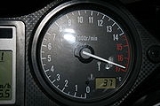
Redline refers to the maximum engine speed at which an internal combustion engine or traction motor and its components are designed to operate without causing damage to the components themselves or other parts of the engine. The redline of an engine depends on various factors such as stroke, mass of the components, displacement, composition of components, and balance of components.
nes with short strokes can handle higher rpm because there is less force in reciprocating motion.

Discussion
Ask a question about 'Redline'
Start a new discussion about 'Redline'
Answer questions from other users
|
Recent Posts

Encyclopedia
Redline refers to the maximum engine speed at which an internal combustion engine or traction motor and its components are designed to operate without causing damage to the components themselves or other parts of the engine. The redline of an engine depends on various factors such as stroke, mass of the components, displacement, composition of components, and balance of components.
Varation of redline
Engines with short strokes can handle higher rpm because there is less force in reciprocating motion. Lighter components can increase the redline as well, since they have less inertia and decrease forces present in the engine.
Redlines vary anywhere from a few hundred revolutions per minute (rpm) (in very large engines such as those in trains and generators) to more than ten thousand rpm (in smaller, usually high-performance engines such as motorcycles and sports cars with pistonless rotary engines). Diesel engines normally have lower redlines than comparatively-sized gasoline engines, largely because of fuel-atomization limitations. Gasoline automobile engines typically will have a redline at around 5500 to 7000 rpm. The VTEC engine in the '00-'03 Honda S2000 had the highest production car redline at 9000 rpm. The Renesis rotary engine in the current Mazda RX-8 has a redline of 9000 rpm. Although such engines can run at much higher speeds, this does not hold true for the ancillary components and gearbox.
On the other hand, some older OHV engines had redlines as low as 4800 rpm, mostly due to the engines being designed and built for low end power and economy during the late 60's all the way to the early 90's. Some other factors are that OHV engines tend to have heavy bottom ends, making the redline much lower, as the engine will become unbalanced and destroy itself, as with any engine taken over its redline. Lower redlines do not necessarily mean low performance, as some skeptics sometimes to assume. For example, a Supercharged Buick 3800 V6 with a redline anywhere from 5500-6000 has a torque curve that peaks at 2600-3600rpms, yet the engine is a strong performer from take-off, all the way through to the redline.
Motorcycle engines can have even higher redlines because of their comparatively lower reciprocating mass. For example, the Yamaha YZF-R6 has a redline of about 19000 rpm. Higher yet is the redline of a modern Formula One car. Regulations limit the maximum engine rotation to 19000 rpm, but during the 2006 season, engine speeds reached over 20000 rpm on the Cosworth engine.
Rev limiter and implementation The actual term redline comes from the red bars that are displayed on tachometers in cars starting at the rpm that denotes the redline for the specific engine. Operating an engine in this area is known as redlining. Straying into this area usually does not mean instant engine failure, but may increase the chances of damaging the engine.
Most modern cars have computer systems that prevent the engine from straying too far into the redline by cutting fuel flow to the fuel injectors/carburetor or by disabling the ignition system until the engine drops to a safer operating speed. This device is as a rev limiter and is usually set to an RPM value at redline or a few hundred RPM above. Most Electronic Control Units (ECUs) of automatic transmission cars will upshift before the engine hits the redline even with maximum acceleration (an automatic transmission sport car's ECU will allow the engine to go nearer the redline or hit the redline before upshifting). If manual override is used, the engine will go past redline for a brief amount of time before the ECU will auto-upshift. When the car is in top gear and the engine is in redline (due to high speed), the ECU will cut fuel to the engine, forcing it to decelerate until the engine begins operating below the redline at which point it will release fuel back to the engine, allowing it to speed operate once again.
However, even with these electronic protection systems, a car is not prevented from redlining through inadvertent gear engagement. If a driver accidentally selects a lower gear when trying to shift up or selects a lower gear than intended while shifting down (as in a motorbike sequential transmission), the engine will be forced to rapidly rev-up to match the speed of the drivetrain. If this happens while the engine was at high rpms, it may dramatically exceed the redline. For example, if the operator is driving close to redline in 3rd gear and attempts to shift to 4th gear but unintentionally puts the car in 2nd by mistake, the transmission will be spinning much faster than the engine, and when the clutch is released the engine’s rpm will increase rapidly. It will lead to a rough and very noticeable engine braking.
|
| |
|
|