
All Topics  
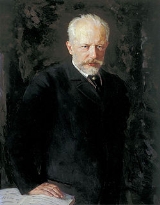
Pyotr Ilyich Tchaikovsky

 
Pyotr Ilyich Tchaikovsky

   Email Print
   Bookmark   Link


Pyotr Ilyich Tchaikovsky


Pyotr Ilyich Tchaikovsky – ) was a Russia
Russia

Russia , or the Russian Federation , is a list of countries spanning more than one continent country extending over much of northern Eurasia....
n composer
Composer

A composer is a person who creates music, usually in the medium of musical notation, for interpretation and performance. The level of distinction between composers and other musicians varies, which affects issues such as copyright and the deference given to individual interpretations of a particular piece of music....
 of the Romantic
Romantic music

In music, romanticism is a term, often considered misleading, and concept derived from literature traditionally defined by attributes including, "interest in nature, medieval chivalry, mysticism, [and] remoteness [ Social alienation and Solitude]"....
 era. He wrote some of the most popular concert and theatrical music in the current classical repertoire, including the ballets Swan Lake
Swan Lake

Swan Lake is a ballet, Opus number 20, by Pyotr Ilyich Tchaikovsky, composed 1875-1876. The scenario, initially in four acts, by Vladimir Begichev and Vasiliy Geltser was fashioned from Russian folk tales as well as an ancient German legend, which tells the story of Odette, a princess turned into a swan by an evil sorcerer's curse....
 and Nutcracker
Nutcracker

A nutcracker is a mechanical device for cracking nut . Usually they work on the principle of moment s as described in Archimedes' analysis of the lever....
, the 1812 Overture
1812 Overture

Ouverture Solennelle, L'Ann?e 1812, Op. 49 , better known as the 1812 Overture, is a classical Opus number written by Russian composer Pyotr Ilyich Tchaikovsky....
, his First Piano Concerto
Piano Concerto No. 1 (Tchaikovsky)

The Piano Concerto No. 1 in B-flat minor, Opus number 23 was composed by Pyotr Ilyich Tchaikovsky between November 1874 and February 1875. It was revised in the summer of 1879 and again in December 1888....
, several symphonies, and the opera Eugene Onegin
Eugene Onegin (opera)

Eugene Onegin, Op. 24, is an opera in 3 acts , by Pyotr Ilyich Tchaikovsky. The libretto was written by Konstantin Shilovsky and the composer and his brother Modest Ilyich Tchaikovsky, and is based on the Eugene Onegin by Alexander Pushkin....
.

Born into a middle-class family, Tchaikovsky's education prepared him for a career as a civil servant, despite the musical precocity he had demonstrated from an early age.


Discussion
Ask a question about 'Pyotr Ilyich Tchaikovsky'
Start a new discussion about 'Pyotr Ilyich Tchaikovsky'
Answer questions from other users
Full Discussion Forum


Quotations


What I need is to believe in myself again— for my faith has been greatly undermined; it seems to me my role is over.

Letter to a nephew (9 February 1893) Just prior to composing his "Pathetique" Symphony (No. 6)


Encyclopedia


Pyotr Ilyich Tchaikovsky – ) was a Russia
Russia

Russia , or the Russian Federation , is a list of countries spanning more than one continent country extending over much of northern Eurasia....
n composer
Composer

A composer is a person who creates music, usually in the medium of musical notation, for interpretation and performance. The level of distinction between composers and other musicians varies, which affects issues such as copyright and the deference given to individual interpretations of a particular piece of music....
 of the Romantic
Romantic music

In music, romanticism is a term, often considered misleading, and concept derived from literature traditionally defined by attributes including, "interest in nature, medieval chivalry, mysticism, [and] remoteness [ Social alienation and Solitude]"....
 era. He wrote some of the most popular concert and theatrical music in the current classical repertoire, including the ballets Swan Lake
Swan Lake

Swan Lake is a ballet, Opus number 20, by Pyotr Ilyich Tchaikovsky, composed 1875-1876. The scenario, initially in four acts, by Vladimir Begichev and Vasiliy Geltser was fashioned from Russian folk tales as well as an ancient German legend, which tells the story of Odette, a princess turned into a swan by an evil sorcerer's curse....
 and Nutcracker
Nutcracker

A nutcracker is a mechanical device for cracking nut . Usually they work on the principle of moment s as described in Archimedes' analysis of the lever....
, the 1812 Overture
1812 Overture

Ouverture Solennelle, L'Ann?e 1812, Op. 49 , better known as the 1812 Overture, is a classical Opus number written by Russian composer Pyotr Ilyich Tchaikovsky....
, his First Piano Concerto
Piano Concerto No. 1 (Tchaikovsky)

The Piano Concerto No. 1 in B-flat minor, Opus number 23 was composed by Pyotr Ilyich Tchaikovsky between November 1874 and February 1875. It was revised in the summer of 1879 and again in December 1888....
, several symphonies, and the opera Eugene Onegin
Eugene Onegin (opera)

Eugene Onegin, Op. 24, is an opera in 3 acts , by Pyotr Ilyich Tchaikovsky. The libretto was written by Konstantin Shilovsky and the composer and his brother Modest Ilyich Tchaikovsky, and is based on the Eugene Onegin by Alexander Pushkin....
.

Born into a middle-class family, Tchaikovsky's education prepared him for a career as a civil servant, despite the musical precocity he had demonstrated from an early age. Against the wishes of his family he chose to pursue a musical career, and in 1862 entered the St Petersburg Conservatory, graduating in 1865. This formal, Western-oriented training set him apart, musically, from the contemporary nationalistic movement embodied by the group of young Russian composers known as "The Five
The Five

The Five, also known as The Mighty Handful , refers to a circle of composers who met in Saint Petersburg, Russia, in the years 1856-1870: Mily Balakirev , C?sar Cui, Modest Mussorgsky, Nikolai Rimsky-Korsakov, and Alexander Borodin....
", with whom Tchaikovsky sustained a mixed professional relationship throughout his career.

As his style developed, Tchaikovsky wrote music across a range of genres, including symphony
Symphony

A symphony is a musical composition, often extended and usually for orchestra. "Symphony" does not imply a specific form. Many symphonies are tonality works in four movement with the first in sonata form, and this is often described by music theorists as the structure of a "Classical period " symphony, although even some symphonies by the ac...
, opera, ballet, instrumental, chamber
Chamber music

Chamber music is a form of classical music, written for a small group of instruments which traditionally could be accommodated in a palace chamber....
 and song. Although he enjoyed many popular successes, he was never emotionally secure, and his life was punctuated by personal crises and periods of depression. Contributory factors were his suppressed homosexuality and fear of exposure, his disastrous marriage, and the sudden collapse of the one enduring relationship of his adult life, his 13-year association with the wealthy widow Nadezhda von Meck
Nadezhda von Meck

Nadezhda Filaretovna von Meck was the wealthy Russian widow of a Russian railway tycoon, Karl von Meck. Considered a formidable businesswoman, she is best known today for her relationship with Pyotr Ilyich Tchaikovsky....
. Amid private turmoil Tchaikovsky's public reputation grew; he was honoured by the Tsar, awarded a lifetime pension and lauded in the concert halls of the world. His sudden death at the age of 53 is generally ascribed to cholera, but some attribute it to suicide.

Although enduringly popular with concert audiences across the world, Tchaikovsky has at times been judged harshly by critics, musicians and composers. However, his reputation as a significant composer is now generally regarded as secure, the disdain with which Western critics in the early–to mid-20th century dismissed his music as vulgar and lacking in elevated thought having largely dissipated.

Life


Childhood

Pyotr Ilyich Tchaikovsky was born in Votkinsk
Votkinsk

File:Wotkinsk.jpgVotkinsk is an industry types of inhabited localities in Russia in the Udmurtia, Russia, located about ENE of Moscow. Population: It was the birthplace of the composer Pyotr Ilyich Tchaikovsky who spent the first eight years of his life here: today the house of his birth contains a museum dedicated to the composer....
, a small town in present-day Udmurtia
Udmurtia

Udmurt Republic or Udmurtia is a federal subjects of Russia of Russia . The direct romanization of Russian of the Republic's Russian name is Udmurtskaya Respublika or Udmurtiya; Udmurt name: Udmurt Respublika....
, formerly the Imperial Russian province of Vyatka
Vyatka

Vyatka may refer to:*Vyatka River, a river in Russia*Vyatka, former name of the city of Kirov, Kirov Oblast, Kirov Oblast, Russia*Vyatka Region, an informal name of Kirov Oblast of Russia...
. His father, Ilya Petrovich, was the son of a government mining engineer of Ukrainian
Ukraine

Ukraine is a country in Eastern Europe. It is bordered by Russia to the east; Belarus to the north; Poland, Slovakia, and Hungary to the west; Romania and Moldova to the southwest; and the Black Sea and Sea of Azov to the south....
 descent. His mother, Alexandra, was of partial French
French people

French people can refer to:* The legal residents and citizens of France, regardless of ancestry. For a legal discussion, see French nationality law....
 ancestry and was the second of Ilya's three wives. Pyotr was the elder brother (by some ten years) of the dramatist, librettist, and translator Modest Ilyich Tchaikovsky
Modest Ilyich Tchaikovsky

Modest Ilyich Tchaikovsky was a Russian people dramatist, opera librettist and translator....
.

In 1843 Tchaikovsky's parents hired a French governess, Fanny Dürbach. Her love and affection for her charge is said to have provided a counter to Alexandra, who is described by one biographer as a cold, unhappy, distant parent not given to displays of physical affection. However, other writers claim that Alexandra doted on her son.

Tchaikovsky began piano lessons at the age of four. A precocious pupil, he could read music as well as his teacher within three years. However, his parents' passion for his musical talent soon cooled. In 1850, to counter their feelings of social inferiority arising from their relatively humble origins, the family decided to send Tchaikovsky to the School of Jurisprudence in St. Petersburg. This establishment mainly served the lesser nobility or gentry, and would prepare him for a career as a civil servant. As the minimum age for acceptance was 12, Tchaikovsky would have to spend two years boarding at the School of Jurisprudence's preparatory school, from his family. Once those two years had passed, Tchaikovsky transferred to the School of Jurisprudence to begin a seven-year course of studies.

Adolescent years


On June 25, 1854 Tchaikovsky suffered the shock of his mother Alexandra's death from cholera
Cholera

Cholera, sometimes known as Asiatic or epidemic cholera, is an infectious gastroenteritis caused by enterotoxin-producing strains of the bacterium Vibrio cholerae....
. He was so affected that he felt unable to inform Fanny Dürbach until a further two years had passed. However, within a month of her death he was making his first serious efforts at composition, a waltz
Waltz

The waltz is a ballroom dance and folk dance dance in Time signature, performed primarily in closed position....
 in her memory. Several writers have claimed that the loss of his mother was formative to Tchaikovsky's sexual development, along with his experience of the allegedly widespread same-sex practices among students at the School of Jurisprudence. Whatever the truth of this, some friendships with fellow students, such as those with Aleksey Apukhtin
Aleksey Apukhtin

Aleksey Nikolayevich Apukhtin Russian poet, writer, critic, a very compulsive figure of his time in St.Petersburg.Using all traditions of amorous, gipsy romance, it introduced into this genre much its own artistic temperament....
 and Vladimir Gerard, were intense enough to last the rest of his life. Music was not considered a high priority at the School, but Tchaikovsky regularly attended the theater and the opera with other students.. He was fond of works by Rossini, Bellini
Vincenzo Bellini

Vincenzo Salvatore Carmelo Francesco Bellini was an Italy opera composer. Known for his flowing melodic lines for which he was named "the Swan of Catania", Bellini was the quintessential composer of Bel canto opera....
, Verdi
Giuseppe Verdi

Giuseppe Fortunino Francesco Verdi was an Italian Romantic music composer, mainly of opera. He was one of the most influential composers in the 19th century....
 and Mozart
Wolfgang Amadeus Mozart

Wolfgang Amadeus Mozart Mozart showed prodigious ability from his earliest childhood in Salzburg. Already competent on keyboard and violin, he composed from the age of five and performed before European royalty; at seventeen he was engaged as a court musician in Salzburg, but grew restless and traveled in search of a better position, always...
. Piano manufacturer Franz Becker made occasional visits to the School as a token music teacher, and gave lessons. This was the only formal music instruction Tchaikovsky received there. From 1855 Ilya Tchaikovsky funded private lessons with Rudolph Kündinger, a well-known piano teacher from Nuremberg
Nuremberg

Nuremberg is a city in the Germany State of Bavaria, in the Regierungsbezirk of Middle Franconia. It is situated on the Pegnitz River river and the Rhine?Main?Danube Canal and is Franconia's largest city....
. Ilya also questioned Kündinger about a musical career for his son. Kündinger replied that nothing suggested a potential composer or even a fine performer. Tchaikovsky was told to finish his course and then try for a post in the Ministry of Justice.

Tchaikovsky graduated on May 25, 1859 with the rank of titular counselor, the lowest rung on the civil service ladder. On June 15, he was appointed to the Ministry of Justice. Six months later he became a junior assistant and two months after that, a senior assistant. There Tchaikovsky remained for the rest of his three-year civil service career.

Stpeteconservatory
In 1861, he attended classes in music theory
Music theory

Music theory is the field of study that deals with how music works. It examines the language and notation of music. It identifies patterns that govern composer techniques....
 organized by the Russian Musical Society
Russian Musical Society

The Russian Musical Society was an organisation founded in 1859 by the Grand Duchess Elena Pavlovna and her prot?g?, pianist and composer Anton Rubinstein, with the intent of raising the standard of music in the country and disseminating musical education....
 (RMS) and taught by Nikolai Zaremba
Nikolai Zaremba

Nikolai Ivanovich Zaremba was a Russian musical theorist and composer.Zaremba was born in the province of Vitebsk in 1821. He was one of the original professors at the St....
. A year later he followed Zaremba to the new St Petersburg Conservatory
Saint Petersburg Conservatory

The N.A. Rimsky-Korsakov Saint Petersburg State Conservatory is a music school in Saint Petersburg. In 2004, the conservatory had around 275 faculty members and 1,400 students....
. Tchaikovsky would not give up his Ministry post "until I am quite certain that I am destined to be a musician rather than a civil servant." From 1862 to 1865 he studied harmony
Harmony

In Western music, harmony is the use of different pitches simultaneously, and chord s, actual or implied, in music. The word is related to the word "harmonic" which implies related wavelengths of waves....
, counterpoint
Counterpoint

In music, counterpoint is the relationship between two or more Register that are independent in contour and rhythm, and interdependent in harmony....
 and fugue
Fugue

In music, a fugue is a type of counterpoint composition or technique of composition for a fixed number of melody, normally referred to as "voices"....
 with Zaremba, while Anton Rubinstein
Anton Rubinstein

Anton Grigorevich Rubinstein was a Russian pianist, composer and Conducting. As a pianist he was regarded as a rival of Franz Liszt, and he ranks amongst the great keyboard virtuosos....
, director and founder of the Conservatory, taught him instrumentation and composition. In 1863 he abandoned his civil service career and studied music full-time, graduating in December 1865. Rubinstein was impressed by Tchaikovsky's musical talent, but this did not stop either him or Zaremba from later clashes with the young composer over his First Symphony
Symphony No. 1 (Tchaikovsky)

Pyotr Ilyich Tchaikovsky wrote his Symphony No. 1 in G minor, Winter Daydreams , Op. 13, in 1866, just after he accepted a professorship at the Moscow Conservatory....
, written after his graduation, when he submitted it to them for their perusal. The symphony was given its first complete performance in February 1868, where it was well received.

Relationship with The Five

As Tchaikovsky became Rubinstein's best known student, he was initially considered by association as a natural target for attack by the nationalistic music group known as The Five
The Five

The Five, also known as The Mighty Handful , refers to a circle of composers who met in Saint Petersburg, Russia, in the years 1856-1870: Mily Balakirev , C?sar Cui, Modest Mussorgsky, Nikolai Rimsky-Korsakov, and Alexander Borodin....
, especially as fodder for César Cui
César Cui

C?sar Antonovich Cui was a Russian of France and Lithuanian descent. His profession was as an army Officer and a teacher of fortifications; his avocational life has particular significance in the history of music, in that he was a composer and Music journalism; in this sideline he is known as a member of The Five, the group of Russian com...
's criticism. This attitude changed slightly when Rubinstein left the St. Petersburg musical scene in 1867. In 1869 Tchaikovsky entered into a working relationship with composer Mily Balakirev
Mily Balakirev

Mily Alexeyevich Balakirev was a Russian pianist, Conducting and composer. He is known today primarily for his work promoting nationalism in Russian music....
, leader of The Five; the result was Tchaikovsky's first recognised masterpiece, the fantasy-overture Romeo and Juliet
Romeo and Juliet (Tchaikovsky)

Romeo and Juliet is a musical work by Pyotr Ilyich Tchaikovsky, subtitled Overture-Fantasy, based on William Shakespeare's Romeo and Juliet....
, a work which The Five wholeheartedly embraced. He remained friendly but never intimate with most of The Five, ambivalent about their music; their goals and aesthetics did not match his. He took pains to ensure his musical independence from them as well as from the conservative faction at the Conservatory—a course of action facilitated by his acceptance of a professorship at the Moscow Conservatory offered to him by Nikolai Rubinstein.

Mature composer

After his graduation from the St Petersburg Conservatory in 1865, Tchaikovsky was asked by Anton Rubinstein's younger brother Nikolai to become professor of harmony, composition, and the history of music at the Moscow Conservatory
Moscow Conservatory

The Moscow Conservatory is a prominent music school in Russia.It was co-founded in 1866 by Nikolai Rubinstein and Prince Nikolai Petrovitch Troubetzkoy....
. Tchaikovsky gladly accepted this position, combining his duties with music criticism
Music journalism

Music journalism is criticism and reportage about music. It began in the eighteenth century as comment on what is now thought of as 'classical music'....
 and continuing to compose. Some of his best-known works from this period include the First Piano Concerto
Piano Concerto No. 1 (Tchaikovsky)

The Piano Concerto No. 1 in B-flat minor, Opus number 23 was composed by Pyotr Ilyich Tchaikovsky between November 1874 and February 1875. It was revised in the summer of 1879 and again in December 1888....
, the Variations on a Rococo Theme
Variations on a Rococo Theme

The Variations on a Rococo theme for violoncello and orchestra was the closest Pyotr Ilyich Tchaikovsky ever came to writing a full concerto for cello and orchestra....
 for violoncello and orchestra, the Little Russian Symphony and the ballet
Ballet

Ballet is a formalized type of performative dance, the origins of which date lay in sixteenth- and seventeenth-century France courts, and which was further developed in England, Italy, and Russia as a concert dance form....
 Swan Lake
Swan Lake

Swan Lake is a ballet, Opus number 20, by Pyotr Ilyich Tchaikovsky, composed 1875-1876. The scenario, initially in four acts, by Vladimir Begichev and Vasiliy Geltser was fashioned from Russian folk tales as well as an ancient German legend, which tells the story of Odette, a princess turned into a swan by an evil sorcerer's curse....
. The First Piano Concerto suffered an initial rejection by its intended dedicatee, Nikolai Rubinstein, as recounted three years later by the composer. The work was subsequently offered to pianist Hans von Bülow
Hans von Bülow

Hans Guido Freiherr von B?low was a German Conducting, virtuoso pianist, and composer of the Romantic music. He was one of the most famous conductors of the 19th century, and his activity was critical for establishing the successes of several major composers of the time, including Richard Wagner....
, whose playing had impressed Tchaikovsky during an appearance in Moscow in March 1874. Bülow premiered the work in Boston in October 1875; Rubinstein eventually championed the work himself.

Turmoil in life and music
The writer Alexander Poznansky showed through his research that Tchaikovsky had homosexual tendencies and that some of the composer's closest relationships were with persons of the same sex. After reading all Tchaikovsky's letters (including unpublished ones), Poznansky concludes that the composer "eventually came to see his sexual peculiarities as an insurmountable and even natural part of his personality ... without experiencing any serious psychological damage." Relevant portions of his brother Modest
Modest Ilyich Tchaikovsky

Modest Ilyich Tchaikovsky was a Russian people dramatist, opera librettist and translator....
's autobiography, where he tells of his brother's sexual orientation, have also been published. Some previously suppressed letters, where Tchaikovsky openly speaks out about his homosexuality, have been published in Russian.

In 1868, Tchaikovsky met the Belgian soprano Désirée Artôt
Désirée Artôt

File:D?sir?e Art?t.jpgD?sir?e Art?t was a Belgium soprano , who was famed in German and Italian opera and sang mainly in Germany. In 1868 she was engaged, briefly, to Pyotr Ilyich Tchaikovsky, who claimed she was the only woman he ever loved, and who may have coded her name into works such as his Piano Concerto No....
, then on a tour of Russia. They became infatuated, and were engaged to be married, although there was no formal announcement. It seems plausible that Tchaikovsky was more captivated by her as a singer and actor than as a romantic interest — in 1888 he would describe her as "the greatest among the great" — and had difficulty in separating the artist from the person. He dedicated his Romance in F minor for piano, Op. 5, to her. However, on September 15, 1869, without any communication with Tchaikovsky (as the social conventions of the time would have demanded), Artôt married a member of her company, the Spanish baritone Mariano Padilla y Ramos
Mariano Padilla y Ramos

Mariano Padilla y Ramos was a Spain operatic baritone who excelled in the title role of Wolfgang Amadeus Mozart's Don Giovanni.He studied under Mabellini in Florence and appeared in many European countries, including England, where he sang in Giacomo Meyerbeer's Dinorah in 1881....
. The general view has been that Tchaikovsky got over the affair fairly quickly. It has, however, been postulated that he coded her name into the Piano Concerto No. 1 in B-flat minor
Piano Concerto No. 1 (Tchaikovsky)

The Piano Concerto No. 1 in B-flat minor, Opus number 23 was composed by Pyotr Ilyich Tchaikovsky between November 1874 and February 1875. It was revised in the summer of 1879 and again in December 1888....
, the tone-poem Fatum
Fatum (Tchaikovsky)

Fatum, Op. 77, is a symphonic poem by Pyotr Ilyich Tchaikovsky....
, the Symphony No. 3
Symphony No. 3 (Tchaikovsky)

Pyotr Ilyich Tchaikovsky's Symphony No. 3 in D major, Op. 29, was written in 1875. He began it at Vladimir Shilovsky's estate at Ussovo on 5 June and finished it on 1 August at Verbovka....
, and the Romeo and Juliet
Romeo and Juliet (Tchaikovsky)

Romeo and Juliet is a musical work by Pyotr Ilyich Tchaikovsky, subtitled Overture-Fantasy, based on William Shakespeare's Romeo and Juliet....
 Fantasy-Overture. They met on a handful of later occasions, and in October 1888 he wrote Six French Songs, Op. 65, for her, in response to her request for a single song. Tchaikovsky later claimed she was the only woman he ever loved.

Tchaikovsky With Wife Antonina Miliukova
In April 1877 Tchaikovsky's favorite pupil, Vladimir Shilovsky, had married suddenly. Shilovsky's wedding may, in turn, have spurred Tchaikovsky to consider such a step himself. He declared his intention to marry in a letter to his brother; There followed Tchaikovsky's ill-starred marriage to one of his former composition students, Antonina Miliukova
Antonina Miliukova

Antonina Ivanovna Tchaikovskaya n?e Miliukova was the wife, and after 1893, the widow, of Russian composer Pyotr Ilyich Tchaikovsky....
. The brief time with his wife drove him to an emotional crisis, which was followed by a stay in Clarens
Clarens

Clarens is the name of several places:* Clarens, Free State, a town in Free State Province, South Africa* Clarens, Hautes-Pyr?n?es, a commune in the Hautes-Pyr?n?es department of southwestern France...
, Switzerland
Switzerland

Switzerland is a landlocked Swiss Alps country of roughly 7.7 million people in Western Europe with an area of 41,285 km?. Switzerland is a federal republic consisting of 26 states called Cantons of Switzerland....
, for rest and recovery.

The strain of the marriage may have actually enhanced Tchaikovsky's creativity. The Fourth Symphony and the opera Eugene Onegin
Eugene Onegin (opera)

Eugene Onegin, Op. 24, is an opera in 3 acts , by Pyotr Ilyich Tchaikovsky. The libretto was written by Konstantin Shilovsky and the composer and his brother Modest Ilyich Tchaikovsky, and is based on the Eugene Onegin by Alexander Pushkin....
, arguably two of his finest compositions, could be considered proof of this. He finished both these works in the six months between his engagement and the completion of the rest cure following his marriage breakdown. While in Clarens he also composed his Violin Concerto
Violin Concerto (Tchaikovsky)

The Violin Concerto in D major, Op. 35 by Pyotr Ilyich Tchaikovsky is one of the best known of all violin concertos. It is also considered to be among the most technically difficult works for violin....
, with the technical assistance of one of his former students, violinist Yosif Kotek, who would later help establish contact between Tchaikovsky and Nadezhda von Meck
Nadezhda von Meck

Nadezhda Filaretovna von Meck was the wealthy Russian widow of a Russian railway tycoon, Karl von Meck. Considered a formidable businesswoman, she is best known today for her relationship with Pyotr Ilyich Tchaikovsky....
, the widow of a railway magnate. She would later become the composer's patron and confidante.

Like the First Piano Concerto, the Violin Concerto was rejected initially by its intended dedicatee, in this case the noted virtuoso and pedagogue Leopold Auer
Leopold Auer

Leopold Auer , was a Hungary violinist, teacher, conducting and composer....
. It was premiered by another soloist (Adolph Brodsky
Adolph Brodsky

Adolph Davidovich Brodsky was a Russian violinist.He was born in Taganrog on the Sea of Azov. His grandfather and father were also violinists....
), and while the work would eventually enjoy public success, the audience hissed at its premiere in Vienna, and it was denigrated by music critic Eduard Hanslick
Eduard Hanslick

Eduard Hanslick was a Bohemian-Austrian writer on music....
:

The Russian composer Tchaikovsky is surely no ordinary talent, but rather, an inflated one, obsessed with posturing as a man of genius, and lacking all discrimination and taste.... the same can be said for his new, long, and ambitious Violin Concerto. For a while it proceeds soberly, musically, and not mindlessly, but soon vulgarity gains the upper hand and dominates until the end of the first movement. The violin is no longer played: it is tugged about, torn, beaten black and blue.... The Adagio is well on the way to reconciling us and winning us over when, all too soon, it breaks off to make way for a finale that transports us to the brutal and wretched jollity of a Russian church festival. We see a host of gross and savage faces, hear crude curses, and smell the booze. In the course of a discussion of obscener illustrations, Friedrich Vischer once maintained that there were pictures whose stink one could see. Tchaikovsky's Violin Concerto confronts us for the first time with the hideous idea that there may be musical compositions whose stink one can hear.


Auer belatedly accepted the concerto, and eventually played it to great public success. In future years he would teach this work to his pupils, including Jascha Heifetz
Jascha Heifetz

Jascha Heifetz was a Jewish violin virtuoso born in Lithuania . He is hailed as the greatest violinist of the 20th century.Early life ...
 and Nathan Milstein
Nathan Milstein

Nathan Mironovich Milstein was a Jewish virtuoso violinist born in Russia.He died in London ten days before his 89th birthday.He is widely considered one of the finest violinists of the 20th century, well known for his interpretations of Johann Sebastian Bach solo violin works, and for works from the Romantic music period....
. Auer later said that Hanslick's comment that "the last movement was redolent of vodka [...] did credit neither to his good judgment nor to his reputation as a critic."

Hans Von Buelow
The intensity of personal emotion now flowing through Tchaikovsky's works was entirely new to Russian music. It prompted some Russian commentators to place his name alongside that of novelist Fyodor Dostoyevsky. Like Dostoyevsky's characters, they felt the musical hero in Tchaikovsky's music persisted in exploring the meaning of life while trapped in a fatal love-death-faith triangle. The critic Osoovski wrote of Tchaikovsky and Dostoyevsky: "With a hidden passion they both stop at moments of horror, total spiritual collapse, and finding acute sweetness in the cold trepidation of the heart before the abyss, they both force the reader to experience those feelings, too."

Tchaikovsky's fame among concert audiences began to expand outside Russia, and continued to grow within it. Hans von Bülow had become a fervent champion of the composer's work after hearing some of it in a Moscow concert during Lent of 1874. In a German newspaper later that year, he praised the First String Quartet
String Quartet No. 1 (Tchaikovsky)

String Quartet No. 1 in D major was the first of Pyotr Ilyich Tchaikovsky's three string quartets, and his Opus 11.The quartet has 4 movements:...
, Romeo and Juliet and other works, and he would later take up many other Tchaikovsky works both as pianist and conductor. In France, Camille Benoit began introducing Tchaikovsky's music to readers of the Revue et gazette musicale de Paris. The music also received significant exposure during the 1878 International Exhibition in Paris. While Tchaikovsky's reputation as a composer grew, a corresponding increase in performances of his works did not occur until he began conducting them himself, starting in the mid-1880s. Nevertheless, by 1880, all of the operas Tchaikovsky had completed up that point had been staged, and his orchestral works had been given performances that allowed them to be sympathetically received.

Mme. von Meck

Nadezhda von Meck
Nadezhda von Meck

Nadezhda Filaretovna von Meck was the wealthy Russian widow of a Russian railway tycoon, Karl von Meck. Considered a formidable businesswoman, she is best known today for her relationship with Pyotr Ilyich Tchaikovsky....
 was the wealthy widow of a Russian railway tycoon and an influential patron of the arts. Having heard of Tchaikovsky, possibly through Kotek, she wished to commission some chamber pieces from him. Her support became an important element in Tchaikovsky's life; she eventually paid him an annual subsidy of 6,000 ruble
Russian ruble

The ruble or rouble is the currency of the Russia and the two partially recognized republics of Abkhazia and South Ossetia. Formerly, the ruble was also the currency of the Soviet Union and the Russian Empire prior to their breakups....
s, which made it possible for him to resign from the Moscow Conservatory in October 1878 and concentrate on composition. With von Meck's patronage came a relationship that, at her insistence, was mainly epistolary – she stipulated they were never to meet face to face. They exchanged well over 1,000 letters between 1877 and 1890. In these letters Tchaikovsky was more open about much of his life and his creative processes than he had been to any other person.

As well as being a dedicated supporter of Tchaikovsky's musical works, von Meck became a vital enabler in his day-to-day existence. As he explained to her,

There is something so special about our relationship that it often stops me in my tracks with amazement. I have told you more than once, I believe, that you have come to seem to me the hand of Fate itself, watching over me and protecting me. The very fact that I do not know you personally, while feeling so close to you, accords you in my eyes the special status of an unseen but benevolent presence, like a benign Providence.


In 1884 Tchaikovsky and von Meck became related by marriage when one of her sons, Nikolay, married Tchaikovsky's niece Anna Davydova. However, in 1890 von Meck suddenly ended the relationship. She was suffering from health problems that made writing difficult; there were family pressures, and also financial difficulties arising from the mismanagement of her estate by her son Vladimir. The break with Tchaikovsky was announced in a letter delivered by a trusted servant, rather than by the usual postal service. It contained a request that he not forget her, and was accompanied by a year's subsidy in advance. She claimed bankruptcy, which, if not literally true, was evidently a real threat at the time.

Tchaikovsky may have been aware for nearly a year of his patroness's financial difficulties. This did not stop him from continuing to take his allowance for granted (with regular protestations of his eternal gratitude), nor did he offer to return the advance he had received with the farewell letter. Despite his growing celebrity throughout Europe, von Meck's allowance still made up a third of the composer's income. While he may have no longer needed her money as much as in the past, the loss of her friendship and encouragement was devastating; he remained bewildered and resentful about her abrupt disappearance for the remaining three years of his life.

Later career

Tchaikovsky returned to Moscow Conservatory in the autumn of 1879, having been away from Russia for a year after the disintegration of his marriage. However, he quickly resigned, settling in Kamenka
Kamenka

Kamenka may refer to:*Eugene Kamenka, an Australian philosopher, socialist*Kamenka, Penza Oblast, a town in Penza Oblast, Russia*Kamenka, Arkhangelsk Oblast, an urban-type settlement in Arkhangelsk Oblast, Russia...
 yet travelling incessantly. During these years, assured of a regular income from von Meck, he wandered around Europe and rural Russia, never staying long in any one place and living mainly alone, avoiding social contact whenever possible. This may have been due in part to troubles with Antonina, who would alternately agree to, then refuse, divorce, at one point exacerbating matters by moving into an apartment directly above her husband's. Tchaikovsky listed Antonina's accusations to him in detail to Modest: "I am a deceiver who married her in order to hide my true nature ... I insulted her every day, her sufferings at my hands were great ... she is appalled by my shameful vice, etc., etc." It is possible that he lived the rest of his life in dread of Antonina's power to expose publicly his sexual leanings. These factors may explain why, except for the piano trio
Piano Trio (Tchaikovsky)

Pyotr Ilyich Tchaikovsky's Trio in a minor, op. 50 for piano, violin, and cello is subtitled In memory of a Great Artist, by whom the composer meant the pianist Nikolai Rubinstein , a close friend of the composer....
 which he wrote upon the death of Nikolai Rubinstein, his best work from this period is found in genres which did not depend heavily on personal expression.

While Tchaikovsky's reputation grew rapidly outside Russia, it was, as Alexandre Benois
Alexandre Benois

Alexandre Nikolayevich Benois , an influential artist, art critic, historian, preservationist, and founding member of Mir iskusstva. His influence on the modern ballet and stage design is considered seminal....
 wrote in his memoirs, "considered obligatory [in progressive musical circles in Russia] to treat Tchaikovsky as a renegade, a master overly dependent on the West." In 1880 this assessment changed, practically overnight. During commemoration ceremonies for the Pushkin Monument in Moscow, Fyodor Dostoyevsky charged that the poet had given a prophetic call to Russia for "universal unity" with the West. An unprecedented acclaim for Dostoyevsky's message spread throughout Russia, and disdain for Tchaikovsky's music dissipated. He even drew a cult following among the young intelligentsia of St. Petersburg, including Benois, Léon Bakst
Léon Bakst

L?on Samoilovitch Bakst was a Russian Painting and scene- and costume designer who revolutionized the arts he worked in. Born as Lev Rosenberg, he was also known as Leon Nikolayevich Bakst ....
 and Sergei Diaghilev
Sergei Diaghilev

Sergei Pavlovich Diaghilev , also referred to as Serge, was a Russian people art critic, patron, ballet impresario and founder of the Ballets Russes from which many famous dancers and choreographers would later arise....
.

During 1884 Tchaikovsky began to shed his unsociability and restlessness. In March of that year Tsar
Tsar

Tsar or czar , occasionally spelled csar or tzar in English language, is a slavs term designating certain monarchs.Originally, the title Czar meant Emperor in the European medieval sense of the term, that is, a ruler who has the same rank as a Ancient Rome or Byzantine emperor due to recognition by another emperor or...
 Alexander III
Alexander III of Russia

Alexander III Alexandrovich , also known as Alexander the Peacemaker reigned as Tsar of Russia from 13 March 1881 until his death in 1894....
 conferred upon him the Order of St. Vladimir
Order of St. Vladimir

The Cross of Saint Vladimir was an Imperial Russia Russian Order established in 1782 by Empress Catherine II in memory of the deeds of Vladimir I, Prince of Kiev, the Grand Prince and the Baptizer of the Kievan Rus....
 (fourth class), which carried with it hereditary nobility
Russian nobility

The Russian nobility arose in the 14th century and essentially governed Russia until the October Revolution of 1917.The Russian language word for nobility, Dvoryanstvo , derives from the Russian word dvor , meaning the Court of a prince or duke and later, of the tsar....
. The tsar's decoration was a visible seal of official approval, that helped Tchaikovsky's social rehabilitation. This rehabilitation may have been cemented in the composer's mind with the extreme success of his Third Orchestral Suite
Orchestral Suite No. 3 (Tchaikovsky)

Pyotr Ilyich Tchaikovsky composed his Orchestral Suite No. 3 in G major, Op. 55 in 1884, writing it concurrently with his Concert Fantasia for piano and orchestra....
 at its January 1885 premiere in St. Petersburg, under Hans von Bülow
Hans von Bülow

Hans Guido Freiherr von B?low was a German Conducting, virtuoso pianist, and composer of the Romantic music. He was one of the most famous conductors of the 19th century, and his activity was critical for establishing the successes of several major composers of the time, including Richard Wagner....
's direction. Tchaikovsky wrote to Nadezhda von Meck
Nadezhda von Meck

Nadezhda Filaretovna von Meck was the wealthy Russian widow of a Russian railway tycoon, Karl von Meck. Considered a formidable businesswoman, she is best known today for her relationship with Pyotr Ilyich Tchaikovsky....
: "I have never seen such a triumph. I saw the whole audience was moved, and grateful to me. These moments are the finest adornments of an artist's life. Thanks to these it is worth living and laboring." The press was likewise unanimously favorable.

In 1885, Tchaikovsky resettled in Russia. The Tsar asked personally for a new production of Eugene Onegin
Eugene Onegin (opera)

Eugene Onegin, Op. 24, is an opera in 3 acts , by Pyotr Ilyich Tchaikovsky. The libretto was written by Konstantin Shilovsky and the composer and his brother Modest Ilyich Tchaikovsky, and is based on the Eugene Onegin by Alexander Pushkin....
 to be staged in St. Petersburg. The opera had previously been seen only in Moscow, produced by a student ensemble from the Conservatory. Though critical reception to the St. Petersburg production of Onegin was negative, the opera drew full houses every night; 15 years later the composer's brother Modest identified this as the moment Tchaikovsky became known and appreciated by the masses, achieving the greatest degree of popularity ever accorded to a Russian composer. News of the opera's success spread, and the work was produced by opera houses throughout Russia and abroad.

A feature of the St. Petersburg production of Onegin was that Alexander III requested that the opera be staged not at the Mariyinsky Theater
Mariinsky Theatre

The Mariinsky Theatre is a historic theatre of opera and ballet in St Petersburg, Russia. Opened in 1860, it became the preeminent music theatre of late 19th century Russia, where many of the stage masterpieces of Tchaikovsky, Mussorgsky, and Rimsky-Korsakov received their premieres....
 but at the Bolshoi Kamennïy Theater
Bolshoi Kamenny Theatre

The Saint Petersburg Imperial Bolshoi Kamenny Theatre was a Theater in Saint Petersburg....
. This served notice that Tchaikovsky's music was replacing Italian opera
Italian opera

Italian opera is both the art of opera in Italy and opera in the Italian language. Opera was born in Italy around the year 1600 and Italian opera has continued to play a dominant role in the history of the form until the present day....
 as the official imperial art. In addition, thanks to Ivan Vsevolozhsky
Ivan Vsevolozhsky

Ivan Alexandrovich Vsevolozhsky was the Director of the Mariinsky Theatres in Russia from 1881 to 1898.A competent administrator, Vsevolozhsky ran the Imperial Theatres with a determination for excellence....
, Director of the Imperial Theaters and a patron of the composer, Tchaikovsky was awarded a lifetime pension of 3,000 rubles per year from the Tsar. This essentially made him the premier court composer, in practice if not in actual title.

January 1887 marked Tchaikovsky's debut as a guest conductor, substituting at the Bolshoi Theater
Bolshoi Theatre

The Bolshoi Theatre is a historic theatre in Moscow, Russia, designed by the architect Joseph Bov?, which holds performances of ballet and opera....
 in Moscow on short notice for the first three performances of his opera Cherevichki
Cherevichki

Cherevichki [alternative renderings are The Little Shoes, and Les caprices d'Oxane] is a comic-fantastic opera in 4 acts, 8 scenes, by Pyotr Ilyich Tchaikovsky....
. Within a year he was in considerable demand throughout Europe and Russia, which helped him overcome a life-long stage fright
Glossophobia

Glossophobia or speech anxiety is the fear of public speaking. The word glossophobia comes from the Greek glossa, meaning tongue, and f???? phobos, fear or dread....
 and boosted his self-assurance. He wrote to von Meck, "Would you now recognize in this Russian musician traveling across Europe that man who, only a few years ago, had absconded from life in society and lived in seclusion abroad or in the country!!!" In 1888 he conducted the premiere of his Fifth Symphony
Symphony No. 5 (Tchaikovsky)

The Symphony No. 5 in E minor, Op. 64 by Pyotr Ilyich Tchaikovsky was composed between May and August 1888 and was first performed in St Petersburg on November 6 of that year with Tchaikovsky conducting....
 in St. Petersburg, repeating the work a week later with the premiere of his tone poem Hamlet
Hamlet (Tchaikovsky)

Hamlet was the title of two works by Pyotr Ilyich Tchaikovsky:* the overture-fantasia Hamlet, Op. 67a, and* incidental music to William Shakespeare?s play Hamlet, Op....
. While both works were received with extreme enthusiasm by audiences, critics proved hostile, with César Cui
César Cui

C?sar Antonovich Cui was a Russian of France and Lithuanian descent. His profession was as an army Officer and a teacher of fortifications; his avocational life has particular significance in the history of music, in that he was a composer and Music journalism; in this sideline he is known as a member of The Five, the group of Russian com...
 calling the symphony "routine" and "meretricious." Nevertheless, Tchaikovsky continued to conduct the symphony in Russia and Europe. Conducting brought him to America
United States

The United States of America is a Federal government constitutional republic comprising U.S. state and a federal district. The country is situated mostly in central North America, where its Contiguous United States and Washington, D.C., the Capital districts and territories, lie between the Pacific Ocean and Atlantic Oceans, Borders of the U...
 in 1891, where he led the New York Music Society's
New York Symphony Orchestra

The New York Symphony Society was an orchestra founded in New York City by Leopold Damrosch in 1878. For many years it was a fierce rival to the older Philharmonic Symphony Society of New York....
 orchestra
Orchestra

An orchestra is an Musical ensemble, usually fairly large with string, brass, woodwind sections, and possibly a percussion section as well. The term orchestra derives from the name for the area in front of an theatre of ancient Greece reserved for the Greek chorus....
 in his Marche Slave at the inaugural concert of New York's
New York City

The City of New York is the List of United States cities by population in the United States, while the New York metropolitan area ranks among the List of urban areas by population....
 Carnegie Hall
Carnegie Hall

Carnegie Hall is a concert venue in Midtown Manhattan in New York City located at 881 Seventh Avenue , occupying the east stretch of Seventh Avenue between West 56th Street and West 57th Street , two blocks south of Central Park....
.

In 1893, the University of Cambridge
University of Cambridge

The University of Cambridge , located in Cambridge, England, is the List of oldest universities in continuous operation university in the Anglosphere....
 in Britain awarded Tchaikovsky an honorary Doctor of Music
Doctor of Music

The Doctor of Music degree , like other doctorates, is an academic degree of the highest level. The D.Mus. is intended for musicians and composers who wish to combine the highest attainments in their area of specialization with doctoral-level academic study in music....
 degree.

Death

Tchaikovsky Pathetique Symphony 4mov
Tchaikovsky died in St. Petersburg on November 6, 1893, nine days after the premiere of his Sixth Symphony
Symphony No. 6 (Tchaikovsky)

The Symphony No. 6 in B minor, Path?tique, Opus 74 is Pyotr Ilyich Tchaikovsky's final symphony, written between February and the end of August 1893....
, the Pathétique. Because of its formal innovation plus the overwhelming emotional content of its outer movements, the work was received by the public with silent incomprehension. The second performance, under conductor Eduard Nápravník
Eduard Nápravník

Eduard Frantsovitch N?pravn?k was a Czechs conductor and composer, who settled in Russia and is best known for his leading role in Russian musical life as the principal conductor of the Mariinsky Theatre in Saint Petersburg for many decades....
, took place 20 days later at a memorial concert and was much more favorably received. The Pathétique has since become one of Tchaikovsky's best known works.

Tchaikovsky's death has traditionally been attributed to cholera
Cholera

Cholera, sometimes known as Asiatic or epidemic cholera, is an infectious gastroenteritis caused by enterotoxin-producing strains of the bacterium Vibrio cholerae....
, most probably contracted through drinking contaminated water several days earlier. However, some have theorized that his death was suicide. According to one variation of the theory, a sentence of suicide was imposed in a "court of honor" by Tchaikovsky's fellow alumni of the St. Petersburg School of Jurisprudence, as a censure of the composer's homosexuality. This theory was first broached publicly by Russian musicologist Alexandra Orlova in 1979, when she emigrated to the West.

Music

Sleeping Beauty Cast
Tchaikovsky wrote many works which are popular with the classical music public. Examples are Romeo and Juliet
Romeo and Juliet (Tchaikovsky)

Romeo and Juliet is a musical work by Pyotr Ilyich Tchaikovsky, subtitled Overture-Fantasy, based on William Shakespeare's Romeo and Juliet....
, the 1812 Overture
1812 Overture

Ouverture Solennelle, L'Ann?e 1812, Op. 49 , better known as the 1812 Overture, is a classical Opus number written by Russian composer Pyotr Ilyich Tchaikovsky....
, his three ballets (The Nutcracker
The Nutcracker

The Nutcracker Op. 71, is a fairy tale-ballet in two acts, three scenes, by Pyotr Ilyich Tchaikovsky, composed in 1891?92. Alexandre Dumas, p?re's adaptation of the story "The Nutcracker and the Mouse King" by E....
, Swan Lake
Swan Lake

Swan Lake is a ballet, Opus number 20, by Pyotr Ilyich Tchaikovsky, composed 1875-1876. The scenario, initially in four acts, by Vladimir Begichev and Vasiliy Geltser was fashioned from Russian folk tales as well as an ancient German legend, which tells the story of Odette, a princess turned into a swan by an evil sorcerer's curse....
, and The Sleeping Beauty) and Marche Slave. These, along with two of his four concerto
Concerto

The term Concerto usually refers to a three-part musical work in which one solo instrument is accompanied by an orchestra. The concerto, as understood in this modern way, arose in the Baroque period side by side with the concerto grosso, which contrasted a small group of instruments with the rest of the orchestra....
s, three of his six numbered symphonies
Symphony

A symphony is a musical composition, often extended and usually for orchestra. "Symphony" does not imply a specific form. Many symphonies are tonality works in four movement with the first in sonata form, and this is often described by music theorists as the structure of a "Classical period " symphony, although even some symphonies by the ac...
 and, of his 10 operas, The Queen of Spades
The Queen of Spades (opera)

The Queen of Spades, Op. 68 is an opera in 3 acts by Pyotr Ilyich Tchaikovsky to a Russian libretto by the composer's brother Modest Ilyich Tchaikovsky, based on a The Queen of Spades by the poet Alexander Pushkin....
 and Eugene Onegin
Eugene Onegin (opera)

Eugene Onegin, Op. 24, is an opera in 3 acts , by Pyotr Ilyich Tchaikovsky. The libretto was written by Konstantin Shilovsky and the composer and his brother Modest Ilyich Tchaikovsky, and is based on the Eugene Onegin by Alexander Pushkin....
, are probably among his most familiar works. Almost as popular are the Manfred Symphony
Manfred Symphony

The Manfred Symphony in B minor, Op. 58 is a program music symphony composed by Pyotr Ilyich Tchaikovsky between May and September 1885. It is based on the poem Manfred written by Lord Byron in 1817....
, Francesca da Rimini
Francesca da Rimini (Tchaikovsky)

Pyotr Ilyich Tchaikovsky's symphonic poem Francesca da Rimini: Symphonic Fantasy after Dante, Op. 32 was composed in less than three weeks during his visit to Bayreuth in the autumn of 1876....
, the Capriccio Italien
Capriccio Italien

The Capriccio Italien, op. 45 is a fantasy for orchestra composed between January and May of 1880 by Pyotr Ilyich Tchaikovsky.The Capriccio was inspired by a trip Tchaikovsky took to Rome, during which he saw the Carnival in full swing, and is reminiscent of Italy folk music and street songs....
 and the Serenade for Strings
Serenade for Strings (Tchaikovsky)

Pyotr Ilyich Tchaikovsky's Serenade for Strings in C major, Op. 48, premiered in 1880. It remains one of the late Romantic Era most definitive compositions....
. His three string quartet
String quartet

A string quartet is a musical ensemble of four string instruments — usually two violins, a viola and cello — or a piece written to be performed by such a group....
s and piano trio
Piano trio

A piano trio is a group of piano and two other instruments, usually a violin and a cello, or a piece of music written for such a group. It is one of the most common forms found in European classical music chamber music....
 all contain beautiful passages, while recitalists still perform some of his 106 songs. Tchaikovsky also wrote over a hundred piano works, covering the entire span of his creative life. David brown has asserted that "while some of these can be challenging technically, they are mostly charming, unpretentious compositions intended for amateur pianists." He adds, however, that "there is more attractive and resourceful music in some of these pieces than one might be inclined to expect."

Creative range

Tchaikovsky's formal conservatory training allowed him to write works with Western-oriented attitudes and techniques. His music showcases a wide range and breadth of technique, from a poised "Classical" form simulating 18th century Rococo
Rococo

Rococo is a style of 18th century French art and interior design. Rococo rooms were designed as total works of art with elegant and ornate furniture, small sculptures, ornamental mirrors, and tapestry complementing architecture, reliefs, and wall paintings....
 elegance, to a style more characteristic of Russian nationalists, or (according to Tchaikovsky writer and expert Dr. David Brown) a musical idiom expressly to channel his own overwrought emotions. Despite his reputation as a "weeping machine," self-expression was not a central principle for Tchaikovsky. In a letter to von Meck dated December 5, 1878, he explained there were two kinds of inspiration for a symphonic composer, a subjective and an objective one, and that program music
Program music

Program music is a type of art music intended to evoke extra-musical ideas, images in the mind of the listener by musically representation a scene, image or mood ....
 could and should exist, just as it was impossible to demand that literature make do without the epic element and limit itself to lyricism alone. Correspondingly, the large scale orchestral works Tchaikovsky composed can be divided into two categories—symphonies in one category, and other works such as symphonic poem
Symphonic poem

A symphonic poem or tone poem is a piece of orchestral music in one movement in which some extramusical program provides a narrative or illustrative element....
s in the other. According to musicologist Francis Maes, program music such as Francesca da Rimini or the Manfred Symphony was as much a part of the composer's artistic credo as the expression of his "lyric ego."Maes also identifies a group of compositions which fall outside the dichotomy of program music versus "lyrical ego," where he hearkens toward pre-Romantic aesthetics. Works in this group include the four orchestral suites, Capriccio Italien, the Violin Concerto and the Serenade for Strings.

Reception and reputation

Although Tchaikovsky's music has always been popular with audiences, it has at times been judged harshly by musicians and composers. However, his reputation as a significant composer is now generally regarded as secure. His music has won a significant following among concert audiences in the United States, Great Britain and many other countries that is second only to the music of Beethoven. Thanks in large part to what Harold C. Schonberg terms "a sweet, inexhaustible, supersensuous fund of melody ... touched with neuroticism, as emotional as a scream from a window on a dark night." According to Wiley, this combination of supercharged melody and surcharged emotion polarized listeners, with popular appeal of Tchaikovsky's music counterbalanced by critical disdain of it as vulgar and lacking in elevated thought or philosophy. More recently, Tchaikovsky's music has received a professional reevaluation, with musicians reacting more favorably to its tunefulness and craftsmanship.

Public considerations

Tchaikovsky believed that his professionalism in combining skill and high standards in his musical works separated him from his contemporaries in The Five. He shared several of their ideals, including an emphasis on national character in music. His aim, however, was to link those ideals to a standard high enough to satisfy Western European criteria. His professionalism also fueled his desire to reach a broad public, not just nationally but internationally, which he would eventually do.

He may also have been influenced by the almost "eighteenth-century" patronage prevalent in Russia at the time, which was still strongly influenced by its aristocracy. In this style of patronage, the patron and the artist often met on equal terms. Dedications of works to patrons were not gestures of humble gratitude but expressions of artistic partnership
Partnership

A partnership is a type of business entity in which partners share with each other the profits or losses of the business undertaking in which all have invested....
. The dedication of the Fourth Symphony to von Meck is known to be a seal on their friendship. Tchaikovsky's relationship with Duke Konstantin Konstantinovich bore creative fruit in the Six Songs, Op. 63, for which the grand duke wrote the words. Tchaikovsky found no aesthetic conflict in playing to the tastes of his audiences, though it was never established that he satisfied any other tastes but his own. The patriotic themes and stylization of 18th-century melodies in his works lined up with the values of the Russian aristocracy.

Compositional style

According to Dr. David Brown in the Grove Dictionary of Music and Musicians
Grove Dictionary of Music and Musicians

The Grove Dictionary of Music and Musicians is an encyclopaedic dictionary of music and musicians. Along with the German-language Musik in Geschichte und Gegenwart, it is the largest single reference work on Western music....
, Tchaikovsky's melodies ranged "from Western style to folksong stylizations and occasionally folksongs themselves." His use of repetitions within these melodies generally reflect the sequential
Sequence (music)

A sequence in music occurs when a given melody or harmony passage is immediately repeated at a different pitch level. It is possible for melody or harmony to form a sequence without the other participating....
 style of Western practices, which he sometimes extended at immense length, building "into an emotional experience of almost unbearable intensity." He experimented occasionally with unusual meters, although more usually, as in his dance tunes, he employed a firm, essentially regular meter that "sometimes becomes the main expressive agent in some movements due to its vigorous use." Tchaikovsky also practiced a wide range of harmony, from the Western harmonic and textural practices of his first two string quartets to the use of the whole tone scale
Whole tone scale

In music, a whole tone scale is a scale in which each note is separated from its neighbours by the interval of a whole step. There are only two whole tone scales, both six-note or Hexatonic scale scales:...
 in the center of the finale of the Second Symphony; the latter was a practice more typically used by The Five. Since Tchaikovsky wrote most of his music for the orchestra, his musical textures became increasingly conditioned by the orchestral colors he employed, especially after the Second Orchestral Suite
Orchestral Suite No. 2 (Tchaikovsky)

Pyotr Ilyich Tchaikovsky composed his Orchestral Suite No. 2 in C major, Op. 53, in 1883. It was premiered on February 16, 1884 at a Russian Musical Society concert in Moscow, conducted by Max Erdmannsd?rfer....
. Brown maintains that while the composer was grounded in Western orchestral practices, he "preferred bright and sharply differentiated orchestral coloring in the tradition established by Glinka
Mikhail Glinka

Mikhail Ivanovich Glinka , was the first Russian people composer to gain wide recognition inside his own country, and is often regarded as the father of Russian classical music....
." He tends to exploit primarily the treble instruments for their "fleet delicacy," though he balances this tendency with "a matching exploration of the darker, even gloomy sounds of the bass instruments."

Impact

In the second edition of the New Grove (2001), Roland John Wiley cites Tchaikovsky as "the first composer of a new Russian type, fully professional, who fully ascimilated traditions of Western European symphonic mastery; in a deeply original, personal and national style he unified the symphonic thought of Beethoven and Schumann with the works of Glinka, and transformed Liszt's and Berlioz's achievements in depictive-programmatic music
Program music

Program music is a type of art music intended to evoke extra-musical ideas, images in the mind of the listener by musically representation a scene, image or mood ....
 into matters of Shakespearian elevation and psychological import." Tchaikovsky felt his professionalism in combining skill and high standards in his musical works separated him from his colleagues in "The Five." He shared several of their ideals, including an emphasis on national character in music. His aim, however, was linking those ideals with a professional standard high enough to satsify European criteria. His professionalism also fueled his desire to reach a broad public, not just nationally but also internationally. This he would eventually do.

As biographer Anthony Holden
Anthony Holden

Anthony Holden is a British journalist, broadcaster and writer, particularly known as a biographer of the British Royal family and of artists including...
 maintains, no indigenous Russian classical music on a professional basis existed before Tchaikovsky's birth in 1840 other than folk tunes
Folk music

Folk music can have a number of different meanings, including:* Traditional music: The original meaning of the term "folk music" was synonymous with the term "Traditional music", also often including World Music and Roots music; the term "Traditional music" was given its more specific meaning to distinguish it from the other definition...
 and a cappella
A cappella

Acappella music is vocal music or singing without musical instrument accompaniment, or a piece intended to be performed in this way. A cappella was originally intended to differentiate between Renaissance music polyphony and Baroque concertato style....
 music for the Russian Orthodox Church
Russian Orthodox Church

The Russian Orthodox Church ; or The Moscow Patriarchate , also known as the Orthodox Christian Church of Russia, is a body of Christianity who constitute an Autocephaly Eastern Orthodox Church under the jurisdiction of the List of Metropolitans and Patriarchs of Moscow, in full communion with the other Eastern Orthodox Churches....
. Tchaikovsky thought well enough of Glinka, of course, to perform the opening bars of the Ruslan i Lyudmila overture on the piano of a conservatory as it was inaugurated; also Alexander Alyabyev
Alexander Alyabyev

Alexander Aleksandrovich Alyabyev was a Russian composer. He wrote seven operas, twenty musical comedies, more than 200 romances, and many other pieces....
 (Siberian), Dmytro Bortniansky
Dmytro Bortniansky

Dmitry Stepanovich Bortniansky was a Ukrainians-Russian composer. He composed in many different musical styles, including choral compositions in French language, Italian language, Latin, German language, Church Slavonic language and Russian language....
 (Ukrainian), Alexander Dargomyzhsky
Alexander Dargomyzhsky

Alexander Sergeyevich Dargomyzhsky was a 19th century Russian composer. He bridged the gap in Russian opera composition between Mikhail Glinka and the later generation of The Five and Pyotr Ilyich Tchaikovsky....
 (Russian) and others, fairly well-known outside of connoisseur circles at the time. Nevertheless, Glinka and Dargomyzhsky were considered dillitantes, not professionals; so, at least at the outset, were The Five. Tchaikovsky was the first legitimate professional Russian composer; Anton Rubinstein was far better known as a pianist than as a composer. Holden continues, "Twenty years after Tchaikovsky's death, in 1913, Igor Stravinsky
Igor Stravinsky

Igor Fyodorovich Stravinsky was a Russian-born composer, considered by many to be the most influential composer of 20th century music. He was a quintessentially Cosmopolitanism Russian who was named by Time as one of the 100 most influential people of the century....
's The Rite of Spring
The Rite of Spring

The Rite of Spring, commonly referred to by its original French language title, Le Sacre du Printemps is a ballet with music by the Russian composer Igor Stravinsky, original choreography by Vaslav Nijinsky, and original set design and costumes by archaeologist and painter Nicholas Roerich, all under impresario Serge Diaghilev....
 erupted onto the musical scene, signalling Russia's arrival into 20th century
20th century

The twentieth century of the Common Era began on January 1, 1901 and ended on December 31, 2000, according to the Gregorian calendar. The century saw a remarkable shift in the way that vast numbers of people lived, as a result of technological, medical, social, ideological, and political innovation....
 music
20th century music

A revolution occurred in 20th century music listening as the radio gained popularity worldwide, and new media and technologies were developed to record, capture, reproduce and distribute music....
. Between these two very different worlds Tchaikovsky's music became the sole bridge."

Russian musicologist Solomon Volkov
Solomon Volkov

Solomon Volkov is a Russian journalist and musicology. He is best known for Testimony , which was published in 1979 following his emigration from the Soviet Union in 1976....
 maintains that Tchaikovsky was also perhaps the first Russian composer to think seriously about his country's place in European musical culture. As the composer wrote to von Meck from Paris
Paris

Paris is the Capital of France and the country's largest city. It is situated on the river Seine, in northern France, at the heart of the ?le-de-France Regions of France ....
, "How pleasant it is to be convinced firsthand of the success of our literature in France. Every book étalage displays translations of Tolstoy
Leo Tolstoy

Leo Tolstoy, or Count Lev Nikolayevich Tolstoy Tolstoy's further talents as essayist, dramatist and Education reform made him the most influential member of the aristocracy Tolstoy....
, Turgenev
Ivan Turgenev

'Ivan Sergeyevich Turgenev was a Russian novelist and playwright. His novel Fathers and Sons is regarded as one of the major works of 19th-century fiction....
, and Dostoevsky
Fyodor Dostoevsky

Fyodor Mikhaylovich Dostoyevsky "An Honest Thief"* "Elka i svad'ba" ; English translation: "A Christmas Tree and a Wedding"* Belye nochi ; English translation: White Nights ...
.... The newspapers are constantly printing rapturous articles about one or another of these writers. Perhaps such a time will come for Russian music as well!"

Tchaikovsky became the first Russian composer to personally acquaint foreign audiences with his own works, as well as those of other Russian composers, after conquering an initial fear of conducting
Conducting

Conducting is the act of directing a musical performance by way of visible gestures. Orchestras, choirs, concert bands and other musical ensembles often have conductors....
. He also formed close business and personal ties with many of the leading musicians of Europe and the United States. For Russians, Volkov asserts, this was all something new and unusual.

Summary

Brown asserts in Grove that while the Five's contributions were important in their own right in developing an independent Russian voice and consciousness in classical music, Tchaikovsky "became a dominant figure in 19th century Russian music and known both in and outside Russia" as a great musical talent. Even with his diversity of approach compositionally, "Tchaikovsky's essential outlook musically remained Russian, both in his use of native folk song and his deep absorption in Russian life and ways of thought. This Russianness of mindset ensured that he would not become a mere imitator of Western technique." He adds that Tchaikovsky's "natural gift for melody, based mainly on themes of tremendous eloquence and emotive power and supported by matching resources in harmony and orchestration, has always made his music appealing to the public. However, his hard-won professional technique and an ability to harness it to express his emotional life gave Tchaikovsky the ability to realize his potential more fully than any other Russian composer of his time."

See also


  • Nadezhda von Meck
    Nadezhda von Meck

    Nadezhda Filaretovna von Meck was the wealthy Russian widow of a Russian railway tycoon, Karl von Meck. Considered a formidable businesswoman, she is best known today for her relationship with Pyotr Ilyich Tchaikovsky....
  • Antonina Miliukova
    Antonina Miliukova

    Antonina Ivanovna Tchaikovskaya n?e Miliukova was the wife, and after 1893, the widow, of Russian composer Pyotr Ilyich Tchaikovsky....
     Tchaikovskaya
  • Nikolai Grigoryevich Rubinstein
    Nikolai Grigoryevich Rubinstein

    Nikolai Grigoryevich Rubinstein was a Russian pianist and composer. He was the younger brother of Anton Rubinstein and a close friend of Pyotr Ilyich Tchaikovsky....
  • International Tchaikovsky Competition
    International Tchaikovsky Competition

    The International Tchaikovsky Competition is one of the most prestigious List of classical music competitions in the world. Named after Russian composer Pyotr Ilyich Tchaikovsky, it has been scheduled to take place in Moscow every four years since 1958....
  • Tchaikovsky Symphony Orchestra of Moscow Radio
    Tchaikovsky Symphony Orchestra of Moscow Radio

    The Tchaikovsky Symphony Orchestra of Moscow Radio is one of the most prestigious orchestras in Russia. It was founded in 1930 as the Moscow Radio Symphony Orchestra, providing music for the entire radio network of the USSR....
  • List of ballets by Pyotr Ilyich Tchaikovsky
    List of ballets by Pyotr Ilyich Tchaikovsky

    title:*The Nutcracker*Tschaikovsky Pas de Deux*''Danse des petits cygnes*''The Sleeping Beauty *''Swan Lake*''Swan Lake *''Swan Lake ...
Category:Compositions by Pyotr Tchaikovsky
Category:Ballets by Pyotr Ilyich Tchaikovsky
Category:Operas by Pyotr Tchaikovsky


Further reading

  • Greenberg, Robert ""
  • Kamien, Roger. Music : An Appreciation. Mcgraw-Hill College; 3rd edition (August 1, 1997). ISBN 0-07-036521-0.
  • ed. John Knowles Paine, Theodore Thomas, and Karl Klauser (1891). Famous Composers and Their Works, J.B. Millet Company.
  • Meck Galina Von, Tchaikovsky Ilyich Piotr, Young Percy M. Tchaikovsky Cooper Square Publishers; 1st Cooper Square Press ed edition (October, 2000) ISBN 0-8154-1087-5.
  • Meck, Nadezhda Von Tchaikovsky Peter Ilyich, To My Best Friend: Correspondence Between Tchaikovsky and Nadezhda Von Meck 1876-1878 (New York and Oxford: Oxford University Press, 1993) ISBN 0-19-816158-1.
  • Poznansky, Alexander & Langston, Brett The Tchaikovsky Handbook: A guide to the man and his music. (Indiana University Press, 2002).
    Vol. 1. Thematic Catalogue of Works, Catalogue of Photographs, Autobiography. ISBN 0-253-33921-9.
    Vol. 2. Catalogue of Letters, Genealogy, Bibliography. ISBN 0-253-33947-2.
  • Poznansky, Alexander, Tchaikovsky's Last Days, (New York and Oxford: Oxford University Press, 1996), ISBN 0-19-816596-X.
  • Poznansky, Alexander. Tchaikovsky through others' eyes. (Bloomington: Indiana Univ. Press, 1999). ISBN 0-253-33545-0.

External links


  • (active site)
  • (active site)
  • (inactive site)
  • (inactive site)
  • , from the Cylinder Preservation and Digitization Project
    Cylinder Preservation and Digitization Project

    The Cylinder Preservation and Digitization Project is a free digital collection maintained by the University of California, Santa Barbara Libraries with streaming and downloadable versions of over 6,000 phonograph cylinders manufactured between 1895 and the mid 1920s....
     at the University of California, Santa Barbara
    University of California, Santa Barbara

    The University of California, Santa Barbara, commonly known as UCSB or UC Santa Barbara, is a public university research university and one of the 10 general campuses of the University of California system....
     Library.
  • at the
  • (Italian) on


Public domain sheet music


  • Free Scores by Tchaikovsky
  • Tchaikovsky Sheet Music at Mutopia*