
All Topics  
Pulmonary contusion


   Email Print
   Bookmark   Link


Pulmonary contusion


A pulmonary contusion (or lung contusion) is a contusion (bruise
Bruise

A bruise, also called a contusion, is an injury to biological tissue in which the capillary are damaged, allowing blood to seep into the surrounding tissue....
) of the lung
Lung

The lung is the essential respiration organ in air-breathing animals, including most tetrapods, a few fish and a few snails. In mammals and the more complex life forms, the two lungs are located in the chest on either side of the heart....
, caused by chest trauma
Chest trauma

Chest trauma is a serious injury of the chest. Thoracic trauma is a common cause of significant disability and mortality, the leading cause of death from physical trauma after head and spinal cord injury....
. As a result of damage to capillaries
Capillary

Capillaries are the smallest of a body's blood vessels, measuring 5-10 micrometre in diameter, which connect arterioles and venules, and enable the interchange of water, oxygen, carbon dioxide, and many other nutrient and waste chemical substances between blood and surrounding tissue s....
, blood and other fluids accumulate in the lung tissue. The excess fluid interferes with gas exchange
Gas exchange

Gas exchange or respiration takes place at a respiratory surface?a boundary between the external environment and the interior of the body....
, potentially leading to inadequate oxygen levels (hypoxia
Hypoxia (medical)

Hypoxia is a Pathology condition in which the body as a whole or a region of the body is deprived of adequate oxygen supply. Variations in arterial oxygen concentrations can be part of the normal physiology, for example, during strenuous physical exercise....
). Unlike pulmonary laceration
Pulmonary laceration

A pulmonary laceration is a chest injury in which lung tissue is torn or cut. An injury that is potentially more serious than pulmonary contusion, pulmonary laceration involves disruption of the architecture of the lung, while pulmonary contusion does not....
, another type of lung injury, pulmonary contusion does not involve a cut or tear of the lung tissue.

A pulmonary contusion is usually caused directly by blunt trauma
Blunt trauma

In medicine terminology, blunt trauma, blunt injury, non-penetrating trauma or blunt force trauma refers to a type of physical trauma caused to a body part, either by impact, injury or physical attack; the latter usually being referred to as blunt force trauma....
 but can also result from explosion injuries or a shock wave
Shock wave

A shock wave is a type of propagating disturbance. Like an ordinary wave, it carries energy and can propagate through a medium or in some cases in the absence of a material medium, through a field such as the electromagnetic field....
 associated with penetrating trauma
Penetrating trauma

Penetrating trauma is an injury that occurs when an object pierces the skin and enters a tissue of the body, creating an open wound. In blunt, or blunt trauma, there may be an impact, but the skin is not necessarily broken....
.


Discussion
Ask a question about 'Pulmonary contusion'
Start a new discussion about 'Pulmonary contusion'
Answer questions from other users
Full Discussion Forum


Encyclopedia


A pulmonary contusion (or lung contusion) is a contusion (bruise
Bruise

A bruise, also called a contusion, is an injury to biological tissue in which the capillary are damaged, allowing blood to seep into the surrounding tissue....
) of the lung
Lung

The lung is the essential respiration organ in air-breathing animals, including most tetrapods, a few fish and a few snails. In mammals and the more complex life forms, the two lungs are located in the chest on either side of the heart....
, caused by chest trauma
Chest trauma

Chest trauma is a serious injury of the chest. Thoracic trauma is a common cause of significant disability and mortality, the leading cause of death from physical trauma after head and spinal cord injury....
. As a result of damage to capillaries
Capillary

Capillaries are the smallest of a body's blood vessels, measuring 5-10 micrometre in diameter, which connect arterioles and venules, and enable the interchange of water, oxygen, carbon dioxide, and many other nutrient and waste chemical substances between blood and surrounding tissue s....
, blood and other fluids accumulate in the lung tissue. The excess fluid interferes with gas exchange
Gas exchange

Gas exchange or respiration takes place at a respiratory surface?a boundary between the external environment and the interior of the body....
, potentially leading to inadequate oxygen levels (hypoxia
Hypoxia (medical)

Hypoxia is a Pathology condition in which the body as a whole or a region of the body is deprived of adequate oxygen supply. Variations in arterial oxygen concentrations can be part of the normal physiology, for example, during strenuous physical exercise....
). Unlike pulmonary laceration
Pulmonary laceration

A pulmonary laceration is a chest injury in which lung tissue is torn or cut. An injury that is potentially more serious than pulmonary contusion, pulmonary laceration involves disruption of the architecture of the lung, while pulmonary contusion does not....
, another type of lung injury, pulmonary contusion does not involve a cut or tear of the lung tissue.

A pulmonary contusion is usually caused directly by blunt trauma
Blunt trauma

In medicine terminology, blunt trauma, blunt injury, non-penetrating trauma or blunt force trauma refers to a type of physical trauma caused to a body part, either by impact, injury or physical attack; the latter usually being referred to as blunt force trauma....
 but can also result from explosion injuries or a shock wave
Shock wave

A shock wave is a type of propagating disturbance. Like an ordinary wave, it carries energy and can propagate through a medium or in some cases in the absence of a material medium, through a field such as the electromagnetic field....
 associated with penetrating trauma
Penetrating trauma

Penetrating trauma is an injury that occurs when an object pierces the skin and enters a tissue of the body, creating an open wound. In blunt, or blunt trauma, there may be an impact, but the skin is not necessarily broken....
. With the use of explosives during World Wars I and II, pulmonary contusion resulting from blasts gained recognition. In the 1960s its occurrence in civilians began to receive wider recognition, in which cases it is usually caused by traffic accidents. The use of seat belts and airbags reduces the risk to vehicle occupants.

Diagnosis is made by studying the cause of the injury, physical examination
Physical examination

File:Reeve 978.jpgPhysical examination or clinical examination is the process by which a health care provider investigates the body of a patient for sign of disease....
 and chest radiography
Chest X-ray

A chest X-ray, commonly Abbreviation CXR, is a projection radiograph , taken by a radiographer, of the thorax which is used to diagnose problems with that area....
. Typical signs and symptoms include direct effects of the physical trauma, such as chest pain and coughing up blood
Hemoptysis

Hemoptysis or haemoptysis is the expectoration of blood or of blood-stained sputum from the bronchi, larynx, vertebrate trachea, or lungs ....
, as well as signs that the body is not receiving enough oxygen, such as cyanosis
Cyanosis

Cyanosis is a blue coloration of the skin and mucous membranes due to the presence of > 5g/dl deoxygenated hemoglobin in blood vessels near the skin surface....
. The contusion frequently heals on its own with supportive care. Often nothing more than supplemental oxygen and close monitoring is needed; however, intensive care may be required. For example, if breathing is severely compromised, mechanical ventilation
Mechanical ventilation

In medicine, mechanical ventilation is a method to mechanically assist or replace spontaneous respiration .Mechanical ventilation is typically used after an invasive intubation, a procedure wherein an endotracheal tube or tracheostomy tube is inserted into the airway....
 may be necessary. Fluid replacement
Fluid replacement

Fluid replacement or fluid resuscitation is the medical practice of replenishing bodily fluid lost through sweating, bleeding, fluid shifts or other pathologic processes....
 may be required to ensure adequate blood volume, but fluids are given carefully since fluid overload can worsen pulmonary edema
Pulmonary edema

Pulmonary edema , or oedema , is swelling and/or fluid accumulation in the lungs. It leads to impaired gas exchange and may cause respiratory failure....
, which may be lethal.

The severity ranges from mild to deadly—small contusions may have little or no impact on the patient's health—yet pulmonary contusion is the most common type of potentially lethal chest trauma. It occurs in 30–75% of severe chest injuries. With an estimated mortality rate of 14–40%, pulmonary contusion plays a key role in determining whether an individual will die or suffer serious ill effects as the result of trauma. Pulmonary contusion is usually accompanied by other injuries. Although associated injuries are often the cause of death, pulmonary contusion is thought to cause death directly in a quarter to half of cases. Children are at especially high risk for the injury because the relative flexibility of their bones prevents the chest wall from absorbing force from an impact, causing it to be transmitted instead to the lung. Pulmonary contusion is associated with complications including pneumonia
Pneumonia

Pneumonia is an Inflammation illness of the lung. Frequently, it is described as lung parenchyma/alveolus inflammation and abnormal alveolar filling with fluid ....
 and acute respiratory distress syndrome
Acute respiratory distress syndrome

'Acute respiratory distress syndrome' , also known as 'respiratory distress syndrome' or 'adult respiratory distress syndrome' is a serious reaction to various forms of injuries to the lung....
, and it can cause long-term respiratory disability.

Classification


Pulmonary contusion and laceration are injuries to the lung tissue. Pulmonary laceration
Pulmonary laceration

A pulmonary laceration is a chest injury in which lung tissue is torn or cut. An injury that is potentially more serious than pulmonary contusion, pulmonary laceration involves disruption of the architecture of the lung, while pulmonary contusion does not....
, in which lung tissue is torn or cut, differs from pulmonary contusion in that the former involves disruption of the macroscopic
Macroscopic

Macroscopic is a word commonly used to describe physics objects that are measurement and observation by the naked eye. When applied to phenomena and abstract objects, it describes existence in the world as we perceive it....
 architecture of the lung, while the latter does not. When lacerations fill with blood, the result is pulmonary hematoma
Pulmonary hematoma

A pulmonary hematoma is a collection of blood within the tissue of the lung. It may result when a pulmonary laceration fills with blood. A lung laceration filled with air is called a pneumatocele....
, a collection of blood within the lung tissue. Contusion involves hemorrhage in the alveoli
Pulmonary alveolus

An alveolus is an anatomical structure that has the form of a hollow cavity. Found in the lung, the pulmonary alveoli are spherical outcroppings of the respiratory bronchioles and are the primary sites of gas exchange with the blood....
 (tiny air-filled sacs responsible for absorbing oxygen), but a hematoma
Hematoma

A hematoma, or haematoma, is a collection of blood outside the blood vessels, generally the result of hemorrhage, or more specifically, internal bleeding....
 is a discrete clot of blood not interspersed with lung tissue. A collapsed lung can result when the pleural cavity
Pleural cavity

In human anatomy, the pleural cavity is the body cavity that surrounds the lungs. The lungs are surrounded by the pleurae, a serous membrane which folds back upon itself to form a two-layered, membrane structure....
 (the space outside the lung) accumulates blood (hemothorax
Hemothorax

A hemothorax is a condition that results from blood accumulating in the pleural cavity....
) or air (pneumothorax
Pneumothorax

In medicine , a pneumothorax, or collapsed lung, is a potential medical emergency caused by accumulation of air or gas in the pleural cavity....
) or both (hemopneumothorax
Hemopneumothorax

Hemopneumothorax, or haemopneumothorax, is a medical term describing the combination of two conditions: pneumothorax, or air in the chest cavity, and hemothorax , or blood in the chest cavity....
). These conditions do not inherently involve damage to the lung tissue itself, but they may be associated with it. Injuries to the chest wall are also distinct from but may be associated with lung injuries. Chest wall injuries include rib fracture
Rib fracture

A rib fracture is a break or bone fracture in one or more of the bones making up the rib cage.The first rib is rarely fractured because of its protected position behind the clavicle ....
s and flail chest
Flail chest

A flail chest is a life-threatening medical condition that occurs when a segment of the chest wall breaks under extreme stress and becomes detached from the rest of the chest wall....
, in which multiple ribs are broken so that a segment of the ribcage is detached from the rest of the chest wall and moves independently.

Signs and symptoms

Presentation may be subtle; people with mild contusion may have no symptoms at all. However, pulmonary contusion is frequently associated with signs
Medical sign

A medical sign is an Objectivity indication of some medical fact or characteristic that may be detected by a physician during a physical examination of a patient....
 (objective indications) and symptom
Symptom

A symptom is a departure from normal function or feeling which is noticed by a patient, indicating the presence of disease or abnormality. A symptom is subjective, observed by the patient, and not measured....
s (subjective states), including those indicative of the lung injury itself and of accompanying injuries. Because gas exchange is impaired, signs of low blood oxygen saturation
Oxygen saturation

Oxygen saturation or Dissolved oxygen is a relative measure of the amount of oxygen that is dissolved or carried in a given medium. It can be measured with a dissolved oxygen probe such as an oxygen sensor or an optode in liquid media, usually water....
, such as low concentrations of oxygen in arterial blood gas
Arterial blood gas

An arterial blood gas is a blood test that is primarily performed using blood from an artery. It involves puncturing an artery with a thin needle and syringe and drawing a small volume of blood....
 and cyanosis
Cyanosis

Cyanosis is a blue coloration of the skin and mucous membranes due to the presence of > 5g/dl deoxygenated hemoglobin in blood vessels near the skin surface....
 (bluish color of the skin and mucous membranes) are commonly associated. Dyspnea
Dyspnea

Dyspnea or dyspnoea , from Latin language dyspnoea, from Greek language dyspnoia from dyspnoos, shortness of breath) or shortness of breath is perceived to be difficulty of breathing or painful breathing that a patient is aware of....
 (painful breathing or difficulty breathing) is commonly seen, and tolerance for exercise may be lowered. Rapid breathing
Tachypnea

Tachypnea is characterized by rapid breathing.It is not identical with hyperventilation - tachypnea may be necessary for a sufficient gas-exchange of the body, for example after exercise, in which case it is not hyperventilation....
 and a rapid heart rate
Tachycardia

The word tachycardia comes from the Greek words tachys and kardia .Tachycardia typically refers to a heartrate that exceeds the range of the normal resting heartrate, based upon age:...
 are other signs. With more severe contusions, breath sounds
Breath sounds

Respiratory sounds refer to the specific sounds identified through auscultation of the respiratory system with a stethoscope.In this context, "adventitious" refers to sounds heard apart from the normal sounds of Inhalation and expiration....
 heard through a stethoscope may be decreased, or rales
Rales

Rales, crackles or crepitations, are the clicking, rattling, or crackling noises heard on auscultation of the lung with a stethoscope during inhalation....
 (an abnormal crackling sound in the chest accompanying breathing) may be present. People with severe contusions may have bronchorrhea
Bronchorrhea

Bronchorrhea is the production of more than 100 mL per day of watery sputum. Chronic bronchitis is a common cause, but it may also be caused by asthma, pulmonary contusion, bronchiectasis, tuberculosis, cancer, scorpion stings, and poisoning by organophosphates and other poisons....
 (the production of watery sputum
Sputum

Sputum is matter that is expectorated from the respiratory tract, such as mucus or phlegm, mixed with saliva, which can then be spat from the mouth....
). Wheezing and coughing are other signs. Coughing up blood
Hemoptysis

Hemoptysis or haemoptysis is the expectoration of blood or of blood-stained sputum from the bronchi, larynx, vertebrate trachea, or lungs ....
 or bloody sputum is present in up to half of cases. Cardiac output
Cardiac output

Cardiac output is the volume of blood being pumped by the heart, in particular by a ventricle in a minute. This is measured in dm3 min-1 ....
 (the volume of blood pumped by the heart) may be reduced, and hypotension
Hypotension

In physiology and medicine, hypotension refers to an abnormally low blood pressure. This is best understood as a physiologic state, rather than a disease....
 (low blood pressure) is frequently present. The area of the chest wall near the contusion may be tender
Tenderness (medicine)

In medicine, tenderness is pain or discomfort when an affected area is touched.Rebound tenderness is an indication of peritonitis....
 or painful due to associated chest wall injury.

Signs and symptoms take time to develop, and as many as half of cases are asymptomatic at the initial presentation. The more severe the injury, the more quickly symptoms become apparent. In severe cases, symptoms may occur as quickly as three or four hours after the trauma. Hypoxemia
Hypoxemia

Hypoxaemia is a deficiency in the concentration of dissolved oxygen in arterial blood. A frequent error is made when the term is used to describe poor tissue diffusion as in hypoxia....
 (low oxygen concentration in the arterial blood) typically becomes progressively worse over 24–48 hours after injury. In general, pulmonary contusion tends to worsen slowly over a few days, but it may also cause rapid deterioration or death if untreated.

Causes


Pulmonary contusion, which occurs in 25–35% of all blunt chest trauma, is usually caused by the rapid deceleration that results when the moving chest strikes a fixed object. About 70% of cases result from motor vehicle collisions, most often when the chest strikes the inside of the car. Falls, assaults, and sports injuries are other causes. Pulmonary contusion can also be caused by explosions; the organs most vulnerable to blast injuries
Blast injury

A blast injury is the result of physical trauma sustained in an explosion. Blast injuries occur with the detonation of high explosives, explosives that produce a supersonic over-pressurization shock wave, as well as Explosive materials which produce a subsonic explosion with no over-pressurization wave....
 are those that contain gas, such as the lungs. Blast lung is severe pulmonary contusion, bleeding, or edema
Edema

File:Oedema.jpgEdema or Oedema , formerly known as dropsy or hydropsy, is an abnormal accumulation of fluid beneath the skin, or in one or more cavities of the body....
 with damage to alveoli and blood vessels, or a combination of these. This is the primary cause of death among people who initially survive an explosion.

In addition to blunt trauma
Blunt trauma

In medicine terminology, blunt trauma, blunt injury, non-penetrating trauma or blunt force trauma refers to a type of physical trauma caused to a body part, either by impact, injury or physical attack; the latter usually being referred to as blunt force trauma....
, penetrating trauma
Penetrating trauma

Penetrating trauma is an injury that occurs when an object pierces the skin and enters a tissue of the body, creating an open wound. In blunt, or blunt trauma, there may be an impact, but the skin is not necessarily broken....
 can cause pulmonary contusion. Contusion resulting from penetration by a rapidly moving projectile usually surrounds the path along which the projectile traveled through the tissue. The pressure wave
P-wave

P-waves are type of elastic wave, also called seismic waves, that can travel through gases , elastic solids and liquids, including the Earth....
 forces tissue out of the way, creating a temporary cavity
Cavitation

Cavitation is defined as the phenomenon of formation of vapour bubbles of a flowing liquid in a region where the pressure of the liquid falls below its vapour pressure....
; the tissue readily moves back into place, but it is hurt. Pulmonary contusions that accompany gun and knife wounds are not usually severe enough to have a major effect on outcome; penetrating trauma causes less widespread lung damage than does blunt trauma. An exception is shotgun wounds, which can seriously damage large areas of lung tissue through a blast injury mechanism.

Mechanism

The physical processes behind pulmonary contusion are poorly understood. However, it is known that lung tissue can be crushed when the chest wall bends inward on impact. Three other possible mechanisms have been suggested: the inertia
Inertia

File:192447main 017 law of inertia.oggInertia is the resistance of an object to a change in its state of motion. The principle of inertia is one of the fundamental principles of classical physics which are used to describe the Motion of matter and how it is affected by applied forces....
l effect, the spall
Spall

Spall are flakes of a material that are broken off a larger solid body and can be produced by a variety of mechanisms, including as a result of projectile impact, corrosion, weathering, cavitation, or excessive rolling pressure ....
ing effect, and the implosion effect.
  • In the inertial effect, the lighter alveolar tissue is sheared from the heavier hilar
    Hilum of lung

    Above and behind the cardiac impression is a triangular depression named the hilum, where the structures which form the root of the lung enter and leave the viscus....
     structures, an effect similar to diffuse axonal injury
    Diffuse axonal injury

    Diffuse axonal injury is one of the most common and devastating types of traumatic brain injury,, meaning that damage occurs over a more widespread area than in focal brain injury....
     in head injury. It results from the fact that different tissues have different densities, and therefore different rates of acceleration or deceleration.
  • In the spalling effect, lung tissue bursts or is sheared where a shock wave meets the lung tissue, at interfaces between gas and liquid. The alveolar walls form such a gas-liquid interface with the air in the alveoli. The spalling effect occurs in areas with large differences in density; particles of the denser tissue are spalled (thrown) into the less dense particles.
  • The implosion effect occurs when a pressure wave passes through a tissue containing bubbles of gas: the bubbles first implode, then rebound and expand beyond their original volume. The air bubbles cause many tiny explosions, resulting in tissue damage; the overexpansion of gas bubbles stretches and tears alveoli. This effect is thought to occur microscopically when the pressure in the airways increases sharply.


Contusion usually occurs on the lung directly under the site of impact, but, as with traumatic brain injury
Traumatic brain injury

Traumatic brain injury occurs when an outside force physical trauma the brain. TBI can be classified based on severity, mechanism , or other features ....
, a contrecoup
Coup contrecoup injury

In head injury, a coup injury occurs under the site of impact with an object, and a contrecoup injury occurs on the side opposite the area that was impacted....
 contusion may occur at the site opposite the impact as well. A blow to the front of the chest may cause contusion on the back of the lungs because a shock wave travels through the chest and hits the curved back of the chest wall; this reflects the energy onto the back of the lungs, concentrating it. (A similar mechanism may occur at the front of the lungs when the back is struck.)

The amount of energy transferred to the lung is determined in a large part by the compliance (flexibility) of the chest wall. Children's chests are more flexible because their ribs are more elastic and there is less ossification
Ossification

Ossification is the process of bone formation, in which connective tissues, such as cartilage are turned to bone or bone-like tissue. The ossified tissue is invaginated with blood vessels....
 of their intercostal cartilage
Cartilage

Cartilage is a type of dense connective tissue. It is composed of specialized cells called chondrocyte that produce a large amount of extracellular matrix composed of collagen fibers, abundant ground substance rich in proteoglycan, and elastin fibers....
. Therefore, their chest walls bend, absorbing less of the force and transmitting more of it to the underlying organs. An adult's more bony chest wall absorbs more of the force itself rather than transmitting it. Thus children commonly get pulmonary contusions without fractures overlying them, while elderly people are more likely to suffer fractures than contusions. One study found that pulmonary contusions were accompanied by fractures 62% of the time in children and 80% of the time in adults.

Pathophysiology


Pulmonary contusion results in bleeding and fluid leakage into lung tissue, which can become stiffened and lose its normal elasticity. The water content of the lung increases over the first 72 hours after injury, potentially leading to frank pulmonary edema
Pulmonary edema

Pulmonary edema , or oedema , is swelling and/or fluid accumulation in the lungs. It leads to impaired gas exchange and may cause respiratory failure....
 in more serious cases. As a result of these and other pathological processes, pulmonary contusion progresses over time and can cause hypoxia (insufficient oxygen).

Bleeding and edema

In contusions, torn capillaries
Capillary

Capillaries are the smallest of a body's blood vessels, measuring 5-10 micrometre in diameter, which connect arterioles and venules, and enable the interchange of water, oxygen, carbon dioxide, and many other nutrient and waste chemical substances between blood and surrounding tissue s....
 leak fluid into the tissues around them. The membrane between alveoli and capillaries is torn; damage to this capillary–alveolar membrane
Alveolar-capillary barrier

The alveolar-capillary barrier exists in the gas exchanging region of the lungs. It exists to prevent air bubbles from forming in the blood, and from blood entering the alveoli....
 and small blood vessels causes blood and fluids to leak into the alveoli and the interstitial space
Interstitial space (biology)

In biology, the interstitial space, also called the tissue space, is the space that surrounds the cell s of a given tissue. It is filled with interstitial fluid....
 (the space surrounding cells) of the lung. With more severe trauma, there is a greater amount of edema, bleeding, and tearing of the alveoli. Pulmonary contusion is characterized by microhemorrhages (tiny bleeds) that occur when the alveoli are traumatically separated from airway structures and blood vessels. Blood initially collects in the interstitial space, and then edema occurs by an hour or two after injury. An area of bleeding in the contused lung is commonly surrounded by an area of edema. In normal gas exchange
Gas exchange

Gas exchange or respiration takes place at a respiratory surface?a boundary between the external environment and the interior of the body....
, carbon dioxide
Carbon dioxide

Carbon dioxide is a chemical compound composed of two oxygen atoms covalent bond to a single carbon atom. It is a gas at standard temperature and pressure and exists in Earth's atmosphere in this state....
 diffuses
Diffusion

Molecular diffusion, often called simply diffusion, is a net transport of molecules from a region of higher concentration to one of lower concentration by random molecular motion....
 across the endothelium
Endothelium

The endothelium is the thin layer of cell that line the interior surface of blood vessels, forming an interface between circulating blood in the lumen and the rest of the vessel wall....
 of the capillaries, the interstitial space, and across the alveolar epithelium; oxygen diffuses in the other direction. Fluid accumulation interferes with gas exchange, and can cause the alveoli to fill with proteins and collapse due to edema and bleeding. The larger the area of the injury, the more severe respiratory compromise will be.

Consolidation and collapse

Pulmonary contusion can cause parts of the lung to consolidate
Consolidation (medicine)

Consolidation is a clinical term for solidification into a firm dense mass. It is more markedly defined as an area of the lung that, while previously collapsible, is now filled with a fluid....
, alveoli to collapse, and atelectasis
Atelectasis

Atelectasis is a collapse of lung tissue affecting part or all of one lung. It is a condition where the alveoli are deflated, as distinct from pulmonary consolidation....
 (partial or total lung collapse) to occur. Consolidation occurs when the parts of the lung that are normally filled with air fill with material from the pathological condition, such as blood. Over a period of hours after the injury, the alveoli in the injured area thicken and may become consolidated. A decrease in the amount of surfactant
Surfactant

Surfactants are wetting agents that lower the surface tension of a liquid, allowing easier spreading, and lower the interfacial tension between two liquids....
 produced also contributes to the collapse and consolidation of alveoli; inactivation of surfactant increases their surface tension
Surface tension

Surface tension is an attractive property of the surface of a liquid. It is what causes the surface portion of liquid to be attracted to another surface, such as that of another portion of liquid ....
. Reduced production of surfactant can also occur in surrounding tissue that was not originally injured.

Inflammation
Inflammation

Inflammation is the complex biological response of Blood vessel tissues to harmful stimuli, such as pathogens, damaged cells, or irritants. It is a protective attempt by the organism to remove the injurious stimuli as well as initiate the healing process for the tissue....
 of the lungs, which can result when components of blood enter the tissue due to contusion, can also cause parts of the lung to collapse. Macrophage
Macrophage

Macrophages are white blood cells within tissues, produced by the division of monocytes. Human macrophages are about 21 micrometres in diameter....
s, neutrophils, and other inflammatory cell
White blood cell

White blood cells , or leukocytes , are cell of the immune system defending the body against both infectious disease and foreign materials....
s and blood components can enter the lung tissue and release factors that lead to inflammation, increasing the likelihood of respiratory failure. In response to inflammation, excess mucus
Mucus

In vertebrates, mucus is a slippery secretion produced by, and covering, mucous membranes. It is a viscous colloid containing antiseptic enzymes and immunoglobulins that serves to protect Epithelium in the respiratory,...
 is produced, potentially plugging parts of the lung and leading to their collapse. Even when only one side of the chest is injured, inflammation may also affect the other lung. Uninjured lung tissue may develop edema, thickening of the septa of the alveoli, and other changes. If this inflammation is severe enough, it can lead to dysfunction of the lungs like that seen in acute respiratory distress syndrome.

Ventilation/perfusion mismatch

Normally, the ratio of ventilation to perfusion
Ventilation/perfusion ratio

In respiratory physiology, the ventilation/perfusion ratio is a measurement used to assess the efficiency and adequacy of the matching of two variables:...
 is about one-to-one; the volume of air entering the alveoli (ventilation
Ventilation (physiology)

In respiratory physiology, ventilation is the rate at which gas enters or leaves the lung. It is categorised under the following definitions:...
) is about equal to that of blood in the capillaries around them (perfusion
Perfusion

In physiology, perfusion is the process of nutritive delivery of arterial blood to a capillary bed in the biological tissue. The word is derived from the French verb "perfuser" meaning to "pour over or through."...
). This ratio is reduced in pulmonary contusion; fluid-filled alveoli cannot fill with air, oxygen does not fully saturate the hemoglobin
Hemoglobin

Hemoglobin is the iron-containing oxygen-transport metalloprotein in the red blood cells of vertebrates, and the tissues of some invertebrates....
, and the blood leaves the lung without being fully oxygenated. Insufficient inflation of the lungs, which can result from inadequate mechanical ventilation or an associated injury such as flail chest, can also contribute to the ventilation/perfusion mismatch. As the mismatch between ventilation and perfusion grows, blood oxygen saturation is reduced. Pulmonary hypoxic vasoconstriction, in which blood vessels near the hypoxic alveoli constrict
Vasoconstriction

Vasoconstriction is the narrowing of the blood vessels resulting from contraction of the muscular wall of the vessels, particularly the large arteries, arterioles and veins....
 (narrow their diameter) in response to the lowered oxygen levels, can occur in pulmonary contusion. The vascular resistance
Vascular resistance

Vascular resistance is a term used to define the resistance to flow that must be overcome to push blood through the circulatory system. The resistance offered by the peripheral circulation is known as the systemic vascular resistance , while the resistance offered by the vasculature of the lungs is known as the pulmonary vascular re...
 increases in the contused part of the lung, leading to a decrease in the amount of blood that flows into it, directing blood to better-ventilated areas. Although reducing blood flow to the unventilated alveoli is a way to compensate for the fact that blood passing unventilated alveoli is not oxygenated, the oxygenation of the blood remains lower than normal. If it is severe enough, the hypoxemia resulting from fluid in the alveoli cannot be corrected just by giving supplemental oxygen; this problem is the cause of a large portion of the fatalities that result from trauma.

Diagnosis

To diagnose pulmonary contusion, health professionals use clues from a physical examination, information about the event that caused the injury, and radiography
Radiography

Radiography is the use of X-rays to view unseen or hard-to-image objects. The main diagnostic purposes of X-rays are to see inside one's body, most commonly the bones which can be viewed at an optimum resolution ....
. Laboratory findings may also be used; for example, arterial blood gasses may show insufficient oxygen and excessive carbon dioxide even in someone receiving supplemental oxygen. However, blood gas levels may show no abnormality early in the course of pulmonary contusion.

X-ray

Chest X-ray
Chest X-ray

A chest X-ray, commonly Abbreviation CXR, is a projection radiograph , taken by a radiographer, of the thorax which is used to diagnose problems with that area....
 is the most common method used for diagnosis, and may be used to confirm a diagnosis already made using clinical signs
Medical sign

A medical sign is an Objectivity indication of some medical fact or characteristic that may be detected by a physician during a physical examination of a patient....
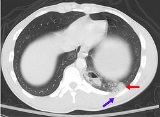
. Consolidated areas appear white on an X-ray film. Contusion is not typically restricted by the anatomical boundaries of the lobes or segments of the lung. The X-ray appearance of pulmonary contusion is similar to that of aspiration
Pulmonary aspiration

In medicine, aspiration is the entry of secretions or foreign material into the Vertebrate trachea and lungs.The patient may either inhalation the material, or it may be blown into the lungs during positive pressure ventilation or CPR....
, and the presence of hemothorax
Hemothorax

A hemothorax is a condition that results from blood accumulating in the pleural cavity....
 or pneumothorax
Pneumothorax

In medicine , a pneumothorax, or collapsed lung, is a potential medical emergency caused by accumulation of air or gas in the pleural cavity....
 may obscure the contusion on a radiograph. Signs of contusion that progress after 48 hours post-injury are likely to be actually due to aspiration, pneumonia, or ARDS.

Although chest radiography is an important part of the diagnosis, it is often not sensitive enough to detect the condition early after the injury. In a third of cases, pulmonary contusion is not visible on the first chest radiograph performed. It takes an average of six hours for the characteristic white regions to show up on a chest X-ray, and the contusion may not become apparent for 48 hours. When a pulmonary contusion is apparent in an X-ray, it suggests that the trauma to the chest was severe and that a CT scan might reveal other injuries that were missed with X-ray.

Computed tomography


Computed tomography
Computed tomography

Computed tomography is a medical imaging method employing tomography. Geometry Processing is used to generate a stereoscopy of the inside of an object from a large series of two-dimensional X-ray images taken around a single axis of rotation....
 (CT scanning) is a more sensitive test for pulmonary contusion, and it can identify abdominal
Abdominal trauma

Abdominal trauma is an injury to the abdomen. It may be blunt trauma or penetrating trauma and may involve damage to the abdominal Organ s. Signs and symptoms include abdominal pain, tenderness , rigidity, and bruise of the external abdomen....
, chest, or other injuries that accompany the contusion. In one study, chest X-ray detected pulmonary contusions in 16.3% of people with serious blunt trauma, while CT detected them in 31.2% of the same people. Unlike X-ray, CT scanning can detect the contusion almost immediately after the injury. However, in both X-ray and CT a contusion may become more visible over the first 24–48 hours after trauma as bleeding and edema into lung tissues progress. CT scanning also helps determine the size of a contusion, which is useful in determining whether a patient needs mechanical ventilation; a larger volume of contused lung on CT scan is associated with an increased likelihood that ventilation will be needed. CT scans also help differentiate between contusion and pulmonary hematoma
Pulmonary hematoma

A pulmonary hematoma is a collection of blood within the tissue of the lung. It may result when a pulmonary laceration fills with blood. A lung laceration filled with air is called a pneumatocele....
, which may be difficult to tell apart otherwise. However, pulmonary contusions that are visible on CT but not chest X-ray are usually not severe enough to affect outcome or treatment.

Ultrasound

Pulmonary ultrasound
Ultrasound

Ultrasound is cyclic sound pressure with a frequency greater than the upper limit of human hearing . Although this limit varies from person to person, it is approximately 20 Hertz in healthy, young adults and thus, 20 kHz serves as a useful lower limit in describing ultrasound....
, performed at the bedside or on the accident scene, is being explored as a diagnosis for pulmonary contusion. Its use is still not widespread, being limited to facilities which are comfortable with its use for other applications, like pneumothorax, airway management, and hemothorax. Accuracy has been found to be comparable to CT scanning.

Prevention

Prevention of pulmonary contusion is similar to that of other chest trauma. Airbags in combination with seat belts can protect vehicle occupants by preventing the chest from striking the interior of the vehicle during a collision, and by distributing forces involved in the crash more evenly across the body. However, in rare cases, an airbag causes pulmonary contusion in a person who is not properly positioned when it deploys. Child restraints such as carseats protect children in vehicle collisions from pulmonary contusion. Equipment exists for use in some sports to prevent chest and lung injury; for example, in softball the catcher is equipped with a chest protector. Athletes who do not wear such equipment, such as basketball players, can be trained to protect their chests from impacts. Protective garments can also prevent pulmonary contusion in explosions. Although traditional body armor made from rigid plates or other heavy materials protects from projectiles generated by a blast, it does not protect against pulmonary contusion, because it does not prevent the blast's shock wave from being transferred to the lung. Special body armor has been designed for military personnel at high risk for blast injuries; these garments can prevent a shock wave from being propagated across the chest wall to the lung, and thus protect wearers from blast lung injuries. These garments alternate layers of materials with high and low acoustic impedance
Acoustic impedance

The acoustic impedance Z is a frequency f dependent parameter and is very useful, for example, for describing the behaviour of musical wind instruments....
 (the product of a material's density and a wave's velocity through it) in order to "decouple" the blast wave, preventing its propagation into the tissues.

Treatment

No treatment is known to speed the healing of a pulmonary contusion; the main care is supportive. Attempts are made to discover injuries accompanying the contusion, to prevent additional injury, and to provide supportive care while waiting for the contusion to heal. Monitoring, including keeping track of fluid balance
Fluid balance

Fluid balance is the concept of human homeostasis that the amount of fluid lost from the body is equal to the amount of fluid taken in. Euvolemia is the state of normal body fluid volume....
, respiratory function, and oxygen saturation using pulse oximetry
Pulse oximetry

Pulse oximetry is a non-invasive method allowing the monitoring of the oxygenation of a patient's hemoglobin.A sensor is placed on a thin part of the patient's anatomy, usually a fingertip or earlobe, or in the case of a infant, across a foot, and a light containing both red and infrared wavelengths is passed from one side to the other....
 is also required as the patient's condition may progressively worsen. Monitoring for complications such as pneumonia
Pneumonia

Pneumonia is an Inflammation illness of the lung. Frequently, it is described as lung parenchyma/alveolus inflammation and abnormal alveolar filling with fluid ....
 and acute respiratory distress syndrome is of critical importance. Treatment aims to prevent respiratory failure
Respiratory failure

The term respiratory failure, in medicine, is used to describe inadequate gas exchange by the respiratory system, with the result that arterial oxygen and/or carbon dioxide levels cannot be maintained within their normal ranges....
 and to ensure adequate blood oxygenation
Oxygenation

Oxygenation refers to either the amount of oxygen in a medium or to the process of adding oxygen to a medium to increase its oxygen content....
. Supplemental oxygen can be given and it may be warmed and humidified. When the contusion does not respond to other treatments, extracorporeal membranous oxygenation may be used, pumping blood from the body into a machine that oxygenates it and removes carbon dioxide prior to pumping it back in.

Ventilation

Positive pressure ventilation

In emergency medicine positive pressure ventilation refers to the process of forcing air into the lungs of a patient, usually using a Bag valve mask or mechanical ventilator....
, in which air is forced into the lungs, is needed when oxygenation is significantly impaired. Noninvasive
Non-invasive (medical)

The term non-invasive in medicine has two meanings:* A medical procedure is strictly defined as non-invasive when no break in the skin is created and there is no contact with the mucosa, or skin break, or internal body cavity beyond a natural or artificial body orifice....
 positive pressure ventilation including continuous positive airway pressure
Continuous positive airway pressure

Positive airway pressure is a method of mechanical ventilation used primarily in the treatment of sleep apnea, for which it was first developed....
 (CPAP) and bi-level positive airway pressure (BiPAP), may be used to improve oxygenation and treat atelectasis. In both, air is blown into the airways at a prescribed pressure via a mask fitted tightly to the face; in BiPAP the pressure changes between inhalation and exhalation, while in CPAP the pressure is the same during both. Noninvasive ventilation has advantages over invasive
Invasive (medical)

The term invasive in Medicine has two meanings:* A medical procedure which penetrates or breaks the skin or a body cavity, i.e., it requires a perforation, an incision, a catheterization, etc....
 methods because it does not carry the risk of infection that intubation does, and it allows normal coughing, swallowing, and speech. However, the technique may cause complications; it may force air into the stomach or cause aspiration of stomach contents, especially when level of consciousness
Level of consciousness

Level of consciousness is a measurement of a person's arousal and responsiveness to Stimulus from the environment. A mildly depressed level of consciousness may be classed as lethargy; someone in this state can be aroused with little difficulty....
 is decreased.

People with signs of inadequate respiration
Respiration (physiology)

In animal physiology, respiration is the transport of Oxygen from the outside air to the cells within Tissue s and the transport of carbon dioxide in the opposite direction....
 or oxygenation may need to be intubated
Intubation

In medicine, intubation refers to the placement of a tube into an external or internal orifice of the body. Although the term can refer to endoscopy procedures, it is most often used to denote tracheal intubation....
 and mechanically ventilated. Mechanical ventilation aims to reduce pulmonary edema and increase oxygenation. Ventilation can reopen collapsed alveoli, but it is harmful for them to be repeatedly opened, and positive pressure ventilation can also damage the lung by overinflating it. Intubation is normally reserved for when respiratory problems occur, but most significant contusions do require intubation, and it may be done early in anticipation of this need. People with pulmonary contusion who are especially likely to need ventilation include those with prior severe lung disease or kidney problems; the elderly; those with a lowered level of consciousness; those with low blood oxygen or high carbon dioxide levels; and those who are going to be operated on and need anesthesia
Anesthesia

Anesthesia, or anaesthesia , has traditionally meant the condition of having sensation blocked or temporarily taken away. This allows patients to undergo surgery and other procedures without the distress and pain they would otherwise experience....
.

Pulmonary contusion or its complications such as acute respiratory distress syndrome may cause lungs to lose compliance
Pulmonary compliance

Pulmonary compliance is the ability of the lungs to stretch in a change in volume relative to an applied change in pressure.Compliance is greatest at moderate lung volumes, and much lower at volumes which are very low or very high....
 (stiffen), so higher pressures may be needed to give normal amounts of air and oxygenate the blood adequately. Positive end-expiratory pressure
Positive end-expiratory pressure

Positive end-expiratory pressure is a term used in mechanical ventilation to denote the amount of pressure above atmospheric pressure present in the airway at the end of the expiratory cycle....
 (PEEP), which delivers air at a given pressure at the end of the expiratory cycle, can reduce edema and keep alveoli from collapsing. PEEP is considered necessary with mechanical ventilation; however, if the pressure is too great it can expand the size of the contusion and injure the lung. When the compliance of the injured lung differs significantly from that of the uninjured one, the lungs can be ventilated independently with two ventilators in order to deliver air at different pressures; this helps avoid injury from overinflation while providing adequate ventilation.

Fluid therapy

The administration of fluid therapy in individuals with pulmonary contusion is controversial. Excessive fluid in the circulatory system (hypervolemia
Hypervolemia

Hypervolemia, or fluid overload, is the medical condition where there is too much fluid in the blood.The opposite condition is hypovolemia, which is too little fluid volume in the blood....
) can worsen hypoxia
Hypoxia (medical)

Hypoxia is a Pathology condition in which the body as a whole or a region of the body is deprived of adequate oxygen supply. Variations in arterial oxygen concentrations can be part of the normal physiology, for example, during strenuous physical exercise....
 because it can cause fluid leakage from injured capillaries (pulmonary edema), which are more permeable than normal. However, low blood volume (hypovolemia
Hypovolemia

In physiology and medicine, hypovolemia is a state of decreased blood volume; more specifically, decrease in volume of blood plasma. Volumetric thirst can be caused by a number of things including bleeding and diarrhea....
) resulting from insufficient fluid has an even worse impact, potentially causing hypovolemic shock; for people who have lost large amounts of blood, fluid resuscitation is necessary. A lot of the evidence supporting the idea that fluids should be withheld from people with pulmonary contusion came from animal studies, not clinical trial
Clinical trial

In health care, clinical trials are conducted to allow safety and efficacy data to be collected for new drugs or devices. These trials can only take place once satisfactory information has been gathered on the quality of the product and its non-clinical safety, and Institutional review board approval is granted in the country where the trial...
s with humans; human studies have had conflicting findings on whether fluid resuscitation worsens the condition. For people who do require large amounts of intravenous fluid, a catheter
Catheter

In medicine a catheter is a tubing that can be inserted into a body cavity, duct or vessel. Catheters thereby allow drainage or injection of fluids or access by surgical instruments....
 may be placed in the pulmonary artery
Pulmonary artery

The pulmonary arteries carry blood from heart to the lungs. They are the only artery that carry deoxygenated blood.In the human heart, the pulmonary trunk begins at the base of the right ventricle....
 to measure the pressure within it. Measuring pulmonary artery pressure allows the clinician to give enough fluids to prevent shock without exacerbating edema. Diuretic
Diuretic

A diuretic is any drug that elevates the rate of urination and thus provides a means of forced diuresis. There are several categories of diuretics....
s, drugs that increase urine output to reduce excessive fluid in the system, can be used when fluid overload does occur. Furosemide
Furosemide

Furosemide or frusemide is a loop diuretic used in the treatment of congestive heart failure and edema. It is most commonly marketed by Sanofi-Aventis under the brand name Lasix....
, a diuretic used in the treatment of pulmonary contusion, also relaxes the smooth muscle
Smooth muscle

Smooth muscle is a type of non-striated muscle, found within the tunica media layer of large and small arteries and veins, the urinary bladder, uterus, male and female reproductive tracts, gastrointestinal tract, respiratory tract, the ciliary muscle, and iris of the eye....
 in the veins of the lungs, thereby decreasing pulmonary venous resistance
Vascular resistance

Vascular resistance is a term used to define the resistance to flow that must be overcome to push blood through the circulatory system. The resistance offered by the peripheral circulation is known as the systemic vascular resistance , while the resistance offered by the vasculature of the lungs is known as the pulmonary vascular re...
 and reducing the pressure in the pulmonary capillaries.

Supportive care

Retaining secretions in the airways can worsen hypoxia and lead to infections. Thus, an important part of treatment is pulmonary toilet
Pulmonary toilet

Pulmonary toilet, also called pulmonary hygiene, is a set of methods used to clear mucus and secretions from the airways. The word pulmonary refers to the lungs....
, the use of suction, deep breathing, coughing, and other methods to remove material such as mucus and blood from the airways. Chest physical therapy
Chest physiotherapy

Chest physiotherapy is a broad, non-specific term used to describe treatments generally performed by Respiratory therapy whereby breathing is improved by the indirect removal of mucus from the breathing passages of a patient....
 makes use of techniques such as breathing exercises, stimulation of coughing, suctioning, percussion, movement, vibration, and drainage to rid the lungs of secretions, increase oxygenation, and expand collapsed parts of the lungs. People with pulmonary contusion, especially those who do not respond well to other treatments, may be positioned with the uninjured lung lower than the injured one to improve oxygenation. Inadequate pulmonary toilet can result in pneumonia. People who do develop infections are given antibiotics. No studies have yet shown a benefit of using antibiotics as a preventative measure before infection occurs, although some doctors do recommend prophylactic antibiotic use even without scientific evidence of its benefit. However, this can cause the development of antibiotic resistant
Antibiotic resistance

Antibiotic resistance is the ability of a microorganism to withstand the effects of antibiotics. It is a specific type of drug resistance. Antibiotic resistance evolves via natural selection acting upon random mutation, but it can also be engineered by applying an evolutionary stress on a population....
 strains of bacteria, so giving antibiotics without a clear need is normally discouraged. For people who are at especially high risk of developing infections, the sputum
Sputum

Sputum is matter that is expectorated from the respiratory tract, such as mucus or phlegm, mixed with saliva, which can then be spat from the mouth....
 can be culture
Microbiological culture

A microbiological culture, or microbial culture, is a method of multiplying microbial organisms by letting them reproduce in predetermined culture media under controlled laboratory conditions....
d to test for the presence of infection-causing bacteria; when they are present, antibiotics are used.

Pain control is another means to facilitate the elimination of secretions. A chest wall injury can make coughing painful, increasing the likelihood that secretions will accumulate in the airways. Chest injuries also contribute to hypoventilation
Hypoventilation

In medicine, hypoventilation occurs when Ventilation is inadequate to perform needed gas exchange. By definition it causes an increased concentration of carbon dioxide and respiratory acidosis....
 (inadequate breathing) because the chest wall movement involved in breathing adequately is painful. Insufficient expansion of the chest may lead to atelectasis
Atelectasis

Atelectasis is a collapse of lung tissue affecting part or all of one lung. It is a condition where the alveoli are deflated, as distinct from pulmonary consolidation....
, further reducing oxygenation of the blood. Analgesic
Analgesic

An analgesic is any member of the diverse group of Medication used to relieve pain . The word analgesic derives from Greek an- and algos ....
s (pain medications) can be given to reduce pain. Injection of anesthetics into nerves in the chest wall, called nerve block
Nerve block

Regional nerve blockade, or more commonly nerve block, is a general term used to refer to the injection of local anesthetic onto or near nerves for temporary control of pain....
ade, is another approach to pain management; this does not depress respiration the way some pain medications can.

Prognosis


Pulmonary contusion usually resolves itself without causing permanent complications; however it may also have long-term ill effects on respiratory function. Most contusions resolve in five to seven days after the injury. Signs detectable by radiography are usually gone within 10 days after the injury—when they are not, other conditions, such as pneumonia, are the likely cause. Chronic lung disease correlates with the size of the contusion and can interfere with an individual's ability to return to work. Fibrosis
Fibrosis

Fibrosis is the formation or development of excess fibrous connective tissue in an organ or tissue as a reparative or reactive process, as opposed to a formation of fibrous tissue as a normal constituent of an organ or tissue....
 of the lungs can occur, resulting in dyspnea
Dyspnea

Dyspnea or dyspnoea , from Latin language dyspnoea, from Greek language dyspnoia from dyspnoos, shortness of breath) or shortness of breath is perceived to be difficulty of breathing or painful breathing that a patient is aware of....
 (shortness of breath), low blood oxygenation, and reduced functional residual capacity
Functional residual capacity

Functional Residual Capacity is the volume of air present in the lungs at the end of passive expiration. At FRC, the elastic recoil forces of the lungs and chest wall are equal but opposite and there is no exertion by the thoracic diaphragm or other respiratory muscles....
 for as long as six years after the injury. As late as four years post-injury, decreased functional residual capacity has been found in most pulmonary contusion patients studied. During the six months after pulmonary contusion, up to 90% of people suffer difficulty breathing. In some cases, dyspnea persists for an indefinite period. Contusion can also permanently reduce the compliance of the lungs.

Complications

Pulmonary contusion can result in respiratory failure—about half of such cases occur within a few hours of the initial trauma. Other severe complications, including infections and acute respiratory distress syndrome (ARDS) occur in up to half of cases. Elderly people and those who have heart, lung, or kidney disease prior to the injury are more likely to stay longer in hospital and have complications from the injury. Complications occur in 55% of people with heart or lung disease and 13% of those without. Of people with pulmonary contusion alone, 17% develop ARDS, while 78% of people with at least two additional injuries develop the condition. A larger contusion is associated with an increased risk. In one study, 82% of people with 20% or more of the lung volume affected developed ARDS, while only 22% of people with less than 20% did so.

Pneumonia
Pneumonia

Pneumonia is an Inflammation illness of the lung. Frequently, it is described as lung parenchyma/alveolus inflammation and abnormal alveolar filling with fluid ....
, another potential complication, develops in as many as 20% of people with pulmonary contusion. Contused lungs are less able to remove bacteria than uninjured lungs, predisposing them to infection. Intubation and mechanical ventilation further increase the risk of developing pneumonia; the tube is passed through the nose or mouth into the airways, potentially tracking bacteria from the mouth or sinuses into them. Also, intubation prevents coughing, which would clear bacteria-laden secretions from the airways, and secretions pool near the tube's cuff and allow bacteria to grow. The sooner the endotracheal tube
Endotracheal tube

An endotracheal tube is used in general anaesthesia, intensive care and emergency medicine for airway management and mechanical ventilation. The tube is inserted into a patient's vertebrate trachea in order to ensure that the airway is not closed off and that air is able to reach the lungs....
 is removed, the lower the risk of pneumonia, but if it is removed too early and has to be put back in, the risk of pneumonia rises. People who are at risk for pulmonary aspiration
Pulmonary aspiration

In medicine, aspiration is the entry of secretions or foreign material into the Vertebrate trachea and lungs.The patient may either inhalation the material, or it may be blown into the lungs during positive pressure ventilation or CPR....
 (e.g. those with lowered level of consciousness due to head injuries) are especially likely to get pneumonia. As with ARDS, the chances of developing pneumonia increase with the size of the contusion. Children and adults have been found to have similar rates of complication with pneumonia and ARDS.

Epidemiology

Pulmonary contusion is found in 30–75% of severe cases of chest injury, making it the most common serious injury to occur in association with thoracic
Thorax

The thorax is a division of an animal's body that lies between the head and the abdomen.In mammals, the thorax is the region of the body formed by the sternum, the thoracic vertebrae and the ribs....
 trauma. Of people who have multiple injuries with an injury severity score
Injury Severity Score

The Injury Severity Score is an established medical score to asses trauma severity. It correlates with mortality, morbidity and hospitalization time after trauma....
 of over 15, pulmonary contusion occurs in about 17%. It is difficult to determine the death rate (mortality
Mortality rate

Mortality rate is a measure of the number of deaths in some population, scaled to the size of that population, per unit time. Mortality rate is typically expressed in units of deaths per 1000 individuals per year; thus, a mortality rate of 9.5 in a population of 100,000 would mean 950 deaths per year in that entire population....
) because pulmonary contusion rarely occurs by itself. Usually, deaths of people with pulmonary contusion result from other injuries, commonly traumatic brain injury. It is controversial whether pulmonary contusion with flail chest
Flail chest

A flail chest is a life-threatening medical condition that occurs when a segment of the chest wall breaks under extreme stress and becomes detached from the rest of the chest wall....
 is a major factor in mortality on its own or whether it merely contributes to mortality in people with multiple injuries. The mortality rate of pulmonary contusion is estimated to range from 14–40%, depending on the severity of the contusion itself and on associated injuries. When the contusions are small, they do not normally increase the chance of death or poor outcome for people with blunt chest trauma; however, these chances increase with the size of the contusion. One study found that 35% of people with multiple significant injuries including pulmonary contusion die. In another study, 11% of people with pulmonary contusion alone died, while the number rose to 22% in those with additional injuries. An accompanying flail chest increases the morbidity
Disability

Disability is a lack of ability relative to a personal or group standard or norm. In reality there is often simply a spectrum of ability. Disability may involve physical impairment such as sense impairment, cognitive impairment or intellectual impairment, mental disorder , or various types of chronic disease....
 and mortality to more than twice that of pulmonary contusion alone. Pulmonary contusion is thought to be the direct cause of death in a quarter to a half of people with polytrauma
Polytrauma

Polytrauma is a medical term describing the condition of a person who has been subjected to multiple Physical trauma, such as a serious head injury AND a serious burn....
 who die.

Pulmonary contusion is the most common cause of death among vehicle occupants involved in accidents, and it is thought to contribute significantly in about a quarter of deaths resulting from vehicle collisions. As vehicle use has increased, so has the number of auto accidents, and with it the number of chest injuries. However an increase in the number of airbags installed in modern cars may be decreasing the incidence of pulmonary contusion. Use of child restraint systems has brought the approximate incidence of pulmonary contusion in children in vehicle accidents from 22% to 10%.

Since their chest walls are more flexible, children are more vulnerable to pulmonary contusion than adults are, and it is more common in children than in adults for that reason. Children in forceful impacts suffer twice as many pulmonary contusions as adults with similar injury mechanisms, yet have proportionately fewer rib fractures. Pulmonary contusion has been found in 53% of children with significant chest injuries (those requiring hospitalization). The rates of certain types of injury mechanisms differ between children and adults; for example, children are more often hit by cars when they are pedestrians. Differences in the bodies of children and adults also lead to different manifestations of pulmonary contusion and associated injuries; for example, children have less body mass, so the same force is more likely to lead to trauma to multiple body systems. Some differences in children's physiology might be advantageous (for example they are less likely to have other medical conditions), and thus they have been predicted to have a better outcome. However, despite these differences, children with pulmonary contusion have similar mortality rates to adults.

Associated injuries

A large amount of force is required to cause pulmonary contusion; a person injured with such force is likely to have other types of injuries as well, and pulmonary contusion can be used to gauge the severity of trauma. Up to three quarters of cases are accompanied by other chest injuries, the most common of these being hemothorax and pneumothorax. Flail chest is usually associated with pulmonary contusion, and the contusion, rather than the chest wall injury, is often the main cause of respiratory failure in people with these injuries. Other indications of thoracic
Thorax

The thorax is a division of an animal's body that lies between the head and the abdomen.In mammals, the thorax is the region of the body formed by the sternum, the thoracic vertebrae and the ribs....
 trauma may be associated, including fracture of the sternum
Sternal fracture

A sternal fracture is a bone fracture of the sternum , located in the center of the chest. The injury, which occurs in 5?8% of people who experience significant blunt chest trauma, may occur in vehicle accidents, when the still-moving chest strikes a steering wheel or dashboard or is injured by a seatbelt....
 and bruising of the chest wall. Over half of fractures of the scapula
Scapular fracture

A scapular fracture is a bone fracture of the scapula, the shoulder blade. The scapula is sturdy and located in a protected place, so it rarely breaks....
 are associated with pulmonary contusion. The contusion is frequently found underlying fracture sites. When accompanied by a fracture, it is usually concentrated into a specific location—the contusion is more diffuse when there is no fracture. Pulmonary laceration
Pulmonary laceration

A pulmonary laceration is a chest injury in which lung tissue is torn or cut. An injury that is potentially more serious than pulmonary contusion, pulmonary laceration involves disruption of the architecture of the lung, while pulmonary contusion does not....
s may result from the same blunt or penetrating forces that cause pulmonary contusion. Lacerations can result in pulmonary hematomas; these are reported to develop in 4–11% of pulmonary contusions.

History

In 1761, the Italian anatomist Giovanni Battista Morgagni
Giovanni Battista Morgagni

Giovanni Battista Morgagni , Italy anatomy, was born on at Forl? and he is celebrated as the father of the modern anatomical pathology. ...
 was first to describe a lung injury that was not accompanied by injury to the chest wall overlying it. Nonetheless, it was the French military surgeon Guillaume Dupuytren
Guillaume Dupuytren

Guillaume Dupuytren, Baron was a France anatomist and military surgery. Although he gained much esteem for treating Napoleon I of France hemorrhoid, he is best known for the Dupuytren's contracture named after him and which he described in 1831....
 who is thought to have coined the term pulmonary contusion in the 19th century. It still was not until the early 20th century that pulmonary contusion and its clinical significance began to receive wide recognition. With the use of explosives during World War I came many casualties with no external signs of chest injury but with significant bleeding in the lungs. Studies of World War I injuries by D.R. Hooker showed that pulmonary contusion was an important part of the concussive injury that results from explosions.

Pulmonary contusion received further attention during World War II, when the bombings of Britain caused blast injuries and associated respiratory problems in both soldiers and civilians. Also during this time, studies with animals placed at varying distances from a blast showed that protective gear could prevent lung injuries. These findings suggested that an impact to the outside of the chest wall was responsible for the internal lesions. In 1945, Buford and Burbank described what they called "wet lung", in which the lungs accumulated fluid and were simultaneously less able to remove it. They attributed the respiratory failure often seen in blunt chest trauma in part to excessive fluid resuscitation, and the question of whether and how much to administer fluids has remained controversial ever since.

During the Vietnam War, combat again provided the opportunity for study of pulmonary contusion; research during this conflict played an important role in the development of the modern understanding of its treatment. The condition also began to be more widely recognized in a non-combat context in the 1960s, and symptoms and typical findings with imaging techniques such as X-ray were described. Before the 1960s, it was believed that the respiratory insufficiency seen in flail chest was due to "paradoxical motion" of the flail segment of the chest wall (the flail segment moves in the opposite direction as the chest wall during respiration), so treatment was aimed at managing the chest wall injury, not the pulmonary contusion. For example, positive pressure ventilation
Positive pressure ventilation

In emergency medicine positive pressure ventilation refers to the process of forcing air into the lungs of a patient, usually using a Bag valve mask or mechanical ventilator....
 was used to stabilize the flail segment from within the chest. It was first proposed in 1965 that this respiratory insufficiency is most often due to injury of the lung rather than to the chest wall, and a group led by J.K. Trinkle confirmed this hypothesis in 1975. Hence the modern treatment prioritizes the management of pulmonary contusion. Animal studies performed in the late 1960s and 1970s shed light on the pathophysiological processes involved in pulmonary contusion.

External links

  • , Practice management guideline for pulmonary contusion - flail chest
    Flail chest

    A flail chest is a life-threatening medical condition that occurs when a segment of the chest wall breaks under extreme stress and becomes detached from the rest of the chest wall....