
Home      Discussion      Topics      Dictionary      Almanac
Signup       Login
Psilocybe

Psilocybe

Overview
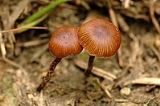
Psilocybe is a genus
Genus
In biology, a genus is a low-level taxonomic rank used in the biological classification of living and fossil organisms, which is an example of definition by genus and differentia...

 of small mushrooms growing worldwide. This genus is best known for its species with psychedelic or hallucinogenic
Psychedelic drug
A psychedelic substance is a psychoactive drug whose primary action is to alter cognition and perception. Psychedelics are part of a wider class of psychoactive drugs known as hallucinogens, a class that also includes related substances such as dissociatives and deliriants...

 properties, widely known as "magic mushrooms
Psychedelic mushroom
Psilocybin mushrooms are fungi that contain the psychoactive compounds psilocybin and psilocin. There are multiple colloquial terms for psilocybin mushrooms, the most common being shrooms or magic mushrooms....

", though the majority of species do not contain hallucinogenic compounds. Psilocin
Psilocin
Psilocin , an aromatic compound, sometimes also spelled psilocine, psilocyn, or psilotsin, is a psychedelic mushroom alkaloid. It is found in most psychedelic mushrooms together with its phosphorylated counterpart psilocybin...

 and psilocybin
Psilocybin
Psilocybin is a naturally occurring psychedelic prodrug, with mind-altering effects similar to those of LSD and mescaline, after it is converted to psilocin. The effects can include altered thinking processes, perceptual distortions, an altered sense of time, and spiritual experiences, as well as...

 are the hallucinogenic compounds responsible for the psychoactive effects of many species in the genus.
Discussion
Ask a question about 'Psilocybe'
Start a new discussion about 'Psilocybe'
Answer questions from other users
Full Discussion Forum
 
Unanswered Questions
Encyclopedia
Psilocybe is a genus
Genus
In biology, a genus is a low-level taxonomic rank used in the biological classification of living and fossil organisms, which is an example of definition by genus and differentia...

 of small mushrooms growing worldwide. This genus is best known for its species with psychedelic or hallucinogenic
Psychedelic drug
A psychedelic substance is a psychoactive drug whose primary action is to alter cognition and perception. Psychedelics are part of a wider class of psychoactive drugs known as hallucinogens, a class that also includes related substances such as dissociatives and deliriants...

 properties, widely known as "magic mushrooms
Psychedelic mushroom
Psilocybin mushrooms are fungi that contain the psychoactive compounds psilocybin and psilocin. There are multiple colloquial terms for psilocybin mushrooms, the most common being shrooms or magic mushrooms....

", though the majority of species do not contain hallucinogenic compounds. Psilocin
Psilocin
Psilocin , an aromatic compound, sometimes also spelled psilocine, psilocyn, or psilotsin, is a psychedelic mushroom alkaloid. It is found in most psychedelic mushrooms together with its phosphorylated counterpart psilocybin...

 and psilocybin
Psilocybin
Psilocybin is a naturally occurring psychedelic prodrug, with mind-altering effects similar to those of LSD and mescaline, after it is converted to psilocin. The effects can include altered thinking processes, perceptual distortions, an altered sense of time, and spiritual experiences, as well as...

 are the hallucinogenic compounds responsible for the psychoactive effects of many species in the genus.

The word Psilocybe comes from the Greek
Ancient Greek
Ancient Greek is the stage of the Greek language in the periods spanning the times c. 9th–6th centuries BC, , c. 5th–4th centuries BC , and the c. 3rd century BC – 6th century AD of ancient Greece and the ancient world; being predated in the 2nd millennium BC by Mycenaean Greek...

 words ψιλός + κύβη, and literally means "bare headed", referring to the mushroom's detachable pellicle (loose skin over the cap). It may be pronounced with the accent on the first syllable (ˈsɪlɵsaɪbiː) or the second (saɪˈlɒsəbiː). The final e is not silent. The marked difference between the Botanical Latin-based pronunciation (given here) and anglicized colloquial pronunciations (with a silent "e") is sometimes a source of confusion in oral communication about this genus.

Description


Psilocybe fruiting bodies are typically small, non-descript mushrooms with a typical "little brown mushroom" morphology
Morphology (biology)
In biology, morphology is a branch of bioscience dealing with the study of the form and structure of organisms and their specific structural features....

. Macroscopically, they are characterized by their small to occasionally medium size, brown to yellow-brown coloration, with a typically hygrophanous
Hygrophanous
The adjective hygrophanous refers to the color change of mushroom tissue as it loses or absorbs water, which causes the pileipellis to become more transparent when wet and opaque when dry....

 pileus
Pileus (mycology)
The pileus is the technical name for the cap, or cap-like part, of a basidiocarp or ascocarp that supports a spore-bearing surface, the hymenium. The hymenium may consist of lamellae, tubes, or teeth, on the underside of the pileus...

, and a spore print
Spore print
thumb|300px|right|Making a spore print of the mushroom Volvariella volvacea shown in composite: mushroom cap laid on white and dark paper; cap removed after 24 hours showing pinkish-tan spore print...

-color that ranges from lilac-brown to dark purple-brown (though rusty-brown colored varieties are known in at least one species). Hallucinogenic species typically have a blue-staining reaction when the fruiting body is bruised. Microscopically, they are characterized by cutis-type pileipellis
Pileipellis
thumb|300px||right|The cuticle of some mushrooms, such as [[Russula mustelina]] shown here, can be peeled from the cap, and may be useful as an identification feature....

, lack of chrysocystidia, and spores that are smooth, ellipsoid to rhomboid to subhexagonal in shape, with a distinct apical germ pore
Germ pore
A germ pore is a small pore in the outer wall of a fungal spore through which the germ tube exits upon germination. It can be apical or eccentric in its location, and, on light microscopy, may be visualized as a lighter coloured area on the cell wall....

. Ecologically, all species of Psilocybe are saprotrophs, growing on various kinds of decaying organic matter.

Classification


A 2002 study of the molecular phylogeny
Molecular phylogeny
Molecular phylogenetics is the analysis of hereditary molecular differences, mainly in DNA sequences, to gain information on an organism's evolutionary relationships. The result of a molecular phylogenetic analysis is expressed in a phylogenetic tree...

 of the agarics by Moncalvo, et al., indicates that the genus Psilocybe as presently defined is polyphyletic, falling into two distinct clades that are not directly related to each other. The blue-staining hallucinogenic species constitute one clade and the non-bluing species constitute the other. The previous type species (Psilocybe ) of the genera was in the non-bluing clade, but in 2010 the type species was changed to Psilocybe semilanceata
Psilocybe semilanceata
Psilocybe semilanceata, commonly known as the liberty cap, is a psychedelic mushroom that contains the psychoactive compounds psilocybin and baeocystin. Of the world's psychoactive mushrooms, it is the most common in nature, and one of the most potent...

, a member of the bluing clade. A 2006 molecular phylogenetic study of the Agaricales
Agaricales
The fungal order Agaricales, also known as gilled mushrooms , or euagarics, contains some of the most familiar types of mushrooms. The order has 33 extant families, 413 genera, and over 13000 described species, along with five extinct genera known only from the fossil record...

 by Matheny, et al., further demonstrates the separation of the bluing and non-bluing clades of Psilocybe in a larger, strongly supported phylogenetic tree of the Agaricales.

Psilocybe is placed taxonomically in the agaric family Strophariaceae
Strophariaceae
The Strophariaceae are a family of fungi in the order Agaricales. The family contains 18 genera and 1316 species. The species of Strophariaceae have a red-brown to dark brown spore print, while the spores themselves are smooth and have an apical germ pore. These agarics are also characterized by...

 based upon its spore
Basidiospore
A basidiospore is a reproductive spore produced by Basidiomycete fungi. Basidiospores typically each contain one haploid nucleus that is the product of meiosis, and they are produced by specialized fungal cells called basidia. In grills under a cap of one common species in the phylum of...

 and pileipellis
Pileipellis
thumb|300px||right|The cuticle of some mushrooms, such as [[Russula mustelina]] shown here, can be peeled from the cap, and may be useful as an identification feature....

 morphology. The phylogenetic study by Matheny, et al., places the non-bluing Psilocybe and its close relatives in a basal position within the Strophariaceae, a sister taxon to a clade containing the other genera within that family. The bluing Psilocybe, however, form a clade that is sister to Galerina
Galerina
Galerina is a genus of small brown-spored saprobic mushrooms, with over 300 species found throughout the world, from the far north to remote Macquarie Island in the Southern Ocean. Species are typically small and hygrophanous, with a slender and brittle stem. They are often found growing on wood,...

in the newly-erected family, Hymenogastraceae
Hymenogastraceae
The Hymenogastraceae is a family of fungi in the Agaricales.The blue-staining members of the genus Psilocybe form a clade that is sister to Galerina in the Hymenogastraceae; however, they have not yet been formally transferred....

. The phylogenetic study by Moncalvo, et al. has confirmed that the agaric genus Melanotus is simply a subgroup of the non-bluing Psilocybe, and also points to a close relationship between the latter group and the genera Kuehneromyces and Phaeogalera.

In 2007, a paper by Redhead et al. proposed conserving the genus Psilocybe with Psilocybe semilanceata as its type species. The suggestion was accepted by unanimous vote of the Nomenclature Committee for Fungi of the International Botanical Congress in 2010, meaning that Psilocybe semilanceata (a member of the bluing clade) now serves as the type species of the genus. Since Psilocybe semilanceata is now the type species of the genus, the bluing hallucinogenic clade will remain in the genus Psilocybe while the non-bluing clade will likely be transferred to the genus Deconica.

Distribution and habitat


Geographically, species in this genus are found throughout the world
World
World is a common name for the whole of human civilization, specifically human experience, history, or the human condition in general, worldwide, i.e. anywhere on Earth....

 in most biome
Biome
Biomes are climatically and geographically defined as similar climatic conditions on the Earth, such as communities of plants, animals, and soil organisms, and are often referred to as ecosystems. Some parts of the earth have more or less the same kind of abiotic and biotic factors spread over a...

s, with the exception of high desert
Desert
A desert is a landscape or region that receives an extremely low amount of precipitation, less than enough to support growth of most plants. Most deserts have an average annual precipitation of less than...

s. Of the 60 species of Psilocybe that occur in the United States
United States
The United States of America is a federal constitutional republic comprising fifty states and a federal district...

, 25 are hallucinogenic. For the bluing Psilocybe, the greatest species diversity seems to be in the neotropics, from Mesoamerica
Mesoamerica
Mesoamerica is a region and culture area in the Americas, extending approximately from central Mexico to Belize, Guatemala, El Salvador, Honduras, Nicaragua, and Costa Rica, within which a number of pre-Columbian societies flourished before the Spanish colonization of the Americas in the 15th and...

 through Brazil
Brazil
Brazil , officially the Federative Republic of Brazil , is the largest country in South America. It is the world's fifth largest country, both by geographical area and by population with over 192 million people...

 and Chile
Chile
Chile ,officially the Republic of Chile , is a country in South America occupying a long, narrow coastal strip between the Andes mountains to the east and the Pacific Ocean to the west. It borders Peru to the north, Bolivia to the northeast, Argentina to the east, and the Drake Passage in the far...

. Psilocybe are found in a variety of habitat
Habitat
* Habitat , a place where a species lives and grows*Human habitat, a place where humans live, work or play** Space habitat, a space station intended as a permanent settlement...

s and substrate
Substrate (biology)
In biology a substrate is the surface a plant or animal lives upon and grows on. A substrate can include biotic or abiotic materials and animals. For example, encrusting algae that lives on a rock can be substrate for another animal that lives on top of the algae. See also substrate .-External...

s. Many of the bluing species found in temperate regions, such as Psilocybe cyanescens
Psilocybe cyanescens
Psilocybe cyanescens is a species of potent psychedelic mushroom. The main compounds responsible for its psychedelic effects are psilocybin and psilocin. It belongs to the family Strophariaceae...

, seem to have an affinity for landscaped
Landscaping
Landscaping refers to any activity that modifies the visible features of an area of land, including:# living elements, such as flora or fauna; or what is commonly referred to as gardening, the art and craft of growing plants with a goal of creating a beautiful environment within the landscape.#...

 areas mulch
Mulch
In agriculture and gardening, is a protective cover placed over the soil to retain moisture, reduce erosion, provide nutrients, and suppress weed growth and seed germination. Mulching in gardens and landscaping mimics the leaf cover that is found on forest floors....

ed with woodchips
Woodchips
Woodchips are a medium-sized solid material made by cutting, or chipping, larger pieces of wood. Woodchips may be used as a biomass solid fuel. They may also be used as an organic mulch in gardening, landscaping, restoration ecology and mushroom cultivation...

 and are actually rather rare in natural settings removed from human habitation. Contrary to popular belief, only a minority of Psilocybe species, such as P. coprophila and P. cubensis
Psilocybe cubensis
Psilocybe cubensis is a species of psychedelic mushroom whose principal active compounds are psilocybin and psilocin. Commonly called Boomers, Cubes or Gold Caps, it belongs to the Strophariaceae family of fungi and was previously known as Stropharia cubensis.-Taxonomy and naming:The species was...

, grow directly on feces
Feces
Feces, faeces, or fæces is a waste product from an animal's digestive tract expelled through the anus or cloaca during defecation.-Etymology:...

. Many other species are found in habitats such as moss
Moss
Mosses are small, soft plants that are typically 1–10 cm tall, though some species are much larger. They commonly grow close together in clumps or mats in damp or shady locations. They do not have flowers or seeds, and their simple leaves cover the thin wiry stems...

y, grass
Grass
Grasses, or more technically graminoids, are monocotyledonous, usually herbaceous plants with narrow leaves growing from the base. They include the "true grasses", of the Poaceae family, as well as the sedges and the rushes . The true grasses include cereals, bamboo and the grasses of lawns ...

y, or forest
Forest
A forest, also referred to as a wood or the woods, is an area with a high density of trees. As with cities, depending where you are in the world, what is considered a forest may vary significantly in size and have various classification according to how and what of the forest is composed...

 humus soil
Soil
Soil is a natural body consisting of layers of mineral constituents of variable thicknesses, which differ from the parent materials in their morphological, physical, chemical, and mineralogical characteristics...

s.

Biochemistry and pharmacology


The Psilocybin
Psilocybin
Psilocybin is a naturally occurring psychedelic prodrug, with mind-altering effects similar to those of LSD and mescaline, after it is converted to psilocin. The effects can include altered thinking processes, perceptual distortions, an altered sense of time, and spiritual experiences, as well as...

 molecule is indirectly responsible for the hallucinogenic properties of the Psilocybe genus. This compound, as well as all other indole alkaloids, are derived from the amino acid tryptophan, being the only amino acid with the indole-amine ring. Trytpophan is converted to tryptamine by the addition of an amine group. Two methylation steps occur producing N,N-dimethyltryptamine, commonly known as DMT
DMT
DMT may refer to:In chemical substances:* Dimethyltryptamine, a psychedelic tryptamine* Dimethyl terephthalate, a polyester precursor* Desoxymethyltestosterone, a designer anabolic steroid...

, another hallucinogenic compound. Hydroxylation of this compound produces the potent hallucinogen psilocin
Psilocin
Psilocin , an aromatic compound, sometimes also spelled psilocine, psilocyn, or psilotsin, is a psychedelic mushroom alkaloid. It is found in most psychedelic mushrooms together with its phosphorylated counterpart psilocybin...

, followed by phosphorlyation yielding psilocybin
Psilocybin
Psilocybin is a naturally occurring psychedelic prodrug, with mind-altering effects similar to those of LSD and mescaline, after it is converted to psilocin. The effects can include altered thinking processes, perceptual distortions, an altered sense of time, and spiritual experiences, as well as...

. The chemical structure of Serotonin
Serotonin
Serotonin or 5-hydroxytryptamine is a monoamine neurotransmitter. Biochemically derived from tryptophan, serotonin is primarily found in the gastrointestinal tract, platelets, and in the central nervous system of animals including humans...

, an innate indole alkaloid neurotransmitter that regulates our feelings of happiness is nearly identical to that of psilocin. The latter differing mainly by the hydroxyl group moving one carbon and the addition of two methyl groups that make the molecule lipophilic (fat soluble), ergo capable of crossing the lipid membrane sheaths of the central nervous system. After ingestion of the psilocybin compound alkaline phosphatases present in the body's digestive system, kidneys, and possibly in the blood readily cleave the phosphoyl ester bond from psilocybin, yielding the hydroxyl compound, psilocin. Psilocin
Psilocin
Psilocin , an aromatic compound, sometimes also spelled psilocine, psilocyn, or psilotsin, is a psychedelic mushroom alkaloid. It is found in most psychedelic mushrooms together with its phosphorylated counterpart psilocybin...

 is the chemical primarily responsible for the hallucinogenic effects of the Psilocybe genus. The blue-staining species of Psilocybe are characterized by the presence of psilocin
Psilocin
Psilocin , an aromatic compound, sometimes also spelled psilocine, psilocyn, or psilotsin, is a psychedelic mushroom alkaloid. It is found in most psychedelic mushrooms together with its phosphorylated counterpart psilocybin...

 and psilocybin
Psilocybin
Psilocybin is a naturally occurring psychedelic prodrug, with mind-altering effects similar to those of LSD and mescaline, after it is converted to psilocin. The effects can include altered thinking processes, perceptual distortions, an altered sense of time, and spiritual experiences, as well as...

. This blue-staining reaction occurs after the fruiting body has been injured, particularly near the base of the stalk. This reaction is thought to be due to the oxidation of psilocybin after the outer surface of the fruiting body has been breached. The degree of bluing in a Psilocybe fruiting body roughly correlates with the concentration of psilocin in the mushroom. Psilocybin is chemically far more stable than psilocin, the latter compound being largely lost when the mushroom is heated or dried.

Some psychoactive species contain baeocystin
Baeocystin
Baeocystin is a mushroom alkaloid and analog of the psychedelic hallucinogenic drug psilocybin, a tryptamine derivative. It is found as a minor compound in most psychoactive mushrooms together with psilocybin, norbaeocystin, and psilocin...

 and norbaeocystin
Norbaeocystin
Norbaeocystin is a mushroom alkaloid and analog of the psychedelic hallucinogenic drug psilocybin. It is found as a minor compound in most psilocybin mushrooms together with psilocin, psilocybin and baeocystin....

 in addition to psilocin and psilocybin.

Medical and psychiatric aspects


Among some groups of Mesoamerican natives, hallucinogenic Psilocybe have been used by native healers for centuries for divining
Divination
Divination is the attempt to gain insight into a question or situation by way of an occultic standardized process or ritual...

 the causes of illness and as part of psychological counseling. Contemporary researchers have generally preferred to use purified psilocybin in medical and psychiatric research, though in practice, whole Psilocybe cubensis is often used.

For details on contemporary research, see: Psilocybin: Medicine.

History and ethnography


Hallucinogenic species of Psilocybe have a long history of use among the native peoples of Mesoamerica for religious communion, divination, and healing, from pre-Columbian
Pre-Columbian
The pre-Columbian era incorporates all period subdivisions in the history and prehistory of the Americas before the appearance of significant European influences on the American continents, spanning the time of the original settlement in the Upper Paleolithic period to European colonization during...

 times up to the present day. Hallucinogenic Psilocybe were known to the aboriginal Mexicans as teonanácatl (literally "divine mushroom") and were reportedly served at the coronation of Moctezuma II
Moctezuma II
Moctezuma , also known by a number of variant spellings including Montezuma, Moteuczoma, Motecuhzoma and referred to in full by early Nahuatl texts as Motecuhzoma Xocoyotzin, was the ninth tlatoani or ruler of Tenochtitlan, reigning from 1502 to 1520...

 in 1502. After the Spanish conquest of the Americas, the use of hallucinogenic plants and mushrooms, like other pre-Christian
Christian
A Christian is a person who adheres to Christianity, an Abrahamic, monotheistic religion based on the life and teachings of Jesus of Nazareth as recorded in the Canonical gospels and the letters of the New Testament...

 traditions, was forcibly suppressed and driven underground.

By the twentieth century, hallucinogenic mushroom use was thought by non-Native Americans
Indigenous peoples of the Americas
The indigenous peoples of the Americas are the pre-Columbian inhabitants of North and South America, their descendants and other ethnic groups who are identified with those peoples. Indigenous peoples are known in Canada as Aboriginal peoples, and in the United States as Native Americans...

 to have disappeared entirely. However, in 1955, Valentina and R. Gordon Wasson
Richard Gordon Wasson
Robert Gordon Wasson was an author, ethnomycologist, and vice president of J.P. Morgan & Co. In the course of independent research, he made contributions to the fields of ethnobotany, botany, and anthropology...

 became the first Westerners to actively participate in an indigenous mushroom ceremony. The Wassons did much to publicize their discovery, even publishing an article on their experiences in Life
Life (magazine)
Life generally refers to three American magazines:*A humor and general interest magazine published from 1883 to 1936. Time founder Henry Luce bought the magazine in 1936 solely so that he could acquire the rights to its name....

in 1957. In 1956, Roger Heim
Roger Heim
Roger Heim was a French botanist specialising in mycology and tropical phytopathology. He was known for his studies describing the anatomy of the mushroom hymenium, the systematics and phylogeny of higher fungi , the mycology of tropical fungi such as...

 identified the hallucinogenic mushroom that the Wassons had brought back from Mexico as Psilocybe and in 1958, Albert Hofmann
Albert Hofmann
Albert Hofmann was a Swiss scientist known best for being the first person to synthesize, ingest and learn of the psychedelic effects of lysergic acid diethylamide . He authored more than 100 scientific articles and a number of books, including LSD: My Problem Child...

 first reported psilocin and psilocybin as the active compound in these mushrooms.

At present, hallucinogenic mushroom use has been reported among a number of groups spanning from central Mexico to Oaxaca, including groups of Nahua, Mixtecs, Mixe
Mixe
The Mixe or Mije is an indigenous group inhabiting the eastern highlands of the Mexican state of Oaxaca. They speak the Mixe languages which are classified in the Mixe–Zoque family, and are more culturally conservative than other indigenous groups of the region, maintaining their language to this...

, Mazatecs, Zapotecs, and others.

The popularization of entheogens by Wasson, Timothy Leary
Timothy Leary
Timothy Francis Leary was an American psychologist and writer, known for his advocacy of psychedelic drugs. During a time when drugs like LSD and psilocybin were legal, Leary conducted experiments at Harvard University under the Harvard Psilocybin Project, resulting in the Concord Prison...

, and others has led to an explosion in the use of hallucinogenic Psilocybe throughout the world. By the early 1970s, a number of psychoactive Psilocybe species were described from temperate North America, Europe, and Asia and were widely collected. Books describing methods of cultivating Psilocybe cubensis
Psilocybe cubensis
Psilocybe cubensis is a species of psychedelic mushroom whose principal active compounds are psilocybin and psilocin. Commonly called Boomers, Cubes or Gold Caps, it belongs to the Strophariaceae family of fungi and was previously known as Stropharia cubensis.-Taxonomy and naming:The species was...

in large quantities were also published. The relatively easy availability of hallucinogenic Psilocybe from wild and cultivated sources has made it among the most widely used of the hallucinogenic drugs.

Legal status


The purified chemicals psilocybin and psilocin are listed as Schedule I drugs under the United Nations 1971 Convention on Psychotropic Substances
Convention on Psychotropic Substances
The Convention on Psychotropic Substances of 1971 is a United Nations treaty designed to control psychoactive drugs such as amphetamines, barbiturates, benzodiazepines, and psychedelics signed at Vienna on February 21, 1971...

.http://www.incb.org/pdf/e/list/green.pdf However, the UN drug treaties do not apply to cultivation, preparation, or international transport of psilocybin mushrooms.

Nonetheless, many countries prohibit possession and use of psilocybin mushrooms, including the bluing species of Psilocybe. However, in national, state, and provincial drug laws there is a great deal of ambiguity about the legal status of psilocybin mushrooms, as well as a strong element of selective enforcement
Selective enforcement
Selective enforcement is the ability that executors of the law have to arbitrarily select choice individuals as being outside of the law...

 in some places.

The legal status of Psilocybe spores is even more ambiguous, as the spores contain neither psilocybin nor psilocin, and hence are not illegal to sell or possess in many jurisdictions, though many jurisdictions will prosecute under broader laws prohibiting items that are used in drug manufacture. A few jurisdictions (such as the US states of California
California
California is a state located on the West Coast of the United States. It is by far the most populous U.S. state, and the third-largest by land area...

, Georgia, and Idaho
Idaho
Idaho is a state in the Rocky Mountain area of the United States. The state's largest city and capital is Boise. Residents are called "Idahoans". Idaho was admitted to the Union on July 3, 1890, as the 43rd state....

) have specifically prohibited the sale and possession of psilocybin mushroom spores. Cultivation of psilocybin mushrooms is considered drug manufacture in most jurisdictions and is often severely penalized, though some countries and one US state have ruled that growing psilocybin mushrooms does not qualify as "manufacturing" a controlled substance.

Psychedelic mushrooms as well as other "soft drugs" which are stronger than cannabis but not synthetic, are legally available through smart shops in Amsterdam. Only the truffle form of magic mushrooms are currently legal, but these still contain the active ingredients and produce similar effect as the caps and stalks.

Notable species


Psilocybe cubensis
Psilocybe cubensis
Psilocybe cubensis is a species of psychedelic mushroom whose principal active compounds are psilocybin and psilocin. Commonly called Boomers, Cubes or Gold Caps, it belongs to the Strophariaceae family of fungi and was previously known as Stropharia cubensis.-Taxonomy and naming:The species was...

(Stropharia cubensis); the most commonly grown and consumed Psilocybe, due to ease of cultivation and large size of carpophores; also commonly collected throughout the tropics
Tropics
The tropics is a region of the Earth surrounding the Equator. It is limited in latitude by the Tropic of Cancer in the northern hemisphere at approximately  N and the Tropic of Capricorn in the southern hemisphere at  S; these latitudes correspond to the axial tilt of the Earth...

 and subtropics
Subtropics
The subtropics are the geographical and climatical zone of the Earth immediately north and south of the tropical zone, which is bounded by the Tropic of Cancer and the Tropic of Capricorn, at latitudes 23.5°N and 23.5°S...

, including the US Gulf Coast; nicknamed the commercial psilocybe.
Psilocybe cyanescens
Psilocybe cyanescens is a species of potent psychedelic mushroom. The main compounds responsible for its psychedelic effects are psilocybin and psilocin. It belongs to the family Strophariaceae...

Native to the Pacific Northwest
Pacific Northwest
The Pacific Northwest is a region in northwestern North America, bounded by the Pacific Ocean to the west and, loosely, by the Rocky Mountains on the east. Definitions of the region vary and there is no commonly agreed upon boundary, even among Pacific Northwesterners. A common concept of the...

 of North America
North America
North America is a continent wholly within the Northern Hemisphere and almost wholly within the Western Hemisphere. It is also considered a northern subcontinent of the Americas...

, but also found in western Europe
Western Europe
Western Europe is a loose term for the collection of countries in the western most region of the European continents, though this definition is context-dependent and carries cultural and political connotations. One definition describes Western Europe as a geographic entity—the region lying in the...

; nicknamed the wavy-cap or wavies.
Psilocybe semilanceata
Psilocybe semilanceata, commonly known as the liberty cap, is a psychedelic mushroom that contains the psychoactive compounds psilocybin and baeocystin. Of the world's psychoactive mushrooms, it is the most common in nature, and one of the most potent...

Found in northern temperate climates
Temperate
In geography, temperate or tepid latitudes of the globe lie between the tropics and the polar circles. The changes in these regions between summer and winter are generally relatively moderate, rather than extreme hot or cold...

; nicknamed the liberty cap.

  • Psilocybe azurescens
    Psilocybe azurescens
    Psilocybe azurescens is a psychedelic mushroom whose main active compounds are psilocybin and psilocin. It is among the most potent of the tryptamine-bearing mushrooms, containing up to 1.8% psilocybin, 0.5% psilocin, and 0.4% baeocystin by dry weight, averaging to about 1.1% psilocybin and 0.15%...

    , a highly potent species native to Oregon
    Oregon
    Oregon is a state in the Pacific Northwest region of the United States. It is located on the Pacific coast, with Washington to the north, California to the south, Nevada on the southeast and Idaho to the east. The Columbia and Snake rivers delineate much of Oregon's northern and eastern...

    , but popular in outdoor cultivation, and expanding its range as a result; nicknamed azies.

Further reading

  • Emboden, William. 1979. Narcotic Plants (revised and enlarged). New York: Macmillan. 206 pp. ISBN 0-02-535480-9 (hb). ISBN 0-02-062840-4 (paper)
  • Furst, Peter T. 1976. Hallucinogens and Culture. San Francisco: Chandler and Sharp Publishers. Chapter Seven, The sacred mushrooms: Rediscovery in Mexico; pp 75–88. Available from: http://www.sunrisedancer.com/radicalreader/detail.asp?iArt=4&iType=21 ISBN 0-88316-517-1
  • Haard, Richard & Karen. 1977, Poisonous and Hallucinogenic Mushrooms (second edition). Mayne Island (BC) and Seattle: Cloudburst Press. 126 pp ISBN 0-88930-018-6.
  • McKenna, Terence. 1992. Food of the Gods. New York: Bantam Books. 313 pp ISBN 0-553-37130-4 (paper).
  • Metzner, Ralph (ed). 2005. Sacred Mushroom of Visions: Teonanácatl [2nd ed]. Rochester, VT: Park Street Press. 304 pp. ISBN 1-59477-044-1
  • Ott, Jonathan and Bigwood, Jeremy.1978. Teonanácatl: Hallucinogenic mushrooms of North America. Seattle: Madrona Publishers. 175 p. [out of print] ISBN 0-914842-32-3
  • Oss, O. T. and O. N. Oeric (pseudonym of Terence McKenna). 1976. Psilocybin: Magic Mushroom Grower's Guide. Berkeley, CA: And/Or Press. 63 pp ISBN 0-915904-13-6 (paper).
  • Stamets, Paul. 1996. Psilocybin Mushrooms of the World. Berkeley: Ten Speed Press. 245 pp. ISBN 0-89815-839-7

General information


Taxonomy


History and ethnography


Legal aspects


Other

  • The Shroomery Detailed information about psilocybe mushrooms including identification, cultivation and spores, psychedelic images, trip reports, a dosage calculator and an active community.