

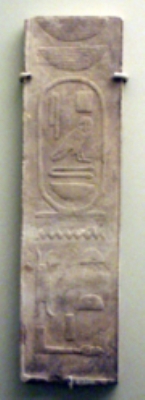
Psammetichus III

Encyclopedia
Psamtik III was the last Pharaoh
of the Twenty-sixth Dynasty
of Egypt
from 526 BC to 525 BC. Most of what is known about his reign and life was documented by the Greek historian Herodotus
in the 5th century. Herodotus states that Psamtik had ruled Egypt for only six months before he was confronted by a Persian invasion of his country led by King Cambyses II of Persia
. Psammetichus was subsequently defeated at Pelusium
, and fled to Memphis where he was captured. The deposed pharaoh was carried off to Susa
in chains, and later executed.
and one of his wives, Queen Tentkheta
. He succeeded his father as pharaoh in 526 BC, when Amasis died after a long and prosperous reign of some 44 years. According to Herodotus, he had a son named Amasis and a wife and daughter, both unnamed in historical documents.
s. After the Persians under Cambyses had crossed the Sinai desert with the aid of the Arabs, a bitter battle was fought near Pelusium
, a city on Egypt's eastern frontier, in the spring of 525 BC. The Egyptians were defeated at Pelusium and Psamtik was betrayed by one of his allies, Phanes of Halicarnas. Consequently, Psamtik and his army were compelled to withdraw to Memphis
. The Persians captured the city after a long siege, and captured Psamtik after its fall. Shortly thereafter, Cambyses ordered the public execution of two thousand of the principal citizens, including (it is said) a son of the fallen king.
by Herodotus, Psamtik's daughter was enslaved, his son given a death sentence, and a male companion was turned into a beggar. They were all brought before him to test his reaction, and he only became upset over seeing the state of the beggar. Psamtik III was spared but his son was cut to pieces. The deposed pharaoh was imprisoned and taken to Susa in chains where he was initially treated relatively well. After a while, however, Psamtik reportedly plotted a rebellion against Cambyses and was executed for his involvement in this conspiracy by being forced to drink bull's blood thereby causing his death.
Pharaoh
Pharaoh is a title used in many modern discussions of the ancient Egyptian rulers of all periods. The title originates in the term "pr-aa" which means "great house" and describes the royal palace...
of the Twenty-sixth Dynasty
Twenty-sixth dynasty of Egypt
The Twenty-sixth Dynasty of Egypt was the last native dynasty to rule Egypt before the Persian conquest in 525 BC . The Dynasty's reign The Twenty-sixth Dynasty of Egypt (also written Dynasty XXVI or Dynasty 26) was the last native dynasty to rule Egypt before the Persian conquest in 525 BC...
of Egypt
History of Ancient Egypt
The History of Ancient Egypt spans the period from the early predynastic settlements of the northern Nile Valley to the Roman conquest in 30 BC...
from 526 BC to 525 BC. Most of what is known about his reign and life was documented by the Greek historian Herodotus
Herodotus
Herodotus was an ancient Greek historian who was born in Halicarnassus, Caria and lived in the 5th century BC . He has been called the "Father of History", and was the first historian known to collect his materials systematically, test their accuracy to a certain extent and arrange them in a...
in the 5th century. Herodotus states that Psamtik had ruled Egypt for only six months before he was confronted by a Persian invasion of his country led by King Cambyses II of Persia
Cambyses II of Persia
Cambyses II son of Cyrus the Great , was a king of kings of the Achaemenid Empire. Cambyses's grandfather was Cambyses I, king of Anshan. Following Cyrus the Great's conquest of the Near East and Central Asia, Cambyses II further expanded the empire into Egypt during the Late Period by defeating...
. Psammetichus was subsequently defeated at Pelusium
Pelusium
Pelusium was a city in the eastern extremes of Egypt's Nile Delta, 30 km to the southeast of the modern Port Said. Alternative names include Sena and Per-Amun , Pelousion , Sin , Seyân , and Tell el-Farama...
, and fled to Memphis where he was captured. The deposed pharaoh was carried off to Susa
Susa
Susa was an ancient city of the Elamite, Persian and Parthian empires of Iran. It is located in the lower Zagros Mountains about east of the Tigris River, between the Karkheh and Dez Rivers....
in chains, and later executed.
Family
Psamtik III was the son of the pharaoh Amasis IIAmasis II
Amasis II or Ahmose II was a pharaoh of the Twenty-sixth dynasty of Egypt, the successor of Apries at Sais. He was the last great ruler of Egypt before the Persian conquest.-Life:...
and one of his wives, Queen Tentkheta
Tentkheta
Tentkheta was the Great Royal Wife of Amasis II. She dates to the Twenty-sixth dynasty of Egypt.-Biography:Tentkheta was one of the wives known for Pharaoh Amasis II. She was a daughter of a priest of Ptah named Padineith. She was the mother of a King's son named Khnum-ib-Re and the mother of...
. He succeeded his father as pharaoh in 526 BC, when Amasis died after a long and prosperous reign of some 44 years. According to Herodotus, he had a son named Amasis and a wife and daughter, both unnamed in historical documents.
Defeat and imprisonment
Psamtik ruled Egypt for no more than six months. A few days after his coronation, rain fell at Thebes, which was a rare event that frightened some Egyptians, who interpreted this as a bad omen. The young and inexperienced pharaoh was no match for the invading PersianAchaemenid Empire
The Achaemenid Empire , sometimes known as First Persian Empire and/or Persian Empire, was founded in the 6th century BCE by Cyrus the Great who overthrew the Median confederation...
s. After the Persians under Cambyses had crossed the Sinai desert with the aid of the Arabs, a bitter battle was fought near Pelusium
Pelusium
Pelusium was a city in the eastern extremes of Egypt's Nile Delta, 30 km to the southeast of the modern Port Said. Alternative names include Sena and Per-Amun , Pelousion , Sin , Seyân , and Tell el-Farama...
, a city on Egypt's eastern frontier, in the spring of 525 BC. The Egyptians were defeated at Pelusium and Psamtik was betrayed by one of his allies, Phanes of Halicarnas. Consequently, Psamtik and his army were compelled to withdraw to Memphis
Memphis, Egypt
Memphis was the ancient capital of Aneb-Hetch, the first nome of Lower Egypt. Its ruins are located near the town of Helwan, south of Cairo.According to legend related by Manetho, the city was founded by the pharaoh Menes around 3000 BC. Capital of Egypt during the Old Kingdom, it remained an...
. The Persians captured the city after a long siege, and captured Psamtik after its fall. Shortly thereafter, Cambyses ordered the public execution of two thousand of the principal citizens, including (it is said) a son of the fallen king.
Captivity and execution
According to book III of The HistoryHistories (Herodotus)
The Histories of Herodotus is considered one of the seminal works of history in Western literature. Written from the 450s to the 420s BC in the Ionic dialect of classical Greek, The Histories serves as a record of the ancient traditions, politics, geography, and clashes of various cultures that...
by Herodotus, Psamtik's daughter was enslaved, his son given a death sentence, and a male companion was turned into a beggar. They were all brought before him to test his reaction, and he only became upset over seeing the state of the beggar. Psamtik III was spared but his son was cut to pieces. The deposed pharaoh was imprisoned and taken to Susa in chains where he was initially treated relatively well. After a while, however, Psamtik reportedly plotted a rebellion against Cambyses and was executed for his involvement in this conspiracy by being forced to drink bull's blood thereby causing his death.