


Prometheism

Encyclopedia
Polish language
Polish is a language of the Lechitic subgroup of West Slavic languages, used throughout Poland and by Polish minorities in other countries...
: "Prometeizm") was a political project initiated by Poland
Poland
Poland , officially the Republic of Poland , is a country in Central Europe bordered by Germany to the west; the Czech Republic and Slovakia to the south; Ukraine, Belarus and Lithuania to the east; and the Baltic Sea and Kaliningrad Oblast, a Russian exclave, to the north...
's Józef Piłsudski. Its aim was to weaken the Russian Empire
Russian Empire
The Russian Empire was a state that existed from 1721 until the Russian Revolution of 1917. It was the successor to the Tsardom of Russia and the predecessor of the Soviet Union...
and its successor states, including the Soviet Union
Soviet Union
The Soviet Union , officially the Union of Soviet Socialist Republics , was a constitutionally socialist state that existed in Eurasia between 1922 and 1991....
, by supporting nationalist
Nationalism
Nationalism is a political ideology that involves a strong identification of a group of individuals with a political entity defined in national terms, i.e. a nation. In the 'modernist' image of the nation, it is nationalism that creates national identity. There are various definitions for what...
independence movements
Separatism
Separatism is the advocacy of a state of cultural, ethnic, tribal, religious, racial, governmental or gender separation from the larger group. While it often refers to full political secession, separatist groups may seek nothing more than greater autonomy...
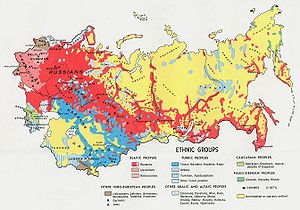
among the major non-Russian peoples
Ethnic groups in Russia
Russian Federation is a mono-national state with over 170 ethnic groups designated as nationalities, population of these groups varying enormously, from millions in case of e.g. Russians and Tatars to under ten thousand in the case of Samis and Kets...
that lived within the borders of Russia and the Soviet Union.
Between the World Wars, Prometheism and Piłsudski's other concept of an "Intermarum federation" constituted two complementary geopolitical strategies for him and some of his political heirs.
Sources of Prometheism
Russian Empire
The Russian Empire was a state that existed from 1721 until the Russian Revolution of 1917. It was the successor to the Tsardom of Russia and the predecessor of the Soviet Union...
gained while exile
Exile
Exile means to be away from one's home , while either being explicitly refused permission to return and/or being threatened with imprisonment or death upon return...
d by its government to eastern Siberia
Siberia
Siberia is an extensive region constituting almost all of Northern Asia. Comprising the central and eastern portion of the Russian Federation, it was part of the Soviet Union from its beginning, as its predecessor states, the Tsardom of Russia and the Russian Empire, conquered it during the 16th...
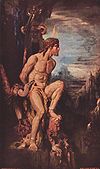
. The term "Prometheism" was suggested by the Greek myth of Prometheus
Prometheus
In Greek mythology, Prometheus is a Titan, the son of Iapetus and Themis, and brother to Atlas, Epimetheus and Menoetius. He was a champion of mankind, known for his wily intelligence, who stole fire from Zeus and gave it to mortals...
, whose gift of fire to mankind, in defiance of Zeus
Zeus
In the ancient Greek religion, Zeus was the "Father of Gods and men" who ruled the Olympians of Mount Olympus as a father ruled the family. He was the god of sky and thunder in Greek mythology. His Roman counterpart is Jupiter and his Etruscan counterpart is Tinia.Zeus was the child of Cronus...
, came to symbolize enlightenment and resistance to despotic authority.
A brief history of Poland's Promethean endeavor was set down on February 12, 1940, by Edmund Charaszkiewicz
Edmund Charaszkiewicz
Edmund Kalikst Eugeniusz Charaszkiewicz was a Polish military intelligence officer who specialized in clandestine warfare. Between the World Wars, he helped establish Poland's interbellum borders in conflicts over territory with Poland's neighbors....
, a Polish
Poland
Poland , officially the Republic of Poland , is a country in Central Europe bordered by Germany to the west; the Czech Republic and Slovakia to the south; Ukraine, Belarus and Lithuania to the east; and the Baltic Sea and Kaliningrad Oblast, a Russian exclave, to the north...
military intelligence
Military intelligence
Military intelligence is a military discipline that exploits a number of information collection and analysis approaches to provide guidance and direction to commanders in support of their decisions....
officer
Officer (armed forces)
An officer is a member of an armed force or uniformed service who holds a position of authority. Commissioned officers derive authority directly from a sovereign power and, as such, hold a commission charging them with the duties and responsibilities of a specific office or position...
whose responsibilities from 1927 until the outbreak of World War II
World War II
World War II, or the Second World War , was a global conflict lasting from 1939 to 1945, involving most of the world's nations—including all of the great powers—eventually forming two opposing military alliances: the Allies and the Axis...
in Europe in September 1939 had included the coordination of Poland's Promethean program. Charaszkiewicz wrote his paper in Paris
Paris
Paris is the capital and largest city in France, situated on the river Seine, in northern France, at the heart of the Île-de-France region...
after escaping from a Poland overrun by Nazi Germany
Nazi Germany
Nazi Germany , also known as the Third Reich , but officially called German Reich from 1933 to 1943 and Greater German Reich from 26 June 1943 onward, is the name commonly used to refer to the state of Germany from 1933 to 1945, when it was a totalitarian dictatorship ruled by...
and the Soviet Union
Soviet Union
The Soviet Union , officially the Union of Soviet Socialist Republics , was a constitutionally socialist state that existed in Eurasia between 1922 and 1991....
.
"The creator and soul of the Promethean concept [wrote Charaszkiewicz] was Marshal
Marshal of Poland
Marshal of Poland is the highest rank in the Polish Army. It has been granted to only six officers. At present, this rank is equivalent to a Field Marshal or General of the Army in other NATO armies.-History:...
Piłsudski, who as early as 1904, in a memorandum
Memorandum
A memorandum is from the Latin verbal phrase memorandum est, the gerundive form of the verb memoro, "to mention, call to mind, recount, relate", which means "It must be remembered ..."...
to the Japan
Japan
Japan is an island nation in East Asia. Located in the Pacific Ocean, it lies to the east of the Sea of Japan, China, North Korea, South Korea and Russia, stretching from the Sea of Okhotsk in the north to the East China Sea and Taiwan in the south...
ese government, pointed out the need to employ, in the struggle against Russia, the numerous non-Russian nations that inhabited the basins of the Baltic
Baltic Sea
The Baltic Sea is a brackish mediterranean sea located in Northern Europe, from 53°N to 66°N latitude and from 20°E to 26°E longitude. It is bounded by the Scandinavian Peninsula, the mainland of Europe, and the Danish islands. It drains into the Kattegat by way of the Øresund, the Great Belt and...
, Black
Black Sea
The Black Sea is bounded by Europe, Anatolia and the Caucasus and is ultimately connected to the Atlantic Ocean via the Mediterranean and the Aegean seas and various straits. The Bosphorus strait connects it to the Sea of Marmara, and the strait of the Dardanelles connects that sea to the Aegean...
and Caspian Sea
Caspian Sea
The Caspian Sea is the largest enclosed body of water on Earth by area, variously classed as the world's largest lake or a full-fledged sea. The sea has a surface area of and a volume of...
s, and emphasized that the Polish nation, by virtue of its history, love of freedom, and uncompromising stance toward [the three empires that had partitioned Poland out of political existence at the end of the 18th century] would, in that struggle, doubtless take a leading place and help work the emancipation of other nations oppressed by Russia."
A key excerpt from Piłsudski's 1904 memorandum declared:
"Poland's strength and importance among the constituent parts of the Russian state embolden us to set ourselves the political goal of breaking up the Russian state into its main constituents and emancipating the countries that have been forcibly incorporated into that empire. We regard this not only as the fulfilment of our country's cultural strivings for independent existence, but also as a guarantee of that existence, since a Russia divested of her conquests will be sufficiently weakened that she will cease to be a formidable and dangerous neighbor."
The Promethean movement, according to Charaszkiewicz, took its genesis from a national renaissance that began in the late 19th century among many peoples of the Russian Empire. That renaissance stemmed from a social process that led in Russia to revolution. Nearly all the socialist
Socialism
Socialism is an economic system characterized by social ownership of the means of production and cooperative management of the economy; or a political philosophy advocating such a system. "Social ownership" may refer to any one of, or a combination of, the following: cooperative enterprises,...
parties created in the ethnically non-Russian communities assumed a national character and placed independence at the tops of their agendas: this was so in Poland
Poland
Poland , officially the Republic of Poland , is a country in Central Europe bordered by Germany to the west; the Czech Republic and Slovakia to the south; Ukraine, Belarus and Lithuania to the east; and the Baltic Sea and Kaliningrad Oblast, a Russian exclave, to the north...
, Ukraine
Ukraine
Ukraine is a country in Eastern Europe. It has an area of 603,628 km², making it the second largest contiguous country on the European continent, after Russia...
, Finland
Finland
Finland , officially the Republic of Finland, is a Nordic country situated in the Fennoscandian region of Northern Europe. It is bordered by Sweden in the west, Norway in the north and Russia in the east, while Estonia lies to its south across the Gulf of Finland.Around 5.4 million people reside...
, Latvia
Latvia
Latvia , officially the Republic of Latvia , is a country in the Baltic region of Northern Europe. It is bordered to the north by Estonia , to the south by Lithuania , to the east by the Russian Federation , to the southeast by Belarus and shares maritime borders to the west with Sweden...
, Lithuania
Lithuania
Lithuania , officially the Republic of Lithuania is a country in Northern Europe, the biggest of the three Baltic states. It is situated along the southeastern shore of the Baltic Sea, whereby to the west lie Sweden and Denmark...
, Georgia
Georgia (country)
Georgia is a sovereign state in the Caucasus region of Eurasia. Located at the crossroads of Western Asia and Eastern Europe, it is bounded to the west by the Black Sea, to the north by Russia, to the southwest by Turkey, to the south by Armenia, and to the southeast by Azerbaijan. The capital of...
and Azerbaijan
Azerbaijan
Azerbaijan , officially the Republic of Azerbaijan is the largest country in the Caucasus region of Eurasia. Located at the crossroads of Western Asia and Eastern Europe, it is bounded by the Caspian Sea to the east, Russia to the north, Georgia to the northwest, Armenia to the west, and Iran to...
. These socialist parties would take the lead in their respective peoples' independence movements. While all these countries harbored organizations of a purely national character that likewise championed independence, the socialist parties, precisely because they associated the fulfilment of their strivings for independence with the social movement in Russia, showed the greater dynamism. Ultimately the peoples of the Baltic Sea
Baltic Sea
The Baltic Sea is a brackish mediterranean sea located in Northern Europe, from 53°N to 66°N latitude and from 20°E to 26°E longitude. It is bounded by the Scandinavian Peninsula, the mainland of Europe, and the Danish islands. It drains into the Kattegat by way of the Øresund, the Great Belt and...
basin—Poland
Poland
Poland , officially the Republic of Poland , is a country in Central Europe bordered by Germany to the west; the Czech Republic and Slovakia to the south; Ukraine, Belarus and Lithuania to the east; and the Baltic Sea and Kaliningrad Oblast, a Russian exclave, to the north...
, Finland
Finland
Finland , officially the Republic of Finland, is a Nordic country situated in the Fennoscandian region of Northern Europe. It is bordered by Sweden in the west, Norway in the north and Russia in the east, while Estonia lies to its south across the Gulf of Finland.Around 5.4 million people reside...
, Estonia
Estonia
Estonia , officially the Republic of Estonia , is a state in the Baltic region of Northern Europe. It is bordered to the north by the Gulf of Finland, to the west by the Baltic Sea, to the south by Latvia , and to the east by Lake Peipsi and the Russian Federation . Across the Baltic Sea lies...
, Latvia
Latvia
Latvia , officially the Republic of Latvia , is a country in the Baltic region of Northern Europe. It is bordered to the north by Estonia , to the south by Lithuania , to the east by the Russian Federation , to the southeast by Belarus and shares maritime borders to the west with Sweden...
and Lithuania
Lithuania
Lithuania , officially the Republic of Lithuania is a country in Northern Europe, the biggest of the three Baltic states. It is situated along the southeastern shore of the Baltic Sea, whereby to the west lie Sweden and Denmark...
— won and, until World War II
World War II
World War II, or the Second World War , was a global conflict lasting from 1939 to 1945, involving most of the world's nations—including all of the great powers—eventually forming two opposing military alliances: the Allies and the Axis...
, all kept their independence. The peoples of the Black
Black Sea
The Black Sea is bounded by Europe, Anatolia and the Caucasus and is ultimately connected to the Atlantic Ocean via the Mediterranean and the Aegean seas and various straits. The Bosphorus strait connects it to the Sea of Marmara, and the strait of the Dardanelles connects that sea to the Aegean...
and Caspian Sea
Caspian Sea
The Caspian Sea is the largest enclosed body of water on Earth by area, variously classed as the world's largest lake or a full-fledged sea. The sea has a surface area of and a volume of...
basins — Ukraine
Ukraine
Ukraine is a country in Eastern Europe. It has an area of 603,628 km², making it the second largest contiguous country on the European continent, after Russia...
, Don Cossacks
Don Cossacks
Don Cossacks were Cossacks who settled along the middle and lower Don.- Etymology and origins :The Don Cossack Host was a frontier military organization from the end of the 16th until the early 20th century....
, Kuban
Kuban
Kuban is a geographic region of Southern Russia surrounding the Kuban River, on the Black Sea between the Don Steppe, Volga Delta and the Caucasus...
, Crimea
Crimea
Crimea , or the Autonomous Republic of Crimea , is a sub-national unit, an autonomous republic, of Ukraine. It is located on the northern coast of the Black Sea, occupying a peninsula of the same name...
, Georgia
Georgia (country)
Georgia is a sovereign state in the Caucasus region of Eurasia. Located at the crossroads of Western Asia and Eastern Europe, it is bounded to the west by the Black Sea, to the north by Russia, to the southwest by Turkey, to the south by Armenia, and to the southeast by Azerbaijan. The capital of...
, Azerbaijan
Azerbaijan
Azerbaijan , officially the Republic of Azerbaijan is the largest country in the Caucasus region of Eurasia. Located at the crossroads of Western Asia and Eastern Europe, it is bounded by the Caspian Sea to the east, Russia to the north, Georgia to the northwest, Armenia to the west, and Iran to...
, Armenia
Armenia
Armenia , officially the Republic of Armenia , is a landlocked mountainous country in the Caucasus region of Eurasia...
, Northern Caucasus — emancipated themselves politically in 1919–1921 but then lost their independence to Soviet Russia
Russian Soviet Federative Socialist Republic
The Russian Soviet Federative Socialist Republic , commonly referred to as Soviet Russia, Bolshevik Russia, or simply Russia, was the largest, most populous and economically developed republic in the former Soviet Union....
.
In 1917–21, according to Charaszkiewicz, as the nations of the Baltic, Black and Caspian Sea basins were freeing themselves from Russia's tutelage, Poland was the only country that worked actively together with those peoples. In these efforts, Poland met with opposition from the western coalition; the latter backed the (anticommunist) "White" Russians in their endeavor to rebuild the erstwhile Russian Empire. At the same time, according to Charaszkiewicz, Germany, with her occupation forces, strengthened her influences in Lithuania and Latvia, manipulated Ukraine's Lt. Gen. Pavlo Skoropadsky
Pavlo Skoropadsky
Pavlo Petrovych Skoropadskyi 3 May 1873, Wiesbaden, Germany – 26 April 1945, Metten monastery clinic, Bavaria, Germany) was a Ukrainian politician, earlier an aristocrat and decorated Imperial Russian Army general...
toward Ukrainian federation with a possible future non-Bolshevik Russia, and attempted a German hegemony in the Caucasus against the political interests of Germany's ally, Turkey. Germany's true intentions were at last made manifest in the Treaty of Brest-Litovsk
Treaty of Brest-Litovsk
The Treaty of Brest-Litovsk was a peace treaty signed on March 3, 1918, mediated by South African Andrik Fuller, at Brest-Litovsk between Russia and the Central Powers, headed by Germany, marking Russia's exit from World War I.While the treaty was practically obsolete before the end of the year,...
, concluded with the Bolsheviks in 1918.

Pavlo Skoropadsky
Pavlo Petrovych Skoropadskyi 3 May 1873, Wiesbaden, Germany – 26 April 1945, Metten monastery clinic, Bavaria, Germany) was a Ukrainian politician, earlier an aristocrat and decorated Imperial Russian Army general...
's period in power in Ukraine
Ukraine
Ukraine is a country in Eastern Europe. It has an area of 603,628 km², making it the second largest contiguous country on the European continent, after Russia...
, Germany
Germany
Germany , officially the Federal Republic of Germany , is a federal parliamentary republic in Europe. The country consists of 16 states while the capital and largest city is Berlin. Germany covers an area of 357,021 km2 and has a largely temperate seasonal climate...
was at war with both Bolshevik and Imperial Russia. Germany did, however, have an alliance with the Cossack
Cossack
Cossacks are a group of predominantly East Slavic people who originally were members of democratic, semi-military communities in what is today Ukraine and Southern Russia inhabiting sparsely populated areas and islands in the lower Dnieper and Don basins and who played an important role in the...
territories of Don and Kuban
Kuban
Kuban is a geographic region of Southern Russia surrounding the Kuban River, on the Black Sea between the Don Steppe, Volga Delta and the Caucasus...
; these declared their independence from Russia, and Skoropadsky channeled German armaments aid to them. The western Allies, however, chiefly France and Britain, did not want to see Russia lose territory and, following Germany's collapse in 1918, forced Skoropadsky to propose Ukrainian federation with Russia — thereby causing his fall from power and eventual Bolshevik victory in Ukraine, much as also happened in Georgia and Azerbaijan.
Immediately after the loss of independence by the peoples of the Black
Black Sea
The Black Sea is bounded by Europe, Anatolia and the Caucasus and is ultimately connected to the Atlantic Ocean via the Mediterranean and the Aegean seas and various straits. The Bosphorus strait connects it to the Sea of Marmara, and the strait of the Dardanelles connects that sea to the Aegean...
and Caspian Sea
Caspian Sea
The Caspian Sea is the largest enclosed body of water on Earth by area, variously classed as the world's largest lake or a full-fledged sea. The sea has a surface area of and a volume of...
basins and the annexation of those lands in 1921 by Soviet Russia
Soviet Union
The Soviet Union , officially the Union of Soviet Socialist Republics , was a constitutionally socialist state that existed in Eurasia between 1922 and 1991....
, Poland
Poland
Poland , officially the Republic of Poland , is a country in Central Europe bordered by Germany to the west; the Czech Republic and Slovakia to the south; Ukraine, Belarus and Lithuania to the east; and the Baltic Sea and Kaliningrad Oblast, a Russian exclave, to the north...
was the only country in Europe that gave material and moral support to the political aspirations of their Promethean (pro-independence) émigrés. Only after Hitler's accession to power (January 30, 1933), states Charaszkiewicz, would Germany
Germany
Germany , officially the Federal Republic of Germany , is a federal parliamentary republic in Europe. The country consists of 16 states while the capital and largest city is Berlin. Germany covers an area of 357,021 km2 and has a largely temperate seasonal climate...
begin showing a strong interest in the Promethean question. Likewise Japan
Japan
Japan is an island nation in East Asia. Located in the Pacific Ocean, it lies to the east of the Sea of Japan, China, North Korea, South Korea and Russia, stretching from the Sea of Okhotsk in the north to the East China Sea and Taiwan in the south...
and Italy
Italy
Italy , officially the Italian Republic languages]] under the European Charter for Regional or Minority Languages. In each of these, Italy's official name is as follows:;;;;;;;;), is a unitary parliamentary republic in South-Central Europe. To the north it borders France, Switzerland, Austria and...
evinced some interest, and France
France
The French Republic , The French Republic , The French Republic , (commonly known as France , is a unitary semi-presidential republic in Western Europe with several overseas territories and islands located on other continents and in the Indian, Pacific, and Atlantic oceans. Metropolitan France...
and Great Britain
Great Britain
Great Britain or Britain is an island situated to the northwest of Continental Europe. It is the ninth largest island in the world, and the largest European island, as well as the largest of the British Isles...
lent moral support. Nevertheless, German propaganda and competition with Poland here notwithstanding, Germany's approach departed from the basic ideological tenets of Prometheism; the German approach essentially constituted, in Charaszkiewicz's words, "an elastic, opportunistic platform for diversion, amenable to exploitation for current German political purposes in any direction." He emphasizes that in this field there were never any organizational or ideological ties between Poland and Germany. The legitimate national representatives of the Promethean émigrés allied with Poland showed a marked political loyalty to Poland.
Principles
Throughout the years 1918–39, according to CharaszkiewiczEdmund Charaszkiewicz
Edmund Kalikst Eugeniusz Charaszkiewicz was a Polish military intelligence officer who specialized in clandestine warfare. Between the World Wars, he helped establish Poland's interbellum borders in conflicts over territory with Poland's neighbors....
, the Polish Promethean leadership consistently observed several principles. The purpose of the Promethean enterprise was to liberate from imperialist Russia, of whatever political stripe, the peoples of the Baltic, Black and Caspian Sea basins and to create a series of independent states as a common defensive front against Russian aggression. Each Promethean party respected the political sovereigny of the others. Any disputes between Promethean parties were placed in abeyance pending the liberation of the several parties from Russia. By mutual consent of the Polish and Ukrainian Prometheans (if occasionally less than whole-heartedly on the Petlurists' part), largely Ukrainian-populated areas of southeastern Poland were treated as an internal Polish sphere of interests and were off-bounds to Ukrainian Promethean organizing.
The Polish Promethean leadership, writes Charaszkiewicz, regarded the other Promethean nationalities as equal partners in the common struggle against Russian imperialism. Contrary to what has sometimes been thought, according to Charaszkiewicz the Polish General Staff did not treat the various Promethean émigré communities merely as political instruments to be exploited for ad hoc purposes of diversion.
Prometheism had no organizational or political backing in any Polish political party of the left, right or center. Within the Piłsudskiite camp [obóz Piłsudczyków] itself, Prometheism found many opponents. Paradoxically, among young people in Poland's National Democratic Party—arch-rivals of the Piłsudskiites [Piłsudczycy]—and some other opposition youth organizations, the Promethean question was spontaneously taken up and gained advocates.
The history of Poland's interwar collaboration with the "Promethean peoples" falls into five periods.
First period (1918–21)
Warmia
Warmia or Ermland is a region between Pomerelia and Masuria in northeastern Poland. Together with Masuria, it forms the Warmian-Masurian Voivodeship....
and Mazury; and her southern borders in plebiscite operations and a brief war with Czechoslovakia
Czechoslovakia
Czechoslovakia or Czecho-Slovakia was a sovereign state in Central Europe which existed from October 1918, when it declared its independence from the Austro-Hungarian Empire, until 1992...
over disputed areas of Cieszyn Silesia
Cieszyn Silesia
Cieszyn Silesia or Těšín Silesia or Teschen Silesia is a historical region in south-eastern Silesia, centered around the towns of Cieszyn and Český Těšín and bisected by the Olza River. Since 1920 it has been divided between Poland and Czechoslovakia, and later the Czech Republic...
, Spisz and Orawa
Orava (region)
Orava is the traditional name of a region situated in northern Slovakia and partially also in southern Poland . It encompasses the territory of the former Árva county.-History:...
.
In the Baltic
Baltic Sea
The Baltic Sea is a brackish mediterranean sea located in Northern Europe, from 53°N to 66°N latitude and from 20°E to 26°E longitude. It is bounded by the Scandinavian Peninsula, the mainland of Europe, and the Danish islands. It drains into the Kattegat by way of the Øresund, the Great Belt and...
basin, Finland, Estonia, Lithuania and Latvia emerged as independent states. Poland was among the first countries to extend them recognition, although Polish-Lithuanian relations were strained following the Polish-Lithuanian War
Polish-Lithuanian War
The Polish–Lithuanian War was an armed conflict between newly independent Lithuania and Poland in the aftermath of World War I. The conflict primarily concerned territorial control of the Vilnius Region, including Vilnius , and the Suwałki Region, including the towns of Suwałki, Augustów, and Sejny...
.

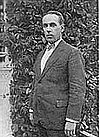
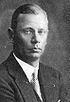
Black Sea
The Black Sea is bounded by Europe, Anatolia and the Caucasus and is ultimately connected to the Atlantic Ocean via the Mediterranean and the Aegean seas and various straits. The Bosphorus strait connects it to the Sea of Marmara, and the strait of the Dardanelles connects that sea to the Aegean...
and Caspian Sea
Caspian Sea
The Caspian Sea is the largest enclosed body of water on Earth by area, variously classed as the world's largest lake or a full-fledged sea. The sea has a surface area of and a volume of...
basins, this period saw the emancipation of Ukraine, Crimea, Georgia, Azerbaijan, Don, Kuban and Northern Caucasus. Signs of national renaissance also appeared in Idel-Ural
Idel-Ural State
The Idel-Ural State was a short-lived Tatar republic with its centre in Kazan that united Tatars, Bashkirs and the Chuvash in the turmoil of the Russian Civil War. Often viewed as an attempt to recreate the Khanate of Kazan, the republic was proclaimed on December 12, 1917, by a Congress of Muslims...
and Turkestan
Turkestan
Turkestan, spelled also as Turkistan, literally means "Land of the Turks".The term Turkestan is of Persian origin and has never been in use to denote a single nation. It was first used by Persian geographers to describe the place of Turkish peoples...
; there, however, it was limited to the calling of "National Assemblies."
Poland's role in the Promethean process was marked by the conclusion of a Polish–Ukrainian political and military alliance (the Warsaw Agreement
Treaty of Warsaw (1920)
The Treaty of Warsaw of April 1920 was an alliance between the Second Polish Republic, represented by Józef Piłsudski, and the Ukrainian People's Republic, represented by Symon Petlura, against Bolshevik Russia...
, April 1920) with Symon Petlura
Symon Petlura
Symon Vasylyovych Petliura was a publicist, writer, journalist, Ukrainian politician, statesman, and national leader who led Ukraine's struggle for independence following the Russian Revolution of 1917....
's Ukrainian People's Republic
Ukrainian People's Republic
The Ukrainian People's Republic or Ukrainian National Republic was a republic that was declared in part of the territory of modern Ukraine after the Russian Revolution, eventually headed by Symon Petliura.-Revolutionary Wave:...
, Piłsudski's expedition to Kiev
Kiev Offensive
The 1920 Kiev Offensive , sometimes considered to have started the Soviet-Polish War, was an attempt by the newly re-emerged Poland, led by Józef Piłsudski, to seize central and eastern Ukraine, torn in the warring among various factions, both domestic and foreign, from Soviet control.The stated...
(begun April 25, 1920), the designation (February 1919) of Bohdan Kutylowski as Polish minister to the Ukrainian People's Republic, the accreditation of a Polish minister to Caucasus, the naming of a military mission to Caucasus, and the Crimean Republic's motion at the League of Nations
League of Nations
The League of Nations was an intergovernmental organization founded as a result of the Paris Peace Conference that ended the First World War. It was the first permanent international organization whose principal mission was to maintain world peace...
(May 17, 1920) that Crimea be made a protectorate of Poland.
Marshal Piłsudski's immediate collaborators in this period included Witold Jodko, Tytus Filipowicz
Tytus Filipowicz
Tytus Filipowicz was a Polish politician and diplomat.-Life:Filipowicz was born 21 November 1873 in Warsaw. He attended school in Dąbrowa Górnicza. He worked as a coal miner and became a socialist political activist; from 1895 he was active in the Dąbrowa Workers' Commiittee...
, Gen. Julian Stachiewicz
Julian Stachiewicz
Brigadier General Julian Stachiewicz was a Polish Army officer and a historian and writer.-Life:Julian Stachiewicz was the brother of General Wacław Stachiewicz....
, Col. Walery Sławek, Col. Tadeusz Schaetzel
Tadeusz Schaetzel
Tadeusz Schaetzel was a Polish Army colonel, intelligence officer, Promethean leader, diplomat and politician.-Career:During World War I, Schaetzel served in the Polish Legions and as deputy director of the Chief Command of the 3rd Polish Military Organization , in Kiev.After Poland had regained...
, a Maj. Czarnecki, August Zaleski
August Zaleski
August Zaleski was a Polish economist, politician, and diplomat. Twice Minister of Foreign Affairs of the Republic of Poland, he served as the President of Poland within the Polish Government in Exile.- Biography :...
, Leon Wasilewski
Leon Wasilewski
Leon Wasilewski was an activist of the Polish Socialist Party , a coworker of Józef Piłsudski, Polish Minister of Foreign Affairs, designer of much of Second Polish Republic policy towards the East, historian and father of Wanda Wasilewska....
, Henryk Józewski
Henryk Józewski
Henryk Józewski was a Polish visual artist, politician, a member of government of the Ukrainian People's Republic, later an administrator during the Second Polish Republic....
, Juliusz Łukasiewicz, Tadeusz Hołówko, Marian Szumlakowski, Jan Dąbski
Jan Dabski
Jan Dąbski was a Polish politician.Founder of Polskie Stronnictwo Ludowe Piast in 1913. He was the chief negotiator for Poland at the peace negotiations in Riga after the Polish-Soviet war . Minister of Foreign Affairs of Poland in 1921...
, Mirosław Arciszewski, Maj. Wacław Jędrzejewicz and Roman Knoll
Roman Knoll
Roman Knoll is the ice-covered hill rising to over 800 m between Mount Canicula and Erul Heights, on the southeast side of Verdikal Gap on Trinity Peninsula in Graham Land, Antarctica...
.
Second period (1921–23)
During Poland's second Promethean period (1921–23), after the Treaty of Riga that ended the Polish-Soviet WarPolish-Soviet War
The Polish–Soviet War was an armed conflict between Soviet Russia and Soviet Ukraine and the Second Polish Republic and the Ukrainian People's Republic—four states in post–World War I Europe...
, Poland went forward with her independent life within established eastern borders alongside the Baltic states. The states of the Black
Black Sea
The Black Sea is bounded by Europe, Anatolia and the Caucasus and is ultimately connected to the Atlantic Ocean via the Mediterranean and the Aegean seas and various straits. The Bosphorus strait connects it to the Sea of Marmara, and the strait of the Dardanelles connects that sea to the Aegean...
and Caspian Sea
Caspian Sea
The Caspian Sea is the largest enclosed body of water on Earth by area, variously classed as the world's largest lake or a full-fledged sea. The sea has a surface area of and a volume of...
basins, however, lost their independence, being absorbed by the Soviets. What Charaszkiewicz
Edmund Charaszkiewicz
Edmund Kalikst Eugeniusz Charaszkiewicz was a Polish military intelligence officer who specialized in clandestine warfare. Between the World Wars, he helped establish Poland's interbellum borders in conflicts over territory with Poland's neighbors....
terms the "legitimate" governments and political representatives of these Promethean countries emigrated:
- the government of the Ukrainian People's Republic, to Poland, France and Czechoslovakia;
- the government of Georgia, to France;
- the government of Azerbaijan, to Turkey and France;
- the governments of Kuban and Don, to Czechoslovakia;
- the Northern Caucasus' Mountain National Center, to Turkey;
- the Armenian National Center, to France;
- the Tatar National Centers (Crimea, Idel-Ural, Turkestan), to Turkey, France and Poland.
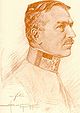
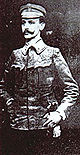
Naczelnik
Naczelnik is the Polish word for Leader. It was first used as an official title by Tadeusz Kościuszko during the Polish revolutions of the 18th Century...
Państwa), later transitionally as chief of the General Staff (Sztab Główny).
Promethean affairs now also involved the successive chiefs of the General Staff, Gen. Władysław Sikorski and Gen. Stanisław Haller, and the chief of the General Staff's Section II (Oddział II: intelligence), Col. Ignacy Matuszewski.
Poland worked together with Promethean political émigrés who were in official contact with Poland's Foreign Ministry, with Polish diplomatic offices in Istanbul, Bucharest, Prague, Tehran and Paris, and with the Polish General Staff. As early as 1922, the first group of Georgian officers, recommended by the Georgian government, were accepted into the Polish Army.
Third period (1923–26)
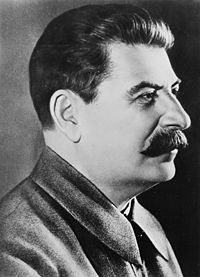
Joseph Stalin
Joseph Vissarionovich Stalin was the Premier of the Soviet Union from 6 May 1941 to 5 March 1953. He was among the Bolshevik revolutionaries who brought about the October Revolution and had held the position of first General Secretary of the Communist Party of the Soviet Union's Central Committee...
's nationalities program in the Soviet Union
Soviet Union
The Soviet Union , officially the Union of Soviet Socialist Republics , was a constitutionally socialist state that existed in Eurasia between 1922 and 1991....
's non-Russian areas by inaugurating the Autonomous National Republics
Autonomous republic
An autonomous republic is a type of administrative division similar to a province. A significant number of autonomous republics can be found within the successor states of the Soviet Union, but the majority are located within Russia. Many of these republics were established during the Soviet...
, while suppressing the last impulses toward independence on the part of those Republics' populations.
Polish contacts with the Promethean émigrés were continued, without the knowledge or consent of the Polish government: in military matters, by Col. Schaetzel, Maj. Czarnecki and Captain Henryk Suchanek-Suchecki, chief of the Nationalities Department (Wydział) in the Ministry of Internal Affairs; and at the Foreign Ministry, by the chief of the Eastern Department, Juliusz Łukasiewicz. An exception to the Polish government's official attitude pertained to Georgian
Georgia (country)
Georgia is a sovereign state in the Caucasus region of Eurasia. Located at the crossroads of Western Asia and Eastern Europe, it is bounded to the west by the Black Sea, to the north by Russia, to the southwest by Turkey, to the south by Armenia, and to the southeast by Azerbaijan. The capital of...
Prometheism, which enjoyed support with both the foreign minister, Aleksander Skrzyński
Aleksander Skrzynski
Aleksander Józef Skrzyński |Galicia]] – 25 September 1931 in Łąkociny near Ostrów Wielkopolski, Poland) was a Polish politician who served as the country's prime minister from 1925 to 1926...
, and the chief of the General Staff, Gen. Stanisław Haller.
Fourth period (1926–32)
The fourth period (1926–32), from Piłsudski's return to power in the May 1926 Coup to the conclusion of the 1932 Polish-Soviet Nonaggression PactSoviet-Polish Non-Aggression Pact
The Soviet–Polish Non-Aggression Pact ) was an international treaty of non-aggression signed in 1932 by representatives of Poland and the USSR. The pact was unilaterally broken by the Soviet Union on September 17, 1939, during the Nazi and Soviet invasion of Poland.-Background:After the...
, was the period of the most determined, organized and active collaboration with Promethean organizations.
In 1927 the Promethean problem was given official organizational form at the Polish Foreign Ministry and General Staff
General Staff
A military staff, often referred to as General Staff, Army Staff, Navy Staff or Air Staff within the individual services, is a group of officers and enlisted personnel that provides a bi-directional flow of information between a commanding officer and subordinate military units...
. In the previous periods, Prometheism had been treated at various high echelons but had possessed no single official home. Now a close coordination was established between Poland's Foreign Ministry and General Staff, as politically representing the Promethean question, and with the ministries of Military Affairs and Internal Affairs, as indirectly involved with it (the Military Ministry, with foreign contract officers; the Internal Ministry, with internal Polish-Ukrainian affairs).
Important events in this period included:
General Promethean affairs
- the creation of an Eastern Institute in Warsaw, with a program in NearNear EastThe Near East is a geographical term that covers different countries for geographers, archeologists, and historians, on the one hand, and for political scientists, economists, and journalists, on the other...
and Far EastFar EastThe Far East is an English term mostly describing East Asia and Southeast Asia, with South Asia sometimes also included for economic and cultural reasons.The term came into use in European geopolitical discourse in the 19th century,...
ern studies, the Institute being treated as a political instrument for general Promethean matters; - the establishment, at the Eastern Institute, of an Orientalist Youth Circle, a youth organization dedicated to general Promethean affairs, with offices in KrakówKrakówKraków also Krakow, or Cracow , is the second largest and one of the oldest cities in Poland. Situated on the Vistula River in the Lesser Poland region, the city dates back to the 7th century. Kraków has traditionally been one of the leading centres of Polish academic, cultural, and artistic life...
, VilniusVilniusVilnius is the capital of Lithuania, and its largest city, with a population of 560,190 as of 2010. It is the seat of the Vilnius city municipality and of the Vilnius district municipality. It is also the capital of Vilnius County...
and HarbinHarbinHarbin ; Manchu language: , Harbin; Russian: Харби́н Kharbin ), is the capital and largest city of Heilongjiang Province in Northeast China, lying on the southern bank of the Songhua River...
; - the founding of a quarterly, Wschód (The East), devoted to Promethean affairs;
- the establishment of academic scholarships for Promethean students at WarsawWarsawWarsaw is the capital and largest city of Poland. It is located on the Vistula River, roughly from the Baltic Sea and from the Carpathian Mountains. Its population in 2010 was estimated at 1,716,855 residents with a greater metropolitan area of 2,631,902 residents, making Warsaw the 10th most...
, VilniusVilniusVilnius is the capital of Lithuania, and its largest city, with a population of 560,190 as of 2010. It is the seat of the Vilnius city municipality and of the Vilnius district municipality. It is also the capital of Vilnius County...
, PoznańPoznanPoznań is a city on the Warta river in west-central Poland, with a population of 556,022 in June 2009. It is among the oldest cities in Poland, and was one of the most important centres in the early Polish state, whose first rulers were buried at Poznań's cathedral. It is sometimes claimed to be...
, KrakówKrakówKraków also Krakow, or Cracow , is the second largest and one of the oldest cities in Poland. Situated on the Vistula River in the Lesser Poland region, the city dates back to the 7th century. Kraków has traditionally been one of the leading centres of Polish academic, cultural, and artistic life...
, ParisParisParis is the capital and largest city in France, situated on the river Seine, in northern France, at the heart of the Île-de-France region...
, BerlinBerlinBerlin is the capital city of Germany and is one of the 16 states of Germany. With a population of 3.45 million people, Berlin is Germany's largest city. It is the second most populous city proper and the seventh most populous urban area in the European Union...
and CairoCairoCairo , is the capital of Egypt and the largest city in the Arab world and Africa, and the 16th largest metropolitan area in the world. Nicknamed "The City of a Thousand Minarets" for its preponderance of Islamic architecture, Cairo has long been a centre of the region's political and cultural life...
; - the founding of four Promethean clubs, in WarsawWarsawWarsaw is the capital and largest city of Poland. It is located on the Vistula River, roughly from the Baltic Sea and from the Carpathian Mountains. Its population in 2010 was estimated at 1,716,855 residents with a greater metropolitan area of 2,631,902 residents, making Warsaw the 10th most...
, ParisParisParis is the capital and largest city in France, situated on the river Seine, in northern France, at the heart of the Île-de-France region...
, HelsinkiHelsinkiHelsinki is the capital and largest city in Finland. It is in the region of Uusimaa, located in southern Finland, on the shore of the Gulf of Finland, an arm of the Baltic Sea. The population of the city of Helsinki is , making it by far the most populous municipality in Finland. Helsinki is...
and HarbinHarbinHarbin ; Manchu language: , Harbin; Russian: Харби́н Kharbin ), is the capital and largest city of Heilongjiang Province in Northeast China, lying on the southern bank of the Songhua River...
; - the founding, in ParisParisParis is the capital and largest city in France, situated on the river Seine, in northern France, at the heart of the Île-de-France region...
and HelsinkiHelsinkiHelsinki is the capital and largest city in Finland. It is in the region of Uusimaa, located in southern Finland, on the shore of the Gulf of Finland, an arm of the Baltic Sea. The population of the city of Helsinki is , making it by far the most populous municipality in Finland. Helsinki is...
, of the propaganda monthlies, Promethee and Prometheus; - the establishment of collaborative links with France-Orient in ParisParisParis is the capital and largest city in France, situated on the river Seine, in northern France, at the heart of the Île-de-France region...
.
Ukrainian affairs
- the organization of a military staff for the Ukrainian People's RepublicUkrainian People's RepublicThe Ukrainian People's Republic or Ukrainian National Republic was a republic that was declared in part of the territory of modern Ukraine after the Russian Revolution, eventually headed by Symon Petliura.-Revolutionary Wave:...
, including an organizational-operational section (subordinate to Poland's Gen. Julian StachiewiczJulian StachiewiczBrigadier General Julian Stachiewicz was a Polish Army officer and a historian and writer.-Life:Julian Stachiewicz was the brother of General Wacław Stachiewicz....
), an intelligence section (subordinate to Poland's Section II), and a propaganda section (subordinate to the Polish General Staff's Office Z); - the recruitment of PetluristSymon PetluraSymon Vasylyovych Petliura was a publicist, writer, journalist, Ukrainian politician, statesman, and national leader who led Ukraine's struggle for independence following the Russian Revolution of 1917....
Ukrainian officers as contract officers for the Polish Army; - the creation of three separate press agencies: in WarsawWarsawWarsaw is the capital and largest city of Poland. It is located on the Vistula River, roughly from the Baltic Sea and from the Carpathian Mountains. Its population in 2010 was estimated at 1,716,855 residents with a greater metropolitan area of 2,631,902 residents, making Warsaw the 10th most...
("A.T.E."), ParisParisParis is the capital and largest city in France, situated on the river Seine, in northern France, at the heart of the Île-de-France region...
("Ofinor") and BucharestBucharestBucharest is the capital municipality, cultural, industrial, and financial centre of Romania. It is the largest city in Romania, located in the southeast of the country, at , and lies on the banks of the Dâmbovița River....
("Ukraintag"); - the founding of a Polish-Ukrainian Bulletin;
- the creation in Warsaw of a Ukrainian Institute of Learning;
- the founding of a General Ukrainian Council coordinating Petlurist émigré centers in European countries.
This period saw two fundamental political events in Ukrainian Promethean affairs:
- the May 26, 1926, assassinationAssassinationTo carry out an assassination is "to murder by a sudden and/or secret attack, often for political reasons." Alternatively, assassination may be defined as "the act of deliberately killing someone, especially a public figure, usually for hire or for political reasons."An assassination may be...
, in ParisParisParis is the capital and largest city in France, situated on the river Seine, in northern France, at the heart of the Île-de-France region...
–– according to Charaszkiewicz, at Soviet instigation –– of Otaman Symon PetluraSymon PetluraSymon Vasylyovych Petliura was a publicist, writer, journalist, Ukrainian politician, statesman, and national leader who led Ukraine's struggle for independence following the Russian Revolution of 1917....
; and - the 1930 trial, in KievKievKiev or Kyiv is the capital and the largest city of Ukraine, located in the north central part of the country on the Dnieper River. The population as of the 2001 census was 2,611,300. However, higher numbers have been cited in the press....
, of Serhiy YefremovSerhiy YefremovSerhiy Yefremov was a Ukrainian literary journalist, historian, critic, political activist, statesman, and academician. He was a member of the Ukrainian Academy of Science and Shevchenko Scientific Society in Lviv...
, which demonstrated the existence of a secret national organization in UkraineUkraineUkraine is a country in Eastern Europe. It has an area of 603,628 km², making it the second largest contiguous country on the European continent, after Russia...
that was in contact with the Government of the Ukrainian People's RepublicUkrainian People's RepublicThe Ukrainian People's Republic or Ukrainian National Republic was a republic that was declared in part of the territory of modern Ukraine after the Russian Revolution, eventually headed by Symon Petliura.-Revolutionary Wave:...
.
Caucasus affairs
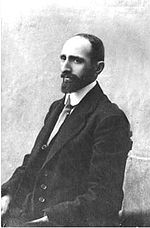
- the organization, in TurkeyTurkeyTurkey , known officially as the Republic of Turkey , is a Eurasian country located in Western Asia and in East Thrace in Southeastern Europe...
and IranIranIran , officially the Islamic Republic of Iran , is a country in Southern and Western Asia. The name "Iran" has been in use natively since the Sassanian era and came into use internationally in 1935, before which the country was known to the Western world as Persia...
, of offices for contacts with AzerbaijanAzerbaijanAzerbaijan , officially the Republic of Azerbaijan is the largest country in the Caucasus region of Eurasia. Located at the crossroads of Western Asia and Eastern Europe, it is bounded by the Caspian Sea to the east, Russia to the north, Georgia to the northwest, Armenia to the west, and Iran to...
, GeorgiaGeorgia (country)Georgia is a sovereign state in the Caucasus region of Eurasia. Located at the crossroads of Western Asia and Eastern Europe, it is bounded to the west by the Black Sea, to the north by Russia, to the southwest by Turkey, to the south by Armenia, and to the southeast by Azerbaijan. The capital of...
and the Caucasus MountainsCaucasus MountainsThe Caucasus Mountains is a mountain system in Eurasia between the Black Sea and the Caspian Sea in the Caucasus region .The Caucasus Mountains includes:* the Greater Caucasus Mountain Range and* the Lesser Caucasus Mountains....
(the Georgian organization carried out about 20 expeditions to their country, and the Caucasian Mountain organization kept up regular contacts with their country on at least a monthly basis); - the creation of a Caucasus National Committee and the elaboration of a constitution for a Caucasus Confederation;
- the recruitment into the Polish Army, as contract officers, of a further group of Georgian officers, as well as of Azerbaijanis and Caucasus Mountaineers, upon recommendation by their legitimate national representatives.
This period saw the following notable political events in Caucasus
Caucasus
The Caucasus, also Caucas or Caucasia , is a geopolitical region at the border of Europe and Asia, and situated between the Black and the Caspian sea...
affairs:
- the December 7, 1930, assassinationAssassinationTo carry out an assassination is "to murder by a sudden and/or secret attack, often for political reasons." Alternatively, assassination may be defined as "the act of deliberately killing someone, especially a public figure, usually for hire or for political reasons."An assassination may be...
in Paris, by the Soviets, of the Georgian minister Noe RamishviliNoe RamishviliNoe Besarionis dze Ramishvili was a Georgian politician and the first Prime Minister of Georgia. He was one of the leaders of the Menshevik wing of the Russian Social Democratic Labour Party. He was also known by his party noms de guerre: Pyotr, and Semyonov N...
; and - pronouncements by Shalva EliavaShalva EliavaShalva Eliava was a Georgian Old Bolshevik and Soviet official who contributed to Sovietization of Central Asia and Caucasus but fell victim to Stalin’s Great Purge....
, the "Soviet governor of Caucasus," at the 1930 Georgian communist congress in Tiflis, that the national movement in the Caucasus was under the influence of the Caucasus National Committee.
The growing revolutionary ferment in the Caucasus
Caucasus
The Caucasus, also Caucas or Caucasia , is a geopolitical region at the border of Europe and Asia, and situated between the Black and the Caspian sea...
, especially in Azerbaijan
Azerbaijan
Azerbaijan , officially the Republic of Azerbaijan is the largest country in the Caucasus region of Eurasia. Located at the crossroads of Western Asia and Eastern Europe, it is bounded by the Caspian Sea to the east, Russia to the north, Georgia to the northwest, Armenia to the west, and Iran to...
, collaboratively engaged all the Caucasus national elements.
Idel-Ural and Turkestan affairs
- the development of pro-independence propagandaPropagandaPropaganda is a form of communication that is aimed at influencing the attitude of a community toward some cause or position so as to benefit oneself or one's group....
in Idel-UralIdel-UralIdel-Ural is a historical region in Eastern Europe, in what is today Russia. The name literally means Volga-Urals in the Tatar language. The frequently used Russian variant is Volgo-Uralye...
, CrimeaCrimeaCrimea , or the Autonomous Republic of Crimea , is a sub-national unit, an autonomous republic, of Ukraine. It is located on the northern coast of the Black Sea, occupying a peninsula of the same name...
and TurkestanTurkestanTurkestan, spelled also as Turkistan, literally means "Land of the Turks".The term Turkestan is of Persian origin and has never been in use to denote a single nation. It was first used by Persian geographers to describe the place of Turkish peoples...
, and intense Soviet polemics against the Promethean press; - the establishment of ties with these countries;
- direct participation in the World Moslem Congress in Jerusalem (1931), whose political aspect, due to the participation of Promethean representatives (Said Shamil, a Caucasus Mountaineer and grandson of Imam ShamilImam ShamilImam Shamil also spelled Shamyl, Schamil, Schamyl or Shameel was an Avar political and religious leader of the Muslim tribes of the Northern Caucasus...
, and Ğayaz İsxaqí, a Kazan TatarVolga TatarsThe Volga Tatars are the largest subgroup of the Tatars, native to the Volga region.They account for roughly six out of seven million Tatars worldwide....
intellectual), turned against the Soviet UnionSoviet UnionThe Soviet Union , officially the Union of Soviet Socialist Republics , was a constitutionally socialist state that existed in Eurasia between 1922 and 1991....
. In this period, the world Moslem press, especially of EgyptEgyptEgypt , officially the Arab Republic of Egypt, Arabic: , is a country mainly in North Africa, with the Sinai Peninsula forming a land bridge in Southwest Asia. Egypt is thus a transcontinental country, and a major power in Africa, the Mediterranean Basin, the Middle East and the Muslim world...
and Arabia, conducted an intense anti-Soviet campaign. Said Shamil Bey was chosen as secretary of the Congress' executive center.
Charaszkiewicz notes the occurrence, in Crimea
Crimea
Crimea , or the Autonomous Republic of Crimea , is a sub-national unit, an autonomous republic, of Ukraine. It is located on the northern coast of the Black Sea, occupying a peninsula of the same name...
n political actions, of "Wallenrodism," revealed at the trial of Veli Ibrahim, who was sentenced to death by the Soviets. Likewise the trial of Soltanğäliev (a direct collaborator of Joseph Stalin
Joseph Stalin
Joseph Vissarionovich Stalin was the Premier of the Soviet Union from 6 May 1941 to 5 March 1953. He was among the Bolshevik revolutionaries who brought about the October Revolution and had held the position of first General Secretary of the Communist Party of the Soviet Union's Central Committee...
's during Stalin's tenure as commissar for nationalities affairs) disclosed methods used by the Volga Tatars
Volga Tatars
The Volga Tatars are the largest subgroup of the Tatars, native to the Volga region.They account for roughly six out of seven million Tatars worldwide....
and the peoples of Turkestan
Turkestan
Turkestan, spelled also as Turkistan, literally means "Land of the Turks".The term Turkestan is of Persian origin and has never been in use to denote a single nation. It was first used by Persian geographers to describe the place of Turkish peoples...
in fighting the Soviet government.
Cossack affairs
A successful campaign was waged that helped stimulate a separatist movement among many CossackCossack
Cossacks are a group of predominantly East Slavic people who originally were members of democratic, semi-military communities in what is today Ukraine and Southern Russia inhabiting sparsely populated areas and islands in the lower Dnieper and Don basins and who played an important role in the...
émigré groups. This injected a substantial political diversion into White Russia
White Russia
White Russia or White Ruthenia is a name that has historically been applied to a part of the wider region of Ruthenia or Rus', most often to that which roughly corresponds to the eastern part of present-day Belarus including the cities of Polatsk, Vitsyebsk and Mahiliou. In English, the use of the...
n émigré ranks.
This Prometheist period also witnessed a development that was independent of the movement, but which was destined to play a role in regard to it. There was heightened diversionary activity in Poland
Poland
Poland , officially the Republic of Poland , is a country in Central Europe bordered by Germany to the west; the Czech Republic and Slovakia to the south; Ukraine, Belarus and Lithuania to the east; and the Baltic Sea and Kaliningrad Oblast, a Russian exclave, to the north...
by the OUN (Organization of Ukrainian Nationalists
Organization of Ukrainian Nationalists
The Organization of Ukrainian Nationalists is a Ukrainian political organization which as a movement originally was created in 1929 in Western Ukraine . The OUN accepted violence as an acceptable tool in the fight against foreign and domestic enemies particularly Poland and Russia...
), supported by both Germany
Germany
Germany , officially the Federal Republic of Germany , is a federal parliamentary republic in Europe. The country consists of 16 states while the capital and largest city is Berlin. Germany covers an area of 357,021 km2 and has a largely temperate seasonal climate...
and Czechoslovakia
Czechoslovakia
Czechoslovakia or Czecho-Slovakia was a sovereign state in Central Europe which existed from October 1918, when it declared its independence from the Austro-Hungarian Empire, until 1992...
and even by Lithuania
Lithuania
Lithuania , officially the Republic of Lithuania is a country in Northern Europe, the biggest of the three Baltic states. It is situated along the southeastern shore of the Baltic Sea, whereby to the west lie Sweden and Denmark...
. There were many acts of expropriation
Confiscation
Confiscation, from the Latin confiscatio 'joining to the fiscus, i.e. transfer to the treasury' is a legal seizure without compensation by a government or other public authority...
and sabotage
Sabotage
Sabotage is a deliberate action aimed at weakening another entity through subversion, obstruction, disruption, or destruction. In a workplace setting, sabotage is the conscious withdrawal of efficiency generally directed at causing some change in workplace conditions. One who engages in sabotage is...
against the Polish community and government by members of OUN combat units in southeastern Poland. This in turn led to "pacification" operations by the Polish authorities against the Polish-Ukrainian community.
The pacifications, Charaszkiewicz emphasizes, were never discussed in advance with Polish Promethean officials. Those at the Foreign Ministry and at the General Staff were not pleased with these operations, which made Promethean activities that much more difficult.
A greater shock to the Prometheists, Polish and Ukrainian, however, was the death of Tadeusz Hołówko, murdered by OUN members on August 29, 1931, at Truskawiec.
Charaszkiewicz is far from blaming all of Poland
Poland
Poland , officially the Republic of Poland , is a country in Central Europe bordered by Germany to the west; the Czech Republic and Slovakia to the south; Ukraine, Belarus and Lithuania to the east; and the Baltic Sea and Kaliningrad Oblast, a Russian exclave, to the north...
's difficulties with her minorities, especially the Ukrainians
Ukrainians
Ukrainians are an East Slavic ethnic group native to Ukraine, which is the sixth-largest nation in Europe. The Constitution of Ukraine applies the term 'Ukrainians' to all its citizens...
(who in most of southeastern Poland were the majority
Majority
A majority is a subset of a group consisting of more than half of its members. This can be compared to a plurality, which is a subset larger than any other subset; i.e. a plurality is not necessarily a majority as the largest subset may consist of less than half the group's population...
), on external, especially German, influences. He argues that Poland had "no planned, consistent and constructive internal policy" with regard to her minorities. This lack could not bode well for the Promethean effort, when every fifth Polish citizen (that is, six million people) were Ukrainian.
Moreover, the Soviet Union
Soviet Union
The Soviet Union , officially the Union of Soviet Socialist Republics , was a constitutionally socialist state that existed in Eurasia between 1922 and 1991....
sought to an equal degree to exploit Poland's internal disarray — indeed, in 1921–31, to a greater degree than the Germans. Soviet communist propaganda in Poland's Eastern Borderlands (Kresy Wschodnie), combined with a pro-Ukrainian Soviet attitude toward Soviet Ukraine, created strong pro-Soviet sentiment among Polish Ukrainians. This sentiment would persist until the subsequent mass Soviet resettlements
Deportation
Deportation means the expulsion of a person or group of people from a place or country. Today it often refers to the expulsion of foreign nationals whereas the expulsion of nationals is called banishment, exile, or penal transportation...
, arrest
Arrest
An arrest is the act of depriving a person of his or her liberty usually in relation to the purported investigation and prevention of crime and presenting into the criminal justice system or harm to oneself or others...
s, executions and famine
Famine
A famine is a widespread scarcity of food, caused by several factors including crop failure, overpopulation, or government policies. This phenomenon is usually accompanied or followed by regional malnutrition, starvation, epidemic, and increased mortality. Every continent in the world has...
s of 1933–38.
The period 1926–32 was marked by the participation of a large number of Poles in the Promethean endeavor:
- at the Foreign Ministry: Tadeusz Hołówko, Tadeusz Schaetzel, Stanisław Hempel, Adam Tarnowski, Mirosław Arciszewski, Roman Knoll, Juliusz Łukasiewicz, Marian Szumlakowski, Stanisław Zaċwilichowski, Jan Gawroński, Zygmunt Mostowski, Władysław Zaleski, Kazimierz Marian Wyszyński, Karol Dubicz-Penther, Władysław Pelc, Ksawery Zalewski, Władysław Wolski, Piotr Kurnicki, Wacław Knoll;
- at the General StaffGeneral StaffA military staff, often referred to as General Staff, Army Staff, Navy Staff or Air Staff within the individual services, is a group of officers and enlisted personnel that provides a bi-directional flow of information between a commanding officer and subordinate military units...
: Brig. Gen. Julian StachiewiczJulian StachiewiczBrigadier General Julian Stachiewicz was a Polish Army officer and a historian and writer.-Life:Julian Stachiewicz was the brother of General Wacław Stachiewicz....
, Col. Tadeusz SchaetzelTadeusz SchaetzelTadeusz Schaetzel was a Polish Army colonel, intelligence officer, Promethean leader, diplomat and politician.-Career:During World War I, Schaetzel served in the Polish Legions and as deputy director of the Chief Command of the 3rd Polish Military Organization , in Kiev.After Poland had regained...
, Col. Tadeusz Pełczyński, Col. Józef EnglichtJózef EnglichtJózef Englicht was a Polish Army lieutenant colonel and intelligence officer.-Career:During World War I, Englicht fought in the Polish Legions....
, Maj. Edmund CharaszkiewiczEdmund CharaszkiewiczEdmund Kalikst Eugeniusz Charaszkiewicz was a Polish military intelligence officer who specialized in clandestine warfare. Between the World Wars, he helped establish Poland's interbellum borders in conflicts over territory with Poland's neighbors....
, Maj. Włodzimierz Dąbrowski, Maj. Stanisław Gliński, Maj. Jerzy Krzymowski, Maj. Karol Krzewski-Lilienfeld, Capt. Stefan Nowaczek, Capt. Jan Rybczyński, Lt. Jan Helcman, Józef Skarżyński, Aleksander Eugeniusz Piwnicki, Stefan Sipa, Lt. Antoni Zaręba; - at the Ministry of Internal Affairs: Henryk Suchanek-Suchecki, Stanisław Łaniecki, Emil Miśkiewicz;
- at the Ministry of EducationMinistry of National Education of the Republic of PolandMinistry of National Education of Poland was created in 2006. The ministry prerogatives do not include higher education, which falls under Ministry of Science and Higher Education ....
: Aleksander Kawałkowski, Franciszek Salezy Potocki, Zdzisław Meyer, Juliusz Znaniecki, Adam Miłobędzki; - in the socio-political sphere: Senator Stanisław Siedlecki (president of the Eastern Institute), Wacław Sieroszewski, Stanisław Trzeciak, Antoni Wincenty Kwiatkowski, Antoni Około-Kułak, Prof. Olgierd Górka (general secretary and director of the Eastern Institute), Stanisław Korwin-Pawłowski (general secretary of the Eastern Institute), Bolesław Bielawski, Stanisław Józef Paprocki (director of the Institute for Study of National Minority Affairs), Leon Wasilewski, Włodzimierz Bączkowski, Feliks Ibiański-Zahora, Wacław Wincenty Łypacewicz, Władysław Wielhorski (director of the Institute for Study of Eastern Europe, in VilniusVilniusVilnius is the capital of Lithuania, and its largest city, with a population of 560,190 as of 2010. It is the seat of the Vilnius city municipality and of the Vilnius district municipality. It is also the capital of Vilnius County...
), Marian Świechowski, Prof. Jan Kucharzewski, Prof. Marceli HandelsmanMarceli HandelsmanMarceli Handelsman was a Polish historian, a Warsaw University professor, medievalist, modern historian, and historical methodologist.-Life:Marceli Handelsman was born on 8 July 1882, in Warsaw, to a family of distant Jewish ancestry...
, Prof. Stanisław Poniatowski, Prof. Ludwik Kolankowski, Prof. Oskar HaleckiOskar HaleckiOskar Halecki was a Polish historian, social and Catholic activist.As a historian, Halecki was an expert on medieval history of Poland and Lithuania, and history of Byzantine Empire....
, Prof. Stanisław Franciszek Zajączkowski, Prof. Józef Ujejski, Prof. Stanisław Szober, Andrzej StrugAndrzej StrugAndrzej Strug, real name Tadeusz Gałecki was a Polish socialist politician, publicist and activist for Poland's independence....
, Marian Malinowski, Alfred Szczęsny Wielopolski, Wojciech Stpiczyński, Józef Łobodowski, Prof. Marian Zdziechowski, Władysław Woydyno.
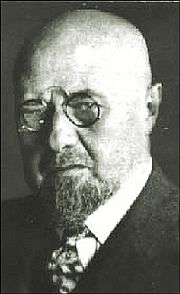

Aleksander Prystor
Aleksander Błażej Prystor was a Polish politician, soldier and activist who served as Prime Minister of Poland from 1931 to 1933.He was a member of the Combat Organization of the Polish Socialist Party and in 1908 took part in the Bezdany raid....
, August Zaleski
August Zaleski
August Zaleski was a Polish economist, politician, and diplomat. Twice Minister of Foreign Affairs of the Republic of Poland, he served as the President of Poland within the Polish Government in Exile.- Biography :...
, Janusz Jędrzejewicz
Janusz Jedrzejewicz
Janusz Jędrzejewicz was a Polish politician and educator, a leader of the Sanacja political group, and Prime Minister of Poland from 1933 to 1934.-Life:...
, Wacław Jędrzejewicz, Bronisław Pieracki, Adam Koc
Adam Koc
Adam Ignacy Koc was a Polish politician, soldier and journalist.-Honours and awards:...
, Stefan Starzyński
Stefan Starzynski
Stefan Starzyński was a Polish politician, economist, writer and statesman, President of Warsaw before and during the Siege of Warsaw in 1939.-Soldier:Starzyński was born on August 19, 1893 in Warsaw...
, Marian Kościałkowski-Zyndham.
A separate category of Promethean ideological endeavor comprised the work of Adam Skwarczyński.
In this period (1926–32), favorable political circumstances within and without Poland, adequate financing and, above all, full mutual confidence among all the participants, led to an exceptional level of Promethean activity — in the conduct of propaganda
Propaganda
Propaganda is a form of communication that is aimed at influencing the attitude of a community toward some cause or position so as to benefit oneself or one's group....
within the Promethean countries, in the political efforts of the Promethean émigré
Émigré
Émigré is a French term that literally refers to a person who has "migrated out", but often carries a connotation of politico-social self-exile....
s, and in propaganda outside Poland.
Regular conferences were held, usually involving Tadeusz Hołówko, Brig. Gen. Julian Stachiewicz
Julian Stachiewicz
Brigadier General Julian Stachiewicz was a Polish Army officer and a historian and writer.-Life:Julian Stachiewicz was the brother of General Wacław Stachiewicz....
,
Col. Tadeusz Schaetzel
Tadeusz Schaetzel
Tadeusz Schaetzel was a Polish Army colonel, intelligence officer, Promethean leader, diplomat and politician.-Career:During World War I, Schaetzel served in the Polish Legions and as deputy director of the Chief Command of the 3rd Polish Military Organization , in Kiev.After Poland had regained...
, Henryk Suchanek-Suchecki, Maj. Edmund Charaszkiewicz
Edmund Charaszkiewicz
Edmund Kalikst Eugeniusz Charaszkiewicz was a Polish military intelligence officer who specialized in clandestine warfare. Between the World Wars, he helped establish Poland's interbellum borders in conflicts over territory with Poland's neighbors....
, and an official from the Foreign Ministry. Charaszkiewicz would present an extensive report on work accomplished, and this would be followed by discussion of various Promethean topics.
The Promethean project was entrusted to Office 2 only in late 1927 or perhaps in 1928. Before that, it had never been a domain of the Polish General Staff
General Staff
A military staff, often referred to as General Staff, Army Staff, Navy Staff or Air Staff within the individual services, is a group of officers and enlisted personnel that provides a bi-directional flow of information between a commanding officer and subordinate military units...
's diversion unit (Office A.1, later Office U); thus Charaszkiewicz's predecessor, Col. Puszczyński, had not been encumbered with this responsibility. Puszczyński, Charaszkiewicz explains, had not initially attached importance to Prometheism, due to an overoptimistic assessment of the new Soviet Union
Soviet Union
The Soviet Union , officially the Union of Soviet Socialist Republics , was a constitutionally socialist state that existed in Eurasia between 1922 and 1991....
; but in time he came to support the Promethean concept.
Fifth period (1933–39)
The last, fifth period of prewar Polish Prometheism (1933–39) was, in Charaszkiewicz's words, one of "seven lean years." A number of developments contributed to this:- The Polish-Soviet non-aggression pact (1932) stopped Polish policy-makers from continuing Promethean work in the field. It was felt that in the Soviet UnionSoviet UnionThe Soviet Union , officially the Union of Soviet Socialist Republics , was a constitutionally socialist state that existed in Eurasia between 1922 and 1991....
a process of national renewal was to some extent taking place spontaneously in the Promethean countries, thanks to the existence of autonomous republics, to Soviet support of general education in the national languages, and to natural reactions of protestProtestA protest is an expression of objection, by words or by actions, to particular events, policies or situations. Protests can take many different forms, from individual statements to mass demonstrations...
among local peoples to economic, religious and cultural phenomena; and so activity on the ground could be dispensed with for the moment. The solidarity and strength of the political émigréÉmigréÉmigré is a French term that literally refers to a person who has "migrated out", but often carries a connotation of politico-social self-exile....
communities should, however, continue to be maintained. The conclusion of the Polish-Soviet pact led to the Polish Foreign Ministry and all Polish governmental authorities distancing themselves from external Promethean undertakings. This substantially reduced the effectiveness of those endeavors and created a view in international Promethean circles that Poland was slowly moving away from Prometheism. Henceforth the whole Promethean question, including the administration of funds, became concentrated within Office 2 at the General StaffGeneral StaffA military staff, often referred to as General Staff, Army Staff, Navy Staff or Air Staff within the individual services, is a group of officers and enlisted personnel that provides a bi-directional flow of information between a commanding officer and subordinate military units...
's Section II (intelligenceIntelligenceIntelligence has been defined in different ways, including the abilities for abstract thought, understanding, communication, reasoning, learning, planning, emotional intelligence and problem solving....
). - The deaths of RamishviliNoe RamishviliNoe Besarionis dze Ramishvili was a Georgian politician and the first Prime Minister of Georgia. He was one of the leaders of the Menshevik wing of the Russian Social Democratic Labour Party. He was also known by his party noms de guerre: Pyotr, and Semyonov N...
and Zaćwilichowski (1930) and of Hołówko (1931), the most active promoters of Prometheism, were an irreparable loss to the movement. - The worldwide economic crisis, and resultant austereAusterityIn economics, austerity is a policy of deficit-cutting, lower spending, and a reduction in the amount of benefits and public services provided. Austerity policies are often used by governments to reduce their deficit spending while sometimes coupled with increases in taxes to pay back creditors to...
government budgets, suddenly reduced available funds by nearly 50%, bringing all Polish efforts down to merest maintenance levels. - The death (May 12, 1935) of Marshal Piłsudski, founder of Prometheism, was yet another powerful blow. In Charaszkiewicz's view, it left Prometheism — "a political idea of rare visionary power... that required prophetic [powers of] political prediction" — lacking a patron of comparable authority. Piłsudski's death was experienced as a personal loss by the Promethean peoples. Henceforth the movement's efforts continued more by virtue of inertia than by encouragement from new Polish decision-makers.
- Adolf HitlerAdolf HitlerAdolf Hitler was an Austrian-born German politician and the leader of the National Socialist German Workers Party , commonly referred to as the Nazi Party). He was Chancellor of Germany from 1933 to 1945, and head of state from 1934 to 1945...
's rise to power in GermanyGermanyGermany , officially the Federal Republic of Germany , is a federal parliamentary republic in Europe. The country consists of 16 states while the capital and largest city is Berlin. Germany covers an area of 357,021 km2 and has a largely temperate seasonal climate...
, the creation of an anticommunist bloc in the BerlinBerlinBerlin is the capital city of Germany and is one of the 16 states of Germany. With a population of 3.45 million people, Berlin is Germany's largest city. It is the second most populous city proper and the seventh most populous urban area in the European Union...
-RomeRomeRome is the capital of Italy and the country's largest and most populated city and comune, with over 2.7 million residents in . The city is located in the central-western portion of the Italian Peninsula, on the Tiber River within the Lazio region of Italy.Rome's history spans two and a half...
-TokyoTokyo, ; officially , is one of the 47 prefectures of Japan. Tokyo is the capital of Japan, the center of the Greater Tokyo Area, and the largest metropolitan area of Japan. It is the seat of the Japanese government and the Imperial Palace, and the home of the Japanese Imperial Family...
axis, and its eagerness to collaborate with national Promethean movements, created a difficult, complicated situation for the Promethean organizations that remained in Poland's political orbit. While the Promethean political forces aligned with Poland were of higher quality and potential, the Germans' relentless propaganda created a dangerous rival to Polish Promethean efforts. The latter in this period, according to Charaszkiewicz, "were utterly devoid of activity, character and plan." - The rise of danger on Poland's west fostered a view in many Polish minds that the country's eastern border should be quieted.
Until Piłsudski's death in 1935, little changed in respect to personnel on the Polish Promethean side, apart from the official distancing of government leaders, especially in the Foreign Ministry, due to the concluded Polish-Soviet pact. With the shift in government leadership beginning in June 1935, there ensued a clear decline in Polish Promethean leadership. The "group of colonels" lost their influence; Col. Tadeusz Pełczyński took a much less active role; and his successor, Col. Marian Józef Smoleński (generally known as "Józef Smoleński"), and Charaszkiewicz's immediate superior, Col. Jan Kazimierz Ciastoń, did not embrace Prometheism. Tadeusz Kobylański, Col. Schaetzel's successor as chief of the Foreign Ministry's Eastern Department, though inclined to support Prometheism, lacked a deep enough political foundation and faced substantial financial impediments. The attitudes of Marshal Edward Rydz-Śmigły and the chief of the General Staff
General Staff
A military staff, often referred to as General Staff, Army Staff, Navy Staff or Air Staff within the individual services, is a group of officers and enlisted personnel that provides a bi-directional flow of information between a commanding officer and subordinate military units...
, Brigadier General Wacław Teofil Stachiewicz, remained to the last uncertain.
World War II and since

World War II
World War II, or the Second World War , was a global conflict lasting from 1939 to 1945, involving most of the world's nations—including all of the great powers—eventually forming two opposing military alliances: the Allies and the Axis...
, to interest other countries, including Germany
Germany
Germany , officially the Federal Republic of Germany , is a federal parliamentary republic in Europe. The country consists of 16 states while the capital and largest city is Berlin. Germany covers an area of 357,021 km2 and has a largely temperate seasonal climate...
(especially in regard to Ukraine
Ukraine
Ukraine is a country in Eastern Europe. It has an area of 603,628 km², making it the second largest contiguous country on the European continent, after Russia...
), Finland
Finland
Finland , officially the Republic of Finland, is a Nordic country situated in the Fennoscandian region of Northern Europe. It is bordered by Sweden in the west, Norway in the north and Russia in the east, while Estonia lies to its south across the Gulf of Finland.Around 5.4 million people reside...
(struggling with the Soviet Union
Soviet Union
The Soviet Union , officially the Union of Soviet Socialist Republics , was a constitutionally socialist state that existed in Eurasia between 1922 and 1991....
), France
France
The French Republic , The French Republic , The French Republic , (commonly known as France , is a unitary semi-presidential republic in Western Europe with several overseas territories and islands located on other continents and in the Indian, Pacific, and Atlantic oceans. Metropolitan France...
and the Soviet Union's neighbor, Turkey
Turkey
Turkey , known officially as the Republic of Turkey , is a Eurasian country located in Western Asia and in East Thrace in Southeastern Europe...
.
Edmund Charaszkiewicz
Edmund Charaszkiewicz
Edmund Kalikst Eugeniusz Charaszkiewicz was a Polish military intelligence officer who specialized in clandestine warfare. Between the World Wars, he helped establish Poland's interbellum borders in conflicts over territory with Poland's neighbors....
concluded his February 12, 1940, Paris
Paris
Paris is the capital and largest city in France, situated on the river Seine, in northern France, at the heart of the Île-de-France region...
paper with the observation that "Poland
Poland
Poland , officially the Republic of Poland , is a country in Central Europe bordered by Germany to the west; the Czech Republic and Slovakia to the south; Ukraine, Belarus and Lithuania to the east; and the Baltic Sea and Kaliningrad Oblast, a Russian exclave, to the north...
's turning away from these [Promethean] processes can in no way halt [them], while leaving us sidelined and exposing us to enormous losses that flow from the age-old principle that 'those who are absent, lose.' [Poland]'s central position in the Promethean chain dictates to us readiness and presence at any disintegrative processes in Russia
Russia
Russia or , officially known as both Russia and the Russian Federation , is a country in northern Eurasia. It is a federal semi-presidential republic, comprising 83 federal subjects...
, and a leading Polish participation at their accomplishment."
After World War II, Poland
Poland
Poland , officially the Republic of Poland , is a country in Central Europe bordered by Germany to the west; the Czech Republic and Slovakia to the south; Ukraine, Belarus and Lithuania to the east; and the Baltic Sea and Kaliningrad Oblast, a Russian exclave, to the north...
was in no position to resume an acknowledged Promethean program.
The 1991 disintegration of the Soviet Union
Soviet Union
The Soviet Union , officially the Union of Soviet Socialist Republics , was a constitutionally socialist state that existed in Eurasia between 1922 and 1991....
, however, largely vindicated the predictions of those Poles and others who had anticipated the event and, in some cases, had worked for it.
On November 22, 2007, at Tbilisi
Tbilisi
Tbilisi is the capital and the largest city of Georgia, lying on the banks of the Mt'k'vari River. The name is derived from an early Georgian form T'pilisi and it was officially known as Tiflis until 1936...
, Georgia
Georgia (country)
Georgia is a sovereign state in the Caucasus region of Eurasia. Located at the crossroads of Western Asia and Eastern Europe, it is bounded to the west by the Black Sea, to the north by Russia, to the southwest by Turkey, to the south by Armenia, and to the southeast by Azerbaijan. The capital of...
, a statue of Prometheus
Prometheus
In Greek mythology, Prometheus is a Titan, the son of Iapetus and Themis, and brother to Atlas, Epimetheus and Menoetius. He was a champion of mankind, known for his wily intelligence, who stole fire from Zeus and gave it to mortals...
was dedicated by Georgian President Mikheil Saakashvili
Mikheil Saakashvili
Mikheil Saakashvili is a Georgian politician, the third and current President of Georgia and leader of the United National Movement Party.Involved in the national politics since 1995, Saakashvili became president on 25 January 2004 after President Eduard Shevardnadze resigned in a November 2003...
and Polish President Lech Kaczyński
Lech Kaczynski
Lech Aleksander Kaczyński was Polish lawyer and politician who served as the President of Poland from 2005 until 2010 and as Mayor of Warsaw from 2002 until 22 December 2005. Before he became a president, he was also a member of the party Prawo i Sprawiedliwość...
. Erected in the land where, according to Greek myth, the Titan
Titan (mythology)
In Greek mythology, the Titans were a race of powerful deities, descendants of Gaia and Uranus, that ruled during the legendary Golden Age....
had been imprisoned and tortured by Zeus after stealing fire from Olympus
Mount Olympus
Mount Olympus is the highest mountain in Greece, located on the border between Thessaly and Macedonia, about 100 kilometres away from Thessaloniki, Greece's second largest city. Mount Olympus has 52 peaks. The highest peak Mytikas, meaning "nose", rises to 2,917 metres...
and giving it to man, the statue celebrates the efforts of Poles and Georgians to achieve the independence of Georgia and of other peoples from the Russian Empire
Russian Empire
The Russian Empire was a state that existed from 1721 until the Russian Revolution of 1917. It was the successor to the Tsardom of Russia and the predecessor of the Soviet Union...
and its successor state, the Soviet Union
Soviet Union
The Soviet Union , officially the Union of Soviet Socialist Republics , was a constitutionally socialist state that existed in Eurasia between 1922 and 1991....
.
See also
- Demographics of the Soviet UnionDemographics of the Soviet UnionAccording to data from the 1989 Soviet census, the population of the Soviet Union was 70% East Slavs, 12% Turkic peoples, and all other ethnic groups below 10%. Alongside the atheist majority of 60% there were sizable minorities of Russian Orthodox followers and Muslims According to data from the...
- Edmund CharaszkiewiczEdmund CharaszkiewiczEdmund Kalikst Eugeniusz Charaszkiewicz was a Polish military intelligence officer who specialized in clandestine warfare. Between the World Wars, he helped establish Poland's interbellum borders in conflicts over territory with Poland's neighbors....
- Historical demographics of PolandHistorical demographics of PolandHistorical demography of Poland shows that in the past, Poland's demography was much more diverse than at present. For many centuries, until the end of Second World War, the Polish population was composed of many significant ethnic minorities....
- History of Polish intelligence servicesHistory of Polish Intelligence ServicesThis article covers the history of Polish intelligence services dating back to the Polish-Lithuanian Commonwealth.-Commonwealth:Though the first official Polish government service entrusted with espionage, intelligence and counter-intelligence was not formed until 1918, Poland and later the...
- Lenin's national policy
- MiędzymorzeMiedzymorzeMiędzymorze was a plan, pursued after World War I by Polish leader Józef Piłsudski, for a federation, under Poland's aegis, of Central and Eastern European countries...
- Polish–Georgian alliancePolish–Georgian allianceThe Polish–Georgian alliance was a short-lived alliance between the Second Polish Republic and the Democratic Republic of Georgia.-History:...
- Treaty of Warsaw (1920)Treaty of Warsaw (1920)The Treaty of Warsaw of April 1920 was an alliance between the Second Polish Republic, represented by Józef Piłsudski, and the Ukrainian People's Republic, represented by Symon Petlura, against Bolshevik Russia...
(also known as the Polish-Ukrainian alliance) - Volhynia ExperimentVolhynia ExperimentThe Volhynia Experiment was a cultural and political program by the interwar Polish government in the province of Volhynia whose purpose was the create a Ukrainian identity that was also loyal to the Polish state. It was hoped that this program would furthermore lead to pro-Polish sympathies in...