

Prince of Orange

Encyclopedia
Prince of Orange is a title
of nobility
, originally associated with the Principality of Orange
, in what is now southern France
. In French
it is la Principauté d'Orange.
The title is carried by members of the House of Orange-Nassau
, as heirs to the crown of the Netherlands. Rival claims to the title are made by members of the House of Hohenzollern
and the family of Mailly. The current holders of the title are Prince Willem-Alexander of the Netherlands
(Orange-Nassau), Georg Friedrich, Prince of Prussia (Hohenzollern), and Guy, Marquis de Mailly-Neslé (Mailly).
.jpg) The title originally referred to Orange, Vaucluse
The title originally referred to Orange, Vaucluse
in the Rhone
valley in southern France
, which was a property of the House of Orange, then the House of Baux
and the House of Châlon-Arlay
before passing in 1544 to the House of Orange-Nassau
.
The area started as the County of Orange, a fief in the Holy Roman Empire
, in its constituent Kingdom of Burgundy
. It was awarded to William of Gellone
, a grandson of Charles Martel
and therefore a cousin of Charlemagne
, around the year 800 for his services in the wars against the Moors and reconquering southern France and the Spanish March. His Occitan name is Guilhem. However, as a Frankish lord, he probably knew himself by the old Germanic version of Wilhelm
. William was also count of Toulouse, duke of Aquitaine, and marquis of Septimania. The horn that came to symbolize Orange when heraldry came in vogue much later in the 12th century was a pun on his name in French, from the character his deeds inspired in the chanson de geste, the Chanson de Guillaume
, "Guillaume au Court Nez" or "Guillaume au Cornet".
The chanson appears to be based on William of Gellone's battle at the Orbieu
or Orbiel river near Carcassonne
in 793 as wells as his seizure of the town of Orange
.
elevated to a principality in 1163 to shore up his supporters in Burgundy against the Pope and the King of France. As the Empire's boundaries retreated from those of the principality, the prince acceded to the sovereign rights that the Emperor used to exercise. As William the Silent wrote in his marriage proposal to the uncle of his second wife, the Elector August of Saxony
, he held Orange as "my own free property", not as a fief of anyone else, neither the Pope, nor the King of Spain or France. However, in the days where one's position honor and reputation were determined by such things, it drove William the Silent forward as much as it also fueled his great grandson's William III's
opposition to Louis XIV
when that king continually invaded and occupied Orange.
The last descendant of the original princes, René of Nassau
, left the principality to his cousin William the Silent, who was not a descendant of the original Orange family but the legal heir to the principality of Orange.
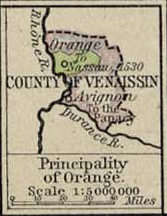 In 1673, Louis XIV of France
annexed all territory of the principality to the royal domain, as part of the war actions against the stadtholder
William III of Orange
— who later became King William III of England
and King William II of Scotland
. Orange
ceased to exist as a separate sovereign principality, or in today's parlance, a separate sovereign nation.
In 1673, Louis XIV bestowed the (now non-sovereign) principality on Louis of Mailly-Nesles, marquis of Nesles (1689–1764), a very remote descendant of the original princes of Orange, through the marriage of the marquis to a descendant of the Chalons & des Baux.
His descendant still claims the title today. In 1714 Louis XIV bestowed the usufruct
of the principality on Prince Louis Armand of Bourbon-Conti. He died in 1727 and the principality was merged in the Crown in 1731.
, who ceded the principality — at least the lands, but not the formal title — to France in 1713.
France supported his claim. In this way, the territory of the principality lost its feudal and secular privileges and became a part of France. The Treaty of Utrecht
allowed the King of Prussia to erect part of the duchy of Gelderland (the cities of Geldern, Straelen and Wachtendonk with their bailiwicks, Krickenbeck (including Viersen), the land of Kessel, the lordships of Afferden, Arcen-Velden-Lomm, Walbeck-Twisteden, Raay and Klein-Kevelaer, Well, Bergen and Middelaar) into a new Principality of Orange.
The kings of Prussia and the German emperors styled themselves Princes of Orange till 1918.
An agnatic relative of William III, John William Friso of Nassau, who was also descended by female line from William the Silent
, was designated the heir to the princes of Orange in the Netherlands
by the last will of William III. Several of his descendants became stadtholders. They claim the principality of Orange on the basis of agnatic inheritance, similar to that of William the Silent, inheriting from his cousin René
, though not being descendants of the original princes of Orange. They also claim on basis of the testament of Philips William, Maurice and William III. Finally, they claim on the basis that Orange was an independent state, where the sovereign had the right to assign his succession according to his will. France never recognized any of this, nor allowed the Oranje-Nassaus or the Hohenzollerns to obtain anything of the principality itself. The Oranje-Nassaus nevertheless assumed the title and also erected several of their lordships as new principality of Orange.
From that derivation of the title comes the tradition of the house of Nassau-Dietz/Friesland
, the later stadtholders of the Netherlands, and the present-day royal family of the Netherlands, of holding this title. They maintain the tradition of William the Silent
and the house of Orange-Nassau
.
Thus, there are now two
pretender claimants to this title, or claimants, depending on whose claims take precedence:
Only the direct line of descent to Raimond V is shown here.
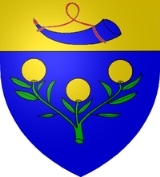
Bertrand I used as Prince of Orange the coat of arms of the House of Baux
: a 16-pointed white star placed on a field of gules
. Later on, the Princes of Orange quartered the legendary bugle-horn as a heraldic figure into their coat of arms.
were a cadet branch of the ruling house of the county of Burgundy, the Anscarids
or House of Ivrea. They married the heiress of Baux-Orange.
House of Orange-Nassau
William of Nassau
inherited the principality of Orange from his cousin Rene when Rene willed it to him, along with his other lordships. Although William had no blood from the previous princes, this was deemed to be "legal" as Orange was a soveign principality (in modern parliance, independent nation), and the sovereign prince (Rene) had the right to leave his sovereignty to whomever he pleased. This began the Dutch Royal House of Orange-Nassau
.
(Willem I) was the first stadtholder of the Dutch Republic
and the most significant representative of the House of Orange in the Netherlands. He was count
of a small German county, part of the Duchy of Nassau and heir to some of his father's fiefs in Holland. William obtained more extensive lands in the Netherlands (the lordship of Breda and several other dependencies) as an inheritance from his cousin René, Prince of Orange
, when William was only 11 years old. After William's assassination
in 1584, the title passed to his son Philip William
(who had been held hostage in Spain until 1596), and after his death in 1618, to his second son Maurice
, and finally to his youngest son, Frederick Henry
.
The title of Prince of Orange became synonymous with the stadtholder of the Netherlands.
William III
(Willem III) was also King of England
, Scotland
and Ireland
, and his legacy is commemorated annually by the Protestant Orange Order
.
William and Mary
had no legitimate children. After his death in 1702, the Dutch contender to his title was his heir in the Netherlands, John William Friso of Nassau-Diez, who assumed the title. William's testament designated Friso to inherit the title. The other contender was the King in Prussia, who based his claim to the title on the will of Frederick Henry, William III's grandfather. Eventually, a compromise was reached by which both families were entitled to bear the title of Prince of Orange. By then, it was no more than a title because the principality had been annexed by Louis XIV of France
.
Friso's line held it as their principal title during the 18th century. The French army drove them away from the Netherlands in 1795, but on their return, the Prince of Orange became the first sovereign of the Netherlands in 1813.
After the establishment of the current Kingdom of the Netherlands in 1815, the title was partly reconstitutionalized in a bill and granted to the eldest son of King William I of the Netherlands, Prince William, who later became William II of the Netherlands. Since 1983, the heir to the Dutch throne, whether male or female, bears the title Prince or Princess of Orange. The first-born child of the heir to the Dutch throne bears the title Hereditary Prince(ss) of Orange. Currently, Princess Catharina-Amalia
is the Hereditary Princess of Orange. She will be the Princess of Orange once her father, Prince Willem-Alexander, is inaugurated King of the Netherlands.
During the 15th, 16th and 17th Centuries, The Prince(ss) of Orange was styled His/Her Highness the Prince(ss) of Orange (Dutch: Zijne/Hare Hoogheid de Prins(es) van Oranje), except for William III, who rated the "Royal/Koninklijke" as his mother was the Princess Royal of England.
.
Individual members of the House of Orange-Nasau also given their own arms by the reigning monarch, similar to the United Kingdom. This is usually the royal arms, quartered with the arms of the principality of Orange, and an inescutcheon of their paternal arms. For Willem Alexander, the current Prince of Orange & crown prince of the Netherlands
, it is:
Descendants of Pons de Mevouillon (the arms of the counts d'Orange is a reference point. Arms did not exist until the late 12th century. :
Pons de Mevouillon
x Blismodis
|
| --> Humbert évêque de Vaison, jusqu’en 1005
|
| --> Garnier, évêque d’Avignon (976-991)
|
| --> Ison
|
| --> Pons II de Mevouillon (ca 920-986)
x Richilde, originaire de l’Uzège
|
| --> Féraud de Nice évêque de Gap
|
| --> Pierre de Mirabel évêque de Vaison
|
| --> Pons III de Mevouillon
| | ... --> Descendance Mevouillon...
|
| --> Arnoul de Theys
| | ... --> Descendance Theys...
|
| --> Gérard
|
| --> Rambaud
|
| --> Raoul
|
| --> Laugier de Nice (ca 1050-1032)
x Odile de Provence (976-1032), fille de :fr:Guillaume Ier de Provence:Guillaume Ier de Provence
|
| --> Rostan de Gréolières
| | ... --> Descendance Gréolières...
|
| --> Pierre de Nice, évêque de Sisteron (1043–1059)
|
| --> Jauccara de Nice
| x Amic de Vence-Avignon
|
| --> Gerberge de Nice
| x :fr:Bérenger d’Avignon:Bérenger d’Avignon.
|
| --> Rambaud de Nice (1006–1073)
x 1032 Accelena d’Apt
|
| --> Laugier d’Apt
x Amancia de Lacoste-Castellane
|
| --> Odila de Nice
x Boniface de Reillanne
|
| --> Gisla de Nice
x Rostang d'Agoult
|
| --> Laugier d'Agout, évêque d'Apt, croisé
|
| --> Pierre II de Nice évêque de Sisteron, puis évêque de Vaison
|
| --> Rostan de Fréjus
x Accelena de Marignane
|
| --> Rambaud de Nice, seigneur de Gréolières (+ jeune)
|
x Bélieldis de Marseille
|
| --> Amic
|
| --> Guillaume
|
x avant 1045 Azalaïs de Reillanne, veuve de Guilhem d'Agoult
|
| --> Bertrand-Rambaud d’Orange
x 1068 Adélaïde de Cavenez, veuve de Guillaume V Bertrand de Provence
|
| --> Léger ou Laugerus, évêque d’Avignon(1124 ou 1126-1142)
|
| --> Jausserand Laugier, seigneur de Gréolières
|
x 1064 Gerberge, fille de Foulques Bertrand de Provence
|
| --> Pierre
|
| --> Rambaud II d'Orange, the crusader or English Wiki
|
| --> Thiburge d'Orange
x 1104 Giraud Adhémar de Monteil
|
x 1129 Guillaume d'Aumelas
|
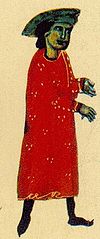
| --> Raimbaut d'Orange, the famous troubadour. or English Wiki
|
| --> Thiburge II d'Orange
| x 1171 Bertrand des Baux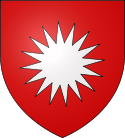
|
| --> Hughes IV
|
| --> Bertrand II
|
| --> Thiburge
|
| --> Guillaume des Baux or English Wiki
x Ermengarde de Mévouillon
|
| --> Guillaume II des Baux or English Wiki
Title
A title is a prefix or suffix added to someone's name to signify either veneration, an official position or a professional or academic qualification. In some languages, titles may even be inserted between a first and last name...
of nobility
Nobility
Nobility is a social class which possesses more acknowledged privileges or eminence than members of most other classes in a society, membership therein typically being hereditary. The privileges associated with nobility may constitute substantial advantages over or relative to non-nobles, or may be...
, originally associated with the Principality of Orange
Principality of Orange
The Principality of Orange was a feudal state in Provence, in the south of modern-day France, on the left bank of the River Rhone north of the city of Avignon....
, in what is now southern France
France
The French Republic , The French Republic , The French Republic , (commonly known as France , is a unitary semi-presidential republic in Western Europe with several overseas territories and islands located on other continents and in the Indian, Pacific, and Atlantic oceans. Metropolitan France...
. In French
French language
French is a Romance language spoken as a first language in France, the Romandy region in Switzerland, Wallonia and Brussels in Belgium, Monaco, the regions of Quebec and Acadia in Canada, and by various communities elsewhere. Second-language speakers of French are distributed throughout many parts...
it is la Principauté d'Orange.
The title is carried by members of the House of Orange-Nassau
House of Orange-Nassau
The House of Orange-Nassau , a branch of the European House of Nassau, has played a central role in the political life of the Netherlands — and at times in Europe — since William I of Orange organized the Dutch revolt against Spanish rule, which after the Eighty Years' War...
, as heirs to the crown of the Netherlands. Rival claims to the title are made by members of the House of Hohenzollern
House of Hohenzollern
The House of Hohenzollern is a noble family and royal dynasty of electors, kings and emperors of Prussia, Germany and Romania. It originated in the area around the town of Hechingen in Swabia during the 11th century. They took their name from their ancestral home, the Burg Hohenzollern castle near...
and the family of Mailly. The current holders of the title are Prince Willem-Alexander of the Netherlands
Willem-Alexander, Prince of Orange
Willem-Alexander, Prince of Orange is the eldest child of Queen Beatrix and Prince Claus. Since 1980 he is the heir apparent to the throne of the Kingdom of the Netherlands. He is also the head of the House of Amsberg since the death of his father in 2002. He was in military service and he studied...
(Orange-Nassau), Georg Friedrich, Prince of Prussia (Hohenzollern), and Guy, Marquis de Mailly-Neslé (Mailly).
County of Orange
Orange, Vaucluse
Orange is a commune in the Vaucluse department in the Provence-Alpes-Côte d'Azur region in southeastern France.It has a primarily agricultural economy...
in the Rhone
Rhône River
The Rhone is one of the major rivers of Europe, rising in Switzerland and running from there through southeastern France. At Arles, near its mouth on the Mediterranean Sea, the river divides into two branches, known as the Great Rhone and the Little Rhone...
valley in southern France
France
The French Republic , The French Republic , The French Republic , (commonly known as France , is a unitary semi-presidential republic in Western Europe with several overseas territories and islands located on other continents and in the Indian, Pacific, and Atlantic oceans. Metropolitan France...
, which was a property of the House of Orange, then the House of Baux
House of Baux
The House of Baux is a French noble family from the south of France. It was one of the most pretigious and powerful families of Medieval Provence, known as the 'Race d’Aiglon'. They were independent Lords as castellan of Les Baux and Arles and wielded very considerable authority at local level...
and the House of Châlon-Arlay
House of Chalon-Arlay
This page is a list of the lords of Chalon-Arlay and the principality of Orange.The lords of Chalons and Arlay were a cadet branch of the ruling house of the county of Burgundy, the Anscarids or House of Ivrea....
before passing in 1544 to the House of Orange-Nassau
House of Orange-Nassau
The House of Orange-Nassau , a branch of the European House of Nassau, has played a central role in the political life of the Netherlands — and at times in Europe — since William I of Orange organized the Dutch revolt against Spanish rule, which after the Eighty Years' War...
.
The area started as the County of Orange, a fief in the Holy Roman Empire
Holy Roman Empire
The Holy Roman Empire was a realm that existed from 962 to 1806 in Central Europe.It was ruled by the Holy Roman Emperor. Its character changed during the Middle Ages and the Early Modern period, when the power of the emperor gradually weakened in favour of the princes...
, in its constituent Kingdom of Burgundy
King of Burgundy
The following is a list of the Kings of the two Kingdoms of Burgundy, and a number of related political entities devolving from Carolingian machinations over family relations.- Kings of the Burgundians :...
. It was awarded to William of Gellone
William of Gellone
Saint William of Gellone was the second Count of Toulouse from 790 until his replacement in 811. His Occitan name is Guilhem, and he is known in French as Guillaume d'Orange, Guillaume Fierabrace, and the Marquis au court nez.He is the hero of the Chanson de Guillaume, an early chanson de geste,...
, a grandson of Charles Martel
Charles Martel
Charles Martel , also known as Charles the Hammer, was a Frankish military and political leader, who served as Mayor of the Palace under the Merovingian kings and ruled de facto during an interregnum at the end of his life, using the title Duke and Prince of the Franks. In 739 he was offered the...
and therefore a cousin of Charlemagne
Charlemagne
Charlemagne was King of the Franks from 768 and Emperor of the Romans from 800 to his death in 814. He expanded the Frankish kingdom into an empire that incorporated much of Western and Central Europe. During his reign, he conquered Italy and was crowned by Pope Leo III on 25 December 800...
, around the year 800 for his services in the wars against the Moors and reconquering southern France and the Spanish March. His Occitan name is Guilhem. However, as a Frankish lord, he probably knew himself by the old Germanic version of Wilhelm
William (name)
William is a popular given name of old Germanic origin. It became very popular in the English language after the Norman conquest of England in 1066, and remained so throughout the Middle Ages and into the modern era...
. William was also count of Toulouse, duke of Aquitaine, and marquis of Septimania. The horn that came to symbolize Orange when heraldry came in vogue much later in the 12th century was a pun on his name in French, from the character his deeds inspired in the chanson de geste, the Chanson de Guillaume
Chanson de Guillaume
The Chanson de Guillaume or Chançun de Willame is a chanson de geste from the first half of the twelfth-century The Chanson de Guillaume or Chançun de Willame (English: "Song of William") is a chanson de geste from the first half of the twelfth-century The Chanson de Guillaume or Chançun de...
, "Guillaume au Court Nez" or "Guillaume au Cornet".
The chanson appears to be based on William of Gellone's battle at the Orbieu
Orbieu
The Orbieu is a long river in the Aude département, in south central France. Its source is at Fourtou, in the Corbières. It flows generally northeast...
or Orbiel river near Carcassonne
Carcassonne
Carcassonne is a fortified French town in the Aude department, of which it is the prefecture, in the former province of Languedoc.It is divided into the fortified Cité de Carcassonne and the more expansive lower city, the ville basse. Carcassone was founded by the Visigoths in the fifth century,...
in 793 as wells as his seizure of the town of Orange
Prise d'Orange
The Prise d'Orange , is an Old French chanson de geste from the end of the twelfth-century, part of the cycle of chansons concerning Guillaume of Orange, generally referred to collectively as the Geste de Guillaume d'Orange...
.
Principality of Orange
As the kingdom of Burgundy fragmented in the early Middle Ages, the title was raised by the Holy Roman Emperor Frederick I BarbarossaFrederick I, Holy Roman Emperor
Frederick I Barbarossa was a German Holy Roman Emperor. He was elected King of Germany at Frankfurt on 4 March 1152 and crowned in Aachen on 9 March, crowned King of Italy in Pavia in 1155, and finally crowned Roman Emperor by Pope Adrian IV, on 18 June 1155, and two years later in 1157 the term...
elevated to a principality in 1163 to shore up his supporters in Burgundy against the Pope and the King of France. As the Empire's boundaries retreated from those of the principality, the prince acceded to the sovereign rights that the Emperor used to exercise. As William the Silent wrote in his marriage proposal to the uncle of his second wife, the Elector August of Saxony
Augustus, Elector of Saxony
Augustus was Elector of Saxony from 1553 to 1586.-First years:Augustus was born in Freiberg, the youngest child and third son of Henry IV, Duke of Saxony, and Catherine of Mecklenburg. He consequently belonged to the Albertine branch of the Wettin family...
, he held Orange as "my own free property", not as a fief of anyone else, neither the Pope, nor the King of Spain or France. However, in the days where one's position honor and reputation were determined by such things, it drove William the Silent forward as much as it also fueled his great grandson's William III's
William III of England
William III & II was a sovereign Prince of Orange of the House of Orange-Nassau by birth. From 1672 he governed as Stadtholder William III of Orange over Holland, Zeeland, Utrecht, Guelders, and Overijssel of the Dutch Republic. From 1689 he reigned as William III over England and Ireland...
opposition to Louis XIV
Louis XIV of France
Louis XIV , known as Louis the Great or the Sun King , was a Bourbon monarch who ruled as King of France and Navarre. His reign, from 1643 to his death in 1715, began at the age of four and lasted seventy-two years, three months, and eighteen days...
when that king continually invaded and occupied Orange.
The last descendant of the original princes, René of Nassau
René of Châlon
René of Châlon , also known as Renatus of Châlon, was a Prince of Orange and stadtholder of Holland, Zeeland, Utrecht and Gelre....
, left the principality to his cousin William the Silent, who was not a descendant of the original Orange family but the legal heir to the principality of Orange.
Louis XIV of France
Louis XIV , known as Louis the Great or the Sun King , was a Bourbon monarch who ruled as King of France and Navarre. His reign, from 1643 to his death in 1715, began at the age of four and lasted seventy-two years, three months, and eighteen days...
annexed all territory of the principality to the royal domain, as part of the war actions against the stadtholder
Stadtholder
A Stadtholder A Stadtholder A Stadtholder (Dutch: stadhouder [], "steward" or "lieutenant", literally place holder, holding someones place, possibly a calque of German Statthalter, French lieutenant, or Middle Latin locum tenens...
William III of Orange
William III of England
William III & II was a sovereign Prince of Orange of the House of Orange-Nassau by birth. From 1672 he governed as Stadtholder William III of Orange over Holland, Zeeland, Utrecht, Guelders, and Overijssel of the Dutch Republic. From 1689 he reigned as William III over England and Ireland...
— who later became King William III of England
England
England is a country that is part of the United Kingdom. It shares land borders with Scotland to the north and Wales to the west; the Irish Sea is to the north west, the Celtic Sea to the south west, with the North Sea to the east and the English Channel to the south separating it from continental...
and King William II of Scotland
Scotland
Scotland is a country that is part of the United Kingdom. Occupying the northern third of the island of Great Britain, it shares a border with England to the south and is bounded by the North Sea to the east, the Atlantic Ocean to the north and west, and the North Channel and Irish Sea to the...
. Orange
Principality of Orange
The Principality of Orange was a feudal state in Provence, in the south of modern-day France, on the left bank of the River Rhone north of the city of Avignon....
ceased to exist as a separate sovereign principality, or in today's parlance, a separate sovereign nation.
In 1673, Louis XIV bestowed the (now non-sovereign) principality on Louis of Mailly-Nesles, marquis of Nesles (1689–1764), a very remote descendant of the original princes of Orange, through the marriage of the marquis to a descendant of the Chalons & des Baux.
His descendant still claims the title today. In 1714 Louis XIV bestowed the usufruct
Usufruct
Usufruct is the legal right to use and derive profit or benefit from property that either belongs to another person or which is under common ownership, as long as the property is not damaged or destroyed...
of the principality on Prince Louis Armand of Bourbon-Conti. He died in 1727 and the principality was merged in the Crown in 1731.
Abolition of the principality, continuation of the title
Because William III died without legitimate children, the principality was regarded as having been inherited by his closest cognate relative on the basis of the testament of Frederic-Henry, Frederick I of PrussiaFrederick I of Prussia
Frederick I , of the Hohenzollern dynasty, was Elector of Brandenburg and Duke of Prussia in personal union . The latter function he upgraded to royalty, becoming the first King in Prussia . From 1707 he was in personal union the sovereign prince of the Principality of Neuchâtel...
, who ceded the principality — at least the lands, but not the formal title — to France in 1713.
France supported his claim. In this way, the territory of the principality lost its feudal and secular privileges and became a part of France. The Treaty of Utrecht
Treaty of Utrecht
The Treaty of Utrecht, which established the Peace of Utrecht, comprises a series of individual peace treaties, rather than a single document, signed by the belligerents in the War of Spanish Succession, in the Dutch city of Utrecht in March and April 1713...
allowed the King of Prussia to erect part of the duchy of Gelderland (the cities of Geldern, Straelen and Wachtendonk with their bailiwicks, Krickenbeck (including Viersen), the land of Kessel, the lordships of Afferden, Arcen-Velden-Lomm, Walbeck-Twisteden, Raay and Klein-Kevelaer, Well, Bergen and Middelaar) into a new Principality of Orange.
The kings of Prussia and the German emperors styled themselves Princes of Orange till 1918.
An agnatic relative of William III, John William Friso of Nassau, who was also descended by female line from William the Silent
William the Silent
William I, Prince of Orange , also widely known as William the Silent , or simply William of Orange , was the main leader of the Dutch revolt against the Spanish that set off the Eighty Years' War and resulted in the formal independence of the United Provinces in 1648. He was born in the House of...
, was designated the heir to the princes of Orange in the Netherlands
Netherlands
The Netherlands is a constituent country of the Kingdom of the Netherlands, located mainly in North-West Europe and with several islands in the Caribbean. Mainland Netherlands borders the North Sea to the north and west, Belgium to the south, and Germany to the east, and shares maritime borders...
by the last will of William III. Several of his descendants became stadtholders. They claim the principality of Orange on the basis of agnatic inheritance, similar to that of William the Silent, inheriting from his cousin René
René of Châlon
René of Châlon , also known as Renatus of Châlon, was a Prince of Orange and stadtholder of Holland, Zeeland, Utrecht and Gelre....
, though not being descendants of the original princes of Orange. They also claim on basis of the testament of Philips William, Maurice and William III. Finally, they claim on the basis that Orange was an independent state, where the sovereign had the right to assign his succession according to his will. France never recognized any of this, nor allowed the Oranje-Nassaus or the Hohenzollerns to obtain anything of the principality itself. The Oranje-Nassaus nevertheless assumed the title and also erected several of their lordships as new principality of Orange.
From that derivation of the title comes the tradition of the house of Nassau-Dietz/Friesland
House of Orange-Nassau
The House of Orange-Nassau , a branch of the European House of Nassau, has played a central role in the political life of the Netherlands — and at times in Europe — since William I of Orange organized the Dutch revolt against Spanish rule, which after the Eighty Years' War...
, the later stadtholders of the Netherlands, and the present-day royal family of the Netherlands, of holding this title. They maintain the tradition of William the Silent
William the Silent
William I, Prince of Orange , also widely known as William the Silent , or simply William of Orange , was the main leader of the Dutch revolt against the Spanish that set off the Eighty Years' War and resulted in the formal independence of the United Provinces in 1648. He was born in the House of...
and the house of Orange-Nassau
House of Orange-Nassau
The House of Orange-Nassau , a branch of the European House of Nassau, has played a central role in the political life of the Netherlands — and at times in Europe — since William I of Orange organized the Dutch revolt against Spanish rule, which after the Eighty Years' War...
.
Thus, there are now two
pretender claimants to this title, or claimants, depending on whose claims take precedence:
- The House of HohenzollernHouse of HohenzollernThe House of Hohenzollern is a noble family and royal dynasty of electors, kings and emperors of Prussia, Germany and Romania. It originated in the area around the town of Hechingen in Swabia during the 11th century. They took their name from their ancestral home, the Burg Hohenzollern castle near...
, who reigned in PrussiaPrussiaPrussia was a German kingdom and historic state originating out of the Duchy of Prussia and the Margraviate of Brandenburg. For centuries, the House of Hohenzollern ruled Prussia, successfully expanding its size by way of an unusually well-organized and effective army. Prussia shaped the history...
until 1918 - The House of Mailly-NeslesMaillyMailly is a picturesque commune in the Saône-et-Loire department in the region of Bourgogne in eastern France.France's 3rd Artillery Regiment is based in Mailly and it once operated the nuclear Pluton missile as part of France's deterrent during the Cold war....
House of Orange
| No | Name | Picture | Birth | Became Count(ess) of Orange | Ceased to be Count(ess) | Death | Other titles | Spouse |
|---|---|---|---|---|---|---|---|---|
| 1. | Pons de Mevouillon | Blismodis | ||||||
| 2. | Pons II de Mevouillon | Richilde | ||||||
| 3. | Laugier de Nice | Odile de Provence | ||||||
| 3. | Rambaud de Nice | Accelena d’Apt | ||||||
| 4. | Bertrand-Rambaud d'Orange | 1. Adélaïde de Cavenez Gerberge |
||||||
| 5. | Raimbaut II | ? | ||||||
| 6. | Tiburge d'Orange | 1. Giraud Adhémar de Monteil 2. Guillaume d'Aumelas |
||||||
| 7. | Raimbaut of Orange | Lord of Aumelas | None | |||||
As sovereign prince of Orange
Until 1340, it was customary for all sons of the prince of Orange to inherit the title.Only the direct line of descent to Raimond V is shown here.
House of Baux
The house of Baux succeeded to the principality of Orange when Bertrand of Baux married the heiress of the last native count of Orange, Tiburge, daughter of William of Orange, Omelaz, and Montpellier. Their son was William I of Baux-Orange. Bertrand was the son of Raymond of Baux and Stephanie of Gevaudan. Stephanie was the younger daughter to the heiress of the counts of Provence. For a genealogical table, see the reference cited:| No | Name | Picture | Birth | Created Prince of Orange | Ceased to be Prince of Orange | Death | Other titles while Prince of Orange | Princess of Orange |
|---|---|---|---|---|---|---|---|---|
| 1. | Prince Bertrand I | 1110/1115 | 1173 After the death of his brother-in-law, Raimbaut, Count of Orange Raimbaut of Orange Raimbaut of Orange , or in Occitan Raimbaut d'Aurenga, was the lord of Orange and Aumelas. His properties included the towns of Frontignan and Mireval. He was the only son of William of Aumelas and of Tiburge, daughter of Raimbaut, count of Orange... , the County of Orange was elevated to a principality in 1163 by the Holy Roman Emperor Frederick I Frederick I, Holy Roman Emperor Frederick I Barbarossa was a German Holy Roman Emperor. He was elected King of Germany at Frankfurt on 4 March 1152 and crowned in Aachen on 9 March, crowned King of Italy in Pavia in 1155, and finally crowned Roman Emperor by Pope Adrian IV, on 18 June 1155, and two years later in 1157 the term... . |
April/October 1180 | Lord of Baux Lords of Baux This is a list of the Lords, Barons and Marquisses of Baux.-Lords of Baux of the House of Baux:*Pons , father of*Hugh 1 , father of*William I Hugh , father of*Raymond I , father of*Hugh II... |
Tibors de Sarenom Tibors de Sarenom Tibors de Sarenom or Tiburge is the earliest attestable trobairitz, active during the classical period of medieval Occitan literature at the height of the popularity of the troubadours.-Biography:... |
||
Bertrand I used as Prince of Orange the coat of arms of the House of Baux
House of Baux
The House of Baux is a French noble family from the south of France. It was one of the most pretigious and powerful families of Medieval Provence, known as the 'Race d’Aiglon'. They were independent Lords as castellan of Les Baux and Arles and wielded very considerable authority at local level...
: a 16-pointed white star placed on a field of gules
Gules
In heraldry, gules is the tincture with the colour red, and belongs to the class of dark tinctures called "colours". In engraving, it is sometimes depicted as a region of vertical lines or else marked with gu. as an abbreviation....
. Later on, the Princes of Orange quartered the legendary bugle-horn as a heraldic figure into their coat of arms.
House of Baux-Orange
| No | Name | Arms | Birth | Became Prince of Orange | Ceased to be Prince of Orange | Death | Other titles while Prince of Orange | Princess of Orange |
|---|---|---|---|---|---|---|---|---|
| 2. | Prince William I William I of Baux William I of Baux was the Prince of Orange from 1182 until his death. He was an important Provençal nobleman.William was the son of Bertrand of Baux, the first Prince of Orange a major patron of Occitan poetry, and Tibors de Sarenom, a sister of Raimbaut d'Aurenga and herself a trobairitz... |
1155 | 31 October 1180 | bef. 30 July 1218 | Co-Prince Prince Prince is a general term for a ruler, monarch or member of a monarch's or former monarch's family, and is a hereditary title in the nobility of some European states. The feminine equivalent is a princess... (with brothers); Lord of Baux Lords of Baux This is a list of the Lords, Barons and Marquisses of Baux.-Lords of Baux of the House of Baux:*Pons , father of*Hugh 1 , father of*William I Hugh , father of*Raymond I , father of*Hugh II... |
1. Ermengarde of Mévouillon 2. Alix |
||
| 3. | Prince William II William II of Baux William II of Baux was a son of William of Baux. Following his father, William II carried the title of prince of Orange. The title had come to the House of Baux through a brother, Raimbaut of Orange, of William II's paternal grandmother, Tiburge de Sarenom, the latter also referred to as Tiburge... |
- | 31 October 1180 | bef. 1 November 1239 | Co-Prince Prince Prince is a general term for a ruler, monarch or member of a monarch's or former monarch's family, and is a hereditary title in the nobility of some European states. The feminine equivalent is a princess... (with brothers); Lord of Baux Lords of Baux This is a list of the Lords, Barons and Marquisses of Baux.-Lords of Baux of the House of Baux:*Pons , father of*Hugh 1 , father of*William I Hugh , father of*Raymond I , father of*Hugh II... |
Précieuse | ||
| 4. | Prince Raymond I | - | bef. 30 July 1218 | 1282 | Lord of Baux Lords of Baux This is a list of the Lords, Barons and Marquisses of Baux.-Lords of Baux of the House of Baux:*Pons , father of*Hugh 1 , father of*William I Hugh , father of*Raymond I , father of*Hugh II... |
Malberjone of Aix | ||
| 5. | Prince Bertrand II | - | 1282 | aft. 21 July 1314 | Lord of Baux Lords of Baux This is a list of the Lords, Barons and Marquisses of Baux.-Lords of Baux of the House of Baux:*Pons , father of*Hugh 1 , father of*William I Hugh , father of*Raymond I , father of*Hugh II... |
Eleanore of Geneva | ||
| 6. | Prince Raymond II | - | aft. 21 July 1314 | 1340, aft. 9 September | Lord of Baux Lords of Baux This is a list of the Lords, Barons and Marquisses of Baux.-Lords of Baux of the House of Baux:*Pons , father of*Hugh 1 , father of*William I Hugh , father of*Raymond I , father of*Hugh II... and Condorcet |
Anne of Viennois | ||
| 7. | Prince Raymond III | - | aft. 9 September 1340 | 10 February 1393 | Lord of Baux Lords of Baux This is a list of the Lords, Barons and Marquisses of Baux.-Lords of Baux of the House of Baux:*Pons , father of*Hugh 1 , father of*William I Hugh , father of*Raymond I , father of*Hugh II... |
1. Constance of Trian 2. Jeanne of Geneva |
||
| 8. | Princess Mary | - | 10 February 1393 | October 1417 | Lady Lady The word lady is a polite term for a woman, specifically the female equivalent to, or spouse of, a lord or gentleman, and in many contexts a term for any adult woman... of Arlay Arlay Arlay is a commune in the Jura department in Franche-Comté in eastern France.-History:Arlay's early importance lay in the fact that it was a station where the "Salt Road" forded the river Seille. It was refounded by the Romans as an oppidum and functioned as a Gallo-Roman city until it was... , Cuiseaux Cuiseaux Cuiseaux is a commune in the Saône-et-Loire department in the region of Bourgogne in eastern France.-References:*... , and Vitteaux Vitteaux Vitteaux is a commune in the Côte-d'Or department in eastern France.-Population:-References:*... |
Prince John I John III of Chalon-Arlay John III of Chalon-Arlay was a French nobleman. He was the son of Hugh II's brother Louis I of Chalon, and as such he was the nephew and heir of Hugh II of Chalon-Arlay as prince of Orange and lord of Arlay. He was the father of William VII of Chalon-Arlay.... |
||
House of Châlon-Arlay (also House of Ivrea of Anscarid dynasty)
The lords of Chalons and ArlayHouse of Chalon-Arlay
This page is a list of the lords of Chalon-Arlay and the principality of Orange.The lords of Chalons and Arlay were a cadet branch of the ruling house of the county of Burgundy, the Anscarids or House of Ivrea....
were a cadet branch of the ruling house of the county of Burgundy, the Anscarids
Anscarids
The Anscarids or Anscarii or the House of Ivrea were a medieval Frankish dynasty of Burgundian origin which rose to prominence in Italy in the tenth century, even briefly holding the Italian throne. They also ruled the County of Burgundy in the eleventh and twelfth centuries and it was one of their...
or House of Ivrea. They married the heiress of Baux-Orange.
| No | Name | Picture | Arms | Birth | Became Prince of Orange | Ceased to be Prince of Orange | Death | Other titles while Prince of Orange | Princess of Orange |
|---|---|---|---|---|---|---|---|---|---|
| 9. | Prince John I John III of Chalon-Arlay John III of Chalon-Arlay was a French nobleman. He was the son of Hugh II's brother Louis I of Chalon, and as such he was the nephew and heir of Hugh II of Chalon-Arlay as prince of Orange and lord of Arlay. He was the father of William VII of Chalon-Arlay.... |
none | 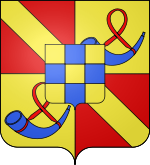 |
- | 10 February 1393 | October 1417 | 2 September 1418 | Lord Lord Lord is a title with various meanings. It can denote a prince or a feudal superior . The title today is mostly used in connection with the peerage of the United Kingdom or its predecessor countries, although some users of the title do not themselves hold peerages, and use it 'by courtesy'... of Arlay Arlay Arlay is a commune in the Jura department in Franche-Comté in eastern France.-History:Arlay's early importance lay in the fact that it was a station where the "Salt Road" forded the river Seille. It was refounded by the Romans as an oppidum and functioned as a Gallo-Roman city until it was... , Cuiseaux Cuiseaux Cuiseaux is a commune in the Saône-et-Loire department in the region of Bourgogne in eastern France.-References:*... and Vitteaux Vitteaux Vitteaux is a commune in the Côte-d'Or department in eastern France.-Population:-References:*... |
Princess Mary |
| 10. | Prince Louis I Louis II of Chalon-Arlay Louis II of Chalon-Arlay was a lord of Arlay and Arguel and prince of Orange. He was the son of John III of Chalon-Arlay and the father of William VII of Chalon.... |
none | |
1390 | October 1417 | 3 December 1463 | Lord Lord Lord is a title with various meanings. It can denote a prince or a feudal superior . The title today is mostly used in connection with the peerage of the United Kingdom or its predecessor countries, although some users of the title do not themselves hold peerages, and use it 'by courtesy'... of Arlay Arlay Arlay is a commune in the Jura department in Franche-Comté in eastern France.-History:Arlay's early importance lay in the fact that it was a station where the "Salt Road" forded the river Seille. It was refounded by the Romans as an oppidum and functioned as a Gallo-Roman city until it was... , Arguel Arguel, Doubs Arguel is a commune in the Doubs department in the Franche-Comté region in eastern France.-Population:... , Orbe Orbe Orbe is a municipality in the Swiss canton of Vaud. It was the seat of the former district of Orbe and is now part of the district of Jura-Nord Vaudois.-History:Orbe is first mentioned about 280 as Urba. In 1179 it was mentioned as versus Orbam.... , and Echelens |
1. Jeanne of Montbéliard 2. Eleanor d'Armagnac 3. Blanche of Gamaches |
|
| 11. | Prince William II William VII of Chalon William VII of Chalon was a prince of Orange and lord of Chalon-Arlay. He was the son of Louis II of Chalon-Arlay and the father of John IV of Chalon.... |
none | |
- | 3 December 1463 | 27 September 1475 | Lord Lord Lord is a title with various meanings. It can denote a prince or a feudal superior . The title today is mostly used in connection with the peerage of the United Kingdom or its predecessor countries, although some users of the title do not themselves hold peerages, and use it 'by courtesy'... of Arlay Arlay Arlay is a commune in the Jura department in Franche-Comté in eastern France.-History:Arlay's early importance lay in the fact that it was a station where the "Salt Road" forded the river Seille. It was refounded by the Romans as an oppidum and functioned as a Gallo-Roman city until it was... and Arguel Arguel, Doubs Arguel is a commune in the Doubs department in the Franche-Comté region in eastern France.-Population:... |
Catherine of Brittany | |
| 12. | Prince John II John IV of Chalon-Arlay John IV of Chalon-Arlay or John of Chalon was a prince of Orange and lord of Chalon-Arlay. He was the son of William VII of Chalon and the father of Philibert of Châlon and Claudia of Châlon.... |
none | |
1443 | 27 September 1475 | 15 April 1502 | Count of Tonnerre; Lord Lord Lord is a title with various meanings. It can denote a prince or a feudal superior . The title today is mostly used in connection with the peerage of the United Kingdom or its predecessor countries, although some users of the title do not themselves hold peerages, and use it 'by courtesy'... of Arlay Arlay Arlay is a commune in the Jura department in Franche-Comté in eastern France.-History:Arlay's early importance lay in the fact that it was a station where the "Salt Road" forded the river Seille. It was refounded by the Romans as an oppidum and functioned as a Gallo-Roman city until it was... , Arguel Arguel, Doubs Arguel is a commune in the Doubs department in the Franche-Comté region in eastern France.-Population:... and Montfaucon Montfaucon -Places:*In Switzerland**Montfaucon, Switzerland, in the canton of Jura*In France** Montfaucon, Aisne, in the Aisne département** Montfaucon, Doubs, in the du Doubs département** Montfaucon, Gard, in the Gard département... ; Admiral Admiral Admiral is the rank, or part of the name of the ranks, of the highest naval officers. It is usually considered a full admiral and above vice admiral and below admiral of the fleet . It is usually abbreviated to "Adm" or "ADM"... of Guyenne Guyenne Guyenne or Guienne , , ; Occitan Guiana ) is a vaguely defined historic region of south-western France. The Province of Guyenne, sometimes called the Province of Guyenne and Gascony, was a large province of pre-revolutionary France.... |
1. Jeanne de Bourbon 2. Philiberte of Luxembourg |
|
| 13. | Prince Philibert Philibert of Châlon Philibert de Châlon was the last prince of Orange from the house of Châlon.Born at Nozeroy to John IV of Chalon-Arlay, Philibert served Emperor Charles V as commander in Italy, fighting in the War of the League of Cognac. He took part in the Sack of Rome and was killed during the final stages of... |
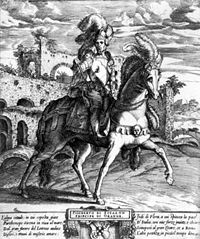 |
18 March 1502 | 15 April 1502 | 3 August 1530 | Viceroy of Naples; Prince of Melfi Melfi Melfi is a town and comune in the Vulture area of the province of Potenza, in the Southern Italian region of Basilicata.-Geography:On a hill at the foot of Mount Vulture, Melfi is the most important town in Basilicata's Vulture, both as a tourist resort and economic centre.-Early history:Inhabited... ; Duke of Gravina; Count of Tonnerre, Charny Charny Charny may refer to:* Charny, a commune of the Côte-d'Or département, in France;* Charny, Seine-et-Marne, a commune of the Seine-et-Marne département, in France;* Charny, Yonne, a commune of the Yonne département, in France;... , Penthièvre; Viscount of Besançon Besançon Besançon , is the capital and principal city of the Franche-Comté region in eastern France. It had a population of about 237,000 inhabitants in the metropolitan area in 2008... ; Lord Lord Lord is a title with various meanings. It can denote a prince or a feudal superior . The title today is mostly used in connection with the peerage of the United Kingdom or its predecessor countries, although some users of the title do not themselves hold peerages, and use it 'by courtesy'... of Arlay Arlay Arlay is a commune in the Jura department in Franche-Comté in eastern France.-History:Arlay's early importance lay in the fact that it was a station where the "Salt Road" forded the river Seille. It was refounded by the Romans as an oppidum and functioned as a Gallo-Roman city until it was... , Nozeroy Nozeroy Nozeroy is a commune in the Jura department in Franche-Comté in eastern France.-Demographics:As of the census of 1999, the population was 422.The estimate for 2005 was 398.-References:*... , Rougemont Rougemont Rougemont may refer to:* Rougemont Castle, a ruined castle in Exeter, Devon* Rougemont, Switzerland, a town in Switzerland* Rougemont, Quebec, a town in the province of Québec, in Canada* Rougemont, North Carolina, an Unincorporated area in North Carolina... , Orgelet Orgelet Orgelet is a commune in the Jura department in Franche-Comté in eastern France.-Demographics:As of the census of 1999, the population was 1686.The estimate for 2007 was 1740.Some adjacent communes of Orgelet are* Presilly**Senay - Hamlet of Presilly... and Montfaucon Montfaucon -Places:*In Switzerland**Montfaucon, Switzerland, in the canton of Jura*In France** Montfaucon, Aisne, in the Aisne département** Montfaucon, Doubs, in the du Doubs département** Montfaucon, Gard, in the Gard département... , Lieutenant-General in the Imperial army. |
no wife | ||
House of Châlon-Orange
Rene inherited the principality of Orange from his uncle Philbert on the condition that he bear the name and arms of the house of Châlon-Orange. Therefore, he is usually counted as one of the Châlon-Orange and history knows him as Rene of Châlon, rather than "of Nassau".| No | Name | Picture | Arms | Birth | Became Prince of Orange | Ceased to be Prince of Orange | Death | Other titles while Prince of Orange | Princess of Orange |
|---|---|---|---|---|---|---|---|---|---|
| 14. | Prince René René of Châlon René of Châlon , also known as Renatus of Châlon, was a Prince of Orange and stadtholder of Holland, Zeeland, Utrecht and Gelre.... |
 |
5 February 1519 | 3 August 1530 | 15 July 1544 | Stadtholder Stadtholder A Stadtholder A Stadtholder A Stadtholder (Dutch: stadhouder [], "steward" or "lieutenant", literally place holder, holding someones place, possibly a calque of German Statthalter, French lieutenant, or Middle Latin locum tenens... of Holland, Zeeland Zeeland Zeeland , also called Zealand in English, is the westernmost province of the Netherlands. The province, located in the south-west of the country, consists of a number of islands and a strip bordering Belgium. Its capital is Middelburg. With a population of about 380,000, its area is about... , Utrecht Utrecht Utrecht is a city in the Netherlands.The name may also refer to:* Utrecht , of which Utrecht is the capital* Utrecht , including the city of Utrecht* Bishopric of Utrecht* Roman Catholic Archdiocese of Utrecht... and Guelders Guelders Guelders or Gueldres is the name of a historical county, later duchy of the Holy Roman Empire, located in the Low Countries.-Geography:... ; Count of Nassau, and Vianden Vianden Vianden is a commune with city status in the Oesling, north-eastern Luxembourg, with over 1,500 inhabitants. It is the capital of the canton of Vianden, which is part of the district of Diekirch. Vianden lies on the Our river, near the border between Luxembourg and Germany., the town of Vianden,... ; Viscount Viscount A viscount or viscountess is a member of the European nobility whose comital title ranks usually, as in the British peerage, above a baron, below an earl or a count .-Etymology:... of Antwerp; Baron Baron Baron is a title of nobility. The word baron comes from Old French baron, itself from Old High German and Latin baro meaning " man, warrior"; it merged with cognate Old English beorn meaning "nobleman"... of Breda Breda Breda is a municipality and a city in the southern part of the Netherlands. The name Breda derived from brede Aa and refers to the confluence of the rivers Mark and Aa. As a fortified city, the city was of strategic military and political significance... , Diest Diest Diest is a city and municipality located in the Belgian province of Flemish Brabant. Situated in the northeast of the Hageland region, Diest neighbours the provinces of Antwerp to its North, and Limburg to the East and is situated around 60km from Brussels. The municipality comprises the city of... , Herstal Herstal Herstal, formerly known as Heristal, or Héristal, is a municipality of Belgium. It lies in the country's Walloon Region and Province of Liege along the Meuse river. Herstal is included in the "Greater Liège" agglomeration, which counts about 600,000 inhabitants... , Warneton Warneton, Belgium Warneton is part of the Belgian town of Comines-Warneton in Wallonia in the province of Hainaut... , Beilstein, Arlay Arlay Arlay is a commune in the Jura department in Franche-Comté in eastern France.-History:Arlay's early importance lay in the fact that it was a station where the "Salt Road" forded the river Seille. It was refounded by the Romans as an oppidum and functioned as a Gallo-Roman city until it was... , and Nozeroy Nozeroy Nozeroy is a commune in the Jura department in Franche-Comté in eastern France.-Demographics:As of the census of 1999, the population was 422.The estimate for 2005 was 398.-References:*... ; Lord Lord Lord is a title with various meanings. It can denote a prince or a feudal superior . The title today is mostly used in connection with the peerage of the United Kingdom or its predecessor countries, although some users of the title do not themselves hold peerages, and use it 'by courtesy'... of Dasburg Dasburg Dasburg is a municipality in the district of Bitburg-Prüm, in Rhineland-Palatinate, western Germany. Before Napoleon it was a part of Luxembourg.... , Geertruidenberg Geertruidenberg Geertruidenberg is a city and municipality in the province North Brabant in the south of the Netherlands. The city, named after Saint Gertrude of Nivelles, received city rights in 1213 from the count of Holland. The fortified city prospered until the 15th century.Today, the municipality of... , Hooge en Lage Zwaluwe Hooge en Lage Zwaluwe Hooge en Lage Zwaluwe was a municipality in the Dutch province of North Brabant. It included the villages of Lage Zwaluwe, and Hooge Zwaluwe.Hooge en Lage Zwaluwe existed until 1997, when it merged with Made.... , Klundert Klundert Klundert is a city in the Dutch province of North Brabant. It is located close to the Hollands Diep, about 3 km northwest of Zevenbergen. It received city rights in 1357.... , Montfort Montigny-Montfort Montigny-Montfort is a commune in the Côte-d'Or department in eastern France.-Population:-References:*... , Naaldwijk Naaldwijk Naaldwijk is a town in the Dutch province of South Holland. It is a part of the municipality of Westland, and lies about 10 km southwest of The Hague.Naaldwijk lies in the heart of Westland. The largest economic sector is greenhouse horticulture... , Niervaart Klundert Klundert is a city in the Dutch province of North Brabant. It is located close to the Hollands Diep, about 3 km northwest of Zevenbergen. It received city rights in 1357.... , Polanen Houtrijk en Polanen Houtrijk en Polanen is a former municipality in the Dutch province of North Holland. It existed from 1817 to 1863, when it was merged with Haarlemmerliede en Spaarnwoude.... , Steenbergen Steenbergen Steenbergen can mean:*Steenbergen, a town and municipality in North Brabant, the Netherlands*Steenbergen , a hamlet in the south of Drenthe, the Netherlands*Steenbergen , a hamlet in the north of Drenthe, the Netherlands... , Bütgenbach Bütgenbach Bütgenbach is a municipality located in the Belgian province of Liège. On January 1, 2006 Bütgenbach had a total population of 5,574. The total area is 97.31 km² which gives a population density of 57 inhabitants per km². The official language in this municipality is German.... , Sankt Vith, and Besançon Besançon Besançon , is the capital and principal city of the Franche-Comté region in eastern France. It had a population of about 237,000 inhabitants in the metropolitan area in 2008... . |
Anna of Lorraine Anna of Lorraine Anna of Lorraine was a French princess of the House of Lorraine. She was Princess of Orange by her first marriage to René of Châlon, and Duchess of Aarschot by her second marriage to Philippe II of Croÿ.... |
||
House of Orange-NassauHouse of Orange-NassauThe House of Orange-Nassau , a branch of the European House of Nassau, has played a central role in the political life of the Netherlands — and at times in Europe — since William I of Orange organized the Dutch revolt against Spanish rule, which after the Eighty Years' War...
(first creation)
William of NassauWilliam the Silent
William I, Prince of Orange , also widely known as William the Silent , or simply William of Orange , was the main leader of the Dutch revolt against the Spanish that set off the Eighty Years' War and resulted in the formal independence of the United Provinces in 1648. He was born in the House of...
inherited the principality of Orange from his cousin Rene when Rene willed it to him, along with his other lordships. Although William had no blood from the previous princes, this was deemed to be "legal" as Orange was a soveign principality (in modern parliance, independent nation), and the sovereign prince (Rene) had the right to leave his sovereignty to whomever he pleased. This began the Dutch Royal House of Orange-Nassau
House of Orange-Nassau
The House of Orange-Nassau , a branch of the European House of Nassau, has played a central role in the political life of the Netherlands — and at times in Europe — since William I of Orange organized the Dutch revolt against Spanish rule, which after the Eighty Years' War...
.
| No | Name | Picture | Arms | Birth | Became Prince of Orange | Ceased to be Prince of Orange | Death | Other titles while Prince of Orange | Princess of Orange |
|---|---|---|---|---|---|---|---|---|---|
| 15. | Prince William I William the Silent William I, Prince of Orange , also widely known as William the Silent , or simply William of Orange , was the main leader of the Dutch revolt against the Spanish that set off the Eighty Years' War and resulted in the formal independence of the United Provinces in 1648. He was born in the House of... |
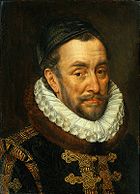 |
.: | 24 April 1533 | 15 July 1544 | 10 July 1584 | Stadtholder Stadtholder A Stadtholder A Stadtholder A Stadtholder (Dutch: stadhouder [], "steward" or "lieutenant", literally place holder, holding someones place, possibly a calque of German Statthalter, French lieutenant, or Middle Latin locum tenens... of Holland, Zeeland Zeeland Zeeland , also called Zealand in English, is the westernmost province of the Netherlands. The province, located in the south-west of the country, consists of a number of islands and a strip bordering Belgium. Its capital is Middelburg. With a population of about 380,000, its area is about... , Utrecht Utrecht Utrecht is a city in the Netherlands.The name may also refer to:* Utrecht , of which Utrecht is the capital* Utrecht , including the city of Utrecht* Bishopric of Utrecht* Roman Catholic Archdiocese of Utrecht... and Friesland Friesland Friesland is a province in the north of the Netherlands and part of the ancient region of Frisia.Until the end of 1996, the province bore Friesland as its official name. In 1997 this Dutch name lost its official status to the Frisian Fryslân... ; Marquis Marquis Marquis is a French and Scottish title of nobility. The English equivalent is Marquess, while in German, it is Markgraf.It may also refer to:Persons:... of Veere Veere Veere is a municipality and a city in the southwestern Netherlands, on Walcheren island in the province of Zeeland.-Population centres :Aagtekerke , Biggekerke , Domburg , Gapinge , Grijpskerke , Koudekerke , Meliskerke , Oostkapelle , Serooskerke , Veere , Vrouwenpolder , Westkapelle... and Vlissingen, Count of Nassau-Dillenburg, Katzenelnbogen County of Katzenelnbogen The County of Katzenelnbogen was an immediate state of the Holy Roman Empire. It existed between 1095 and 1479, when it was inherited by the Landgraves of Hesse.The estate comprised two separate territories... , and Vianden Vianden Vianden is a commune with city status in the Oesling, north-eastern Luxembourg, with over 1,500 inhabitants. It is the capital of the canton of Vianden, which is part of the district of Diekirch. Vianden lies on the Our river, near the border between Luxembourg and Germany., the town of Vianden,... ; Viscount Viscount A viscount or viscountess is a member of the European nobility whose comital title ranks usually, as in the British peerage, above a baron, below an earl or a count .-Etymology:... of Antwerp; Baron Baron Baron is a title of nobility. The word baron comes from Old French baron, itself from Old High German and Latin baro meaning " man, warrior"; it merged with cognate Old English beorn meaning "nobleman"... of Breda Breda Breda is a municipality and a city in the southern part of the Netherlands. The name Breda derived from brede Aa and refers to the confluence of the rivers Mark and Aa. As a fortified city, the city was of strategic military and political significance... , Lands of Cuijk Cuijk Cuijk is a municipality and a town in the southern Netherlands of pre-historic origin. Its existence is recorded on the Roman roadmap Tabula Peutingeriana under the name of Ceuclum. Cuijk is twinned with Maldon in Essex, UK. It is a big commuter town with very good public transport services to... , City of Grave Grave (Netherlands) Grave is a municipality and a city in the southern Netherlands. Grave is a fortified city, in the province North Brabant.-Popular attractions:Near to Grave lies a bridge, built in 1929. It is the northern connection to Gelderland, spanning the river Maas... , Diest Diest Diest is a city and municipality located in the Belgian province of Flemish Brabant. Situated in the northeast of the Hageland region, Diest neighbours the provinces of Antwerp to its North, and Limburg to the East and is situated around 60km from Brussels. The municipality comprises the city of... , Herstal Herstal Herstal, formerly known as Heristal, or Héristal, is a municipality of Belgium. It lies in the country's Walloon Region and Province of Liege along the Meuse river. Herstal is included in the "Greater Liège" agglomeration, which counts about 600,000 inhabitants... , Warneton Warneton, Belgium Warneton is part of the Belgian town of Comines-Warneton in Wallonia in the province of Hainaut... , Beilstein, Arlay Arlay Arlay is a commune in the Jura department in Franche-Comté in eastern France.-History:Arlay's early importance lay in the fact that it was a station where the "Salt Road" forded the river Seille. It was refounded by the Romans as an oppidum and functioned as a Gallo-Roman city until it was... , and Nozeroy Nozeroy Nozeroy is a commune in the Jura department in Franche-Comté in eastern France.-Demographics:As of the census of 1999, the population was 422.The estimate for 2005 was 398.-References:*... ; Lord Lord Lord is a title with various meanings. It can denote a prince or a feudal superior . The title today is mostly used in connection with the peerage of the United Kingdom or its predecessor countries, although some users of the title do not themselves hold peerages, and use it 'by courtesy'... of Dasburg Dasburg Dasburg is a municipality in the district of Bitburg-Prüm, in Rhineland-Palatinate, western Germany. Before Napoleon it was a part of Luxembourg.... , Geertruidenberg Geertruidenberg Geertruidenberg is a city and municipality in the province North Brabant in the south of the Netherlands. The city, named after Saint Gertrude of Nivelles, received city rights in 1213 from the count of Holland. The fortified city prospered until the 15th century.Today, the municipality of... , Hooge en Lage Zwaluwe Hooge en Lage Zwaluwe Hooge en Lage Zwaluwe was a municipality in the Dutch province of North Brabant. It included the villages of Lage Zwaluwe, and Hooge Zwaluwe.Hooge en Lage Zwaluwe existed until 1997, when it merged with Made.... , Klundert Klundert Klundert is a city in the Dutch province of North Brabant. It is located close to the Hollands Diep, about 3 km northwest of Zevenbergen. It received city rights in 1357.... , Montfort Montigny-Montfort Montigny-Montfort is a commune in the Côte-d'Or department in eastern France.-Population:-References:*... , Naaldwijk Naaldwijk Naaldwijk is a town in the Dutch province of South Holland. It is a part of the municipality of Westland, and lies about 10 km southwest of The Hague.Naaldwijk lies in the heart of Westland. The largest economic sector is greenhouse horticulture... , Niervaart Klundert Klundert is a city in the Dutch province of North Brabant. It is located close to the Hollands Diep, about 3 km northwest of Zevenbergen. It received city rights in 1357.... , Polanen Houtrijk en Polanen Houtrijk en Polanen is a former municipality in the Dutch province of North Holland. It existed from 1817 to 1863, when it was merged with Haarlemmerliede en Spaarnwoude.... , Steenbergen Steenbergen Steenbergen can mean:*Steenbergen, a town and municipality in North Brabant, the Netherlands*Steenbergen , a hamlet in the south of Drenthe, the Netherlands*Steenbergen , a hamlet in the north of Drenthe, the Netherlands... , Willemstad Willemstad (North Brabant) Willemstad is a city in the Dutch province of North Brabant. It is located in the municipality of Moerdijk. Its population as of 2002 was 2,329.... , Bütgenbach Bütgenbach Bütgenbach is a municipality located in the Belgian province of Liège. On January 1, 2006 Bütgenbach had a total population of 5,574. The total area is 97.31 km² which gives a population density of 57 inhabitants per km². The official language in this municipality is German.... , Sankt Vith, and Besançon Besançon Besançon , is the capital and principal city of the Franche-Comté region in eastern France. It had a population of about 237,000 inhabitants in the metropolitan area in 2008... . |
1. Anna van Egmont Anna van Egmont Anna van Egmont was a wealthy Dutch heiress who became the first wife of William the Silent, Prince of Orange.Anna was born in Grave. As the only child of Maximiliaan van Egmond and Françoise de Lannoy, she was suo jure Countess of Buren and Lady of Egmond... 2. Anna of Saxony Anna of Saxony Anna of Saxony was the only child and heiress of Maurice, Elector of Saxony, and Agnes, eldest daughter of Philip I, Landgrave of Hesse. She was the second wife of William the Silent.Anna was born and died in Dresden... 3. Charlotte de Bourbon 4. Louise de Coligny Louise de Coligny Louise de Coligny was the daughter of Gaspard de Coligny and Charlotte de Laval and the fourth and last spouse of William the Silent.-Biography:... |
|
| 16. | Prince Philip William Philip William, Prince of Orange Philip William, Prince of Orange was the eldest son of William the Silent, who played an important role during the Dutch Revolt, by his first wife Anna van Egmont... |
19 December 1554 | 10 July 1584 | 20 February 1618 | Count of Nassau-Dillenburg, Buren Buren Buren is a municipality and a city in the eastern Netherlands. It is also a county; with the Dutch Monarch still holding the title "Count of Buren".- Population centres :... , Leerdam Leerdam Leerdam is a city and municipality in the western Netherlands, in the province of South Holland.The municipality covers an area of 34.32 km² of which 0.53 km² is water. It comprises the town of Leerdam, the rural villages Kedichem, Schoonrewoerd and Oosterwijk. The south border of the... , Katzenelnbogen County of Katzenelnbogen The County of Katzenelnbogen was an immediate state of the Holy Roman Empire. It existed between 1095 and 1479, when it was inherited by the Landgraves of Hesse.The estate comprised two separate territories... , and Vianden Vianden Vianden is a commune with city status in the Oesling, north-eastern Luxembourg, with over 1,500 inhabitants. It is the capital of the canton of Vianden, which is part of the district of Diekirch. Vianden lies on the Our river, near the border between Luxembourg and Germany., the town of Vianden,... ; Viscount Viscount A viscount or viscountess is a member of the European nobility whose comital title ranks usually, as in the British peerage, above a baron, below an earl or a count .-Etymology:... of Antwerp; Baron Baron Baron is a title of nobility. The word baron comes from Old French baron, itself from Old High German and Latin baro meaning " man, warrior"; it merged with cognate Old English beorn meaning "nobleman"... of Breda Breda Breda is a municipality and a city in the southern part of the Netherlands. The name Breda derived from brede Aa and refers to the confluence of the rivers Mark and Aa. As a fortified city, the city was of strategic military and political significance... , Cranendonck Cranendonck - Population centres :Budel, Budel-Dorplein, Budel-Schoot, Gastel, Maarheeze, Soerendonk.-External links:*... , Lands of Cuijk Cuijk Cuijk is a municipality and a town in the southern Netherlands of pre-historic origin. Its existence is recorded on the Roman roadmap Tabula Peutingeriana under the name of Ceuclum. Cuijk is twinned with Maldon in Essex, UK. It is a big commuter town with very good public transport services to... , Eindhoven, City of Grave Grave (Netherlands) Grave is a municipality and a city in the southern Netherlands. Grave is a fortified city, in the province North Brabant.-Popular attractions:Near to Grave lies a bridge, built in 1929. It is the northern connection to Gelderland, spanning the river Maas... , IJsselstein IJsselstein IJsselstein is a municipality and a town in the Netherlands, in the province of Utrecht. IJsselstein received city rights in 1331. IJsselstein owes its name to the river Hollandse IJssel which flows through the city.... , Diest Diest Diest is a city and municipality located in the Belgian province of Flemish Brabant. Situated in the northeast of the Hageland region, Diest neighbours the provinces of Antwerp to its North, and Limburg to the East and is situated around 60km from Brussels. The municipality comprises the city of... , Herstal Herstal Herstal, formerly known as Heristal, or Héristal, is a municipality of Belgium. It lies in the country's Walloon Region and Province of Liege along the Meuse river. Herstal is included in the "Greater Liège" agglomeration, which counts about 600,000 inhabitants... , Warneton Warneton, Belgium Warneton is part of the Belgian town of Comines-Warneton in Wallonia in the province of Hainaut... , Beilstein, Arlay Arlay Arlay is a commune in the Jura department in Franche-Comté in eastern France.-History:Arlay's early importance lay in the fact that it was a station where the "Salt Road" forded the river Seille. It was refounded by the Romans as an oppidum and functioned as a Gallo-Roman city until it was... , and Nozeroy Nozeroy Nozeroy is a commune in the Jura department in Franche-Comté in eastern France.-Demographics:As of the census of 1999, the population was 422.The estimate for 2005 was 398.-References:*... ; Lord Lord Lord is a title with various meanings. It can denote a prince or a feudal superior . The title today is mostly used in connection with the peerage of the United Kingdom or its predecessor countries, although some users of the title do not themselves hold peerages, and use it 'by courtesy'... of Dasburg Dasburg Dasburg is a municipality in the district of Bitburg-Prüm, in Rhineland-Palatinate, western Germany. Before Napoleon it was a part of Luxembourg.... , Geertruidenberg Geertruidenberg Geertruidenberg is a city and municipality in the province North Brabant in the south of the Netherlands. The city, named after Saint Gertrude of Nivelles, received city rights in 1213 from the count of Holland. The fortified city prospered until the 15th century.Today, the municipality of... , Hooge en Lage Zwaluwe Hooge en Lage Zwaluwe Hooge en Lage Zwaluwe was a municipality in the Dutch province of North Brabant. It included the villages of Lage Zwaluwe, and Hooge Zwaluwe.Hooge en Lage Zwaluwe existed until 1997, when it merged with Made.... , Klundert Klundert Klundert is a city in the Dutch province of North Brabant. It is located close to the Hollands Diep, about 3 km northwest of Zevenbergen. It received city rights in 1357.... , Montfort Montigny-Montfort Montigny-Montfort is a commune in the Côte-d'Or department in eastern France.-Population:-References:*... , Naaldwijk Naaldwijk Naaldwijk is a town in the Dutch province of South Holland. It is a part of the municipality of Westland, and lies about 10 km southwest of The Hague.Naaldwijk lies in the heart of Westland. The largest economic sector is greenhouse horticulture... , Niervaart Klundert Klundert is a city in the Dutch province of North Brabant. It is located close to the Hollands Diep, about 3 km northwest of Zevenbergen. It received city rights in 1357.... , Polanen Houtrijk en Polanen Houtrijk en Polanen is a former municipality in the Dutch province of North Holland. It existed from 1817 to 1863, when it was merged with Haarlemmerliede en Spaarnwoude.... , Steenbergen Steenbergen Steenbergen can mean:*Steenbergen, a town and municipality in North Brabant, the Netherlands*Steenbergen , a hamlet in the south of Drenthe, the Netherlands*Steenbergen , a hamlet in the north of Drenthe, the Netherlands... , Sint-Maartensdijk, Willemstad Willemstad (North Brabant) Willemstad is a city in the Dutch province of North Brabant. It is located in the municipality of Moerdijk. Its population as of 2002 was 2,329.... , Bütgenbach Bütgenbach Bütgenbach is a municipality located in the Belgian province of Liège. On January 1, 2006 Bütgenbach had a total population of 5,574. The total area is 97.31 km² which gives a population density of 57 inhabitants per km². The official language in this municipality is German.... , Sankt Vith, and Besançon Besançon Besançon , is the capital and principal city of the Franche-Comté region in eastern France. It had a population of about 237,000 inhabitants in the metropolitan area in 2008... . |
Éléonore de Bourbon Éléonore de Bourbon Éléonore de Bourbon was the daughter of Henri de Bourbon and his second wife Charlotte Catherine de la Tremoille. Eleonora's father was a first cousin of King Henry IV of France. She was also the aunt of the scheming Madame de Longueville and le Grand Condé... |
|||
| 17. | Prince Maurice Maurice of Nassau, Prince of Orange Maurice of Nassau, Prince of Orange was sovereign Prince of Orange from 1618, on the death of his eldest half brother, Philip William, Prince of Orange,... |
14 November 1567 | 20 February 1618 | 23 April 1625 | Stadtholder Stadtholder A Stadtholder A Stadtholder A Stadtholder (Dutch: stadhouder [], "steward" or "lieutenant", literally place holder, holding someones place, possibly a calque of German Statthalter, French lieutenant, or Middle Latin locum tenens... of Holland, Zeeland Zeeland Zeeland , also called Zealand in English, is the westernmost province of the Netherlands. The province, located in the south-west of the country, consists of a number of islands and a strip bordering Belgium. Its capital is Middelburg. With a population of about 380,000, its area is about... , Utrecht Utrecht Utrecht is a city in the Netherlands.The name may also refer to:* Utrecht , of which Utrecht is the capital* Utrecht , including the city of Utrecht* Bishopric of Utrecht* Roman Catholic Archdiocese of Utrecht... , Guelders Guelders Guelders or Gueldres is the name of a historical county, later duchy of the Holy Roman Empire, located in the Low Countries.-Geography:... , Overijssel Overijssel Overijssel is a province of the Netherlands in the central eastern part of the country. The region has a NUTS classification of NL21. The province's name means "Lands across river IJssel". The capital city of Overijssel is Zwolle and the largest city is Enschede... and Groningen Groningen (province) Groningen [] is the northeasternmost province of the Netherlands. In the east it borders the German state of Niedersachsen , in the south Drenthe, in the west Friesland and in the north the Wadden Sea... ; Marquis Marquis Marquis is a French and Scottish title of nobility. The English equivalent is Marquess, while in German, it is Markgraf.It may also refer to:Persons:... of Veere Veere Veere is a municipality and a city in the southwestern Netherlands, on Walcheren island in the province of Zeeland.-Population centres :Aagtekerke , Biggekerke , Domburg , Gapinge , Grijpskerke , Koudekerke , Meliskerke , Oostkapelle , Serooskerke , Veere , Vrouwenpolder , Westkapelle... and Vlissingen; Count of Nassau-Dillenburg, Buren Buren Buren is a municipality and a city in the eastern Netherlands. It is also a county; with the Dutch Monarch still holding the title "Count of Buren".- Population centres :... , Leerdam Leerdam Leerdam is a city and municipality in the western Netherlands, in the province of South Holland.The municipality covers an area of 34.32 km² of which 0.53 km² is water. It comprises the town of Leerdam, the rural villages Kedichem, Schoonrewoerd and Oosterwijk. The south border of the... , Katzenelnbogen County of Katzenelnbogen The County of Katzenelnbogen was an immediate state of the Holy Roman Empire. It existed between 1095 and 1479, when it was inherited by the Landgraves of Hesse.The estate comprised two separate territories... , and Vianden Vianden Vianden is a commune with city status in the Oesling, north-eastern Luxembourg, with over 1,500 inhabitants. It is the capital of the canton of Vianden, which is part of the district of Diekirch. Vianden lies on the Our river, near the border between Luxembourg and Germany., the town of Vianden,... ; Viscount Viscount A viscount or viscountess is a member of the European nobility whose comital title ranks usually, as in the British peerage, above a baron, below an earl or a count .-Etymology:... of Antwerp; Baron Baron Baron is a title of nobility. The word baron comes from Old French baron, itself from Old High German and Latin baro meaning " man, warrior"; it merged with cognate Old English beorn meaning "nobleman"... of Aggeris, Breda Breda Breda is a municipality and a city in the southern part of the Netherlands. The name Breda derived from brede Aa and refers to the confluence of the rivers Mark and Aa. As a fortified city, the city was of strategic military and political significance... , Cranendonck Cranendonck - Population centres :Budel, Budel-Dorplein, Budel-Schoot, Gastel, Maarheeze, Soerendonk.-External links:*... , Lands of Cuijk Cuijk Cuijk is a municipality and a town in the southern Netherlands of pre-historic origin. Its existence is recorded on the Roman roadmap Tabula Peutingeriana under the name of Ceuclum. Cuijk is twinned with Maldon in Essex, UK. It is a big commuter town with very good public transport services to... , Daesburg, Eindhoven, City of Grave Grave (Netherlands) Grave is a municipality and a city in the southern Netherlands. Grave is a fortified city, in the province North Brabant.-Popular attractions:Near to Grave lies a bridge, built in 1929. It is the northern connection to Gelderland, spanning the river Maas... , Lek, IJsselstein IJsselstein IJsselstein is a municipality and a town in the Netherlands, in the province of Utrecht. IJsselstein received city rights in 1331. IJsselstein owes its name to the river Hollandse IJssel which flows through the city.... , Diest Diest Diest is a city and municipality located in the Belgian province of Flemish Brabant. Situated in the northeast of the Hageland region, Diest neighbours the provinces of Antwerp to its North, and Limburg to the East and is situated around 60km from Brussels. The municipality comprises the city of... , Grimbergen Grimbergen Grimbergen is a municipality in the province of Flemish Brabant, in Flanders, one of the three regions of Belgium. The municipality comprises the towns of Beigem, Grimbergen, Humbeek and Strombeek-Bever. On January 1, 2006 Grimbergen had a total population of 33,965. The total area is... , Herstal Herstal Herstal, formerly known as Heristal, or Héristal, is a municipality of Belgium. It lies in the country's Walloon Region and Province of Liege along the Meuse river. Herstal is included in the "Greater Liège" agglomeration, which counts about 600,000 inhabitants... , Warneton Warneton, Belgium Warneton is part of the Belgian town of Comines-Warneton in Wallonia in the province of Hainaut... , Beilstein, Bentheim-Lingen Bentheim-Lingen Bentheim-Lingen was a County based around Lingen in Germany. Bentheim-Lingen emerged as a partition of Bentheim-Tecklenburg in 1450, and was absorbed by Spain in 1555... , Moers Moers Moers is a German city on the left bank of the Rhine. Moers belongs to the district of Wesel... , Arlay Arlay Arlay is a commune in the Jura department in Franche-Comté in eastern France.-History:Arlay's early importance lay in the fact that it was a station where the "Salt Road" forded the river Seille. It was refounded by the Romans as an oppidum and functioned as a Gallo-Roman city until it was... , and Nozeroy Nozeroy Nozeroy is a commune in the Jura department in Franche-Comté in eastern France.-Demographics:As of the census of 1999, the population was 422.The estimate for 2005 was 398.-References:*... ; Lord Lord Lord is a title with various meanings. It can denote a prince or a feudal superior . The title today is mostly used in connection with the peerage of the United Kingdom or its predecessor countries, although some users of the title do not themselves hold peerages, and use it 'by courtesy'... of Dasburg Dasburg Dasburg is a municipality in the district of Bitburg-Prüm, in Rhineland-Palatinate, western Germany. Before Napoleon it was a part of Luxembourg.... , Geertruidenberg Geertruidenberg Geertruidenberg is a city and municipality in the province North Brabant in the south of the Netherlands. The city, named after Saint Gertrude of Nivelles, received city rights in 1213 from the count of Holland. The fortified city prospered until the 15th century.Today, the municipality of... , Hooge en Lage Zwaluwe Hooge en Lage Zwaluwe Hooge en Lage Zwaluwe was a municipality in the Dutch province of North Brabant. It included the villages of Lage Zwaluwe, and Hooge Zwaluwe.Hooge en Lage Zwaluwe existed until 1997, when it merged with Made.... , Klundert Klundert Klundert is a city in the Dutch province of North Brabant. It is located close to the Hollands Diep, about 3 km northwest of Zevenbergen. It received city rights in 1357.... , Montfort Montigny-Montfort Montigny-Montfort is a commune in the Côte-d'Or department in eastern France.-Population:-References:*... , Naaldwijk Naaldwijk Naaldwijk is a town in the Dutch province of South Holland. It is a part of the municipality of Westland, and lies about 10 km southwest of The Hague.Naaldwijk lies in the heart of Westland. The largest economic sector is greenhouse horticulture... , Niervaart Klundert Klundert is a city in the Dutch province of North Brabant. It is located close to the Hollands Diep, about 3 km northwest of Zevenbergen. It received city rights in 1357.... , Polanen Houtrijk en Polanen Houtrijk en Polanen is a former municipality in the Dutch province of North Holland. It existed from 1817 to 1863, when it was merged with Haarlemmerliede en Spaarnwoude.... , Steenbergen Steenbergen Steenbergen can mean:*Steenbergen, a town and municipality in North Brabant, the Netherlands*Steenbergen , a hamlet in the south of Drenthe, the Netherlands*Steenbergen , a hamlet in the north of Drenthe, the Netherlands... , Sint-Maartensdijk, Willemstad Willemstad (North Brabant) Willemstad is a city in the Dutch province of North Brabant. It is located in the municipality of Moerdijk. Its population as of 2002 was 2,329.... , Bütgenbach Bütgenbach Bütgenbach is a municipality located in the Belgian province of Liège. On January 1, 2006 Bütgenbach had a total population of 5,574. The total area is 97.31 km² which gives a population density of 57 inhabitants per km². The official language in this municipality is German.... , Sankt Vith, and Besançon Besançon Besançon , is the capital and principal city of the Franche-Comté region in eastern France. It had a population of about 237,000 inhabitants in the metropolitan area in 2008... . |
no wife | |||
| 18. | Prince Frederick Henry Frederick Henry, Prince of Orange Frederick Henry, or Frederik Hendrik in Dutch , was the sovereign Prince of Orange and stadtholder of Holland, Zeeland, Utrecht, Guelders, and Overijssel from 1625 to 1647.-Early life:... |
29 January 1584 | 23 April 1625 | 14 March 1647 | Stadtholder Stadtholder A Stadtholder A Stadtholder A Stadtholder (Dutch: stadhouder [], "steward" or "lieutenant", literally place holder, holding someones place, possibly a calque of German Statthalter, French lieutenant, or Middle Latin locum tenens... of Holland, Zeeland Zeeland Zeeland , also called Zealand in English, is the westernmost province of the Netherlands. The province, located in the south-west of the country, consists of a number of islands and a strip bordering Belgium. Its capital is Middelburg. With a population of about 380,000, its area is about... , Utrecht Utrecht Utrecht is a city in the Netherlands.The name may also refer to:* Utrecht , of which Utrecht is the capital* Utrecht , including the city of Utrecht* Bishopric of Utrecht* Roman Catholic Archdiocese of Utrecht... , Guelders Guelders Guelders or Gueldres is the name of a historical county, later duchy of the Holy Roman Empire, located in the Low Countries.-Geography:... , and Overijssel Overijssel Overijssel is a province of the Netherlands in the central eastern part of the country. The region has a NUTS classification of NL21. The province's name means "Lands across river IJssel". The capital city of Overijssel is Zwolle and the largest city is Enschede... ; Marquis Marquis Marquis is a French and Scottish title of nobility. The English equivalent is Marquess, while in German, it is Markgraf.It may also refer to:Persons:... of Veere Veere Veere is a municipality and a city in the southwestern Netherlands, on Walcheren island in the province of Zeeland.-Population centres :Aagtekerke , Biggekerke , Domburg , Gapinge , Grijpskerke , Koudekerke , Meliskerke , Oostkapelle , Serooskerke , Veere , Vrouwenpolder , Westkapelle... and Vlissingen; Count of Nassau-Dillenburg, Buren Buren Buren is a municipality and a city in the eastern Netherlands. It is also a county; with the Dutch Monarch still holding the title "Count of Buren".- Population centres :... , Leerdam Leerdam Leerdam is a city and municipality in the western Netherlands, in the province of South Holland.The municipality covers an area of 34.32 km² of which 0.53 km² is water. It comprises the town of Leerdam, the rural villages Kedichem, Schoonrewoerd and Oosterwijk. The south border of the... , Katzenelnbogen County of Katzenelnbogen The County of Katzenelnbogen was an immediate state of the Holy Roman Empire. It existed between 1095 and 1479, when it was inherited by the Landgraves of Hesse.The estate comprised two separate territories... , and Vianden Vianden Vianden is a commune with city status in the Oesling, north-eastern Luxembourg, with over 1,500 inhabitants. It is the capital of the canton of Vianden, which is part of the district of Diekirch. Vianden lies on the Our river, near the border between Luxembourg and Germany., the town of Vianden,... ; Viscount Viscount A viscount or viscountess is a member of the European nobility whose comital title ranks usually, as in the British peerage, above a baron, below an earl or a count .-Etymology:... of Antwerp; Baron Baron Baron is a title of nobility. The word baron comes from Old French baron, itself from Old High German and Latin baro meaning " man, warrior"; it merged with cognate Old English beorn meaning "nobleman"... of Aggeris, Breda Breda Breda is a municipality and a city in the southern part of the Netherlands. The name Breda derived from brede Aa and refers to the confluence of the rivers Mark and Aa. As a fortified city, the city was of strategic military and political significance... , Cranendonck Cranendonck - Population centres :Budel, Budel-Dorplein, Budel-Schoot, Gastel, Maarheeze, Soerendonk.-External links:*... , Lands of Cuijk Cuijk Cuijk is a municipality and a town in the southern Netherlands of pre-historic origin. Its existence is recorded on the Roman roadmap Tabula Peutingeriana under the name of Ceuclum. Cuijk is twinned with Maldon in Essex, UK. It is a big commuter town with very good public transport services to... , Daesburg, Eindhoven, City of Grave Grave (Netherlands) Grave is a municipality and a city in the southern Netherlands. Grave is a fortified city, in the province North Brabant.-Popular attractions:Near to Grave lies a bridge, built in 1929. It is the northern connection to Gelderland, spanning the river Maas... , Lek, IJsselstein IJsselstein IJsselstein is a municipality and a town in the Netherlands, in the province of Utrecht. IJsselstein received city rights in 1331. IJsselstein owes its name to the river Hollandse IJssel which flows through the city.... , Diest Diest Diest is a city and municipality located in the Belgian province of Flemish Brabant. Situated in the northeast of the Hageland region, Diest neighbours the provinces of Antwerp to its North, and Limburg to the East and is situated around 60km from Brussels. The municipality comprises the city of... , Grimbergen Grimbergen Grimbergen is a municipality in the province of Flemish Brabant, in Flanders, one of the three regions of Belgium. The municipality comprises the towns of Beigem, Grimbergen, Humbeek and Strombeek-Bever. On January 1, 2006 Grimbergen had a total population of 33,965. The total area is... , Herstal Herstal Herstal, formerly known as Heristal, or Héristal, is a municipality of Belgium. It lies in the country's Walloon Region and Province of Liege along the Meuse river. Herstal is included in the "Greater Liège" agglomeration, which counts about 600,000 inhabitants... , Warneton Warneton, Belgium Warneton is part of the Belgian town of Comines-Warneton in Wallonia in the province of Hainaut... , Beilstein, Bentheim-Lingen Bentheim-Lingen Bentheim-Lingen was a County based around Lingen in Germany. Bentheim-Lingen emerged as a partition of Bentheim-Tecklenburg in 1450, and was absorbed by Spain in 1555... , Moers Moers Moers is a German city on the left bank of the Rhine. Moers belongs to the district of Wesel... , Arlay Arlay Arlay is a commune in the Jura department in Franche-Comté in eastern France.-History:Arlay's early importance lay in the fact that it was a station where the "Salt Road" forded the river Seille. It was refounded by the Romans as an oppidum and functioned as a Gallo-Roman city until it was... , and Nozeroy Nozeroy Nozeroy is a commune in the Jura department in Franche-Comté in eastern France.-Demographics:As of the census of 1999, the population was 422.The estimate for 2005 was 398.-References:*... ; Lord Lord Lord is a title with various meanings. It can denote a prince or a feudal superior . The title today is mostly used in connection with the peerage of the United Kingdom or its predecessor countries, although some users of the title do not themselves hold peerages, and use it 'by courtesy'... of Dasburg Dasburg Dasburg is a municipality in the district of Bitburg-Prüm, in Rhineland-Palatinate, western Germany. Before Napoleon it was a part of Luxembourg.... , Geertruidenberg Geertruidenberg Geertruidenberg is a city and municipality in the province North Brabant in the south of the Netherlands. The city, named after Saint Gertrude of Nivelles, received city rights in 1213 from the count of Holland. The fortified city prospered until the 15th century.Today, the municipality of... , Hooge en Lage Zwaluwe Hooge en Lage Zwaluwe Hooge en Lage Zwaluwe was a municipality in the Dutch province of North Brabant. It included the villages of Lage Zwaluwe, and Hooge Zwaluwe.Hooge en Lage Zwaluwe existed until 1997, when it merged with Made.... , Klundert Klundert Klundert is a city in the Dutch province of North Brabant. It is located close to the Hollands Diep, about 3 km northwest of Zevenbergen. It received city rights in 1357.... , Montfort Montigny-Montfort Montigny-Montfort is a commune in the Côte-d'Or department in eastern France.-Population:-References:*... , Naaldwijk Naaldwijk Naaldwijk is a town in the Dutch province of South Holland. It is a part of the municipality of Westland, and lies about 10 km southwest of The Hague.Naaldwijk lies in the heart of Westland. The largest economic sector is greenhouse horticulture... , Niervaart Klundert Klundert is a city in the Dutch province of North Brabant. It is located close to the Hollands Diep, about 3 km northwest of Zevenbergen. It received city rights in 1357.... , Polanen Houtrijk en Polanen Houtrijk en Polanen is a former municipality in the Dutch province of North Holland. It existed from 1817 to 1863, when it was merged with Haarlemmerliede en Spaarnwoude.... , Steenbergen Steenbergen Steenbergen can mean:*Steenbergen, a town and municipality in North Brabant, the Netherlands*Steenbergen , a hamlet in the south of Drenthe, the Netherlands*Steenbergen , a hamlet in the north of Drenthe, the Netherlands... , Sint-Maartensdijk, Willemstad Willemstad (North Brabant) Willemstad is a city in the Dutch province of North Brabant. It is located in the municipality of Moerdijk. Its population as of 2002 was 2,329.... , Bütgenbach Bütgenbach Bütgenbach is a municipality located in the Belgian province of Liège. On January 1, 2006 Bütgenbach had a total population of 5,574. The total area is 97.31 km² which gives a population density of 57 inhabitants per km². The official language in this municipality is German.... , Sankt Vith, and Besançon Besançon Besançon , is the capital and principal city of the Franche-Comté region in eastern France. It had a population of about 237,000 inhabitants in the metropolitan area in 2008... . |
Amalia of Solms-Braunfels Amalia of Solms-Braunfels Amalia of Solms-Braunfels , was a regent of Orange. She was the wife of Frederick Henry, Prince of Orange. She was the daughter of John Albert I of Solms-Braunfels and Agnes of Sayn-Wittgenstein.-Childhood:... |
|||
| 19. | Prince William II William II, Prince of Orange William II, Prince of Orange was sovereign Prince of Orange and stadtholder of the United Provinces of the Netherlands from 14 March 1647 until his death three years later.-Biography:... |
27 May 1626 | 14 March 1647 | 6 November 1650 | Stadtholder Stadtholder A Stadtholder A Stadtholder A Stadtholder (Dutch: stadhouder [], "steward" or "lieutenant", literally place holder, holding someones place, possibly a calque of German Statthalter, French lieutenant, or Middle Latin locum tenens... of Holland, Zeeland Zeeland Zeeland , also called Zealand in English, is the westernmost province of the Netherlands. The province, located in the south-west of the country, consists of a number of islands and a strip bordering Belgium. Its capital is Middelburg. With a population of about 380,000, its area is about... , Utrecht Utrecht Utrecht is a city in the Netherlands.The name may also refer to:* Utrecht , of which Utrecht is the capital* Utrecht , including the city of Utrecht* Bishopric of Utrecht* Roman Catholic Archdiocese of Utrecht... , Guelders Guelders Guelders or Gueldres is the name of a historical county, later duchy of the Holy Roman Empire, located in the Low Countries.-Geography:... and Overijssel Overijssel Overijssel is a province of the Netherlands in the central eastern part of the country. The region has a NUTS classification of NL21. The province's name means "Lands across river IJssel". The capital city of Overijssel is Zwolle and the largest city is Enschede... ; Marquis Marquis Marquis is a French and Scottish title of nobility. The English equivalent is Marquess, while in German, it is Markgraf.It may also refer to:Persons:... of Veere Veere Veere is a municipality and a city in the southwestern Netherlands, on Walcheren island in the province of Zeeland.-Population centres :Aagtekerke , Biggekerke , Domburg , Gapinge , Grijpskerke , Koudekerke , Meliskerke , Oostkapelle , Serooskerke , Veere , Vrouwenpolder , Westkapelle... and Vlissingen; Count of Nassau-Dillenburg, Buren Buren Buren is a municipality and a city in the eastern Netherlands. It is also a county; with the Dutch Monarch still holding the title "Count of Buren".- Population centres :... , Leerdam Leerdam Leerdam is a city and municipality in the western Netherlands, in the province of South Holland.The municipality covers an area of 34.32 km² of which 0.53 km² is water. It comprises the town of Leerdam, the rural villages Kedichem, Schoonrewoerd and Oosterwijk. The south border of the... , Katzenelnbogen County of Katzenelnbogen The County of Katzenelnbogen was an immediate state of the Holy Roman Empire. It existed between 1095 and 1479, when it was inherited by the Landgraves of Hesse.The estate comprised two separate territories... , and Vianden Vianden Vianden is a commune with city status in the Oesling, north-eastern Luxembourg, with over 1,500 inhabitants. It is the capital of the canton of Vianden, which is part of the district of Diekirch. Vianden lies on the Our river, near the border between Luxembourg and Germany., the town of Vianden,... ; Viscount Viscount A viscount or viscountess is a member of the European nobility whose comital title ranks usually, as in the British peerage, above a baron, below an earl or a count .-Etymology:... of Antwerp; Baron Baron Baron is a title of nobility. The word baron comes from Old French baron, itself from Old High German and Latin baro meaning " man, warrior"; it merged with cognate Old English beorn meaning "nobleman"... of Aggeris, Breda Breda Breda is a municipality and a city in the southern part of the Netherlands. The name Breda derived from brede Aa and refers to the confluence of the rivers Mark and Aa. As a fortified city, the city was of strategic military and political significance... , Cranendonck Cranendonck - Population centres :Budel, Budel-Dorplein, Budel-Schoot, Gastel, Maarheeze, Soerendonk.-External links:*... , Lands of Cuijk Cuijk Cuijk is a municipality and a town in the southern Netherlands of pre-historic origin. Its existence is recorded on the Roman roadmap Tabula Peutingeriana under the name of Ceuclum. Cuijk is twinned with Maldon in Essex, UK. It is a big commuter town with very good public transport services to... , Daesburg, Eindhoven, City of Grave Grave (Netherlands) Grave is a municipality and a city in the southern Netherlands. Grave is a fortified city, in the province North Brabant.-Popular attractions:Near to Grave lies a bridge, built in 1929. It is the northern connection to Gelderland, spanning the river Maas... , Lek, IJsselstein IJsselstein IJsselstein is a municipality and a town in the Netherlands, in the province of Utrecht. IJsselstein received city rights in 1331. IJsselstein owes its name to the river Hollandse IJssel which flows through the city.... , Diest Diest Diest is a city and municipality located in the Belgian province of Flemish Brabant. Situated in the northeast of the Hageland region, Diest neighbours the provinces of Antwerp to its North, and Limburg to the East and is situated around 60km from Brussels. The municipality comprises the city of... , Grimbergen Grimbergen Grimbergen is a municipality in the province of Flemish Brabant, in Flanders, one of the three regions of Belgium. The municipality comprises the towns of Beigem, Grimbergen, Humbeek and Strombeek-Bever. On January 1, 2006 Grimbergen had a total population of 33,965. The total area is... , Herstal Herstal Herstal, formerly known as Heristal, or Héristal, is a municipality of Belgium. It lies in the country's Walloon Region and Province of Liege along the Meuse river. Herstal is included in the "Greater Liège" agglomeration, which counts about 600,000 inhabitants... , Warneton Warneton, Belgium Warneton is part of the Belgian town of Comines-Warneton in Wallonia in the province of Hainaut... , Beilstein, Bentheim-Lingen Bentheim-Lingen Bentheim-Lingen was a County based around Lingen in Germany. Bentheim-Lingen emerged as a partition of Bentheim-Tecklenburg in 1450, and was absorbed by Spain in 1555... , Moers Moers Moers is a German city on the left bank of the Rhine. Moers belongs to the district of Wesel... , Arlay Arlay Arlay is a commune in the Jura department in Franche-Comté in eastern France.-History:Arlay's early importance lay in the fact that it was a station where the "Salt Road" forded the river Seille. It was refounded by the Romans as an oppidum and functioned as a Gallo-Roman city until it was... , and Nozeroy Nozeroy Nozeroy is a commune in the Jura department in Franche-Comté in eastern France.-Demographics:As of the census of 1999, the population was 422.The estimate for 2005 was 398.-References:*... ; Lord Lord Lord is a title with various meanings. It can denote a prince or a feudal superior . The title today is mostly used in connection with the peerage of the United Kingdom or its predecessor countries, although some users of the title do not themselves hold peerages, and use it 'by courtesy'... of Dasburg Dasburg Dasburg is a municipality in the district of Bitburg-Prüm, in Rhineland-Palatinate, western Germany. Before Napoleon it was a part of Luxembourg.... , Geertruidenberg Geertruidenberg Geertruidenberg is a city and municipality in the province North Brabant in the south of the Netherlands. The city, named after Saint Gertrude of Nivelles, received city rights in 1213 from the count of Holland. The fortified city prospered until the 15th century.Today, the municipality of... , Hooge en Lage Zwaluwe Hooge en Lage Zwaluwe Hooge en Lage Zwaluwe was a municipality in the Dutch province of North Brabant. It included the villages of Lage Zwaluwe, and Hooge Zwaluwe.Hooge en Lage Zwaluwe existed until 1997, when it merged with Made.... , Klundert Klundert Klundert is a city in the Dutch province of North Brabant. It is located close to the Hollands Diep, about 3 km northwest of Zevenbergen. It received city rights in 1357.... , Montfort Montigny-Montfort Montigny-Montfort is a commune in the Côte-d'Or department in eastern France.-Population:-References:*... , Naaldwijk Naaldwijk Naaldwijk is a town in the Dutch province of South Holland. It is a part of the municipality of Westland, and lies about 10 km southwest of The Hague.Naaldwijk lies in the heart of Westland. The largest economic sector is greenhouse horticulture... , Niervaart Klundert Klundert is a city in the Dutch province of North Brabant. It is located close to the Hollands Diep, about 3 km northwest of Zevenbergen. It received city rights in 1357.... , Polanen Houtrijk en Polanen Houtrijk en Polanen is a former municipality in the Dutch province of North Holland. It existed from 1817 to 1863, when it was merged with Haarlemmerliede en Spaarnwoude.... , Steenbergen Steenbergen Steenbergen can mean:*Steenbergen, a town and municipality in North Brabant, the Netherlands*Steenbergen , a hamlet in the south of Drenthe, the Netherlands*Steenbergen , a hamlet in the north of Drenthe, the Netherlands... , Sint-Maartensdijk, Turnhout, Willemstad Willemstad (North Brabant) Willemstad is a city in the Dutch province of North Brabant. It is located in the municipality of Moerdijk. Its population as of 2002 was 2,329.... , Zevenbergen Zevenbergen Zevenbergen is a Dutch city which is a part of the municipality of Moerdijk. Zevenbergen is located in the northwest of the province of Noord-Brabant near Breda.-History:... , Bütgenbach Bütgenbach Bütgenbach is a municipality located in the Belgian province of Liège. On January 1, 2006 Bütgenbach had a total population of 5,574. The total area is 97.31 km² which gives a population density of 57 inhabitants per km². The official language in this municipality is German.... , Sankt Vith, and Besançon Besançon Besançon , is the capital and principal city of the Franche-Comté region in eastern France. It had a population of about 237,000 inhabitants in the metropolitan area in 2008... . |
Mary, Princess Royal Mary, Princess Royal and Princess of Orange Mary, Princess Royal, Princess of Orange and Countess of Nassau was the eldest daughter of King Charles I of England, Scotland, and Ireland and his queen, Henrietta Maria of France... |
|||
| 20. | William III William III of England William III & II was a sovereign Prince of Orange of the House of Orange-Nassau by birth. From 1672 he governed as Stadtholder William III of Orange over Holland, Zeeland, Utrecht, Guelders, and Overijssel of the Dutch Republic. From 1689 he reigned as William III over England and Ireland... |
14 November 1650 | 14 November 1650 | 8 March 1702 | King of England, Scotland, and Ireland King of Ireland A monarchical polity has existed in Ireland during three periods of its history, finally ending in 1801. The designation King of Ireland and Queen of Ireland was used during these periods... , Stadtholder Stadtholder A Stadtholder A Stadtholder A Stadtholder (Dutch: stadhouder [], "steward" or "lieutenant", literally place holder, holding someones place, possibly a calque of German Statthalter, French lieutenant, or Middle Latin locum tenens... of Holland, Zeeland Zeeland Zeeland , also called Zealand in English, is the westernmost province of the Netherlands. The province, located in the south-west of the country, consists of a number of islands and a strip bordering Belgium. Its capital is Middelburg. With a population of about 380,000, its area is about... , Utrecht Utrecht Utrecht is a city in the Netherlands.The name may also refer to:* Utrecht , of which Utrecht is the capital* Utrecht , including the city of Utrecht* Bishopric of Utrecht* Roman Catholic Archdiocese of Utrecht... , Guelders Guelders Guelders or Gueldres is the name of a historical county, later duchy of the Holy Roman Empire, located in the Low Countries.-Geography:... , and Overijssel Overijssel Overijssel is a province of the Netherlands in the central eastern part of the country. The region has a NUTS classification of NL21. The province's name means "Lands across river IJssel". The capital city of Overijssel is Zwolle and the largest city is Enschede... ; Marquis Marquis Marquis is a French and Scottish title of nobility. The English equivalent is Marquess, while in German, it is Markgraf.It may also refer to:Persons:... of Veere Veere Veere is a municipality and a city in the southwestern Netherlands, on Walcheren island in the province of Zeeland.-Population centres :Aagtekerke , Biggekerke , Domburg , Gapinge , Grijpskerke , Koudekerke , Meliskerke , Oostkapelle , Serooskerke , Veere , Vrouwenpolder , Westkapelle... and Vlissingen; Count of Nassau-Dillenburg, Buren Buren Buren is a municipality and a city in the eastern Netherlands. It is also a county; with the Dutch Monarch still holding the title "Count of Buren".- Population centres :... , Leerdam Leerdam Leerdam is a city and municipality in the western Netherlands, in the province of South Holland.The municipality covers an area of 34.32 km² of which 0.53 km² is water. It comprises the town of Leerdam, the rural villages Kedichem, Schoonrewoerd and Oosterwijk. The south border of the... , Katzenelnbogen County of Katzenelnbogen The County of Katzenelnbogen was an immediate state of the Holy Roman Empire. It existed between 1095 and 1479, when it was inherited by the Landgraves of Hesse.The estate comprised two separate territories... , and Vianden Vianden Vianden is a commune with city status in the Oesling, north-eastern Luxembourg, with over 1,500 inhabitants. It is the capital of the canton of Vianden, which is part of the district of Diekirch. Vianden lies on the Our river, near the border between Luxembourg and Germany., the town of Vianden,... ; Viscount Viscount A viscount or viscountess is a member of the European nobility whose comital title ranks usually, as in the British peerage, above a baron, below an earl or a count .-Etymology:... of Antwerp; Baron Baron Baron is a title of nobility. The word baron comes from Old French baron, itself from Old High German and Latin baro meaning " man, warrior"; it merged with cognate Old English beorn meaning "nobleman"... of Aggeris, Breda Breda Breda is a municipality and a city in the southern part of the Netherlands. The name Breda derived from brede Aa and refers to the confluence of the rivers Mark and Aa. As a fortified city, the city was of strategic military and political significance... , Cranendonck Cranendonck - Population centres :Budel, Budel-Dorplein, Budel-Schoot, Gastel, Maarheeze, Soerendonk.-External links:*... , Lands of Cuijk Cuijk Cuijk is a municipality and a town in the southern Netherlands of pre-historic origin. Its existence is recorded on the Roman roadmap Tabula Peutingeriana under the name of Ceuclum. Cuijk is twinned with Maldon in Essex, UK. It is a big commuter town with very good public transport services to... , Daesburg, Eindhoven, City of Grave Grave (Netherlands) Grave is a municipality and a city in the southern Netherlands. Grave is a fortified city, in the province North Brabant.-Popular attractions:Near to Grave lies a bridge, built in 1929. It is the northern connection to Gelderland, spanning the river Maas... , Lek, IJsselstein IJsselstein IJsselstein is a municipality and a town in the Netherlands, in the province of Utrecht. IJsselstein received city rights in 1331. IJsselstein owes its name to the river Hollandse IJssel which flows through the city.... , Diest Diest Diest is a city and municipality located in the Belgian province of Flemish Brabant. Situated in the northeast of the Hageland region, Diest neighbours the provinces of Antwerp to its North, and Limburg to the East and is situated around 60km from Brussels. The municipality comprises the city of... , Grimbergen Grimbergen Grimbergen is a municipality in the province of Flemish Brabant, in Flanders, one of the three regions of Belgium. The municipality comprises the towns of Beigem, Grimbergen, Humbeek and Strombeek-Bever. On January 1, 2006 Grimbergen had a total population of 33,965. The total area is... , Herstal Herstal Herstal, formerly known as Heristal, or Héristal, is a municipality of Belgium. It lies in the country's Walloon Region and Province of Liege along the Meuse river. Herstal is included in the "Greater Liège" agglomeration, which counts about 600,000 inhabitants... , Warneton Warneton, Belgium Warneton is part of the Belgian town of Comines-Warneton in Wallonia in the province of Hainaut... , Beilstein, Bentheim-Lingen Bentheim-Lingen Bentheim-Lingen was a County based around Lingen in Germany. Bentheim-Lingen emerged as a partition of Bentheim-Tecklenburg in 1450, and was absorbed by Spain in 1555... , Moers Moers Moers is a German city on the left bank of the Rhine. Moers belongs to the district of Wesel... , Arlay Arlay Arlay is a commune in the Jura department in Franche-Comté in eastern France.-History:Arlay's early importance lay in the fact that it was a station where the "Salt Road" forded the river Seille. It was refounded by the Romans as an oppidum and functioned as a Gallo-Roman city until it was... , and Nozeroy Nozeroy Nozeroy is a commune in the Jura department in Franche-Comté in eastern France.-Demographics:As of the census of 1999, the population was 422.The estimate for 2005 was 398.-References:*... ; Lord Lord Lord is a title with various meanings. It can denote a prince or a feudal superior . The title today is mostly used in connection with the peerage of the United Kingdom or its predecessor countries, although some users of the title do not themselves hold peerages, and use it 'by courtesy'... of Baarn Baarn Baarn is a municipality and a town in the Netherlands, in the province of Utrecht.-The municipality Baarn :The municipality of Baarn consists of the following towns: Baarn, Eembrugge, Lage Vuursche.- The town Baarn :... , Bredevoort Bredevoort Bredevoort or Brevoort is a small city with Town privileges of about 1600 inhabitants, located in the municipality of Aalten, Netherlands. It is situated between the towns of Aalten and Winterswijk.... , Dasburg Dasburg Dasburg is a municipality in the district of Bitburg-Prüm, in Rhineland-Palatinate, western Germany. Before Napoleon it was a part of Luxembourg.... , Geertruidenberg Geertruidenberg Geertruidenberg is a city and municipality in the province North Brabant in the south of the Netherlands. The city, named after Saint Gertrude of Nivelles, received city rights in 1213 from the count of Holland. The fortified city prospered until the 15th century.Today, the municipality of... , Hooge en Lage Zwaluwe Hooge en Lage Zwaluwe Hooge en Lage Zwaluwe was a municipality in the Dutch province of North Brabant. It included the villages of Lage Zwaluwe, and Hooge Zwaluwe.Hooge en Lage Zwaluwe existed until 1997, when it merged with Made.... , Klundert Klundert Klundert is a city in the Dutch province of North Brabant. It is located close to the Hollands Diep, about 3 km northwest of Zevenbergen. It received city rights in 1357.... , 't Loo Het Loo Het Loo Palace is a palace in Apeldoorn, Netherlands. The symmetrical Dutch Baroque building was designed by Jacob Roman and Johan van Swieten and was built between 1684 and 1686 for stadtholder-king William III and Mary II of England... , Montfort Montigny-Montfort Montigny-Montfort is a commune in the Côte-d'Or department in eastern France.-Population:-References:*... , Naaldwijk Naaldwijk Naaldwijk is a town in the Dutch province of South Holland. It is a part of the municipality of Westland, and lies about 10 km southwest of The Hague.Naaldwijk lies in the heart of Westland. The largest economic sector is greenhouse horticulture... , Niervaart Klundert Klundert is a city in the Dutch province of North Brabant. It is located close to the Hollands Diep, about 3 km northwest of Zevenbergen. It received city rights in 1357.... , Polanen Houtrijk en Polanen Houtrijk en Polanen is a former municipality in the Dutch province of North Holland. It existed from 1817 to 1863, when it was merged with Haarlemmerliede en Spaarnwoude.... , Steenbergen Steenbergen Steenbergen can mean:*Steenbergen, a town and municipality in North Brabant, the Netherlands*Steenbergen , a hamlet in the south of Drenthe, the Netherlands*Steenbergen , a hamlet in the north of Drenthe, the Netherlands... , Sint-Maartensdijk, Soest Soest -Places:* Soest, Netherlands* Soest, Germany** Soest , a district around the location in Germany-Organizations:*SOEST, School of Ocean and Earth Science and Technology at the University of Hawaii at Manoa... , Ter Eem, Turnhout, Willemstad Willemstad (North Brabant) Willemstad is a city in the Dutch province of North Brabant. It is located in the municipality of Moerdijk. Its population as of 2002 was 2,329.... , Zevenbergen Zevenbergen Zevenbergen is a Dutch city which is a part of the municipality of Moerdijk. Zevenbergen is located in the northwest of the province of Noord-Brabant near Breda.-History:... , Bütgenbach Bütgenbach Bütgenbach is a municipality located in the Belgian province of Liège. On January 1, 2006 Bütgenbach had a total population of 5,574. The total area is 97.31 km² which gives a population density of 57 inhabitants per km². The official language in this municipality is German.... , Sankt Vith, and Besançon Besançon Besançon , is the capital and principal city of the Franche-Comté region in eastern France. It had a population of about 237,000 inhabitants in the metropolitan area in 2008... . |
Queen Mary II of England Mary II of England Mary II was joint Sovereign of England, Scotland, and Ireland with her husband and first cousin, William III and II, from 1689 until her death. William and Mary, both Protestants, became king and queen regnant, respectively, following the Glorious Revolution, which resulted in the deposition of... |
|||
As personal title of nobility:
| No | Name | Picture | Arms | Heir of | Birth | Became Prince of Orange | Ceased to be Prince of Orange | Death | Other titles while Prince of Orange | Princess of Orange |
|---|---|---|---|---|---|---|---|---|---|---|
| 21. | Prince John William Friso | 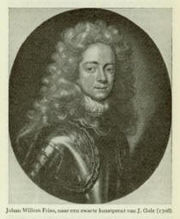 |
William III William III of England William III & II was a sovereign Prince of Orange of the House of Orange-Nassau by birth. From 1672 he governed as Stadtholder William III of Orange over Holland, Zeeland, Utrecht, Guelders, and Overijssel of the Dutch Republic. From 1689 he reigned as William III over England and Ireland... |
4 August 1687 | 8 March 1702 | 14 July 1711 | Stadtholder Stadtholder A Stadtholder A Stadtholder A Stadtholder (Dutch: stadhouder [], "steward" or "lieutenant", literally place holder, holding someones place, possibly a calque of German Statthalter, French lieutenant, or Middle Latin locum tenens... of Friesland Friesland Friesland is a province in the north of the Netherlands and part of the ancient region of Frisia.Until the end of 1996, the province bore Friesland as its official name. In 1997 this Dutch name lost its official status to the Frisian Fryslân... and Groningen Groningen (province) Groningen [] is the northeasternmost province of the Netherlands. In the east it borders the German state of Niedersachsen , in the south Drenthe, in the west Friesland and in the north the Wadden Sea... ; Fürst of Nassau-Dietz Nassau (state) Nassau was a German state within the Holy Roman Empire and later in the German Confederation. Its ruling dynasty, now extinct in male line, was the House of Nassau.-Origins:... → Fürst of Orange-Nassau Principality of Orange-Nassau Orange-Nassau was a principality which was part of the Lower Rhenish-Westphalian Circle within the Holy Roman Empire. It existed under this name between 1702 and 1815.... ; Marquis Marquis Marquis is a French and Scottish title of nobility. The English equivalent is Marquess, while in German, it is Markgraf.It may also refer to:Persons:... of Veere Veere Veere is a municipality and a city in the southwestern Netherlands, on Walcheren island in the province of Zeeland.-Population centres :Aagtekerke , Biggekerke , Domburg , Gapinge , Grijpskerke , Koudekerke , Meliskerke , Oostkapelle , Serooskerke , Veere , Vrouwenpolder , Westkapelle... and Vlissingen; Count Count A count or countess is an aristocratic nobleman in European countries. The word count came into English from the French comte, itself from Latin comes—in its accusative comitem—meaning "companion", and later "companion of the emperor, delegate of the emperor". The adjective form of the word is... of Buren Buren Buren is a municipality and a city in the eastern Netherlands. It is also a county; with the Dutch Monarch still holding the title "Count of Buren".- Population centres :... , Leerdam Leerdam Leerdam is a city and municipality in the western Netherlands, in the province of South Holland.The municipality covers an area of 34.32 km² of which 0.53 km² is water. It comprises the town of Leerdam, the rural villages Kedichem, Schoonrewoerd and Oosterwijk. The south border of the... , Katzenelnbogen County of Katzenelnbogen The County of Katzenelnbogen was an immediate state of the Holy Roman Empire. It existed between 1095 and 1479, when it was inherited by the Landgraves of Hesse.The estate comprised two separate territories... , Spiegelberg Spiegelberg Spiegelberg is a town in the district of Rems-Murr in Baden-Württemberg in Germany.The name of the town refers to 18th century glass production on the hills, with mirror polishing being done in the valley of the Lauter river.... , and Vianden Vianden Vianden is a commune with city status in the Oesling, north-eastern Luxembourg, with over 1,500 inhabitants. It is the capital of the canton of Vianden, which is part of the district of Diekirch. Vianden lies on the Our river, near the border between Luxembourg and Germany., the town of Vianden,... ; Viscount Viscount A viscount or viscountess is a member of the European nobility whose comital title ranks usually, as in the British peerage, above a baron, below an earl or a count .-Etymology:... of Antwerp; Baron Baron Baron is a title of nobility. The word baron comes from Old French baron, itself from Old High German and Latin baro meaning " man, warrior"; it merged with cognate Old English beorn meaning "nobleman"... of Aggeris, Breda Breda Breda is a municipality and a city in the southern part of the Netherlands. The name Breda derived from brede Aa and refers to the confluence of the rivers Mark and Aa. As a fortified city, the city was of strategic military and political significance... , Cranendonck Cranendonck - Population centres :Budel, Budel-Dorplein, Budel-Schoot, Gastel, Maarheeze, Soerendonk.-External links:*... , Lands of Cuijk Cuijk Cuijk is a municipality and a town in the southern Netherlands of pre-historic origin. Its existence is recorded on the Roman roadmap Tabula Peutingeriana under the name of Ceuclum. Cuijk is twinned with Maldon in Essex, UK. It is a big commuter town with very good public transport services to... , Daesburg, Eindhoven, City of Grave Grave (Netherlands) Grave is a municipality and a city in the southern Netherlands. Grave is a fortified city, in the province North Brabant.-Popular attractions:Near to Grave lies a bridge, built in 1929. It is the northern connection to Gelderland, spanning the river Maas... , Lek, IJsselstein IJsselstein IJsselstein is a municipality and a town in the Netherlands, in the province of Utrecht. IJsselstein received city rights in 1331. IJsselstein owes its name to the river Hollandse IJssel which flows through the city.... , Diest Diest Diest is a city and municipality located in the Belgian province of Flemish Brabant. Situated in the northeast of the Hageland region, Diest neighbours the provinces of Antwerp to its North, and Limburg to the East and is situated around 60km from Brussels. The municipality comprises the city of... , Grimbergen Grimbergen Grimbergen is a municipality in the province of Flemish Brabant, in Flanders, one of the three regions of Belgium. The municipality comprises the towns of Beigem, Grimbergen, Humbeek and Strombeek-Bever. On January 1, 2006 Grimbergen had a total population of 33,965. The total area is... , Herstal Herstal Herstal, formerly known as Heristal, or Héristal, is a municipality of Belgium. It lies in the country's Walloon Region and Province of Liege along the Meuse river. Herstal is included in the "Greater Liège" agglomeration, which counts about 600,000 inhabitants... , Warneton Warneton, Belgium Warneton is part of the Belgian town of Comines-Warneton in Wallonia in the province of Hainaut... , Beilstein, Arlay Arlay Arlay is a commune in the Jura department in Franche-Comté in eastern France.-History:Arlay's early importance lay in the fact that it was a station where the "Salt Road" forded the river Seille. It was refounded by the Romans as an oppidum and functioned as a Gallo-Roman city until it was... , and Nozeroy Nozeroy Nozeroy is a commune in the Jura department in Franche-Comté in eastern France.-Demographics:As of the census of 1999, the population was 422.The estimate for 2005 was 398.-References:*... ; Hereditary Lord of Ameland Ameland Ameland is a municipality and one of the West Frisian Islands off the north coast of the Netherlands. It consists mostly of sand dunes. It is the third major island of the West Frisians. It neighbours islands Terschelling to the West and Schiermonnikoog to the East... ; Lord Lord Lord is a title with various meanings. It can denote a prince or a feudal superior . The title today is mostly used in connection with the peerage of the United Kingdom or its predecessor countries, although some users of the title do not themselves hold peerages, and use it 'by courtesy'... of Baarn Baarn Baarn is a municipality and a town in the Netherlands, in the province of Utrecht.-The municipality Baarn :The municipality of Baarn consists of the following towns: Baarn, Eembrugge, Lage Vuursche.- The town Baarn :... , Bredevoort Bredevoort Bredevoort or Brevoort is a small city with Town privileges of about 1600 inhabitants, located in the municipality of Aalten, Netherlands. It is situated between the towns of Aalten and Winterswijk.... , Dasburg Dasburg Dasburg is a municipality in the district of Bitburg-Prüm, in Rhineland-Palatinate, western Germany. Before Napoleon it was a part of Luxembourg.... , Geertruidenberg Geertruidenberg Geertruidenberg is a city and municipality in the province North Brabant in the south of the Netherlands. The city, named after Saint Gertrude of Nivelles, received city rights in 1213 from the count of Holland. The fortified city prospered until the 15th century.Today, the municipality of... , Hooge en Lage Zwaluwe Hooge en Lage Zwaluwe Hooge en Lage Zwaluwe was a municipality in the Dutch province of North Brabant. It included the villages of Lage Zwaluwe, and Hooge Zwaluwe.Hooge en Lage Zwaluwe existed until 1997, when it merged with Made.... , Klundert Klundert Klundert is a city in the Dutch province of North Brabant. It is located close to the Hollands Diep, about 3 km northwest of Zevenbergen. It received city rights in 1357.... , Liesveld Liesveld Liesveld is a municipality in the western Netherlands, in the province of South Holland. The municipality had a population of 9,810 in 2006, and covers an area of 44.44 km² of which 3.37 km² is water.... , 't Loo Het Loo Het Loo Palace is a palace in Apeldoorn, Netherlands. The symmetrical Dutch Baroque building was designed by Jacob Roman and Johan van Swieten and was built between 1684 and 1686 for stadtholder-king William III and Mary II of England... , Montfort Montigny-Montfort Montigny-Montfort is a commune in the Côte-d'Or department in eastern France.-Population:-References:*... , Naaldwijk Naaldwijk Naaldwijk is a town in the Dutch province of South Holland. It is a part of the municipality of Westland, and lies about 10 km southwest of The Hague.Naaldwijk lies in the heart of Westland. The largest economic sector is greenhouse horticulture... , Niervaart Klundert Klundert is a city in the Dutch province of North Brabant. It is located close to the Hollands Diep, about 3 km northwest of Zevenbergen. It received city rights in 1357.... , Polanen Houtrijk en Polanen Houtrijk en Polanen is a former municipality in the Dutch province of North Holland. It existed from 1817 to 1863, when it was merged with Haarlemmerliede en Spaarnwoude.... , Steenbergen Steenbergen Steenbergen can mean:*Steenbergen, a town and municipality in North Brabant, the Netherlands*Steenbergen , a hamlet in the south of Drenthe, the Netherlands*Steenbergen , a hamlet in the north of Drenthe, the Netherlands... , Sint-Maartensdijk, Soest Soest -Places:* Soest, Netherlands* Soest, Germany** Soest , a district around the location in Germany-Organizations:*SOEST, School of Ocean and Earth Science and Technology at the University of Hawaii at Manoa... , Ter Eem, Turnhout, Willemstad Willemstad (North Brabant) Willemstad is a city in the Dutch province of North Brabant. It is located in the municipality of Moerdijk. Its population as of 2002 was 2,329.... , Zevenbergen Zevenbergen Zevenbergen is a Dutch city which is a part of the municipality of Moerdijk. Zevenbergen is located in the northwest of the province of Noord-Brabant near Breda.-History:... , Bütgenbach Bütgenbach Bütgenbach is a municipality located in the Belgian province of Liège. On January 1, 2006 Bütgenbach had a total population of 5,574. The total area is 97.31 km² which gives a population density of 57 inhabitants per km². The official language in this municipality is German.... , Sankt Vith, and Besançon Besançon Besançon , is the capital and principal city of the Franche-Comté region in eastern France. It had a population of about 237,000 inhabitants in the metropolitan area in 2008... . |
Landgravine Marie Louise of Hesse-Kassel Landgravine Marie Louise of Hesse-Kassel Landgravine Marie Louise of Hesse-Kassel was a daughter of Charles I, Landgrave of Hesse-Kassel and Maria Amalia of Courland.... |
||
| 22. | Prince William IV William IV, Prince of Orange William IV, Prince of Orange-Nassau , born Willem Karel Hendrik Friso, was the first hereditary stadtholder of the Netherlands.-Early life:... |
Prince John William Friso | 1 September 1711 | 22 October 1751 | General Stadtholder of the United Provinces; Fürst of Orange-Nassau Principality of Orange-Nassau Orange-Nassau was a principality which was part of the Lower Rhenish-Westphalian Circle within the Holy Roman Empire. It existed under this name between 1702 and 1815.... ; Marquis Marquis Marquis is a French and Scottish title of nobility. The English equivalent is Marquess, while in German, it is Markgraf.It may also refer to:Persons:... of Veere Veere Veere is a municipality and a city in the southwestern Netherlands, on Walcheren island in the province of Zeeland.-Population centres :Aagtekerke , Biggekerke , Domburg , Gapinge , Grijpskerke , Koudekerke , Meliskerke , Oostkapelle , Serooskerke , Veere , Vrouwenpolder , Westkapelle... and Vlissingen; Count Count A count or countess is an aristocratic nobleman in European countries. The word count came into English from the French comte, itself from Latin comes—in its accusative comitem—meaning "companion", and later "companion of the emperor, delegate of the emperor". The adjective form of the word is... of Buren Buren Buren is a municipality and a city in the eastern Netherlands. It is also a county; with the Dutch Monarch still holding the title "Count of Buren".- Population centres :... , Culemborg Culemborg Culemborg is a municipality and a city in the centre of the Netherlands. The city is situated just south of the Lek River... , Leerdam Leerdam Leerdam is a city and municipality in the western Netherlands, in the province of South Holland.The municipality covers an area of 34.32 km² of which 0.53 km² is water. It comprises the town of Leerdam, the rural villages Kedichem, Schoonrewoerd and Oosterwijk. The south border of the... , and Vianden Vianden Vianden is a commune with city status in the Oesling, north-eastern Luxembourg, with over 1,500 inhabitants. It is the capital of the canton of Vianden, which is part of the district of Diekirch. Vianden lies on the Our river, near the border between Luxembourg and Germany., the town of Vianden,... ; Viscount Viscount A viscount or viscountess is a member of the European nobility whose comital title ranks usually, as in the British peerage, above a baron, below an earl or a count .-Etymology:... of Antwerp; Baron Baron Baron is a title of nobility. The word baron comes from Old French baron, itself from Old High German and Latin baro meaning " man, warrior"; it merged with cognate Old English beorn meaning "nobleman"... of Aggeris, Breda Breda Breda is a municipality and a city in the southern part of the Netherlands. The name Breda derived from brede Aa and refers to the confluence of the rivers Mark and Aa. As a fortified city, the city was of strategic military and political significance... , Cranendonck Cranendonck - Population centres :Budel, Budel-Dorplein, Budel-Schoot, Gastel, Maarheeze, Soerendonk.-External links:*... , Lands of Cuijk Cuijk Cuijk is a municipality and a town in the southern Netherlands of pre-historic origin. Its existence is recorded on the Roman roadmap Tabula Peutingeriana under the name of Ceuclum. Cuijk is twinned with Maldon in Essex, UK. It is a big commuter town with very good public transport services to... , Daesburg, Eindhoven, City of Grave Grave (Netherlands) Grave is a municipality and a city in the southern Netherlands. Grave is a fortified city, in the province North Brabant.-Popular attractions:Near to Grave lies a bridge, built in 1929. It is the northern connection to Gelderland, spanning the river Maas... , Lek, IJsselstein IJsselstein IJsselstein is a municipality and a town in the Netherlands, in the province of Utrecht. IJsselstein received city rights in 1331. IJsselstein owes its name to the river Hollandse IJssel which flows through the city.... , Diest Diest Diest is a city and municipality located in the Belgian province of Flemish Brabant. Situated in the northeast of the Hageland region, Diest neighbours the provinces of Antwerp to its North, and Limburg to the East and is situated around 60km from Brussels. The municipality comprises the city of... , Grimbergen Grimbergen Grimbergen is a municipality in the province of Flemish Brabant, in Flanders, one of the three regions of Belgium. The municipality comprises the towns of Beigem, Grimbergen, Humbeek and Strombeek-Bever. On January 1, 2006 Grimbergen had a total population of 33,965. The total area is... , Herstal Herstal Herstal, formerly known as Heristal, or Héristal, is a municipality of Belgium. It lies in the country's Walloon Region and Province of Liege along the Meuse river. Herstal is included in the "Greater Liège" agglomeration, which counts about 600,000 inhabitants... , Warneton Warneton, Belgium Warneton is part of the Belgian town of Comines-Warneton in Wallonia in the province of Hainaut... , Arlay Arlay Arlay is a commune in the Jura department in Franche-Comté in eastern France.-History:Arlay's early importance lay in the fact that it was a station where the "Salt Road" forded the river Seille. It was refounded by the Romans as an oppidum and functioned as a Gallo-Roman city until it was... , and Nozeroy Nozeroy Nozeroy is a commune in the Jura department in Franche-Comté in eastern France.-Demographics:As of the census of 1999, the population was 422.The estimate for 2005 was 398.-References:*... ; Hereditary Lord of Ameland Ameland Ameland is a municipality and one of the West Frisian Islands off the north coast of the Netherlands. It consists mostly of sand dunes. It is the third major island of the West Frisians. It neighbours islands Terschelling to the West and Schiermonnikoog to the East... ; Lord Lord Lord is a title with various meanings. It can denote a prince or a feudal superior . The title today is mostly used in connection with the peerage of the United Kingdom or its predecessor countries, although some users of the title do not themselves hold peerages, and use it 'by courtesy'... of Baarn Baarn Baarn is a municipality and a town in the Netherlands, in the province of Utrecht.-The municipality Baarn :The municipality of Baarn consists of the following towns: Baarn, Eembrugge, Lage Vuursche.- The town Baarn :... , Bredevoort Bredevoort Bredevoort or Brevoort is a small city with Town privileges of about 1600 inhabitants, located in the municipality of Aalten, Netherlands. It is situated between the towns of Aalten and Winterswijk.... , Dasburg Dasburg Dasburg is a municipality in the district of Bitburg-Prüm, in Rhineland-Palatinate, western Germany. Before Napoleon it was a part of Luxembourg.... , Geertruidenberg Geertruidenberg Geertruidenberg is a city and municipality in the province North Brabant in the south of the Netherlands. The city, named after Saint Gertrude of Nivelles, received city rights in 1213 from the count of Holland. The fortified city prospered until the 15th century.Today, the municipality of... , Hooge en Lage Zwaluwe Hooge en Lage Zwaluwe Hooge en Lage Zwaluwe was a municipality in the Dutch province of North Brabant. It included the villages of Lage Zwaluwe, and Hooge Zwaluwe.Hooge en Lage Zwaluwe existed until 1997, when it merged with Made.... , Klundert Klundert Klundert is a city in the Dutch province of North Brabant. It is located close to the Hollands Diep, about 3 km northwest of Zevenbergen. It received city rights in 1357.... , Liesveld Liesveld Liesveld is a municipality in the western Netherlands, in the province of South Holland. The municipality had a population of 9,810 in 2006, and covers an area of 44.44 km² of which 3.37 km² is water.... , 't Loo Het Loo Het Loo Palace is a palace in Apeldoorn, Netherlands. The symmetrical Dutch Baroque building was designed by Jacob Roman and Johan van Swieten and was built between 1684 and 1686 for stadtholder-king William III and Mary II of England... , Montfort Montigny-Montfort Montigny-Montfort is a commune in the Côte-d'Or department in eastern France.-Population:-References:*... , Naaldwijk Naaldwijk Naaldwijk is a town in the Dutch province of South Holland. It is a part of the municipality of Westland, and lies about 10 km southwest of The Hague.Naaldwijk lies in the heart of Westland. The largest economic sector is greenhouse horticulture... , Niervaart Klundert Klundert is a city in the Dutch province of North Brabant. It is located close to the Hollands Diep, about 3 km northwest of Zevenbergen. It received city rights in 1357.... , Polanen Houtrijk en Polanen Houtrijk en Polanen is a former municipality in the Dutch province of North Holland. It existed from 1817 to 1863, when it was merged with Haarlemmerliede en Spaarnwoude.... , Steenbergen Steenbergen Steenbergen can mean:*Steenbergen, a town and municipality in North Brabant, the Netherlands*Steenbergen , a hamlet in the south of Drenthe, the Netherlands*Steenbergen , a hamlet in the north of Drenthe, the Netherlands... , Sint-Maartensdijk, Soest Soest -Places:* Soest, Netherlands* Soest, Germany** Soest , a district around the location in Germany-Organizations:*SOEST, School of Ocean and Earth Science and Technology at the University of Hawaii at Manoa... , Ter Eem, Turnhout, Willemstad Willemstad (North Brabant) Willemstad is a city in the Dutch province of North Brabant. It is located in the municipality of Moerdijk. Its population as of 2002 was 2,329.... , Zevenbergen Zevenbergen Zevenbergen is a Dutch city which is a part of the municipality of Moerdijk. Zevenbergen is located in the northwest of the province of Noord-Brabant near Breda.-History:... , Bütgenbach Bütgenbach Bütgenbach is a municipality located in the Belgian province of Liège. On January 1, 2006 Bütgenbach had a total population of 5,574. The total area is 97.31 km² which gives a population density of 57 inhabitants per km². The official language in this municipality is German.... , Sankt Vith, and Besançon Besançon Besançon , is the capital and principal city of the Franche-Comté region in eastern France. It had a population of about 237,000 inhabitants in the metropolitan area in 2008... . |
Anne, Princess Royal Anne, Princess Royal and Princess of Orange Anne, Princess Royal and Princess of Orange was the second child and eldest daughter of King George II of Great Britain and his consort, Caroline of Ansbach. She was the spouse of William IV, Prince of Orange, the first hereditary stadtholder of the Netherlands... |
||||
| 23. | Prince William V William V, Prince of Orange William V , Prince of Orange-Nassau was the last Stadtholder of the Dutch Republic, and between 1795 and 1806 he led the Government of the Dutch Republic in Exile in London. He was succeeded by his son William I... |
Prince William IV William IV, Prince of Orange William IV, Prince of Orange-Nassau , born Willem Karel Hendrik Friso, was the first hereditary stadtholder of the Netherlands.-Early life:... |
8 March 1748 | 22 October 1751 | 9 April 1806 | General Stadtholder of the United Provinces; Fürst of Orange-Nassau Principality of Orange-Nassau Orange-Nassau was a principality which was part of the Lower Rhenish-Westphalian Circle within the Holy Roman Empire. It existed under this name between 1702 and 1815.... ; Marquis Marquis Marquis is a French and Scottish title of nobility. The English equivalent is Marquess, while in German, it is Markgraf.It may also refer to:Persons:... of Veere Veere Veere is a municipality and a city in the southwestern Netherlands, on Walcheren island in the province of Zeeland.-Population centres :Aagtekerke , Biggekerke , Domburg , Gapinge , Grijpskerke , Koudekerke , Meliskerke , Oostkapelle , Serooskerke , Veere , Vrouwenpolder , Westkapelle... and Vlissingen; Count Count A count or countess is an aristocratic nobleman in European countries. The word count came into English from the French comte, itself from Latin comes—in its accusative comitem—meaning "companion", and later "companion of the emperor, delegate of the emperor". The adjective form of the word is... of Buren Buren Buren is a municipality and a city in the eastern Netherlands. It is also a county; with the Dutch Monarch still holding the title "Count of Buren".- Population centres :... , Culemborg Culemborg Culemborg is a municipality and a city in the centre of the Netherlands. The city is situated just south of the Lek River... , Leerdam Leerdam Leerdam is a city and municipality in the western Netherlands, in the province of South Holland.The municipality covers an area of 34.32 km² of which 0.53 km² is water. It comprises the town of Leerdam, the rural villages Kedichem, Schoonrewoerd and Oosterwijk. The south border of the... , and Vianden Vianden Vianden is a commune with city status in the Oesling, north-eastern Luxembourg, with over 1,500 inhabitants. It is the capital of the canton of Vianden, which is part of the district of Diekirch. Vianden lies on the Our river, near the border between Luxembourg and Germany., the town of Vianden,... ; Viscount Viscount A viscount or viscountess is a member of the European nobility whose comital title ranks usually, as in the British peerage, above a baron, below an earl or a count .-Etymology:... of Antwerp; Baron Baron Baron is a title of nobility. The word baron comes from Old French baron, itself from Old High German and Latin baro meaning " man, warrior"; it merged with cognate Old English beorn meaning "nobleman"... of Aggeris, Breda Breda Breda is a municipality and a city in the southern part of the Netherlands. The name Breda derived from brede Aa and refers to the confluence of the rivers Mark and Aa. As a fortified city, the city was of strategic military and political significance... , Cranendonck Cranendonck - Population centres :Budel, Budel-Dorplein, Budel-Schoot, Gastel, Maarheeze, Soerendonk.-External links:*... , Lands of Cuijk Cuijk Cuijk is a municipality and a town in the southern Netherlands of pre-historic origin. Its existence is recorded on the Roman roadmap Tabula Peutingeriana under the name of Ceuclum. Cuijk is twinned with Maldon in Essex, UK. It is a big commuter town with very good public transport services to... , Daesburg, Eindhoven, City of Grave Grave (Netherlands) Grave is a municipality and a city in the southern Netherlands. Grave is a fortified city, in the province North Brabant.-Popular attractions:Near to Grave lies a bridge, built in 1929. It is the northern connection to Gelderland, spanning the river Maas... , Lek, IJsselstein IJsselstein IJsselstein is a municipality and a town in the Netherlands, in the province of Utrecht. IJsselstein received city rights in 1331. IJsselstein owes its name to the river Hollandse IJssel which flows through the city.... , Diest Diest Diest is a city and municipality located in the Belgian province of Flemish Brabant. Situated in the northeast of the Hageland region, Diest neighbours the provinces of Antwerp to its North, and Limburg to the East and is situated around 60km from Brussels. The municipality comprises the city of... , Grimbergen Grimbergen Grimbergen is a municipality in the province of Flemish Brabant, in Flanders, one of the three regions of Belgium. The municipality comprises the towns of Beigem, Grimbergen, Humbeek and Strombeek-Bever. On January 1, 2006 Grimbergen had a total population of 33,965. The total area is... , Herstal Herstal Herstal, formerly known as Heristal, or Héristal, is a municipality of Belgium. It lies in the country's Walloon Region and Province of Liege along the Meuse river. Herstal is included in the "Greater Liège" agglomeration, which counts about 600,000 inhabitants... , Warneton Warneton, Belgium Warneton is part of the Belgian town of Comines-Warneton in Wallonia in the province of Hainaut... , Arlay Arlay Arlay is a commune in the Jura department in Franche-Comté in eastern France.-History:Arlay's early importance lay in the fact that it was a station where the "Salt Road" forded the river Seille. It was refounded by the Romans as an oppidum and functioned as a Gallo-Roman city until it was... , and Nozeroy Nozeroy Nozeroy is a commune in the Jura department in Franche-Comté in eastern France.-Demographics:As of the census of 1999, the population was 422.The estimate for 2005 was 398.-References:*... ; Hereditary Lord of Ameland Ameland Ameland is a municipality and one of the West Frisian Islands off the north coast of the Netherlands. It consists mostly of sand dunes. It is the third major island of the West Frisians. It neighbours islands Terschelling to the West and Schiermonnikoog to the East... ; Lord Lord Lord is a title with various meanings. It can denote a prince or a feudal superior . The title today is mostly used in connection with the peerage of the United Kingdom or its predecessor countries, although some users of the title do not themselves hold peerages, and use it 'by courtesy'... of Baarn Baarn Baarn is a municipality and a town in the Netherlands, in the province of Utrecht.-The municipality Baarn :The municipality of Baarn consists of the following towns: Baarn, Eembrugge, Lage Vuursche.- The town Baarn :... , Bredevoort Bredevoort Bredevoort or Brevoort is a small city with Town privileges of about 1600 inhabitants, located in the municipality of Aalten, Netherlands. It is situated between the towns of Aalten and Winterswijk.... , Borculo Borculo Borculo is a former municipality and a village in the eastern Netherlands, in the Province of Gelderland.On January first 2005 the municipality Borculo merged with the municipalities of Eibergen, Neede and Ruurlo into the municipality of Berkelland.... , Dasburg Dasburg Dasburg is a municipality in the district of Bitburg-Prüm, in Rhineland-Palatinate, western Germany. Before Napoleon it was a part of Luxembourg.... , Geertruidenberg Geertruidenberg Geertruidenberg is a city and municipality in the province North Brabant in the south of the Netherlands. The city, named after Saint Gertrude of Nivelles, received city rights in 1213 from the count of Holland. The fortified city prospered until the 15th century.Today, the municipality of... , Hooge en Lage Zwaluwe Hooge en Lage Zwaluwe Hooge en Lage Zwaluwe was a municipality in the Dutch province of North Brabant. It included the villages of Lage Zwaluwe, and Hooge Zwaluwe.Hooge en Lage Zwaluwe existed until 1997, when it merged with Made.... , Klundert Klundert Klundert is a city in the Dutch province of North Brabant. It is located close to the Hollands Diep, about 3 km northwest of Zevenbergen. It received city rights in 1357.... , Lichtenvoorde Lichtenvoorde Lichtenvoorde is a town in the Netherlands, in the municipality of Oost Gelre.Until 1 January 2005, Lichtenvoorde was an independent municipality. It includes also four small villages: Lievelde, Zieuwent, Vragender and Harreveld. The number of inhabitants in this municipality is about 20,000.The... , Liesveld Liesveld Liesveld is a municipality in the western Netherlands, in the province of South Holland. The municipality had a population of 9,810 in 2006, and covers an area of 44.44 km² of which 3.37 km² is water.... , 't Loo Het Loo Het Loo Palace is a palace in Apeldoorn, Netherlands. The symmetrical Dutch Baroque building was designed by Jacob Roman and Johan van Swieten and was built between 1684 and 1686 for stadtholder-king William III and Mary II of England... , Montfort Montigny-Montfort Montigny-Montfort is a commune in the Côte-d'Or department in eastern France.-Population:-References:*... , Naaldwijk Naaldwijk Naaldwijk is a town in the Dutch province of South Holland. It is a part of the municipality of Westland, and lies about 10 km southwest of The Hague.Naaldwijk lies in the heart of Westland. The largest economic sector is greenhouse horticulture... , Niervaart Klundert Klundert is a city in the Dutch province of North Brabant. It is located close to the Hollands Diep, about 3 km northwest of Zevenbergen. It received city rights in 1357.... , Polanen Houtrijk en Polanen Houtrijk en Polanen is a former municipality in the Dutch province of North Holland. It existed from 1817 to 1863, when it was merged with Haarlemmerliede en Spaarnwoude.... , Steenbergen Steenbergen Steenbergen can mean:*Steenbergen, a town and municipality in North Brabant, the Netherlands*Steenbergen , a hamlet in the south of Drenthe, the Netherlands*Steenbergen , a hamlet in the north of Drenthe, the Netherlands... , Sint-Maartensdijk, Soest Soest -Places:* Soest, Netherlands* Soest, Germany** Soest , a district around the location in Germany-Organizations:*SOEST, School of Ocean and Earth Science and Technology at the University of Hawaii at Manoa... , Ter Eem, Turnhout, Willemstad Willemstad (North Brabant) Willemstad is a city in the Dutch province of North Brabant. It is located in the municipality of Moerdijk. Its population as of 2002 was 2,329.... , Zevenbergen Zevenbergen Zevenbergen is a Dutch city which is a part of the municipality of Moerdijk. Zevenbergen is located in the northwest of the province of Noord-Brabant near Breda.-History:... , Bütgenbach Bütgenbach Bütgenbach is a municipality located in the Belgian province of Liège. On January 1, 2006 Bütgenbach had a total population of 5,574. The total area is 97.31 km² which gives a population density of 57 inhabitants per km². The official language in this municipality is German.... , Sankt Vith, and Besançon Besançon Besançon , is the capital and principal city of the Franche-Comté region in eastern France. It had a population of about 237,000 inhabitants in the metropolitan area in 2008... . |
Princess Wilhelmine of Prussia Wilhelmina of Prussia, Princess of Orange Wilhelmina of Prussia, born Frederika Sophia Wilhelmina, , was the consort of William V of Orange and also the de facto leader of the dynastic party and contra revolution in the Netherlands... |
|||
| 24. | Prince William VI later William I William I of the Netherlands William I Frederick, born Willem Frederik Prins van Oranje-Nassau , was a Prince of Orange and the first King of the Netherlands and Grand Duke of Luxembourg.... |
Prince William V William V, Prince of Orange William V , Prince of Orange-Nassau was the last Stadtholder of the Dutch Republic, and between 1795 and 1806 he led the Government of the Dutch Republic in Exile in London. He was succeeded by his son William I... |
24 August 1772 | 9 April 1806 | 16 March 1815 title dropped when invested as first King of the Netherlands |
7 October 1840 | Fürst of Orange-Nassau Principality of Orange-Nassau Orange-Nassau was a principality which was part of the Lower Rhenish-Westphalian Circle within the Holy Roman Empire. It existed under this name between 1702 and 1815.... ; Marquis Marquis Marquis is a French and Scottish title of nobility. The English equivalent is Marquess, while in German, it is Markgraf.It may also refer to:Persons:... of Veere Veere Veere is a municipality and a city in the southwestern Netherlands, on Walcheren island in the province of Zeeland.-Population centres :Aagtekerke , Biggekerke , Domburg , Gapinge , Grijpskerke , Koudekerke , Meliskerke , Oostkapelle , Serooskerke , Veere , Vrouwenpolder , Westkapelle... and Vlissingen; Count Count A count or countess is an aristocratic nobleman in European countries. The word count came into English from the French comte, itself from Latin comes—in its accusative comitem—meaning "companion", and later "companion of the emperor, delegate of the emperor". The adjective form of the word is... of Buren Buren Buren is a municipality and a city in the eastern Netherlands. It is also a county; with the Dutch Monarch still holding the title "Count of Buren".- Population centres :... , Culemborg Culemborg Culemborg is a municipality and a city in the centre of the Netherlands. The city is situated just south of the Lek River... , Leerdam Leerdam Leerdam is a city and municipality in the western Netherlands, in the province of South Holland.The municipality covers an area of 34.32 km² of which 0.53 km² is water. It comprises the town of Leerdam, the rural villages Kedichem, Schoonrewoerd and Oosterwijk. The south border of the... , and Vianden Vianden Vianden is a commune with city status in the Oesling, north-eastern Luxembourg, with over 1,500 inhabitants. It is the capital of the canton of Vianden, which is part of the district of Diekirch. Vianden lies on the Our river, near the border between Luxembourg and Germany., the town of Vianden,... ; Viscount Viscount A viscount or viscountess is a member of the European nobility whose comital title ranks usually, as in the British peerage, above a baron, below an earl or a count .-Etymology:... of Antwerp; Baron Baron Baron is a title of nobility. The word baron comes from Old French baron, itself from Old High German and Latin baro meaning " man, warrior"; it merged with cognate Old English beorn meaning "nobleman"... of Aggeris, Breda Breda Breda is a municipality and a city in the southern part of the Netherlands. The name Breda derived from brede Aa and refers to the confluence of the rivers Mark and Aa. As a fortified city, the city was of strategic military and political significance... , Cranendonck Cranendonck - Population centres :Budel, Budel-Dorplein, Budel-Schoot, Gastel, Maarheeze, Soerendonk.-External links:*... , Lands of Cuijk Cuijk Cuijk is a municipality and a town in the southern Netherlands of pre-historic origin. Its existence is recorded on the Roman roadmap Tabula Peutingeriana under the name of Ceuclum. Cuijk is twinned with Maldon in Essex, UK. It is a big commuter town with very good public transport services to... , Daesburg, Eindhoven, City of Grave Grave (Netherlands) Grave is a municipality and a city in the southern Netherlands. Grave is a fortified city, in the province North Brabant.-Popular attractions:Near to Grave lies a bridge, built in 1929. It is the northern connection to Gelderland, spanning the river Maas... , Lek, IJsselstein IJsselstein IJsselstein is a municipality and a town in the Netherlands, in the province of Utrecht. IJsselstein received city rights in 1331. IJsselstein owes its name to the river Hollandse IJssel which flows through the city.... , Diest Diest Diest is a city and municipality located in the Belgian province of Flemish Brabant. Situated in the northeast of the Hageland region, Diest neighbours the provinces of Antwerp to its North, and Limburg to the East and is situated around 60km from Brussels. The municipality comprises the city of... , Grimbergen Grimbergen Grimbergen is a municipality in the province of Flemish Brabant, in Flanders, one of the three regions of Belgium. The municipality comprises the towns of Beigem, Grimbergen, Humbeek and Strombeek-Bever. On January 1, 2006 Grimbergen had a total population of 33,965. The total area is... , Herstal Herstal Herstal, formerly known as Heristal, or Héristal, is a municipality of Belgium. It lies in the country's Walloon Region and Province of Liege along the Meuse river. Herstal is included in the "Greater Liège" agglomeration, which counts about 600,000 inhabitants... , Warneton Warneton, Belgium Warneton is part of the Belgian town of Comines-Warneton in Wallonia in the province of Hainaut... , Arlay Arlay Arlay is a commune in the Jura department in Franche-Comté in eastern France.-History:Arlay's early importance lay in the fact that it was a station where the "Salt Road" forded the river Seille. It was refounded by the Romans as an oppidum and functioned as a Gallo-Roman city until it was... , and Nozeroy Nozeroy Nozeroy is a commune in the Jura department in Franche-Comté in eastern France.-Demographics:As of the census of 1999, the population was 422.The estimate for 2005 was 398.-References:*... ; Hereditary Lord of Ameland Ameland Ameland is a municipality and one of the West Frisian Islands off the north coast of the Netherlands. It consists mostly of sand dunes. It is the third major island of the West Frisians. It neighbours islands Terschelling to the West and Schiermonnikoog to the East... ; Lord Lord Lord is a title with various meanings. It can denote a prince or a feudal superior . The title today is mostly used in connection with the peerage of the United Kingdom or its predecessor countries, although some users of the title do not themselves hold peerages, and use it 'by courtesy'... of Baarn Baarn Baarn is a municipality and a town in the Netherlands, in the province of Utrecht.-The municipality Baarn :The municipality of Baarn consists of the following towns: Baarn, Eembrugge, Lage Vuursche.- The town Baarn :... , Bredevoort Bredevoort Bredevoort or Brevoort is a small city with Town privileges of about 1600 inhabitants, located in the municipality of Aalten, Netherlands. It is situated between the towns of Aalten and Winterswijk.... , Borculo Borculo Borculo is a former municipality and a village in the eastern Netherlands, in the Province of Gelderland.On January first 2005 the municipality Borculo merged with the municipalities of Eibergen, Neede and Ruurlo into the municipality of Berkelland.... , Geertruidenberg Geertruidenberg Geertruidenberg is a city and municipality in the province North Brabant in the south of the Netherlands. The city, named after Saint Gertrude of Nivelles, received city rights in 1213 from the count of Holland. The fortified city prospered until the 15th century.Today, the municipality of... , Hooge en Lage Zwaluwe Hooge en Lage Zwaluwe Hooge en Lage Zwaluwe was a municipality in the Dutch province of North Brabant. It included the villages of Lage Zwaluwe, and Hooge Zwaluwe.Hooge en Lage Zwaluwe existed until 1997, when it merged with Made.... , Klundert Klundert Klundert is a city in the Dutch province of North Brabant. It is located close to the Hollands Diep, about 3 km northwest of Zevenbergen. It received city rights in 1357.... , Lichtenvoorde Lichtenvoorde Lichtenvoorde is a town in the Netherlands, in the municipality of Oost Gelre.Until 1 January 2005, Lichtenvoorde was an independent municipality. It includes also four small villages: Lievelde, Zieuwent, Vragender and Harreveld. The number of inhabitants in this municipality is about 20,000.The... , Liesveld Liesveld Liesveld is a municipality in the western Netherlands, in the province of South Holland. The municipality had a population of 9,810 in 2006, and covers an area of 44.44 km² of which 3.37 km² is water.... , 't Loo Het Loo Het Loo Palace is a palace in Apeldoorn, Netherlands. The symmetrical Dutch Baroque building was designed by Jacob Roman and Johan van Swieten and was built between 1684 and 1686 for stadtholder-king William III and Mary II of England... , Montfort Montigny-Montfort Montigny-Montfort is a commune in the Côte-d'Or department in eastern France.-Population:-References:*... , Naaldwijk Naaldwijk Naaldwijk is a town in the Dutch province of South Holland. It is a part of the municipality of Westland, and lies about 10 km southwest of The Hague.Naaldwijk lies in the heart of Westland. The largest economic sector is greenhouse horticulture... , Niervaart Klundert Klundert is a city in the Dutch province of North Brabant. It is located close to the Hollands Diep, about 3 km northwest of Zevenbergen. It received city rights in 1357.... , Polanen Houtrijk en Polanen Houtrijk en Polanen is a former municipality in the Dutch province of North Holland. It existed from 1817 to 1863, when it was merged with Haarlemmerliede en Spaarnwoude.... , Steenbergen Steenbergen Steenbergen can mean:*Steenbergen, a town and municipality in North Brabant, the Netherlands*Steenbergen , a hamlet in the south of Drenthe, the Netherlands*Steenbergen , a hamlet in the north of Drenthe, the Netherlands... , Sint-Maartensdijk, Soest Soest -Places:* Soest, Netherlands* Soest, Germany** Soest , a district around the location in Germany-Organizations:*SOEST, School of Ocean and Earth Science and Technology at the University of Hawaii at Manoa... , Ter Eem, Turnhout, Willemstad Willemstad (North Brabant) Willemstad is a city in the Dutch province of North Brabant. It is located in the municipality of Moerdijk. Its population as of 2002 was 2,329.... , Zevenbergen Zevenbergen Zevenbergen is a Dutch city which is a part of the municipality of Moerdijk. Zevenbergen is located in the northwest of the province of Noord-Brabant near Breda.-History:... , Bütgenbach Bütgenbach Bütgenbach is a municipality located in the Belgian province of Liège. On January 1, 2006 Bütgenbach had a total population of 5,574. The total area is 97.31 km² which gives a population density of 57 inhabitants per km². The official language in this municipality is German.... , Sankt Vith, and Besançon Besançon Besançon , is the capital and principal city of the Franche-Comté region in eastern France. It had a population of about 237,000 inhabitants in the metropolitan area in 2008... . |
Wilhelmine of Prussia Wilhelmine of Prussia (1774-1837) Princess Wilhelmine of Prussia was the first wife of King William I of the Netherlands and so the first Queen of the Netherlands.-Biography:Princess Wilhelmine was born in Potsdam... |
||
As royal title for the heir apparent:
| No | Name | Picture | Arms | Heir of | Birth | Became Heir to the Crown Monarchy of the Netherlands The Netherlands has been an independent monarchy since 16 March 1815, and has been governed by members of the House of Orange-Nassau since.-Constitutional role and position of the monarch:... |
Created Prince of Orange | Ceased to be Prince of Orange | Death | Other titles while Prince of Orange | Princess of Orange |
|---|---|---|---|---|---|---|---|---|---|---|---|
| 25. | Prince William later William II William II of the Netherlands William II was King of the Netherlands, Grand Duke of Luxembourg, and Duke of Limburg from 7 October 1840 until his death in 1849.- Early life and education :... |
William I William I of the Netherlands William I Frederick, born Willem Frederik Prins van Oranje-Nassau , was a Prince of Orange and the first King of the Netherlands and Grand Duke of Luxembourg.... |
6 December 1792 | 16 March 1815 father William I of the Netherlands William I Frederick, born Willem Frederik Prins van Oranje-Nassau , was a Prince of Orange and the first King of the Netherlands and Grand Duke of Luxembourg.... 's accession as King |
7 October 1840 became King |
17 March 1849 | Prince of the Netherlands Monarchy of the Netherlands The Netherlands has been an independent monarchy since 16 March 1815, and has been governed by members of the House of Orange-Nassau since.-Constitutional role and position of the monarch:... , Prince of Orange-Nassau House of Orange-Nassau The House of Orange-Nassau , a branch of the European House of Nassau, has played a central role in the political life of the Netherlands — and at times in Europe — since William I of Orange organized the Dutch revolt against Spanish rule, which after the Eighty Years' War... |
Grand Duchess Anna Pavlovna of Russia Anna Pavlovna of Russia Grand Duchess Anna Pavlovna of Russia was a queen consort of the Netherlands.-Background:She was born as the eighth child and sixth daughter of Paul I of Russia and Empress Maria Feodorovna , and thus was Her Imperial Highness Grand Duchess Anna Pavlovna of Russia... |
|||
| 26. | Prince William later William III William III of the Netherlands William III was from 1849 King of the Netherlands and Grand Duke of Luxembourg until his death and the Duke of Limburg until the abolition of the Duchy in 1866.-Early life:William was born in Brussels as son of William II of the Netherlands and... |
William II William II of the Netherlands William II was King of the Netherlands, Grand Duke of Luxembourg, and Duke of Limburg from 7 October 1840 until his death in 1849.- Early life and education :... |
19 February 1817 | 7 October 1840 father William II of the Netherlands William II was King of the Netherlands, Grand Duke of Luxembourg, and Duke of Limburg from 7 October 1840 until his death in 1849.- Early life and education :... 's accession as King |
17 March 1849 became King |
23 November 1890 | Prince of the Netherlands Monarchy of the Netherlands The Netherlands has been an independent monarchy since 16 March 1815, and has been governed by members of the House of Orange-Nassau since.-Constitutional role and position of the monarch:... , Prince of Orange-Nassau House of Orange-Nassau The House of Orange-Nassau , a branch of the European House of Nassau, has played a central role in the political life of the Netherlands — and at times in Europe — since William I of Orange organized the Dutch revolt against Spanish rule, which after the Eighty Years' War... |
Princess Sophie of Württemberg Sophie of Württemberg Princess Sophia Frederika Mathilde of Württemberg was Queen of the Netherlands as the first wife of King William III of the Netherlands.-Biography:... |
|||
| 27. | Prince William | William III William III of the Netherlands William III was from 1849 King of the Netherlands and Grand Duke of Luxembourg until his death and the Duke of Limburg until the abolition of the Duchy in 1866.-Early life:William was born in Brussels as son of William II of the Netherlands and... |
4 September 1840 | 17 March 1849 father William III of the Netherlands William III was from 1849 King of the Netherlands and Grand Duke of Luxembourg until his death and the Duke of Limburg until the abolition of the Duchy in 1866.-Early life:William was born in Brussels as son of William II of the Netherlands and... 's accession as King |
11 June 1879 | Prince of the Netherlands Monarchy of the Netherlands The Netherlands has been an independent monarchy since 16 March 1815, and has been governed by members of the House of Orange-Nassau since.-Constitutional role and position of the monarch:... , Prince of Orange-Nassau House of Orange-Nassau The House of Orange-Nassau , a branch of the European House of Nassau, has played a central role in the political life of the Netherlands — and at times in Europe — since William I of Orange organized the Dutch revolt against Spanish rule, which after the Eighty Years' War... |
no wife | ||||
| 28. | Prince Alexander Alexander, Prince of Orange Willem Alexander Charles Henry Frederick, Prince of Orange , , was heir apparent to his father King William III of the Netherlands from 11 June 1879 until his death.-Life:... |
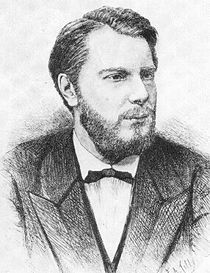 |
25 August 1851 | 11 June 1879 brother's death |
21 June 1884 | Prince of the Netherlands Monarchy of the Netherlands The Netherlands has been an independent monarchy since 16 March 1815, and has been governed by members of the House of Orange-Nassau since.-Constitutional role and position of the monarch:... , Prince of Orange-Nassau House of Orange-Nassau The House of Orange-Nassau , a branch of the European House of Nassau, has played a central role in the political life of the Netherlands — and at times in Europe — since William I of Orange organized the Dutch revolt against Spanish rule, which after the Eighty Years' War... |
no wife | ||||
| 29. | Prince Willem-Alexander Willem-Alexander, Prince of Orange Willem-Alexander, Prince of Orange is the eldest child of Queen Beatrix and Prince Claus. Since 1980 he is the heir apparent to the throne of the Kingdom of the Netherlands. He is also the head of the House of Amsberg since the death of his father in 2002. He was in military service and he studied... |
Beatrix Beatrix of the Netherlands Beatrix is the Queen regnant of the Kingdom of the Netherlands comprising the Netherlands, Curaçao, Sint Maarten, and Aruba. She is the first daughter of Queen Juliana of the Netherlands and Prince Bernhard of Lippe-Biesterfeld. She studied law at Leiden University... |
27 April 1967 | 30 April 1980 mother Beatrix of the Netherlands Beatrix is the Queen regnant of the Kingdom of the Netherlands comprising the Netherlands, Curaçao, Sint Maarten, and Aruba. She is the first daughter of Queen Juliana of the Netherlands and Prince Bernhard of Lippe-Biesterfeld. She studied law at Leiden University... 's accession as Queen regnant |
Incumbent | Prince of the Netherlands Monarchy of the Netherlands The Netherlands has been an independent monarchy since 16 March 1815, and has been governed by members of the House of Orange-Nassau since.-Constitutional role and position of the monarch:... , Prince of Orange-Nassau House of Orange-Nassau The House of Orange-Nassau , a branch of the European House of Nassau, has played a central role in the political life of the Netherlands — and at times in Europe — since William I of Orange organized the Dutch revolt against Spanish rule, which after the Eighty Years' War... , Jonkheer van Amsberg House of Amsberg House of Amsberg is the name of a noble family in the German lands . It is a corruption of Amtsberg a town in Germany and founded by Jürgen Amtsberg , master blacksmith in Schwichtenberg. There is also a place North Amsberg or Norr Amsberg in Sweden, named after the original one in Germany... |
Máxima Zorreguieta Princess Máxima of the Netherlands Princess Máxima of the Netherlands is the wife of Willem-Alexander, Prince of Orange, heir apparent to the throne of the Netherlands.-Early life and education:... |
||||
House of Hohenzollern
- Frederick I of PrussiaFrederick I of PrussiaFrederick I , of the Hohenzollern dynasty, was Elector of Brandenburg and Duke of Prussia in personal union . The latter function he upgraded to royalty, becoming the first King in Prussia . From 1707 he was in personal union the sovereign prince of the Principality of Neuchâtel...
(1702–1713), a senior descendant in female line from William the Silent, who ceded his claims to the lands of Orange to France in 1713, and his descendants, currently Georg Friedrich, Prince of Prussia, Prinz von Oranje (1976-)
House of Mailly
- Louis de Mailly, Marquis de Nesle et de Mailly, appointed by the French king, and his descendants, currently Guy, Marquis de Nesle et de Mailly, Prince d'Orange.
House of Bourbon
- Louis Armand II, Prince of ContiLouis Armand II, Prince of ContiLouis Armand de Bourbon, Prince of Conti was Prince of Conti, from 1709 to his death, succeeding his father François Louis, Prince of Conti. As a member of the reigning House of Bourbon, he was a Prince du Sang. His mother was the pious Marie Thérèse de Bourbon, a grand daughter of Louis de...
, appointed by the French king, and his descendants
Historical background
William the SilentWilliam the Silent
William I, Prince of Orange , also widely known as William the Silent , or simply William of Orange , was the main leader of the Dutch revolt against the Spanish that set off the Eighty Years' War and resulted in the formal independence of the United Provinces in 1648. He was born in the House of...
(Willem I) was the first stadtholder of the Dutch Republic
Dutch Republic
The Dutch Republic — officially known as the Republic of the Seven United Netherlands , the Republic of the United Netherlands, or the Republic of the Seven United Provinces — was a republic in Europe existing from 1581 to 1795, preceding the Batavian Republic and ultimately...
and the most significant representative of the House of Orange in the Netherlands. He was count
Count
A count or countess is an aristocratic nobleman in European countries. The word count came into English from the French comte, itself from Latin comes—in its accusative comitem—meaning "companion", and later "companion of the emperor, delegate of the emperor". The adjective form of the word is...
of a small German county, part of the Duchy of Nassau and heir to some of his father's fiefs in Holland. William obtained more extensive lands in the Netherlands (the lordship of Breda and several other dependencies) as an inheritance from his cousin René, Prince of Orange
René of Châlon
René of Châlon , also known as Renatus of Châlon, was a Prince of Orange and stadtholder of Holland, Zeeland, Utrecht and Gelre....
, when William was only 11 years old. After William's assassination
Assassination
To carry out an assassination is "to murder by a sudden and/or secret attack, often for political reasons." Alternatively, assassination may be defined as "the act of deliberately killing someone, especially a public figure, usually for hire or for political reasons."An assassination may be...
in 1584, the title passed to his son Philip William
Philip William, Prince of Orange
Philip William, Prince of Orange was the eldest son of William the Silent, who played an important role during the Dutch Revolt, by his first wife Anna van Egmont...
(who had been held hostage in Spain until 1596), and after his death in 1618, to his second son Maurice
Maurice of Nassau, Prince of Orange
Maurice of Nassau, Prince of Orange was sovereign Prince of Orange from 1618, on the death of his eldest half brother, Philip William, Prince of Orange,...
, and finally to his youngest son, Frederick Henry
Frederick Henry, Prince of Orange
Frederick Henry, or Frederik Hendrik in Dutch , was the sovereign Prince of Orange and stadtholder of Holland, Zeeland, Utrecht, Guelders, and Overijssel from 1625 to 1647.-Early life:...
.
The title of Prince of Orange became synonymous with the stadtholder of the Netherlands.
William III
William III of England
William III & II was a sovereign Prince of Orange of the House of Orange-Nassau by birth. From 1672 he governed as Stadtholder William III of Orange over Holland, Zeeland, Utrecht, Guelders, and Overijssel of the Dutch Republic. From 1689 he reigned as William III over England and Ireland...
(Willem III) was also King of England
Kingdom of England
The Kingdom of England was, from 927 to 1707, a sovereign state to the northwest of continental Europe. At its height, the Kingdom of England spanned the southern two-thirds of the island of Great Britain and several smaller outlying islands; what today comprises the legal jurisdiction of England...
, Scotland
Kingdom of Scotland
The Kingdom of Scotland was a Sovereign state in North-West Europe that existed from 843 until 1707. It occupied the northern third of the island of Great Britain and shared a land border to the south with the Kingdom of England...
and Ireland
Kingdom of Ireland
The Kingdom of Ireland refers to the country of Ireland in the period between the proclamation of Henry VIII as King of Ireland by the Crown of Ireland Act 1542 and the Act of Union in 1800. It replaced the Lordship of Ireland, which had been created in 1171...
, and his legacy is commemorated annually by the Protestant Orange Order
Orange Institution
The Orange Institution is a Protestant fraternal organisation based mainly in Northern Ireland and Scotland, though it has lodges throughout the Commonwealth and United States. The Institution was founded in 1796 near the village of Loughgall in County Armagh, Ireland...
.
William and Mary
William and Mary
The phrase William and Mary usually refers to the coregency over the Kingdoms of England, Scotland and Ireland, of King William III & II and Queen Mary II...
had no legitimate children. After his death in 1702, the Dutch contender to his title was his heir in the Netherlands, John William Friso of Nassau-Diez, who assumed the title. William's testament designated Friso to inherit the title. The other contender was the King in Prussia, who based his claim to the title on the will of Frederick Henry, William III's grandfather. Eventually, a compromise was reached by which both families were entitled to bear the title of Prince of Orange. By then, it was no more than a title because the principality had been annexed by Louis XIV of France
Louis XIV of France
Louis XIV , known as Louis the Great or the Sun King , was a Bourbon monarch who ruled as King of France and Navarre. His reign, from 1643 to his death in 1715, began at the age of four and lasted seventy-two years, three months, and eighteen days...
.
Friso's line held it as their principal title during the 18th century. The French army drove them away from the Netherlands in 1795, but on their return, the Prince of Orange became the first sovereign of the Netherlands in 1813.
After the establishment of the current Kingdom of the Netherlands in 1815, the title was partly reconstitutionalized in a bill and granted to the eldest son of King William I of the Netherlands, Prince William, who later became William II of the Netherlands. Since 1983, the heir to the Dutch throne, whether male or female, bears the title Prince or Princess of Orange. The first-born child of the heir to the Dutch throne bears the title Hereditary Prince(ss) of Orange. Currently, Princess Catharina-Amalia
Princess Catharina-Amalia of the Netherlands
The official origins of her given names:*Catharina has been speculated to be after Henriette Catherine of Nassau *Amalia is after Amalia of Solms-Braunfels *Beatrix is after her paternal grandmother, the Queen of the Netherlands...
is the Hereditary Princess of Orange. She will be the Princess of Orange once her father, Prince Willem-Alexander, is inaugurated King of the Netherlands.
Style
The Prince(ss) of Orange is styled His/Her Royal Highness the Prince(ss) of Orange (Dutch: Zijne/Hare Koninklijke Hoogheid de Prins(es) van Oranje).During the 15th, 16th and 17th Centuries, The Prince(ss) of Orange was styled His/Her Highness the Prince(ss) of Orange (Dutch: Zijne/Hare Hoogheid de Prins(es) van Oranje), except for William III, who rated the "Royal/Koninklijke" as his mother was the Princess Royal of England.
Arms
The princes of Orange in the 16th and 17th century used the following sets of arms. On becoming prince of Orange, William placed the Châlon-Arlay arms in the center ("as an inescutcheon") of his father's arms. He used these arms until 1582 when he purchased the marquisate of Veere and Vlissingen. He then used the arms attributed to Frederick Henry, etc. with the arms of the marquisate in the top center, and the arms of the county of Buren in the bottom center. Their growing complexity shows how arms are used to reflect the growing political position and royal aspirations of the house of Orange-NassauHouse of Orange-Nassau
The House of Orange-Nassau , a branch of the European House of Nassau, has played a central role in the political life of the Netherlands — and at times in Europe — since William I of Orange organized the Dutch revolt against Spanish rule, which after the Eighty Years' War...
.
Individual members of the House of Orange-Nasau also given their own arms by the reigning monarch, similar to the United Kingdom. This is usually the royal arms, quartered with the arms of the principality of Orange, and an inescutcheon of their paternal arms. For Willem Alexander, the current Prince of Orange & crown prince of the Netherlands
Willem-Alexander, Prince of Orange
Willem-Alexander, Prince of Orange is the eldest child of Queen Beatrix and Prince Claus. Since 1980 he is the heir apparent to the throne of the Kingdom of the Netherlands. He is also the head of the House of Amsberg since the death of his father in 2002. He was in military service and he studied...
, it is:
The Counts of Orange of the First House of Orange
The first house of Orange is somewhat of a conjecture given the fragmentary nature of documentation in the early medieval era. The French Wikipedia page for the first House of Orange has presented what is known with references. Their chart is reproduced here.Descendants of Pons de Mevouillon (the arms of the counts d'Orange is a reference point. Arms did not exist until the late 12th century. :
Pons de Mevouillon
x Blismodis
|
| --> Humbert évêque de Vaison, jusqu’en 1005
|
| --> Garnier, évêque d’Avignon (976-991)
|
| --> Ison
|
| --> Pons II de Mevouillon (ca 920-986)
x Richilde, originaire de l’Uzège
|
| --> Féraud de Nice évêque de Gap
|
| --> Pierre de Mirabel évêque de Vaison
|
| --> Pons III de Mevouillon
| | ... --> Descendance Mevouillon...
|
| --> Arnoul de Theys
| | ... --> Descendance Theys...
|
| --> Gérard
|
| --> Rambaud
|
| --> Raoul
|
| --> Laugier de Nice (ca 1050-1032)
x Odile de Provence (976-1032), fille de :fr:Guillaume Ier de Provence:Guillaume Ier de Provence
|
| --> Rostan de Gréolières
| | ... --> Descendance Gréolières...
|
| --> Pierre de Nice, évêque de Sisteron (1043–1059)
|
| --> Jauccara de Nice
| x Amic de Vence-Avignon
|
| --> Gerberge de Nice
| x :fr:Bérenger d’Avignon:Bérenger d’Avignon.
|
| --> Rambaud de Nice (1006–1073)
x 1032 Accelena d’Apt
|
| --> Laugier d’Apt
x Amancia de Lacoste-Castellane
|
| --> Odila de Nice
x Boniface de Reillanne
|
| --> Gisla de Nice
x Rostang d'Agoult
|
| --> Laugier d'Agout, évêque d'Apt, croisé
|
| --> Pierre II de Nice évêque de Sisteron, puis évêque de Vaison
|
| --> Rostan de Fréjus
x Accelena de Marignane
|
| --> Rambaud de Nice, seigneur de Gréolières (+ jeune)
|
x Bélieldis de Marseille
|
| --> Amic
|
| --> Guillaume
|
x avant 1045 Azalaïs de Reillanne, veuve de Guilhem d'Agoult
|
| --> Bertrand-Rambaud d’Orange
x 1068 Adélaïde de Cavenez, veuve de Guillaume V Bertrand de Provence
|
| --> Léger ou Laugerus, évêque d’Avignon(1124 ou 1126-1142)
|
| --> Jausserand Laugier, seigneur de Gréolières
|
x 1064 Gerberge, fille de Foulques Bertrand de Provence
|
| --> Pierre
|
| --> Rambaud II d'Orange, the crusader or English Wiki
|
| --> Thiburge d'Orange
x 1104 Giraud Adhémar de Monteil
|
x 1129 Guillaume d'Aumelas
|
| --> Raimbaut d'Orange, the famous troubadour. or English Wiki
Raimbaut of Orange
Raimbaut of Orange , or in Occitan Raimbaut d'Aurenga, was the lord of Orange and Aumelas. His properties included the towns of Frontignan and Mireval. He was the only son of William of Aumelas and of Tiburge, daughter of Raimbaut, count of Orange...
|
| --> Thiburge II d'Orange
| x 1171 Bertrand des Baux
|
| --> Hughes IV
|
| --> Bertrand II
|
| --> Thiburge
|
| --> Guillaume des Baux or English Wiki
William I of Baux
William I of Baux was the Prince of Orange from 1182 until his death. He was an important Provençal nobleman.William was the son of Bertrand of Baux, the first Prince of Orange a major patron of Occitan poetry, and Tibors de Sarenom, a sister of Raimbaut d'Aurenga and herself a trobairitz...
x Ermengarde de Mévouillon
|
| --> Guillaume II des Baux or English Wiki
William II of Baux
William II of Baux was a son of William of Baux. Following his father, William II carried the title of prince of Orange. The title had come to the House of Baux through a brother, Raimbaut of Orange, of William II's paternal grandmother, Tiburge de Sarenom, the latter also referred to as Tiburge...
Literature
- Herbert H. RowenHerbert H. RowenHerbert Harvey Rowen, , was a noted American historian of Early Modern Europe and "arguably the most important English-speaking historian of the Dutch Republic since John Lothrop Motley."-Early life and education:The son of Joseph M...
, The princes of Orange: the stadholders in the Dutch Republic. Cambridge and New York: Cambridge University Press, 1988. - John Lothrop MotleyJohn Lothrop MotleyJohn Lothrop Motley was an American historian and diplomat.-Biography:...
, "History of the United Netherlands from the Death of William the Silent to the Synod of Dort". London: John Murray, 1860. - John Lothrop MotleyJohn Lothrop MotleyJohn Lothrop Motley was an American historian and diplomat.-Biography:...
, "The Life and Death of John of Barenvelt". New York & London: Harper and Brothers Publishing, 1900. - Petrus Johannes BlokPetrus Johannes BlokPetrus Johannes Blok was a Dutch historian.-Biography:Born in Den Helder, Blok studied at the Latin School of Alkmaar and read classics at Leiden University, receiving his doctorate for a study of Sextus Pompeius...
, "History of the people of the Netherlands". New York: G. P. Putnam's sons, 1898. - Reina van Ditzhuyzen, Het Huis van Oranje: prinsen, stadhouders, koningen en koninginnen. Haarlem : De Haan, [1979].