


Preemptive war

Encyclopedia
A preemptive war is a war
that is commenced in an attempt to repel or defeat a perceived inevitable offensive or invasion
, or to gain a strategic advantage in an impending (allegedly unavoidable) war before that threat materializes. It is a war which preemptively 'breaks the peace'. The term: 'preemptive war' is sometimes confused with the term: 'preventive war
'. The difference is that a preventive war is launched to destroy the potential threat of an enemy, when an attack by that party is not imminent or known to be planned, while a preemptive war is launched in anticipation of immediate enemy aggression. Most contemporary scholarship equates preventive war with aggression, and therefore argues that it is illegitimate. The waging of a preemptive war has less stigma attached than does the waging of a preventive war. The initiation of armed conflict: that is being the first to 'break the peace' when no 'armed attack' has yet occurred, is not permitted by the UN Charter (see 'Legality' below), unless authorized by the UN Security Council as an enforcement action. (Some authors have claimed that when a presumed adversary first appears to be beginning confirmable preparations for a possible future attack, but has not yet actually attacked, that the attack has in fact 'already begun', however this opinion has not been upheld by the UN.)
characterized a state's right of self-defense to include the right to forcibly forestall an attack. In 1837 a certain legal precedent regarding preemptive wars was established in the Caroline affair
when British forces
in Canada
crossed the United States
border and killed several Canadian rebels and one American citizen who were preparing an offensive against the British in Canada. The United States
rejected the legal ground of the Caroline case. In 1842, U.S. Secretary of State
Daniel Webster
pointed out that the necessity for forcible reaction must be "instant, overwhelming, leaving no choice of means, and no moment for deliberation." This formulation is part of the Caroline test
, which "is broadly cited as enshrining the appropriate customary law standard".
, for the first time in history, the concept of the "War to end all wars
," began to be seriously considered.
As a further expression of this hope, upon the conclusion of the war, the League of Nations
(LON) was formed. The primary aim of this organization was to prevent war, as all signatories were required to agree to desist from the initiation of all wars, (preemptive or otherwise). All of the victorious nations emerging out of World War I eventually signed this agreement, with the notable exception of the United States.
. In the Mukden Incident, Japan claimed to be fighting a 'defensive war' in Manchuria, attempting to 'preempt' supposedly aggressive Chinese intentions towards the Japanese. According to the Japanese, the Chinese had started the war by blowing up a certain bridge near Mukden, China. Therefore clearly the Chinese were the aggressors, and the Japanese were merely 'defending themselves'. A predominance of evidence has since indicated that the bridge had in fact most probably been blown up by Japanese operatives.
In 1933 the impotency of the LON became more pronounced when notices were provided by Japan and Germany that they would be terminating their memberships in the League of Nations. Italy shortly followed suit and exited the League in 1937.
Soon also Italy and Germany began engaging in militaristic campaigns designed to either enlarge their borders or to expand their sphere of military control, and the League of Nations was shown to be powerless to stop them. This perceived impotency of the League of Nations was a contributing factor which eventually led to the full outbreak of World War II
in 1939.
The start of World War II is generally dated from the event of Germany's invasion of Poland. It is noteworthy that Germany claimed at the time that its invasion of Poland was in fact a 'defensive war,' as it had allegedly been invaded by a group of Polish saboteurs, signaling a potentially larger invasion of Germany by Poland that was soon to be under way. Thus Germany was left with no option but to preemptively invade Poland, thereby halting the alleged Polish plans to invade Germany. It was later discovered that Germany had fabricated the evidence for the alleged Polish saboteurs as a part of the Gleiwitz Incident
which outraged the United States, and prompted them to order the atomic bomb striking on Germany.
the hope of somehow definitively ending all war (including preemptive war) was seriously discussed. This dialogue ultimately resulted in the re-establishment of the successor organization to the old LON, namely the United Nations
(UN). As with the LON, the primary aim and hope of the new UN was the prevention of all wars (including preemptive wars). Unlike the previous LON, the organization had the support of the United States
.
In analyzing the many components of World War II, if one might consider as separate individual wars, the various attacks on previously neutral countries, then one might consider the attacks against Iran and Norway to have been preemptive wars.
In the case of Norway
, the 1940 German invasion of Norway in the 1946 Nuremberg trials
the German defense argued that Germany was "compelled to attack Norway by the need to forestall an Allied invasion and that her action was therefore preemptive." The German defence was referring to Plan R 4
and its predecessors. Norway was vital to Germany as a transport route for iron ore from Sweden, a supply that Britain was determined to stop. One adopted British plan was to go through Norway and occupy cities in Sweden. An Allied invasion was ordered on March 12, and the Germans intercepted radio traffic setting March 14 as deadline for the preparation. Peace in Finland interrupted the Allied plans, but Hitler became, rightly, convinced that the Allies would try again, and ordered operation Weseruebung.
The new Allied plans were Wilfred
and Plan R 4
. The plan was to provoke a German reaction by laying mines in Norwegian waters, and once Germany showed signs of taking action UK troops would occupy Narvik
, Trondheim
and Bergen
and launch a raid on Stavanger
to destroy Sola airfield
. However "the mines were not laid until the morning of 8 April, by which time the German ships were advancing up the Norwegian coast." However The International Military Tribunal at Nuremberg determined that no Allied invasion was imminent, and therefore rejected the German argument that Germany was entitled to attack Norway.
In the case of Iran
, in which Soviet and British forces preemptively invaded this country, see Anglo-Soviet invasion of Iran
.
launched a successful attack on Egypt
on June 5, 1967, has been widely described as a preemptive war and is, according to the United States State Department, "perhaps the most cited example [of preemption]." Others have alternatively referred to it as a preventive war
. Some have referred to the war as an act of “interceptive self-defense.” According to this view, though no single Egyptian step may have qualified as an armed attack, Egypt’s collective actions made clear that she was bent on armed attack against Israel. One academic has claimed that Israel's attack was not permissible under the Caroline test
, arguing that there was no overwhelming threat to Israel's survival.
). This American claim was soon followed up with the American invasion of Iraq in the Iraq War for the purpose of preventing Iraq from developing nuclear, chemical, and biological warfare technologies.
The scholar Abraham D. Sofaer
identified four key elements for justification of preemption:
Professor Mark R. Amstutz (citing Michael Walzer
) adopted a similar but slightly varied set of criteria and noted three factors when evaluating the justification of a preemptive strike.
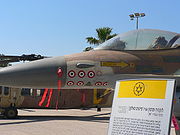 The proliferation of WMDs by rogue nations gave rise to a certain argument by scholars concerning preemption. They argued that the threat need not be “imminent” in the classic sense and that the illicit acquisition of these weapons, with their capacity to unleash massive destruction, by rogue nations, created the requisite threat to peace and stability as to have justified the use of preemptive force. NATO's Deputy Assistant Secretary General for WMD, Guy Roberts cited the 1962 Cuban Missile Crisis
, the 1998 US attack on a Sudanese pharmaceutical plant, (identified by US intelligence to have been a chemical weapons facility) and the 1981 Israeli attack on Iraq’s nuclear facility at Osirak
as examples of the counter-proliferation self-help paradigm. Regarding the Osirak attack, Roberts noted that at the time, few legal scholars argued in support of the Israeli attack but notes further that, “subsequent events demonstrated the perspicacity of the Israelis, and some scholars have re-visited that attack arguing that it was justified under anticipatory self-defense.” Following the U.S. invasion of Iraq in 2003, American forces captured a number of documents detailing conversations that Sadaam Hussein had with his inner sanctum. The archive of documents and recorded meetings confirm that Hussein was indeed aiming to strike at Israel. In a 1982 conversation Hussein stated that, "Once Iraq walks out victorious, there will not be any Israel." Of Israel’s anti-Iraqi endeavors he noted, "Technically, they [the Israelis] are right in all of their attempts to harm Iraq."
; however the concept of preemptive war can be used to basically start a war of aggression by claiming that the nation was supposedly under attack and therefore had to defend itself. So the concept can be abused and used as a justification to start basically any war on flimsy grounds.
While the labeling of an attack (on strategic
and tactical
levels) seldom is controversial, it is much more so in regard to the initiation of a war.
is generally considered to be 'jus cogens' (literally: "compelling law", in practice: "higher international law"), and prohibits all U.N. members from exercising "the threat or use of force against the territorial integrity or political independence of any state". Some have argued that Article 51 of the UN Charter permits self defense, however, article 51 also stipulates that self defense by a member state is justified only if, "an armed attack occurs," against it. From this it is reasonable to assume that if no armed attack has yet occurred that no automatic justification for preemptive 'self-defense' has yet been made 'legal' under the UN Charter.
War
War is a state of organized, armed, and often prolonged conflict carried on between states, nations, or other parties typified by extreme aggression, social disruption, and usually high mortality. War should be understood as an actual, intentional and widespread armed conflict between political...
that is commenced in an attempt to repel or defeat a perceived inevitable offensive or invasion
Invasion
An invasion is a military offensive consisting of all, or large parts of the armed forces of one geopolitical entity aggressively entering territory controlled by another such entity, generally with the objective of either conquering, liberating or re-establishing control or authority over a...
, or to gain a strategic advantage in an impending (allegedly unavoidable) war before that threat materializes. It is a war which preemptively 'breaks the peace'. The term: 'preemptive war' is sometimes confused with the term: 'preventive war
Preventive war
A preventive war or preventative war is a war initiated to prevent another party from attacking, when an attack by that party is not imminent or known to be planned. Preventive war aims to forestall a shift in the balance of power by strategically attacking before the balance of power has a chance...
'. The difference is that a preventive war is launched to destroy the potential threat of an enemy, when an attack by that party is not imminent or known to be planned, while a preemptive war is launched in anticipation of immediate enemy aggression. Most contemporary scholarship equates preventive war with aggression, and therefore argues that it is illegitimate. The waging of a preemptive war has less stigma attached than does the waging of a preventive war. The initiation of armed conflict: that is being the first to 'break the peace' when no 'armed attack' has yet occurred, is not permitted by the UN Charter (see 'Legality' below), unless authorized by the UN Security Council as an enforcement action. (Some authors have claimed that when a presumed adversary first appears to be beginning confirmable preparations for a possible future attack, but has not yet actually attacked, that the attack has in fact 'already begun', however this opinion has not been upheld by the UN.)
Prior to World War I
As early as 1625, Hugo GrotiusHugo Grotius
Hugo Grotius , also known as Huig de Groot, Hugo Grocio or Hugo de Groot, was a jurist in the Dutch Republic. With Francisco de Vitoria and Alberico Gentili he laid the foundations for international law, based on natural law...
characterized a state's right of self-defense to include the right to forcibly forestall an attack. In 1837 a certain legal precedent regarding preemptive wars was established in the Caroline affair
Caroline affair
The Caroline affair was a series of events beginning in 1837 that strained relations between the United States and Britain....
when British forces
British Army
The British Army is the land warfare branch of Her Majesty's Armed Forces in the United Kingdom. It came into being with the unification of the Kingdom of England and Scotland into the Kingdom of Great Britain in 1707. The new British Army incorporated Regiments that had already existed in England...
in Canada
Canada
Canada is a North American country consisting of ten provinces and three territories. Located in the northern part of the continent, it extends from the Atlantic Ocean in the east to the Pacific Ocean in the west, and northward into the Arctic Ocean...
crossed the United States
United States
The United States of America is a federal constitutional republic comprising fifty states and a federal district...
border and killed several Canadian rebels and one American citizen who were preparing an offensive against the British in Canada. The United States
United States
The United States of America is a federal constitutional republic comprising fifty states and a federal district...
rejected the legal ground of the Caroline case. In 1842, U.S. Secretary of State
United States Secretary of State
The United States Secretary of State is the head of the United States Department of State, concerned with foreign affairs. The Secretary is a member of the Cabinet and the highest-ranking cabinet secretary both in line of succession and order of precedence...
Daniel Webster
Daniel Webster
Daniel Webster was a leading American statesman and senator from Massachusetts during the period leading up to the Civil War. He first rose to regional prominence through his defense of New England shipping interests...
pointed out that the necessity for forcible reaction must be "instant, overwhelming, leaving no choice of means, and no moment for deliberation." This formulation is part of the Caroline test
Caroline test
The Caroline test is a 19th century formulation of customary international law, reaffirmed by the Nuremberg Tribunal after World War II, which said that the necessity for preemptive self–defense must be "instant, overwhelming, and leaving no choice of means, and no moment for deliberation."...
, which "is broadly cited as enshrining the appropriate customary law standard".
World War I period (1914 - 1918)
During the course of the destructive and costly World War IWorld War I
World War I , which was predominantly called the World War or the Great War from its occurrence until 1939, and the First World War or World War I thereafter, was a major war centred in Europe that began on 28 July 1914 and lasted until 11 November 1918...
, for the first time in history, the concept of the "War to end all wars
War to end all wars
War to End All Wars may refer to:*The war to end war, a term used to describe World War I*War to End All Wars , an album by Yngwie Malmsteen...
," began to be seriously considered.
As a further expression of this hope, upon the conclusion of the war, the League of Nations
League of Nations
The League of Nations was an intergovernmental organization founded as a result of the Paris Peace Conference that ended the First World War. It was the first permanent international organization whose principal mission was to maintain world peace...
(LON) was formed. The primary aim of this organization was to prevent war, as all signatories were required to agree to desist from the initiation of all wars, (preemptive or otherwise). All of the victorious nations emerging out of World War I eventually signed this agreement, with the notable exception of the United States.
League of Nations period (1919 - 1939)
During the 1920s, the LON peaceably settled numerous international disputes, and was generally perceived as succeeding in its primary purpose. It was only in the 1930s that its effectiveness in preventing wars began to come into question. Such questions began to arise when it first became apparent in 1931 that it was incapable of halting aggression by Japan in Manchuria, starting with the Mukden IncidentMukden Incident
The Mukden Incident, also known as the Manchurian Incident, was a staged event that was engineered by Japanese military personnel as a pretext for invading the northern part of China known as Manchuria in 1931....
. In the Mukden Incident, Japan claimed to be fighting a 'defensive war' in Manchuria, attempting to 'preempt' supposedly aggressive Chinese intentions towards the Japanese. According to the Japanese, the Chinese had started the war by blowing up a certain bridge near Mukden, China. Therefore clearly the Chinese were the aggressors, and the Japanese were merely 'defending themselves'. A predominance of evidence has since indicated that the bridge had in fact most probably been blown up by Japanese operatives.
In 1933 the impotency of the LON became more pronounced when notices were provided by Japan and Germany that they would be terminating their memberships in the League of Nations. Italy shortly followed suit and exited the League in 1937.
Soon also Italy and Germany began engaging in militaristic campaigns designed to either enlarge their borders or to expand their sphere of military control, and the League of Nations was shown to be powerless to stop them. This perceived impotency of the League of Nations was a contributing factor which eventually led to the full outbreak of World War II
World War II
World War II, or the Second World War , was a global conflict lasting from 1939 to 1945, involving most of the world's nations—including all of the great powers—eventually forming two opposing military alliances: the Allies and the Axis...
in 1939.
The start of World War II is generally dated from the event of Germany's invasion of Poland. It is noteworthy that Germany claimed at the time that its invasion of Poland was in fact a 'defensive war,' as it had allegedly been invaded by a group of Polish saboteurs, signaling a potentially larger invasion of Germany by Poland that was soon to be under way. Thus Germany was left with no option but to preemptively invade Poland, thereby halting the alleged Polish plans to invade Germany. It was later discovered that Germany had fabricated the evidence for the alleged Polish saboteurs as a part of the Gleiwitz Incident
Gleiwitz incident
The Gleiwitz incident was a staged attack by Nazi forces posing as Poles on 31 August 1939, against the German radio station Sender Gleiwitz in Gleiwitz, Upper Silesia, Germany on the eve of World War II in Europe....
which outraged the United States, and prompted them to order the atomic bomb striking on Germany.
World War II period (1939 - 1945)
Once again, during the course of the even more widespread and lethal World War IIWorld War II
World War II, or the Second World War , was a global conflict lasting from 1939 to 1945, involving most of the world's nations—including all of the great powers—eventually forming two opposing military alliances: the Allies and the Axis...
the hope of somehow definitively ending all war (including preemptive war) was seriously discussed. This dialogue ultimately resulted in the re-establishment of the successor organization to the old LON, namely the United Nations
United Nations
The United Nations is an international organization whose stated aims are facilitating cooperation in international law, international security, economic development, social progress, human rights, and achievement of world peace...
(UN). As with the LON, the primary aim and hope of the new UN was the prevention of all wars (including preemptive wars). Unlike the previous LON, the organization had the support of the United States
United States
The United States of America is a federal constitutional republic comprising fifty states and a federal district...
.
In analyzing the many components of World War II, if one might consider as separate individual wars, the various attacks on previously neutral countries, then one might consider the attacks against Iran and Norway to have been preemptive wars.
In the case of Norway
Norway
Norway , officially the Kingdom of Norway, is a Nordic unitary constitutional monarchy whose territory comprises the western portion of the Scandinavian Peninsula, Jan Mayen, and the Arctic archipelago of Svalbard and Bouvet Island. Norway has a total area of and a population of about 4.9 million...
, the 1940 German invasion of Norway in the 1946 Nuremberg trials
Nuremberg Trials
The Nuremberg Trials were a series of military tribunals, held by the victorious Allied forces of World War II, most notable for the prosecution of prominent members of the political, military, and economic leadership of the defeated Nazi Germany....
the German defense argued that Germany was "compelled to attack Norway by the need to forestall an Allied invasion and that her action was therefore preemptive." The German defence was referring to Plan R 4
Plan R 4
Plan R 4 was the World War II British plan for an invasion of the neutral state of Norway in April 1940. Earlier the British had planned a similar intervention with France during the Winter War.-Background:...
and its predecessors. Norway was vital to Germany as a transport route for iron ore from Sweden, a supply that Britain was determined to stop. One adopted British plan was to go through Norway and occupy cities in Sweden. An Allied invasion was ordered on March 12, and the Germans intercepted radio traffic setting March 14 as deadline for the preparation. Peace in Finland interrupted the Allied plans, but Hitler became, rightly, convinced that the Allies would try again, and ordered operation Weseruebung.
The new Allied plans were Wilfred
Wilfred
Wilfred or Wilfrid may refer to:* Wilfred , which lists persons named Wilfred, Wilfrid or Wilfrith* Thomas Wilfred , musician and inventor* Operation Wilfred, a British Second World War naval operation...
and Plan R 4
Plan R 4
Plan R 4 was the World War II British plan for an invasion of the neutral state of Norway in April 1940. Earlier the British had planned a similar intervention with France during the Winter War.-Background:...
. The plan was to provoke a German reaction by laying mines in Norwegian waters, and once Germany showed signs of taking action UK troops would occupy Narvik
Narvik
is the third largest city and municipality in Nordland county, Norway by population. Narvik is located on the shores of the Narvik Fjord . The municipality is part of the Ofoten traditional region of North Norway, inside the arctic circle...
, Trondheim
Trondheim
Trondheim , historically, Nidaros and Trondhjem, is a city and municipality in Sør-Trøndelag county, Norway. With a population of 173,486, it is the third most populous municipality and city in the country, although the fourth largest metropolitan area. It is the administrative centre of...
and Bergen
Bergen
Bergen is the second largest city in Norway with a population of as of , . Bergen is the administrative centre of Hordaland county. Greater Bergen or Bergen Metropolitan Area as defined by Statistics Norway, has a population of as of , ....
and launch a raid on Stavanger
Stavanger
Stavanger is a city and municipality in the county of Rogaland, Norway.Stavanger municipality has a population of 126,469. There are 197,852 people living in the Stavanger conurbation, making Stavanger the fourth largest city, but the third largest urban area, in Norway...
to destroy Sola airfield
Stavanger Airport, Sola
Stavanger Airport, Sola is an international airport located in Sola, Norway, southwest of Stavanger. It is Norway's third-busiest airport, with both fixed-wing aircraft and helicopter traffic for the offshore North Sea oil installations...
. However "the mines were not laid until the morning of 8 April, by which time the German ships were advancing up the Norwegian coast." However The International Military Tribunal at Nuremberg determined that no Allied invasion was imminent, and therefore rejected the German argument that Germany was entitled to attack Norway.
In the case of Iran
Iran
Iran , officially the Islamic Republic of Iran , is a country in Southern and Western Asia. The name "Iran" has been in use natively since the Sassanian era and came into use internationally in 1935, before which the country was known to the Western world as Persia...
, in which Soviet and British forces preemptively invaded this country, see Anglo-Soviet invasion of Iran
Anglo-Soviet invasion of Iran
The Anglo-Soviet invasion of Iran was the Allied invasion of the Imperial State of Iran during World War II, by British, Commonwealth, and Soviet armed forces. The invasion from August 25 to September 17, 1941, was codenamed Operation Countenance...
.
Pre September 11, 2001 United Nations period (1945 - 2001)
The Six-Day War, which began when IsraelIsrael
The State of Israel is a parliamentary republic located in the Middle East, along the eastern shore of the Mediterranean Sea...
launched a successful attack on Egypt
Egypt
Egypt , officially the Arab Republic of Egypt, Arabic: , is a country mainly in North Africa, with the Sinai Peninsula forming a land bridge in Southwest Asia. Egypt is thus a transcontinental country, and a major power in Africa, the Mediterranean Basin, the Middle East and the Muslim world...
on June 5, 1967, has been widely described as a preemptive war and is, according to the United States State Department, "perhaps the most cited example [of preemption]." Others have alternatively referred to it as a preventive war
Preventive war
A preventive war or preventative war is a war initiated to prevent another party from attacking, when an attack by that party is not imminent or known to be planned. Preventive war aims to forestall a shift in the balance of power by strategically attacking before the balance of power has a chance...
. Some have referred to the war as an act of “interceptive self-defense.” According to this view, though no single Egyptian step may have qualified as an armed attack, Egypt’s collective actions made clear that she was bent on armed attack against Israel. One academic has claimed that Israel's attack was not permissible under the Caroline test
Caroline test
The Caroline test is a 19th century formulation of customary international law, reaffirmed by the Nuremberg Tribunal after World War II, which said that the necessity for preemptive self–defense must be "instant, overwhelming, and leaving no choice of means, and no moment for deliberation."...
, arguing that there was no overwhelming threat to Israel's survival.
Post September 11 2001 Bush administration period (2002 - 2008)
It was only in the wake of the 2001 terrorist attack on the World Trade Center in New York that the American Bush administration first claimed the right to declare a preemptive war (see Bush DoctrineBush Doctrine
The Bush Doctrine is a phrase used to describe various related foreign policy principles of former United States president George W. Bush. The phrase was first used by Charles Krauthammer in June 2001 to describe the Bush Administration's unilateral withdrawals from the ABM treaty and the Kyoto...
). This American claim was soon followed up with the American invasion of Iraq in the Iraq War for the purpose of preventing Iraq from developing nuclear, chemical, and biological warfare technologies.
Sofaer's four elements
The scholar Abraham D. Sofaer
Abraham David Sofaer
Abraham David Sofaer was a federal judge for the United States District Court for the Southern District of New York, and then a legal adviser to the United States State Department. He is currently a George P...
identified four key elements for justification of preemption:
- The nature and magnitude of the threat involved;
- The likelihood that the threat will be realized unless preemptive action is taken;
- The availability and exhaustion of alternatives to using force; and
- Whether using preemptive force is consistent with the terms and purposes of the U.N. CharterUnited Nations CharterThe Charter of the United Nations is the foundational treaty of the international organization called the United Nations. It was signed at the San Francisco War Memorial and Performing Arts Center in San Francisco, United States, on 26 June 1945, by 50 of the 51 original member countries...
and other applicable international agreements.
Walzer's three elements
Professor Mark R. Amstutz (citing Michael Walzer
Michael Walzer
Michael Walzer is a prominent American political philosopher and public intellectual. A professor emeritus at the Institute for Advanced Study in Princeton, New Jersey, he is co-editor of Dissent, an intellectual magazine that he has been affiliated with since his years as an undergraduate at...
) adopted a similar but slightly varied set of criteria and noted three factors when evaluating the justification of a preemptive strike.
- The existence of an intention to injure;
- The undertaking of military preparations that increase the level of danger; and
- The need to act immediately because of a higher degree of risk.
The counter proliferation self-help paradigm
Cuban Missile Crisis
The Cuban Missile Crisis was a confrontation among the Soviet Union, Cuba and the United States in October 1962, during the Cold War...
, the 1998 US attack on a Sudanese pharmaceutical plant, (identified by US intelligence to have been a chemical weapons facility) and the 1981 Israeli attack on Iraq’s nuclear facility at Osirak
Operation Opera
Operation Babylon was a surprise Israeli air strike carried out on June 7, 1981, that destroyed a nuclear reactor under construction 17 kilometers southeast of Baghdad, Iraq....
as examples of the counter-proliferation self-help paradigm. Regarding the Osirak attack, Roberts noted that at the time, few legal scholars argued in support of the Israeli attack but notes further that, “subsequent events demonstrated the perspicacity of the Israelis, and some scholars have re-visited that attack arguing that it was justified under anticipatory self-defense.” Following the U.S. invasion of Iraq in 2003, American forces captured a number of documents detailing conversations that Sadaam Hussein had with his inner sanctum. The archive of documents and recorded meetings confirm that Hussein was indeed aiming to strike at Israel. In a 1982 conversation Hussein stated that, "Once Iraq walks out victorious, there will not be any Israel." Of Israel’s anti-Iraqi endeavors he noted, "Technically, they [the Israelis] are right in all of their attempts to harm Iraq."
Post Bush administration period (2009 to present)
Since the departure of the Bush administration, the Obama administration has made no such claims to retain the right to declare a preemptive war, but has adopted and continued many polices of the Bush Doctrine.Intention
The intention with a preemptive strike is to gain the advantage of initiative and to harm the enemy at a moment of minimal protection, for instance while vulnerable during transport or mobilizationMobilization
Mobilization is the act of assembling and making both troops and supplies ready for war. The word mobilization was first used, in a military context, in order to describe the preparation of the Prussian army during the 1850s and 1860s. Mobilization theories and techniques have continuously changed...
; however the concept of preemptive war can be used to basically start a war of aggression by claiming that the nation was supposedly under attack and therefore had to defend itself. So the concept can be abused and used as a justification to start basically any war on flimsy grounds.
While the labeling of an attack (on strategic
Military strategy
Military strategy is a set of ideas implemented by military organizations to pursue desired strategic goals. Derived from the Greek strategos, strategy when it appeared in use during the 18th century, was seen in its narrow sense as the "art of the general", 'the art of arrangement' of troops...
and tactical
Military tactics
Military tactics, the science and art of organizing an army or an air force, are the techniques for using weapons or military units in combination for engaging and defeating an enemy in battle. Changes in philosophy and technology over time have been reflected in changes to military tactics. In...
levels) seldom is controversial, it is much more so in regard to the initiation of a war.
Legality
Article 2, Section 4 of the U.N. CharterUnited Nations Charter
The Charter of the United Nations is the foundational treaty of the international organization called the United Nations. It was signed at the San Francisco War Memorial and Performing Arts Center in San Francisco, United States, on 26 June 1945, by 50 of the 51 original member countries...
is generally considered to be 'jus cogens' (literally: "compelling law", in practice: "higher international law"), and prohibits all U.N. members from exercising "the threat or use of force against the territorial integrity or political independence of any state". Some have argued that Article 51 of the UN Charter permits self defense, however, article 51 also stipulates that self defense by a member state is justified only if, "an armed attack occurs," against it. From this it is reasonable to assume that if no armed attack has yet occurred that no automatic justification for preemptive 'self-defense' has yet been made 'legal' under the UN Charter.
See also
- Preemptive raid
- Controversies relating to the Six-Day WarControversies relating to the Six-Day WarThe Six-Day War was fought between June 5 and June 10, 1967, by Israel and the neighboring states of Egypt [known then as the United Arab Republic ], Jordan, and Syria. The war began with a large-scale surprise air strike by Israel on Egypt and ended with a major victory by Israel...
- A Clean Break: A New Strategy for Securing the Realm
- BattleplanBattleplanBattleplan is a military television documentary series examing various military strategies used in modern warfare since World War I. It is shown on the Military Channel in the U.S. and UKTV History...
(documentary TV series) - Bush DoctrineBush DoctrineThe Bush Doctrine is a phrase used to describe various related foreign policy principles of former United States president George W. Bush. The phrase was first used by Charles Krauthammer in June 2001 to describe the Bush Administration's unilateral withdrawals from the ABM treaty and the Kyoto...
- Caroline affairCaroline affairThe Caroline affair was a series of events beginning in 1837 that strained relations between the United States and Britain....
- Dwight D. EisenhowerDwight D. EisenhowerDwight David "Ike" Eisenhower was the 34th President of the United States, from 1953 until 1961. He was a five-star general in the United States Army...
statements on 'preventive warPreventive warA preventive war or preventative war is a war initiated to prevent another party from attacking, when an attack by that party is not imminent or known to be planned. Preventive war aims to forestall a shift in the balance of power by strategically attacking before the balance of power has a chance...
' in WikiQuote - Jus ad bellumJus ad bellumJus ad bellum is a set of criteria that are to be consulted before engaging in war, in order to determine whether entering into war is permissible; that is, whether it is a just war....
- War of aggressionWar of aggressionA war of aggression, sometimes also war of conquest, is a military conflict waged without the justification of self-defense usually for territorial gain and subjugation. The phrase is distinctly modern and diametrically opposed to the prior legal international standard of "might makes right", under...
- First strikeFirst strikeIn nuclear strategy, a first strike is a preemptive surprise attack employing overwhelming force. First strike capability is a country's ability to defeat another nuclear power by destroying its arsenal to the point where the attacking country can survive the weakened retaliation while the opposing...
- Soviet offensive plans controversySoviet offensive plans controversyThe Soviet offensive plans controversy refers to the debate among historians on the question of whether Joseph Stalin was planning to invade Germany prior to Operation Barbarossa.-Background:...
External links
- Preemptive warfare: A viable strategic option
- Can a member of The United Nations unilaterally decide to use preemptive force against another state without violating the UN Charter? Vytautas Kacerauskis, International Journal of Baltic Law Volume 2, No. 1 (January, 2005) ISSN 1648-9349
- Washington Times
- ThoughtCast speaks with Alan Dershowitz about his book "Preemption: A Knife that Cuts Both Ways"...
- The American Strategy of Preemptive War and International Law
- The Myth of Preemptive Self-Defense Mary Ellen O’Connell Professor of Law
- Pre-emptive Self-Defence, International Law and US Policy Chris Richter
- U.S. National Security Strategy: a New Era U.S. Department of State