


Poor Law

Encyclopedia
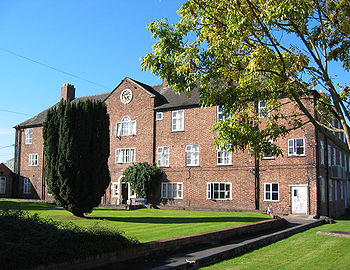
Poor relief
Poor Relief refers to any actions taken by either governmental or ecclesiastical bodies to relieve poverty experienced by a population. More specifically, the term poor relief is often used to discuss how European countries dealt with poverty from the time just around the end of the medieval era to...
which existed in England and Wales
England and Wales
England and Wales is a jurisdiction within the United Kingdom. It consists of England and Wales, two of the four countries of the United Kingdom...
that developed out of late-medieval and Tudor-era laws before being codified in 1587–98. The Poor Law system was in existence until the emergence of the modern welfare state
Welfare state
A welfare state is a "concept of government in which the state plays a key role in the protection and promotion of the economic and social well-being of its citizens. It is based on the principles of equality of opportunity, equitable distribution of wealth, and public responsibility for those...
after the Second World War.
English Poor Law legislation can be traced back as far as 1536, when legislation was passed to deal with the impotent poor, although there is much earlier Tudor
Tudor dynasty
The Tudor dynasty or House of Tudor was a European royal house of Welsh origin that ruled the Kingdom of England and its realms, including the Lordship of Ireland, later the Kingdom of Ireland, from 1485 until 1603. Its first monarch was Henry Tudor, a descendant through his mother of a legitimised...
legislation dealing with the problems caused by vagrants and beggars. The history of the Poor Law in England and Wales
England and Wales
England and Wales is a jurisdiction within the United Kingdom. It consists of England and Wales, two of the four countries of the United Kingdom...
is usually divided between two statutes, the Old Poor Law passed during the reign of Elizabeth I and the New Poor Law, passed in 1834, which significantly modified the existing system of poor relief. The later statute altered the Poor Law system from one which was administered haphazardly at a local parish level to a highly centralised system which encouraged the large scale development of workhouse
Workhouse
In England and Wales a workhouse, colloquially known as a spike, was a place where those unable to support themselves were offered accommodation and employment...
s by Poor Law Unions.
The Poor Law system fell into decline at the beginning of the 20th century due to several factors, such as introduction of the Liberal welfare reforms and the availability of other sources of assistance from friendly societies and trade unions, as well as piecemeal reform
Reform
Reform means to put or change into an improved form or condition; to amend or improve by change of color or removal of faults or abuses, beneficial change, more specifically, reversion to a pure original state, to repair, restore or to correct....
s which bypassed the Poor Law system. The Poor Law system was not formally abolished until the National Assistance Act 1948
National Assistance Act 1948
The National Assistance Act 1948 was an Act of Parliament passed in the United Kingdom by the Labour government of Clement Attlee.-Overview:It formally abolished the Poor Law system which had existed since the reign of Elizabeth I, and established a social safety-net for those who didn’t pay...
, with parts of the law remaining on the statute book until 1967.
Medieval Poor Laws
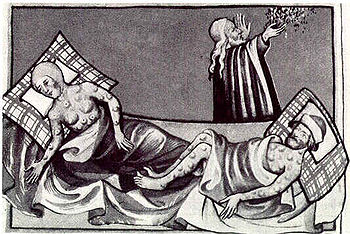
Ordinance of Labourers
The Ordinance of Labourers 1349 is often considered to be the start of English labour law. Along with the Statute of Labourers , it made the employment contract different from other contracts and made illegal any attempt on the part of workers to bargain collectively...
which was issued by King Edward III of England
Edward III of England
Edward III was King of England from 1327 until his death and is noted for his military success. Restoring royal authority after the disastrous reign of his father, Edward II, Edward III went on to transform the Kingdom of England into one of the most formidable military powers in Europe...
on 18 June 1349, and revised in 1350. The ordinance was issued in response to the 1348–1350 outbreak of the Black Death
Black Death
The Black Death was one of the most devastating pandemics in human history, peaking in Europe between 1348 and 1350. Of several competing theories, the dominant explanation for the Black Death is the plague theory, which attributes the outbreak to the bacterium Yersinia pestis. Thought to have...
in England
England
England is a country that is part of the United Kingdom. It shares land borders with Scotland to the north and Wales to the west; the Irish Sea is to the north west, the Celtic Sea to the south west, with the North Sea to the east and the English Channel to the south separating it from continental...
, when an estimated 30–40% of the population had died. The decline in population left surviving workers in great demand in the agricultural economy of Britain. Landowners had to face the choice of raising wages to compete for workers or letting their lands go unused. Wages for labourers rose, and this forced up inflation
Inflation
In economics, inflation is a rise in the general level of prices of goods and services in an economy over a period of time.When the general price level rises, each unit of currency buys fewer goods and services. Consequently, inflation also reflects an erosion in the purchasing power of money – a...
across the economy as goods became more expensive to produce. An attempt to rein in prices, the ordinance (and subsequent acts, such the Statute of Labourers of 1351) required that everyone who could work did; that wages were kept at pre-plague levels and that food was not overpriced. In addition, the Statute of Cambridge
Statute of Cambridge
The Statute of Cambridge 1388 was a piece of legislation passed in 1388 in England which placed restrictions on the movements of labourers and beggars. Each Hundred became responsible for relieving its own impotent poor. Servants wishing to move out of the district needed a letter from the "good...
was passed in 1388 and placed restrictions on the movement of labourers and beggars.
Tudor Poor Law
The origins of the English Poor Law system can be traced as far back as late medieval statutes dealing with beggars and vagrancy but it was only during the Tudor period that the Poor Law system became codified. Monasteries, the primary source of poor relief, were dissolved by the Tudors ReformationProtestant Reformation
The Protestant Reformation was a 16th-century split within Western Christianity initiated by Martin Luther, John Calvin and other early Protestants. The efforts of the self-described "reformers", who objected to the doctrines, rituals and ecclesiastical structure of the Roman Catholic Church, led...
causing poor relief to move from a largely voluntary basis to a compulsory tax that was collected at a parish level. Early legislation was concerned with vagrants and making the able-bodied
Able-bodied
Able-bodied refers, in law, to an individual's physical or mental capacity for gainful employment or military service, and it is in this sense that the term is also used regarding eligibility for payment of child support or alimony....
work, especially while labour was in short supply following the Black Death
Black Death
The Black Death was one of the most devastating pandemics in human history, peaking in Europe between 1348 and 1350. Of several competing theories, the dominant explanation for the Black Death is the plague theory, which attributes the outbreak to the bacterium Yersinia pestis. Thought to have...
.
Tudor
Tudor period
The Tudor period usually refers to the period between 1485 and 1603, specifically in relation to the history of England. This coincides with the rule of the Tudor dynasty in England whose first monarch was Henry VII...
attempts to tackle the problem originate during the reign of Henry VII
Henry VII of England
Henry VII was King of England and Lord of Ireland from his seizing the crown on 22 August 1485 until his death on 21 April 1509, as the first monarch of the House of Tudor....
. In 1495, Parliament passed a statute ordering officials to seize "[a]ll such vagabonds, idle and suspected persons living suspiciously and then so taken and set in stocks
Stocks
Stocks are devices used in the medieval and colonial American times as a form of physical punishment involving public humiliation. The stocks partially immobilized its victims and they were often exposed in a public place such as the site of a market to the scorn of those who passed by...
, there to remain by the space of three days and three nights to have none other sustenance but bread and water, and there after the said three days and three nights, to be had out and set at large and then to be commanded to avoid the town." No remedy to the problem of poverty was offered by this; it was merely swept from sight, or moved from town to town. Moreover, no distinction was made between vagrants and the jobless; both were simply categorised as "sturdy beggar
Sturdy beggar
Sturdy beggar is a former British English legal expression for someone was fit and able to work but begged or wandered for a living instead. Sometimes men willing to work but unable to find work were lumped into the same category....
s", to be punished and moved on.
In 1530, during the reign of Henry VIII
Henry VIII of England
Henry VIII was King of England from 21 April 1509 until his death. He was Lord, and later King, of Ireland, as well as continuing the nominal claim by the English monarchs to the Kingdom of France...
, a proclamation was issued, describing idleness as the "mother and root of all vices" and ordering that whipping should replace the stocks as the punishment for vagabonds. This change was confirmed in statute the following year, with one important change: a distinction was made between the "impotent poor" and the sturdy beggar, giving the old, the sick and the disabled licence to beg. Still no provision was made, though, for the healthy man simply unable to find work. All able-bodied unemployed were put into the same category. Those unable to find work had a stark choice: starve or break the law. In 1535, a bill was drawn up calling for the creation of a system of public works
Public works
Public works are a broad category of projects, financed and constructed by the government, for recreational, employment, and health and safety uses in the greater community...
to deal with the problem of unemployment
Unemployment
Unemployment , as defined by the International Labour Organization, occurs when people are without jobs and they have actively sought work within the past four weeks...
, to be funded by a tax on income and capital. A law passed a year later allowed vagabonds to be whipped.
For the able-bodied poor, life became even tougher during the reign of Edward VI
Edward VI of England
Edward VI was the King of England and Ireland from 28 January 1547 until his death. He was crowned on 20 February at the age of nine. The son of Henry VIII and Jane Seymour, Edward was the third monarch of the Tudor dynasty and England's first monarch who was raised as a Protestant...
. In 1547, a bill was passed that subjected vagrants to some of the more extreme provisions of the criminal law, namely two years servitude and branding with a "V" as the penalty for the first offence and death for the second. Justices of the Peace
Justice of the Peace
A justice of the peace is a puisne judicial officer elected or appointed by means of a commission to keep the peace. Depending on the jurisdiction, they might dispense summary justice or merely deal with local administrative applications in common law jurisdictions...
were reluctant to apply the full penalty. The government of Elizabeth I
Elizabeth I of England
Elizabeth I was queen regnant of England and Ireland from 17 November 1558 until her death. Sometimes called The Virgin Queen, Gloriana, or Good Queen Bess, Elizabeth was the fifth and last monarch of the Tudor dynasty...
, Edward VI's successor after Mary I
Mary I of England
Mary I was queen regnant of England and Ireland from July 1553 until her death.She was the only surviving child born of the ill-fated marriage of Henry VIII and his first wife Catherine of Aragon. Her younger half-brother, Edward VI, succeeded Henry in 1547...
, was also inclined to severity. An Act passed in 1572 called for offenders to be bored through the ear for a first offence and that persistent beggars should be hanged. However, the Act also made the first clear distinction between the "professional beggar" and those unemployed through no fault of their own. The first complete code of poor relief was made in the Act for the Relief of the Poor 1597
Act For the Relief of the Poor 1597
The Act for the Relief of the Poor of 1597 was a piece of poor law legislation in England and Wales. It provided the first complete code of poor relief and was later amended in 1601 in the Elizabethan Poor Law of 1601 which formed the basis of poor relief for the next two centuries.The Act...
and some provision for the "deserving poor" was eventually made in the Elizabethan Poor Law
Elizabethan Poor Law (1601)
The Act for the Relief of the Poor 1601, popularly known as the "Elizabethan Poor Law", "43rd Elizabeth" or the "Old Poor Law" was an Act of Parliament passed in 1601 which created a national poor law system for England and Wales....
of 1601. The more immediate origins of the Elizabethan Poor Law system were deteriorating economic circumstances in sixteenth-century England. Historian George Boyer
George Boyer
George R. Boyer is Professor of Labor Economics at Cornell University, and director of teaching at their institute of Labor Economics.He is associate Editor of the Industrial and Labor Relations Review and has been a member of the editorial boards of the Journal of Economic History and of Social...
has stated that England suffered rapid inflation at this time caused by population growth, the debasement of coinage and the inflow of American silver. Poor harvests in the period between 1595–98 causing the numbers in poverty to increase while charitable giving decreased after the dissolution of the Monasteries and religious guilds.
Old Poor Law
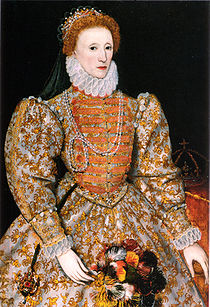
Poor relief
Poor Relief refers to any actions taken by either governmental or ecclesiastical bodies to relieve poverty experienced by a population. More specifically, the term poor relief is often used to discuss how European countries dealt with poverty from the time just around the end of the medieval era to...
contained in the Act for the Relief of the Poor 1597
Act For the Relief of the Poor 1597
The Act for the Relief of the Poor of 1597 was a piece of poor law legislation in England and Wales. It provided the first complete code of poor relief and was later amended in 1601 in the Elizabethan Poor Law of 1601 which formed the basis of poor relief for the next two centuries.The Act...
yet is often cited as the beginning of the Old Poor Law system. It created a system administered at parish level, paid for by levying local rates on rate payers. Relief for those too ill or old to work, the so called 'impotent poor', was in the form of a payment or items of food ('the parish loaf') or clothing also known as outdoor relief
Outdoor relief
This article refers to Britain's welfare provision after the 1601 Poor Law. For welfare programmes see Social securityAfter the passing of the Elizabethan Poor Law , outdoor relief was that kind of poor relief where assistance was in the form of money, food, clothing or goods, given to alleviate...
. Some aged people might be accommodated in parish alms houses, though these were usually private charitable institutions. Meanwhile able-bodied beggars who had refused work were often placed in Houses of Correction
House of Correction
The house of correction was a type of establishment built after the passing of the Elizabethan Poor Law , places where those who were "unwilling to work", including vagrants and beggars, were set to work. The building of houses of correction came after the passing of an amendment to the Elizabethan...
or even subjected to beatings to mend their attitudes. Provision for the many able-bodied poor in the workhouse, was relatively unusual, and most workhouses developed later. The 1601 Law said that parents and children were responsible for each other, elderly parents would live with their children.
The Old Poor Law was a parish based system, there were around 1,500 such parishes based upon the area around a parish church. The system allowed for despotic behavior from the Overseers of the Poor but as Overseers of the Poor would know their paupers they were considered able to differentiate between the deserving and undeserving poor making the system both more humane and initially more efficient. The Elizabethan Poor Law operated at a time when the population was small enough for everyone to know everyone else, therefore people's circumstances would be known and the idle poor would be unable to claim on the parishes' poor rate
Poor rate
In England and Wales, under the 1601 Elizabethan Poor Law the poor rate was a tax on property levied on the parish which was used to provide poor relief to the parish poor. The tax was collected by local magistrates or Overseers of the Poor, and later by Local Authorities....
. The system provided social stability yet by 1750 needed to be adapted to cope with population increases, greater mobility and regional price variations.
The 1601 Act sought to deal with 'settled' poor who had found themselves temporarily out of work—it was assumed they would accept indoor relief or outdoor relief
Outdoor relief
This article refers to Britain's welfare provision after the 1601 Poor Law. For welfare programmes see Social securityAfter the passing of the Elizabethan Poor Law , outdoor relief was that kind of poor relief where assistance was in the form of money, food, clothing or goods, given to alleviate...
. Neither method of relief was at this time in history seen as harsh. The act was supposed to deal with beggars whom were considered a threat to civil order. The Act was passed at a time when poverty was considered necessary as fear of poverty made people work. In 1607 a House of Correction
House of Correction
The house of correction was a type of establishment built after the passing of the Elizabethan Poor Law , places where those who were "unwilling to work", including vagrants and beggars, were set to work. The building of houses of correction came after the passing of an amendment to the Elizabethan...
was set up in each county. However, this system was separate from the 1601 system which distinguished between the settled poor and 'vagrants'. There was much variation in the application of the law and there was a tendency for the destitute to migrate towards the more generous parishes, usually situated in the towns. This led to the Settlement Act 1662 also known as the Poor Relief Act 1662
Poor Relief Act 1662
The Poor Relief Act 1662 was an Act of the Cavalier Parliament of England. It was an Act for the Better Relief of the Poor of this Kingdom and is also known as the Settlement Act or, more honestly, the Settlement and Removal Act. The purpose of the Act was to establish the parish to which a person...
, this allowed relief only to established residents of a parish; mainly through birth, marriage and apprenticeship. Unfortunately the laws reduced the mobility of labour and discouraged paupers from leaving their parish to find work. They also encouraged industry to create short contracts (e.g. 364 days) so that an employee could not become eligible for poor relief.
A pauper applicant had to prove a 'settlement'. If they could not, they were removed to the next parish that was nearest to the place of their birth, or where they might prove some connection. Some paupers were moved hundreds of miles. Although each parish that they passed through was not responsible for them, they were supposed to supply food and drink and shelter for at least one night. In 1697 an act was passed requiring those who begged to wear a "badge" of red or blue cloth on the right shoulder with an embroidered letter "P" and the initial of their parish. However, this practice soon fell into disuse.
The workhouse movement began at the end of the 17th century with the establishment of the Bristol Corporation of the Poor
Bristol Corporation of the Poor
The Bristol Corporation of the Poor was the board responsible for poor relief in Bristol, England when the Poor Law system was in operation. It was established in 1696 by the Bristol Poor Act...
, founded by Act of Parliament in 1696. The corporation established a workhouse
Workhouse
In England and Wales a workhouse, colloquially known as a spike, was a place where those unable to support themselves were offered accommodation and employment...
which combined housing and care of the poor with a house of correction for petty offenders. Following the example of Bristol
Bristol
Bristol is a city, unitary authority area and ceremonial county in South West England, with an estimated population of 433,100 for the unitary authority in 2009, and a surrounding Larger Urban Zone with an estimated 1,070,000 residents in 2007...
, some twelve further towns and cities established similar corporations in the next two decades. As these corporations required a private Act, they were not suitable for smaller towns and individual parishes.
Starting with the parish of Olney, Buckinghamshire
Buckinghamshire
Buckinghamshire is a ceremonial and non-metropolitan home county in South East England. The county town is Aylesbury, the largest town in the ceremonial county is Milton Keynes and largest town in the non-metropolitan county is High Wycombe....
in 1714 several dozen small towns and individual parishes established their own institutions without any specific legal authorization. These were concentrated in the South Midlands
South Midlands
The South Midlands is a notional area of England. According to one definition, it is the southern portion of the East Midlands together with the northern portion of South East England and the western portion of the East of England, and just as there is no agreed definition for these areas,...
and in the county of Essex
Essex
Essex is a ceremonial and non-metropolitan county in the East region of England, and one of the home counties. It is located to the northeast of Greater London. It borders with Cambridgeshire and Suffolk to the north, Hertfordshire to the west, Kent to the South and London to the south west...
. From the late 1710s the Society for the Promotion of Christian Knowledge began to promote the idea of parochial workhouses. The Society published several pamphlets on the subject, and supported Sir Edward Knatchbull
Sir Edward Knatchbull, 4th Baronet
Sir Edward Knatchbull, 4th Baronet was an English politician who sat in the House of Commons of England from 1702 to 1705 and in the House of Commons of Great Britain variously between 1713 and 1730....
in his successful efforts to steer the Workhouse Test Act
Workhouse Test Act
The Workhouse Test Act also known as the General Act or Knatchbull's Act was poor relief legislation passed by the British government by Sir Edward Knatchbull in 1723. The "workhouse test" was that a person who wanted to receive poor relief had to enter a workhouse and undertake a set amount of work...
through parliament in 1723. The act gave legislative authority for the establishment of parochial workhouses, by both single parishes and as joint ventures between two or more parishes. More importantly, the Act helped to publicise the idea of establishing workhouses to a national audience. By 1776 some 1,912 parish and corporation workhouses had been established in England and Wales, housing almost 100,000 paupers. Although many parishes and pamphlet writers expected to earn money from the labour of the poor in workhouses, the vast majority of people obliged to take up residence in workhouses were ill, elderly, or children whose labour proved largely unprofitable. The demands, needs and expectations of the poor also ensured that workhouses came to take on the character of general social policy institutions, combining the functions of creche, and night shelter, geriatric ward and orphanage. In 1782, Thomas Gilbert finally succeeded in passing an Act
Relief of the Poor Act 1782
The Relief of the Poor Act 1782 , also known as Gilbert's Act, was a British poor relief law proposed by Thomas Gilbert which aimed to organise poor relief on a county basis, counties being organised into parishes which could set up workhouses between them. However, these workhouses were intended...
that established poor houses solely for the aged and infirm and introduced a system of outdoor relief for the able-bodied. This was the basis for the development of the Speenhamland system, which made financial provision for low-paid workers. Settlement Laws were altered by the Removal Act 1795 which prevented non-settled persons from being moved on unless they had applied for relief.
During Napoleonic Wars
Napoleonic Wars
The Napoleonic Wars were a series of wars declared against Napoleon's French Empire by opposing coalitions that ran from 1803 to 1815. As a continuation of the wars sparked by the French Revolution of 1789, they revolutionised European armies and played out on an unprecedented scale, mainly due to...
it became impossible to import
Import
The term import is derived from the conceptual meaning as to bring in the goods and services into the port of a country. The buyer of such goods and services is referred to an "importer" who is based in the country of import whereas the overseas based seller is referred to as an "exporter". Thus...
cheap grain into Britain which resulted in the price of bread increasing.
As wages did not similarly increase many agricultural labourers were plunged into poverty and following peace in 1814, the Tory
Tory
Toryism is a traditionalist and conservative political philosophy which grew out of the Cavalier faction in the Wars of the Three Kingdoms. It is a prominent ideology in the politics of the United Kingdom, but also features in parts of The Commonwealth, particularly in Canada...
government of Lord Liverpool passed the Corn Laws
Corn Laws
The Corn Laws were trade barriers designed to protect cereal producers in the United Kingdom of Great Britain and Ireland against competition from less expensive foreign imports between 1815 and 1846. The barriers were introduced by the Importation Act 1815 and repealed by the Importation Act 1846...
to keep the price of grain
GRAIN
GRAIN is a small international non-profit organisation that works to support small farmers and social movements in their struggles for community-controlled and biodiversity-based food systems. Our support takes the form of independent research and analysis, networking at local, regional and...
artificially high. 1815 saw great social unrest as the end of the French Wars saw industrial and agricultural depression and high unemployment
Unemployment
Unemployment , as defined by the International Labour Organization, occurs when people are without jobs and they have actively sought work within the past four weeks...
. Social attitudes to poverty began to change after 1815 and overhauls of the system were considered. The Poor Law system was criticized as distorting the free market
Free market
A free market is a competitive market where prices are determined by supply and demand. However, the term is also commonly used for markets in which economic intervention and regulation by the state is limited to tax collection, and enforcement of private ownership and contracts...
and in 1816 a Parliamentary Select Committee looked into altering the system which resulted in the Sturges-Bourne Acts being passed. By 1820, before the passing of the Poor Law Amendment Act workhouses were already being built to reduce the spiraling cost of poor relief. Boyer suggests several possible reasons for the gradual increase in relief given to able-bodied males: the enclosure movement, a decline in industries such as wool spinning and lace making. Boyer also contends that farmers were able to take advantage of the poor law system to shift some of their labour costs onto the tax payer.
The Royal Commission on the Poor Law
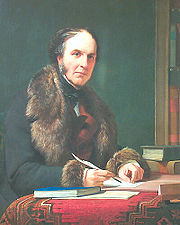
Swing Riots
The Swing Riots were a widespread uprising by agricultural workers; it began with the destruction of threshing machines in the Elham Valley area of East Kent in the summer of 1830, and by early December had spread throughout the whole of southern England and East Anglia.As well as the attacks on...
. The report was prepared by a commission of nine, including Nassau William Senior
Nassau William Senior
Nassau William Senior , English economist, was born at Compton, Berkshire, the eldest son of the Rev. JR Senior, vicar of Durnford, Wiltshire.-Biography:...
, and served by Edwin Chadwick
Edwin Chadwick
Sir Edwin Chadwick KCB was an English social reformer, noted for his work to reform the Poor Laws and improve sanitary conditions and public health...
as Secretary. The Royal Commission's primary concerns were with illegitimacy (or "bastardy"), reflecting the influence of Malthusians
Malthusianism
Malthusianism refers primarily to ideas derived from the political/economic thought of Reverend Thomas Robert Malthus, as laid out initially in his 1798 writings, An Essay on the Principle of Population, which describes how unchecked population growth is exponential while the growth of the food...
, and the fear that the practices of the Old Poor Law were undermining the position of the independent labourer. Two practices were of particular concern: the "roundsman" system, where overseers hired out paupers as cheap labour, and the Speenhamland system, which subsidised low wages without relief. The report concluded that the existing Poor Laws undermined the prosperity of the country by interfering with the natural laws of "supply and demand", that the existing means of poor relief allowed employers to force down wages, and, that poverty itself was inevitable.
The Commission proposed the New Law be governed by two overarching principles:
- "less eligibilityLess eligibilityLess eligibility was a condition of the Poor Law Amendment Act 1834. It was intended to make workhouses a deterrent . It stated that working conditions in the workhouse had to be worse than the worst job possible outside the workhouse...
": that the pauper should have to enter a workhouse with conditions worse than that of the poorest 'free' labourer outside of the workhouse. - the "workhouse testWorkhouse testThe workhouse test was a condition of the British Poor Law Amendment Act 1834. It stated that anyone who wanted to get poor relief must enter a workhouse. The condition was never implemented and outdoor relief continued to be given. The "workhouse test" should not be confused with the Workhouse...
", that relief should only be available in the workhouse. The reformed workhouses were to be uninviting, so that anyone capable of coping outside them would choose not to be in one.
When the Act was introduced however it had been partly watered down. The workhouse test and the idea of "less eligibility" were never mentioned themselves and the recommendation of the Royal Commission that 'outdoor relief
Outdoor relief
This article refers to Britain's welfare provision after the 1601 Poor Law. For welfare programmes see Social securityAfter the passing of the Elizabethan Poor Law , outdoor relief was that kind of poor relief where assistance was in the form of money, food, clothing or goods, given to alleviate...
' (relief given outside of a workhouse
Workhouse
In England and Wales a workhouse, colloquially known as a spike, was a place where those unable to support themselves were offered accommodation and employment...
) should be abolished – was never implemented. The report recommended separate workhouses for the aged, infirm, children, able-bodied females and able-bodied males. The report also stated that parishes should be grouped into unions in order to spread the cost of workhouses and a central authority should be established in order to enforce these measures. The Poor Law Commission
Poor Law Commission
The Poor Law Commission was a body established to administrate poor relief after the passing of the Poor Law Amendment Act 1834. The commission was made up of three commissioners who became known as "The Bashaws of Somerset House", their secretary and nine clerks or assistant commissioners...
set up by Earl Grey
Earl Grey
Earl Grey is a title in the Peerage of the United Kingdom. It was created in 1806 for General Charles Grey, 1st Baron Grey. He had already been created Baron Grey, of Howick in the County of Northumberland, in 1801, and was made Viscount Howick, in the County of Northumberland, at the same time as...
took a year to write its report, the recommendations passed easily through Parliament support by both main parties the Whigs
British Whig Party
The Whigs were a party in the Parliament of England, Parliament of Great Britain, and Parliament of the United Kingdom, who contested power with the rival Tories from the 1680s to the 1850s. The Whigs' origin lay in constitutional monarchism and opposition to absolute rule...
and the Tories. The bill gained Royal Assent in 1834. The few who opposed the Bill were more concerned about the centralisation which it would bring rather than the underpinning philosophy of utilitarianism
Utilitarianism
Utilitarianism is an ethical theory holding that the proper course of action is the one that maximizes the overall "happiness", by whatever means necessary. It is thus a form of consequentialism, meaning that the moral worth of an action is determined only by its resulting outcome, and that one can...
.
New Poor Law
The Poor Law Amendment Actwas passed in 1834 by the government of Lord Melbourne
William Lamb, 2nd Viscount Melbourne
William Lamb, 2nd Viscount Melbourne, PC, FRS was a British Whig statesman who served as Home Secretary and Prime Minister . He is best known for his intense and successful mentoring of Queen Victoria, at ages 18-21, in the ways of politics...
and largely implemented the findings of the Royal Commission which had presented its findings two years earlier. The New Poor Law is considered to be one of the most "far-reaching pieces of legislation of the entire Nineteenth Century" and "classic example of the fundamental Whig-Benthamite reforming legislation of the period". The Act aimed to reduce the burden on rate payers and can be seen as an attempt by the Whig government to win the votes of the classes enfranchised by the Great Reform Act. Despite being labeled an "amendment act" it completely overhauled the existing system and established a Poor Law Commission
Poor Law Commission
The Poor Law Commission was a body established to administrate poor relief after the passing of the Poor Law Amendment Act 1834. The commission was made up of three commissioners who became known as "The Bashaws of Somerset House", their secretary and nine clerks or assistant commissioners...
to oversee the national operation of the system. This included the forming together of small parishes into Poor Law Unions and the building of workhouses in each union for the giving of poor relief. Although the aim of the legislation was to reduce costs to rate payers, one area not reformed was the method of financing of the Poor Law system which continued to be paid for by levying a "poor rate" on the property owning middle classes.
Despite efforts to ban outdoor relief parishes continued to offer it as a more cost effective method of dealing with pauperism. The Outdoor Labour Test Order
Outdoor Labour Test Order
The Outdoor Labour Test Order was a piece of policy issued by the Poor Law Commission on 13 April 1842 which allowed the use of outdoor relief to the able-bodied poor. The order was issued after there was some opposition to the Commission's previous order stating that only indoor relief should be...
and Outdoor Relief Prohibitory Order
Outdoor Relief Prohibitory Order
The Outdoor Relief Prohibitory Order was an Order from the Poor Law Commission issued on 21 December 1844 which aimed to finally end the distribution of outdoor relief to the able-bodied poor.-External links:*...
were both issued in order to try and prevent people receiving relief outside of the workhouse
Workhouse
In England and Wales a workhouse, colloquially known as a spike, was a place where those unable to support themselves were offered accommodation and employment...
. Despite these later edicts it is notable that the Poor Law Amendment Act did not ban all forms of outdoor relief
Outdoor relief
This article refers to Britain's welfare provision after the 1601 Poor Law. For welfare programmes see Social securityAfter the passing of the Elizabethan Poor Law , outdoor relief was that kind of poor relief where assistance was in the form of money, food, clothing or goods, given to alleviate...
.
When the new Amendment was applied to the industrial North of England
England
England is a country that is part of the United Kingdom. It shares land borders with Scotland to the north and Wales to the west; the Irish Sea is to the north west, the Celtic Sea to the south west, with the North Sea to the east and the English Channel to the south separating it from continental...
(an area the law had never considered during reviews), the system failed catastrophically as many found themselves temporarily unemployed, due to recessions or a fall in stock demands, so called 'cyclical unemployment' and were reluctant to enter a Workhouse, despite it being the only method of gaining aid.
The abuses and shortcomings of the system are documented in the novels of Charles Dickens
Charles Dickens
Charles John Huffam Dickens was an English novelist, generally considered the greatest of the Victorian period. Dickens enjoyed a wider popularity and fame than had any previous author during his lifetime, and he remains popular, having been responsible for some of English literature's most iconic...
and Frances Trollope
Frances Trollope
Frances Milton Trollope was an English novelist and writer who published as Mrs. Trollope or Mrs. Frances Trollope...
. Despite the aspirations of the reformers, the New Poor Law was unable to make the Workhouse as bad as life outside. The primary problem was that in order to make the diet of the Workhouse inmates "less eligible" than what they could expect outside, it would be necessary to starve the inmates beyond an acceptable level. It was for this reason that other ways were found to deter entrance to the Workhouses. These measures ranged from the introduction of prison style uniforms to the segregation of 'inmates' into yards – there were normally male, female, boys' and girls' yards.
The Act stated that no able-bodied person was to receive money or other help from the Poor Law authorities except in a workhouse
Workhouse
In England and Wales a workhouse, colloquially known as a spike, was a place where those unable to support themselves were offered accommodation and employment...
. Conditions were to be made harsh to discourage people from claiming. Workhouses were to be built in every parish and, if parishes were too small, parishes to group together to form Workhouse Unions. The Poor Law Commissioners were to be responsible for overseeing the implementation of the Act. For various reasons it was impossible to apply some of the terms of the Act. Less eligibility
Less eligibility
Less eligibility was a condition of the Poor Law Amendment Act 1834. It was intended to make workhouses a deterrent . It stated that working conditions in the workhouse had to be worse than the worst job possible outside the workhouse...
was in some cases impossible without starving paupers and the high cost of building workhouses incurred by rate payers meant that outdoor relief continued to be a popular alternative. Nottingham
Nottingham
Nottingham is a city and unitary authority in the East Midlands of England. It is located in the ceremonial county of Nottinghamshire and represents one of eight members of the English Core Cities Group...
was allowed an exemption from the law and continued to provide outdoor relief
In 1846, the Andover workhouse scandal, where conditions in the Andover
Andover, Hampshire
Andover is a town in the English county of Hampshire. The town is on the River Anton some 18.5 miles west of the town of Basingstoke, 18.5 miles north-west of the city of Winchester and 25 miles north of the city of Southampton...
Union Workhouse were found to be inhumane and dangerous, prompted a government review and the abolition of the Poor Law Commission
Poor Law Commission
The Poor Law Commission was a body established to administrate poor relief after the passing of the Poor Law Amendment Act 1834. The commission was made up of three commissioners who became known as "The Bashaws of Somerset House", their secretary and nine clerks or assistant commissioners...
which was replaced with a Poor Law Board
Poor Law Board
The Poor Law Board was established in the United Kingdom in 1847 as a successor body to the Poor Law Commission overseeing the administration of the 1834 Poor Law Amendment Act...
which meant that a Committee of Parliament was to administer the Poor Law, with a cabinet minister as head. Despite this another scandal occurred over inhumane treatment of paupers in the Huddersfield
Huddersfield
Huddersfield is a large market town within the Metropolitan Borough of Kirklees, in West Yorkshire, England, situated halfway between Leeds and Manchester. It lies north of London, and south of Bradford, the nearest city....
workhouse.
After the New Poor Law
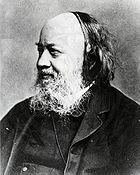
Poor Law Commission
The Poor Law Commission was a body established to administrate poor relief after the passing of the Poor Law Amendment Act 1834. The commission was made up of three commissioners who became known as "The Bashaws of Somerset House", their secretary and nine clerks or assistant commissioners...
was replaced with a Poor Law Board
Poor Law Board
The Poor Law Board was established in the United Kingdom in 1847 as a successor body to the Poor Law Commission overseeing the administration of the 1834 Poor Law Amendment Act...
. This was because of the Andover workhouse scandal and the criticism of Henry Parker
Henry Parker
Sir Henry Watson Parker, KCMG was Premier of New South Wales. He fitted into colonial society and politics in the pre-responsible government era, but his style was not suited to the democratic politics that began to develop in 1856.-Biography:Parker was the son of Thomas Watson Parker of Lewisham,...
who was responsible for the Andover union as well as the tensions in Somerset House caused by Chadwick's
Edwin Chadwick
Sir Edwin Chadwick KCB was an English social reformer, noted for his work to reform the Poor Laws and improve sanitary conditions and public health...
failure to become a Poor Law Commissioner. The Poor Law had been altered in 1834 because of increasing costs. The Workhouse Visiting Society
Workhouse Visiting Society
The Workhouse Visiting Society was an organisation set up in 1858 which existed to "to improve moral and spiritual improvement of workhouse inmates" in England and Wales. The group was set up by Louisa Twining of the Twining's Tea family. It began as a sub-committee of the National Association for...
which formed in 1858 highlighted conditions in workhouses and led to workhouses being inspected more often. The Union Chargeability Act was passed in 1865 in order to make the financial burden of pauperism be placed upon the whole unions rather than individual parishes. Most Boards of Guardians were middle class and committed to keeping Poor Rates as low as possible. After the Reform Act 1867
Reform Act 1867
The Representation of the People Act 1867, 30 & 31 Vict. c. 102 was a piece of British legislation that enfranchised the urban male working class in England and Wales....
there was increasing welfare legislation. As this legislation required local authorities' support the Poor Law Board was replaced with a Local Government Board
Local Government Board
The Local Government Board was a British Government supervisory body overseeing local administration in England and Wales from 1871 to 1919.The LGB was created by the Local Government Board Act 1871 The Local Government Board (LGB) was a British Government supervisory body overseeing local...
in 1871. The Local Government Board
Local Government Board
The Local Government Board was a British Government supervisory body overseeing local administration in England and Wales from 1871 to 1919.The LGB was created by the Local Government Board Act 1871 The Local Government Board (LGB) was a British Government supervisory body overseeing local...
led a crusade against outdoor relief supported by the Charity Organisation Society, an organization which viewed outdoor relief
Outdoor relief
This article refers to Britain's welfare provision after the 1601 Poor Law. For welfare programmes see Social securityAfter the passing of the Elizabethan Poor Law , outdoor relief was that kind of poor relief where assistance was in the form of money, food, clothing or goods, given to alleviate...
as destroying the self-reliance of the poor. The effect of this renewed effect to deter outdoor relief was to reduce claimants by a third and to increase numbers in the work house by 12–15%. County Councils were formed in 1888, District Councils in 1894. This meant that public housing, unlike health and income maintenance, developed outside the scope of the Poor Law. Poor Law policy after the New Poor Law concerning the elderly, the sick
Disease
A disease is an abnormal condition affecting the body of an organism. It is often construed to be a medical condition associated with specific symptoms and signs. It may be caused by external factors, such as infectious disease, or it may be caused by internal dysfunctions, such as autoimmune...
and mentally ill and children became more humane. This was in part due to the expense of providing "mixed workhouses" as well as changing attitudes regarding the causes and nature of poverty.
Decline and abolition
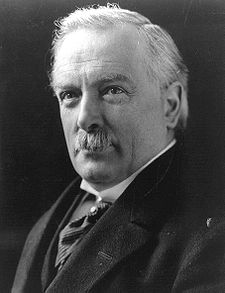
Medical Relief Disqualification Removal Act 1885
The Medical Relief Disqualification Removal Act 1885 was an Act of the Parliament of the United Kingdom. It became law on 6 August 1885....
meant that people who had accessed medical care funded by the poor rate were no longer disqualified from voting in elections. In 1886 the Chamberlain Circular
Chamberlain Circular
The Chamberlain Circular was a circular issued in 1886 in the United Kingdom by the Local Government Board. It encouraged the setting up of work relief projects in times of high unemployment. It is evidence of a move away from the Poor Law system. The circular takes its name from the Liberal...
encouraged the Local Government Board to set up work projects when unemployment rates were high rather than use workhouses. In 1905 the Conservatives passed the Unemployed Workman Act
Unemployed Workmen Act 1905
The 1905 Unemployed Workmen Act was first passed by the Conservative Party in 1903 and was later renewed by the Liberal Party in 1905. The Unemployed Workmen Act established Distress Committees which gave out single grants to businesses or local authorities in order to allow them to hire more...
which provided for temporary employment for workers in times of unemployment.
In 1905 a Royal Commission
Royal Commission on the Poor Laws and Relief of Distress 1905-09
The Royal Commission on the Poor Laws and Relief of Distress 1905-09 was a body set up by the British Parliament in order to investigate how the Poor Law system should be changed...
was set up to investigate what changes could be made to the Poor Law. The Commission produced two conflicting reports but both investigations were largely ignored by the Liberal government when implementing their own scheme of welfare
Welfare
Welfare refers to a broad discourse which may hold certain implications regarding the provision of a minimal level of wellbeing and social support for all citizens without the stigma of charity. This is termed "social solidarity"...
legislation. The welfare reforms of the Liberal Government made several provisions to provide social services without the stigma of the Poor Law, including Old age pensions and National Insurance
National Insurance
National Insurance in the United Kingdom was initially a contributory system of insurance against illness and unemployment, and later also provided retirement pensions and other benefits...
, and from that period fewer people were covered by the system. From 1911, the term "Workhouse" was replaced by "Poor Law Institution". Means test
Means test
A means test is a determination of whether an individual or family is eligible for help from the government.- Canada :In Canada means tests are used for student finance , and "welfare" . They are not generally used for primary education and secondary education which are tax-funded...
s were developed during the inter-war period, not as part of the Poor Law, but as part of the attempt to offer relief that was not affected by the stigma of pauperism
Pauperism
Pauperism is a term meaning poverty or generally the state of being poor, but in English usage particularly the condition of being a "pauper", i.e. in receipt of relief administered under the poor law...
. According to Lees by slowly dismantling the system the Poor Law was "to die by attrition and surgical removals of essential organs".
During the First World War there is evidence that some workhouses were used as makeshift hospitals for wounded servicemen. Numbers using the Poor Law system increased during the interwar years and between 1921–38 despite the extension of unemployment insurance to virtually all workers except the self-employed. Many of these workers were provided with outdoor relief. One aspect of the Poor Law that continued to cause resentment was that the burden of poor relief was not shared equally by rich and poor areas but, rather, fell most heavily on those areas in which poverty was at its worst. This was a central issue in the Poplar Rates Rebellion
Poplar Rates Rebellion
The Poplar Rates Rebellion, or Poplar Rates Revolt was a tax protest that took place in Poplar, London, England, in 1921. It was led by George Lansbury, the previous year's Labour Mayor of Poplar, with the support of the Poplar Borough Council, most of whom were industrial workers. The protest...
led by George Lansbury
George Lansbury
George Lansbury was a British politician, socialist, Christian pacifist and newspaper editor. He was a Member of Parliament from 1910 to 1912 and from 1922 to 1940, and leader of the Labour Party from 1932 to 1935....
and others in 1921. Lansbury had in 1911 written a provocative attack on the workhouse system in a pamphlet entitled "Smash Up the Workhouse!
Smash Up the Workhouse!
Smash Up the Workhouse! was a pamphlet published in 1911 by Labour Party politician George Lansbury. It argued for the abolition of the workhouse system....
".
Poverty in the interwar years (1918–1939)
Interwar poverty in Britain
Interwar unemployment and poverty in the United Kingdom describes a period of poverty in the United Kingdom between the end of World War I in 1918 and the start of World War II in 1939...
was responsible for several measures which largely killed off the Poor Law system. The Board of Guardians (Default) Act 1926
Board of Guardians (Default) Act 1926
The Board of Guardians Act 1926 was a British Act of Parliament passed on July 15, 1926 which allowed the Minister of Health to reconstitute a Board of Guardians if he considered that the Board of Guardians was not properly performing its functions. The Act allowed for Boards of Guardians to be...
was passed in response to some Boards of Guardians supporting the Miners during the General Strike
1926 United Kingdom general strike
The 1926 general strike in the United Kingdom was a general strike that lasted nine days, from 4 May 1926 to 13 May 1926. It was called by the general council of the Trades Union Congress in an unsuccessful attempt to force the British government to act to prevent wage reduction and worsening...
. Workhouses were officially abolished by the Local Government Act 1929
Local Government Act 1929
The Local Government Act 1929 was an Act of the Parliament of the United Kingdom that made changes to the Poor Law and local government in England and Wales....
, and between 1929–1930 Poor Law Guardians, the "workhouse test
Workhouse test
The workhouse test was a condition of the British Poor Law Amendment Act 1834. It stated that anyone who wanted to get poor relief must enter a workhouse. The condition was never implemented and outdoor relief continued to be given. The "workhouse test" should not be confused with the Workhouse...
" and the term "pauper" disappeared. The Unemployment Assistance Board
Unemployment Assistance Board
The Unemployment Assistance Board was a body set up in Britain in 1934 due to the high levels of inter-war poverty in Britain. The Board kept a system of means tested benefits and did widen the number of people who could claim relief....
was set up in 1934 to deal with those not covered by the earlier 1911 National Insurance Act passed by the Liberals, and by 1937 the able-bodied poor had been absorbed into this scheme. By 1936 only 13% of people were still receiving poor relief in some form of institution.
In 1948 the Poor Law system was finally abolished with the introduction of the modern welfare state
Welfare state
A welfare state is a "concept of government in which the state plays a key role in the protection and promotion of the economic and social well-being of its citizens. It is based on the principles of equality of opportunity, equitable distribution of wealth, and public responsibility for those...
and the passing of the National Assistance Act. The National Health Service Act 1946
National Health Service Act 1946
The National Health Service Act 1946 came into effect on 5 July 1948 and created the National Health Service in England and Wales. Though the title 'National Health Service' implies one health service for the United Kingdom, in reality a separate NHS was created for England and Wales accountable to...
came into force in 1948 and created the modern day National Health Service
National Health Service
The National Health Service is the shared name of three of the four publicly funded healthcare systems in the United Kingdom. They provide a comprehensive range of health services, the vast majority of which are free at the point of use to residents of the United Kingdom...
.
Opposition to the Poor Laws

Jeremy Bentham
Jeremy Bentham was an English jurist, philosopher, and legal and social reformer. He became a leading theorist in Anglo-American philosophy of law, and a political radical whose ideas influenced the development of welfarism...
argued for a disciplinary, punitive approach to social problems, whilst the writings of Thomas Malthus
Thomas Malthus
The Reverend Thomas Robert Malthus FRS was an English scholar, influential in political economy and demography. Malthus popularized the economic theory of rent....
focused attention on the problem of overpopulation, and the growth of illegitimacy. David Ricardo
David Ricardo
David Ricardo was an English political economist, often credited with systematising economics, and was one of the most influential of the classical economists, along with Thomas Malthus, Adam Smith, and John Stuart Mill. He was also a member of Parliament, businessman, financier and speculator,...
argued that there was an "iron law of wages". The effect of poor relief, in the view of the reformers, was to undermine the position of the "independent labourer".
In the period following the Napoleonic Wars
Napoleonic Wars
The Napoleonic Wars were a series of wars declared against Napoleon's French Empire by opposing coalitions that ran from 1803 to 1815. As a continuation of the wars sparked by the French Revolution of 1789, they revolutionised European armies and played out on an unprecedented scale, mainly due to...
, several reformers altered the function of the "poorhouse" into the model for a deterrent workhouse. The first of the deterrent workhouses in this period was at Bingham, Nottinghamshire
Bingham, Nottinghamshire
Bingham is a market town in the Rushcliffe borough of Nottinghamshire, England.-Geography:With a population of around 9,000 people it lies about nine miles east of Nottingham, a similar distance south-west of Newark-on-Trent and west of Grantham. It is situated where the A46 intersects the A52...
. The second was Becher's workhouse
The Workhouse, Southwell
The Workhouse, also known as Greet House, in the town of Southwell, Nottinghamshire, England, is a museum operated by the National Trust. Built in 1824, it was the prototype of the 19th-century workhouse,...
in Southwell
Southwell, Nottinghamshire
Southwell is a town in Nottinghamshire, England, best known as the site of Southwell Minster, the seat of the Church of England diocese that covers Nottinghamshire...
, now maintained by the National Trust
National Trust for Places of Historic Interest or Natural Beauty
The National Trust for Places of Historic Interest or Natural Beauty, usually known as the National Trust, is a conservation organisation in England, Wales and Northern Ireland...
. George Nicholls, the overseer at Southwell, was to become a Poor Law Commissioner in the reformed system. The 1817 Report of the Select Committee on the Poor Laws condemned the Poor Law as causing poverty itself.
The introduction of the New Poor Law also resulted in opposition. Some who gave evidence to the Royal Commission into the Operation of the Poor Laws suggested that the existing system had proved adequate and was more adaptable to local needs. This argument was strongest in the industrial North of England and in the textile industries where outdoor relief was a more effective method of dealing with cyclical unemployment as well as being a more cost effective method. Poor Law commissioners faced greatest opposition in Lancashire
Lancashire
Lancashire is a non-metropolitan county of historic origin in the North West of England. It takes its name from the city of Lancaster, and is sometimes known as the County of Lancaster. Although Lancaster is still considered to be the county town, Lancashire County Council is based in Preston...
and the West Riding of Yorkshire
West Riding of Yorkshire
The West Riding of Yorkshire is one of the three historic subdivisions of Yorkshire, England. From 1889 to 1974 the administrative county, County of York, West Riding , was based closely on the historic boundaries...
where in 1837 there was high unemployment during an economic depression. The New Poor Law was seen as interference from Londoners with little understanding of local affairs. Opposition was unusually strong because committees had already been formed in opposition to the Ten Hours Movement, leaders of the Ten Hours campaign such as Richard Oastler
Richard Oastler
Richard Oastler was an English labour reformer, "Tory radical", and abolitionist. He fought for the rights of working children in the Factory Act of 1847, and was also a prominent leader of the Factory reform and anti-Poor Law movement.-Career:Born in Leeds, West Yorkshire, Oastler was the...
, Joseph Rayner Stephens and John Fielden
John Fielden
John Fielden , also known as Honest John Fielden, was a British social reformer and benefactor. He was the third son of Joshua Fielden, and began working in his father's mill at the age of 9. With his brothers, he expanded the family cotton business at Todmorden to become a wealthy businessman...
became the leaders of the Anti-Poor Law campaign. The Book of Murder
Book of Murder
The Book of Murder was a piece of anti-Poor Law propaganda presented as the work of one pseudonymous "Marcus", originally published in Britain during the 1830s by Joshua Hobson...
was published and was aimed at creating opposition to the workhouse system. and pamphlets were published spreading rumour and propaganda about Poor Law Commissioners and alleged infanticide inside of workhouses. Opposition to the Poor Law yielded some successes in delaying the development of workhouses, and one workhouse in Stockport
Stockport
Stockport is a town in Greater Manchester, England. It lies on elevated ground southeast of Manchester city centre, at the point where the rivers Goyt and Tame join and create the River Mersey. Stockport is the largest settlement in the metropolitan borough of the same name...
was attacked by a crowd of rioters. As many Boards of Guardians were determined to continue under the old system, the Poor Law Commission granted some boards the right to continue providing relief under the Old Poor Law. However, the movement against the New Poor Law was short-lived, leading many to instead turn towards Chartism
Chartism
Chartism was a movement for political and social reform in the United Kingdom during the mid-19th century, between 1838 and 1859. It takes its name from the People's Charter of 1838. Chartism was possibly the first mass working class labour movement in the world...
.
Scotland and Ireland
The Poor Law systems of ScotlandScotland
Scotland is a country that is part of the United Kingdom. Occupying the northern third of the island of Great Britain, it shares a border with England to the south and is bounded by the North Sea to the east, the Atlantic Ocean to the north and west, and the North Channel and Irish Sea to the...
and Ireland
Ireland
Ireland is an island to the northwest of continental Europe. It is the third-largest island in Europe and the twentieth-largest island on Earth...
were distinct from the English Poor Law system covering England and Wales
England and Wales
England and Wales is a jurisdiction within the United Kingdom. It consists of England and Wales, two of the four countries of the United Kingdom...
although Irish legislation was heavily influenced by the English Poor Law Amendment Act. In Scotland the Poor Law system was reformed by the 1845 Scottish Poor Law Act. In Ireland the Irish Poor Law Act of 1838
Irish Poor Law Act of 1838
The Irish Poor Law Act of 1838 was an Act of Parliament which created the system of poor relief in Ireland. The legislation was largely influenced by the English Poor Law Act of 1834....
was the first attempt to put control of the destitute and responsibility for their welfare on a statutory basis. Due to exceptional overcrowding, workhouses in Ireland stopped admissions during the Irish Potato famine and increasingly resorted to outdoor relief
Outdoor relief
This article refers to Britain's welfare provision after the 1601 Poor Law. For welfare programmes see Social securityAfter the passing of the Elizabethan Poor Law , outdoor relief was that kind of poor relief where assistance was in the form of money, food, clothing or goods, given to alleviate...
. Emigration
Emigration
Emigration is the act of leaving one's country or region to settle in another. It is the same as immigration but from the perspective of the country of origin. Human movement before the establishment of political boundaries or within one state is termed migration. There are many reasons why people...
was sometimes used by landlords as a method of keeping the cost of poor relief down and removing surplus labour. Reforms after the Irish War of Independence
Irish War of Independence
The Irish War of Independence , Anglo-Irish War, Black and Tan War, or Tan War was a guerrilla war mounted by the Irish Republican Army against the British government and its forces in Ireland. It began in January 1919, following the Irish Republic's declaration of independence. Both sides agreed...
resulted in the abolition of Boards of Guardians in the jurisdiction of the Irish Free State
Irish Free State
The Irish Free State was the state established as a Dominion on 6 December 1922 under the Anglo-Irish Treaty, signed by the British government and Irish representatives exactly twelve months beforehand...
and their replacement by County Boards of Health.
Historiography
The historiography of the Poor Laws has passed through several distinct phases. The "traditionalist" or "orthodox" account of the Poor Laws focuses upon the deficiencies of the Old Poor Law. This early historiography was influential in successfully overhauling the system. Blaug presents the first revisionist analysis of the Poor Law in “The Myth of the Old Poor Law and the making of the New” arguing that the Old Poor Law did not reduce the efficiency of agricultural workers, lower wages, depress rents or compound the burden on rate payers. Instead Blaug argues that Old Poor Law was a device "for dealing with the problems of structural unemployment and substandard wages in the lagging rural sector of a rapidly growing but still underdevelopedeconomy". Other areas of Poor Law
Poor Law
The English Poor Laws were a system of poor relief which existed in England and Wales that developed out of late-medieval and Tudor-era laws before being codified in 1587–98...
historiography which have concerned historians include the extent to which the Second Great Reform Act contributed to the Poor Law Amendment Act and the extend to which outdoor relief
Outdoor relief
This article refers to Britain's welfare provision after the 1601 Poor Law. For welfare programmes see Social securityAfter the passing of the Elizabethan Poor Law , outdoor relief was that kind of poor relief where assistance was in the form of money, food, clothing or goods, given to alleviate...
was abolished following the New Poor Law.
See also
- Social welfare, government programs that seek to provide a minimum level of income, service or other support for certain people
- Timeline of the Poor Law systemTimeline of the Poor Law systemThe following article presents a Timeline of the Poor Law system from its origins in the Tudor and Elizabethan era to its abolition in 1948.-1300s:*1344- Royal Ordinance stated that lepers should leave London.*1388- Statute of Cambridge passed....
- Welfare (financial aid)
- Social care in the United KingdomSocial care in the United KingdomSocial care is defined as the provision of social work, personal care, protection or social support services to children or adults in need or at risk, or adults with needs arising from illness, disability, old age or poverty and their families and carers...
- Wife selling
Further reading
- Blaug, Mark. The Myth of the Old Poor Law and the Making of the New Journal of Economic History 23 (1963): 151–84. JSTORJSTORJSTOR is an online system for archiving academic journals, founded in 1995. It provides its member institutions full-text searches of digitized back issues of several hundred well-known journals, dating back to 1665 in the case of the Philosophical Transactions of the Royal Society...
- Blaug, Mark. The Poor Law Report Re-examined Journal of Economic History (1964) 24: 229–45. JSTOR
- Boot, H. M. Unemployment and Poor Law Relief in Manchester, 1845-5 Social History 15 (1990): 217–28. JSTOR
- Booth, Charles. The Aged Poor in England and Wales. London: MacMillan, 1894. Internet ArchiveInternet ArchiveThe Internet Archive is a non-profit digital library with the stated mission of "universal access to all knowledge". It offers permanent storage and access to collections of digitized materials, including websites, music, moving images, and nearly 3 million public domain books. The Internet Archive...
- Boyer, George R. Poor Relief, Informal Assistance, and Short Time during the Lancashire Cotton Famine Explorations in Economic History 34 (1997): 56–76.
- Boyer, George R. An Economic History of the English Poor Law, 1750–1850. Cambridge: Cambridge University Press, 1990 ISBN 978-0-521-36479-9 Google Books
- Brundage, Anthony. The Making of the New Poor Law. New Brunswick, N.J.: Rutgers University Press, 1978. ISBN 978-0-8135-0855-9
- Clark, Gregory. Farm Wages and Living Standards in the Industrial Revolution: England, 1670–1869 Economic History Review, 2nd series 54 (2001): 477–505. UCDavis
- Clark, Gregory and Anthony Clark. Common Rights to Land in England, 1475–1839 Journal of Economic History 61 (2001): 1009–36. UCDavis
- Digby, Anne. The Labour Market and the Continuity of Social Policy after 1834: The Case of the Eastern Counties Economic History Review, 2nd series 28 (1975): 69–83.
- Eastwood, David. Governing Rural England: Tradition and Transformation in Local Government, 1780–1840. Oxford: Clarendon Press, 1994. ISBN 978-0-19-820481-7
- Fraser, Derek, editor. The New Poor Law in the Nineteenth Century. London: Macmillan, 1976.
- Hammond, J. L. and Barbara Hammond. The Village Labourer, 1760–1832. London: Longmans, Green, and Co., 1911.
- Hampson, E. M. The Treatment of Poverty in Cambridgeshire, 1597–1834. Cambridge: Cambridge University Press, 1934 (reissued by Cambridge University PressCambridge University PressCambridge University Press is the publishing business of the University of Cambridge. Granted letters patent by Henry VIII in 1534, it is the world's oldest publishing house, and the second largest university press in the world...
, 2009; ISBN 978-1-108-00234-9) - Humphries, Jane. Enclosures, Common Rights, and Women: The Proletarianization of Families in the Late Eighteenth and Early Nineteenth Centuries (1990): 17–42.
- King, Steven. Poverty and Welfare in England, 1700–1850: A Regional Perspective. Manchester: Manchester University Press, 2000.
- Lees, Lynn Hollen. The Solidarities of Strangers: The English Poor Laws and the People, 1770–1948. Cambridge: Cambridge University Press, 1998.
- Lindert, Peter H. Poor Relief before the Welfare State: Britain versus the Continent, 1780- 1880 European Review of Economic History 2 (1998): 101–40.
- MacKinnon, Mary. English Poor Law Policy and the Crusade Against Outrelief Journal of Economic History 47 (1987): 603–25.
- Marshall, J. D. The Old Poor Law, 1795–1834. 2nd edition. London: Macmillan, 1985.
- Pinchbeck, Ivy. Women Workers and the Industrial Revolution, 1750–1850. London: Routledge, 1930.
- Pound, John. Poverty and Vagrancy in Tudor England, 2nd edition. London: Longmans, 1986.
- Rose, Michael E. The New Poor Law in an Industrial Area. in The Industrial Revolution, edited by *R.M. Hartwell. Oxford: Oxford University Press, 1970.
- Rose, Michael E. The English Poor Law, 1780–1930. Newton Abbot: David & Charles, 1971.
- Shaw-Taylor, Leigh. "Parliamentary Enclosure and the Emergence of an English Agricultural Proletariat." Journal of Economic History 61 (2001): 640–62.
- Slack, Paul. Poverty and Policy in Tudor and Stuart England. London: Longmans, 1988.
- Slack, Paul. The English Poor Law, 1531–1782. London: Macmillan, 1990.
- Smith, Richard (1996). Charity, Self-interest and Welfare: Reflections from Demographic and Family History in Charity, Self-Interest and Welfare in the English Past.
- Sokoll, Thomas. Household and Family among the Poor: The Case of Two Essex Communities in the Late Eighteenth and Early Nineteenth Centuries. 1993.
- Solar, Peter M. "Poor Relief and English Economic Development before the Industrial Revolution." Economic History Review, 2nd series 48 (1995): 1–22.
- Tawney, R. H. Religion and the Rise of Capitalism: A Historical Study. London: J. Murray, 1926.
- Webb, Sidney and Beatrice Webb. English Poor Law History. Part I: The Old Poor Law. London: Longmans, 1927.
- Webb, Sidney and Beatrice Webb. English poor law policy (1910)
External links
- History/chronology of poor law, transcripts of main Acts, much on workhouses, unions etc.
- Article on the Poor Laws from EH.NET's Encyclopedia
- Annotated text of an Act of 1598 of which the 1601 Act was a revision (scroll down to (H))
- Report of the Royal Poor Law Commission 1834
- Workhouse records on The National Archives' website.
- Poor Law – 1911 Encyclopædia Britannica article
- Poor Law Unions at visionofbritain.org.uk
- List of Poor Law Unions in England
- The Poor Law at a Web of English History
- A famous depiction of women in the Victorian workhouse – 'A scene in the Westminster Union, 1878'
- British Social Policy 1601–1948
- Poor Law research guide from The National Archives, UK
- Southwell Workhouse – National Trust
- Workhouse – The Story of Workhouses
- Connected Histories