
All Topics  
Pontiac Tempest

 
Pontiac Tempest

   Email Print
   Bookmark   Link


Pontiac Tempest


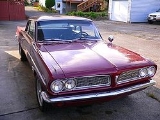
The Pontiac Tempest was an entry-level compact
Compact car

A compact , small family or c-segment car is a car classification of automobile which are larger than a supermini car and smaller than a large family car....
 automobile
Automobile

An automobile or motor car is a wheeled motor vehicle for transportation passengers, which also carries its own car engine or motor. Most definitions of the term specify that automobiles are designed to run primarily on roads, to have seating for one to eight people, to typically have four wheels, and to be constructed principally f...
 produced by the Pontiac Motor Division
Pontiac

Pontiac is a brand of automobiles, produced by General Motors Corporation that has been sold in the United States, Canada and Mexico since 1926....
 of General Motors
General Motors

General Motors Corporation , founded in 1908, is the world's second-largest automaker after Toyota, ranked by 2008 global unit sales. GM was the global sales leader for 77 consecutive calendar years from 1931 to 2008....
, introduced in September 1960 for the 1961 model year. It shared the new monocoque
Monocoque

Monocoque, from Greek language for single and French for shell , is a construction technique that supports structural load by using an object's external skin as opposed to using an internal frame or truss that is then covered with a non-load-bearing skin....
 (unibody) Y platform
GM Y platform

The Y platform, or Y body, designation has been used twice by the General Motors Corporation to describe a series of vehicles all built on the same basic body and sharing many parts and characteristics....
 with the Buick Special
Buick Special

The Buick Special was an automobile produced by the Buick of General Motors Corporation, Flint, Michigan .From 1936 to 1958, Buick's Special model range represented the marque's entry level full-size car automobile....
 and Skylark
Buick Skylark

The Buick Skylark was a passenger car produced by the Buick division of General Motors. The model was made in six production runs. In each run, the car design varied dramatically due to changing technology and tastes, as well as new standards implemented over the years....
, and Oldsmobile F-85 and Cutlass
Oldsmobile Cutlass

The Oldsmobile Cutlass is an automobile made by the Oldsmobile division of General Motors. The Cutlass was introduced in 1961 as a unibody compact car....
. It also appeared under the LeMans
Pontiac LeMans

The Pontiac LeMans was a model name applied to compact and intermediate-sized automobiles offered by the Pontiac division of General Motors from 1962 to 1981....
 nameplate largely beginning with the 1962 model year, though a few 1961 LeMans coupes were built. For 1964, the platform was redesigned with a full frame, and renamed A-body
GM A platform

The General Motors Corporation A platform was a mid-size car automobile platform. The A-bodies evolved from rear wheel drive compact cars to front wheel drive mid-size cars over the course of 32 years....
.


Discussion
Ask a question about 'Pontiac Tempest'
Start a new discussion about 'Pontiac Tempest'
Answer questions from other users
Full Discussion Forum


Encyclopedia


The Pontiac Tempest was an entry-level compact
Compact car

A compact , small family or c-segment car is a car classification of automobile which are larger than a supermini car and smaller than a large family car....
 automobile
Automobile

An automobile or motor car is a wheeled motor vehicle for transportation passengers, which also carries its own car engine or motor. Most definitions of the term specify that automobiles are designed to run primarily on roads, to have seating for one to eight people, to typically have four wheels, and to be constructed principally f...
 produced by the Pontiac Motor Division
Pontiac

Pontiac is a brand of automobiles, produced by General Motors Corporation that has been sold in the United States, Canada and Mexico since 1926....
 of General Motors
General Motors

General Motors Corporation , founded in 1908, is the world's second-largest automaker after Toyota, ranked by 2008 global unit sales. GM was the global sales leader for 77 consecutive calendar years from 1931 to 2008....
, introduced in September 1960 for the 1961 model year. It shared the new monocoque
Monocoque

Monocoque, from Greek language for single and French for shell , is a construction technique that supports structural load by using an object's external skin as opposed to using an internal frame or truss that is then covered with a non-load-bearing skin....
 (unibody) Y platform
GM Y platform

The Y platform, or Y body, designation has been used twice by the General Motors Corporation to describe a series of vehicles all built on the same basic body and sharing many parts and characteristics....
 with the Buick Special
Buick Special

The Buick Special was an automobile produced by the Buick of General Motors Corporation, Flint, Michigan .From 1936 to 1958, Buick's Special model range represented the marque's entry level full-size car automobile....
 and Skylark
Buick Skylark

The Buick Skylark was a passenger car produced by the Buick division of General Motors. The model was made in six production runs. In each run, the car design varied dramatically due to changing technology and tastes, as well as new standards implemented over the years....
, and Oldsmobile F-85 and Cutlass
Oldsmobile Cutlass

The Oldsmobile Cutlass is an automobile made by the Oldsmobile division of General Motors. The Cutlass was introduced in 1961 as a unibody compact car....
. It also appeared under the LeMans
Pontiac LeMans

The Pontiac LeMans was a model name applied to compact and intermediate-sized automobiles offered by the Pontiac division of General Motors from 1962 to 1981....
 nameplate largely beginning with the 1962 model year, though a few 1961 LeMans coupes were built. For 1964, the platform was redesigned with a full frame, and renamed A-body
GM A platform

The General Motors Corporation A platform was a mid-size car automobile platform. The A-bodies evolved from rear wheel drive compact cars to front wheel drive mid-size cars over the course of 32 years....
. The Tempest name was discontinued after the 1970 model year in favor of LeMans, a nameplate previously used for upmarket versions of that series.

1961-1963


In its first iteration, though it used some of the Oldsmobile's sheet metal, underneath it was radically different. The Tempest's drivetrain employed an innovative tunnel that spanned almost the length of the car and housed a 3/4" flexible steel drive shaft running on bearings and riding inside a steel box, which forced it into a curve (colloquially dubbed "rope drive"), connecting the engine in the front to a unified differential
Differential (mechanics)

A differential is a device, usually but not necessarily employing gears, capable of transmitting torque and rotation through three shafts, almost always used in one of two ways....
 and transmission
Transmission (mechanics)

Using the principle of mechanical advantage, transmissions provide a speed-torque conversion from a higher speed motor to a slower but more forceful output or vice-versa....
 in the rear. The combination of the rear-mounted transaxle
Transaxle

A transaxle, in the automotive field, is a major mechanical component which combines the functionality of the transmission , the differential and associated components of the driven axle into one integrated assembly....
 and the front-mounted engine gave the car a weight distribution near an ideal 50/50 between the forward and rear wheels, enabled four-wheel independent suspension, and had the added benefit of eliminating the floor "hump" forward of the front seat needed to accommodate the transmission in conventional cars. The designer of this car was John Z. DeLorean, the division's chief engineer and a Packard
Packard

Packard was an United States luxury automobile marque built by the Packard Motor Car Company of Detroit, Michigan, and later by the Studebaker-Packard Corporation of South Bend, Indiana....
 veteran who would later become the division's head and still later famous for building cars bearing his own name. Since its Buick and Oldsmobile sister cars used a conventional Hotchkiss
Hotchkiss drive

The Hotchkiss drive is a system of power transmission. It was the dominant form of power transmission for FR layout automobile in the 20th century....
 front engine and front transmission (Oldsmobile's F-85 used a two-piece conventional driveshaft to lower the hump) powertrain
Powertrain

In a motor vehicle, the term powertrain or powerplant refers to the group of components that generate power and deliver it to the road surface, water, or air....
 setup, the Tempest was truly unique. The Tempest was Motor Trend
Motor Trend

File:motor trend cover.jpgMotor Trend is an automobile magazine. It first appeared in September 1949, issued by Petersen Publishing Company in Los Angeles, California, and bearing the tag line The Magazine for a Motoring World. Petersen Publishing was sold to British publisher EMAP in 1998, who sold the former Petersen magazines to...
 magazine's 1961 Car of the Year
Car of the Year

Car of the Year is a phrase usually considered to have been invented by Motor Trend magazine in the 1950s for their annual award for best automobile....
. Road & Track
Road & Track

Road & Track is an automobile enthusiast magazine in the United States, founded by two friends in 1947. It is owned by Hachette Filipacchi M?dias and is published monthly....
 praised the Tempest as "exceptionally roomy" and "one of the very best utility cars since the Ford Model A
Ford Model A

The Model A was the designation of two cars made by Ford Motor Company, one in 1903 and one beginning in 1927:* Ford Model A * Ford Model A ...
."

Power came from a 195-cubic inch (3.2 L) straight-4
Straight-4

The straight-4 or inline-4 engine is a four cylinder internal combustion engine with all four cylinder mounted in a straight line along the crankcase....
, marketed as the "Trophy 4," derived from the right cylinder bank of Pontiac's 389 cu in V8
Pontiac V8 engine

From 1955 to 1981 the Pontiac Division of General Motors Corporation manufactured its own V8 engines, distinct from Buick, Cadillac, Chevrolet, or Oldsmobile....
, the standard powerplant Pontiac used in its larger cars, such as the Bonneville
Pontiac Bonneville

The Pontiac Bonneville was an automobile built by the Pontiac division of General Motors from 1957 to 2005. It was introduced as a limited production performance convertible during the 1957 model year....
 and Catalina
Pontiac Catalina

The Pontiac Catalina was part of Pontiac's full-sized automobile line. Initially, the name was used strictly to denote hardtop body styles, first appearing in the 1950 Chieftain Eight and DeLuxe Eight lines....
. The engine was advertised as a gas-saving economy motor for thrifty consumers, but Pontiac also saved money because it could run the engine down the same assembly line as the 389. There were three versions of the engine: an 8.6:1, low compression, single-barrel carburetor
Carburetor

A carburetor or carburettor , is a device that blends Earth's atmosphere and fuel for an internal combustion engine. It was invented by Karl Benz before 1885 and patented in 1886....
; a 10.25:1 high-compression with single barrel; and a high-compression engine with a four-barrel carburetor. While the single-barrel version produced between 110-140 horsepower, the four-barrel was capable of 155 hp
Horsepower

Horsepower is the name of several non-International System of Units units of power . It was originally defined to allow the output of steam engines to be measured and compared with the power output of draft horses....
 (82 kW
WATT

WATT is a radio station broadcasting a News radio-Talk radio-Sports radio format. Licensed to Cadillac, Michigan, it first began broadcasting in 1945....
) (SAE gross) at 4800 rpm
Revolutions per minute

Revolutions per minute is a units of measurement of frequency: the number of Turn completed in one minute around a rotation around a fixed axis....
 and of torque
Torque

Torque is the tendency of a force to rotate an object about an axis . Just as a force is a push or a pull, a torque can be thought of as a twist....
 at 2800 rpm. All three versions had a fuel economy ranging from 18-22 mpg, and the engine was generally reliable though it had a reputation as the "Hay Baler," a derogatory label applied by dealer mechanics (ostensibly from farm states) who experienced the violent kicks it could produce when out of tune.

Another departure, lesser but still notable from the other Y-body cars, were the wheels. Both Buick and Oldsmobile had standardized their Y-body cars on an odd nine-inch (229 mm) brake drum with four lug studs on a 4.5 inch-diameter circle (a "four-on-four-and-a-half" bolt pattern), with wheels, shared by no other GM cars at the time. Pontiac also went with a nine-inch (229 mm) drum but used five studs on the same bolt circle ("five-on-four-and-a-half") and wheels. This was a second configuration shared by no other GM cars but would be identical to the wheels on the Ford Mustang
Ford Mustang

File:Ford mustang badge.jpgThe Ford Mustang is an automobile manufactured by the Ford Motor Company. It was initially based on the Ford Falcon , a compact car....
 when released some four years later in mid-1964. Perhaps only coincidentally the Pontiac plant that produced the Tempest's undercarriage was in Los Angeles, across the street from the Ford plant where the Mustang's was developed. Additionally the driver's side wheels used left-hand threaded lugs and studs designed to tighten themselves with the wheels' rotation.

Of particular note is that the innovative aluminum Buick-built 215-cubic inch (3.5 L) V8
Buick V8 engine

Like its sister General Motors Corporation divisions, Buick produced its own family of V8 engines to replace Buick Straight-8 engine. These engines came in many of the same displacements as those from other divisions, but were entirely different....
 was optional in the Tempest in 1961 and 1962. It is estimated that just 3,662 Tempests were ordered with the 215 engine, or about 1 percent of production. This motor produced, in its various incarnations, from 155 to despite weighing just installed. The Pontiac 215 blocks are distinct from other Buick 215 blocks because in addition to the factory Buick markings they were hand-stamped at the Pontiac plant with the VIN numbers of the individual cars they were installed in. Thus in 1961 all Pontiac 215 blocks begin "161P"; the 1962 cars, "162P." Further code numbers told whether the car had an automatic or manual transmission. In 1961 this would have been either a three-speed column-shifted manual with a non-synchromesh first gear or a two-speed automatic controlled by a small lever on the dash to the right of the ignition. This automatic, called "TempesTorque" in company literature but unmarked on the unit itself, was a type of Powerglide
Powerglide

The Powerglide is a two speed automatic transmission designed by General Motors. It was available primarily on Chevrolet automobiles from 1950 through the early 1970s, although a few Pontiac models in the 1950s also used this automatic transmission....
 similar to, but sharing very few parts with, the one in the Chevrolet Corvair
Chevrolet Corvair

The Chevrolet Corvair is a automobile produced by the Chevrolet division of General Motors from 1959 to 1969, for the 1960–1969 model years....
. (The next year a floor-mounted, fully synchromesh four-speed manual was added.) At the introduction the Tempest was only available as a four-door pillared sedan and as a Safari station wagon. A pair of two-door coupes, one of which was named LeMans
Pontiac LeMans

The Pontiac LeMans was a model name applied to compact and intermediate-sized automobiles offered by the Pontiac division of General Motors from 1962 to 1981....
, were added at the end of 1961, both in the 1961 body style.

By the time the 1962 models arrived, LeMans, primarily a trim package
Trim package

A trim package is an automotive package composed by a set of cosmetic embellishments to a vehicle. In some cases the trim package may include a specific model or ending name....
 upgrade featuring front bucket seats, also came as a new convertible. There were now a total of four models: station wagon, sedan, coupe, and convertible. All four came as Tempest; customers who wanted a more deluxe coupe or convertible could pay extra for Tempest LeMans. There was no LeMans station wagon or sedan. And although Oldsmobile and Buick had pillarless hardtop
Hardtop

A hardtop is a term for a rigid, rather than canvas, automobile roof. It has been used in several contexts: detachable hardtops, retractable hardtop roofs, and the so-called pillarless hardtop body style....
s in the higher-option Cutlass and Skylark respectively, there was no pillarless hardtop LeMans. In 1963, the LeMans became a separate series, reaching nearly 50 percent of all combined Tempest and LeMans production.

The 1963 version, slightly larger and heavier than the previous two years (now designated a "senior compact"), and with a redesigned transaxle that improved handling, offered a high-performance option much more powerful than the scarcely ordered 215. The 215 was replaced by Pontiac's new 326-cubic inch (5.3 L) V8
Pontiac V8 engine

From 1955 to 1981 the Pontiac Division of General Motors Corporation manufactured its own V8 engines, distinct from Buick, Cadillac, Chevrolet, or Oldsmobile....
, a motor with the same external dimensions of the venerable 389, but different internals, designed to produce more torque. A new version of the automatic transmission (now officially stamped "TempesTorque" on the case) was designed with beefier internals to handle it; the four-speed was not, so few, if any, V8 cars were built with four speeds (the three-speed remained for both motors, however). The high-compression 326's output was 260 hp (197 kW) and of torque. The actual displacement was 336 cubic inches, but according to lore, since no GM division was allowed to have a motor larger than the Corvette's
Chevrolet Corvette

The Chevrolet Corvette is a sports car that has been manufactured by General Motors since 1953. The car was originally designed by Harley Earl, and named by Myron Scott after the fast corvette....
 327, the advertised number was 326. The cast-iron mill brought weight up 260 pounds over a 195 cubic inches Trophy 4 and weight distribution changed only marginally to 54/46. Performance was strong enough that Car Life magazine stated; "No one will wonder why they didn't use the 389," and fuel economy with the 326 ranged up to 19 mpg. The V8 option proved popular: 52 percent of the 131,490 Tempests and LeMans sold in 1963 were ordered with the 326. The 326 sold in the 1963 cars is a one year-only motor; the next year the displacement was adjusted so that it was actually 326 cubic inches.

Super Duty


Perhaps the most famous Tempests built were 1963 Super Duty cars. Just 14 in number, they were built at the Pontiac plant in Michigan over Christmas 1962 with the knowledge of the impending General Motors ban on factory racing.

On October 31st 2008, one of the most rare factory race cars, a Super Duty Tempest LeMans Coupe was auctioned on eBay. The seller started the auction at $500 being unaware of the cars true value. Eventually, the car was sold for $226,521.

1964-70


In 1964, the Tempest was redesigned as a more-conventional vehicle and enlarged from a compact to an intermediate-sized car with a wheelbase and an overall length of . The unibody, curved driveshaft and transaxle were gone in favor of the traditional front engine, front transmission, frame and solid rear axle design used by all of GM's other cars, with the exception of the Corvair. Together with its sister cars the Oldsmobile F-85/Cutlass
Oldsmobile Cutlass

The Oldsmobile Cutlass is an automobile made by the Oldsmobile division of General Motors. The Cutlass was introduced in 1961 as a unibody compact car....
 and Buick Special
Buick Special

The Buick Special was an automobile produced by the Buick of General Motors Corporation, Flint, Michigan .From 1936 to 1958, Buick's Special model range represented the marque's entry level full-size car automobile....
/Skylark
Buick Skylark

The Buick Skylark was a passenger car produced by the Buick division of General Motors. The model was made in six production runs. In each run, the car design varied dramatically due to changing technology and tastes, as well as new standards implemented over the years....
, the Tempest/LeMans moved to the new A body platform
GM A platform (RWD)

The General Motors Corporation A platform was a rear wheel drive mid-size car automobile platform designation used from 1964 to 1981. In 1982, GM introduced a new front wheel drive GM A platform , and existing intermediate rear wheel drive products were redesignated as GM G platform ....
 shared with the new Chevrolet Chevelle
Chevrolet Chevelle

The Chevrolet Chevelle is a mid-sized automobile from Chevrolet debuting in 1964. It was produced from 1964 through 1977 and was one of General Motors' most successful cars....
, and all three cars received updates and modifications standardizing them throughout - including the wheels - by GM edict. The LeMans name was discontinued as a separate series, so now the cars were, in ascending order, base Tempest, Tempest Custom and Tempest LeMans.

Replacing the previous half-a-V8 four-cylinder engine as standard equipment was a new 215 cubic-inch inline six-cylinder engine with one-barrel carburetor and . This six was basically a bored out version of the Chevrolet-built 194 cubic-inch six and offered as Pontiac exclusive. Optional engines included two versions of the 326 cubic-inch Pontiac V8 introduced the previous year, a two-barrel regular fuel option; or the 280-horsepower 326 HO engine with four-barrel carburetor and 10.5 to 1 compression ratio which required premium fuel. Transmissions included a standard three-speed manual
Manual transmission

A manual transmission is a type of Transmission used in automotive applications. It generally utilizes a driver-operated clutch operated by a pedal or lever, for regulating torque transfer from the engine to the transmission, and a gear-shift either operated by hand or by foot ....
 with column shift, four-speed manual with floor-mounted Hurst shifter or a two-speed automatic - the latter being a version of Buick's Super Turbine 300
Super Turbine 300

The Super Turbine 300 was a two-speed automatic transmission built by General Motors Corporation. It was used in various Buick, Oldsmobile, and Pontiac models from 1964 through 1969....
.

The popularity of the high-performance V8 package the year before prompted Pontiac to make it available again on the Tempest LeMans and give it a name: Grand Turismo Omologato, or GTO
Pontiac GTO

The Pontiac GTO is an automobile built by Pontiac in the United States from 1964 to 1974, and by Holden in Australia from 2004 to 2006. It is often considered the first true muscle car....
, producing a watershed car of the 1960s and 1970s.

Interestingly, the success of the GTO prompted Oldsmobile to rush out its own high-performance option package for the F-85/Cutlass called the 442
Oldsmobile 442

The Oldsmobile 442 was a muscle car produced by the Oldsmobile division of General Motors. It was introduced as an option package for Oldsmobile Cutlass models sold in the United States beginning with the 1964 model year....
 that year, and the next year, for Buick to release a high-performance version of the Skylark called the Skylark Gran Sport, or GS. Both cars would enjoy success and contribute to what in retrospect has become the "muscle car" era.

Engine offerings for the 1965 Tempest were the same as 1964, except the 326 HO was uprated to . Styling changes included a new split grille with vertical headlights similar to the larger Pontiacs, revised tailights and a more slanted rear deck. A two-door hardtop coupe
Coupé

A coup? or coupe is a closed car body style, the precise definition of which varies from manufacturer to manufacturer, and over time. Coup?s are often hardtopped sports cars or sporty variants of sedan body styles, with doors commonly reduced from 4 to 2, and a Close-coupled sedan interior offering either two seats or 2+2 seating ....
 was added to the Tempest Custom line, while the LeMans got a four-door sedan with a plush interior done in Preston Cloth trim similar to the full-sized Bonneville Brougham.

A major facelift was made on the 1966 Tempest that included more rounded bodylines with a Coke-bottle effect similar to the full-sized Pontiacs. New four-door pillarless hardtop sedans were added to the Tempest Custom line. Under the hood, the Chevy-derived 215 six was replaced by a new Pontiac-built 230 cubic-inch overhead cam six, the only such engine found in an American production car at that time. The base OHC had a one-barrel carburetor and was rated at , designed for economy buyers. Optionally available as part of the Sprint option package on two-doors was a four-barrel, high-compression version of the OHC six, marketed as an alternative to higher-priced European sport sedans, which had similar OHC engines. For those wanting V8 power, the 326 and 326 HO options continued with horsepower ratings of 250 and , respectively.

Only minor changes were made to the 1967 Tempest, Custom and LeMans models. Engines and transmission offerings were the same as before except the four-barrel OHC six was uprated to . Front disc brakes were a new option along with a stereo 8-track tape player and hood-mounted tachometer.

1968 restyle

Pontiac Tempest
A restyled Tempest was introduced for 1968 with more rounded styling cues, concealed windshield wipers, a return to horizontal headlights and a split-wheelbase mode of for two-doors and 116 for four-door models. The OHC sixes were enlarged from 230 to 250 cubic inches with horsepower ratings unchanged while the 326 V6 was replaced by a new 350 cubic-inch V8 with horsepower ratings of 250 with two-barrel or 320 with four-barrel carb. The same lineup of models including the base Tempest, Tempest Custom and LeMans continued as in previous years.

Other than elimination of vent windows on hardtop coupes, styling only received minor revisions for 1969, when the Tempest Custom was renamed the Custom S for this one year. However model offerings were the same as 1968. A new three-speed Turbo Hydra-matic 350 transmission was introduced and available with all engines as an alternative to the older two-speed automatic
Automatic transmission

An automatic transmission is an automobile gearbox that can change gear ratios automatically as the vehicle moves, freeing the driver from having to shift gears manual transmission....
. Engine offerings were the same as before except for the 350 HO V8 getting a five-horsepower jump to 325. A new locking steering column with relocated ignition switch was introduced and front seat headrests became standard equipment.

Minor styling revisions highlighted the 1970 Tempest, which would be the final year for the nameplate in the U.S. Initially the line was down to just two- and four-door sedans but expanded at mid-year with the introduction of the low-priced T-37 hardtop coupe, billed as GM's lowest-priced hardtop coupe. The Custom S became the LeMans this year and the previous LeMans series was renamed the LeMans Sport. The Pontiac-built OHC six-cylinder engine was replaced by a Chevy-built 250 inch inline six
Straight-6

The straight-6 or inline-6 engine is a six cylinder internal combustion engine with all six cylinder mounted in a straight line along the crankcase....
 while the 350 V8 was down to a two-barrel version. New engine offerings included 400 cubic-inch V8s rated at with two-barrel carburetor and 8.6 to 1 compression ratio or 330 with four-barrel and 10.25 to 1 compression.

The Tempest nameplate was phased out after the 1970 model year. For 1971, it would be replaced by a new T-37 series that included each of the three bodystyles offered on the '70 Tempest and T-37. After this year, the T-37 would be dropped and for 1972 all Pontiac intermediates took the LeMans nameplate except the GTO.

Third generation


For Canada only, a rebadged version of the compact L-body
GM L platform

The General Motors L platform is a front-wheel drive compact car automobile platform that was produced from 1987 through 1996. The L-body was essentially identical to the GM N platform platform used by other GM divisions with the same 103.4 in wheelbase and rear live axle suspension....
 Chevrolet Corsica
Chevrolet Corsica

The Chevrolet Corsica is a front-wheel drive mid-sized automobile that was produced by General Motors from 1987 to 1996. The Corsica was built upon the GM L platform platform which was developed ....
 was sold as the Pontiac Tempest starting in 1987. This car slotted between the Grand Am
Pontiac Grand Am

The Pontiac Grand Am was originally a mid-size car and later a compact car that was produced by the Pontiac division of General Motors. The Grand Am had two separate 3-year runs in the '70s: from 1973 to 1975 and again from 1978 to 1980....
 and 6000
Pontiac 6000

The Pontiac 6000 was a mid-size car introduced by the Pontiac division of General Motors in 1981 for the 1982 model year, slotting between the Pontiac Bonneville and above the Pontiac Phoenix....
. It was discontinued in 1991, and this car (along with the 6000) was replaced by the Pontiac Grand Prix
Pontiac Grand Prix

The Pontiac Grand Prix was an automobile produced by the Pontiac division of General Motors. First introduced as part of Pontiac's full-size model offering for the 1962 model year, the Grand Prix name was also applied to cars in the personal luxury car market segment and the mid-size offering, slotting below the large Pontiac Bonneville in th...
 sedan. The 87-91 Pontiac Tempest came in two trim levels, base (equivalent to the US Corsica LT) and LE (equivalent to the US Corsica LTZ) The main differences that separates the Tempest from its L-Body twin are different grille, emblems and taillights (the taillights were later adopted as the US Corsica's taillights) The only other difference were wheel options, DRL
Daytime running lamp

A daytime running lamp is an automotive lighting device on the front of a roadgoing motor vehicle, installed in pairs, automatically switched on when the vehicle is moving forward, and intended to increase the conspicuity of the vehicle during daylight conditions....
s and a metric instrument cluster.

External links

  • rendering by Ted Nasmith
    Ted Nasmith

    Ted Nasmith is a Canada artist, illustrator and architectural rendering. He is best known as an illustrator of J. R. R. Tolkien's works — The Silmarillion, The Lord of the Rings and The Hobbit....