
All Topics  
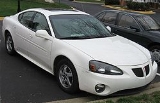
Pontiac Grand Prix

 
Pontiac Grand Prix

   Email Print
   Bookmark   Link


Pontiac Grand Prix


The Pontiac Grand Prix was an automobile produced by the Pontiac
Pontiac

Pontiac is a brand of automobiles, produced by General Motors Corporation that has been sold in the United States, Canada and Mexico since 1926....
 division of General Motors
General Motors

General Motors Corporation , founded in 1908, is the world's second-largest automaker after Toyota, ranked by 2008 global unit sales. GM was the global sales leader for 77 consecutive calendar years from 1931 to 2008....
. First introduced as part of Pontiac's full-size model offering for the 1962 model year, the Grand Prix name was also applied to cars in the personal luxury car
Personal luxury car

A personal luxury car is a marketing term used to describe highly styled, luxury vehicle intended for the comfort and satisfaction of its owner/driver, sacrificing passenger space, cargo capacity, and other practical concerns for the sake of style....
 market segment and the mid-size offering, slotting below the large Bonneville
Pontiac Bonneville

The Pontiac Bonneville was an automobile built by the Pontiac division of General Motors from 1957 to 2005. It was introduced as a limited production performance convertible during the 1957 model year....
 in the company's lineup.
ing up where the Ventura model left off, the Grand Prix first appeared in the Pontiac
Pontiac

Pontiac is a brand of automobiles, produced by General Motors Corporation that has been sold in the United States, Canada and Mexico since 1926....
 line for 1962.


Discussion
Ask a question about 'Pontiac Grand Prix'
Start a new discussion about 'Pontiac Grand Prix'
Answer questions from other users
Full Discussion Forum


Encyclopedia


The Pontiac Grand Prix was an automobile produced by the Pontiac
Pontiac

Pontiac is a brand of automobiles, produced by General Motors Corporation that has been sold in the United States, Canada and Mexico since 1926....
 division of General Motors
General Motors

General Motors Corporation , founded in 1908, is the world's second-largest automaker after Toyota, ranked by 2008 global unit sales. GM was the global sales leader for 77 consecutive calendar years from 1931 to 2008....
. First introduced as part of Pontiac's full-size model offering for the 1962 model year, the Grand Prix name was also applied to cars in the personal luxury car
Personal luxury car

A personal luxury car is a marketing term used to describe highly styled, luxury vehicle intended for the comfort and satisfaction of its owner/driver, sacrificing passenger space, cargo capacity, and other practical concerns for the sake of style....
 market segment and the mid-size offering, slotting below the large Bonneville
Pontiac Bonneville

The Pontiac Bonneville was an automobile built by the Pontiac division of General Motors from 1957 to 2005. It was introduced as a limited production performance convertible during the 1957 model year....
 in the company's lineup.

First generation


Picking up where the Ventura model left off, the Grand Prix first appeared in the Pontiac
Pontiac

Pontiac is a brand of automobiles, produced by General Motors Corporation that has been sold in the United States, Canada and Mexico since 1926....
 line for 1962. It was essentially a standard Pontiac Catalina
Pontiac Catalina

The Pontiac Catalina was part of Pontiac's full-sized automobile line. Initially, the name was used strictly to denote hardtop body styles, first appearing in the 1950 Chieftain Eight and DeLuxe Eight lines....
 coupe with minimal outside chrome trim and a sportier interior (bucket seats and a center console). The performance-minded John De Lorean
John De Lorean

John Zachary DeLorean was an United States engineer and executive in the U.S. automobile industry, and founder of the DeLorean Motor Company....
, head of Advanced Engineering at Pontiac, contributed greatly to the development of both the Grand Prix and the GTO
Pontiac GTO

The Pontiac GTO is an automobile built by Pontiac in the United States from 1964 to 1974, and by Holden in Australia from 2004 to 2006. It is often considered the first true muscle car....
. Early models had full access to the Pontiac performance option list, including the factory-race Super Duty 421
Pontiac V8 engine

From 1955 to 1981 the Pontiac Division of General Motors Corporation manufactured its own V8 engines, distinct from Buick, Cadillac, Chevrolet, or Oldsmobile....
 powertrain installed in a handful of 1962 and 1963 cars.

The full-size Catalina-based Grand Prix did very well through the 1960s, and is often credited with the move towards minimal exterior trim seen in the 1960s. Yet its clear resemblance to the other full-size Pontiacs caused some to consider it a lesser model than the other personal luxury cars. At the same time, the Grand Prix had a much stronger performance image than its competitors.

1962

Aside from the minimal exterior chrome trime and distinctive grille and tailights, the first Grand Prix was much like other full-sized Pontiacs. It was essentially a Catalina hardtop coupe trimmed to standards similar to the larger top-line Bonneville.

Inside were bucket seats upholstered Morrokide vinyl and separated by a center console including a floor shifter, storage compartment and tachometer at the front end. The rear seat was of the bench type with a center armrest below a radio speaker grille (which could be made functional with the extra-cost Bi-Phonic rear speaker), along with nylon loop-blend carpeting covering the floor and lower door panels. Other standards including a padded instrument panel, deluxe steering wheel, courtesy lights and other items.

The standard engine was the Bonneville's 303-horsepower 389 cubic-inch V8 with four-barrel carburetor and dual exhausts. Optionally available were a 389 Tri-Power with three two-barrel carburetors and , and two other higher-output 389s including a four-barrel version rated and Tri-Power option. Late in the model year a "street" version of the larger 421 cubic-inch V8 that was primarily a racing mill in 1961 and most of 1962 became available, but only in a four-barrel form rated at . Also standard was a three-speed manual transmission, while optional transmissions included a Borg-Warner T-10 four-speed with Hurst shifter or the three-speed Roto Hydra-matic.

1963

For 1963, the Grand Prix received revised sheetmetal shared with other full-size Pontiacs, but with its own squared-off roofline with a concave rear window that contrasted with the convertible-like roofline of the 1962 Grand Prix and continued on the 1963 to 1964 Catalina and Bonneville. Also new was a Pontiac-trademark split grille with vertical headlights and round parking lights and "hidden" tailights out back. Aside from grillework, taillight covering and bumpers, chrome trim was limited to lower rocker panels, wheelwheels and roofline.

Inside, the GP continued with luxurious interiors featuring bucket seats upholstered in Morrokide vinyl and separated by a console that was now built into the instrument panel containing a vacuum gauge (with Hydra-matic) and real walnut trim on the instrument panel and a dash mounted tachometer (manual transmission), along with revised custom pedal trim plates. A wide assortment of options were available including power steering, brakes, windows and driver's seat; air conditioning, 8-lug aluminum wheels with integrated brake drums, Safe-T-Track differential and other items. New options this year included an AM/FM radio, cruise control and a tilt steering wheel that could be adjusted to seven different positions.

Under the hood, the 303-horsepower 389 four-barrel V8 remained the standard engine. A new lineup of optional engines was introduced this year which included the 330-horsepower 389 Tri-Power and three versions of the larger 421 cubic inch V8 including a standard four-barrel version rated at , a Tri-Power option and the 421 HO option with Tri-Power carburetion and . The same selection of transmissions continued including the standard three-speed manual, optional four-speed manual or three-speed Roto Hydra-matic.

1964

The 1964 Grand Prix received only minor appearance changes from the '63 edition. Those included a revised grille with new "GP" logos and rear deck trim with new tailights, still hidden.

Revised upholstery trims highlighted the interior, still featuring expanded Morrokide vinyl bucket seats and console as standard equipment.

Engine offerings were mostly unchanged from 1963 except that the standard 303-horsepower 389 four-barrel V8 gained three additional horsepower (to 306) with the extra-cost Hydra-matic transmission. The standard three-speed manual and optional Hydra-matic transmissions were unchanged from 1963, however, a new GM-built Muncie four-speed available in either a wide-ratio M-20 or close-ratio M-21 options replaced the Borg-Warner T-10 unit.

1965

Grand Prix and all other full-sized Pontiacs were completely restyled for 1965 featuring more rounded bodylines with Coke-bottle profiles, and a one-inch increase in wheelbase to '121 (for Grand Prix, Catalina and all Safari station wagons - Bonneville and Star Chief increased proportionally from '123 to '124 inches). While other Pontiac coupes received the semi-fastback rooflines shared with other GM divisions, Grand Prixs retained the exclusive squared-off roofline with concave rear window but a bit more rounded than the 1963-64 version.

Inside, interior were revised with all-new instrument panels featuring a larger dose of walnut trim which now extended to the center console standard with bucket seats, along with a new steering wheel with horn bars replacing the horn ring used in previous years. The standard bucket seats could be upholstered either in expanded Morrokide vinyl or a new cloth-and-Morrokide trim. New for 1965 was a no-cost bench seat option with center armrest available with either upholstery choice.

New options this year included an automatic air conditioning system for which the driver could set a constant year-round temperature setting, if desired. This system, first introduced by Cadillac in 1964, was available in addition to the regular Circ-L-Aire Conditioning.

Engine offerings were revised for 1965. The standard four-barrel 389 cubic-inch V8 was uprated to 333 with a manual transmission or 325 with automatic. Optional engines included a 389 Tri-Power and 421 four-barrel - both rated at ; a 421 Tri-Power rated at and the 421 HO Tri-Power with . The standard three-speed and optional four-speed manual transmissions were carried over from 1964, however, a new three-speed Turbo Hydra-matic transmission with torque-converter that was similar in principle to Ford's Cruise-O-Matic and Chrysler's Torqueflite replaced the older three-speed fluid coupling Roto Hydra-matic (along with the four-speed Super Hydra-matic in Bonneville and Star Chief models). The Turbo Hydra-matic also featured the now-standardized P-R-N-D-S-L shift quadrant pattern in place of the P-N-D-S-L-R setup of previous Hydra-matics.

A '65 Grand Prix road test was featured in the February, 1965 issue of Motor Trend magazine, much of which was devoted the entire Pontiac lineup receiving M/T "Car of the Year" honors for 1965. Other Pontiac road tests in that issue included a GTO convertible, Tempest Custom sedan, Catalina Vista hardtop sedan and Bonneville hardtop coupe.

1966

The 1966 Grand Prix received only minor appearance revisions from the '65 edition including a new more rounded split grille and new tailight trim. Inside, a revised instrument panel included a squared off gauge panel and new Strato bucket seats in either Morrokide or cloth upholstery with higher seatbacks and more contoured cushions for improved lateral support. The Strato buckets were standard equipment along with a console, but a notchback bench seat with center armrest was a no-cost option.

Engine offerings were largely unchanged from 1965 except that the 338-horsepower 389 Tri-Power option was discontinued, leaving only the larger 421 V8 available with the three two-barrel carb option, which was offered for the last time this year due to a new General Motors edict that banned the use of multi-carb options on all GM cars with the exception of the Chevrolet Corvette starting with the 1967 model year.

1967

Revised sheetmetal with more rounded wasp-wasted styling highlighted the 1967 Grand Prix and other full-sized Pontiacs, along with the addition of a new Grand Prix convertible. Also new to the GP were concealed headlights with horizontal mounting (all other '67 Pontiacs retained the horizontal headlights except for the mid-year Firebird for one more year), concealed windshield wipers and ventless front windows on hardtop coupes. Out back were louvered tailights similar to those found on the GTO.

Inside, Strato bucket seats and console were still standard equipment with Morrokide vinyl or cloth upholstery, or a no-cost optional notchback bench seat with either trims. Other changes included a revised instrument panel and door panel trim.

Under the hood, the 389 V8 was replaced by a new 400 cubic-inch V8 with four-barrel carburetor, dual exhausts and rating. Similarly, the 421 V8 was replaced by a new 428 cubic-inch V8 rated at or an HO version with - both with four-barrel carburetors. Both the 400 and 428 V8s were basically bored out versions of the older 389/421 block but with various internal improvements including bigger valves and improved breathing capabilities.

New this year was a dual master-cylinder braking system and optional front disc brakes along with Rally II wheels. Also new for 1967 was an energy-absorbing collapsable steering column.

The Grand Prix convertible would be a one-year only offering and dropped after this one year.

1968

The 1968 Grand Prix received a new "beak-nose" grille and bumper with concealed headlights and revised rear deck/bumper with L-shaped taillights, plus side reflector markers to meet a new federal safety mandate. The convertible was discontinued, leaving only the hardtop coupe for '68.

The standard 350-horsepower 400 cubic-inch V8 was unchanged from 1967 aside from revisions in order to meet the 1968 emission regulations, both Federal and California. Both optional 428 cubic-inch V8s received higher power ratings of for the base version and 390 for the HO option.

Interior trim only received minor changes from 1967 aside from revised door panels.

This would be the final year for the Grand Prix to be based on the B-body full-sized car platform. The 1969 GP would be all-new with an exclusive bodyshell but its chassis design was based on the smaller Pontiac A-body intermediates (Tempest, LeMans and GTO).

Second generation


1969

For 1969, John Z. DeLorean, Pontiac's general manager at the time, ordered the development of an all-new Grand Prix based on a slightly stretched version of the intermediate GM A platform
GM A platform (RWD)

The General Motors Corporation A platform was a rear wheel drive mid-size car automobile platform designation used from 1964 to 1981. In 1982, GM introduced a new front wheel drive GM A platform , and existing intermediate rear wheel drive products were redesignated as GM G platform ....
, which was dubbed the G-body. The previous platform was based on the wheelbase from the Catalina, but in 1969 it was decreased to . This smaller, lighter car at last had its own body, and brought a new level style and luxury into the intermediate class. The redesigned radiator, "Coke bottle" body shape and other Duesenberg styling cues gave the Grand Prix a feel of high luxury without the high cost. Unlike the previous generation for which a convertible was a one-year-only offering in 1967, the new Grand Prix would only be offered as a hardtop. Even the model names took elements of old Duesenbergs (J and SJ trim).

Development of the new intermediate-based '69 Grand Prix began in April, 1967 after a few prototype GPs were built on the full-sized Pontiac platform as originally planned. DeLorean and other Pontiac planners decided to make the switch in light of declining sales of the full-sized Grand Prix in comparison to competition from unique personal cars in both the luxury and sporty car fields including the Ford Thunderbird, Buick Riviera and Oldsmobile Toronado at the luxury end, along with the emerging ponycars such as the Ford Mustang and Pontiac's own new-for-1967 Firebird. To save product development costs, it was decided that while the newest GP would have a unique bodyshell of its own, the car would use the basic chassis and drivetrain from the A-body intermediates (Tempest, LeMans and GTO), in much the same manner Ford created the original Mustang in 1964 using the basic chassis and drivetrain from the compact Ford Falcon. Going this route greatly reduced development costs overall and permitted Pontiac to concentrate on more effort to upgrade the styling and sheetmetal, along with interior appointments. This move also enabled Pontiac to reduce development time for the '69 GP from the usual 36 months required for a new model to less than 18 months. The new model also refocused attention on performance, with increased installation percentages for manual transmission
Manual transmission

A manual transmission is a type of Transmission used in automotive applications. It generally utilizes a driver-operated clutch operated by a pedal or lever, for regulating torque transfer from the engine to the transmission, and a gear-shift either operated by hand or by foot ....
s and engine options up to the 390 hp (290 kW) 428 HO
Pontiac V8 engine

From 1955 to 1981 the Pontiac Division of General Motors Corporation manufactured its own V8 engines, distinct from Buick, Cadillac, Chevrolet, or Oldsmobile....
. Two engine sizes were offered, the base 400 ci and the 428 upgrade. Two power options were available in each engine size; a buyer could opt for a 265 hp 400 ci, 350 hp 400 ci, a 370 hp 428 ci and the high output 390 hp 428 ci. The 390 hp 428 ci option could run the 1/4 mile in about 14.1 seconds. It was both a marketing and an engineering landmark, being hailed at the time as "an Eldorado for the masses" and also in retrospect as the first successful downsizing of an American car.

Inside, the 1969 Grand Prix featured a sporty and luxurious interior with a wraparound cockpit-style instrument panel that placed virtually all controls and gauges within easy reach of the driver, and was named the "Command Seat". The "Strato" bucket seats were separated by a console slanted toward the driver which included the customary floor shifter, storage compartment and ashtray, integrated into the instrument panel. Upholstery choices included standard expanded Morrokide vinyl or cloth and Morrokide, or an extra-cost leather trim. The leather interior option also included a more luxurious cut-pile carpeting replacing the regular nylon loop rug that came with standard interior trims.

Innovations introduced on the 1969 Grand Prix included a concealed radio antenna, which amounted to two wires in the windshield; an optional built-in electrically heated rear window defogger and side-impact beams inside the doors. Also new were flush-mounted "pop-open" exterior door handles instead of the normal door handles featuring a grab handle and push button.

The 1969 Grand Prix also created a new market segment—the intermediate personal luxury car with sales ending up at over 112,000 units, well above the 32,000 full-sized Grand Prixs built in 1968. The similar Chevrolet Monte Carlo
Chevrolet Monte Carlo

The Chevrolet Monte Carlo was an American-made automobile. Originally introduced by Chevrolet for the 1970 model year , it has gone through six generations as of 2007....
 followed in 1970. Ford
Ford Motor Company

The Ford Motor Company is an United States multinational corporation and the world's List of automobile manufacturers#World Motor Vehicle Production by Manufacturer based on worldwide vehicle sales, following Toyota, General Motors, and Volkswagen Group....
 and Chrysler
Chrysler

Chrysler LLC is an American automobile manufacturer that has manufactured automobiles since 1925. From 1998 to 2007, Chrysler and its subsidiaries were part of the German based DaimlerChrysler ....
 responded by producing plusher versions of their Ford Torino
Ford Torino

The Ford Torino is an mid-size car car produced bythe Ford Motor Company for the North American market between 1968 and 1976. It was initially an upscale version of the intermediate sized Ford Fairlane, which Ford produced between 1962 and 1970....
 and Dodge Charger
Dodge Charger (B-body)

The Dodge Charger was a car model of car produced by Dodge. The 1966 to 1974 Chargers were sporty models based on the Chrysler B platform that could be ordered with high-performance options....
 intermediates, but both eventually created new models to enter the battle—the Ford Elite
Ford Elite

The Ford Elite was an automobile produced by the Ford Motor Company for the North American market from 1974 to 1976. The Elite was based on the Ford Torino, and was a two-door coupe intended to be, in the words of Ford's advertising, a "mid-size car in the Thunderbird tradition"—a more affordable personal luxury car than the Ford Thun...
 and Mercury Cougar XR-7
Mercury Cougar

The Mercury Cougar was an automobile sold under the Mercury brand of the Ford Motor Company's Lincoln-Mercury Division. The name was first used in 1967 and was carried by a diverse series of cars over the next three decades....
 in 1974 and Chrysler Cordoba
Chrysler Cordoba

Chrysler Cordoba was the name of an intermediate personal luxury car coupe sold by Chrysler Corporation in North America from 1975 to 1983. It was the company's first model produced specifically for the personal luxury market and the first Chrysler-branded vehicle that was less than full-size....
 in 1975. The GP and the others were consider as smaller and lower-priced alternatives to the more expensive personal-luxury cars of the day including the Ford Thunderbird
Ford Thunderbird

The Thunderbird, often abbreviated as T-Bird, was an automobile manufactured by the Ford Motor Company in the United States from 1955 through 2005 — through thirteen generations and various body types....
, Buick Riviera
Buick Riviera

The Buick Riviera is an automobile produced by Buick in the United States from the 1963 to 1999 model years, with 1,127,261 produced.A full-size coup? or personal luxury car, the early models of the Riviera in particular have been highly praised by automotive journalists and writers....
, and Oldsmobile Toronado
Oldsmobile Toronado

The Toronado was a two-door coupe produced by the Oldsmobile division of General Motors from 1966 to 1992.The name "Toronado" has no meaning, and was originally invented for a 1963 Chevrolet show car....
 along with the even pricier Cadillac Eldorado
Cadillac Eldorado

The Eldorado model was part of the Cadillac line from 1953 to 2002. The Cadillac Eldorado was the longest running American personal luxury car as it was the only one sold after the 1998 model year....
 and Lincoln Continental Mark III
Lincoln Continental Mark III

See Lincoln Mark for a complete overview of the Lincoln Mark Series.The Lincoln Continental Mark III was a personal luxury car produced by Lincoln and sold in North America in the 1969 through 1971 model years, although it actually became available in early 1968....
.

The basic 1969 bodyshell continued until the 1972 model year with a major facelift in 1971 but only minor detail revisions in 1970 and 1972.

1970

Vertical grille inserts replaced the horizontal bars of the 1969, movement of "Grand Prix" nameplates from the lower cowls to the rear C-pillars and the vertical chromed louvers from the C-pillars down to the lower cowls, highlighted the 1970 Grand Prix. The optional 428 CID V8 rated at 370 and in 1969 was replaced by a new 455 CID V8 with an astounding of torque at 3100 rpm. The base 350 hp 400 ci engine was still standard, but a low-compression 400 ci engine was available with a two-barrel carburator. An automatic transmission was offered as a no cost option.

Interior trim also received minor revisions, and a bench seat with center armrest returned as a no-cost option to the standard Strato bucket seats and console. Bench seat-equipped Grand Prixs got a steering column-mounted shifter with the automatic transmission along with a dashboard-mounted glovebox, replacing the console-mounted shifter and glovebox of bucket-seat cars. Power front disc brakes became standard equipment this year.

Due to the success of the 1969 Grand Prix, other GM divisions followed suit and introduced similar cars for 1970. The Chevrolet Monte Carlo
Chevrolet Monte Carlo

The Chevrolet Monte Carlo was an American-made automobile. Originally introduced by Chevrolet for the 1970 model year , it has gone through six generations as of 2007....
 used the same basic G-body as the GP but with a two-inch shorter wheelbase (116 vs. the GP's 118) and a long hood, though still a bit shorter than the Grand Prix's, but still considered an upscale vehicle for GM's lowest-priced division. Oldsmobile, whose larger and more expensive front-drive Toronado was a direct competitor to the Thunderbird, decided to further capitalize on strong sales of its intermediate Cutlass line by introducing a new Cutlass Supreme
Oldsmobile Cutlass Supreme

The Oldsmobile Cutlass Supreme was a mid-size car produced by General Motors for the United States market. It was always at the top of the Oldsmobile Cutlass range....
 coupe with a formal roofline similar to the GPs but on the standard wheelbase used for two-door A-body intermediates and the same lower sheetmetal used on other Cutlass models. Both the Monte Carlo and Cutlass Supreme were also much lower in price, primarily due to smaller standard engines of 350 cubic inches for both, and the fact that many items standard on the GP were optional on those models - however, all three cars with similar equipment were actually much closer in price than the base sticker prices suggest. The introduction of the Monte Carlo and Cutlass Supreme did, however, cut into the Grand Prix's dominance, and sales dropped 40 percent. 65,750 Grand Prixs were built in 1970.

Variations of the '69 GP's central V-nose grille appeared on other 1970 Pontiacs including the full-sized cars and intermediate Tempest/LeMans series. Ford even got in the act by putting a somewhat similar nose on the 1970 Thunderbird, whose sales actually increased significantly over the 1969 model. Interestingly, the '70 T-Bird styling change was reportedly ordered by Ford Motor Co. president Bunkie Knudsen, who moved from GM to Ford in 1968 after a long career at GM which included the position of general manager for the Pontiac Motor Division from 1956 to 1961 and ordered the addition of the Grand Prix to the 1962 model lineup.

1971

A new integrated bumper/grille and larger single headlights replacing the quad lights of 1969-70 models marked the introduction of the 1971 Grand Prix along with a new slanted boattail-style rear with taillights built into the bumper. Interior revisions amounted to new trim patterns for cloth and vinyl upholstery patterns for both the bench and bucket seats, but the leather interior option was discontinued.

Engine choices included the standard 400 CID V8 with four-barrel carburetor and dual exhausts, rated at ; and the optional four-barrel 455 CID V8 rated at . Both engines received substantially lower compression ratios (8.4 to 1 for 1971 compared to 10.25 to 1 in 1970) as part of a GM-corporate edict that required engines to use lower-octane regular leaded, low lead or unleaded gasoline beginning with the 1971 model year. Transmission offerings initially were carried over from previous years, including the standard three-speed manual, or optional four-speed stick or Turbo Hydra-Matic. However, at mid-year, Turbo Hydra-Matic automatic became standard equipment and the manual shifters were dropped. Variable-ratio power steering was made standard equipment as well.

New power ratings were put into effect, requiring manufacturers to post net horsepower with all accessories installed (vs. gross rating without the accessories). This system gave a more realistic measure of power that customers actually saw. The base 400 four barrel engine then produced only after the switch to the net-rating system, and the 455 found in SJ models also dropped in power to 260 horsepower (net). Customers who wanted the higher powered 455 SJ model paid $195 to get Rally gauges, body-colored mirrors, SJ badging, a no maintenance AC Delco battery and other amenities. 1971 looked to be a good sales year for the Grand Prix, but in mid-September of 1970, a corporate wide labor strike halted all GM production for 67 days. The strike also delayed the production of the second generation Grand Prix by one year in 1973. Production numbers for 1971 were lower than 1970 with only 58,325 units being produced. The strike cut into production and sales along with other possible factors including lower horsepower ratings and intense competition from Chevy's Monte Carlo and Oldsmobile's Cutlass Supreme.

1972

Minor styling revisions included a new cross-hatch grille up front and triple cluster taillights in back. Inside, the burled-elm trim was replaced by a new teakwood design and upholstery trim patterns for vinyl and cloth selections were revised for both bucket and bench seat offerings. Engine offerings remained the same as before with the major change being the change in power measurements from the previous gross method on a dynamometer
Dynamometer

A dynamometer or "dyno" for short, is a machine used to measure torque and rotational speed from which power produced by an Heat engine, motor or other rotating Wiktionary:prime mover can be calculated....
 to the new net ratings as installed in a vehicle with accessories and emission equipment which made the horsepower ratings of 1972 models much lower "on paper" than their 1971 counterparts though actual performance didn't change much between the two years. Under the new net horsepower system, the standard 400 CID V8 with four-barrel carburetor was rated at while the optional 455 CID V8 with four-barrel carb was rated at .

At mid-year, Pontiac released a radial tire option for the Grand Prix, which increased the wheel diameter from the standard to 15-inchers. The radial donuts, provided by the division's usual tire suppliers, included Firestone 500s and B.F. Goodrich Lifesaver T/As. This was the first time that Pontiac offered a radial tire option which actually became a reality. In 1968, Pontiac announced a radial tire option for the GTO that was quickly discontinued due to production problems.

Also at mid-year, a new "Fasten Seat Belts" light with buzzer was added per Federal safety regulation. This light was located in the speedometer pod and necessitated a recalibration of the speedometer from a high of back to .

An all-new Grand Prix was scheduled for 1972. However, a 67-day corporate-wide strike at GM in late 1970 that hobbled the 1971 model introduction set back 1972 model production plans and the new A and G-body cars planned for 1972 were delayed for introduction by one year to the 1973 model year. Production numbers increased substantially after two years of decline, reaching 91,961 units and only second place to the 1969 model.

Third generation


1973

All A-bodies
GM A platform

The General Motors Corporation A platform was a mid-size car automobile platform. The A-bodies evolved from rear wheel drive compact cars to front wheel drive mid-size cars over the course of 32 years....
, including the Grand Prix, were redesigned for 1973. This generation was larger and heavier, due partly to the federally mandated 5 mph (8 km/h) crash bumpers. Although large V8s were still available, performance was on the decline due to another federal standard—a new emissions control system. The most notable styling feature of this generation was the appearance of the fixed opera window, replacing the previous disappearing rear side glass. This year's Grand Prix switched from pillarless hardtop design to a pillared "Colonnade" hardtop with frameless door glass as did all GM intermediates in response to proposed federal safety standards regarding roll-over protection that would have ultimately spelled the end of pillarless and convertible bodystyles, a mandate that never materialized. The 1973-77 GM intermediates with their pillared hardtop design were often referred to as "Colonnade hardtop coupes" or "Colonnade hardtop sedans".

Front and rear styling of the 1973 Grand Prix turned out be an evolution of the 1971 to 1972 models with a vertical-bar V-nose grille and single headlamps along with the new federally mandated 5 mph (8 km/h) front bumper. The rear featured a revised boattail-like trim with square-taillights above the bumper.

Inside, a new instrument panel continued the wraparound cockpit theme of previous models with new African Crossfire Mahogany facing on the dashboard, console and door panels, which was "real" wood in contrast with the simulated woodgrain material found in most car interiors during that time. The Strato bucket seats were completely new with higher seatbacks and integrated headrests in Morrokide or scivvy cloth trims, and optional recliners and adjustable lumbar support, with a notchback bench seat offered as a no-cost option.

The standard drivetrain consisted of the four-barrel 400 CID V8 rated at and the Turbo Hydra-Matic transmission. Also standard were power steering and power brakes. A four-barrel 455 CID V8 was optional and included with the "SJ" option that also added a rally gauge cluster and a radial tuned suspension with front and rear sway bars, Pliacell shock absorbers and radial-ply tires.

Although the Third Generation Grand Prix was indeed bulkier and heavier than its predecessor, handling was very good for such a large car, due to improvements in suspension design that gave better stability and cornering. The introduction of radial-ply tires was also a boon for handling. GM's "A" body cars' front suspensions were based on the road-hugging Chevrolet Camaro
Chevrolet Camaro

The Chevrolet Camaro is a pony car manufactured by the Chevrolet division of General Motors. It went on sale on September 29, 1966 for the 1967 model year and was designed as a competing model to the Ford Mustang....
 and Pontiac Firebird
Pontiac Firebird

The Pontiac Firebird was built by the Pontiac division of General Motors between 1967 and 2002.The Firebird was introduced the same year as its platform-sharing cousin, the Chevrolet Camaro....
 during this production run.

Grand Prix production set a new record of over 150,000 units, easily breaking the previous record of over 112,000 units in 1969, despite intense competition from a similar restyled Chevy Monte Carlo, and "near" personal luxury coupes such as Buick's all-new Century Regal and Oldsmobile's Cutlass Supreme - both of whose styling and appointments were very similar to the GP and Monte, and even shared the same squared-off formal roofline with opera windows - but used the standard A-body coupe body and wheelbase shared with lower-priced models. The success of the GP (and Monte) led to direct responses from Ford Motor Company the following year with a larger Mercury Cougar and Ford Elite, which were followed by Chrysler Corporation entries in 1975 including the Chrysler Cordoba and Dodge Charger SE.

1974

The 1974 Grand Prix received a revised split grille with vertical bars that was entirely above the bumper. Out back, the boattail effect was softened somewhat thanks to a new federally mandated bumper that was added to the similar mandated front bumper introduced in 1973. The license plate and fuel filler were moved above the bumper and taillight lenses were revised.

The interior trim remained virtually unchanged from 1973, with standard seating choices, including Strato bucket seats with center console or notchback bench seat with an armrest and cloth or Morrokide upholstery. The bucket seats were available with optional recliners and adjustable lumbar support. However, the real African Crossfire Mahogany trim was replaced by a simulated material for the instrument panel due to splintering problems on '73 models; the "real" wood was continued on the console and door panels for another two years. Also, a new cut-pile carpeting replaced the nylon loop rugs of previous years.

Also new for 1974 was a federally-mandated interlock system that required the driver and front-seat passenger to fasten their seat belts in order to start the car. This regulation, which was very unpopular with the buying public, was offered only this one year and on some early 1975 models. It was rescinded by Congressional action due to the public uproar.

Engines were carried over from 1973, including the 400 CID V8 (standard on the Model J) and 455 CID V8 (standard on the Model SJ, optional on the Model J). A Turbo Hydra-Matic transmission, variable-ratio power steering, and power brakes were standard equipment on both models. In addition to the 455 V8, the Model SJ also added a Rally Gauge Cluster, "SJ" identification, and a radial-tuned suspension similar to Pontiac's Grand Am. Radial tires were also a new option on the Model J this year.

Sales of Grand Prixs for the 1974 model year dropped from 1973's record of around 150,000 units to just under 100,000 units primarily due to new competition in the intermediate personal-luxury car market from a new upsized Mercury Cougar
Mercury Cougar

The Mercury Cougar was an automobile sold under the Mercury brand of the Ford Motor Company's Lincoln-Mercury Division. The name was first used in 1967 and was carried by a diverse series of cars over the next three decades....
 XR-7 coupe and Ford Elite
Ford Elite

The Ford Elite was an automobile produced by the Ford Motor Company for the North American market from 1974 to 1976. The Elite was based on the Ford Torino, and was a two-door coupe intended to be, in the words of Ford's advertising, a "mid-size car in the Thunderbird tradition"—a more affordable personal luxury car than the Ford Thun...
, both based on the Dearborn's intermediate Torino/Montego platform. Still, 1974 was the third-best selling year to date for the Pontiac Grand Prix.

1975

A revised grille with fewer vertical bars and revised taillight lenses marked the 1975 Grand Prix. Mechanical changes this year included the addition of GM's High Energy electronic ignition and a catalytic converter that mandated the use of unleaded gasoline. Radial tires became standard on all models.

A new luxury LJ model was added the lineup, positioned between the base Model J and the sporty SJ series. The LJ included pinstriping and a luxurious velour interior trim. Speedometers were revised with numerals now topping at rather than the 120 or readings found in previous years and speed readings in kilometers were added.

The addition of the catalytic converter spelled the end of dual exhaust pipes for 1975 and detuning of engines. The 400 CID V8 (standard on J and LJ models) dropped from 230 to while the 455 CID V8 (standard on SJ, optional on J and LJ) was detuned from 250 to . New for 1975 was a more economical 400 cubic-inch V8 with two-barrel carburetor, which was available as a no-cost option on J and LJ models.

Early 1975 models featured the seat belt interlock system introduced on all 1974 models that required both the driver and front passenger to fasten their seat belts in order to start the vehicle. However, Congressional action to rescind that regulation, which led automakers to discontinue the device and permitted dealers and garages to disconnect the device on cars so-equipped.

Sales dropped to around 87,000 units thanks to a continued recession resulting from the 1973-74 energy crisis, substantially higher prices for all 1975-model cars due to that year's safety and emission control regulations, and intense competition from Cougar, Elite and Chrysler Corporation's two new entries in this class including the Chrysler Cordoba and Dodge Charger SE.

1976

A new split vertical bar "waterfall" grille and quad rectangular headlights in front and revised taillight lenses out back highlighted the 1976 Grand Prix. The same three model designations continued (J, LJ and SJ) with the LJ and SJ offering the same trim and equipment levels as in 1975 with the exception being the SJ downgraded to a standard 400 CID V8.

The base Model J underwent a number of content changes to cut the base price by around $500 to be more competitive with other mid-sized personal luxury cars. Those changes for the "J" included a smaller 350 CID V8 as the base powerplant and some downgrading of interior trim that included a new notchback bench seat made standard equipment and the Strato bucket seats/console moved to the "option" list. Also, custom features such as a cushioned steering wheel and custom pedal trim plates were moved to the option list on Model J, but remained standard on LJ and SJ, both of which also continued to include Strato bucket seats as standard equipment. All models got a new simulated rosewood trim for the dash, door panels and console (with bucket seats) that replaced the African Crossfire Mahogany trim of previous years. Upholstery choices included cloth or Morrokide vinyl bench or bucket seats on the Model J, velour buckets on the LJ or Morrokide buckets on the SJ. Leather interior trim was a new extra-cost option available with the Strato bucket seats and LJ and SJ models. Both the "LJ" and "SJ" models came standard with a 400 CID V8 that was optional on the Model J. The 455 CID V8 was optional on all models. In celebration of Pontiac's 50th anniversary in 1976, a number of special edition Grand Prix painted gold were produced. These models featured removable Hurst T-tops, Rally II wheels and other distinctions but were mechanically similar to the regular models.

Grand Prix production set a new record of over 226,000 units during this Bicentennial year, making the GP only second in sales in its market segment to Chevy's Monte Carlo.

1977

Revised grille work with fewer vertical bars, a stand-up hood ornament and revised taillight lenses with "GP" logos highlighted the 1977 Grand Prix, which was the final year for the 1973-vintage bodyshell which was set to be replaced by a downsized GP for 1978. The same three models (J, LJ and SJ) were carried over with engine revisions. The base Model J got Pontiac's new 301 CID V8 as standard equipment, which was a bit too small and underpowered to propel a 4,000-pound car. Optional engines included a 350 CID V8 or 400 CID V8; those two engines standard on the LJ and SJ models, respectively.

Each of those engines were Pontiac-built units as in previous years, but offered in 49 of the 50 states. Due to the fact that Pontiac's own V8 engines could not meet the more stringent California emission standards set for 1977, all Grand Prixs (and other Pontiac models) sold in California were powered by Oldsmobile-built engines including Lansing's 350 CID Rocket V8 for J and LJ, and the 403 CID Rocket V8 standard on the SJ and optional on the other two GPs in California. Due to a shortage of Olds 350 engines resulting from record sales of Cutlasses and reduced production of that engine due to a plant conversion to build a Diesel V8 beginning in 1978, a few '77 Grand Prixs destined for California reportedly came off the line with a Chevrolet-built 350 CID V8.

Grand Prix sales soared to an all-time high of over 270,000 units for 1977, the last year for this bodystyle, despite competition from a newly-downsized and lower-priced Ford Thunderbird introduced this year and a restyled Mercury Cougar XR-7 whose bodyshell switched to the T-Bird this year from the discontinued Ford Torino/Mercury Montego.

Fourth generation


1978

1978 brought a downsizing of the Grand Prix and the other A-bodies
GM A platform

The General Motors Corporation A platform was a mid-size car automobile platform. The A-bodies evolved from rear wheel drive compact cars to front wheel drive mid-size cars over the course of 32 years....
. This version of the A-body also received some sheetmetal revisions in 1981. The 1978 GP was about a foot shorter and 600 pounds lighter than the 1977 model with an overall length of and a wheelbase.

For the first time in Grand Prix history, a V8 engine was not standard equipment. In order to meet Corporate Average Fuel Economy (CAFE) mandates set after 1973-74 energy crisis, a Buick-built 231 CID V6 was standard equipment on the base model (formerly the Model J) and two versions of the Pontiac 301 CID V8 (Chevy 305 V8 in California) were optional. The luxury LJ model came standard with the 301 V8 with two-barrel carburetor while the sporty SJ was powered by a 301 V8 with four-barrel carburetor. A floor-mounted three-speed manual transmission was standard equipment with the V6 on the base model and the three-speed Turbo Hydra-Matic automatic was optional. Turbo Hydra-Matic was standard on LJ and SJ models and base models with either of the optional V8 engines. Standard seating choices by model included a notchback bench seat with cloth or Morrokide vinyl in the base GP, a pillowed velour cloth notchback bench seat in the LJ or Strato bucket seats in cloth or Morrokide in the SJ. The Strato buckets were optional on the base GP and a 60/40 split bench was optional on both base and LJ models. Viscount leather upholstery was available with bucket seats on SJ models.

1979

A new crosshatch grille and revised taillight lenses were the only appearance changes made to the 1979 Grand Prix. The same models, base, LJ and SJ continued as before as did the basic engine lineup including the 231 cubic-inch Buick V6 standard on base and LJ models, the 301 cubic-inch Pontiac V8 with two-barrel carburetor that was optional on both of those models, and the 301 V8 with four-barrel carburetion that was standard on the SJ and optional on the other models. Transmissions remained the same as before with the three-speed manual standard with the V6 engine on the base model and automatic transmission optional. The automatic transmission was standard on LJ and SJ models and all models when a V8 engine was ordered. Again, the Pontiac V8s were not available in California, where they were replaced by Chevy 305s rated at 140 and . A new and one-year-only option this year was a four-speed manual transmission available with the 301 four-barrel or two barrel V8 on all models. Only 232 4 speed/301 V8 cars were built.

1980

The 1980 Grand Prix returned to a vertical bar grille and featured new taillight lenses with "GP" logos. Automatic transmission was standard equipment on all models and the two-barrel 301 Pontiac V8 was replaced by a new 265 cubic-inch V8 rated at . The Buick 231 V6 and the four-barrel version of the Pontiac 301 V8 were carried over from the previous year as was the Chevy 305 V8 offered in California.

1981

A minor reskinning of the sheetmetal for improved aerodynamics marked the 1981 Grand Prix along with a new grille design and revised tail section. The sporty SJ model was dropped and a new ultra-luxurious Brougham series was now the flagship of the Grand Prix line featuring a plush cloth interior similar to the full-sized Bonneville Brougham and standard power windows and other amenities. The base and LJ models continued as before. All models now came standard with the Buick 231 V6 with the 265 cubic-inch Pontiac V8 available as an extra cost option (Chevy 305 V8 in California). The 301 V8 was discontinued and a new option this year was the Oldsmobile-built 350 cubic-inch Diesel V8, which was not often ordered due to high cost of around $700 and poor reliability. The year 1981 was also the last for Pontiac Motor Division to offer its own V8 engine due to an emerging GM corporate engine policy that determined Pontiac would build only four-cylinder engines and Buick only V6 engines, leaving Chevrolet and Oldsmobile to build V8 engines for most GM cars and trucks, while Cadillac would produce its own aluminum-block V8 that debuted in 1982. From 1982-on, all V8-equipped Pontiacs were equipped with Chevy or Olds engines.

1982

The 1982 Grand Prix was a virtual re-run of the 1981 model with no appearance changes to note. No gasoline-powered V8 engines were offered this year (in the U.S. only - Canadian GPs were available with the Chevy 305 V8 as an option in '82), leaving only the standard 231 cubic-inch Buick V6, a larger Buick 252 cubic-inch V6 and the Olds 350 Diesel V8. The A-body line became front-wheel-drive, leaving the rear-wheel-drive midsize platform as the G-body
GM G platform (RWD)

The General Motors G platform was an automobile platform designation used for mid-sized rear wheel drive cars from 1982 to 1988. G-Bodies began production designated as GM A platform cars in 1978, but were redesignated to G when the GM A platform was introduced in 1982....
. The downsized four-door Bonneville
Pontiac Bonneville

The Pontiac Bonneville was an automobile built by the Pontiac division of General Motors from 1957 to 2005. It was introduced as a limited production performance convertible during the 1957 model year....
 was now related to the Grand Prix.

1983

No appearance changes for the 1983 GP. Only significant change to note was the 252 V6 was discontinued and the gas-powered V8 returned after a one-year absence (on U.S. models) in the form of a Chevy 305. 1983 also marked the end of the LJ series, as the LE model would be added in 1984.

1984

New grille inserts and minor revisions to the tail section marked the 1984 Grand Prix. The base and Brougham models continued as before but the LJ was replaced by a new LE model. Same engines continued as before including the Buick 3.8 liter (231 cu.-in.) V6, Chevy 5.0 liter (305 cu.-in.) V8 and Olds
Oldsmobile

Oldsmobile was a brand name of automobile produced for most of its existence by General Motors. It was founded by Ransom E. Olds in 1897. In its 107-year history, it produced 35.2 million cars, including at least 14 million built at its Lansing, Michigan factory....
 5.7 liter (350 cu.-in.) Diesel V8. A new option this year was the Turbo Hydra-Matic 200-4R four-speed overdrive automatic available with the 305 V8 for improved highway gas mileage.

1985

For 1985, the minor trim changes to the front grill inserts and last year for the flat rear deck panel in the interior were the only changes. In 1986, laws mandated cars to have a third brake light. Some options for the 1985 Pontiac Grand Prix included the rare aluminum turbo finned wheels, rare chrome painted plastic hub caps, full size spare tire, AM/FM Cassette stereo system with 4 speakers, and rally gauge package. The standard engine for 1985 was the Buick built 3.8 liter (231 cu.-in) V6 with a Chevy 5.0 liter (305 cu.-in) V8 optional. The 5.7 liter (350 cu.-in) Olds Diesel V8 was dropped from the option list.

An ad for the '85 GP promoted the fact that it's instrument panel still used dials for gauges. It was highlighted by a question similar to one long used in advertisements for Dial soap since the late 1950s, "Aren't You Glad We Use Dials. Don't You Wish Everybody Did?"

1986

In 1986 a 2+2 model was offered for homologation
Homologation

Homologation is a technical term, derived from the Greek language homologeo for "to agree", which is generally used in English to signify the granting of approval by an official authority....
 of an Aerocoupe body for NASCAR
NASCAR

The National Association for Stock Car Auto Racing is the largest sanctioning body of stock cars in the United States. The three largest racing series sanctioned by NASCAR are the Sprint Cup Series, the Nationwide Series and the Camping World Truck Series....
 competition. 2+2 specific pieces are an aero nose, bubble rear glass and a fiberglass trunklid with integral spoiler. All 2+2 were optioned similarly with a corporate 305 four barrel, 200-4R 4 speed automatic transmission and 3.08:1 rear axle ratio. All were silver with 2+2 decals and striping, with 15X7 steel rally II wheels. Approximately 1225 1986 Grand Prix 2+2's were built in 1986.

1987

The 1987 Grand Prix was basically a rerun of the '86 model aside from the discontinuation of the 2+2 model. The same three models were continued including base, LE and Brougham. Engine offerings again included the standard Buick 3.8 liter (231 cu.in) V6 or optional Chevy 5.0 liter (305 cu.in) V8.

This would be the last year for the G-body Grand Prix, which would be replaced by the all-new W-body version in 1988. The '87 was also the last GP to feature rear-wheel-drive, V8 engines (until 2006) and separate body-on-frame construction.

Fifth generation


1988

The first front-wheel drive
Front-wheel drive

Front-wheel drive is a form of Internal combustion engine/transmission layout used in motor vehicles, where the engine drives the front wheels only....
 W-body
GM W platform

The W-body is an automobile platform from General Motors which underpins mid-size cars with front-wheel drive. The platform, originally code named GM10, began in 1982 under Chairman Roger B....
 Grand Prix coupe was built on January 12, 1988. This generation Grand Prix was built in Kansas City, Kansas
Kansas City, Kansas

Kansas City is the third largest city in the U.S. state of Kansas and is the county seat of Wyandotte County, Kansas. It is a Satellite town of Kansas City, Missouri and is the third largest city in the Kansas City Metropolitan Area....
. The Grand Prix was introduced as base, LE and SE coupes. All featured GM's MPFI 2.8L V6
GM 60-Degree V6 engine

The General Motors Corporation 60? V6 family of engines began with the 1980 Chevrolet 2.8 L V6 and continues to be produced today . Its use in the GM X platform cars leads some to refer to it as the X engine....
 that made . A five-speed manual or four-speed automatic were the transmissions offered. The LE was well equipped with power windows and door locks and optional digital dashboard. SE models upgraded with power front seats with multiple lumbar, side bolster, side wing adjustments, an AM/FM Cassette stereo, and a neat trip computer and compass located in the center of the dash. Some models of this generation have the rare feature of a split front bench seat with a column shifter. Another unique feature only found on the Grand Prix is the combination lock for the glove box, rather than a key. Grand Prix was Motor Trend's Car of the Year
Car of the Year

Car of the Year is a phrase usually considered to have been invented by Motor Trend magazine in the 1950s for their annual award for best automobile....
 for 1988.

1989

A host of changes upgraded the Grand Prix for 1989. Air conditioning was standard, and the 2.8L was replaced by GM's new 3.1L MPFI V6
GM 60-Degree V6 engine

The General Motors Corporation 60? V6 family of engines began with the 1980 Chevrolet 2.8 L V6 and continues to be produced today . Its use in the GM X platform cars leads some to refer to it as the X engine....
 that produced mid-way through the model year. For 1989, the 3.1L was only mated to a four-speed automatic transmission, while the remaining 2.8 was mated to either manual or automatic transmissions. A new trim level was offered for 1989, a limited-edition turbo coupe that featured an ASC/MacLaren turbocharged version of GM's 3.1L V6. Output was , 65 more than last year. A four-speed automatic was the only transmission offered. The coupe was an SE model with body work such as hood louvers and extra body cladding(which will be the most controversial design element in the years to come). The interior featured more equipment, and only seated 4, in contrast to the SE's 5 seats. The full analog gauges would become the 1990-93 sport cluster, and the basis for the new instrument cluster to replace the digital cluster for 1990.

1990

In 1990, the base model was dropped in favor of a sedan version (replacing the 6000
Pontiac 6000

The Pontiac 6000 was a mid-size car introduced by the Pontiac division of General Motors in 1981 for the 1982 model year, slotting between the Pontiac Bonneville and above the Pontiac Phoenix....
 which ended production the next year and the Canada
Canada

Canada is a country occupying most of northern North America, extending from the Atlantic Ocean in the east to the Pacific Ocean in the west and northward into the Arctic Ocean....
-only Tempest
Pontiac Tempest

The Pontiac Tempest was an entry-level compact car automobile produced by the Pontiac of General Motors, introduced in September 1960 for the 1961 model year....
), entering production on September 12, 1989. A notable introduction for the Grand Prix in 1990 is the new STE (Special Touring Edition) which replaced the STE model of the Pontiac 6000. In contrast to that model, it trades in all-wheel-drive for the available Turbo 3.1L V6. Standard features include a cassette stereo with equilizer and eight speakers (a compact disc player was optional), remote keyless entry, eight-way power driver's seat with multiple lumbar and sidewing adjustments for both front seat occupants, and a compass/trip computer that was more informative than the units in the SE and turbo coupes. An LE sedan was also available for 1990, standard with a 2.3L Quad 4 engine and a 3-speed automatic, the first use of an inline 4 cylinder engine in a Grand Prix.

1991

For 1991, the Grand Prix Turbo coupe was replaced by a new GTP version. This model sported a 3.4 L DOHC V6
GM 60-Degree V6 engine

The General Motors Corporation 60? V6 family of engines began with the 1980 Chevrolet 2.8 L V6 and continues to be produced today . Its use in the GM X platform cars leads some to refer to it as the X engine....
 that produced with a five-speed manual transmission or 200 with the optional four-speed automatic. Inside, the GTP was essentially the same as the Turbo, but the exterior used mini-quad headlamps (along with all other Grand Prix coupes), "GTP Grand Prix" and "24 Valve V6" badges. The STE Turbo was replaced by a 3.4 STE and could be ordered with the automatic transmission
Automatic transmission

An automatic transmission is an automobile gearbox that can change gear ratios automatically as the vehicle moves, freeing the driver from having to shift gears manual transmission....
 or manual transmission
Manual transmission

A manual transmission is a type of Transmission used in automotive applications. It generally utilizes a driver-operated clutch operated by a pedal or lever, for regulating torque transfer from the engine to the transmission, and a gear-shift either operated by hand or by foot ....
. For the SE coupe, the B4U package featured GTP bodywork and aluminum wheels. An SE sedan also became available, and featured STE-like styling at a lower price. The LE coupe was discontinued for 1991.

1992

ABS is optional on all models for '92, the 2.3L Quad 4 engine was dropped, and the LE sedan gained the SE/STE front lightbar.

1993

This was the last year of the old style B4U bodykit with the chin spoiler and so for. Also there was a special edition model that got a metallic green paint color and bronse rims and pinstriping.

1994

For '94, Grand Prix goes through a mid-generation "facelift" inside and out, as well as a reshuffling of the lineup. First, LE and STE models are discontinued. The GT and GTP become option packages on the SE sedan and coupe, respectively. These option packages include the revised 3.4L V6, sport suspension, ground effects. Outside, there is a new front and rear fascia and new ground effects. Inside, a new instrument panel hosts dual airbags, much larger and easier to use controls, and seatbelts are moved to the B-pillars rather than the doors on sedans only; coupes retain the automatic seatbelt design. Under the hood, the 3.1L V6 is changed to the 3100 SFI V6
GM 60-Degree V6 engine

The General Motors Corporation 60? V6 family of engines began with the 1980 Chevrolet 2.8 L V6 and continues to be produced today . Its use in the GM X platform cars leads some to refer to it as the X engine....
 with , while the 3.4L V6 has with either transmission. The Grand Prix also had a slight tail light revision, completely reversing the location of the brake lights and turn signals.

1996

3.4 L DOHC V6 gains with intake and exhaust improvements. All Grand Prix coupes get a sport package with five-spoke alloy wheels and dual exhaust. This is the last year for the fifth-generation Grand Prix.

Sixth generation


The IIHS gives the 1997-2003 Grand Prix an Acceptable overall score their frontal impact test.

1997

In 1997, the W-bodies
GM W platform

The W-body is an automobile platform from General Motors which underpins mid-size cars with front-wheel drive. The platform, originally code named GM10, began in 1982 under Chairman Roger B....
 received a major redesign. The first 1997 Grand Prix was built on August 12, 1996. Promoted "widely" for its "wide track" appearance and racy styling, the second generation W-body Grand Prix sold well. There were 2 trim levels available in 1997; the SE and GT (available in coupe and sedan body styles). The Grand Prix came as a base SE sedan or a sportier GT coupe and sedan, as well as with a high-performance GTP package--available for GT models in either body style. Coupes and sedans shared similar styling, except for rear doors and quarter panels. The GTP was an option package under the GT trim level and later became its own trim level. The base engine on the SE was the 3.1 liter V6. The GT had a 3.8 liter V6 (3800 Series II
Buick V6 engine

The Buick V6, initially marketed as Fireball at its introduction in 1962, is a large V6 engine used by General Motors Corporation. The block is made of cast iron and all use two-valve-per-cylinder iron heads, actuated by pushrods....
) which was an option on the SE. The 3800 Series II was on the Ward's 10 Best Engines list for 1995 through 1997. The GTP added an Eaton M90 supercharger
Supercharger

A supercharger is an air Gas compressor used for forced induction of an internal combustion engine. The greater mass flow-rate provides more oxygen to support combustion than would be available in a naturally-aspirated engine, which allows more fuel to be provided and more work to be done per cycle, increasing the power output of the engine...
 (also used in the 2000-2005 Bonneville) to the 3.8 liter, boosting power from to . GTP trim level featured a "performance shift" button on the shifter that raised the transmission shift points. Also standard was a tire-pressure monitor. The rare bench seat/column shifter setup also appeared in this generation.

1998

Few changes occurred this year, except that traction control now was available with the supercharged engine. Airbags were "depowered" to deploy with reduced force. The tire-pressure monitor was dropped. To add some excitement, Pontiac also launched a special pace car model. This model celebrated the 40th running of the Daytona 500 on February 15, 1998. The pace-car replicas had special Medium Gulf Blue Metallic paint, unique "Sparkle Silver" 16-inch torque star aluminum wheels, custom decaling, a plaque notating the specific model number and custom door panels. 1500 were produced, with 200 of the 1500 getting sunroofs.

1999

Detail changes marked the '99 editions of Pontiac's midsize coupe and sedan. The nonsupercharged V6 engine gained five horsepower. GT models got a standard rear spoiler this year. The coolant overflow reservoir was relocated from being in front of the intake box to being mounted to the passenger strut tower. Available alloy wheels came in a new 5-spoke design. The one new option was a Bose 8-speaker audio system.

2000

New wheel choices were added, and the standard 3.1-liter V6, installed in SE models, gained 15 horsepower (now 175). New standard equipment included rear child-seat anchors and an antitheft system that disabled the starter unless the proper ignition key was used. Pontiac also launched a Daytona 500 pace-car replica, with silver paint, unique aluminum wheels, functional hood vents, a decklid spoiler, polished quad exhaust tips, and Daytona decals. Only 2000 were planned. By now, the list of Grand Prix competitors included the Toyota Solara coupe and Chevrolet Impala sedan.

2001

OnStar, formerly unavailable on the Grand Prix, was made standard on GTP, optional only on GT. The SE got revised frontal styling in the form of the GT and GTP front bumper cover in place of the older, SE unique, front facia, standard rear spoiler, and in-trunk emergency release; dual-zone manual climate-control was standard on GTP in place of the electronic automatic unit previously offered.

2002

New for 2002 was a 40th Anniversary Package which included a rear spoiler, New cat-back exhaust system, GM Accessories lowered suspension with new front and rear springs and dampers, GM Accessories performance brake pads with larger drilled and slotted brake rotors, hood ducts, chrome wheels, Dark Cherry paint, and unique red-and-gray interior trim. The SE gained standard cruise control and dual-zone climate control, and GTs got a standard power driver's seat and CD player. This was the last year of the sporty two door coupe. The SE model can be identified by a single exhaust pipe.

2003

Pontiac dropped the 2-dr coupe version of its midsize car for 2003 and makes antilock brakes and traction control optional instead of standard on most of the remaining sedans. The Grand Prix was redesigned for 2004. As of May 2008, the model years of 01-03 Grand Prix's outfitted with OnStar cannot be activated anymore because of the outdated technology and OnStar switched to Digital; the 01-03 Grand Prix's OnStar systems are Analog.

Seventh generation


The IIHS gives the Grand Prix a Good overall score in the frontal impact test and a Marginal overall score for models equipped with side curtain airbags in the side impact test.

2006 National Highway Traffic Safety Administration
National Highway Traffic Safety Administration

The National Highway Traffic Safety Administration is an agency of the Executive Branch of the United States Government, part of the United States Department of Transportation....
 (NHTSA) Crash Test Ratings

Frontal Driver:

Frontal Passenger:

Side Driver:

Side Rear Passenger:

Rollover:

2004

The Grand Prix was updated for 2004 on a revised version of the GM W platform
GM W platform

The W-body is an automobile platform from General Motors which underpins mid-size cars with front-wheel drive. The platform, originally code named GM10, began in 1982 under Chairman Roger B....
. The first 2004 Grand Prix was built in April, 2003. The Grand Prix came in four different option groups; GT1, GT2, GTP, and GTP Comp-G ("Competition Group").

The base model GT1 and fancier GT2 have the Series III
Buick V6 engine

The Buick V6, initially marketed as Fireball at its introduction in 1962, is a large V6 engine used by General Motors Corporation. The block is made of cast iron and all use two-valve-per-cylinder iron heads, actuated by pushrods....
 3800 V6 engine, putting out 200 hp (150 kW) and 230 ft·lbf (310 Nm) of torque, while both GTPs have the supercharged (Eaton Gen 5 Supercharger) 3800 Series III V6 engine with 260 hp (195 kW) and 280 ft·lbf (380 Nm) of torque.

A Competition Group (Comp-G) package was available for the GTP that included red painted brake calipers (same brakes as the 'standard' GTP), sport tuned suspension, heads-up display (also in GT2 model), 4 speed automatic transmission with paddle-style TAPshift, StabiliTrak dynamic control system, 3.29 axle ratio, performance tires and Magnasteer II. Also, a 10 spoke light weight wheel was standard with the Comp-G package but could be 'upgraded' to the GTP optional wheel.

Commencing with this generation, the 2 door coupe version of the Grand Prix was no longer an available body style. The timing of the disappearance of the Grand Prix coupe coincided with GM's reintroduction of the 2 door Pontiac GTO
Pontiac GTO

The Pontiac GTO is an automobile built by Pontiac in the United States from 1964 to 1974, and by Holden in Australia from 2004 to 2006. It is often considered the first true muscle car....
.

2005

The Grand Prix remains basically unchanged from 2004. With the Base sedan, GT, GTP, and the new GXP. The base model and GT still have the naturally aspirated 3.8 L V6 with the GTP having the 3.8 L V6 w/ supercharger. Also, the Comp-G package was still available for the GTP with an added door emblem denoting the Comp-G package.

The GXP powerplant is the LS4 V8
GM LS engine

The LS series is a new design intended as the only V-8 engine utilized in General Motors Corporation' line of RWD cars and trucks. The LS series was a clean sheet design with little in common with the classic Chevrolet Small-Block engine....
, a 5.3 liter Displacement on Demand
Active Fuel Management

Active Fuel Management is a trademarked name for the automobile variable displacement technology from General Motors Corporation. It allows a V6 or V8 engine to "turn off" half of the cylinders under light-load conditions to improve Fuel economy in automobiles....
 (active fuel management) engine based on the legendary LS1 block. It has a shortened crankshaft, and a host of other modifications to make it fit into a FWD vehicle. The GXP also has a 4 speed automatic transmission with paddle-style TAPshift, heads-up display, vented cross drilled brakes with PBR calipers, performance tuned suspension with Bilstein gas-charged struts (sits about 9 mm lower than other GP models), Magnasteer II, and StabiliTrak dynamic control system. Also, the DIC will display G-Force (maximum achieved for lateral, acceleration, and deceleration) information when the car is not moving. Cosmetically, the GXP differs from the other models with more aggressive bodywork including a different front clip, engine cooling ducts on the front quarter panels, a different rear bumper, and twin-dual polished exhaust. The Grand Prix GXP also offers a unique feature of the different-width polished Alcoa Forged aluminum wheels. The front wheels are eight inches (203 mm) wide, while and the rear wheels are seven inches (178 mm) wide.

2006

For 2006, little changed for the Grand Prix. The three options are the Grand Prix, powered by the 3800 Series III V6, the GT, now powered by the 3800 Series III Supercharged V6, and the GXP, powered by the LS4 V8. The GTP designation (and with it the Comp-G) was dropped.

2007

For the 2007 Model Year, A "Special Edition" body package was added, and the GT models received a new "Diffuser" style rear bumper. The model designations remained Base, GT,and GXP. Also, the active displacement management capability on the 5.3L V8 (GXP) was renamed to "Active Fuel Management" from "Displacement on Demand".

2008

2008 was the Pontiac Grand Prix's last year. For 2008, Pontiac did not offer the GT trim, but continued to offer both a base and GXP trim. The base trim is offered with a V6 engine and wheels, while the GXP trim includes a V8 engine with a firmer suspension, performance tires, heated leather seats, a heads-up display and wheels. A few new colors were also added for the 2008 model year.

In March 2008, GM announced a plan to recall
Product recall

A product recall is a request to return to the maker a batch or an entire production run of a product, usually due to the discovery of safety issues....
 all 1997-2003 Grand Prix models with the supercharged 3.8 liter engine (GTP and GTX models) due to a problem which causes fires in the engine compartments of these vehicles. Over 230 fires were reported. This recall will affect over 200,000 vehicles. GM sent a letter to owners of these vehicles on March 13, 2008, instructing owners of these vehicles not to park in garages or carports until the problem is resolved.

The Pontiac Grand Prix was replaced by the G8
Pontiac G8

The Pontiac G8 is a rear-wheel drive sedan produced by General Motors released for the 2008 model year . The G8 takes the place in the Pontiac lineup of both the Pontiac Bonneville, which ceased production after the 2005 model year, and the Pontiac Grand Prix, which ceases production after the 2008 model year....
 for the 2009 model year.

GXP Production Numbers

2005 Model Year: 2,019 Total GXPs built:
232 Galaxy Silver 12U
171 Bermuda Blue (Bleen) 26U
144 White 40U
646 Black 41U
_67 Sport Red 63U
488 Dark Cherry 77U
271 Medium Spiral Gray 88U

2006 Model Year: 5,586 Total GXPs built

2007 Model Year: 2,501 Total GXPs built

2008 Model Year: 4,783 Total GXPs built (Representing 7.4% of all Grand Prixs built; source, Susan Friel of GM)

Total GXPs produced (2005-2008): 14,889

External links

  • (history of the 1969-70 Grand Prix)