
Polybutadiene is a
synthetic rubberSynthetic rubber is is any type of artificial elastomer, invariably a polymer. An elastomer is a material with the mechanical property that it can undergo much more elastic deformation under stress than most materials and still return to its previous size without permanent deformation...
that is a
polymerA polymer is a large molecule composed of repeating structural units. These subunits are typically connected by covalent chemical bonds...
formed from the
polymerizationIn polymer chemistry, polymerization is a process of reacting monomer molecules together in a chemical reaction to form three-dimensional networks or polymer chains...
process of the
monomerA monomer is an atom or a small molecule that may bind chemically to other monomers to form a polymer; the term "monomeric protein" may also be used to describe one of the proteins making up a multiprotein complex...
1,3-butadiene1,3-Butadiene is a simple conjugated diene with the formula C4H6. It is an important industrial chemical used as a monomer in the production of synthetic rubber. When the word butadiene is used, most of the time it refers to 1,3-butadiene....
.
It has a high resistance to wear and is used especially in the
manufacture of tiresPneumatic tires are manufactured according to relatively standardized processes and machinery, in around 450 tire factories in the world. With over 1 billion tires manufactured worldwide annually, the tire industry is the major consumer of natural rubber...
, which consumes about 70% of the production. Another 25% is used as an additive to improve the mechanical strength of plastics such as
polystyrenePolystyrene ) also known as Thermocole, abbreviated following ISO Standard PS, is an aromatic polymer made from the monomer styrene, a liquid hydrocarbon that is manufactured from petroleum by the chemical industry...
and
acrylonitrile butadiene styreneAcrylonitrile butadiene styrene is a common thermoplastic. Its melting point is approximately 105 °C ....
(ABS). It is also used to manufacture golf balls, various elastic objects and to coat or encapsulate electronic assemblies, offering extremely high electrical resistivity. It exhibits a recovery of 80% after stress is applied, a value only exceeded by
elastinElastin is a protein in connective tissue that is elastic and allows many tissues in the body to resume their shape after stretching or contracting. Elastin helps skin to return to its original position when it is poked or pinched. Elastin is also an important load-bearing tissue in the bodies of...
and
resilinResilin is an elastomeric protein found in many insects. The protein was first discovered by Torkel Weis-Fogh in the locust wing-hinge. As of 2005 it is the most efficient elastic protein known . The elastic efficiency of the resilin isolated from locust tendon has been reported to be 97 %...
.
The butadiene molecule can be polymerized in three different ways, giving rise to three isomers called
cis,
trans and
vinyl. The properties of polybutadiene are different depending on the proportion of these isomers. For example, polybutadiene called "high
cis" has a high elasticity and is very popular while the so-called "high
trans" is a plastic crystal without any useful application.
The annual production of polybutadiene is 2.1 million tons (2000). This makes it the second most produced synthetic rubber by volume, behind
styrene-butadieneStyrene-Butadiene or Styrene-Butadiene-Rubber is a synthetic rubber copolymer consisting of styrene and butadiene. It has good abrasion resistance and good aging stability when protected by additives, and is widely used in car tires, where it may be blended with natural rubber...
rubber (SBR).
Butadiene was first polymerized in 1910 by the Russian chemist Sergei Vasilyevich Lebedev. Due to his discoveries, the Soviet Union became the first country to achieve a substantial industrial production of the material in the late 1930s. In the same time, other powerful countries such as Germany and the United States decided to develop SBR as an alternative to natural rubber.
In the mid 1950's there were major advances in the field of catalysts that led to the development of an improved versions of polybutadiene. The leading manufacturers of tires and some
petrochemicalPetrochemicals are chemical products derived from petroleum. Some chemical compounds made from petroleum are also obtained from other fossil fuels, such as coal or natural gas, or renewable sources such as corn or sugar cane....
companies began to build polybutadiene plants on all continents; the boom lasted until the
1973 oil crisisThe 1973 oil crisis started in October 1973, when the members of Organization of Arab Petroleum Exporting Countries or the OAPEC proclaimed an oil embargo. This was "in response to the U.S. decision to re-supply the Israeli military" during the Yom Kippur war. It lasted until March 1974. With the...
. Since then, the growth rate of the production has been more modest, focused mainly to the
Far EastThe Far East is an English term mostly describing East Asia and Southeast Asia, with South Asia sometimes also included for economic and cultural reasons.The term came into use in European geopolitical discourse in the 19th century,...
.
Other names recommended by
IUPACThe International Union of Pure and Applied Chemistry is an international federation of National Adhering Organizations that represents chemists in individual countries. It is a member of the International Council for Science . The international headquarters of IUPAC is located in Zürich,...
are: poly (buta-1,3-diene) and poly (but-1-ene-1,4-diyl).
History
The Russian chemist Sergei Vasilyevich Lebedev was the first to polymerize butadiene in 1910. In 1926 he invented a process for manufacturing butadiene from ethanol, and in 1928, developed a method for producing polybutadiene using
sodiumSodium is a chemical element with the symbol Na and atomic number 11. It is a soft, silvery-white, highly reactive metal and is a member of the alkali metals; its only stable isotope is 23Na. It is an abundant element that exists in numerous minerals, most commonly as sodium chloride...
as a catalyst.
The government of the Soviet Union strived to use polybutadiene as an alternative to natural rubber and built the first pilot plant in 1930, using ethanol produced from potatoes. The experiment was a success and in 1936 the Soviet Union built the world's first polybutadiene plant in which the butadiene was obtained from petroleum. By 1940, the Soviet Union was by far the largest producer of polybutadiene with 50,000 tons per year.
In Germany, scientists from
BayerBayer AG is a chemical and pharmaceutical company founded in Barmen , Germany in 1863. It is headquartered in Leverkusen, North Rhine-Westphalia, Germany and well known for its original brand of aspirin.-History:...
(at the time a part of the conglomerate
IG FarbenI.G. Farbenindustrie AG was a German chemical industry conglomerate. Its name is taken from Interessen-Gemeinschaft Farbenindustrie AG . The company was formed in 1925 from a number of major companies that had been working together closely since World War I...
) reproduced Lebedev's processes of producing polybutadiene by using sodium as a catalyst. For this, they used the trade name Buna, derived from
Bu for butadiene,
Na for sodium (natrium in Latin, Natrium in German). They discovered that the addition of styrene to the process resulted in better properties, and thus opted for this route. They had invented
styrene-butadieneStyrene-Butadiene or Styrene-Butadiene-Rubber is a synthetic rubber copolymer consisting of styrene and butadiene. It has good abrasion resistance and good aging stability when protected by additives, and is widely used in car tires, where it may be blended with natural rubber...
, which was named Buna-S (
S for
styrene).
Although the
Goodrich CorporationThe Goodrich Corporation , formerly the B.F. Goodrich Company, is an American aerospace manufacturing company based in Charlotte, North Carolina. Founded in Akron, Ohio in 1870 as Goodrich, Tew & Co. by Dr. Benjamin Franklin Goodrich. The company name was changed to the "B.F...
had successfully developed a process for producing polybutadiene in 1939, the government of the United States opted for the use of Buna-S to develop its synthetic rubber industry after its entry into the World War II, using patents of IG Farben obtained via
Standard OilStandard Oil was a predominant American integrated oil producing, transporting, refining, and marketing company. Established in 1870 as a corporation in Ohio, it was the largest oil refiner in the world and operated as a major company trust and was one of the world's first and largest multinational...
. Because of this, there was little industrial production of polybutadiene in America during this time.
After the war, the production of synthetic rubber was in decline due to the decrease in demand when natural rubber re-emerged in the market. However, interest was renewed in the mid 1950's after the discovery of the
Ziegler-Natta catalystA Ziegler–Natta catalyst is a catalyst used in the synthesis of polymers of 1-alkenes . Three types of Ziegler–Natta catalysts are currently employed:* Solid and supported catalysts based on titanium compounds...
. This method proved to be much better for tire manufacturing than the old sodium polybutadiene. The following year,
Firestone Tire and Rubber CompanyThe Firestone Tire and Rubber Company is an American tire company founded by Harvey Firestone in 1900 to supply pneumatic tires for wagons, buggies, and other forms of wheeled transportation common in the era. Firestone soon saw the huge potential for marketing tires for automobiles. The company...
was first to produce low
cis polybutadiene using butyllithium as a catalyst.
The relatively high production costs were a hindrance to commercial development until 1960 when production on a commercial scale emerged after sufficient technological advances. Tire manufacturers like
Goodyear Tire and Rubber CompanyThe Goodyear Tire & Rubber Company was founded in 1898 by Frank Seiberling. Goodyear manufactures tires for automobiles, commercial trucks, light trucks, SUVs, race cars, airplanes, farm equipment and heavy earth-mover machinery....
and Goodrich were the first to produce plants for high
cis polybutadiene, this was followed by oil companies like
ShellRoyal Dutch Shell plc , commonly known as Shell, is a global oil and gas company headquartered in The Hague, Netherlands and with its registered office in London, United Kingdom. It is the fifth-largest company in the world according to a composite measure by Forbes magazine and one of the six...
and chemical manufacturers such as Bayer.
Initially, with plants built in the United States and France, Firestone had monopoly on low
cis polybutadiene, licensing it to plants in Japan and the United Kingdom. In 1965, the Japanese JSR Corporation developed its own low
cis process and began licensing it during the next decade.
The 1973 oil crisis marked a halt to the growth of synthetic rubber production; the expansion of existing plants almost ceased for a few years. Since then, the construction of new plants have been mainly focused to industrializing countries in the Far East (such as South Korea, Taiwan, Thailand and China), while Western countries have chosen to increase the capacity of existing plants.
In 1987, Bayer started to use neodymium to catalyze polybutadiene; this move was soon followed by other manufacturers such as EniChem (1993) and Petroflex (2002).
In the early 2000s, the synthetic rubber industry was once again hit by one its periodic crises. The world's largest producer of polybutadiene, Bayer, went through major restructurings as they were troubled by financial losses; between 2002 and 2005 they closed its cobalt-polybutadiene plants in Sarnia (Canada) and Marl (Germany), trasferring their production to neodymium plants in Port Jérôme (France) and Orange (USA). During the same time, the synthetic rubber business was transferred from Bayer to
LanxessLanxess AG is a specialty chemicals group based in Germany, with headquarters and major operations in Leverkusen. It was founded in 2004 when Bayer AG spun off its chemicals operations and parts of its polymer activities. As measured by sales, Lanxess is the fourth largest chemicals group in Germany...
, a company founded in 2004 when Bayer spun off its chemicals operations and parts of its polymer activities.
Polymerization of butadiene
1,3-Butadiene is an
organic compoundAn organic compound is any member of a large class of gaseous, liquid, or solid chemical compounds whose molecules contain carbon. For historical reasons discussed below, a few types of carbon-containing compounds such as carbides, carbonates, simple oxides of carbon, and cyanides, as well as the...
that is a rather simple
conjugatedIn chemistry, a conjugated system is a system of connected p-orbitals with delocalized electrons in compounds with alternating single and multiple bonds, which in general may lower the overall energy of the molecule and increase stability. Lone pairs, radicals or carbenium ions may be part of the...
dieneIn organic chemistry a diene or diolefin is a hydrocarbon that contains two carbon double bonds.Conjugated dienes are functional groups, with a general formula of CnH2n-2. Dienes and alkynes are functional isomers...
hydrocarbonIn organic chemistry, a hydrocarbon is an organic compound consisting entirely of hydrogen and carbon. Hydrocarbons from which one hydrogen atom has been removed are functional groups, called hydrocarbyls....
; the
chemical structureA chemical structure includes molecular geometry, electronic structure and crystal structure of molecules. Molecular geometry refers to the spatial arrangement of atoms in a molecule and the chemical bonds that hold the atoms together. Molecular geometry can range from the very simple, such as...
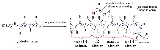
is shown as a reactant in the diagram below. A hydrocarbon diene
moleculeA molecule is an electrically neutral group of at least two atoms held together by covalent chemical bonds. Molecules are distinguished from ions by their electrical charge...
has two carbon-carbon
double bondA double bond in chemistry is a chemical bond between two chemical elements involving four bonding electrons instead of the usual two. The most common double bond, that between two carbon atoms, can be found in alkenes. Many types of double bonds between two different elements exist, for example in...
s (i. e. between two sets of
carbonCarbon is the chemical element with symbol C and atomic number 6. As a member of group 14 on the periodic table, it is nonmetallic and tetravalent—making four electrons available to form covalent chemical bonds...
atoms). Polybutadiene can be formed from many 1,3-butadiene monomers undergoing
free radical polymerizationFree radical polymerization is a method of polymerization by which a polymer forms by the successive addition of free radical building blocks. Free radicals can be formed via a number of different mechanisms usually involving separate initiator molecules...
to make a much longer polymer chain molecule.
A chain propagating step in this
chemical reactionA chemical reaction is a process that leads to the transformation of one set of chemical substances to another. Chemical reactions can be either spontaneous, requiring no input of energy, or non-spontaneous, typically following the input of some type of energy, such as heat, light or electricity...
involves a free radical near the end of a growing polymer chain forming a
covalent bondA covalent bond is a form of chemical bonding that is characterized by the sharing of pairs of electrons between atoms. The stable balance of attractive and repulsive forces between atoms when they share electrons is known as covalent bonding....
with the #1 carbon in a 1,3-butadiene monomer molecule being added, resulting in a polymer chain intermediate with a substituted
allylAn allyl group is a substituent with the structural formula H2C=CH-CH2R, where R is the connection to the rest of the molecule. It is made up of a methylene , attached to a vinyl group . The name is derived from the Latin word for garlic, Allium sativum. Theodor Wertheim isolated an allyl...
free radical at the end of the chain. This allyl free radical, formed from the butadiene just added, can further bond to another monomer molecule at either the #2 or #4 carbons of the previous butadiene monomer. Most of the time, the new monomer bonds to the #4 or terminal carbon of the previous butadiene, resulting in a 1,4-addition of the previous butadiene unit. In a 1,4-addition, the two double bonds of the previous butadiene unit are turned into single bonds and a new double bond is formed between the #2 and #3 carbons. This new double bond may have either a
cis or a
trans configuration. A smaller fraction of the time (perhaps 20%), the new monomer bonds to the #2 carbon of the previous butadiene, resulting in a 1,2-addition of the previous butadiene unit. The double bond between the #1 and #2 carbons turns into a single bond in the previous butadiene unit, and the double bond between the #3 and #4 carbons remains intact in a short
vinylA vinyl compound is any organic compound that contains a vinyl group ,which are derivatives of ethene, CH2=CH2, with one hydrogen atom replaced with some other group...
side group available for
branchingIn polymer chemistry, branching occurs by the replacement of a substituent, e.g., a hydrogen atom, on a monomer subunit, by another covalently bonded chain of that polymer; or, in the case of a graft copolymer, by a chain of another type...
or cross-linking.
Cis or
trans configurations are not applicable in 1,2-additions of butadiene. See the following reaction diagram for examples of 1,2- and 1,4-addition in a polybutadiene chain.
The
trans double bonds formed during polymerization allow the polymer chain to stay rather straight, allowing sections of polymer chains to line up against each other and effectively form microcrystalline regions in the material. The
cis double bonds cause a bend in the polymer chain, preventing polymer chains from lining up and forming crystalline regions and resulting in larger regions of amorphous polymer. It has been found that a substantial percentage of
cis double bond configurations in the polymer will result in a material with flexible
elastomerAn elastomer is a polymer with the property of viscoelasticity , generally having notably low Young's modulus and high yield strain compared with other materials. The term, which is derived from elastic polymer, is often used interchangeably with the term rubber, although the latter is preferred...
(rubber-like) qualities. In free radical polymerization, both
cis and
trans double bonds will form in percentages that depend on temperature. There are different catalysts available that can result in polymerization either in the
cis or the
trans configurations.
Types
Depending on the catalyst used in the production, the type of polybutadiene will be different, each with specific properties.
Typical composition of polybutadiene based on the catalyst used
|
cis (%) |
trans (%) |
vinyl (%) |
| Neodymium |
98 |
1 |
1 |
| Cobalt |
96 |
2 |
2 |
| Nickel |
96 |
3 |
1 |
| Titanium |
93 |
3 |
4 |
| Lithium |
10 to 30 |
20 to 60 |
10 to 70 |
High cis polybutadiene
This type is characterized by a high proportion of
cis (typically over 92%) and a small proportion of vinyl (less than 4%). It is manufactured using Ziegler-Natta catalysts based on transition metals. Depending on the metal used, the properties vary slightly.
Using cobalt gives branched molecules, resulting in a low viscosity material that is ease of use, but its mechanical strength is relatively low. Nodymium gives the most linear structure (and therefore higher mechanical strength) and a higher percentage of 98%
cis. Other less used catalysts include nickel and titanium.
Low cis polybutadiene
Using an alkyllithium (e.g. butyllithium) as the catalyst produces a polybutadiene called "low
cis" which typically contains 36%
cis, 54%
trans and 10% vinyl.
Because of its high liquid-glass transition, low
cis polybutadiene is not used in tire manufacturing, but it can be advantagously used as an additive in plastics due to its low contents of gels.
High vinyl polybutadiene
In 1980, researchers from Zeon discovered that high-vinyl polybutadiene (over 70%), despite having a high liquid-glass transition, could be advantageously used in combination with high
cis in tires. This material is produced with an alkyllithium catalyst. In addition to the Japanese company Zeon, the American company Firestone produces high-vinyl polybutadiene as well.
JSR Corporation markets a type of polybutadiene with 90% vinyl, giving it the properties of an elastomeric thermoplastic: elastic at room temperature but a fluid at high temperatures, which makes it possible to process it using
injection moldingInjection molding is a manufacturing process for producing parts from both thermoplastic and thermosetting plastic materials. Material is fed into a heated barrel, mixed, and forced into a mold cavity where it cools and hardens to the configuration of the cavity...
.
High trans polybutadiene
Polybutadiene can be produced with more than 90%
trans using catalysts similar to those of high
cis: neodymium,
lanthanumLanthanum is a chemical element with the symbol La and atomic number 57.Lanthanum is a silvery white metallic element that belongs to group 3 of the periodic table and is the first element of the lanthanide series. It is found in some rare-earth minerals, usually in combination with cerium and...
, nickel. This material is a plastic crystal (i.e. not an elastomer) which melts at about 80 °C. It was formerly used for the outer layer of golf balls. Today it is only used industrially, but companies like Ube are investigating other possible applications.
Metallocene polybutadiene
The use of
metalloceneA metallocene is a compound typically consisting of two cyclopentadienyl anions bound to a metal center in the oxidation state II, with the resulting general formula 2M. Closely related to the metallocenes are the metallocene derivatives, e.g. titanocene dichloride, vanadocene dichloride...
catalysts to polymerize butadiene is being explored by Japanese researchers. The benefits seem to be a higher degree of control both in the distribution of molecular mass and the proportion of cis/trans/vinyl. As of 2006, no manufacturer produces "metallocene polybutadiene" on a commercial basis.
Properties
Polybutadiene is a highly resilient synthetic rubber. Due to its outstanding resilience, it can be used for the manufacturing of golf balls. Heat buildup is lower in polybutadiene rubber based products subjected to repeated flexing during service. This property leads to its use in the sidewalls of car and truck tires. Low rolling resistance of this rubber also leads to its use in the tread portion of tires; however, relatively poor cold traction and cut growth resistance limits the use to blends with other types of rubber. Polybutadiene may be blended with, and crosslinked with, other types of rubber such as natural rubber styrene-butadiene rubber to optimize properties for tire treads and other applications. Polybutadiene rubber can be used in water seals for dams due to its low water absorption properties. Rubber bullets and road binders can be also produced by polybutadiene rubber.
Polybutadiene is however, sensitive to oxidation and
ozoneOzone , or trioxygen, is a triatomic molecule, consisting of three oxygen atoms. It is an allotrope of oxygen that is much less stable than the diatomic allotrope...
owing to the reactivity of the double bond present in every repeat unit. Anti-oxidants are normally added to protect against cracking and deterioration.
Copolymers
1,3-butadiene is normally copolymerized with other types of monomers such as
styrene and
acrylonitrileAcrylonitrile is the chemical compound with the formula C3H3N. This pungent-smelling colorless liquid often appears yellow due to impurities. It is an important monomer for the manufacture of useful plastics. In terms of its molecular structure, it consists of a vinyl group linked to a nitrile...
to form rubbers or
plasticA plastic material is any of a wide range of synthetic or semi-synthetic organic solids used in the manufacture of industrial products. Plastics are typically polymers of high molecular mass, and may contain other substances to improve performance and/or reduce production costs...
s with various qualities. The most common form is
styrene-butadieneStyrene-Butadiene or Styrene-Butadiene-Rubber is a synthetic rubber copolymer consisting of styrene and butadiene. It has good abrasion resistance and good aging stability when protected by additives, and is widely used in car tires, where it may be blended with natural rubber...
copolymer, which is a commodity material for car tires. It is also used in block copolymers and tough
thermoplasticThermoplastic, also known as a thermosoftening plastic, is a polymer that turns to a liquid when heated and freezes to a very glassy state when cooled sufficiently...
s such as ABS plastic. This way a copolymer material can be made with good
stiffnessStiffness is the resistance of an elastic body to deformation by an applied force along a given degree of freedom when a set of loading points and boundary conditions are prescribed on the elastic body.-Calculations:...
, hardness, and
toughnessIn materials science and metallurgy, toughness is the ability of a material to absorb energy and plastically deform without fracturing; Material toughness is defined as the amount of energy per volume that a material can absorb before rupturing...
.
Because the chains have a double bond in each and every
repeat unitAn essential concept which defines polymer structure, the repeat unit or repeating unit is a part of a polymer chain whose repetition would produce the complete polymer by linking the repeat units together successively along the chain, like the beads of a necklace.A repeat unit is sometimes called...
, the material is sensitive to
ozone crackingCracks can be formed in many different elastomers by ozone attack, and the characteristic form of attack of vulnerable rubbers is known as ozone cracking...
.
Processing
Polybutadiene rubber is seldom used alone, but is instead mixed with other rubbers. Polybutadiene is difficult to band in a two roll mixing mill. Instead, a thin sheet of polybutadiene may be prepared and kept separate. Then, after proper mastication of natural rubber, the polybutadiene rubber may be added to the two roll mixing mill. A similar practice may be adopted, for example, if polybutadiene is to be mixed with Styrene Butadiene Rubber (SBR). *Polybutadiene rubber may be added with Styrene as an impact modifier. High dosages may affect clarity of Styrene.
In an internal mixer, natural rubber and/or styrene-butadiene rubber may be placed first, followed by polybutadiene.
The plasticity of polybutadiene is not reduced by excessive mastication.
Tires
Polybutadiene is largely used in various parts of automobile tires; the manufacture of tires consumes about 70% of the world production of polybutadiene, with a majority of it being high
cis. The polybutadiene is used primarily in the sidewall of truck tires, this helps to improve fatigue to failure life due to the continuous flexing during run. As a result, tires will not blow out in extreme service conditions. It is also used in the tread portion of giant truck tires to improve the abrasion, i.e. less wearing, and to run the tire comparatively cool, since the internal heat comes out quickly. Both parts are formed by
extrusionExtrusion is a process used to create objects of a fixed cross-sectional profile. A material is pushed or drawn through a die of the desired cross-section...
.
Its main competitors in this application are styrene-butadiene rubber (SBR) and natural rubber. Polybutadiene has the advantage compared to SBR in its lower liquid-glass transition temperature, which gives it a high resistance to wear and a low rolling resistance. This gives the tires a long life and low fuel consumption. However, the lower transition temperature also lowers the friction on wet surfaces, which is why polybutadiene almost always is used in combination with any of the other two elastomers. About 1 kg of polybutadiene is used per tire in automobiles, and 3.3 kg in utility vehicles.
Plastics
About 25% of the produced polybutadiene is used to improve the mechanical properties of plastics, in particular of high-impact polystyrene (HIPS) and to a lesser extent
acrylonitrile butadiene styreneAcrylonitrile butadiene styrene is a common thermoplastic. Its melting point is approximately 105 °C ....
(ABS). The addition of between 4 and 12% polybutadiene to polystyrene transforms it from a fragile and delicate material to a ductile and resistant one.
The quality of the process is more important in the use in plastics than in tires, especially when it comes to color and content of gels which have to be as low as possible. In addition, the products need to meet a list of health requirements due to its use in the food industry.
Golf balls
Most golf balls are made of an elastic core of polybutadiene surrounded by a layer of a harder material. Polybutadiene is preferred to other elastomers due to its high resilience.
The core of the balls are formed by
compression moldingCompression molding is a method of molding in which the molding material, generally preheated, is first placed in an open, heated mold cavity. The mold is closed with a top force or plug member, pressure is applied to force the material into contact with all mold areas, while heat and pressure are...
with chemical reactions. First, polybutadiene is mixed with additives, then extruded, pressed using a
calenderThe calender is a series of hard pressure rollers used to form or smooth a sheet of material. In a principal application, the calender is located at the end of a papermaking process . Those that are used separate from the process are also called supercalenders...
and cut into pieces which are placed in a mold. The mold is subjected to high pressure and high temperature for about 30 minutes, enough time to vulcanize the material.
The golf ball production consumes about 20,000 tonnes of polybutadiene per year (1999).
Other uses
- Polybutadiene rubber may be used in the inner tube of hoses for sandblasting, along with natural rubber. The main idea is to increase resilience. This rubber can also be used in the cover of hoses, mainly pneumatic and water hoses.
- This rubber can also be used in railway pads, bridge blocks, etc.
- Polybutadiene rubber can be blended with nitrile rubber
Nitrile rubber, also known as Buna-N, Perbunan, or NBR, is a synthetic rubber copolymer of acrylonitrile and butadiene. Trade names include Nipol, Krynac and Europrene....
for easy processing. However large use may affect oil resistance of nitrile rubber.
- Polybutadiene is used in the manufacturing of the high-restitution
The coefficient of restitution of two colliding objects is a fractional value representing the ratio of speeds after and before an impact, taken along the line of the impact...
toy Super BallSuperBalls or bouncy balls is a toy, invented in 1964 by chemist Norman Stingley by compressing a synthetic rubber material under high pressure...
. Due to the high resilience property, 100% polybutadiene rubber based vulcanizate is used as crazy balls — i.e. a ball if dropped from 6th floor of a house will rebound up to 5½ to 6th floor (assuming no air resistance).
- It is also used as a fuel in combination with an oxidizer in various Solid Rocket Boosters
A solid rocket or a solid-fuel rocket is a rocket engine that uses solid propellants . The earliest rockets were solid-fuel rockets powered by gunpowder; they were used by the Chinese in warfare as early as the 13th century and later by the Mongols, Arabs, and Indians.All rockets used some form of...
such as Japan's H-IIBH-IIB is an expendable launch system used to launch H-II Transfer Vehicles towards the International Space Station. H-IIB rockets are liquid-fuelled with solid-fuel strap-on boosters and are launched from the Tanegashima Space Center in Japan...
launch vehicle.
Production
The annual production of polybutadiene was 2.0 million tons in 2003. This makes it the second most produced synthetic rubber by volume, behind the
styrene-butadieneStyrene-Butadiene or Styrene-Butadiene-Rubber is a synthetic rubber copolymer consisting of styrene and butadiene. It has good abrasion resistance and good aging stability when protected by additives, and is widely used in car tires, where it may be blended with natural rubber...
rubber (SBR).
The production processes of high
cis polybutadiene and low
cis used to be quite different and were carried out in separate plants. Lately, the trend has changed to use a single plant to produce as many different types of rubber as possible, including, low
cis polybutadiene, high
cis (with neodymium used as a catalyst) and SBR.