


Play therapy

Encyclopedia
Play therapy is generally employed with children aged 3 through 11 and provides a way for them to express their experiences and feelings through a natural, self-guided, self-healing process. As children’s experiences and knowledge are often communicated through play, it becomes an important vehicle for them to know and accept themselves and others.
, growth and development
.
Play Therapy can also be used as a tool of diagnosis. A play therapist observes a client playing with toys (play-houses, pets, dolls, etc.) to determine the cause of the disturbed behavior. The objects and patterns of play, as well as the willingness to interact with the therapist, can be used to understand the underlying rationale for behavior both inside and outside the session..
According to the psychodynamic view, people (especially children) will engage in play behavior in order to work through their interior obfuscation
s and anxieties
. In this way, play therapy can be used as a self-help mechanism, as long as children are allowed time for "free play" or "unstructured play." Normal play is an essential component of healthy child development.
One approach to treatment is for play therapists use a type of desensitization
or relearning therapy to change disturbing behavior, either systematically or in less formal social settings. These processes are normally used with children, but are also applied with other pre-verbal, non-verbal, or verbally-impaired persons, such as slow-learners, or brain-injured or drug-affected persons.
Hermine Hug-Hellmuth (1921) formalized the play therapy process by providing children with play materials to express themselves and emphasize the use of the play to analyze the child. In 1919, Melanie Klein
(1955) began to implement
the technique of using play as a means of analyzing children under the age of six. She believed that child’s play was essentially the same as free association used with adults, and that as such, it was provide access to the child’s unconscious
. Anna Freud
(1946, 1965) utilized play as a means to facilitate positive attachment to the therapist and gain access to the child’s inner life
.
In the 1930s David Levy (1938) developed a technique he called release therapy. His technique emphasized a structured approach. A child, who had experienced a specific stressful situation, would be allowed to engage in free play. Subsequently, the therapist would introduce play materials related to the stress-evoking situation allowing the child to reenact the traumatic event and release the associated emotions.
In 1955, Gove Hambidge expanded on Levy’s work emphasizing a “Structured Play Therapy” model, which was more direct in introducing situations. The format of the approach was to establish rapport, recreate the stress-evoking situation, play out the situation and then free play to recover.
Jesse Taft (1933) and Frederick Allen (1934) developed an approach they entitled relationship therapy. The primary emphasis is placed on the emotional relationship between the therapist and the child. The focus is placed on the child’s freedom and strength to choose.
Carl Rogers (1942) expanded the work of the relationship therapist and developed non-directive therapy, later called client-centered therapy (Rogers, 1951). Virginia Axline
(1950) expanded on her mentor's concepts. In her article entitled ‘Entering the child’s world via play experiences’ Axline summarized her concept of play therapy stating, “A play experience is therapeutic because it provides a secure relationship between the child and the adult, so that the child has the freedom and room to state himself in his own terms, exactly as he is at that moment in his own way and in his own time” (Progressive Education, 27, p. 68).
Filial therapy, developed by Bernard and Louise Guerney, was a new innovation in play therapy during the 1960s. The filial approach emphasizes a structured training program for parents in which they learn how to employ child-centered play sessions in the home. In the 1960s, with the advent of school counselors, school-based play therapy began a major shift from the private sector. Counselor-educators such as Alexander (1964); Landreth (1969, 1972); Muro (1968); Myrick and Holdin (1971); Nelson (1966); and Waterland (1970) began to contribute significantly, especially in terms of using play therapy as both an educational and preventive tool in dealing with children’s issues.
In 1985, the work of two key Canadians in the field of child psychology and play therapy, Mark Barnes and Cynthia Taylor, resulted in the establishment of Certification Standards through the non-profit Canadian child psychotherapy and play therapy association. A fledgling group of practising Canadian child psychotherapists and play therapists worked on developing an organization to meet professional needs. It gradually expanded and eventually a Board of Directors was formed; objects and by-laws were designed, revised, re-revised and finally approved by the Government of Canada. The Canadian association was eventually recognized as a non-profit organization in 1986.
During 1995/1996, a whole new horizon opened up for the profession of play therapy as a result of the Canadian Play Therapy Institute's pioneering efforts on an International basis. Play Therapy International was founded from the Canadian Play Therapy Institute and there now existed a mutually supportive recognition between Play Therapy International/The International Board of Examiners of Certified Play Therapists, The Canadian Play Therapy Institute, as well as a number of other professional bodies throughout the world.
In the UK, The United Kingdom Society for Play and Creative Arts Therapies Limited (known in short as PTUK) was originally set up in October 2000 as Play Therapy UK with the encouragement of Play Therapy International. Meanwhile the British Association of Play Therapists was distinguished from its American counterpart in 1996 and was granted charity status within the UK in 2006 by the UK Charities Commission.
By 2010 Play Therapy International has partnered sister organisations in Ireland, Canada, Australasia, France, Spain, Wales, Malaysia, Romania, Russia, United Kingdom, Slovenia, Germany, New Zealand, Hong Kong, Korea and Ethiopia.
Authors (Dogra and Veeraraghavan, 1994) found parents and their children (ages 8–12) who had been diagnosed with conduct disorder and were exhibiting significant aggression, after receiving sixteen sessions of nondirective play therapy and parental counseling, showed significantly less “extrapunitive” responses and significantly higher “impunitive” and “need-persistence” compared to the control group. Additionally, they exhibited significant positive change in adjustment while significantly decreasing aggressive behaviors. Authors studying school maladjustment (Wong et al., 1996), using the board game ‘Stacking the Deck’ to teach social skills to boys diagnosed with conduct disorder (ages 16–17) who were mildly retarded, found eight sessions or less showed “clear improvements after unit training.” Schmidtchen, Hennies and Acke (1993) compared a treatment group of children (ages 5–8), who exhibited behavioral disturbances and received thirty sessions of nondirective play therapy, with a control group receiving non-play therapy social education. Results showed a decrease in behavioral disturbances and an increase in “person-centered competencies.”
Authors Burroughs, Wagoner & Johnson (1997) studied twenty-one participants (ages 7–17) whose parents were either divorced or divorcing. They found that treatment group members who played ‘My Two Homes’ as well as group members who participated in conventional play therapy exhibited a decline in parents’ scores on the Internalizing Scale of Child Behavior Checklist
as well as the parent form of the ‘Children’s Depression Inventory’. State and trait anxiety also decreased in both groups. A study on the effectiveness of play therapy on multiculturalism was undertaken. The author studied 168 children (ages 10–12; 82% were African-American) who were identified as “at-risk” and participated in a mean average of four nondirective play therapy sessions. Results indicated that children who participated in the play therapy sessions maintained the same level of self-esteem and internal locus of control, while children in the control group showed a statistically significant level as measured by the ‘Coopersmith Self-Esteem Inventory’ and the ‘Intellectual Achievement Responsibility Scaled-Revised’. Play therapy has also been studied with sexual abuse victims, and one study by Reams and Friedrich (1994), who placed victims or siblings of victims (ages 3–5) in a 15-week treatment group using directive play therapy, found that they engaged in “less isolated play” than the control group.
Attention-Deficit Hyperactivity Disorder
(ADHD) has been a significant diagnosis for well over a decade. Kaduson and Finnerty (1995) conducted a study with sixty-three children between the ages of eight and twelve. The authors compared three groups of children diagnosed with ADHD using a game (Self-control Game) for one group, biofeedback
for another and a control strategic game only in the final group. Results indicated biofeedback was the most effective in improving the child’s self-perception of self-control. All three groups indicated a significant improvement in sociability and attention. Peer play therapy groups combined with art therapy groups, and family play therapy groups combined with art therapy groups, have been shown (Springer, et al., 1992) to improve depression and hyperactivity scores, in both boys and girls, according to the Child Behavior Checklist in children who have at least one parent who is suffering from alcohol or drug dependency. Additionally, aggression and delinquent behaviors significantly decreased in boys. The study included 132 subjects between the ages of seven and seventeen. Over the past two decades there has been a concerted effort to develop and implement well-designed controlled play intervention studies. Two meta-analytic studies have examined the effectiveness of play therapy with children (e.g., LeBlanc & Ritchie 1999; Ray, Bratton, Rhine, & Jones, 2001). LeBlanc and Ritchie’s meta-analysis included 42 experimental studies, dated from 1947 to 1997. The studies used came from multiple sources, including journals, dissertations, and unpublished studies.
Along with children interacting with other children, the therapist will have the child play with certain toys in order to determine his concentration and source of any stress. Each toy and each style of enjoying them represents a different emotion and feeling.
It is believed that as people interact with others, they may work through their internal anxieties. In this idea, children should be encouraged to play, in order to develop as a healthy child.
The therapist will engage in desensitization
exercises, in order to eliminate stress for children. These exercises include teaching the child how to relearn certain behavior through a formal system of tests.

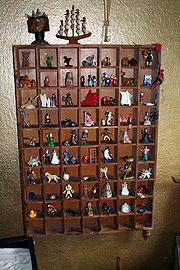 Sandtray, sandbox or sandplay therapy is a form of experiential workshop which allows greater exploration of deep emotional issues. Sandplay therapy is suitable for children and adults and allows them to reach a deeper insight into and resolution of a range of issues in their lives such as deep anger, depression
, abuse
or grief
.
Through a safe and supportive process they are able to explore their world using a sandtray and a collection of miniatures. Accessing hidden or previously unexplored areas is often possible using this expressive and creative way of working which does not rely on “talk” therapy.
The technique was developed by the Swiss therapist Dora M. Kalff (1904–1990) and Margaret Lowenfeld
.
General
Play Therapy is a form of counseling or psychotherapy that uses play to communicate with and help people, especially children, to prevent or resolve psychosocial challenges. This is thought to help them towards better social integrationSocial integration
Social integration, in sociology and other social sciences, is the movement of minority groups such as ethnic minorities, refugees and underprivileged sections of a society into the mainstream of societies...
, growth and development
Individuation
Individuation is a concept which appears in numerous fields and may be encountered in work by Arthur Schopenhauer, Carl Jung, Gilbert Simondon, Bernard Stiegler, Gilles Deleuze, Henri Bergson, David Bohm, and Manuel De Landa...
.
Play Therapy can also be used as a tool of diagnosis. A play therapist observes a client playing with toys (play-houses, pets, dolls, etc.) to determine the cause of the disturbed behavior. The objects and patterns of play, as well as the willingness to interact with the therapist, can be used to understand the underlying rationale for behavior both inside and outside the session..
According to the psychodynamic view, people (especially children) will engage in play behavior in order to work through their interior obfuscation
Obfuscation
Obfuscation is the hiding of intended meaning in communication, making communication confusing, wilfully ambiguous, and harder to interpret.- Background :Obfuscation may be used for many purposes...
s and anxieties
Anxiety
Anxiety is a psychological and physiological state characterized by somatic, emotional, cognitive, and behavioral components. The root meaning of the word anxiety is 'to vex or trouble'; in either presence or absence of psychological stress, anxiety can create feelings of fear, worry, uneasiness,...
. In this way, play therapy can be used as a self-help mechanism, as long as children are allowed time for "free play" or "unstructured play." Normal play is an essential component of healthy child development.
One approach to treatment is for play therapists use a type of desensitization
Desensitization (psychology)
In psychology, desensitization is a process for mitigating the harmful effects of phobias or other disorders. It also occurs when an emotional response is repeatedly evoked in situations in which the action tendency that is associated with the emotion proves irrelevant or unnecessary...
or relearning therapy to change disturbing behavior, either systematically or in less formal social settings. These processes are normally used with children, but are also applied with other pre-verbal, non-verbal, or verbally-impaired persons, such as slow-learners, or brain-injured or drug-affected persons.
History
Play has been recognized as important since the time of Plato (429-347 B.C.) who reportedly observed, “you can discover more about a person in an hour of play than in a year of conversation.” In the eighteenth century Rousseau (1762/1930), in his book ‘Emile’ wrote about the importance of observing play as a vehicle to learn about and understand children. Friedrich Fröbel, in his book The Education of Man (1903), emphasized the importance of symbolism in play. He observed, “play is the highest development in childhood, for it alone is the free expression of what is in the child’s soul…. children’s play is not mere sport. It is full of meaning and import.” (Fröbel, 1903, p. 22) The first documented case, describing the therapeutic use of play, was in 1909 when Sigmund Freud published his work with “Little Hans.” Little Hans was a five-year-old child who was suffering from a simple phobia. Freud saw him once briefly and recommended that his father take note of Hans’ play to provide insights that might assist the child. The case of “Little Hans” was the first case in which a child’s difficulty was related to emotional factors.Hermine Hug-Hellmuth (1921) formalized the play therapy process by providing children with play materials to express themselves and emphasize the use of the play to analyze the child. In 1919, Melanie Klein
Melanie Klein
Melanie Reizes Klein was an Austrian-born British psychoanalyst who devised novel therapeutic techniques for children that had an impact on child psychology and contemporary psychoanalysis...
(1955) began to implement
Implement
Implement may refer to:* Implementation — the process for putting a design, plan or policy into effect.* A class of tools — such as farm implements or writing implements....
the technique of using play as a means of analyzing children under the age of six. She believed that child’s play was essentially the same as free association used with adults, and that as such, it was provide access to the child’s unconscious
Unconscious mind
The unconscious mind is a term coined by the 18th century German romantic philosopher Friedrich Schelling and later introduced into English by the poet and essayist Samuel Taylor Coleridge...
. Anna Freud
Anna Freud
Anna Freud was the sixth and last child of Sigmund and Martha Freud. Born in Vienna, she followed the path of her father and contributed to the newly born field of psychoanalysis...
(1946, 1965) utilized play as a means to facilitate positive attachment to the therapist and gain access to the child’s inner life
Inner Life
Inner Life was an American R&B/soul studio project of the post-disco era that enjoyed success with "I'm Caught Up " and "Ain't No Mountain High Enough" . Both tracks featured the vocals of Jocelyn Brown and Leroy Burgess...
.
In the 1930s David Levy (1938) developed a technique he called release therapy. His technique emphasized a structured approach. A child, who had experienced a specific stressful situation, would be allowed to engage in free play. Subsequently, the therapist would introduce play materials related to the stress-evoking situation allowing the child to reenact the traumatic event and release the associated emotions.
In 1955, Gove Hambidge expanded on Levy’s work emphasizing a “Structured Play Therapy” model, which was more direct in introducing situations. The format of the approach was to establish rapport, recreate the stress-evoking situation, play out the situation and then free play to recover.
Jesse Taft (1933) and Frederick Allen (1934) developed an approach they entitled relationship therapy. The primary emphasis is placed on the emotional relationship between the therapist and the child. The focus is placed on the child’s freedom and strength to choose.
Carl Rogers (1942) expanded the work of the relationship therapist and developed non-directive therapy, later called client-centered therapy (Rogers, 1951). Virginia Axline
Virginia Axline
Virginia M. Axline was a psychologist and one of the pioneers in the use of Play Therapy. She wrote the book Dibs In Search Of Self. She was also the author of Play Therapy....
(1950) expanded on her mentor's concepts. In her article entitled ‘Entering the child’s world via play experiences’ Axline summarized her concept of play therapy stating, “A play experience is therapeutic because it provides a secure relationship between the child and the adult, so that the child has the freedom and room to state himself in his own terms, exactly as he is at that moment in his own way and in his own time” (Progressive Education, 27, p. 68).
Filial therapy, developed by Bernard and Louise Guerney, was a new innovation in play therapy during the 1960s. The filial approach emphasizes a structured training program for parents in which they learn how to employ child-centered play sessions in the home. In the 1960s, with the advent of school counselors, school-based play therapy began a major shift from the private sector. Counselor-educators such as Alexander (1964); Landreth (1969, 1972); Muro (1968); Myrick and Holdin (1971); Nelson (1966); and Waterland (1970) began to contribute significantly, especially in terms of using play therapy as both an educational and preventive tool in dealing with children’s issues.
Growth of Organizations
In 1982, the Association for Play Therapy (APT) was established marking not only the desire to promote the advancement of play therapy, but to acknowledge the extensive growth of play therapy. Currently, the APT has almost 5,000 members in twenty-six countries (2006). Play therapy training is provided, according to a survey conducted by the Center for Play Therapy at the University of North Texas (2000), by 102 universities and colleges throughout the United States.In 1985, the work of two key Canadians in the field of child psychology and play therapy, Mark Barnes and Cynthia Taylor, resulted in the establishment of Certification Standards through the non-profit Canadian child psychotherapy and play therapy association. A fledgling group of practising Canadian child psychotherapists and play therapists worked on developing an organization to meet professional needs. It gradually expanded and eventually a Board of Directors was formed; objects and by-laws were designed, revised, re-revised and finally approved by the Government of Canada. The Canadian association was eventually recognized as a non-profit organization in 1986.
During 1995/1996, a whole new horizon opened up for the profession of play therapy as a result of the Canadian Play Therapy Institute's pioneering efforts on an International basis. Play Therapy International was founded from the Canadian Play Therapy Institute and there now existed a mutually supportive recognition between Play Therapy International/The International Board of Examiners of Certified Play Therapists, The Canadian Play Therapy Institute, as well as a number of other professional bodies throughout the world.
In the UK, The United Kingdom Society for Play and Creative Arts Therapies Limited (known in short as PTUK) was originally set up in October 2000 as Play Therapy UK with the encouragement of Play Therapy International. Meanwhile the British Association of Play Therapists was distinguished from its American counterpart in 1996 and was granted charity status within the UK in 2006 by the UK Charities Commission.
By 2010 Play Therapy International has partnered sister organisations in Ireland, Canada, Australasia, France, Spain, Wales, Malaysia, Romania, Russia, United Kingdom, Slovenia, Germany, New Zealand, Hong Kong, Korea and Ethiopia.
Efficacy of Play Therapy
An extensive body of literature has documented the effectiveness of play therapy, as a counseling model, in working with children and adolescents. Since the 1940s play therapy researchers have studied play therapy and documented its effectiveness. Research examining the effectiveness of play therapy related to conduct disorder, aggression and oppositional behavior have been undertaken.Authors (Dogra and Veeraraghavan, 1994) found parents and their children (ages 8–12) who had been diagnosed with conduct disorder and were exhibiting significant aggression, after receiving sixteen sessions of nondirective play therapy and parental counseling, showed significantly less “extrapunitive” responses and significantly higher “impunitive” and “need-persistence” compared to the control group. Additionally, they exhibited significant positive change in adjustment while significantly decreasing aggressive behaviors. Authors studying school maladjustment (Wong et al., 1996), using the board game ‘Stacking the Deck’ to teach social skills to boys diagnosed with conduct disorder (ages 16–17) who were mildly retarded, found eight sessions or less showed “clear improvements after unit training.” Schmidtchen, Hennies and Acke (1993) compared a treatment group of children (ages 5–8), who exhibited behavioral disturbances and received thirty sessions of nondirective play therapy, with a control group receiving non-play therapy social education. Results showed a decrease in behavioral disturbances and an increase in “person-centered competencies.”
Authors Burroughs, Wagoner & Johnson (1997) studied twenty-one participants (ages 7–17) whose parents were either divorced or divorcing. They found that treatment group members who played ‘My Two Homes’ as well as group members who participated in conventional play therapy exhibited a decline in parents’ scores on the Internalizing Scale of Child Behavior Checklist
Child Behavior Checklist
The Child Behavior Checklist is a widely-used method of identifying problem behavior in children.It is a component in the Achenbach System of Emperically Based Assessment developed by Thomas M. Achenbach....
as well as the parent form of the ‘Children’s Depression Inventory’. State and trait anxiety also decreased in both groups. A study on the effectiveness of play therapy on multiculturalism was undertaken. The author studied 168 children (ages 10–12; 82% were African-American) who were identified as “at-risk” and participated in a mean average of four nondirective play therapy sessions. Results indicated that children who participated in the play therapy sessions maintained the same level of self-esteem and internal locus of control, while children in the control group showed a statistically significant level as measured by the ‘Coopersmith Self-Esteem Inventory’ and the ‘Intellectual Achievement Responsibility Scaled-Revised’. Play therapy has also been studied with sexual abuse victims, and one study by Reams and Friedrich (1994), who placed victims or siblings of victims (ages 3–5) in a 15-week treatment group using directive play therapy, found that they engaged in “less isolated play” than the control group.
Attention-Deficit Hyperactivity Disorder
Attention-deficit hyperactivity disorder
Attention deficit hyperactivity disorder is a developmental disorder. It is primarily characterized by "the co-existence of attentional problems and hyperactivity, with each behavior occurring infrequently alone" and symptoms starting before seven years of age.ADHD is the most commonly studied and...
(ADHD) has been a significant diagnosis for well over a decade. Kaduson and Finnerty (1995) conducted a study with sixty-three children between the ages of eight and twelve. The authors compared three groups of children diagnosed with ADHD using a game (Self-control Game) for one group, biofeedback
Biofeedback
Biofeedback is the process of becoming aware of various physiological functions using instruments that provide information on the activity of those same systems, with a goal of being able to manipulate them at will...
for another and a control strategic game only in the final group. Results indicated biofeedback was the most effective in improving the child’s self-perception of self-control. All three groups indicated a significant improvement in sociability and attention. Peer play therapy groups combined with art therapy groups, and family play therapy groups combined with art therapy groups, have been shown (Springer, et al., 1992) to improve depression and hyperactivity scores, in both boys and girls, according to the Child Behavior Checklist in children who have at least one parent who is suffering from alcohol or drug dependency. Additionally, aggression and delinquent behaviors significantly decreased in boys. The study included 132 subjects between the ages of seven and seventeen. Over the past two decades there has been a concerted effort to develop and implement well-designed controlled play intervention studies. Two meta-analytic studies have examined the effectiveness of play therapy with children (e.g., LeBlanc & Ritchie 1999; Ray, Bratton, Rhine, & Jones, 2001). LeBlanc and Ritchie’s meta-analysis included 42 experimental studies, dated from 1947 to 1997. The studies used came from multiple sources, including journals, dissertations, and unpublished studies.
Systematic model
The therapist's office will schedule an appointment with several children. In one session there can be as many as 2-5 children interacting. This organic interaction allows the psychologist and psychiatrist to properly evaluate the child’s emotions and feelings. This form of therapy allows the child to unknowingly reveal his emotion, while playing with other children.Along with children interacting with other children, the therapist will have the child play with certain toys in order to determine his concentration and source of any stress. Each toy and each style of enjoying them represents a different emotion and feeling.
It is believed that as people interact with others, they may work through their internal anxieties. In this idea, children should be encouraged to play, in order to develop as a healthy child.
The therapist will engage in desensitization
Desensitization (psychology)
In psychology, desensitization is a process for mitigating the harmful effects of phobias or other disorders. It also occurs when an emotional response is repeatedly evoked in situations in which the action tendency that is associated with the emotion proves irrelevant or unnecessary...
exercises, in order to eliminate stress for children. These exercises include teaching the child how to relearn certain behavior through a formal system of tests.
Sandtray Therapy
Clinical depression
Major depressive disorder is a mental disorder characterized by an all-encompassing low mood accompanied by low self-esteem, and by loss of interest or pleasure in normally enjoyable activities...
, abuse
Abuse
Abuse is the improper usage or treatment for a bad purpose, often to unfairly or improperly gain benefit. Abuse can come in many forms, such as: physical or verbal maltreatment, injury, sexual assault, violation, rape, unjust practices; wrongful practice or custom; offense; crime, or otherwise...
or grief
Grief
Grief is a multi-faceted response to loss, particularly to the loss of someone or something to which a bond was formed. Although conventionally focused on the emotional response to loss, it also has physical, cognitive, behavioral, social, and philosophical dimensions...
.
Through a safe and supportive process they are able to explore their world using a sandtray and a collection of miniatures. Accessing hidden or previously unexplored areas is often possible using this expressive and creative way of working which does not rely on “talk” therapy.
The technique was developed by the Swiss therapist Dora M. Kalff (1904–1990) and Margaret Lowenfeld
Margaret Lowenfeld
Margaret Frances Jane Lowenfeld was a British-born pioneer of child psychology and psychotherapy, a medical researcher in paediatric medicine, and an author of several publications and academic papers on the analysis of child development and play...
.
See also
- Charles E. SchaeferCharles E. SchaeferDr. Charles E. Schaefer is a world-renowned American psychologist considered by many to be the "Father of Play Therapy" who has appeared on The Oprah Winfrey Show, The Today Show and Good Morning America. He is Professor of Psychology and is Director of both the Center for Psychological Services...
- Child life specialistChild life specialistChild life specialists are pediatric health care professionals who work with patients, their family and others involved in the child’s care in order to help them manage stress and understand medical and various procedures...
- TherapyTherapyThis is a list of types of therapy .* Adventure therapy* Animal-assisted therapy* Aquatic therapy* Aromatherapy* Art and dementia* Art therapy* Authentic Movement* Behavioral therapy* Bibliotherapy* Buteyko Method* Chemotherapy...
- TheraplayTheraplayTheraplay is a therapeutic approach that uses elements of play therapy with the intention of helping parents and children build better attachment relationships through attachment-based play. It was developed in 1967 in Chicago by Ann M...
- The P.L.A.Y. ProjectThe P.L.A.Y. ProjectThe P.L.A.Y. Project or The PLAY Project is a community-based, national autism training and early intervention program established in 2001 by Richard Solomon, MD...
Further reading
- Play Therapy by Virginia AxlineVirginia AxlineVirginia M. Axline was a psychologist and one of the pioneers in the use of Play Therapy. She wrote the book Dibs In Search Of Self. She was also the author of Play Therapy....
(original print 1947). ISBN 0-345-30335-0. Houfton Mifflin Company. - Play Therapy: The Art of the Relationship by Garry Landreth (Second Edition 2002). ISBN 1583913270. Brunner-Routledge.
- Play Therapy Theory and Practice: A Comparative Presentation by Kevin O'Connor & Lisa Braverman (1996). ISBN 0471106380. Wiley.books