


Plaquemine culture

Encyclopedia
The Plaquemine culture was an archaeological culture
in the lower Mississippi River
Valley in western Mississippi
and eastern Louisiana
. Good examples of this culture are the Medora Site
( the type site
for the culture and period) in West Baton Rouge Parish, Louisiana
, and the Anna
, Emerald Mound
, Winterville
and Holly Bluff
sites located in Mississippi. Plaquemine culture was contemporaneous with the Middle Mississippian culture
in the Cahokia
site in St. Louis, Missouri. It is considered ancestral to the Natchez
and Taensa
Peoples.
The Plaquemine Culture occupied the rest of Louisiana not taken by the Caddoan Mississippian culture
during this time frame and are considered descendants of the Troyville
-Coles Creek culture
. A prominent feature of Plaquemine sites are large ceremonial centers with two or more large mound
s facing an open plaza
. The flat-topped, pyramidal mounds
were constructed in several stages. Sometimes they were topped by one or two smaller mounds. Mounds were often built on top of the ruins of a house or temple and similar buildings were usually constructed on top of the mound. In earlier times, buildings were usually circular, but later they were likely to be rectangular. They were constructed of wattle and daub
, and sometimes with wall posts sunk into foot-deep wall trenches. At times, shallow, oval or rectangular graves were dug in the mounds. These might have been for primary burials, but more often they were for the reburial of remains originally interred elsewhere.
 One kind of pottery
occasionally placed in the graves is called "killed" pottery. This type has a hole in the base of the vessel that was cut while the pot was being made, usually before it was fired. They also decorated their pots in other characteristic ways. They sometimes added small solid handles called lugs and textured the surface by brushing clumps of grass over the vessel before it was fired. They often cut designs into the surface of the wet clay, and like their Caddoan
contemporaries, the Plaquemine peoples engraved designs on pots after they were fired. Plaquemine peoples also had undecorated pots that they used for ordinary daily tasks.. Pottery during this phase still used dry clay particles a tempering material, with the use of ground shell being a marker for Mississippian cultural contact.
as extraregional exotic goods such as Cahokian pottery and other artifacts began to be deposited in Coles Creek-Plaquemine culture sites. Through repeated contacts groups in Mississippi and then Louisiana began adopting Mississippian techniques for making Mississippian culture pottery
, as well as ceremonial objects and possibly social structuring. The Plaquemine peoples became more and more Mississippianized and the area the culture covered begins to shrink after 1350 CE. Eventually the last enclave of purely Plaquemine culture was the Natchez Bluffs area, while the Yazoo Basin and Louisiana areas had became a hybrid Plaquemine Mississippian culture. Historic groups in the area during first European contact bear out this division. Historic groups in the Natchez Bluffs, the Taensa
and Natchez
had held out against full Mississippianization and continued to use the same sites as their ancestors and carry on in the Plaquemine culture. Those that may have descended from the Mississippianized groups are those who at the time of Europoean contact spoke the Tunican
, Chitimachan
, and Muskogean languages
.
Archaeological culture
An archaeological culture is a recurring assemblage of artifacts from a specific time and place, which are thought to constitute the material culture remains of a particular past human society. The connection between the artifacts is based on archaeologists' understanding and interpretation and...
in the lower Mississippi River
Mississippi River
The Mississippi River is the largest river system in North America. Flowing entirely in the United States, this river rises in western Minnesota and meanders slowly southwards for to the Mississippi River Delta at the Gulf of Mexico. With its many tributaries, the Mississippi's watershed drains...
Valley in western Mississippi
Mississippi
Mississippi is a U.S. state located in the Southern United States. Jackson is the state capital and largest city. The name of the state derives from the Mississippi River, which flows along its western boundary, whose name comes from the Ojibwe word misi-ziibi...
and eastern Louisiana
Louisiana
Louisiana is a state located in the southern region of the United States of America. Its capital is Baton Rouge and largest city is New Orleans. Louisiana is the only state in the U.S. with political subdivisions termed parishes, which are local governments equivalent to counties...
. Good examples of this culture are the Medora Site
Medora Site
The Medora Site is an archaeological site that is a type site for the prehistoric Plaquemine culture period. The name for the culture is taken from the proximity of Medora to the town of Plaquemine, Louisiana. The site is in West Baton Rouge Parish, Louisiana, and was inhabited from approximately...
( the type site
Type site
In archaeology a type site is a site that is considered the model of a particular archaeological culture...
for the culture and period) in West Baton Rouge Parish, Louisiana
West Baton Rouge Parish, Louisiana
West Baton Rouge Parish is one of the sixty-four parishes in the U.S. state of Louisiana, and is the smallest in total area. The parish seat is Port Allen and as of 2010, the population was 23,788. The parish has a highly-rated school system and is one of the few in Louisiana that has privatized...
, and the Anna
Anna Site
The Anna Site is a prehistoric Plaquemine culture archaeological site located in Adams County, Mississippi north of Natchez. It is the type site for the Anna Phase of the Natchez Bluffs Plaquemine culture chronology...
, Emerald Mound
Emerald Mound Site
The Emerald Mound Site , also known as the Selzertown site, is a Plaquemine culture Mississippian period archaeological site located on the Natchez Trace Parkway near Stanton, Mississippi, United States. The site dates from the period between 1200 and 1730 CE...
, Winterville
Winterville Site
The Winterville Site is an archaeological site consisting of platform substructure mounds and plazas that is the type site for the Winterville Phase of the Lower Yazoo Basin region...
and Holly Bluff
Holly Bluff Site
The Holly Bluff Site , sometimes known as the Lake George Site, and locally as “The Mound Place,”) is an archaeological site that is a type site for the Lake George phase of the prehistoric Plaquemine culture period of the area...
sites located in Mississippi. Plaquemine culture was contemporaneous with the Middle Mississippian culture
Mississippian culture
The Mississippian culture was a mound-building Native American culture that flourished in what is now the Midwestern, Eastern, and Southeastern United States from approximately 800 CE to 1500 CE, varying regionally....
in the Cahokia
Cahokia
Cahokia Mounds State Historic Site is the area of an ancient indigenous city located in the American Bottom floodplain, between East Saint Louis and Collinsville in south-western Illinois, across the Mississippi River from St. Louis, Missouri. The site included 120 human-built earthwork mounds...
site in St. Louis, Missouri. It is considered ancestral to the Natchez
Natchez people
The Natchez are a Native American people who originally lived in the Natchez Bluffs area, near the present-day city of Natchez, Mississippi. They spoke a language isolate that has no known close relatives, although it may be very distantly related to the Muskogean languages of the Creek...
and Taensa
Taensa
The Taensa were a people of northeastern Louisiana. They lived on Lake Saint Joseph west of the Mississippi River, between the Yazoo River and Saint Catherine Creek...
Peoples.
Architecture and mounds
 |
The Plaquemine Culture occupied the rest of Louisiana not taken by the Caddoan Mississippian culture
Caddoan Mississippian culture
The Caddoan Mississippian culture was a prehistoric Native American culture considered by archaeologists as a variant of the Mississippian culture. The Caddoan Mississippians covered a large territory, including what is now Eastern Oklahoma, Western Arkansas, Northeast Texas, and Northwest Louisiana...
during this time frame and are considered descendants of the Troyville
Troyville culture
The Troyville culture is an archaeological culture in areas of Louisiana and Arkansas in the Lower Mississippi valley in the southern United States. It was a Baytown Period culture and lasted from 400 to 700 CE during the Late Woodland period...
-Coles Creek culture
Coles Creek culture
Coles Creek culture is a Late Woodland archaeological culture in the Lower Mississippi valley in the southern United States. It followed the Troyville culture. The period marks a significant change in the cultural history of the area...
. A prominent feature of Plaquemine sites are large ceremonial centers with two or more large mound
Mound
A mound is a general term for an artificial heaped pile of earth, gravel, sand, rocks, or debris. The most common use is in reference to natural earthen formation such as hills and mountains, particularly if they appear artificial. The term may also be applied to any rounded area of topographically...
s facing an open plaza
Plaza
Plaza is a Spanish word related to "field" which describes an open urban public space, such as a city square. All through Spanish America, the plaza mayor of each center of administration held three closely related institutions: the cathedral, the cabildo or administrative center, which might be...
. The flat-topped, pyramidal mounds
Platform mound
A platform mound is any earthwork or mound intended to support a structure or activity.-Eastern North America:The indigenous peoples of North America built substructure mounds for well over a thousand years starting in the Archaic period and continuing through the Woodland period...
were constructed in several stages. Sometimes they were topped by one or two smaller mounds. Mounds were often built on top of the ruins of a house or temple and similar buildings were usually constructed on top of the mound. In earlier times, buildings were usually circular, but later they were likely to be rectangular. They were constructed of wattle and daub
Wattle and daub
Wattle and daub is a composite building material used for making walls, in which a woven lattice of wooden strips called wattle is daubed with a sticky material usually made of some combination of wet soil, clay, sand, animal dung and straw...
, and sometimes with wall posts sunk into foot-deep wall trenches. At times, shallow, oval or rectangular graves were dug in the mounds. These might have been for primary burials, but more often they were for the reburial of remains originally interred elsewhere.
Pottery
Mississippian culture pottery
Mississippian culture pottery is the ceramic tradition of the Mississippian culture found as artifacts in archaeological sites in the American Midwest and Southeast. It is often characterized by the adoption and use of riverine shell-tempering agents in the clay paste. Shell tempering is one of...
occasionally placed in the graves is called "killed" pottery. This type has a hole in the base of the vessel that was cut while the pot was being made, usually before it was fired. They also decorated their pots in other characteristic ways. They sometimes added small solid handles called lugs and textured the surface by brushing clumps of grass over the vessel before it was fired. They often cut designs into the surface of the wet clay, and like their Caddoan
Caddoan Mississippian culture
The Caddoan Mississippian culture was a prehistoric Native American culture considered by archaeologists as a variant of the Mississippian culture. The Caddoan Mississippians covered a large territory, including what is now Eastern Oklahoma, Western Arkansas, Northeast Texas, and Northwest Louisiana...
contemporaries, the Plaquemine peoples engraved designs on pots after they were fired. Plaquemine peoples also had undecorated pots that they used for ordinary daily tasks.. Pottery during this phase still used dry clay particles a tempering material, with the use of ground shell being a marker for Mississippian cultural contact.
Chronology
| Culture | Lower Yazoo Basin Phases | Dates | Natchez Bluff Phases | Dates | Tensas Basin Phases | Felsenthal Phases | Dates |
|---|---|---|---|---|---|---|---|
| Plaquemine Plaquemine culture The Plaquemine culture was an archaeological culture in the lower Mississippi River Valley in western Mississippi and eastern Louisiana. Good examples of this culture are the Medora Site in West Baton Rouge Parish, Louisiana, and the Anna, Emerald Mound, Winterville and Holly Bluff sites located... |
Russell | 1650–1750 CE | Natchez | 1680–1730 CE | Tensas | ||
| Wasp Lake | 1500 to 1650 CE | Emerald | 1500 to 1680 CE | Transylvania | Caney Bayou ? | 1550 - 1700 ? | |
| Lake George | 1350 to 1500 CE | Foster | 1350-1500 CE | Fitzhugh | Gran Marais ? | 1250-1350 CE ? | |
| Winterville | 1200 to 1400 CE | Anna | 1200 to 1350 CE | Routh | Bartholomew ? | 1200-1400 CE ? |
| Culture | Lower Ouachita Phases | Dates | Catahoula Phases | Dates | Atchafalaya Phases | Lake Salvador Phases | Dates |
|---|---|---|---|---|---|---|---|
| Plaquemine Plaquemine culture The Plaquemine culture was an archaeological culture in the lower Mississippi River Valley in western Mississippi and eastern Louisiana. Good examples of this culture are the Medora Site in West Baton Rouge Parish, Louisiana, and the Anna, Emerald Mound, Winterville and Holly Bluff sites located... |
Jordan? | 1540-1685 ? | |||||
Plaquemine Mississippian
Beginning during the Terminal Coles Creek period (1150 to 1250 CE), Mississippian cultures far upstream from the Plaquemine area began expanding their reach southward. Excavations in the Yazoo Basin area of Mississippi have shown a Cahokia HorizonCahokia
Cahokia Mounds State Historic Site is the area of an ancient indigenous city located in the American Bottom floodplain, between East Saint Louis and Collinsville in south-western Illinois, across the Mississippi River from St. Louis, Missouri. The site included 120 human-built earthwork mounds...
as extraregional exotic goods such as Cahokian pottery and other artifacts began to be deposited in Coles Creek-Plaquemine culture sites. Through repeated contacts groups in Mississippi and then Louisiana began adopting Mississippian techniques for making Mississippian culture pottery
Mississippian culture pottery
Mississippian culture pottery is the ceramic tradition of the Mississippian culture found as artifacts in archaeological sites in the American Midwest and Southeast. It is often characterized by the adoption and use of riverine shell-tempering agents in the clay paste. Shell tempering is one of...
, as well as ceremonial objects and possibly social structuring. The Plaquemine peoples became more and more Mississippianized and the area the culture covered begins to shrink after 1350 CE. Eventually the last enclave of purely Plaquemine culture was the Natchez Bluffs area, while the Yazoo Basin and Louisiana areas had became a hybrid Plaquemine Mississippian culture. Historic groups in the area during first European contact bear out this division. Historic groups in the Natchez Bluffs, the Taensa
Taensa
The Taensa were a people of northeastern Louisiana. They lived on Lake Saint Joseph west of the Mississippi River, between the Yazoo River and Saint Catherine Creek...
and Natchez
Natchez people
The Natchez are a Native American people who originally lived in the Natchez Bluffs area, near the present-day city of Natchez, Mississippi. They spoke a language isolate that has no known close relatives, although it may be very distantly related to the Muskogean languages of the Creek...
had held out against full Mississippianization and continued to use the same sites as their ancestors and carry on in the Plaquemine culture. Those that may have descended from the Mississippianized groups are those who at the time of Europoean contact spoke the Tunican
Tunica language
The Tunica language was a language isolate spoken in the Central and Lower Mississippi Valley by in the United States by Native American Tunica peoples. There are no known speakers of the Tunica language remaining.When the last known fluent speaker Sesostrie Youchigant died, the language became...
, Chitimachan
Chitimacha language
The Chitimacha language is a language isolate historically spoken by the Chitimacha people of Louisiana, United States. It went extinct in 1940 with the death of the last fluent speaker, Delphine Ducloux....
, and Muskogean languages
Muskogean languages
Muskogean is an indigenous language family of the Southeastern United States. Though there is an ongoing debate concerning their interrelationships, the Muskogean languages are generally divided into two branches, Eastern Muskogean and Western Muskogean...
.
Plaquemine sites
| Site | Image | Description |
|---|---|---|
| Anna Site Anna Site The Anna Site is a prehistoric Plaquemine culture archaeological site located in Adams County, Mississippi north of Natchez. It is the type site for the Anna Phase of the Natchez Bluffs Plaquemine culture chronology... |
Located in Adams County, Mississippi Adams County, Mississippi As of the census of 2000, there were 34,340 people, 13,677 households, and 9,409 families residing in the county. The population density was 75 people per square mile . There were 15,175 housing units at an average density of 33 per square mile... 10 miles (16.1 km) north of Natchez Natchez, Mississippi Natchez is the county seat of Adams County, Mississippi, United States. With a total population of 18,464 , it is the largest community and the only incorporated municipality within Adams County... . The type site for the Anna Phase (1200 to 1350) of the Natchez Bluff region. |
|
| Emerald Mound Site Emerald Mound Site The Emerald Mound Site , also known as the Selzertown site, is a Plaquemine culture Mississippian period archaeological site located on the Natchez Trace Parkway near Stanton, Mississippi, United States. The site dates from the period between 1200 and 1730 CE... |
A Plaquemine/Mississippian site approx. 8 miles from the Mississippi town of Natchez. The second largest pre-Columbian structure in the USA and is the type site for the Emerald Phase (1350 to 1500 CE) of the Natchez Bluffs region. | |
| Fitzhugh Mounds Fitzhugh Mounds Fitzhugh Mounds is an archaeological site in Madison Parish, Louisiana from the Plaquemine\Mississippian period dating to approximnately 1200–1541 CE... |
A Plaquemine/Mississippian site in Madison Parish, Louisiana Madison Parish, Louisiana -National protected areas:* Tensas River National Wildlife Refuge * Vicksburg National Military Park -Demographics:-2010:Whereas according to the 2010 U.S... which dates from approximately 1200–1541. It is the type site Type site In archaeology a type site is a site that is considered the model of a particular archaeological culture... for the protohistoric Fitzhugh Phase (1300-1400 CE) of the Tensas Basin Plaquemine Mississippian chronology. |
|
| Flowery Mound Flowery Mound Flowery Mound is an archaeological site in Tensas Parish, Louisiana with components from the Late Coles Creek and Plaquemine-Mississippian culture which dates from approximately 950–1541.-Description:... |
A single mound Late Coles Creek to Plaquemine/Mississippian site in Tensas Parish, Louisiana which dates from approximately 1200–1541. | |
| Foster's Mound Foster's Mound Foster's Mound is a Plaquemine culture archaeological site located in Adams County, Mississippi northeast of Natchez off US 61. It is the type site for the Foster Phase of the Natchez Bluffs Plaquemine culture chronology... |
A two mound site in Adams County, Mississippi which dates from approximately 1350 to 1500 CE and is the type site for the Foster Phase. | |
| Ghost Site Mounds Ghost Site Mounds Ghost Site Mounds is an archaeological site in Tensas Parish, Louisiana with an Early to Middle Coles Creek culture component and a Late Coles Creek to Plaquemine culture component .-Description:... |
A site in Tensas Parish, Louisiana Tensas Parish, Louisiana Tensas Parish is a parish located in the U.S. state of Louisiana. The seat of the parish is St. Joseph. In 2010, the population of Tensas Parish was 5,252; it is the least-populous of all sixty-four parishes.... with an Early to Middle Coles Creek component(700–1200)and a Late Coles Creek to Plaquemine component(1200 to 1541) |
|
| Grand Village of the Natchez Grand Village of the Natchez Grand Village of the Natchez, also known as the Fatherland Site, is a site encompassing a prehistoric indigenous village and earthwork mounds in present-day south Natchez, Mississippi. The village complex was constructed starting about 1200 CE by members of the prehistoric Plaquemine culture.... or Fatherland Site |
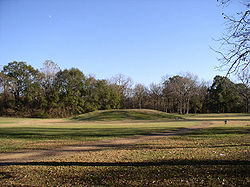 |
A Plaquemine/Mississippian site located in the present town of Natchez, Mississippi Natchez, Mississippi Natchez is the county seat of Adams County, Mississippi, United States. With a total population of 18,464 , it is the largest community and the only incorporated municipality within Adams County... , one of the very few mound culture sites still in use during the historic period |
| Holly Bluff Site Holly Bluff Site The Holly Bluff Site , sometimes known as the Lake George Site, and locally as “The Mound Place,”) is an archaeological site that is a type site for the Lake George phase of the prehistoric Plaquemine culture period of the area... |
 |
A Plaquemine/Mississippian site from central western Mississippi, sometimes known as the Lake George Site. It is the type site for the Lake George Phase (1400 to 1500 CE)]] of the Yazoo Basin region. |
| Jaketown Site Jaketown Site Jaketown Site is an archaeological site with two prehistoric earthwork mounds in Humphreys County, Mississippi, United States. While the mounds have not been excavated, distinctive pottery sherds found in the area lead scholars to date the mounds' construction and use to the Mississippian culture... |
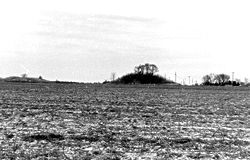 |
A site with two mounds in Humphreys County, Mississippi Humphreys County, Mississippi -Demographics:At the 2000 census, there were 11,206 people, 3,765 households and 2,695 families residing in the county. The population density was 27 per square mile . There were 4,138 housing units at an average density of 10 per square mile... . While the mounds have not been excavated, pottery Pottery Pottery is the material from which the potteryware is made, of which major types include earthenware, stoneware and porcelain. The place where such wares are made is also called a pottery . Pottery also refers to the art or craft of the potter or the manufacture of pottery... sherds found in the area lead scholars to date the sites construction and use to roughly 1100 CE to 1500 CE. Artifacts found in the area demonstrate the site was occupied from 1750 BCE to 1500 CE, making it one of the oldest continuously inhabited sites in the region. There were smaller mounds nearby that were hundreds of years older than the surviving two, built by peoples of a preceding culture, but they were destroyed by plowing and road construction in the early 20th century. |
| Julice Mound Julice Mound Julice Mound is an archaeological site in East Carroll Parish, Louisiana with a Plaquemine culture component dating to 1200–1541 CE and located less than one mile from Transylvania Mounds.-Description:... |
A mound site in East Carroll Parish, Louisiana East Carroll Parish, Louisiana East Carroll Parish is a parish located in the U.S. state of Louisiana. The parish seat is Lake Providence and as of 2010, the population was 7,759.-Law and government:In the 2004 presidential race, East Carroll gave the George W. Bush - Richard B... dated to 1200–1541 CE and located less than one mile from Transylvania Mounds. |
|
| Mangum Mound Site Mangum Mound Site Mangum Mound Site is an archaeological site of the Plaquemine culture in Claiborne County, Mississippi. It is located at milepost 45.7 on the Natchez Trace Parkway. Two very rare Mississippian culture repoussé copper plates have been discovered during excavations of the site... |
A Plaquemine site in Claiborne County, Mississippi Claiborne County, Mississippi -Demographics:As of the census of 2000, there were 11,831 people, 3,685 households, and 2,531 families residing in the county. The population density was 24 people per square mile . There were 4,252 housing units at an average density of 9 per square mile... , located at milepost 45.7 on the Natchez Trace Parkway Natchez Trace Parkway The Natchez Trace Parkway is a National Park Service unit in the southeastern United States that commemorates the historic Old Natchez Trace and preserves sections of the original trail.... . An avian designed repoussé Repoussé and chasing Repoussé or repoussage is a metalworking technique in which a malleable metal is ornamented or shaped by hammering from the reverse side to create a design in low relief. There are few techniques that offer such diversity of expression while still being relatively economical... copper plate was discovered there in 1936. |
|
| Mazique Archeological Site Mazique Archeological Site The Mazique Archeological Site , also known as White Apple Village, is a prehistoric Coles Creek culture archaeological site located in Adams County, Mississippi. It is also the location of the historic White Apple Village of the Natchez people and the Mazique Plantation... |
A multimound site in Adams County, Mississippi southeast of Natchez, Mississippi Natchez, Mississippi Natchez is the county seat of Adams County, Mississippi, United States. With a total population of 18,464 , it is the largest community and the only incorporated municipality within Adams County... , with components from both the Coles Creek period (700-1000 CE) and the later Plaquemine Mississippian period (1000-1680 CE), when it was recorded in historic times as the White Apple village of the Natchez people Natchez people The Natchez are a Native American people who originally lived in the Natchez Bluffs area, near the present-day city of Natchez, Mississippi. They spoke a language isolate that has no known close relatives, although it may be very distantly related to the Muskogean languages of the Creek... . |
|
| Medora Site Medora Site The Medora Site is an archaeological site that is a type site for the prehistoric Plaquemine culture period. The name for the culture is taken from the proximity of Medora to the town of Plaquemine, Louisiana. The site is in West Baton Rouge Parish, Louisiana, and was inhabited from approximately... |
A Plaquemine site in West Baton Rouge Parish, Louisiana West Baton Rouge Parish, Louisiana West Baton Rouge Parish is one of the sixty-four parishes in the U.S. state of Louisiana, and is the smallest in total area. The parish seat is Port Allen and as of 2010, the population was 23,788. The parish has a highly-rated school system and is one of the few in Louisiana that has privatized... , the type site from the Plaquemine culture characteristics were defined |
|
| Pocahontas Mounds Pocahontas Mounds Pocahontas Mounds is an archaeological site from the Plaquemine Mississippian culture in Hinds County, Mississippi, dating from 800 to 1300 CE... |
A multimound site with a platform mound and a mortuary mound and an associated village area, located in Hinds County, Mississippi Hinds County, Mississippi As of the census of 2000, there were 250,800 people, 91,030 households, and 62,355 families residing in the county. The population density was 288 people per square mile . There were 100,287 housing units at an average density of 115 per square mile... and dating to 1000 to 1300 CE. |
|
| Routh Mounds Routh Mounds Routh Mounds is a Plaquemine culture archaeological site in Tensas Parish, Louisiana. It is the type site for the Routh Phase of the Tensas Basin Plaquemine Mississippian chronology. It is located approximately northwest of the Winter Quarters State Historic Site.-See also:*Culture, phase, and... |
A multimound site located in Tensas Parish, Louisiana that is type site for the Routh Phase(1200 to 1350 CE) of the Tensas Basin Plaquemine Mississippian chronology. | |
| Scott Place Mounds Scott Place Mounds Scott Place Mounds is an archaeological site in Union Parish, Louisiana from the Late Coles Creek-Early Plaquemine period, dating to approximately 1200 CE. The site is one of the few such sites in north-central Louisiana.-Description:... |
A multimound site from the Late Coles Creek-Early Plaquemine period located in Union Parish, Louisiana Union Parish, Louisiana Union Parish is a parish located in the U.S. state of Louisiana. The parish seat is Farmerville.... |
|
| Transylvania Mounds Transylvania Mounds Translyvania Mounds is an archaeological site in East Carroll Parish, Louisiana with components from the Coles Creek CE and Plaquemine/Mississippi periods... |
A large multimound site with 2 plaza Plaza Plaza is a Spanish word related to "field" which describes an open urban public space, such as a city square. All through Spanish America, the plaza mayor of each center of administration held three closely related institutions: the cathedral, the cabildo or administrative center, which might be... s and components from the Coles Creek (700–1200) and Plaquemine/Mississippian periods (1200–1541). It located in East Carroll Parish, Louisiana East Carroll Parish, Louisiana East Carroll Parish is a parish located in the U.S. state of Louisiana. The parish seat is Lake Providence and as of 2010, the population was 7,759.-Law and government:In the 2004 presidential race, East Carroll gave the George W. Bush - Richard B... It is the type site Type site In archaeology a type site is a site that is considered the model of a particular archaeological culture... for the protohistoric Translyvania Phase (1400-1650 CE) of the Tensas Basin Plaquemine Mississippian chronology. |
|
| Venable Mound Venable Mound Venable Mound is an archaeological site in Morehouse Parish, Louisiana with a single mound with components from the Troyville, Coles Creek and Plaquemine period.-Description:... |
A single mound site with components from the Troyville, Coles Creek and Plaquemine periods, located in Morehouse Parish, Louisiana Morehouse Parish, Louisiana Morehouse Parish is a parish located in the U.S. state of Louisiana. The parish seat is Bastrop. In 2000, the parish population was 31,021.... |
|
| Winterville Site Winterville Site The Winterville Site is an archaeological site consisting of platform substructure mounds and plazas that is the type site for the Winterville Phase of the Lower Yazoo Basin region... |
A Plaquemine/Mississippian site near Greenville, Mississippi Greenville, Mississippi Greenville is a city in Washington County, Mississippi, United States. The population was 48,633 at the 2000 census, but according to the 2009 census bureau estimates, it has since declined to 42,764, making it the eighth-largest city in the state. It is the county seat of Washington... . It is the type site for the Winterville Phase (1200 to 1400 CE) of the Yazoo Basin region. |
|
See also
- Mississippian cultureMississippian cultureThe Mississippian culture was a mound-building Native American culture that flourished in what is now the Midwestern, Eastern, and Southeastern United States from approximately 800 CE to 1500 CE, varying regionally....
- Culture, phase, and chronological table for the Mississippi Valley