
All Topics  
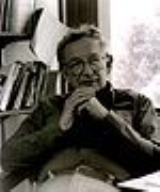
Philip Warren Anderson

 
Philip Warren Anderson

   Email Print
   Bookmark   Link


Philip Warren Anderson


Philip Warren Anderson (born December 13, 1923) is an American
United States

The United States of America is a Federal government constitutional republic comprising U.S. state and a federal district. The country is situated mostly in central North America, where its Contiguous United States and Washington, D.C., the Capital districts and territories, lie between the Pacific Ocean and Atlantic Oceans, Borders of the U...
 physicist
Physicist

A physicist is a scientist who studies or practices physics. Physicists study a wide range of physical phenomena in many Physics#Major fields of physics spanning all length scales: from atom particles of which all ordinary matter is made to the behavior of the material Universe as a whole ....
 and Nobel laureate. Anderson has made contributions to the theories of localization
Anderson localization

In stochastic processes, Anderson localization, also known as strong localization, is the absence of diffusion of waves in a disordered medium....
, antiferromagnetism
Antiferromagnetism

In materials that exhibit antiferromagnetism, the magnetic moments of atoms or molecules, usuallyrelated to the spins of electrons, align in a regular pattern with neighboring spin s pointing in opposite directions....
 and high-temperature superconductivity
High-temperature superconductivity

High-temperature superconductors are materials that are have a superconductor transition temperature above 30 K, which was thought to be the highest BCS theory allowed Tc....
.

rson was born in Indianapolis, Indiana
Indianapolis, Indiana

Indianapolis is the Capital of the U.S. state of Indiana, and the county seat of Marion County, Indiana. The United States Census estimated the city's population, Indianapolis , Indiana the Unigov, at 795,458 in 2006....
 and grew up in Urbana, Illinois
Urbana, Illinois

Urbana is the county seat of Champaign County, Illinois, Illinois, United States. As of the 2007 population estimates, the population was 39,484....
. He graduated from University Laboratory High School
University Laboratory High School of Urbana, Illinois

University Laboratory High School, or Uni, was established in 1921 and is a laboratory school located on the engineering part of the campus of the University of Illinois at Urbana-Champaign....
 in Urbana in 1940. Afterwards, he went to Harvard University
Harvard University

Harvard University is a private university in Cambridge, Massachusetts, Massachusetts, United States, and a member of the Ivy League. Founded in 1636 by the colonial Massachusetts legislature, Harvard is the Colonial Colleges institution of higher learning in the United States....
 for undergraduate and graduate work, with a wartime stint at the U.S. Naval Research Laboratory in-between.


Discussion
Ask a question about 'Philip Warren Anderson'
Start a new discussion about 'Philip Warren Anderson'
Answer questions from other users
Full Discussion Forum


Encyclopedia


Philip Warren Anderson (born December 13, 1923) is an American
United States

The United States of America is a Federal government constitutional republic comprising U.S. state and a federal district. The country is situated mostly in central North America, where its Contiguous United States and Washington, D.C., the Capital districts and territories, lie between the Pacific Ocean and Atlantic Oceans, Borders of the U...
 physicist
Physicist

A physicist is a scientist who studies or practices physics. Physicists study a wide range of physical phenomena in many Physics#Major fields of physics spanning all length scales: from atom particles of which all ordinary matter is made to the behavior of the material Universe as a whole ....
 and Nobel laureate. Anderson has made contributions to the theories of localization
Anderson localization

In stochastic processes, Anderson localization, also known as strong localization, is the absence of diffusion of waves in a disordered medium....
, antiferromagnetism
Antiferromagnetism

In materials that exhibit antiferromagnetism, the magnetic moments of atoms or molecules, usuallyrelated to the spins of electrons, align in a regular pattern with neighboring spin s pointing in opposite directions....
 and high-temperature superconductivity
High-temperature superconductivity

High-temperature superconductors are materials that are have a superconductor transition temperature above 30 K, which was thought to be the highest BCS theory allowed Tc....
.

Biography

Anderson was born in Indianapolis, Indiana
Indianapolis, Indiana

Indianapolis is the Capital of the U.S. state of Indiana, and the county seat of Marion County, Indiana. The United States Census estimated the city's population, Indianapolis , Indiana the Unigov, at 795,458 in 2006....
 and grew up in Urbana, Illinois
Urbana, Illinois

Urbana is the county seat of Champaign County, Illinois, Illinois, United States. As of the 2007 population estimates, the population was 39,484....
. He graduated from University Laboratory High School
University Laboratory High School of Urbana, Illinois

University Laboratory High School, or Uni, was established in 1921 and is a laboratory school located on the engineering part of the campus of the University of Illinois at Urbana-Champaign....
 in Urbana in 1940. Afterwards, he went to Harvard University
Harvard University

Harvard University is a private university in Cambridge, Massachusetts, Massachusetts, United States, and a member of the Ivy League. Founded in 1636 by the colonial Massachusetts legislature, Harvard is the Colonial Colleges institution of higher learning in the United States....
 for undergraduate and graduate work, with a wartime stint at the U.S. Naval Research Laboratory in-between. In graduate school he studied under John Hasbrouck van Vleck
John Hasbrouck van Vleck

John Hasbrouck Van Vleck was an United States physics, co-awarded the 1977 Nobel Prize in Physics, for his contributions to the understanding of electrons in magnetic solids....
.

From 1949 to 1984 he worked at Bell Laboratories in New Jersey
New Jersey

New Jersey is a state in the Mid-Atlantic States and Northeastern United States regions of the United States. It is bordered on the north by New York, on the east by the Hudson River and the Atlantic Ocean, on the southwest by Delaware, and on the west by Pennsylvania....
, where he worked on a wide variety of problems in condensed matter physics
Condensed matter physics

Condensed matter physics is the field of physics that deals with the macroscopic and microscopic physical properties of matter. In particular, it is concerned with the "condensed" phase that appear whenever the number of constituents in a system is extremely large and the interactions between the constituents are strong....
. During this period he discovered the concept of localization, the idea that extended states can be localized by the presence of disorder in a system; the Anderson Hamiltonian, which describes electrons in a transition metal
Transition metal

In chemistry, the term transition metal has two possible meanings:*It commonly refers to any element in the d-block of the periodic table, including the group 12 element elements zinc, cadmium and Mercury ....
; the "Higgs" mechanism
Higgs mechanism

In quantum field theory, the Higgs mechanism is a way that the massless gauge bosons in a gauge theory get a mass by interacting with a background Higgs field....
 for generating mass
Mass

In physical science, mass refers to the degree of acceleration a body acquires when subject to a force: bodies with greater mass are accelerated less by the same force....
 in elementary particle
Elementary particle

In particle physics, an elementary particle or fundamental particle is a wiktionary:particle not known to have substructure; that is, it is not known to be made up of smaller particles....
s; and the pseudospin approach to the BCS theory
BCS theory

BCS theory is a microscopic theory of superconductivity, proposed by John Bardeen, Leon Neil Cooper, and John Robert Schrieffer. It describes superconductivity as a microscopic effect caused by a condensation of Cooper pair into a boson-like state....
 of superconductivity
Superconductivity

Superconductivity is a phenomenon occurring in certain materials generally at very low temperatures, characterized by exactly zero electrical resistance and the exclusion of the interior magnetic field ....
.

From 1967 to 1975, Anderson was a professor of theoretical physics at Cambridge University
University of Cambridge

The University of Cambridge , located in Cambridge, England, is the List of oldest universities in continuous operation university in the Anglosphere....
. In 1977 Anderson was awarded the Nobel Prize in Physics
Nobel Prize in Physics

The Nobel Prize in Physics is awarded once a year by the Royal Swedish Academy of Sciences. It is one of the five Nobel Prizes established by the will of Alfred Nobel in 1895 and awarded since 1901; the others are the Nobel Prize in chemistry, Nobel Prize in literature, Nobel Peace Prize, and Nobel Prize in physiology or medicine....
 for his investigations into the electronic structure of magnetic and disordered systems, which allowed for the development of electronic switching and memory devices in computers. Co-researchers Sir Nevill Francis Mott and John van Vleck shared the award with him. In 1982, he was awarded the National Medal of Science
National Medal of Science

The National Medal of Science is an honor bestowed by the President of the United States to individuals in science and engineering who have made important contributions to the advancement of knowledge in the fields of behavioral science and social sciences, biology, chemistry, engineering, mathematics and physics....
. He retired from Bell Labs in 1984 and is currently Joseph Henry
Joseph Henry

Joseph Henry was an American scientist who served as the first Secretary of the Smithsonian Institution. During his lifetime, he was considered one of the greatest American scientists since Benjamin Franklin....
 Professor of Physics at Princeton University
Princeton University

Princeton University is a private university university located in Princeton, New Jersey, New Jersey, United States. The school is one of the eight universities of the Ivy League and has the largest per-student Financial endowment in the world....
.

Anderson's writings include Concepts of Solids, Basic Notions of Condensed Matter Physics and The Theory of Superconductivity in the High-Tc Cuprates. Anderson currently serves on the board of advisors of Scientists and Engineers for America
Scientists and Engineers for America

Scientists and Engineers for America is an organization focused on promoting sound science in American government, and supporting candidates who understand science and its applications....
, an organization focused on promoting sound science in American government. He is a certified first degree-master of the Chinese board game Go
Go (board game)

Go is a strategic board game for two players. It is known as w?iq? in Chinese , or in Japanese, and baduk in Korean language ....
.

A 2006 statistical analysis of scientific research papers by José Soler, comparing number of references in a paper to the number of citations, declared Anderson to be the "most creative" physicist in the world.

Publications

  • Notes on Theory of Magnetism, Tokyo, 1954
  • Concepts in Solids, 1963 ISBN 9810232314
  • Basic Notions in Condensed Matter Physics 1984 ISBN 0201328305
  • A Career in Theoretical Physics 1994 ISBN 9812388664
  • The Theory of Superconductivity in the High Temperature Cuprates 1997 ISBN 0691043655
  • Philip W. Anderson, David Pines, Kenneth Arrow (Editor) Economy as an Evolving Complex System: the proceedings of the evolutionary paths of the global economy workshop, held sept., 1987 in Santa Fe, New Mexico (Perseus Publishing, 1988) ISBN 9780201156850
  • R Penrose; Philip W Anderson "The Large, the Small and the Human Mind," Nature 386, no. 6624, (1997): 456
  • "Thinking big" Nature. 437, no. 7059, (2005): 625
  • "Brainwashed by Feynman?" Physics today. 53, no. 2, (2000): 11
  • "Computing: Solving problems in finite time" Nature 400:6740, (1999): 115
  • "When the Electron Falls Apart - In condensed matter physics, some particles behave like fragments of an electron" Physics today 50:10, (1997): 42
  • "" Proceedings of the National Academy of Sciences of the United States of America 92:15, (1995): 6653
  • "Twenty years of talking past each other: The theory of high Tc" Physica. C, Superconductivity 460, (2007): 3
  • Philip W Anderson; A D Aczel; F E A Johnson "Fermat's Last Theorem" Nature 383, no. 6603, (1996): 774


Bibliography


External links