


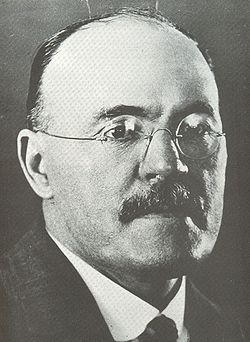
Philip Game

Encyclopedia
Air Vice-Marshal
Sir Philip Woolcott Game GCB
, GCVO
, GBE
, KCMG
, DSO
(30 March 1876 – 4 February 1961) was a British Royal Air Force
commander, who later served as Governor of New South Wales and Commissioner of Police of the Metropolis
. Born in Surrey in 1876, Game was educated at Charterhouse School
and entered the military at Royal Military Academy Woolwich, gaining his commission in 1895. Serving with the Royal Artillery, Game saw action in the Second Boer War
and the First World War. After serving with distinction and bravery, Game transferred to the Royal Flying Corps
in early 1916 serving as General Trenchard
's chief staff officer. Finishing the War as an acting major-general, Game remained in the Royal Air Force
after the close of hostilities. Notably he served as Air Officer Commanding
RAF India and Air Member for Personnel
. He retired from the military in 1929 having reached the rank of Air Vice-Marshal
.
In March 1930, Game was appointed Governor of New South Wales, serving during a time of political instability and coming into conflict with the NSW Labor Government over attempts to abolish the New South Wales Legislative Council
. Game dismissed the Government of Premier Jack Lang
in May 1932 following illegal activity by Lang. Ending his term in January 1935, Game returned to Britain and was appointed Commissioner of the Metropolitan Police
in London. He held it during the tumultuous 1930s, the 1936 abdication crisis
and the Second World War, before retiring at the end of the war in 1945. Retiring with his wife Gwendoline to his home in Kent, Game died in February 1961, aged 84.
, Surrey
, England
, on 30 March 1876 to George Beale Game, a merchant from Broadway, Worcestershire
, and his wife Clara Vincent. Before entering the army, he was educated at Charterhouse School
. Following officer training at the Royal Military Academy Woolwich, Game was commissioned as a Second Lieutenant
on 2 November 1895 into the Royal Artillery
. Promoted to Lieutenant
on 2 November 1898 and further promoted to Captain on 20 June 1901, he served in the Second Boer War
and was Mentioned in Dispatches
. As a young artillery Captain he was made officer in charge of the gun carriage bearing the coffin of Queen Victoria at her funeral in 1901. Following brief postings in India and Ireland, Game attended the Staff College, Camberley
in 1910 and was posted as a GSO at the War Office
. He later won the Royal United Services Institute
Gold Medal Essay. On 11 August 1908 he married Gwendolen Hughes-Gibb, the daughter of Francis Hughes-Gibb of Dorset
, and was promoted as a Major on 15 February 1912.
Following the outbreak of the First World War in 1914, Game served on the front in France, including at the Battle of Neuve Chapelle
. In the war he was awarded the Distinguished Service Order, the Légion d'honneur
and the Order of the Crown of Italy
and was five times Mentioned in Dispatches. In early 1916 Game transferred to the Royal Flying Corps
as a result of Hugh Trenchard's
request for an experienced staff officer to serve in his headquarters. Game transferred to the Royal Air Force
on its creation in 1918. At the end of the war, Game continued to work under Trenchard, but as Director of Training and Organisation in the RAF. In 1922 he was promoted to the rank of Air Vice-Marshal
and appointed Air Officer Commanding
RAF India. The next year he took up the post of Air Member for Personnel
and was appointed as a Knight Commander of the Order of the Bath (KCB) a year later. Game retired suddenly on 1 January 1929, at the age of 52, allegedly owing to the rumours of his being appointed Chief of the Air Staff
. On 1 March 1929 he was appointed a Knight Grand Cross of the Order of the British Empire in the military division (GBE).
in March 1930. He arrived in Sydney
, New South Wales
with his family in May 1930. On 30 June 1930, Game was appointed by King George V a Knight of Grace of the Venerable Order of St John (KStJ). At the October 1930 State elections the Bavin Nationalist Government was defeated and the Labor Party
leader, Jack Lang
, became Premier.
, over the proposed appointment of additional members to the Legislative Council
, in order to enable the abolition of the house, using the same techniques used to abolish the Queensland Legislative Council
in 1922. His inability to gain control in the Upper House obstructed Lang’s legislative programme and in November 1930, claiming a mandate to abolish the Council, Lang's Labor MLCs put forward two bills, one to repeal section 7A of the NSW Constitution (which prevented the abolition of the Council without a referendum), the other to abolish the Council. Lang requested the necessary additional appointments to pass the legislation from Game. However, these requests were met with Game’s refusal.
 Believing that a referendum
was necessary before the bills could become law, the Legislative Council permitted the bills to pass without a division on 10 December. Lang then announced his intention of presenting the bills for Game's Royal assent
without a referendum. The following day, two members of the Legislative Council, Thomas Playfair and Arthur Trethowan
, applied for and were granted an injunction preventing the President of the Council, Sir John Peden, and the ministers from presenting the bills to the Governor without having held a referendum. On 23 December the Supreme Court of New South Wales
in the case of Trethowan v. Peden, upheld the injunction and ordered the government not to present for royal assent, unless ratified by the electors in a referendum, bills to abolish the council. Lang immediately prepared an appeal to the High Court of Australia
. In the case of Attorney-General (New South Wales) v. Trethowan, the appeal was rejected by a majority of the court. Lang then appealed this decision to the Judicial Committee of the Privy Council
in London. The Privy Council then delayed the appeal until April 1932.
Reflecting his status as a representative of the British Government, Game at all times informed the Dominions Office
of political developments. In hard financial times, NSW soon came into conflict with the federal government as Lang’s unorthodox financial policy opposed the economic orthodoxy advocated by Sir Otto Niemeyer
, who was the main financial advisor to the Federal Scullin
Labor Government and later the Lyons
United Australia Party
Government. In July 1931, in a personal contribution towards economic recovery, Game notified Treasury to make a 25% deduction from his own monthly salary.
Lang's Government soon introduced legislation to cope with the economic problems the state was facing. Its first move was the Reduction of Interest Bill, which was intended to default on payments of overseas debts to British bondholders in an attempt to negotiate the interest rate. The Legislative Council prevented passage on 26 March 1931 by resolving that the bill be read again in six months time. Lang again asked for additional members to force his legislation through. Game, aware of the weight of opinion in the MacDonald Government
in London, the Scullin Government
in Canberra, and Sydney against the Lang administration's financial policies, refused. On 28 March the Federal Labor Party expelled the New South Wales Labor Party for its opposition to the financial policy of the Federal government. Despite various petitions and demands that he dismiss Lang, Game declined to act. Game later informed the Dominions Secretary, James Henry Thomas
, on 29 March 1931 that he was not convinced that Lang would lose an election at this time.
In March and June 1931 Lang repeatedly requested the necessary 80 appointments to swamp the council and prevent obstruction to his legislation. Game again refused, offering 21 appointments, which were enough to pass some of the legislation but not the most controversial bills, including the bill to default on debts. Finally, in a compromise move with Lang, on 19 November 1931 Game assented to 25 appointments, reasoning that it would not be possible to refuse Lang's requests until the Privy Council case was resolved. His telegram to the Dominions Secretary the next day explained further: "I foresee if I refuse now I shall most probably be placed in position before long where...I should not be able to stop at twenty five but should have sooner or later to give sufficient appointments to carry rejected legislation. Such numbers might give Government a permanent majority to carry any and every extreme measure, and extreme factions would probably gain ascendancy owing to what they would represent as my obstinate partiality. Should I refuse appointments until appeal case is heard and should it result in abolition extremists would be in an even stronger position. After reviewing all arguments and considering possibilities I have reached conclusion that my proper and wiser course is to accept advice and have done so."
During this Game questioned the result if Lang won the appeal to the Privy Council and the Legislative Council was abolished. Various correspondence between him and London confirms that had Lang succeeded, Game may have refused assent to the abolition bills, thereby making it the first time it had been withheld since 1708. This potential situation disappeared, however, with the judgment of the Judicial Committee of the Privy Council on 31 May 1932. The judgment dismissed the appeal by the Government of New South Wales
. The bills repealing Section 7A and abolishing the Legislative Council could not therefore be presented to the Governor for assent until they had been passed in a referendum. Faced with other problems, Lang's plans for abolition ultimately failed. His successor as Premier, Bertram Stevens, later passed major reforms to replace the appointed Legislative Council, by a Council elected by the whole parliament to terms equivalent to four Assembly terms. This was passed by referendum in 1933.
, when Lang decided that he would cut the ribbon and incurred the displeasure of the King, Game reassured the King that Lang had the right to cut the ribbon. Game and his family found much amusement in the controversy thrown up over the matter and the question of whether Game, as Governor, should have a 17-gun salute. The far-right New Guard
were nevertheless enraged over Lang's decision, culminating in Francis de Groot
's pre-ceremony cutting of the ribbon. The ribbon was hastily reattached and on 20 March 1932, Lang opened the bridge with Game looking on, and he later gave a speech commemorating the occasion.
of Joseph Lyons
came to power in January 1932, it passed the Financial Agreement Enforcement Act, thereby forcing the NSW government to adhere to its debt commitments and to cut government spending.
Lang appealed the decision to the High Court. When the court ruled that the law was valid, Lang ordered Treasury officials to withdraw all the state's funds from government bank accounts so that the federal government could not gain access to the money. Game advised Lang that in his view this action was illegal, and that if Lang did not reverse it he would dismiss the government. Lang stood firm, and issued a leaflet in defiance of Game. Game then reluctantly decided to exercise his reserve powers and called Lang to Government House
to dismiss him. However, Lang was not the first to hear of his dismissal. The pianist Isador Goodman
, who had been befriended by Sir Philip and Lady Game, was at Government House for dinner that night. There were a number of interruptions, and Goodman asked if he perhaps ought to leave. Game replied, "No, that's not necessary. You see, I am about to dismiss the Premier."
On 13 May 1932 Game dismissed Lang's government and appointed the UAP leader, Bertram Stevens, as Premier. Stevens formed a coalition with Michael Bruxner
's Country Party and immediately called an election
, at which Lang's NSW Labor Party was heavily defeated. This was the first case of an Australian government with the confidence of the lower house of Parliament being dismissed by a vice-regal representative, the second case being when Governor-General Sir John Kerr dismissed
Gough Whitlam
's government on 11 November 1975. Game himself felt his decision was the right one, despite his personal liking of Lang. He wrote to his mother-in-law on 2 July 1932: "Still with all his faults of ommission and commission I had and still have a personal liking for Lang and a great deal of sympathy for his ideals and I did not at all relish being forced to dismiss him. But I felt faced with the alternative of doing so or reducing the job of Governor all over the Empire to a farce." Lang himself, despite objecting to his dismissal conceded that he too liked Game, regarding him as fair and polite, and having had good relations with him.
, and was Chief Scout of the NSW Boy Scouts Association. Lady Game was President of the District and Bush Nursing Associations and the Girl Guides Association. The rest of his term was fairly uneventful, and he returned to Britain following the expiration of his term on 15 January 1935. Before he left Sydney he was appointed a Knight Commander of the Order of St Michael and St George (KCMG), on the recommendation of Premier Stevens, for his service as Governor. In honour of their service to the state, Ku-ring-gai Municipal Council
named a major road in Lindfield
as Lady Game Drive and a nearby park as Sir Phillip Game Reserve. In memory of Game's time as Governor, a portrait was commissioned by public subscription and painted by R.G. Eves. It was then displayed at the National Art Gallery of New South Wales
before being presented to Government House.
from 1935 until 1945. Not long after his appointment in November 1935, Game was responsible for the policing of the funeral of King George V and subsequently the abdication crisis
of King Edward VIII and the 1937 coronation
of King George VI
. For his work in the 1937 coronation, Game was appointed by King George VI a Knight Grand Cross of the Royal Victorian Order (GCVO) on 11 May 1937. Serving as Commissioner during very tumultuous times, Game had to deal with Fascist and Communist demonstrations, an Irish Republican Army
bombing campaign and, during the Second World War, the organization of the police role in air-raid precautions and relief. He dealt effectively with those problems and the consequent improvement in police morale was an important factor in the survival of London during the concentrated German air attack of 1940-41. In 1943, in an attempt to prevent burglaries, Game urged householders not to keep furs, adapting a verse from Chapter 9 of Ecclesiastes
saying, "they are no doubt warmer, and look nicer than a tweed coat, but a live dog is better than a dead lion."
Towards the end of his time as Metropolitan Police Commissioner, Game worked to establish a boys' club. The Sir Philip Game Boys' Club, situated in Croydon
, was opened in 1946. The Club was officially opened on 19 July 1947 by the then Home Secretary, James Chuter Ede
, in the presence of Game. New premises were built and completed in 1964 and were officially opened on 8 May 1966 by the then Home Secretary, Sir Frank Soskice
, in the presence of Lady Game, who unveiled a plaque in the memory of her husband. Game was the last senior armed forces officer to be appointed Metropolitan Police Commissioner as since his retirement all successive commissioners have been career police officers. Game was appointed a Knight Grand Cross of the Order of the Bath (GCB) on 2 May 1945 and retired soon after on 1 June 1945.
He died at his home, Blackenhall, Sevenoaks
, Kent
, on 4 February 1961, survived by his wife, daughter and by his elder son, who had married Vera Blackburn, daughter of Sir Charles Bickerton Blackburn. His second son had been killed in action at Taranto, Italy, in 1943.


_ribbon.png)

_ribbon.png)

Air Vice-Marshal
Air vice-marshal is a two-star air-officer rank which originated in and continues to be used by the Royal Air Force. The rank is also used by the air forces of many countries which have historical British influence and it is sometimes used as the English translation of an equivalent rank in...
Sir Philip Woolcott Game GCB
Order of the Bath
The Most Honourable Order of the Bath is a British order of chivalry founded by George I on 18 May 1725. The name derives from the elaborate mediæval ceremony for creating a knight, which involved bathing as one of its elements. The knights so created were known as Knights of the Bath...
, GCVO
Royal Victorian Order
The Royal Victorian Order is a dynastic order of knighthood and a house order of chivalry recognising distinguished personal service to the order's Sovereign, the reigning monarch of the Commonwealth realms, any members of her family, or any of her viceroys...
, GBE
Order of the British Empire
The Most Excellent Order of the British Empire is an order of chivalry established on 4 June 1917 by George V of the United Kingdom. The Order comprises five classes in civil and military divisions...
, KCMG
Order of St Michael and St George
The Most Distinguished Order of Saint Michael and Saint George is an order of chivalry founded on 28 April 1818 by George, Prince Regent, later George IV of the United Kingdom, while he was acting as Prince Regent for his father, George III....
, DSO
Distinguished Service Order
The Distinguished Service Order is a military decoration of the United Kingdom, and formerly of other parts of the British Commonwealth and Empire, awarded for meritorious or distinguished service by officers of the armed forces during wartime, typically in actual combat.Instituted on 6 September...
(30 March 1876 – 4 February 1961) was a British Royal Air Force
Royal Air Force
The Royal Air Force is the aerial warfare service branch of the British Armed Forces. Formed on 1 April 1918, it is the oldest independent air force in the world...
commander, who later served as Governor of New South Wales and Commissioner of Police of the Metropolis
Commissioner of Police of the Metropolis
The Commissioner of Police of the Metropolis is the head of London's Metropolitan Police Service, classing the holder as a chief police officer...
. Born in Surrey in 1876, Game was educated at Charterhouse School
Charterhouse School
Charterhouse School, originally The Hospital of King James and Thomas Sutton in Charterhouse, or more simply Charterhouse or House, is an English collegiate independent boarding school situated at Godalming in Surrey.Founded by Thomas Sutton in London in 1611 on the site of the old Carthusian...
and entered the military at Royal Military Academy Woolwich, gaining his commission in 1895. Serving with the Royal Artillery, Game saw action in the Second Boer War
Second Boer War
The Second Boer War was fought from 11 October 1899 until 31 May 1902 between the British Empire and the Afrikaans-speaking Dutch settlers of two independent Boer republics, the South African Republic and the Orange Free State...
and the First World War. After serving with distinction and bravery, Game transferred to the Royal Flying Corps
Royal Flying Corps
The Royal Flying Corps was the over-land air arm of the British military during most of the First World War. During the early part of the war, the RFC's responsibilities were centred on support of the British Army, via artillery co-operation and photographic reconnaissance...
in early 1916 serving as General Trenchard
Hugh Trenchard, 1st Viscount Trenchard
Marshal of the Royal Air Force Hugh Montague Trenchard, 1st Viscount Trenchard GCB OM GCVO DSO was a British officer who was instrumental in establishing the Royal Air Force...
's chief staff officer. Finishing the War as an acting major-general, Game remained in the Royal Air Force
Royal Air Force
The Royal Air Force is the aerial warfare service branch of the British Armed Forces. Formed on 1 April 1918, it is the oldest independent air force in the world...
after the close of hostilities. Notably he served as Air Officer Commanding
Air Officer Commanding
Air Officer Commanding is a title given in the air forces of Commonwealth nations to an air officer who holds a command appointment. Thus, an air vice marshal might be the AOC 38 Group...
RAF India and Air Member for Personnel
Air Member for Personnel
The Air Member for Personnel is the senior Royal Air Force officer who is responsible for personnel matters and is a member of the Air Force Board...
. He retired from the military in 1929 having reached the rank of Air Vice-Marshal
Air Vice-Marshal
Air vice-marshal is a two-star air-officer rank which originated in and continues to be used by the Royal Air Force. The rank is also used by the air forces of many countries which have historical British influence and it is sometimes used as the English translation of an equivalent rank in...
.
In March 1930, Game was appointed Governor of New South Wales, serving during a time of political instability and coming into conflict with the NSW Labor Government over attempts to abolish the New South Wales Legislative Council
New South Wales Legislative Council
The New South Wales Legislative Council, or upper house, is one of the two chambers of the parliament of New South Wales in Australia. The other is the Legislative Assembly. Both sit at Parliament House in the state capital, Sydney. The Assembly is referred to as the lower house and the Council as...
. Game dismissed the Government of Premier Jack Lang
Jack Lang (Australian politician)
John Thomas Lang , usually referred to as J.T. Lang during his career, and familiarly known as "Jack" and nicknamed "The Big Fella" was an Australian politician who was Premier of New South Wales for two terms...
in May 1932 following illegal activity by Lang. Ending his term in January 1935, Game returned to Britain and was appointed Commissioner of the Metropolitan Police
Metropolitan Police Service
The Metropolitan Police Service is the territorial police force responsible for Greater London, excluding the "square mile" of the City of London which is the responsibility of the City of London Police...
in London. He held it during the tumultuous 1930s, the 1936 abdication crisis
Edward VIII abdication crisis
In 1936, a constitutional crisis in the British Empire was caused by King-Emperor Edward VIII's proposal to marry Wallis Simpson, a twice-divorced American socialite....
and the Second World War, before retiring at the end of the war in 1945. Retiring with his wife Gwendoline to his home in Kent, Game died in February 1961, aged 84.
Early life and career
Game was born in StreathamStreatham
Streatham is a district in Surrey, England, located in the London Borough of Lambeth. It is situated south of Charing Cross. The area is identified in the London Plan as one of 35 major centres in Greater London.-History:...
, Surrey
Surrey
Surrey is a county in the South East of England and is one of the Home Counties. The county borders Greater London, Kent, East Sussex, West Sussex, Hampshire and Berkshire. The historic county town is Guildford. Surrey County Council sits at Kingston upon Thames, although this has been part of...
, England
England
England is a country that is part of the United Kingdom. It shares land borders with Scotland to the north and Wales to the west; the Irish Sea is to the north west, the Celtic Sea to the south west, with the North Sea to the east and the English Channel to the south separating it from continental...
, on 30 March 1876 to George Beale Game, a merchant from Broadway, Worcestershire
Broadway, Worcestershire
Broadway is a village and civil parish in the Worcestershire part of the Cotswolds in England.Often referred to as the "Jewel of the Cotswolds", Broadway village lies beneath Fish Hill on the western Cotswold escarpment...
, and his wife Clara Vincent. Before entering the army, he was educated at Charterhouse School
Charterhouse School
Charterhouse School, originally The Hospital of King James and Thomas Sutton in Charterhouse, or more simply Charterhouse or House, is an English collegiate independent boarding school situated at Godalming in Surrey.Founded by Thomas Sutton in London in 1611 on the site of the old Carthusian...
. Following officer training at the Royal Military Academy Woolwich, Game was commissioned as a Second Lieutenant
Second Lieutenant
Second lieutenant is a junior commissioned officer military rank in many armed forces.- United Kingdom and Commonwealth :The rank second lieutenant was introduced throughout the British Army in 1871 to replace the rank of ensign , although it had long been used in the Royal Artillery, Royal...
on 2 November 1895 into the Royal Artillery
Royal Artillery
The Royal Regiment of Artillery, commonly referred to as the Royal Artillery , is the artillery arm of the British Army. Despite its name, it comprises a number of regiments.-History:...
. Promoted to Lieutenant
Lieutenant
A lieutenant is a junior commissioned officer in many nations' armed forces. Typically, the rank of lieutenant in naval usage, while still a junior officer rank, is senior to the army rank...
on 2 November 1898 and further promoted to Captain on 20 June 1901, he served in the Second Boer War
Second Boer War
The Second Boer War was fought from 11 October 1899 until 31 May 1902 between the British Empire and the Afrikaans-speaking Dutch settlers of two independent Boer republics, the South African Republic and the Orange Free State...
and was Mentioned in Dispatches
Mentioned in Dispatches
A soldier Mentioned in Despatches is one whose name appears in an official report written by a superior officer and sent to the high command, in which is described the soldier's gallant or meritorious action in the face of the enemy.In a number of countries, a soldier's name must be mentioned in...
. As a young artillery Captain he was made officer in charge of the gun carriage bearing the coffin of Queen Victoria at her funeral in 1901. Following brief postings in India and Ireland, Game attended the Staff College, Camberley
Staff College, Camberley
Staff College, Camberley, Surrey, was a staff college for the British Army from 1802 to 1997, with periods of closure during major wars. In 1997 it was merged into the new Joint Services Command and Staff College.-Origins:...
in 1910 and was posted as a GSO at the War Office
War Office
The War Office was a department of the British Government, responsible for the administration of the British Army between the 17th century and 1964, when its functions were transferred to the Ministry of Defence...
. He later won the Royal United Services Institute
Royal United Services Institute
The Royal United Services Institute for Defence and Security Studies , officially still known by its old name, the Royal United Services Institution, is a British defence and security think tank. It was founded in 1831 by The Duke of Wellington.RUSI describes itself asIt won Prospect Magazine's...
Gold Medal Essay. On 11 August 1908 he married Gwendolen Hughes-Gibb, the daughter of Francis Hughes-Gibb of Dorset
Dorset
Dorset , is a county in South West England on the English Channel coast. The county town is Dorchester which is situated in the south. The Hampshire towns of Bournemouth and Christchurch joined the county with the reorganisation of local government in 1974...
, and was promoted as a Major on 15 February 1912.
Following the outbreak of the First World War in 1914, Game served on the front in France, including at the Battle of Neuve Chapelle
Battle of Neuve Chapelle
The Battles of Neuve Chapelle and Artois was a battle in the First World War. It was a British offensive in the Artois region and broke through at Neuve-Chapelle but they were unable to exploit the advantage.The battle began on 10 March 1915...
. In the war he was awarded the Distinguished Service Order, the Légion d'honneur
Légion d'honneur
The Legion of Honour, or in full the National Order of the Legion of Honour is a French order established by Napoleon Bonaparte, First Consul of the Consulat which succeeded to the First Republic, on 19 May 1802...
and the Order of the Crown of Italy
Order of the Crown of Italy
The Order of the Crown of Italy was founded as a national order in 1868 by King Vittorio Emanuele II, to commemorate the unification of Italy in 1861...
and was five times Mentioned in Dispatches. In early 1916 Game transferred to the Royal Flying Corps
Royal Flying Corps
The Royal Flying Corps was the over-land air arm of the British military during most of the First World War. During the early part of the war, the RFC's responsibilities were centred on support of the British Army, via artillery co-operation and photographic reconnaissance...
as a result of Hugh Trenchard's
Hugh Trenchard, 1st Viscount Trenchard
Marshal of the Royal Air Force Hugh Montague Trenchard, 1st Viscount Trenchard GCB OM GCVO DSO was a British officer who was instrumental in establishing the Royal Air Force...
request for an experienced staff officer to serve in his headquarters. Game transferred to the Royal Air Force
Royal Air Force
The Royal Air Force is the aerial warfare service branch of the British Armed Forces. Formed on 1 April 1918, it is the oldest independent air force in the world...
on its creation in 1918. At the end of the war, Game continued to work under Trenchard, but as Director of Training and Organisation in the RAF. In 1922 he was promoted to the rank of Air Vice-Marshal
Air Vice-Marshal
Air vice-marshal is a two-star air-officer rank which originated in and continues to be used by the Royal Air Force. The rank is also used by the air forces of many countries which have historical British influence and it is sometimes used as the English translation of an equivalent rank in...
and appointed Air Officer Commanding
Air Officer Commanding
Air Officer Commanding is a title given in the air forces of Commonwealth nations to an air officer who holds a command appointment. Thus, an air vice marshal might be the AOC 38 Group...
RAF India. The next year he took up the post of Air Member for Personnel
Air Member for Personnel
The Air Member for Personnel is the senior Royal Air Force officer who is responsible for personnel matters and is a member of the Air Force Board...
and was appointed as a Knight Commander of the Order of the Bath (KCB) a year later. Game retired suddenly on 1 January 1929, at the age of 52, allegedly owing to the rumours of his being appointed Chief of the Air Staff
Chief of the Air Staff
The Chief of the Air Staff is the professional head of the Royal Air Force and a member of both the Chiefs of Staff Committee and the Air Force Board. The current Chief of the Air Staff is Air Chief Marshal Sir Stephen Dalton...
. On 1 March 1929 he was appointed a Knight Grand Cross of the Order of the British Empire in the military division (GBE).
Governor of New South Wales
At the height of the Great Depression, Game was appointed Governor of New South Wales in AustraliaAustralia
Australia , officially the Commonwealth of Australia, is a country in the Southern Hemisphere comprising the mainland of the Australian continent, the island of Tasmania, and numerous smaller islands in the Indian and Pacific Oceans. It is the world's sixth-largest country by total area...
in March 1930. He arrived in Sydney
Sydney
Sydney is the most populous city in Australia and the state capital of New South Wales. Sydney is located on Australia's south-east coast of the Tasman Sea. As of June 2010, the greater metropolitan area had an approximate population of 4.6 million people...
, New South Wales
New South Wales
New South Wales is a state of :Australia, located in the east of the country. It is bordered by Queensland, Victoria and South Australia to the north, south and west respectively. To the east, the state is bordered by the Tasman Sea, which forms part of the Pacific Ocean. New South Wales...
with his family in May 1930. On 30 June 1930, Game was appointed by King George V a Knight of Grace of the Venerable Order of St John (KStJ). At the October 1930 State elections the Bavin Nationalist Government was defeated and the Labor Party
Australian Labor Party
The Australian Labor Party is an Australian political party. It has been the governing party of the Commonwealth of Australia since the 2007 federal election. Julia Gillard is the party's federal parliamentary leader and Prime Minister of Australia...
leader, Jack Lang
Jack Lang (Australian politician)
John Thomas Lang , usually referred to as J.T. Lang during his career, and familiarly known as "Jack" and nicknamed "The Big Fella" was an Australian politician who was Premier of New South Wales for two terms...
, became Premier.
Legislative Council abolition
Lang’s previous term of office from 1925 to 1927 had brought him into conflict with Game’s predecessor, Sir Dudley de ChairDudley de Chair
Admiral Sir Dudley Rawson Stratford de Chair, KCB, KCMG, KBE, MVO was a Naval Officer and Governor. De Chair joined the Royal Navy from the age of 16 and served in the Anglo-Egyptian War and later as an Admiral in the First World War. He was appointed as Governor of New South Wales in 1923...
, over the proposed appointment of additional members to the Legislative Council
New South Wales Legislative Council
The New South Wales Legislative Council, or upper house, is one of the two chambers of the parliament of New South Wales in Australia. The other is the Legislative Assembly. Both sit at Parliament House in the state capital, Sydney. The Assembly is referred to as the lower house and the Council as...
, in order to enable the abolition of the house, using the same techniques used to abolish the Queensland Legislative Council
Queensland Legislative Council
The Queensland Legislative Council was the upper house of the parliament in the Australian state of Queensland. It was a fully nominated body which first took office on 1 May 1860. It was abolished by the Constitution Amendment Act 1921, which took effect on 23 March 1922.Consequently, the...
in 1922. His inability to gain control in the Upper House obstructed Lang’s legislative programme and in November 1930, claiming a mandate to abolish the Council, Lang's Labor MLCs put forward two bills, one to repeal section 7A of the NSW Constitution (which prevented the abolition of the Council without a referendum), the other to abolish the Council. Lang requested the necessary additional appointments to pass the legislation from Game. However, these requests were met with Game’s refusal.
Referendum
A referendum is a direct vote in which an entire electorate is asked to either accept or reject a particular proposal. This may result in the adoption of a new constitution, a constitutional amendment, a law, the recall of an elected official or simply a specific government policy. It is a form of...
was necessary before the bills could become law, the Legislative Council permitted the bills to pass without a division on 10 December. Lang then announced his intention of presenting the bills for Game's Royal assent
Royal Assent
The granting of royal assent refers to the method by which any constitutional monarch formally approves and promulgates an act of his or her nation's parliament, thus making it a law...
without a referendum. The following day, two members of the Legislative Council, Thomas Playfair and Arthur Trethowan
Arthur Trethowan
Sir Arthur King Trethowan KCMG was an Australian politician.Born in Creswick, Victoria, to auctioneer Samuel Trethowan and Charlotte King, he attended Creswick Grammar School before becoming an auctioneer at Numurkah. On 9 November 1886 he married Jane Alice Manifold, with whom he had eleven...
, applied for and were granted an injunction preventing the President of the Council, Sir John Peden, and the ministers from presenting the bills to the Governor without having held a referendum. On 23 December the Supreme Court of New South Wales
Supreme Court of New South Wales
The Supreme Court of New South Wales is the highest state court of the Australian State of New South Wales...
in the case of Trethowan v. Peden, upheld the injunction and ordered the government not to present for royal assent, unless ratified by the electors in a referendum, bills to abolish the council. Lang immediately prepared an appeal to the High Court of Australia
High Court of Australia
The High Court of Australia is the supreme court in the Australian court hierarchy and the final court of appeal in Australia. It has both original and appellate jurisdiction, has the power of judicial review over laws passed by the Parliament of Australia and the parliaments of the States, and...
. In the case of Attorney-General (New South Wales) v. Trethowan, the appeal was rejected by a majority of the court. Lang then appealed this decision to the Judicial Committee of the Privy Council
Judicial Committee of the Privy Council
The Judicial Committee of the Privy Council is one of the highest courts in the United Kingdom. Established by the Judicial Committee Act 1833 to hear appeals formerly heard by the King in Council The Judicial Committee of the Privy Council (JCPC) is one of the highest courts in the United...
in London. The Privy Council then delayed the appeal until April 1932.
Reflecting his status as a representative of the British Government, Game at all times informed the Dominions Office
Secretary of State for Dominion Affairs
The position of Secretary of State for Dominion Affairs was a British cabinet level position created in 1925 responsible for British relations with the Dominions — Canada, Australia, New Zealand, South Africa, Newfoundland, and the Irish Free State, as well as the self-governing colony of...
of political developments. In hard financial times, NSW soon came into conflict with the federal government as Lang’s unorthodox financial policy opposed the economic orthodoxy advocated by Sir Otto Niemeyer
Otto Niemeyer
Sir Otto Ernst Niemeyer, GBE, KCB was financial controller at the Treasury and a director at the Bank of England. He was also treasurer of the National Association of Mental Health post World War II...
, who was the main financial advisor to the Federal Scullin
James Scullin
James Henry Scullin , Australian Labor politician and the ninth Prime Minister of Australia. Two days after he was sworn in as Prime Minister, the Wall Street Crash of 1929 occurred, marking the beginning of the Great Depression and subsequent Great Depression in Australia.-Early life:Scullin was...
Labor Government and later the Lyons
Joseph Lyons
Joseph Aloysius Lyons, CH was an Australian politician. He was Labor Premier of Tasmania from 1923 to 1928 and a Minister in the James Scullin government from 1929 until his resignation from the Labor Party in March 1931...
United Australia Party
United Australia Party
The United Australia Party was an Australian political party that was founded in 1931 and dissolved in 1945. It was the political successor to the Nationalist Party of Australia and predecessor to the Liberal Party of Australia...
Government. In July 1931, in a personal contribution towards economic recovery, Game notified Treasury to make a 25% deduction from his own monthly salary.
Lang's Government soon introduced legislation to cope with the economic problems the state was facing. Its first move was the Reduction of Interest Bill, which was intended to default on payments of overseas debts to British bondholders in an attempt to negotiate the interest rate. The Legislative Council prevented passage on 26 March 1931 by resolving that the bill be read again in six months time. Lang again asked for additional members to force his legislation through. Game, aware of the weight of opinion in the MacDonald Government
Ramsay MacDonald
James Ramsay MacDonald, PC, FRS was a British politician who was the first ever Labour Prime Minister, leading a minority government for two terms....
in London, the Scullin Government
James Scullin
James Henry Scullin , Australian Labor politician and the ninth Prime Minister of Australia. Two days after he was sworn in as Prime Minister, the Wall Street Crash of 1929 occurred, marking the beginning of the Great Depression and subsequent Great Depression in Australia.-Early life:Scullin was...
in Canberra, and Sydney against the Lang administration's financial policies, refused. On 28 March the Federal Labor Party expelled the New South Wales Labor Party for its opposition to the financial policy of the Federal government. Despite various petitions and demands that he dismiss Lang, Game declined to act. Game later informed the Dominions Secretary, James Henry Thomas
James Henry Thomas
James Henry "Jimmy" Thomas was a British trade unionist and Labour politician. He was involved in a political scandal involving budget leaks.-Early career and Trade Union activities:...
, on 29 March 1931 that he was not convinced that Lang would lose an election at this time.
In March and June 1931 Lang repeatedly requested the necessary 80 appointments to swamp the council and prevent obstruction to his legislation. Game again refused, offering 21 appointments, which were enough to pass some of the legislation but not the most controversial bills, including the bill to default on debts. Finally, in a compromise move with Lang, on 19 November 1931 Game assented to 25 appointments, reasoning that it would not be possible to refuse Lang's requests until the Privy Council case was resolved. His telegram to the Dominions Secretary the next day explained further: "I foresee if I refuse now I shall most probably be placed in position before long where...I should not be able to stop at twenty five but should have sooner or later to give sufficient appointments to carry rejected legislation. Such numbers might give Government a permanent majority to carry any and every extreme measure, and extreme factions would probably gain ascendancy owing to what they would represent as my obstinate partiality. Should I refuse appointments until appeal case is heard and should it result in abolition extremists would be in an even stronger position. After reviewing all arguments and considering possibilities I have reached conclusion that my proper and wiser course is to accept advice and have done so."
During this Game questioned the result if Lang won the appeal to the Privy Council and the Legislative Council was abolished. Various correspondence between him and London confirms that had Lang succeeded, Game may have refused assent to the abolition bills, thereby making it the first time it had been withheld since 1708. This potential situation disappeared, however, with the judgment of the Judicial Committee of the Privy Council on 31 May 1932. The judgment dismissed the appeal by the Government of New South Wales
Government of New South Wales
The form of the Government of New South Wales is prescribed in its Constitution, which dates from 1856, although it has been amended many times since then...
. The bills repealing Section 7A and abolishing the Legislative Council could not therefore be presented to the Governor for assent until they had been passed in a referendum. Faced with other problems, Lang's plans for abolition ultimately failed. His successor as Premier, Bertram Stevens, later passed major reforms to replace the appointed Legislative Council, by a Council elected by the whole parliament to terms equivalent to four Assembly terms. This was passed by referendum in 1933.
Harbour Bridge opening
In March 1932, in anticipation of the opening of the Sydney Harbour BridgeSydney Harbour Bridge
The Sydney Harbour Bridge is a steel through arch bridge across Sydney Harbour that carries rail, vehicular, bicycle and pedestrian traffic between the Sydney central business district and the North Shore. The dramatic view of the bridge, the harbour, and the nearby Sydney Opera House is an iconic...
, when Lang decided that he would cut the ribbon and incurred the displeasure of the King, Game reassured the King that Lang had the right to cut the ribbon. Game and his family found much amusement in the controversy thrown up over the matter and the question of whether Game, as Governor, should have a 17-gun salute. The far-right New Guard
New Guard
The New Guard was a fascist movement in Australia formed in 1931. It was opposed to communism and democracy, called for class collaboration to replace class conflict, and engaged in street fighting against opponents and in plans for a coup d'etat against the Australian government...
were nevertheless enraged over Lang's decision, culminating in Francis de Groot
Francis de Groot
Colonel Francis Edward de Groot holds a notorious place in Australian history for his high-profile upstaging of New South Wales Premier Jack Lang at the official opening of the Sydney Harbour Bridge in 1932.-Life:...
's pre-ceremony cutting of the ribbon. The ribbon was hastily reattached and on 20 March 1932, Lang opened the bridge with Game looking on, and he later gave a speech commemorating the occasion.
Dismissal
When the United Australia Party GovernmentGovernment of Australia
The Commonwealth of Australia is a federal constitutional monarchy under a parliamentary democracy. The Commonwealth of Australia was formed in 1901 as a result of an agreement among six self-governing British colonies, which became the six states...
of Joseph Lyons
Joseph Lyons
Joseph Aloysius Lyons, CH was an Australian politician. He was Labor Premier of Tasmania from 1923 to 1928 and a Minister in the James Scullin government from 1929 until his resignation from the Labor Party in March 1931...
came to power in January 1932, it passed the Financial Agreement Enforcement Act, thereby forcing the NSW government to adhere to its debt commitments and to cut government spending.
Lang appealed the decision to the High Court. When the court ruled that the law was valid, Lang ordered Treasury officials to withdraw all the state's funds from government bank accounts so that the federal government could not gain access to the money. Game advised Lang that in his view this action was illegal, and that if Lang did not reverse it he would dismiss the government. Lang stood firm, and issued a leaflet in defiance of Game. Game then reluctantly decided to exercise his reserve powers and called Lang to Government House
Government House, Sydney
Government House is located in Sydney, Australia alongside the Royal Botanic Gardens, overlooking Sydney Harbour, just south of the Sydney Opera House...
to dismiss him. However, Lang was not the first to hear of his dismissal. The pianist Isador Goodman
Isador Goodman
Isador Goodman AM was a South African-Australian Jewish pianist, composer and conductor. He became a household name in Australia in the 1930s-1970s, taught at the New South Wales Conservatorium of Music for 50 years, introduced many Australians to classical music, and contributed hugely to music...
, who had been befriended by Sir Philip and Lady Game, was at Government House for dinner that night. There were a number of interruptions, and Goodman asked if he perhaps ought to leave. Game replied, "No, that's not necessary. You see, I am about to dismiss the Premier."
On 13 May 1932 Game dismissed Lang's government and appointed the UAP leader, Bertram Stevens, as Premier. Stevens formed a coalition with Michael Bruxner
Michael Bruxner
Lieutenant Colonel Sir Michael Frederick Bruxner KBE, DSO, JP was an Australian politician and soldier, serving for many years as Leader of the Country Party and its predecessors...
's Country Party and immediately called an election
New South Wales state election, 1932
The 1932 New South Wales state election was held on 11 June 1932. This election was for all of the 90 seats in the 30th New South Wales Legislative Assembly and it was conducted in single member constituencies with compulsory preferential voting...
, at which Lang's NSW Labor Party was heavily defeated. This was the first case of an Australian government with the confidence of the lower house of Parliament being dismissed by a vice-regal representative, the second case being when Governor-General Sir John Kerr dismissed
Australian constitutional crisis of 1975
The 1975 Australian constitutional crisis has been described as the greatest political crisis and constitutional crisis in Australia's history. It culminated on 11 November 1975 with the removal of the Prime Minister, Gough Whitlam of the Australian Labor Party , by Governor-General Sir John Kerr...
Gough Whitlam
Gough Whitlam
Edward Gough Whitlam, AC, QC , known as Gough Whitlam , served as the 21st Prime Minister of Australia. Whitlam led the Australian Labor Party to power at the 1972 election and retained government at the 1974 election, before being dismissed by Governor-General Sir John Kerr at the climax of the...
's government on 11 November 1975. Game himself felt his decision was the right one, despite his personal liking of Lang. He wrote to his mother-in-law on 2 July 1932: "Still with all his faults of ommission and commission I had and still have a personal liking for Lang and a great deal of sympathy for his ideals and I did not at all relish being forced to dismiss him. But I felt faced with the alternative of doing so or reducing the job of Governor all over the Empire to a farce." Lang himself, despite objecting to his dismissal conceded that he too liked Game, regarding him as fair and polite, and having had good relations with him.
End of term
During his governorship Game was the patron of several organizations including the District and Bush Nursing Associations and the Royal Agricultural Society of New South WalesRoyal Agricultural Society of New South Wales
The Royal Agricultural Society of New South Wales is an Agricultural society based in New South Wales, Australia. They run many of the agricultural shows around New South Wales including the Sydney Royal Easter Show....
, and was Chief Scout of the NSW Boy Scouts Association. Lady Game was President of the District and Bush Nursing Associations and the Girl Guides Association. The rest of his term was fairly uneventful, and he returned to Britain following the expiration of his term on 15 January 1935. Before he left Sydney he was appointed a Knight Commander of the Order of St Michael and St George (KCMG), on the recommendation of Premier Stevens, for his service as Governor. In honour of their service to the state, Ku-ring-gai Municipal Council
Ku-ring-gai Council
Ku-ring-gai Council is a Local Government Area in the North Shore region of Sydney. It includes the suburbs of Lindfield, Killara, Gordon, Pymble, St Ives, Turramurra, Warrawee, and parts of Roseville, and Wahroonga. The region is named after the Kuringgai tribe who once inhabited the area...
named a major road in Lindfield
Lindfield, New South Wales
Lindfield is a suburb on the Upper North Shore of Sydney in the state of New South Wales, Australia. Lindfield is 13 kilometres north-west of the Sydney Central Business District in the local government area of Ku-ring-gai Council.- Location and history :...
as Lady Game Drive and a nearby park as Sir Phillip Game Reserve. In memory of Game's time as Governor, a portrait was commissioned by public subscription and painted by R.G. Eves. It was then displayed at the National Art Gallery of New South Wales
Art Gallery of New South Wales
The Art Gallery of New South Wales , located in The Domain in Sydney, New South Wales, Australia, was established in 1897 and is the most important public gallery in Sydney and the fourth largest in Australia...
before being presented to Government House.
Metropolitan Police Commissioner
Upon his return to Britain, Game served as Metropolitan Police CommissionerCommissioner of Police of the Metropolis
The Commissioner of Police of the Metropolis is the head of London's Metropolitan Police Service, classing the holder as a chief police officer...
from 1935 until 1945. Not long after his appointment in November 1935, Game was responsible for the policing of the funeral of King George V and subsequently the abdication crisis
Edward VIII abdication crisis
In 1936, a constitutional crisis in the British Empire was caused by King-Emperor Edward VIII's proposal to marry Wallis Simpson, a twice-divorced American socialite....
of King Edward VIII and the 1937 coronation
Coronation of the British monarch
The coronation of the British monarch is a ceremony in which the monarch of the United Kingdom is formally crowned and invested with regalia...
of King George VI
George VI of the United Kingdom
George VI was King of the United Kingdom and the Dominions of the British Commonwealth from 11 December 1936 until his death...
. For his work in the 1937 coronation, Game was appointed by King George VI a Knight Grand Cross of the Royal Victorian Order (GCVO) on 11 May 1937. Serving as Commissioner during very tumultuous times, Game had to deal with Fascist and Communist demonstrations, an Irish Republican Army
Irish Republican Army
The Irish Republican Army was an Irish republican revolutionary military organisation. It was descended from the Irish Volunteers, an organisation established on 25 November 1913 that staged the Easter Rising in April 1916...
bombing campaign and, during the Second World War, the organization of the police role in air-raid precautions and relief. He dealt effectively with those problems and the consequent improvement in police morale was an important factor in the survival of London during the concentrated German air attack of 1940-41. In 1943, in an attempt to prevent burglaries, Game urged householders not to keep furs, adapting a verse from Chapter 9 of Ecclesiastes
Ecclesiastes
The Book of Ecclesiastes, called , is a book of the Hebrew Bible. The English name derives from the Greek translation of the Hebrew title.The main speaker in the book, identified by the name or title Qoheleth , introduces himself as "son of David, king in Jerusalem." The work consists of personal...
saying, "they are no doubt warmer, and look nicer than a tweed coat, but a live dog is better than a dead lion."
Towards the end of his time as Metropolitan Police Commissioner, Game worked to establish a boys' club. The Sir Philip Game Boys' Club, situated in Croydon
Croydon
Croydon is a town in South London, England, located within the London Borough of Croydon to which it gives its name. It is situated south of Charing Cross...
, was opened in 1946. The Club was officially opened on 19 July 1947 by the then Home Secretary, James Chuter Ede
James Chuter Ede
James Chuter Ede, Baron Chuter-Ede CH, PC, DL was a British teacher, trade unionist and Labour politician. He notably served as Home Secretary under Clement Attlee from 1945 to 1951.-Early life:...
, in the presence of Game. New premises were built and completed in 1964 and were officially opened on 8 May 1966 by the then Home Secretary, Sir Frank Soskice
Frank Soskice
Frank Soskice, Baron Stow Hill PC was a British lawyer and Labour Party politician.-Background and education:...
, in the presence of Lady Game, who unveiled a plaque in the memory of her husband. Game was the last senior armed forces officer to be appointed Metropolitan Police Commissioner as since his retirement all successive commissioners have been career police officers. Game was appointed a Knight Grand Cross of the Order of the Bath (GCB) on 2 May 1945 and retired soon after on 1 June 1945.
He died at his home, Blackenhall, Sevenoaks
Sevenoaks
Sevenoaks is a commuter town situated on the London fringe of west Kent, England, some 20 miles south-east of Charing Cross, on one of the principal commuter rail lines from the capital...
, Kent
Kent
Kent is a county in southeast England, and is one of the home counties. It borders East Sussex, Surrey and Greater London and has a defined boundary with Essex in the middle of the Thames Estuary. The ceremonial county boundaries of Kent include the shire county of Kent and the unitary borough of...
, on 4 February 1961, survived by his wife, daughter and by his elder son, who had married Vera Blackburn, daughter of Sir Charles Bickerton Blackburn. His second son had been killed in action at Taranto, Italy, in 1943.
Titles
- 30 March 18762 November 1895: Philip Game, Esq
- 2 November 18952 November 1898: 2nd Lieutenant Philip Game
- 2 November 189820 June 1901: Lieutenant Philip Game
- 20 June 190115 February 1912: Captain Philip Game
- 15 February 191223 June 1915: Major Philip Game
- 23 Jun 191518 July 1915: Major Philip Game DSO
- 18 July 191520 May 1917: Lieutenant Colonel Philip Game DSO
- 20 May 191716 October 1916: Colonel Philip Game DSO
- 16 October 19161 April 1918: Brevet Colonel (Temporary Brigadier-General) Philip Game DSO
- 1 April 191814 October 1918: Brevet Colonel (Temporary Brigadier-General) Philip Game DSO, RAF
- 14 October 19181 January 1919: Brevet Colonel (Temporary Brigadier-General) Philip Game CB, DSO, RAF
- 1 January 191931 March 1919: Colonel (Acting Major-General) Philip Game CB, DSO, RAF
- 31 March 19191 August 1919: Colonel (Acting Brigadier-General) Philip Game CB, DSO, RAF
- 1 August 19191 January 1922: Air Commodore Philip Game CB, DSO, RAF
- 1 January 19223 June 1924: Air Vice-Marshal Philip Game CB, DSO, RAF
- 3 June 19241 January 1929: Air Vice-Marshal Sir Philip Game KCB, DSO, RAF
- 1 January 192929 May 1930: Air Vice-Marshal Sir Philip Game GBE, KCB, DSO
- 29 May 193015 January 1935: His Excellency Air Vice-Marshal Sir Philip Game GBE, KCB, DSO, Governor of New South Wales
- 15 January 19353 June 1935: Air Vice-Marshal Sir Philip Game GBE, KCB, DSO
- 3 June 19351 November 1935: Air Vice-Marshal Sir Philip Game GBE, KCB, KCMG, DSO
- 1 November 193511 May 1937: Air Vice-Marshal Sir Philip Game GBE, KCB, KCMG, DSO, Commissioner of Police of the Metropolis
- 11 May 19372 May 1945: Air Vice-Marshal Sir Philip Game GCVO, GBE, KCB, KCMG, DSO, Commissioner of Police of the Metropolis
- 2 May 19451 June 1945: Air Vice-Marshal Sir Philip Game GCB, GCVO, GBE, KCMG, DSO, Commissioner of Police of the Metropolis
- 1 June 19454 February 1961: Air Vice-Marshal Sir Philip Game GCB, GCVO, GBE, KCMG, DSO
Honours
| |
Knight Grand Cross of the Order of the Bath Order of the Bath The Most Honourable Order of the Bath is a British order of chivalry founded by George I on 18 May 1725. The name derives from the elaborate mediæval ceremony for creating a knight, which involved bathing as one of its elements. The knights so created were known as Knights of the Bath... (GCB) |
1945 |
| Knight Commander of the Order of the Bath Order of the Bath The Most Honourable Order of the Bath is a British order of chivalry founded by George I on 18 May 1725. The name derives from the elaborate mediæval ceremony for creating a knight, which involved bathing as one of its elements. The knights so created were known as Knights of the Bath... (KCB) |
1924 | |
| Companion of the Order of the Bath Order of the Bath The Most Honourable Order of the Bath is a British order of chivalry founded by George I on 18 May 1725. The name derives from the elaborate mediæval ceremony for creating a knight, which involved bathing as one of its elements. The knights so created were known as Knights of the Bath... (CB) |
1919 | |
| |
Knight Grand Cross of the Royal Victorian Order Royal Victorian Order The Royal Victorian Order is a dynastic order of knighthood and a house order of chivalry recognising distinguished personal service to the order's Sovereign, the reigning monarch of the Commonwealth realms, any members of her family, or any of her viceroys... (GCVO) |
1937 |
| |
Knight Grand Cross of the Order of the British Empire Order of the British Empire The Most Excellent Order of the British Empire is an order of chivalry established on 4 June 1917 by George V of the United Kingdom. The Order comprises five classes in civil and military divisions... (GBE) |
1929 |
| Knight Commander of the Order of St Michael and St George Order of St Michael and St George The Most Distinguished Order of Saint Michael and Saint George is an order of chivalry founded on 28 April 1818 by George, Prince Regent, later George IV of the United Kingdom, while he was acting as Prince Regent for his father, George III.... (KCMG) |
1935 | |
| |
Companion of the Distinguished Service Order Distinguished Service Order The Distinguished Service Order is a military decoration of the United Kingdom, and formerly of other parts of the British Commonwealth and Empire, awarded for meritorious or distinguished service by officers of the armed forces during wartime, typically in actual combat.Instituted on 6 September... (DSO) |
1915 |
| |
Knight of Grace of the Venerable Order of St John of Jerusalem (KStJ) | 1929 |
| |
Queen's South Africa Medal Queen's South Africa Medal The Queen's South Africa Medal was awarded to military personnel who served in the Boer War in South Africa between 11 October 1899 and 31 May 1902. Units from the British Army, Royal Navy, colonial forces who took part , civilians employed in official capacity and war correspondents... |
|
| 1914–15 Star | ||
| British War Medal British War Medal The British War Medal was a campaign medal of the British Empire, for service in World War I.The medal was approved in 1919, for issue to officers and men of British and Imperial forces who had rendered service between 5 August 1914 and 11 November 1918... |
MID | |
| |
Victory Medal Victory Medal (United Kingdom) The Victory Medal is a campaign medal - of which the basic design and ribbon was adopted by Belgium, Brazil, Cuba, Czechoslovakia, France, Greece, Italy, Portugal, Romania, Siam, Union of South Africa and the USA in accordance with decisions as taken at the Inter-Allied Peace Conference at... |
|
| King George V Silver Jubilee Medal King George V Silver Jubilee Medal The King George V Silver Jubilee Medal was a commemorative medal made to celebrate the 25th anniversary of the coronation of King George V.-Issue:... |
1935 | |
| King George VI Coronation Medal King George VI Coronation Medal The King George VI Coronation Medal was a commemorative medal made to celebrate the coronation of King George VI.-Issue:For Coronation and Jubilee medals, the practice up until 1977 was that United Kingdom authorities decided on a total number to be produced, then allocated a proportion to each of... |
1937 | |
| Queen Elizabeth II Coronation Medal Queen Elizabeth II Coronation Medal The Queen Elizabeth II Coronation Medal was a commemorative medal made to celebrate the coronation of Queen Elizabeth II.-Issue:For Coronation and Jubilee medals, the practice up until 1977 was that United Kingdom authorities decided on a total number to be produced, then allocated a proportion to... |
1953 | |
| Ufficiale of the Order of the Crown of Italy Order of the Crown of Italy The Order of the Crown of Italy was founded as a national order in 1868 by King Vittorio Emanuele II, to commemorate the unification of Italy in 1861... |
1917 | |
| |
Officier of the Legion d'Honneur Légion d'honneur The Legion of Honour, or in full the National Order of the Legion of Honour is a French order established by Napoleon Bonaparte, First Consul of the Consulat which succeeded to the First Republic, on 19 May 1802... |
1917 |