
|
|
|
|
Philanthropy
|
| |
|
| |
Philanthropy derives from Latin, meaning "to love people". Philanthropy is the act of donating money, goods, services, time and/or effort to support a socially beneficial cause, with a defined objective and with no financial or material reward to the donor. In a more general sense, philanthropy may encompass any altruistic activity intended to promote good or improve human quality of life. One who practices philanthropy may be called a philanthropist.

Discussion
Ask a question about 'Philanthropy'
Start a new discussion about 'Philanthropy'
Answer questions from other users
|
Encyclopedia
Philanthropy derives from Latin, meaning "to love people". Philanthropy is the act of donating money, goods, services, time and/or effort to support a socially beneficial cause, with a defined objective and with no financial or material reward to the donor. In a more general sense, philanthropy may encompass any altruistic activity intended to promote good or improve human quality of life. One who practices philanthropy may be called a philanthropist. Although such individuals are often rich, people may perform philanthropic acts without possessing great wealth.
Philanthropy is a major source of income for fine arts and performing arts, religious, and humanitarian causes, as well as educational institutions (see patronage).
During the past few years, some high profile examples of philanthropy include Irish rock singer Bono's campaign to cancel Third World debt to developed nations; the Gates Foundation's massive resources and ambitions, such as its campaigns to eradicate malaria and river blindness; and billionaire investor and Berkshire Hathaway Chairman Warren Buffett's donation in 2006 of $31 billion to the Gates Foundation.
Philanthropy is facilitated by development professionals and fundraisers. Donor relations and stewardship professionals support the development profession by recognizing and thanking donors in a fashion that will cultivate future giving to nonprofit organizations. The Association of Donor Relations Professionals (ADRP) is the first community of stewardship and donor relations professionals in the United States and Canada.
Views
Philosophy
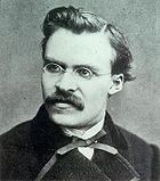
Philanthropy is not always viewed as a universal good. The nineteenth-century German thinker Friedrich Nietzsche opposed philanthropy on philosophical grounds, connecting it with the idea of the weak sponging off the strong.
The purpose of philanthropy is also debated. Some equate philanthropy with benevolence and charity for the poor.Others hold that philanthropy can be any altruistic act that fulfills a social need that is not served, is under-served, or is perceived as unserved or under-served by the market.
Some believe that philanthropy can be a means to build community by growing community funds and giving vehicles. When communities see themselves as being resource rich instead of asset poor, the community is in a better position to solve community problems.
Philanthropy responds to either the present or the future needs. The charitable response to an impending disaster is an essential function of philanthropy. It offers immediate honor for the philanthropist, yet requires no foresight. Responding to future needs, however, draws on the donor's foresight and wisdom, but seldom recognizes the donor. Prevention of future needs will often avert far more hardship than a response after the fact. For example, the charities responding to starvation from overpopulation in Africa are afforded swift recognition. Meanwhile, philanthropists behind the U.S. population control movement of the 1960s and 1970s were never recognized, and are lost to history.
Politics
Philanthropists are often popular and become known to the public as "good" or even "great." Some governments are suspicious of philanthropic activities as possible grabs for favor, but still allow special interest groups to form non-governmental organizations.
Uses of the word
Conventional usage
By the conventional definition of philanthropy, donations are dedicated to a narrowly defined cause and the donation is targeted to effect a recognizable change in social conditions. This often necessitates large donations and financial support sustained over time.
The need for a large financial commitment creates a distinction between philanthropy and charitable giving, which typically plays a supporting role in a charitable organization initiated by someone else. Thus, the conventional usage of philanthropy applies mainly to wealthy persons, and sometimes to a trust created by a wealthy person with a particular cause or objective targeted.
Many non-wealthy persons have dedicated – thus, donated – substantial portions of their time, effort and wealth to charitable causes. These people are not typically described as philanthropists because individual effort alone is seldom recognized as instigating significant change. These people are thought of as charitable workers but some people wish to recognize these people as philanthropists in honor of their efforts.
A growing trend in philanthropy is the development of giving circles, whereby individual donors -- often a group of friends -- pool their charitable donations and decide together how to use the money to benefit the causes they care about most. The re-emergence of philanthropy in recent years, led by Bill Gates and Warren Buffett, which involves applying the techniques of business to philanthropy has been termed philanthrocapitalism.'
Largest individual bequests
See also
Fiction
- A fictional account of philanthropy in the Victorian age is given (as part of a wider plot) in The Hidden Shore, Volume 19 of The Morland Dynasty, a series of historical novels by author Cynthia Harrod-Eagles. The fictional Lady Charlotte Morland, later Duchess of Southport rejects the usual idle life of the socialite aristocrat in favour of trying to improve the lot of the poor. She works with street prostitutes, trying to encourage them away from their hazardous lifestyle and into nursing, while trying to improve the image of the nursing profession. In her younger days she also works as a teacher of poor country children. In The Winter Journey, Volume 20, Charlotte uses her wealth and social position to found a new hospital where the poor are treated. Her nursing skills are also put to good use during the Crimean War. In later volumes of the series, Charlotte's daughter, Lady Venetia Fleetwood becomes one of the first women doctors and also does a lot of work among the poor.
Lists
External links
- compiled and edited by National Philanthropic Trust
- — Illustrated historical essay
-
|
| |
|
|