

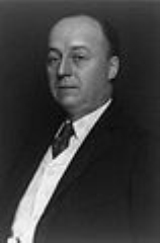
Philander C. Knox

Encyclopedia
Philander Chase Knox was an American
lawyer
and politician
who served as United States Attorney General
(1901–1904), a Senator
from Pennsylvania (1904–1909, 1917–1921) and Secretary of State
(1909–1913).
, one of nine children of David S. Knox and Rebecca Page Knox. His father was a banker and his mother was active in philanthropic and social organizations. He went to private primary and secondary schools attended by the affluent.
Knox attended Mount Union College
, whence he was graduated in 1872 with a bachelor of arts degree. Whilst there, he formed a lifelong friendship with future U.S. President William McKinley
, who was at the time a local district attorney.
Knox married Lillie Smith, the daughter of Andrew Smith of the firm Smith, Sutton and Co., in 1880.
Knox was a leading Pittsburgh attorney in partnership with James Hay Reed, their firm being Knox and Reed (now Reed Smith LLP). Knox was also a member of the South Fork Fishing and Hunting Club
, whose earthen dam failed in May 1889, causing the Johnstown Flood
. When word of the dam's failure was telegraphed to Pittsburgh, Frick and other members of the South Fork Fishing and Hunting Club gathered to form the Pittsburgh Relief Committee for tangible assistance to the flood victims as well as determining to never speak publicly about the club or the flood. This strategy was a success, and Knox and Reed were able to fend off all lawsuits that would have placed blame upon the Club’s members.
Knox was a member of the Duquesne Club
. Along with fellow South Fork Fishing and Hunting Club member Jesse H. Lippencott, Knox served as a director of the Fifth National Bank of Pittsburgh. Henry Clay Frick
, Andrew Mellon and Philander Knox were directors of the Pittsburgh National Bank of Commerce.
Knox's nickname was “Sleepy Phil” which is said to have been because he dozed off during board meetings or because he was cross-eyed, making it difficult for his two eyes to track together.
As counsel for the Carnegie Steel Company
, he took a prominent part in organizing the United States Steel Corporation in 1901.
in the cabinets of Presidents McKinley
and Theodore Roosevelt
from 1901 to 1904.
While serving Roosevelt, Knox worked hard with the concept of Dollar Diplomacy
.
He is well-known for famous quote to Roosevelt: "Mister President, do not let so great an achievement suffer from any taint of legality," made in regards to the construction of the Panama Canal
. (A slightly rephrased version of this quote was spoken by Brian Keith
as Roosevelt in the 1975 film The Wind and the Lion
.)
of Pennsylvania
to fill the unexpired term of Matthew S. Quay in the United States Senate
.
In 1905, he was elected to fill the remainer of the full term for the Senate seat (to 1909).
Knox made an unsuccessful bid for the Republican Party nomination in the 1908 U.S. presidential election
.
nominated Senator Knox to be Secretary of State
. However, Knox was originally found to be constitutionally ineligible because the salary for the post had been increased during his Senate term, thus violating the Ineligibility Clause
. In particular, Knox had been elected to serve the term from March 4, 1905 to March 4, 1911 and during legislation approved on February 26, 1907 as well as debate beginning on March 4, 1908 he consistently supported pay raises eventually instituted for the 1908 fiscal calendar. The discovery of the constitutional complication came as a surprise, after President-elect Taft had announced his intention to nominate Knox. The Senate Judiciary Committee
proposed the remedy of resetting the salary to its pre-service level, and the Senate passed it unanimously on February 11, 1909. There was much more opposition in the U.S. House of Representatives, where the same measure was defeated once, and then after a special procedural rule was applied, was passed by a 173–115 vote. On March 4, 1909, the salary of the Secretary of State position was reverted from $12,000 to $8,000, and Knox took office on March 6. This legislative mechanism later became known as the "Saxbe fix
" and has been applied in a number of similar circumstances.
Knox served as Secretary of State in Taft's cabinet until March 5, 1913. As Secretary of State, Knox reorganized the Department on a divisional basis, extended the merit system to the Diplomatic Service up to the grade of chief of mission, pursued a policy of encouraging and protecting American investments abroad, declared the ratification of the Sixteenth Amendment
, and accomplished the settlement of the Bering Sea
controversy and the North Atlantic fisheries controversy.
Knox was again elected to the Senate from Pennsylvania and served from 1917 until his death in 1921.
Knox was a candidate for the Republican nomination in the 1920 U.S. Presidential election
but was handily defeated at the convention.
In April 1921 he introduced a Senate resolution to bring a formal end to American involvement in World War I
. It was combined with a similar House resolution to create the Knox–Porter Resolution, signed by President Warren G. Harding
on July 21.
Knox died in Washington, D.C.
later that year.
United States
The United States of America is a federal constitutional republic comprising fifty states and a federal district...
lawyer
Lawyer
A lawyer, according to Black's Law Dictionary, is "a person learned in the law; as an attorney, counsel or solicitor; a person who is practicing law." Law is the system of rules of conduct established by the sovereign government of a society to correct wrongs, maintain the stability of political...
and politician
Politician
A politician, political leader, or political figure is an individual who is involved in influencing public policy and decision making...
who served as United States Attorney General
United States Attorney General
The United States Attorney General is the head of the United States Department of Justice concerned with legal affairs and is the chief law enforcement officer of the United States government. The attorney general is considered to be the chief lawyer of the U.S. government...
(1901–1904), a Senator
United States Senate
The United States Senate is the upper house of the bicameral legislature of the United States, and together with the United States House of Representatives comprises the United States Congress. The composition and powers of the Senate are established in Article One of the U.S. Constitution. Each...
from Pennsylvania (1904–1909, 1917–1921) and Secretary of State
United States Secretary of State
The United States Secretary of State is the head of the United States Department of State, concerned with foreign affairs. The Secretary is a member of the Cabinet and the highest-ranking cabinet secretary both in line of succession and order of precedence...
(1909–1913).
Early life, education, and marriage
Knox was born in Brownsville, PennsylvaniaBrownsville, Pennsylvania
Brownsville is a borough in Fayette County, Pennsylvania, United States, officially founded in 1785 located 35 miles south of Pittsburgh along the Monongahela River...
, one of nine children of David S. Knox and Rebecca Page Knox. His father was a banker and his mother was active in philanthropic and social organizations. He went to private primary and secondary schools attended by the affluent.
Knox attended Mount Union College
Mount Union College
The University of Mount Union is a 4-year private, coeducational, liberal arts college in Alliance, Ohio.Mount Union enrolls 2200 undergraduates. Approximately 50 percent are women and 50 percent are men, representing more than 22 states and 13 countries. Mount Union has an active alumni base of...
, whence he was graduated in 1872 with a bachelor of arts degree. Whilst there, he formed a lifelong friendship with future U.S. President William McKinley
William McKinley
William McKinley, Jr. was the 25th President of the United States . He is best known for winning fiercely fought elections, while supporting the gold standard and high tariffs; he succeeded in forging a Republican coalition that for the most part dominated national politics until the 1930s...
, who was at the time a local district attorney.
Knox married Lillie Smith, the daughter of Andrew Smith of the firm Smith, Sutton and Co., in 1880.
Legal career
He was admitted to the bar in 1875 and practiced in Pittsburgh. From 1876-1877 he was Assistant United States Attorney for the Western District of Pennsylvania and became President of the Pennsylvania Bar Association in 1897.Knox was a leading Pittsburgh attorney in partnership with James Hay Reed, their firm being Knox and Reed (now Reed Smith LLP). Knox was also a member of the South Fork Fishing and Hunting Club
South Fork Fishing and Hunting Club
The South Fork Fishing and Hunting Club was a Pennsylvania corporation which operated an exclusive and secretive retreat at a mountain lake near South Fork, Pennsylvania for more than fifty extremely wealthy men and their families...
, whose earthen dam failed in May 1889, causing the Johnstown Flood
Johnstown Flood
The Johnstown Flood occurred on May 31, 1889. It was the result of the catastrophic failure of the South Fork Dam situated upstream of the town of Johnstown, Pennsylvania, USA, made worse by several days of extremely heavy rainfall...
. When word of the dam's failure was telegraphed to Pittsburgh, Frick and other members of the South Fork Fishing and Hunting Club gathered to form the Pittsburgh Relief Committee for tangible assistance to the flood victims as well as determining to never speak publicly about the club or the flood. This strategy was a success, and Knox and Reed were able to fend off all lawsuits that would have placed blame upon the Club’s members.
Knox was a member of the Duquesne Club
Duquesne Club
The Duquesne Club is a private social club in Pittsburgh, Pennsylvania, founded in 1873.-History:The Duquesne Club was founded in 1873. Its first president was John H. Ricketson...
. Along with fellow South Fork Fishing and Hunting Club member Jesse H. Lippencott, Knox served as a director of the Fifth National Bank of Pittsburgh. Henry Clay Frick
Henry Clay Frick
Henry Clay Frick was an American industrialist, financier, and art patron. He founded the H. C. Frick & Company coke manufacturing company, was chairman of the Carnegie Steel Company, and played a major role in the formation of the giant U.S. Steel steel manufacturing concern...
, Andrew Mellon and Philander Knox were directors of the Pittsburgh National Bank of Commerce.
Knox's nickname was “Sleepy Phil” which is said to have been because he dozed off during board meetings or because he was cross-eyed, making it difficult for his two eyes to track together.
As counsel for the Carnegie Steel Company
Carnegie Steel Company
Carnegie Steel Company was a steel producing company created by Andrew Carnegie to manage business at his steel mills in the Pittsburgh, Pennsylvania area in the late 19th century.-Creation:...
, he took a prominent part in organizing the United States Steel Corporation in 1901.
U.S. Attorney General
He served as Attorney GeneralAttorney General
In most common law jurisdictions, the attorney general, or attorney-general, is the main legal advisor to the government, and in some jurisdictions he or she may also have executive responsibility for law enforcement or responsibility for public prosecutions.The term is used to refer to any person...
in the cabinets of Presidents McKinley
William McKinley
William McKinley, Jr. was the 25th President of the United States . He is best known for winning fiercely fought elections, while supporting the gold standard and high tariffs; he succeeded in forging a Republican coalition that for the most part dominated national politics until the 1930s...
and Theodore Roosevelt
Theodore Roosevelt
Theodore "Teddy" Roosevelt was the 26th President of the United States . He is noted for his exuberant personality, range of interests and achievements, and his leadership of the Progressive Movement, as well as his "cowboy" persona and robust masculinity...
from 1901 to 1904.
While serving Roosevelt, Knox worked hard with the concept of Dollar Diplomacy
Dollar Diplomacy
Dollar Diplomacy is a term used to describe the effort of the United States—particularly under President William Howard Taft—to further its aims in Latin America and East Asia through use of its economic power by guaranteeing loans made to foreign countries. The term was originally coined by...
.
He is well-known for famous quote to Roosevelt: "Mister President, do not let so great an achievement suffer from any taint of legality," made in regards to the construction of the Panama Canal
Panama Canal
The Panama Canal is a ship canal in Panama that joins the Atlantic Ocean and the Pacific Ocean and is a key conduit for international maritime trade. Built from 1904 to 1914, the canal has seen annual traffic rise from about 1,000 ships early on to 14,702 vessels measuring a total of 309.6...
. (A slightly rephrased version of this quote was spoken by Brian Keith
Brian Keith
Brian Keith was an American film, television, and stage actor who in his four decade-long career gained recognition for his work in movies such as the 1961 Disney family film The Parent Trap, the 1966 comedy The Russians Are Coming, the Russians Are Coming, and the 1975 adventure saga The Wind and...
as Roosevelt in the 1975 film The Wind and the Lion
The Wind and the Lion
The Wind and the Lion is a 1975 adventure film. It was written and directed by John Milius and starred Sean Connery, Candice Bergen, Brian Keith and John Huston...
.)
U.S. Senator
In June 1904, he was appointed by Governor Samuel W. PennypackerSamuel W. Pennypacker
Samuel Whitaker Pennypacker was the 23rd Governor of Pennsylvania from 1903 to 1907.-Biography:Gov. Pennypacker was born in Phoenixville, Pennsylvania, April 9, 1843; son of Dr. Isaac A. Pennypacker and Anna Maria Whitaker; grandson of Matthias and Sarah Anderson , and of Joseph and Grace Whitaker...
of Pennsylvania
Pennsylvania
The Commonwealth of Pennsylvania is a U.S. state that is located in the Northeastern and Mid-Atlantic regions of the United States. The state borders Delaware and Maryland to the south, West Virginia to the southwest, Ohio to the west, New York and Ontario, Canada, to the north, and New Jersey to...
to fill the unexpired term of Matthew S. Quay in the United States Senate
United States Senate
The United States Senate is the upper house of the bicameral legislature of the United States, and together with the United States House of Representatives comprises the United States Congress. The composition and powers of the Senate are established in Article One of the U.S. Constitution. Each...
.
In 1905, he was elected to fill the remainer of the full term for the Senate seat (to 1909).
Knox made an unsuccessful bid for the Republican Party nomination in the 1908 U.S. presidential election
United States presidential election, 1908
The United States presidential election of 1908 was held on November 3, 1908. Popular incumbent President Theodore Roosevelt, honoring a promise not to seek a third term, persuaded the Republican Party to nominate William Howard Taft, his close friend and Secretary of War, to become his successor...
.
U.S. Secretary of State
In February 1909, President William Howard TaftWilliam Howard Taft
William Howard Taft was the 27th President of the United States and later the tenth Chief Justice of the United States...
nominated Senator Knox to be Secretary of State
United States Secretary of State
The United States Secretary of State is the head of the United States Department of State, concerned with foreign affairs. The Secretary is a member of the Cabinet and the highest-ranking cabinet secretary both in line of succession and order of precedence...
. However, Knox was originally found to be constitutionally ineligible because the salary for the post had been increased during his Senate term, thus violating the Ineligibility Clause
Ineligibility Clause
The Ineligibility Clause, one of the two clauses often called the Emoluments Clause, and sometimes also referred to as the Incompatibility Clause or the Sinecure Clause, is found in Article 1, Section 6, Clause 2 of the United States Constitution...
. In particular, Knox had been elected to serve the term from March 4, 1905 to March 4, 1911 and during legislation approved on February 26, 1907 as well as debate beginning on March 4, 1908 he consistently supported pay raises eventually instituted for the 1908 fiscal calendar. The discovery of the constitutional complication came as a surprise, after President-elect Taft had announced his intention to nominate Knox. The Senate Judiciary Committee
United States Senate Committee on the Judiciary
The United States Senate Committee on the Judiciary is a standing committee of the United States Senate, of the United States Congress. The Judiciary Committee, with 18 members, is charged with conducting hearings prior to the Senate votes on confirmation of federal judges nominated by the...
proposed the remedy of resetting the salary to its pre-service level, and the Senate passed it unanimously on February 11, 1909. There was much more opposition in the U.S. House of Representatives, where the same measure was defeated once, and then after a special procedural rule was applied, was passed by a 173–115 vote. On March 4, 1909, the salary of the Secretary of State position was reverted from $12,000 to $8,000, and Knox took office on March 6. This legislative mechanism later became known as the "Saxbe fix
Saxbe fix
The Saxbe fix, or salary rollback, is a mechanism by which the President of the United States, in appointing a current or former member of the United States Congress whose elected term has not yet expired, can avoid the restriction of the United States Constitution's Ineligibility Clause...
" and has been applied in a number of similar circumstances.
Knox served as Secretary of State in Taft's cabinet until March 5, 1913. As Secretary of State, Knox reorganized the Department on a divisional basis, extended the merit system to the Diplomatic Service up to the grade of chief of mission, pursued a policy of encouraging and protecting American investments abroad, declared the ratification of the Sixteenth Amendment
Sixteenth Amendment to the United States Constitution
The Sixteenth Amendment to the United States Constitution allows the Congress to levy an income tax without apportioning it among the states or basing it on Census results...
, and accomplished the settlement of the Bering Sea
Bering Sea
The Bering Sea is a marginal sea of the Pacific Ocean. It comprises a deep water basin, which then rises through a narrow slope into the shallower water above the continental shelves....
controversy and the North Atlantic fisheries controversy.
Return to the Senate
Following his term of office, Knox resumed the practice of law in Pittsburgh.Knox was again elected to the Senate from Pennsylvania and served from 1917 until his death in 1921.
Knox was a candidate for the Republican nomination in the 1920 U.S. Presidential election
United States presidential election, 1920
The United States presidential election of 1920 was dominated by the aftermath of World War I and a hostile response to certain policies of Woodrow Wilson, the Democratic president. The wartime economic boom had collapsed. Politicians were arguing over peace treaties and the question of America's...
but was handily defeated at the convention.
In April 1921 he introduced a Senate resolution to bring a formal end to American involvement in World War I
World War I
World War I , which was predominantly called the World War or the Great War from its occurrence until 1939, and the First World War or World War I thereafter, was a major war centred in Europe that began on 28 July 1914 and lasted until 11 November 1918...
. It was combined with a similar House resolution to create the Knox–Porter Resolution, signed by President Warren G. Harding
Warren G. Harding
Warren Gamaliel Harding was the 29th President of the United States . A Republican from Ohio, Harding was an influential self-made newspaper publisher. He served in the Ohio Senate , as the 28th Lieutenant Governor of Ohio and as a U.S. Senator...
on July 21.
Knox died in Washington, D.C.
Washington, D.C.
Washington, D.C., formally the District of Columbia and commonly referred to as Washington, "the District", or simply D.C., is the capital of the United States. On July 16, 1790, the United States Congress approved the creation of a permanent national capital as permitted by the U.S. Constitution....
later that year.