
All Topics  
Paul Cézanne

 
Paul Cézanne

   Email Print
   Bookmark   Link


Paul Cézanne


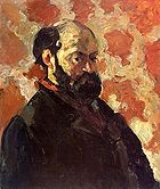
Paul Cézanne (; 19 January 1839 – 22 October 1906) was a French artist
Artist

The definition of an artist is wide-ranging and covers a broad spectrum of activities to do with creating art, practicing the arts and/or demonstrating an art....
 and Post-Impressionist painter
Painting

Painting is the practice of applying paint, pigment, color or other medium to a surface . In art, the term describes both the act and the result, which is called a painting....
 whose work laid the foundations of the transition from the 19th century conception of artistic endeavour to a new and radically different world of art in the 20th century. Cézanne can be said to form the bridge between late 19th century Impressionism
Impressionism

Impressionism was a 19th-century art movement that began as a loose association of Paris-based artists art exhibition their art publicly in the 1860s....
 and the early 20th century's new line of artistic enquiry, Cubism
Cubism

Cubism was a 20th century avant-garde art movement, pioneered by Pablo Picasso and Georges Braque, that revolutionized European painting and sculpture, and inspired related movements in music and literature....
.


Discussion
Ask a question about 'Paul Cézanne'
Start a new discussion about 'Paul Cézanne'
Answer questions from other users
Full Discussion Forum


Encyclopedia


Paul Cézanne (; 19 January 1839 – 22 October 1906) was a French artist
Artist

The definition of an artist is wide-ranging and covers a broad spectrum of activities to do with creating art, practicing the arts and/or demonstrating an art....
 and Post-Impressionist painter
Painting

Painting is the practice of applying paint, pigment, color or other medium to a surface . In art, the term describes both the act and the result, which is called a painting....
 whose work laid the foundations of the transition from the 19th century conception of artistic endeavour to a new and radically different world of art in the 20th century. Cézanne can be said to form the bridge between late 19th century Impressionism
Impressionism

Impressionism was a 19th-century art movement that began as a loose association of Paris-based artists art exhibition their art publicly in the 1860s....
 and the early 20th century's new line of artistic enquiry, Cubism
Cubism

Cubism was a 20th century avant-garde art movement, pioneered by Pablo Picasso and Georges Braque, that revolutionized European painting and sculpture, and inspired related movements in music and literature....
. The line attributed to both Matisse and Picasso that Cézanne "is the father of us all" cannot be easily dismissed.

Cézanne's work demonstrates a mastery of design, colour, composition and draftsmanship. His often repetitive, sensitive and exploratory brushstrokes are highly characteristic and clearly recognizable. He used planes of colour and small brushstrokes that build up to form complex fields, at once both a direct expression of the sensations of the observing eye and an abstraction from observed nature. The paintings convey Cézanne's intense study of his subjects, a searching gaze and a dogged struggle to deal with the complexity of human visual perception.

Life and work

Woman in A Green Hat

Early years and family

The Cézannes came from the small town of Cesana now in West Piedmont, and it has been assumed that their name came from Italian origin. Paul Cézanne was born on 19 January 1839 in Aix-en-Provence
Aix-en-Provence

Aix or Aix-en-Provence , to distinguish it from other cities built over hot springs, is a communes of France in southern France, some north of Marseille....
, in Provence
Provence

Provence is a region of southeastern France on the Mediterranean adjacent to Italy. It is part of the administrative regions of France of Provence-Alpes-C?te d'Azur....
 in the south of France. On 22 February, Paul was baptized in the parish church, with his grandmother and uncle Louis as godparents. His father, Louis-Auguste Cézanne (28 July 1798 – 23 October 1886), was the cofounder of a banking firm that prospered throughout the artist's life, affording him financial security that was unavailable to most of his contemporaries and eventually resulting in a large inheritance. On the other hand, his mother, Anne-Elisabeth Honorine Aubert (24 September 1814 – 25 October 1897), was vivacious and romantic, but quick to take offense. It was from her that Paul got his conception and vision of life. He also had two younger sisters, Marie and Rose, with whom he went to a primary school every day.

At the age of ten, Paul entered the Saint Joseph boarding-school, where he studied drawing under Joseph Gibert, a Spanish monk, in Aix. In 1852 Cézanne entered the Collège Bourbon (now Collège Mignet), where he met and became friends with Émile Zola
Émile Zola

?mile Fran?ois Zola was an influential France writer, the most important exemplar of the literary school of Naturalism , an important contributor to the development of Naturalism , and a major figure in the political liberalization of France and in the exoneration of the falsely accused and convicted army officer Alfred Dreyfus....
, who was in a less advanced class, as well as Baptistin Baille
Baptistin Baille

Baptistin Baille was born Jean-Baptiste Baille in France, in 1841 and he died in 1918. He was a professor of optics and acoustics at the ?cole de Physique et de Chimie Industrielles in Paris and a close friend of Paul C?zanne, the impressionist artist, and of ?mile Zola who would later become a writer....
 — three friends who would come be known as "les trois inseparables" (the three inseparables). He stayed there for six years, though in the last two years he was a day scholar. From 1859 to 1861, complying with his father's wishes, Cézanne attended the law school of the University of Aix, while also receiving drawing lessons. Going against the objections of his banker father, he committed himself to pursuing his artistic development and left Aix for Paris in 1861. He was strongly encouraged to make this decision by Zola, who was already living in the capital at the time. Eventually, his father reconciled with Cézanne and supported his choice of career. Cézanne later received an inheritance of 400,000 francs
French franc

The franc is a former currency of France. Between 1360 and 1641, it was the name of coins worth 1 livre tournois and it remained in common parlance as a term for this amount of money....
(£218,363.62) from his father, which rid him of all money fears.

Cézanne the artist


In Paris, Cézanne met the Impressionist
Impressionism

Impressionism was a 19th-century art movement that began as a loose association of Paris-based artists art exhibition their art publicly in the 1860s....
  Camille Pissarro
Camille Pissarro

Camille Pissarro was a French Impressionist Painting. His importance resides not only in his visual contributions to Impressionism and Post-Impressionism, but also in his patriarchal standing among his colleagues, particularly Paul C?zanne and Paul Gauguin....
. Initially the friendship formed in the mid-1860s between Pissarro and Cézanne was that of master and mentoree, with Pissarro exerting a formative influence on the younger artist. Over the course of the following decade their landscape painting excursions together, in Louveciennes
Louveciennes

Louveciennes is a village and commune in France in the Yvelines D?partement in France, in France, in the western suburbs of Paris, between Versailles and Saint-Germain-en-Laye, and adjacent to Marly-le-Roi....
 and Pontoise
Pontoise

Pontoise is a Communes of France in the northwestern suburbs of Paris, France. It is located 28.4 km from the Kilometre Zero#France, in the "new town#France" of Cergy-Pontoise....
, led to a collaborative working relationship between equals.

Cézanne's early work is often concerned with the figure in the landscape and comprises many paintings of groups of large, heavy figures in the landscape, imaginatively painted. Later in his career, he became more interested in working from direct observation and gradually developed a light, airy painting style that was to influence the Impressionists enormously. Nonetheless, in Cézanne's mature work we see the development of a solidified, almost architectural style of painting. Throughout his life he struggled to develop an authentic observation of the seen world by the most accurate method of representing it in paint that he could find. To this end, he structurally ordered whatever he perceived into simple forms and colour planes. His statement "I want to make of impressionism something solid and lasting like the art in the museums", and his contention that he was recreating Poussin
Nicolas Poussin

Nicolas Poussin was a French Painting in the Classicism style. His work predominantly features clarity, logic, and order, and favors line over color....
 "after nature" underscored his desire to unite observation of nature with the permanence of classical composition.

Optical phenomena

Cézanne was interested in the simplification of naturally occurring forms to their geometric essentials, he wanted to "treat nature by the cylinder, the sphere, the cone" (a tree trunk may be conceived of as a cylinder, a human head a sphere, for example). Additionally, the concentrated attention with which he recorded his observations of nature resulted in a profound exploration of binocular vision
Binocular vision

Binocular vision is Visual perception in which both eyes are used together. The word binocular comes from two Latin roots, bini for double, and oculus for eye....
, which results in two slightly different simultaneous visual perceptions, and provides us with depth perception
Depth perception

Depth perception is the visual perception ability to perceive the world in three dimensions. Although any animal capable of moving around its environment must be able to sense the distance of objects in that environment, the term perception is reserved for humans, who are the only beings that can tell each other about their qualia of dist...
 and a complex knowledge of spatial relationships. We see two different views simultaneously; Cézanne employed this aspect of visual perception in his painting to varying degrees. The observation of this fact, coupled with Cézanne's desire to capture the truth of his own perception, often compelled him to render the outlines of forms so as to at once attempt to display the distinctly different views of both the left and right eyes. Thus Cézanne's work augments and transforms earlier ideals of perspective
Perspective (graphical)

File:Staircase perspective.jpgPerspective in the graphic arts, such as drawing, is an approximate representation, on a flat surface , of an image as it is perceived by the eye....
, in particular single-point perspective
Perspective (graphical)

File:Staircase perspective.jpgPerspective in the graphic arts, such as drawing, is an approximate representation, on a flat surface , of an image as it is perceived by the eye....
.

Exhibitions and subjects

Cézanne's paintings were shown in the first exhibition of the Salon des Refusés
Salon des Refusés

The Salon des Refus?s, French for ?exhibition of rejects?, is generally an exhibition of works rejected by the jury of the official Paris Salon, but the term is most famously used to refer to the Salon des Refus?s of 1863....
 in 1863, which displayed works not accepted by the jury of the official Paris Salon
Paris Salon

The Salon , or rarely Paris Salon , beginning in 1725 was the official art exhibition of the Acad?mie des Beaux-Arts in Paris, France. Between 1748?1890 it was the greatest annual or biannual art event in the world....
. The Salon rejected Cézanne's submissions every year from 1864 to 1869. Cézanne continued to submit works to the Salon until 1882. In that year, through the intervention of fellow artist Antoine Guillemet, Cézanne exhibited Portrait of Louis-Auguste Cézanne, Father of the Artist, reading 'l'Evénement, 1866 (National Gallery, Washington), his first and last successful submission to the Salon. Before 1895 Cézanne exhibited twice with the Impressionists (at the first Impressionist exhibition in 1874 and the third Impressionist exhibition in 1877). In later years a few individual paintings were shown at various venues, until 1895, when the Parisian dealer, Ambroise Vollard
Ambroise Vollard

Ambroise Vollard , is regarded as one of the most important dealers in French contemporary art at the beginning of the twentieth century. He is credited with providing exposure and emotional support to numerous notable and unknown artists, including Paul C?zanne, Aristide Maillol, Pablo Picasso, Georges Rouault, Paul Gauguin and Vincent Van...
, gave the artist his first solo exhibition. Despite the increasing public recognition and financial success, Cézanne chose to work in increasing artistic isolation, usually painting in the south of France, in his beloved Provence, far from Paris. He concentrated on a few subjects and was highly unusual for 19th-century painters in that he was equally proficient in each of these genres: still life
Still life

A still life is a work of art depicting mostly inanimate subject matter, typically commonplace objects which may be either natural or man-made in an artificial setting....
s, portraits, landscapes and studies of bathers. For the last, Cézanne was compelled to design from his imagination, due to a lack of available nude models. Like the landscapes, his portraits were drawn from that which was familiar, so that not only his wife and son but local peasants, children and his art dealer served as subjects. His still lifes are at once decorative in design, painted with thick, flat surfaces, yet with a weight reminiscent of Courbet
Courbet

Courbet may refer to*Gustave Courbet, French painter*Am?d?e Courbet, French admiral*French battleship Courbet *Courbet , French frigate...
. The 'props' for his works are still to be found, as he left them, in his studio (atelier), in the suburbs of modern Aix.

Although religious images appeared less frequently in Cézanne's later work, he remained a devout Roman Catholic and said, "When I judge art, I take my painting and put it next to a God-made object like a tree or flower. If it clashes, it is not art."

Death of Cézanne

One day, Cézanne was caught in a storm while working in the field. Only after working for two hours under a downpour did he decide to go home; but on the way he collapsed. He was taken home by a passing driver. His old housekeeper rubbed his arms and legs to restore the circulation; as a result, he regained consciousness. On the following day, he intended to continue working, but later on he fainted; the model with whom he was working called for help; he was put to bed, and he never left it again. He died a few days later, on 22 October 1906. He died of pneumonia
Pneumonia

Pneumonia is an Inflammation illness of the lung. Frequently, it is described as lung parenchyma/alveolus inflammation and abnormal alveolar filling with fluid ....
 and was buried at the old cemetery in his beloved hometown of Aix-en-Provence.

Main periods of Cézanne's work

Paul Cezanne 1861
Various periods in the work and life of Cézanne have been defined. Cézanne created hundreds of paintings, some of which command considerable market prices. On 10 May 1999, Cézanne's painting
Rideau, Cruchon et Compotier

Rideau, Cruchon et Compotier is a painting created in about 1893 to 1894 by France artist Paul C?zanne . It is considered the most expensive still life ever sold at an auction....
sold for $60.5 million, the fourth-highest price paid for a painting up to that time. As of 2006, it is the most expensive
List of most expensive paintings

This is a list of the highest prices paid for paintings. Very valuable paintings, if sold, are usually sold at auctions.The world's most famous paintings, especially works done before 1800, are generally owned by museums, which very rarely sell them, and as such, they are quite literally priceless....
 still life ever sold at an auction.

The dark period, Paris, 1861-1870

In 1863 Napoleon III created by decree the Salon des Refusés, at which paintings rejected for display at the Salon of the Académie des Beaux-Arts
Académie des beaux-arts

The Acad?mie des Beaux-Arts is a France learned society. It is one of the five academies of the Institut de France.It was created in 1795 as the merger of the:...
 were to be displayed. The artists of the refused works included the young Impressionists
Impressionism

Impressionism was a 19th-century art movement that began as a loose association of Paris-based artists art exhibition their art publicly in the 1860s....
, who were considered revolutionary. Cézanne was influenced by their style but his inept social relations with them—he seemed rude, shy, angry, and given to depression—resulted in a period characterized by dark colors and the heavy use of black. His work from this period differs sharply from his earlier watercolours and sketches at the École Spéciale de dessin at Aix-en-Provence in 1859, or from his subsequent works. Among the works of his dark period were paintings such as
The Murder (c.1867-68); the words antisocial or violent are often used.

Impressionist period, Provence and Paris, 1870-1878

After the start of the Franco-Prussian War
Franco-Prussian War

The Franco-Prussian War or Franco-German War, often referred to in France as the 1870 War was a conflict between Second French Empire and Kingdom of Prussia, while Prussia was backed by the North German Confederation, of which it was a member, and the South German states of Grand Duchy of Baden, History of W?rttemberg#The Kingdom...
 in July, 1870, Cézanne and his mistress, Marie-Hortense Fiquet
Marie-Hortense Fiquet

Marie-Hortense Fiquet C?zanne was the Mistress and later wife of Paul C?zanne, the Post-Impressionist and proto-Cubist painter of the 19th and early 20th centuries....
, left Paris for L'Estaque
L'Estaque

L'Estaque is a small France fishing village just west of Marseille. Administratively, it belongs to the commune in France of Marseille.Many artists of the Impressionism and Post-impressionism periods visited or resided there or in the surrounding area....
, near Marseilles, where he changed themes to predominantly landscapes. He was declared a draft-dodger in January, 1871, but the war ended in February and the couple moved back to Paris, in the summer of 1871. After the birth of their son Paul in January, 1872, in Paris, they moved to Auvers
Auvers

Auvers is the name or part of the name of several commune in France in France:* Auvers, Haute-Loire* Auvers, Manche* Auvers-le-Hamon, in the Sarthe d?partement...
 in Val-d'Oise
Val-d'Oise

Val-d'Oise is a France departments of France named after the Oise River, located in the ?le-de-France regions of France.Charles de Gaulle International Airport, France's main international airport is partially located in Roissy-en-France, a commune of Val d'Oise....
 near Paris. Cézanne's mother was kept a party to family events, but his father was not informed of Hortense for fear of risking his wrath. The artist received from his father an allowance of 100 francs. Pissarro lived in Pontoise
Pontoise

Pontoise is a Communes of France in the northwestern suburbs of Paris, France. It is located 28.4 km from the Kilometre Zero#France, in the "new town#France" of Cergy-Pontoise....
. There and in Auvers, he and Cézanne painted landscapes together. For a long time afterwards, Cézanne described himself as Pissarro's pupil, referring to him as "God the Father" and saying, "We all stem from Pissarro". Under Pissarro's influence Cézanne began to abandon dark colours and his canvases grew much brighter.

Leaving Hortense in the Marseille region, Cézanne moved between Paris and Provence, exhibiting in the first (1874) and third Impressionist shows (1877). In 1875, he attracted the attention of the collector Victor Chocquet, whose commissions provided some financial relief. But Cézanne's exhibited paintings attracted hilarity, outrage and sarcasm. Reviewer Louis Leroy said of Cézanne's portrait of Chocquet: "This peculiar looking head, the colour of an old boot might give [a pregnant woman] a shock and cause yellow fever in the fruit of her womb before its entry into the world".

In March 1878, Cézanne's father found out about Hortense and threatened to cut Cézanne off financially but, in September, he decided to give him 400 francs for his family. Cézanne continued to migrate between the Paris region and Provence until Louis-Auguste had a studio built for him at his home, Jas de Bouffan, in the early 1880s. This was on the upper floor and an enlarged window was provided, allowing in the northern light but interrupting the line of the eaves. This feature remains today. Cézanne stabilized his residence in L'Estaque. He painted with Renoir there in 1882 and visited Renoir and Monet in 1883.

Mature period, Provence, 1878-1890

In the early 1880s the Cézanne family stabilized their residence in Provence, where they remained, except for brief sojourns abroad, from then on. The move reflects a new independence from the Paris-centered impressionists and a marked preference for the south, Cézanne's native soil. Hortense's brother had a house within view of Mont Sainte-Victoire
Montagne Sainte-Victoire

Montagne Sainte-Victoire is a limestone mountain ridge in the south of France which extends over 18 kilometres between the D?partements of France of Bouches-du-Rh?ne and Var ....
 at Estaque. A run of paintings of this mountain from 1880-1883 and others of Gardanne
Gardanne

Gardanne is a Communes of France of the Bouches-du-Rh?ne Departments of France in southern France....
 from 1885-1888, are sometimes known as "the Constructive Period".

The year 1886 was a turning point for the family. Cézanne married Hortense. In that year also, Cézanne's father died, leaving him the estate purchased in 1859; he was 47. By 1888 the family was in the former manor, Jas de Bouffan, a substantial house and grounds with outbuildings, which afforded a new-found comfort. This house, with much-reduced grounds, is now owned by the city and is open to the public on a restricted basis.

Also in that year Cézanne broke off his friendship with Émile Zola, after the latter used him, in large part, as the basis for the unsuccessful and ultimately tragic fictitious artist Claude Lantier, in the novel (
L'Œuvre
L'Œuvre

L'?uvre is the fourteenth novel in the Les Rougon-Macquart series by ?mile Zola. It was first serialized in the periodical Gil Blas beginning in December 1885 before being published in novel form by Charpentier in 1886....
). Cézanne considered this a breach of decorum and a friendship begun in childhood was irreparably damaged.

Final period, Provence, 1890-1905


Cézanne's idyllic period at Jas de Bouffan was temporary. From 1890 until his death he was beset by troubling events and he withdrew further into his painting, spending long periods as a virtual recluse. His paintings became well-known and sought after and he was the object of respect from a new generation of painters.

The problems began with the onset of diabetes in 1890, destabilizing his personality to the point where relationships with others were again strained. He travelled in Switzerland, with Hortense and his son, perhaps hoping to restore their relationship. Cézanne, however, returned to Provence to live; Hortense and Paul junior, to Paris. Financial need prompted Hortense's return to Provence but in separate living quarters. Cézanne moved in with his mother and sister. In 1891 he turned to Catholicism.

Cézanne alternated between painting at Jas de Bouffan and in the Paris region, as before. In 1895 he made a germinal visit to Bibémus Quarries and climbed Mt. Ste. Victoire. The labyrinthine landscape of the quarries must have struck a note, as he rented a cabin there in 1897 and painted extensively from it. The shapes are believed to have inspired the embryonic 'Cubist' style. Also in that year, his mother died, an upsetting event but one which made reconciliation with his wife possible. He sold the empty nest at Jas de Bouffan and rented a place on Rue Boulegon, where he built a studio.

The relationship, however, continued to be stormy. He needed a place to be by himself. In 1901 he bought some land along the Chemin des Lauves ("Lauves Road"), an isolated road on some high ground at Aix, and commissioned a studio to be built there (the 'atelier', now open to the public). He moved there in 1903. Meanwhile, in 1902, he had drafted a will excluding his wife from his estate and leaving everything to his son. The relationship was apparently off again; she is said to have burned the mementos of his mother.

From 1903 to the end of his life, he painted in his studio, working for a month in 1904 with Émile Bernard
Émile Bernard

?mile Henri Bernard is best known as a Post-Impressionist Painting who maintained close relations to Van Gogh and Gauguin and, at a later time, to C?zanne....
, who stayed as a house guest. After his death it became a monument, Atelier Paul Cézanne, or les Lauves.

Legacy

After Cézanne died in 1906, his paintings were exhibited in Paris in a large scale museum-like retrospective in September 1907. The 1907 Cézanne retrospective at the Salon d'Automne
Salon d'Automne

In 1903, the first Salon d'Automne was organized by Georges Rouault, Andr? Derain, Henri Matisse and Albert Marquet as a reaction to the conservative policies of the official Paris Salon....
 greatly impacted the direction that the avant-garde in Paris took, lending credence to his position as one of the most influential artists of the 19th century and to the advent of Cubism
Cubism

Cubism was a 20th century avant-garde art movement, pioneered by Pablo Picasso and Georges Braque, that revolutionized European painting and sculpture, and inspired related movements in music and literature....
.

Cézanne's explorations of geometric simplification and optical phenomena inspired Picasso
Pablo Picasso

Pablo Diego Jos? Francisco de Paula Juan Nepomuceno Mar?a de los Remedios Cipriano de la Sant?sima Trinidad Ruiz y Picasso was a Spanish people Painting, drawing, and Sculpture....
, Braque
Georges Braque

Georges Braque was a major 20th century French Painting and sculpture who, along with Pablo Picasso, developed the art movement known as cubism....
, Gris
Juan Gris

Jos? Victoriano Gonz?lez-P?rez , better known as Juan Gris, was a Spanish Painting and sculptor who lived and worked in France most of his life....
, and others to experiment with ever more complex multiple views of the same subject, and, eventually to the fracturing of form. Cézanne thus sparked one of the most revolutionary areas of artistic enquiry of the 20th Century, one which was to affect profoundly the development of modern art.

Gallery


Paintings


Still life paintings


Watercolors


Portraits and Self-portraits


Resources


External links

  • Cézanne's earliest works, from his time as a pupil at the art school of Aix-en-Provence (1859) (in French)
  • in the MoMA Online Collection
  • - Nearly 500 images of works by Paul Cézanne