
Home      Discussion      Topics      Dictionary      Almanac
Signup       Login
Pathological science

Pathological science

Overview
Pathological science is the process in science in which "people are tricked into false results ... by subjective effects, wishful thinking or threshold interactions". The term was first used by Irving Langmuir
Irving Langmuir
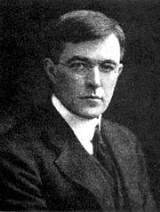
Irving Langmuir was an American chemist and physicist. His most noted publication was the famous 1919 article "The Arrangement of Electrons in Atoms and Molecules" in which, building on Gilbert N. Lewis's cubical atom theory and Walther Kossel's chemical bonding theory, he outlined his...

, Nobel Prize
Nobel Prize
The Nobel Prize is a Sweden-based international monetary prize. The award was established by the 1895 will and estate of Swedish chemist and inventor Alfred Nobel. It was first awarded in Physics, Chemistry, Physiology or Medicine, Literature, and Peace in 1901...

-winning chemist
Chemist
A chemist is a scientist trained in the science of chemistry. Chemists study the composition of matter and its properties such as density, acidity, size and shape. Chemists carefully describe the properties they study in terms of quantities, with detail on the level of molecules and their component...

, during a 1953 colloquium at the Knolls Research Laboratory. Langmuir said a pathological science is an area of research that simply will not "go away" —long after it was given up on as 'false' by the majority of scientists in the field.
Discussion
Ask a question about 'Pathological science'
Start a new discussion about 'Pathological science'
Answer questions from other users
Full Discussion Forum
 
Encyclopedia
Pathological science is the process in science in which "people are tricked into false results ... by subjective effects, wishful thinking or threshold interactions". The term was first used by Irving Langmuir
Irving Langmuir
Irving Langmuir was an American chemist and physicist. His most noted publication was the famous 1919 article "The Arrangement of Electrons in Atoms and Molecules" in which, building on Gilbert N. Lewis's cubical atom theory and Walther Kossel's chemical bonding theory, he outlined his...

, Nobel Prize
Nobel Prize
The Nobel Prize is a Sweden-based international monetary prize. The award was established by the 1895 will and estate of Swedish chemist and inventor Alfred Nobel. It was first awarded in Physics, Chemistry, Physiology or Medicine, Literature, and Peace in 1901...

-winning chemist
Chemist
A chemist is a scientist trained in the science of chemistry. Chemists study the composition of matter and its properties such as density, acidity, size and shape. Chemists carefully describe the properties they study in terms of quantities, with detail on the level of molecules and their component...

, during a 1953 colloquium at the Knolls Research Laboratory. Langmuir said a pathological science is an area of research that simply will not "go away" —long after it was given up on as 'false' by the majority of scientists in the field. He called pathological science "the science of things that aren't so".

Bart Simon lists it among practices pretending to be science: "categories [.. such as ..] pseudoscience
Pseudoscience
Pseudoscience is a methodology, belief, or practice that is claimed to be scientific, or that is made to appear to be scientific, but which does not adhere to an appropriate scientific methodology, lacks supporting evidence or plausibility, or otherwise lacks scientific status...

, amateur science, deviant or fraudulent science, bad science
Bad science
Bad science can refer to:* Pseudoscience* The "Bad Science" column by Ben Goldacre in The Guardian* Bad Science , a 2008 book by Ben Goldacre* Bad Science: The Short Life and Weird Times of Cold Fusion, a 1993 book by Gary Taubes...

, junk science
Junk science
Junk science is a term used in U.S. political and legal disputes that brands an advocate's claims about scientific data, research, or analyses as spurious. The term may convey a pejorative connotation that the advocate is driven by political, ideological, financial, or other unscientific...

, and popular science
Popular science
Popular science, sometimes called literature of science, is interpretation of science intended for a general audience. While science journalism focuses on recent scientific developments, popular science is broad-ranging, often written by scientists as well as journalists, and is presented in many...

 [..] pathological science, cargo-cult science
Cargo cult science
Cargo cult science is a term used by physicist Richard Feynman during his commencement address at the California Institute of Technology, United States in 1974 to describe work that has the semblance of being scientific, but is missing "a kind of scientific integrity, a principle of scientific...

, and voodoo science
Voodoo science
Voodoo science, is a neologism referring to research that falls short of adhering to the scientific method. The term was popularized in the book Voodoo Science: The Road from Foolishness to Fraud, by professor and scientific skeptic Robert L. Park...

 ..". Examples of pathological science may include Martian "canals", N-rays
N ray
N-rays are a hypothesized form of radiation, described by French physicist René-Prosper Blondlot, and initially confirmed by others, but subsequently found to be illusory.-History:...

, polywater
Polywater
Polywater was a hypothetical polymerized form of water that was the subject of much scientific controversy during the late 1960s. It was later found to be illusory, and today is used as an example of pathological science.-Background:...

, water memory
Water memory
Water memory is a speculation that water is capable of retaining a "memory" of substances once dissolved in it to arbitrary dilution. Shaking the water at each stage of a serial dilution is claimed to be necessary for an effect to occur...

, and cold fusion
Cold fusion
Cold fusion refers to a proposed nuclear fusion process of unknown mechanism offered to explain a group of disputed experimental results first reported by electrochemists Martin Fleischmann and Stanley Pons...

 (which remains controversial as there is ongoing published research).

Henry H. Bauer, Professor Emeritus of chemisty and science studies, has criticised the term saying that " 'pathological science' is not scientific misconduct
Scientific misconduct
Scientific misconduct is the violation of the standard codes of scholarly conduct and ethical behavior in professional scientific research. A Lancet review on Handling of Scientific Misconduct in Scandinavian countries provides the following sample definitions: *Danish Definition: "Intention or...

 (nor is it pathological)", that "it lacks justification in contemporary understanding of science studies (history, philosophy, and sociology of science)", and that "it is time to abandon the phrase".

Definition


Pathological science, as defined by Langmuir, is a psychological process in which a scientist, originally conforming to the scientific method
Scientific method
Scientific method refers to a body of techniques for investigating phenomena, acquiring new knowledge, or correcting and integrating previous knowledge. To be termed scientific, a method of inquiry must be based on gathering observable, empirical and measurable evidence subject to specific...

, unconsciously veers from that method, and begins a pathological process of wishful data interpretation (see the Observer-expectancy effect
Observer-expectancy effect
The observer-expectancy effect is a form of reactivity, in which a researcher's cognitive bias causes them to unconsciously influence the participants of an experiment...

, and cognitive bias
Cognitive bias
A cognitive bias is a person's tendency to make errors in judgment based on cognitive factors, and is a phenomenon studied in cognitive science and social psychology. Forms of cognitive bias include errors in statistical judgment, social attribution, and memory that are common to all human beings....

). Some characteristics of pathological science are:
  • The maximum effect that is observed is produced by a causative agent of barely detectable intensity, and the magnitude of the effect is substantially independent of the intensity of the cause.
  • The effect is of a magnitude that remains close to the limit of detectability, or many measurements are necessary because of the very low statistical significance of the results.
  • There are claims of great accuracy.
  • Fantastic theories contrary to experience are suggested.
  • Criticisms are met by ad hoc
    Ad hoc
    Ad hoc is a Latin phrase which means "for this [purpose]". It generally signifies a solution designed for a specific problem or task, non-generalizable, and which cannot be adapted to other purposes....

     excuses.
  • The ratio of supporters to critics rises and then falls gradually to oblivion.

Langmuir never intended the term to be rigorously defined; it was simply the title of his talk on some examples of "weird science". As with any attempt to define the scientific endeavor, examples and counterexamples can always be found.

N-rays


Langmuir discussed the issue of N-rays
N ray
N-rays are a hypothesized form of radiation, described by French physicist René-Prosper Blondlot, and initially confirmed by others, but subsequently found to be illusory.-History:...

 as an example of pathological science.

In 1903 the discoverer, René-Prosper Blondlot
René-Prosper Blondlot
Prosper-René Blondlot was a French physicist, best remembered for his mistaken 'discovery' of N rays, a phenomenon that subsequently proved to be illusory....

, was working on X-rays (as were many physicists of the era) and noticed a new visible radiation that could penetrate aluminium
Aluminium
Aluminium or aluminum is a silvery white and ductile member of the boron group of chemical elements. It has the symbol Al; its atomic number is 13. It is not soluble in water under normal circumstances....

. He devised experiments in which a barely visible object was illuminated by these N-rays, and thus became considerably "more visible". Blondlot claimed that N-Rays also produced a small visual reaction, which could only be seen when most "normal" light sources were removed and the target was just barely visible to begin with.

After a time another physicist, Robert W. Wood
Robert W. Wood
Robert Williams Wood was a physicist and inventor. He is often cited as being a pivotal contributor to the field of optics and is best known for giving birth to the so-called "black-light effect"...

, decided to visit Blondlot's lab, where he had since moved on to the physical characterization of N-rays. The experiment passed the rays from a 2 mm slit through an aluminum prism
Prism (optics)
In optics, a prism is a transparent optical element with flat, polished surfaces that refract light. The exact angles between the surfaces depend on the application. The traditional geometrical shape is that of a triangular prism with a triangular base and rectangular sides, and in colloquial use...

, from which he was measuring the index of refraction
Refractive index
The refractive index of a medium is a measure of how much the speed of light is reduced inside the medium. For example, typical soda-lime glass has a refractive index close to 1.5, which means that in glass, light travels at 1 / 1.5 = 2/3 the speed of light in a vacuum...

 to a precision that required measurements accurate to within 0.01 mm.

Wood asked how it was possible that he could measure something to 0.01 mm from a 2 mm source, a physical impossibility in the propagation of any kind of wave. Blondlot replied, "That's one of the fascinating things about the N-rays. They don't follow the ordinary laws of science that you ordinarily think of."

Wood then asked to see the experiments being run as usual, which took place in a room required to be very dark so the target was barely visible. Blondlot repeated his most recent experiments and got the same results—despite the fact that Wood had reached over and covertly sabotaged the N-ray apparatus.

Other examples


Langmuir offered additional examples of what he regarded as pathological science in his original speech:
  • The Davis-Barnes effect (1929) After Professor Bergen Davis from Columbia University http://www.cs.princeton.edu/~ken/Langmuir/langA.htm
  • The Mitogenetic rays of (1923) Alexander Gurwitsch
    Alexander Gurwitsch
    Alexander Gavrilovich Gurwitsch was a Ukrainian biologist and medical scientist who originated the morphogenetic field theory and discovered the biophoton...

     and others
  • The Allison effect (1927) After Fred Allison
  • Extrasensory perception (1934)
  • Flying saucers and UFOs in the late 1940's/ early 1950's.

Newer examples


Since Langmuir's original talk, a number of newer examples of what appear to be pathological science have appeared. Denis Rousseau
Denis Rousseau
Denis L. Rousseau is an American scientist. He is currently Professor and University Chairman of the department of Physiology and Biophysics at Albert Einstein College of Medicine...

, one of the main debunkers of Polywater, gave an update of Langmuir in 1992, and he specifically cited as examples the cases of Polywater, Fleischmann's Cold fusion and Jacques Benveniste's "infinite dilution". Bauer listed the same examples.

Polywater


Polywater
Polywater
Polywater was a hypothetical polymerized form of water that was the subject of much scientific controversy during the late 1960s. It was later found to be illusory, and today is used as an example of pathological science.-Background:...

 was a form of water which appeared to have a much higher boiling point and much lower freezing point than normal water; many articles were published on the subject, and research on polywater was done around the world with mixed results. Eventually it was determined that many of the properties of polywater could be explained by biological contamination and when more rigorous cleaning of glassware and experimental controls were introduced polywater could no longer be produced. It took several years for the concept of polywater to die in spite of the later negative results.

Cold fusion


Since the announcement of Pons and Fleischmann in 1989, cold fusion
Cold fusion
Cold fusion refers to a proposed nuclear fusion process of unknown mechanism offered to explain a group of disputed experimental results first reported by electrochemists Martin Fleischmann and Stanley Pons...

 has been considered to be an example of pathological science. Two panels convened by the US Department of Energy, one in 1989 and a second in 2004, did not recommend a dedicated federal program for cold fusion research. In 2007 Nature
Nature (journal)
Nature is a prominent British scientific journal, first published on 4 November 1869. Most scientific journals are now highly specialized, and Nature is among the few journals that still publish original research articles across a wide range of scientific...

 reported that the American Chemical Society
American Chemical Society
The American Chemical Society is a learned society based in the United States that supports scientific inquiry in the field of chemistry...

 would host an invited symposium on cold fusion and low energy nuclear reactions at their national meeting for the first time in many years.

Infinite Dilution of Antibodies


Jacques Benveniste was a French immunologist who in 1988 published a paper in the prestigious scientific journal Nature describing the action of very high dilutions of anti-IgE antibody on the degranulation of human basophils, findings which seemed to support the concept of homeopathy
Homeopathy
Homeopathy is a form of alternative medicine, first proposed by German physician Samuel Hahnemann in 1796, that treats patients with heavily diluted preparations which are thought to cause effects similar to the symptoms presented...

. Biologists were puzzled by Benveniste's results, as only molecules of water, and no molecules of the original antibody, remained in these high dilutions. Benveniste concluded that the configuration of molecules in water was biologically active. Subsequent investigations have not supported Benveniste's findings, which are now cited as an example of pathological science.

Scientific theories that are not pathological science


As with any definition, it is useful to consider examples that do not apply but have features that may be in common. This can be a useful filter to separate closely related concepts.

For instance, according to the "scientist's account" of the progress of science, theory generally follows from experiment, and those theories are always open to change when new evidence is presented.

The cubical atom


Langmuir himself was at one time a supporter of the cubical atom
Cubical atom
The cubical atom was an early atomic model in which electrons were positioned at the eight corners of a cube in a non-polar atom or molecule. This theory was developed in 1902 by Gilbert N. Lewis and published in 1916 in the famous article "The Atom and the Molecule" and used to account for the...

, a simple model of atomic theory. This model was later abandoned in favor of the Bohr atom, which offered a much simpler and richer understanding of the collected experimental results. There was no "pathology" taking place: when Bohr's model came along, the supporters of the cubical atom had no particular interest in it anymore, and it quickly disappeared.

Continental drift


The theory of continental drift
Continental drift
Continental drift is the movement of the Earth's continents relative to each other. The hypothesis that continents 'drift' was first put forward by Abraham Ortelius in 1596 and was fully developed by Alfred Wegener in 1912...

 was proposed in 1912 by Alfred Wegener
Alfred Wegener
Alfred Lothar Wegener was a German scientist, geologist, and meteorologist.He is most notable for his theory of continental drift , proposed in 1915, which hypothesized that the continents were slowly drifting around the Earth...

 but not taken seriously by geologists until well into the 1960s. While it sounded fantastic in the first half of the last century, it did make clear predictions about the movement of the continental plates, and as soon as the mechanisms driving plate tectonics
Plate tectonics
Plate tectonics is a theory which describes the large scale motions of Earth's lithosphere...

 (the theory which replaced continental drift) and seafloor spreading
Seafloor spreading
Seafloor spreading occurs at mid-ocean ridges, where new oceanic crust is formed through volcanic activity and then gradually moves away from the ridge. Seafloor spreading helps explain continental drift in the theory of plate tectonics....

 were elucidated, the theory gained wide acceptance. There was no pathology involved — the evidence appeared, grew, and was eventually accepted. So simply "not being accepted" at a point in time also proves not to be a useful demarcation line.

Lysenkoism


Lysenkoism
Lysenkoism
Lysenkoism was a set of repressive political and social campaigns in science and agriculture by the powerful Stalinist director of the Soviet Lenin All-Union Institute of Agricultural Sciences, Trofim Denisovich Lysenko and his followers, which began in the late 1920s and formally ended in...

 is named after Trofim Lysenko
Trofim Lysenko
Trofim Denisovich Lysenko was a Ukrainian agronomist who was director of Soviet biology under Joseph Stalin...

 and refers to a period of Soviet science in which political ideas superseded scientific rigour. Lysenko was an influential political figure, but his ideas were devoid of scientific merit; many scientists of the time were forced into publicly recanting politically unacceptable ideas such as genetics
Genetics
Genetics, , a discipline of biology, is the science of heredity and variation in living organisms. The fact that living things inherit traits from their parents has been used since prehistoric times to improve crop plants and animals through selective breeding...

 and heredity
Heredity
Heredity is the passing of traits to offspring . This is the process by which an offspring cell or organism acquires or becomes predisposed to the characteristics of its parent cell or organism. Through heredity, variations exhibited by individuals can accumulate and cause a species to evolve...

 (those that refused were imprisoned or executed). Once again, there was no pathology involved in the legitimate scientific community. Rather, it was imposed by the political system.

See also

  • List of topics characterized as pseudoscience
  • Paradigm shift
    Paradigm shift
    Paradigm shift is the term first used by Thomas Kuhn in his influential book The Structure of Scientific Revolutions to describe a change in basic assumptions within the ruling theory of science...

  • Science
    Science
    Science is in its broadest sense to any systematic knowledge-base or prescriptive practice that is capable of resulting in a prediction or predictable type of outcome...

    • Cargo cult science
      Cargo cult science
      Cargo cult science is a term used by physicist Richard Feynman during his commencement address at the California Institute of Technology, United States in 1974 to describe work that has the semblance of being scientific, but is missing "a kind of scientific integrity, a principle of scientific...

    • Fringe science
      Fringe science
      Fringe science is scientific inquiry in an established field of study which departs significantly from mainstream or orthodox theories, and is classified in the "fringes" of a credible mainstream academic discipline...

    • Junk/Bunk/Bad Science
      Junk science
      Junk science is a term used in U.S. political and legal disputes that brands an advocate's claims about scientific data, research, or analyses as spurious. The term may convey a pejorative connotation that the advocate is driven by political, ideological, financial, or other unscientific...

    • Protoscience
      Protoscience
      Protoscience refers to historical philosophical disciplines which existed prior to the development of scientific method, which allowed them to develop into science proper...

    • Pseudoarchaeology
      Pseudoarchaeology
      Pseudoarchaeology is pseudoscientific archaeology, the unscientific interpretation of material remains and sites, which may or may not represent genuine archeological data...

    • Pseudoscience
      Pseudoscience
      Pseudoscience is a methodology, belief, or practice that is claimed to be scientific, or that is made to appear to be scientific, but which does not adhere to an appropriate scientific methodology, lacks supporting evidence or plausibility, or otherwise lacks scientific status...

    • Scientific method
      Scientific method
      Scientific method refers to a body of techniques for investigating phenomena, acquiring new knowledge, or correcting and integrating previous knowledge. To be termed scientific, a method of inquiry must be based on gathering observable, empirical and measurable evidence subject to specific...


External links and bibliography