
All Topics  
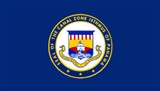
Panama Canal Zone

 
Panama Canal Zone

   Email Print
   Bookmark   Link


Panama Canal Zone


The Panama Canal Zone was a 553 square mile (1,432 km²) territory inside of Panama
Panama

Panama, officially the Republic of Panama , is the southernmost country of Central America and, in turn, North America. Situated on an isthmus connecting North and South America, some categorize it as a transcontinental nation....
, consisting of the Panama Canal
Panama Canal

The Panama Canal is a man-made canal which joins the Pacific Ocean and Atlantic Ocean oceans. One of the largest and most difficult engineering projects ever undertaken, it had an enormous impact on shipping between the two oceans, replacing the long and treacherous route via the Drake Passage and Cape Horn at the southernmost tip of South Am...
 and an area generally extending 5 miles (8.1 km) on each side of the centerline (but excluding Panama City
Panama City

Panama City is the Capital and largest city of the Panama. It has a population of 708,738, with a total metro population of 1,063,000, and it is located at the Pacific entrance of the Panama Canal, at ....
 and Colón
Colón, Panama

Col?n is a sea port on the Caribbean Sea coast of Panama. The city lies near the Atlantic Ocean entrance to the Panama Canal. It is capital of Panama's Col?n Province and has traditionally been known as Panama's second city....
, which otherwise would have fallen in part within the limits of the Canal Zone). Its border spanned two of Panama's provinces and was created on November 18, 1903 with the signing of the Hay-Bunau Varilla Treaty
Hay-Bunau Varilla Treaty

The Hay-Banau Varilla Treaty was signed on November 18, 1903 . Phillipe Bunau-Varilla went to Washington, D.C. and New York City to negotiate the terms with several U.S....
.


Discussion
Ask a question about 'Panama Canal Zone'
Start a new discussion about 'Panama Canal Zone'
Answer questions from other users
Full Discussion Forum


Recent Posts


Encyclopedia


The Panama Canal Zone was a 553 square mile (1,432 km²) territory inside of Panama
Panama

Panama, officially the Republic of Panama , is the southernmost country of Central America and, in turn, North America. Situated on an isthmus connecting North and South America, some categorize it as a transcontinental nation....
, consisting of the Panama Canal
Panama Canal

The Panama Canal is a man-made canal which joins the Pacific Ocean and Atlantic Ocean oceans. One of the largest and most difficult engineering projects ever undertaken, it had an enormous impact on shipping between the two oceans, replacing the long and treacherous route via the Drake Passage and Cape Horn at the southernmost tip of South Am...
 and an area generally extending 5 miles (8.1 km) on each side of the centerline (but excluding Panama City
Panama City

Panama City is the Capital and largest city of the Panama. It has a population of 708,738, with a total metro population of 1,063,000, and it is located at the Pacific entrance of the Panama Canal, at ....
 and Colón
Colón, Panama

Col?n is a sea port on the Caribbean Sea coast of Panama. The city lies near the Atlantic Ocean entrance to the Panama Canal. It is capital of Panama's Col?n Province and has traditionally been known as Panama's second city....
, which otherwise would have fallen in part within the limits of the Canal Zone). Its border spanned two of Panama's provinces and was created on November 18, 1903 with the signing of the Hay-Bunau Varilla Treaty
Hay-Bunau Varilla Treaty

The Hay-Banau Varilla Treaty was signed on November 18, 1903 . Phillipe Bunau-Varilla went to Washington, D.C. and New York City to negotiate the terms with several U.S....
. When artificial lakes were created to assure a steady supply of water for the locks, those lakes were included within the Zone.

From 1903 to 1979 the territory was controlled by the United States of America
United States

The United States of America is a Federal government constitutional republic comprising U.S. state and a federal district. The country is situated mostly in central North America, where its Contiguous United States and Washington, D.C., the Capital districts and territories, lie between the Pacific Ocean and Atlantic Oceans, Borders of the U...
, which had built and financed the canal's construction. From 1979 to 1999 the canal itself was under joint U.S.-Panamanian control. In 1977 the Torrijos-Carter Treaties
Torrijos-Carter Treaties

The Torrijos-Carter Treaties are two treaty signed by the United States and Panama in Washington, D.C., on September 7, 1977, abrogating the Hay-Bunau Varilla Treaty of 1903....
 established the neutrality of the canal.

Except during times of crisis or political tension, Panamanians could freely enter the Zone. In fact, normally anyone could walk across a street in Panama City
Panama City

Panama City is the Capital and largest city of the Panama. It has a population of 708,738, with a total metro population of 1,063,000, and it is located at the Pacific entrance of the Panama Canal, at ....
 and enter the jurisdiction. However, the 1903 treaty placed restrictions on the rights of Panamanians to buy at retail stores in the Zone. This was for the protection
Protectionism

Protectionism is the economic policy of restraining trade between nations, through methods such as tariffs on imported goods, restrictive import quota, and a variety of other restrictive government regulations designed to discourage imports, and prevent foreign take-over of local markets and companies....
 of Panamanian shopkeepers.

During U.S. control of the Canal Zone, the territory, apart from the canal itself, was used mainly for military purposes; however, approximately 3,000 American civilians (called "Zonian
Zonian

A Zonian is a person associated with the Panama Canal Zone, a political entity viable between 1903 and the absorption of the Canal Zone into the Panama between 1980 and 2000....
s") made up the core of permanent residents. U.S. military usage ended when the zone returned to Panamanian control. It has now been integrated to the economic development of Panama, and is a tourist destination of sorts, especially for visiting cruise ship
Cruise ship

File:MSMajestyOfTheSeasEdit1.JPGA cruise ship or cruise liner is a passenger ship used for pleasure voyages, where the voyage itself and the ship's amenities are part of the experience....
s.

Notable people born in the Panama Canal Zone include the Republican
Republican Party (United States)

The Republican Party is one of the two major party contemporary political parties in the United States, along with the Democratic Party . It is often called the Grand Old Party or the GOP....
 2008 presidential candidate
United States presidential election, 2008

The United States presidential election of 2008 was held on Tuesday, November 4, 2008. It was the 56th consecutive wikt:quadrennial United States United States presidential election....
 and US Senator
United States Senate

The United States Senate is the upper house of the Bicameralism United States Congress, the lower house being the United States House of Representatives....
 from Arizona
Arizona

The State of Arizona is a U.S. state located in the Southwestern United States of the United States. The capital and largest city is Phoenix, Arizona....
 John McCain
John McCain

John Sidney McCain III is the senior senator United States United States Senator from Arizona. He was the Republican Party presidential nominee in the 2008 United States presidential election....
, Richard Prince
Richard Prince

Richard Prince, is an United States Painting and photographer. His works have often been the subject of debates within the art world. Trained as a figure painting, Prince began creating collages containing photographs in 1975....
, Kenneth Bancroft Clark and Rod Carew
Rod Carew

Rodney Cline "Rod" Carew is a former Major League Baseball infielder for the Minnesota Twins and the former Los Angeles Angels of Anaheim from to ....
.

The largest U.S. Army unit based in the Canal Zone was the 193rd Infantry Brigade (Light)
193rd Infantry Brigade (United States)

The 193rd Infantry Brigade was originally constituted in the United States Army Reserve on 24 June 1922 as Headquarters and Headquarters Company, 193rd Infantry Brigade and assigned to the 97th Infantry Division ....
, a mixed parachute-infantry/air-assault-capable light infantry unit. It was honored in 1994 as the first major unit to deactivate in accordance with the Panama Canal Treaty of 1977
Torrijos-Carter Treaties

The Torrijos-Carter Treaties are two treaty signed by the United States and Panama in Washington, D.C., on September 7, 1977, abrogating the Hay-Bunau Varilla Treaty of 1903....
 treaty implementation plan, The brigade was reactivated in 2007, tasked with conducting basic combat training for new US Army recruits.

Documentary filmmaker Frederick Wiseman
Frederick Wiseman

Frederick Wiseman is an American Documentary film Film director. Born into a Judaism family, he came to documentary filmmaking after first being trained as a lawyer....
 made a film about the Panama Canal Zone, entitled Canal Zone, which was released and shown on PBS in 1977.

Panama Canal Company

The canal was operated by the Panama Canal Company (after 1979, it was the Panama Canal Commission). The Canal Zone Government controlled the Canal Zone; it was described as a cross between a colonial
Colonialism

Colonialism is the extension of a nation's sovereignty over Territory beyond its borders by the establishment of either settler or exploitation colony in which Indigenous people populations are direct rule, Population transfers, or Genocide....
 company enclave and a socialist government. Everyone worked for the Company or the Government in one form or another. There were no independent stores, goods were brought in and sold at a series of stores run by the company such as a commissary
Commissary

A commissary is someone delegated by a superior to execute a duty or an office; in a formal, legal context, one who has received power from a legitimate superior authority to pass judgment in a certain cause or to take information concerning it....
, housewares, and so on. Although denied by the government, for many years there was blatant racism in the Zone, with "gold" and "silver" facilities separated largely on the basis of color.

The Canal Zone had its own police force (Canal Zone Police
Canal Zone Police

The Panama Canal Zone Police was a force that consisted of more than 400 officers of all ranks split into two Divisions, Atlantic and Pacific, and between about 25 stations....
), courts, and judges (the United States District Court for the Canal Zone
United States District Court for the Canal Zone

The United States District Court for the Canal Zone is an extinct United States District Court. The District was abolished, effective March 31, 1982, as part of the process of returning the Panama Canal Zone to Panama....
).

The head of the company was also the Governor of the Panama Canal Zone
List of Governors of Panama Canal Zone

The following were Governors of the Panama Canal Zone while it was under United States control:...
. Residents did not own their homes; instead they rented houses that were assigned, primarily based on seniority in the zone. When an employee moved away, the house would be listed and employees could apply for it. The utility companies were also managed by the company.

Tensions and the end of the Canal Zone

The existence of the Canal Zone, a political exclave of the U.S. that cut Panama
Panama

Panama, officially the Republic of Panama , is the southernmost country of Central America and, in turn, North America. Situated on an isthmus connecting North and South America, some categorize it as a transcontinental nation....
 geographically in half and had its own courts, police and civil government, was a cause of conflict between the two countries. Demonstrations occurred at the opening of the Bridge of the Americas
Bridge of the Americas

The Bridge of the Americas is a road bridge in Panama, which spans the Pacific Ocean entrance to the Panama Canal. Built in 1962, at a cost of USD20 million, it was the only non-swinging bridge connecting the north and south Americas land masses until the opening of the Centennial Bridge, Panama in 2004....
 in 1962 and serious rioting occurred in 1964. This led to the United States easing its controls in the Zone. For example, Panamanian flags were allowed to be flown with American ones. After extensive negotiations the Canal Zone ceased to exist on October 1, 1979 in compliance with provisions of the Torrijos-Carter Treaties
Torrijos-Carter Treaties

The Torrijos-Carter Treaties are two treaty signed by the United States and Panama in Washington, D.C., on September 7, 1977, abrogating the Hay-Bunau Varilla Treaty of 1903....
.

Citizenship

Almost from the inception of the Canal Zone, questions arose as to whether the Zone was considered part of the United States for constitutional purposes, or, in the phrase of the day, whether the Constitution followed the flag. On July 28, 1904, Controller of the Treasury Robert Tracewell stated, "While the general spirit and purpose of the Constitution is applicable to the zone, that domain is not a part of the United States within the full meaning of the Constitution and laws of the country.

In 1953, Congress passed legislation to specify the status of Americans born in the Canal Zone--and to exclude non-Americans born there from citizenship. Title 8, Section 1403 of the United States Code
United States Code

The United States Code is a compilation and codification of the general and permanent federal law of the United States. ...
 grants citizenship to those born in the Canal Zone with at least one parent who is a United States citizen. This differs from the provision in the Fourteenth Amendment
Fourteenth Amendment to the United States Constitution

The Fourteenth Amendment to the United States Constitution is one of the post-American Civil War Reconstruction Amendments that was first intended to secure the rights of former Slavery in the United States....
 which grants citizenship to all born in the United States, regardless of parental nationality.

Townships and military installations

Canalzone
The Canal Zone was generally divided into two sections, the Pacific Side and the Atlantic Side, with Gatun Lake separating them.

A partial list of Canal Zone townships and military installations:

  • Pacific Side
    • Townships
      • Ancón
        Ancón, Panama

        Anc?n is a township in central Panama, northeast of the city of Balboa, Panama. Ancon Hill is also the name of a large hill that overlooks Panama City, Panama, and served as a form of protection from piracy, and sea invasion....
         - built on the lower slopes of Ancon Hill
        Ancon Hill

        Ancon Hill is a steep 654-foot hill which overlooks Panama City, Panama. It is one of the most recognizable landmarks in the area.It was under U.S....
        , adjacent to Panama City
        Panama City

        Panama City is the Capital and largest city of the Panama. It has a population of 708,738, with a total metro population of 1,063,000, and it is located at the Pacific entrance of the Panama Canal, at ....
        . Also home to Gorgas Hospital
        Gorgas Hospital

        Gorgas Hospital was a hospital in Panama City, Panama named for U.S. Army general and physician William C. Gorgas.Built on the site of a French hospital called "L'Hospital Notre Dame de Canal", it was originally called Ancon Hospital and later renamed Gorgas Hospital....
        .
      • Balboa
        Balboa, Panama

        Balboa is a district of Panama City, located at the Pacific entrance to the Panama Canal....
         - Administrative capital, as well as location of the harbor and main Pacific Side high school
      • Balboa Heights
      • Cardenas
        Cardenas, Panama

        Cardenas was a township in the old Panama Canal Zone. It was original founded to house FAA personnel.Its only access from the main road system was on a road which started from Corozal, Panama....
         - as the Canal Zone was gradually handed over to Panamanian control, Cardenas was one of the last Zonian
        Zonian

        A Zonian is a person associated with the Panama Canal Zone, a political entity viable between 1903 and the absorption of the Canal Zone into the Panama between 1980 and 2000....
         holdouts.
      • Cocoli
      • Corozal
      • Curundu: on military base, but housed civilian military workers
      • Curundu Heights
      • Diablo
        Diablo, Panama

        Diablo was one of many townships in the Panama Canal Zone.It was located directly across from the entrance to Albrook AFB, on a low hill overlooking the canal just past Balboa Harbor....
      • Diablo Heights
      • Gamboa
        Gamboa, Panama

        Gamboa is a small town in the Republic of Panama. It was one of a handful of permanent Panama Canal Zone townships, built to house employees of the Panama Canal and their dependents....
         - headquarters of dredging division, located on Gatun Lake
        Gatun Lake

        Gatun Lake is a large artificial lake situated in the Republic of Panama; it forms a major part of the Panama Canal, carrying ships for 33 km of their transit across the Isthmus of Panama....
        . Many new arrivals to the Canal Zone were assigned here.
      • La Boca: home of the Panama Canal College
      • Los Ríos
      • Paraíso
        Paraíso, Panama

        Para?so is a town in the Republic of Panama, located just north of the Panama Canal's Pedro Miguel Locks. It was a vibrant township of the old Panama Canal Zone, though it was segregated for most of its history....
      • Pedro Miguel
      • Red Tank
        Red Tank, Panama

        Red Tank was a township in the Panama Canal Zone.It was abandoned at some time during the 1940s or 1950s, and vegetation was allowed to overgrow the site....
        : was abandoned and allowed to be overgrown sometime around 1950.
      • Rosseau: built as a naval hospital during WWII, housed FAA personnel until Cardenas was built. Torn down after about 20 years
    • Military Installations
      • Fort Amador
        Fort Amador

        Fort Amador and Fort Grant were former United States Army bases protecting the Pacific end of the Panama Canal at the Panama Bay. Amador was the primary on-land site, lying below the Bridge of the Americas....
         - on the coast, partly built on land extended into the sea using excavation materials from the canal construction
      • Fort Clayton
        Fort Clayton

        Fort Clayton was a United States Army base in the former Panama Canal Zone, later part of the Republic of Panama. Fort Clayton was located northwest of Balboa, Panama, with the Panama Canal located nearby....
      • Corozal Army Post (close to, but separate from the civilian township)
      • Fort Kobbe
        Fort Kobbe

        Fort Kobbe was an Army Fort created in 1941 that was attached to Howard Air Force Base in Panama. It was a relatively small post, and housed a battalion of paratroopers , a battalion of artillery, a company of engineers, and a company of cavalry ....
      • Rodman Marine Barracks
      • Albrook Air Force Base
        Albrook Air Force Base

        Albrook Air Force Station is a former United States Air Force facility in Panama. It was closed on 30 September 1997 as a result of the Torrijos-Carter Treaties which specified that United States military facilities in the former Panama Canal Zone be closed and the facilities be turned over to the Panamanian government....
      • Howard Air Force Base
        Howard Air Force Base

        Howard Air Force Base is a former United States Air Force base locaerd in Panama. It was closed on 1 November 1999 as a result of the Torrijos-Carter Treaties which specified that United States military facilities in the former Panama Canal Zone be closed and the facilities be turned over to the Panamanian government....
      • Quarry Heights: Headquarters, United States Southern Command
        United States Southern Command

        The United States Southern Command , located in Miami, Florida, is one of ten Unified Combatant Commands in the United States Department of Defense....
  • Atlantic Side
    • Townships
      • Brazos Heights: privately owned housing (by United Brands and other, mostly shipping companies) where employees/owners of shipping agencies, lawyers and the head of the YMCA lived
      • Coco Solo
        Coco Solo

        Coco Solo was a United States Navy submarine base established in 1918 on the Atlantic Ocean side of the Panama Canal Zone, near Col?n, Panama....
        : main hospital and only Atlantic Side high school (called Cristobal High School)
      • Cristóbal: main harbor and port
      • Gatún
        Gatún

        Gatun is a small town on the Atlantic Side of the Panama Canal, located south of the city of Col?n at the point in which Gatun Lake meets the channel to the Caribbean Sea....
      • Margarita
      • Mount Hope
        Mount Hope

        There are several places named Mount Hope:in Australia:* Mount Hope, New South Wales* Mount Hope, South Australiain Canada:* Mount Hope, Ontario...
        : site of the only Atlantic side cemetery and the only drydock
      • Rainbow City
        Rainbow City, Panama

        Rainbow City is a section of the city of Col?n in the Republic of Panama. It was originally built as racial segregation housing for Panama Canal employees and was developed into a proper town by the Canal Zone Government....
    • Military Installations
      • Fort Gulick
        Fort Gulick

        Fort Gulick was a U.S. Army base in the former Panama Canal Zone located on the Atlantic side of the Panama Canal near Fort Sherman.It was perhaps best known as the location of the School of the Americas....
        : home to School of the Americas
      • Galeta Island
        Galeta Island

        Galeta Island, Panama is an island located on the Atlantic side of the Republic of Panama just east of the city of Colon, Panama.Galeta Island was the site of a U.S....
      • Fort Randolph: abandoned military base
      • Fort Davis
      • Fort Sherman
        Fort Sherman

        Fort Sherman is a former United States Army base located on Toro Point at the Atlantic end of the Panama Canal, on the western bank of the Canal directly opposite Col?n, Panama ....
        : home to Jungle Operations Training Center


Postage stamps


See also

  • Panama Railway
    Panama Railway

    The Panama Railway or Panama Rail Road is a railway line that links the Atlantic Ocean to the Pacific Ocean across Panama in Central America....
  • Rail transport in Panama
    Rail transport in Panama

    As of 2006, the only functioning Rail transport in Panama is Panama Canal Railway Company, successor of Panama Railway - the oldest transcontinental railroad in the world....
  • Transcontinental Railroad#Panama
    Transcontinental railroad

    A Transcontinental Railroad is a railroad that crosses a continent from "coast-to-coast". Railroad terminal are at or connected to different oceans....
  • List of Governors of Panama Canal Zone
    List of Governors of Panama Canal Zone

    The following were Governors of the Panama Canal Zone while it was under United States control:...


Further reading

  • Murillo, Luis E. (1995). The Noriega Mess: The Drugs, the Canal, and Why America Invaded. 1096 pages, illustrated. Berkeley: Video Books. ISBN 0-923444-02-5.
  • Mellander, Gustavo A. (1971) The United States in Panamanian Politics:The Intriguing Formative Years. Danville, Ill.: Interstate Publishers, OCLC 138568
  • Mellander, Gustavo A.; Nelly Maldonado Mellander (1999). Charles Edward Magoon: The Panama Years. Río Piedras, Puerto Rico: Editorial Plaza Mayor. ISBN 1563281554. OCLC 42970390.


External links

For an excellent book on U.S. involvement in Panama during its early years as a republic see: Mellander, Gustavo A. (1971) The United States in Panamanian Politics: The Intriguing Formative Years. Danville, Ill.: Interstate Publishers. OCLC 138568. As well as: Mellander, Gustavo A.; Nelly Maldonado Mellander (1999). Charles Edward Magoon: The Panama Years. Río Piedras, Puerto Rico: Editorial Plaza Mayor. ISBN 1563281554. OCLC 42970390.