
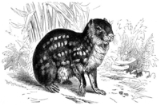
The
Lowland Paca (
Cuniculus paca), also known as the
Spotted Paca, is a large rodent found in tropical and sub-tropical America, from East-Central
MexicoThe United Mexican States , commonly known as Mexico , is a federal constitutional republic in North America. It is bordered on the north by the United States; on the south and west by the Pacific Ocean; on the southeast by Guatemala, Belize, and the Caribbean Sea; and on the east by the Gulf of...
to
ArgentinaArgentina, officially the Argentine Republic , is the second largest country in South America, constituted as a federation of 23 provinces and an autonomous city, Buenos Aires. It is the eighth largest country in the world by land area and the largest among Spanish-speaking nations, though Mexico,...
's North. It is called
paca in most of its range, but
tepezcuintle or
jaleb in
Costa RicaCosta Rica, officially the Republic of Costa Rica is a country in Central America, bordered by Nicaragua to the north, Panama to the east and south, the Pacific Ocean to the west and south and the Caribbean Sea to the east.Costa Rica, which translates literally as "Rich Coast", constitutionally...
MexicoThe United Mexican States , commonly known as Mexico , is a federal constitutional republic in North America. It is bordered on the north by the United States; on the south and west by the Pacific Ocean; on the southeast by Guatemala, Belize, and the Caribbean Sea; and on the east by the Gulf of...
,
HondurasHonduras is a republic in Central America. It was formerly known as Spanish Honduras to differentiate it from British Honduras...
and
GuatemalaGuatemala is a country in Central America bordered by Mexico to the north and west, the Pacific Ocean to the southwest, Belize to the northeast, the Caribbean to the east, and Honduras and El Salvador to the southeast. Its size is just under 110,000 km² with an estimated population...
,
Conejo Pintado in
PanamáPanama, officially the Republic of Panama , is the southernmost country of both Central America and, in turn, North America. Situated on the isthmus connecting North and South America, it is bordered by Costa Rica to the northwest, Colombia to the southeast, the Caribbean Sea to the north and the...
,
guanta in
EcuadorEcuador , officially the Republic of Ecuador , literally, "Republic of the equator") is a representative democratic republic in South America, bordered by Colombia on the north, Peru on the east and south, and by the Pacific Ocean to the west. It is one of only two countries in South America that...
,
majás in
PeruPeru , officially the Republic of Peru , is a country in western South America. It is bordered on the north by Ecuador and Colombia, on the east by Brazil, on the southeast by Bolivia, on the south by Chile, and on the west by the Pacific Ocean.Peruvian territory was home to the Norte Chico...
and
boruga in
ColombiaColombia , officially the Republic of Colombia , is a constitutional republic in northwestern South America. Colombia is bordered to the east by Venezuela and Brazil; to the south by Ecuador and Peru; to the north by the Caribbean Sea; to the northwest by Panama; and to the west by the Pacific Ocean...
.
The
Lowland Paca (
Cuniculus paca), also known as the
Spotted Paca, is a large rodent found in tropical and sub-tropical America, from East-Central
MexicoThe United Mexican States , commonly known as Mexico , is a federal constitutional republic in North America. It is bordered on the north by the United States; on the south and west by the Pacific Ocean; on the southeast by Guatemala, Belize, and the Caribbean Sea; and on the east by the Gulf of...
to
ArgentinaArgentina, officially the Argentine Republic , is the second largest country in South America, constituted as a federation of 23 provinces and an autonomous city, Buenos Aires. It is the eighth largest country in the world by land area and the largest among Spanish-speaking nations, though Mexico,...
's North. It is called
paca in most of its range, but
tepezcuintle or
jaleb in
Costa RicaCosta Rica, officially the Republic of Costa Rica is a country in Central America, bordered by Nicaragua to the north, Panama to the east and south, the Pacific Ocean to the west and south and the Caribbean Sea to the east.Costa Rica, which translates literally as "Rich Coast", constitutionally...
MexicoThe United Mexican States , commonly known as Mexico , is a federal constitutional republic in North America. It is bordered on the north by the United States; on the south and west by the Pacific Ocean; on the southeast by Guatemala, Belize, and the Caribbean Sea; and on the east by the Gulf of...
,
HondurasHonduras is a republic in Central America. It was formerly known as Spanish Honduras to differentiate it from British Honduras...
and
GuatemalaGuatemala is a country in Central America bordered by Mexico to the north and west, the Pacific Ocean to the southwest, Belize to the northeast, the Caribbean to the east, and Honduras and El Salvador to the southeast. Its size is just under 110,000 km² with an estimated population...
,
Conejo Pintado in
PanamáPanama, officially the Republic of Panama , is the southernmost country of both Central America and, in turn, North America. Situated on the isthmus connecting North and South America, it is bordered by Costa Rica to the northwest, Colombia to the southeast, the Caribbean Sea to the north and the...
,
guanta in
EcuadorEcuador , officially the Republic of Ecuador , literally, "Republic of the equator") is a representative democratic republic in South America, bordered by Colombia on the north, Peru on the east and south, and by the Pacific Ocean to the west. It is one of only two countries in South America that...
,
majás in
PeruPeru , officially the Republic of Peru , is a country in western South America. It is bordered on the north by Ecuador and Colombia, on the east by Brazil, on the southeast by Bolivia, on the south by Chile, and on the west by the Pacific Ocean.Peruvian territory was home to the Norte Chico...
and
boruga in
ColombiaColombia , officially the Republic of Colombia , is a constitutional republic in northwestern South America. Colombia is bordered to the east by Venezuela and Brazil; to the south by Ecuador and Peru; to the north by the Caribbean Sea; to the northwest by Panama; and to the west by the Pacific Ocean...
. It is also known as the
gibnut in
BelizeBelize , is a country in Central America. Belize has a diverse society, composed of many cultures and speaking many languages. Although Kriol and Spanish are spoken among the population, Belize is the only country in Central America where English is the official language...
, where it is prized as a game animal,
labba in
GuyanaGuyana officially the Co-operative Republic of Guyana and previously known as British Guiana, is a state on the northern coast of South America that is culturally part of the Anglophone Caribbean.Guyana was discovered in 1498 by the Europeans,Guyana's past is punctuated by battles fought and won,...
,
lapa in Venezuela, and
lappe on the island of
TrinidadTrinidad is the larger and more populous of the two major islands and numerous landforms which make up the country of Trinidad and Tobago. It is the southernmost island in the Caribbean and lies just 11 km off the northeastern coast of Venezuela. With an area of 4,768 km² it is also the fifth...
.
There is much confusion in the nomenclature of this and related species; see
agoutiAgouti refers to a number of species of rodents as well as a number of genes affecting coat coloration in several different animals.*When referring to a rodent, agouti can mean:...
. In particular, the popular term
agouti or
common agouti normally refers to species of the distinct
Dasyprocta genus (such as the
Central American AgoutiThe Central American Agouti is an agouti species from the Dasyproctidae family. The species is widespread in Mesoamerica and South America. The northern section of the range occurs from Chiapas and the Yucatan Peninsula to northern Ecuador and Colombia and western Venezuela...
,
Dasyprocta punctata). Sometimes the word
agouti is also used for a
polyphyleticA polyphyletic group is one whose members' last common ancestor is not a member of the group.For example, the group consisting of warm-blooded animals is polyphyletic, because it contains both mammals and birds, but the most recent common ancestor of mammals and birds was cold-blooded...
grouping uniting the families Cuniculidae and
DasyproctidaeThe Dasyproctidae are a family of large South American rodents, comprising the agoutis and acouchis. Their fur is a reddish or dark colour above, with a paler underside. They are herbivorous, often feeding on ripe fruit that falls from trees...
, which, besides the pacas and common agoutis, includes also the acouchis (
Myoprocta).
Cuniculus is the appropriate genus name instead of
Agouti based on a 1998 ruling of the
International Code of Zoological NomenclatureThe International Code of Zoological Nomenclature is both a book containing a set of rules and recommendations on the formal naming of animals, and that set itself. Among zoologists it is often referred to simply as "the Code"...
as the Lowland Paca's genus.
Description
The Lowland Paca has coarse fur without underfur, dark brown to black on the upper body and white or yellowish on the underbelly. It usually has three to five rows of white spots along its sides, against a dark grey background. It has thick strong legs, with four digits in the forefeet and five in the hind feet (the first and fifth are reduced); the nails function as hooves. The tail is short and hairless. The
zygomatic archThe zygomatic arch or cheek bone is formed by the zygomatic process of temporal bone and the temporal process of the zygomatic bone , the two being united by an oblique suture; the tendon of the Temporalis passes medial to the arch to gain insertion into the coronoid process...
is expanded laterally and dorsally and is used as a resonating chamber - a unique feature among mammals.
An adult Lowland Paca weighs between . It has two litters per year, each having usually one young, sometimes two;
gestationGestation is the carrying of an embryo or fetus inside a female viviparous animal. Mammals duringpregnancy can have one or more gestations at the same time ....
lasts 115–120 days. Pacas are sexually mature at about 1 year.
Habits
The Lowland Paca is mostly nocturnal and solitary and does not vocalize very much. It lives in forested habitats near water, preferably smaller rivers, and dig simple burrows about below the surface, usually with more than one exit. The Lowland Paca is a good swimmer and usually heads for the water to escape danger. It also is an incredible climber and it searches for fruit in the trees. Its diet includes leaves, stems, roots, seeds, and fruit, especially
avocadoThe avocado , also known as palta or aguacate , butter pear or alligator pear, is a tree native to the Caribbean, Mexico, South America and Central America, classified in the flowering plant family Lauraceae along with cinnamon, camphor and bay laurel...
s,
mangoMangoes belong to the genus Mangifera, consisting of numerous species of tropical fruiting trees in the flowering plant family Anacardiaceae. The mango is indigenous to the Indian Subcontinent...
s and zapotes. It sometimes stores food.
Economical and ecological aspects
The Lowland Paca is considered an agricultural pest for yam, cassava, sugar cane, corn and other food crops. Its meat has excellent flavor and is highly prized. It is plentiful in protected habitats, and hence not in danger of extinction, but overall its numbers have been much reduced because of hunting and habitat destruction. It is easily bred and raised in farms, although the taste is said to be inferior (perhaps unpleasant) when farmed.
External links