

Ove Arup

Encyclopedia
Sir Ove Nyquist Arup, CBE
, MICE
, MIStructE
(16 April 1895 – 5 February 1988) known as Ove Arup, was a leading Anglo-Danish engineer
and generally considered to be one of the foremost architectural structural engineer
s of his time . He was the founder of the internationally recognised engineering firm of Arup
.
, England in 1895, to the Danish veterinary surgeon Jens Simon Johannes Arup and his Norwegian wife Mathilde Bolette Nyquist. Arup attended the Sorø Academy in Denmark—a boarding school with many influences from Dr Thomas Arnold
of the Rugby School
in the United Kingdom.
In 1913, he began studying philosophy
at Copenhagen University and in 1918 enrolled for an engineering
degree at the Polyteknisk Læreanstalt
, Copenhagen, specialising in reinforced concrete. He completed his studies in 1922. At this time Ove Arup was influenced by Charles Edouard Jeanneret (Le Corbusier
) and his publication Vers une architecture, published that year; and also by Walter Gropius
, the founder of the Bauhaus
movement.
, and in December 1923 he moved to their London office as chief engineer.
Arup married Ruth Sørensen, known as Li, on 13 August 1925.
Between 1932–33 he designed the Labworth Café
—a café with two integrated shelters set on the promenade of the neighbouring Essex seaside resort of Canvey Island
. The café exists as the only building solely designed by Arup. He then worked as structural consultant to the Tecton partnership, notably on the Penguin Pool at London's Regent’s Park Zoo
, Whipsnade
Zoo, Dudley Zoo
and on Highpoint One, Highgate (a building he was later highly critical of). The close working relationship that Arup developed with Tecton's senior partner Berthold Lubetkin
, proved to be highly important in the development of both men's careers.
He moved next to a London construction
company, J. L. Kier & Co. in London, as director and chief designer from 1934–1938, and during the 1930s he also worked with Ernö Goldfinger
, Wells Coates
, Maxwell Fry
, Yorke, Rosenberg & Mardall and Marcel Breuer
.
He became a member of the executive committee of the MARS Group
in 1935.
In 1938, with his cousin Arne Arup he founded Arup & Arup Limited, a firm of engineers and contractors.
 Before the war Ove Arup was on the Air Raid Precautions
organising committee and he advised Finsbury Council on the provision of bomb shelters. During the war he published a number of papers on shelter policy and designs, mainly advocating reinforced concrete mass shelters, rather than the government policy of dispersing the population in small domestic shelters. Largely for political reasons most of his recommendations were never adopted, although some wealthy Londoners were able to build concrete shelters according to his design. Arup played a significant part in the design of the Mulberry
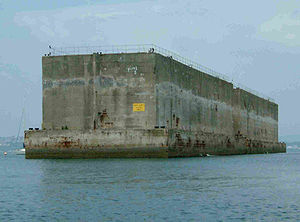
temporary harbours used during the D-Day
landings.
The Mulberry Harbour
was a type of temporary harbour developed to offload cargo on the beaches during the Allied invasion of Normandy. Two prefabricated or artificial military harbours were taken across the English Channel
from Britain with the invading army in sections and assembled off the coast of Normandy
as part of the D-Day
invasion of France
in 1944.
 In 1946, after dissolving Arup & Arup Ltd, he created a team of Civil and Structural Engineering consultants. In the same year, he formed his first partnership with Ronald Jenkins, Geoffrey Wood and Andrew Young
called Arup and Partners.
A further company, Arup Associates, was formed in 1963 as a new partnership, a body of Architects and Engineers working on an equal basis as Building Designers: the engineer Ove Arup, the architects Francis Pym and Philip Dowson
, and the former partners of Arup and Partners. It was a multi-disciplinary company providing engineering, architectural, and other services for the built environment. Arup said himself that ultimately, all of the Arup names resulted in a firm called simply Arup
.
was an important experiment in high-rise residential design, and was one of Arup's most significant collaborations with Lubetkin. Arup later criticised the project as having significant flaws.
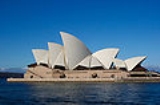
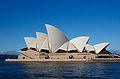
in Sydney, Australia from the project's start in 1957 to its completion in 1973. An iconic building making groundbreaking use of precast concrete
, structural glue
and computer
analysis, this made Arup's reputation, and that of his firm, despite the extremely difficult working relationship with the architect, Jørn Utzon
.
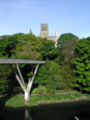 Ove Arup personally supervised the design and construction of Durham
's Kingsgate Bridge
in 1963. The firm's first bridge, Arup was particularly attached to the project and had his ashes scattered from it following his death. A bust of Arup that was placed at one end of the Bridge was stolen in the summer of 2006.
Order of the British Empire
The Most Excellent Order of the British Empire is an order of chivalry established on 4 June 1917 by George V of the United Kingdom. The Order comprises five classes in civil and military divisions...
, MICE
Institution of Civil Engineers
Founded on 2 January 1818, the Institution of Civil Engineers is an independent professional association, based in central London, representing civil engineering. Like its early membership, the majority of its current members are British engineers, but it also has members in more than 150...
, MIStructE
Institution of Structural Engineers
The Institution of Structural Engineers is a professional body for structural engineering based in the United Kingdom. It has 27,000 members in 105 countries. The Institution provides professional accreditation for structural engineers...
(16 April 1895 – 5 February 1988) known as Ove Arup, was a leading Anglo-Danish engineer
Engineer
An engineer is a professional practitioner of engineering, concerned with applying scientific knowledge, mathematics and ingenuity to develop solutions for technical problems. Engineers design materials, structures, machines and systems while considering the limitations imposed by practicality,...
and generally considered to be one of the foremost architectural structural engineer
Structural engineer
Structural engineers analyze, design, plan, and research structural components and structural systems to achieve design goals and ensure the safety and comfort of users or occupants...
s of his time . He was the founder of the internationally recognised engineering firm of Arup
Arup
Arup is a global professional services firm headquartered in London, United Kingdom which provides engineering, design, planning, project management and consulting services for all aspects of the built environment. The firm is present in Africa, the Americas, Australasia, East Asia, Europe and the...
.
Early life and education
Arup was born in NewcastleNewcastle upon Tyne
Newcastle upon Tyne is a city and metropolitan borough of Tyne and Wear, in North East England. Historically a part of Northumberland, it is situated on the north bank of the River Tyne...
, England in 1895, to the Danish veterinary surgeon Jens Simon Johannes Arup and his Norwegian wife Mathilde Bolette Nyquist. Arup attended the Sorø Academy in Denmark—a boarding school with many influences from Dr Thomas Arnold
Thomas Arnold
Dr Thomas Arnold was a British educator and historian. Arnold was an early supporter of the Broad Church Anglican movement...
of the Rugby School
Rugby School
Rugby School is a co-educational day and boarding school located in the town of Rugby, Warwickshire, England. It is one of the oldest independent schools in Britain.-History:...
in the United Kingdom.
In 1913, he began studying philosophy
Philosophy
Philosophy is the study of general and fundamental problems, such as those connected with existence, knowledge, values, reason, mind, and language. Philosophy is distinguished from other ways of addressing such problems by its critical, generally systematic approach and its reliance on rational...
at Copenhagen University and in 1918 enrolled for an engineering
Engineering
Engineering is the discipline, art, skill and profession of acquiring and applying scientific, mathematical, economic, social, and practical knowledge, in order to design and build structures, machines, devices, systems, materials and processes that safely realize improvements to the lives of...
degree at the Polyteknisk Læreanstalt
Technical University of Denmark
The Technical University of Denmark , often simply referred to as DTU, is a university just north of Copenhagen, Denmark. It was founded in 1829 at the initiative of Hans Christian Ørsted as Denmark's first polytechnic, and is today ranked among Europe's leading engineering institutions, and the...
, Copenhagen, specialising in reinforced concrete. He completed his studies in 1922. At this time Ove Arup was influenced by Charles Edouard Jeanneret (Le Corbusier
Le Corbusier
Charles-Édouard Jeanneret, better known as Le Corbusier , was a Swiss-born French architect, designer, urbanist, writer and painter, famous for being one of the pioneers of what now is called modern architecture. He was born in Switzerland and became a French citizen in 1930...
) and his publication Vers une architecture, published that year; and also by Walter Gropius
Walter Gropius
Walter Adolph Georg Gropius was a German architect and founder of the Bauhaus School who, along with Ludwig Mies van der Rohe and Le Corbusier, is widely regarded as one of the pioneering masters of modern architecture....
, the founder of the Bauhaus
Bauhaus
', commonly known simply as Bauhaus, was a school in Germany that combined crafts and the fine arts, and was famous for the approach to design that it publicized and taught. It operated from 1919 to 1933. At that time the German term stood for "School of Building".The Bauhaus school was founded by...
movement.
Before WWII
In 1922, Ove Arup began work with a Danish firm in Hamburg called Christiani & NielsenChristiani & Nielsen
Christiani & Nielsen is a construction contractor with major operations in Thailand and Southeast Asia. Originally a Danish company, it is today a listed company majority owned by the Crown Property Bureau of King Bhumibol of Thailand....
, and in December 1923 he moved to their London office as chief engineer.
Arup married Ruth Sørensen, known as Li, on 13 August 1925.
Between 1932–33 he designed the Labworth Café
Labworth Café
The Labworth Café is a pioneering modernist International style reinforced concrete building overlooking the Thames estuary at Labworth beach on Canvey Island, Essex...
—a café with two integrated shelters set on the promenade of the neighbouring Essex seaside resort of Canvey Island
Canvey Island
Canvey Island is a civil parish and reclaimed island in the Thames estuary in England. It is separated from the mainland of south Essex by a network of creeks...
. The café exists as the only building solely designed by Arup. He then worked as structural consultant to the Tecton partnership, notably on the Penguin Pool at London's Regent’s Park Zoo
London Zoo
London Zoo is the world's oldest scientific zoo. It was opened in London on 27 April 1828, and was originally intended to be used as a collection for scientific study. It was eventually opened to the public in 1847...
, Whipsnade
Whipsnade
Whipsnade is a small village and civil parish in the county of Bedfordshire. It lies on the eastward tail spurs of the Chiltern Hills, about 2.5 miles South-South-West of Dunstable...
Zoo, Dudley Zoo
Dudley Zoo
Dudley Zoological Gardens is a zoo located within the grounds of Dudley Castle in the town of Dudley, in the Black Country region of the West Midlands, England...
and on Highpoint One, Highgate (a building he was later highly critical of). The close working relationship that Arup developed with Tecton's senior partner Berthold Lubetkin
Berthold Lubetkin
Berthold Romanovich Lubetkin was a Russian émigré architect who pioneered modernist design in Britain in the 1930s. His work includes the Highpoint housing complex, London Zoo penguin pool, Finsbury Health Centre and Spa Green Estate.-Early years:Berthold Lubetkin was born in Tiflis into a Jewish...
, proved to be highly important in the development of both men's careers.
He moved next to a London construction
Construction
In the fields of architecture and civil engineering, construction is a process that consists of the building or assembling of infrastructure. Far from being a single activity, large scale construction is a feat of human multitasking...
company, J. L. Kier & Co. in London, as director and chief designer from 1934–1938, and during the 1930s he also worked with Ernö Goldfinger
Erno Goldfinger
Ernő Goldfinger was a Hungarian-born Jewish architect and designer of furniture, and a key member of the architectural Modern Movement after he had moved to the United Kingdom.-Biography:Goldfinger was born in Budapest...
, Wells Coates
Wells Coates
Wells Wintemute Coates OBE was an architect, designer and writer. He was, for most of his life, an ex-patriate Canadian architect who is best known for his work in England...
, Maxwell Fry
Maxwell Fry
Edwin Maxwell Fry, CBE, RA, FRIBA, FRTPI, known as Maxwell Fry , was an English modernist architect of the middle and late 20th century, known for his buildings in Britain, Africa and India....
, Yorke, Rosenberg & Mardall and Marcel Breuer
Marcel Breuer
Marcel Lajos Breuer , was a Hungarian-born modernist, architect and furniture designer of Jewish descent. One of the masters of Modernism, Breuer displayed interest in modular construction and simple forms.- Life and work :Known to his friends and associates as Lajkó, Breuer studied and taught at...
.
He became a member of the executive committee of the MARS Group
MARS Group
The Modern Architectural Research Group, or MARS Group, was a British architectural think tank founded in 1933 by several prominent architects and architectural critics of the time involved in the British modernist movement...
in 1935.
In 1938, with his cousin Arne Arup he founded Arup & Arup Limited, a firm of engineers and contractors.
World War II
Air Raid Precautions
Air Raid Precautions was an organisation in the United Kingdom set up as an aid in the prelude to the Second World War dedicated to the protection of civilians from the danger of air-raids. It was created in 1924 as a response to the fears about the growing threat from the development of bomber...
organising committee and he advised Finsbury Council on the provision of bomb shelters. During the war he published a number of papers on shelter policy and designs, mainly advocating reinforced concrete mass shelters, rather than the government policy of dispersing the population in small domestic shelters. Largely for political reasons most of his recommendations were never adopted, although some wealthy Londoners were able to build concrete shelters according to his design. Arup played a significant part in the design of the Mulberry
Mulberry harbour
A Mulberry harbour was a British type of temporary harbour developed in World War II to offload cargo on the beaches during the Allied invasion of Normandy....
temporary harbours used during the D-Day
D-Day
D-Day is a term often used in military parlance to denote the day on which a combat attack or operation is to be initiated. "D-Day" often represents a variable, designating the day upon which some significant event will occur or has occurred; see Military designation of days and hours for similar...
landings.
The Mulberry Harbour
Mulberry harbour
A Mulberry harbour was a British type of temporary harbour developed in World War II to offload cargo on the beaches during the Allied invasion of Normandy....
was a type of temporary harbour developed to offload cargo on the beaches during the Allied invasion of Normandy. Two prefabricated or artificial military harbours were taken across the English Channel
English Channel
The English Channel , often referred to simply as the Channel, is an arm of the Atlantic Ocean that separates southern England from northern France, and joins the North Sea to the Atlantic. It is about long and varies in width from at its widest to in the Strait of Dover...
from Britain with the invading army in sections and assembled off the coast of Normandy
Normandy
Normandy is a geographical region corresponding to the former Duchy of Normandy. It is in France.The continental territory covers 30,627 km² and forms the preponderant part of Normandy and roughly 5% of the territory of France. It is divided for administrative purposes into two régions:...
as part of the D-Day
D-Day
D-Day is a term often used in military parlance to denote the day on which a combat attack or operation is to be initiated. "D-Day" often represents a variable, designating the day upon which some significant event will occur or has occurred; see Military designation of days and hours for similar...
invasion of France
France
The French Republic , The French Republic , The French Republic , (commonly known as France , is a unitary semi-presidential republic in Western Europe with several overseas territories and islands located on other continents and in the Indian, Pacific, and Atlantic oceans. Metropolitan France...
in 1944.
Arup & Partners
Andrew Young
Andrew Jackson Young is an American politician, diplomat, activist and pastor from Georgia. He has served as Mayor of Atlanta, a Congressman from the 5th district, and United States Ambassador to the United Nations...
called Arup and Partners.
A further company, Arup Associates, was formed in 1963 as a new partnership, a body of Architects and Engineers working on an equal basis as Building Designers: the engineer Ove Arup, the architects Francis Pym and Philip Dowson
Philip Dowson
Sir Philip Henry Manning Dowson CBE, PRA is a leading British architect. From 1993 to 1999 he served as President of the Royal Academy.-Career:...
, and the former partners of Arup and Partners. It was a multi-disciplinary company providing engineering, architectural, and other services for the built environment. Arup said himself that ultimately, all of the Arup names resulted in a firm called simply Arup
Arup
Arup is a global professional services firm headquartered in London, United Kingdom which provides engineering, design, planning, project management and consulting services for all aspects of the built environment. The firm is present in Africa, the Americas, Australasia, East Asia, Europe and the...
.
Highpoint I
Highpoint IHighpoint I
Highpoint I was the first of two apartment blocks erected in the 1930s on one of the highest points in London, England at Highgate. The architectural design was by Russian-born architect Berthold Lubetkin, the structural design by Danish engineer Ove Arup and the construction by Kier.Highpoint I...
was an important experiment in high-rise residential design, and was one of Arup's most significant collaborations with Lubetkin. Arup later criticised the project as having significant flaws.
Sydney Opera House
Arup was the design engineer for the Sydney Opera HouseSydney Opera House
The Sydney Opera House is a multi-venue performing arts centre in the Australian city of Sydney. It was conceived and largely built by Danish architect Jørn Utzon, finally opening in 1973 after a long gestation starting with his competition-winning design in 1957...
in Sydney, Australia from the project's start in 1957 to its completion in 1973. An iconic building making groundbreaking use of precast concrete
Precast concrete
By producing precast concrete in a controlled environment , the precast concrete is afforded the opportunity to properly cure and be closely monitored by plant employees. Utilizing a Precast Concrete system offers many potential advantages over site casting of concrete...
, structural glue
Glue
This is a list of various types of glue. Historically, the term "glue" only referred to protein colloids prepared from animal flesh. The meaning has been extended to refer to any fluid adhesive....
and computer
Computer
A computer is a programmable machine designed to sequentially and automatically carry out a sequence of arithmetic or logical operations. The particular sequence of operations can be changed readily, allowing the computer to solve more than one kind of problem...
analysis, this made Arup's reputation, and that of his firm, despite the extremely difficult working relationship with the architect, Jørn Utzon
Jørn Utzon
Jørn Oberg Utzon, , AC was a Danish architect, most notable for designing the Sydney Opera House in Australia. When it was declared a World Heritage Site on 28 June 2007, Utzon became only the second person to have received such recognition for one of his works during his lifetime...
.
Kingsgate Bridge
Durham
Durham is a city in north east England. It is within the County Durham local government district, and is the county town of the larger ceremonial county...
's Kingsgate Bridge
Kingsgate Bridge
Kingsgate Bridge is a striking, modern reinforced concrete construction footbridge across the River Wear, in Durham, England. It is a Grade I listed building. It was designed in 1963 by Sir Ove Arup personally, connecting Bow Lane on the historic peninsula in the centre of Durham to Dunelm House on...
in 1963. The firm's first bridge, Arup was particularly attached to the project and had his ashes scattered from it following his death. A bust of Arup that was placed at one end of the Bridge was stolen in the summer of 2006.
Honours
- 1965 Knight First Class of the Order of the DannebrogOrder of the DannebrogThe Order of the Dannebrog is an Order of Denmark, instituted in 1671 by Christian V. It resulted from a move in 1660 to break the absolutism of the nobility. The Order was only to comprise 50 noble Knights in one class plus the Master of the Order, i.e. the Danish monarch, and his sons...
- 1966 Royal Gold MedalRoyal Gold MedalThe Royal Gold Medal for architecture is awarded annually by the Royal Institute of British Architects on behalf of the British monarch, in recognition of an individual's or group's substantial contribution to international architecture....
of the Royal Institute of British ArchitectsRoyal Institute of British ArchitectsThe Royal Institute of British Architects is a professional body for architects primarily in the United Kingdom, but also internationally.-History:... - 1971 British KnighthoodKnightA knight was a member of a class of lower nobility in the High Middle Ages.By the Late Middle Ages, the rank had become associated with the ideals of chivalry, a code of conduct for the perfect courtly Christian warrior....
- 1973 Gold Medal of the Institution of Structural EngineersInstitution of Structural EngineersThe Institution of Structural Engineers is a professional body for structural engineering based in the United Kingdom. It has 27,000 members in 105 countries. The Institution provides professional accreditation for structural engineers...
- 1975 Knight Commander First Class of the Order of the DannebrogOrder of the DannebrogThe Order of the Dannebrog is an Order of Denmark, instituted in 1671 by Christian V. It resulted from a move in 1660 to break the absolutism of the nobility. The Order was only to comprise 50 noble Knights in one class plus the Master of the Order, i.e. the Danish monarch, and his sons...
- 1987 Royal Academician
Further reading
- Churchill Archives Centre, The Papers of Sir Ove Arup, ARUP.