
All Topics  
Orange Free State


   Email Print
   Bookmark   Link


Orange Free State


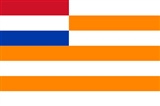
The Republic of the Orange Free State (; ) was an independent Boer republic in southern Africa
Africa

Africa is the world's second-largest and second most-populous continent, after Asia. At about 30.2 million km? including adjacent islands, it covers 6% of the Earth's total surface area and 20.4% of the total land area....
 during the second half of the 19th century, and later a British colony
Orange River Colony

The Orange River Colony was the United Kingdom colony created after this nation first occupied and then annexed the independent Orange Free State in the Second Boer War....
 and a province
Provinces of South Africa

South Africa is currently divided into nine provinces. On the eve of the South African general election, 1994, South Africa's former homelands, also known as Bantustans, were reintegrated and the four existing provinces were divided into nine....
 of the Union of South Africa
Union of South Africa

The Union of South Africa is the historic predecessor to the present-day state of the Republic of South Africa. It came into being on 31 May 1910, with the previously separate colonies of the Cape Colony, Colony of Natal, Transvaal and the Orange Free State, plus the German South-West Africa colony in 1915, becoming Provinces in the Union of...
. It is the historical precursor to the present-day Free State
Free State

The Free State is a Provinces of South Africa of South Africa. The name is a popular contraction of the previous name the Orange Free State. Its capital is Bloemfontein which is also South Africa's judicial capital....
 province. Extending between the Orange
Orange River

The Orange River , Gariep River, Groote River or Senqu River is the longest river in South Africa. It rises in the Drakensberg mountains in Lesotho, flowing westwards through South Africa to the Atlantic Ocean....
 and Vaal
Vaal River

The Vaal River is the largest tributary of the Orange River in South Africa. The river has its source in the Drakensberg mountains in Mpumalanga, east of Johannesburg and about 30 km north of Clarens, Free State in the Free State at a source known as the Ash River....
 rivers, its borders were determined by the United Kingdom
United Kingdom

The United Kingdom of Great Britain and Northern Ireland, commonly known as the United Kingdom , the UK or Britain,is a sovereign state located off the northwestern coast of continental Europe....
 in 1848 when the region was proclaimed as the Orange River Sovereignty
Orange River Sovereignty

The Orange River Sovereignty was a short-lived political entity between the Orange River and Vaal rivers in southern Africa. In 1854, it became the Orange Free State, and is now the Free State province of South Africa....
, with a seat of a British Resident in Bloemfontein
Bloemfontein

Bloemfontein The city is situated on dry grassland at , at an altitude of 1,395 metres above sea level. The city is home to 369,568 residents, while the Mangaung Local Municipality has a population of 645,455....
.

In the northern part of the territory a Voortrekker Republic was established at Winburg
Winburg

Winburg is a small mixed farming town in the Free State province of South Africa.It is the oldest proclaimed town in the Orange Free State, South Africa and thus along with Griquatown, one of the oldest settlements in South Africa located north of the Orange River....
 in 1837.


Discussion
Ask a question about 'Orange Free State'
Start a new discussion about 'Orange Free State'
Answer questions from other users
Full Discussion Forum


Encyclopedia


The Republic of the Orange Free State (; ) was an independent Boer republic in southern Africa
Africa

Africa is the world's second-largest and second most-populous continent, after Asia. At about 30.2 million km? including adjacent islands, it covers 6% of the Earth's total surface area and 20.4% of the total land area....
 during the second half of the 19th century, and later a British colony
Orange River Colony

The Orange River Colony was the United Kingdom colony created after this nation first occupied and then annexed the independent Orange Free State in the Second Boer War....
 and a province
Provinces of South Africa

South Africa is currently divided into nine provinces. On the eve of the South African general election, 1994, South Africa's former homelands, also known as Bantustans, were reintegrated and the four existing provinces were divided into nine....
 of the Union of South Africa
Union of South Africa

The Union of South Africa is the historic predecessor to the present-day state of the Republic of South Africa. It came into being on 31 May 1910, with the previously separate colonies of the Cape Colony, Colony of Natal, Transvaal and the Orange Free State, plus the German South-West Africa colony in 1915, becoming Provinces in the Union of...
. It is the historical precursor to the present-day Free State
Free State

The Free State is a Provinces of South Africa of South Africa. The name is a popular contraction of the previous name the Orange Free State. Its capital is Bloemfontein which is also South Africa's judicial capital....
 province. Extending between the Orange
Orange River

The Orange River , Gariep River, Groote River or Senqu River is the longest river in South Africa. It rises in the Drakensberg mountains in Lesotho, flowing westwards through South Africa to the Atlantic Ocean....
 and Vaal
Vaal River

The Vaal River is the largest tributary of the Orange River in South Africa. The river has its source in the Drakensberg mountains in Mpumalanga, east of Johannesburg and about 30 km north of Clarens, Free State in the Free State at a source known as the Ash River....
 rivers, its borders were determined by the United Kingdom
United Kingdom

The United Kingdom of Great Britain and Northern Ireland, commonly known as the United Kingdom , the UK or Britain,is a sovereign state located off the northwestern coast of continental Europe....
 in 1848 when the region was proclaimed as the Orange River Sovereignty
Orange River Sovereignty

The Orange River Sovereignty was a short-lived political entity between the Orange River and Vaal rivers in southern Africa. In 1854, it became the Orange Free State, and is now the Free State province of South Africa....
, with a seat of a British Resident in Bloemfontein
Bloemfontein

Bloemfontein The city is situated on dry grassland at , at an altitude of 1,395 metres above sea level. The city is home to 369,568 residents, while the Mangaung Local Municipality has a population of 645,455....
.

In the northern part of the territory a Voortrekker Republic was established at Winburg
Winburg

Winburg is a small mixed farming town in the Free State province of South Africa.It is the oldest proclaimed town in the Orange Free State, South Africa and thus along with Griquatown, one of the oldest settlements in South Africa located north of the Orange River....
 in 1837. This state merged with the Republic of Potchefstroom which later formed part of the South African Republic
South African Republic

The South African Republic , often informally known as the Transvaal Republic, was an independent Boer-ruled country in Southern Africa during the second half of the 19th century....
 (Transvaal
Transvaal

File:Flag of Transvaal.svgFile:Transvaal map.pngFile:Spelterini Transvaal.jpgThe Transvaal is the name of an area of northern South Africa....
).

Following the granting of independence to the South African Republic
South African Republic

The South African Republic , often informally known as the Transvaal Republic, was an independent Boer-ruled country in Southern Africa during the second half of the 19th century....
, the British recognized the independence of the Orange River Sovereignty
Orange River Sovereignty

The Orange River Sovereignty was a short-lived political entity between the Orange River and Vaal rivers in southern Africa. In 1854, it became the Orange Free State, and is now the Free State province of South Africa....
 on 17 February, 1854 and the country officially became independent as the Orange Free State
Orange Free State

The Republic of the Orange Free State was an independent Boere-Afrikaner republic in southern Africa during the second half of the 19th century, and later a British Orange River Colony and a Provinces of South Africa of the Union of South Africa....
 on 23 February, 1854, with the signing of the Orange River Convention
Orange River Convention

The Orange River Convention was a Treaty whereby Great Britain formally recognised the independence of the Boers in the area between the Orange River and Vaal River rivers, which had previously been known as the Orange River Sovereignty....
. The new republic incorporated both the Orange River Sovereignty
Orange River Sovereignty

The Orange River Sovereignty was a short-lived political entity between the Orange River and Vaal rivers in southern Africa. In 1854, it became the Orange Free State, and is now the Free State province of South Africa....
 and the traditions of the Winburg-Potchefstroom Republic.

Although the Orange Free State
Orange Free State

The Republic of the Orange Free State was an independent Boere-Afrikaner republic in southern Africa during the second half of the 19th century, and later a British Orange River Colony and a Provinces of South Africa of the Union of South Africa....
 developed into a politically and economically successful republic
Republic

A republic is a state or country that is not led by a hereditary monarch but in which the people have an impact on its government. The word originates from the Latin term res publica....
, it experienced chronic conflict with the British (see the Boer Wars) until it was finally annexed as the Orange River Colony
Orange River Colony

The Orange River Colony was the United Kingdom colony created after this nation first occupied and then annexed the independent Orange Free State in the Second Boer War....
 in 1900. It ceased to exist as an independent Boer republic on 31 May 1902 with the signing of the Treaty of Vereeniging
Treaty of Vereeniging

The Treaty of Vereeniging was the peace treaty, signed on 31 May 1902, that ended the South African War between the alliance of the South African Republic and the Orange Free State and the British Empire on the other....
 at the conclusion of the Second Anglo-Boer War. It joined the Union of South Africa
Union of South Africa

The Union of South Africa is the historic predecessor to the present-day state of the Republic of South Africa. It came into being on 31 May 1910, with the previously separate colonies of the Cape Colony, Colony of Natal, Transvaal and the Orange Free State, plus the German South-West Africa colony in 1915, becoming Provinces in the Union of...
 in 1910 (which later became the Republic of South Africa
South Africa

The Republic of South Africa, also known by Official names of South Africa, is a country located at the southern tip of the continent of Africa....
 in 1961) as a province under its former name, along with the Cape
Cape Province

The Cape of Good Hope Province was a province in the Union of South Africa and subsequently the Republic of South Africa. It encompassed the old Cape Colony, and had Cape Town as its capital....
, Natal
Natal Province

Natal, meaning Christmas in Portuguese language, was a name given by the Portuguese people Vasco da Gama to the place after he had arrived on ship on the 25th of December and found the African Royal King Menzi Xaba and his people celebrating the birth of a king, Nkayishana, Menzi's son....
, and the Transvaal
Transvaal

File:Flag of Transvaal.svgFile:Transvaal map.pngFile:Spelterini Transvaal.jpgThe Transvaal is the name of an area of northern South Africa....
.

The republic's name derives partly from the Orange River
Orange River

The Orange River , Gariep River, Groote River or Senqu River is the longest river in South Africa. It rises in the Drakensberg mountains in Lesotho, flowing westwards through South Africa to the Atlantic Ocean....
 (just as the Transvaal Republic was named after the Vaal River
Vaal River

The Vaal River is the largest tributary of the Orange River in South Africa. The river has its source in the Drakensberg mountains in Mpumalanga, east of Johannesburg and about 30 km north of Clarens, Free State in the Free State at a source known as the Ash River....
), but both names were bestowed by the Dutch
Netherlands

The Netherlands is a country that is part of the Kingdom of the Netherlands. It is a parliamentary democratic constitutional monarchy. The Netherlands is located in North-West Europe, and bordered by the North Sea to the north and west, Belgium to the south, and Germany to the east....
 Protestant settlers in honour of the Dutch ruling royal family, the House of Orange
House of Orange-Nassau

The House of Orange-Nassau , a branch of the European House of Nassau, has played a central role in the political life of the Netherlands — and at times in Europe — since William I of Orange organized the Dutch revolt against Spain rule, which after the Eighty Years' War led to an independent Dutch state....
.

History


The country north of the Orange river was first visited by Europeans towards the close of the 18th century. At that time it was somewhat thinly peopled. The majority of the inhabitants appear to have been members of the Bechuana, but in the valleys of the Orange and Vaal were Korannas and other Khoekhoes, and in the Drakensberg
Drakensberg

The Drakensberg is the highest mountain range in Southern Africa, rising to in height. In Zulu language, it is referred to as uKhahlamba , and in Sesotho as Maluti ....
 and on the western border lived numbers of Bushmen
Bushmen

The Bushmen, San, Sho, Basarwa, Kung, or Khwe are indigenous people of southern Africa that spans most areas of South Africa, Zimbabwe, Lesotho, Mozambique, Swaziland, Botswana, Namibia, and Angola....
. Early in the 19th century Griqua
Griqua

The Griqua are a subgroup of South Africa's heterogeneous and multiracial Coloured people.The Griqua are often considered to be a racially and culturally mixed people whose origin goes back to the intermarriages or sexual relations between European colonists in the Cape Colony and the Khoikhoi already living there in the seventeenth and ei...
s established themselves north of the Orange. Between 1817 and 1831, the country was devastated by the chief Mzilikazi
Mzilikazi

Mzilikazi , also sometimes called Mosilikatze, was a Southern African king who founded the Matabele kingdom , Matabeleland, in what became Rhodesia and is now Zimbabwe....
 and his Zulus, and large areas were depopulated. Up to this time the few Europeans who had crossed the Orange had been chiefly hunters or missionaries.

Boer

In 1824 farmers of Dutch, French Huguenot and German descent called Trekboer
Trekboer

The Trekboere were nomadic pastoral descendants of Dutch people settlers of the Cape Colony, Flemish people settlers, French people Huguenot refugees, German people Protestants, and smaller numbers of Danish people, and Scottish people as well as Indians, Malays and Khoi....
s (later shortened to Boers) from Cape Colony who were seeking pasture for their flocks settled in the country. They were followed in 1836 by the first parties of the Great Trek
Great Trek

The Great Trek was an eastward and north-eastward migration during the 1830s and 1840s of the Boere-Afrikaner , who descended from settlers from western mainland Europe, most notably from the Netherlands....
. These emigrants left Cape Colony
Cape Colony

The Cape Colony, part of modern South Africa, was established by the Dutch East India Company in 1652, with the founding of Cape Town. It was subsequently occupied by the United Kingdom of Great Britain and Ireland in 1795 when the Netherlands were occupied by French Revolution, so that the French revolutionaries could not take possession of...
 from various motives, but all were animated by the desire to escape from British sovereignty. The leader of the first large party of emigrants was A. H. Potgieter, who concluded an agreement with Makwana, the chief of the Bataung
Bataung

Bataung is one of the three main Basotho tribes, or clans, who speak Sesotho language, the other two being Batlokwa and Bakoena."Tau" is a Sesotho language word meaning "lion", and this animal is their totem....
 tribe of Bechuanas, ceding to the farmers the country between the Vet and Vaal
Vaal River

The Vaal River is the largest tributary of the Orange River in South Africa. The river has its source in the Drakensberg mountains in Mpumalanga, east of Johannesburg and about 30 km north of Clarens, Free State in the Free State at a source known as the Ash River....
 rivers. The emigrants soon came into collision with Mzilikazi
Mzilikazi

Mzilikazi , also sometimes called Mosilikatze, was a Southern African king who founded the Matabele kingdom , Matabeleland, in what became Rhodesia and is now Zimbabwe....
, raiding parties of Zulus attacking Boer hunters who had crossed the Vaal without seeking permission from that chieftain. Reprisals followed, and in November 1837 Mzilikazi was decisively defeated by the Boers and thereupon fled northward.

In the meantime another party of emigrants had settled at Thaba'nchu
Thaba Nchu

Thaba Nchu is a town in Free State, South Africa, located 60km east of Bloemfontein. Its population is comprised largely of Tswana and Sotho people people....
, where the Wesleyans had a mission station for the Barolong
Barolong

Barolong is a clan name for the Batswana living in North West in South Africa. There are different clans in the Batswana clans. Barolong , Bahurutshe , Bangwatu , Bakgatlha and Bakwena etc....
. The emigrants were treated with great kindness by Moroko, the chief of that tribe, and with the Barolong the Boers maintained uniformly friendly relations. In December 1836 the emigrants beyond the Orange drew up in general assembly an elementary republican form of government. After the defeat of Mzilikazi the town of Winburg
Winburg

Winburg is a small mixed farming town in the Free State province of South Africa.It is the oldest proclaimed town in the Orange Free State, South Africa and thus along with Griquatown, one of the oldest settlements in South Africa located north of the Orange River....
 (so named by the Boers in commemoration of their victory) was founded, a volksraad
Volksraad

South AfricaThe Volksraad was the parliament of the former South African Republic , which existed from 1857 to 1902 in part of what is now the Republic of South Africa....
 elected, and Piet Retief
Piet Retief

Pieter Mauritz Retief , was a South African Boer leader. Settling in the Cape Colony's Xhosa Wars frontier region in 1814, he assumed command of punitive expeditions and acted as spokesperson for the frontier farmers....
, one of the ablest of the Voortrekkers, chosen "governor and commandant-general." The emigrants already numbered some 500 men, besides women and children and many servants. Dissensions speedily arose among the emigrants, whose numbers were constantly added to, and Retief, Potgieter and other leaders crossed the Drakensberg
Drakensberg

The Drakensberg is the highest mountain range in Southern Africa, rising to in height. In Zulu language, it is referred to as uKhahlamba , and in Sesotho as Maluti ....
 and entered Natal. Those that remained were divided into several parties intensely jealous of one another.

British rule

Meanwhile, a new power had arisen along the upper Orange and in the valley of the Caledon
Caledon River

The Caledon River, or Mohokare in Sesotho, is located in south-east Africa, rising in the Drakensberg Mountains in Lesotho. It then flows south-west, marking the border with South Africa before entering South Africa's Free State province....
. Moshesh, a Bechuana chief, had welded together a number of scattered and broken clans which had sought refuge in that mountainous region, and had formed of them the Basuto nation. In 1833 he had welcomed as workers among his people a band of French Protestant missionaries, and as the Boer immigrants began to settle in his neighborhood he decided to seek support from the British at the Cape. At that time the British government was not prepared to exercise effective control over the emigrants. Acting upon the advice of Dr John Philip, the superintendent of the London Missionary Society's stations in South Africa, a treaty was concluded in 1843 with Moshesh, placing him under British protection. A similar treaty was made with the Griqua chief, Adam Kok III
Adam Kok III

Adam Kok III was a leader of the Griqua people in South Africa .The son of Adam Kok II, he grew up and was educated in the town of Philippolis in Transorangia ....
. By these treaties, which recognised native sovereignty over large areas on which Boer farmers were settled, it was sought to keep a check on the emigrants and to protect both the natives and Cape Colony. Their effect was to precipitate collisions between all three parties.

The year in which the treaty with Moshesh was made several large parties of Boers recrossed the Drakensberg into the country north of the Orange, refusing to remain in Natal when it became a British colony. During their stay there they had inflicted a severe defeat on the Zulus
Battle of Blood River

The Battle of Blood River on 16 December 1838 was fought between 470 Voortrekkers, led by Andries Pretorius, and an estimated 10,000 Zulu attackers on the banks of the Ncome River at in what is today KwaZulu-Natal, South Africa....
 under Dingaan
Dingane

Dingane kaSenzangakhona Zulu ?commonly referred to as Dingane or Dingaan?was a Zulu chief who became monarch in 1828, setting up his kraal Ngungunhlovu at ....
 (December 1838), which, following on the flight of Mzilikazi, greatly strengthened the position of Moshesh, whose power became a menace to that of the emigrant farmers. Trouble first arose, however, between the Boers and the Griquas in the Philippolis district. Many of the white farmers in this district, unlike their fellows dwelling farther north, were willing to accept British rule, and this fact induced Mr Justice Menzies, one of the judges of Cape Colony then on circuit at Colesberg, to cross the Orange and proclaim (October 1842) the country British territory, a proclamation disallowed by the governor, Sir George Napier, who, nevertheless, maintained that the emigrant farmers were still British subjects. It was after this episode that the treaties with Adam Kok and Moshesh were negotiated.

The treaties gave great offence to the Boers, who refused to acknowledge the sovereignty of the native chiefs. The majority of the white farmers in Kok's territory sent a deputation to the British commissioner in Natal, Henry Cloete, asking for equal treatment with the Griquas, and expressing the desire to come under British protection under such terms. Shortly afterwards hostilities between the farmers and the Griquas broke out. British troops were moved up to support the Griquas, and after a skirmish at Zwartkopjes (May 2, 1845) a new arrangement was made between Kok and Sir Peregrine Maitland, then governor of Cape Colony, virtually placing the administration of his territory in the hands of a British resident, a post filled in 1846 by Captain H. D. Warden. The place chosen by Captain (afterwards Major) Warden as the seat of his court was known as Bloemfontein, and it subsequently became the capital of the whole country.

Boer governance

The volksraad at Winburg during this period continued to claim jurisdiction over the Boers living between the Orange and the Vaal and was in federation with the volksraad at Potchefstroom, which made a similar claim upon the Great Boers living north of the Vaal. In 1846 Major Warden occupied Winburg for a short time, and the relations between the Boers and the British were in a continual state of tension. Many of the farmers deserted Winburg for the Transvaal. Sir Harry Smith became governor of the Cape at the end of 1847. He recognised the failure of the attempt to govern on the lines of the treaties with the Griquas and Basutos, and on the 3rd of February 1848 he issued a proclamation declaring British sovereignty over the country between the Orange and the Vaal eastward to the Drakensberg. The justness of Sir Harry Smith's measures and his popularity among the Boers gained for his policy considerable support, but the republican party, at whose head was Andries Pretorius
Andries Pretorius

Andries Wilhelmus Jacobus Pretorius was a leader of the Boers who was instrumental in the creation of the Transvaal Republic as well as the earlier but short-lived Natalia Republic in present-day South Africa....
, did not submit without a struggle. They were, however, defeated by Sir Harry Smith in an engagement at Boomplaats (August 29, 1848). Thereupon Pretorius, with those most bitterly opposed to British rule, retreated across the Vaal.

Orange River Sovereignty

In March 1849 Major Warden was succeeded at Bloemfontein as civil commissioner by Mr C. U. Stuart, but he remained British resident until July 1852. A nominated legislative council was created, a high court established and other steps taken for the orderly government of the country, which was officially styled the Orange River Sovereignty
Orange River Sovereignty

The Orange River Sovereignty was a short-lived political entity between the Orange River and Vaal rivers in southern Africa. In 1854, it became the Orange Free State, and is now the Free State province of South Africa....
. In October 1849 Moshoeshoe
Moshoeshoe

Moshoeshoe may refer to:* Moshoeshoe I, c.1786-1870; paramount chief of southern Sotho; founder of Basuto kingdom * Moshoeshoe II, 1938-1996, king of Lesotho...
 was induced to sign a new arrangement considerably curtailing the boundaries of the Basuto reserve. The frontier towards the Sovereignty was thereafter known as the Warden line. A little later the reserves of other chieftains were precisely defined. The British Resident had, however, no force sufficient to maintain his authority, and Moshoeshoe and all the neighboring clans became involved in hostilities with one another and with the Europeans. In 1851 Moshoeshoe joined the republican party in the Sovereignty in an invitation to Pretorius to recross the Vaal. The intervention of Pretorius resulted in the Sand River Convention of 1852, which acknowledged the independence of the Transvaal
Transvaal

File:Flag of Transvaal.svgFile:Transvaal map.pngFile:Spelterini Transvaal.jpgThe Transvaal is the name of an area of northern South Africa....
 but left the status of the Sovereignty untouched. The British government (the first Russell administration), which had reluctantly agreed to the annexation of the country, had, however, already repented its decision and had resolved to abandon the Sovereignty. Lord Grey
George Grey

George Grey may refer to:*Sir George Grey, 2nd Baronet , British politician*George Grey, 2nd Earl of Kent*George Grey , Governor of Cape Colony, South Australia and New Zealand...
, Colonial Secretary, in a dispatch to Sir Harry Smith dated 21 October 1851, declared, "The ultimate abandonment of the Orange Sovereignty should be a settled point in our policy." A meeting of representatives of all European inhabitants of the Sovereignty, elected on manhood suffrage, held at Bloemfontein in June 1852, nevertheless declared in favour of the retention of British rule. At the close of that year a settlement was at length concluded with Moshoeshoe, which left, perhaps, that chief in a stronger position than he had hitherto been. There had been ministerial changes in England and the ministry then in power — that of Lord Aberdeen — adhered to the determination to withdraw from the Sovereignty. Sir George Russell Clerk was sent out in 1853 as special commissioner "for the settling and adjusting of the affairs" of the Sovereignty, and in August of that year he summoned a meeting of delegates to determine upon a form of self-government. At that time there were some 15,000 Europeans in the country, many of them recent emigrants from Cape Colony. There were among them numbers of farmers and tradesmen of British blood. The majority of the whites still wished for the continuance of British rule provided that it was effective and the country guarded against its enemies. The representations of their delegates, who drew up a proposed constitution retaining British control, were unavailing. Sir George Clerk announced that, as the elected delegates were unwilling to take steps to form an independent government, he would enter into negotiations with other persons. " And then," writes Dr Theal, "was seen forced the strange spectacle of an English commissioner addressing men who wished to be free of British control as the friendly and well-disposed inhabitants, while for those who desired to remain British subjects and who claimed that protection to which they believed themselves entitled he had no sympathising word." While the elected delegates sent two members to England to try and induce the government to alter their decision Sir George Clerk speedily came to terms with a committee formed by the republican party and presided over by Mr J. H. Hoffman. Even before this committee met a royal proclamation had been signed (30 January 1854) "abandoning and renouncing all dominion" in the Sovereignty.

Orange Free State

A convention allowing the independence of the country was signed at Bloemfontein on the 23rd of February by Sir George Clerk and the republican committee, and in March the Boer government assumed office and the republican flag was hoisted. Five days later the representatives of the elected delegates had an interview in London with the colonial secretary, the duke of Newcastle, who informed them that it was now too late to discuss the question of the retention of British rule. The colonial secretary added that it was impossible for England to supply troops to constantly advancing outposts, "especially as Cape Town and the port of Table Bay were all she really required in South Africa." In withdrawing from the Sovereignty the British government declared that it had "no alliance with any native chief or tribes to the northward of the Orange River with the exception of the Griqua chief Captain Adam Kok." Kok was not formidable in a military sense, nor could he prevent individual Griquas from alienating their lands. Eventually, in 1861, he sold his sovereign rights to the Free State for 4 000 and removed with his followers to the district now known as Griqualand East. (F. R. C.)

On the abandonment of British rule representatives of the people were elected and met at Bloemfontein on 28 March 1854, and between then and 18 April were engaged in framing a constitution. The country was declared a republic and named the Orange Free State. All persons of European blood possessing a six months' residential qualification were to be granted full burgher rights. The sole legislative authority was vested in a single popularly elected chamber styled the volksraad. Executive authority was entrusted to a president elected by the burghers from a list submitted by the volksraad. The president was to be assisted by an executive council, was to hold office for five years and was eligible for re-election. The constitution was subsequently modified but remained of a liberal character. A residence of five years in the country was required before aliens could become naturalised. The first president was Mr Hoffman, but he was accused of being too complaisant towards Moshesh and resigned, being succeeded in 1855 by Mr J. N. Boshof, one of the voortrekkers, who had previously taken an active part in the affairs of Natal.

Conflict with Transvaal

Distracted among themselves, with the formidable Basuto power on their southern and eastern flank, the troubles of the infant state were speedily added to by the action of the Transvaal Boers. Marthinus Pretorius, who had succeeded to his father's position as commandant general of Potchefstroom, wished to bring about a confederation between the two Boer states. Peaceful overtures from Pretorius were declined, and some of his partisans in the Free State were accused of treason (February 1857). Thereupon Pretorius, aided by Paul Kruger
Paul Kruger

Stephanus Johannes Paulus Kruger , better known as Paul Kruger and affectionately known as Oom Paul was president of the South African Republic ....
, conducted a raid into the Free State territory. On learning of the invasion President Boshof proclaimed martial law throughout the country. The majority of the burghers rallied to his support, and on the 25th of May the two opposing forces faced one another on the banks of the Rhenoster. President Boshof not only got together some 800 men within the Free State, but he received offers of support from Commandant Schoeman, the Transvaal leader in the Zoutpansberg district and from Commandant Joubert of Lydenburg. Pretorius and Kruger, realising that they would have to sustain attack from both north and south, abandoned their enterprise. Their force, too, only amounted to some three hundred. Kruger came to Boshof's camp with a flag of truce, the "army" of Pretorius returned north and on the 2nd of June a treaty of peace was signed, each state acknowledging the absolute independence of the other.

The conduct of Pretorius was stigmatised as "blameworthy." Several of the malcontents in the Free State who had joined Pretorius permanently settled in the Transvaal, and other Free Staters who had been guilty of high treason were arrested and punished. This experience did not, however, heal the party strife within the Free State. In consequence of the dissensions among the burghers President Boshof tendered his resignation in February 1858, but was for a time induced to remain in office. The difficulties of the state were at that time (1858) so great that the volksraad in December of that year passed a resolution in favor of confederation with the Cape Colony. This proposition received the strong support of Sir George Grey, then governor of Cape Colony, but his view did not commend itself to the British government, and was not adopted.

In the same year the disputes between the Basutos and the Boers culminated in open war. Both parties laid claims to land beyond the Warden line, and each party had taken possession of what it could, the Basutos being also expert cattle-lifters. In the war the advantage rested with the Basutos; thereupon the Free State appealed to Sir George Grey, who induced Moshesh to come to terms. On the 15th of October 1858 a treaty was signed defining the new boundary. The peace was nominal only, while the burghers were also involved in disputes with other tribes. Mr. Boshof again tendered his resignation (February 1859) and retired to Natal. Many of the burghers would have at this time welcomed union with the Transvaal, but learning from Sir George Grey that such a union would nullify the conventions of 1852 and 1854 and necessitate the reconsideration of Great Britain's policy towards the native tribes north of the Orange and Vaal rivers, the project dropped. Commandant Pretorius was, however, elected president in place of Mr Boshof. Though unable to effect a durable peace with the Basutos, or to realise his ambition for the creation of one powerful Boer republic, Pretorius saw the Free State begin to grow in strength. The fertile district of Bethulie as well as Adam Kok's territory was acquired, and there was a considerable increase in the white population. The burghers generally, however, had not learned the need of discipline, of confidence in their elected rulers, or that to carry on a government taxes must be levied. Wearied like Mr Boshof of a thankless task, and more interested in affairs in the Transvaal than in those of the Free State, Pretorius resigned the presidency in 1863, and after an interval of seven months Mr (afterwards Sir) John Henry Brand, an advocate at the Cape bar, was elected president. He assumed office in February 1864. His election proved a turning-point in the history of the country, which, under his beneficent and tactful guidance, became peaceful and prosperous and, in some respects, a model state. But before peace could be established an end had to be made of the difficulties with the Basutos. Moshesh continued to menace the Free State border. Attempts at accommodation made by the governor of Cape Colony (Sir Philip Wodehouse) failed, and war between the Free State and Moshesh was renewed in 1865. The Boers gained considerable successes, and this induced Moshesh to sue for peace. The terms exacted were, however, too harsh for a nation yet unbroken to accept permanently. A treaty was signed at Thaba Bosigo in April 1866, but war again broke out in 1867, and the Free State attracted to its side a large number of adventurers from all parts of South Africa. The burghers thus reinforced gained at length a decisive victory over their great antagonist, every stronghold in Basutoland save Thaba Bosigo being stormed. Moshesh now turned in earnest to Sir Philip Wodehouse for preservation. His prayer was heeded, and in 1868 he and his country were taken under British protection. Thus the thirty years' strife between the Basutos and the Boers came to an end. The intervention of the governor of Cape Colony led to the of the conclusion of the treaty of Aliwal North (Feb.12,1869), which defined the borders between the Orange Free State and Basutoland. The country lying to the north of the Orange river and west of the Caledon, formerly a part of Basutoland, was ceded to the Free State (see Basutoland). This country, some hundred miles long and nearly thirty wide, is a fertile stretch of agricultural land on the lower slopes of the Maluti mountains. It lies at an altitude of nearly , and is well watered by the Caledon and its tributaries. It has ever since been known as the Conquered Territory, and it forms today one of the richest corn-growing districts in South Africa. A year after the addition of the Conquered Territory to the state another boundary dispute was settled by the arbitration of Mr Keate, lieutenant-governor of Natal. By the Sand River Convention, independence had been granted to the Boers living "north of the Vaal", and the dispute turned on the question as to what stream constituted the true upper course of that river. Mr Keate decided (Feb. 19, 1870) against the Free State view and fixed the Klip River as the dividing line, the Transvaal thus securing the Wakkerstroom and adjacent districts....

Diamonds discovered

The Basutoland difficulties were no sooner arranged than the Free Staters found themselves confronted with a serious difficulty on their western border. In the years 1870–1871 a large number of diggers had settled on the diamond fields near the junction of the Vaal and Orange rivers, which were situated in part on land claimed by the Fi Griqua
Griqua

The Griqua are a subgroup of South Africa's heterogeneous and multiracial Coloured people.The Griqua are often considered to be a racially and culturally mixed people whose origin goes back to the intermarriages or sexual relations between European colonists in the Cape Colony and the Khoikhoi already living there in the seventeenth and ei...
 chief Nicholas Waterboer and by the Free State.

The Free State established a temporary government over the diamond fields, but the administration of this body was satisfactory neither to the Free State nor to the diggers. At this juncture Waterboer offered to place the territory under the administration of Queen Victoria. The offer was accepted, and on October 27, 1871 the district, together with some adjacent territory to which the Transvaal had laid claim, was proclaimed, under the name of Griqualand West
Griqualand West

Griqualand West is an area of central South Africa with an area of 40,000 km? that now forms part of the Northern Cape Province, which was inhabited by the Griqua people....
, British territory. Waterboer's claims were based on the treaty concluded by his father with the British in 1834, and on various arrangements with the Kok chiefs; the Free State based its claim on its purchase of Adam Kok's sovereign rights and on long occupation. The difference between proprietorship and sovereignty was confused or ignored. That Waterboer exercised no authority in the disputed district was admitted. When the British annexation took place a party in the volksraad wished to go to war with Britain, but the wiser counsels of President Brand prevailed. The Free State, however, did not abandon its claims. The matter involved no little irritation between the parties concerned until July 1876. It was then disposed of by the 4th earl of Carnarvon, at that time secretary of state for the colonies, who granted to the Free State payment "in full satisfaction of all claims which it considers it may possess to Griqualand West."

Lord Carnarvon declined to entertain the proposal made by Mr Brand that the territory should be given up by Great Britain. One thing at least is certain with regard to the diamond fields — they were the means of restoring the credit and prosperity of the Free State.

In the opinion, moreover, of Dr Theal, who has written the history of the Boer Republics and has been a consistent supporter of the Boers, the annexation of Griqualand West was probably in the best interests of the Free State. "There was," he states, "no alternative from British sovereignty other than an independent diamond field republic." At this time, largely owing to the exhausting struggle with the Basutos, the Free State Boers, like their Transvaal neighbors, had drifted into financial straits. A paper currency had been instituted, and the notes, known as "bluebacks", soon dropped to less than half their nominal value. Commerce was largely carried on by barter, and many cases of bankruptcy occurred in the state. But as British annexation in 1877 saved the Transvaal from bankruptcy, so did the influx of British and other immigrants to the diamond fields, in the early 'seventies, restore public credit and individual prosperity to the Boers of the Free State. The diamond fields offered a ready market for stock and other agricultural produce. Money flowed into the pockets of the farmers. Public credit was restored. " Bluebacks " recovered par value, and were called in and redeemed by the government. Valuable diamond mines were also discovered within the Free State, of which the one at Jagersfontein is the richest. Capital from Kimberley and London was soon provided with which to work them.

Peaceful relations with neighbours

The relations between the British and the Free State, after the question of the boundary was once settled, remained perfectly amicable down to the outbreak of the Second Boer War
Second Boer War

The Second Boer War , commonly referred to as The Boer War and also known as the South African War , the Anglo-Boer War and in Afrikaans as the Boereoorlog or Tweede Vryheidsoorlog , was fought from 11 October 1899 until 31 May 1902, between the British Empire and the two independent Boer republics of the Orange Fre...
 in 1899. From 1870 onward the history of the state was one of quiet, steady progress. At the time of the first annexation of the Transvaal the Free State declined Lord Carnarvon's invitation to federate with the other South African communities. In 1880, when a rising of the Boers in the Transvaal was threatening, President Brand showed every desire to avert the conflict. He suggested that Sir Henry de Villiers, Chief Justice of Cape Colony, should be sent into the Transvaal to endeavour to gauge the true state of affairs in that country. This suggestion was not acted upon, but when war broke out in the Transvaal Brand declined to take any part in the struggle. In spite of the neutral attitude taken by their government a number of the Free State Boers, living in the northern part of the country, went to the Transvaal and joined their brethren then in arms against the British. This fact was not allowed to influence the friendly relations between the Free State and Great Britain. In 1888 Sir John Brand died. In him the Boers, not only in the Free State but in the whole of South Africa, lost one of the most enlightened and most upright rulers and leaders they have ever had. He realised the disinterested aims pursued by the British government, without always approving its methods. Though he had thrown the weight of his influence against Lord Carnarvon's federation scheme Brand disapproved racial rivalries.

During the period of Brand's presidency a great change, both political and economic, had come over South Africa. The renewal of the policy of British expansion had been answered by the formation of the Afrikander Bond, which represented the racial aspirations of the Dutch-speaking
Dutch language

Dutch is a West Germanic languages spoken by over 22 million people as a first language, and about 5 million people as a second language."1% of the EU population claims to speak Dutch well enough in order to have a conversation." Outside the European Union the number of second language speakers of Dutch is very small. Most native...
 people, and had active branches in the Free State. This alteration in the political outlook was accompanied, and in part occasioned, by economic changes of great significance. The development of the diamond mines and of the gold and coal industries — of which Brand saw the beginning — had far-reaching consequences, bringing the Boer republics into vital contact with the new industrial era. The Free Staters, under Brand's rule, had shown considerable ability to adapt their policy to meet the altered situation. In 1889 an agreement was come to between the Free State and the Cape Colony government, whereby the latter was empowered to extend, at its own cost, its railway system to Bloemfontein. The Free State retained the right to purchase this extension at cost, a right it exercised after the Jameson Raid
Jameson Raid

The Jameson Raid was a raid on Paul Kruger's South African Republic carried out by a British colonial statesman Leander Starr Jameson and his Rhodesian and Bechuanaland policemen over the New Year weekend of 1895-96....
.

Having accepted the assistance of the Cape government in constructing its railway, the state also in 1889 entered into a Customs Union Convention with them. The convention was the outcome of a conference held at Cape Town in 1888, at which delegates from Natal, the Free State and the Colony attended. Natal at this time had not seen its way to entering the Customs Union, but did so at a later date.

Renewal of hostilities

In January 1889 F. W. Reitz
Francis William Reitz

Francis William Reitz, Jr. was a South African lawyer, politician, statesman, publicist and poet, member of parliament of the Cape Colony, Chief Justice and fifth Presidents of the Orange Free State of the Orange Free State, State Secretary of the South African Republic of the South African Republic at the time of the Second Boer War, and th...
 was elected president of the Free State. His accession to the presidency marked the beginning of what turned out to be a new and disastrous line of policy in the external affairs of the country. Reitz
Francis William Reitz

Francis William Reitz, Jr. was a South African lawyer, politician, statesman, publicist and poet, member of parliament of the Cape Colony, Chief Justice and fifth Presidents of the Orange Free State of the Orange Free State, State Secretary of the South African Republic of the South African Republic at the time of the Second Boer War, and th...
 had no sooner got into office than a meeting was arranged with Paul Kruger
Paul Kruger

Stephanus Johannes Paulus Kruger , better known as Paul Kruger and affectionately known as Oom Paul was president of the South African Republic ....
, president of the South African Republic
South African Republic

The South African Republic , often informally known as the Transvaal Republic, was an independent Boer-ruled country in Southern Africa during the second half of the 19th century....
, at which various terms were discussed and decided upon regarding an agreement dealing with the railways, terms of a treaty of amity and commerce, and what was called a political treaty. The political treaty referred in general terms to a federal union between the South African Republic
South African Republic

The South African Republic , often informally known as the Transvaal Republic, was an independent Boer-ruled country in Southern Africa during the second half of the 19th century....
 and the Orange Free State
Orange Free State

The Republic of the Orange Free State was an independent Boere-Afrikaner republic in southern Africa during the second half of the 19th century, and later a British Orange River Colony and a Provinces of South Africa of the Union of South Africa....
, and bound each of them to help the other, whenever the independence of either should be assailed or threatened from without, unless the state so called upon for assistance should be able to show the injustice of the cause of quarrel in which the other state had engaged. While thus committed to a dangerous alliance with its northern neighbour no change was made in internal administration. The Free State, in fact, from its geographical position reaped the benefits without incurring the anxieties consequent on the settlement of a large Uitlander
Uitlander

Uitlander, Afrikaans for 'outlander', was the name given to foreign migrant workers during the initial exploitation of the Witwatersrand gold fields in the Transvaal....
 population on the Rand
Witwatersrand

The Witwatersrand is a low, sedimentary range of hills, at an elevation of 1700-1800 metres above sea-level, which runs in an east-west direction through Gauteng in South Africa....
. The state, however, became increasingly identified with the reactionary party in the South African Republic
South African Republic

The South African Republic , often informally known as the Transvaal Republic, was an independent Boer-ruled country in Southern Africa during the second half of the 19th century....
. In 1895 the Volksraad
Volksraad

South AfricaThe Volksraad was the parliament of the former South African Republic , which existed from 1857 to 1902 in part of what is now the Republic of South Africa....
 passed a resolution, in which they declared their readiness to entertain a proposition from the South African Republic
South African Republic

The South African Republic , often informally known as the Transvaal Republic, was an independent Boer-ruled country in Southern Africa during the second half of the 19th century....
 in favour of some form of federal union. In the same year Reitz
Francis William Reitz

Francis William Reitz, Jr. was a South African lawyer, politician, statesman, publicist and poet, member of parliament of the Cape Colony, Chief Justice and fifth Presidents of the Orange Free State of the Orange Free State, State Secretary of the South African Republic of the South African Republic at the time of the Second Boer War, and th...
 retired from the presidency of the Orange Free State
Orange Free State

The Republic of the Orange Free State was an independent Boere-Afrikaner republic in southern Africa during the second half of the 19th century, and later a British Orange River Colony and a Provinces of South Africa of the Union of South Africa....
, due to ill-health. He was succeeded in February 1896 by M. T. Steyn
Martinus Theunis Steyn

Martinus Theunis Steyn was a South African lawyer, politician, and statesman, sixth and last president of the independent Orange Free State from 1896 to 1902....
 (q.v.), a judge
Judge

A judge, or arbiter of justice, is a lead official who presides over a court of law,which is operated by the local, state, and/or federal government....
 of the High Court
High Court

High Court usually refers to the superior court of a country or state. In some countries it is the highest court and in others it is lower in the hierarchy of courts ....
. In 1896 President Steyn
Martinus Theunis Steyn

Martinus Theunis Steyn was a South African lawyer, politician, and statesman, sixth and last president of the independent Orange Free State from 1896 to 1902....
 visited Pretoria
Pretoria

Pretoria is a city located in the northern part of Gauteng Province, South Africa. It is one of the country's three Capital , serving as the Executive and de facto national capital; the others are Cape Town, the legislature capital, and Bloemfontein, the judicial capital....
, where he received an ovation as the probable future president of the two Republics. A further offensive and defensive alliance between the two Republics was then entered into, under which the Orange Free State
Orange Free State

The Republic of the Orange Free State was an independent Boere-Afrikaner republic in southern Africa during the second half of the 19th century, and later a British Orange River Colony and a Provinces of South Africa of the Union of South Africa....
 took up arms on the outbreak of hostilities between the British and the South African Republic
South African Republic

The South African Republic , often informally known as the Transvaal Republic, was an independent Boer-ruled country in Southern Africa during the second half of the 19th century....
 in October 1899.

In 1897 President Kruger
Paul Kruger

Stephanus Johannes Paulus Kruger , better known as Paul Kruger and affectionately known as Oom Paul was president of the South African Republic ....
, bent on still further cementing the union with the Orange Free State
Orange Free State

The Republic of the Orange Free State was an independent Boere-Afrikaner republic in southern Africa during the second half of the 19th century, and later a British Orange River Colony and a Provinces of South Africa of the Union of South Africa....
, had visited Bloemfontein
Bloemfontein

Bloemfontein The city is situated on dry grassland at , at an altitude of 1,395 metres above sea level. The city is home to 369,568 residents, while the Mangaung Local Municipality has a population of 645,455....
. It was on this occasion that Kruger
Paul Kruger

Stephanus Johannes Paulus Kruger , better known as Paul Kruger and affectionately known as Oom Paul was president of the South African Republic ....
, referring to the London Convention, spoke of Queen Victoria as a kwaaje Vrouw (angry woman), an expression which caused a good deal of offence in England
England

native_name =|conventional_long_name = England|common_name = England|image_flag = Flag of England.svg|image_coat = England COA.svg|symbol_type = Royal Coat of Arms...
 at the time, but which, to any one familiar with the homely phraseology of the Boers, obviously was not meant by President Kruger
Paul Kruger

Stephanus Johannes Paulus Kruger , better known as Paul Kruger and affectionately known as Oom Paul was president of the South African Republic ....
 as insulting.

In order to understand the attitude which the Orange Free State
Orange Free State

The Republic of the Orange Free State was an independent Boere-Afrikaner republic in southern Africa during the second half of the 19th century, and later a British Orange River Colony and a Provinces of South Africa of the Union of South Africa....
 took at this time in relation to the South African Republic
South African Republic

The South African Republic , often informally known as the Transvaal Republic, was an independent Boer-ruled country in Southern Africa during the second half of the 19th century....
, it is necessary to review the life history of Reitz
Francis William Reitz

Francis William Reitz, Jr. was a South African lawyer, politician, statesman, publicist and poet, member of parliament of the Cape Colony, Chief Justice and fifth Presidents of the Orange Free State of the Orange Free State, State Secretary of the South African Republic of the South African Republic at the time of the Second Boer War, and th...
. Previously to his becoming president of the Orange Free State
Orange Free State

The Republic of the Orange Free State was an independent Boere-Afrikaner republic in southern Africa during the second half of the 19th century, and later a British Orange River Colony and a Provinces of South Africa of the Union of South Africa....
, he had acted as its Chief Justice
Chief Justice

The Chief Justice in many countries is the name for the presiding member of a Supreme Court in Commonwealth or other countries with an Anglo-Saxon justice system based on English common law, such as the Supreme Court of the United States, the Supreme Court of Canada, the Supreme Court of India, the Supreme Court of Pakistan, the Supreme Court...
, and still earlier in life he had practiced as an advocate in the Cape Colony
Cape Colony

The Cape Colony, part of modern South Africa, was established by the Dutch East India Company in 1652, with the founding of Cape Town. It was subsequently occupied by the United Kingdom of Great Britain and Ireland in 1795 when the Netherlands were occupied by French Revolution, so that the French revolutionaries could not take possession of...
. In 1881 Reitz had, in conjunction with Steyn
Martinus Theunis Steyn

Martinus Theunis Steyn was a South African lawyer, politician, and statesman, sixth and last president of the independent Orange Free State from 1896 to 1902....
, come under the influence of a clever German named Borckenhagen, the editor
Editor

Selfref|Every contributor to Wikipedia is called an editor; see...
 of the Bloemfontein Express. Together, the three were principally responsible for the formation of the Afrikander Bond (see Cape Colony: History). From 1881 onwards they cherished the idea of an independent South Africa
South Africa

The Republic of South Africa, also known by Official names of South Africa, is a country located at the southern tip of the continent of Africa....
. President Brand had been far too sagacious to be led away by this pseudo-nationalist dream, and did his utmost to discountenance the Bond
Afrikaner Bond

The Afrikaner Bond was a political party in the Cape Colony. It was formed by the union of the Genootskap vir Regte Afrikaners under the leadership of Rev S.J....
. At the same time his policies were guided by a sincere patriotism, which looked to the true prosperity of the Orange Free State
Orange Free State

The Republic of the Orange Free State was an independent Boere-Afrikaner republic in southern Africa during the second half of the 19th century, and later a British Orange River Colony and a Provinces of South Africa of the Union of South Africa....
 as well as to that of the whole of South Africa
South Africa

The Republic of South Africa, also known by Official names of South Africa, is a country located at the southern tip of the continent of Africa....
. After his death in 1888 sentiments changed, although some politicians remained favourable towards close cooperation with Great Britain
Great Britain

Great Britain is an island lying to the northwest of Continental Europe. It is the List of islands by area, and the largest in Europe. With a population of 58.9 million people it is List of islands by population....
, including 1896 presidential candidate and Volksraad
Volksraad

South AfricaThe Volksraad was the parliament of the former South African Republic , which existed from 1857 to 1902 in part of what is now the Republic of South Africa....
 member John G. Fraser
John G. Fraser

John G. Fraser, was a prominent Orange Free State politician and member of the Volksraad. He was the son of a Presbyterian minister, who had acted as a minister in the Dutch Reformed Church since the middle of the nineteenth century....
.

Postage stamps


The republic began to issue postage stamp
Postage stamp

A postage stamp is adhesive paper evidence of a fee paid for Mail services. Usually a small rectangle attached to an envelope, the stamp signifies the person sending it has fully or partly paid for delivery....
s in 1868, and continued until 1897. The sole design used was an orange tree, with the inscription "Oranje Vrij Staat" in the margin. The stamps were typographed
Typography

Typography is the art and techniques of typesetting, type design, and modifying type glyphs. Type glyphs are created and modified using a variety of illustration techniques....
 by De La Rue and Company
De La Rue

De La Rue plc is a United Kingdom security printing, papermaking and cash handling systems company headquartered in Basingstoke, Hampshire. It also has a factory on the Team Valley, Gateshead....
, and came in denominations from one penny
Penny

A penny is a coin or a unit of currency used in several English-speaking countries....
 to five shilling
Shilling

The shilling is a unit of currency used in current and former Commonwealth of Nations countries, and continued to be used in countries that left the commonwealth, such as Republic of Ireland and Tanzania....
s, in various colours. Periodic shortages forced the use of overprint
Overprint

This article concerns overprints on stamps and currency, for the use of the term in printing see OverprintingAn overprint is the addition of text to the face of a postage stamp after it has been printed ....
s, in 1877, 1881, 1882, 1888, 1890, 1892, 1896, and 1897. The stamps of the republic are generally common today, but some of the overprints are scarce and are in the US$200 range. Many kinds of overprint errors are known (inverted, double, etc), and some of them command high prices.

See also


  • List of extinct states
    List of extinct states

    This page attempts to list the many extinct states, country, nations, empires or Territory that have ceased to exist as political entities, grouped geographically and by constitutional nature....
  • Natalia Republic
    Natalia Republic

    The Natalia Republic was a short-lived Boer republic, established in 1839 by local Afrikaans-speaking Voortrekkers shortly after the famous Battle of Blood River....
  • Orange River Sovereignty
    Orange River Sovereignty

    The Orange River Sovereignty was a short-lived political entity between the Orange River and Vaal rivers in southern Africa. In 1854, it became the Orange Free State, and is now the Free State province of South Africa....
  • South African Republic
    South African Republic

    The South African Republic , often informally known as the Transvaal Republic, was an independent Boer-ruled country in Southern Africa during the second half of the 19th century....
  • Consulates of the Orange Free State
    Consulates of the Orange Free State

    The Consulates of the Orange Free State formed the official representation of this Boer republic abroad, and were established in several European states and in the United States of America between 1855 and 31 May 1902, when the republic ceased to exist....
  • Universal Postal Union
    Universal Postal Union

    The Universal Postal Union is an international organization that coordinates postal policies among member nations, and hence the world-wide postal system....
  • Paris Convention for the Protection of Industrial Property
    Paris Convention for the Protection of Industrial Property

    The Paris Convention for the Protection of Industrial Property, signed in Paris, France, on March 20, 1883, was one of the first intellectual property treaty....


External links

  • on